Skip to content
Latham Hi-Tech Seeds

(641) 692-3258

  • Home
  • Performance
  • Products
    • Corn
    • Soybeans
    • Soybean Blends
    • Alfalfa
    • Corn Silage
    • Seed Guide
  • Find a Rep
  • Media
    • Blog
    • News
    • Videos
    • Podcasts
    • TECHTalk
  • About Us
    • Company History
    • Our Mission
    • Careers
    • Become a Rep
    • Sowing Seeds of Hope
  • Contact Us
  • Latham Hi‑Tech Seeds

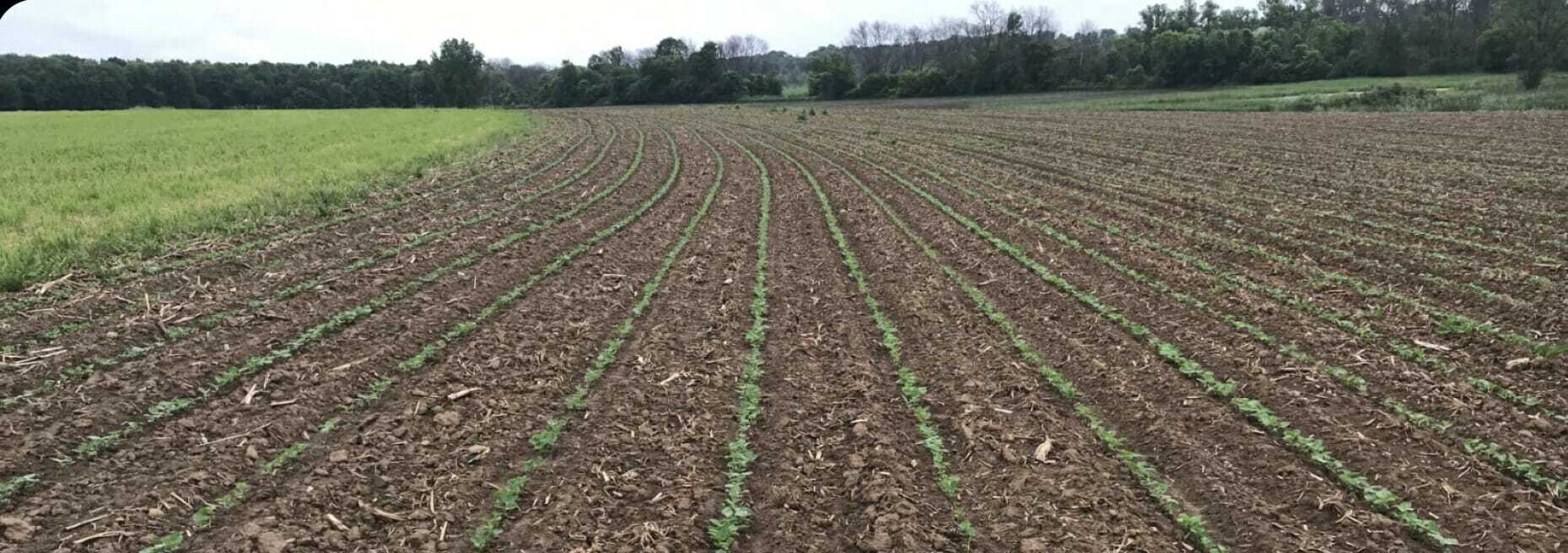
    Establishing a Good Soybean Stand

    Farmers are continually working to increase their soybean yields. The statewide average in Iowa is now more than 50 bushels per acre, but last year several farmers broke the 80-bushel yield barrier with Latham soybean genetics and the Genuity® Roundup® Ready 2 technology.

    Raising record-breaking soybeans begins before the seed even hits the soil. Mark Grundmeier, Latham’s product manager, recently contributed to a Wallaces Farmer article with tips on how to establish a good soybean stand.

    In the article, Mark says the first step to establishing a good soybean stand starts with treated seed. The benefit from seed treatments far outweigh the costs. He adds that fungicide-treated seed is a must to prevent damping off from Pythium, Rhizoctonia, Phytopthora and Fusarium. It’s no secret soybean plants are subject to thousands of variables throughout the growing season.

    Proper planting conditions are crucial, and Mark says it’s important to remember that it’s much better to plant correctly than to plant quickly. Soil temperature sets the stage for healthy growth, and he recommends a temperature of 50 degrees or more at planting.  It’s also important to wait for soils to dry. Wet soils cause trouble from the beginning, and compaction resulting from wet soil can kill root growth.

    For Mark’s full list of tips to establish a good soybean stand, click here to read the article in Wallaces Farmer.

    Team Latham

    April 7, 2011
    Agronomics, Crop, Emergence, General, Soybeans
  • Latham Hi‑Tech Seeds

    It's March: Time to Pick Your Strongest Players

    Morehead State beat Louisville.  Richmond beat Vanderbilt.  Virginia Commonwealth beat Georgetown.  There’s nothing like March Madness! The first weekend of tournament play is one of my favorites because there are so many upsets, near upsets and buzzer beaters.  Inevitably, a Cinderella team upsets a highly ranked Goliath team.

    Latham Hi‑Tech Seeds knows what it feels like to be positioned against a Goliath.  And just like many of these basketball teams, we’re prepared to do battle.  The 2011 acreage battle is expected to intensify through spring, but our starting soybean lineup is ready to play as acres become available.

    Our team captain and power forward is Latham 2440R2, which was the top yielding bean in its maturity across the entire industry in 2010!  When head-to-head with Y-series beans, Latham 2440R2 beat 92Y30 by 8.2 bushels per acre (bu/A) across 21 research locations in 2010.  It shoots a high percentage, winning 69% of the time in Latham’s own yield trials last year across Wisconsin, Iowa, and South Dakota.  Latham 2182R2 is the defensive stopper – great against major diseases – that every team needs at the “wing forward” to win.

    Our “big man” is Latham 2885R2.  This “center” was one of the highest yielders in Latham’s internal 2010 research trials.  Medium tall with good stress tolerance, L2885R2 scores high against Phytophthora, white mold, and SCN tolerances.  The guards on our team on Latham 1985R2 and Latham 2084R2.  These two provide the speed out of the ground, yield potential and defensive characteristics, like excellent resistance to Iron Chlorosis and Cyst Nematode, that our customers need to win.

    Make sure your planting top scorers this spring.  Call on Latham, the soybean team with nearly 65 years of proven product performance.  We’d love the chance to put a winning team in place for you!

    John Latham, President

    March 21, 2011
    Crop, General, Season, Soybeans, Spring
  • Latham Hi‑Tech Seeds

    Fertility Levels Key to Raising Top Soybeans, Part II

    A common practice for farmers in a corn-soybean rotation is to apply enough P&K prior to planting corn to supply their crops for two years.  This works well until corn yields are higher than expected, and no extra nutrients are added for the subsequent soybean crop.  Soybeans are big users of Phosphorus (P) and Potassium (K), and soybean yields will suffer unless more nutrients are applied to compensate for the higher corn yields.

    Nitrogen is essential to photosynthesis.  Nitrogen is usually supplied to soybean plants by a process called nitrogen fixation, which is associated with Rhizobia bacteria in the soil.  It’s important to note, however, that these bacteria are not always present – especially if soybeans haven’t been grown in that field for a few years.  Recent studies show that adding an inoculant to seed may have beneficial effects if planted in soils with low organic matter content or in fields that have undergone significant flooding in recent years.  Try inoculants in your own fields and study whether they benefit your production levels.

    In addition, be sure to monitor the calcium levels in your fields.  There are soils in the Upper Midwest that contain too much calcium.  Known as alkali soils, they can cause other problems for soybean development including stunting, poor root development and iron deficiency chlorosis.

    Soybean yields will also suffer if micronutrient levels are deficient, even if there is adequate P & K present.  If soil tests show low levels of Sulfur, Zinc and Boron, add them to your fertilizer blends.

    Managing nutrient levels will help produce maximum yields – and returns – from your soybean crop given the high market values.

    February 24, 2011
    Agronomics, Crop, Fertility, General, Soybeans
  • Latham Hi‑Tech Seeds

    Fertility Levels Key to Raising Top Soybeans

    Greg 1

    You can only yield what you put into your crops.  If you supplied enough of all of the nutrients required to produce 70-bushel soybeans but provided only enough of one nutrient to produce 40-bushel soybeans, then your yield will only be 40 bushels per acre!  Simply stated, this is what the computer industry refers to as “garbage in – garbage out.”

    To better manage nutrients for your soybean crop, pay particular attention to:

    1. N, P and K;
    2. Secondary nutrients like Calcium and Sulfur;
    3. Micronutrients like Manganese, Zinc and Boron.

    Greg 1Begin by establishing a soil sampling protocol for all of your fields.  Not only will this give you the best field-by-field fertilizer history, but it will be invaluable to your long-term nutrient management strategy.

    A common practice for farmers in a corn-soybean rotation is to apply enough P & K prior to planting corn to supply their crops for two years.  This works well until corn yields are higher than expected, and no extra nutrients are added for the subsequent soybean crop.  Soybeans are big users of Phosphorus (P) and Potassium (K), and soybean yields will suffer unless more nutrients are applied to compensate for the higher corn yields.

    Nitrogen is essential to photosynthesis.  Nitrogen is usually supplied to soybean plants by a process called nitrogen fixation, which is associated with Rhizobia bacteria in the soil.  It’s important to note, however, that these bacteria are not always present – especially if soybeans haven’t been grown in that field for a few years.  Recent studies show that adding an inoculant to seed may have beneficial effects if planted in soils with low organic matter content or in fields that have undergone significant flooding in recent years.  Try inoculants in your own fields and study whether they benefit your production levels.

    In addition, be sure to monitor the calcium levels in your fields.  There are soils in the Upper Midwest that contain too much calcium.  Known as alkali soils, they can cause other problems for soybean development including stunting, poor root development and iron deficiency chlorosis.

    Soybean yields will also suffer if micronutrient levels are deficient, even if there is adequate P & K present.  If soil tests show low levels of Sulfur, Zinc and Boron, add them to your fertilizer blends.

    Managing nutrient levels will help produce maximum yields – and returns – from your soybean crop.

    February 23, 2011
    Agronomics, Crop, Fertility, General, Soybeans
  • Latham Hi‑Tech Seeds

    Tips to Maximize Soybean Yields

    A recent Successful Farming article provided readers with helpful tips for bagging more soybeans next fall. Below are a few of the 21 tips provided.

    1) Look for a high-yielding variety in your maturity zone. Mark Grundmeier, product manager for Latham Hi‑Tech Seeds, says variety selection is THE most important factor contributing to soybean yields. Careful variety selection can help reduce or even eliminate many stress factors including disease, insects and Soybean Cyst Nematodes. Remember “genetics first, then traits.” You can’t expect great trait performance from inferior genetics. Read more on variety selection.

    2) Plant on time. Note that this does not necessarily mean planting early, but planting timely. Mark says farmers need to balance the benefits of early planting with the risks. While soybeans are a light-sensitive crop and it stands to reason the earlier-planted crop receives more sunlight and creates more yield, farmers who plant early must also protect soybeans from seedling diseases and insects. Thus, at Latham, we recommend the use of seed treatments containing either a fungicide or a fungicide-insecticide combination. Our SoyShield™ brand seed treatments are an excellent choice to help with this.

    3) Stop SDS. Last year, many farmers in the Midwest were dealt the challenge managing an SDS outbreak in their fields. In these videos, Mark Grundmeier provides tips for preventing and managing SDS.

    Which of the above steps do you think is most important in maximizing yield?

    Click here for the full list of tips provided in the article.

    Team Latham

    February 8, 2011
    Crop, General, Soybeans
  • Latham Hi‑Tech Seeds

    Achieving Higher Soybean Yields

    A few weeks ago, I talked about what I would include on my list for New Year’s Resolutions if I were a full-time farmer wanting to raise 300-bushel corn. This week I want share what tops my list for “increasing bushels per acre” specifically for soybeans.

    Following are keys to achieving higher yields in soybeans:

    1. Variety Selection: In my opinion, this is THE most important factor to achieving higher soybean yields.  Farmers need to manage a number of stress factors: disease, insects, Soybean Cyst Nematodes, etc. Fortunately, many of these stress factors can be managed through careful variety selection. I include insects because even the Soybean Aphid can now be managed with Aphid-Resistant soybean cultivars. In the past, too many decisions have been based on cost per bag and the size of the seed in the bag. Those two factors won’t add a single bushel to your overall yield. Getting to know your local Latham Sales Representative coupled with the Latham Seed-2-Soil program will help farmers determine the best varieties to place in their fields giving them the best possible chance to achieve high yield goals.
    2. Early planting: Soybeans are a light-sensitive crop, so yields are strongly influenced by the amount of solar radiation the crop receives throughout the growing season. It stands to reason that the earlier-planted crop will have more potential for yield since it will have greater access to sunlight. However, there are risks associated with early planting. Farmers must be careful to protect early-planted soybeans from seedling diseases and insects. We recommend the use of seed treatments containing either a fungicide or a fungicide-insecticide combination. Our SoyShield™ brand seed treatments are an excellent choice to help with this.
    3. Weed Management: Soybeans are very sensitive to early season competition from grass and broadleaf weeds. Using a weed control program that includes a pre-emergence herbicide and a post-applied product will reduce the stress from weed pressure and allow for early canopy closure. An early complete canopy is important to intercept as much sunlight as possible throughout the growing season.
    4. Narrow Row Spacing: Again, getting back to the theory that enhanced yields are tied directly to the amount of light that can be intercepted by the soybean crop, then narrow row spacings will help greatly in closing the canopy and allowing for increased light interception. I strongly recommend that farmers take a look at row spacings in the 15 – 20 inch range. Over many years of field observations, this seems to be the range that affords the greatest amount of yield potential while also mitigating risks associated with drilled soybeans in the 7 – 10 inch range.
    5. Soil Fertility: When striving for higher yields, soybean farmers need to ensure they have the available soil nutrients to achieve those yields or else all their careful planning and cultural practices will be for naught. Again, the Latham Seed-2-Soil program is invaluable in helping farmers achieve these goals. Soil sampling, field mapping and nutrient recommendations are just three of the many benefits members of this exclusive club can take advantage of.
    6. Soybean Cyst Nematode: SCN is the number one pest of soybean fields in the United States.  You really can’t even begin to think about raising 80 bu/A or even 60 bu/A soybeans until you know exactly where your SCN populations are in each field.  Nematodes tend to cause the most damage in drier years where soil moisture is lacking and plants are already under severe stress. We haven’t had one of these years lately, and my fear is that many farmers will forget about managing their fields for SCN. Here again, soil sampling and careful variety selection are critical.
    7. Crop Rotation: Many will argue this comment, but in my opinion, the corn-soybean crop rotation is still the most profitable practice for farmers over time. The long-term benefits of this rotation far outweigh the short-term successes of corn-on-corn or even beans-on-beans.
    8. Scouting: Scouting your fields at least once a week is crucial. There will be times during the year when once a week isn’t often enough, and you might find yourself scouting fields every other day! Our Latham Seed-2-Soil experts can help in this aspect by giving advice on scouting techniques and procedures.
    9. Inoculants: If soybeans haven’t been grown in a field for 4 or 5 years or if the soil is sandy, then inoculating the soybean seed should be seriously considered. Most fields in the Upper Midwest won’t require inoculants if they have been part of a corn-soybean rotation. Here again, scouting your fields and digging up plants to assure proper nodulation is crucial for achieving top-end yields.

    January 17, 2011
    Crop, General, Soybeans
  • Latham Hi‑Tech Seeds

    Refuge-in-a-bag Products Hot Topic at Corn & Sorghum and Soybean Seed Research Conference in Chicago

    More than 2,500 seed industry representatives recently gathered in Chicago for the 65th Corn & Sorghum Seed Research Conference and 40th Soybean Seed Research Conference (CSS 2010) to conduct business, share research findings, learn about the American Seed Trade Association (ASTA) and network.

    As chairman of the Corn & Sorghum Committee, we’re excited to say that this year’s convention was a huge success, setting the record for attendance, as well as for exhibitors.  There were 116 exhibitors ranging from bag and treatment suppliers to robot manufacturers to software companies. In addition to the Seed Expo, the convention featured three days of educational sessions covering a multitude of topics from breeding for biofuels to plant composition and trait development.

    Refuge-in-a-bag (RIB) products were a hot topic. Both farmers and seed companies alike are excited about new RIB products. As with anything brand new, however, there are still a lot of issues that must be dealt with behind the scenes. Fortunately, the seed industry works together better than most industries. We’ll work together to find the best ways to put RIB products into the bag and get the seed into the field.

    The conference reinforced that the future of the seed industry is very promising, as it will play a vital role in helping feed a growing world population. Biotechnology must be used to help keep up with the growing demand, and there is a tremendous amount of new biotech traits that continue to hit the market every year. Because there are so many new products on the market, it’s our job as an independent seed company to help find those that offer the highest value for our customers.

    Overall, CSS 2010 was a huge success.  It’s a great honor to serve as chairman of the Corn & Sorghum Division and to sit on the board of directors of the American Seed Trade Association.

    Click here to read about the conference in ASTA News.

    John Latham, President

    January 13, 2011
    Crop, General, Soybeans
  • Latham Hi‑Tech Seeds

    What Soybeans Work Best in Fields with Variable Soil Types?

    In a recent on-line conversation, a farmer wrote that his agronomist recommended planting offensive soybeans in better yielding zones and defensive varieties across hill tops and in poorly drained areas within the same field. He wondered if anyone else had tried this strategy and what they thought of it.

    Another farmer commented that he thinks it’s better to find a good variety and plant it everywhere because everything does well on good ground and nothing does well on bad ground. Someone else wrote that they had purchased blended beans (two varieties in a bag) to help increase yields.

    Since I definitely have an opinion on this topic – and research to back me up – I’ve decided to use today’s blog post as a means to share with you what we’ve seen work.

    I definitely do NOT agree with the member who plants just the “good variety” on all of his ground. We’ve proven over and over again that soybeans like Latham® L2285R, L2635R and L3157R are much better suited to lighter soils (poorer ground) where their taller plant height and growthy characteristics are a definite advantage.

    Blended Soybeans

    We have customers who request blended soybeans, but to make this work, we take two soybean lines that are very close in maturity (for example, L2082R and L2085R). One is usually a defensive soybean and the other is an offensive one. Seed size is another consideration as the two varieties need to be to as close as possible in size.

    Usually, blending works best when you have a problem within a certain area like Iron Chlorosis. Iron Chlorosis can be severe in parts of a field and not a problem at all in other parts of that same field. Blending two soybeans together – one that has great IDC tolerance and one that has average tolerance but is much higher yielding – has worked well in the areas where IDC is a problem. The IDC-tolerant bean will take over in areas where IDC is a problem; the more offensive bean yields better in those areas where it is not, thereby giving the farmer a higher average yield over his entire field.

    Variable rate planting could work well in a similar situation but would be even more accurate as you can plant ALL of the IDC-tolerant soybeans in the tough spots and plant just the higher-yielding soybean variety in the other areas. Of course, Iron Chlorosis is just one example of the potential need for variable rate planting. Other possibilities would be planting your taller soybeans on the lighter soils (hills) and planting shorter (more offensive-minded) beans in the bottoms or better soils. You could even do something with SCN-infested areas.

    There are lots of possibilities down the road with variable rate planting. And, that’s one thing we’ll be studying as part of Latham’s trademark Seed2Soil® program. Participants in our Seed2Soil program are using “Learning Blocks” to try and obtain the right populations for certain areas of the field, as well as to learn where to place offense and defensive varieties.

    December 20, 2010
    Crop, General, Soybeans
  • Latham Hi‑Tech Seeds

    Consider Risk of Soybean Diseases in 2011

    Due to the widespread outbreak of Sudden Death Syndrome in 2010, many soybean growers are taking an even closer look to disease rating scores as they select seed for the 2011 growing season. The effects of last season’s disease is fresh on our minds, but industry experts remind growers to recall what happened in their fields two seasons ago if they use a corn-soybean rotation.

    “… The risk of white mold should be considered as well, particularly in northern Iowa where white mold was wide spread in 2009,” says X.B. Yang, an Iowa State University Extension plant pathologist and soybean disease expert.

    Both SDS and white mold have built a sufficiently high amount of inoculum in soybean fields in Iowa, according to a December 4 article in Wallaces Farmer. Next summer’s weather conditions will help determine which of these diseases has the greater risk of outbreak.

    To read more about the risk of SDS and white mold in 2011, click here to read the article in its entirety.

    Team Latham

    December 7, 2010
    Agronomics, Crop, Disease, General, Soybeans
  • Latham Hi‑Tech Seeds

    Fall Tillage Impacts Soybean Diseases

    To till or not to till?  That’s been one of the most frequently asked questions this fall as many farmers finished harvest 30 days ahead of last year and weather conditions allowed them to work the ground.

    Fall tillage practices impact Soybean White Mold and Sudden Death Syndrome, says Iowa State University Plant Pathologist X.B. Yang.  The effects of fall tillage are completely opposite: no-till can decrease the risk of White Mold while SDS is usually more severe in no-till fields.

    SDS is more severe in no-till situations because soil temperatures remain cooler and wetter, according to a recent Wallaces Farmer article.  No-till fields have a lower risk of White Mold, however, due to the placement or distribution of sclerotia. 

    To read this article in its entirety, click here.

    Team Latham

    November 23, 2010
    Agronomics, Crop, Disease, General, Soil, Soybeans
Previous Page
1 … 28 29 30 31 32
Next Page

Latham Hi‑Tech Seeds

131 180th Street | Alexander, IA 50420

(641) 692-3258

SIGNUP FOR OUR NEWSLETTER
  • Contact
  • Legal
  • Seedware Login
  • Latham Gear

© 2026 Latham Hi‑Tech Seeds. All rights reserved. | Privacy Policy

Latham® Hi-Tech Seeds is a trademark of M.S. Technologies, L.L.C., 103 Avenue D, West Point, IA 52656.