Skip to content
Latham Hi-Tech Seeds

(641) 692-3258

  • Home
  • Performance
  • Products
    • Corn
    • Soybeans
    • Soybean Blends
    • Alfalfa
    • Corn Silage
    • Seed Guide
  • Find a Rep
  • Media
    • Blog
    • News
    • Videos
    • Podcasts
    • TECHTalk
  • About Us
    • Company History
    • Our Mission
    • Careers
    • Become a Rep
    • Sowing Seeds of Hope
  • Contact Us
  • Latham Hi‑Tech Seeds

    Test for Aflatoxin Before Feeding Moisture-Stressed Corn

    Aflatoxin Enhanced

    It could be a matter of life and death.

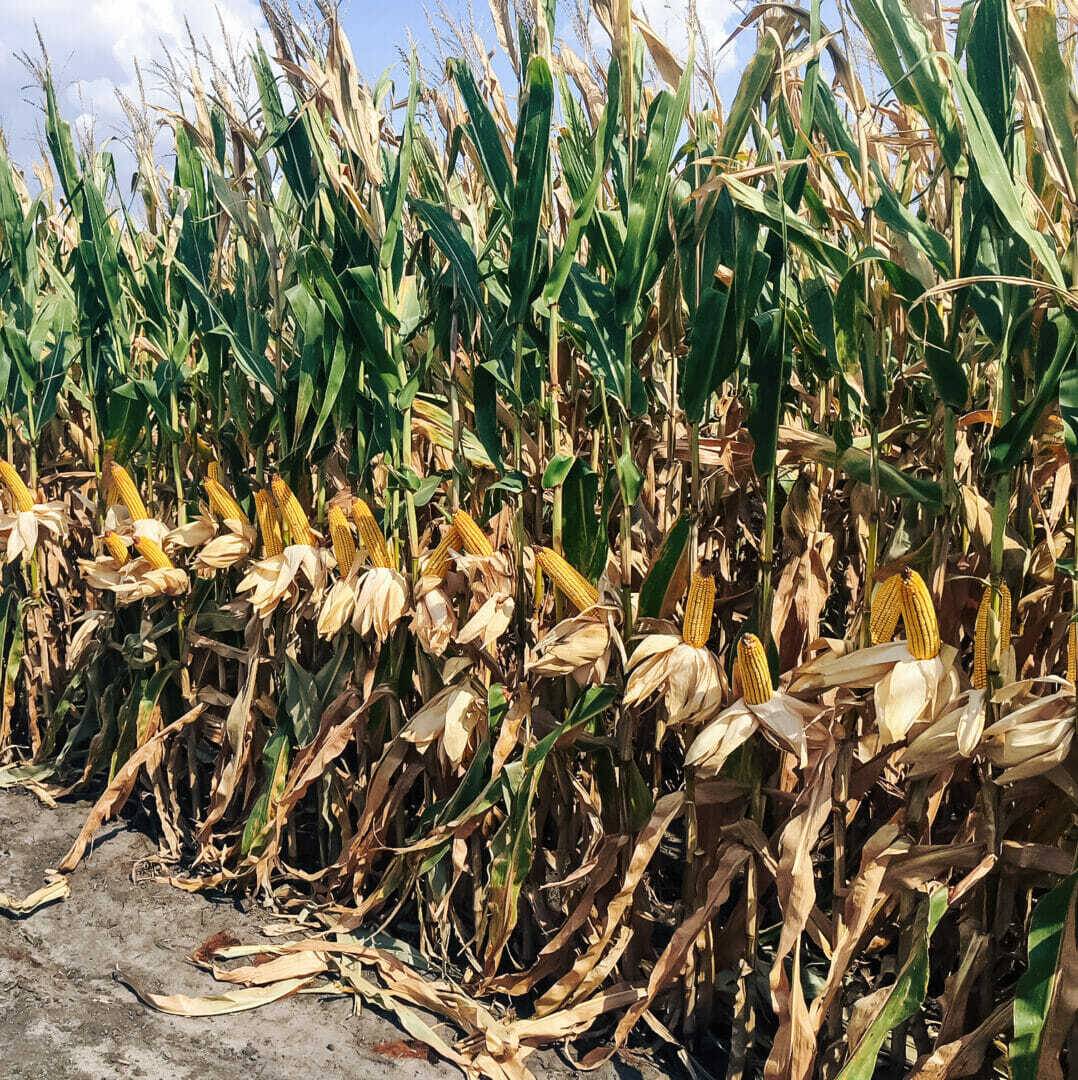
    Hot, dry summers like we’ve seen throughout the 2021 growing season stress plants and create the perfect environment for fungal growth and toxins. Test for nitrate levels and mycotoxin before you feed moisture-stressed corn silage or grain to livestock. If you plan to graze corn stubble, it is a good idea to test the lower one-third of plant in the area you plan to graze.

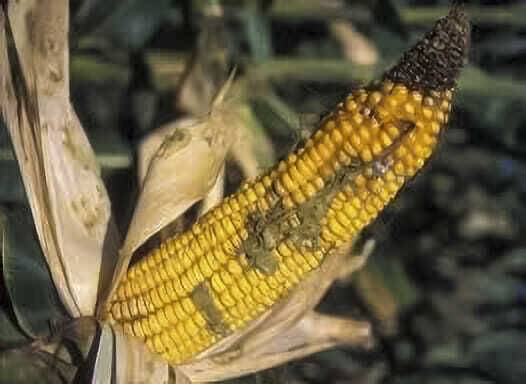
    Even one highly contaminated kernel in a five-pound sample could result in more than 20 parts per billion (ppb) aflatoxin. If you see olive green or graygreen fungus on corn kernels, contact a feed testing lab like DairyLandLabs.com or IowaGrain.org.

    Aflatoxins cause various animal health problems, including death in some cases. Most commonly, feeding contaminated corn reduces the animals’ feed efficiency and reproductivity. Aflatoxin also suppresses an animal’s immune system, making it more susceptible to infectious diseases. In addition, aflatoxin can appear in the milk produced by dairy cows that were fed contaminated corn.

    Prime conditions for the fungus to produce toxin are warm nights, when temperatures stay above 70 degrees Fahrenheit, during the latter stages of grain fill (August/September) in a period of drought. As kernel moisture decreases, aflatoxin production increases. Toxin production is highest at 18 to 20 percent kernel moisture and usually stops around 15 percent kernel moisture. Ensiling corn usually does not reduce aflatoxin concentrations, but concentrations are unlikely to increase in properly managed silage.

    Below are guidelines from the Food and Drug Administration (FDA) for acceptable aflatoxin levels in corn based on intended use. I also encourage you to work with a livestock nutritionist.

    Aflatoxin table

    September 10, 2021
    Agronomics, Corn, Corn Silage, Crop, Disease, Drought, Season, Summer, Weather
  • Latham Hi‑Tech Seeds

    #AskTheAgronomist: Planting Depth Effect on Ear and Root Development

    Hqdefault

    Planting depth matters! In this week’s #AskTheAgronomist, our special guest Corn Product Manager Lyle Marcus shows results from some on-farm studies on the effects of planting depth on plant, root and ear development.

    September 8, 2021
    #AskTheAgronomist, Agronomics, Corn, Crop, Fall, Season
  • Latham Hi‑Tech Seeds

    How to Hand Make a Hybrid

    Maxresdefault

    Pre-Commercial Manager Bob Foley and President John Latham demonstrate the steps to create new crosses and “hand make a hybrid” in Latham’s Central Iowa Corn Nursery.

    August 25, 2021
    Agronomics, Corn, Crop, Industry News, Season, Seed Technology, Summer
  • Latham Hi‑Tech Seeds

    #AskTheAgronomist: Which Yield Factor is Most Important?

    Maxresdefault

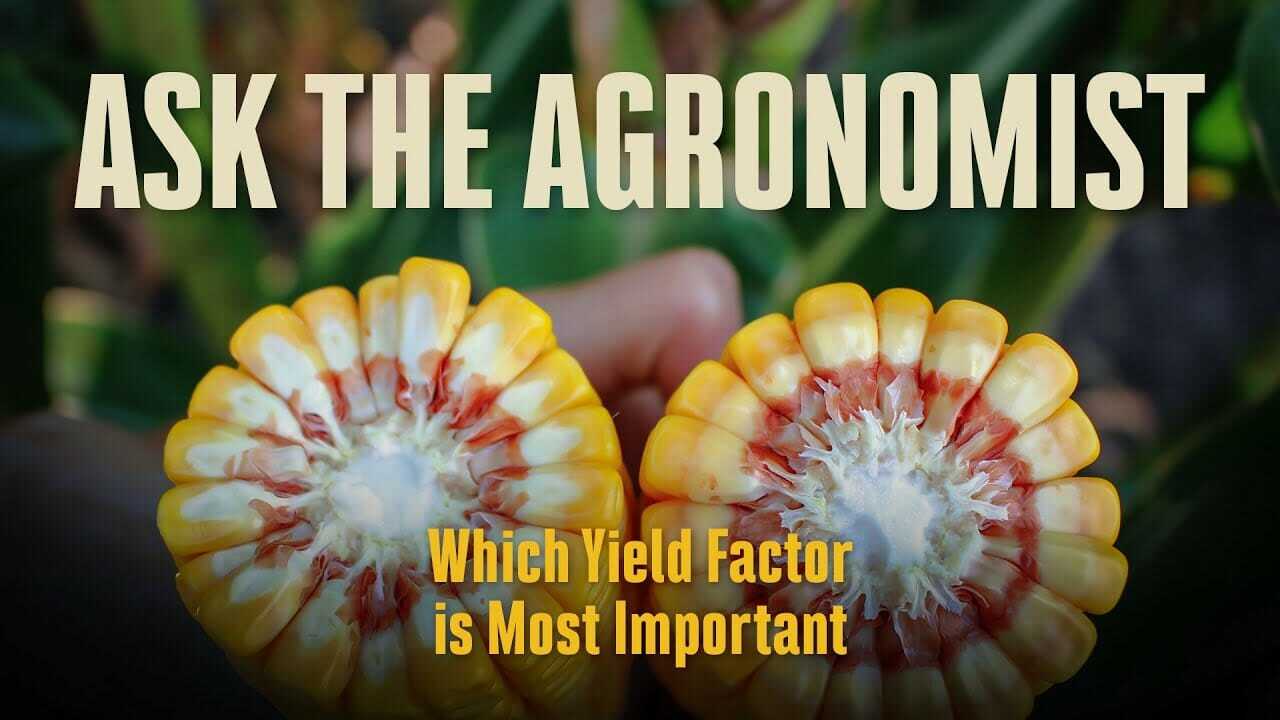
    Which yield factor has the most bearing on final yield: kernel round, ear length or test weight? Precision Agronomist Phil Long and Intern Kirsten Suntken do the math in this segment of #AskTheAgronomist.

    August 4, 2021
    #AskTheAgronomist, Agronomics, Corn, Crop, Season, Summer
  • Latham Hi‑Tech Seeds

    #AskTheAgronomist: Corn Rootworm Pressure Now and Into the Future

    Maxresdefault

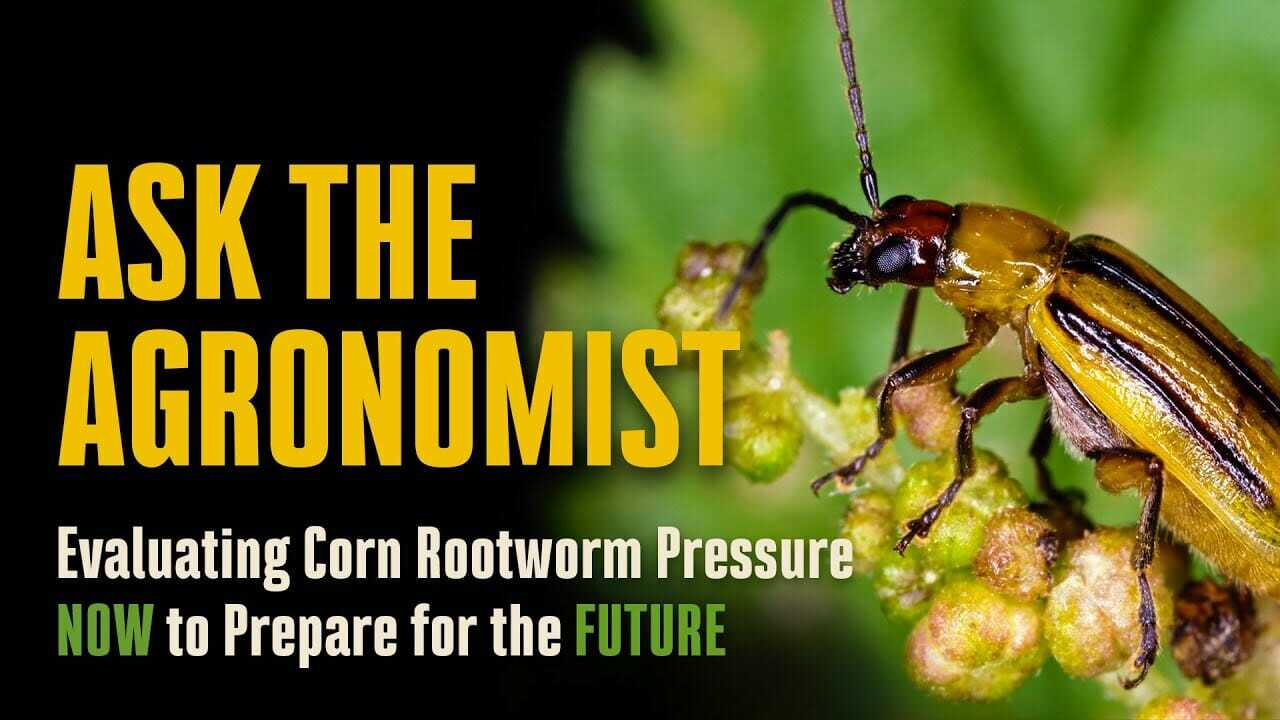
    Corn rootworm pressure has been steadily increasing over the past few years across the Midwest. Precision Agronomy Advisor Phil Long discusses how to identify and gauge pest pressure in your fields and plan for the future.

    July 28, 2021
    #AskTheAgronomist, Agronomics, Corn, Crop, Insects, Season, Summer
  • Latham Hi‑Tech Seeds

    Finding the Right Products for Your Farm

    13661816 10154399657832138 1325590968138902139 o

    At Latham Hi‑Tech Seeds, we take pride in our ability to identify the best corn hybrids and soybean varieties to match our customers’ needs. We take time to listen to our sales team, which includes our dealers, talk about the needs of farmers across Latham Country. Their information about desired characteristics helps direct our research and testing efforts.

    The journey to finding new products begins with our robust collaborative access to germplasm. Latham’s Product Team works in conjunction with many germplasm sources, including our own, to fuel our search to find the best products for the specific geographic regions we serve. We also have great relationships with trait providers to bring needed traits into our products. After we either find or create the desired genetic combinations, we move into the evaluation stage of our process.

    Our Elite Trial program continues to grow with additional test locations across our sales footprint. We are testing in every corner of Latham Country. This means that we test products where they would be sold, which allows us to find unique niche products that excel in a local environment.

    To help position products to fulfill our needs assessment, our regional sales managers (RSMs) get an early look at the products we’re considering for our lineup. Having “in-trial” conversations about products with our sales team is a tremendous benefit to Latham’s Product Teams. In addition, conversations about products in trials helps builds confidence with our sales team to position products. We have consolidated both our corn and soybean evaluation processes into one Elite Trial system, which allows our product teams to assess data more easily.

    Once we identify products from the Elite Trials that meet Latham Hi‑Tech Seeds’ standards and fulfill our customers’ needs, we release them for sale. We also place these new products in our Latham Showcase plots, as well as in the independent F.I.R.S.T. Trials program, to once again showcase the performance of these new products and to provide opportunities for our customers to gain confidence in their performance.

    Latham’s track record of performance in our Showcase plots and F.I.R.S.T. Trials proves the system we have built works! Our process of beginning with a large diverse pool of genetics; testing potential new products thoroughly in all parts of our footprint; and proving our performance in our final stages of Latham Showcase and F.I.R.S.T. Trial plots complete our journey in finding outstanding products.

    I’m so excited about the products we’re testing this summer and look forward to talking about them in more detail at our upcoming field days. Watch your mail and social media for more details coming soon!

    Latham Seeds Precision Agronomy Advisors

    July 14, 2021
    Agronomics, Corn, Crop, Season, Seed Technology, Summer, Tech Tuesday
  • Latham Hi‑Tech Seeds

    Planting Depth Matters

    Planting Depth 1

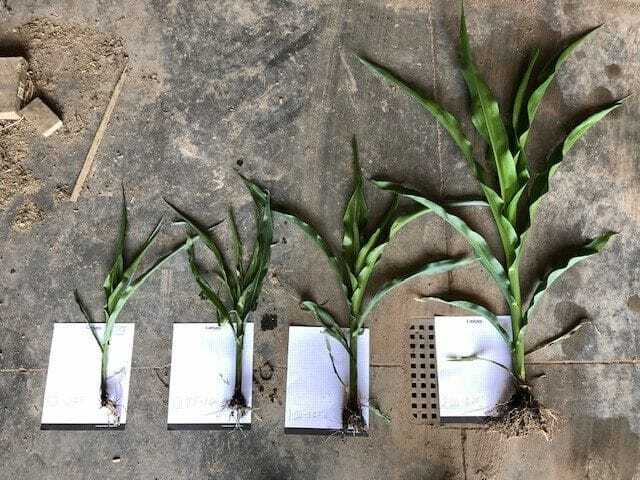
    The below is a look at an on-farm planting depth study conducted by our sales representative from southeast Iowa. Photos were taken in the same field, the same location, planted the same day with the same hybrid. The only variation between each is planting depth. The hybrid shown is LH 6477 VT2 PRO planted on May 12 and the photos are from the last week of June.

    Planting depths are as follows:

    1. On top of the ground to ¼-inch planting depth
    2. ¾ to 1-inch planting depth
    3. 1 to 1 ¼-inch planting depth
    4. 2 to 2 ¼-inch planting depth

    Those planted at optimal depth have much better nodal roots and root mass to anchor that plant into the rapid growth stages we’re observing now.

    Planting Depth 1
    Comparison of planting depth using hybrid LH 6477 VT2 PRO planted May 12 at the same field and location.
    Planting Depth 2
    On top of the ground to ¼-inch planting depth
    Planting Depth 3
    ¾ to 1-inch planting depth
    Planting Depth 4
    1 to 1 ¼-inch planting depth
    Planting Depth 5
    2 to 2 ¼-inch planting depth

    July 14, 2021
    Agronomics, Corn, Crop, From the Field, Season, Summer
  • Latham Hi‑Tech Seeds

    #AskTheAgronomist: Pollination and Silk Growth, Part 2

    Hqdefault (1)

    In Part 2 of this series on pollination and silk growth, Latham’s Pre-Commercial Product Manager Bob Foley further explains how the silk to pollen interaction translates into final yield. Watch Part 1 of the series here.

    July 14, 2021
    #AskTheAgronomist, Agronomics, Corn, Crop, Season, Summer
  • Latham Hi‑Tech Seeds

    #AskTheAgronomist: Pollination and Silk Growth, Part 1

    Hqdefault

    Latham Pre-Commercial Manager Bob Foley explains silking and pollen growth with a look at development over a multiday time frame. Knowing the stages of growth can help you understand how various stressors affect your crop. Watch Part 2 of the series here.

    July 14, 2021
    #AskTheAgronomist, Agronomics, Corn, Crop, Season, Summer
  • Latham Hi‑Tech Seeds

    #AskTheAgronomist: Fungicide Considerations in Dry Weather

    Maxresdefault

    To apply fungicide or not to apply fungicide? This question is on the minds of many growers as we continue through a relatively dry growing season. Precision Agronomist Phil Long discusses the pros and cons of fungicide in both corn and soybeans.

    July 7, 2021
    #AskTheAgronomist, Agronomics, Corn, Crop, Drought, Fungicide, Season, Soybeans, Summer, Weather
Previous Page
1 … 6 7 8 9 10 … 36
Next Page

Latham Hi‑Tech Seeds

131 180th Street | Alexander, IA 50420

(641) 692-3258

SIGNUP FOR OUR NEWSLETTER
  • Contact
  • Legal
  • Dealer Center
  • Seedware Login
  • Latham Gear

© 2026 Latham Hi‑Tech Seeds. All rights reserved. | Privacy Policy

Latham® Hi-Tech Seeds is a trademark of M.S. Technologies, L.L.C., 103 Avenue D, West Point, IA 52656.