Skip to content
Latham Hi-Tech Seeds

(641) 692-3258

  • Home
  • Performance
  • Products
    • Corn
    • Soybeans
    • Soybean Blends
    • Alfalfa
    • Corn Silage
    • Seed Guide
  • Find a Rep
  • Media
    • Blog
    • News
    • Videos
    • Podcasts
    • TECHTalk
  • About Us
    • Company History
    • Our Mission
    • Careers
    • Become a Rep
    • Sowing Seeds of Hope
  • Contact Us
  • Latham Hi‑Tech Seeds

    2021 Research Trials Show Seed Treatment Pays

    IStock 528984664 Reszied

    Advertisements and magazine headlines tout the opportunity to enhance yields through plant protection and the use of biologicals or naturals, but does it pay to use these products? Our research once again confirms that seed treatments are an investment that provides a return.

    Latham Hi‑Tech Seeds expanded its 2021 research trials to include seed treatments and biologicals. We wanted to determine whether the performance of the seed products we offer could be improved by seed protection and biologicals. Soybeans treated with Latham brand SoyShield® Plus had a 2.38-bushel yield advantage over untreated seed and a 1.2-bushel advantage over other leading fungicide and insecticide (F&I) seed treatments.

    Latham Seeds’ signature SoyShield Plus seed treatment is effective in protecting seedlings from early plant diseases for approximately 30 days, which is a longer window of protection than most seed treatments offered. SoyShield Plus includes an exclusive fungicide combination that provides excellent protection against seed and soil borne diseases including: Pythium, Phytophthora, Fusarium and Rhizoctonia.

    The addition of Saltro to SoyShield Plus increased protection against Sudden Death Syndrome (SDS) and soybean cyst nematodes. In fact, this treatment combination produced the highest yield in research trials across seven locations in multiple states. The SoyShield Plus / Saltro treatment had a 5.25-bushel yield advantage over untreated seed and provides Best-in-Class protection across environments. Soybean cyst nematodes are one of the largest yield-robbing pests and SDS is a growing concern for more areas, so it makes sense to order the Latham SoyShield+ / Saltro combination for 2022.

    Inoculants with biologicals continue to show increased yields over inoculants alone. Latham SoyShield Plus with Talc USA’s MicroSurge had a 2.83-bushel per acre advantage over untreated seed and more than one bushel per acre advantage over other premium inoculants.

    Soybeans

    Corn trials conducted at six locations in multiple states also showed significant yield increases over the base seed treatments with various applications of seed applied or planter box treatments. Talc USA’s MicroSurge dry corn inoculant is easy to apply with talc. With two strains of Azospirillum, MicroSurge produced a 4.7-bushel yield advantage over the base seed treatment.

    Encompass also was tested as a planter box treatment. It contains nitrogen-fixing microbials and helps mobilize phosphorous in the soils for easier nutrient uptake into the plant. Encompass showed an 8.5-bushel increase over base treatments in our 2021 trials. Now that’s a return on investment!

    Corn

    Contact your local Latham rep for more information about these and other products to protect your seeds and seedlings, so you can improve yields in your fields in 2022.

    bonnie-harris

    February 16, 2022
    Agronomics, Corn, Disease, Emergence, General, Industry News, Seed Technology, Seed Treatment, Soybeans, Tech Tuesday
  • Latham Hi‑Tech Seeds

    Start the Season Right by Planting the Right Genetics

    Wooden block with GOAL, PLAN and ACTION on table background

    With the 2022 planting season right around the corner, it’s time to focus on the one thing that will help you capture the most ROI in each field.

    Field-by-field product placement is key to maximizing yield – and in turn – profit. Research shows plant genetics account for a 20% difference in yield. This means you could raise 12 more bushels of soybeans and 40 more bushels of corn PER ACRE simply by paying closer attention to your crop placement.

    Below are three factors to consider when double-checking your crop placement for 2022:

    • Study Field x Field® Ratings. Look at the Field x Field Ratings in the Latham® Product Guide for corn and soybeans. These charts simplify where you should place hybrids and varieties. A “1” rating means it’s a great fit for a particular environment; a “3” rating means you should not plant that product if your field conditions match that description. Your Latham Dealer has seen most of our products in environments, so call him or her if you have additional questions about where to place a particular product.
    • Stick to the plan. If your seed dealer has provided you with a Field x Field plan, organize your seed shed so you can stick to the plan. Subscribers to Latham Seeds’ Data Forward® program receive a crop plan book, which you can keep in your planter tractor. It’s a good practice to double check that the right seed gets in the planter. If planting conditions change in a particular field, then take the time to move products. It will be worth an hour of your time to capture the extra $150 to 200 per acre in profit potential.
    • Match Genetics to Management. If a certain corn product is described as “likes high management,” then you should not place that product in a field with poor fertility levels. Your seed dealer may not know your fields’ fertility levels unless you share it. That information is critical for accurate product placement as some genetics can handle tough fertility situations and others will fall apart in those environments. Also make sure you aren’t overplanting or underplanting each hybrid. Look at the “suggested populations” in our Product Guide, as well as the “Ear Type” rating and our stress wheel poster. We want to help you capture yield!

    If you’re planting soybeans early or at the same time your planting corn, treat the seed with SoyShield® to protect it from early season fungal diseases. Seed treatment also gives seedings an early advantage. Even when using a quality seed treatment, plant fields with the heavy soils that remain wet and cold last or at least the soils have warmed. This will help your soybeans better ward off root diseases all season long.

    SoyShield Seed treatment infographic

    A successful 2022 crop year begins with having a plan and sticking to it! Take the time now to double-check that you properly matched plant genetics with soil conditions. Our dealers are also happy to talk through field placement as well. If you have further questions or want to chat with our agronomists call: 1.877.GO.LATHAM (1.877.465.2842).
    Team Latham

    February 9, 2022
    Agronomics, Alfalfa, Corn, Corn Silage, Cover Crops, Crop, Disease, Emergence, Fertility, General, Precision Ag, Seed Technology, Seed Treatment, Soil, Soybeans
  • Latham Hi‑Tech Seeds

    #AsktheAgronomist – Too Much Nitrogen?

    Ask the agronomist too much nitrogen

    Phil Long, precision agronomy advisor, continues his soil fertility series with the topic of Nitrogen. Is it possible to have too much Nitrogen?
    January 18, 2022
    #AskTheAgronomist, Corn, Fertility, General, Soil
  • Latham Hi‑Tech Seeds

    #AsktheAgronomist – Corn Yield

    Ask the agronomist where did yield come from corn

    Where did the corn yield come from in 2021? Our agronomist breaks it down.

    Team Latham

    January 4, 2022
    #AskTheAgronomist, Corn, General
  • Latham Hi‑Tech Seeds

    #AskTheAgronomist: Corn Disease and Product Selection

    Maxresdefault

    With a majority of the year recorded as dry to extremely dry for much of the Upper Midwest, many farmers were surprised at the onset of disease towards the close of the 2021 growing season. Precision Agronomy Advisor Phil Long addresses how to account for and select corn products to address disease challenges in your fields into 2022 and beyond.
    November 9, 2021
    #AskTheAgronomist, Agronomics, Corn, Crop, Disease
  • Latham Hi‑Tech Seeds

    3 Ways to Maximize Soil Tests

    Phil screenshot

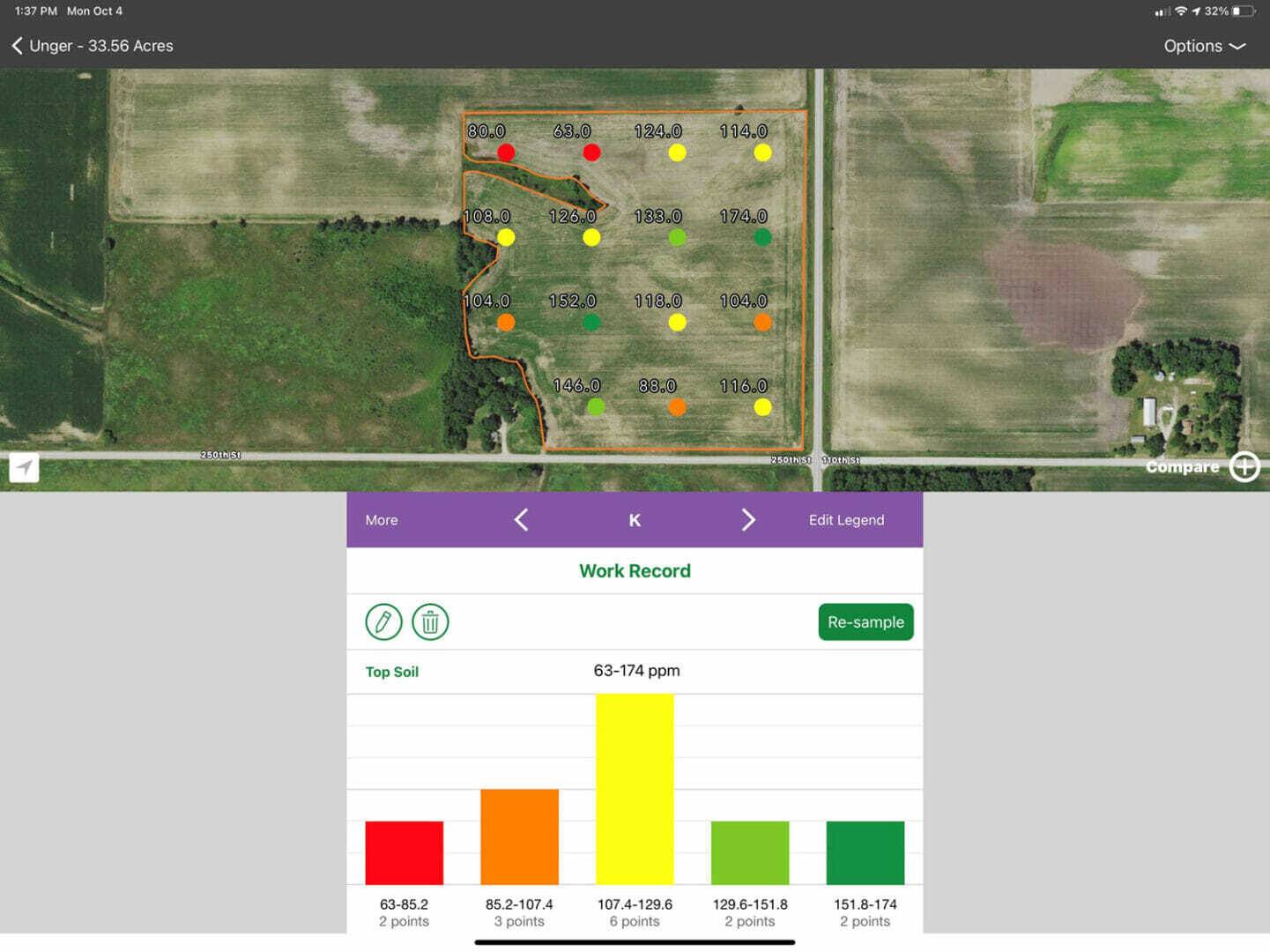
    To save the most money on inputs, we must plan earlier and earlier every year. A current soil test is the best way to evaluate your fertility and ultimately your yield potential. Besides the normal evaluation of the main nutrients, a soil test pays for itself.

    Let’s look at three ways to use your soil test to its full potential:

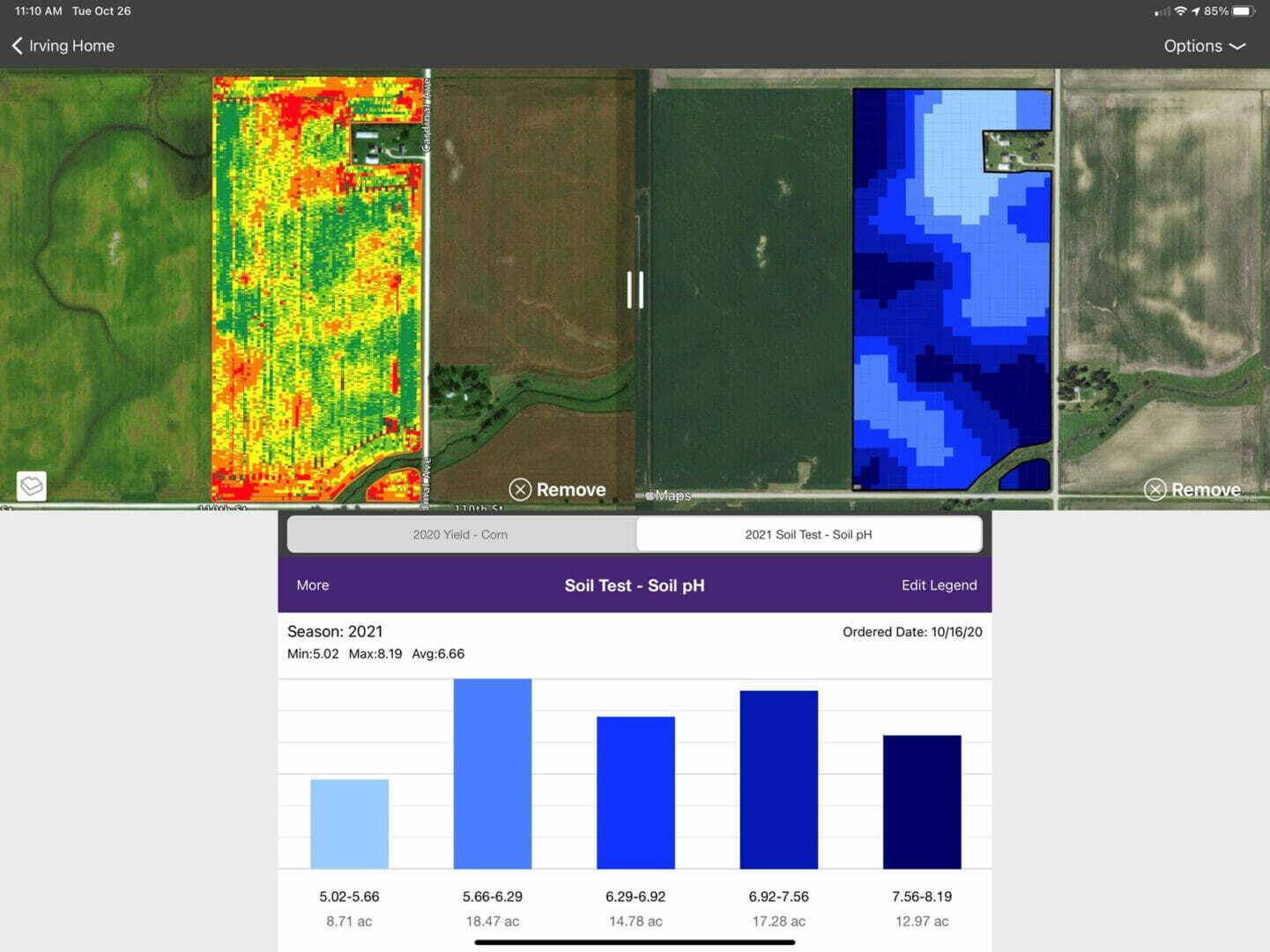
    1. Soil pH matters in more ways than lime. We typically look at pH maps to understand nutrient availability, but let’s think in terms of input planning. Take soybeans and a pH map, for example. By looking at this one map you will better understand the areas of high pH, so you can select a Latham® IRONCLADTM variety to stand up to challenges from Iron Deficiency Chlorosis (IDC). Another great use for this map is herbicide applications. Herbicide carryover in high pH spots can impact soybean yields. This map potentially can help make the decision to change a crop rotation or herbicide program to save yield losses.
    2. Organic Matter is king. Do you have organic matter (OM) readings higher than 5% and below 2% in the same field? Couple this with yield and this is a great start to help apply nitrogen more accurately. Another great combination is OM beside soil type map. Look at Latham Seeds’ product guide while you’re looking at these maps to quickly determine what percent of each field would benefit more from defensive traits or offensive traits. Really high OM soils typically hold more water and have challenges like flooding and higher disease potential. Also notice how much higher your potassium (P) and phosphorus (K) levels are in these spots.
    3. When phosphorus levels are high, other nutrients are lacking. Many farmers use animal manure as a source of fertilizer. This is great because it provides most of the essential nutrients our crops need, however, manure can have higher levels of some nutrients including phosphorus. If your soil potassium levels are climbing, move manure applications to another field. Also pay attention to other nutrients that suffer when potassium increase. If you notice your P levels are high, then Sulfur (S) and Zinc (Zn) could be at a disadvantage. Both S and Zn can be less available to the plant as P levels climb. This may not be visually noticeable at first, but it will show up in growth and yield if you do a side by side with S and Zn fertilizer.

    Phil screenshotThese comparisons and maps can be done in Latham’s Data ForwardTM app with a simple soil sample taken and yield map to start seeing value out of the information that you capture every year. If you’d like to learn how to start putting these things to work on your farm give me a call!
     

    Team Latham

    November 4, 2021
    Agronomics, Corn, Crop, Precision Ag, Soil, Soybeans
  • Latham Hi‑Tech Seeds

    Can You Cut Fertility Costs Without Cutting Yield?

    Phil TT potassium levels

    You could lose more than you save if you cut costs in the wrong places.

    Some farmers are thinking about cutting back on their fertility program for 2022 crops because fertilizer costs are increasing and pre-order prices aren’t guaranteed into next spring. I understand that price hikes cause uncertainty. As someone who also farms, I feel the same way. What I’ve learned is that fertility is the foundation to keeping a crop healthy all season. Top-performing hybrids need food to fuel their growth.

    Below are three questions to ask yourself as you plan your 2022 fertility program:

    Phil TT potassium levels

    1. Are you keeping potassium levels up? Potassium (K) is critical for handling drought stress and late-season stalk health. Depending on cation exchange capacity (CEC), you want to see K levels of 150 to 220 parts per million (ppm) on your soil test. North Dakota State University (NDSU) research reveals the type of clay soil (high vs. low shrink swell clay) is key to fertilization. High shrink swell clay soils must be kept at that 200-ppm threshold. When these soils dry out, they hold the K between clay layers much tighter. On soils with low shrink swell potential, the 150-ppm threshold will provide enough K throughout the season. Have you ever noticed how some soils are more forgiving after you accidently cut ruts when it’s a little wet? Note those soils because they hold K tighter, prohibiting your crop from using it.
    1. Thinking about cutting back on nitrogen? Nitrogen is more closely tied to yield than any other nutrient. Corn takes up approximately 150 to 300 pounds of nitrogen (N) to reach its full yield potential, but this doesn’t have to all go down as commercial fertilizer. Nitrogen needs depend on several factors including crop rotation, manure application, green manure, and residue management. Consider applying nitrogen in the spring with a nitrification inhibitor on lower CEC soils or if it’s a wet spring. The best practice in the fall is to wait until soil temps are below 50 degrees before applying nitrogen.
    1. How are you valuing manure? When comparing fields where manure was applied to fields that only get commercial fertilizer, you realize fertilizer is worth the additional hassle to apply. Microbes in the manure and the biology that feeds on it can build nutrient levels much faster in the soil as compared to commercial fertilizer. It’s important to have a representative manure analysis to know what you are applying.

    Remember, every 100 pounds of nitrogen applied requires about 500 pounds of lime to offset the acidity created by the nitrogen conversion process. Make sure your pH is correct, so all the nutrients in your soil are available to your growing crop. Correct soil pH before you try to build your P, K or micronutrients.

    Feel free to call me if you have any questions about how Data Forward can help you collect and store information that can lead to more profitable farm management decisions.
    Team Latham

    October 29, 2021
    Agronomics, Corn, Crop, Fertility, General, Precision Ag, Soil
  • Latham Hi‑Tech Seeds

    #AskTheAgronomist: Evaluating Fall Fertilizer Decisions

    Ask the agronomist cover photo for video 01

    When faced with high fertilizer prices, what considerations should factor into next season’s investment? Precision Agronomy Advisor Phil Long addresses each macronutrient’s effect on yield and performance plus the pros and cons of investing versus scaling back for next season.

    October 20, 2021
    #AskTheAgronomist, Agronomics, Corn, Crop, Fall, Fertility, Season, Seed Treatment
  • Latham Hi‑Tech Seeds

    #AskTheAgronomist: Why is My Combine Black?

    Maxresdefault

    Precision Agronomy Advisor Phil Long addresses an interesting question surfacing this fall, “Why does my combine seem like it’s covered in soot?” Tune in to uncover what’s happening in the field as we harvest, plus some cautionary tips for livestock farmers if you are feeding cornstalks this season.

    October 13, 2021
    #AskTheAgronomist, Agronomics, Corn, Crop, Fall, Season
  • Latham Hi‑Tech Seeds

    #AskTheAgronomist: Stalk Integrity at Harvest

    Maxresdefault

    Harvest is in full swing across Latham Country with reports of corn coming in at 16% moisture already in early October. Precision Agronomist Phil Long discusses how and why to evaluate stalk integrity as you decide which fields to harvest next.

    October 6, 2021
    #AskTheAgronomist, Agronomics, Corn, Crop, Fall, Season
Previous Page
1 … 5 6 7 8 9 … 36
Next Page

Latham Hi‑Tech Seeds

131 180th Street | Alexander, IA 50420

(641) 692-3258

SIGNUP FOR OUR NEWSLETTER
  • Contact
  • Legal
  • Seedware Login
  • Latham Gear

© 2026 Latham Hi‑Tech Seeds. All rights reserved. | Privacy Policy

Latham® Hi-Tech Seeds is a trademark of M.S. Technologies, L.L.C., 103 Avenue D, West Point, IA 52656.