Latham Hi-Tech Seeds

(641) 692-3258

  • Home
  • Products
    • Corn
    • Soybeans
    • Alfalfa
    • Corn Silage
    • Seed Guide
  • Performance
  • Find a Rep
  • Media
    • Blog
    • News
    • Videos
    • Podcasts
    • TECHTalk
  • About Us
    • Company History
    • Our Mission
    • Careers
    • Become a Rep
    • Sowing Seeds of Hope
  • Contact Us
  • Latham Hi‑Tech Seeds

    Breeding Tech Tools

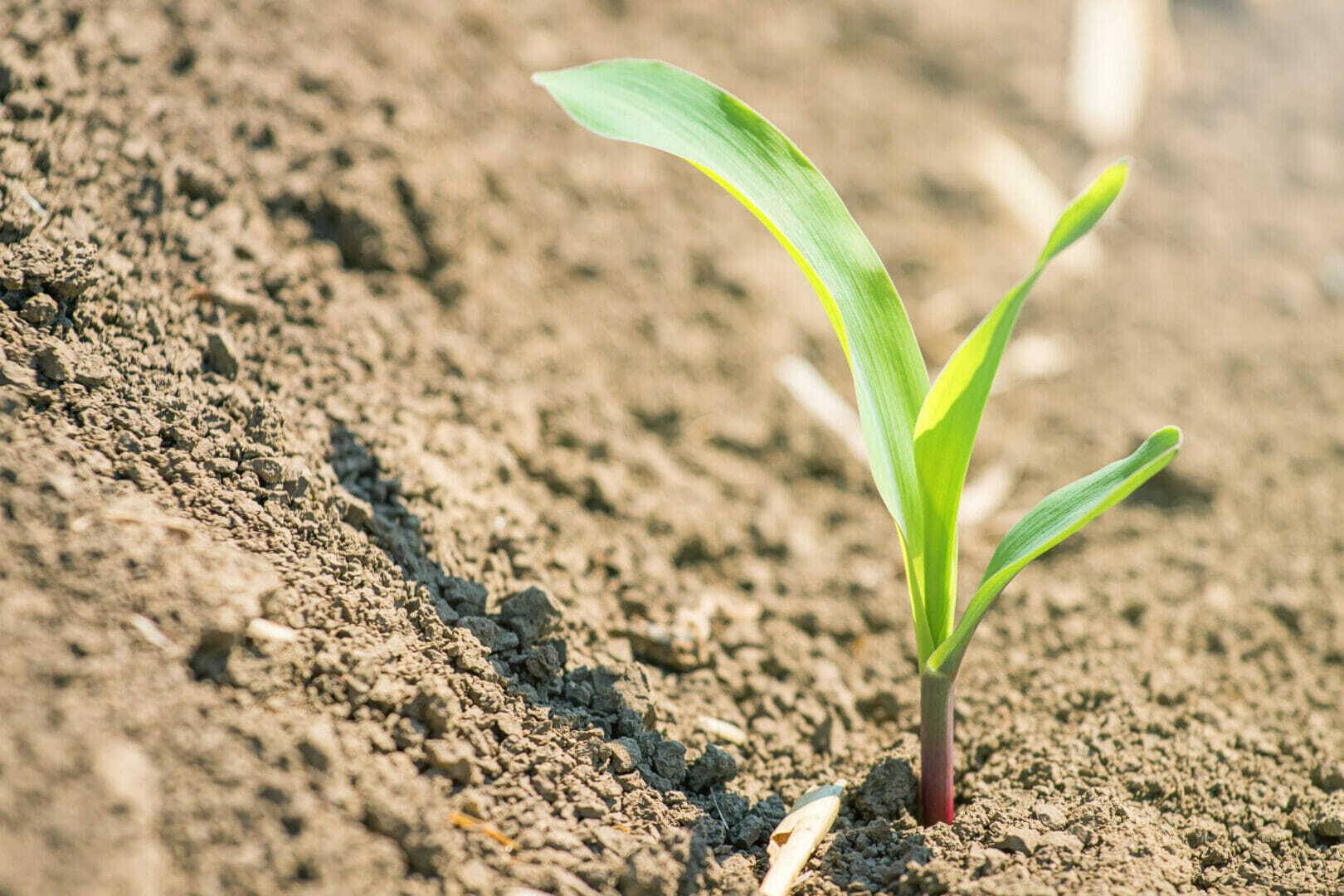
    Young green corn growing on the field. Young Corn Plants.

    Like our planting and harvest monitors, corn breeding technologies today improve the speed, accuracy (reliability) and cost of identifying, developing and delivering improved genetics to your farm gate. In this article, I’ll try to briefly describe a few of the most widely used tech tools in developing Latham Hybrids. Like electronic tools, they can be a distraction standing alone, but when linked together into a systematic process they create a powerful platform for continuous improvement.
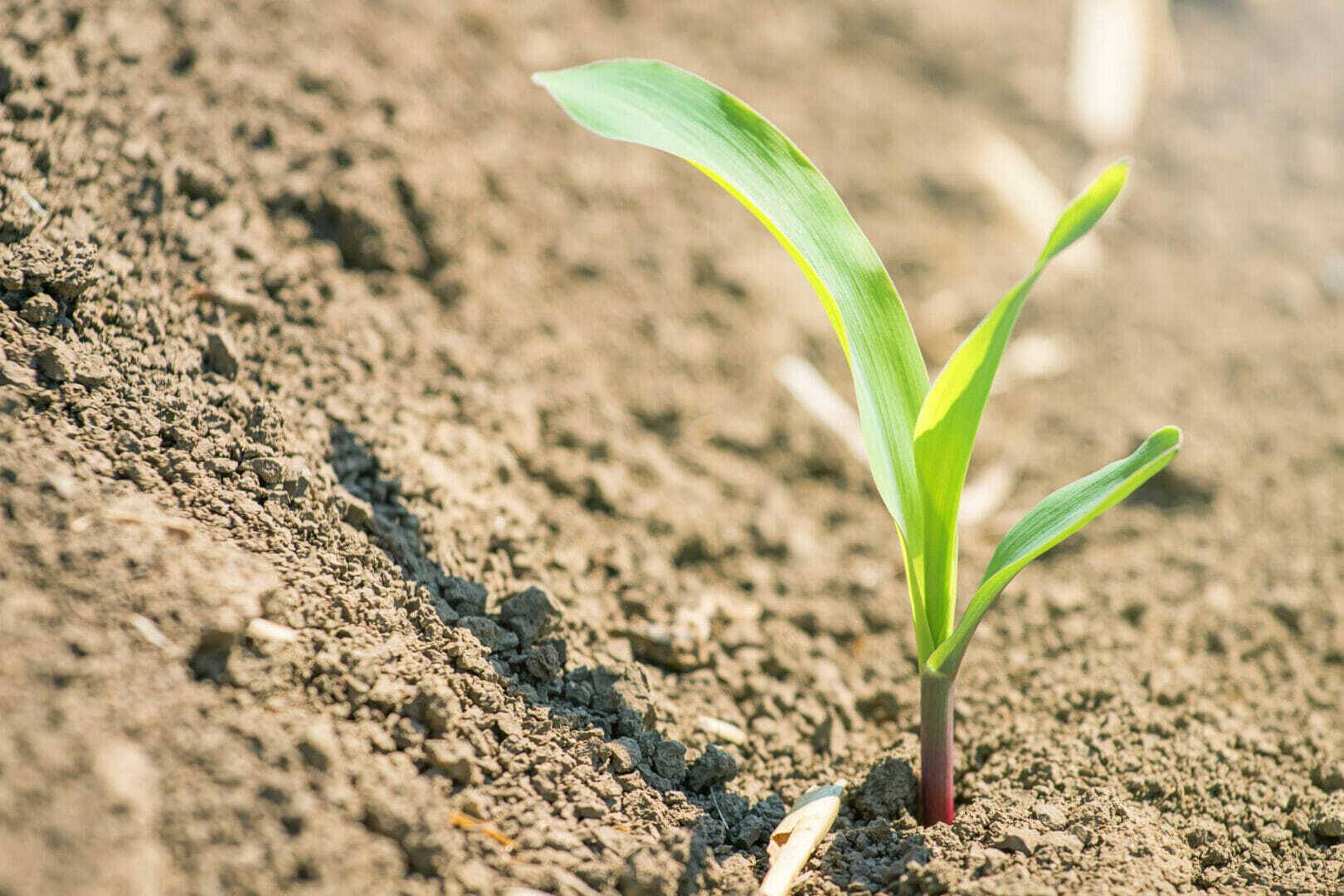
    Young green corn growing on the field. Young Corn Plants.

    Unlike traditional methods, “Dihaploid Breeding” (DH) creates homozygous (genetically fixed) male or female corn inbreds quickly. What once took five generations of manual self-pollination can now be created in just two or three generations. Not only do DH’s speed the creation of new inbreds but because they are uniform, they improve and speed field testing required to identify performance. DH delivers inbreds faster (commonly called “instant inbreds”), with near-perfect genetic uniformity at a moderate cost.

    Sorting all those new inbreds can become a bottleneck in finding commercially viable candidates. Similar to trying to find NFL players among thousands of college athletes, corn breeding also requires a large pool of candidate inbreds — as quickly as possible. Thankfully, selecting for inbreds with “Favorable DNA” (genes with proven performance) has never been easier or cheaper. Breeders used to spend thousands of dollars to identify a few genetic markers on a single inbred to make associations with key traits such as yield or disease tolerance. Today, we are fast approaching a capability to sequence an entire corn inbred genome (all genes) for less than a dollar. Considering that corn has more genes than humans (on fewer chromosomes), detailed genetic data can enable breeders to quickly select best “candidate” inbreds.

    To speed development even further, “Predictive Breeding” can now use genetic data to now simulate some field performance prior to testing in the field. While this will never replace actual field testing predictions, it enables breeders to discard the “chaff” from the wheat — inbreds with low probability of good performance before they’re ever field tested.

    Lastly, once commercial lines are identified, “Embryo Rescue” can cycle four generations of trait conversion in the lab and greenhouse in a single year, to deliver trait conversions in two years instead of what used to take four to five years.

    None of these tools stand alone, but when paired together they create a powerful process to speed development, improve uniformity and reduce developmental cost of delivering improved Latham genetics to your farm.

    Did you enjoy this article? We want to (TECH)talk with you! Sign up for our newsletter to receive agronomy articles (and delicious recipes) in your inbox! We’ll talk soon.

    Doug Barker

    March 24, 2023
    #AskTheAgronomist, Corn, General, Industry News, Seed Technology, Tech Tuesday
  • Latham Hi‑Tech Seeds

    #AsktheAgronomist – Why is Sulfur and Nitrogen Important?

    Ask the agronomist sulfur with nitrogen

    Did you enjoy this video? We want to (TECH)talk with you! Sign up for our newsletter to receive agronomy articles, videos (and delicious recipes) in your inbox! We’ll talk soon.

    Webspec Admin

    February 15, 2023
    #AskTheAgronomist, Agronomics, Corn, Crop, Emergence, Soybeans
  • Latham Hi‑Tech Seeds

    Mitigate Weather Risks with Best Management Practices

    Young green corn growing on the field. Young Corn Plants.

    Young green corn growing on the field. Young Corn Plants.Weather concerns are top of mind as farmers across Latham Country look ahead to spring 2023 planting. Customers frequently ask us how to mitigate risk from the 2022 wet planting season.

    While we want to maximize the yield potential of early planting, 2022 data shows us that delayed planting can result in very good yields — and better yields than planting when conditions are unfit.

    Consider these factors to successfully mitigate potential risks of delayed planting:

    1. Minimize compaction during field preparation.
      • A uniform seed bed creates the best opportunity to plant your crop with precision.
      • Minimize passes in the spring while creating a uniform seed bed.
      • Be careful not to cause sidewall compaction of seed trench at planting.
    2. Plant your corn crop with precision. We want all plants to emerge within 72 hours. This creates the best root system to maximize water use through the entire growing season.
      • Plant a consistent seed depth.
      • Check for consistent seed spacing.
      • Ensure great seed-to-soil contact.
      • Delay planting if cold temps or cold rain is forecasted within 72 hours after planting.
    3. Promote a healthy root system with fertility. Good fertility programs maintain a healthy, strong root system to effectively use available water.
      • Starter fertilizer gets corn plants off to the best start possible.
      • Side-dress Nitrogen in a timely manner to nurse optimum plant health.
      • Maintain a good fertility balance, using soil testing as a guide.

    We suggest staying with a hybrid selection plan that does not vary significantly from previous years.  A couple management changes at planting time to get your crop off to a great start will result in more success than totally changing your hybrid selection.

    Remember, most corn yield is created in July and August. Get your plants off to the best start, so they can take advantage of that part of the growing season. Don’t get discouraged if you encounter a bit of a delay. Stick to the hybrids in your original plan through the end of May.

    Did you enjoy this article? We want to (TECH)talk with you! Sign up for our newsletter to receive agronomy articles (and delicious recipes) in your inbox! We’ll talk soon.

    Webspec Admin

    February 14, 2023
    Agronomics, Corn, Crop, Emergence, General, Growth Stages, Precision Ag, Season, Soil, Soybeans, Spring
  • Latham Hi‑Tech Seeds

    Success with Biologicals Starts with Optimizing Your Soil Fertility

    Phil Long, Precision Agronomy Specialist
    Phil Long, Precision Agronomy Specialist
    Precision Agronomy Advisor, Phil Long

    One reason Latham Hi‑Tech Seeds opened its Premier Agronomy Center on the Latham family’s Iowa Century farm was to collect data using real-world practices and to research solutions for real-world problems. More farmers are interested in biologicals to reduce fertilizer and other input costs and/or to build soil health.

    A biological product, or biofertilizer, contains living microorganisms that promote fertilizer efficiency or plant growth. Most of these products are naturally occurring in the environment but likely do not occur in high amounts in your field.

    At Latham’s Premier Agronomy Center in 2022, we used Pivot Bio PROVEN® and Azotic Envita® on corn. Both nitrogen-producing bacteria products were trialed on a large scale and applied in-furrow with LH 5245 VT2 PRO RIB. PROVEN yielded 213.1 bushels per acre (bu/A), and Envita yielded 208.1 bu/A while the untreated LH 5245 yielded 206.2 bu/A. (Also please note that I applied about 40 lbs per acre less nitrogen on all the biological products, so I saved about $20 to $30 per acre when accounting for the product cost.) We have seen similar past results with PROVEN on our farm despite the dry conditions we have had. Envita also may be sprayed over the crop in-season — a process that our team will try in 2023.

    Another biological/foliar product that I’ve used on my own farm for soybeans is BW Advance from BW Fusion. This product has foliar nutrients plus biologicals. When applied around soybean reproduction time, it can help reduce flower and pod abortion plus reduce moisture loss during drought stress. It takes about a 1.5 bu/A yield increase to pay for the product at current soybean prices. In 2022, I saw an average of 2.3 bu/A advantage. Keep in mind, 2022 was very dry and this particular field has some underlying fertility issues.

    If you are going to try biologicals, you must take care of pH and other soil fertility deficiencies. The microbes in your soil, especially bacteria and fungi, thrive based on proper pH and physical soil environment. For example, if you have a pH of 5.0 or heavily compacted soils, you’re not going to see a boost in soil life until you correct those issues.

    This year I used two foliar/soil-applied products, Midwest Bio-Tech’s Chandler Soil and TerraMax’s Ag Soft. The goal of these products is for compaction alleviation and residue management. I’m using these products on our cover crop and no-till plots. During the next few years, I will share results and show any soil structure changes. We also use seed-applied products, including Talc U.S.A.’s Microsurge inoculant and Encompass, as well as TerraMax’s Vertex and Micro MX.

    How will we know which products may benefit our farm the most? Our plan is to try them! I will share soil health tests and how they can aid us in continuing to decipher the complex world of biologicals.

    Did you enjoy this article? We want to (TECH)talk with you! Sign up for our newsletter to receive agronomy articles in your inbox! We’ll talk soon.

    Phil Long

    February 2, 2023
    Agronomics, Corn, Crop, Fertility, From the Field, General, Growth Stages, Precision Ag, Soil
  • Latham Hi‑Tech Seeds

    Match Hybrids to Your Management Style

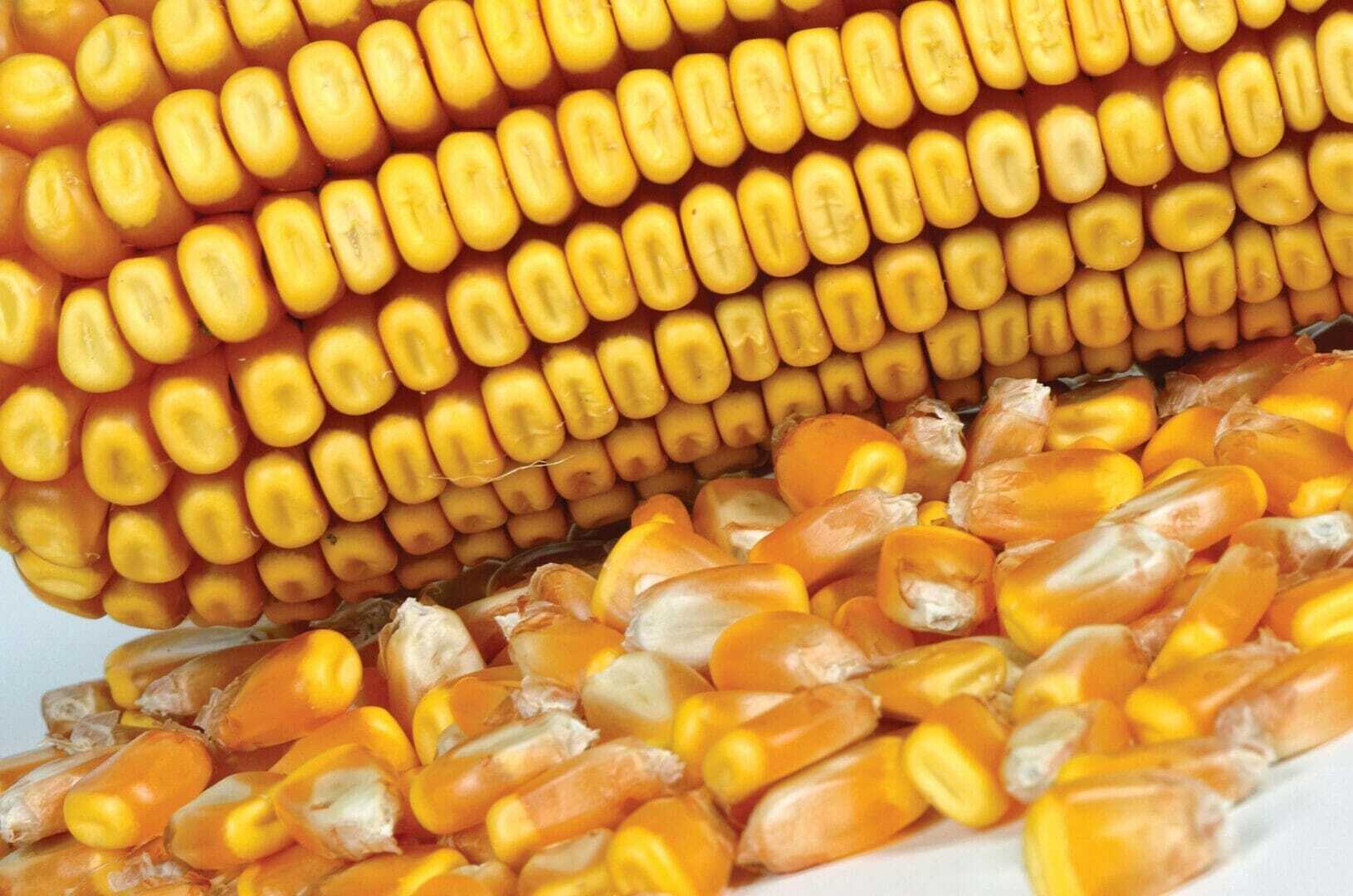
    Corncob background
    Phil Long, Precision Agronomy Specialist
    Precision Agronomy Advisor, Phil Long

    Agronomists often tout the merits of selecting hybrids to fit your soil types, but it’s also important to select hybrids that match your management style.

    Latham Hi‑Tech Seeds’ Premier Agronomy Center provides opportunities for us to learn and share how Latham® products interact with the environment and perform under different management styles. In 2022, we adapted our stress wheel study to show how different Latham brand hybrids react to population differences. We planted 20 different Latham hybrids at both 24,000 and 36,000 plants per acre (ppa) to track how each hybrid adjusts its ear flex – or yield – to high- and low-competition environments.

    Overall corn yield comes from three areas: (1) plants per acre; (2) ears per plant; and (3) weight per ear. If we look specifically at an individual corn plant, yield comes from these three areas: girth in the early season, length in mid-season and kernel depth in late season. The hybrid stress test helps us better understand how your favorite Latham hybrids adjust their yield in high- or low-stress environments, which in turn helps you better understand when to reduce stress for these hybrids.

    For example, if a hybrid gets most of its yield from flex in girth, you should reduce early-season stress. Plant these hybrids in warm soils; provide fertility at the planter, and make sure nitrogen is in an available form early in the season. All hybrids determine girth based on how healthy or stressed the plants are from emergence to V7, so anything you can do to help them at that stage retains more yield.

    The critical time for hybrids that flex in length is from V8 to R2. Making sure these hybrids are healthy in early summer is more important. Side-dress applications are beneficial to these hybrids.

    The last group is those that flex in kernel depth, which occurs from R3 to R6 when the corn is filling its kernels, so nutrients move from leaves to the ear. These hybrids can benefit greatly from fungicide because it gives them extra time in the grain fill stage to add weight to the ear.

    Although we always talk about hybrids flexing up for bigger yields, a corn plant thinks of it differently. It starts with very high expectations and then flexes down in each direction based on the stress it encounters during the season. Each hybrid’s genetics can vary by how much emphasis it puts on these three areas of yield.

    We were intrigued by what we learned from our stress test in 2022 and look forward to learning more in 2023 about how our hybrids adjust their yield. Talk with your local Latham® rep to help you match our hybrids to your management style. Each local salesperson is supported by a team of seed specialists located across our six-state territory.

    Did you enjoy this article? We want to (TECH)talk with you! Sign up for our newsletter to receive agronomy articles in your inbox! We’ll talk soon.

    Phil Long

    January 26, 2023
    Agronomics, Corn, Crop, Disease, Emergence, General, Growth Stages
  • Latham Hi‑Tech Seeds

    LATHAM SEEDS LAUNCHES CAMPAIGN TO RAISE $75K FOR CANCER

    Hope hero image

    Wear Red in September for Blood Cancer Awareness

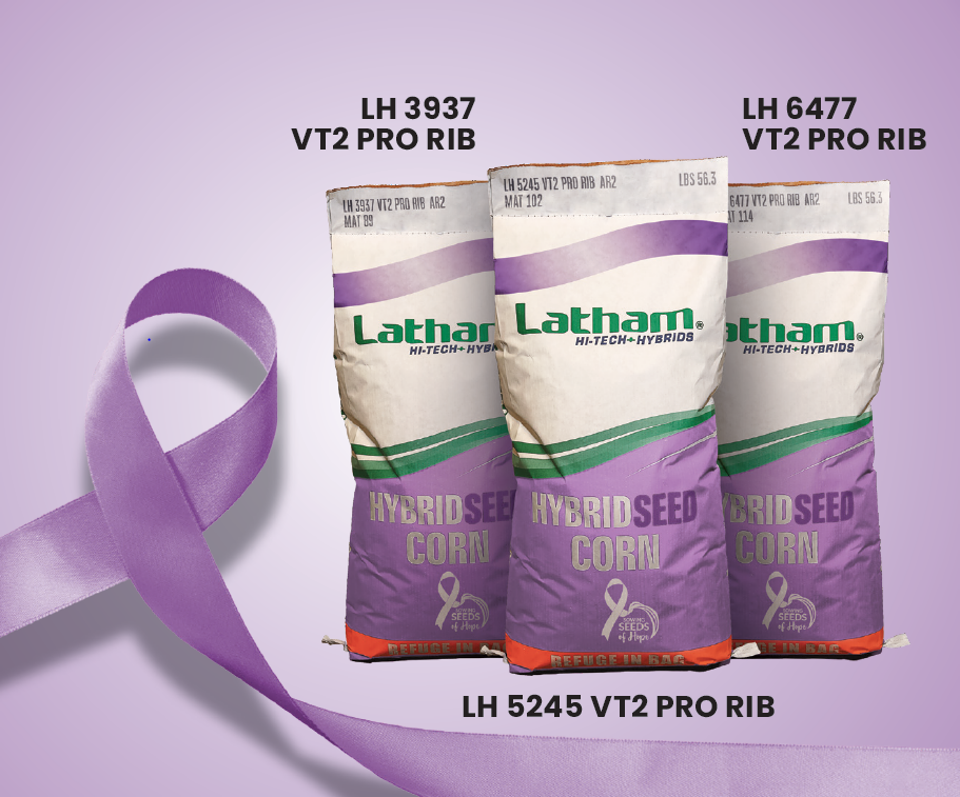
    All Three BagsLatham Hi‑Tech Seeds has launched its “Sowing Seeds of Hope” campaign, a three-year effort to raise $75,000 for the American Cancer Society. How will we reach our goal? For every unit of LH 3937 VT2 PRO, LH 5245 VT2 PRO and LH 6477 VT2 PRO sold, Latham Seeds will donate $1 to the American Cancer Society. Other fundraising efforts include supporting local Relay for Life events and providing an employee donation match.

    September is Blood Cancer Awareness Month and also coincides with the fall harvest day in 2009 when former company president Bill Latham was diagnosed with Acute Myelogenous Leukemia (AML).

    “I can recall that day like it was yesterday,” says third-generation seedsman John Latham, president of family-owned Latham Seeds in Alexander, Iowa. “Dad was doing what he loved, harvesting research plots, when he didn’t feel well at all. We rushed him to a nearby hospital and then he was transferred to Mayo Clinic.”

    Adds Chief Financial Officer Chris Latham, “We could see the look on the doctor’s face and knew it was serious. We didn’t know what AML was, but we learned very quickly.”

    Thanks to medical advancements and a stem cell transplant, Bill Latham’s life was extended for nearly six years. It was invaluable time that allowed Bill to meet his youngest granddaughter and enjoy time with his five grandchildren while also passing down business advice to his sons.

    “The extra years we had with our dad were a gift beyond words,” John says. “Our mom is a two-time cancer survivor. Because the American Cancer Society has provided our family with resources, support and so much hope, we’re committed to help raise cancer awareness and funds.” Watch the video below to learn more about “Sowing Seeds of Hope.”

    To help increase awareness of blood cancers, Latham Seeds is inviting the public to join its team members and sales organization in wearing red clothing.

    “We encourage you to share photos of you and your family members wearing red to Facebook, Twitter and Instagram using the hashtags #ThisIsBloodCancer, #BCAM2022 and #LathamSeeds,” says Shannon Latham, vice president, Latham Seeds.

    “You and your family also can recognize Blood Cancer Awareness Month by enjoying healthy meals at home,” says Shannon Latham. “It just wouldn’t be a Friday on ‘The Field Position’ blog without a recipe. Today we’re sharing one from the American Cancer Society for Tomato and Basil Frittata. Frittatas are a great way to use garden-fresh produce before cooler autumn temperatures arrive. Enjoy!”

    Shannon Latham

    September 23, 2022
    Corn, Crop, General, Seeds of Hope
  • Latham Hi‑Tech Seeds

    The Importance of Corn Planting Date and Depth

    LPAC Picture Resized

    At the Latham Premier Agronomy Center, we have many demonstrations including different corn planting dates and planting depths to show how these two important factors influence yield year after year. Research shows that 50 to 75% of corn yield increases during the past 70 years came from genetic advancements, which leaves 25 to 50% of that yield increase to changes we’ve made to our farming practices.

    Planting date and planting depth are cultural practices that have led to increased corn yield. Fifty years ago, farmers were talking about planting earlier than mid-May. Today we talk about planting earlier than April 15!

    Our adapted hybrids produce the best yields when planted in the first week to 10 days of May. This is usually due to disease, stand loss or slow growth early in the corn life cycle. This is something we know well, and it’s why Latham Hi‑Tech Seeds includes emergence and early vigor scores in our product guide.

    Matching the right hybrid to the right field and planting it at the right time can lead to outstanding yields – but only if you also plant at the proper depth. Planting corn at the proper depth allows the crown to establish approximately three-fourths of an inch below the soil surface.

    Why is crown development so crucial? If the crown is pushed to the soil surface due to shallow planting, at least one set of nodal roots typically establishes above ground. We want nodal roots to develop below ground to anchor the plant and to also increase the corn plant’s drought tolerance. Corn should be planted about 2.5 inches deep, which allows it to establish the crown just below the soil surface. Shallow planting depth causes issues with germination due to dry soils.

    We look forward to harvesting our demo plots at Latham’s Premier Agronomy Center and sharing results with you throughout the summer. Have a safe spring season!

    Did you enjoy this article? We want to (TECH)talk with you! Sign up for our newsletter to receive agronomy articles (and delicious recipes) in your inbox! We’ll talk soon.

    Webspec Admin

    September 15, 2022
    Agronomics, Corn, Crop, Emergence, From the Field, General, Growth Stages
  • Latham Hi‑Tech Seeds

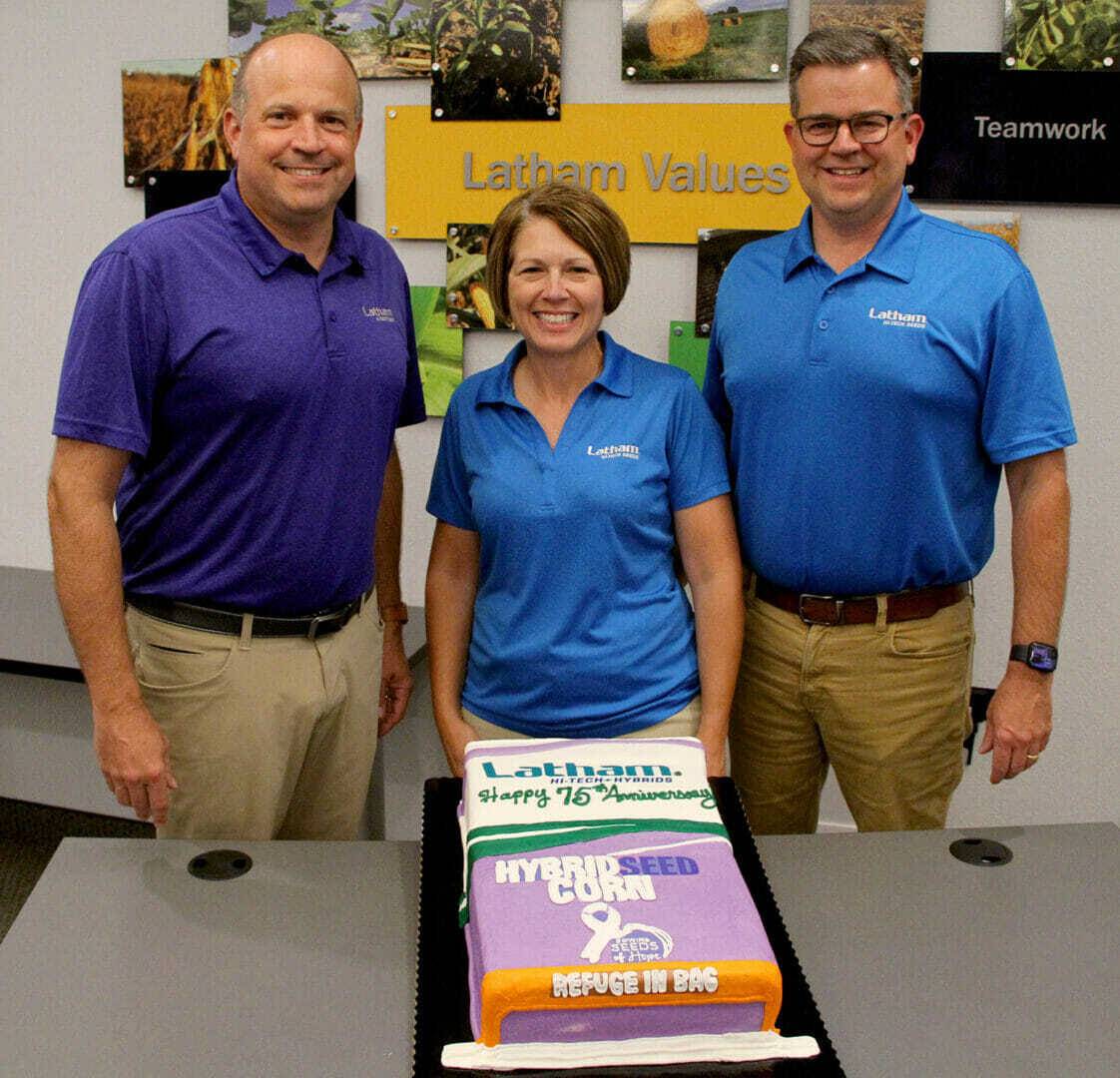
    Latham Seeds Celebrates 75th Anniversary on Family’s Iowa Century Farm

    Chris Shannon John with cake

    From a build-your-own bouquet bar to bouncy houses and in-field demonstrations, the 75th anniversary party for Latham Hi‑Tech Seeds was packed with education and entertainment for the entire family.

    “We feel blessed to be the third generation of Lathams to own and manage our family-owned seed company with headquarters on our Century Farm in North Central Iowa,” says John Latham, president, Latham Hi‑Tech Seeds. “We know that keeping a farm in the family for generations is challenging. That’s one reason we’re proud to sell through a farmer-dealer network. We appreciate working with multi-generational farmers, who plant our seed across the Upper Midwest.”

    Chris Shannon John with cake
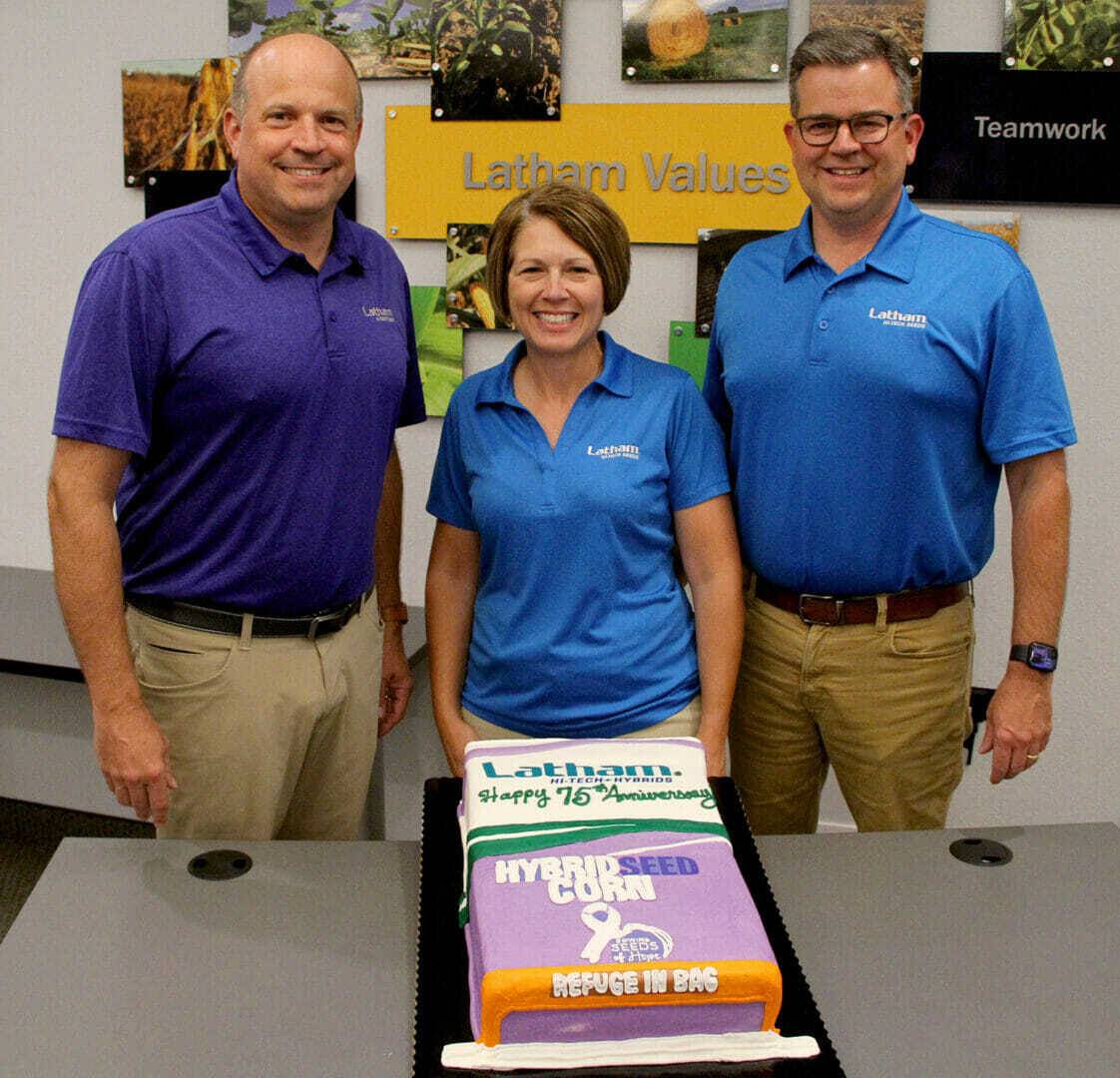
    Chris Latham, Shannon Latham and John Latham (Third Generation)

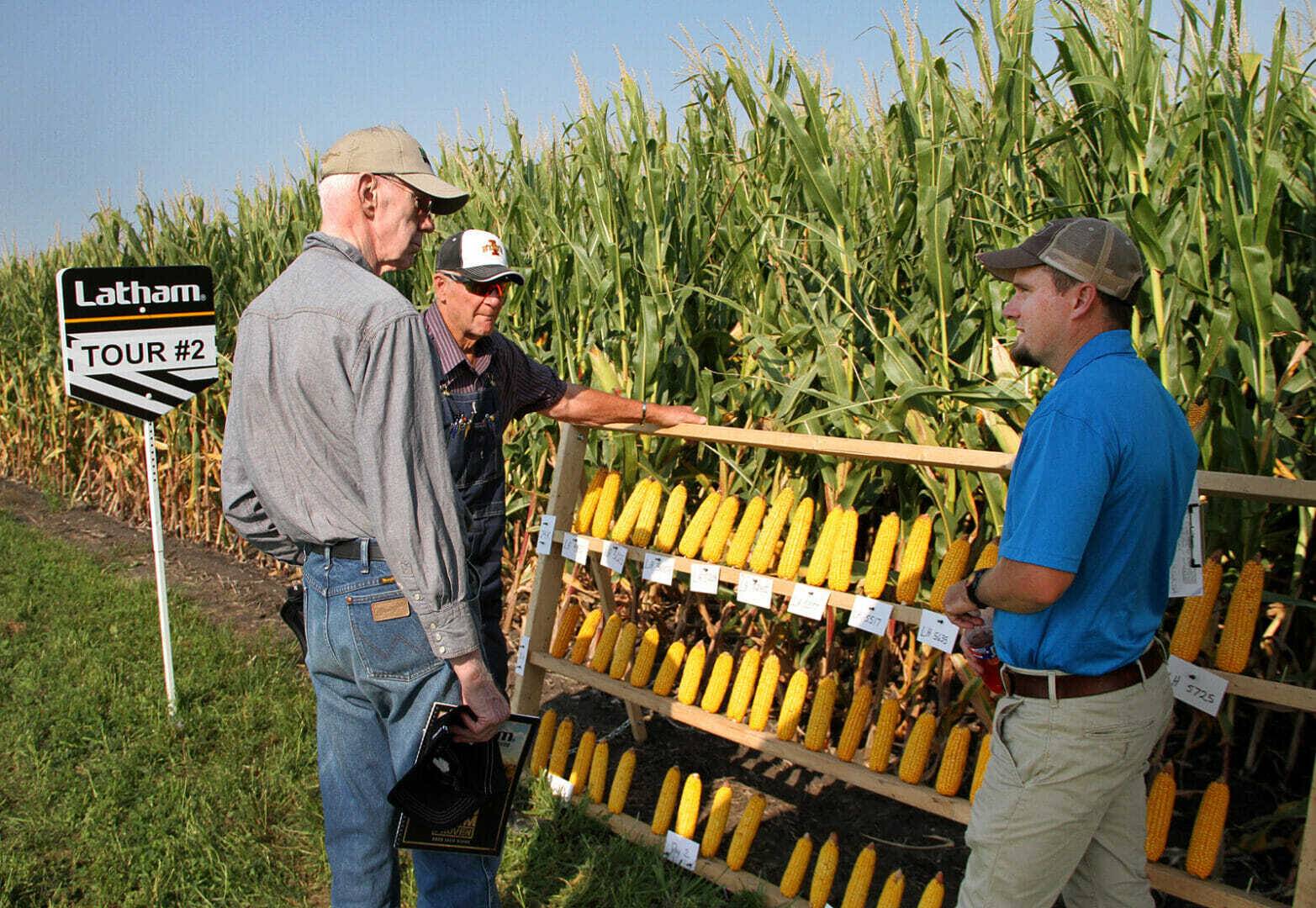
    Last night’s celebration allowed Latham Seeds to showcase the latest seed traits and technologies during the grand opening of the Latham Premier Agronomy Center. There are more than 20 demo plots located within the Premier Agronomy Center, and guests got to choose which four they wanted to attend.

    One of the more popular presentations featured two new trait platforms that protect against corn rootworm (CRW) that many farms are experiencing this season. The first corn hybrid trait platform is SmartStax® PRO, which combines “BT” traits with RNA structure. When eaten by the pest, this package interferes with an “essential-to-life protein” in the insects RNA (thus RNAi) and leads to insect control. This non-BT-based development will help control CRW in a new way plus extend the usefulness of BT-based controls. You will see the SmartStax PRO Trait package in LH 5008 SS PRO and LH 5668 SS PRO hybrids.

    The second trait platform to control CRW is Duracade Viptera™. This package combines BT traits with another BT rootworm trait that attaches uniquely to the insect’s gut when it’s eaten. It also provides above-ground protection from the Viptera trait. You will see the Agrisure Duracade Viptera trait package in LH 5209 DV hybrid. Latham® hybrids with Duracade Viptera and SmartStax PRO traits provide multiple modes of insect control for both above and below ground.

    Phil field tour 2

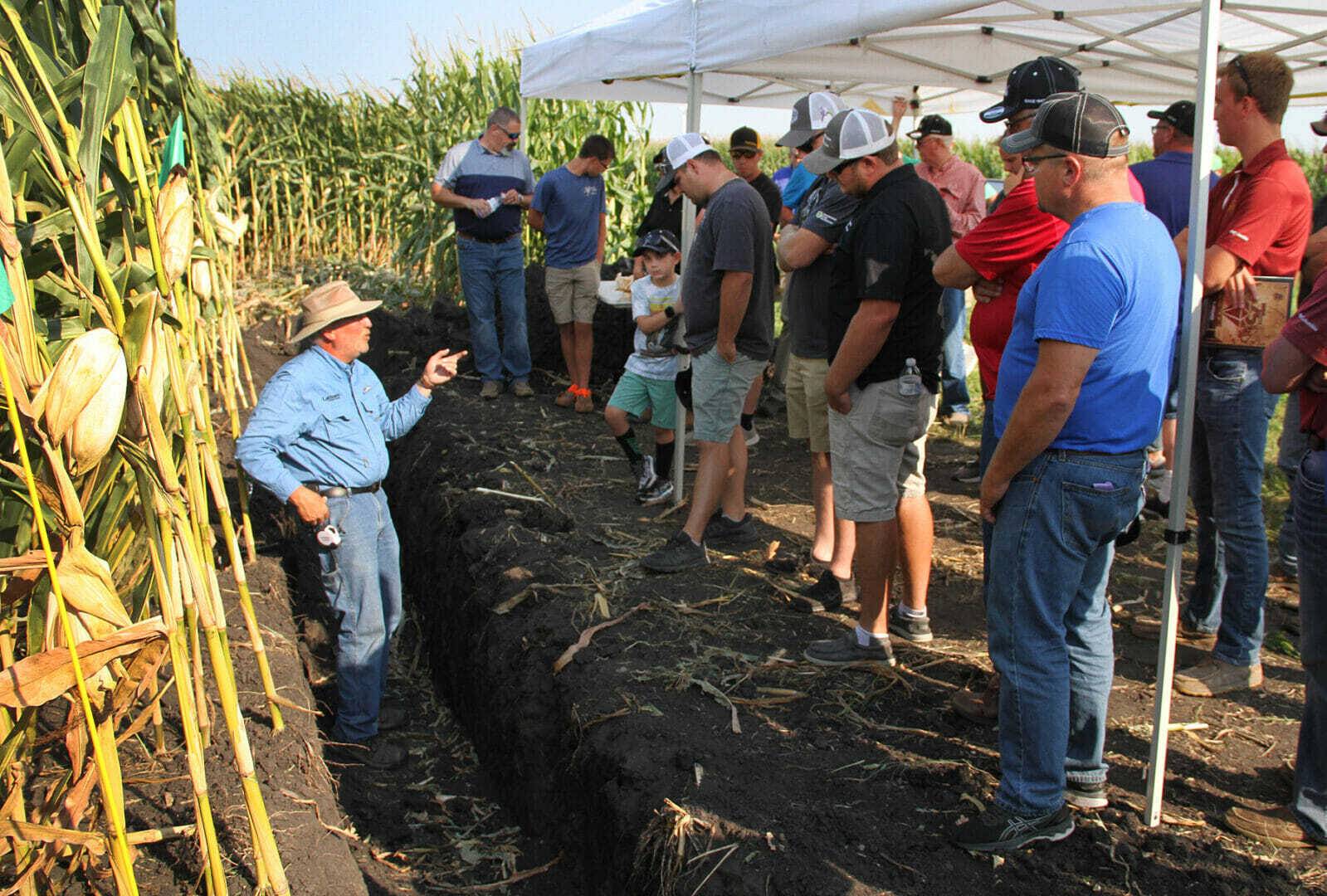
    Another popular tour stop at the Premier Agronomy Center Grand Opening was the root and soil pit. While you can learn a lot from a root dig, you can learn even more when you dig deeper! Corn roots, night crawlers, compaction layers, earthworm channels and even water during a drought can be seen at the three to five-foot depth. Soil that is healthy deep down holds more water, has less run-off and supports plants during challenging weather. Healthy soil is also filled with microbes and worms.

    Lyle root dig pit tour

    Latham’s Agronomy Center field day went from 4 to 8 p.m. Following the field presentations, guests enjoyed Wholly Smoke BBQ, birthday cake and soft serve ice cream cones plus a live performance by Neil Hewitt.

    Wholly Smoke BBQ from Dow, Iowa, had delicious smoked meats along with mac ‘n cheese. Such divine food reminded me of my favorite mac ‘n cheese recipe. Check it out below (courtesy of Cristen Clark, Food & Swine and Iowa Food and Family Project.)

    If you’d like to schedule your own tour of the Premier Agronomy Center, contact your local Latham Seeds rep or call our office at 877-GO-LATHAM (877-465-2842). All growing season long, Latham Seeds provides opportunities to learn from demonstrations in the Premier Agronomy Center. Follow @LathamSeeds on Facebook, Twitter, Instagram and YouTube – and watch Latham’s weekly “Ask the Agronomist” videos.

    Shannon Latham

    September 9, 2022
    Agriculture, Agronomics, Corn, Crop, Food & Family, General, Industry News, Insects, Latham News, Recipes
  • Latham Hi‑Tech Seeds

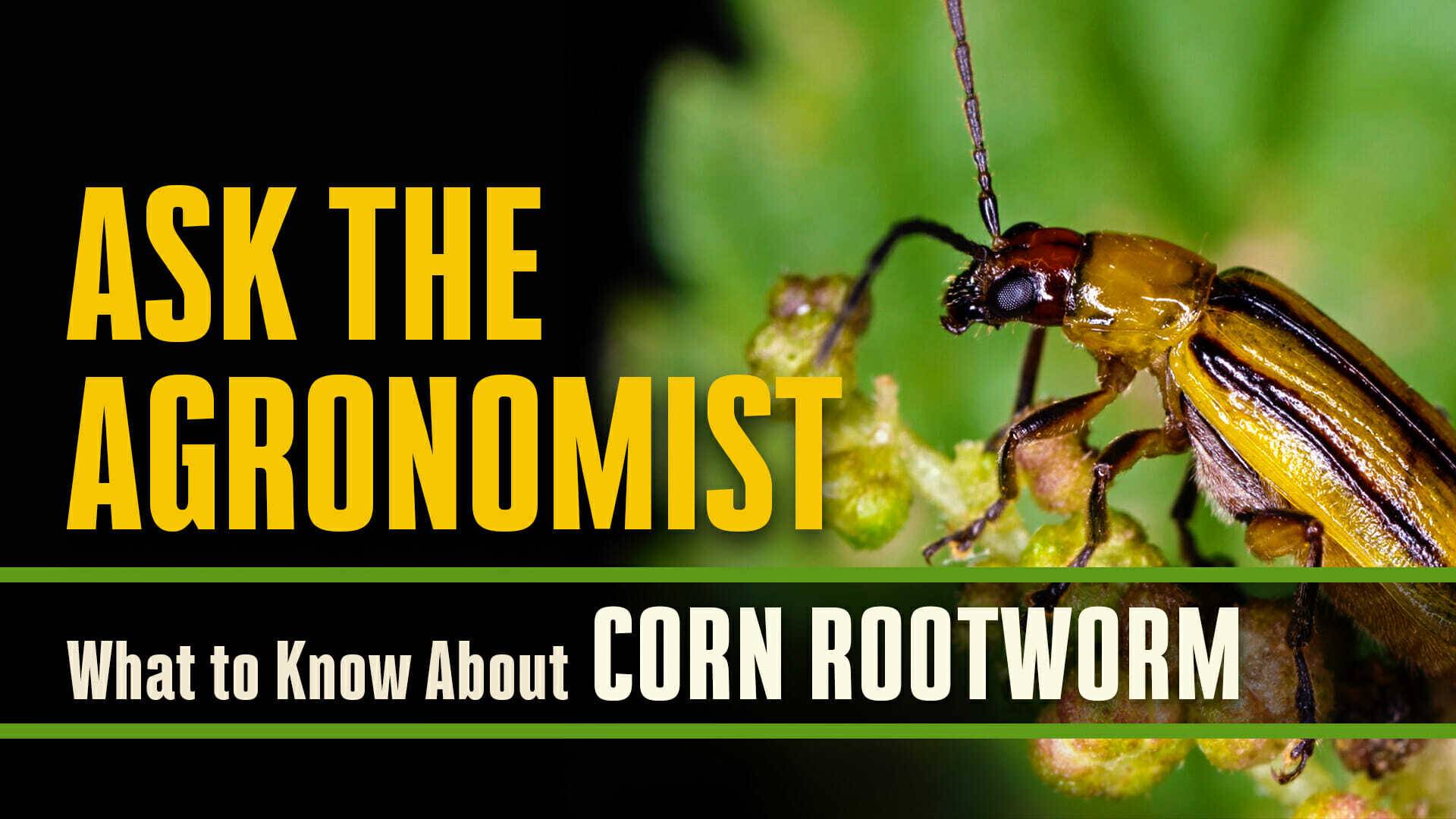
    #AsktheAgronimst – Corn Rootworm

    Ask the agronomist what to know about corn rootworm

    Phil Long, precision agronomy advisor, is scouting in the corn field. He highlights unique characteristics you could see with corn rootworm damage. You may be looking for the wrong thing!

    Shannon Latham

    August 11, 2022
    #AskTheAgronomist, Agronomics, Corn, Crop, From the Field, General, Insects
  • Latham Hi‑Tech Seeds

    Latham’s Premier Agronomy Center Opens for Tours

    LPAC Picture Resized

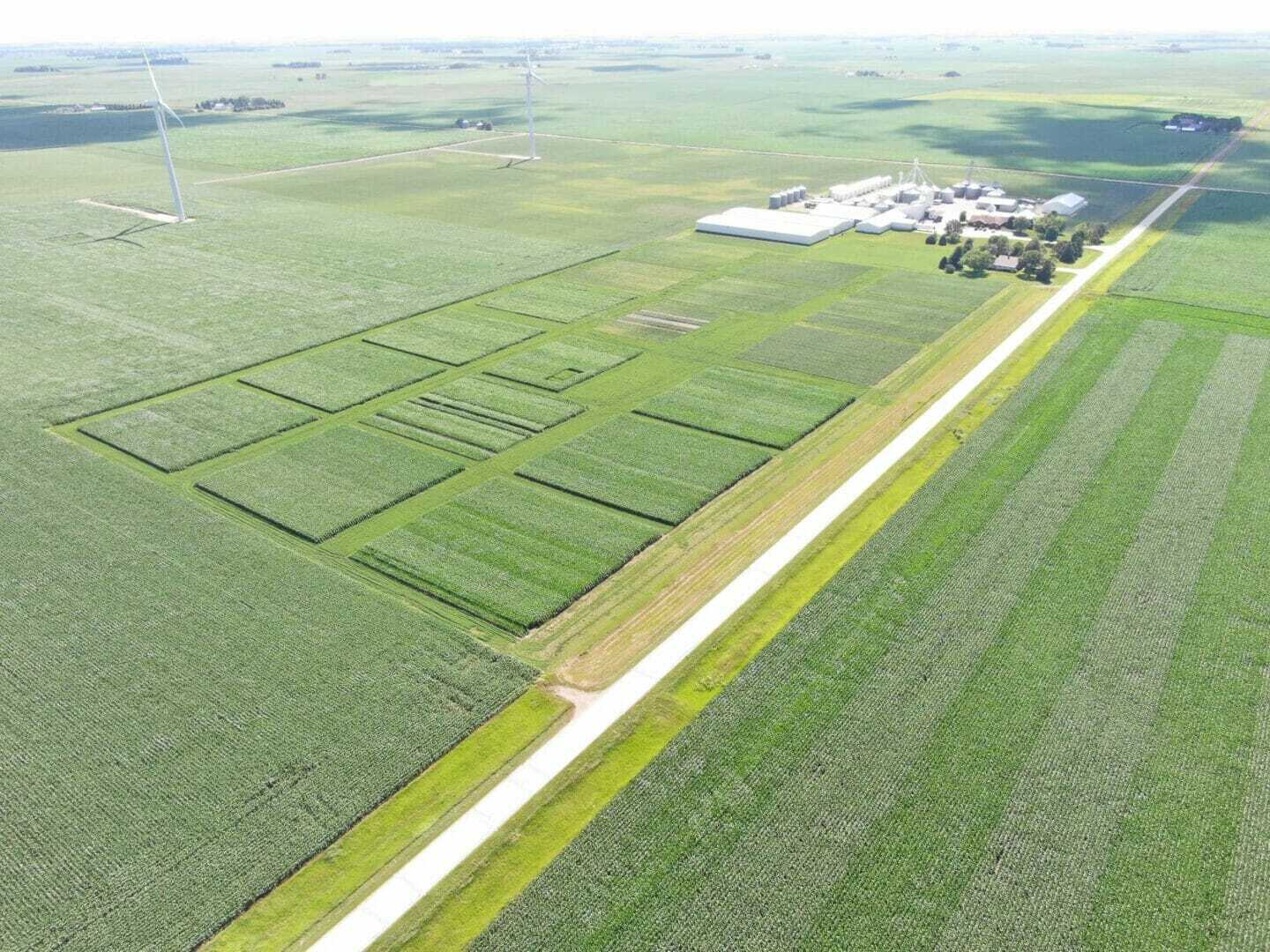
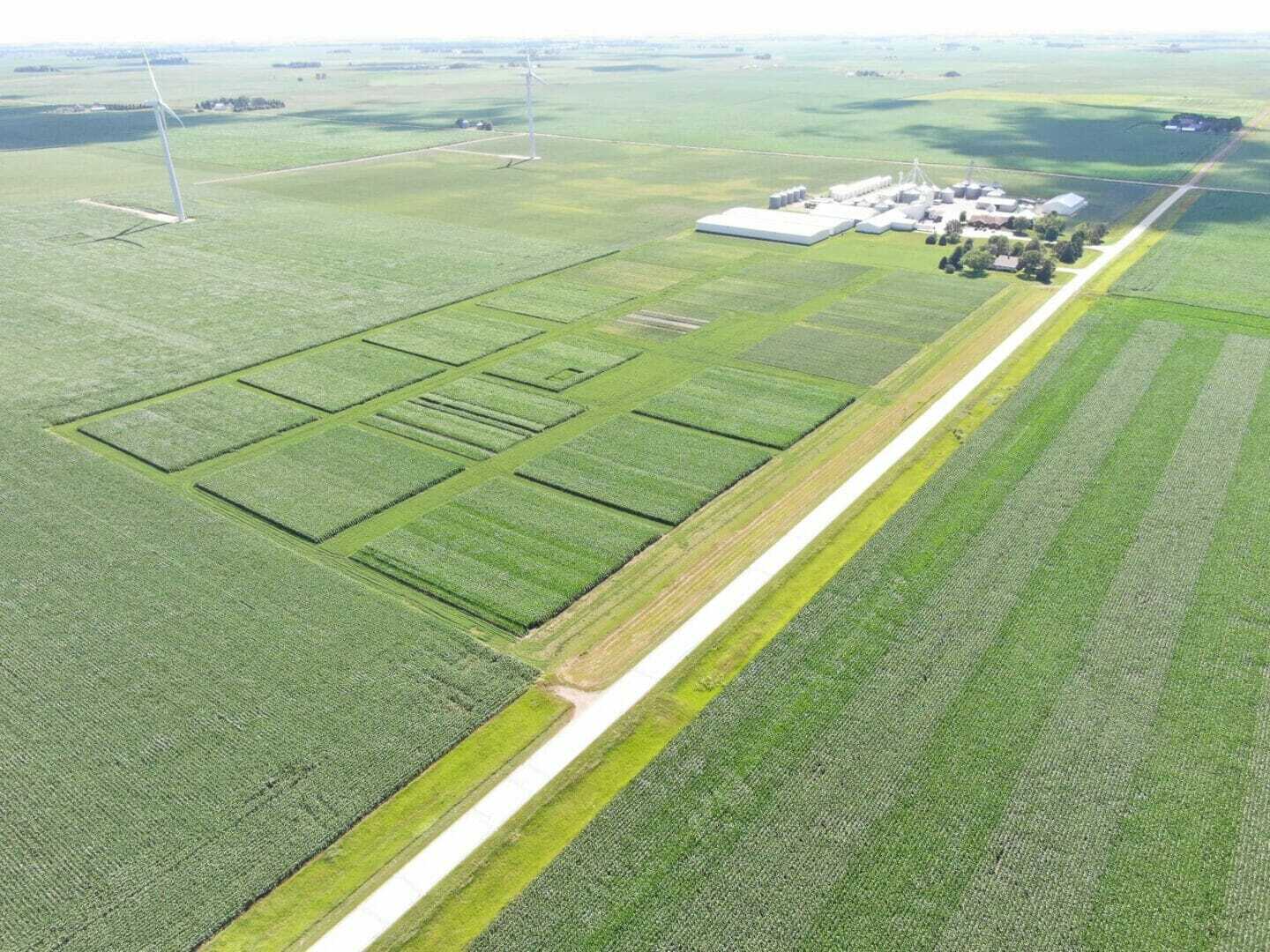
    Latham Hi‑Tech Seeds’ Premier Agronomy Center at our company headquarters in North Iowa provides us with opportunities to collect data on real-world challenges. It also provides us with an opportunity to talk about the exciting new Latham® products, as well as management practices, that help you raise more bushels. This year we have 18 different plots (10 corn and 8 soybean) to demonstrate different techniques.LPAC Picture Resized

    Interested in seeing Latham’s Premier Agronomy Center? Plan a visit! Latham Dealers are encouraged to make arrangements with their regional sales manager (RSM), so they can bring their customers throughout the growing season. We will be open for public tours on Thursday, Sept. 8, at 4 p.m.

    Here’s what you can see inside Latham’s Premier Agronomy Center… As you drive west on 180th Street in Alexander, Iowa, you will see our Latham Showcase plots featuring our top corn and soybean products. Next to that are corn and soybean seed treatment demonstration plots. I also planted my hybrid stress research up front. Twenty different Latham hybrids were planted from 22,000 to 36,000 plants per acre, so we can pinpoint when each hybrid flexes and how we can better manage them in-season.

    The second tier of plots contains high-yield plots (corn/beans) where we “throw the kitchen sink at it,” so to speak, to try to add some extra bushels. Our soybean Iron Deficiency Chlorosis (IDC) plot uses tactics like in-furrow chelated iron products with increasing population to overcome the challenges IDC can bring. We have a silage demonstration plot with a planting date demonstration. You’ll also see a sneak peak of Latham’s corn breeding program alongside some great observation plots featuring planting depth.

    The third tier of plots are “long-term plots” that include cover crops, no-till and continuous corn. These practices come with many challenges, so we have several different products/treatments including in-furrow fertilizer, biologicals, in-furrow fungicide, and biological products for providing nitrogen to corn. We also have included herbicide demonstrations, showing how cover crops can increase water infiltration during pounding rains, as well as also reduce herbicide costs and improve weed control in soybeans.

    All growing season long we’re providing opportunities to learn from our demonstrations in the Premier Agronomy Center. Follow @LathamSeeds on Facebook, Twitter, Instagram and YouTube. We share our weekly “Ask the Agronomist” videos, as well as season-specific information.

    Phil Long

    July 27, 2022
    #FromTheField Crop Reports, Agronomics, Corn, Crop, Fertility, From the Field, Fungicide, General, Growth Stages, Insects, Precision Ag, Season, Seed Treatment, Soil, Soybeans, Summer, Weed Control
Previous Page
1 2 3 4 5 6 … 36
Next Page

Latham Hi‑Tech Seeds

131 180th Street | Alexander, IA 50420

(641) 692-3258

SIGNUP FOR OUR NEWSLETTER
  • Contact
  • Legal
  • Dealer Center
  • Seedware Login
  • Latham Gear

© 2025 Latham Hi‑Tech Seeds. All rights reserved. | Iowa Web Design by Webspec | Privacy Policy

Latham® Hi-Tech Seeds is a trademark of M.S. Technologies, L.L.C., 103 Avenue D, West Point, IA 52656.