Latham Hi-Tech Seeds

(641) 692-3258

  • Home
  • Products
    • Corn
    • Soybeans
    • Alfalfa
    • Corn Silage
    • Seed Guide
  • Performance
  • Find a Rep
  • Media
    • Blog
    • News
    • Videos
    • Podcasts
    • TECHTalk
  • About Us
    • Company History
    • Our Mission
    • Careers
    • Become a Rep
    • Sowing Seeds of Hope
  • Contact Us
  • Latham Hi‑Tech Seeds

    Key Dates for Switching Maturities

    Bart 2

    Each day we turn the calendar, I receive more calls from Latham® dealers and farmers asking whether they should change maturities.  Keep in mind, the object is to achieve maximum yield potential for this crop.  When you switch maturities, you forfeit maximum potential and have essentially decided to lower your yield expectations!

    Based on my experiences over the past 40 years – as well as research findings from many Midwest land grant institutions – I can tell you with confidence that full-season hybrids and varieties outperform early maturing hybrids and varieties.  Most people jump the gun and make the switch way too soon.  Corn planted in mid-June can make decent yields, and there’s no need to switch from corn to soybeans until after that.

    There becomes a point in time where the advantages of planting a full-season hybrid diminishes to the point where shifting to a shorter-season hybrid or variety will generally result in drier corn and higher yields come fall.  Below is a summary of factors to consider when deciding whether to switch corn or soybean maturities.

    CORN

    I’ll use northern Iowa and southern Minnesota as an example.  If your maturity range is 98- to 109-days (which is what I use for the Latham Research Farm), then you should generally not deviate from those maturities until at least May 25.  If all you have left to plant is your 98-day hybrids, then you can safely extend your planting window to about June 7-10.  On the other hand, if you only have your 109-day hybrids left to plant, you’ll probably be better off switching to 95- or 99-day products.

    That brings us to the next subject… if you must switch, how early of a hybrid is needed?  You don’t need to take it to extreme and switch from 109 RM to an 85-day hybrid or something equally silly!  Research has proven that it pays to stay closer to your “normal” maturity.  Switch to hybrids that are about 5 to 7 relative maturity units earlier than full season for the region.  Yields in this scenario will be greatly improved if northern Iowa and southern Minnesota farmers (from the example above) move toward a 92- to 95-day hybrid that is more closely adapted to the area.

    The decision to switch maturity with delayed corn planting is difficult because of so many variables including: available GDUs, first frost date and fall drying conditions.  With this in mind, here are some general guidelines for Iowa farmers:

    Location
    within Iowa
    Full Season RM Switch to
    on May 25
    Switch to
    on June 10
    South of U.S. 92 114-117 108-111 105-109
    Central 108-115 104-110 100-106
    North of U.S. 20 100-109 96-105 94-100

    For your convenience, below are few links to related articles: Adjust this information depending on where you farm, but make your decision is based on sound research and not “coffee shop facts.”  Just because your neighbor is switching doesn’t mean it’s the best decision.  Conduct a little research of your own before deciding what might be best for your operation.

    • Soybean Planting Decision Tool by Iowa State University Extension
    • Late Corn Planting Options by Iowa State University Extension
    • Corn Planting Guide by South Dakota State Extension
    • Considerations for Late Planted Corn by North Dakota State University
    • Soybean Planting Date and Maturity Considerations by University of Wisconsin-Madison Extension
    • Considerations for Late-Planted Corn in Minnesota by University of Minnesota Extension

    SOYBEANS

    There is absolutely no reason to start switching soybean maturities until at least mid-June.  I use June 20 as our cutoff here in North Central Iowa, but again, it depends on what you were planning to plant in the first place.  In this area, bean maturities range from 1.8 to 2.7.  L 2482 R2’s are still good to plant in this region until mid-June as we’ve done it before with great results.

    Soybeans have even more resiliency when it comes to maturity stretch.  Because soybeans are more “photo period” sensitive, they actually adjust based on the length of the nighttime.  A planting date of June 20 in southern Wisconsin and June 15 in northern Wisconsin, using early maturing varieties, was considered to be the latest practical date by the University of Wisconsin.  Soybeans can be planted in our area as late as the Fourth of July with decent yield results as long as we don’t go into a dry period.
    The 2019 planting season will certainly test our patience!  It’s tough to turn pages off the calendar without putting any seed in the ground, but it’s better to wait a few more days than to mud seed into the ground.  Experts warn that compaction and/or inadequate seed-to-soil contact from planting in wet conditions cause yield reductions for soybean farmers.  During a wet year, it’s even more important for soybean growers to pay close attention to machinery.  Avoiding soil compaction and obtaining good soil closure over seeds will help increase yields.  For more soybean planting tips to boost yields, click here.

    Mark Grundmeier, Product Manager

    May 6, 2019
    Corn, Crop, Rain, Season, Soybeans, Spring, Tech Tuesday, Weather
  • Latham Hi‑Tech Seeds

    Planting Tips with Snow in the Forecast

    57251394 376280106561983 3185295454933876736 n

    LIBSYN header 2 01

    Join us this morning on #AskTheAgronomist as we discuss pertinent planting tips with the recent addition of snow in the forecast. #LathamSeeds

    https://www.facebook.com/LathamSeeds/videos/376269313229729?sfns=mo

    Laura Cunningham

    April 25, 2019
    #AskTheAgronomist, Corn, Crop, Frost, Season, Soybeans, Spring, Weather
  • Latham Hi‑Tech Seeds

    Cutting Costs in Production

    IMG 2324

    Planting ROIAs prices have dropped over the last two months, farmers are second guessing planting intentions. They are looking to cut costs, and often times cost cutting starts at cutting seed costs. Keeping the hybrids with top yield and proven performance versus picking up a cheaper option is key to end-of-year profit. Cheap seed options can be older genetics, poor performing genetics or even discontinued genetics reaching the end of their life and viability.

    It doesn’t take much to make up for inferior genetics as in perceived seed savings. Cutting $50 a bag is only saving $20 an acre, or roughly seven bushels. One cost savings that may be applicable to North Dakota farmers would be changing from a VT2 PRO to a Roundup Ready 2 trait. Keep the genetic that performs on that particular field and save the difference in trait costs. However, It may require more attention to pests throughout the growing season and an additional cost of an aerial application with insecticide. Check with your Latham® dealer on availability and your agronomist about the rising potential for future pest issues in your area.

    Farmers can add fertility after the crop is established. They can also add weed control after the crop. However, there’s only once chance to place the right seed on the right acre. Seed is truly the foundation for every successful crop. Why limit net farm profitability from the onset?

    Laura Cunningham

    April 17, 2019
    Agronomics, Corn, Crop, Industry News, Season, Seed Technology, Spring, Winter
  • Latham Hi‑Tech Seeds

    Select Plant Genetics to Help You Manage Risks

    IMG 6880

    IMG 6880Webster’s Dictionary defines “risk” in many ways, including a chance that an investment will lose value or something that creates a hazard.

    No matter how one defines risk, it’s a reality of production agriculture. Each decision farmers make comes with varying degrees of risk. That’s why it’s helpful to take an annual inventory of details in your own crop production. Bottom line: Check your production-limiting factors to set yourself up for success.

    “Trust but verify,” is a famous quote by President Ronald Regan that appeals to my data-driven personality. This quote applies to crop production because now is a good time to verify that the seed corn you ordered early is the right hybrid for the majority soil type on the field in which you will plant it. Now is also a good time to ensure you have enough genetic diversity in your crop plan. On page 12 of Latham Seeds 2019 Product Guide, there is a corn placement chart to help you verify that the genetics you have selected for that soil type is the best fit.

    Margins are super tight, and we’re looking for ways to cut costs. If we cut fertility, we risk losing potential yield. Many researchers suggest that up to 60% of yield is dependent upon fertility. If we plant inferior genetics, or place the genetics on the wrong soil type, we run the risk of yield reduction. While this is a review for most, my point is that plant genetics are critical to managing risk.

    Understanding – and acknowledging – the depth of the genetics will pay dividends. I’m a very big believer in planting agronomically-stable products on a percentage of your acres. As margins thin, I look for hybrids with proven stability. I know each farmer has his or her own beliefs, but one thing we have in common is that we’re all trying to manage risk.

    Some risks are outside our control, but we can reduce risk with our input choices.
    • Disease– Select hybrids with superior disease resistance, especially to foliar leaf diseases, if you aren’t planning on investing in a foliar fungicide.
    • Drought– Plant a portfolio of seed products, including planting a percentage of your total acres to a hybrid with unapparelled drought tolerance. It’s about building a system of risk management and finding that delicate balance of hybrids to give you the best “team” possible.
    • Fertility– Some hybrids use nutrients more efficiently than others. Suggestions are shown in the Latham® product guide, and you can talk with your Regional Sales Manager (RSM).

    My hope is that you go into the spring planting season with a sense of confidence, knowing you have done the best job you could with product selection, product placement, fertility and planting conditions. Have a little fun this season and remember to take care of yourself, too!

    Webspec Admin

    April 15, 2019
    Corn, Crop, Industry News, Season, Seed Technology, Spring, Tech Tuesday
  • Latham Hi‑Tech Seeds

    Stalk Lodging

    Stalk Lodging Ohio State (2)
    Stalk Lodging Ohio State (2)
    Credit: The Ohio State University

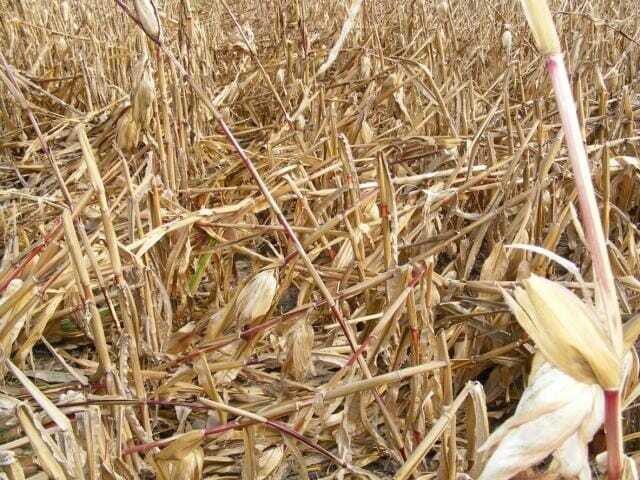
    Stalk lodging can lead to reduced yield and grain quality. Lodging refers to the breakage of the stalk below the ear and is often connected with stalk rots, soil-borne pathogens and other environmental stressors that occur after pollination.  

    Causes of Stalk Lodging  

    Carbohydrate demand during grain fill is the primary driver of stalk lodging. When carbohydrate reserves in corn leaves are depleted during ear development, the plant will begin sourcing the macronutrient from stalks and roots. Environmental stresses can feed into this cycle. For example, warm weather and high temperatures increase plant growth which can lead to high demand for carbohydrates.  

    While energy demand during grain fill is the primary cause of lodging, fungal pathogens can reduce stalk vigor. Stalk rot pathogens can also weaken stalks and are another major cause of lodging. Generally, if more than 10 to 15% of stalks exhibit rotting, stalk lodging is likely to be a significant problem.   

    As it relates to weather, high winds and heavy rainfall can also cause stalks to become physiologically weak and eventually lodge. Injuries from hail or frost damage, or insect feeding that creates lesions on leaves, can reduce the amount of energy created by plants. This leads to a higher use of stalk carbohydrate reserves. 

    Nutrient deficiencies are also a major cause of stalk lodging. Excess nitrogen and low levels of potassium have been associated with reduced stalk quality. Maintaining sufficient potassium levels in corn is especially important as it is the building block for leaf and stalk tissue.  

    Scouting and Treatment Options 

    When scouting for stalk lodging, choose ten consecutive plants across ten different areas of the field. Check for signs of lodging by pinching the stalk at the first or second internode above the ground, or by pushing the plant over 8 to 12 inches at ear level. If the plant fails to stay standing upon exerting force, it is considered lodged.  

    Adjust your harvest plan to harvest lodged corn first before lodging becomes more widespread. Selecting the right corn hybrid for your farm can mitigate issues with insect feeding that would otherwise reduce stalk quality. The level of resistance to stalk lodging among hybrids is highly variant and some have genetically stronger stalks than others. Be sure to consult with your local Latham representative to determine the best management strategy for stalk lodging.  

    Latham Seeds Agronomy Team

    April 1, 2019
    Agronomics, Corn, Crop, Season, Summer
  • Latham Hi‑Tech Seeds

    Physoderma Stalk Rot 

    Physoderma Stalk Rot Crop Protection Network

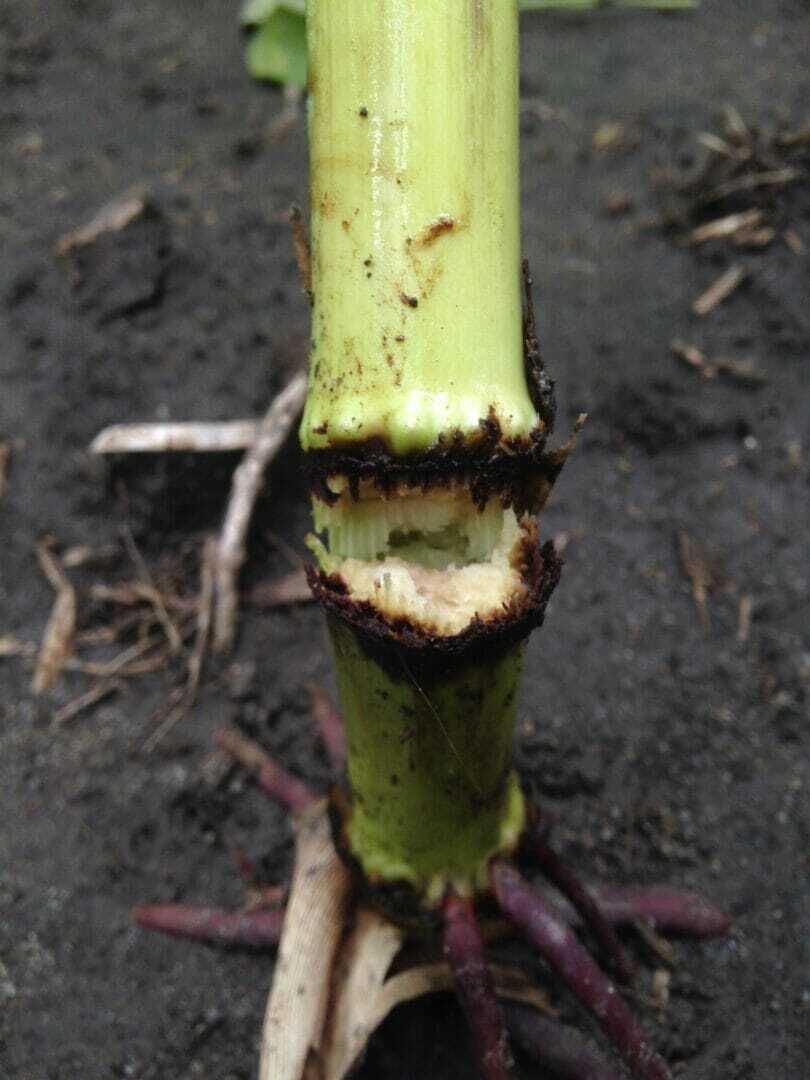
    There are a variety of stalk rots that infect corn, causing extensive damage to crops and losses in yield. Common factors make corn susceptible to stalk rot including warm and wet weather, stress after pollination, fertility issues, stalk boring insects, and the presence of other foliar diseases. There are key signs, symptoms and differences that distinguish the different types of stalk rot.

    Physoderma Stalk Rot Crop Protection Network
    Credit: Crop Protection Network
    Scouting for Signs and Symptoms 

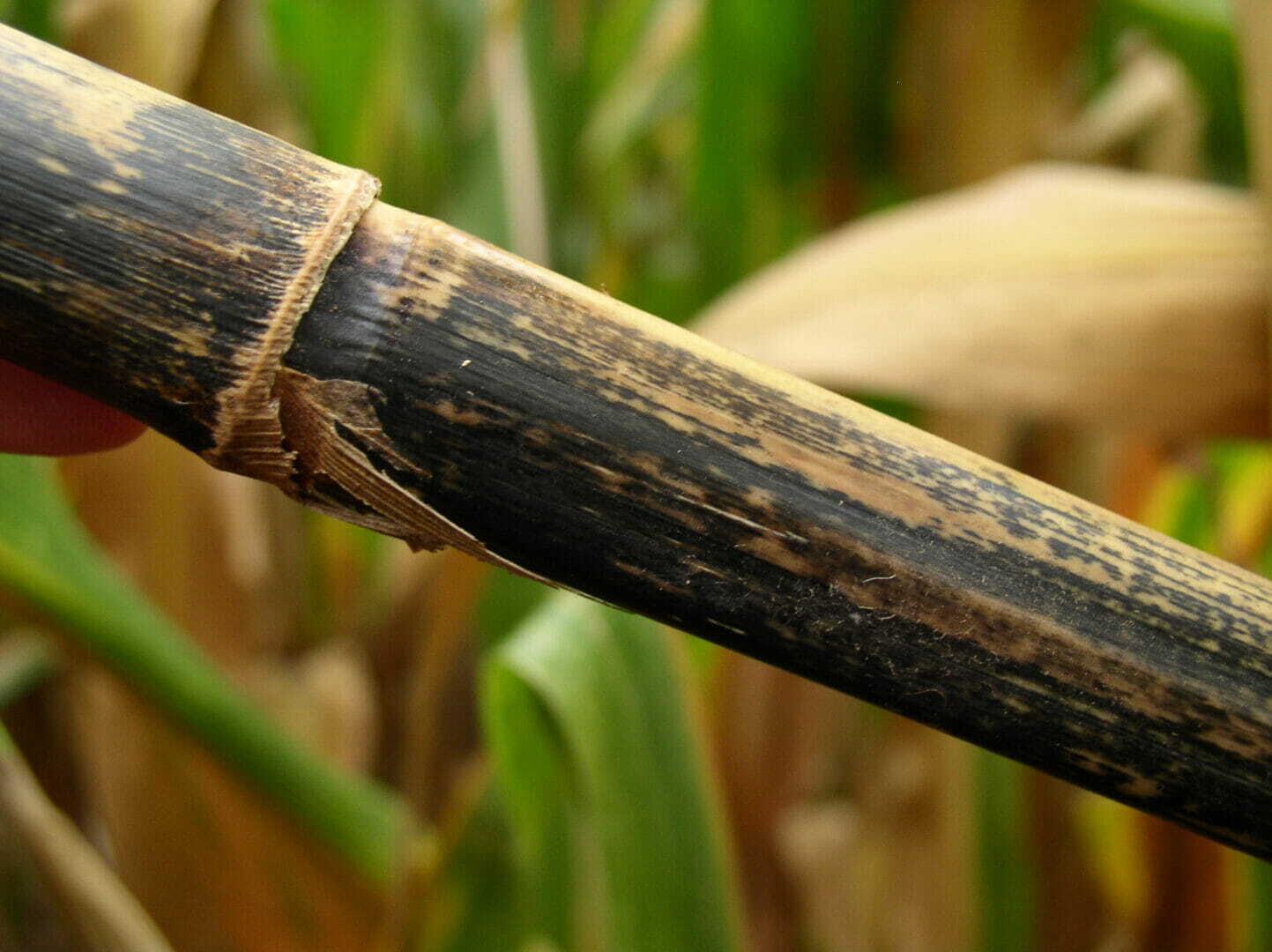
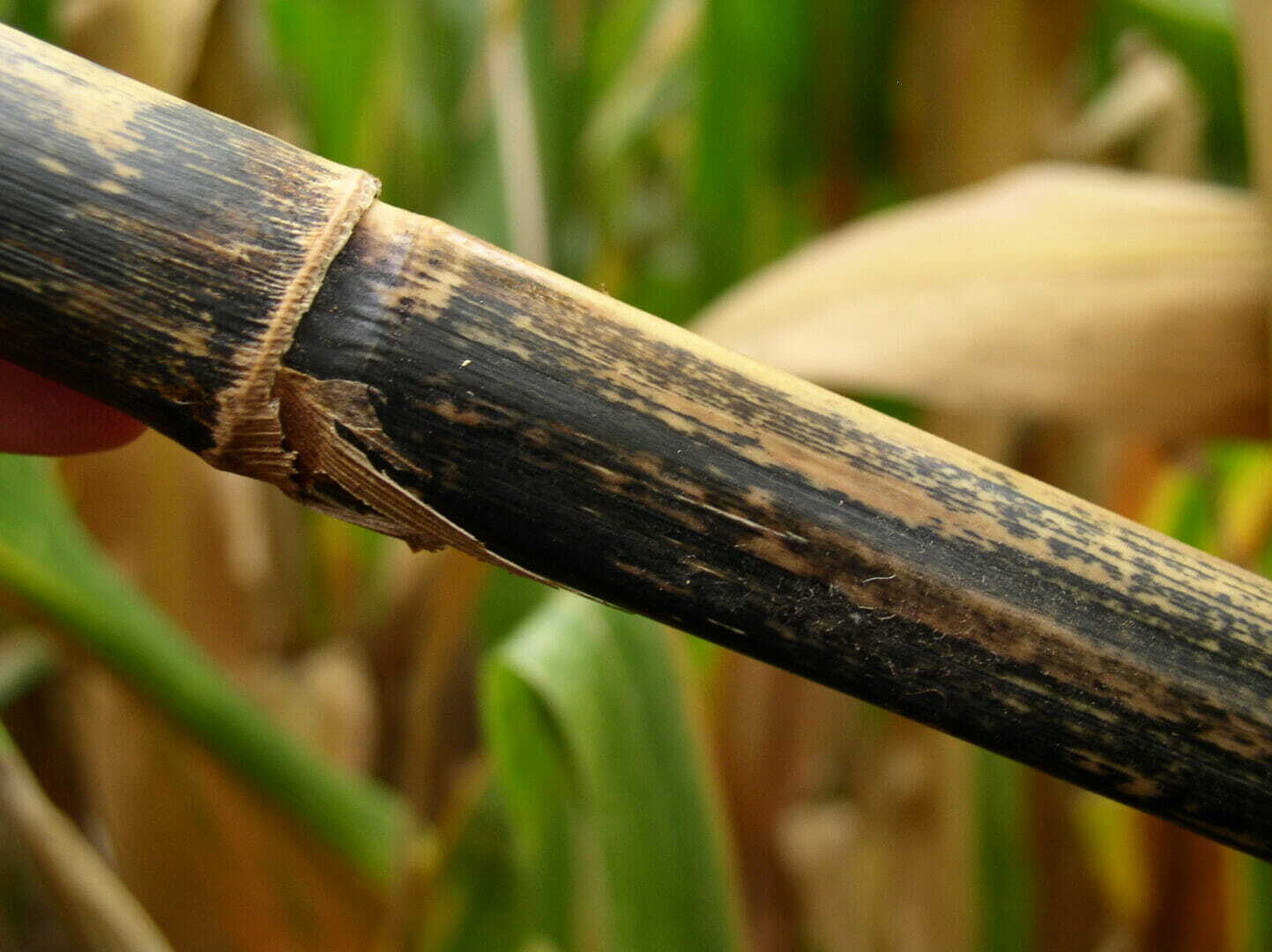
    Physoderma stalk rot is caused by the pathogen Physoderma maydis, the same fungus responsible for causing Physoderma brown spot. The fungal disease seems to be showing up in more and more corn fields each year, but typically shows up on random plants and  and  has minimal impact on yield. Like most stalk rot diseases, warm and wet weather favor the development of Physoderma stalk rot.

    Physoderma stalk rot infects corn between the V4 and V9 stages. The disease is not associated with any foliar signs, so it is important to inspect plants closely at the base. Dark brown or black lesions will appear at the base of the stalk, and rotting of the pith will be observed upon splitting the stalk open. Overtime, blackening of the pith will move to higher nodes. Sporangia can also be found on the outside of nodes and within the rotted pith tissue.

    Scout for symptoms of Physoderma stalk rot across five areas of the field. Stalks will make a distint “pop” and snap at one of the first 3 nodes above the soil line. If more than 10 to 15% of plants exhibit stalk rot, the field should be harvested early.

    Management Strategies 

    With this being a newer disease we are still learning differences in hybrid tolerances to both stalk and foliar phases of this disease.

    As a majority of stalk rots overwinter, one to two-year rotation away from corn and controlling corn residue are key for preventing the return of the disease. Fungicides may also be applied to prevent Physoderma leaf blight , but these studies are in early phases as well given the novel nature of this diesease

    Latham Seeds Agronomy Team

    April 1, 2019
    Agronomics, Corn, Crop, Disease, Fall, Season, Summer
  • Latham Hi‑Tech Seeds

    Corn Aphids 

    Corn Aphids Purdue University (2)
    Corn Aphids Purdue University (2)
    Credit: Purdue University

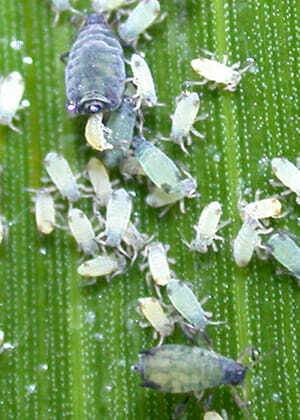
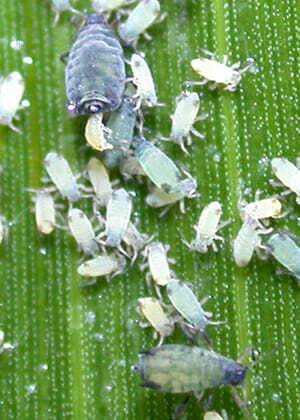
    Corn aphids have the ability to negatively impact yield end of year. Proper identification and management can protect your crop. 

    Identification 

    Corn aphids have a blue-green to gray appearance and are 1/16 inch in length. Aphids extract sap from corn plants and excrete honeydew. The honeydew creates sooty-looking mold that can interfere with pollination.  

    As opposed to laying eggs, female aphids reproduce by giving birth to nymphs. The insects can build large colonies comprised of more than one species such as bird-cherry oat aphids. Aphids are most often wingless, but when the size of their colonies begin to grow, some can form wings to migrate to other corn plants. Corn leaf aphids cannot overwinter and usually migrate to southern states ahead of the cold months. 

    Scouting and Implications 

    Aphids will begin to appear in corn around mid-June and early July. Mature aphids can be found near the tassels, silks and the base of the corn stalk. The insects predominately live in the whorls where they are protected from outside elements. Infected corn plants may exhibit stunting or wilting and curling of the leaves  

    When scouting for aphids, select 20 non-consecutive plants from five different areas of the field. Unroll the whorl to count the number of insects present. The general treatment threshold advised by Iowa State University is when 50% of corn plants have more than 100 aphids per plant. 

    Overall, aphid infestations have been found to reduce grain quality and decrease kernel size. A study from Penn State University finds that 30-40% of aphid-infested corn stalks will become barren or earless. Drought stress can also worsen the impacts of aphid feeding and should be included when considering a treatment plan.  

    Treatment Options 

    The best time to begin manage aphid-infested corn is two to three weeks prior to tasseling. Corn plants with aphid colonies above the ear are more susceptible to yield loss than plants with aphids found below the ear.  

    Since aphids mainly colonize inside corn whorls, spraying insecticides is not the most effective solution. Insecticide application is most effective when aphids are found on the outermost areas of leaves.  If corn plants that have reached the hard dent stage, applying insecticides will not pay. 

    Fungi and other beneficial insects including lacewings and lady beetles can reduce aphid populations. Look for signs of bloating or discoloration in aphids – this could be evidence of fungi at work. If over 20% of aphids appear to be parasitized, consider holding off on a management plan. Be sure to talk with your local Latham representative to develop an effective treatment strategy for managing aphids.  


    Latham Seeds Agronomy Team

    April 1, 2019
    Agronomics, Corn, Crop, Insects, Season, Summer
  • Latham Hi‑Tech Seeds

    Japanese Beetle in Corn and Soybeans

    Japanese Beetle Purdue (1)
    Japanese Beetle Purdue (1)
    Credit: Purdue University

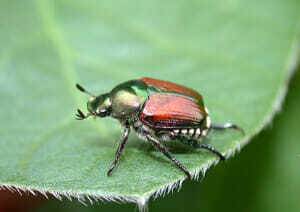
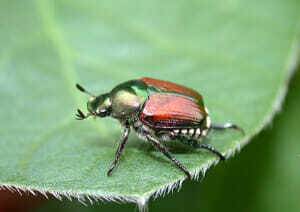
    Japanese beetles cause damage to corn by interfering with pollination and lead to defoliation in soybeans. Their distinct metallic-green heads and bronze wings make them distinguishable from other look-alike beetles. The insect undergoes one life cycle per year with adults reaching 5/16 inches in length.  

    Eggs are laid during July and August and overwinter until temperatures rise in the spring. For both corn and soybeans, adults migrate from grass and begin feeding in late May or early June. The peak emergence for Japanese beetles occurs 4 to 5 weeks after feeding begins.  

    Japanese beetles tend to feed in concentrated areas and in groups. After the female burrows into the soil, she will lay 1 to 4 eggs at a time for several weeks. Adult grubs feed on turf grass in late summer and early spring before emerging to feed on crops.

    Corn Defoliation and Yield Loss (1)Corn  

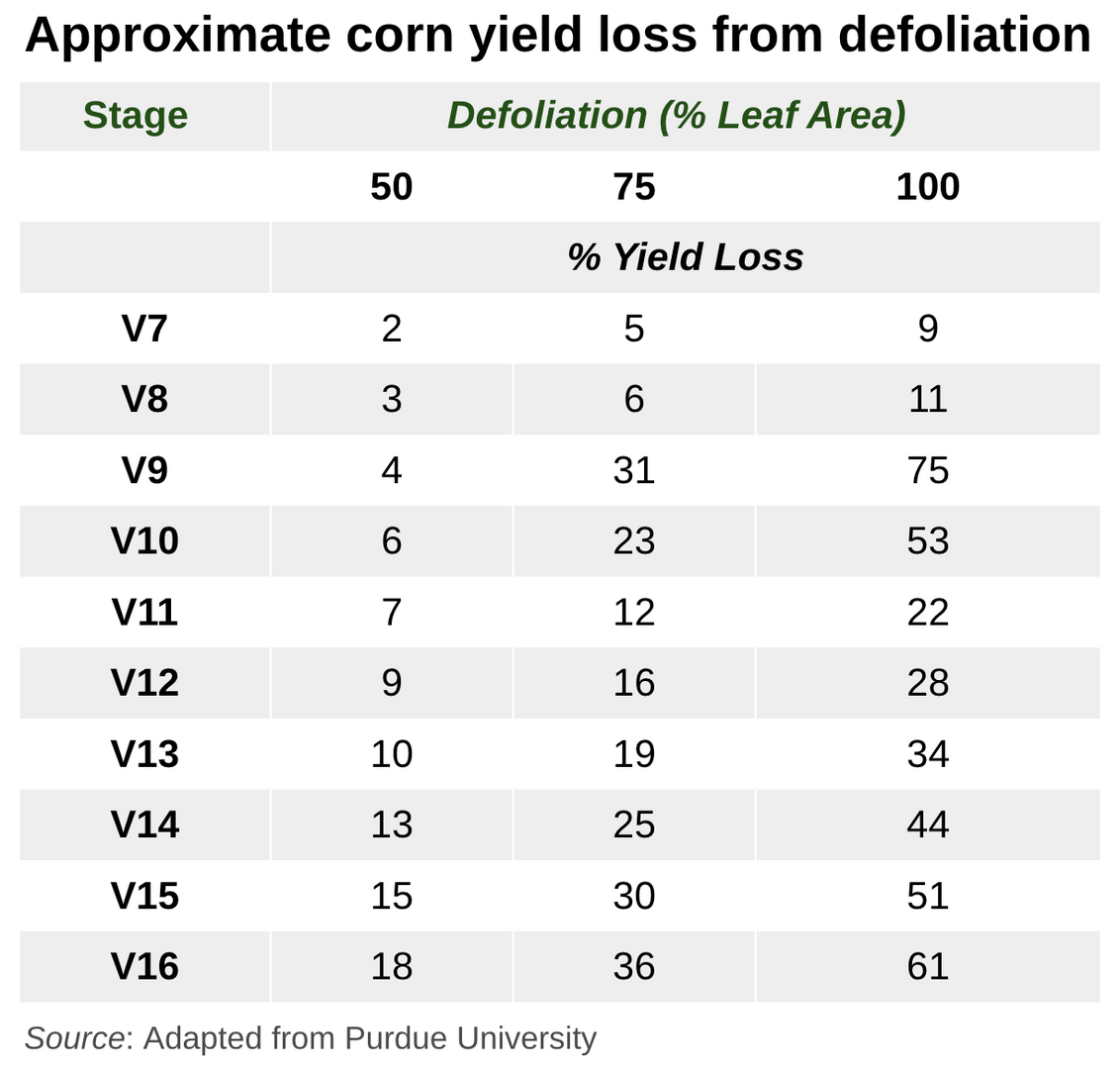
    In corn, Japanese beetles can feed on silks and interfere with pollination. Though leaf feeding in corn is possible, a majority of the economic impacts are attributed to silk feeding. Plants should be treated if there are three or more beetles per ear. 

    Research from the University of Tennessee found that repeated clipping of silks did not always lead to yield loss. More importantly, the environment has a stronger influence on the damage Japanese beetles can cause. Higher yield loss in infested corn plants that were under drought stress as opposed to plants that were not.  

    Soybeans  

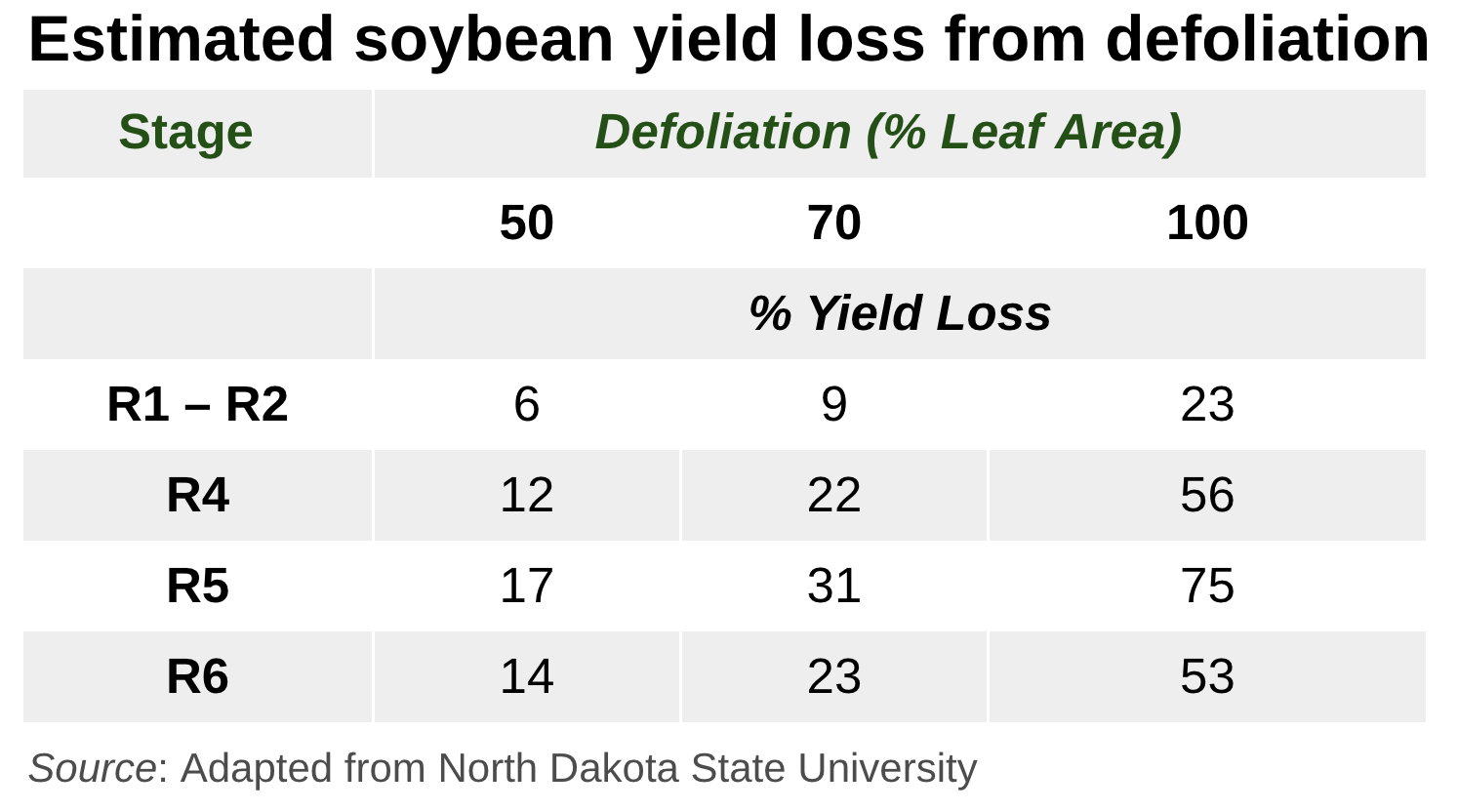
    Soybean Defoliation and Yield Loss (1)In soybeans, the beetle strictly feeds on the soft tissue bordering leaf veins, leaving them skeletonized. Soybeans growing in sandy soils are even more susceptible to defoliation from Japanese beetles. Though yield loss from Japanese beetles has not been quantified, figures from North Dakota State University (see table) point to the general yield impacts from defoliation. 

    Research from the University of Nebraska advises treatment when damage reaches 30% defoliation before bloom or 20% defoliation during flowering. As long as beetles appear to be actively feeding, insecticide application is advised.   

    Other Considerations  

    Japanese beetles are easily confused with other species of beetles, including masked chafers and May or June beetles. Be sure to consult with your local Latham representative to confirm suspected Japanese beetle infestations and determine the right treatment plan.  

    __________ 

    Photo Credit: Purdue University 


    Latham Seeds Agronomy Team

    April 1, 2019
    Agronomics, Corn, Crop, Insects, Season, Soybeans, Summer
  • Latham Hi‑Tech Seeds

    Anthracnose Stalk Rot

    OLYMPUS DIGITAL CAMERA
    OLYMPUS DIGITAL CAMERA
    Credit: Crop Protection Network

    There are a variety of stalk rots that infect corn, causing extensive damage to crops and losses in yield. Common factors make corn susceptible to stalk rot including warm and wet weather, stress after pollination, fertility issues, stalk boring insects, and the presence of other foliar diseases. There are key signs, symptoms and differences that distinguish the different types of stalk rot.

    Anthracnose stalk rot is the most common type of stalk rot and is caused by the fungus Colletotrichum graminicola. The fungus is favored by wet, warm weather and overwinters in corn residue. Signs of the disease will be observed four to six weeks following pollination.

    Scouting for Signs and Symptoms  

    The disease undergoes three phases with distinct signs and symptoms:

    • In the first phase, foliar lesions will appear in the early part of the growing season.  The leaf blight will begin on the lowest leaves, and will reach the upper leaves by late season.
    • During the second phase, top-dieback will appear in the middle part of the season after tasseling, killing the parts of the plant located above the ear.
    • In the third phase, shiny black lesions will appear on outside surface of stalks. Look for setae, or bristles that cover the surface of the stalk. A hand lens can be used to look for the bristle-like texture and black dots in the center of lesions.

    Stalks will exhibit fragility and appear to be brittle when handled. Different from other forms of stalk rot, anthracnose stalk rot will cause plants to lodge at the upper portion of the stalk. Pinching or bending at the nodes can be used to test for stalk lodging.

    Stalk rot can lead to death just before maturity and reduce yield. In addition, plants defoliated from hail damage and those that are nitrogen deficient are at an increased risk for being infected from the stalk rot.

    Management Strategies 

    Planting hybrids with resistance to stalk rots is a helpful defense against these diseases.

    Latham Seeds Agronomy Team

    April 1, 2019
    Agronomics, Corn, Crop, Disease, Fall, Season, Summer
  • Latham Hi‑Tech Seeds

    Rust Diseases in Corn

    Common Rust – Crop Protection Network
    Southern Rust – Crop Protection Network
    Southern Rust. Credit: Crop Protection Network

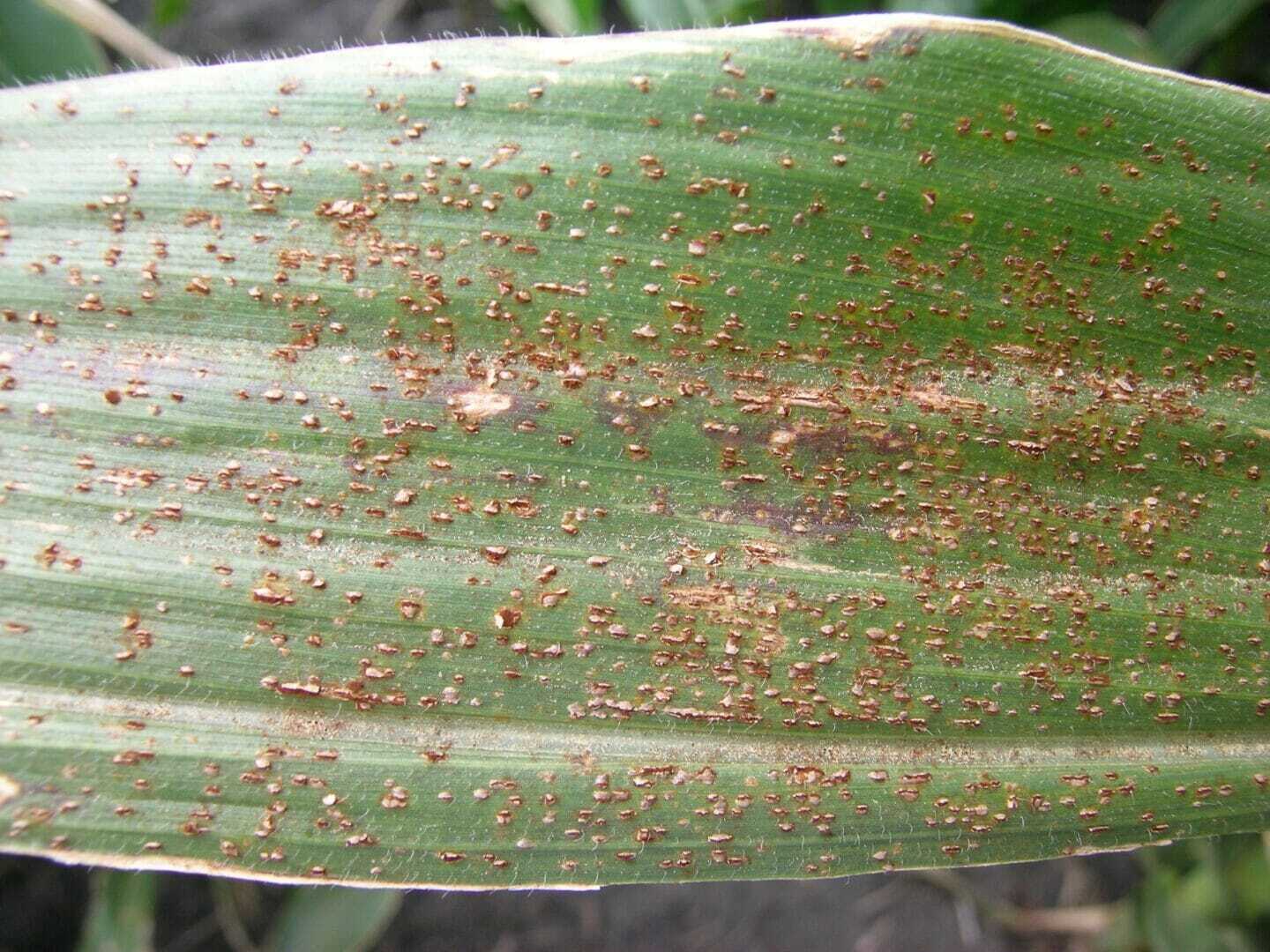
    Common Rust and Southern Rust infect corn in the late summer. The diseases generate raised spores known as “pustules” on the surface of leaves, leading to reduced yield  and poor grain quality.

    Common rust (Puccinia sorghi) and southern rust (Puccinia polysora) fungi are unable to overwinter in the Midwest and require a host plant to remain alive. The spores created by rust diseases are transported by wind to the Midwest from Southern states.

    Temperatures ranging from 61–77° fuel the growth of rust diseases. Cool and humid temperatures, especially when exhibited overnight, can further drive the development of the fungi.

    As long as the weather conditions are right for rust diseases, the cycle of spore development will continue. The return of hot and dry weather can prevent further development of the fungus and kill off the spores.

    Implications  

    Rust can reduce yield and decrease grain quality. Foliar damage from rust diseases can interfere with water  transpirationand reduce photosynthetic leaf area.

    Nutrients designated to support plant growth are rerouted in response to the damage incurred by leaves. Damage from rust diseases deplete carbohydrate reserves in corn leaves. As a result, the plant will begin sourcing the nutrients from stalks and roots, leading to reduced yield and stalk rot.

    Common Rust – Crop Protection Network
    Common Rust. Credit: Crop Protection Network
    Scouting for Rust Diseases 

    While common rust has less of an impact on yield, southern rust has been found to reduce yield by 25 bu/acre in corn with no fungicide application. The fungi can begin to infect plants under favorable conditions in as little as six hours.

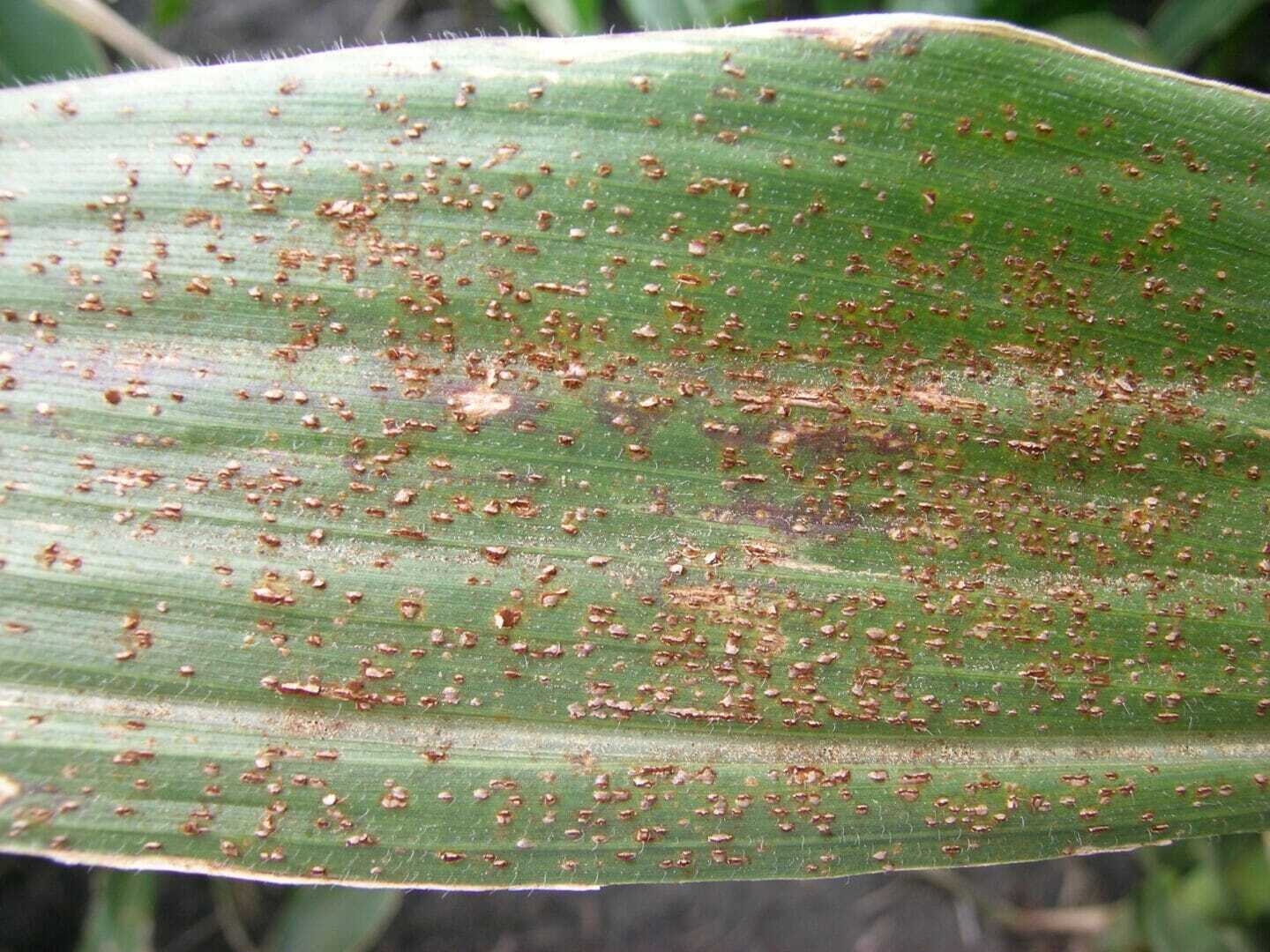
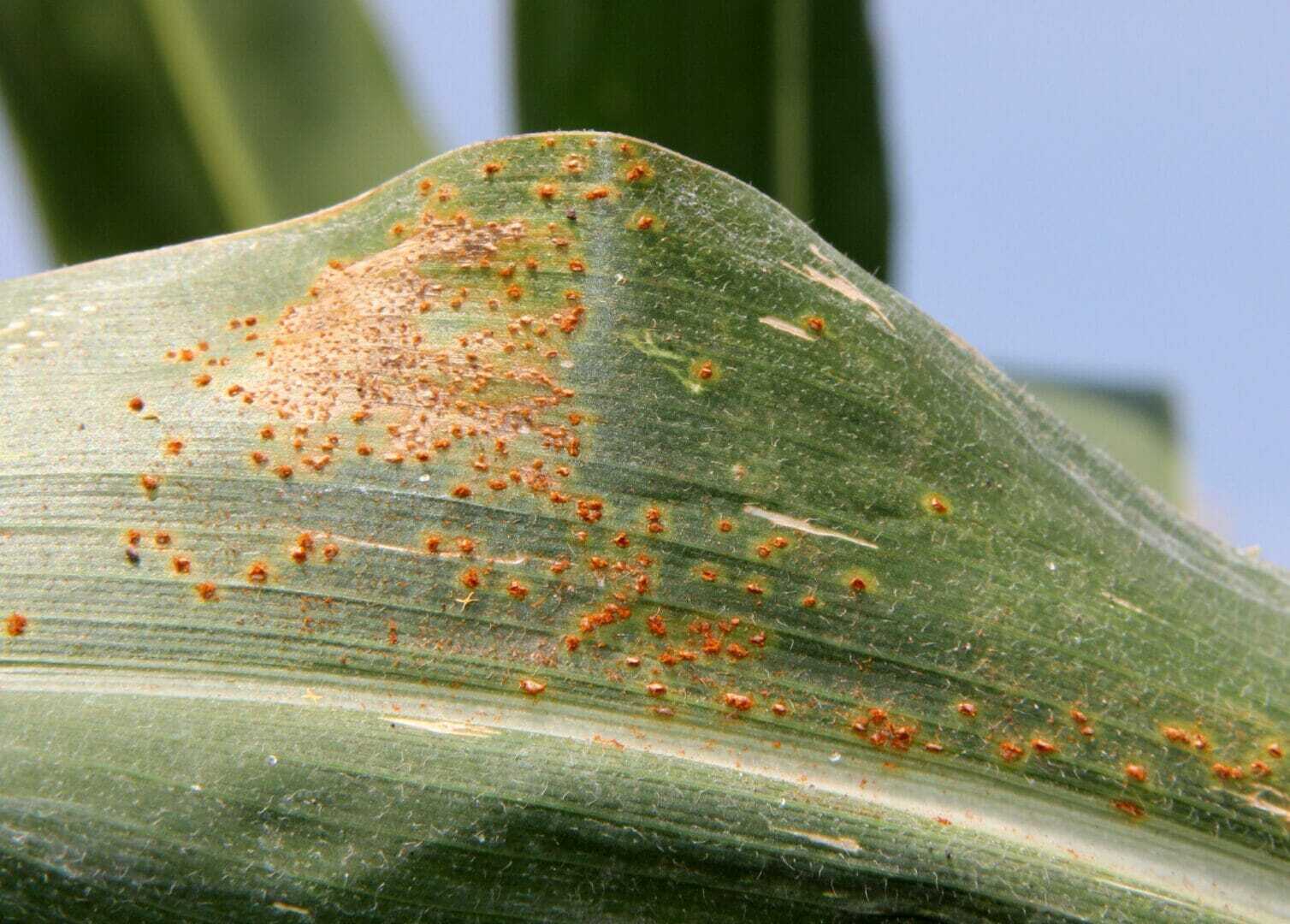
    Southern rust signs are evident  on the upper leaf surface and are round, as opposed to elongated in plants infected with common rust. The pustules will be orange compared to the darker color of common rust. Overtime, southern rust pustules will become brown or black.

    Common rust pustules are found on the upper and lower leaf surface and are oblong. Common rust pustules will be brick red in appearance and can coalesce to kill parts of leaves. In order to determine the difference between common and southern rust pustules, use a magnifying lens to inspect the leaf surface.

    Management 

    Planting early is one of the best ways to reduce corn’s vulnerability to rust diseases. Corn planted late in the season is most susceptible to experiencing yield loss and grain damage. Many hybrids are also equipped with resistance to rust diseases, though the extent to which they are protected from the fungus can vary.

    When pustules are observed on 50% of scouted plants, it is advised to begin implementing  a treatment plan. Fungicides can also be used to treat corn infected with common and southern rust. Be sure to consult with your local Latham representative to determine the best management options for rust diseases.


    Latham Seeds Agronomy Team

    April 1, 2019
    Agronomics, Corn, Crop, Disease, Fall, Season, Summer
Previous Page
1 … 16 17 18 19 20 … 36
Next Page

Latham Hi‑Tech Seeds

131 180th Street | Alexander, IA 50420

(641) 692-3258

SIGNUP FOR OUR NEWSLETTER
  • Contact
  • Legal
  • Dealer Center
  • Seedware Login
  • Latham Gear

© 2025 Latham Hi‑Tech Seeds. All rights reserved. | Iowa Web Design by Webspec | Privacy Policy

Latham® Hi-Tech Seeds is a trademark of M.S. Technologies, L.L.C., 103 Avenue D, West Point, IA 52656.