Latham Hi-Tech Seeds

(641) 692-3258

  • Home
  • Products
    • Corn
    • Soybeans
    • Alfalfa
    • Corn Silage
    • Seed Guide
  • Performance
  • Find a Rep
  • Media
    • Blog
    • News
    • Videos
    • Podcasts
    • TECHTalk
  • About Us
    • Company History
    • Our Mission
    • Careers
    • Become a Rep
    • Sowing Seeds of Hope
  • Contact Us
  • Latham Hi‑Tech Seeds

    Time to Begin Early Crop Scouting in 2013

    While some Midwest farmers will get the opportunity to reenter their fields this week, there won’t be much rest for the weary.  With some seed already in the ground, it’s important to start scouting those fields now.

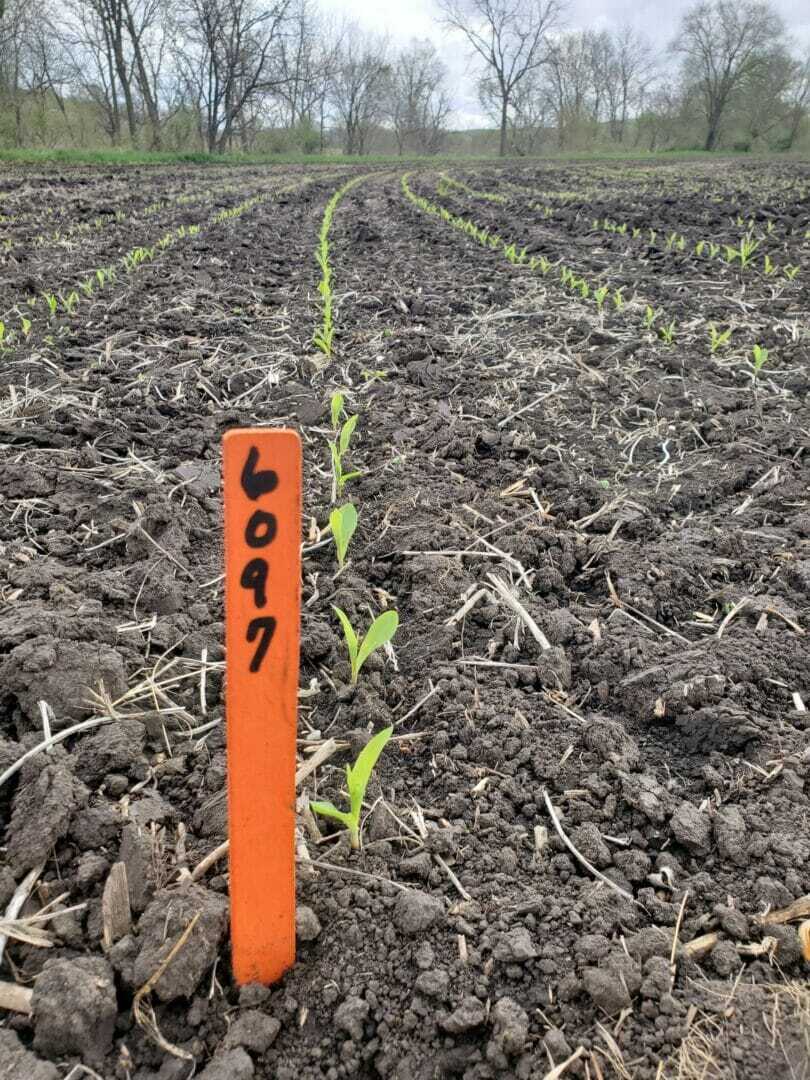
    Post-planting is an ideal time to begin scouting one’s crops.  Many soilborne pathogens strike as soon as the seed begins to take on water; others strike young seedlings. Because seeds can germinate quickly and emerge in 3 – 5 days, it’s not too soon to start walking your fields.

    Check plant populations, evaluate stands and be on the lookout for early summer diseases. Is there a germination problem?  Do you see effects of chilling or crusting?

    Assessing your situation ASAP will allow you to formulate a plan while there’s still plenty of time to implement it.  You could replant in parts or in all of a field now, so you can attain the yields and returns you want this fall. Information on corn replanting decisions is available from www.agronext.iastate.edu/corn.  Click on the “Planting” topic, then click on the “Replant Decision Aid Calculator” tab and use that tool and related information to help make a replant decision.  For a resource on soybean replanting decisions, go to www.extension.iastate.edu/publications/pm1851.pdf.

    Another benefit of evaluating current stands is to help you determine what adjustments should be made before planting next year’s crop:  Do you need to adjust your planter settings or your planting speed?

    Once you get past the mechanical issues, look at the disease pressure. If soybeans are damping off, perhaps next season you should opt for seed-applied fungicides?  Do you need to pay closer attention to a particular soybean brand or corn hybrid’s disease rating?

    Seed selection is one of the most important decisions affecting yield.  Click here for tips on selecting soybean brands and selecting corn hybrids.

    Team Latham

    June 3, 2013
    Agronomics, Corn, Crop, Disease, Emergence, Fungicide, General, Growth Stages, Soybeans, Weed Control
  • Latham Hi‑Tech Seeds

    Extension to Host Meetings about Weed Resistance

    Iowa State University Extension, beginning next week, will host a series of meetings about weed resistance. The meetings will provide information about the causes of herbicide-resistant weed populations, as well as weed management programs.

    There is no cost to attend, but advanced registration would be appreciated. Registration at each location opens at 8:30 a.m. with the program beginning at 9 a.m. Each meeting will conclude with a noon meal.

    Meeting Schedule

    • November 20:  Decorah The Oaks Steakhouse
    • December 4:  Ottumwa Bridgeview Center
    • December 18:  Clear Lake – Best Western Holiday Lodge
    • December 19:  Wall Lake Community Center
    • December 20:  Red Oak Red Coach Inn

    Click here for additional information about the program or to register online.

    Team Latham

    November 15, 2012
    Agronomics, General, Weed Control
  • Latham Hi‑Tech Seeds

    Reduce Risk in 2013 with Rotation

    LathamBags

    Recently, I’ve received calls from concerned farmers on a wide range of topics from volunteer corn to weed resistance and corn rootworms. There is no simple solution to these problems, but rotation is one common management practice that can certainly help.

    Consider how rotation can help with these issues:

    1. Herbicide-Resistant Weeds. Resistance to glyphosate-based herbicides (e.g. Roundup®) is due to using herbicides as the only source of weed management. Weed resistance can be significantly slowed down or even averted altogether with careful crop and herbicide use plans. Bring LibertyLink® or conventional soybeans into your rotation. Likewise, when it comes time to plant corn, use conventional or straight LibertyLink hybrids. Using herbicides that have different modes of action is critical.
    2. Volunteer Corn. With careful crop planning and herbicide usage, volunteer corn can be controlled in both corn and soybeans. Several herbicides (e.g. Select, Fusion, Poast Plus, etc.) will take care of volunteer corn in soybean fields, but persistence is key as more than one application may be needed.Volunteer corn in continuous corn situations can be managed by understanding the herbicide tolerances of the traits involved. For example, most Monsanto-traited hybrids contain only the glyphosate-resistant trait for herbicide use. If you plant corn following one of those hybrids, choose a hybrid that incorporates the LibertyLink trait. If you plan to have many years of continuous corn, stay away from hybrids that contain both the LibertyLink and the glyphosate gene for herbicide resistance. Rotating to soybeans or alfalfa also can help break that cycle.
    3. Corn Rootworm. Continued use of the same rootworm resistant (Bt) trait in corn hybrids, coupled with the lack of required refuge acres, has caused rootworm resistance to become an issue. Rotation is key. Rotate traits between Monsanto, Agrisure and Dow products. They may also need to rotate to other crops (like soybean or alfalfa) if rootworms cannot be managed by rotating traits. Additionally, the use of hybrids with more than one rootworm trait (e.g. SmartStax) may need to be used. Refuge acres must be planted, and Refuge-In-the-Bag (RIB) hybrids make compliance simple. Respect the refuge® and it will greatly increase our likelihood of keeping rootworm traits viable for years to come.

    * Respect the refuge is a registered trademark of the National Corn Growers Association

    Webspec Admin

    November 8, 2012
    Agronomics, Corn, Crop, Disease, General, Soybeans, Weed Control
  • Latham Hi‑Tech Seeds

    Wage a War on Weeds

    Latham Enlist E3 Logo

    As a business owner, I tend to focus on the bottom line.  The bottom line here is that farmers need more weapons in the war against resistance weeds.

    Weeds are more than unsightly.  They’re more than a nuisance…  They’re costly!  Weeds are yield robbers, meaning there is less crop (i.e. food) produced come harvest time.  Yield losses can accumulate very rapidly when weeds compete too long with corn, according to a recent article in The Bulletin.

    Controlling weeds early with a properly timed application of a post-emergence herbicide is key.  The problem is not all post-emergence herbicides are as effective as they used to be; glyphosate-resistant weeds are a growing problem.

    “Sixty percent of farmers reported they have seen a decrease in the effectiveness of the glyphosate system – compared to 45 percent just 24 months ago,” said Damon Palmer, Dow AgroSciences U.S. commercial leader for the Enlist™ Weed Control System.

    Farmers need alternative weed control systems, and that’s one of the reasons that I’m so excited when new tools to fight weed resistance come along like the Enlist weed control system (2,4-D) and the new Genuity Roundup Ready 2 Xtend (Dicamba).

    It’s frustrating to see a new tool like Enlist Corn receive unsavory media attention, leading to public outcry based on fear rather than fact.  Just a few days ago CBS News aired a story entitled, “Controversy flares over ‘Agent Orange corn’.”

    CBS compares the new Enlist Weed Control System with Agent Orange, which was widely used during the Vietnam War. Some people even use “2, 4-D” and “Agent Orange” interchangeably, but that’s not correct.

    The chemical 2,4-D has been used safely in this country since it was initially registered back in the 1947 and was reregistered in 2005.   While Agent Orange did contain 2,4-D like Enlist does, the two products are very different.  Enlist does not contain the 2,4,5-T component of the herbicide or its contaminant, dioxin, as Agent Orange did.

    Let’s focus on the facts and wage the war against weeds, not against the companies that make the weed control products or the farmers who plant food for a growing world population.

    John Latham, President

    June 14, 2012
    Agronomics, General, Weed Control
  • Latham Hi‑Tech Seeds

    Treat Volunteer Corn Like a Weed

    Volunteer corn1
    Would you wait for weeds to get 3 feet tall before treating them? Volunteer corn is an increasing common weed! Photo credits to Purdue University.

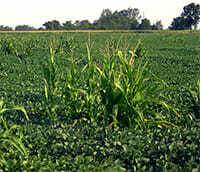
    Volunteer corn is not a crop… it’s a weed that grows from grain left in fields after a harvest.  Farmers should treat volunteer corn like a weed and manage it early in the season.

    Three main reasons why volunteer corn should be managed early:

    1. Volunteer corn competes with newly planted crops for nutrients.
    2. Volunteer corn attracts corn rootworms.
    3. If left untreated, volunteer corn could potentially reduce the benefit of crop rotation.

    Like any weed, volunteer corn competes with the growing crop for nutrients.  Volunteer corn is a yield robber!  It’s even more competitive with soybeans.  Soybean yields can be reduced by populations of volunteer corn at 8,000 to 16,000 plants/acre.  Corn yield also can be reduced by populations of volunteer corn of at least 8,000 plants/acre, according to research trials by the University of Minnesota.

    Another reason volunteer corn is a concern is because it creates a “safe harbor” for corn rootworms.  Corn rootworm typically hasn’t been a problem when fields are rotated annually between corn and soybeans because soybeans starve out rootworms that hatch in spring.  However, volunteer corn allows rootworm larvae to complete their feeding cycles.

    In addition to being a food source for rootworm larvae, volunteer corn that is not controlled by tasseling attracts corn rootworm beetles for egg laying.  The beetles lay their eggs in the soil around the base of the volunteer corn.  The eggs will remain dormant until they hatch the next spring.

    Bottom line:  Higher numbers of volunteer corn can build higher corn rootworm populations for the next growing season.  Higher rootworm numbers are especially problematic when those fields are planted to corn the following year in a corn-soybean rotation or in continuous corn.

    Webspec Admin

    June 7, 2012
    Agronomics, General, Weed Control
  • Latham Hi‑Tech Seeds

    Time to Turn Our Attention to Early Season Weed Control

    5 Larry 1


    It’s time to turn our attention to early season weed management.  It’s important for farmers to walk fields right after emergence and at least once weekly thereafter, so they can keep ahead of the insect and weed pressure.

    Be on the lookout for large-seeded weeds like giant ragweed, sunflower and cocklebur.  These weeds are always tough to control and should never be allowed to get established.  There were several weed species that took advantage of the early warm temperatures and got an early start: lambsquarters, waterhemp and other pigweeds.  Check your fields as soon as possible to see how successful your weed control measures have been.

    Additional measures like increased rates of post-emergent herbicides, spot-spraying or even hand weeding may be necessary to keep these from becoming an ongoing problem.  I’ve also noticed a lot of foxtail and other grasses as well as volunteer corn starting to show up in area fields.  Now’s the time to be scouting your fields for these potential problems so that you stay ahead of them in your efforts to keep your fields clean.

    Existing weed vegetation should be controlled with tillage, herbicides, or a combination of tactics, so the crop can become well established under weed-free conditions. Early-season weeds rob yields you cannot see at harvest. Crops have a better chance of reaching optimal yield when they’re not competing with weeds for sunlight, water and nutrients.

    Walking fields and noting where there is weed pressure will help you determine an action plan.  Take field notes and indicate where you’re seeing the pressure.  Depending on your findings, you may need to change modes of action.  Weed resistance is a growing concern.  Literally.  That’s why Latham Hi‑Tech Seeds offers farmers choices.

    Be proactive and manage your weeds before they become a problem.  Also manage herbicide resistance before it becomes a major problem.  Know what herbicides you are using, what they control as well as what they do not control, what replant restrictions exist and whether there is significant potential for crop injury.

    Webspec Admin

    May 24, 2012
    Agronomics, General, Weed Control
  • Latham Hi‑Tech Seeds

    Extend Weed Control with New Xtend Crop System

    Water hemp, giant ragweed and marestail have become nightmares for farmers who have experienced weed resistance.  Although it’s been a bigger problem in the South, we’re also seeing signs of weed resistance right here in the Midwest.

    Fortunately, there will soon be another “tool in the toolbox” to help fight weed resistance.  Pending regulatory approvals, the Roundup Ready® Xtend Crop System is expected to be available to U.S. farmers for 2014 planting.

    The Xtend Crop System is Monsanto’s newest Genuity® soybean trait that includes tolerance to dicamba herbicide.  It will be stacked with the current Genuity® Roundup Ready 2 Soybean trait technology.  Roundup Xtend is an enhanced dicamba and glyphosate herbicide premix that will help farmers manage weeds before planting and during the season as an over-the-top option.

    Dual modes of action in Xtend will give farmers another choice for broad control of glyphosate-resistant and tough-to-control broadleaf weeds.  And as the crop system’s name implies, it will extend application and planting flexibility.  It also will extend the window for post-emergence applications.

    We’re optimistic that Xtend will also help save glyphosate and extend the life of high-yielding Genuity Roundup Ready 2 Yield Soybeans.  Diversity of tactics is key to consistent weed management and high crop yields, says ISU Extension Crop Weed Specialist Mike Owen.  In a blog article, Dr. Owen says no single tactic will protect the potential crop yield nor deter the evolution of herbicide-resistant weed populations.

    As farmers make plans for their 2012 soybean weed control programs, Seed-2-Soil® team lead Peter Bixel recommends using FULL rates of pre-emergence herbicides. Research shows that a pre-emergence herbicide applied before soybean planting reduced late-season waterhemp density by 97 percent!  Click here for more information on how you can enhance your weed management program this season.

    Team Latham

    March 14, 2012
    Agronomics, Crop, General, Herbicide Technology, Industry News, Soybeans, Weed Control
  • Latham Hi‑Tech Seeds

    Resolve to Fight Weed Resistance in 2012

    Seed-2-Soil powered by Sci Max Team Leader

    Much time will be spent this week reflecting on 2011 and resolving to make changes in 2012. One change farmers can make in 2012 is resolving to better manage weeds.

    Weed resistance is a growing problem (literally) in our area. One weed that continues to cause problems is waterhemp. As you make plans for your 2012 soybean weed control programs, please ask yourself the following questions:

    1. Am I seeing waterhemp escapes in my soybean fields?
    2. Am I using multiple modes of action and residual herbicides with post-emergence in my soybean herbicide program to help prevent resistance from taking place in my fields?
    3. Am I allowing weeds to compete with my crop early in the season that may be impacting yield?

    If you answered “yes” to any of these questions, the best step to take is to address the issue by using FULL rates of pre-emergence herbicides in your soybean fields. Kevin Bradley, a weed scientist from the University of Missouri, conducted trials with waterhemp in soybeans. According to Bradley’s research, a pre-emergence herbicide applied before soybean planting reduced late-season waterhemp density by 97 percent.

    Results like that – 97% reduction in waterhemp density – is worth trying! After all, resolving to change your weed management program is a lot easier than resolving to walk or run on one’s treadmill every day.

    Webspec Admin

    December 28, 2011
    Agronomics, General, Weed Control
  • Latham Hi‑Tech Seeds

    Diversity of Tactics is Key to Weed Management

    “Be proactive and manage herbicide resistance before it becomes a major problem” was the main message delivered by Dr. Mike Owen, ISU Extension Crop Weed Specialist, during a field day Sept. 16 in Alexander, Iowa.

    Diversity of tactics is key to consistent weed management and high crop yields.  In fact, Dr. Owen says the correct management of weeds will make a farmer more money every year than managing any other pest complex.  He should know.  Dr. Owen has held his current position since 1982, and over the past 15 years, he’s placed even greater emphasis on studying herbicide resistance in weeds.

    Owen says herbicide-resistant weed populations – especially common waterhemp, marestail and giant ragweed – are increasing in Iowa due to farmers’ management decisions.  Because weeds are adaptable, Dr. Owens says it’s important to take these steps to save the use of glyphosate herbicide for the future:

    • Use more than one tactic or herbicide to control weeds.
    • Use tank-mixes of herbicides with different modes of action (MOAs) that will control the weeds of concern. Tank mixes are better than rotation of MOAs.
    • Scout early in the spring and throughout the season. Weeds exist in un-tilled fields and will cost you money if you do not manage them prior to or immediately after planting.
    • Use a soil-applied residual herbicide on all acres regardless of crop or trait. Whether or not you plan to till the fields, include a residual herbicide that controls weeds that will germinate first, are most populous, and are of greatest concern.
    • Know what herbicides you are using, what they control (and do not control), what replant restrictions exist and if there is significant potential for crop injury.

    Webspec Admin

    September 22, 2011
    Agronomics, General, Weed Control
  • Latham Hi‑Tech Seeds

    Time to Begin Early Crop Scouting

    Many Midwest farmers will wrap up the 2011 planting season this week, but there won’t be much rest for the weary.  As soon as seed is in the ground, it’s a good idea to start scouting fields.

    Post-planting is an ideal time to begin scouting one’s crops.  Many soilborne pathogens strike as soon as the seed begins to take on water; others strike young seedlings.  Because seeds can germinate quickly and emerge in 3 – 5 days, it’s not too soon to start walking your fields.

    Check plant populations, evaluate stands and be on the lookout for early summer diseases.  Is there a germination problem?  Do you see effects of chilling or crusting?

    Assessing your situation ASAP will allow you to formulate a plan while there’s still plenty of time to implement it.  You could replant in parts or in all of a field now, so you can attain the yields and returns you want this fall.  Information on corn replanting decisions is available from www.agronext.iastate.edu/corn. Click on the “Planting” topic, then click on the “Replant Decision Aid Calculator” tab and use that tool and related information to help make a replant decision. For a resource on soybean replanting decisions, go to www.extension.iastate.edu/publications/pm1851.pdf.

    Another benefit of evaluating current stands is to help you determine what adjustments should be made before planting next year’s crop:  Do you need to adjust your planter settings or your planting speed?

    Once you get past the mechanical issues, look at the disease pressure.  If soybeans are damping off, perhaps next season you should opt for seed-applied fungicides? Do you need to pay closer attention to a particular soybean brand or corn hybrid’s disease rating?  Seed selection is one of the most important decisions affecting yield. Click here for tips on selecting  soybean brands and selecting corn hybrids.
    Webspec Admin

    May 12, 2011
    Agronomics, Disease, Emergence, Fertility, Fungicide, General, Growth Stages, Insects, Weed Control
Previous Page
1 … 4 5 6 7
Next Page

Latham Hi‑Tech Seeds

131 180th Street | Alexander, IA 50420

(641) 692-3258

SIGNUP FOR OUR NEWSLETTER
  • Contact
  • Legal
  • Dealer Center
  • Seedware Login
  • Latham Gear

© 2025 Latham Hi‑Tech Seeds. All rights reserved. | Iowa Web Design by Webspec | Privacy Policy

Latham® Hi-Tech Seeds is a trademark of M.S. Technologies, L.L.C., 103 Avenue D, West Point, IA 52656.