Latham Hi-Tech Seeds

(641) 692-3258

  • Home
  • Products
    • Corn
    • Soybeans
    • Alfalfa
    • Corn Silage
    • Seed Guide
  • Performance
  • Find a Rep
  • Media
    • Blog
    • News
    • Videos
    • Podcasts
    • TECHTalk
  • About Us
    • Company History
    • Our Mission
    • Careers
    • Become a Rep
    • Sowing Seeds of Hope
  • Contact Us
  • Latham Hi‑Tech Seeds

    Study Shows Seed Treatment is Best Defense Against Seedling Diseases

    PythiumSoybeans

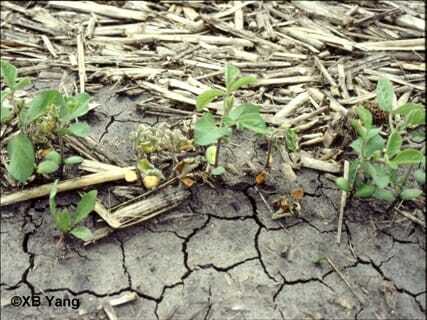
    Recent studies* across the North Central Region of the U.S. have uncovered some disturbing results in the field of seedling pathogens, specifically Pythium and Fusarium.  Most farmers and many crop consultants have considered each of these to be a singular disease with common characteristics, but new research completely dispels such theories.
    PythiumSoybeans
    Photo credited to the ISU Extension. Click for original photo

    In Iowa alone, approximately 20 species of Pythium were identified in diseased seedlings and more than 50 were recovered across the entire North Region! At least 12 different species of Fusarium were identified across the North Central Region. Many of these species were able to infect both soybean and corn crops, which means that crop rotation might not be an effective management tool.

    Another area of concern is the temperatures in which these pathogens do the worst damage. For many years, Pythium was considered a disease that flourished in a cool, damp environment. New research by Iowa State and Michigan State Universities shows that some species actually favor warmer soil temperatures. In addition, changes in the environment from one year to the next can cause different species of pathogens to become more prolific in different years.

    The use of seed treatments appears to be the best management tool that farmers can use against these diseases, but a more integrated approach might be necessary to prevent severe infestations. Typically, the industry has used the metalaxyl compounds (e.g. Apron, Allegiance, etc.) almost exclusively against Pythium and included a blend of other fungicides to help control Fusarium, Rhizoctonia and seedling Phytophthora. In the future, expect to see other components being added to these blends to help or replace the metalaxyl.

    Soyshield

    At Latham Hi‑Tech Seeds, we are testing different fungicide components in our 2014 research trials to see which of these new compounds will be the most beneficial for our customers. We’re always striving to provide the very best in soybean seed treatments to place under the SoyShieldTM and SoyShield Plus brands. SoyshieldPlus

    *Funding for this ongoing research was provided by USDA-NIFA, the United Soybean Board, the North Central Soybean Research Program and the Iowa Soybean Association.

    Webspec Admin

    May 8, 2014
    Agronomics, Disease, Emergence, General, Seed Treatment
  • Latham Hi‑Tech Seeds

    Benefits of Soybean Seed Treatments

    FI Soyshield

    SoyshieldInstead of viewing seed treatment as an input cost, consider it an investment – an insurance policy if you will. After all, it takes less than a bushel of soybeans to pay for the cost of treatment!

    Wet, poorly drained soils favor the development of fungal pathogens that cause seedling diseases, which slow germination and plant growth. Seed treatments protect seedlings until they have a fairly well-established root system.

    To help the seeds go through the planter better, Latham Hi‑Tech Seeds adds a proprietary blend of polymer and seed coating. Our customers say they waste less seed and see more even stands, resulting in better yield potential and ultimately an increased return on investment.

    SoyshieldPlusLatham Hi‑Tech Seeds’ signature SoyShieldTM, a fungicide-only package, and SoyShield PlusTM with fungicide and insecticide, protect seeds from disease and insect damage for up to 30 days. This time frame is longer than many other seed treatments and is typically an adequate window of protection.

    SoyShield Plus includes an exclusive fungicide combination that provides excellent protection against seed and soil borne diseases including: Pythium, Phytophthora, Fusarium and Rhizoctonia. In addition, seed treatments can provide health benefits for more rapid and increased germination under certain conditions.

    Some seed treatments also help protect against nematodes, which are becoming more prevalent. Many fully-loaded treatments may have innoculants, micronutrients or plant food. Interested in learning more? Talk to your local Latham® representative or leave your comments below. You’re also welcome to call me at 1-877-GO-LATHAM (1-877-465-2842).

    Webspec Admin

    March 20, 2014
    Agronomics, General, Seed Treatment
  • Latham Hi‑Tech Seeds

    Dispelling Myths about Seed Treatments

    by John Toft, CCA in Nebraska and Iowa
    Latham’s Regional Sales Manager in Nebraska

    There is a common belief that seed treatments only pay when we experience colder, damper conditions at planting time. This past winter was mild with relatively little spring snowmelt. We also experienced unseasonably warm temperatures in March and April, which contributed to warmer, dryer conditions at planting time. As a result of weather and soil conditions at planting , many farmers opted not to treat their soybeans last spring.

    Today I’d like to encourage you to view seed treatments differently. Instead of viewing seed treatment as an input cost, consider seed treatment as an insurance policy.

    Why wouldn’t you want to protect a crop that’s worth more than $17 per bushel?

    Insect pressure across the nation is at an all-time high, and if we can prevent that early plant feeding, we can add multiple bushels. By design, seed treatments protect the seedling plants until they have a fairly well-established root system. Almost all seed treatment insecticides belong to the neo-nicotinoid family of products. They do a great job of controlling insects while the plant is in the seedling stage, the effect soybean treatments have on soybean aphids longer lasting. Aphids are such fragile insects that it doesn’t take much of the chemical to kill them, so we see aphid control last from 40 to 50 days after planting.

    Fungi are another factor hindering bean yields. Because producers are planting earlier each year, seed treatment provides added protection. Seed treatments also help protect against nematodes, which are becoming more prevalent. Many fully-loaded treatments may have innoculants, micronutrients or plant food.

    There are many new technologies that chemical companies are bringing forward. This offers the producer better controls, and more importantly more freedom within their operations.

    Latham Hi‑Tech Seeds has treatment packages that offer a broad spectrum of control. SoyShield is Latham’s fungicide-only package, and SoyShield Plus contains fungicide and insecticide. The best part is, it takes less than a bushel of soybeans to pay for the cost of treatment!

    Latham’s Early Order program makes seed treatment an even better value. Contact your local Latham® representative or contact the company directly at 1-877-GO-LATHAM (1.877.465.2842).

    Team Latham

    September 27, 2012
    Agronomics, General, Seed Treatment
  • Latham Hi‑Tech Seeds

    Seed Treatments Prove to be Good Investment in Cold, Wet Spring

    Latham Hi‑Tech Hybrids’ practice of treating all of its triple-stack seeds with combination of Trilex™ fungicide and Poncho® insecticide proved its value during the recent cold, wet spring.

    The cold, wet soil that dominated most of the Cornbelt meant the seed laid in the soil longer before germinating. That made for ideal conditions for a host of fungus and insects.

    While the technology within the corn protects it from multiple threats once the plant is growing, the seeds are still vulnerable in their very early stages of development. Trilex offers a unique combination of two systemic fungicides to protect against a wide spectrum of threats including pythium, rhizoctonia, and early season phytophthora. Poncho delivers early season protection against wireworm, white grub, seed corn maggot, flea beetle, grape colaspis, chinch bug and black cutworm.

    Poncho’s protection against wireworms, seed corn maggots and grubs especially proved invaluable this season when those pests were out in force. Poncho offers two-stage protection by putting a barrier around the seed to kill approaching insects, and also imbedding insecticide into the seed to kill any pests that manage to take a bite.

    This year, when conditions really slowed down the growth of corn plants, Poncho’s two-pronged protection was incredibly important. By offering protection around the seed, and within the seedling itself, the seed-applied insecticide was really critical to give uniform, healthy stands.

    Latham Hybrids has adopted the practice of using seed-applied fungicide and insecticide to help customers protect their high-tech seed investments. The treatments also make it possible to plant corn earlier in the spring, when it’s usually cooler and wetter, to capitalize on the yield potential of a longer growing season.

    President John Latham makes a priority for our business to do everything we can to give farmers the best payback for the investment they’re making. Given market conditions and the value of the technology being built into seeds, the price of seed corn is going to continue to increase. Latham is determined to provide maximum protection for seeds to make sure those higher seed investments generate higher return.

    Larry Sailer, Musings of a Pig Farmer

    June 28, 2008
    Agronomics, Disease, Season, Seed Treatment, Spring
Previous Page
1 2 3 4

Latham Hi‑Tech Seeds

131 180th Street | Alexander, IA 50420

(641) 692-3258

SIGNUP FOR OUR NEWSLETTER
  • Contact
  • Legal
  • Dealer Center
  • Seedware Login
  • Latham Gear

© 2025 Latham Hi‑Tech Seeds. All rights reserved. | Iowa Web Design by Webspec | Privacy Policy

Latham® Hi-Tech Seeds is a trademark of M.S. Technologies, L.L.C., 103 Avenue D, West Point, IA 52656.