Latham Hi-Tech Seeds

(641) 692-3258

  • Home
  • Products
    • Corn
    • Soybeans
    • Alfalfa
    • Corn Silage
    • Seed Guide
  • Performance
  • Find a Rep
  • Media
    • Blog
    • News
    • Videos
    • Podcasts
    • TECHTalk
  • About Us
    • Company History
    • Our Mission
    • Careers
    • Become a Rep
    • Sowing Seeds of Hope
  • Contact Us
  • Latham Hi‑Tech Seeds

    The Power of Precision Data

    IMG 3122

    IMG 3122What is Big Data? It sounds a little scary, maybe even intimidating. However, it doesn’t have to be. Farm data is so important, and Latham’s Precision Agronomy Advisors are here to help simplify the process by putting your data to work for you!

    At family-owned, independent Latham Hi‑Tech Seeds, we help our dealers and their customers by providing the latest technology whether its genetics, traits or programs like Data Forward.

    We have a “Dream Team” for picking and choosing the Latham® product lineup, as John Latham said during a recent virtual training held with Latham Dealers. Members of our product team study lots of data when choosing products. They bring forward only the products for specific geographies.

    Big data can help you select the very best products for your fields, too. While plot data can help choose products, whole-field average data is even better. Imagine what we could learn from a whole-field average versus plot data alone. We have the capability to anonymously aggregate all this data to see how products are performing across Latham Country. This year we also have entered every one of Latham’s SuperStrip™ and MiniStrip™ plot locations into our Data Forward program, so it will help us monitor product performance across multiple locations throughout the year. This really helps us place products and understand their characteristics.

    Farmers also can adapt precision agriculture to gain great insight into their operation. It can help you better manage input costs to be more efficient while still gaining yield. When you have access to all this data, you have the tools and insights to know where and when to place seed or fertilizer down to the micro level.

    Better seed and fertilizer placement can increase your profit per acre. Because there are so many variables that factor into figuring profit per acre, it can be complicated. Big Data can simplify the process by helping you analyze your operations. Big Data can help make precision ag users become more efficient and profitable.

    Big Data does not have to be scary or intimidating. Just work with people you trust to gather this data and put it to work for you, so you can better understand your fields and your overall operation. Feel free to reach out to your Latham Precision Agronomy Advisors to help you gather and organize this data, so you can put it to work on your farm.
    Latham Seeds Precision Agronomy Advisors

    August 24, 2020
    Agronomics, Precision Ag
  • Latham Hi‑Tech Seeds

    Ask The Agronomist: Dealing with the Derecho & Drought

    Most farmers across Latham Country have experienced some type of extreme weather this year. Phil Long discusses the impacts from the derecho and the yield impacts from drought.

    :30 – Topic introduction

    1:00 – Derecho impacts

    2:17 – Current corn field conditions

    5:45 – Stalk & ear rot

    7:20 – Drought effects on corn

    9:50 – Drought effects on soybeans

    Laura Cunningham

    August 20, 2020
    Agronomics, Corn, Crop, Drought, Hail, Soybeans, Weather
  • Latham Hi‑Tech Seeds

    #AskTheAgronomist: Late-Season Soybean Pests

    Phil ata feature
    Join us as we discuss the top 3 late season soybean pests. From identification to management and planning for the future, Phil Long shares key takeaways. #AskTheAgronomist
     
    :58 — Topic introduction
    2:05 — SDS
    5:00 — Frogeye Leaf Spot
    7:00 — Aphids
    9:45 — Soybean staging

    Laura Cunningham

    August 13, 2020
    #AskTheAgronomist, Agronomics, Crop, Disease, Insects, Soybeans
  • Latham Hi‑Tech Seeds

    Corn Silage Testing with Corey Catt

    Corey Feature

    Join us in the field with our Forage Product Manager, Corey Catt! Corey discusses corn silage basics, yield estimates and quality samples. Watch below to learn more. #LathamSeeds

    :30 – Collecting a sample

    3:04 – Track location via GPS

    8:08 – Calculating whole plant moisture

    11:40 – Overall corn silage basics

    14:30 – Yield estimate importance

    15:50 – Discovering grain to stover ratio

    16:50 – Quality sample

    19:11 – Moisture evaluation

    22:00 – Variability and repetition

    Webspec Admin

    August 6, 2020
    Agronomics, Corn Silage, Crop
  • Latham Hi‑Tech Seeds

    Ask the Agronomist: Corn Pollination and Kernel Set

    IMG 6433
    How well did your corn pollinate? Phil Long discuss pollination, kernel abortion and yield estimates. #AskTheAgronomist
     
    :27 — Topic introduction
    1:45 — Corn development & yield estimates
    5:40 — Nutrient deficiencies
    6:50 — Kernel weight

    Laura Cunningham

    August 6, 2020
    #AskTheAgronomist, Agronomics, Corn, Crop
  • Latham Hi‑Tech Seeds

    Optimize Silage Quality with Timely Harvest

    Chopping silage in the 1486

    KernelIt’s more challenging than most people think to achieve optimum harvest timing. Life on the farm would be mighty easy if the weather cooperated, machinery was always in working order, and the custom harvester came right when you called.

    Some days farming feels like you’ve been handed a bent golf club to play a mini golf course full of obstacles, water hazards, and challenges meant to distract, disrupt and impact the result. Fortunately, farmers are the golf pros of the acre. Despite all the craziness tossed at them, they face the adversity with steadfast grit and determination. Farmers keep their eyes fixed on the goal of doing their best.

    Timing is everything to harvest the best quality corn silage. With corn silage harvest rapidly approaching, let’s review why timing is important.

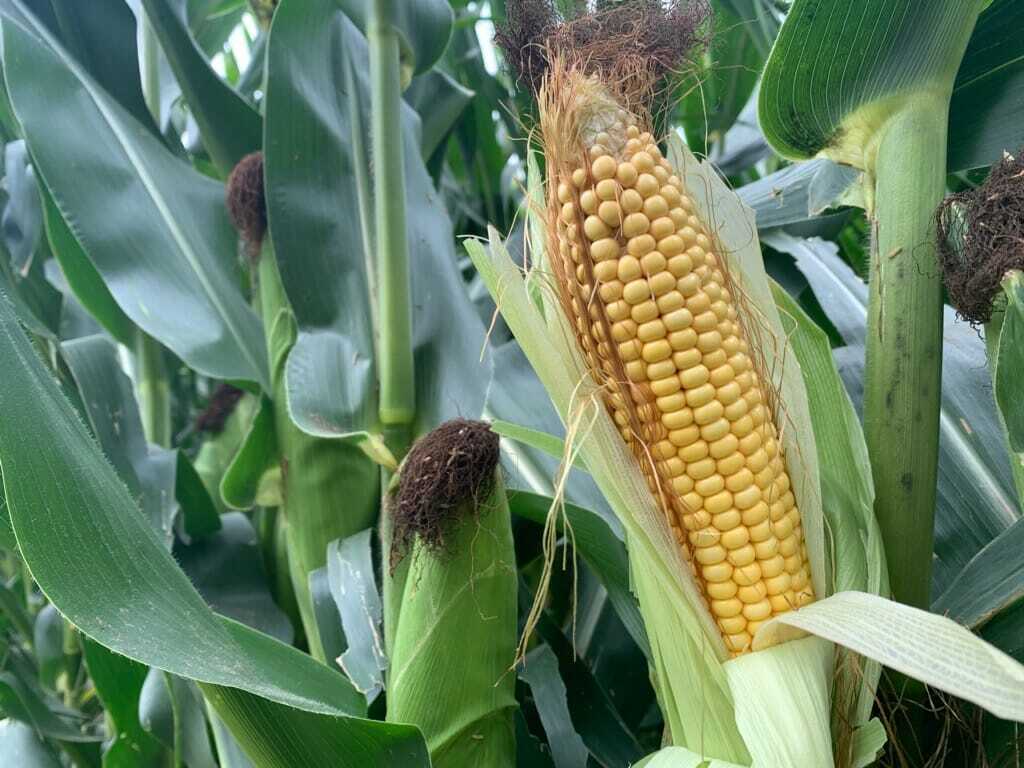
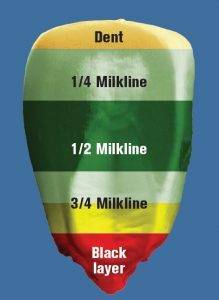
    In general, 65 to 70 percent whole-plant moisture is the optimal goal range for harvest moisture. The plant is at this moisture level when the kernel is about 50 percent milk line. The starch in the kernel is like a sponge, absorbing moisture from the plant. Think about this… If you remove the entire ear, the remaining stalk contains a moisture level about 80 to 85 percent moisture. Now, add back in a normal size ear that is half milk line. The new whole-plant moisture will be between 65 and 70 percent as that added starch absorbs some of the plant moisture.

    As the milk line of the kernel drops toward the tip, it adds even more starch to the kernel. Each day more starch is added to the kernel, which is absorbing more moisture from the plant. As a really broad general rule of thumb, from about one-fourth milk line stage, corn silage moisture can drop in the field around 0.5 percent each day. Moisture can drop a full percent on those hot, dry, sunny September afternoons when photosynthesis is good and starch is accumulating rapidly. Additionally, there is also some evaporation from the leaf tissues.

    Once the kernel drops below half milk line, the moisture will rapidly drop below 65 percent whole-plant moisture, and it becomes more difficult to pack and ensile. Additionally, as the milk line drops, it is exponentially adding a protein called prolamin zein. This particular protein has a negative impact on starch availability and can be linked to higher fecal starch levels.

    Hybrids like Latham® 5495 3122 EZR and LH 5742 RR and our leafy hybrids tend to have less of this protein. This softer, lower prolamin starch found in select dual-purpose and leafy corn silage hybrids provides flexibility in the harvest window while still giving peak harvest qualities. They can take away a little stress while you’re waiting on weather or the custom harvesting crew.

    Bottom line, as harvest approaches, check moistures early and often to develop the best harvest plan to capitalize on yield and quality.

    Webspec Admin

    August 6, 2020
    Agronomics, Corn Silage, Crop
  • Latham Hi‑Tech Seeds

    Continually Searching for Better Products and Better Positioning

    Cory 1

    Southern IowaProduct team members at Latham Hi‑Tech Seeds continually search for new products to help our lineup perform better in your fields. We look at our MiniStrip trials to document the early season environmental issues at each location, so we can better understand harvest results. While we learn about new products in these plots, we also look for indicators to help us provide better positioning statements on key hybrids in our lineup.

    Each season offers new challenges and opportunities for us to learn more to help better position products in your fields. Like many of your fields, some of our MiniStrip plot locations were planted in cooler soils this spring and endured the very cold temperatures over Mother’s Day weekend. We are watching hybrid reactions to those environmental conditions.

    Soon we will evaluate seed products on flower date. With the abundance of pollen during flowering in a commercial corn field, we generally do not get concerned about pollen viability. We watch for stresses on the plant that may cause issues with proper silking. We also look for differences between hybrids that are close in maturity, so that we can make sound recommendations on which hybrids to pair together that are similar in maturity but offer variation on pollination/silking timing.

    Pairing hybrids in a field with varying pollination windows spreads risk of cool weather, super high temperatures or drought. It is uncommon for us to see issues with pollination but pairing complimentary hybrids in the same field offers protection in seasons of extreme stress. July also is when we look for early onset of diseases. We evaluate for disease tolerance and for benefits we may see from in-season fungicide applications. The continual evaluation of what we see in our plots helps us fine tune the hybrid characteristic information on our tech sheets. We look forward to sharing any important findings from our summer research this fall. Watch for more details coming soon!

    Latham Seeds Agronomy Team

    August 6, 2020
    Agronomics, Corn, Crop
  • Latham Hi‑Tech Seeds

    Answers to Frequently Asked Soybean Questions

    IMG 3865

    IMG 3865Q: What’s the outlook for soybean seed supply in 2021?

    I’m certain this concern stems from the uncertainty about the registration of the Xtendimax®, Engenia® and FeXapan® herbicides, as well as the tough time we had this year getting production acres planted, especially in the Dakotas. I’m happy to report that planting went well enough that we expect good supplies of all trait versions. If demand for Xtend soybeans falls off, demand will likely increase for E3’s. Order your E3 soybeans early, so you don’t have to worry about supply.

    Q: Is it necessary to inoculate soybeans every year?

    Since the early 1970s, researchers have believed that inoculating soybean seed isn’t necessary unless soybeans haven’t been planted in the intended field for four or five years. Today, data shows new products, formulations and even biologicals are consistently increasing yields. This is especially true in areas – like sandy soils, fields that are consistently flooded and even those that are consistently dry – where soil bacteria have a tougher time getting established. Latham’s Northern Product Specialist, Gary Geske, recommends testing some of these newer products in your own fields.

    Q: What’s the status of Alite™ 27 herbicide?

    BASF in April was granted registration of this herbicide, which is intended to be used as a pre-plant or pre-emergent herbicide on LLGT27 or GT27 soybeans only. Originally, BASF was hoping it would also be labeled for post-emergent use, but that will have to wait until there is more information made available. Additionally, South Dakota is the ONLY state within Latham Country where farmers can use Alite 27 and then only in these counties: Aurora, Beadle, Brown, Brule, Buffalo, Clark, Codington, Hand, Harding, Jerauld and Spink. The Alite 27 label mentions Product Bulletins for Minnesota and Wisconsin, but my understanding is these are for counties in those states where soybeans are not normally grown. BASF is hopeful more counties will be added.

    Q: How do XtendFlex® soybeans differ from Xtend®?

    XtendFlex is the newest trait innovation from Bayer CropScience (formerly Monsanto). These soybeans carry tolerance to glyphosate (Roundup, Glyphos, etc.) and dicamba (Xtendimax, Engenia, etc.) herbicides just like the Xtend soybeans do. In addition, they are tolerant to gluphosinate herbicides like Liberty or Ignite. This will be another three-way stacked herbicide tolerant trait that farmers can use to fight weed resistance. Full acceptance is expected soon but is dependent on final clearance by the European Union. All other major soybean-importing countries have given their approval. As a side note: Latham Seeds has an EPA-stewarded XtendFlex plot at our research farm this year. It is similar to the plot we had in 2019 but contains about twice as many XF varieties. Stay tuned for more about this exciting new technology.

    Tune into our Facebook, Twitter and Instagram pages for more great QA sessions with Latham agronomy experts.

    Mark Grundmeier, Product Manager

    August 6, 2020
    Agronomics, Crop, Soybeans
  • Latham Hi‑Tech Seeds

    Tips for Assessing Corn Rootworm Populations

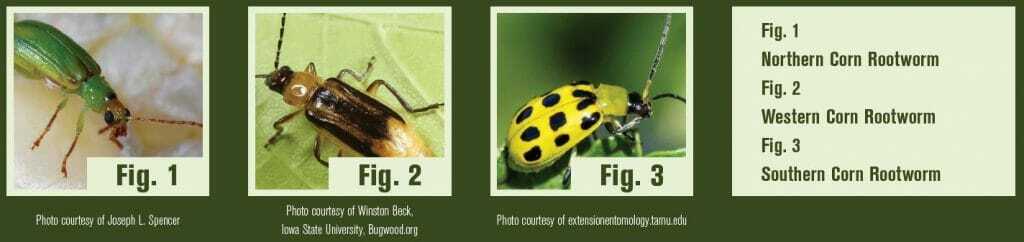
    ISU Southern Western Northern Rootworm L to R

    August is a great time to assess potential risks of corn rootworm infestations in the following spring. By looking at the population of adult beetles found in corn fields now, farmers can identify potential problem fields for the following growing season. This can be a useful tool in overall management of corn rootworm.

    While walking fields this summer, our product team is seeing populations of corn rootworm adults. Predominantly, we see Northern Corn Rootworm in our market area. (Adult Fig. 1) This season we have seen populations of Western Corn Rootworms, (Adult Fig. 2) as well as a few Southern Corn Rootworms (Adult Fig. 3).

    1

    Assessing Corn Fields

    Look in corn fields that may be planted to corn next spring, as well as in soybean fields for high beetle populations. If you did not place sticky traps to catch or monitor beetles beginning at pollination time, spend a little time in your fields looking for evidence of adult populations that are still present.

    The primary/desired food source for corn rootworm beetles are the fresh silks of pollinating corn plants. If we have early flowering, as we have seen this season, we may not see an abundance of feeding at that time. Beetles, however, will feed on leaf tissue of corn plants if the source of fresh green silk is no longer available. The adult phase of the corn rootworm cycle begins at the end of June and can last all the way to the first killing frost. The egg laying period can last from late July through August.

    2When assessing corn fields at pollination time, focus on beetle counts found on silks of corn plants. When assessing corn fields in August and early September, focus on beetle populations that remain on any silks and look for leaf feeding. (Fig. 4) Make note of fields with high numbers of adults and significant leaf feeding. Consider rootworm management tools in those fields that will be corn next year.

    Assessing Soybean Fields

    Rootworm beetles feed on weedy areas: field edges, weedy areas in drowned-out spots, weed escapes etc. including soybean plants, alfalfa and prairie grass fields (CRP). Western Rootworm beetles are more likely to lay eggs in soybean fields, but Northern Rootworm beetles may do the same. Sweep net catches in soybeans or evidence of leaf feeding are best ways to assess populations.

    Protocols and population threshold advice can be found on your state’s Extension Service website.

    If you identify fields that may have potential rootworm problems next spring, consider using hybrids containing rootworm protection traits. Latham Hi‑Tech Seeds has an exceptional group of hybrids, ranging in relative maturing from 96 to 115, to manage corn rootworm. We introduced six hybrids with SmartStax® technology to help our customers manage this important corn pest for the 2021 planting season. Visit with your local Latham dealer or visit www.LathamSeeds.com to check out these new hybrids.

    Latham Seeds Agronomy Team

    August 6, 2020
    Agronomics, Corn, Crop, Insects, Soybeans
  • Latham Hi‑Tech Seeds

    Late-Summer Insect Management Helps Alfalfa Plants Prepare for Winter

    Alfalfa3

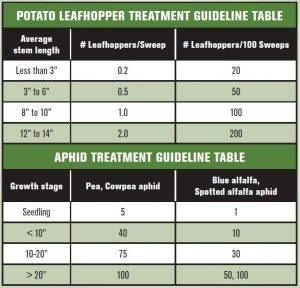
    CaptureWe work so hard to help crops to reach their yield potential. There is so much promise when a crop emerges from the ground… and then the uninvited bugs show up to the party robbing yield and causing disease. The chart provided reviews the life cycle of these yield-robbing insects.

    The 2020 alfalfa bug of the year so far is the weevil. It’s only about a quarter-inch long, but these little weevils can do big damage! If you don’t see the alfalfa weevils, you’ll notice their presence. Look for pinhole or lacing-type feeding damage on leaves.

    Weevil numbers can resurge quickly in the fall, and we have third and fourth cuttings of alfalfa to protect. It’s important to protect the crop in late summer, so tissue is intact to ensure the alfalfa plants capture nutrients required to overwinter.

    Consider your spraying options if you see plant damage or notice the presence of weevils and other pests. As temperature cool in the fall, it’s more challenging to control pest populations because insecticides must come into contact with the bug. A bug’s activity levels decline as temperatures decline. Bugs may move toward the hard to reach, lower portion of plant.

    Fall Seeding 

    Seeding earlier is better because it helps ensure good crown development. If there is a delay in moisture, seeding earlier increases the window of getting rain to facilitate rapid emergence. Remember, it’s important to get a good crown developed to prevent winterkill.

    Now is a great time to tentatively plan which acres will be seeded and line up your seed. Below are a few considerations for late summer and early fall seeding:

    1. Herbicide carryover. There have been many surprises in cover crop and fall alfalfa seeding. The seed will emerge. Once the radicle comes into contact with the carryover herbicide in soil, the plant dies. Here is a guide of some commonly applied spring herbicides and rotation restrictions: https://extension.sdstate.edu/sites/default/files/2019-08/P-00124.pdf
    2. Seed-to-soil contact ensures the seed quickly gets moisture. Quick emergence is critical in the fall.
    3. Time can be your friend or enemy. Alfalfa breeders suggest fall seeding is complete by August 15 if you are roughly north of Interstate 90 and by September 1 if you are south of I-90. The later you start, the more risk you encounter for establishing the crown. Alfalfa seed is an investment worth protecting.
    4. Latham’s AlfaShield™ seed treatment helps draw moisture to the seed. There’s a reason our ads read: Emerge Fast. Grow Strong. Yield MORE! Alfalfa seed must imbibe at least 125% of its weight in moisture to germinate, but it needs more available moisture to sustain growth. AlfaShield also contains key micronutrients and a growth promoter called Optimize Gold that accelerates early nodulation to speed up capturing nutrients. This process is critical to getting those desired nutrients and carbohydrates into the crown for winter survival.

    Fall seeding is a great way to get a jump start on next spring’s work and to capture more yield. Feel free to contact me if you have any questions.

    Webspec Admin

    August 5, 2020
    Agronomics, Alfalfa, Crop, Insects
Previous Page
1 … 21 22 23 24 25 … 67
Next Page

Latham Hi‑Tech Seeds

131 180th Street | Alexander, IA 50420

(641) 692-3258

SIGNUP FOR OUR NEWSLETTER
  • Contact
  • Legal
  • Dealer Center
  • Seedware Login
  • Latham Gear

© 2025 Latham Hi‑Tech Seeds. All rights reserved. | Iowa Web Design by Webspec | Privacy Policy

Latham® Hi-Tech Seeds is a trademark of M.S. Technologies, L.L.C., 103 Avenue D, West Point, IA 52656.