Black cutworm pressures are rising in Northeast, Iowa. Farmers in the area have begun treating fields for the pests. Have you been scouting lately?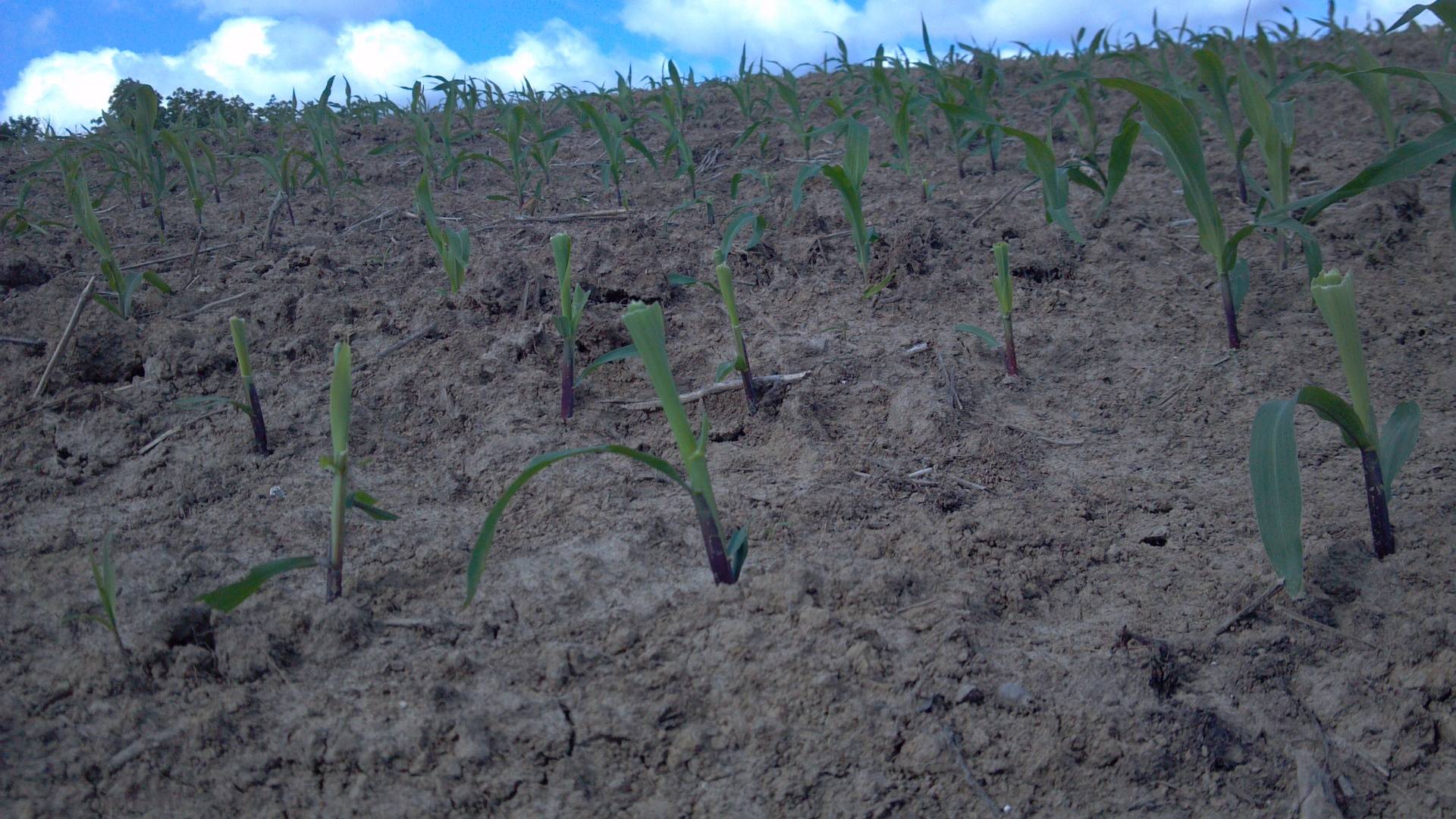
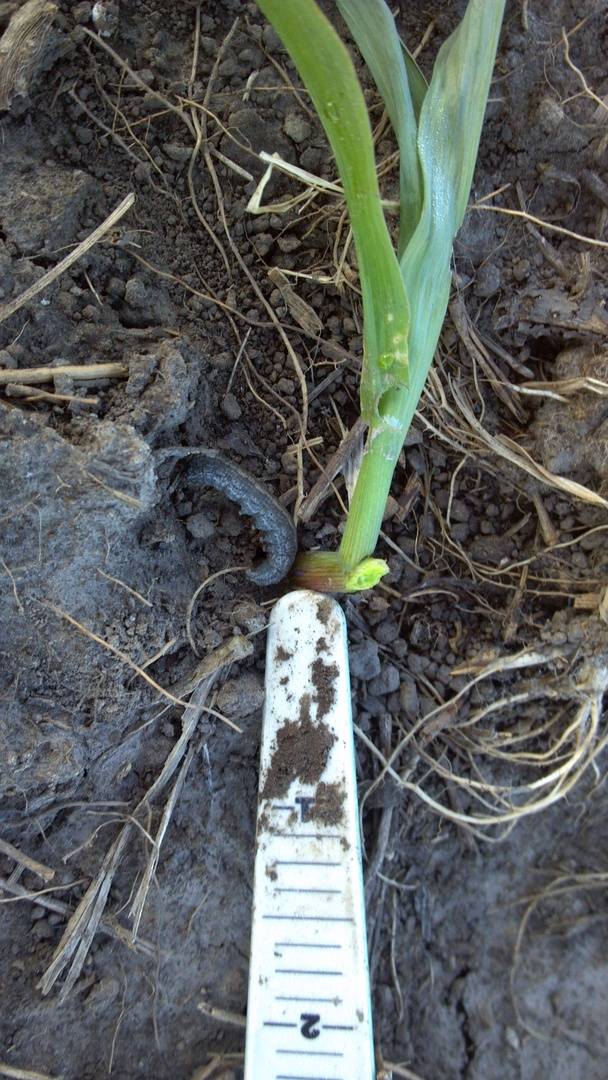

Black cutworm pressures are rising in Northeast, Iowa. Farmers in the area have begun treating fields for the pests. Have you been scouting lately?
Black Cutworm larvae have begun feeding in several areas across the Northeast Iowa territory. Farmers are urged to begin scouting fields now and monitoring them closely. UNL agronomists lend the following guidelines for cutworm pressure and treatment:
If larvae found in the field are smaller than ¾ inch, then a threshold of 2 to 3 percent wilted or cut plants indicates an insecticide application is warranted. If larvae are longer than ¾ inch, the threshold increases to 5 percent cut plants. Remember to take into consideration the plant population in a particular field and adjust threshold numbers accordingly.


An article published on wallacesfarmer.com this week highlighted that there’s still time to test soil for the presence of soybean cyst nematode (SCN). The small, plant-parasitic roundworm feeds on roots and can cause significant yield losses, especially in dry growing seasons.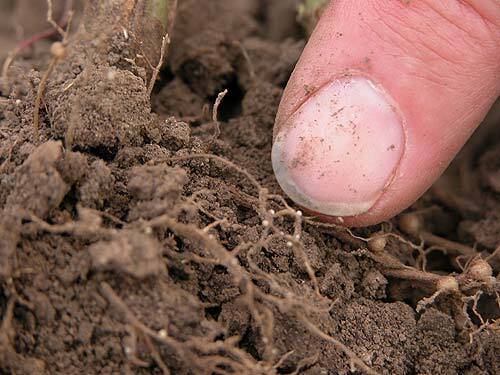
While SCN is a devastating pest, its risk is often overlooked because SCN damage isn’t readily apparent during growing seasons with excess moisture. SCN is an incredibly persistent pest, however, and adequate moisture or not, has the ability to live more than a decade in infested soils without the presence of soybeans, and produce more than three generations in just one growing season.
In a recent Iowa State University Integrated Crop Management article, Greg Tylka, with the Department of Plant Pathology and Microbiology, highlighted the need to remain offensive against SCN, this year especially.
“As we approach spring planting season, increased vigilance about SCN is warranted for the 2012 growing season because of the dry soil conditions statewide,” Greg said. SCN can cause substantial yield loss to susceptible soybean varieties under dry soil conditions, even when SCN egg population densities are low. If soybeans will be produced in 2012 in fields infested with SCN, high-yielding, SCN-resistant varieties should be grown.”
For more information about SCN, and to find tips for collecting a soil sample to detect whether or not it’s present in your field, visit http://farmprogress.com/wallaces-farmer-story-still-time-check-fields-scn-9-57633.
 Corn nematodes are not new, but there has been renewed interest in this pest among Midwest corn growers. Changes in production practices, including reduced usage of soil insecticides and increased continuous corn acres, most likely are causing corn nematode damage to become more prevalent in recent years.
“Crop rotation isn’t an effective form of management as corn nematodes also feed on soybeans and grasses,” said Dr. Greg Tylka on Sept. 16 to a group of Latham dealers and growers. “A new management option is using a seed treatment that moves onto the roots to provide early season protection against nematode feeding.”
One seed treatment option offered on several Latham® Hi‑Tech Hybrids is Poncho®/VOTiVO™. Poncho / VOTiVO provides superior seed-borne disease control, insect control and corn nematode control. It combines the most trusted seed-applied insecticide in corn with the most revolutionary, complete nematode protection on the seed. This dual protection results in improved plant vigor, which results in a more uniform crop and consistently higher yields.
When making your 2012 seed purchasing decisions, consider purchasing Latham Hi‑Tech Hybrids with Poncho/VOTiVO:
LH 4222 RR
LH 4227 VT2 PRO
LH 4539 SS
LH 4562 RR
LH 4568 VT3 PRO
LH 4792 RR
LH 4796 VT3
LH 4999 VT3 PRO
LH 5039 SS
LH 5077 VT2 PRO
LH 5078 VT3 PRO
LH 5228 VT3
LH 5378 VT3 PRO
While driving across the Iowa countryside this summer, one can’t help but notice all the stalks of volunteer corn ascending from the soybean fields like a sentry on duty. A sentry usually prevents the passage of unauthorized persons. In a cornfield, however, the volunteer corn actually serves as a “safe harbor” for corn rootworm.
 Corn rootworms essentially need corn to survive. That’s why a corn-soybean rotation has been an effective control measure. When corn appears in a bean field, however, the rootworm beetles have a food source and then a place to lay their eggs. Most eggs are laid in the upper 6” of soil during late summer. Eggs remain dormant until the following spring, so they’re “ready to feast” on the next crop of corn.
Applying a tank mix treatment to clean up volunteer corn will help you avoid the soybean variant in the rootworm beetle on your acres in 2012. Click the video link below for more information. Additional information on the soybean variant of western corn rootworm is available from this publication by Iowa State University.
http://www.youtube.com/watch?v=omT5ukbkhQU&feature=channel_video_title
 Soybean Cyst Nematode (SCN) continues to threaten the profitability of soybean production, regardless of growing conditions. That’s why Iowa State University (ISU) Nematologist Greg Tylka encourages farmers to collect fall samples.
There are two main reasons to collect soil samples for SCN this fall:
Steps on how to take fall soil samples for SCN are available in the August 18 issue of The Gold Standard by the Iowa Soybean Association. More information about the biology, scouting, and management of SCN can be found at www.soybeancystnematode.info.
Some people “paint the town.” At Latham Hi‑Tech Seeds headquarters in Alexander, we’re painting the corn fields!
Research Technician Gary Bennett and I used ½-inch paint brushes to apply nearly 500 earworm larvae to approximately 70 ears each of seven different Latham® hybrids. These hybrids featured various technologies and trait packages, including Agrisure Viptera™ 3111 and Genuity® VT Triple PRO™.
Our research objective is to record the level of corn earworm protection offered by the different hybrid traits and technologies. We’ll be taking field notes to record feeding and crop damage every couple weeks. Watch for photo updates soon!
[youtube]http://www.youtube.com/watch?v=Yi_G7l0-v4Y&feature=channel_video_title[/youtube]
 Soybean fields are entering the critical reproductive stages and yields hang in the balance. While there are several yield-determining factors that are beyond a farmer’s control, insect pressure can often be managed.
Now is the time to intensify your soybean scouting efforts, advises Iowa State University Extension Entomologist Erin Hodgson. Scout every field right now to see if there is any type of pressure, and keep a watchful eye to see if conditions warrant treatment. We could see outbreaks in late July or early August.
With the predicted market value of soybeans so high, farmers may be tempted to spray aphids at low populations. ISU recommends a threshold of 250 aphids per plant, although some agri-businesses are suggesting that aphids be sprayed when populations are lower. Click here and listen to Hodgson discuss whether research confirms the value of such lower thresholds. In this podcast, she also discusses whether it makes a difference to spray with generic or labeled compounds.
Last week Latham’s Corn Product Specialist Nick Benson posted a video, urging farmers to walk their fields as Corn Borer infestations were spotted in Northeast Iowa. Today he focuses again on European Corn Borer as infestations have risen well over economic thresholds for many producers in the area. His follow-up video further explains why it’s important to catch these pests before they move down the corn stalk.
Click the video link for tips on how to scout beyond the whorl. Make sure you catch your fields before pests move down the plant and “past the point of no return” for foliar-applied control methods.
[youtube]http://www.youtube.com/watch?v=tEygH0vJ_HY[/youtube]
With foliar-applied insecticides, growers are able to acheive nearly an 80% kill rate. However, when corn borers burrow into the stalk, foliar applications are no longer affective. Growers are then left to rely merely on careful harvest and season management approaches to fight against stalk lodging, ear drop and repeat infestations.
Post-infestation management procedures for harvest and for next season are also included in today’s video by Nick Benson. For more information on scouting for and managing European Corn Borer, contact Latham’s Corn Product Specialist on Twitter @lathamcornguy or contact us directly at this link.
[youtube]http://www.youtube.com/watch?v=YOJd0exvyVQ[/youtube]
Latham Corn Product Specialist Nick Benson is seeing above-average pressures of corn borer in his northeast Iowa territory. If your acres aren’t protected by a corn borer trait, Nick advises you to check fields as soon as possible for corn borer larvae and consult with an agronomist about treatment if thresholds are met.
Click the video below for information on how to scout your fields for corn borer.
[youtube]http://www.youtube.com/watch?v=4YbFHunRgSY&feature=channel_video_title[/youtube]

According to Iowa State University’s Pest Management website, corn borers are often misidentified. This link provides their suggestions for identification and scouting based on the growing season.

Corn Borers damage plants when their “boring” tendencies disrupt the plant tissues and interfere with water and nutrient uptake and transfer. Boring into plants creates a wound providing opportunity for infectious disease to enter the plant. Lastly, corn borers can cause weakened stalk and ear strength leading to lodging or ear drop. It’s important to catch these pests early on in the infestation stages to prevent severe damage to the integrity of your plants.

Management approaches differ according to generation of corn borer, stage of growth in the corn plants and the cost analysis in your field. Iowa State provides these guidelines, but it’s advisable to run an individual analysis and consult with your agronomist for recommendations to suit your unique situation.
For more information on corn borer or management approaches, don’t hesitate to ask questions in the comment box below, or contact us directly.