Latham Hi-Tech Seeds

(641) 692-3258

  • Home
  • Products
    • Corn
    • Soybeans
    • Alfalfa
    • Corn Silage
    • Seed Guide
  • Performance
  • Find a Rep
  • Media
    • Blog
    • News
    • Videos
    • Podcasts
    • TECHTalk
  • About Us
    • Company History
    • Our Mission
    • Careers
    • Become a Rep
    • Sowing Seeds of Hope
  • Contact Us
  • Latham Hi‑Tech Seeds

    Uneven Corn Stands: The Why and How

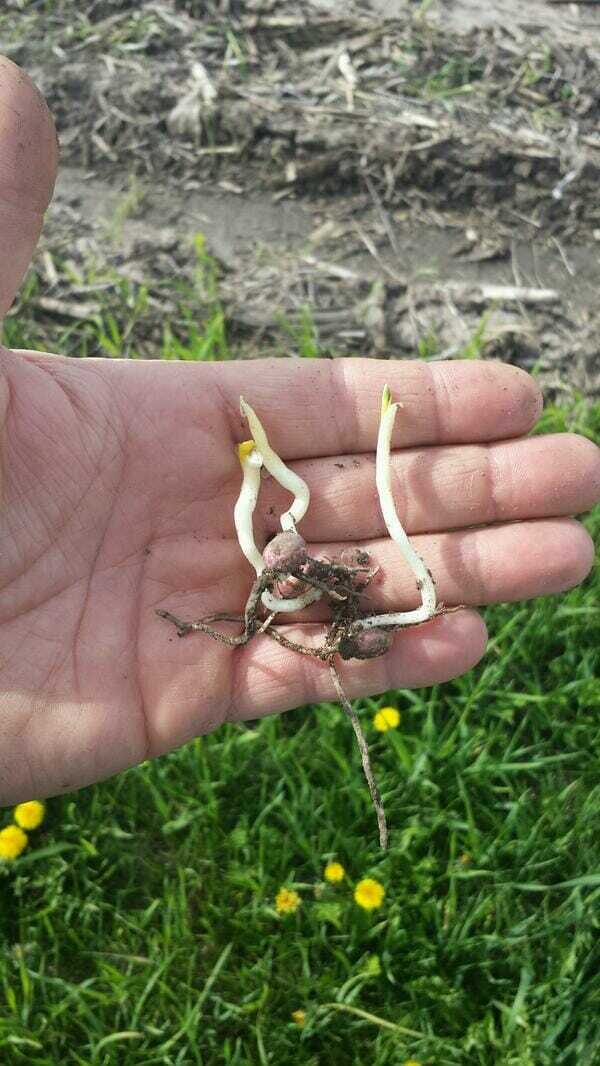
    Stunted corn roots

    Lots of seed corn got planted early when temperatures were cool and moisture was abundant.  As a result, I’m hearing reports of uneven corn emergence. Some farmers are asking how to remedy the situation. Others are questioning whether they should replant portions of their fields.

    Let’s begin by explaining what causes uneven corn stands and then address whether or not anything should be done. Uneven corn stands most often are the result of these four circumstances:

    1. Improper equipment calibration/maintenance;
    2. Soil conditions at and after planting;
    3. Pests; and
    4. Poor management practices.

    At this point in the growing season, I’m going to focus on uneven stands that are a result of conditions at planting time including equipment calibration and soil conditions. Most farmers do a very good job and problems arising from equipment calibration or maintenance are few and far between.

    Problems are more often to arise when conditions for doing fieldwork and planting are good for an extended period of time.  Farmers tend to keep working until they get rained out, so they may not take time for regular equipment maintenance and calibrations if the sun shines for extended periods of time.

    Remember to check your equipment, especially your planter, before you head to the next field! Failure to maintain your planter can result in skips and doubles. University studies have found that skips are more limiting to overall yield in most situations but both can have a negative effect.

    In addition to having your equipment properly calibrated, it’s important to plant in fit soil conditions. Uneven emergence may result from soils that are either too wet or too dry. Soil moisture can differ because of varying soil types, topography and tillage practices. The difference can be seen across whole fields, in certain areas of a field, or even from one row to the next.

    Rainfall patterns leading up to planting are critical to emergence. Seeds placed in dry soil will not germinate without rainfall.  Rains that are spotty may cause uneven stands.
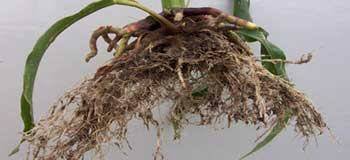
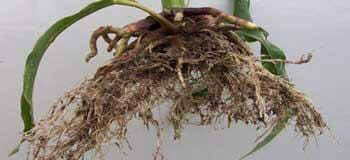
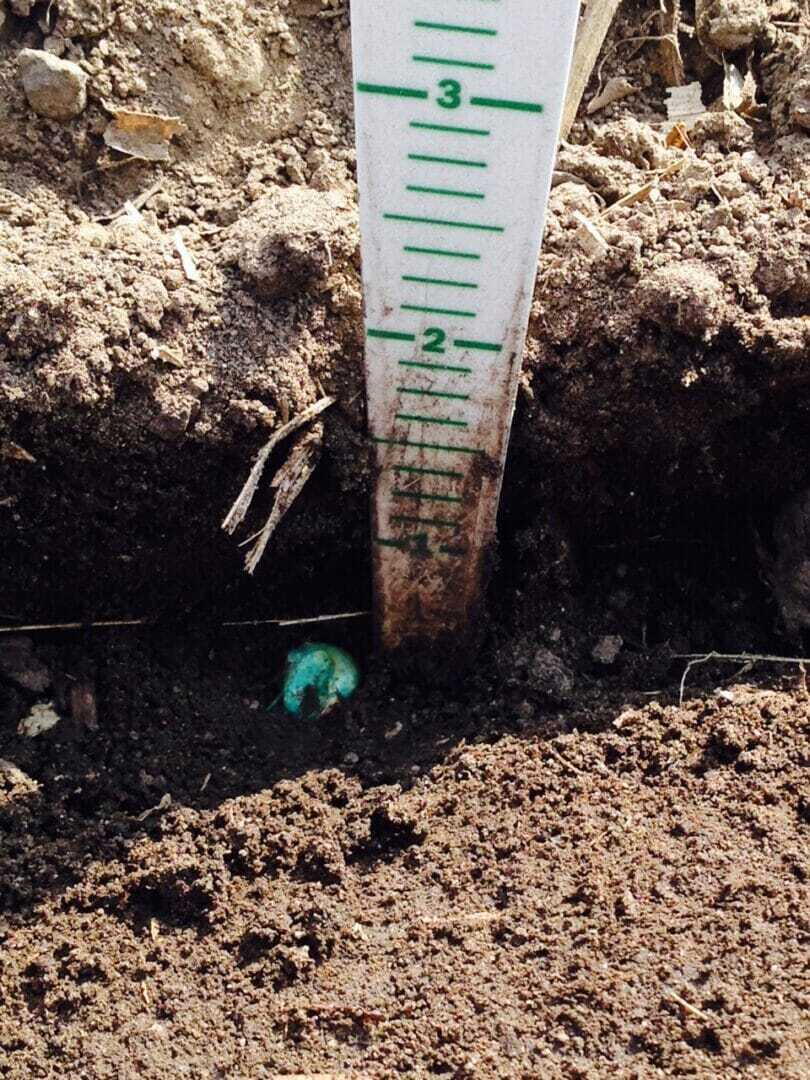
    Planting in soils that are too wet can cause lower germination, uneven emergence and growth, restricted root growth (as pictured), and stunted seedlings.
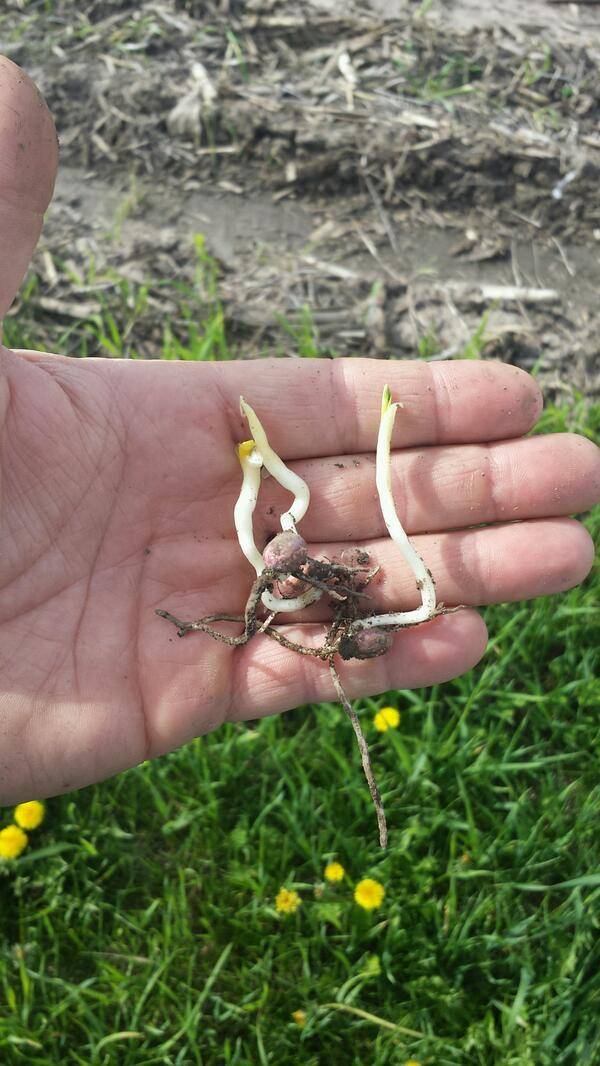
    Planting in soils that are too wet can cause lower germination, uneven emergence and growth, restricted root growth (as pictured), and stunted seedlings.

    On the other hand, working fields that are too wet also causes problems. Soil that is too wet will cause cloddy seedbeds, resulting in poor seed-to-soil contact and uneven emergence.

    Another concern, especially in continuous corn and no-till fields, is how residue from the previous crop will affect the current crop. Uneven distribution of residue can result in differing soil temperatures across the field, which causes plants to germinate irregularly.

    In addition, soil temperature may lead to uneven emergence. This spring a cold front caused soil temperatures to decrease after many acres of corn were planted. Look at planting when soil temps are consistently above 50° F and are expected to rise! The ideal soil temperature for planting corn is 60° F.

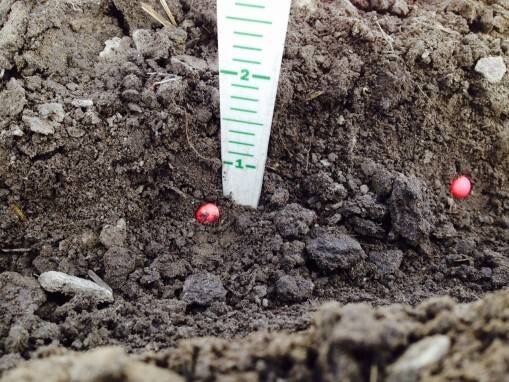
    To minimize the risk of uneven stands due to soil conditions, carefully monitor each field.  Check the moisture at different levels.  I like to see corn planted at 2 inches deep when conditions are optimal, but I have seen corn planted as deep as 3” without very many emergence problems. Keep in mind, the deeper you plant, the greater chance there is the seed “running out of gas” before it emerges, especially when there’s a heavy rainfall and the soil surface crusts over.

    There are many factors that can contribute to delayed emergence. So what should you do about uneven emergence? Assess if the problem really warrants remediation. Check with a trusted agronomist if you’d like another opinion.

    Rather than trying to fill in the gaps, it’s usually best to till up a field or a portion of a field prior before replanting. Click below for additional replanting resources:
    • Corn Replanting Decisions
    • Soybean Replanting Decisions


    Mark Grundmeier, Product Manager

    May 21, 2015
    Agronomics, Corn, Crop, Emergence, Season, Spring, Tech Tuesday
  • Latham Hi‑Tech Seeds

    Set Up #Crop15 for Success

    Pic 2

    #Plant15 is in full swing across the Midwest. With a 7-day forecast calling for nothing but sunshine and temperatures in the 70s, there’s talk that many farmers will go straight from planting corn to soybeans. We’re well within the window for achieving optimal yields for both corn and soybeans.

    Research by Iowa State University shows the optimal planting dates for soybeans – if soil conditions are suitable – in the southern 2/3 of the state is the last week of April and the first week of May for the northern 1/3 of Iowa. Seventy-nine percent of the time planting in late April or early May resulted in higher yields than soybeans planted around May 20.

    Due to the shorter growing season in the Dakotas and Minnesota, it’s important to plant soybeans early to catch more daylight. Soybean maturity is based on the length of daylight hours, and we all know the number of daylight hours decreases after June 20. Farmers must weigh the need to optimize daylight hours with the need for warmer soils.

    Experience has shown us that good yields are made when farmers hold off planting soybeans until soil temperatures reach – and maintain – temperatures of 60. Soil temperature is more critical when planting soybeans than corn because corn can more readily germinate in a soil environment of about 55 degrees.

    If the air temperature after germination hits 28 degrees Fahrenheit or less, soybean seedlings can be killed since the growing point of the plant is right at emergence. That’s why it’s also important to look at the 10-day forecast to see what temperatures will likely be when the seedlings emerge.

    it pays to stop the planter periodically and check (1) seed-to-soil contact; (2) planting depth and (3) seed spacing.
    it pays to stop the planter periodically and check (1) seed-to-soil contact; (2) planting depth and (3) seed spacing.

    We certainly understand a farmer’s eagerness to get seed in the ground, but we also know that it pays to take a few precautions. Get out of the cab periodically and check (1) seed-to-soil contact; (2) planting depth and (3) seed spacing. Watch for skips and doubles. Missing plants will decrease yield relative to a uniform stand. Finding too many doubles is not only a waste of seed, it can also mean that your planting units are in need of adjustment or repair.

    Inadequate planter adjustments coupled with fast planter speeds results in seeding depth variability within a row. Variable seeding depth translates into variable emergence rates which results in reduced yields. Take your time and have a safe planting season!

    Team Latham

    April 30, 2015
    Agronomics, Emergence, General
  • Latham Hi‑Tech Seeds

    Tips for Preventing Soybean Seedling Diseases

    Post-planting is an ideal time to begin early season crop scouting. Many soilborne pathogens strike as soon as the seed begins to take on water; others strike young seedlings.

    While walking fields this spring, I’ve noticed everything from poor stand counts caused by inadequate seedbed preparation, soil compaction or soil crusting. All of these situations can promote seedling diseases. Understanding the symptoms of common diseases and diagnosing the problems will help you manage these diseases in the future.

    The first step in combating soybean seedling disease is to choose high quality soybean seed. There’s a reason “quality” is literally stamped on each bag of Latham® High-Tech Soybeans. The Latham family has nearly 70 years of experience, producing the highest quality seed. Also be sure to check disease ratings in the seed product catalogs.

    The second step to achieving higher soybean yields is seed treatment. Recently released research results show seed treatment is the best defense against seedling disease. Choose a seed treatment like Latham’s proprietary SoyShield® fungicide and SoyShield Plus, a fungicide-insecticide combination. It’s especially important to protect early-planted soybeans from seedling diseases and insects.

    While it stands to reason that earlier-planted soybeans will have more potential for yield due to greater access to sunlight, there are risks associated with early planting. Plant in fit conditions to set up your crop for success. Optimal planting conditions for soybeans include dry soils that are consistently 60 degrees at planting time. Soybeans are a light-sensitive crop, so yields are strongly influenced by the amount of solar radiation the crop receives throughout the growing season.

    Learn what you can this season to increase soybean yields in the future. If there’s an area where seedlings aren’t emerging, dig into the soils and see what’s happening underground. Some pathogens attack the seed. Some seeds are killed before germination. You may notice rotting seeds. Sometimes “damping off” occurs right before or right after emergence.

    There are three main categories of seedling diseases: seed rot, seedling mortality, and root or lower stem decay. Watch for these in 2014:

      • Seed rot occurs during the VO-VE growth stages and may be caused by three pathogens; Pythium, Phytophthora, and Phomopsis. Typical symptoms are soft decay of seed, missing seedlings in the row or poor emergence.
      • Seedling Mortality, commonly damping-off or seedling blight, occurs during the VE-V4 growth stages. Pythium, Phytophthora, and Rhizoctonia, can cause seedling mortality.
      • Root or lower stem decay may take place during the seedling stage or may not be apparent until later reproductive stages (VE-Rn). Pathogens that cause root stem decay during the seedling stage are the same as those that cause seedling mortality.

    Webspec Admin

    June 5, 2014
    Agronomics, Disease, Emergence, General
  • Latham Hi‑Tech Seeds

    Rotary Hoe Can Help Seedlings Emerge

    Rotaryhoe
    To rotary hoe or not to rotary hoe? That is a question worth asking.
    To rotary hoe or not to rotary hoe? That is a question worth asking.

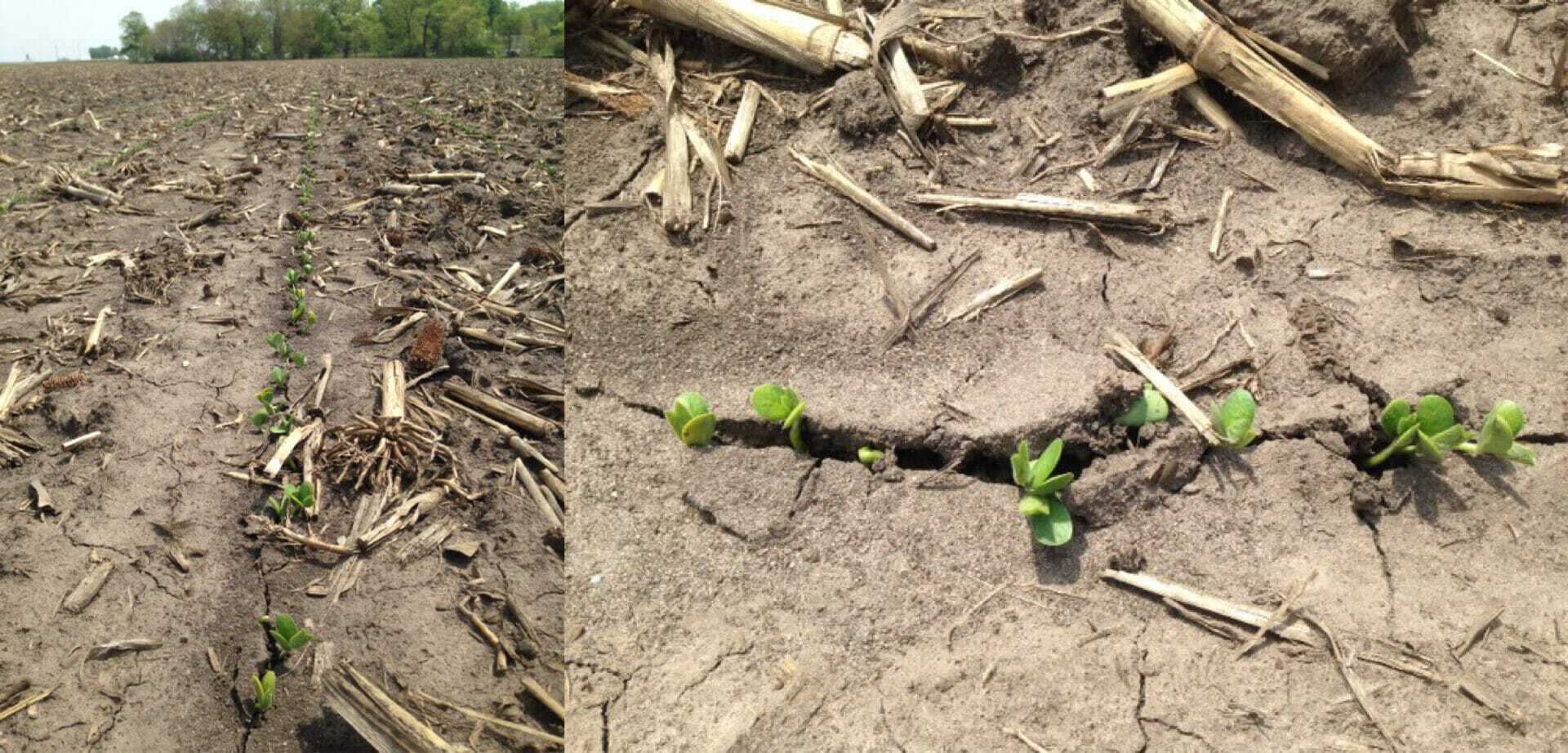
    Sunshine and warm temperatures like we’ve experienced for the past week are definitely needed to push along emergence of recently planted seed. However, we’re starting to see some instances where seedlings are struggling to break through the crusted soil surface as a result of either conditions at planting time or heavy rainfalls afterwards.

    Wet planting conditions, fine soil textures, intensive tillage, or heavy rains after planting can result in delayed or uniform emergence. Some seedlings may not even emerge at all, which lowers stand counts and may reduce overall yield. Another problem that can result from crusted soils is rootless corn. Roots will take the path of least resistance, which means they might grow out the bottom of the seed furrow.

    To help break up the crust and improve seedling emergence, consider using a rotary hoe.Get off the tractor and check for stand loss when starting a field. If loss seems greater than 3 to 5 percent, you may want to slow your travel speed to be less aggressive with the tool. Take care so soybean cotyledons aren’t broken off by the hoe. Expect a minor stand loss from hoeing, but this should be insignificant if your crop is truly having difficulty breaking through a crust.

    Be sure to wait until soils have dried before using a hoe, so you don’t exacerbate the situation with soil compaction. Use a quick field test to check soil moisture.  Simply mold a length of soil between your index finger and thumb, or roll it into a ball in your hand. Observe whether the soil breaks apart as you work it. If you toss the ball of soil into the air and it shatters or cracks upon falling to the ground, then conditions are likely suitable for tillage.

    Webspec Admin

    May 29, 2014
    Agronomics, Emergence, General, Season, Spring
  • Latham Hi‑Tech Seeds

    Study Shows Seed Treatment is Best Defense Against Seedling Diseases

    PythiumSoybeans

    Recent studies* across the North Central Region of the U.S. have uncovered some disturbing results in the field of seedling pathogens, specifically Pythium and Fusarium.  Most farmers and many crop consultants have considered each of these to be a singular disease with common characteristics, but new research completely dispels such theories.

    PythiumSoybeans
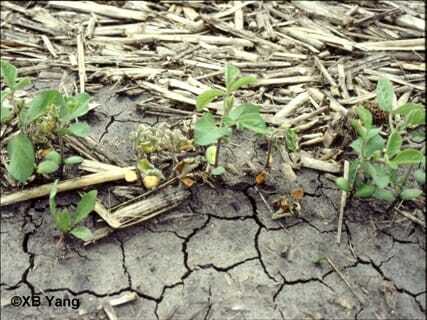
    Photo credited to the ISU Extension. Click for original photo

    In Iowa alone, approximately 20 species of Pythium were identified in diseased seedlings and more than 50 were recovered across the entire North Region! At least 12 different species of Fusarium were identified across the North Central Region. Many of these species were able to infect both soybean and corn crops, which means that crop rotation might not be an effective management tool.

    Another area of concern is the temperatures in which these pathogens do the worst damage. For many years, Pythium was considered a disease that flourished in a cool, damp environment. New research by Iowa State and Michigan State Universities shows that some species actually favor warmer soil temperatures. In addition, changes in the environment from one year to the next can cause different species of pathogens to become more prolific in different years.

    The use of seed treatments appears to be the best management tool that farmers can use against these diseases, but a more integrated approach might be necessary to prevent severe infestations. Typically, the industry has used the metalaxyl compounds (e.g. Apron, Allegiance, etc.) almost exclusively against Pythium and included a blend of other fungicides to help control Fusarium, Rhizoctonia and seedling Phytophthora. In the future, expect to see other components being added to these blends to help or replace the metalaxyl.

    Soyshield

    At Latham Hi‑Tech Seeds, we are testing different fungicide components in our 2014 research trials to see which of these new compounds will be the most beneficial for our customers. We’re always striving to provide the very best in soybean seed treatments to place under the SoyShieldTM and SoyShield Plus brands. SoyshieldPlus

    *Funding for this ongoing research was provided by USDA-NIFA, the United Soybean Board, the North Central Soybean Research Program and the Iowa Soybean Association.

    Webspec Admin

    May 8, 2014
    Agronomics, Disease, Emergence, General, Seed Treatment
  • Latham Hi‑Tech Seeds

    Time to Begin Early Crop Scouting in 2013

    While some Midwest farmers will get the opportunity to reenter their fields this week, there won’t be much rest for the weary.  With some seed already in the ground, it’s important to start scouting those fields now.

    Post-planting is an ideal time to begin scouting one’s crops.  Many soilborne pathogens strike as soon as the seed begins to take on water; others strike young seedlings. Because seeds can germinate quickly and emerge in 3 – 5 days, it’s not too soon to start walking your fields.

    Check plant populations, evaluate stands and be on the lookout for early summer diseases. Is there a germination problem?  Do you see effects of chilling or crusting?

    Assessing your situation ASAP will allow you to formulate a plan while there’s still plenty of time to implement it.  You could replant in parts or in all of a field now, so you can attain the yields and returns you want this fall. Information on corn replanting decisions is available from www.agronext.iastate.edu/corn.  Click on the “Planting” topic, then click on the “Replant Decision Aid Calculator” tab and use that tool and related information to help make a replant decision.  For a resource on soybean replanting decisions, go to www.extension.iastate.edu/publications/pm1851.pdf.

    Another benefit of evaluating current stands is to help you determine what adjustments should be made before planting next year’s crop:  Do you need to adjust your planter settings or your planting speed?

    Once you get past the mechanical issues, look at the disease pressure. If soybeans are damping off, perhaps next season you should opt for seed-applied fungicides?  Do you need to pay closer attention to a particular soybean brand or corn hybrid’s disease rating?

    Seed selection is one of the most important decisions affecting yield.  Click here for tips on selecting soybean brands and selecting corn hybrids.

    Team Latham

    June 3, 2013
    Agronomics, Corn, Crop, Disease, Emergence, Fungicide, General, Growth Stages, Soybeans, Weed Control
  • Latham Hi‑Tech Seeds

    Combating Soil Crusting

    Crusting

    Sunshine and warm temperatures like we’ve experienced for the past week are needed to push along emergence of recently planted seed. However, we’re starting to see some instances where seedlings are struggling to break through the crusted soil surface as a result of either conditions at planting time or heavy rainfalls afterwards.

    Wet planting conditions, fine soil textures, intensive tillage, or heavy rains after planting can result in delayed or uniform emergence. Some seedlings may not even emerge at all, which lowers stand counts and may reduce overall yield. Another problem that can result from crusted soils is rootless corn. Roots will take the path of least resistance, which means they might grow out the bottom of the seed furrow.

    To help break up the crust and improve seedling emergence, consider using a rotary hoe. Get off the tractor and check for stand loss when starting a field. If loss seems greater than 3 to 5 percent, you may want to slow your travel speed to be less aggressive with the tool. Take care so soybean cotyledons aren’t broken off by the hoe. Expect a minor stand loss from hoeing, but this should be insignificant if your crop is truly having difficulty breaking through a crust.

    Be sure to wait until soils have dried before using a hoe, so you don’t exacerbate the situation with soil compaction. Use a quick field test to check soil moisture.  Simply mold a length of soil between your index finger and thumb, or roll it into a ball in your hand. Observe whether the soil breaks apart as you work it. If you toss the ball of soil into the air and it shatters or cracks upon falling to the ground, then conditions are likely suitable for tillage.

    Avoid compaction by avoiding wet soils:

    1. Pay attention to soil crusting after rains
    2. Check soil conditions before you plant
    3. Reduce or minimize soil compaction by:
      1. Avoiding wet soils
      2. Reducing tillage.
      3. Using the right implements.

    Webspec Admin

    May 30, 2013
    Agronomics, Emergence, Tech Tuesday
  • Latham Hi‑Tech Seeds

    Take Time to Adjust the Planter

    To help provide “picket fence stands,” corn growers must make proper planter adjustments. It’s also important to match the planter speed to field conditions and to avoid planting seeds in extremely poor soil conditions.

    Planting in soils that are too wet can lead to sidewall compaction. The under-developed root systems resulting from the compaction are often confined in a flat plane within the furrow trench. Planting in too wet of soil, especially with coulters, allows sticky soil to build up on gauge wheels resulting in planting depth differences.

    Shallow planting places seed in differing soil moisture levels and can result in differing emergence dates. Shallow planting also can lead to a shallow secondary root system. “Rootless corn” may result, or plant development may be greatly delayed compared to neighboring plants.

    Failure to close the furrow is usually caused by poor soil conditions, improper closing wheels for field conditions, incorrect down pressure, or planting in sod. Worn or improperly adjusted planter parts can cause or aggravate all the previously mentioned problems.

    Make sure your planter does all its jobs properly: open the seed furrow without sidewall compaction; place seeds at a uniform depth; and close the seed slot without compaction.  Stop the planter frequently and physically check to ensure you’re getting uniform seed depth and good seed-to-soil contact.  Although it will take a few extra minutes in the spring, you’ll be glad you did when it’s time to harvest those extra bushels come fall!

    Webspec Admin

    May 13, 2013
    Agronomics, Corn, Crop, Emergence, General, Precision Ag, Soybeans
  • Latham Hi‑Tech Seeds

    Tips for Proper Seed Depth and Spacing

    Among the thousand variables crops are subject to each growing season, planting is the most crucial. Corn Product Specialist, Nick Benson offers these tips for proper depth and spacing as planters hit the ground rolling this spring.

    http://www.youtube.com/watch?v=d7W-IO7AvD4

    Webspec Admin

    May 9, 2013
    Agronomics, Emergence, General, Season, Spring
  • Latham Hi‑Tech Seeds

    Seed Quality: How Long is Germ Viable?

    Trays1

    While perusing some ag chat sites this week, we came across the following questions posted by a Midwest farmer. Today, Latham Product Manager Mark Grundmeier answers the questions that are top-of-mind with farmers.

    Q: How long will seed corn hold its quality/germ? A lot of seed is in warehouses already, and I presumed tested and determined “good quality” before it was shipped. Is it possible that the condition of any of this seed will deteriorate before spring planting?

    A: You’re right in that state and federal guidelines require seed companies to test – and tag – all seed before it ships to dealers and farmers. We must perform germination tests no sooner than December 2012 for spring 2013 delivery/planting.

    The germ on seed corn is quite stable and is largely dependent on heat and moisture. Since it’s unlikely that we’ll experience excessive heat and humidity before this seed corn gets planted, it’s very unlikely that the condition of this seed corn will deteriorate before spring planting.

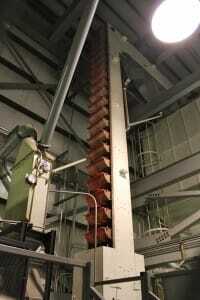
    The trays we use to bring soybeans from the cleaner to the bagging system are so gentle they’re used to make corn flakes!

    On a side note, soybean seed is much more delicate and how it’s handled can greatly impact the germination rate. Extremely dry conditions in 2012 produced seed beans that were drier than optimal when harvested. Because the seed coat is so fragile, rough handling can crack the seed coat and deteriorate the quality. To preserve seed quality, Latham Hi‑Tech Seeds “babies its beans.” The majority of our seed beans are brought to our Alexander, Iowa, facility where it’s hand-tested before its stored on site.

    Our equipment is specially designed to treat the soybean seed as gently as possible. The trays we use to bring soybeans from the cleaner to the bagging system are so gentle they’re identical to those that are used to make corn flakes! We also don’t bag in extremely cold conditions, which can lead to splits and cracks and further reduce the chances of having that seed germinate. But the care doesn’t stop there… dealers and farmers must also handle soybean seed with care. Dropping bags of soybeans can damage the seed coat and lead to a lower germination rate than appears on the bag tag.

    Unlike corn, soybean seed can fall out of quality quite rapidly. Look for the germ rate on the seed tag. Anything above 90 percent indicates high quality soybeans; germ rates of 95% indicate high quality seed corn. If your soybeans are tagged at 80%, seed quality is most likely on a downward spiral. You’ll definitely need to increase your seeding rate to account for lower germination rates. You might even be better off to switch soybean brands.

    Don’t assume that all soybean seed is tagged at the highest quality. Be sure to read the tags on all products that get delivered to your farm.

    Webspec Admin

    February 13, 2013
    Agronomics, Emergence, General
Previous Page
1 … 6 7 8 9 10
Next Page

Latham Hi‑Tech Seeds

131 180th Street | Alexander, IA 50420

(641) 692-3258

SIGNUP FOR OUR NEWSLETTER
  • Contact
  • Legal
  • Dealer Center
  • Seedware Login
  • Latham Gear

© 2025 Latham Hi‑Tech Seeds. All rights reserved. | Iowa Web Design by Webspec | Privacy Policy

Latham® Hi-Tech Seeds is a trademark of M.S. Technologies, L.L.C., 103 Avenue D, West Point, IA 52656.