Latham Hi-Tech Seeds

(641) 692-3258

  • Home
  • Products
    • Corn
    • Soybeans
    • Alfalfa
    • Corn Silage
    • Seed Guide
  • Performance
  • Find a Rep
  • Media
    • Blog
    • News
    • Videos
    • Podcasts
    • TECHTalk
  • About Us
    • Company History
    • Our Mission
    • Careers
    • Become a Rep
    • Sowing Seeds of Hope
  • Contact Us
  • Latham Hi‑Tech Seeds

    Evaluating Winter Kill

    Alfalfa3

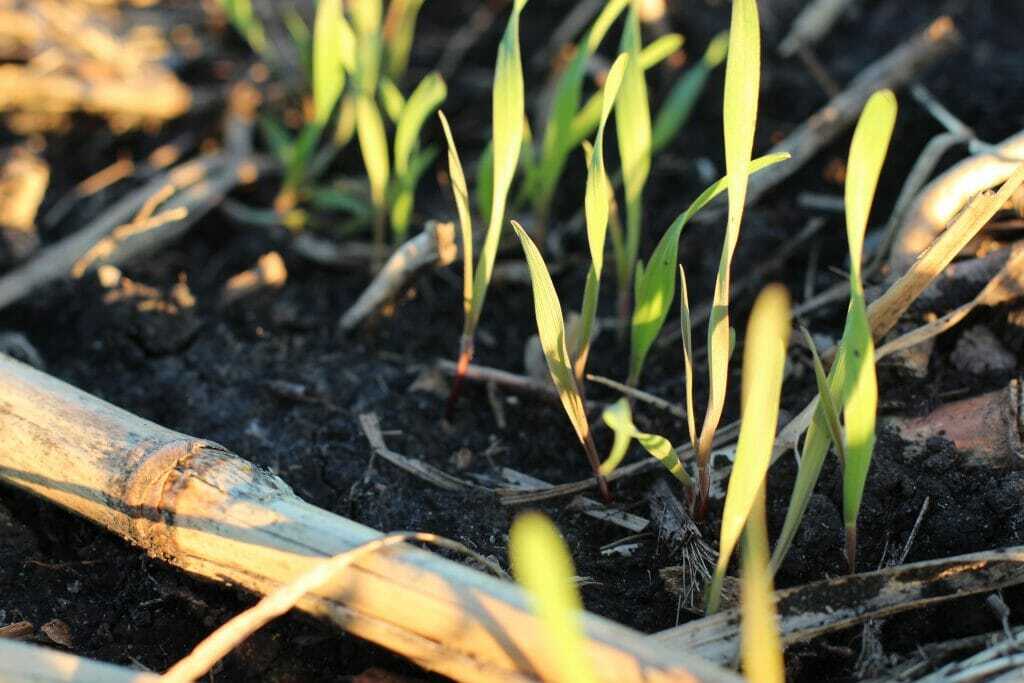
    Evaluating alfalfa stands is a spring-time ritual for every alfalfa grower. This winter presented several challenges to strong, hardy alfalfa varieties. This includes above average soil moisture going into winter, soil temps that dipped below 15 degrees Fahrenheit in areas without snow cover and below average snowfall followed by above average snowfall in February.

    Remember, patience is a virtue. Winter-injured plants are often slow to recover in the spring, so avoid making a quick decision to destroy a winter-injured stand. Allow the alfalfa to green up.

    Tips for evaluating alfalfa stands:
    1. Select at least four areas of the field and count stems. Wisconsin research has shown that counting stems provides a more accurate yield estimate.
    2. Dig plants from four locations of the field, including top 6 inches of the root. Examine the crown for size, symmetry, and number of shoots present.
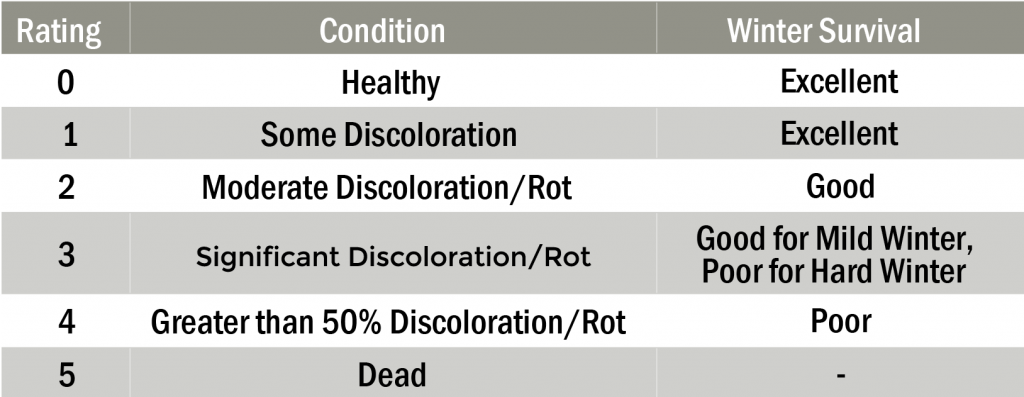
    3. Cut the root of these plants lengthwise. Check for rot or discoloration of the crown and root. Healthy stands have fewer than 30% of the plants in categories 3 and 4. (Seed tables.)
    4.9 Grapic 1


    4.9 Grapic 2

    Additional considerations when deciding whether to tear out existing alfalfa stands:
    • You have heavy weed pressure but a light alfalfa stand.
    • You have adequate alfalfa or hay inventory, so you can use the nitrogen credits and rotate that field into another crop.
    • If the alfalfa stand is more than a year old, you may have high concentrations of the autotoxicity compound present. That will reduce the effectiveness of interseeding alfalfa, so producers can interseed Italian ryegrass, clover, or oats as a temporary solution to thicken the stand.

    For additional information, feel free to contact me or your Latham regional manager. We’d also love an opportunity to talk with you about the placement for Latham Seeds’ outstanding lineup of high-quality forage products.

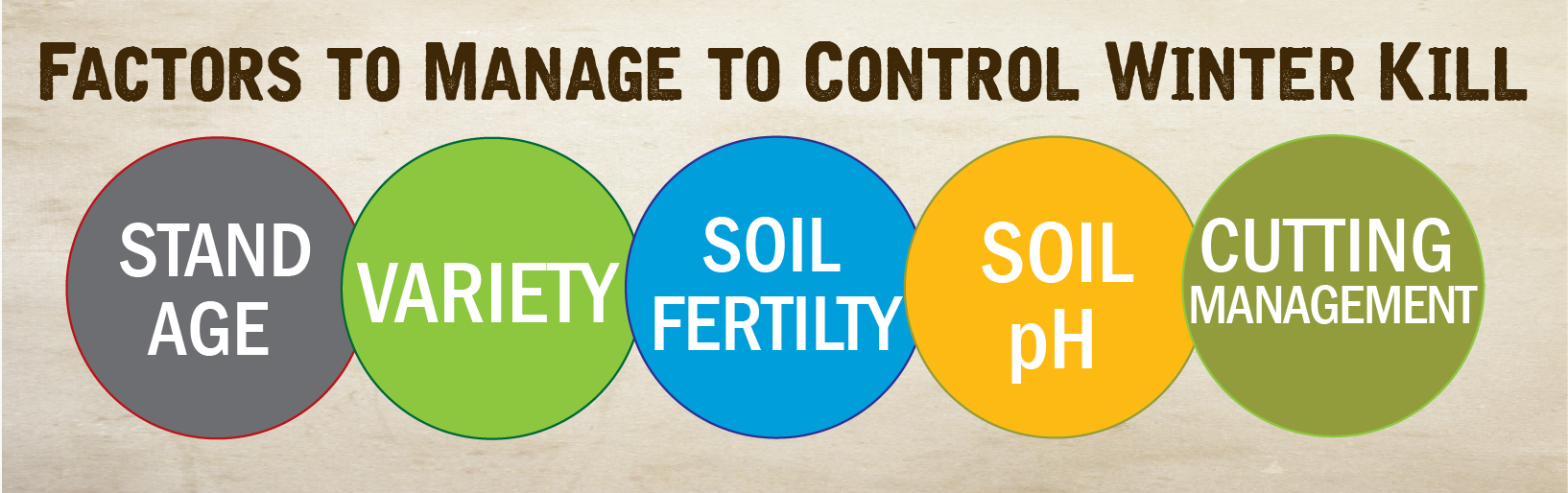
    While we obviously can’t control the weather, there are other factors we can manage to help reduce the risk of winter kill in the future.

    1. Stand Age – Older stands are more likely to winterkill.
    2. Soil Fertility – Stands with high fertility, particularly potassium, are less likely to experience winter injury.
    3. Cutting Management – Both harvest frequency and timing of fall cutting affect winter hardiness. The shorter the interval between cuttings, the greater the risk of winter injury.
    4. Variety – Varieties with superior winter-hardiness ratings and a high disease resistance index are less likely to experience winter injury.
    5. Soil pH – Stands growing on soils with a pH above 6.6 are less likely to experience winter injury.
    control wnter kill

    Phil Long

    April 9, 2019
    Alfalfa, Crop, Season, Tech Tuesday, Winter
  • Latham Hi‑Tech Seeds

    Protect Soybeans from Cold Temperatures

    Soybeans

    SoybeansMany of our minds are already on the upcoming planting season. This week someone posed the following question, “How hard of a frost can soybeans withstand?”

    It’s a great question, so I wanted to address the topic of early planting a bit, well, “earlier” than usual!

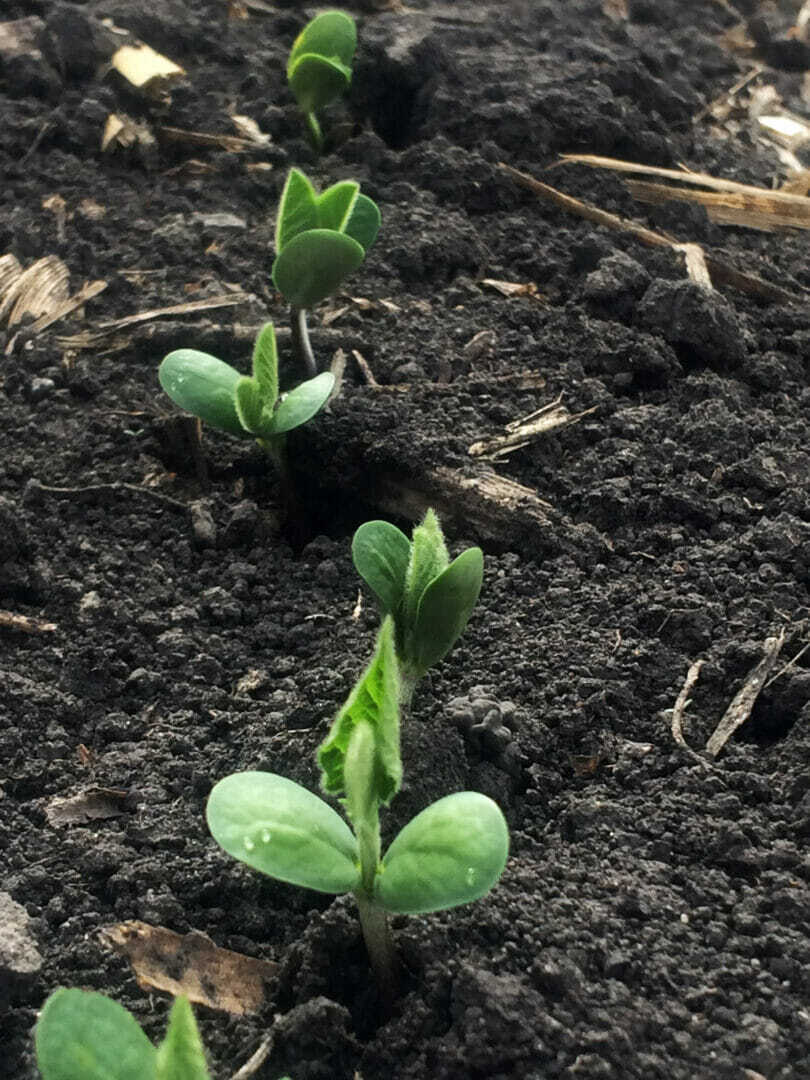
    The first thing to keep in mind is that cold temperatures at or before planting can negatively affect the growing point of the plant. For corn, that growing point stays under the soil surface until the V5-V6 stage, helping protect the plant to a certain degree from colder weather spells for several weeks. For soybeans, however, the growing point comes out of the ground at emergence. Therefore, a soybean seedling is immediately vulnerable to cold weather.

    Using a fungicide seed treatment will help protect young soybeans from seedling diseases at this early stage, but they are not designed to protect against cold temperatures.  Soybeans typically require over 100 growing degree units (GDU’s) to accumulate before emergence, which is similar to corn that requires about  125 GDU’s. Abiding by the minimum soil temperature of 50 degrees Fahrenheit will keep you away from poor emergence and the seedling disease risk associated with soil temps below 50 degrees. That’s why I suggest watching the weather forecasts before you plant soybean seed, and do your best to ensure hard frosts (which take place at 28 degrees Fahrenheit) are no longer possible.

    Remember, when soybeans emerge, they have a growing point at the base of each cotyledon and at the main shoot. The main shoot is the small leaves in-between the cotyledons. If you notice brown on the stem below the cotyledons, the plant will not recover. Early planting is proven to provide higher yields, but it is is fine balance between the two, so watch weather forecasts and soil temperatures so you can find the balance on your own farm.

    Additional tips to keep in mind before planting:

    1. Grab a clump of soil and watch how easily it crumbles. If it stays in a ball, conditions are NOT right for planting. If it crumbles easily, the soil is fit for planting.
    2. Make sure your planting date is covered in your farm insurance policy – this includes your “do not plant before” dates. If you plant outside those dates, your insurance could be jeopardized.


    Phil Long

    April 1, 2019
    Agronomics, Crop, Emergence, Frost, Season, Soybeans, Tech Tuesday, Weather, Winter
  • Latham Hi‑Tech Seeds

    Win-Win: Precision Ag Technology Increases Farm Efficiency and Yield

    IMG 5285

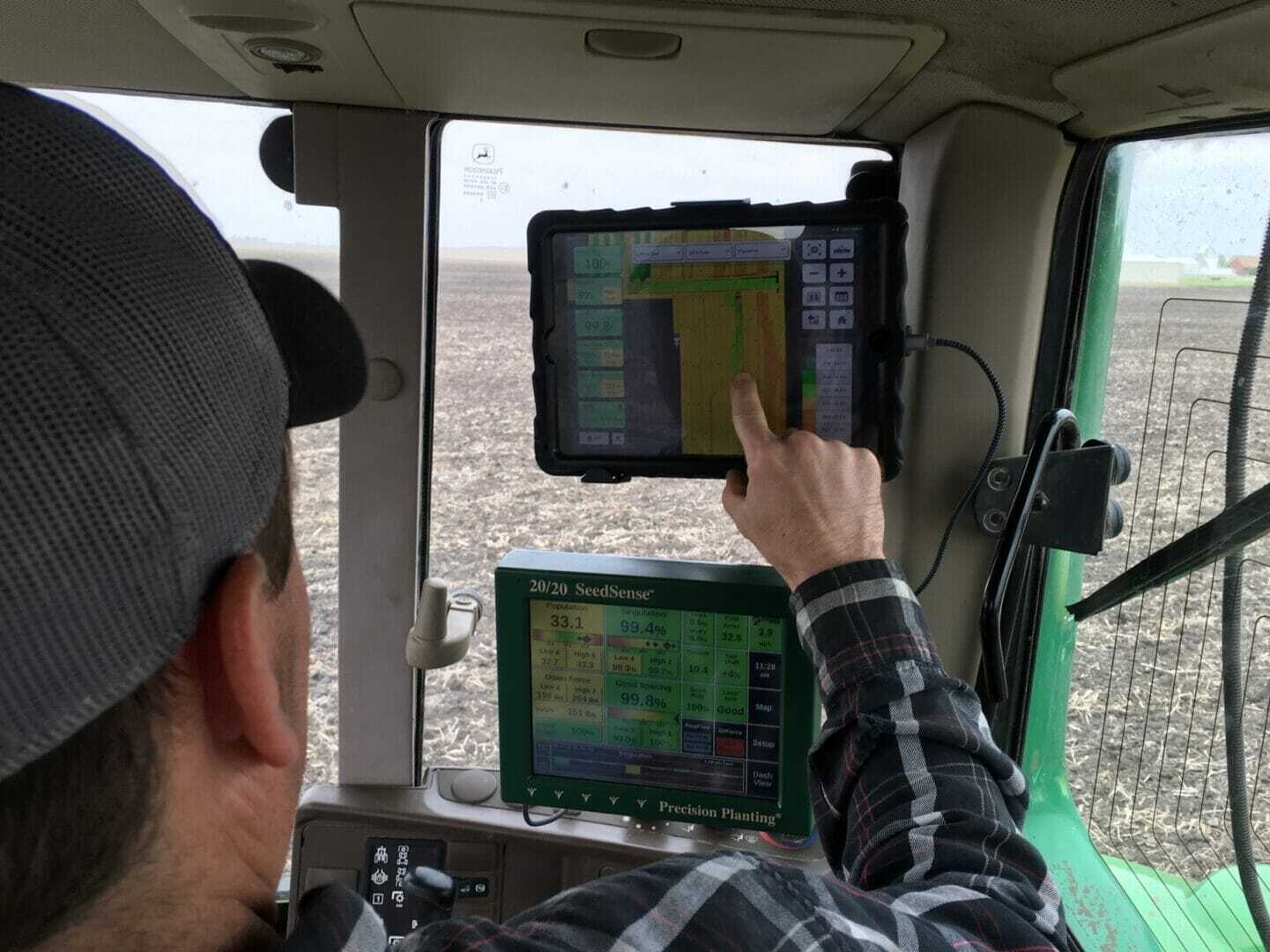
    Most U.S. farmers use some form of precision ag technology, and the majority of these farmers are looking for ways to use their data more efficiently. Organizing data and offering suggestions on how farmers can increase yield on a field-by-field basis is where Seed-2-Soil® services comes into play.

    Technology in the tractor is one part of precision ag data that is recorded by the combine, planter or sprayer monitor requires another level of understanding. Here at Latham Hi‑Tech Seeds, we’re working to help farmers find the intersection between crop production and precision ag.

    We believe this technology is a huge stepping stone in terms of efficiency and reaching that next level of production on your fields. Understanding the variability on each of your farms is Step One.

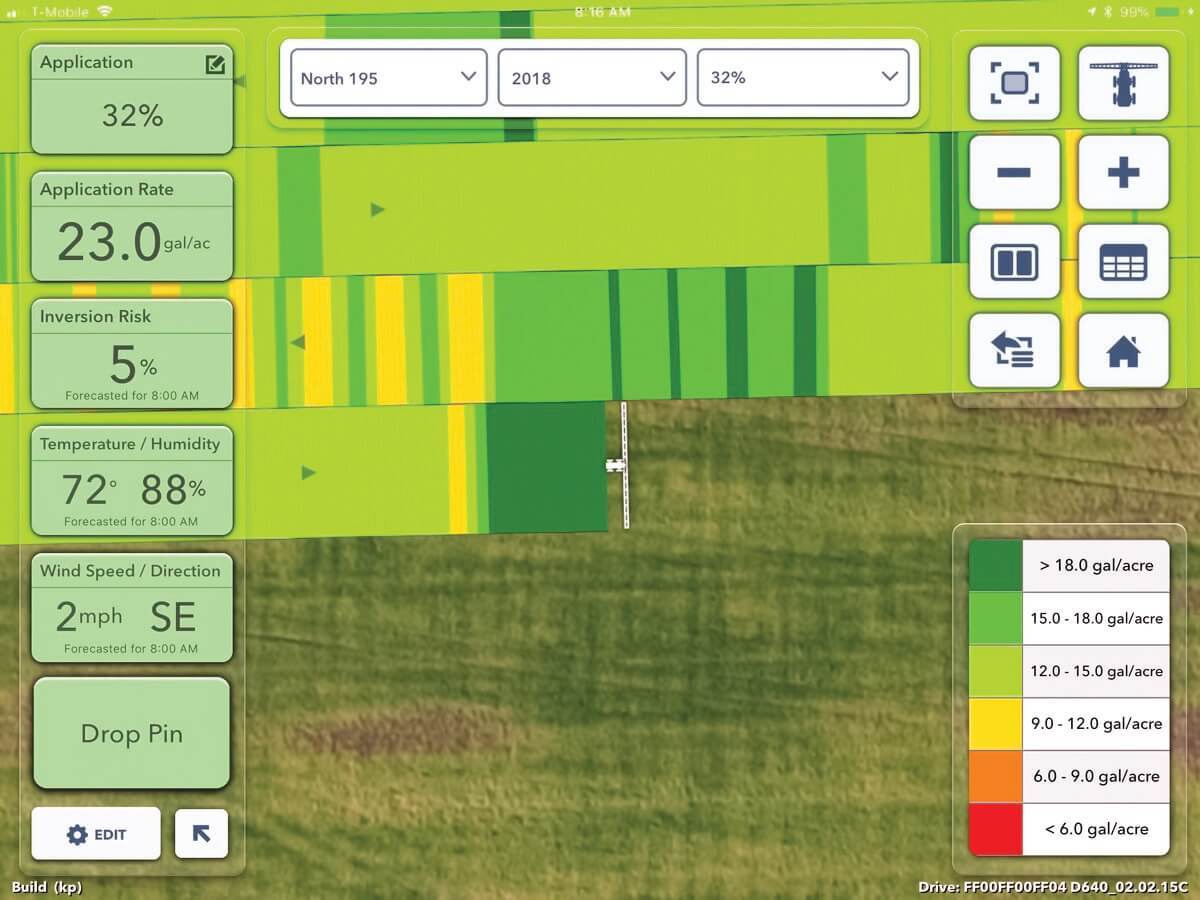
    Our FieldXField process focuses on placing hybrids/varieties according to yield-limiting factors combined with data from your yield monitor. We can define smaller “management or productivity zones” that will allow you to put Variable Rate (VR) technology to use on your farm.

    Combining data such as soil samples, satellite or drone imagery, disease and insect scouting reports, and planter and sprayer applications gives you a much clearer picture of each field. Armed with this additional data, you can monitor and manage that field throughout the season.

    There are many ways to incorporate precision ag technology on your farm. While not everyone will have every technology, using a few tools provides valuable information. For example, variable rate (VR) hybrid planting can provide a $20/acre benefit. We’re testing this technology on a farm in Northwest Iowa and are eager to see the results this fall.

    Although most farmers don’t yet have the capability for VR hybrid planting, many have the ability to apply VR fertilizers. Studies show a $5-8/acre benefit from decreasing over application and under application to areas within a field. If your fields have a large amount of variability, you may reap even more revenue from VR technologies.

    Variable rate seeding and applications are just one piece of the precision ag pie. We can work with you to make your data work for you and your operation. It’s our goal to work with farmers and add value regardless of where they are along the technology adoption spectrum.

    One simple, but especially important detail, is naming your fields consistently from year to year. Also make sure your monitors and GPS receivers are communicating with one other. You may see a yield number on your monitor, but that doesn’t mean the GPS location and other information is running through your combine. The data coming out is only as good as the information going in! Calibration is key to getting useful results.

    I’m looking forward to working with Latham dealers and customers to help bring more value from the combined use of seed and precision ag technologies. Feel free to contact me at 1.877.GO.LATHAM (1.877.465.2842) if you’d like to visit about how precision ag can benefit your operation!

    IMG 5285

    Phil Long

    March 25, 2019
    Agronomics, Precision Ag, Tech Tuesday
  • Latham Hi‑Tech Seeds

    States Focus on Nutrient Reduction Strategies

    IMG 2343

    Reducing the excessive use of nutrients was the focus of presentations made recently during the annual Agribusiness Showcase and Conference in Des Moines.

    Most Upper Midwest farmers are very aware of problems in the “Hypoxia Zone” of the Gulf of Mexico. This area where the Mississippi River discharges into the Gulf is negatively affected by the abundance of nitrate nitrogen (N) and phosphorus (P) found in the river water. Excess nutrients can come from many sources including: sewage treatment plants; soil erosion; deposition of atmospheric nitrogen and fertilizers used on farms; lawns; and golf courses.

    The EPA in March 2011 issued a letter to encourage states bordering the Mississippi and Missouri Rivers to reduce contaminants, specifically N and P, found in lakes, rivers, streams and groundwater. Phosphorus is tightly bonded to soil particles, so erosion is the main reason it is found in water. Nitrogen, on the other hand, converts to nitrates and easily leaches down through the soil profile. This allows nitrates to infiltrate groundwater and eventually reach lakes, streams and rivers through tile systems or aquifers.
    Below are a few recommendations from experts who spoke at the agribusiness conference:

    • Eliminate “insurance” and “build” applications of nutrients. We tend to base our fertilizer needs on soil tests and what our yield goals are, then add an extra 10-20% to make up for losses due to weather, timing, etc. We need to stop this practice.
    • Bioreactors at the field’s edge can lower nitrate in runoff water before it can enter a stream or tile drainage ditch.
    • Saturated Buffers can help reduce both erosion and nitrate runoff for farms that have a river or stream flowing alongside or through the field.
    • Cover Crops can greatly reduce erosion and help with more efficient nitrogen use. Cover crops are one of the few practices that may help an entire field, rather than merely an edge-of-field strategy. Long-term benefits of cover crops include managing weeds, increasing organic matter and building overall soil health.
    • Precision Agriculture. Programs like Climate FieldView™ and Latham’s Data Forward™ bring economics and conservation together by using your own farm data. This leads to better variety selection and crop input decisions and often better use of soil and fertilizer resources.
    • These are just a few of the most popular strategies, but you could visit with your local NRCS staff member for more ideas. Most state strategies are voluntary, but Minnesota is considering making some of their strategies mandatory. Fall application of nitrogen fertilizer might be the first practice banned in Minnesota.
    • One farmer put it very simply, “Either join the effort now and have some freedom in what practices you use or wait until it is mandatory and then be told what to do.”

    Contact your Latham RSM or our Technical Agronomist Phil Long to talk about ways our cover crop portfolio or Seed-2-Soil® services can help you and our customers raise the most profitable and sustainable crops.


    IMG 2343

    Mark Grundmeier, Product Manager

    March 19, 2019
    Agriculture, Cover Crops, Crop, Industry News, Tech Tuesday
  • Latham Hi‑Tech Seeds

    Update Precision Technology before Planting Begins

    Phil Planting

    Spring officially arrives March 20, so farmers are busy readying equipment.

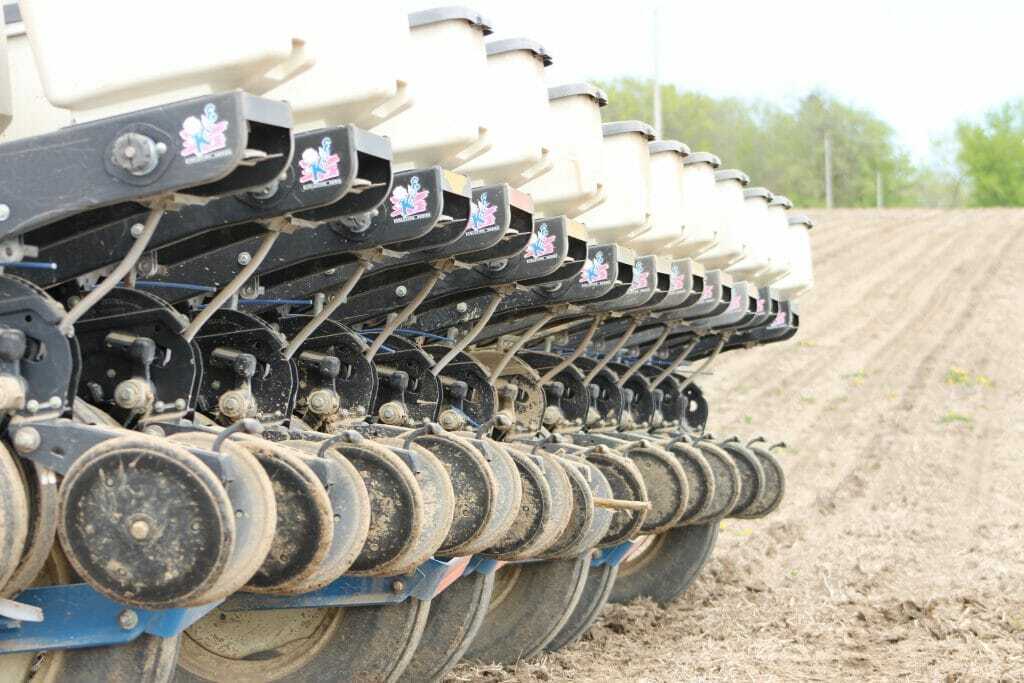
    Many yield variables are determined at the planter: planting date, seeding rate, planting depth, planting conditions, where to place fertilizer, and especially planting precision (singulation/spacing). Many pieces of the puzzle must come together to give your corn and soybeans a good start, but I’m going to focus on the precision part of planter preparation.

    Most farmers begin by thoroughly checking their planter by running units on a test stand. Test all bearings, chains (if applicable), hoses, motors, openers, rows cleaners, etc. to ensure they will last through the planting season. You don’t want to have a needless breakdown because worn parts weren’t replaced.

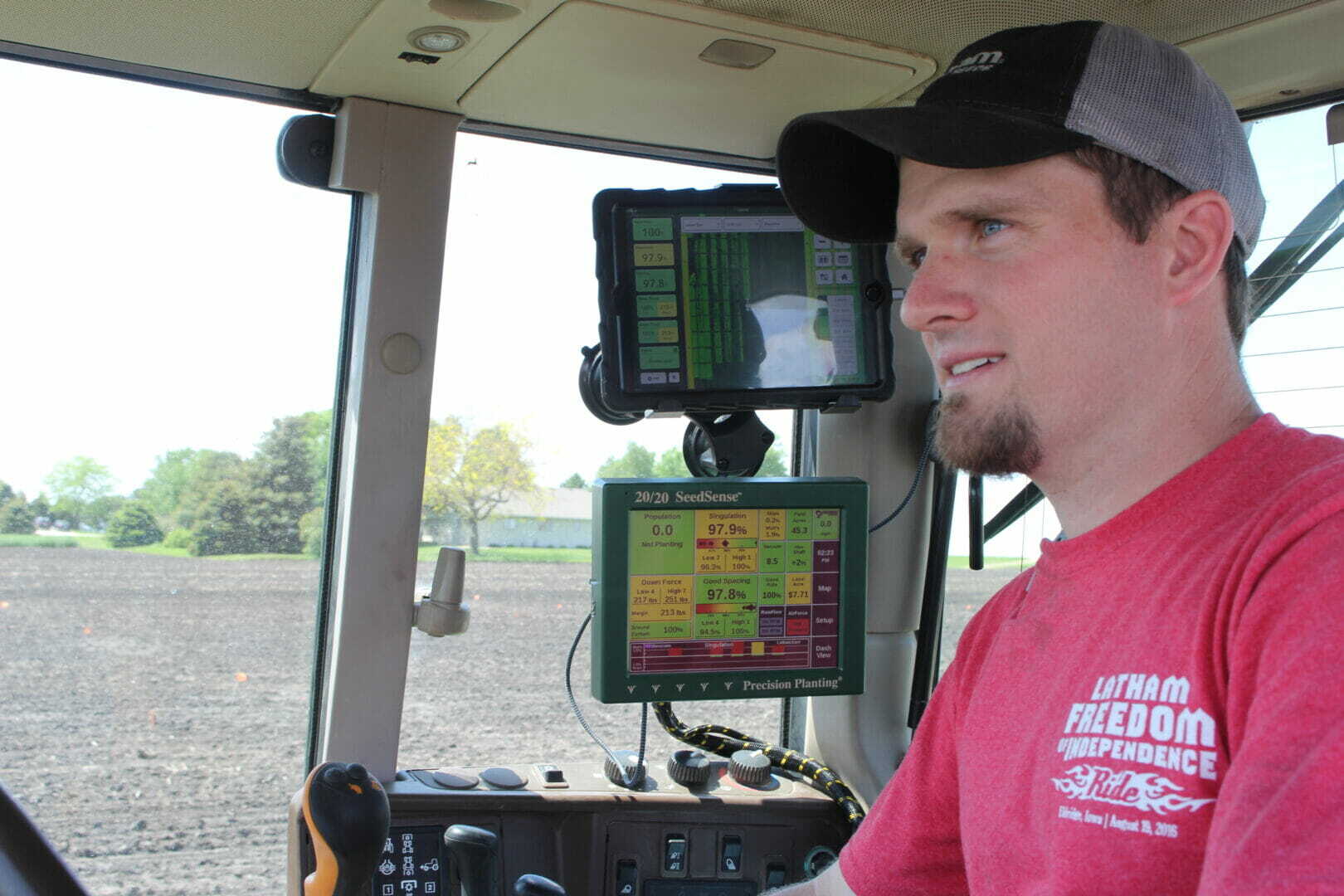
    Phil PlantingAnother critically important part of planter preparation is your technology. Make sure all monitor software is current. If it isn’t, this can cause problems with how well it communicates with your planter. Old software can cause functions to glitch or simply fail to work, which is very frustrating in the heat of the battle. Outdated software also may impact how your auto-steer functions. Have your dealer check your monitor for updates because that’s one tool that can reduce operator fatigue during long days during planting season.

    Also be sure that field names have been entered, so you can collect data specific to each hybrid or variety. This is pretty simple to do if you’re using Climate FieldView™ as it will prompt you to enter a hybrid once you confirm the field you’re in, or you can pre-load hybrid numbers by field to save time searching or entering them on the go.

    If you’re running an OEM monitor in the cab, the biggest challenges are getting to the correct screen on your monitor and then entering the hybrid in the correct box. Some monitors are harder to navigate than others, but this step is important for recording yield data and better managing your operation. A few seconds of work can provide you with “data in hand” come next winter when you’re evaluating products.

    “Setup files” for the monitor are really helpful to preload information like hybrids, client-farm-field structure, as well as GPS boundaries for row shut-offs. These files can be loaded into most monitors by creating a setup file in a software program and then transferring it to the monitor by USB stick. This is very helpful for pre-loading hybrid/variety names because they will be available in a drop-down menu, which makes it easy for you to select them. Ask your dealer if your monitor is capable of reading setup files.

    One more tip is to print a list of your fields and field names, so you can keep a copy in the tractor cab. If more than one person operates your planter – or if you run more than one planter – then everyone will know which hybrid to plant in each field. Clarification helps save precious time.

    If you have any questions, call me at 877-GO-LATHAM (877-465-2842) or email me at phill@lathamseeds.com. You can even ask questions in real time as agronomic information, including precision planting tips, are shared each Thursday during Latham’s Facebook Live broadcast. Check out the videos we post weekly on Facebook. You also can watch archived videos on LathamSeeds.com under “The Field Position” or search our Facebook page for #AsktheAgronomist.


    IMG 2110


    Phil Long

    March 11, 2019
    Agronomics, Precision Ag, Tech Tuesday
  • Latham Hi‑Tech Seeds

    Improve Soil Health with Cover Crops

    IMG 2337

    Taking soil samples and then implementing “3 Ps” is key to building soil health: (1) Sample; (2) Plan; (3) Plant and (4) Be Patient. The focus of my post is to provide tips for developing a plan that will leave your soil in better shape for future generations.

    1. Sample: It is hard to now where to go, when you don’t know where you are. That’s why baseline tests are so important.

    In addition to working for Latham Hi‑Tech Seeds, I also work part time in the emergency room and am a paramedic in rural Wisconsin. When a sick patient is admitted to the hospital, a blood sample test is run. Results from this CBC, or complete blood count, and other tests become the foundation on which we develop the best suited treatment plan. This is really a customized approach to treating a situation because everyone is different.

    The same is true with soils. Every single soil is unique, and the state of its biological soil health is based on several factors that only soil sampling can truly reveal. Once we have soil sampling results, we have a point from which we can develop the best suited plan.

    IMG 2337

    There are a lot of tests available, but I have found the most useful test is the Solvita soil test by Woods End Laboratories. This test gives an overview of the biological health of the soil. It also actually provides a recommendation of the best cover crop combination to the benefit and build the soil.

    If you’re not already doing so, I encourage you this season to develop the best suited plan to start building your soil structure. Start small, so you don’t get overwhelmed. Choose a soil you believe needs the most help. NOTE: Most conventionally-tilled soils could benefit. Use the absolute best soil sampling equipment you can find. Be very diligent in collecting the sample because the data you get back is only as good as the sample the lab receives from you.

    Take your time. Enjoy the experience as you embark on a journey of doing something good for humanity. – Corey Catt, Latham Forage Product Specialist

    1. Plan: Now that you have results from soil samples, develop a plan to accomplish your goals. Sometimes it’s easier to take a small acreage out of production, and plant a green manure mix. Here are some plants to consider:
    • Grasses, like Latham’s PROTECTioN Cereal Rye, scavenge for excess nitrogen. Grass roots help reduce run off.
    • Legumes, like Latham’s FixatioN Balansa Clover produce nitrogen and help reduce run off.
    • Brassicas, like Latham’s Driller Daikon Radish help penetrate hard pan and provide a little fertility benefit.

    If you plan to interseed cover crops into your existing corn or soybean field in mid-summer, be very mindful of what herbicide you are using because carryover can reduce your cover crop emergence and growth. In particular, the residual of Dicamba herbicide really restricts your cover crop options.

    1. Plant: Cover crops may be drilled, broadcast seeded, ariel seeded or even seeded using a Hi-Boy. Equipment is usually a limiting factor to what cover crops get planted. Some county soil conservation offices rent equipment. They also have funding available to pay for some cover crops.
    2. PATIENCE: Being patient is the hardest part of trying cover crops and rebuilding soil health. You must think long term rather than seek short-term gratification. When we go through the investment efforts, we would like instant results.

      Fact is, you are getting results albeit they are subtle. In many cases, however, the results are exponential when you commit to the plan for years. One Indiana grower found he has increased organic matter (OM) over time. This is huge as increasing OM also increases the water holding capacity in the root zone, which correlates to more yield potential, especially during dry conditions. This grower says he’s gaining about .1% OM every year that he no-tills and uses specific cover crops.

      Consider that in 10 years you could gain another 1% OM. Every 1% OM holds about 1 acre inch of rain, which is around 27,000 gallons. Every year you increase the water holding capacity, you improve your chances of higher yield.

    We’re all about helping you “grow your legacy” at Latham Hi‑Tech Seeds! Feel free to call me if you’re interested in setting up an on-farm trial for cover crops this growing season. We might even be able to partner with you to try some new products or different rates / seeding studies of existing products. Also note that the 2020 Latham® Seed Product Guide will be distributed in July 2019, so be sure to check out our production offering for Fall 2019 seeding.

    Webspec Admin

    March 4, 2019
    Agronomics, Cover Crops, Crop, Industry News, Soil, Tech Tuesday
  • Latham Hi‑Tech Seeds

    Eight Inches Can Become a Yield Barrier

    IMG 6869

    I want you to feel confident knowing you have done your very to best manage the things that are within your control. This involves understanding production-limiting factors and building a plan to reduce, if not eliminate, those factors.

    IMG 6869

    As I was thinking about barriers to yield, I recalled reading an article Shannon Latham wrote to recap a presentation she had heard by Captain Charlie Plumb. (You can read that post in its entirety here: https://bit.ly/2WbhYBV.) Captain Plumb, whom spent 2,103 days as a POW, began his presentation by saying, “Today I want to take you back to a Prisoner of War camp in Vietnam where you can feel the intense heat baking on the tin roof of your 8 by 8 cell. Even though I’m telling a story about myself, the real story is not about me. It’s about you. You won’t face the 8-foot walls that I did, but you will encounter the eight-inch ones. Those eight inches between your ears can become your biggest barrier. That’s why it’s important to remember that you can do anything you set your mind on.”

    Captain Plumb’s quote really resonated with me. How often do we let those eight inches between our ears become the biggest barrier? Each of us has a different comfort level when it comes to trying something new, from a new brand of denim jeans to a new seed trait or technology. Much of what we’re comfortable with has to do with how we were raised. Many of us watched Mom and Dad do the chores. We followed them around like a shadow until we were finally old enough to accept some responsibility, and then we tried to perform the same chores just as we had seen them do it. This time-honored tradition of learning by immersion is unparalleled and builds such a solid foundation.

    Farming practices have evolved through the generations, but the one thing that remains constant is our connection between the soil and our future. Generations before us tilled the earth that we currently farm. As you develop a plan for 2019, you will be developing a plan to use the earth in a way that will affect generations to come. In 2019, try an on-farm experiment: Try a new seed treatment or a product from our new line of Talc options. Try a couple different seeding rates in the same field. Try planting one field to Latham’s low-lignin alfalfa. Just try something you’ve never done before that has the potential to be a game changer, and limit your risk by starting small. I know change can be a little frightening. Fear of the unknown can be overwhelming, but conquering our fears can lead to even greater confidence.

    Continuous pursuit of finding the best practices for your farm will bring a new sense of confidence. I believe the anatomy of yield starts with those eight inches between your ears. Get the most you can possibly get from each acre by planting the best genetics and trying new practices while remaining in harmony with your soil.

    Webspec Admin

    February 26, 2019
    Industry News, Tech Tuesday
  • Latham Hi‑Tech Seeds

    You Can “Map Anything”!

    The investment in precision technology is typically the biggest barrier for farmers interested in using data to elevate their operations to the next level. That’s why I’m excited about the Climate FieldView “Map Anything” feature that eliminates some of the extremely large equipment investments, such as a new planter, that had been necessary.

    Let me explain… Many farmers split-plant their fields. They may wish to compare two hybrids or soybean varieties side by side, study two different seed treatments or compare in-furrow products. To make such comparisons, farmers need a planting map that provides a layer of information to connect a product to a particular spot in the field. A planting map gets electronically placed over that field’s yield data at the end of the season to compare how each seed product performed. The same goes for different fertilizer treatments if a farmer is trying to figure out the best nitrogen rate without sacrificing corn yield. Any research on your farm must be mapped in the spring to help you evaluate it with yield data in the fall.

    Last year Climate introduced the “Map Anything” feature that allows you to hook the FieldView Drive on an iPad to any compatible monitor and receiver combination to map the operation. For example, if you have a John Deere 2600 display and Starfire 3000 globe on top of your tractor (or a CNH Pro 700 and 262 globe), you could map your planting operation even if its an older planter with no electronics on it. You can set a static planting rate and map your planting operation on the go. This allows you to set up different hybrids and varieties in each field; they will be mapped so you can see your yield analysis based on what you planted. The best part is this same feature can be used with a fertilizer applicator or sprayer that doesn’t have the ability to map. Once again, you can track each test and then evaluate results at the end of the season.

    Keeping track of your data and getting it all organized in one spot is the key for making even better farming decisions. If you already have a GPS and monitor in the cab for steering, then I highly recommend you look into this Climate feature. “Map Anything” can help you analyze your management practices to become even more efficient this season.

    Click here for a Map Anything Setup Guide.

    Phil Long

    February 18, 2019
    Industry News, Tech Tuesday
  • Latham Hi‑Tech Seeds

    ‘Tis the Season for Product Introductions

    Alfalfa3

    As product manager for Latham Hi‑Tech Seeds, I get the pleasure of working with our various product lines from cover crops and forages to soybeans and corn hybrids. There have been so many exciting announcements recently, such as China’s approval of Enlist E3™ soybeans for import. We will have Latham brand soybeans with the Enlist E3 technology for sale as soon as Corteva receives final approval from the Philippines. In the meantime, we’re excited to announce the addition of LH 9670 IQ with Hi-Gest® Alfalfa Technology to Latham’s current alfalfa offering.

    Latham 9670 IQ helps improve quality while maintaining yield and providing resistance to multiple diseases. Improving fiber digestibility helps improve feed intake, which leads to better production. In fact, studies show cows eating LH 9670 IQ are producing up to 2.5 more pounds of milk daily. See the full tech sheet on our website at www.LathamSeeds.com.

    The news gets even better for those who are looking for flexibility in the field as LH 9670 IQ is widely adapted across a broad range of geographies and soil types. LH 9670 IQ does not require special stewardship management considerations as it was produced through conventional plant breeding.

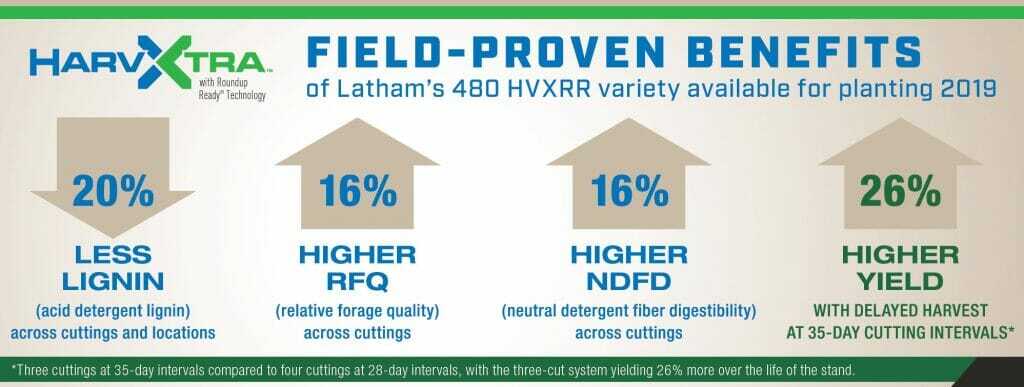
    If you have an interest in high-quality alfalfa with Roundup technology, we also have a special rebate on our previously launched 480 HVXRR (HarvXtra) product. Field-proven benefits of this technology are shown in detail in the graphic below.

    There are so many reasons for dairy and beef producers to plant LH 9670 IQ and 480 HVXRR this spring! Contact your Latham representative to learn more. Be sure to ask about our special programs and pricing, which are in effect until March 15!

    2.6.19 Tech Tuesday

    Mark Grundmeier, Product Manager

    February 5, 2019
    Alfalfa, Crop, Industry News, Seed Technology, Tech Tuesday
  • Latham Hi‑Tech Seeds

    On-Farm Research Helps Find Palatable Solutions

    Corey article

    Everyone is vitally aware of how brittle the farm economy has been, yet it seems like every agriculture periodical that I read discusses all the challenges. This movie quote illustrates the current state of our industry,

    “I’m drowning and you are describing the water.”

    We don’t need ag magazines and experts to “describe the water.” We need someone to toss us a life vest, or a plausible solution! That’s why I’m concentrating on solutions to help create stability.

    Granted, these solutions don’t come easy. You must be being willing to do something that you may not have done in the past. Another quote comes to mind,

    “For things to change, you need to change. For things to get better, you need to get better.”

    This quote has some personal and professional reflective value. Th e world agriculture market is becoming more competitive and aggressive. We must get more efficient domestically, and we must find ways to differentiate our products on a global scale. We must look beyond quantity of the crop produced to qualitative components, such as amino acids, fatty acids, omega 3, 6, 9 composition and more. This resonates deeply with the consumer. Not only does increasing the quality of our corn add value, it also helps us build “marketing muscle.”

    For years, research has looked for corn silage products that are stable on the acre. Then researchers looked into delivering the very best nutritional matrix. The delicate balance is so important that early adopters are designing on-farm experiments to test their management systems. I’m excited that Phil Long is merging technology with a vision of the future with Latham’s Seed-2-Soil precision agriculture program services. Little details like better starch and fiber digestibility in grain also make big differences.

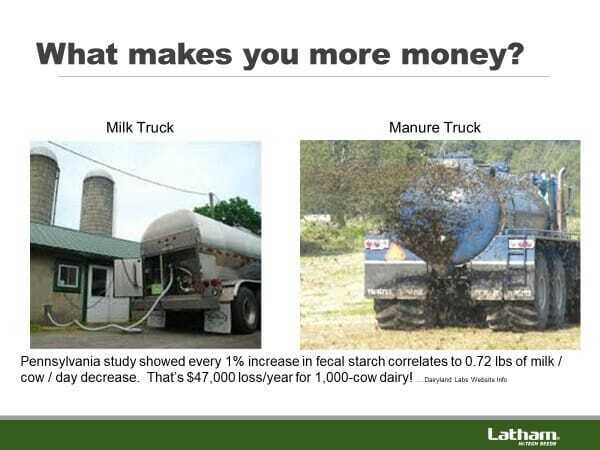
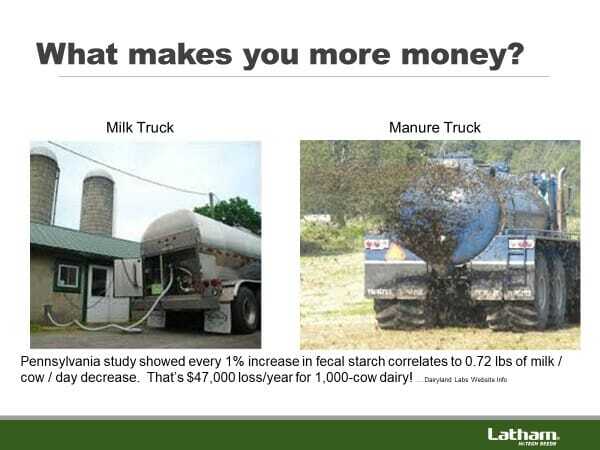
    The image below illustrates the value of feeding hybrids with softer starch. We continually provide good data to help you make better seed product selections and transform research into useful on-farm results.

    Corey article

    2018 corn silage data is available on Latham’s website. Feel free to contact me if you have any questions about setting up an on-farm research trial for forage products. In 2019, be open to exciting possibilities – and to trying something new on your farm!

    Latham Silage Hybrid Results


    Webspec Admin

    January 29, 2019
    Alfalfa, Corn, Corn Silage, Cover Crops, Crop, Soybeans, Tech Tuesday
Previous Page
1 … 7 8 9 10 11 … 15
Next Page

Latham Hi‑Tech Seeds

131 180th Street | Alexander, IA 50420

(641) 692-3258

SIGNUP FOR OUR NEWSLETTER
  • Contact
  • Legal
  • Dealer Center
  • Seedware Login
  • Latham Gear

© 2025 Latham Hi‑Tech Seeds. All rights reserved. | Iowa Web Design by Webspec | Privacy Policy

Latham® Hi-Tech Seeds is a trademark of M.S. Technologies, L.L.C., 103 Avenue D, West Point, IA 52656.