Latham Hi-Tech Seeds

(641) 692-3258

  • Home
  • Products
    • Corn
    • Soybeans
    • Alfalfa
    • Corn Silage
    • Seed Guide
  • Performance
  • Find a Rep
  • Media
    • Blog
    • News
    • Videos
    • Podcasts
    • TECHTalk
  • About Us
    • Company History
    • Our Mission
    • Careers
    • Become a Rep
    • Sowing Seeds of Hope
  • Contact Us
  • Latham Hi‑Tech Seeds

    May 22, 2019 Crop Reports

    Larry 2

    Eastern North Dakota

    Brain McNamee

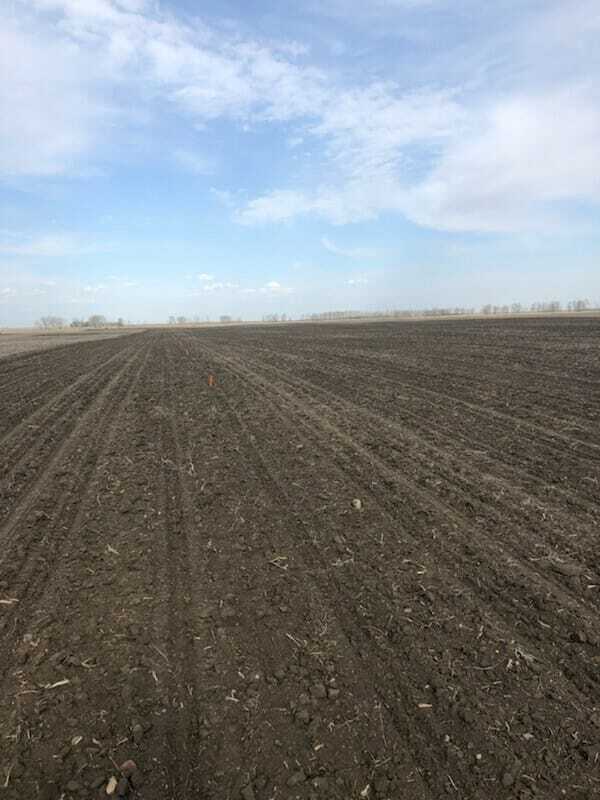
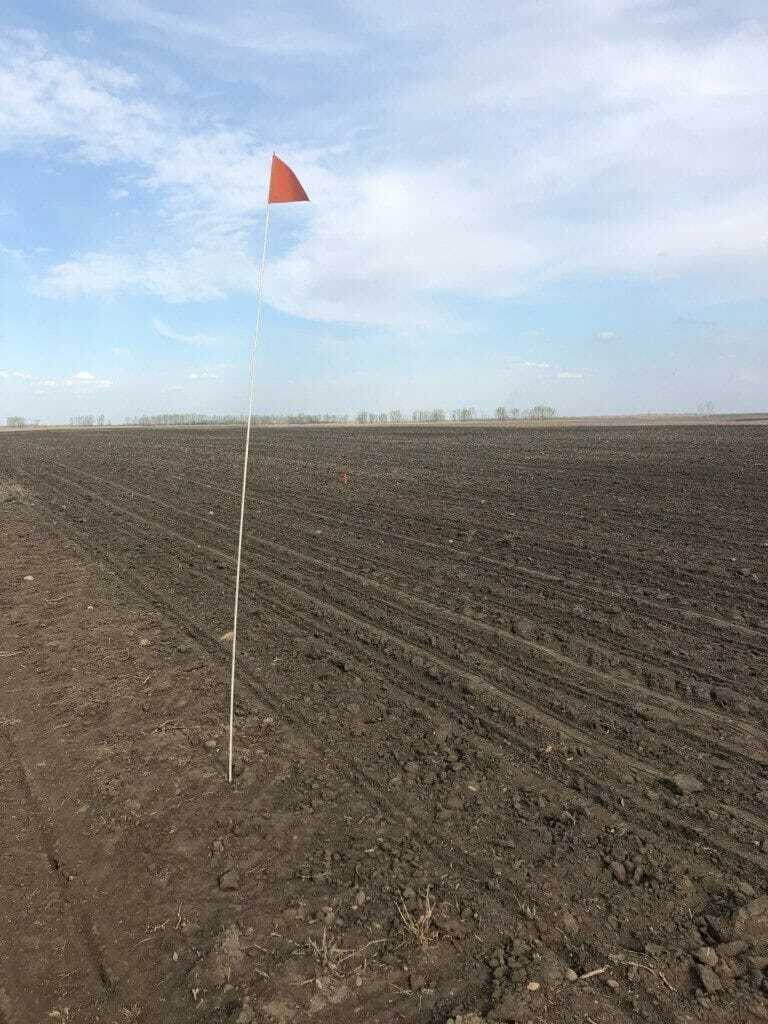
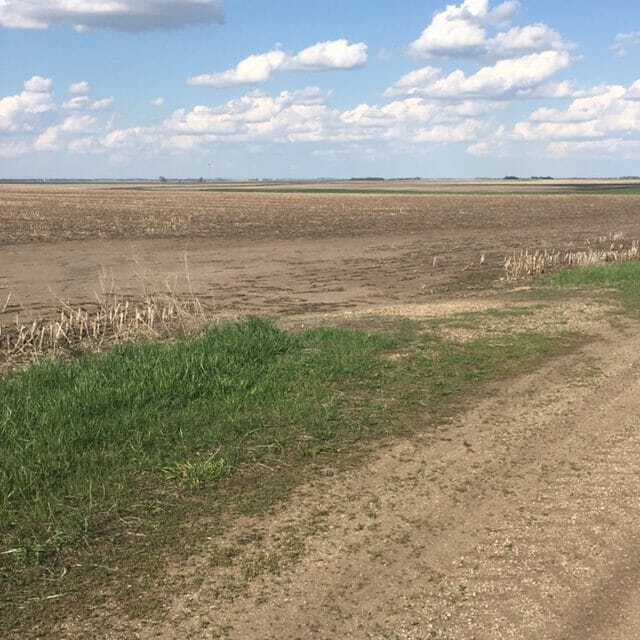
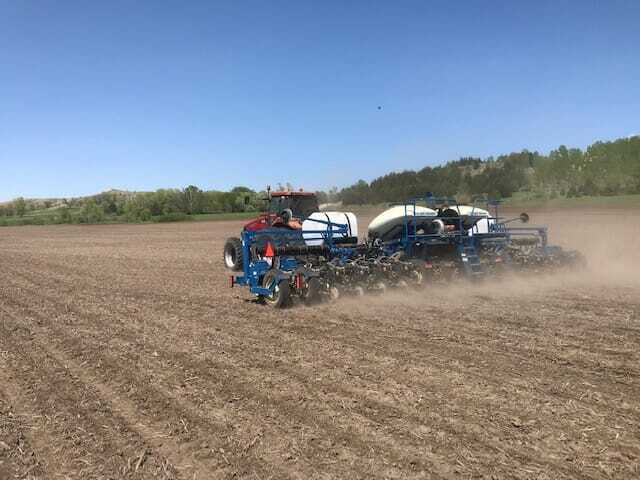
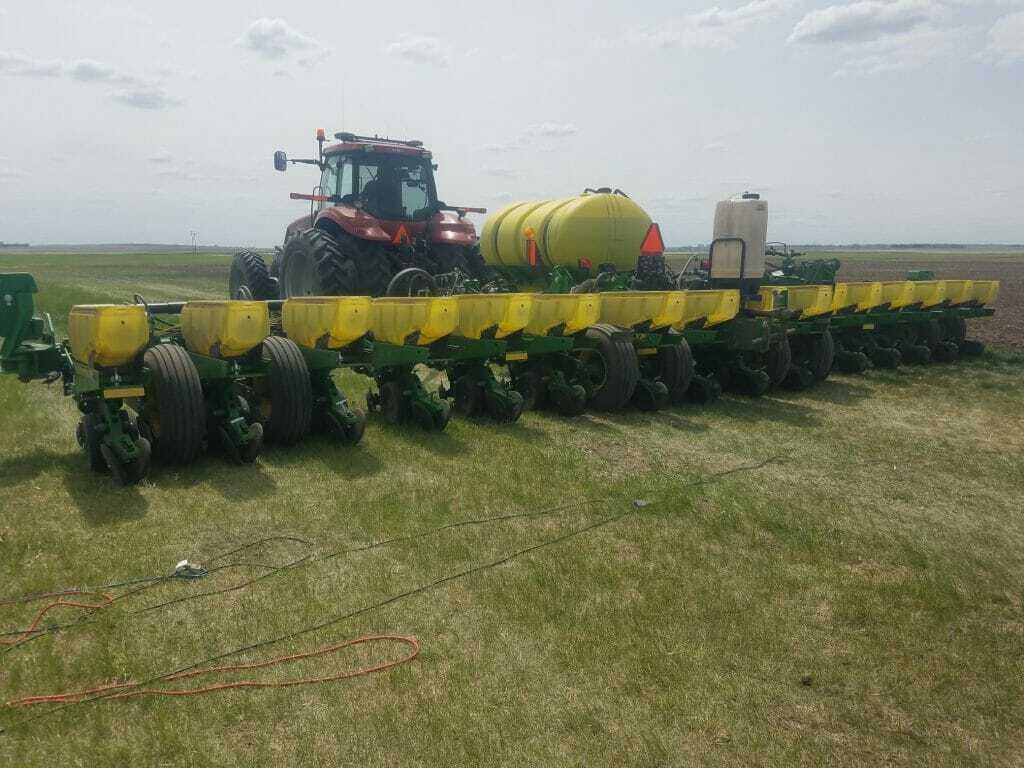
    Just like last spring, farmers in the North Central and Northwest part of my territory have missed the rains. Planting has progressed there for more than 20 days. Last night I drove about 200 miles from home, north to south, and saw maybe half a dozen tractors total in the fields. Of that equipment, it appeared an even split between planters, tillage and rollers. Corn continues to be planted as we push closer to the insurance deadline. All last-minute and final acre decisions are leaning toward corn.
    Brian M

    Southeast North Dakota

    Gary Geske

    With more rain in the forecast, farmers are putting in longer hours to plant what they can now. Take time during this next rain delay to scout previously planted fields for weeds, germination and early crop growth. If you’re planning to use a pre-emergence herbicide, most must be applied before the crop emerges to avoid injuring the growing crop.

    IMG 0269

    Gary 1


    Northeast South Dakota

    James Keltgen

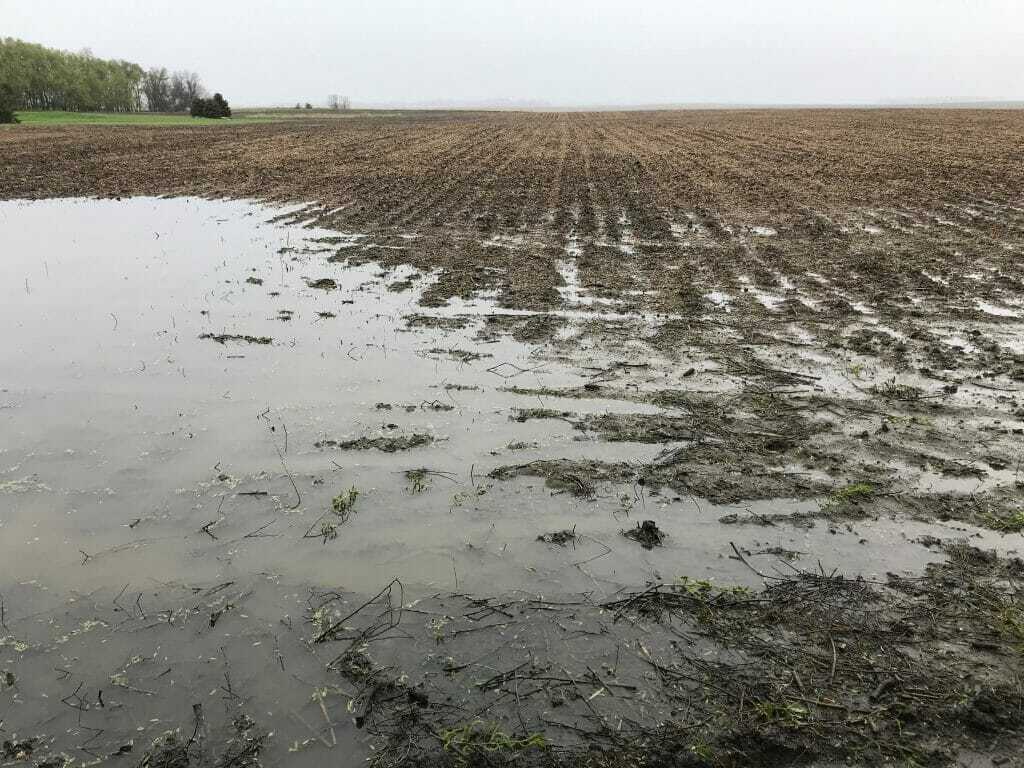
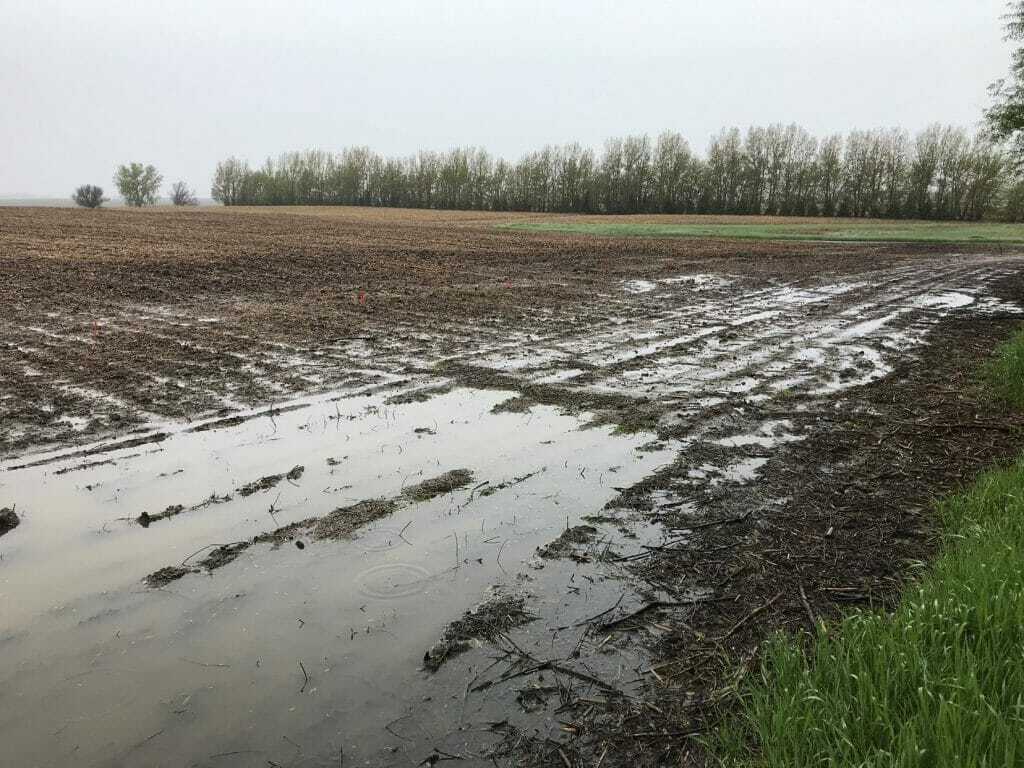
    It’s been another wet week in Northeast South Dakota! Farmers pushed hard in areas the last half of last week. I’m hearing everything from 0% to 100% done with planting corn. Most farmers are somewhere in the 20 to 40% completed range. Nearly three inches of rain have fallen since last week, so some farmers are thinking about planting earlier hybrids. We’re praying for a break in this rainy weather pattern.
    James 1

    James 2

    Southeast South Dakota

    Ramie Coughlin

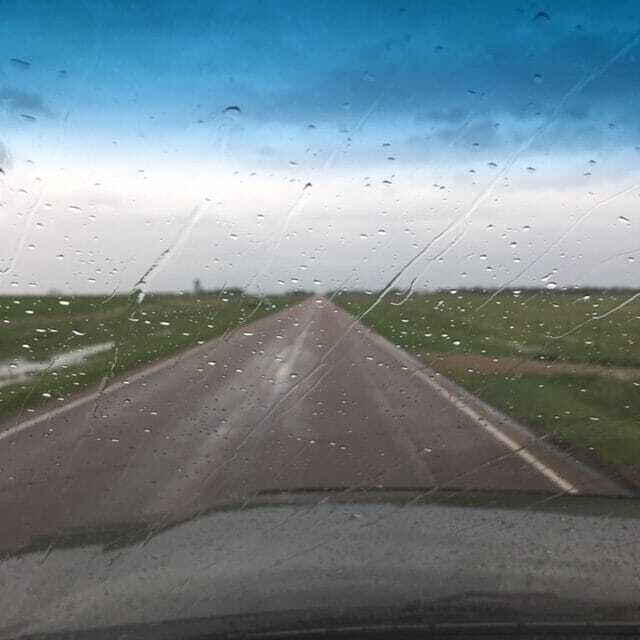
    Last week we had four days of dry weather, so planters got in the field. I’ve heard reports from farmers, ranging from 100% to 0% planted on corn. It was a relief that fields were dry enough to plant last week, but it was unfortunate the next rain system wasn’t far behind. Rain fell Friday night across most of eastern and western South Dakota and continued into Saturday and Sunday. The next system flared up Tuesday and has continued into today. We’re hopeful that good drying weather in the days to come as warmer temperatures are suppose to be on the way.
    Ramie 1


    Northern Minnesota

    Ken Highness

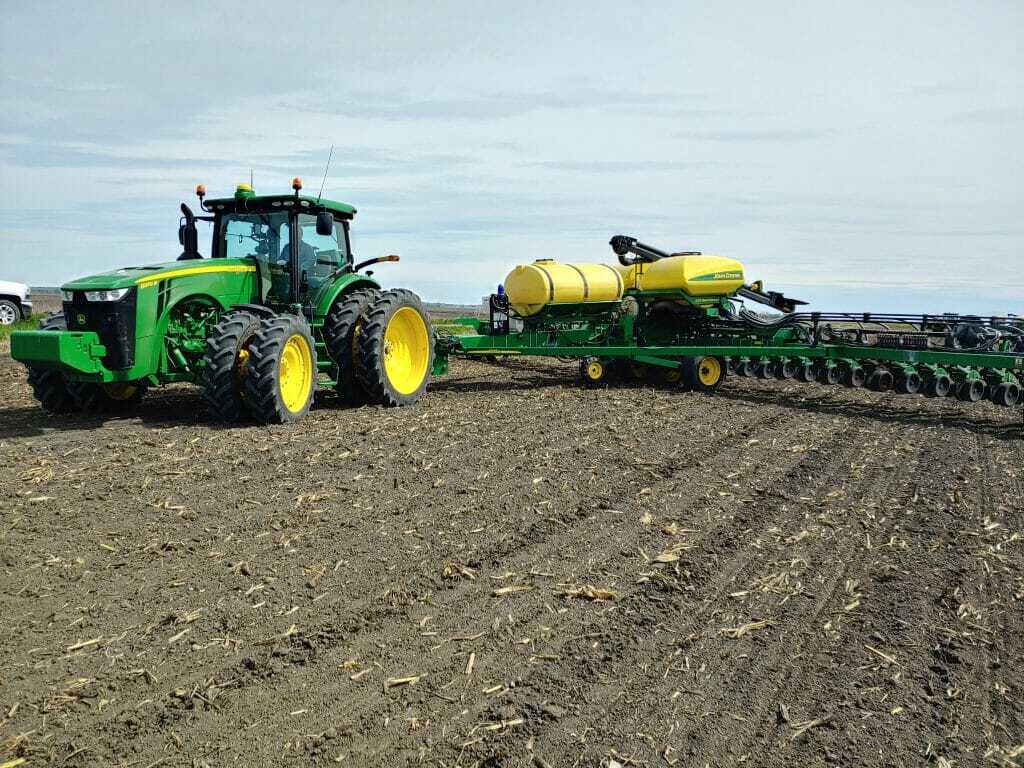
    This past week brought favorable conditions for field work with soil temperatures above 50-degree mark. Latham® Dealer Riverton Seed planted L 0982 RR2, which was the Red River’s F.I.R.S.T. Trials winner. Many farmers were busy finishing tillage while some started planting. A few areas experienced large amount of rain and some even received snow last weekend. The good news is we’re still within the time period for great yields, so there’s no need to think about switching maturities yet!
    Ken 1

    Southern Minnesota

    Justin Prokosch

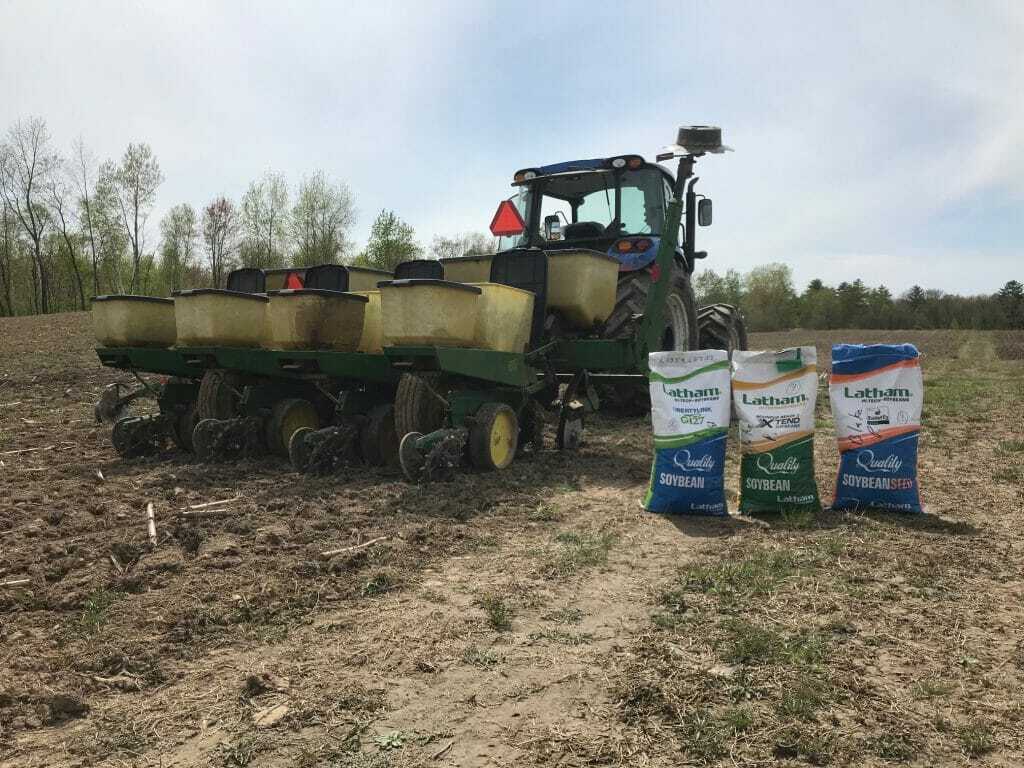
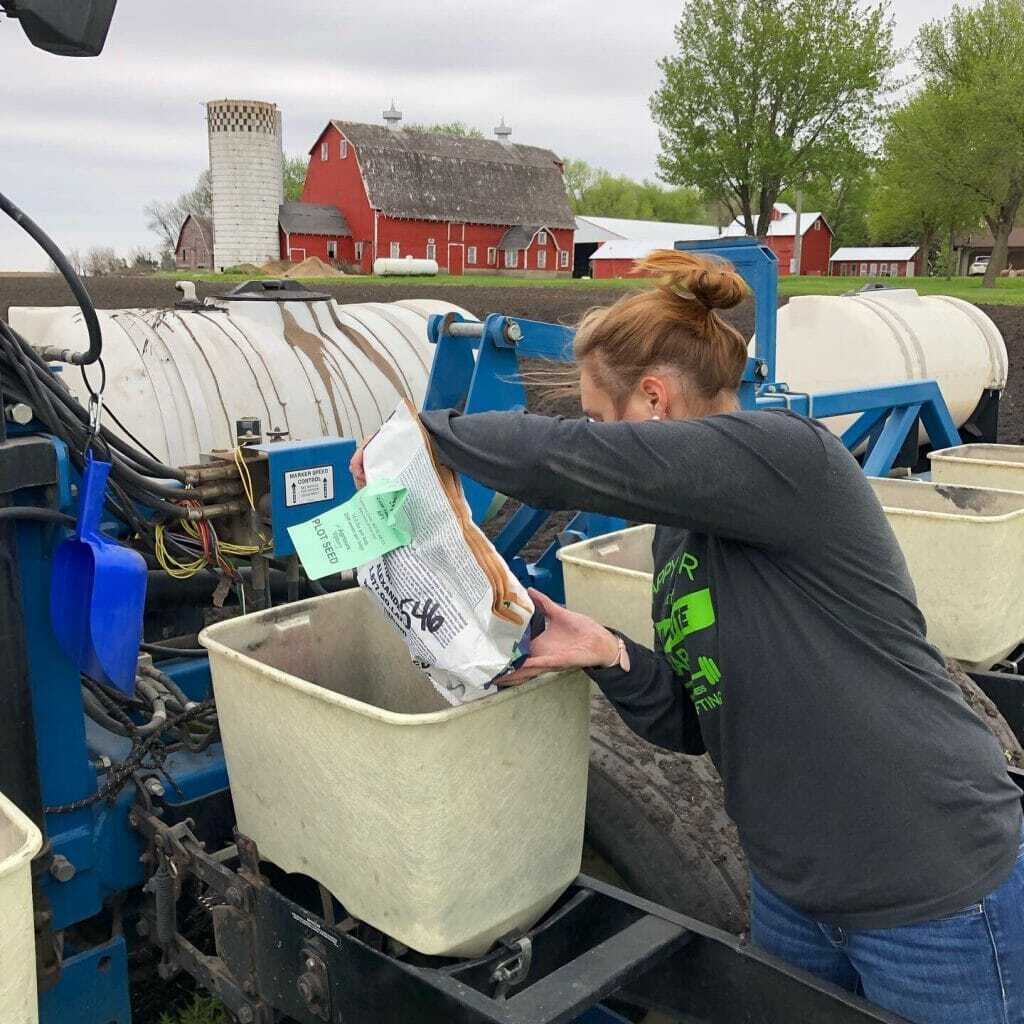
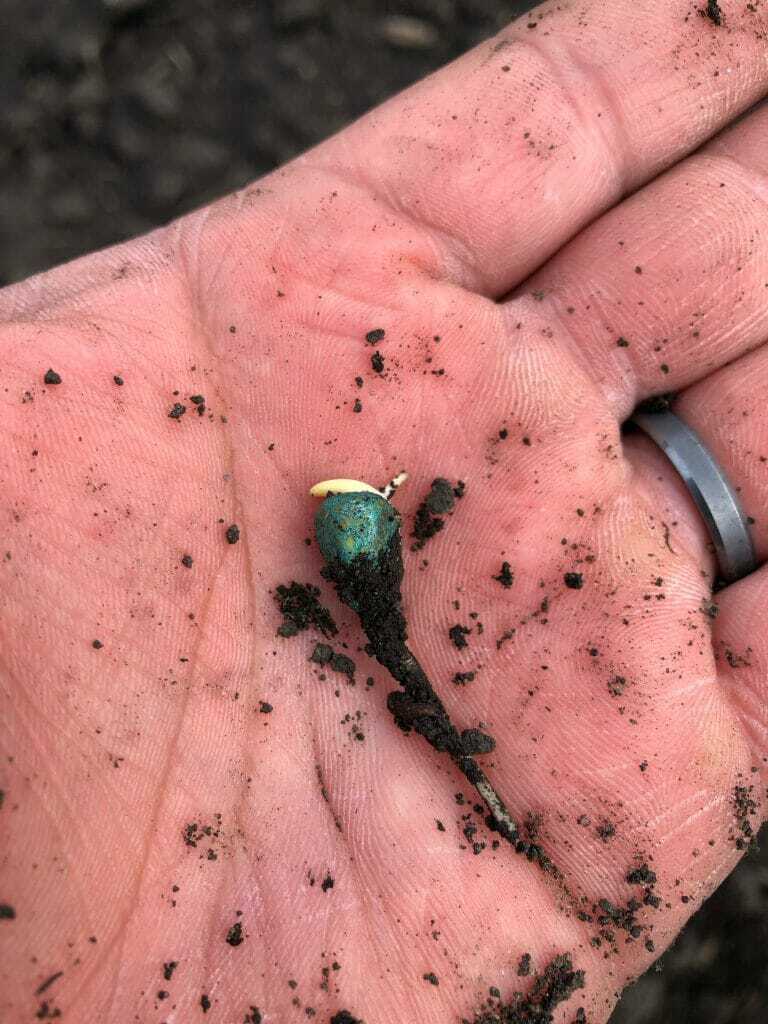
    Last week was a strong week for many farmers in southern Minnesota. Many farmers finished planting corn, and some got started on soybeans. With rain coming in last Friday, I convinced my wife to help put in my last Latham SuperStrip™ on our home farm. We pulled out all the stops to get it planted right before it started raining!
    Justin 1

    Justin 2


    Northern Wisconsin 

    Joe Salter

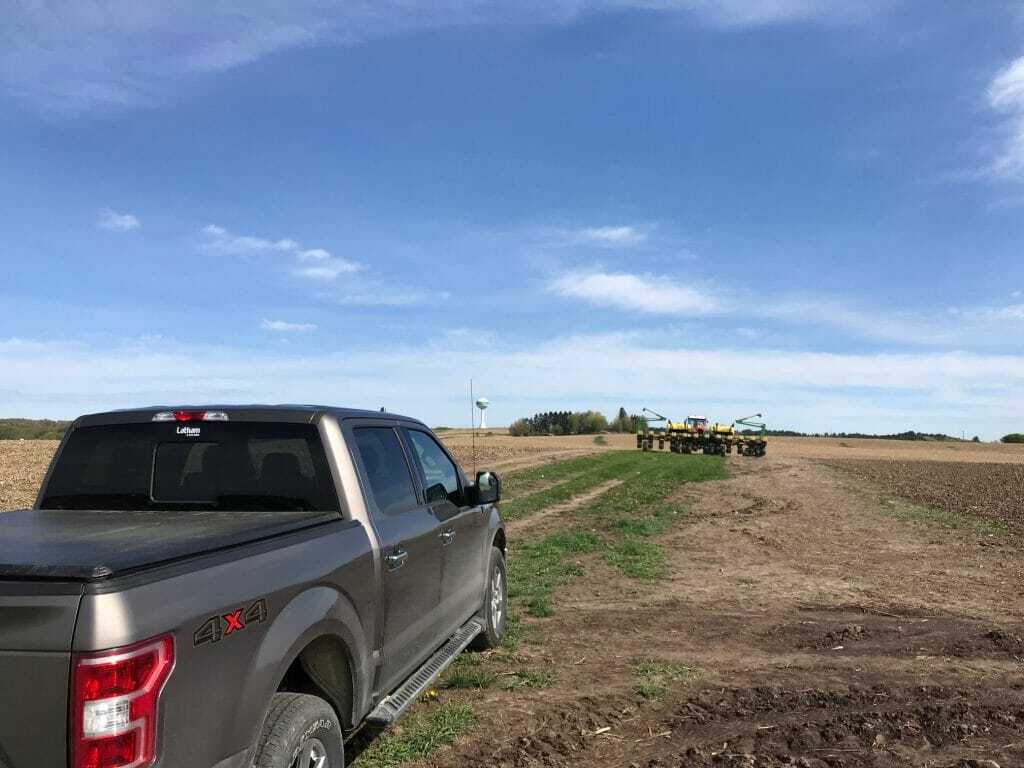
    This last week we gained some ground! Tractors were running steady because farmers knew rain would soon hit us. Northern Wisconsin planting progress ranges from zero acres planted to almost done. A few more Latham plots went in the ground.
    Joe 1

    Joe 2

    Southern Wisconsin

    Greg Mair

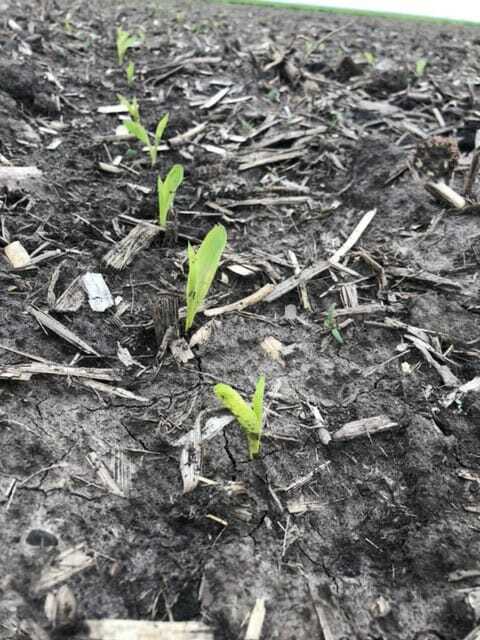
    Seed that has been in the ground for three or more weeks is finally emerging. These acres are a little pale green, but the stands look fairly uniform given what they have been through.  More rain in the forecast this week, but farmers remain hopeful for good conditions to finish planting this spring.
    Greg M


    North Central Iowa

    Cory Greiman

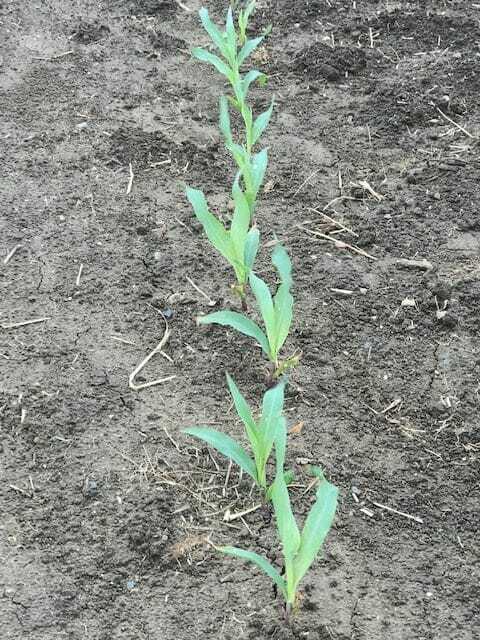
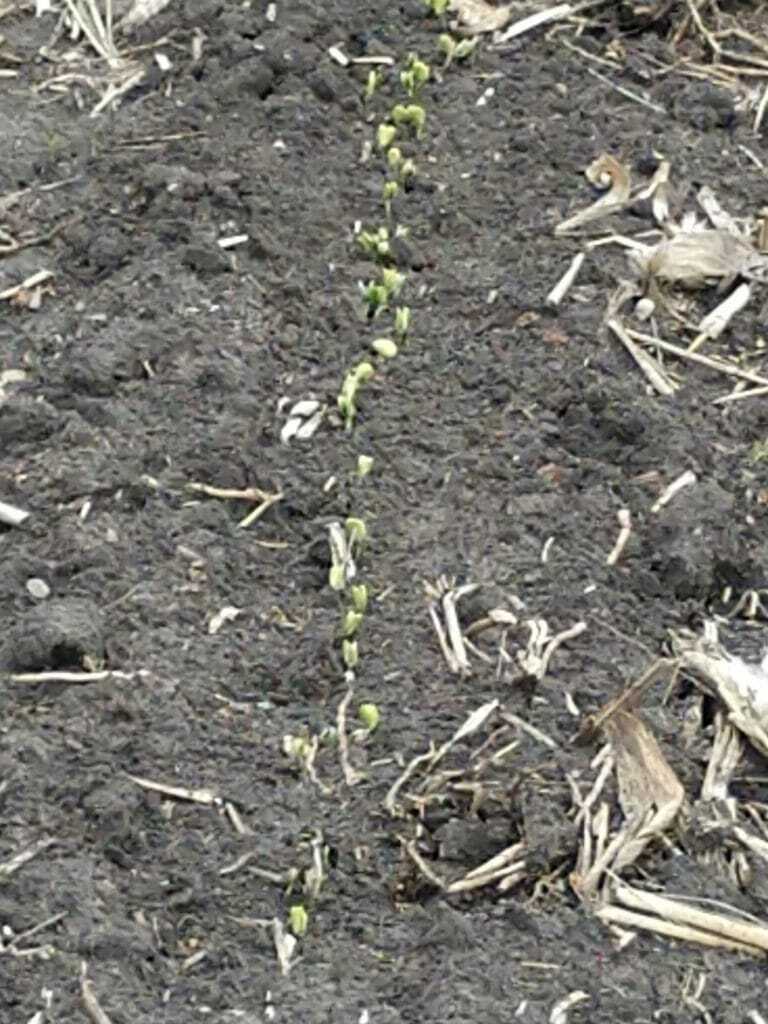
    Latham 2193 E3 beans were planted near Garner on May 7. This picture was taken on May 16. We could use a little sunshine and warmth.
    Cory 1

    Northeast Iowa

    Craig Haaland

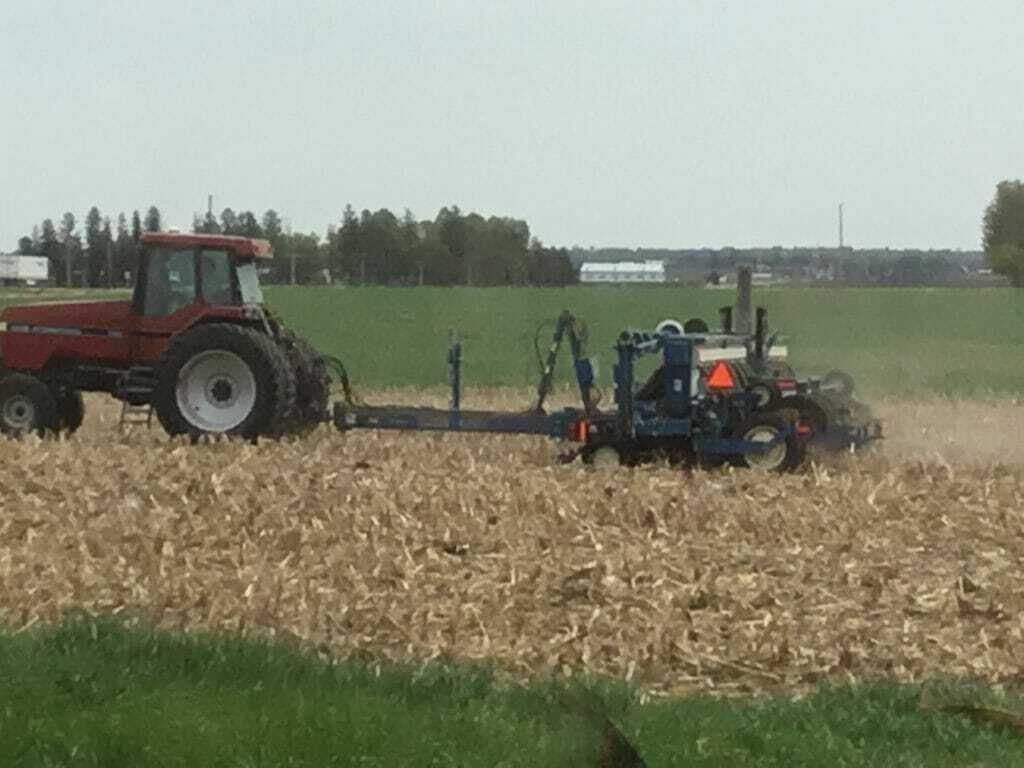
    This no-till customer in Mitchell County, Iowa, was able to plant soybeans last Thursday. Quite a few farmers got seed in the ground last Monday through Thursday. Spotty rains fell Friday and Saturday, with rainfall totals ranging from 1.5 to 5 inches. Most area farmers finished planting corn last week and got a decent start on soybeans. Temperatures have been up and down these past few weeks, so some seed is struggling to emerge. We need warm and dry weather, so we can finish the 2019 planting season.
    Craig H

    Northwest Iowa

    Darin Chapman

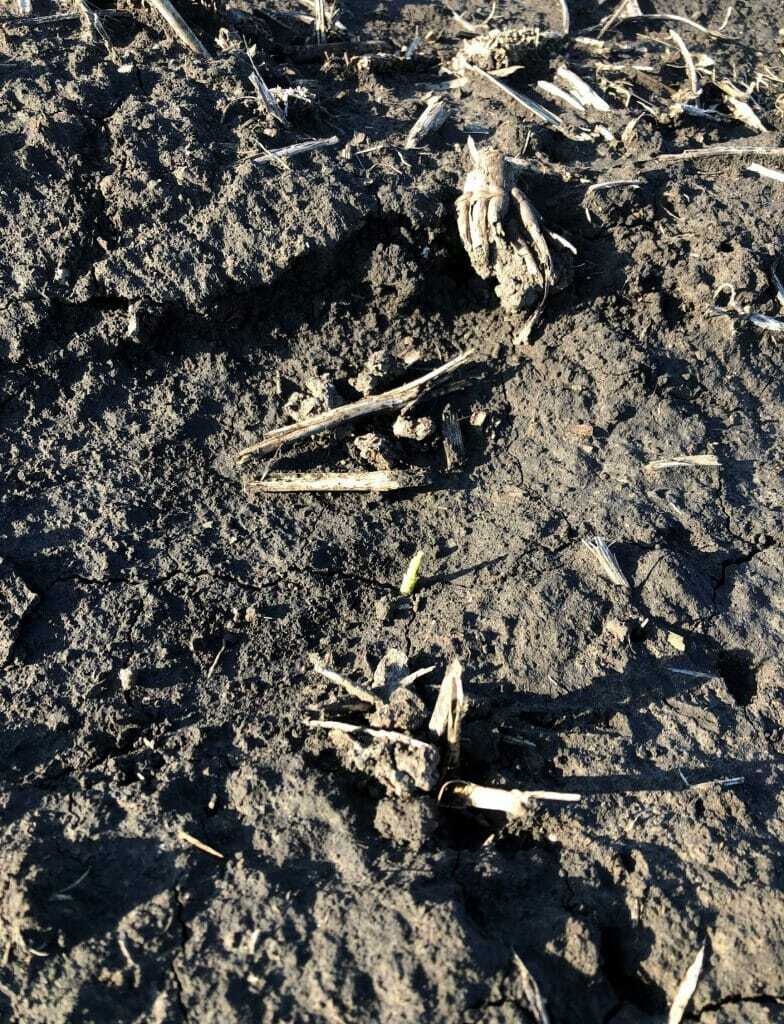
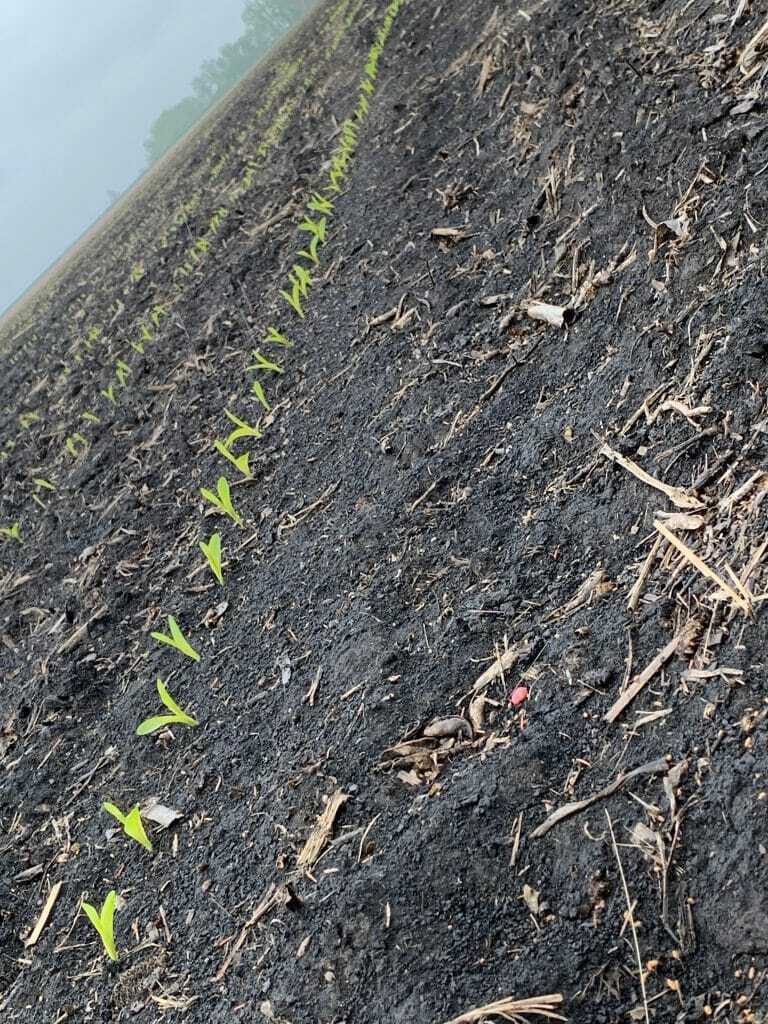
    These photos show Latham LH 5245 VT2 PRO planted May 5 at 36,000 population. We’ve only had a few days of sunshine to get this crop started, so I’m happy to see good emergence and the start of a nice stand.
    Darin

    Eastern Iowa

    Jerry Broders

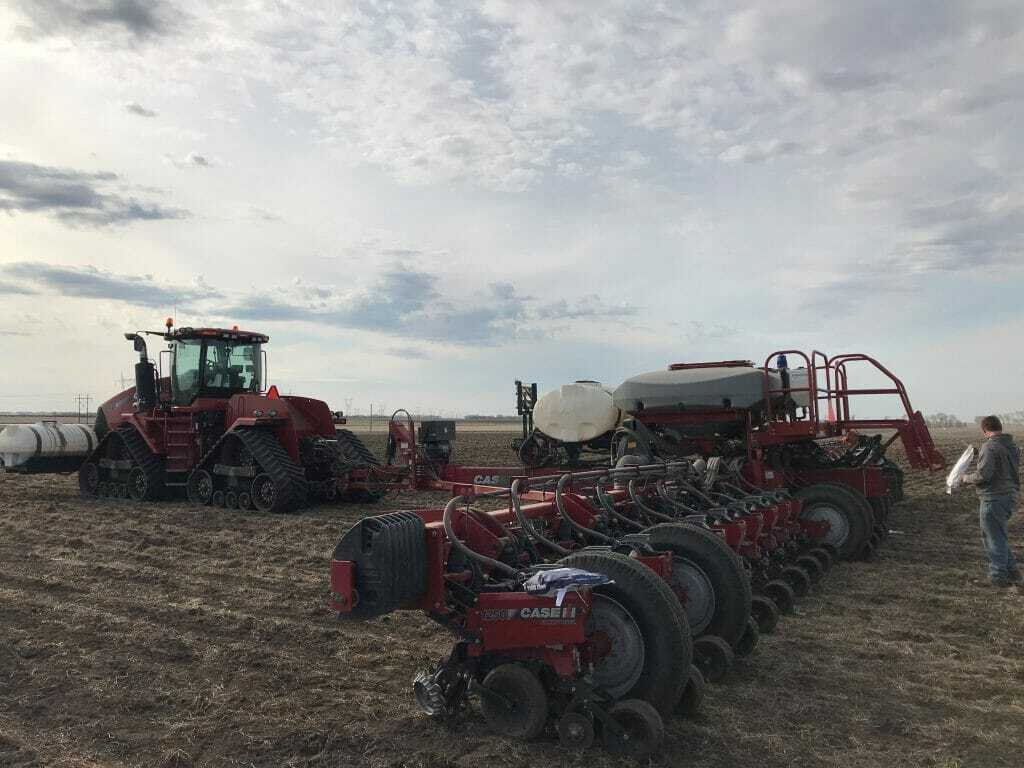
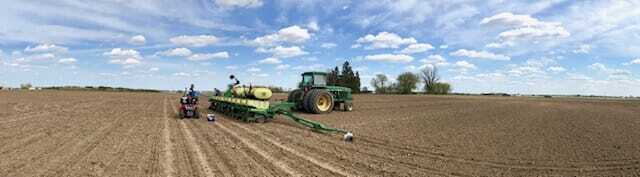
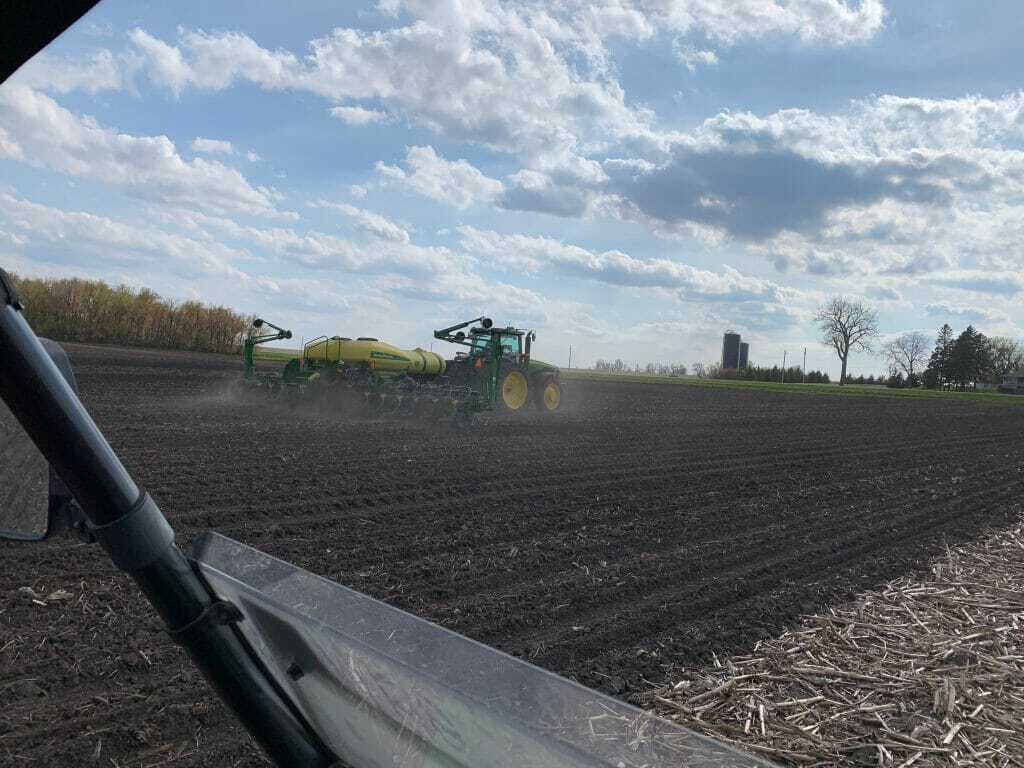
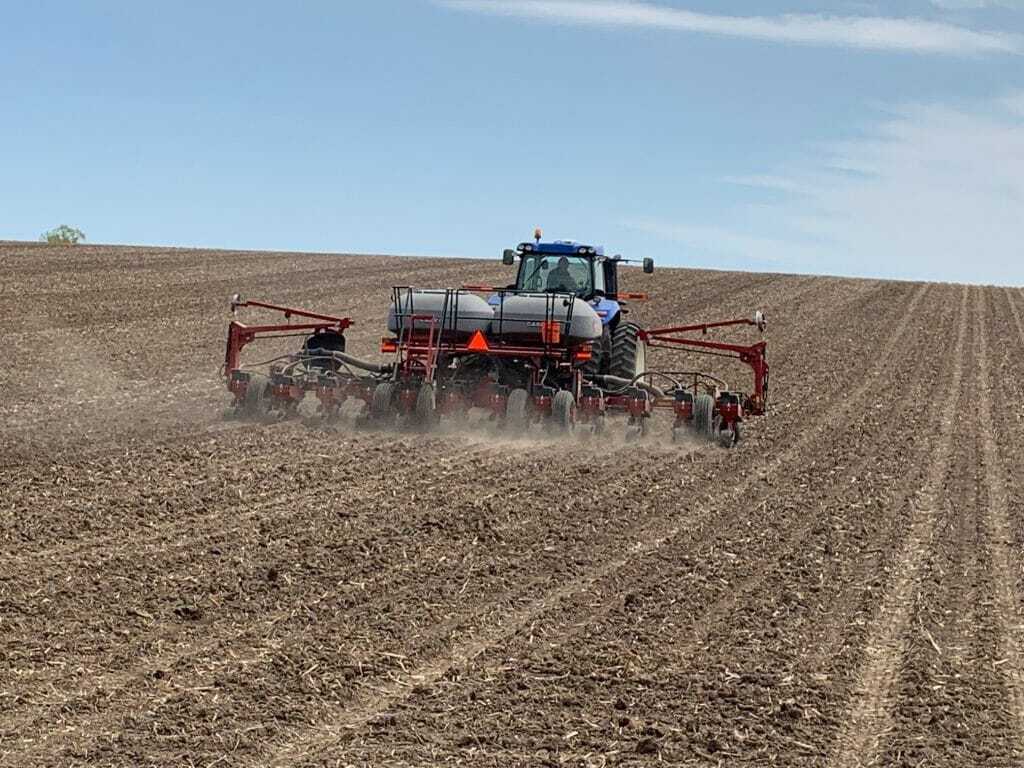
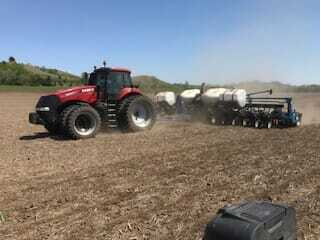
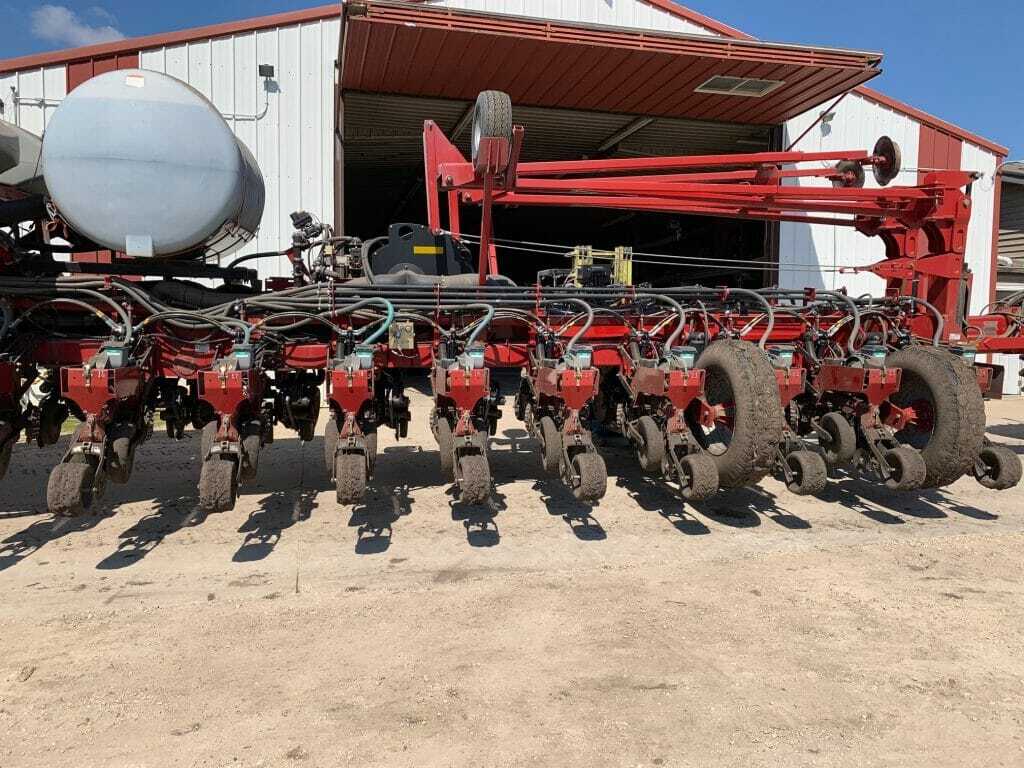
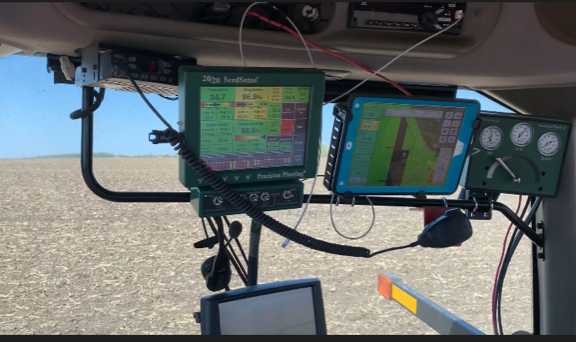
    We managed to string together four days of dry weather to get some much needed planting done. Some fields were not “ideal” for planting as you can see the soil packed on the press wheels and travel wheels of this planter. #Plant19 continues to be an adventure.
    Jerry 1

    Jerry 2

    Western Iowa

    Larry Krapfl

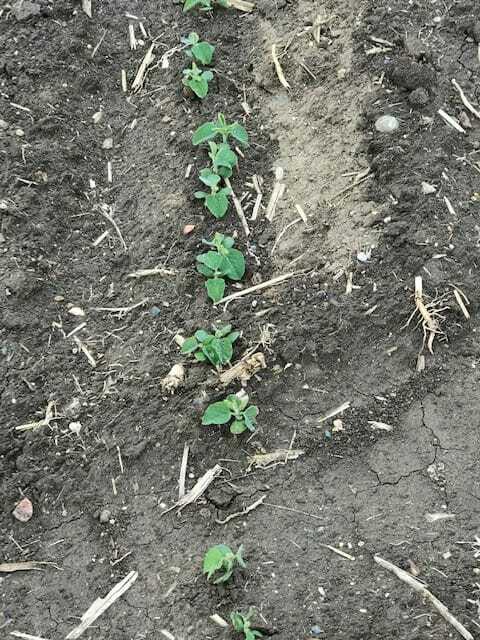
    You can row this field of Latham L 3187 L that was planted April 18 in western Iowa.
    Larry 1

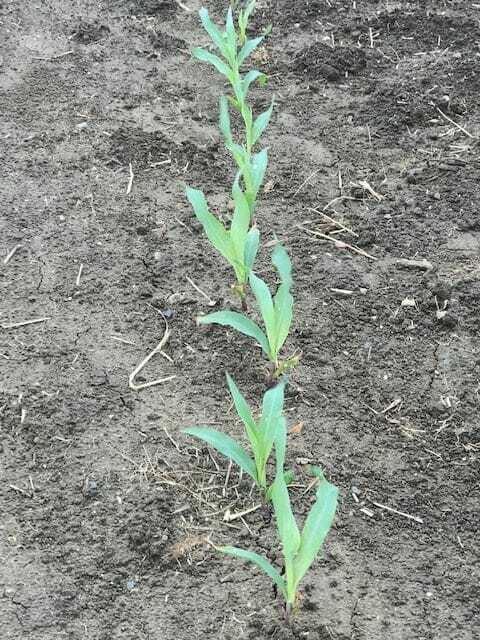
    This 20-year old CRP ground was planted to LH 5819 SS on April 18 near Climbing Hill, IA.
    Larry 2

    West North Central Iowa

    Bart Peterson

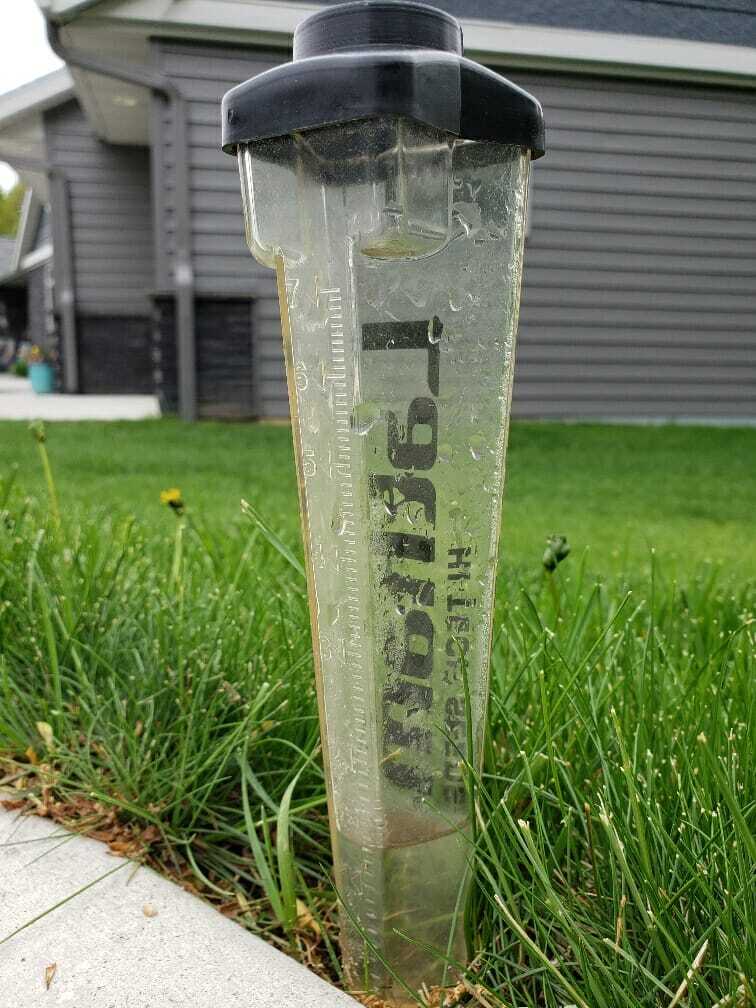
    Last week I dumped 1.3 inches from my Latham rain gauge in Dakota City, Iowa. It’s been challenging to put seed in the ground when it seems to rain each time the fields are almost dry enough to enter. I’m guessing 99% of the corn is planted and 60% of soybeans are planted in West Central Iowa. My North Central territory is a little behind that with about 70% of the corn acres planted and 25% of the soybeans planted.
    Bart 1

    Central Iowa

    Bryan Rohe

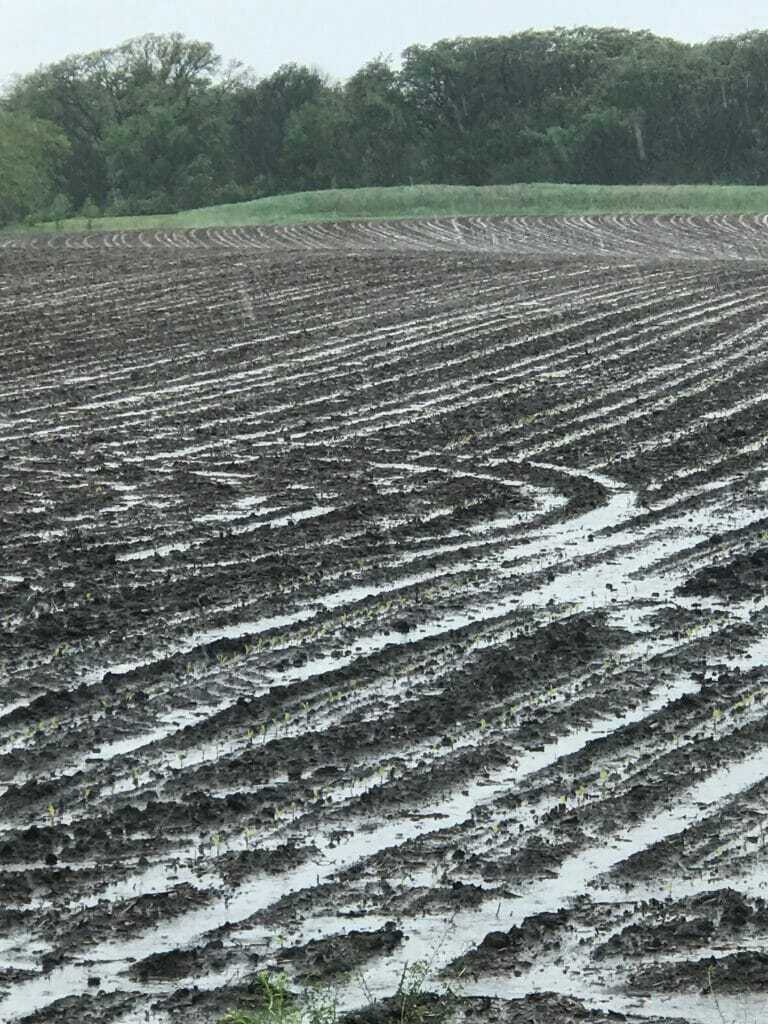
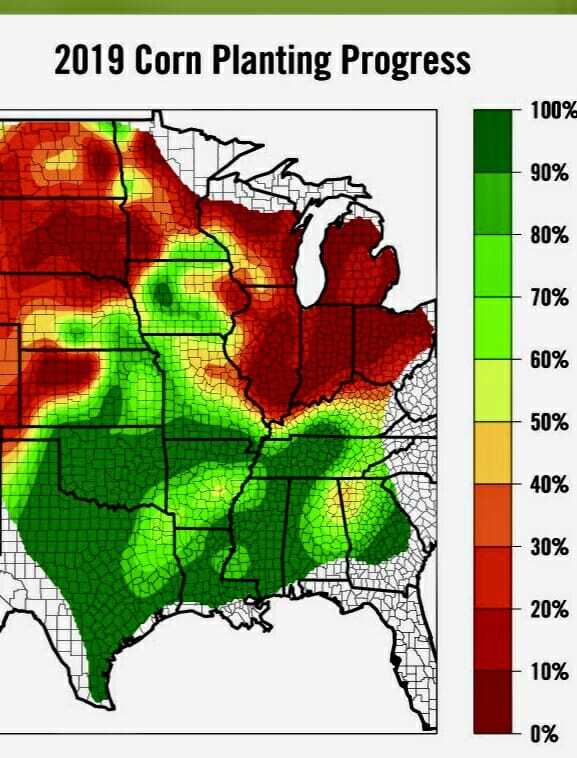
    Rain continues to fall across Central Iowa, and the 5-day forecast calls for more. The central region is 95% done with planting corn and 60% done with soybeans, so we’re pretty fortunate. Once it stops raining and dries up, planting will finish in a hurry.
    Bryan 1

    Bryan 2


    Laura Cunningham

    May 22, 2019
    #FromTheField Crop Reports, Season, Summer
  • Latham Hi‑Tech Seeds

    May 15, 2019 Crop Reports

    Justing 2

    Eastern North Dakota

    Brain McNamee

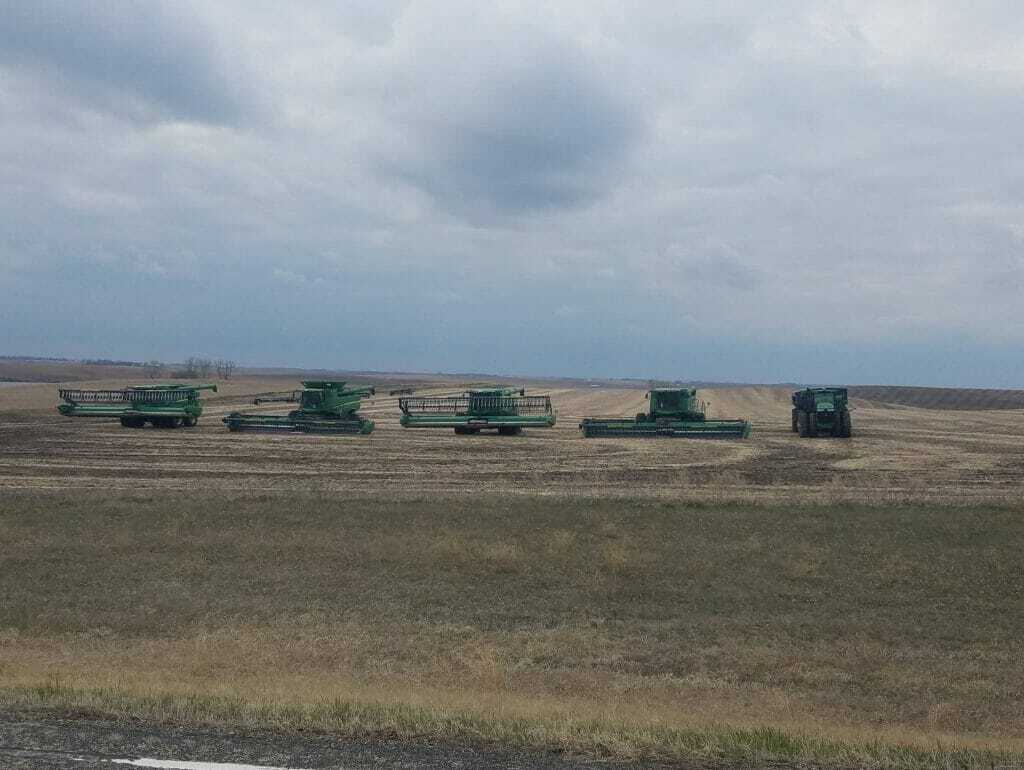
    I forgot how many thousands of acres of soybeans were left standing yet this spring. I believe last year’s crop may finally be 100% harvested.

    Brian M

    Southeast North Dakota

    Gary Geske

    While it doesn’t look like much yet, these areas will provide important training for Latham sales managers, dealers and customers. This research plot planted near Minot, North Dakota, will give us replicated yields to help confirm our current seed lineup. We will watch silage hybrids and compare seed treatments, as well as conduct population studies. These plots also will give us a look into the future on new hybrids with tolerance to drought and heat stress, using natural selection without including traits. In- field training camps, which will be held throughout the growing season, help Latham sales managers and dealers earn the trust of their customers when making seed selections.

    Gary 1

    Gary 2

    Gary 3


    Northeast South Dakota

    James Keltgen

    This sun is finally shining! Big rains are expected, with totals nearing 4 inches this weekend, so the race is on in Northeast South Dakota. Farmers are getting a good start on corn, and a few people are planting soybeans since the fields are fit. We will find out how much corn can be planted in four days as that looks to be our short window of opportunity. Some farms in Central and Southeast South Dakota received rain Monday night, which delayed planting further.

    James 2

    James

    Southeast South Dakota

    Ramie Coughlin

    As I drive across my territory, it’s strange to see bare fields. Wet weather has delayed planting again. The good news is that we’re in the middle of 5 days of warm weather and sunshine. I’m hopeful that we’ll see some corn go in the ground the next couple days. While we’re all eager to get going, I want to remind farmers that it’s still too early to back off on corn maturities. Research has shown that you can safely plant your fuller season hybrids until June

    Ramie 1


    Northern Minnesota

    Ken Highness

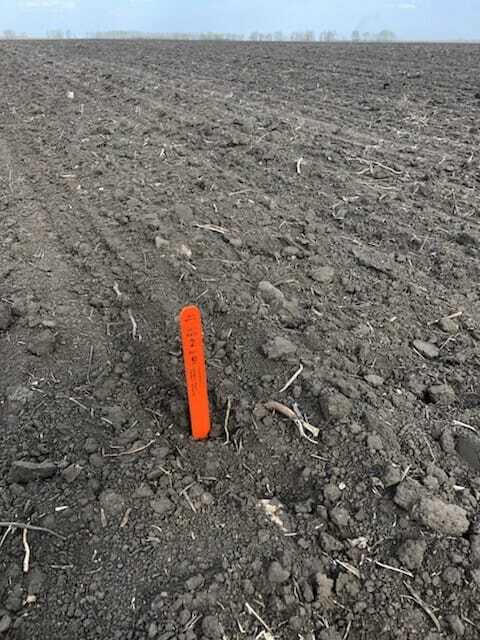
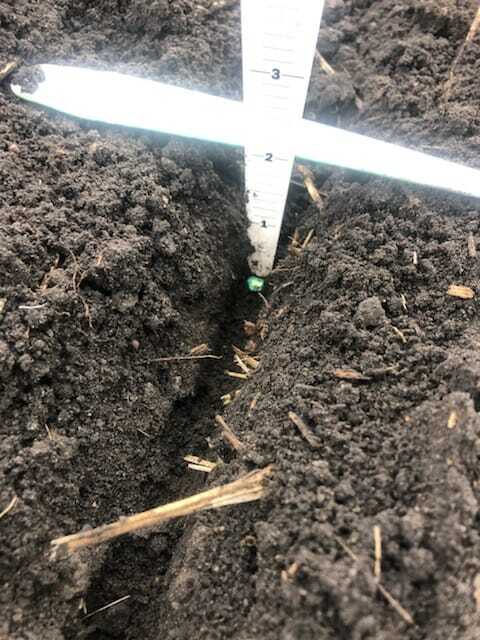
    The main objective at planting time is to provide seed with an environment that promotes rapid germination and vigorous early growth. Optimal planting depth for corn in 2 inches deep and 1.5 inches for soybeans. Latham Dealer is checking seed depth in a field of LH 3937 VT2 PRO RIB.

    It’s important to get out of the cab and check planting depth. Two major problems can result from planting too deep: delayed emergence and uneven stands. Corn seed that is planted too shallow can lead to rootless corn syndrome, which causes corn plants to fall over due to poor nodal root development.

    Ken 1

    Ken 2

    Southern Minnesota

    Justin Prokosch

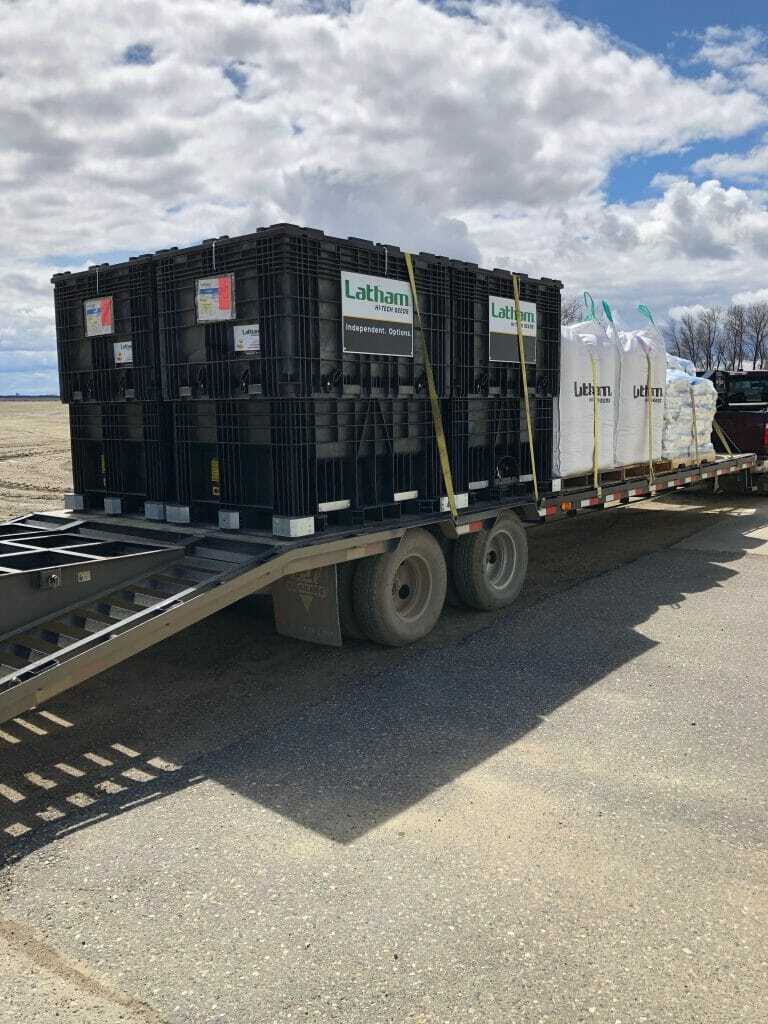
    Last week’s wet weather allowed us to delivered to more seed to customers. Thankfully, we got some dry weather. Most farmers started planting corn this week, and I was able to put in a plot near Willmar.

    Justin

    Justing 2

    Justin 3

    Justin 4


    Northern Wisconsin 

    Joe Salter

    Soil temperatures finally reached the 50’s, but timely rains have kept most farmers from turning wheels in northern Wisconsin. Many farmers have yet to plant any crop. We were fortunate to get two corn plots in the ground this week, one in Fall Creek and one in Almena. Joe 1

    Joe 3

    Joe 2

    Southern Wisconsin

    Greg Mair

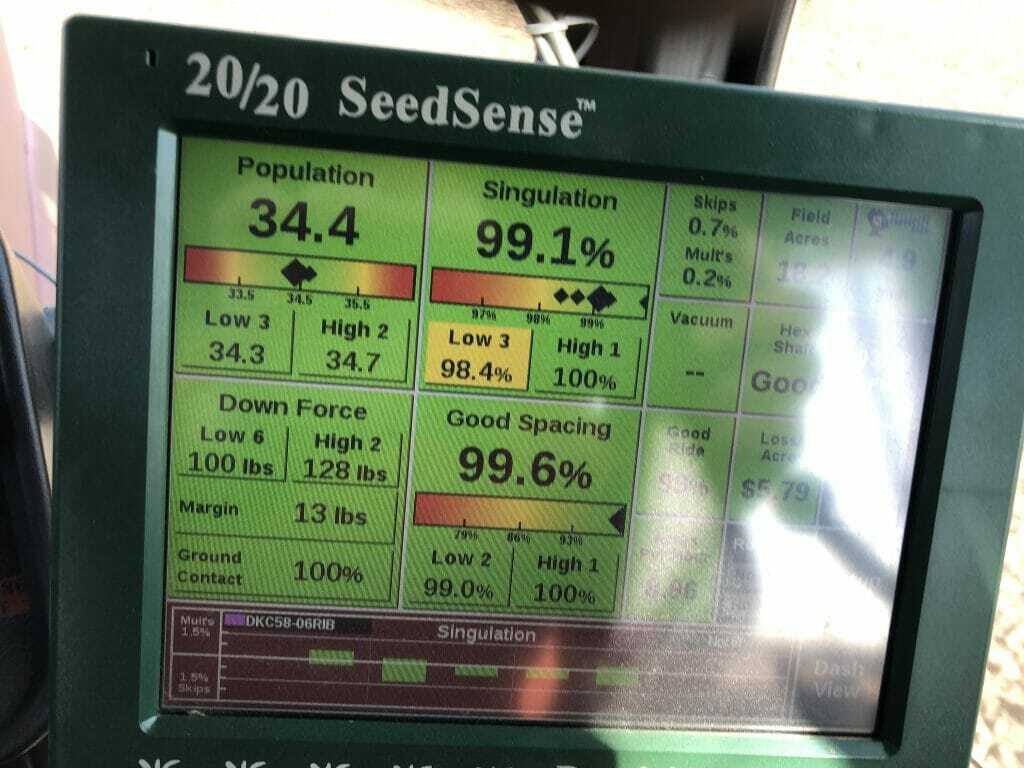
    Farmers in southern Wisconsin finally go back in the fields on Monday.  Now that fields are fit, we’re working to dial in the monitors for best spacing, down pressure and singulation.  Maximizing the planter singulation can increase profit potential on the farm by properly placed seed and full utilization of moisture and sunlight.

    The weather cooperated on Monday, so we put in a corn test plot in Oshkosh. We’re hoping for a good week of field work, so we can make a lot of progress on corn.  The first corn fields that were planted have yet to emerge, and seed has been laying in the ground for three weeks now.

    Greg 1

    Greg 2


    North Central Iowa

    Cory Greiman

    Earlier this week I delivered seed to cooperators in South Central Minnesota and North Central Iowa who will plant Latham® SuperStrip soybean plots. This on-farm research plays an important role in selecting soybeans for our lineup.

     Cory

    Northeast Iowa

    Craig Haaland

    After a short week of not being in the fields, farmers were rolling again on Sunday and Monday. This photo shows a Latham® Hybrids SuperStrip Plot we planted Monday in Southeast Minnesota. The soils were ideal. A lot of corn is going in the ground in a short amount of time as farmers are eager to finish before moving on to planting soybeans. Not many acres of soybeans have been planted yet in my territory.
    Craig H 1

    Northwest Iowa

    Darin Chapman

    Northwest Iowa could receive four inches of rain this weekend, so it has been nice to make some corn planting progress this week. Farmers are eager to start planting soybeans, but it’s important to wait for fit conditions to avoid issues going forward. Soils have been wet and cold this spring, but a good seed treatment like Latham’s Soyshield Plus helps protect yield.

    Darin 1

    Darin 2

    Darin 3

    Eastern Iowa

    Jerry Broders

    After last Thursday’s rain in Eastern Iowa, planters didn’t start rolling again until Sunday evening or late Monday morning.

    Jerry 1

    Western Iowa

    Larry Krapfl

    At last! Favorable weather returned, so we are able to resume planting Latham plots.

    Larry 2

    Larry 1


    West North Central Iowa

    Bart Peterson

    This field of L 1858 R2, which was planted April 21 near Odebolt, Iowa, is just popping out of the ground.

    Bart 1

    Central Iowa

    Bryan Rohe

    Farmers are trying to get the last of their corn in the ground. There was a very small planting window last week, and farmers throughout Central Iowa got rained out Monday evening. During the past week, some of the early planted corn has emerged. Some corn plants are tall enough to row, and the stand looks pretty good.  With soil temps hovering around 46 to 47 degrees at 2 to 3 inches deep, crop development is slow. Heat units are about three weeks behind.

    Bryan 1

    Bryan 3


    Laura Cunningham

    May 15, 2019
    #FromTheField Crop Reports, Season, Summer
  • Latham Hi‑Tech Seeds

    Follow the Rules to Keep the Dicamba Tool

    STS14 2014 004

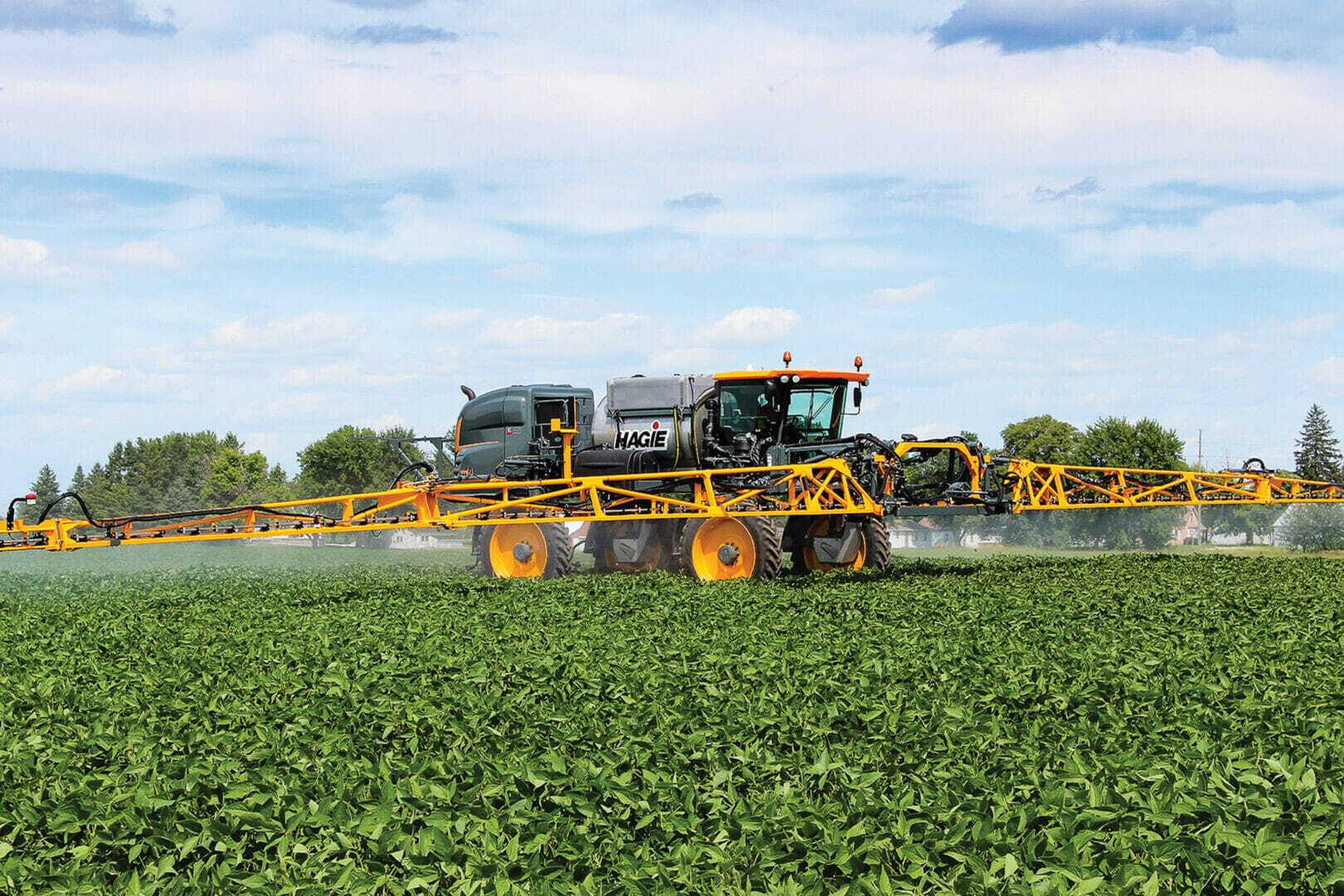
    In 2018, the EPA extended the registration for over-the-top use of select dicamba products to control weeds in soybean and cotton fields that are genetically engineered to resist dicamba. This registration included label updates which add certain measures to further minimize the potential of off-target damage. This registration will automatically expire on December 20, 2020, unless the EPA extends it further. Listed below are some of the FEDERAL updates now in effect:

    • Only certified applicators may apply dicamba over-the-top; applicators working under the direct supervision of certified persons are no longer qualified.
    • Post-emerge applications to soybeans are prohibited 45 days after planting or later.
    • Applications are allowed only from 1 hour after sunrise to 2 hours before sunset.
    • In counties where endangered species exist the downwind buffer will remain at 110 feet and there is a new 57-foot buffer around the other sides of the field.
    • Training periods for 2019 and beyond will be clarified, ensuring more consistency across all three registered products: XtendiMax®, Engenia® and FeXapan®.
    • Tank clean-out instructions will be
      further enhanced.
    • Enhanced labels to improve the awareness of the impact of low pH’s on volatility.
    • Label clean up and consistency to improve compliance and enforceability.
    In addition to these updates, some state Departments of Agriculture have additional restrictions. Here are a few standouts from states in Latham Country:

    Minnesota: Must not apply dicamba herbicides after June 20th. There will be no temperature restriction for 2019.

    North Dakota: Must not apply dicamba after June 30th. Keeping records of dicamba applications is required and will be strictly enforced.

    South Dakota: Must not apply dicamba after June 30th, 45 days after planting or the R1 (beginning bloom) stage of soybeans, whichever comes first. Applicators must also pass a short exam after training is completed.

    Illinois: Must not apply dicamba after June 30th. Do not apply when the wind is blowing toward adjacent residential areas. Before spraying, the applicator must consult the FieldWatch sensitive crop registry. Further restrictions apply when spraying near the downfield edge of any Illinois Nature Preserves Commission Site.

    These are just some of the new requirements for the application of dicamba over-the-top of soybeans in 2019. There may be additional restrictions from the states not mentioned above or from local authorities. If you will be applying any of the dicamba products in 2019, make certain you attend the required ANNUAL training and conform to what the label requires. Please make these restrictions a high priority so we can continue to use this valuable tool in the fight against weed resistance!

    Mark Grundmeier, Product Manager

    April 30, 2019
    Agronomics, Crop, Herbicide Technology, Industry News, Season, Soybeans, Spring, Summer, Tech Tuesday, Weed Control
  • Latham Hi‑Tech Seeds

    #AskTheAgronomist: What’s the Right Nitrogen Application Rate?

    4.4.19

    LIBSYN header 2 01

    Join us this morning as we discuss the final “R” in our nitrogen application series! #AskTheAgronomist

    https://www.facebook.com/LathamSeeds/videos/320955165207264?sfns=mo

    Laura Cunningham

    April 4, 2019
    #AskTheAgronomist, Agronomics, Fertility, Growth Stages, Season, Spring, Summer
  • Latham Hi‑Tech Seeds

    Stalk Lodging

    Stalk Lodging Ohio State (2)
    Stalk Lodging Ohio State (2)
    Credit: The Ohio State University

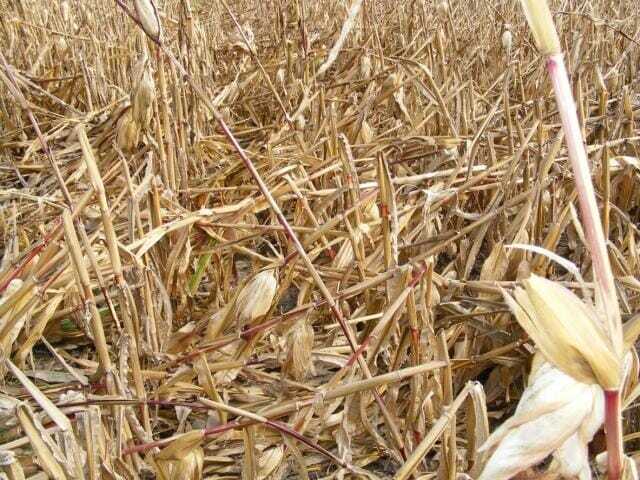
    Stalk lodging can lead to reduced yield and grain quality. Lodging refers to the breakage of the stalk below the ear and is often connected with stalk rots, soil-borne pathogens and other environmental stressors that occur after pollination.  

    Causes of Stalk Lodging  

    Carbohydrate demand during grain fill is the primary driver of stalk lodging. When carbohydrate reserves in corn leaves are depleted during ear development, the plant will begin sourcing the macronutrient from stalks and roots. Environmental stresses can feed into this cycle. For example, warm weather and high temperatures increase plant growth which can lead to high demand for carbohydrates.  

    While energy demand during grain fill is the primary cause of lodging, fungal pathogens can reduce stalk vigor. Stalk rot pathogens can also weaken stalks and are another major cause of lodging. Generally, if more than 10 to 15% of stalks exhibit rotting, stalk lodging is likely to be a significant problem.   

    As it relates to weather, high winds and heavy rainfall can also cause stalks to become physiologically weak and eventually lodge. Injuries from hail or frost damage, or insect feeding that creates lesions on leaves, can reduce the amount of energy created by plants. This leads to a higher use of stalk carbohydrate reserves. 

    Nutrient deficiencies are also a major cause of stalk lodging. Excess nitrogen and low levels of potassium have been associated with reduced stalk quality. Maintaining sufficient potassium levels in corn is especially important as it is the building block for leaf and stalk tissue.  

    Scouting and Treatment Options 

    When scouting for stalk lodging, choose ten consecutive plants across ten different areas of the field. Check for signs of lodging by pinching the stalk at the first or second internode above the ground, or by pushing the plant over 8 to 12 inches at ear level. If the plant fails to stay standing upon exerting force, it is considered lodged.  

    Adjust your harvest plan to harvest lodged corn first before lodging becomes more widespread. Selecting the right corn hybrid for your farm can mitigate issues with insect feeding that would otherwise reduce stalk quality. The level of resistance to stalk lodging among hybrids is highly variant and some have genetically stronger stalks than others. Be sure to consult with your local Latham representative to determine the best management strategy for stalk lodging.  

    Latham Seeds Agronomy Team

    April 1, 2019
    Agronomics, Corn, Crop, Season, Summer
  • Latham Hi‑Tech Seeds

    Sclerotinia Stem Rot or “White Mold” in Soybeans 

    White Mold University of Wisconsin
    White Mold Field University of Wisconsin
    Credit: University of Wisconsin

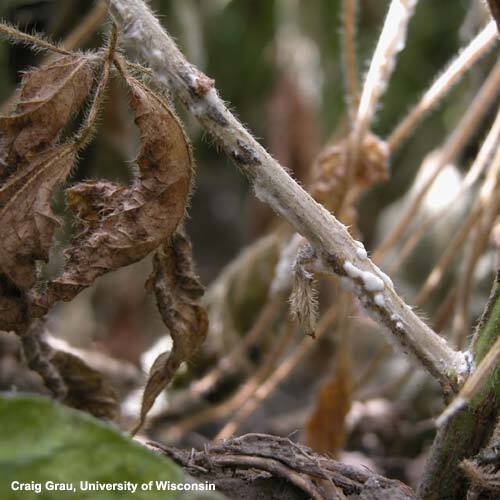
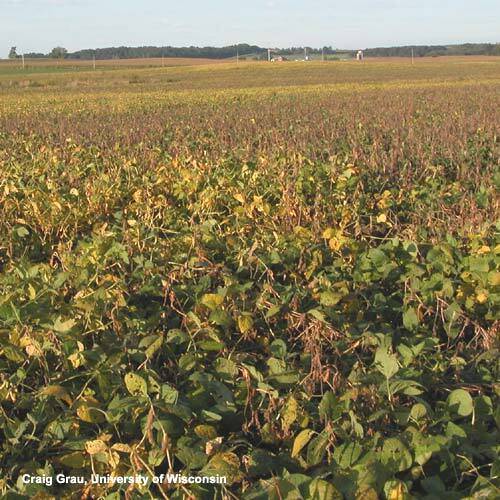
    Sclerotinia stem rot – also known as White Mold –can lead to significant yield loss in soybeans. Yield loss from white mold is attributed to the damage it causes to leaves, pods and stems. Research from the University of Wisconsin estimates the disease has costed growers in the U.S. and Canada 101 million bushels of soybeans – equal to $1.2 billion.

    White mold is caused by the fungus Sclerotinia sclerotiorum and overwinters in the soil for a number of years. After the fungus emerges from the soil, mushroom shaped structures known as apothecia will form on the soil surface. The apothecia, ranging between ¼ and ½ an inch wide, will first infect through soybean flowers before it reaches the stem.

    While the fungus primarily spreads through the air via spores, moisture is required for infection to take place. As a result, cool and wet weather along with high humidity are the main causes of white mold.

    White Mold University of Wisconsin
    Credit: University of Wisconsin
    Scouting for White Mold 

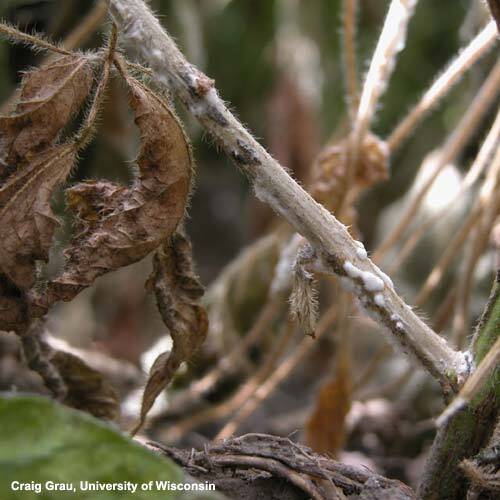
    While Sclerotinia sclerotiorum is often confused with other fungal pathogens, the sclerotia distinguishes white  mold  from other look-alike diseases. Symptoms of white mold will be most prevalent between R3 and R6. Infected plants will exhibit white fuzzy growth on the lower stem.

    Soybean blossoms are the first area of the plant to exhibit signs of infection and neighboring stems and pods may appear water-saturated. After infecting blossoms and pods, white mold may eventually spread through the entire stem causing it to turn tan or bleached of color. As the mold growth becomes thicker, black spots will begin to surface throughout the fuzzy white surface.

    White mold also creates foliar symptoms, causing leaves to completely die while still attached to the stem. In infected soybeans, the tissue area between the leaf veins will turn gray and cause leaves to become wilted and curled.

    Treatment Options 

    Due to the overwintering nature of the sclerotia, a two to three-year rotation away from soybeans is advised. When it comes to genetics, some soybean varieties are more resistant to white mold than others. Varieties with resistance to the fungus may recover better than others. It is also important to consider planting practices that cause white mold growth. Shade created from high plant density and growing canopies can lead to the fungal disease. Increasing  row width and reducing planting populations are the best methods to  improve airflow through the canopy and reduce infection from white mold.

    In addition, broadleaf weeds are notorious for hosting white mold and herbicides should  be used to control weeds. Fungicides are a viable method for treating white mold and can reduce the negative impacts incurred by soybeans. However, they are most effective when applied just before infection takes place. Be sure to consult with your local Latham representative to determine the best treatment plan for white mold.

    Latham Seeds Agronomy Team

    April 1, 2019
    Agronomics, Crop, Disease, Fall, Season, Soybeans, Summer
  • Latham Hi‑Tech Seeds

    Physoderma Stalk Rot 

    Physoderma Stalk Rot Crop Protection Network

    There are a variety of stalk rots that infect corn, causing extensive damage to crops and losses in yield. Common factors make corn susceptible to stalk rot including warm and wet weather, stress after pollination, fertility issues, stalk boring insects, and the presence of other foliar diseases. There are key signs, symptoms and differences that distinguish the different types of stalk rot.

    Physoderma Stalk Rot Crop Protection Network
    Credit: Crop Protection Network
    Scouting for Signs and Symptoms 

    Physoderma stalk rot is caused by the pathogen Physoderma maydis, the same fungus responsible for causing Physoderma brown spot. The fungal disease seems to be showing up in more and more corn fields each year, but typically shows up on random plants and  and  has minimal impact on yield. Like most stalk rot diseases, warm and wet weather favor the development of Physoderma stalk rot.

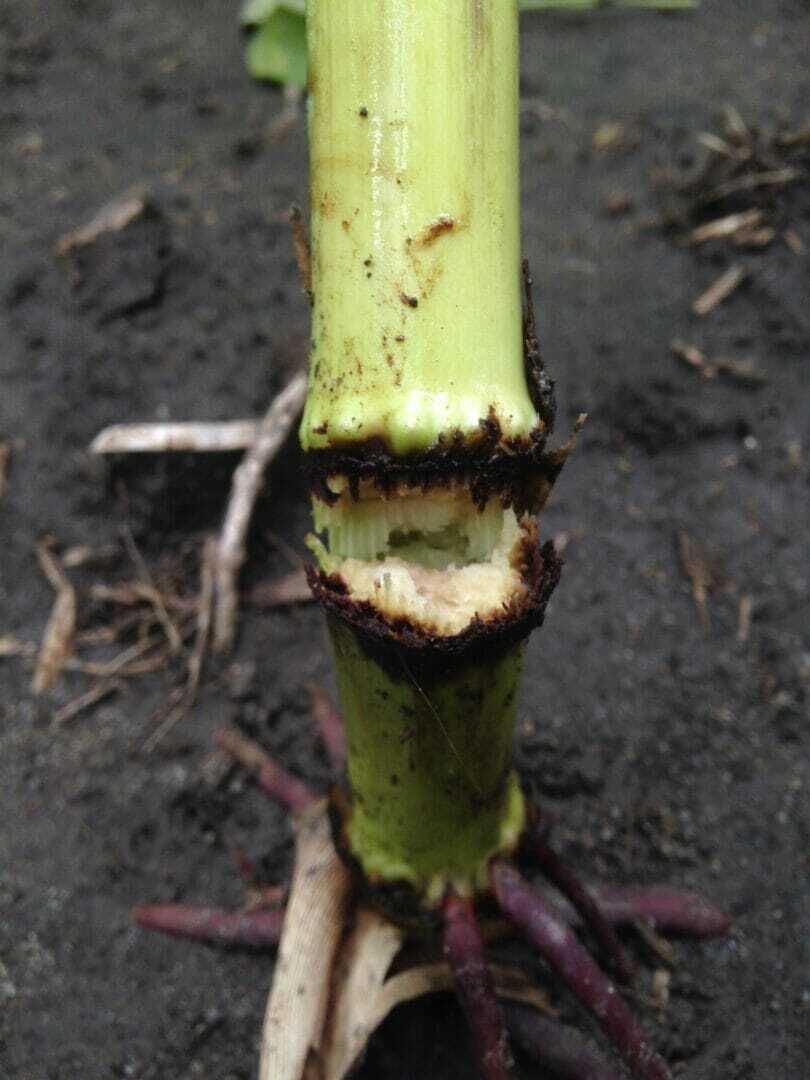
    Physoderma stalk rot infects corn between the V4 and V9 stages. The disease is not associated with any foliar signs, so it is important to inspect plants closely at the base. Dark brown or black lesions will appear at the base of the stalk, and rotting of the pith will be observed upon splitting the stalk open. Overtime, blackening of the pith will move to higher nodes. Sporangia can also be found on the outside of nodes and within the rotted pith tissue.

    Scout for symptoms of Physoderma stalk rot across five areas of the field. Stalks will make a distint “pop” and snap at one of the first 3 nodes above the soil line. If more than 10 to 15% of plants exhibit stalk rot, the field should be harvested early.

    Management Strategies 

    With this being a newer disease we are still learning differences in hybrid tolerances to both stalk and foliar phases of this disease.

    As a majority of stalk rots overwinter, one to two-year rotation away from corn and controlling corn residue are key for preventing the return of the disease. Fungicides may also be applied to prevent Physoderma leaf blight , but these studies are in early phases as well given the novel nature of this diesease

    Latham Seeds Agronomy Team

    April 1, 2019
    Agronomics, Corn, Crop, Disease, Fall, Season, Summer
  • Latham Hi‑Tech Seeds

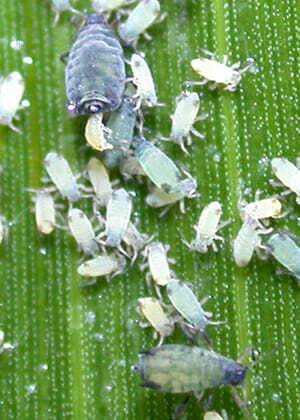
    Corn Aphids 

    Corn Aphids Purdue University (2)
    Corn Aphids Purdue University (2)
    Credit: Purdue University

    Corn aphids have the ability to negatively impact yield end of year. Proper identification and management can protect your crop. 

    Identification 

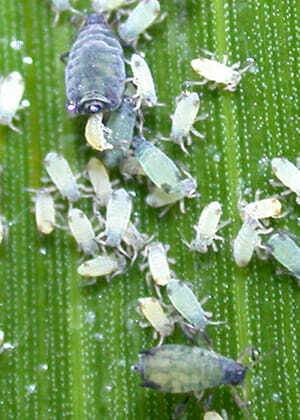
    Corn aphids have a blue-green to gray appearance and are 1/16 inch in length. Aphids extract sap from corn plants and excrete honeydew. The honeydew creates sooty-looking mold that can interfere with pollination.  

    As opposed to laying eggs, female aphids reproduce by giving birth to nymphs. The insects can build large colonies comprised of more than one species such as bird-cherry oat aphids. Aphids are most often wingless, but when the size of their colonies begin to grow, some can form wings to migrate to other corn plants. Corn leaf aphids cannot overwinter and usually migrate to southern states ahead of the cold months. 

    Scouting and Implications 

    Aphids will begin to appear in corn around mid-June and early July. Mature aphids can be found near the tassels, silks and the base of the corn stalk. The insects predominately live in the whorls where they are protected from outside elements. Infected corn plants may exhibit stunting or wilting and curling of the leaves  

    When scouting for aphids, select 20 non-consecutive plants from five different areas of the field. Unroll the whorl to count the number of insects present. The general treatment threshold advised by Iowa State University is when 50% of corn plants have more than 100 aphids per plant. 

    Overall, aphid infestations have been found to reduce grain quality and decrease kernel size. A study from Penn State University finds that 30-40% of aphid-infested corn stalks will become barren or earless. Drought stress can also worsen the impacts of aphid feeding and should be included when considering a treatment plan.  

    Treatment Options 

    The best time to begin manage aphid-infested corn is two to three weeks prior to tasseling. Corn plants with aphid colonies above the ear are more susceptible to yield loss than plants with aphids found below the ear.  

    Since aphids mainly colonize inside corn whorls, spraying insecticides is not the most effective solution. Insecticide application is most effective when aphids are found on the outermost areas of leaves.  If corn plants that have reached the hard dent stage, applying insecticides will not pay. 

    Fungi and other beneficial insects including lacewings and lady beetles can reduce aphid populations. Look for signs of bloating or discoloration in aphids – this could be evidence of fungi at work. If over 20% of aphids appear to be parasitized, consider holding off on a management plan. Be sure to talk with your local Latham representative to develop an effective treatment strategy for managing aphids.  


    Latham Seeds Agronomy Team

    April 1, 2019
    Agronomics, Corn, Crop, Insects, Season, Summer
  • Latham Hi‑Tech Seeds

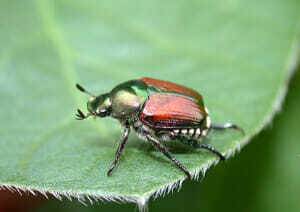
    Japanese Beetle in Corn and Soybeans

    Japanese Beetle Purdue (1)
    Japanese Beetle Purdue (1)
    Credit: Purdue University

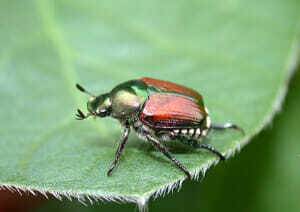
    Japanese beetles cause damage to corn by interfering with pollination and lead to defoliation in soybeans. Their distinct metallic-green heads and bronze wings make them distinguishable from other look-alike beetles. The insect undergoes one life cycle per year with adults reaching 5/16 inches in length.  

    Eggs are laid during July and August and overwinter until temperatures rise in the spring. For both corn and soybeans, adults migrate from grass and begin feeding in late May or early June. The peak emergence for Japanese beetles occurs 4 to 5 weeks after feeding begins.  

    Japanese beetles tend to feed in concentrated areas and in groups. After the female burrows into the soil, she will lay 1 to 4 eggs at a time for several weeks. Adult grubs feed on turf grass in late summer and early spring before emerging to feed on crops.

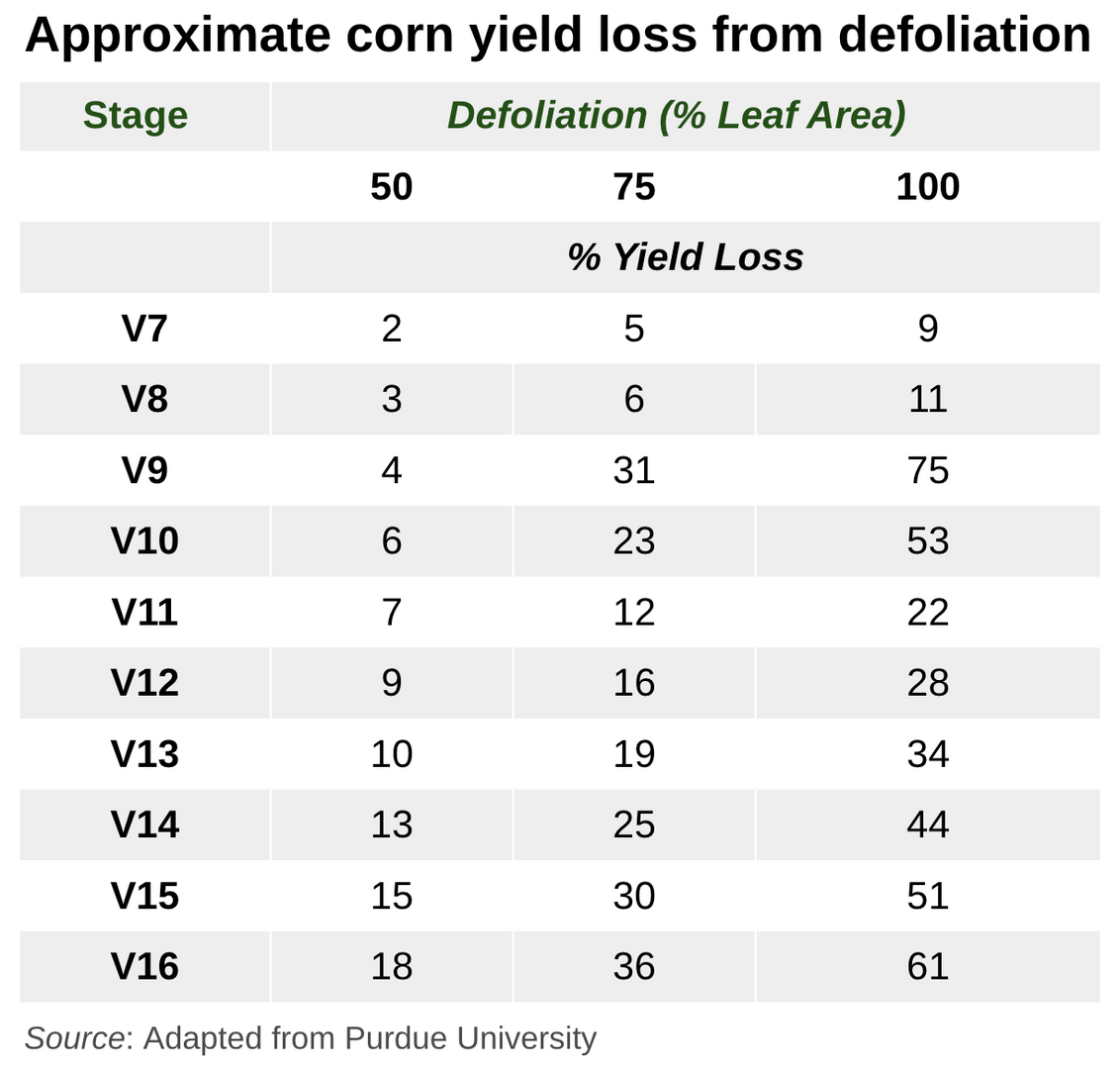
    Corn Defoliation and Yield Loss (1)Corn  

    In corn, Japanese beetles can feed on silks and interfere with pollination. Though leaf feeding in corn is possible, a majority of the economic impacts are attributed to silk feeding. Plants should be treated if there are three or more beetles per ear. 

    Research from the University of Tennessee found that repeated clipping of silks did not always lead to yield loss. More importantly, the environment has a stronger influence on the damage Japanese beetles can cause. Higher yield loss in infested corn plants that were under drought stress as opposed to plants that were not.  

    Soybeans  

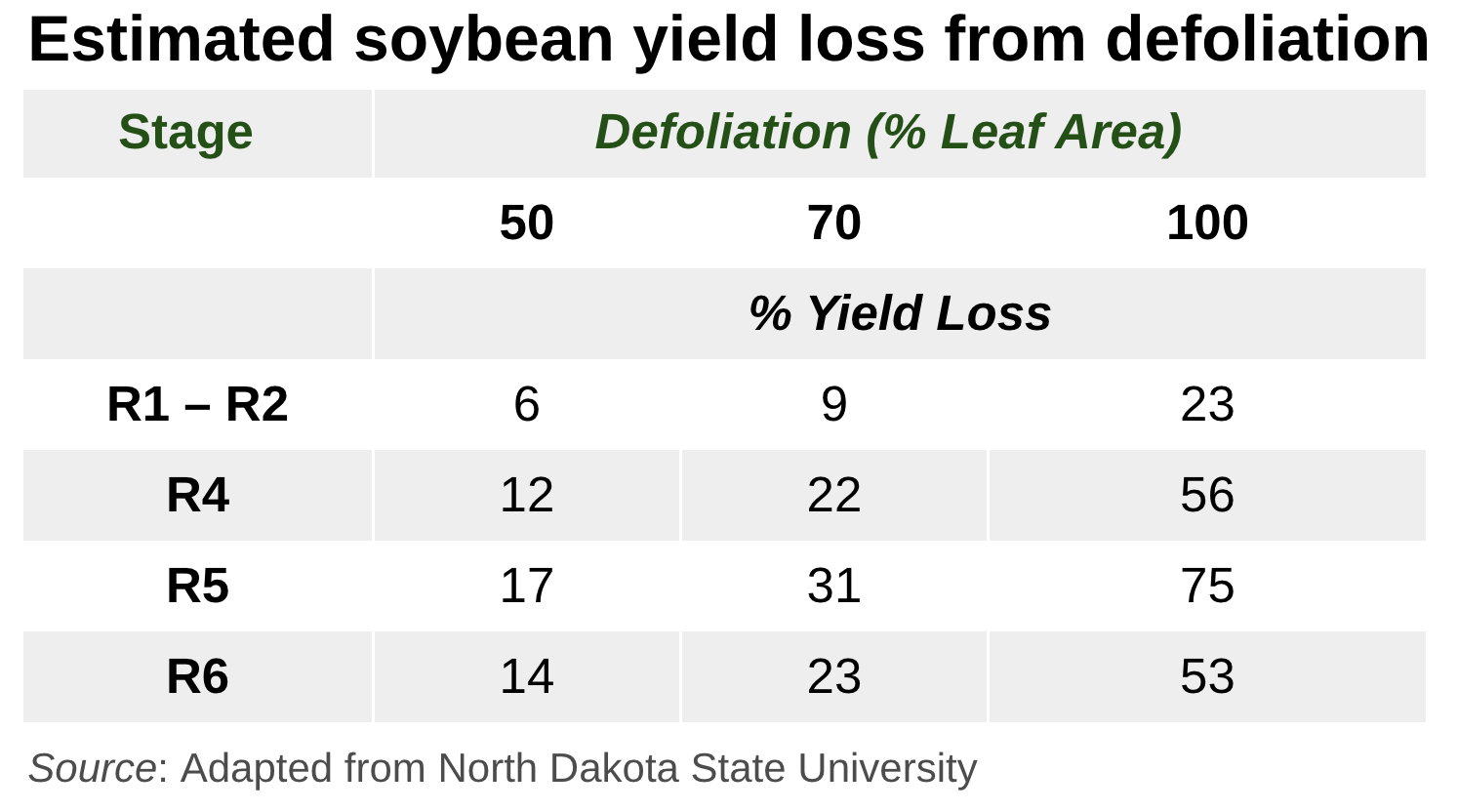
    Soybean Defoliation and Yield Loss (1)In soybeans, the beetle strictly feeds on the soft tissue bordering leaf veins, leaving them skeletonized. Soybeans growing in sandy soils are even more susceptible to defoliation from Japanese beetles. Though yield loss from Japanese beetles has not been quantified, figures from North Dakota State University (see table) point to the general yield impacts from defoliation. 

    Research from the University of Nebraska advises treatment when damage reaches 30% defoliation before bloom or 20% defoliation during flowering. As long as beetles appear to be actively feeding, insecticide application is advised.   

    Other Considerations  

    Japanese beetles are easily confused with other species of beetles, including masked chafers and May or June beetles. Be sure to consult with your local Latham representative to confirm suspected Japanese beetle infestations and determine the right treatment plan.  

    __________ 

    Photo Credit: Purdue University 


    Latham Seeds Agronomy Team

    April 1, 2019
    Agronomics, Corn, Crop, Insects, Season, Soybeans, Summer
  • Latham Hi‑Tech Seeds

    Frogeye Leaf Spot

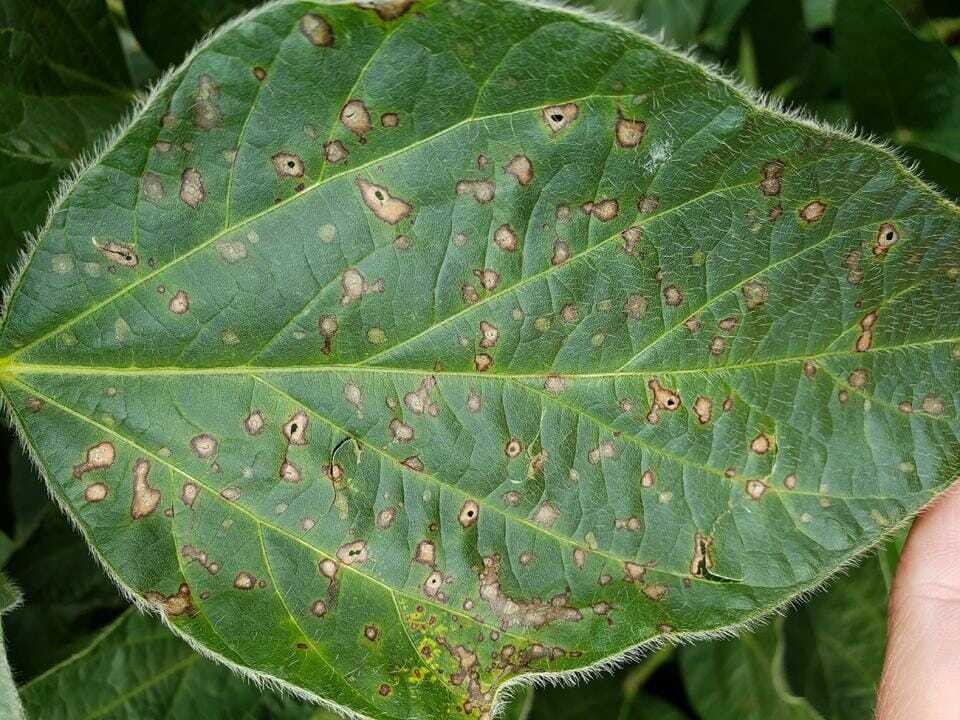
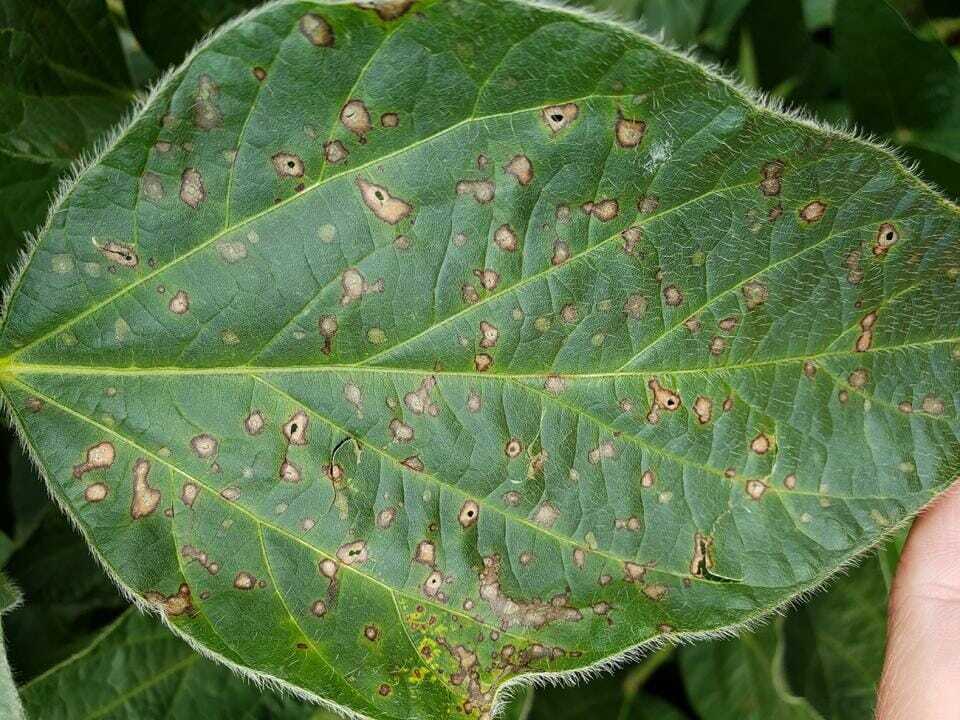
    Frogeye University of Nebraska
    Frogeye University of Nebraska
    Credit: University of Nebraska

    Frogeye leaf spot is a foliar disease caused by the fungus Cerospora sojina. The fungus primarily spreads from infected plants through air and water droplets. During particularly wet years, frogeye leaf spot can lead to yield loss as high as 30%.  

    Warm, humid weather and heavy rainfall are key drivers of frogeye leaf spot. Areas with standing water and high moisture are notorious for hosting the fungus and fuel the damaging disease. Soybeans grown year after year in the same field are also more susceptible to frogeye.  

    Scouting for Frogeye 

    Frogeye leaf spot most often infects plants after flowering, and signs are most evident in the upper canopy of plants. Dark spots with a gray center and a red-purple border will form on infected eaves. The smaller spots can join to create larger lesions, leading to defoliation that can reduce photosynthetic leaf area.  

    In addition to causing defoliation, frogeye leaf spot often leads to premature leaf drop. The disease can also infect stems and pods. Later in the growing season, reddish-brown lesions will form on stems and turn the centers of the stems gray. Gray or brown cracked seeds can also form as a result of the disease and pods will be discolored with long lesions.  

    Treatment Options  

    Selecting varieties with resistance to frogeye leaf spot is the best way to prevent the disease. As the fungus Cerospora sojina is able to overwinter, tillage practices that reduce weeds    and  bury residue will decrease the likelihood of future infection.

    Fungicide application for treating frogeye leaf spot is most effective between the R2 and R5 growth stages. Be sure to consult with your local Latham representative to determine the best strategy for managing frogeye leaf spot.  

    Latham Seeds Agronomy Team

    April 1, 2019
    Agronomics, Crop, Disease, Season, Soybeans, Summer
Previous Page
1 … 7 8 9 10 11 … 17
Next Page

Latham Hi‑Tech Seeds

131 180th Street | Alexander, IA 50420

(641) 692-3258

SIGNUP FOR OUR NEWSLETTER
  • Contact
  • Legal
  • Dealer Center
  • Seedware Login
  • Latham Gear

© 2025 Latham Hi‑Tech Seeds. All rights reserved. | Iowa Web Design by Webspec | Privacy Policy

Latham® Hi-Tech Seeds is a trademark of M.S. Technologies, L.L.C., 103 Avenue D, West Point, IA 52656.