Latham Hi-Tech Seeds

(641) 692-3258

  • Home
  • Products
    • Corn
    • Soybeans
    • Alfalfa
    • Corn Silage
    • Seed Guide
  • Performance
  • Find a Rep
  • Media
    • Blog
    • News
    • Videos
    • Podcasts
    • TECHTalk
  • About Us
    • Company History
    • Our Mission
    • Careers
    • Become a Rep
    • Sowing Seeds of Hope
  • Contact Us
  • Latham Hi‑Tech Seeds

    From the Field Crop Report for April 26

    Greg 3

    Eastern North Dakota

    Brain McNamee
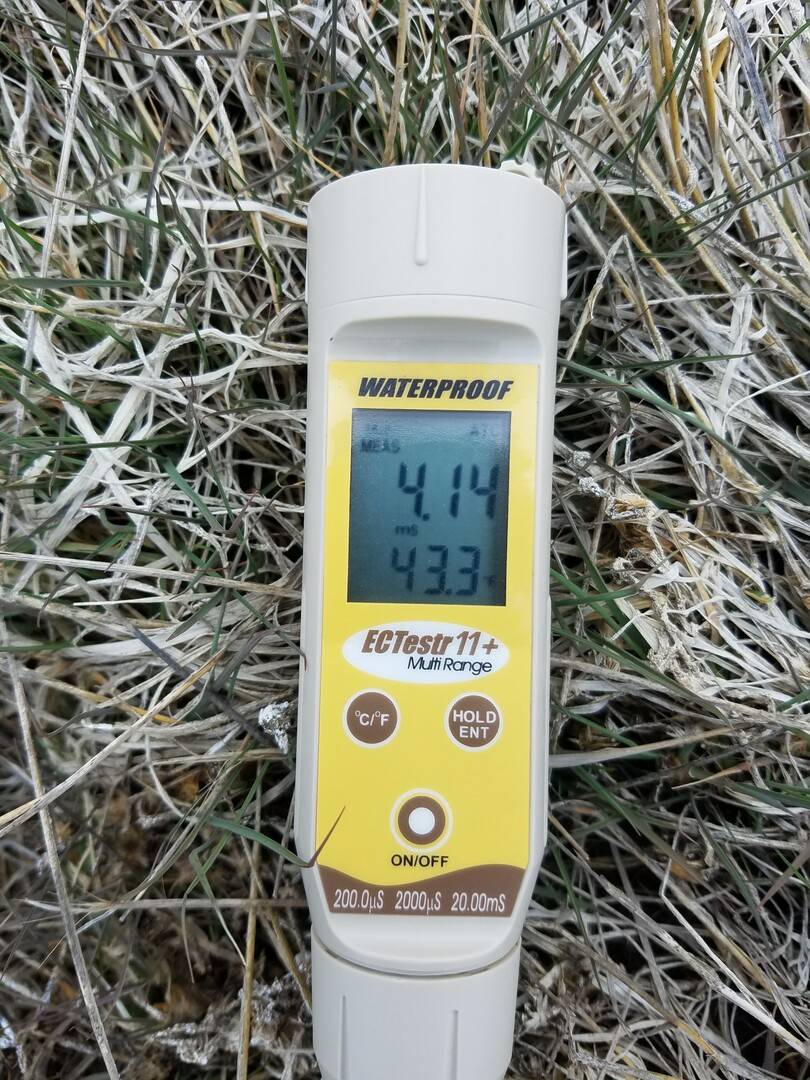
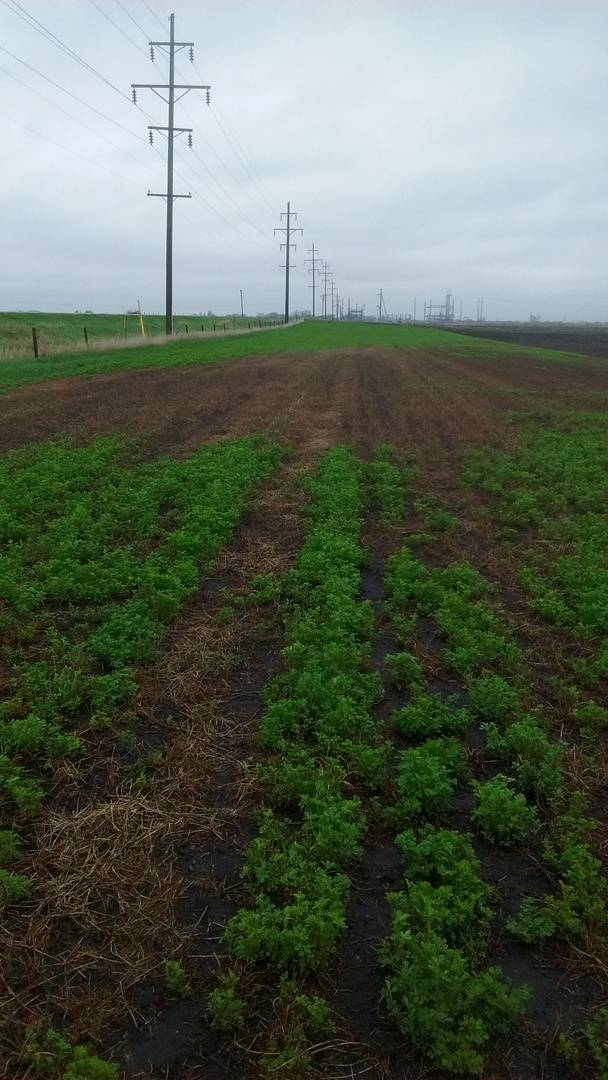
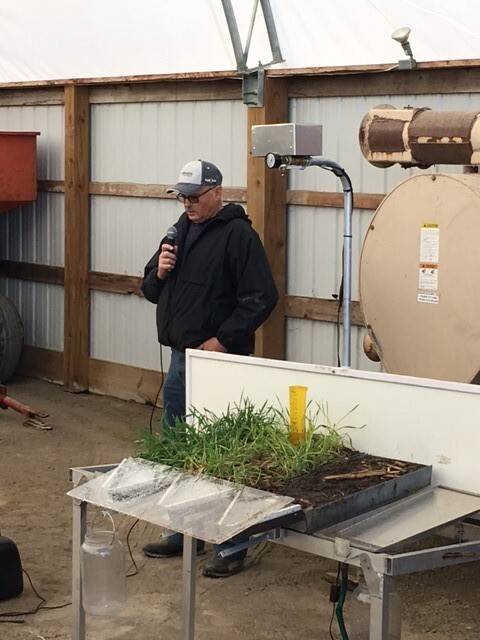
    As part of our FieldxFieldSM crop planning for alfalfa, we test for electro conductivity in soils. As is the case in this particular field with a high reading, we will plant LH 9300 ST salt tolerant alfalfa.
    As part of our FieldxField crop planning for alfalfa, we test for electro conductivity in soils. As is the case in this particular field with a high reading, we will plant LH 9300 ST salt tolerant alfalfa.
    • LH 9300 ST salt tolerant alfalfa

    Southeast North Dakota

    Gary Geske

    Temperatures around Enderlin, North Dakota reached 50 degrees, but a cold front moved in Saturday night. Snow fell across parts of northern Minnesota and the Dakotas, so it’s not planting weather here now. Mostly small grains have been planted. Soil temperatures need to rise and fields need to dry before corn planting gets underway.

    Northeast South Dakota

    James Keltgen
    Very little progress in NESD this past week. Some fieldwork being done, small grains still being seeding and a handful of growers started on a little corn. Very cold this week and growers are waiting for warmer weather and soil temps. Current soil temps are lower 40's.
    Very little progress in Northeast South Dakota this past week. Some fieldwork being done, small grains still being seeding and a handful of growers started on a little corn. Very cold this week and growers are waiting for warmer weather and soil temps. Current soil temps are lower 40’s.

    Southeast South Dakota

    Ramie Coughlin

    When it 37 degrees and overcast on the prairie, the seed sits safely in the shed.

    Northern Minnesota

    Ken Highness
    Cloud cover is thick in Northern Minnesota as farmers wait for soil temps to rise and start #plant17
    Cloud cover is thick in Northern Minnesota as farmers wait for soil temps to rise and start #plant17

    Southern Minnesota

    Brandon Wendlandt

    A Latham corn SuperStrip plot went in the ground near Morgan, Minnesota this week. These tests, which are proprietary to our company, play a key role in helping us select our product lineup as existing and experimental products are tested across multiple locations each year.
    A Latham corn SuperStrip plot went in the ground near Morgan, Minnesota this week. These tests, which are proprietary to our company, play a key role in helping us select our product lineup as existing and experimental products are tested across multiple locations each year.

    Southern Wisconsin

    Greg Mair

    In northern Wisconsin, farmers are waiting for the cover crops to be sprayed before they begin planting. This farmer experimented with multiple ways to seed cover crops in 2016. He seeded this rye with an airplane into standing soybeans about 2-3 weeks prior to harvest. Now that the soil has dried, spring fieldwork is underway and the first Latham corn plot has been planted south of Monroe, WI!

    Northwest Iowa

    Darin Chapman
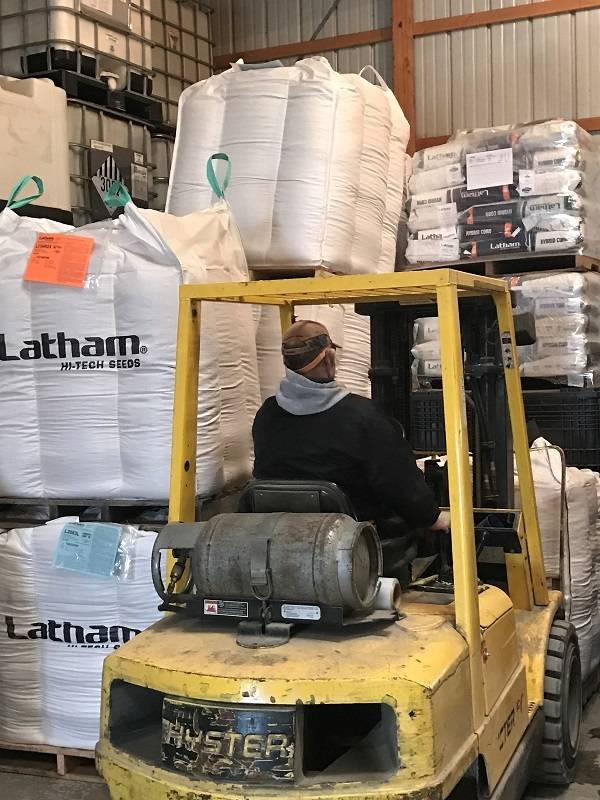
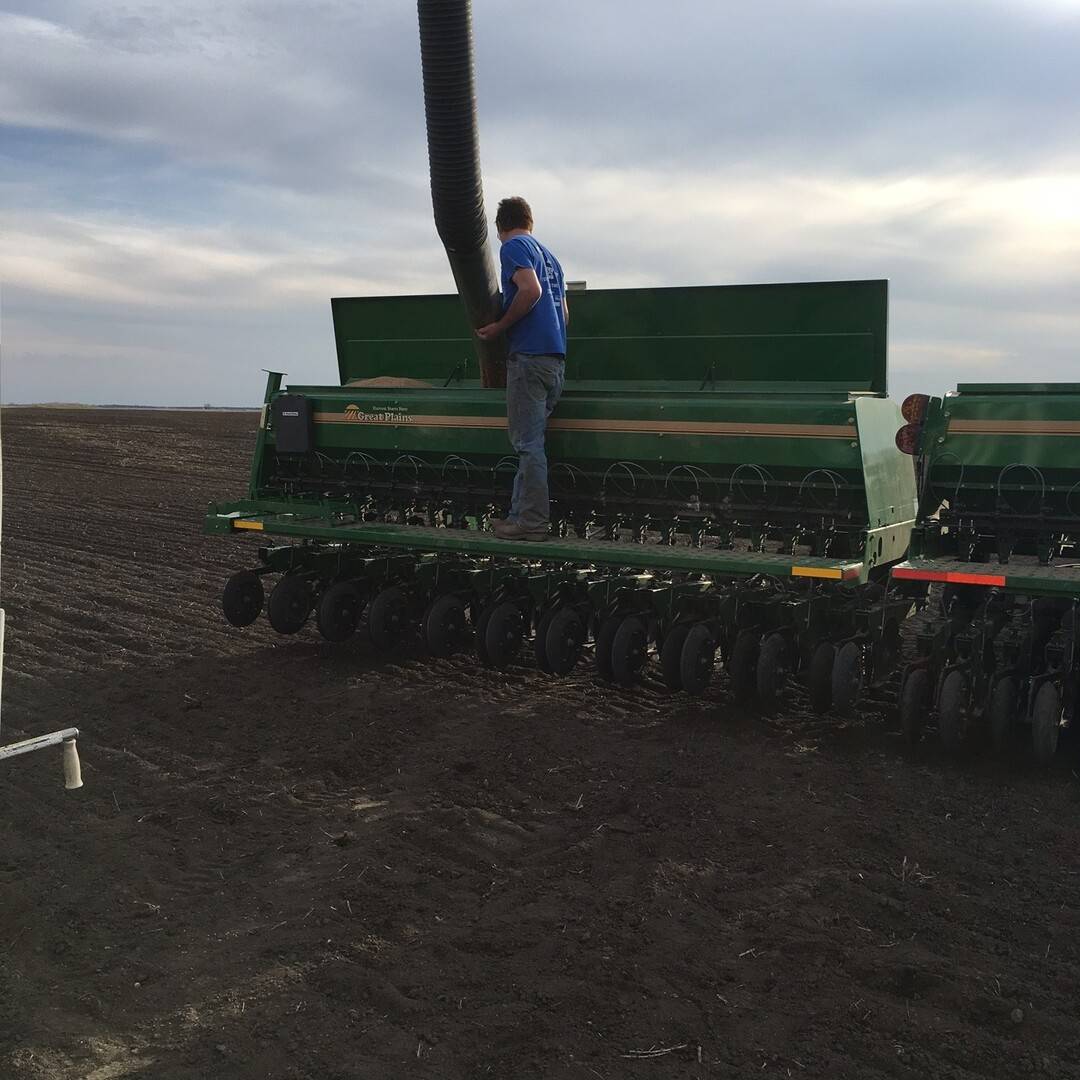
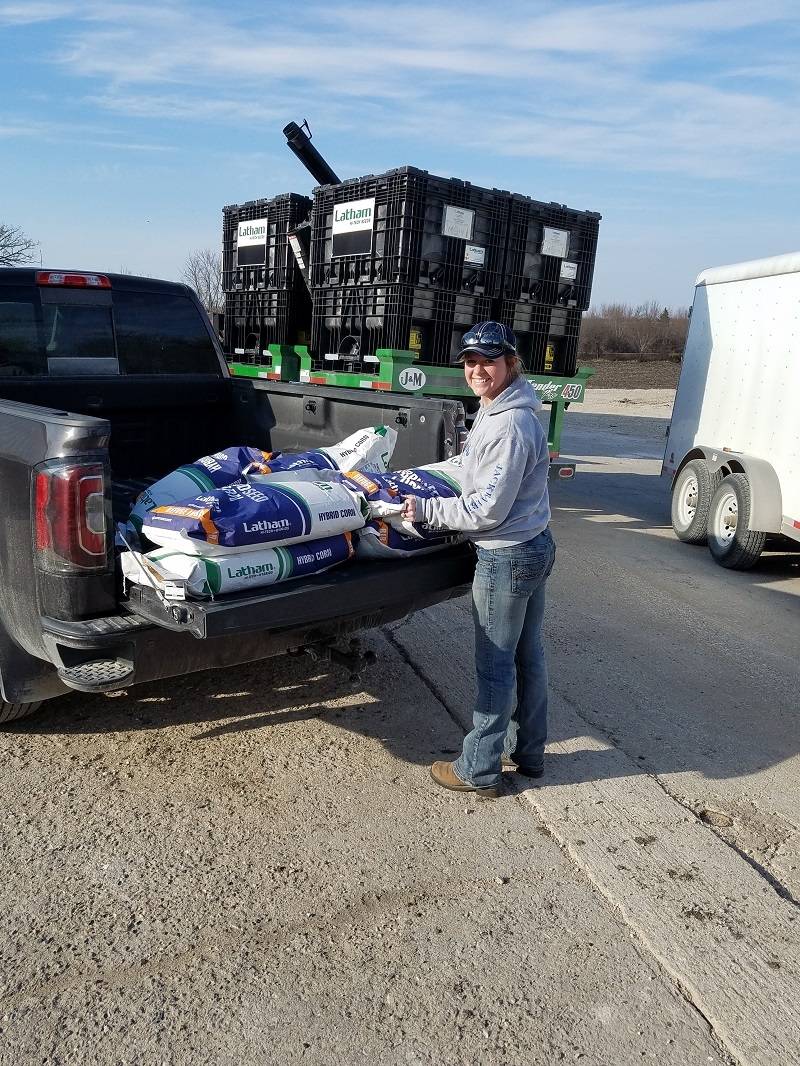
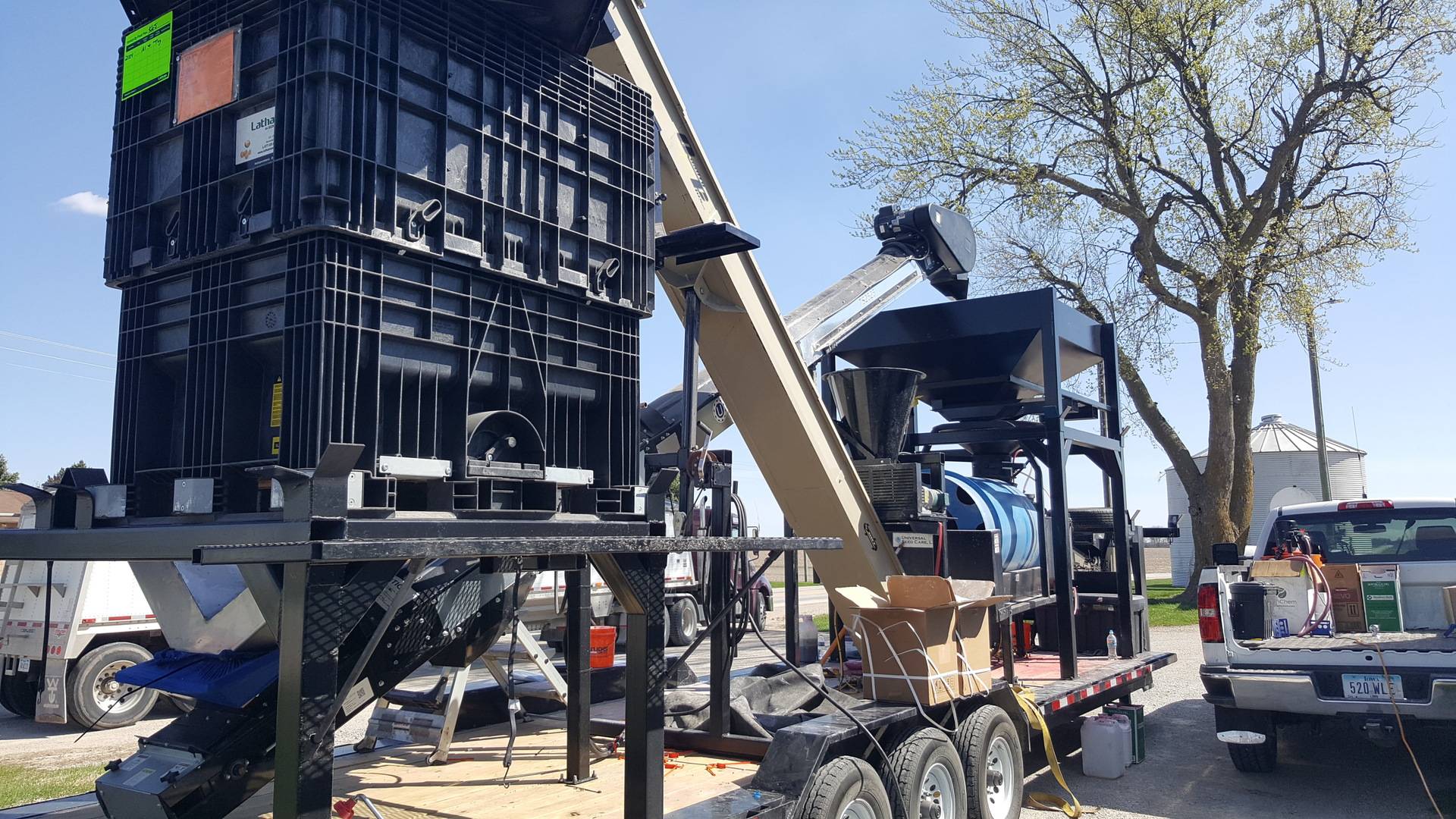
    One of our new dealers prepares to deliver seed and treat soybeans.
    One of our new dealers prepares to deliver seed and treat soybeans.

    South Central MN & North Central IA

    Cory Greiman

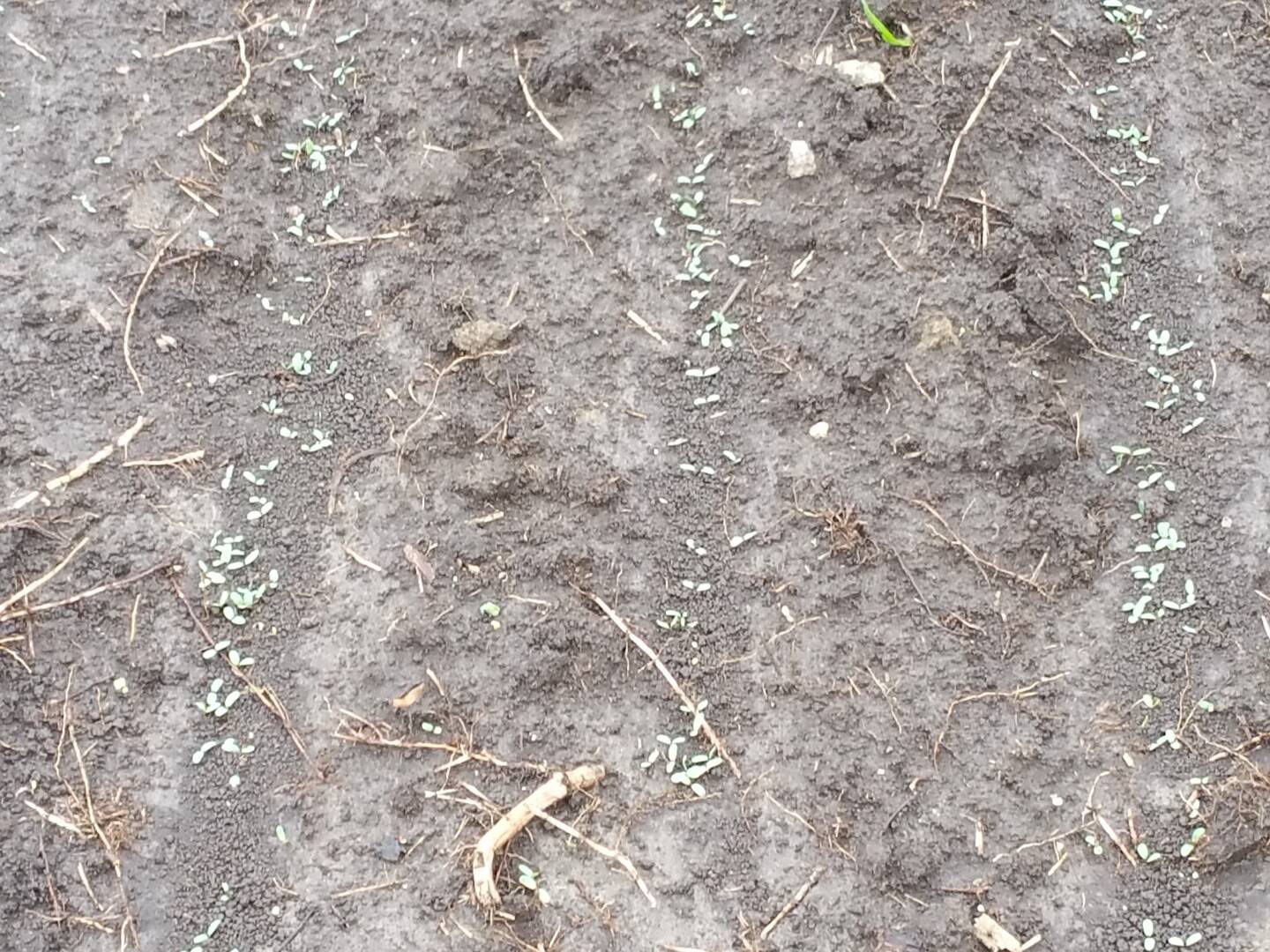
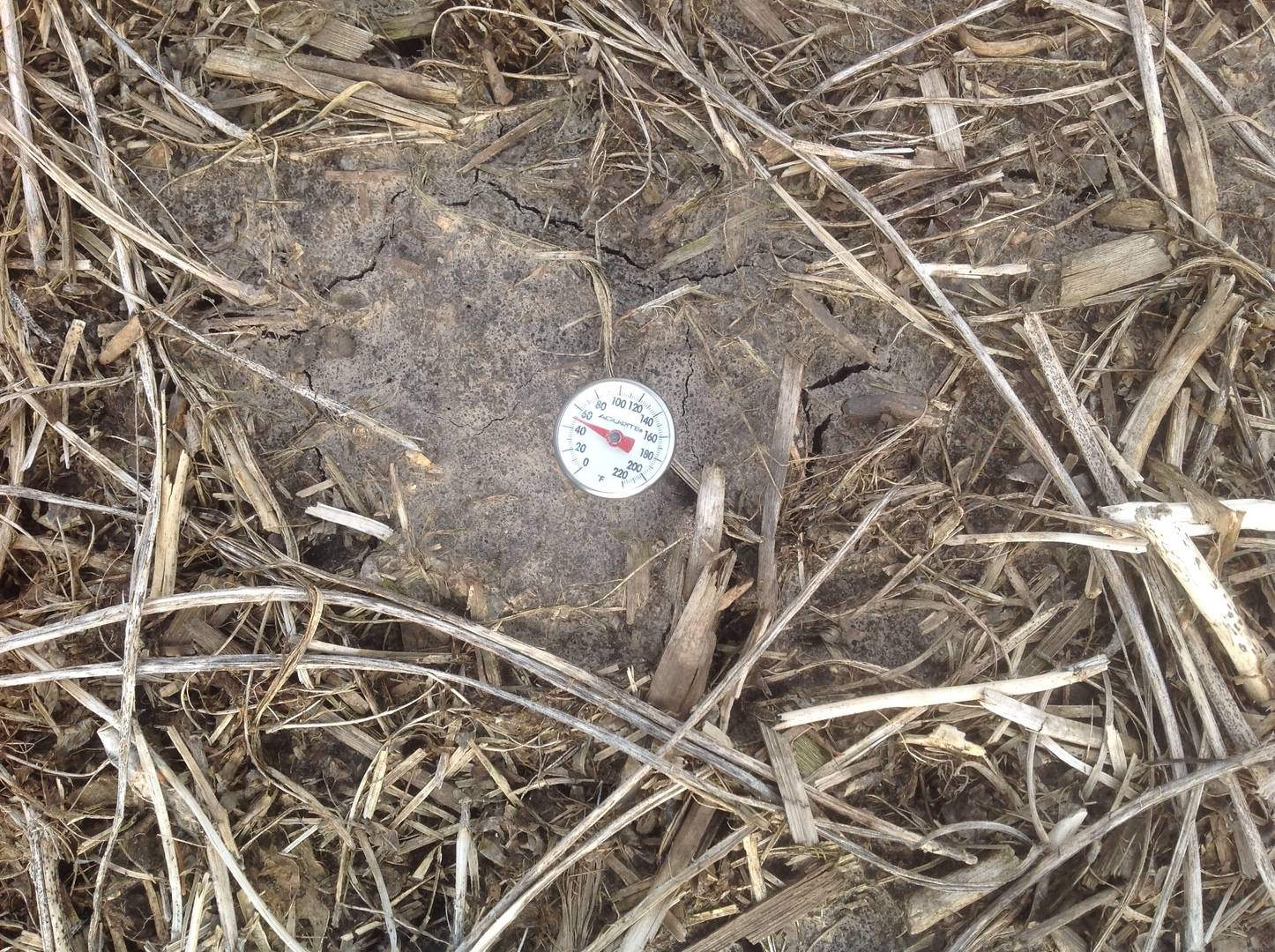
    Pictures above display soil temperatures dropping at a rapid pace.

    Southeast Minnesota & Northeast Iowa

    Craig Haaland
    Farmers across my territory are being cautious about planting because weather conditions could favor imbibitional chilling. Chilling effects are more severe when seeds are planted into soils 50 degrees F and then absorb colder water within the first 24 to 48 hours after planting.
    Farmers across my territory are being cautious about planting because weather conditions could favor imbibitional chilling. Chilling effects are more severe when seeds are planted into soils 50 degrees F and then absorb colder water within the first 24 to 48 hours after planting.

    Eastern Iowa

    Jerry Broders

    #Plant17 is taking place in Eastern Iowa! In addition to fieldwork, new this week is a 14 hybrid plot put in by Iowa City.

    West North Central Iowa

    Bart Peterson

    When the calendar pages turn toward the end of April and seed corn is sitting in the shed, many farmers feel anxious about getting seed in the ground. Yields will be better when seed is planted into warmer soil at a later planting date than they will be if soil temperatures drop and cold rains fall shortly after planting. The biggest threat of imbibitional chillingis 24 to 48 hours after planting. When seed absorbs water colder than 50 degree F, loss of seed vigor and death may result.

    Central Iowa

    Bryan Rohe
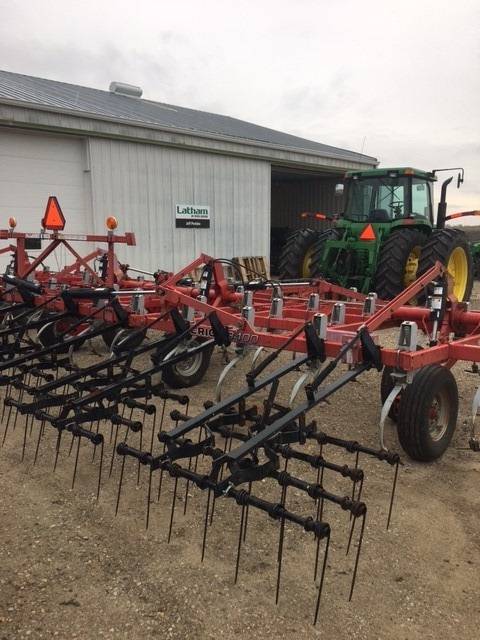
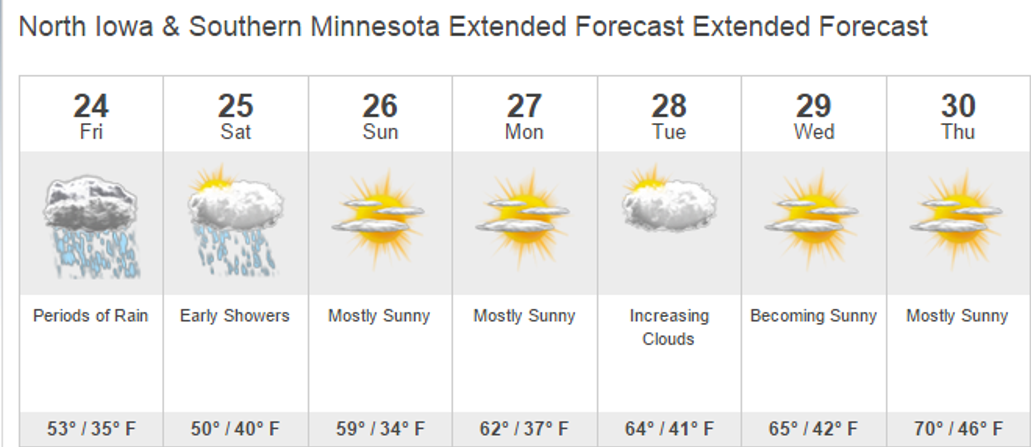
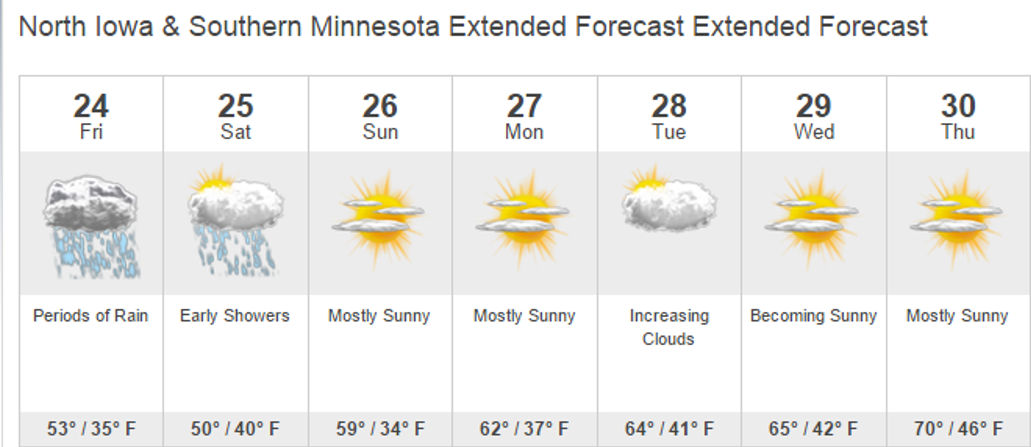
    Colder temps and forecasted rain has slowed corn planting across Central Iowa. You don't want that first drink to be a cold one! Imbibitional chilling can have a big impact on corn yield potential. Twenty four to 36 hours after planting is critical; a chilling effect can occur when seed imbibes, or absorbs, water colder than 50 degrees Fahrenheit.
    Colder temps and forecasted rain has slowed corn planting across Central Iowa. You don’t want that first drink to be a cold one! Imbibitional chilling can have a big impact on corn yield potential. 24 to 36 hours after planting is critical; a chilling effect can occur when seed imbibes, or absorbs, water colder than 50 degrees Fahrenheit.
    • Imbibitional chilling

    Western Iowa & Eastern Nebraska

    Larry Krapfl

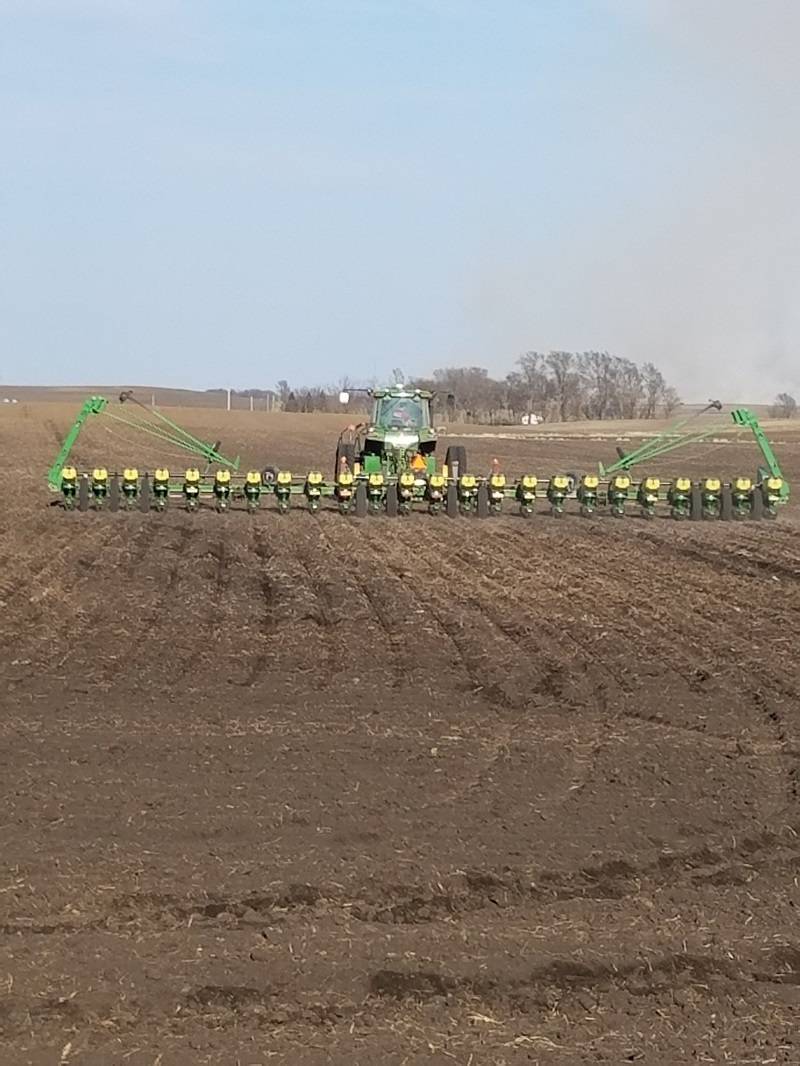
    This plot cooperator finished corn #plant17 when this Latham plot went in the ground.
    This plot cooperator finished corn #plant17 when this Latham plot went in the ground.

    Webspec Admin

    April 26, 2017
    Alfalfa, Cover Crops, Crop, Season, Spring
  • Latham Hi‑Tech Seeds

    From the Field Crop Report for April 19

    Greg S WI 4 SeedPallet

    The time is here! #Plant17 has arrived, and farmers throughout the region are gearing up for the 2017 growing season. Pictures can often best portray what is happening in the world around us, so we have updated our weekly From the Field crop reports! We will be sharing #crop17 highlights throughout our marketing territory, with a photo or two to accompany it. These pictures are submitted from our Regional Sales Managers who are in the field every day with our dealers and customers. We hope you enjoy our first From the Field report for the 2017 planting season below!


    Eastern North Dakota

    Brain McNamee

    Brian M
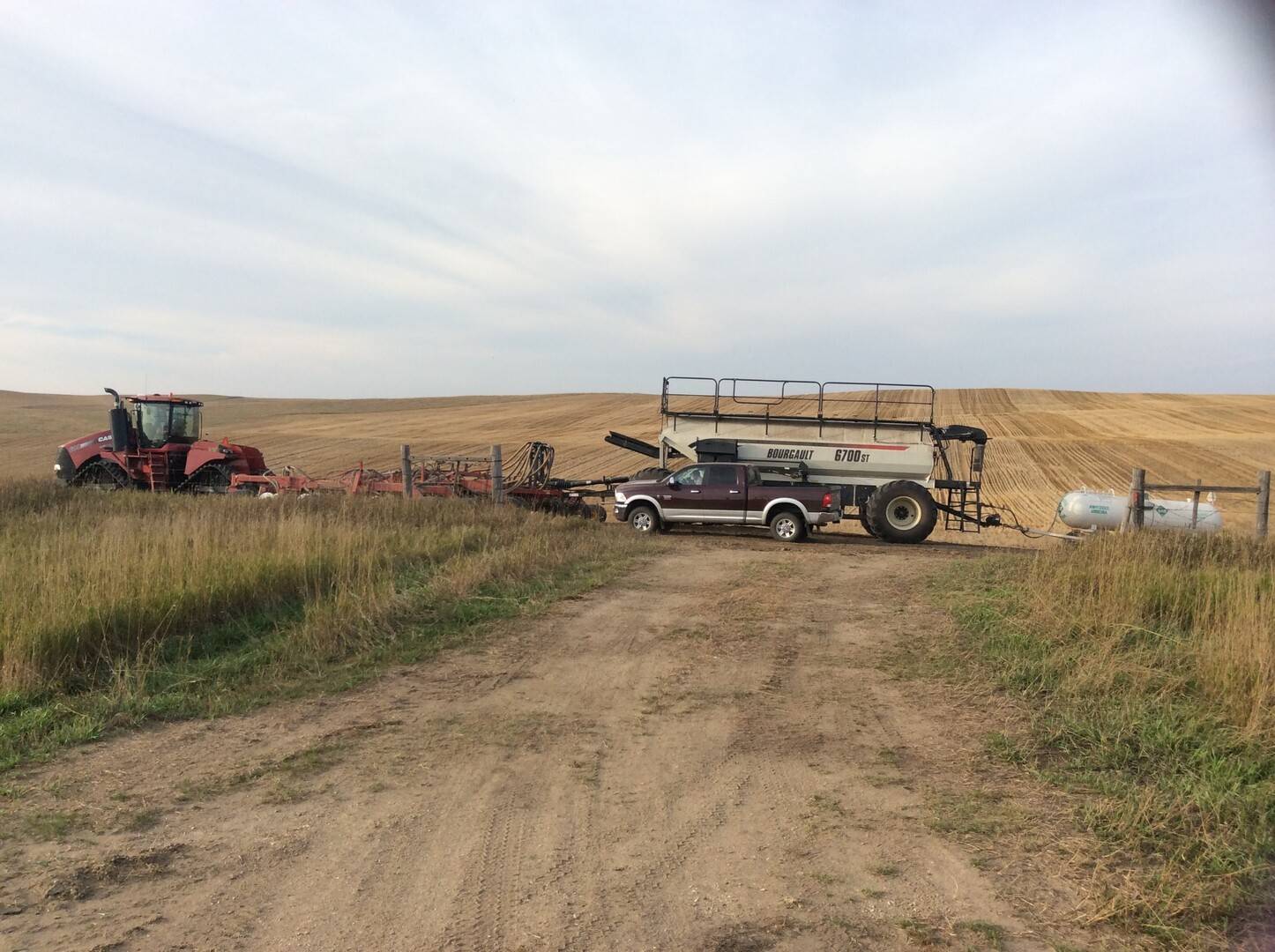
    Spring fieldwork in underway. Farmers in western North Dakota are applying anhydrous and focusing on getting small grains planted.

    Southeast North Dakota

    Gary Geske

    Gary - SE ND
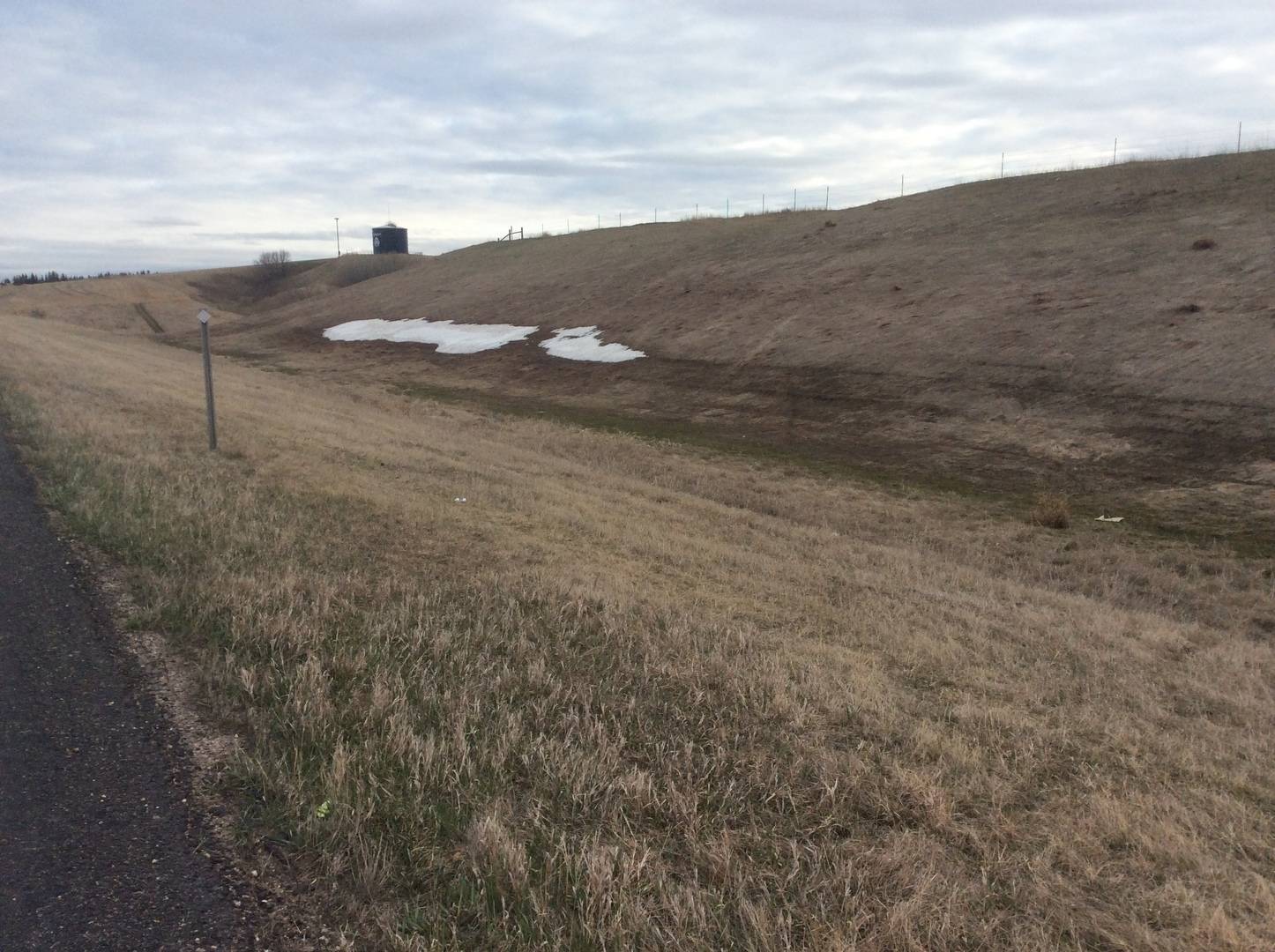
    There’s still snow in the ditches between Minot and Bismarck, so it’s evident that not all fields are fit for planting yet in North Dakota. Small grains are going in the ground in the southeast part of our state. One Latham® customer who lives north by Rolette said it might be mid-May before they’re able to get in the field.

    Northeast South Dakota

    James Keltgen

    James SESD
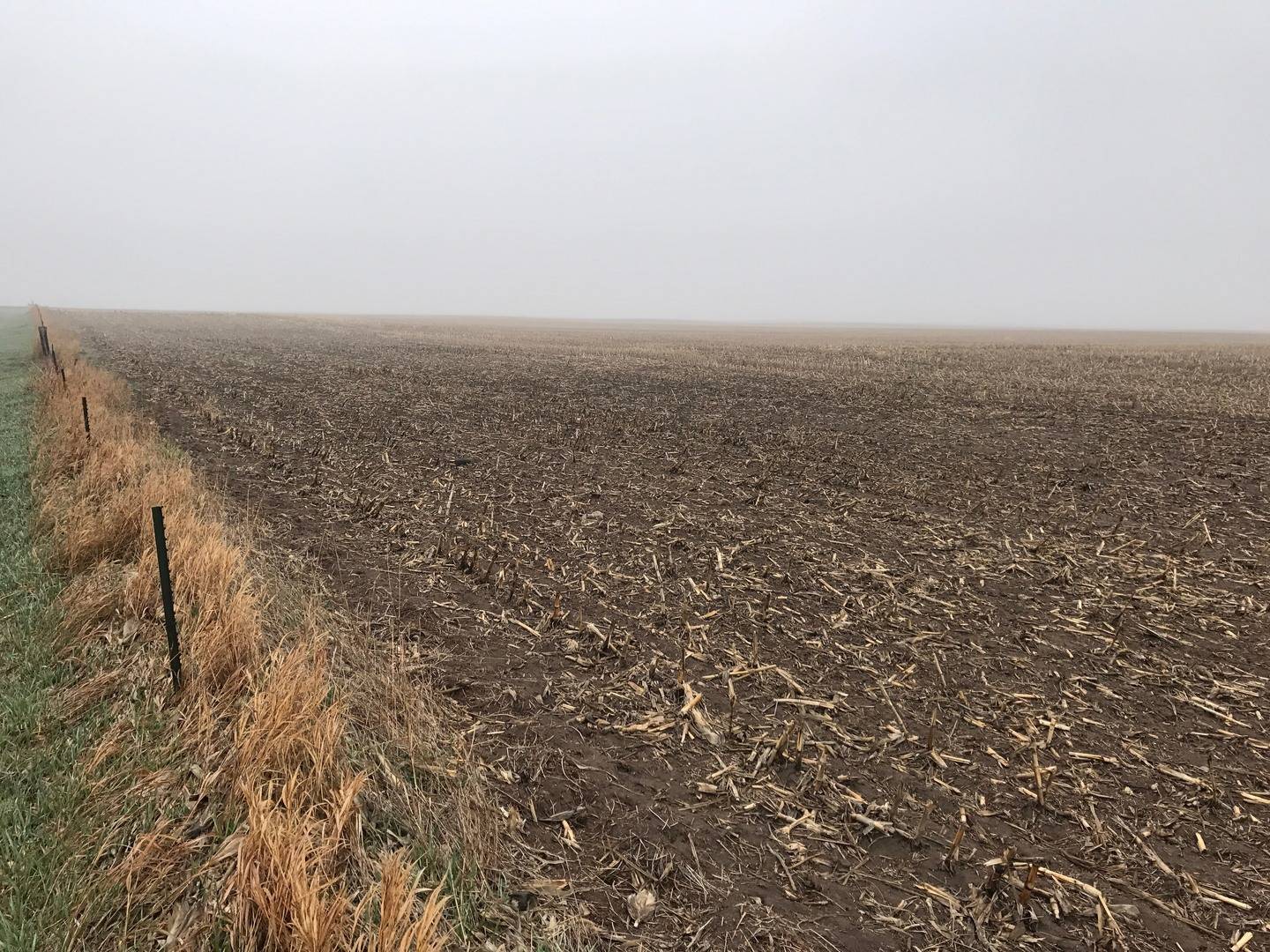
    Fog looms in Northeast South Dakota. Very little fieldwork and small grain seeding has been done here as soils are wet. Fieldwork is progressing in Central SD where moisture is lacking.

    Southeast South Dakota

    Ramie Coughlin

    Ramie 1
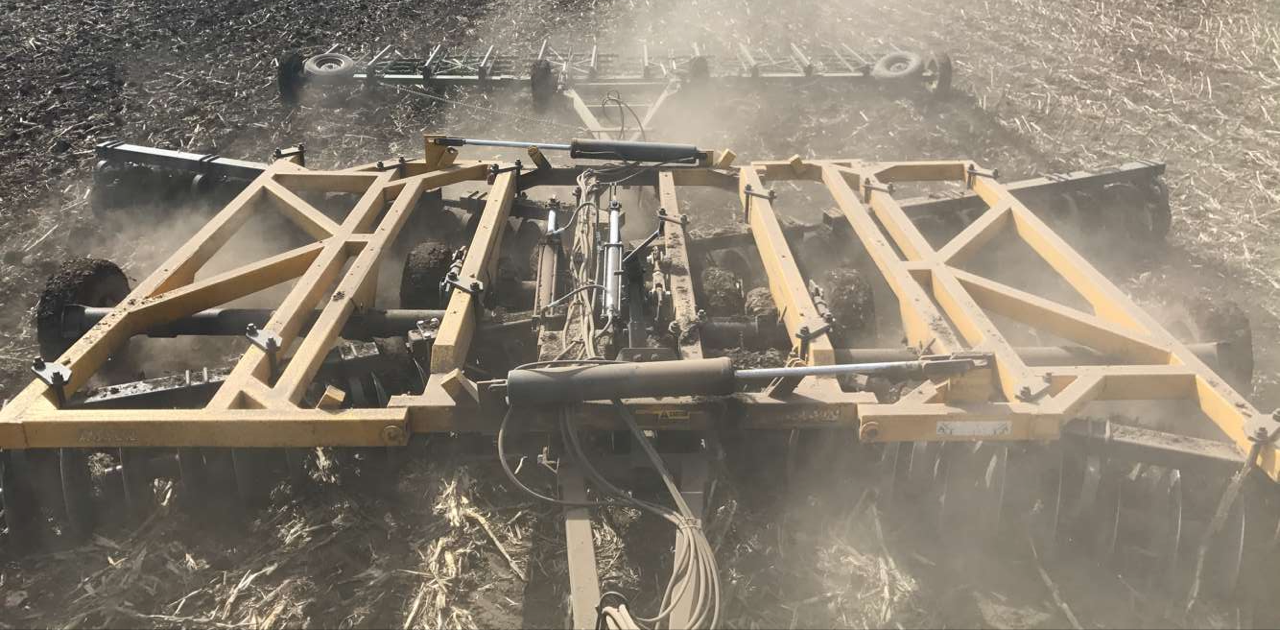
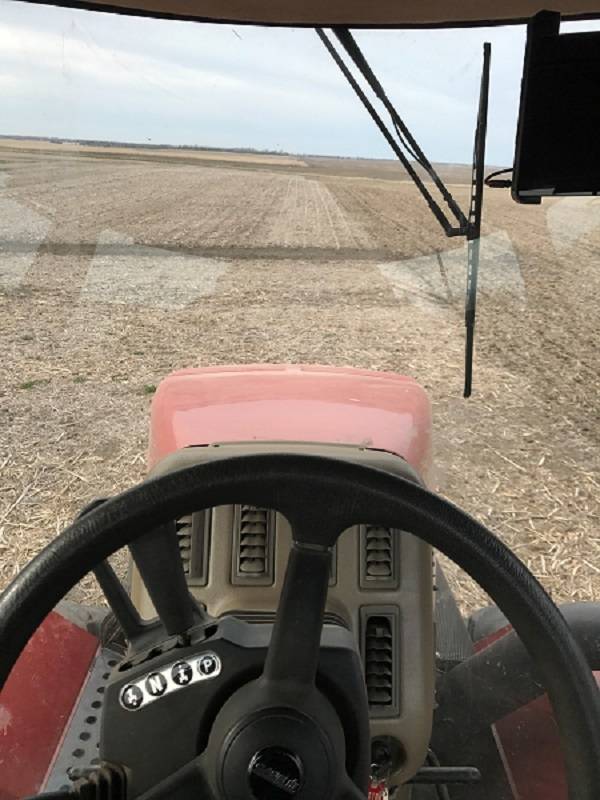
    A view of some spring prep work from the driver’s seat in South Dakota.


    Ramie 2
    Planting conditions have been ideal for small grains in South Dakota!! Corn will have to wait, but until then small grains are in full swing.

    Northern Minnesota

    Ken Highness

    Ken - N MN - 1
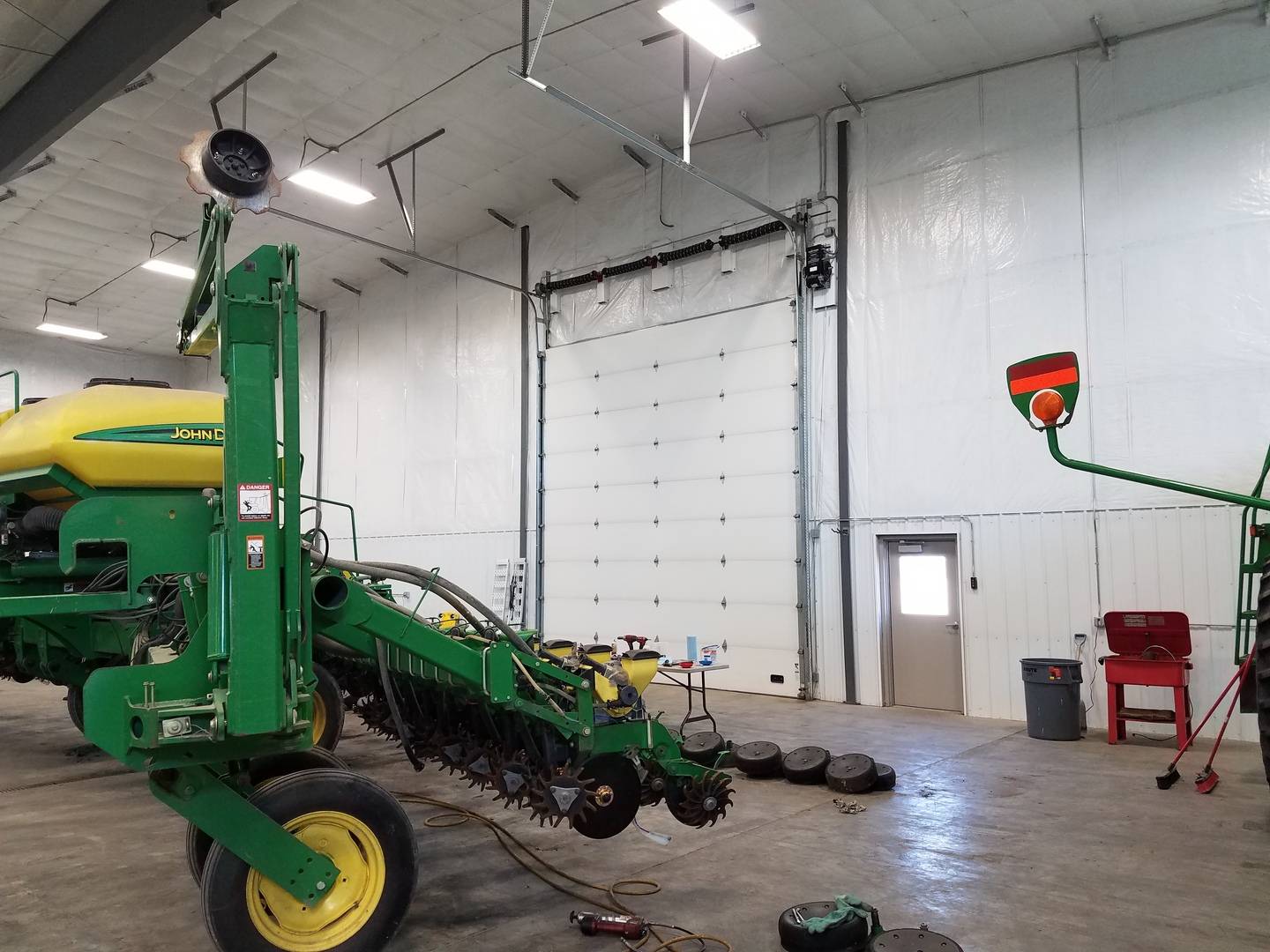
    Preventative maintenance is underway near Gilby, ND for spring planting.

    Ken - N MN - 2

    Southern Minnesota

    Brandon Wendlandt

    Brandon S MN
    Rain showers have been falling this week across southern Minnesota, but the seed I’m moving around is under cover and dry.

    Southern Wisconsin

    Greg Mair

    Greg - WI - Alfalfa
    Areas of the state were affected by winterkill on their alfalfa acres.  Pictured here is a good stand of alfalfa in southern Wisconsin.  It’s estimated that 75,000 to 100,000 acres of alfalfa in Wisconsin is suffering from some sort of winter damage.


    Greg - WI- 2 - TurkeyManure
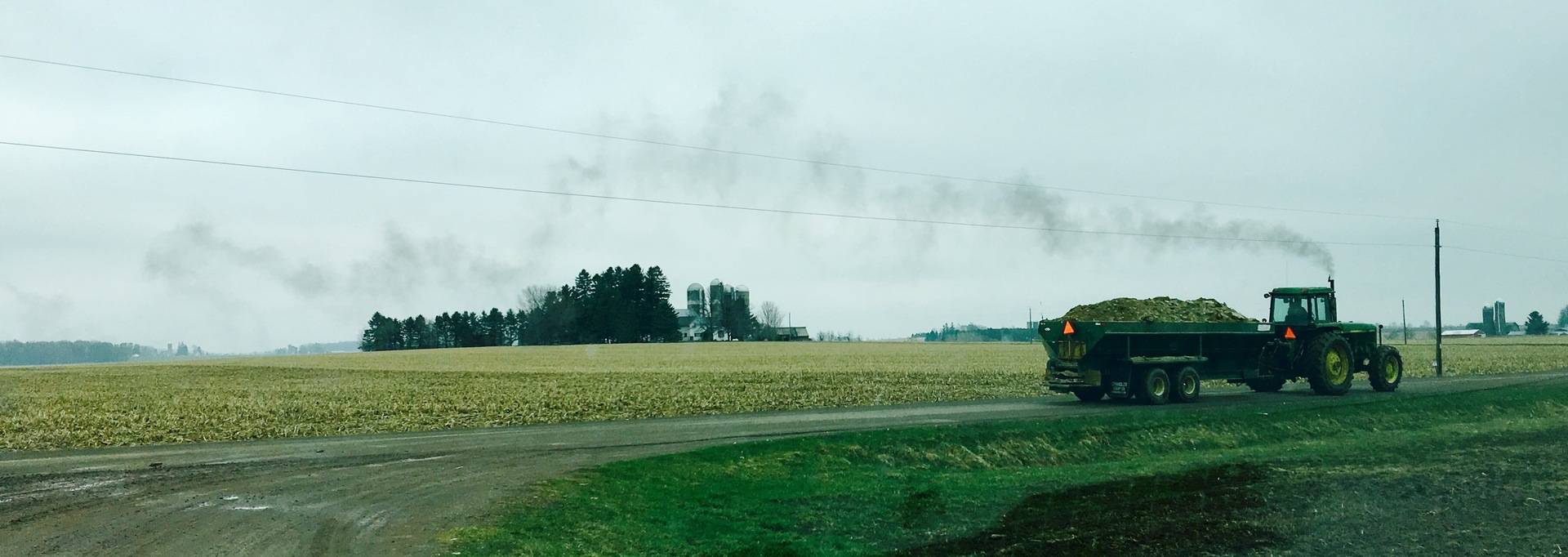
    As farmers wait for fields to dry out, there are still many farms that need to haul manure before planting can begin.  A farmer is loaded up with turkey manure headed to the field, attempting to beat the rain.


    Greg - S WI - 3 - SeedDelivery
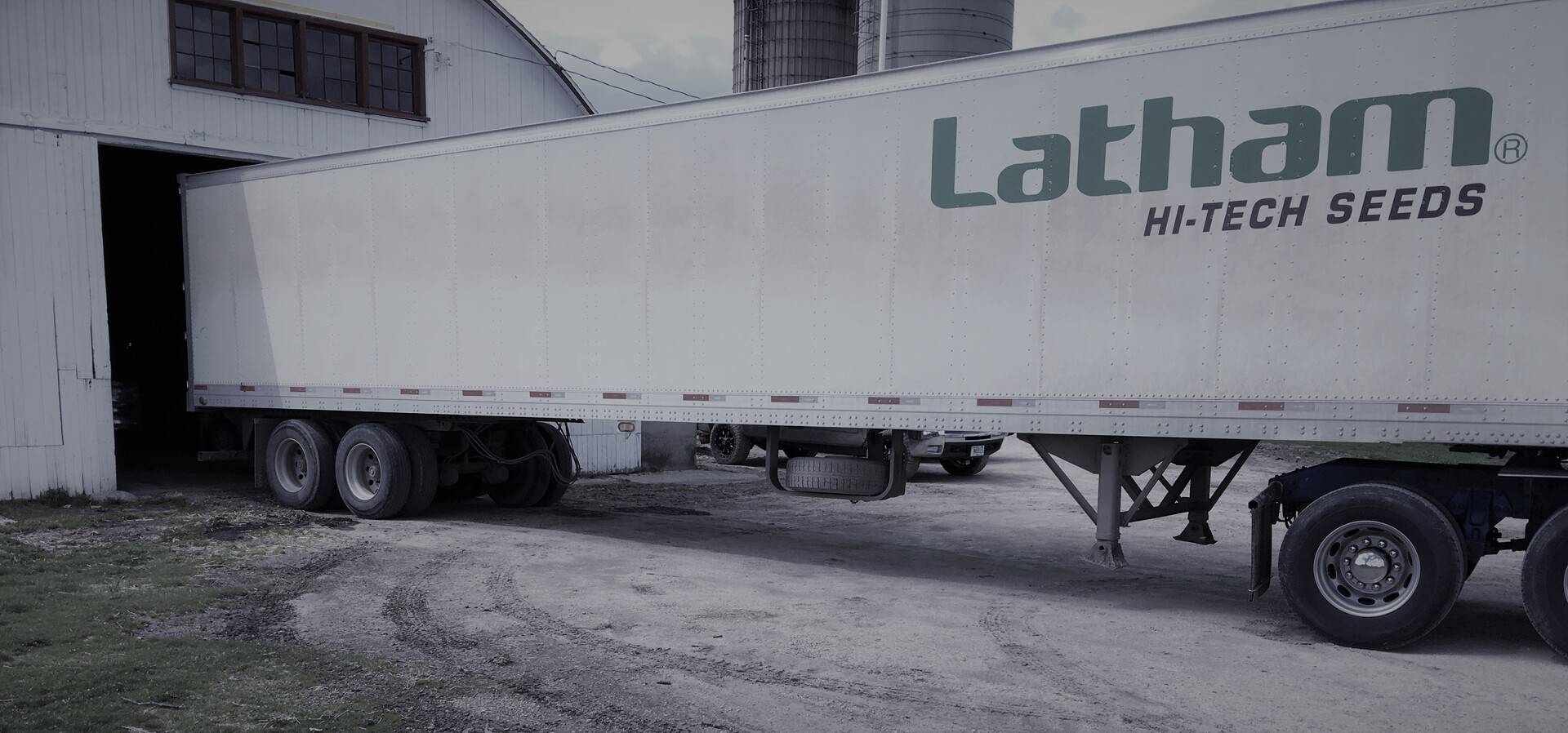
    A semi backs up to the seed shed of a dealer in Wisconsin.  As the last bit of corn arrives, dealers are making sure to deliver seed to the growers before they hit the fields.


    Greg - S WI - 4 - SeedPallet
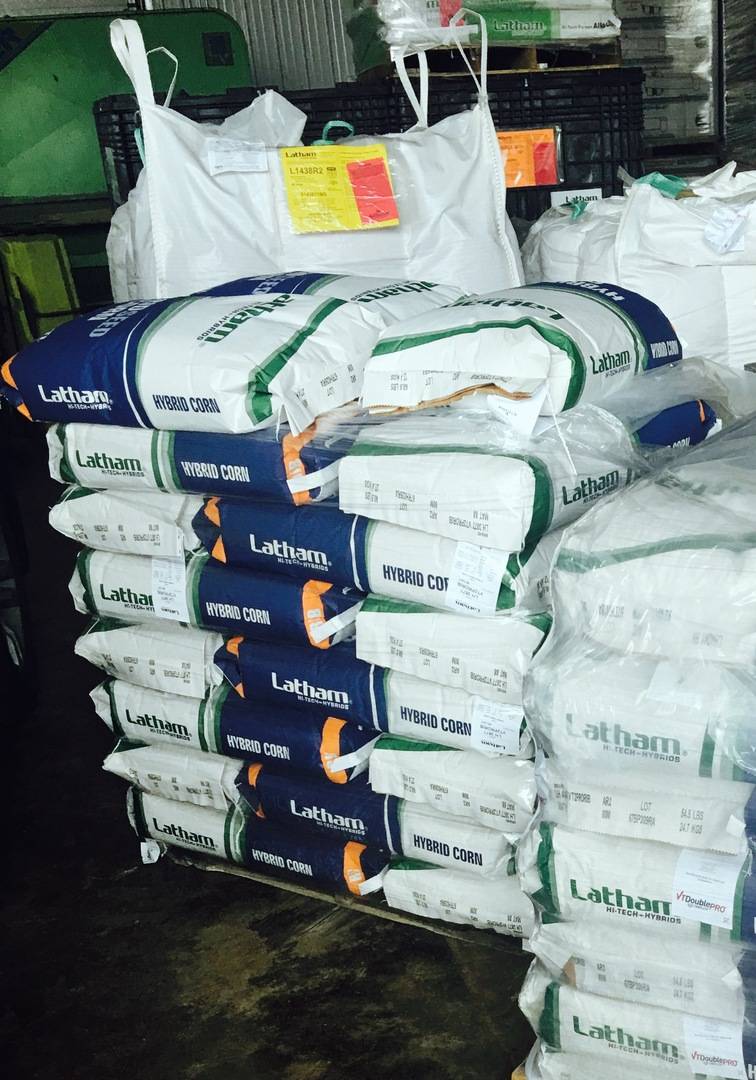
    Seed sits in the shop awaiting dry weather to get planted.  Most of the state has been blanketed with rain over the past two weeks, and more rain on the way Wednesday afternoon.  Much of the state is waiting for the ground to dry out before working up any ground.  Depending on how much rain is received Wednesday evening, I expect tillage equipment and planters to be rolling this weekend.

    Northwest Iowa

    Darin Chapman

    Darin - NW IA - 1
    This season we’re looking forward to conducting a variable planting rate and multi-hybrid research study for Latham Hi‑Tech Seeds on our family farm near Spencer. Here my brother, Tim, and my six-year-old son and I are working on the multi-hybrid planter. Photo credit to my nephew, Dan, who’s studying Agricultural Systems Technology at Iowa State University.


    Darin - NW IA 2
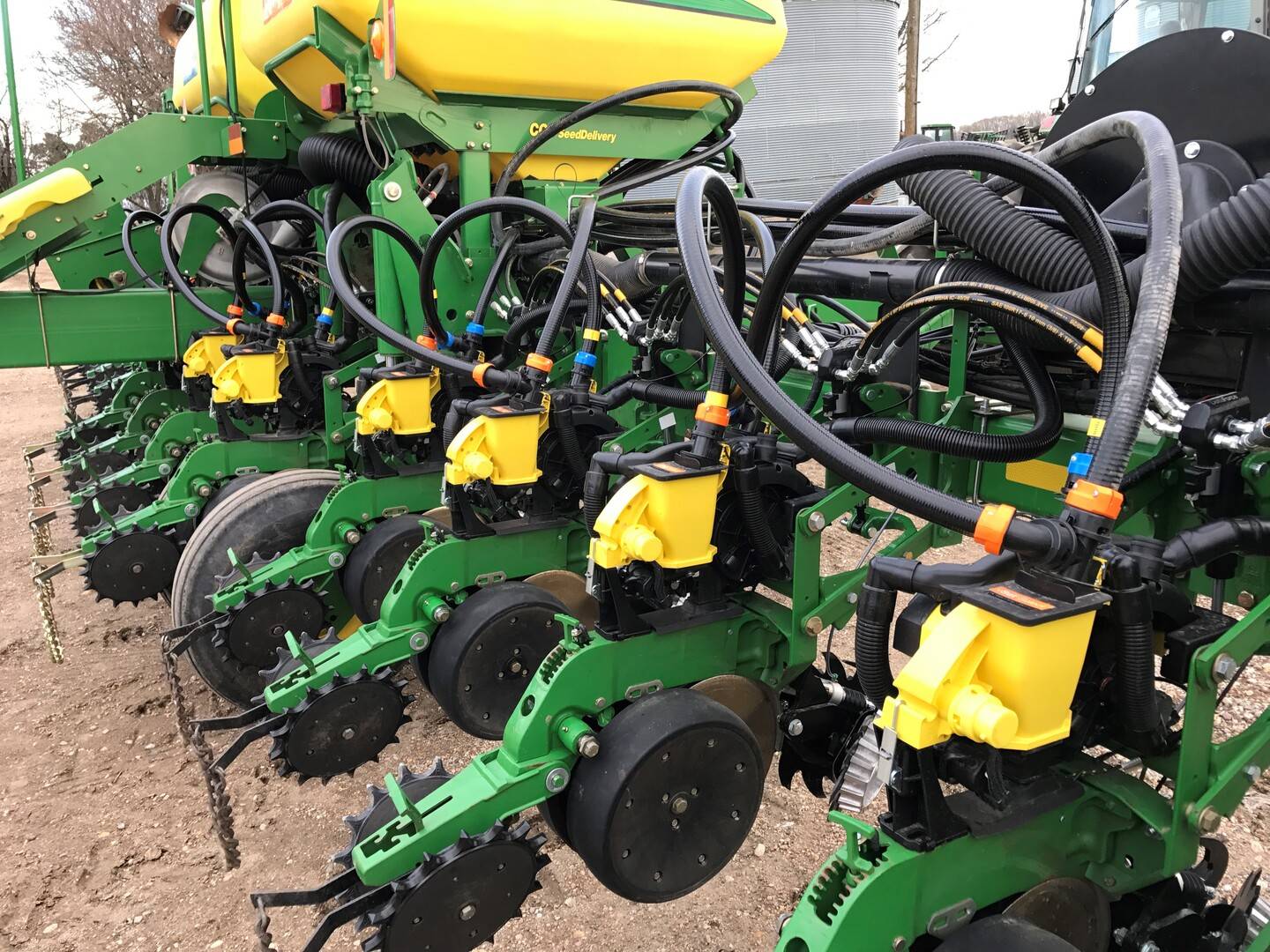
    We’ve been busy preparing our new planter, which is color coordinated. Blue indicates one particular hybrid and orange is another.  Blue supplies the odd rows of the planter and orange supplies the even rows.

    South Central Minnesota & North Central Iowa

    Cory Greiman

    Cory NC IA
    Winter kill is evident in alfalfa fields across North Central Iowa due to ponding and ice cover. Check out these articles on The Field Position to help evaluate winter kill and to manage alfalfa based on winter injury.

    Southeast Minnesota & Northeast Iowa

    Craig Haaland

    Craig - SEMN NE IA
    A few units of seed has yet to be delivered as wet weather stalled planting progress here in North Iowa. Rain is in the forecast again this week for Wednesday and Thursday.

    West North Central Iowa

    Bart Peterson

    Bart W NC IA
    Farmers across western Iowa worked around rain showers to get seed in the ground. In this photo, LH 5096 VT PRO was being planted near Rolfe on April 11.


    Bart WNCIA 2
    Latham® dealer Jenna Ricklefs making seed corn deliveries.

    Eastern Iowa

    Jerry Broders

    Jerry E IA 1
    Latham® seed sorted and ready for delivery.

    Jerry E IA 2

    Jerry E IA 3

    Central Iowa

    Bryan Rohe

    Latham dealer in Pella, IA discusses the benefits of using cover crops the last 3 years consecutive.
    Latham dealer in Pella, IA discusses the benefits of using cover crops the last 3 years consecutive.

    Western Iowa & Eastern Nebraska

    Larry Krapfl
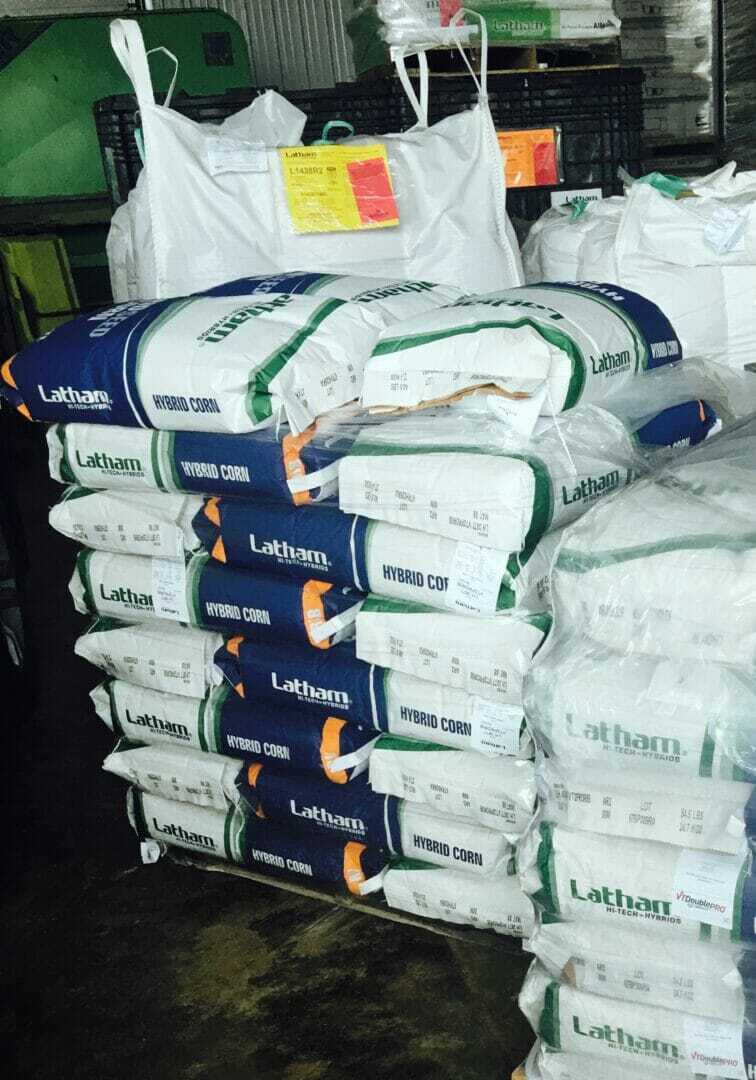
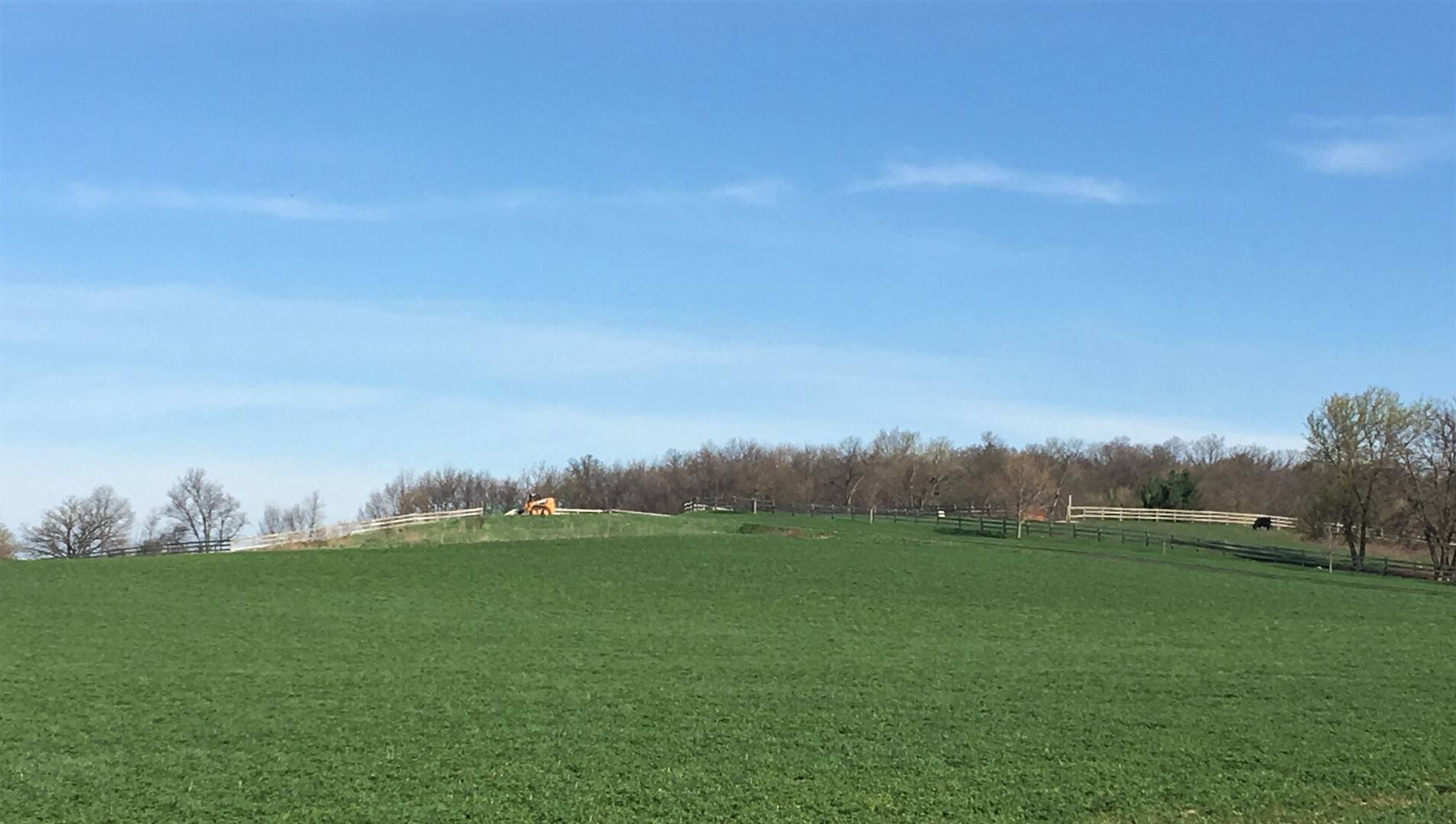
    Pictured above is a great stand of alfalfa in western Iowa. Outstanding weather has contributed to the great stand is because of increased seeding populations. Research has shown a remarkable response to increased seeding populations.
    Pictured above is a great stand of alfalfa in western Iowa. Outstanding weather has contributed to the great stand is because of increased seeding populations. Research has shown a remarkable response to increased seeding populations.

    Webspec Admin

    April 19, 2017
    Corn, Crop, Season, Soybeans, Spring
  • Latham Hi‑Tech Seeds

    Address These 3 Key Areas During Planter Prep

    Jacobsen 1

    Only so much preparation can be done in the shop. Take the time to get out of the cab — or have someone else help — to check row spacing and planting depth. Observations and planter adjustments are key to successful emergence scores.

    It doesn’t pay to have your equipment in top working condition if you don’t wait for fit planting conditions. Missing the optimum planting window may have a 2-5% impact on final yield but an uneven emergence could cause 5-9% yield loss! Plant according to soil and weather conditions rather than by the calendar.

    Our Product Team spends countless hours in research plots and in our customers’ fields, taking field notes. Our mutual goal is to help you maximize yield potential by placing the right Latham® product in the right field. FieldXField™ yields!

    Keep these three key areas in mind as you prepare your planter for spring:

    1. Level the Planter Frame: As planters get wider, it’s important that frames are leveled from side to side and from front to back. This assures all row units have the same operating positions for disc openers and the parallel linkage works correctly. Also be sure all tires are properly inflated.
    2. Proper Meter Calibration is Critical in Seed Singulation for Precision Planting: If possible, take your row units someplace where they can run on a calibration stand. While the planter boxes are removed, check all drive chains or cables for rust or kinks. The drives must work smoothly, so the meters run consistently.
    3. Seed Drop and Placement: Inspect seed tubes for wear and replace as necessary. Installing a good seed firmer helps transition seed from the drop tube; it also firmly presses seed into the bottom of the trench, which aids planting depth consistency.

    Be sure the opening wheels have a serviceable diameter and proper spacing, so the blades have a contact area of 1˝ to 2˝. If they are too wide, you will get more of a “W” in the seed trench, which affects planting depth. If there is too much pressure, discs will wear prematurely.

    Gauge wheels and arms should be adjusted to just touch the side of the seed disc. Keep mud and debris from building up on the seed disc as it affects planting depth. Also ensure the closing wheels run true, so the trench closes over the seed.

    Jacobsen-1

    Latham Seeds Agronomy Team

    March 8, 2017
    Agronomics, Precision Ag, Season, Spring
  • Latham Hi‑Tech Seeds

    Ask the Agronomist: Replanting After a Freeze

    Ask the Agronomist Feature Photo 01

    Q: My corn was standing about 4 inches tall when we experienced a hard freeze last weekend. Now many of those plants look black, so I’m wondering whether to replant.

    To listen to Mark’s response, click below.

    https://www.lathamseeds.com/app/uploads/2016/05/latham-5_17.mp3


    A: Your newly planted crop may or may not bounce back, depending on its size when it was hit with the hard freeze. The growing point usually is above ground around V-6 to V-7. At this point of development, the corn seedling is about 6 to 8 inches tall, but that depends on the hybrid.

    Regardless of crop size, the best thing to do if your crop was damaged is to wait 3 to 5 days after the freeze to evaluate damage. If corn plants are going to “stand back up,” you should be able to see it by this time. If they plants are still down, you’ll be able to gauge if a total replant is necessary or if you can just replant certain areas.

    You can also dig up a few individual plants from different areas in your field and split them vertically to assess visual damage at the growing point. Typically, seedlings that have more than a 1/2 inch of healthy tissue above the growing point will develop into plants with high yield potential. Seedlings that have more tissue damage will likely not recover.

    Click on the audio link to hear Latham’s senior agronomist and product manager Mark Grundmeier provide more details on the air with farm broadcaster Liz Brown of KOEL.

    If you have a question about what you’re seeing in the fields, feel free to ask! Send your questions via Twitter to @LathamSeeds, in a private message on Facebook or call our office at 1-877-GO-LATHAM (1.877.465.2842).

    Also be sure to check out TheFieldPosition.com for timely agronomic information.  New articles are posted each week day on our blog.  You can even search for “topics” by simply typing key words into the search bar on the upper right-hand corner.

    Thanks for tuning in to this week’s Ask the Agronomist. We’ll be back again next week to field all of your questions during #plant16.

    Webspec Admin

    May 19, 2016
    Agronomics, Frost, General, Season, Spring, Weather
  • Latham Hi‑Tech Seeds

    Winter Rains Cause Concerns about Nutrient Loss

    RacetheRain

    Many farmers are asking about the possibility of nutrient loss from the unprecedented rains we received in December. While there is definitely cause for concern, don’t assume all fertilizer that was fall-applied is lost. Also keep in mind that the amount of loss will depend on the specific nutrients that were applied, as well as whether it was in the dry, liquid or gaseous form.

    Phosphorus (P) and Potassium (K):  Most experts agree that P & K applications are very stable no matter the time of year of application.  It’s not unusual to have these products applied on frozen ground and see little, if any, loss prior to planting.  One “watch out” here is if the December rains caused soil loss due to runoff. If this happened, then it is most likely that you also lost some P & K.

    Nitrogen (N):  Two main reasons for N loss are leaching and nitrification. Leaching refers to the actual loss of nutrients from downward movement through the soil profile. Since the ground in most areas was not frozen prior to the rains, this process could have a significant effect. Because the rain came fairly fast, there was considerable ponding and runoff in some fields.  These will be the greatest areas of concern. Nitrogen loss here will not be uniform and will be extremely difficult to quantify.  If drainage tiles ran, that is another avenue for N loss that may need to be considered.

    The most common form of fall-applied nitrogen is anhydrous ammonia (NH3).  When applied, it quickly converts to ammonium (NH4), which is a positively charged particle.  Nitrogen is fairly stable in this form as it is held onto the negatively-charged soil complex. Ammonium eventually converts to the nitrate form by the process of nitrification.  Since this is a biological process, the rate of conversion is determined by the soil temperature.

    Nitrification does not stop, however, it slows down considerably when soil temps are below 50° Fahrenheit. This is the reason most agronomists recommend fall N applications after soils have fallen below this temperature.  The nitrate form of N is the most susceptible to leaching. There’s a very good chance of N loss from the nitrification process if you applied nitrogen before soil temps fell below 50°F.  Applications made later on (in colder soils) have a much less chance of significant loss.

    It’s too early to determine nitrogen loss from December rains. We’ll wait until early spring to see how the weather develops and see the fields look after they thaw.  For additional information on the potential for nitrogen loss, click here for an article from Dr. John Sawyer, Extension Soil Fertility Specialist, Iowa State University.

    Webspec Admin

    February 10, 2016
    Agronomics, Fertility, General, Season, Soil, Spring, Winter
  • Latham Hi‑Tech Seeds

    Is It Worth Replanting at this Point?

    20150527 094903 resized

    Unseasonably wet, cold spring weather has lingered longer than any Midwest farmer had hoped. These conditions create stress on seed germination and on seedlings. Plus, there were reports last week of frost damage to both corn and soybean seedlings in the areas I cover. Many farmers here in the north are assessing the damage and hoping to get replants done by June 10.

    Whether farmers will replant corn or replant soybeans in earlier maturities will be determined after taking these three steps:


    1. Evaluate the current stand.  

    When evaluating the existing stand for population, only count plants that have a good chance of survival. Then, observe the uniformity across the field to decide whether replanting the entire field or portions of the field is justified. There are different stand count options to test for both corn and soybeans to perform an accurate count.

    2. Compare yield potentials.

    When judging the potential yield of the standing crop, again you should only count plants that have a good chance of survival. These tables for corn and soybeans help determine the percent of full-yield potential based on planting time.

    3. Consider various management practices. 

    Before replant occurs, remove any existing stand. Also keep in mind that most soil insecticides cannot be applied twice during the same growing season in the same location in the field.


    The decision as to whether or not a farmer should replant really comes down to individual circumstances and “local conditions.” For example, I heard about a farmer from the Fargo area who had purchased a competitors’ soybeans without seed treatment. The wet, cold spring weather caused those seeds to literally rot in the ground. Note: Seed treatments like Latham’s trademark SoyShield and SoyShield Plus give superior control of most seed and soil-borne diseases, including damping off, as well as controls early season Phytophthora.

    The germination in the particular farmer’s field mentioned above was so poor that it warrants a replant, but he’s in a precarious situation. Field conditions as of June 1 weren’t fit for planting, however, another 3 inches of rain is in the forecast this week with more precipitation likely in the 10-day forecast. If that farmer doesn’t get his crop replanted before the rain falls this week, it will most likely be another week or 10 days before he can get back in that field. Then we’re looking at a potential planting date of June 10.

    If you’re considering a replant, it’s best to be in contact with your insurance agent. I’ve heard Federal Crop and others may not pay unless the field is inspected first. Plus, farmers also need to know the final planting date that will be covered by their policies.

    The later the planting date, the better the chance we’ll have a killing frost before the crop matures. June 20-25 is a target date for switching soybean maturities in Iowa. However, our growing season is so much shorter in the north that June 4 is considered a late planting.

    On our family farm near Enderlin in Southeast North Dakota, we usually plant soybean maturities ranging from 08 to Group 1. We’ve already switched to earlier varieties and are hoping the weather will allow us to get these planted before rain brings planting to a halt again. To inquire about soybean maturities in your zone, contact me or your local Latham® representative by calling 1.877.GO.LATHAM (1.877.465.2842).

    Webspec Admin

    June 4, 2015
    General, Season, Spring
  • Latham Hi‑Tech Seeds

    Uneven Corn Stands: The Why and How

    Stunted corn roots

    Lots of seed corn got planted early when temperatures were cool and moisture was abundant.  As a result, I’m hearing reports of uneven corn emergence. Some farmers are asking how to remedy the situation. Others are questioning whether they should replant portions of their fields.

    Let’s begin by explaining what causes uneven corn stands and then address whether or not anything should be done. Uneven corn stands most often are the result of these four circumstances:

    1. Improper equipment calibration/maintenance;
    2. Soil conditions at and after planting;
    3. Pests; and
    4. Poor management practices.

    At this point in the growing season, I’m going to focus on uneven stands that are a result of conditions at planting time including equipment calibration and soil conditions. Most farmers do a very good job and problems arising from equipment calibration or maintenance are few and far between.

    Problems are more often to arise when conditions for doing fieldwork and planting are good for an extended period of time.  Farmers tend to keep working until they get rained out, so they may not take time for regular equipment maintenance and calibrations if the sun shines for extended periods of time.

    Remember to check your equipment, especially your planter, before you head to the next field! Failure to maintain your planter can result in skips and doubles. University studies have found that skips are more limiting to overall yield in most situations but both can have a negative effect.

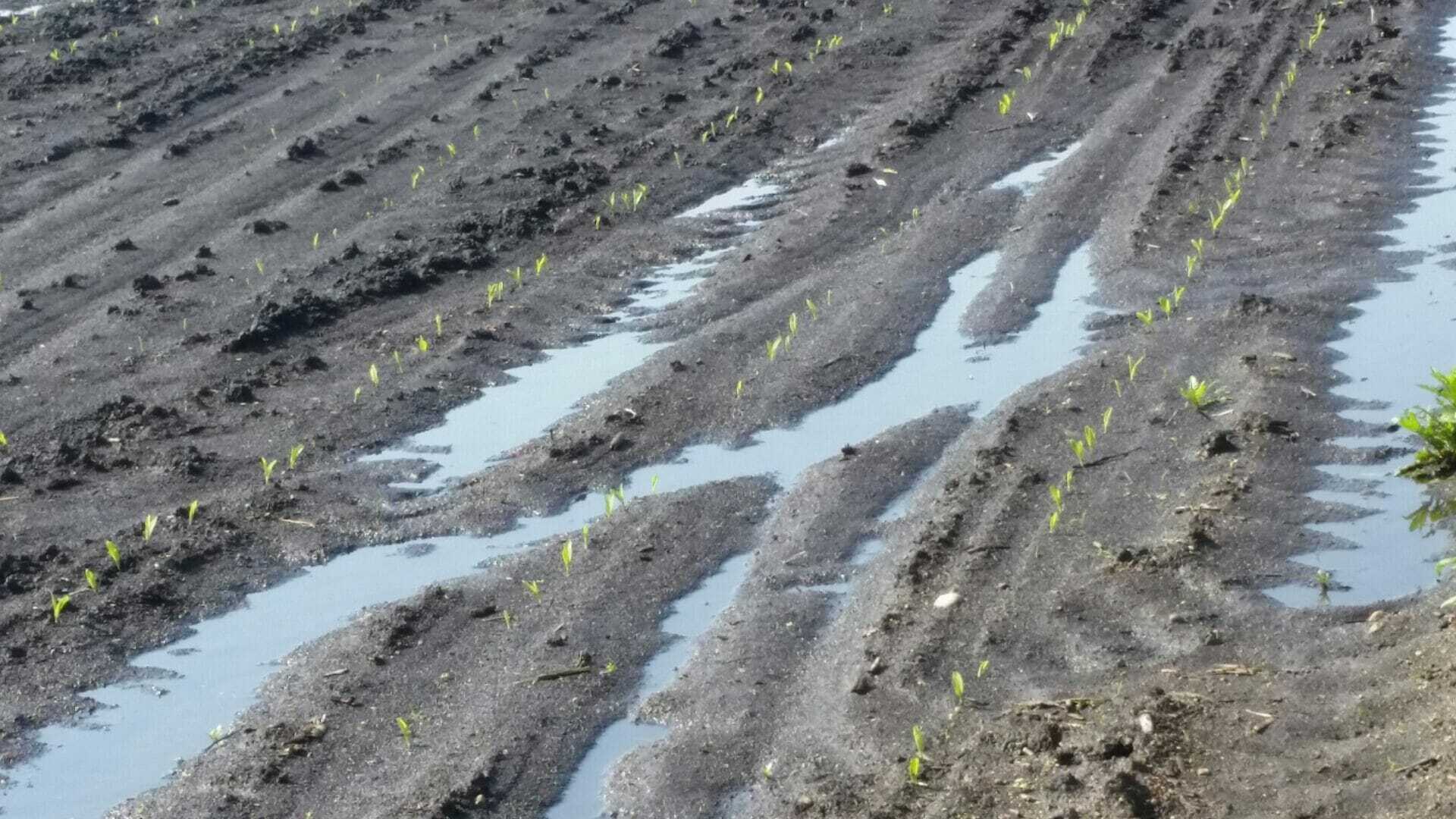
    In addition to having your equipment properly calibrated, it’s important to plant in fit soil conditions. Uneven emergence may result from soils that are either too wet or too dry. Soil moisture can differ because of varying soil types, topography and tillage practices. The difference can be seen across whole fields, in certain areas of a field, or even from one row to the next.

    Rainfall patterns leading up to planting are critical to emergence. Seeds placed in dry soil will not germinate without rainfall.  Rains that are spotty may cause uneven stands.

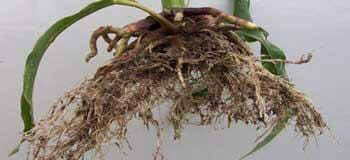
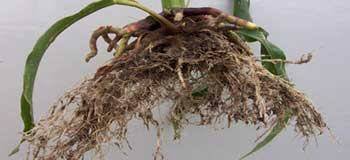
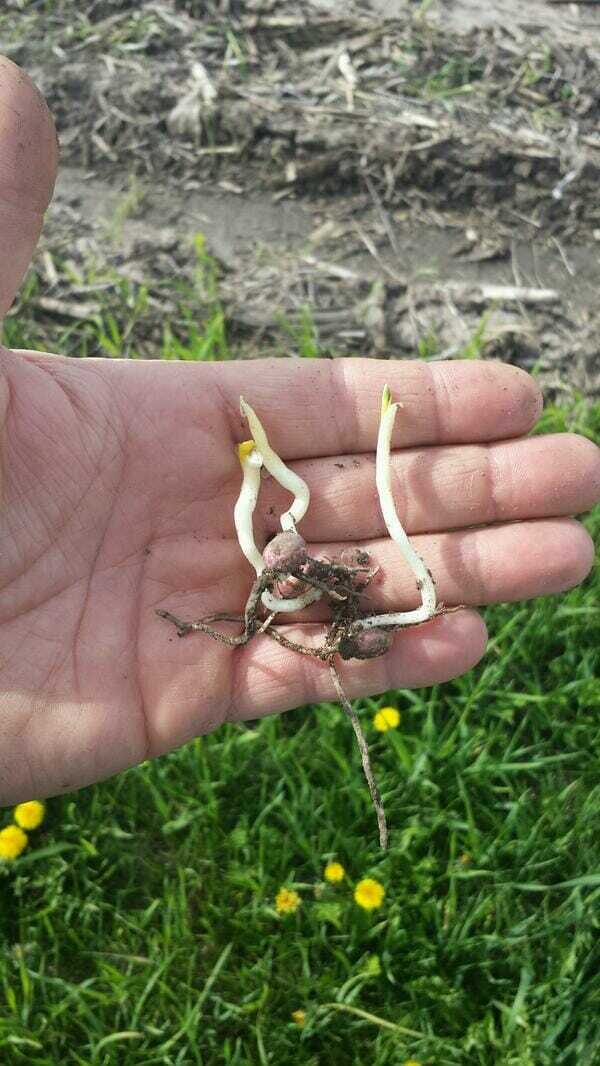
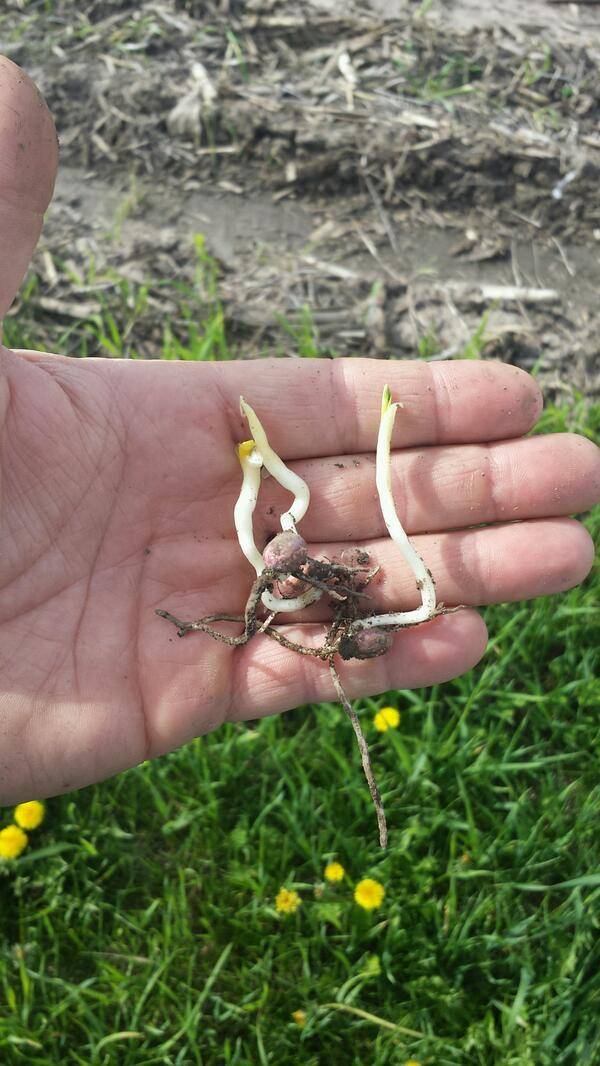
    Planting in soils that are too wet can cause lower germination, uneven emergence and growth, restricted root growth (as pictured), and stunted seedlings.
    Planting in soils that are too wet can cause lower germination, uneven emergence and growth, restricted root growth (as pictured), and stunted seedlings.

    On the other hand, working fields that are too wet also causes problems. Soil that is too wet will cause cloddy seedbeds, resulting in poor seed-to-soil contact and uneven emergence.

    Another concern, especially in continuous corn and no-till fields, is how residue from the previous crop will affect the current crop. Uneven distribution of residue can result in differing soil temperatures across the field, which causes plants to germinate irregularly.

    In addition, soil temperature may lead to uneven emergence. This spring a cold front caused soil temperatures to decrease after many acres of corn were planted. Look at planting when soil temps are consistently above 50° F and are expected to rise! The ideal soil temperature for planting corn is 60° F.

    To minimize the risk of uneven stands due to soil conditions, carefully monitor each field.  Check the moisture at different levels.  I like to see corn planted at 2 inches deep when conditions are optimal, but I have seen corn planted as deep as 3” without very many emergence problems. Keep in mind, the deeper you plant, the greater chance there is the seed “running out of gas” before it emerges, especially when there’s a heavy rainfall and the soil surface crusts over.

    There are many factors that can contribute to delayed emergence. So what should you do about uneven emergence? Assess if the problem really warrants remediation. Check with a trusted agronomist if you’d like another opinion.

    Rather than trying to fill in the gaps, it’s usually best to till up a field or a portion of a field prior before replanting. Click below for additional replanting resources:

    • Corn Replanting Decisions
    • Soybean Replanting Decisions


    Mark Grundmeier, Product Manager

    May 21, 2015
    Agronomics, Corn, Crop, Emergence, Season, Spring, Tech Tuesday
  • Latham Hi‑Tech Seeds

    Patience is Key at this Point in the Planting Season

    IMG 0302 e1431660505547

    Mid-May is here but there’s no need for farmers to rush into their fields to finish planting. Farmers across the Midwest are still within the time period for great yields, so there’s no need to switch crops or maturities now.

    Due to the shorter growing seasons in northern Minnesota, as well as in North and South Dakotas, farmers try to get their crops in the ground as early as possible. May 6-13 are considered optimal soybean planting dates for much of Northeast South Dakota, while early May dates are recommended for the southern areas of the state. Optimal planting dates in North Dakota range from late April to mid-May.

    Planting corn through May 15 is considered ideal in Iowa, but it sounds like almost all of the corn acres are planted across the state. For those farmers who still have some corn in the shed, there’s no need to even think about switching hybrids yet. Research shows that hybrids adjust to planting dates, so full-season corn hybrids can compensate somewhat for later plantings.

    As planting is delayed, hybrids shorten the time between planting and silking. Full-season hybrids almost always outperform short season hybrids, so Iowa State University Extension Corn Specialist Dr. Roger Elmore has said farmers really don’t need to consider switching maturities until May 25.

    Many planters are parked across much of Latham Country as measurable precipitation fell over the weekend, and rain clouds continue to hover this week. Moisture was needed to get many crops off to a good start, as well as to activate herbicides, in the north. It’s just too bad some of this precip came in the form of snow! It looks like fields will remain wet across much of the Upper Midwest this week, but sunshine and warmer temperatures are on the horizon.

    As hard as it is, be patient and wait for soils to dry before planting resumes. Planting into unfit conditions can cause lower yields than delaying planting by a few more days. Working soils that are too wet now could lead to soil compaction and have negative impacts on your crops during the growing season including: stunted plant growth; slow infiltration of water and/or ponding; high surface runoff and soil erosion under normal or light rainfall; poor root system establishment; and nutrient deficiency.

    The best rule of thumb is to let the field dry before doing fieldwork. Use a quick field test to check the soil moisture: mold a length of soil between your index finger and thumb, or roll it into a ball in your hand. Observe whether the soil breaks apart as you work it.  If you toss the ball of soil into the air and it shatters or cracks upon falling to the ground, then conditions are likely suitable for tillage or planting.


    Webspec Admin

    May 14, 2015
    General, Season, Spring
  • Latham Hi‑Tech Seeds

    Check the 10-Day Forecast Before Planting

    Picture1

    Picture1The arrival of spring weather is something every Midwest farmer anticipates. Early to mid-April brought favorable conditions for fieldwork. Many local farmers finished tilling soils while others started putting seed in the ground.

    Soil temperatures across Iowa had been above the 50-degree mark, which is usually the target for corn planting to begin. However, a cold front moved in and soil temperatures have dropped a few degrees in recent days.

    Even when soil temperatures are warm enough to plant, farmers must be certain that warmer air temperatures are in the forecast.  Warmer air temperatures are critical to protect the seedlings.  If the air temperature hits 20 degrees Fahrenheit or less after germination, the young seedling can be killed with the growing point of the plant right at emergence.

    Remember, soil temperature for soybean planting is more critical than for corn. We recommend waiting until soil temperatures in a region reach – and maintain – 60 degrees Fahrenheit before soybeans are planted. Soybeans can germinate in a soil environment of about 55 degrees Fahrenheit, but if the air temperature after germination hits 28 degrees Fahrenheit or less, the young seedling can be killed with the growing point of the plant right at emergence. Adversely for corn, the growing point stays under the surface until much later.

    One more consideration before you putting seed in the ground is to make sure soils are fit. Wet soils cause trouble from the beginning and all through the growing season. Compaction resulting from wet soil can kill root growth.

    Latham Corn Product Specialists advise farmers to “take the crumble test” before reentering fields. Grab a clump of soil and watch how easily it crumbles. If it stays in a ball, conditions are NOT right for planting. If it crumbles easily, the soil is fit for planting.

    We’re well within the optimal Iowa planting dates for corn, so take the time to let fields dry if needed. There are plenty of other uncontrollable factors that determine crop yield, so why not control the ones you can?

    Webspec Admin

    April 23, 2015
    General, Season, Spring
  • Latham Hi‑Tech Seeds

    Rotary Hoe Can Help Seedlings Emerge

    Rotaryhoe
    To rotary hoe or not to rotary hoe? That is a question worth asking.
    To rotary hoe or not to rotary hoe? That is a question worth asking.

    Sunshine and warm temperatures like we’ve experienced for the past week are definitely needed to push along emergence of recently planted seed. However, we’re starting to see some instances where seedlings are struggling to break through the crusted soil surface as a result of either conditions at planting time or heavy rainfalls afterwards.

    Wet planting conditions, fine soil textures, intensive tillage, or heavy rains after planting can result in delayed or uniform emergence. Some seedlings may not even emerge at all, which lowers stand counts and may reduce overall yield. Another problem that can result from crusted soils is rootless corn. Roots will take the path of least resistance, which means they might grow out the bottom of the seed furrow.

    To help break up the crust and improve seedling emergence, consider using a rotary hoe.Get off the tractor and check for stand loss when starting a field. If loss seems greater than 3 to 5 percent, you may want to slow your travel speed to be less aggressive with the tool. Take care so soybean cotyledons aren’t broken off by the hoe. Expect a minor stand loss from hoeing, but this should be insignificant if your crop is truly having difficulty breaking through a crust.

    Be sure to wait until soils have dried before using a hoe, so you don’t exacerbate the situation with soil compaction. Use a quick field test to check soil moisture.  Simply mold a length of soil between your index finger and thumb, or roll it into a ball in your hand. Observe whether the soil breaks apart as you work it. If you toss the ball of soil into the air and it shatters or cracks upon falling to the ground, then conditions are likely suitable for tillage.

    Webspec Admin

    May 29, 2014
    Agronomics, Emergence, General, Season, Spring
Previous Page
1 … 10 11 12 13 14 … 18
Next Page

Latham Hi‑Tech Seeds

131 180th Street | Alexander, IA 50420

(641) 692-3258

SIGNUP FOR OUR NEWSLETTER
  • Contact
  • Legal
  • Dealer Center
  • Seedware Login
  • Latham Gear

© 2025 Latham Hi‑Tech Seeds. All rights reserved. | Iowa Web Design by Webspec | Privacy Policy

Latham® Hi-Tech Seeds is a trademark of M.S. Technologies, L.L.C., 103 Avenue D, West Point, IA 52656.