Latham Hi-Tech Seeds

(641) 692-3258

  • Home
  • Products
    • Corn
    • Soybeans
    • Alfalfa
    • Corn Silage
    • Seed Guide
  • Performance
  • Find a Rep
  • Media
    • Blog
    • News
    • Videos
    • Podcasts
    • TECHTalk
  • About Us
    • Company History
    • Our Mission
    • Careers
    • Become a Rep
    • Sowing Seeds of Hope
  • Contact Us
  • Latham Hi‑Tech Seeds

    Herbicide Applications Update for Xtend® Soybeans in 2020

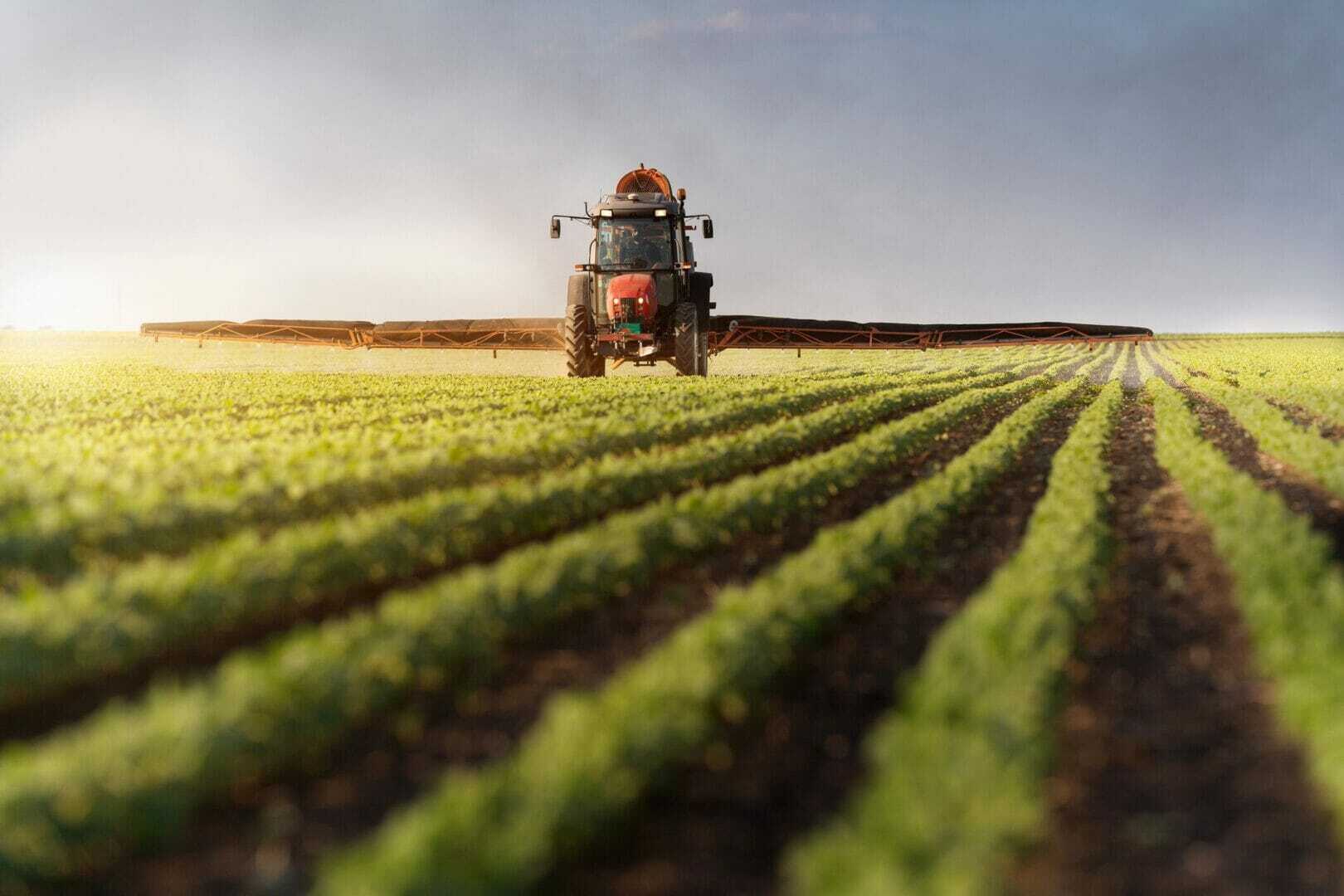
    Sprayer

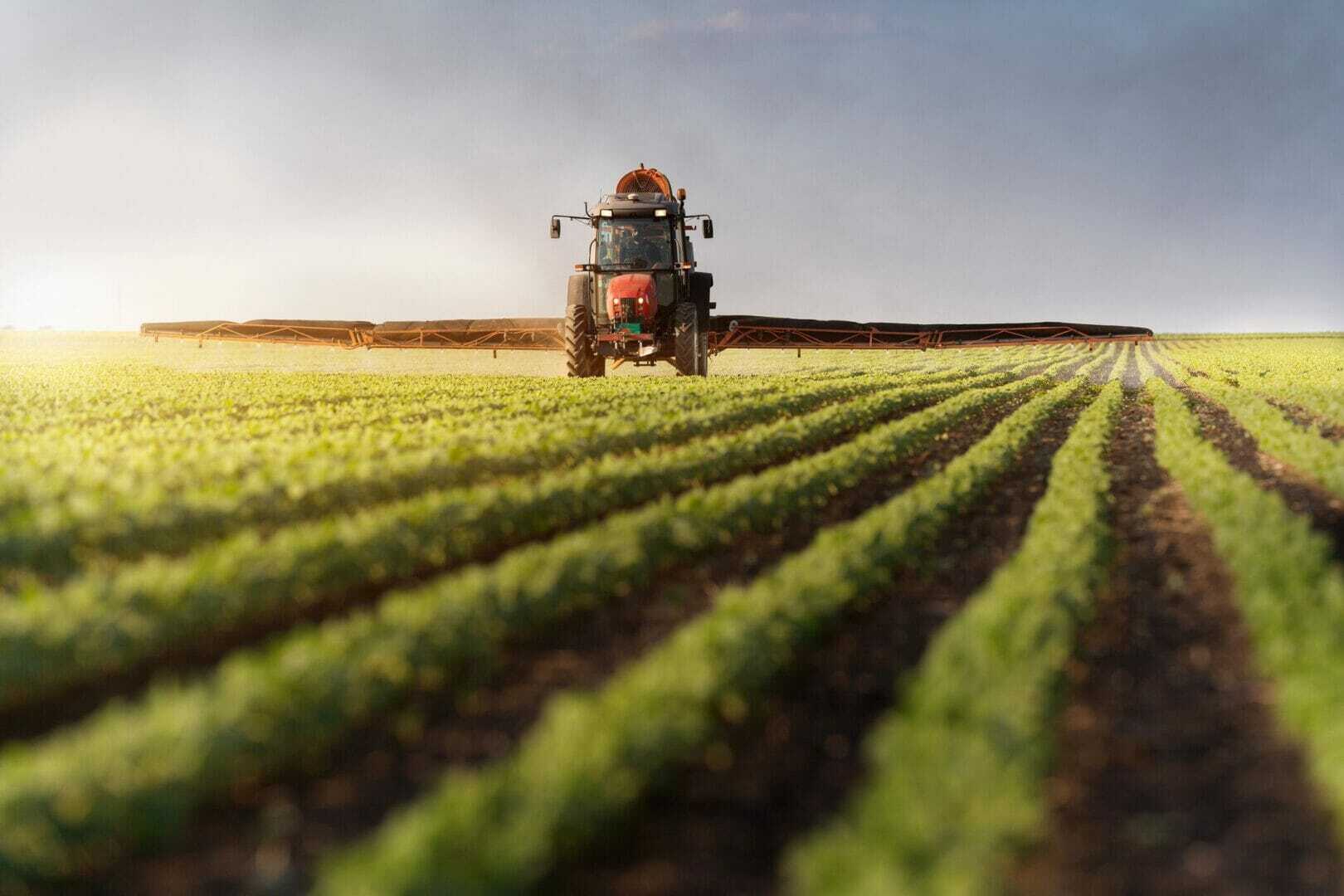
    SprayerBefore you spray Xtend soybeans this spring with a dicamba-based herbicide, remember that federal law requires that all applications be made by a properly trained certified applicator. Both custom or private applicators must attend annual training, so they’re up-to-date on all new rules and regulations. 

    Most of the live training sessions have been cancelled due to the coronavirus pandemic. However, there’s still  time to complete online training. Listed below are websites, by state, where you can get information about online training courses. I’ve also added some comments from state Departments of Ag about possible 2020 changes to the herbicide labels.

    Iowa, North Dakota, South Dakota, and Wisconsin: No known changes to the state label in any of these states. The individual state DOA’s direct applicators to the various company websites listed below for their annual training.

    Minnesota online: Applications needing dicamba training should visit https://mcpr-cca.org/dicamba-information-trainings/. Some farmers were hoping the MDA would loosen its restriction on how late dicamba applications may be made. The MDA is holding fast to June 20 or the R1 stage of the crop, whichever comes first. No changes have been made from 2019 requirements.

    Nebraska: The Nebraska DOA is directing applicators to this UNL Extension website for dicamba training https://pested.unl.edu/dicamba. No listed changes to the 2019 guidelines for application.

    Illinois: The IDOA has further restricted applications of dicamba herbicide over the top of Xtend soybeans to no later than June 20 or the R1 stage of the crop, whichever comes first. NOTE: This is a change from 2019 when the last date of application was June 30. For training, the IDOA directs applicators to this website, sponsored by the Illinois Fertilizer and Chemical Association: https://ifca.com/IllinoisDicambaTraining.

    There are four dicamba herbicide formulations approved for use over the top of Xtend soybeans. They are XtendiMax® with VaporGrip® Technology from Bayer CropScience, Engenia® from BASF, FeXapan® with VaporGrip® from Corteva and Tavium® with VaporGrip® from Syngenta. 

    All four companies provide online dicamba application training for applicators. NOTE: You’re only required to attend one online session, regardless of which herbicide you eventually apply. Here’s the list of the various company sponsored training websites:

    • BASF:  https://bit.ly/2xTlJV9

    • Bayer CropScience:  https://bit.ly/2RjHt3e

    • Corteva:  https://bit.ly/2UTSpH7

    • Syngenta:  https://bit.ly/2V7OuFv

    May God keep you and your family safe as we work together to provide the world with much-needed food and supplies during this difficult time. You are a blessing to all!
    Mark Grundmeier, Product Manager

    April 1, 2019
    Agronomics, Crop, Herbicide Technology, Season, Soybeans, Spring, Weed Control
  • Latham Hi‑Tech Seeds

    Managing Weeds with Various Herbicide Technologies

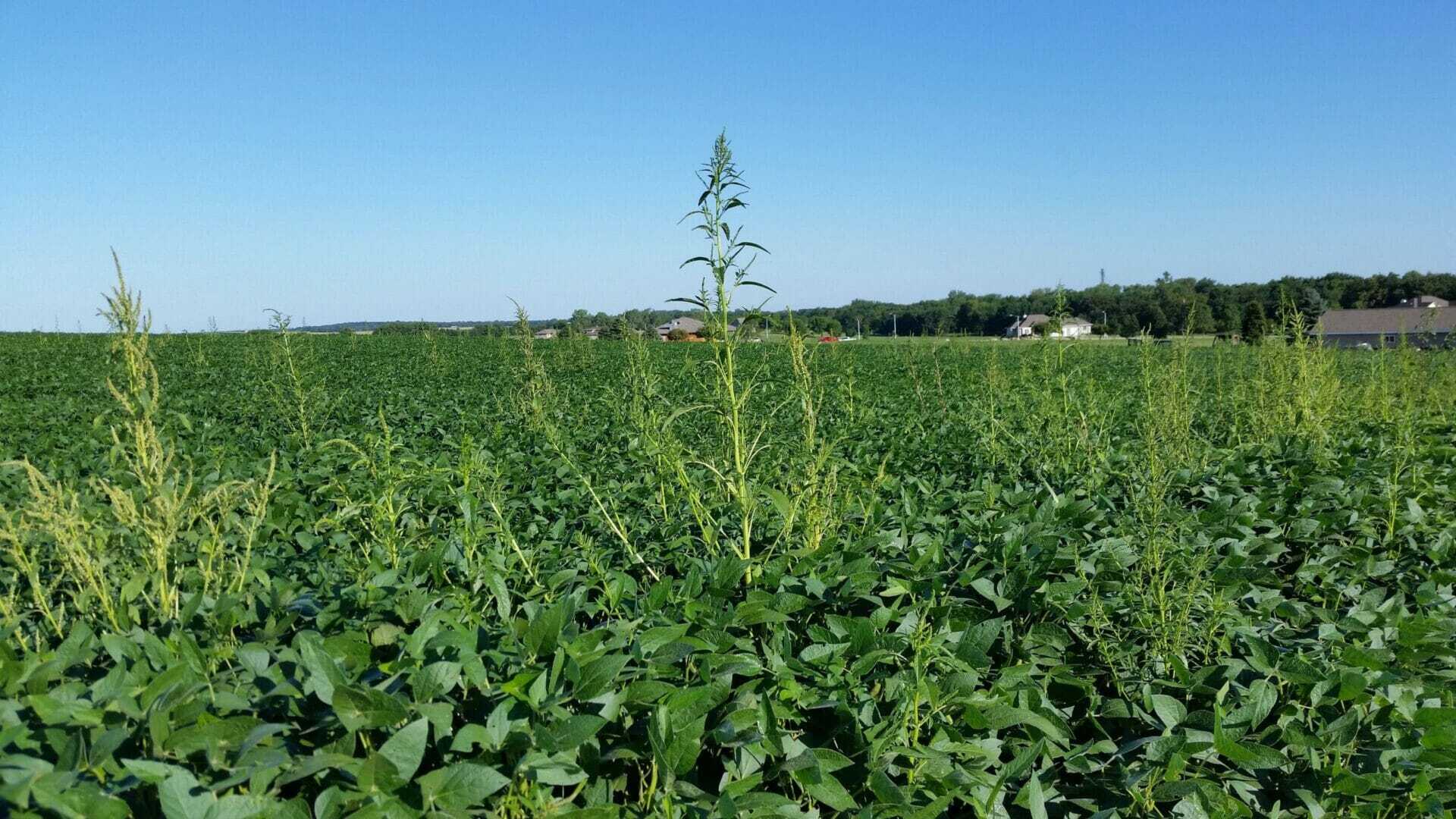
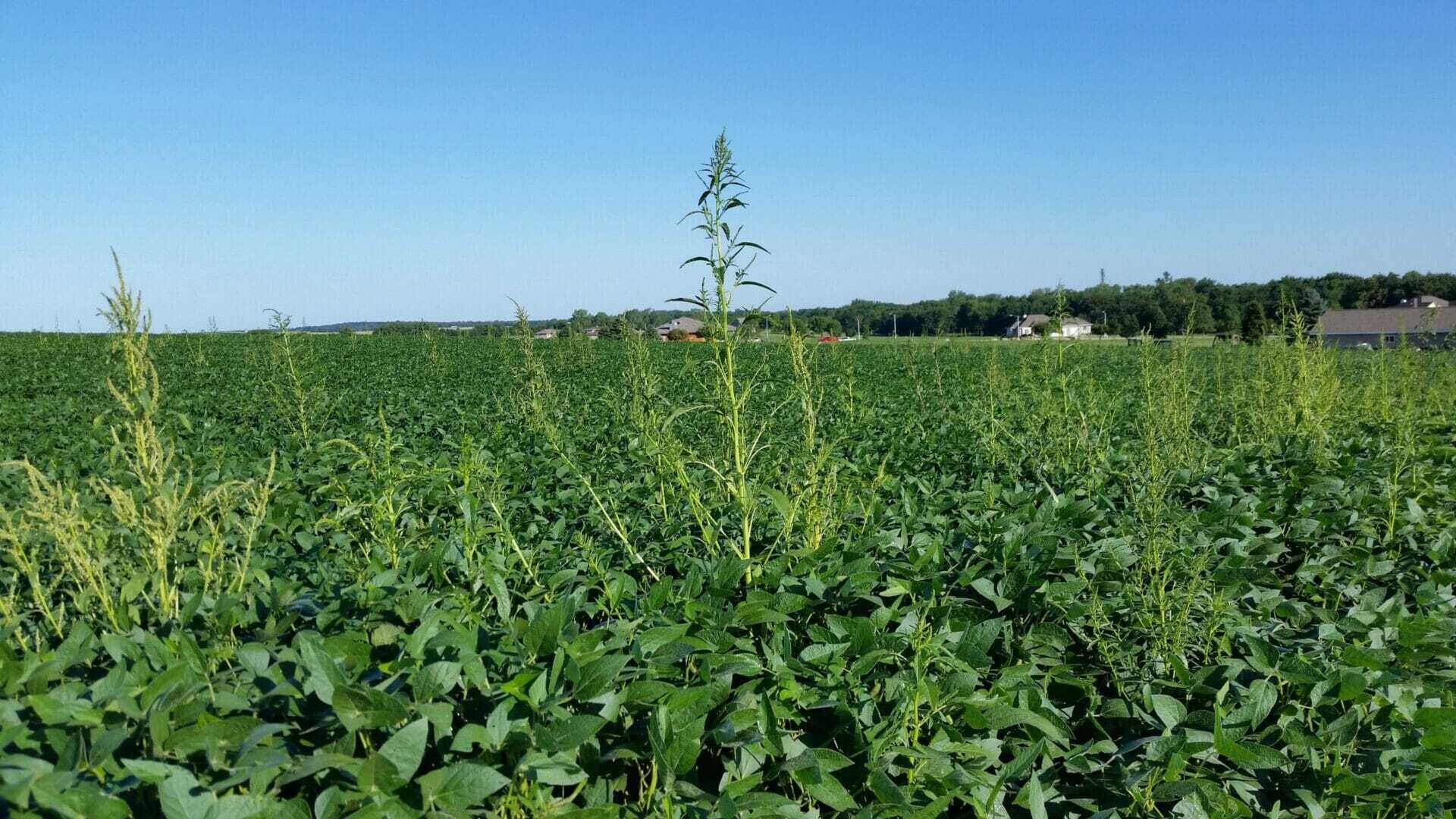
    Weeds
    By Darin Chapman, Precision Agronomy Advisor

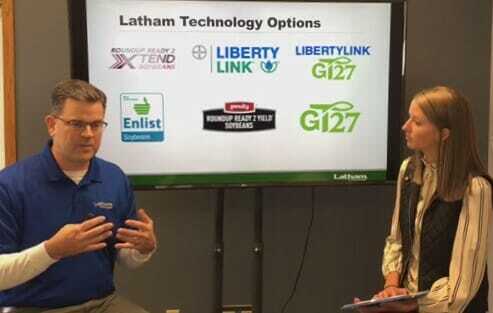
    WeedsOne of the main topics of conversation this season is weed management and herbicides with various technology options. As an independent company, Latham Hi‑Tech Seeds has broad options of trait packages, so it’s good to strategically select which trait option will work best for your operation. 

    Start by looking at the type of weed pressure you have and also consider any insect pressure that needs to be factored into the decision. Then weigh the Independent Options® and their herbicide technologies.

    Latham’s Data Forward platform provides an easy way to keep these options organized within your operation and prevent mistakes from happening during the busy seasons. Below are “organizational options” within Data Forward:

    Crop protection and fertilizer placement

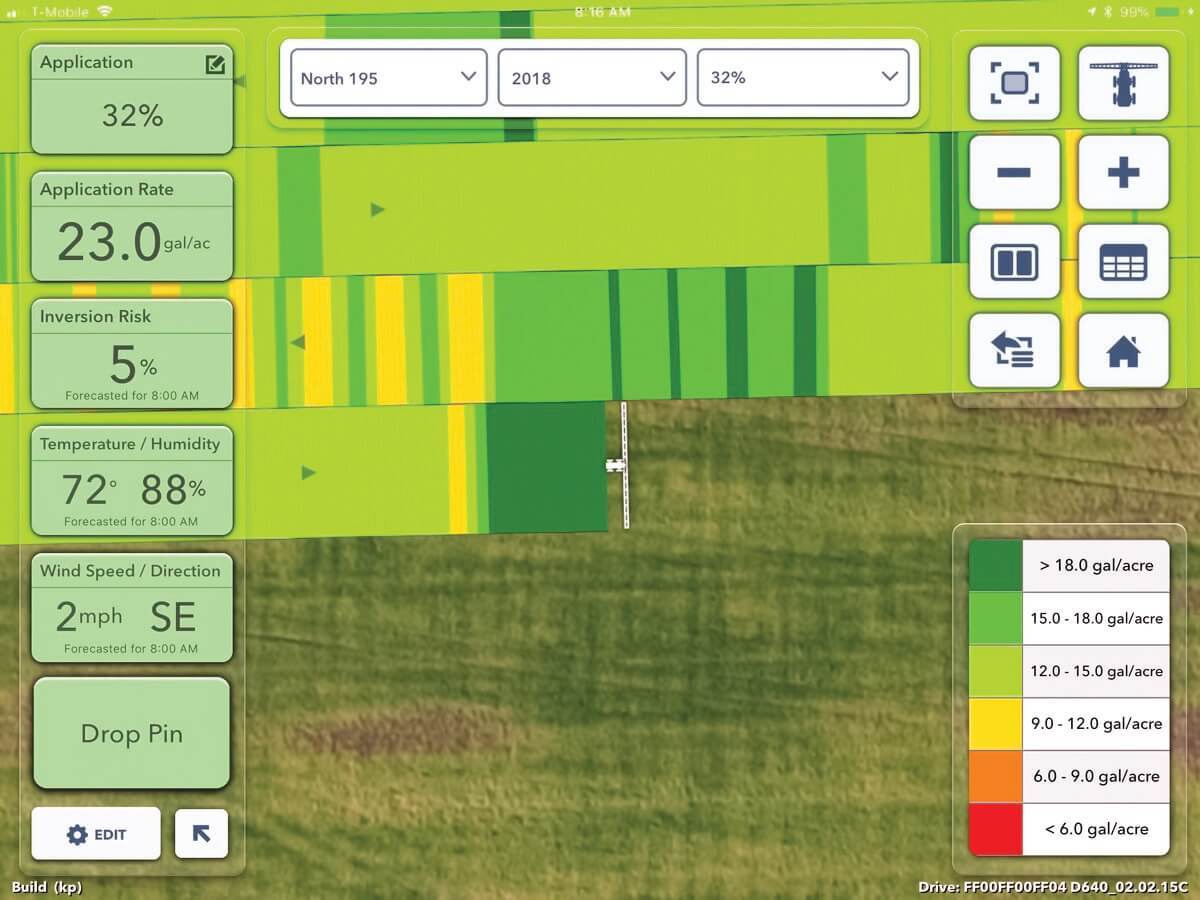
    Staying organized will help ensure there are no mistakes in the busy season. Simply enter your herbicide and fertility programs into your Data Forward app, using your iPhone or iPad. Data Forward helps you track your crop protection and fertilizer program, so your operations run efficiently all growing season long. You can run reports to show a photo of the field and boundaries, total acres, application timing, application method, product type, product name, rates, and total amount of product needed for that field. Your crop protection decisions also will play a large role in your seed decisions.

    Planting recommendation

    Another great tool within Data Forward is the Planting Recommendation tab, which keeps your seeding plan organized for the busy season. Planting recommendation is a great way to assure that your varieties/hybrids get placed on the correct acre at the proper population rates. We understand that sometimes things change in season and the plan doesn’t always come together.  If this happens, it is easy to edit to make these changes in the Data Forward app. You can apply notes to why you may have made these changes for record keeping, which is crucial to your return on investment (ROI).

    Now, more than ever, it is important to avoid any mistakes within our farming operations. Data Forward allows you to keep the 2020 crop plan at your fingertips! Literally, you can work your plan by using the Data Forward app on an iPhone or iPad or using our detailed Data Forward Report book that may be kept in your cab. Reach out to your Precision Agronomy Advisors to learn more!

    Webspec Admin

    April 1, 2019
    Agronomics, Herbicide Technology, Weed Control
  • Latham Hi‑Tech Seeds

    States Focus on Nutrient Reduction Strategies

    IMG 2343

    Reducing the excessive use of nutrients was the focus of presentations made recently during the annual Agribusiness Showcase and Conference in Des Moines.

    Most Upper Midwest farmers are very aware of problems in the “Hypoxia Zone” of the Gulf of Mexico. This area where the Mississippi River discharges into the Gulf is negatively affected by the abundance of nitrate nitrogen (N) and phosphorus (P) found in the river water. Excess nutrients can come from many sources including: sewage treatment plants; soil erosion; deposition of atmospheric nitrogen and fertilizers used on farms; lawns; and golf courses.

    The EPA in March 2011 issued a letter to encourage states bordering the Mississippi and Missouri Rivers to reduce contaminants, specifically N and P, found in lakes, rivers, streams and groundwater. Phosphorus is tightly bonded to soil particles, so erosion is the main reason it is found in water. Nitrogen, on the other hand, converts to nitrates and easily leaches down through the soil profile. This allows nitrates to infiltrate groundwater and eventually reach lakes, streams and rivers through tile systems or aquifers.
    Below are a few recommendations from experts who spoke at the agribusiness conference:

    • Eliminate “insurance” and “build” applications of nutrients. We tend to base our fertilizer needs on soil tests and what our yield goals are, then add an extra 10-20% to make up for losses due to weather, timing, etc. We need to stop this practice.
    • Bioreactors at the field’s edge can lower nitrate in runoff water before it can enter a stream or tile drainage ditch.
    • Saturated Buffers can help reduce both erosion and nitrate runoff for farms that have a river or stream flowing alongside or through the field.
    • Cover Crops can greatly reduce erosion and help with more efficient nitrogen use. Cover crops are one of the few practices that may help an entire field, rather than merely an edge-of-field strategy. Long-term benefits of cover crops include managing weeds, increasing organic matter and building overall soil health.
    • Precision Agriculture. Programs like Climate FieldView™ and Latham’s Data Forward™ bring economics and conservation together by using your own farm data. This leads to better variety selection and crop input decisions and often better use of soil and fertilizer resources.
    • These are just a few of the most popular strategies, but you could visit with your local NRCS staff member for more ideas. Most state strategies are voluntary, but Minnesota is considering making some of their strategies mandatory. Fall application of nitrogen fertilizer might be the first practice banned in Minnesota.
    • One farmer put it very simply, “Either join the effort now and have some freedom in what practices you use or wait until it is mandatory and then be told what to do.”

    Contact your Latham RSM or our Technical Agronomist Phil Long to talk about ways our cover crop portfolio or Seed-2-Soil® services can help you and our customers raise the most profitable and sustainable crops.


    IMG 2343

    Mark Grundmeier, Product Manager

    March 19, 2019
    Agriculture, Cover Crops, Crop, Industry News, Tech Tuesday
  • Latham Hi‑Tech Seeds

    Improve Soil Health with Cover Crops

    IMG 2337

    Taking soil samples and then implementing “3 Ps” is key to building soil health: (1) Sample; (2) Plan; (3) Plant and (4) Be Patient. The focus of my post is to provide tips for developing a plan that will leave your soil in better shape for future generations.

    1. Sample: It is hard to now where to go, when you don’t know where you are. That’s why baseline tests are so important.

    In addition to working for Latham Hi‑Tech Seeds, I also work part time in the emergency room and am a paramedic in rural Wisconsin. When a sick patient is admitted to the hospital, a blood sample test is run. Results from this CBC, or complete blood count, and other tests become the foundation on which we develop the best suited treatment plan. This is really a customized approach to treating a situation because everyone is different.

    The same is true with soils. Every single soil is unique, and the state of its biological soil health is based on several factors that only soil sampling can truly reveal. Once we have soil sampling results, we have a point from which we can develop the best suited plan.

    IMG 2337

    There are a lot of tests available, but I have found the most useful test is the Solvita soil test by Woods End Laboratories. This test gives an overview of the biological health of the soil. It also actually provides a recommendation of the best cover crop combination to the benefit and build the soil.

    If you’re not already doing so, I encourage you this season to develop the best suited plan to start building your soil structure. Start small, so you don’t get overwhelmed. Choose a soil you believe needs the most help. NOTE: Most conventionally-tilled soils could benefit. Use the absolute best soil sampling equipment you can find. Be very diligent in collecting the sample because the data you get back is only as good as the sample the lab receives from you.

    Take your time. Enjoy the experience as you embark on a journey of doing something good for humanity. – Corey Catt, Latham Forage Product Specialist

    1. Plan: Now that you have results from soil samples, develop a plan to accomplish your goals. Sometimes it’s easier to take a small acreage out of production, and plant a green manure mix. Here are some plants to consider:
    • Grasses, like Latham’s PROTECTioN Cereal Rye, scavenge for excess nitrogen. Grass roots help reduce run off.
    • Legumes, like Latham’s FixatioN Balansa Clover produce nitrogen and help reduce run off.
    • Brassicas, like Latham’s Driller Daikon Radish help penetrate hard pan and provide a little fertility benefit.

    If you plan to interseed cover crops into your existing corn or soybean field in mid-summer, be very mindful of what herbicide you are using because carryover can reduce your cover crop emergence and growth. In particular, the residual of Dicamba herbicide really restricts your cover crop options.

    1. Plant: Cover crops may be drilled, broadcast seeded, ariel seeded or even seeded using a Hi-Boy. Equipment is usually a limiting factor to what cover crops get planted. Some county soil conservation offices rent equipment. They also have funding available to pay for some cover crops.
    2. PATIENCE: Being patient is the hardest part of trying cover crops and rebuilding soil health. You must think long term rather than seek short-term gratification. When we go through the investment efforts, we would like instant results.

      Fact is, you are getting results albeit they are subtle. In many cases, however, the results are exponential when you commit to the plan for years. One Indiana grower found he has increased organic matter (OM) over time. This is huge as increasing OM also increases the water holding capacity in the root zone, which correlates to more yield potential, especially during dry conditions. This grower says he’s gaining about .1% OM every year that he no-tills and uses specific cover crops.

      Consider that in 10 years you could gain another 1% OM. Every 1% OM holds about 1 acre inch of rain, which is around 27,000 gallons. Every year you increase the water holding capacity, you improve your chances of higher yield.

    We’re all about helping you “grow your legacy” at Latham Hi‑Tech Seeds! Feel free to call me if you’re interested in setting up an on-farm trial for cover crops this growing season. We might even be able to partner with you to try some new products or different rates / seeding studies of existing products. Also note that the 2020 Latham® Seed Product Guide will be distributed in July 2019, so be sure to check out our production offering for Fall 2019 seeding.

    Webspec Admin

    March 4, 2019
    Agronomics, Cover Crops, Crop, Industry News, Soil, Tech Tuesday
  • Latham Hi‑Tech Seeds

    New Technology Update with John Latham

    52228875 293809424619703 2330762813192011776 n

    Join us with John Latham this morning as we talk about NEW Latham Seeds soybean technology available for the 2019 growing season!!

    https://www.facebook.com/LathamSeeds/videos/293804974620148?sfns=mo

    Laura Cunningham

    February 28, 2019
    #AskTheAgronomist, Crop, Herbicide Technology, Industry News, Seed Technology, Soybeans
  • Latham Hi‑Tech Seeds

    Eight Inches Can Become a Yield Barrier

    IMG 6869

    I want you to feel confident knowing you have done your very to best manage the things that are within your control. This involves understanding production-limiting factors and building a plan to reduce, if not eliminate, those factors.

    IMG 6869

    As I was thinking about barriers to yield, I recalled reading an article Shannon Latham wrote to recap a presentation she had heard by Captain Charlie Plumb. (You can read that post in its entirety here: https://bit.ly/2WbhYBV.) Captain Plumb, whom spent 2,103 days as a POW, began his presentation by saying, “Today I want to take you back to a Prisoner of War camp in Vietnam where you can feel the intense heat baking on the tin roof of your 8 by 8 cell. Even though I’m telling a story about myself, the real story is not about me. It’s about you. You won’t face the 8-foot walls that I did, but you will encounter the eight-inch ones. Those eight inches between your ears can become your biggest barrier. That’s why it’s important to remember that you can do anything you set your mind on.”

    Captain Plumb’s quote really resonated with me. How often do we let those eight inches between our ears become the biggest barrier? Each of us has a different comfort level when it comes to trying something new, from a new brand of denim jeans to a new seed trait or technology. Much of what we’re comfortable with has to do with how we were raised. Many of us watched Mom and Dad do the chores. We followed them around like a shadow until we were finally old enough to accept some responsibility, and then we tried to perform the same chores just as we had seen them do it. This time-honored tradition of learning by immersion is unparalleled and builds such a solid foundation.

    Farming practices have evolved through the generations, but the one thing that remains constant is our connection between the soil and our future. Generations before us tilled the earth that we currently farm. As you develop a plan for 2019, you will be developing a plan to use the earth in a way that will affect generations to come. In 2019, try an on-farm experiment: Try a new seed treatment or a product from our new line of Talc options. Try a couple different seeding rates in the same field. Try planting one field to Latham’s low-lignin alfalfa. Just try something you’ve never done before that has the potential to be a game changer, and limit your risk by starting small. I know change can be a little frightening. Fear of the unknown can be overwhelming, but conquering our fears can lead to even greater confidence.

    Continuous pursuit of finding the best practices for your farm will bring a new sense of confidence. I believe the anatomy of yield starts with those eight inches between your ears. Get the most you can possibly get from each acre by planting the best genetics and trying new practices while remaining in harmony with your soil.

    Webspec Admin

    February 26, 2019
    Industry News, Tech Tuesday
  • Latham Hi‑Tech Seeds

    You Can “Map Anything”!

    The investment in precision technology is typically the biggest barrier for farmers interested in using data to elevate their operations to the next level. That’s why I’m excited about the Climate FieldView “Map Anything” feature that eliminates some of the extremely large equipment investments, such as a new planter, that had been necessary.

    Let me explain… Many farmers split-plant their fields. They may wish to compare two hybrids or soybean varieties side by side, study two different seed treatments or compare in-furrow products. To make such comparisons, farmers need a planting map that provides a layer of information to connect a product to a particular spot in the field. A planting map gets electronically placed over that field’s yield data at the end of the season to compare how each seed product performed. The same goes for different fertilizer treatments if a farmer is trying to figure out the best nitrogen rate without sacrificing corn yield. Any research on your farm must be mapped in the spring to help you evaluate it with yield data in the fall.

    Last year Climate introduced the “Map Anything” feature that allows you to hook the FieldView Drive on an iPad to any compatible monitor and receiver combination to map the operation. For example, if you have a John Deere 2600 display and Starfire 3000 globe on top of your tractor (or a CNH Pro 700 and 262 globe), you could map your planting operation even if its an older planter with no electronics on it. You can set a static planting rate and map your planting operation on the go. This allows you to set up different hybrids and varieties in each field; they will be mapped so you can see your yield analysis based on what you planted. The best part is this same feature can be used with a fertilizer applicator or sprayer that doesn’t have the ability to map. Once again, you can track each test and then evaluate results at the end of the season.

    Keeping track of your data and getting it all organized in one spot is the key for making even better farming decisions. If you already have a GPS and monitor in the cab for steering, then I highly recommend you look into this Climate feature. “Map Anything” can help you analyze your management practices to become even more efficient this season.

    Click here for a Map Anything Setup Guide.

    Phil Long

    February 18, 2019
    Industry News, Tech Tuesday
  • Latham Hi‑Tech Seeds

    Consumer survey shows continued confidence in Iowa agriculture

    IFFP19 ConsumerPulse5

    Guest blog by Kelly Visser, Iowa Soybean Association consumer engagement manager

    Each year, you likely find yourself in a cold, brightly lit doctor’s office for a routine checkup. While it may not be your favorite event on the calendar, it’s important to regularly measure vitals, ask questions and keep a close pulse on any changes in your health.

    IFFP19 ConsumerPulse5

    Similarly, the Iowa Food & Family Project (Iowa FFP) conducts an annual Consumer Pulse Survey among food purchasers in the state. Now in its seventh year, the survey gauges food purchasing habits, measuring label influence and attitudes toward farming.

    Year-over-year survey findings drive the Iowa Soybean Association’s (ISA) consumer engagement strategy, including Iowa FFP’s programming and content development.

    When it comes to food labels, this year’s survey found eight in 10 food purchasers find food labels misleading. This, along with 55 percent reporting attributes like “organic” or “all natural” have little to no influence on their purchasing decisions, showing Iowa consumers may be growing numb to the product packaging in their cart.

    “It appears that shoppers are becoming increasingly indifferent to the flashy label claims food marketers are using, especially those that are rooted in misinformation,” says Aaron Putze, ISA director of communications and external relations. “Twenty-two percent said they don’t seek out information on food labels at all.”

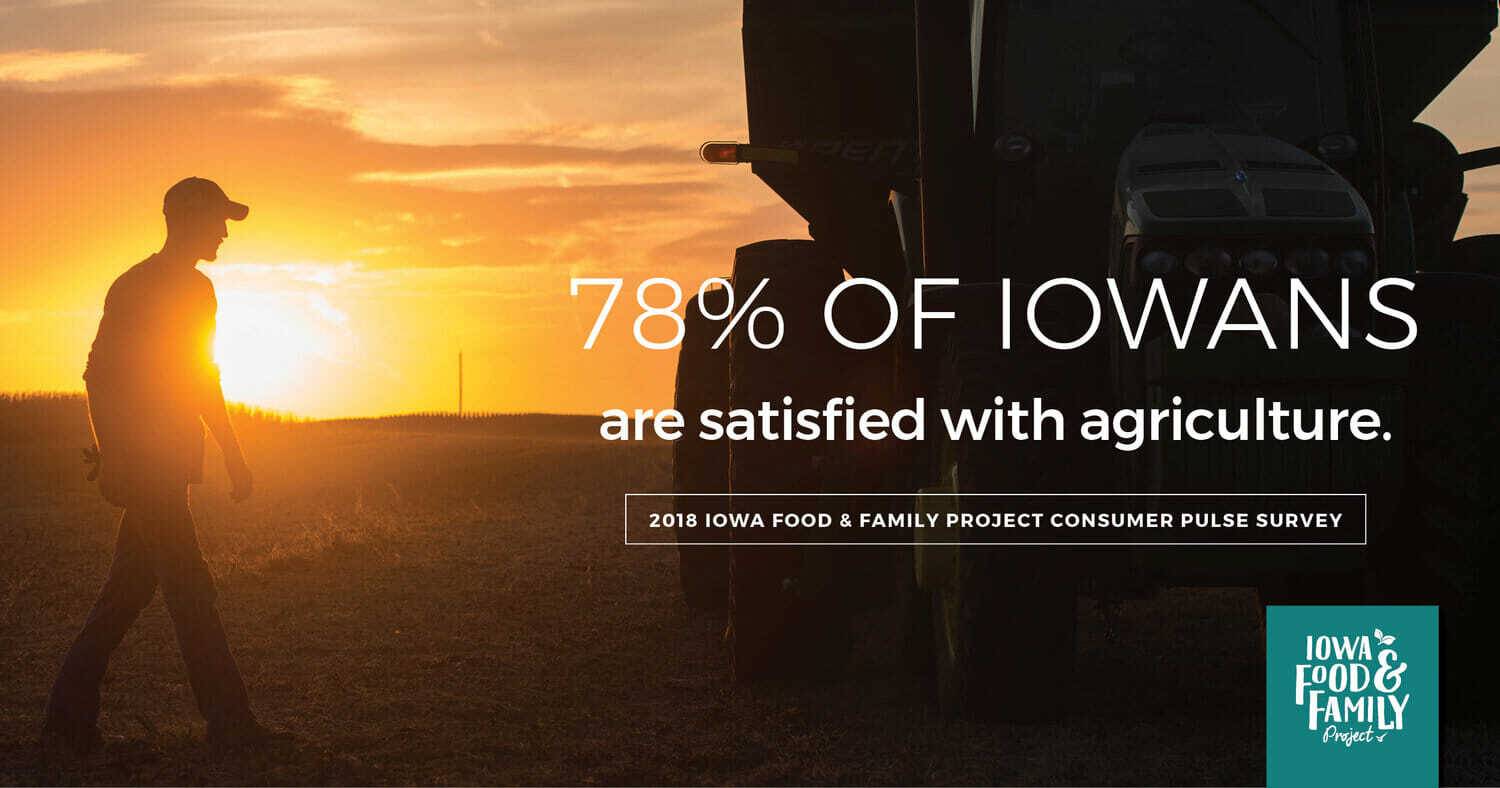
    When it comes to attitudes toward farming, the survey found that more than half of Iowans frequently think about how their food was grown and raised, 65 percent reporting being knowledgeable about agriculture and 83 percent report being satisfied with Iowa agriculture.

    For Randy Miller, a soybean, corn and pig farmer from Lacona who works closely with Iowa FFP, the findings are encouraging. “So often we only hear the loudest, most negative voices,” Miller says. “The reality is — when we share information about what farmers are doing and how they are doing it — perceptions are positive.”

    Miller sees Iowa FFP as a valuable initiative that farmers can leverage to connect with consumers.

    “As farmers, it’s on us to get out and share our stories. It makes a difference in consumer attitudes. We need to tap into the Iowa FFP network to continue building two-way conversations between farmers and consumers,” he says.

    Iowa FFP subscribers were significantly more likely than non-subscribers to be “very satisfied” with Iowa agriculture, 47 v. 36 percent, respectively. The ag awareness initiative reaches nearly 120,000 followers each month through its newsletter, website and social media channels. This is roughly equivalent to the combined populations of Altoona, Cedar Falls and Dubuque.

    The November 2018 survey had 676 responses – the most in the survey’s history – 295 were engaged with Iowa FFP as monthly newsletter subscribers. Respondents’ age groups, income levels, education levels, and geographic regions closely follow the state’s population, resulting in a low margin of error of 3.79 percent.

    Blue Compass, a digital marketing agency in West Des Moines, conducted the survey analysis from data collected through Research Now’s business-to-consumer panel.

    For additional survey highlights, visit iowafoodandfamily.com/news/food-label-fatigue.

    About the Iowa Food & Family Project

    The Iowa Food & Family Project is powered by nearly 35 partners, including Latham Hi‑Tech Seeds, with a goal to help Iowans become more confident about how and where their food is grown. For more information, visit iowafoodandfamily.com.


    Laura Cunningham

    February 15, 2019
    Food & Family, Industry News
  • Latham Hi‑Tech Seeds

    ‘Tis the Season for Product Introductions

    Alfalfa3

    As product manager for Latham Hi‑Tech Seeds, I get the pleasure of working with our various product lines from cover crops and forages to soybeans and corn hybrids. There have been so many exciting announcements recently, such as China’s approval of Enlist E3™ soybeans for import. We will have Latham brand soybeans with the Enlist E3 technology for sale as soon as Corteva receives final approval from the Philippines. In the meantime, we’re excited to announce the addition of LH 9670 IQ with Hi-Gest® Alfalfa Technology to Latham’s current alfalfa offering.

    Latham 9670 IQ helps improve quality while maintaining yield and providing resistance to multiple diseases. Improving fiber digestibility helps improve feed intake, which leads to better production. In fact, studies show cows eating LH 9670 IQ are producing up to 2.5 more pounds of milk daily. See the full tech sheet on our website at www.LathamSeeds.com.

    The news gets even better for those who are looking for flexibility in the field as LH 9670 IQ is widely adapted across a broad range of geographies and soil types. LH 9670 IQ does not require special stewardship management considerations as it was produced through conventional plant breeding.

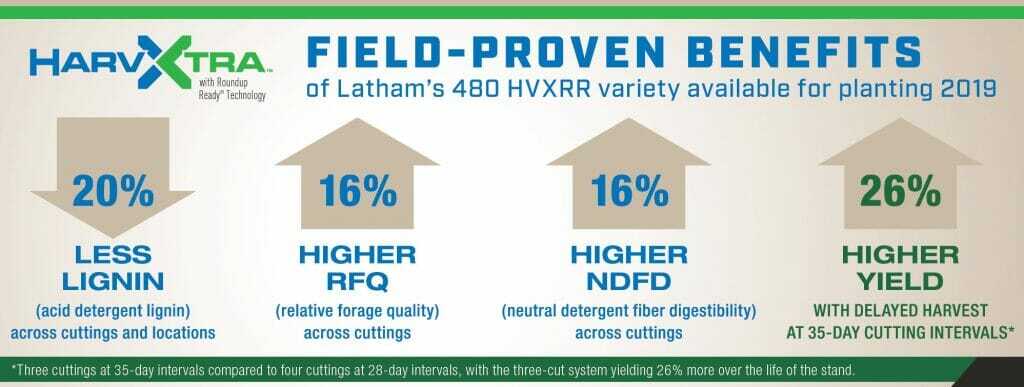
    If you have an interest in high-quality alfalfa with Roundup technology, we also have a special rebate on our previously launched 480 HVXRR (HarvXtra) product. Field-proven benefits of this technology are shown in detail in the graphic below.

    There are so many reasons for dairy and beef producers to plant LH 9670 IQ and 480 HVXRR this spring! Contact your Latham representative to learn more. Be sure to ask about our special programs and pricing, which are in effect until March 15!

    2.6.19 Tech Tuesday

    Mark Grundmeier, Product Manager

    February 5, 2019
    Alfalfa, Crop, Industry News, Seed Technology, Tech Tuesday
  • Latham Hi‑Tech Seeds

    Latham Hi‑Tech Seeds Announces Ryan Schon As General Manager

    Ryan J SchonLatham Hi‑Tech Seeds announces Ryan Schon of Ankeny, Iowa, as its general manager.

    “We’ve had the pleasure of working with Ryan in different capacities for the past 20 years, and we’re pleased that he is has joined our management team,” says John Latham, president of third-generation, family-owned Latham Hi‑Tech Seeds in Alexander, Iowa. “Latham Seeds has experienced 15 consecutive years of growth, and we believe Ryan will help us grow in areas that will allow us to provide even greater support and services to our dealer network and farmer-customers.”

    Latham says Schon’s background in agronomy, marketing, and precision agriculture, combined with his education and experience, will help his company gain greater efficiencies.

    “Ryan’s fresh perspective will allow us to consider new business approaches and opportunities. He also understands the intricacies of working with other family-owned seed companies, plus he has experience working with his own family’s business,” says Latham.

    Schon grew up in Glidden, Iowa, where his family owned a lumber and construction business. His grandparents also farmed in Carroll County.

    “I learned so much growing up in a family business: working hard, making work fun and doing whatever it takes to get the job done,” says Ryan, who earned a Bachelor of Science degree in Agronomy from Iowa State University and holds a Master of Business Administration from Lindenwood University.

    Schon most recently served as senior corporate development manager for Granular and led the post-acquisition integration of Granular with Encirca. He provided a voice for farmers as new Encirca Services were developed with Pioneer Agronomy Science, data scientists, software development, field teams, and external collaborators.

    Prior to working for DuPont Pioneer, Schon was a business development manager and traits marketing lead with Monsanto. He and his family also lived abroad for one and a half years.

    “The most amazing thing I observed is that all those farmers had the same farmer spirit,” says Schon, who has visited farmers on six continents and in about 25 countries. “In many cases, I didn’t know their language and we talked through a local translator. But there’s a universal farmer spirit that comes from putting all your faith in a seed that you’ve put in the ground and knowing that your livelihood depends on what it produces.”

    Schon says he enjoys having the opportunity to return to his Iowa roots and enjoys being part of the U.S. seed industry.

    “The seed industry is so collegial. Practically every seed company started as a family farm,” says Schon. “In a previous job, I organized a customer meeting for leaders from all the independent seed companies. I quickly learned that the best thing we could do is make time at the beginning of the meeting for everyone to spend time together catching up. I don’t think there are many industries where that would be true, and I really enjoy the comradery. I look forward to maintaining and strengthening the contacts I’ve made within the industry. I especially welcome the opportunity to work with the Latham team to lead the the company into this next generation of growth.”

    Latham Hi‑Tech Seeds is a family-owned company marketing hybrid seed corn, soybeans and alfalfa under the Latham® brand name. Since 1947, the Latham name has stood for the latest genetics and highest quality seed. Today it’s owned by third-generation seedsman John Latham and his wife, Shannon, and John’s brother, Chris. They’re committed to bringing world-class technology home® to rural communities in Iowa, Minnesota, the Dakotas, Nebraska and Wisconsin. For more information about Latham or its products, visit www.lathamseeds.com or call 1-877-GO-LATHAM (1.877.465.2842)

    Shannon Latham

    February 4, 2019
    Agriculture, Industry News
Previous Page
1 … 7 8 9 10 11 … 95
Next Page

Latham Hi‑Tech Seeds

131 180th Street | Alexander, IA 50420

(641) 692-3258

SIGNUP FOR OUR NEWSLETTER
  • Contact
  • Legal
  • Dealer Center
  • Seedware Login
  • Latham Gear

© 2025 Latham Hi‑Tech Seeds. All rights reserved. | Iowa Web Design by Webspec | Privacy Policy

Latham® Hi-Tech Seeds is a trademark of M.S. Technologies, L.L.C., 103 Avenue D, West Point, IA 52656.