Skip to content
Latham Hi-Tech Seeds

(641) 692-3258

  • Home
  • Performance
  • Products
    • Corn
    • Soybeans
    • Alfalfa
    • Corn Silage
    • Seed Guide
  • Find a Rep
  • Media
    • Blog
    • News
    • Videos
    • Podcasts
    • TECHTalk
  • About Us
    • Company History
    • Our Mission
    • Careers
    • Become a Rep
    • Sowing Seeds of Hope
  • Contact Us
  • Latham Hi‑Tech Seeds

    We Must Cherish Our Background and Heritage

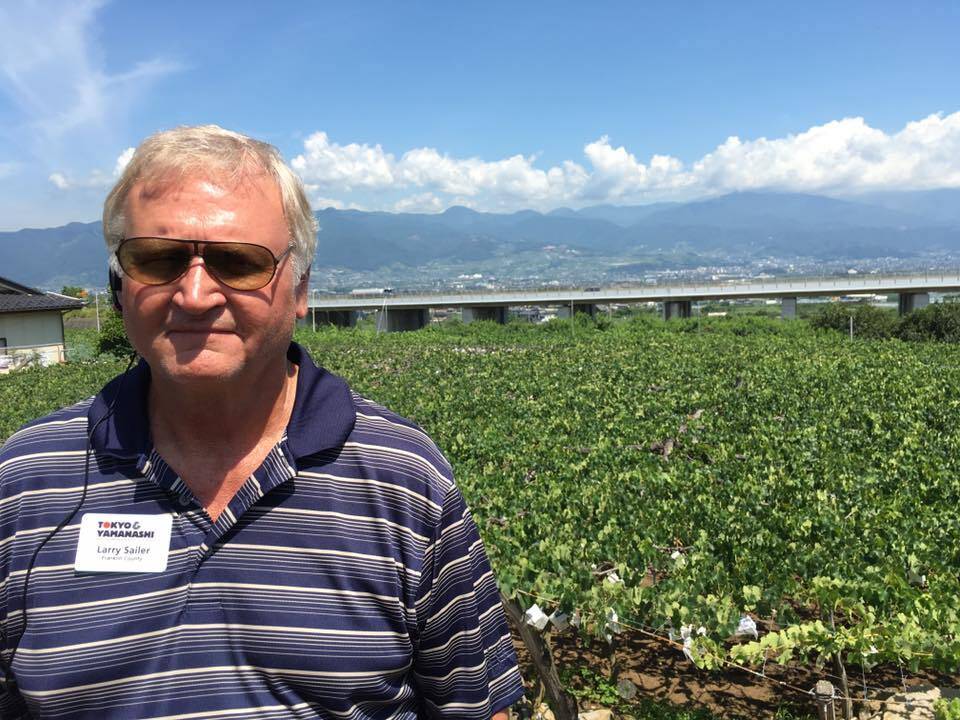
    7 19 16 Larry in Japan

    The week my wife and I spent in Japan was a once-in-a-lifetime opportunity. I came away with many thoughts. And even though I wrote a blog post about the similarities between our two cultures, I couldn’t help but walk away from this experience realizing how everyone in the world is different. Every single one of us has a purpose in life that is unique!

    7-19-16 Japanese baconTake, for example, the four pig farmers we talked with last week in Japan. They are against trade agreements because they’re trying to protect their livelihoods. I understand what. What they don’t seem to understand is that there is unmet demand. The Japanese don’t have enough space to raise the amount of meat demanded by the country’s population.

    When asked if they could sell more U.S. Pork in their meat markets, the Japanese pork producers told us our product is too fat! I know that statement is false because I have raised pork for that market. Importers are very picky about what they want shipped to them. We had to raise pigs with certain genetics. Pigs for export to Japan were fed a specific ration, and they had to be a certain weight for harvest. There’s no doubt about it… The pigs I sold to their market were very lean!

    American pork producers have a tremendous market opportunity for our products if we can get our governments out of the way! That made me think about all the ways government is influencing and controlling our “standard of living.”

    7-19-16 Japanese school childrenU.S. schools are very much controlled by the federal government. Our own tax dollars are being used to support standardized lessons and standardized tests. All kids are being compared to the “standard,” but I have to question whether we’re benchmarking the right stats or whether our standards are high enough! Take one trip through a fast food drive-through and you’ll realize that counting back change has become a lost skill.

    Another recent example of how “standardization” is being questioned is Britain’s exit from European Union. The European Union (EU) is an economic and political partnership of 28 countries. They wanted trade and travel to flow freely throughout all their countries, so they standardized their systems. In doing so, each country lost its uniqueness!

    Different regions of America also have their own unique flavor due to the influence of early settlers, as well as the natural resources and agricultural crops that are found in those area. Agriculture varies state by state, from county to county, and even from farm to farm. There is definitely “Midwest Fare,” yet traditional foods vary throughout Nebraska, North Dakota and other Upper Midwest states.

    We can celebrate each region’s uniqueness yet still meld in the Melting Pot. One thing I noted in Japan is the strong sense of culture. Just like they do in different areas of Japan, we should cherish our heritage and culture! I believe some of the strife we’re seeing during this political campaign season has to do with people not cherishing their own background and heritage.

    As politics heats up through November, keep in mind what direction you think our country should go. “We the People” have no power unless we talk to elected officials and let them know what we want! Our federal government was designed with checks and balances, so that no one branch of our government could become too powerful. It’s time we restore that balance!

    The federal government was given very narrow powers that must be followed and enforced. You do that with your vote and your voice. Exercise your right to be heard and to vote because our livelihood depends on it.


    Larry Sailer, Musings of a Pig Farmer

    July 19, 2016
    Agriculture, General, Industry News
  • Latham Hi‑Tech Seeds

    Training Service Dogs Is Personal for Volunteers

    Bailey 1 e1468847983194

    Latham’s 2016 Freedom of Independence Ride Will Raise Funds for Service Dog Training

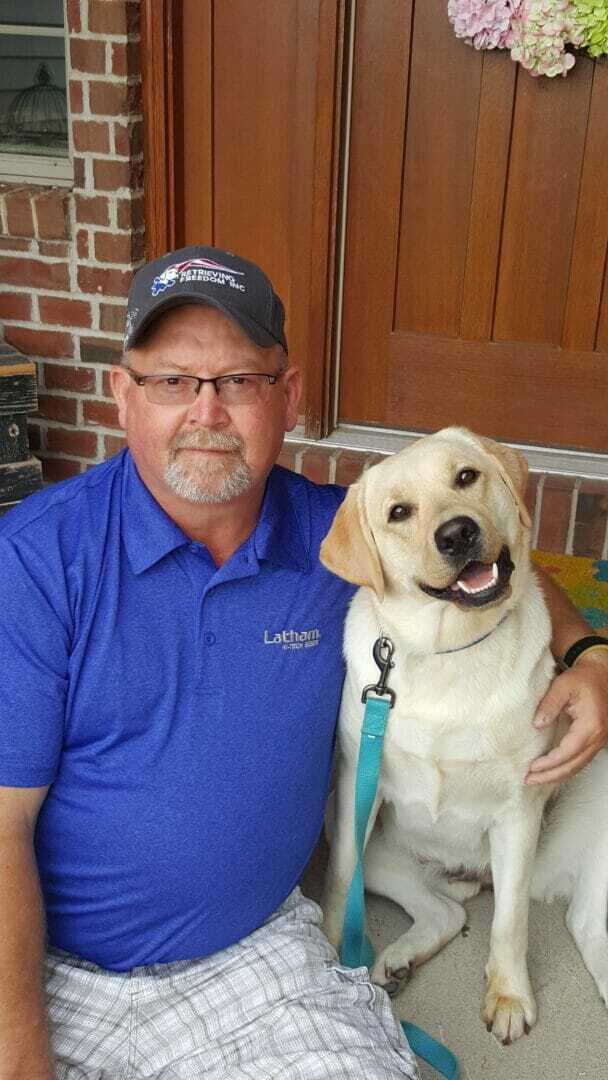
    “Bailey is a member of our family,” says Jerry. “Knowing that her offspring will help others is the greatest feeling in the world.”
    “Bailey is a member of our family,” says Jerry. “Knowing that her offspring will help others is the greatest feeling in the world.”

    From the time he was a 4-H member in Muscatine County, Iowa, Jerry Broders has felt compelled to help make his community a better place by getting involved in charitable organizations. The more Jerry learned about Retrieving Freedom Inc., the more he knew he had to get involved with RFI.

    Retrieving Freedom spends two years — and approximately $20,000 — training specific dogs to place with disabled veterans and individuals with autism. The organization receives four requests for every dog that has been trained through its program.

    “As Americans, we have a duty to help repay and support those who have given so much to our country,” says Jerry. “My wife, Kim, and I decided we wanted to help support RFI’s efforts to provide more dogs for people who need their services.”

    Jerry and Kim Broders of DeWitt, Iowa, decided to purchase a breeding female for Retrieving Freedom Inc.’s program because it takes quality dogs to become trained service dogs. These dogs must have the correct temperament, intelligence, confirmation and skills.

    The Broders oldest son, Zachary, served in the Army Infantry. Jerry’s niece has a son with autism. Getting involved with RFI is personal to the Broders, but even if you don’t have a direct connection with someone who suffers from PTSD or autism, you can’t help but be touched by the people who are being helped through RFI’s services.

    “Some of my son’s fellow soldiers did not come back from Afghanistan, and many of the ones who did come home some have really struggled to return to civilian life,” says Jerry. “There is no greater group in the world than the men and women, who serve and protect our country. Each one has a story to tell and know they serve to protect something that is bigger than just one person or a small group of people. They deserve our support and respect.”

    “I’ve seen first-hand the challenges that come with raising an autistic child,” adds Jerry. “I’ve seen the great work that service dogs can do helping these kids and their parents get through each day.  There is a transformation that takes place with the child when paired a service dog that is nothing less than amazing!”

    RFI’s service dogs are tailored to meet the precise needs of the person with whom they will be placed, and like any charitable organization, RFI has limited amount of resources available.

    “There are so many groups out there looking for funding, so the challenge is finding a group that’s actually living up to its mission statement and not misusing the donations. After I talked with Scott Dewey and saw first-hand how RFI helps our veterans and individuals with autism, I knew my wife and I had to get involved with this project.

    You Can Help, Too!

    You can get involved on a smaller scale by helping raise funds for RFI by participating in the Latham Freedom of Independence Run.

    Latham Hi‑Tech Seeds of Alexander, Iowa, will donate the first $5,000 to RFI at its Freedom of Independence Ride around eastern Iowa on Aug. 19, which is being held on a R.E.D. Shirt Friday to “remember everyone deployed.”

    One hundred percent of a rider’s registration fees for Latham’s Freedom of Independence Ride will benefit RFI. The $25 per rider registration fee includes two meals plus a commemorative t-shirt and a do-rag. You’ll have a chance to see RFI dogs in training and watch them demonstrate skills. In addition, Nashville-recording artist Neil Hewitt will perform following the ride.

    Anyone interested in touring farms and learning about topics like weed management and cover crops is welcome to attend! We’ll be making a couple of fun stops along the way including one at Antique Archeology. Register for the Latham Freedom of Independence Ride today at lathamseeds.com!

    Freedom-Ride-2016-logo-01-328x220


    Team Latham

    July 18, 2016
    Agriculture, General, Industry News
  • Latham Hi‑Tech Seeds

    Crowded But Clean is Sailer’s Impression of Tokyo

    Musings 4 Larry Bonsai Garden

    This is the trip of a life time!

    Peaches are one of the leading ag crops in the Yamanashi Prefecture of Japan. It takes about 5 to 7 years for a new tree to start producing peaches, and the lifespan of a peach tree is about 20 years. During a recent trip, Iowa Farm Bureau presidents learned fresh fruit as often given as gifts. Pictured here is Darcy Maulsby of Yetter, Iowa. She said one fresh peach costs approximately $8!
    Peaches are one of the leading ag crops in the Yamanashi Prefecture of Japan. It takes about 5 to 7 years for a new tree to start producing peaches, and the lifespan of a peach tree is about 20 years. During a recent trip, Iowa Farm Bureau presidents learned fresh fruit as often given as gifts. Pictured here is Darcy Maulsby of Yetter, Iowa. She said one fresh peach costs approximately $8!

    My wife, Janice, and I boarded a plane July 7 for Japan as part of an Iowa Farm Bureau trip. As I write this blog post, I’m sitting in a hotel room in the Tokyo where 13 million people live within the city limits and another 4 million commute here every day for work.

    This city is a marvelous network of roads, railways and forms of transportation. There are places where the roads are stacked six deep above ground plus there is underground transportation outside my view. No wonder the young female producer, who visited my farm in 2012 with a Japanese film crew, stood in awe of the countryside and said this is what she had dreamed of. I imagine she had never before see so many miles of farmland nor such sparsely populated communities.

    Musings 2
    Larry and Janice Sailer, enjoying dinner with a view at the Tokyo Skytree restaurant.

    Fast forward about four years and now I am the one in awe. I had no idea until now that there isn’t green grass – or any open space – in Tokyo. A lawn mower would be out of place in this city where buildings stretch to the horizon. From ground level, a person notices concrete everywhere: buildings, roadways and sidewalks. It took a visit to the observation deck of the Tokyo Skytree to see patches of green thanks to our bird’s eye view of the tree tops.

    Another observation that amazed us is the cleanliness of the city. There are millions of people in this city – and no visible trash cans – yet there is no garbage to be found. Janice saw one bottle tucked into a shrub, but that was the only piece of garbage we saw during an entire day touring the city!

    Musings 4 Larry Bonsai Garden
    Bonsai Garden museum

    Not only is Tokyo clean, but it’s safe. As we left our bus to tour, we were told you could leave all your valuables onboard. What a difference this was from Ukraine where you couldn’t set a bag down at all without worrying about it getting taken!

    Cleanliness and honesty are valued in Japanese culture. Upon entering a temple, we were shown the fountain of water for cleansing. The Japanese also take great pride in honoring customs. We visited a Bonsai Garden museum where we learned about green tea. We also tried writing in their language and dressed up as a traditional warrior. What fun!

    Musings
    Trying my best at learning to write in Japanese and enjoying the chance to interact with locals!

    I learned more about the Japanese culture while seated for an evening meal next to Evan Mangino, with the USDA’s Foreign Agriculture Service; Yusaku Nakajima, senior staff of the International Affairs division for Yamanashi Prefectural Government; and Kim Heidemann, executive director of Iowa Sister States. The conversation was amazing!

    Our next leg of this journey is a visit to Iowa’s Sister State of Yamanashi. Hopefully, we’ll find some pigs along the way! (Remember, Iowa’s friendship with Japan was strengthened by the 1960 hog lift. Click here to learn more.)

    I’m looking forward to more days of filled with fun learning experiences. And, of course, I plan to blog about them next week! In the meantime, you might enjoy reading the following blogs written by others who are with me on this trip.

    Related Posts:

    • Finding Familiar Treats Far from Home
    • Farmers, the Accidental Diplomats
    • Iowa’s Friendship with Japan Stands the Test of Time

    Larry Sailer, Musings of a Pig Farmer

    July 12, 2016
    Agriculture, General, Industry News
  • Latham Hi‑Tech Seeds

    Franklin’s Farm Hands

    FFA logo BW
    20130720_160636
    Franklin’s Farm Hands is a youth agriculture education initiative at the Franklin County Fair, organized by the Tall Corn FFA chapter.

    By Amber Hammes, Latham Hi‑Tech Seeds Marketing Intern

    All across Iowa, county fair season has officially begun. County fairs are more than just sewing projects and 4-H kids showing their livestock, though. They’re events for everyone in the community to come together and enjoy.

    Here in Franklin County, our fair is going on this week from July 13-17. The Tall Corn FFA chapter is doing its part to engage with the community by hosting the annual event, Franklin’s Farm Hands. Borne out of an idea stemming from the Iowa State Fair’s popular kid’s attraction, Little Hands on the Farm, Franklin’s Farm Hands aims to educate kids about where their food comes from. (more…)

    bonnie-harris

    July 11, 2016
    Agriculture, General, Industry News
  • Latham Hi‑Tech Seeds

    Sister States Showcase How Agriculture Build Bridges

    Stuck bus

    America needs farmers. Our infrastructure is key to global commerce. The world needs farmers, who use cutting edge technology to raise a diverse food supply. Why? Because agriculture can help solve the world’s problems in relation to hunger, health issues, and improving the quality of life.

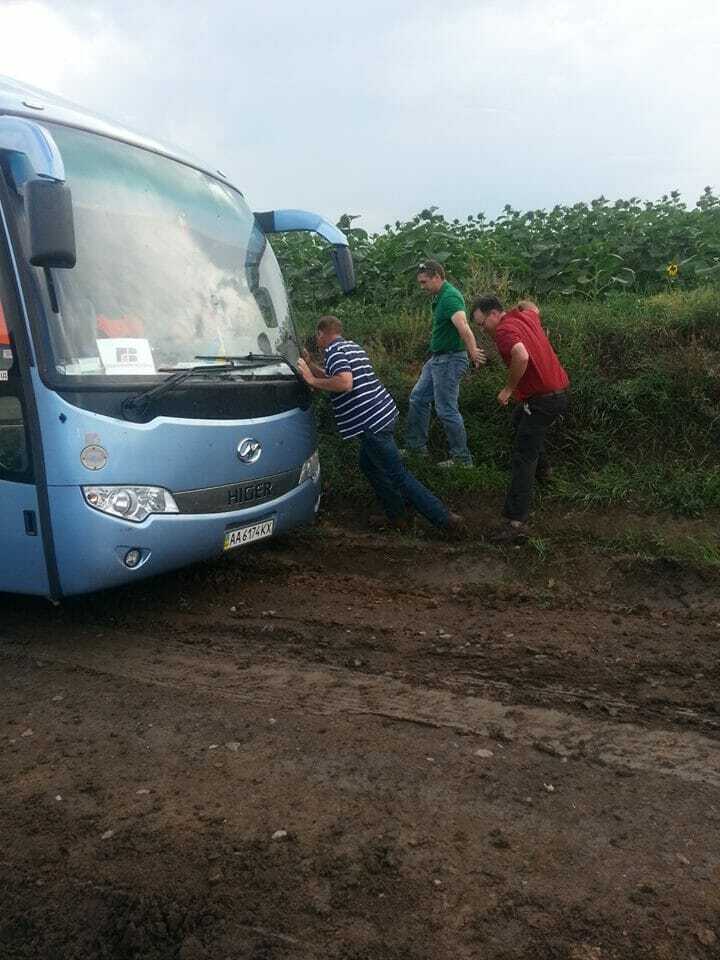
    We can learn so much by traveling abroad and meeting with farmers across the world, says Larry Sailer. This photo was taken when he traveled to Ukraine.
    We can learn so much by traveling abroad and meeting with farmers across the world, says Larry Sailer. This photo was taken when he traveled to Ukraine.

    I’m getting excited for a trip this week to Japan with the Iowa Farm Bureau! There are so many reasons I’m thrilled to be part of this delegation, but the fact that we have a sister State in Japan makes it even better.

    Diplomacy with Japan was strained after World War II, as you can imagine. But in 1959, a typhoon in Yamanashi Prefecture changed the relationship between Iowa and Yamanashi for the better. An Iowa sergeant, who had vacationed in Yamanashi when he was stationed in Japan, heard this disaster had caused heavy damage to agriculture. Sgt. Richard Thomas decided to help, and Iowans did not disappoint! They shipped 35 breeding hogs and 100,000 bushels of corn to the needy state. This act of kindness started our Sister State program.

    In 1960, Yamanashi became the first of nine Iowa Sister States around the world. There have been many exchanges between these sister states involving agriculture, education, art, music, sports, medicines and more. The most important exchange, however, is friendship.

    Many life-long friendships have formed because of that shipment of pigs to Japan. Yamanashi sent aid to support our state during the great flooding of 1993. Again in 2014, Iowa sent aid to Japan when it suffered from extreme amounts of snow.

    I’m going to fly over to Japan and personally research this relationship with Yamanashi Prefecture. I’m hoping to learn more about their culture, food, and maybe even see some pigs! I wonder what breed of swine we sent them… so stay tune. I plan to blog more about what I see and learn about agriculture in Japan.


    Related Posts:

    • Learning about Ag from Halfway around the World
    • Imagine 4,500 Landlords!
    • Farmers Markets Open 24/7 in Ukraine
    • How Eastern European Farms Measure Up
    • Women Farmers Helping Women Farmers
    • Breaking Down Walls in China


    Larry Sailer, Musings of a Pig Farmer

    July 5, 2016
    Agriculture, General, Industry News
  • Latham Hi‑Tech Seeds

    Today we’re celebrating our Freedom of Independence

    Team Latham

    July 4, 2016
    Agriculture, General, Industry News
  • Latham Hi‑Tech Seeds

    Farmers Feed the World… So What?

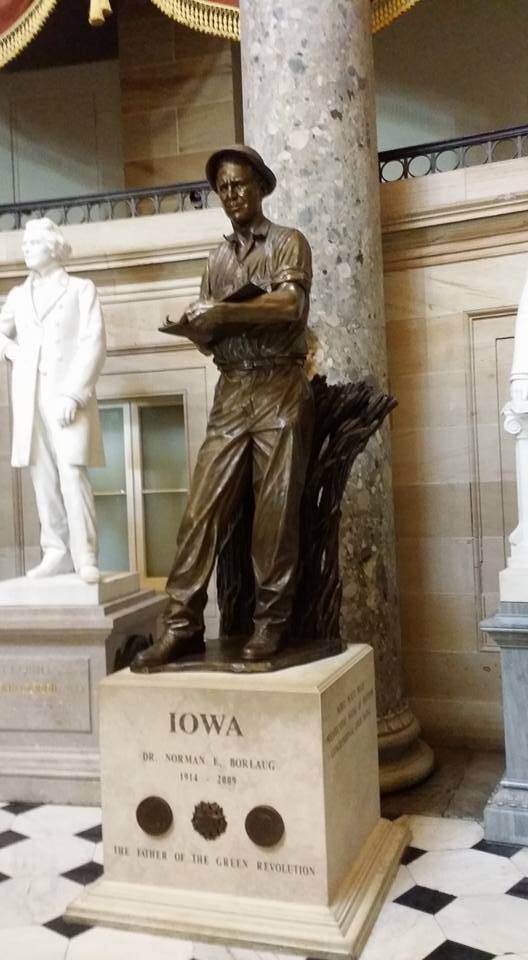
    Norman Borlaug statue
    Larry Sailer says it's fitting that during his visit last week to D.C. he got to see this likeness of Norman Borlaug in the U.S. Capitol's Statuary Hall. Dr. Borlaug is widely called "the father of the Green Revolution" because of his work to increase food production and combat world hunger.
    Larry Sailer says it’s fitting that during his visit last week to D.C. he got to see this likeness of Norman Borlaug in the U.S. Capitol’s Statuary Hall. Dr. Borlaug is widely called “the father of the Green Revolution” because of his work to increase food production and combat world hunger.

    If there were one thing that you could do to make the biggest difference in the shortest amount of time, what would it be?

    Every dollar invested in agriculture is twice as effective in reducing poverty as investing in non-agriculture sectors. I truly believe it’s not the producing of food that will eliminate hunger; it’s the access and ability to afford food that will eliminate hunger! The economy of a society must improve. And it’s my understanding that agriculture is always the basis to begin improving an economy.

    But where do we start? I believe we start with kids. If you have listened to Trent Loos this week, you know that human milk is medicine. Good nutrition during pregnancy followed by mother’s milk gives a child a great start! This time frame is so critical to the brain and its future functioning. How can an economy flourish with stunted bodies?

    Food aid programs in the past have been pretty much all reactive. When there is a crisis, you want to get people fed! I was thinking about this a lot last week as I traveled to Washington, D.C. I kept thinking of the saying, “Give a man a fish and you feed him for a day. Teach him to fish and you feed him for life.” This sounds simple, but I think we all know it’s complicated!

    First of all, it takes money to do anything in this world. That’s one of the reasons I was in D.C. last week with a group of farmers who are part of The Farm Journal Foundation’s Farmers Feeding the World initiative. A group of 21 farmers from 16 states are making a special effort to make a difference in the world by combating hunger.

    How can we make the world a better place? Well-fed people are less likely to fight wars. Well- fed people can build a better economy. Although some people wonder why U.S. farmers are concerned about the well being of others around the world, I’m looking forward to this new challenge!


    Larry Sailer, Musings of a Pig Farmer

    June 28, 2016
    Agriculture, General, Industry News
  • Latham Hi‑Tech Seeds

    Time to declare our independence from food fights

    Cherry and Red Raspberry Cheesecake

    Guest blog post by Aaron Putze, APR

    Aaron Putze, APR portraitDirector of Communications & External Relations

    Iowa Soybean Association, Iowa Food & Family Project

    We’ll soon celebrate Independence Day commemorating the adoption of the Declaration of Independence and our severance from the British Empire. The popular holiday features fireworks, parades, family reunions and baseball games. As with most events, food is a central part of the celebration with picnics and barbecues among the most popular Fourth of July activities.

    As we gather next Monday around grills, picnic tables and fire pits to enjoy time with friends and family, perhaps we can declare another form of independence – this one from the ongoing food fights that needlessly sap precious time, energy and money while undermining the health of humans and the planet.

    The idea came to mind when, as if on cue, the U.S. Senate leadership last week brokered a “landmark” agreement seeking a compromise on the long-standing dustup over the labeling of food that includes genetically modified ingredients. The bill, crafted in response to a Vermont law set to take effect July 1 requiring the labeling of GMO foods, would establish a national standard of mandatory disclosure of GMO ingredients through a variety of options including quick-response codes, 800-numbers, websites and on-package labeling.

    The setting of a national mandatory standard (action on the bill is expected before the July 4 holiday) would pre-empt state labeling laws like that of Vermont. Doing so would avoid a patchwork of differing requirements between states while avoiding a $400 to $1,000 annual increase in what the average U.S. household spends for food, according to a studies provided by John Dunham & Associates of New York City and the Biotechnology Industry Organization.

    Now, keep in mind that the U.S. Food and Drug Administration requires labeling only if an ingredient poses a health or safety risk (like calories and allergens). A GMO shouldn’t be in the conversation because it’s not a product. Biotechnology is technology based on biology; a process that has improved lives by making food products such as bread, cheese, grain and dairy products more plentiful and useful.

    What makes the ruckus over GMOs so nonsensical is that time and time again, genetic modification has been declared safe. Countless health and wellness officials, organizations and institutions and federal agencies and authorities have studied and rendered their judgement. The latest to give GMOs a clean bill of health is the National Academies of Science. Its 388-page report summarizing a review of 900 studies and data covering 20 years since genetically modified crops were first introduced struck a familiar conclusion. Genetically engineered crops, it declared, are safe for humans and animals to eat and have not caused increases in cancer, obesity, gastrointestinal illnesses, kidney disease, autism or allergies (or any number of other maladies that have been blamed on GMOs). Read more here.

    The report will do little to calm the shark-infested waters surrounding GMOs. Too much time and treasure have been invested by those who profit from making consumers fearful of this important and life-saving practice, not unlike other food issues.

    The GMO issue, after all, is just the tip of food fight iceberg. Every day, it seems there’s something else wrong with our food, whether the topic is hormones (news flash: they’re naturally present in both food and our bodies), the use of antibiotics to care for livestock (second news flash: there can be no antibiotic residue on the food you buy) or what in the world makes something “natural” or “local” (on the latter, consumers define local from as narrow as “across the street from where I live” to as broadly as “grown somewhere in the United States”).

    Indeed, food conversations have evolved from “clean your plate” and “take it or leave it.” Now, it includes what’s in food, where it comes from, who grows it and how it’s grown.

    This scrutiny about what we put in our bodies didn’t materialize out of thin air. Some of the interest is real and sincere, and that’s a good thing. What’s dangerous, however, is the context hyped by a small group of food elites (cue the Humane Society of the United States’ Wayne Pacelle and affluent world traveler and author Michael Pollan), bloggers and reporters, TV personalities and non-government organizations intent on dictating how food is grown and how we eat.

    In the path of the wave of supposed consumer discontent are those who prepare, market and sell food. When reacting, they have two options: fight or flight. Most have chosen the latter. At first, the decision was made out of fear of being bullied by those who have made food a religion.

    Over time, however, another justification has emerged – one that’s even more powerful. You see, the confusion over food can actually be good for business. Using the powerful persuasion of emotion, a growing number of processors, vendors, brand managers and food retailers are distinguishing themselves in the marketplace by making clever and often unsubstantiated claims about food (ever heard of “Food with Integrity?” or “Eat Consciously, Live Responsible?”).

    Emotion is the powerful engine driving consumer behavior, a fact not lost on retailers and brand managers, most of whom operate in a high-volume, low-margin business. To boost revenue, a wise tactic is to increase sales of higher-margin offerings. If consumers are willing to spend 15, 25 or 50 percent more or double or triple the price of a conventional offering based on how it makes them feel or look, than food marketers will eagerly make the sale. To justify the increased cost, they attach specific attributes to that product to differentiate it from its competitor. This holds true whether we’re talking mayonnaise at your favorite grocer or the “grass finished” steak sold for $28 per pound.

    Today, perception is the new reality. It also drives value. Popular labels proclaiming a product as “local,” “sustainable,” “farm fresh” and “natural” are nearly impossible to define or validate. But consumers will pay more because they have been conditioned to believe products claiming to be those things are better, safer and healthier.

    Yet documented nutritional, health and safety differences between traditional products and the “new-and-improved” offerings are negligible at best. In fact, most often the only discernable difference between the two is price. One could even go further, however, and make the case that the food labeling craze is actually harming human health, animal care and the environment because it’s dismissing practices founded on science and substance in favor of splash and sizzle and what’s best for shareholders this quarter. By disparaging the use of GMOs and antibiotics (to name just two) , they’re altering the use of safe and sound agricultural practices that have been adopted over generations of continuous improvement to the benefit of human health, the environment and the family budget.

    Easy Baked RibsUndefinable and unsubstantiated marketing claims. Instantaneous communications. Well-funded activist groups. Less personal and individual understanding of agriculture. The dismissal of science in favor of feelings and emotion. These realities are just a few of the reasons confusion reigns in the food conversation.

    It doesn’t have to be this way. Let’s declare our independence from irrational fears, unsubstantiated claims and meaningless food labels by taking the time to study and understand the issues and to ignore those who profit from pedaling fear and confusion.

    Now please pass the barbecued ribs, potato salad, baked beans and cherry cheesecake. Let’s eat!

    bonnie-harris

    June 27, 2016
    Agriculture, General, Industry News
  • Latham Hi‑Tech Seeds

    Emotion Trumps Facts and Affects Perception

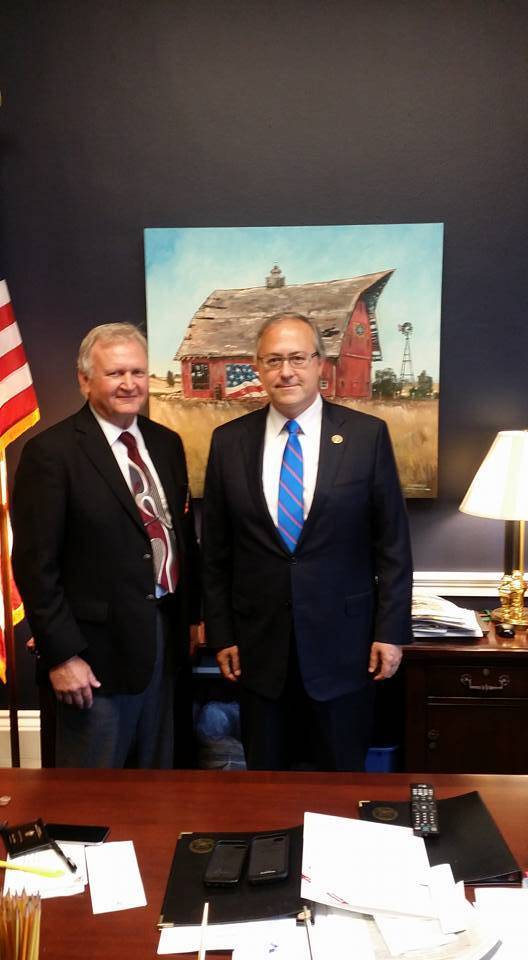
    Congressman Young

    As I’m writing this morning, I’m preparing to visit the offices of our elected officials in Washington, D.C. I’ve made this trip as a member of the Farm Journal Foundation’s Farm Team. This nonprofit corporation is dedicated to sustaining U.S. agriculture’s ability to serve the vital needs of a growing world population. This team is a group of farmers, working together to fight world hunger!

    Larry Sailer meeting with Iowa Congressman David Young (R-IA3) in his D.C. office
    Larry Sailer meeting with Iowa Congressman David Young (R-IA3) in his D.C. office

    Preparing for today’s meetings on Capitol Hill got me thinking about the perception of agriculture – and especially of farming practices – around the world. I’ve written about different perceptions in the past (and you’ll find links to these posts below), but today I’m going to address this topic from a different angle.

    Recently I read a post on Facebook to an article, claiming that glyphosate is much worse than feared! People were jumping all over each other with comments like, “I told you so!” The headline of this article supported their own beliefs, so many of these folks jumped into the discussion without obviously reading the copy. If you read the copy and checked the sources, it stated that glyphosate has helped reduce herbicide use and is safe when the rules, including use of Personal Protective Equipment, are followed.

    “Roundup and glyphosate is a hot button topic… When you really take the time to digest some of the facts, read the labels, and put it into perspective with other common household items, the toxicity of glyphosate is extremely low. I’ve written an article before on fear. We don’t need to make our lives more complicated by buying into these fears spread much like the article above,” writes Jenny Dewey in a Huffington Post article.

    It comes down to perception and emotion. People’s perception of danger is not just based on the facts. If consumers don’t like the way those “facts feel,” they believe all the negative comments. No wonder it’s so difficult to convince people of the great things farmers are doing!

    We’ve seen first-hand in North Iowa how much weight negative words and actions can carry when Prestage Farms was considering building a pork processing facility in Mason City. Old arguments about modern livestock production resurfaced. I thought we were doing a great job sharing why we farm the way we do. Climate-controlled barns are better for our pigs, better for the environment and better those of us who work on the farm! But our voice got lost when a group of anti-modern farmers started beating their drums louder.

    This week I’m trying very hard to keep an open mind while having conversations in D.C. I’m trying not to let naysayers keep me from accomplishing – or at least advancing – some progress in world hunger. Let’s all keep open minds! Remember to “listen” and dig deeper into the discussion.

    Related Posts:

    • What’s Your Perception of Farming?
    • Regardless of Perception, Do What’s Right!
    • North Iowan’s (Mis)Perception of Family Farms


    Larry Sailer, Musings of a Pig Farmer

    June 21, 2016
    Agriculture, General, Industry News
  • Latham Hi‑Tech Seeds

    Modern Pork Production is Humane, Not Human-like

    12654426 977890342280958 6407861794691024666 n

    Recently, I’ve been addressing common questions people have about Prestage Farms and the new packing plant this company is considering to build in North Iowa. I believe Prestage is a great fit in my home county of Franklin! Last week I wrote about family farms versus “factory farms.” Two weeks ago I covered pig poop and why it’s a valuable resource.

    This week I’d like to talk about “animal welfare.” There is a distinct difference between treating animals humanely and humanly. In the past, I’ve described how modern pig farms are not Old McDonald’s Farm. Many positive changes have occurred since the 1950’s and 60’s, yet many Americans have almost a romantic notion about “the good ol’ days.”

    Those of us who “live farming” can see how technology has led to improved production systems that are better for the environment and for the animals. Those who grew up on a farm but moved away years ago – or those who are three generations removed from the farm – may need a comparison. Here’s an analogy that may help…

    Imagine you’re enjoying a beautiful spring day with blue skies, bright sunshine, gentle breezes and a high between 72 and 75 degrees. (We’ve experienced this recently, so it’s not too hard to image, right?) Now think of a day when you can’t buy a breeze, and the sun is so scorching hot it feels as though you could fry an egg on the sidewalk! Contrast this to the discomfort you feel when the north wind is gusting at 30 miles an hour, the mercury is dipping below zero and your eyelashes freeze in the few minutes it takes you to walk across a parking lot.

    Iowa weather can be extreme. Our summers can get miserably hot, and the winters can be bitterly cold. When we raised pigs on pasture, they were miserable and so was I! Some people think it’s better for pigs to remain outside than it is to stay cool inside a climate-controlled pig barn.

    12654426_977890342280958_6407861794691024666_n

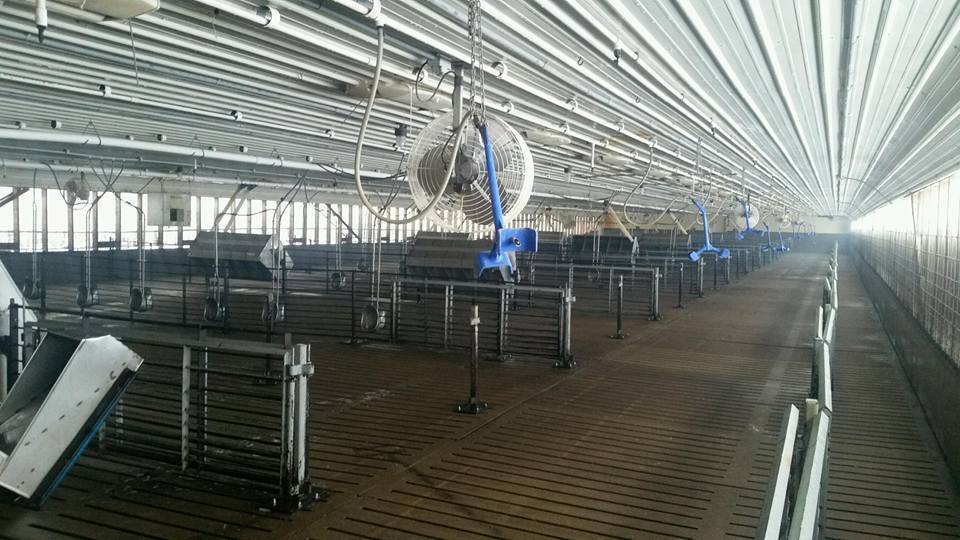
    There’s no way I’d trade a modern barn for pig huts on pasture. I’m often reminded of how much better today’s production methods are. For example, last week I was called to adjust some air ventilators inside a gestation barn. It was 95 degrees outside, but inside this stall gestation barn it was 79 degrees! I couldn’t help but notice the contented sows. Many were sleeping comfortably, and a few woke up and curiously checked me out as I worked to adjust new ceiling vents.

    These vents prevent warm air from coming inside. When it’s warm outside, fresh air is pulled through “cool cells” to keep the inside temperatures consistent. One end of the building is lined with specially treated corrugated cardboard that has water continuously soaking it. The fresh air comes in through the corrugations, which cools the air down about 20 degrees!

    Modern pig barns are a good place for people to work and a good place for pigs to live. Farmers make their animals as comfortable as possible. They provide their livestock with fresh food, fresh air, and fresh water. Livestock should be treated with respect and receive the best care a farmer can give them. After all, it’s the right thing to do!

    We must also keep in mind that the animals we raise are livestock. Since the beginning of time, people have had dominion over animals. This means humans have the reasoning power to make life and death decisions for our livestock. We give our livestock the best quality of life that we can, and then we respect them in death because their purpose is to feed our growing population. I have blogged in the past about how developing nations increase their meat consumption as their economy improves. When an emerging economy wants to improve its diet, the country’s ruler doesn’t say “let’s eat vegan!” The people in these countries want the best protein they can afford, and that protein is meat.

    Meat production facilities and a new processing plant can help grow our locally economy, as well as the Iowa economy. This is Iowa, folks, and we grow pigs here! We have great resources that makes agriculture – and pork production – a great fit here.

    Farming has been a great means of growing the economy since the beginning of time! Our towns, our schools, our Main Street businesses need a growing economy. Let’s welcome new industry! Sure, there are always growing pains but we can overcome any challenges… together!

    Larry Sailer, Musings of a Pig Farmer

    June 14, 2016
    Agriculture, General, Industry News
Previous Page
1 … 21 22 23 24 25 … 95
Next Page

Latham Hi‑Tech Seeds

131 180th Street | Alexander, IA 50420

(641) 692-3258

SIGNUP FOR OUR NEWSLETTER
  • Contact
  • Legal
  • Seedware Login
  • Latham Gear

© 2026 Latham Hi‑Tech Seeds. All rights reserved. | Privacy Policy

Latham® Hi-Tech Seeds is a trademark of M.S. Technologies, L.L.C., 103 Avenue D, West Point, IA 52656.