Latham Hi-Tech Seeds

(641) 692-3258

  • Home
  • Products
    • Corn
    • Soybeans
    • Alfalfa
    • Corn Silage
    • Seed Guide
  • Performance
  • Find a Rep
  • Media
    • Blog
    • News
    • Videos
    • Podcasts
    • TECHTalk
  • About Us
    • Company History
    • Our Mission
    • Careers
    • Become a Rep
    • Sowing Seeds of Hope
  • Contact Us
  • Latham Hi‑Tech Seeds

    Busting the Myth about Dracula’s Castle

    Castelul Bran1

    I’m doing another blog about my experiences on the Black Sea Study Trip to Eastern Europe, so hopefully you’re not getting tired of this subject. From converting weights and measurements to contrasting farmer’s markets, there are just so many fascinating things to talk about!

    We spent the majority of our time touring farms and learning about agriculture, but we also got to do a little sightseeing. One of my favorite stops was Transylvania, in the heart of rural Romania, at the medieval Bran Castle. This castle has been appraised at $180 million, making it one of the most expensive houses in the world! It’s owned by architect Archduke Dominic Hasburg, Princess lleana’s son, who resides in New York.

    Originally built in 1212 by the Knights of the Teutonic Order, Bran Castle remained an important feudal fortress throughout the Middle Ages. Then in 1921, Queen Maria of Romania brought the royal court architect to the castle for extensive renovations and transformed it into a Royal residence. The castle was taken from the royals by the communists in 1948, and in 2006, it was returned to the Archduke.

    Bran Castle is better known as Dracula’s Castle.  Dracula, written in 1897 by Brampton Stocker, is one of the most famous horror novels of all time. It’s based on Prince Vlad the Impaler, who was imprisoned in the castle for one night in the 1400s. He was famous for the way he killed his foes and terrorized his enemies.  In fact, killing a vampire with a wooden stake most likely came from his practices.

    Inside the castle courtyard is a scale that was used to determine whether or not a lady was a witch. The lady was placed on one side the scale; a Bible and some stones were placed on the other side.  If the lady weighed more, she was considered a witch and put to death!

    After touring the castle, we enjoyed lunch in the village. The restaurateur told us about his flock of sheep. Since he makes his own cheese from sheep’s milk, we enjoyed sampling many different kinds. He also prepared a very good meal of lamb.  He uses many sheepskins as decorations, too. It was certainly a dining experience unlike any I’ve had in the States!

    Traveling abroad certainly provides one with unique experiences and perspectives.  I’m thankful to have had the opportunity to see so many interesting places throughout Eastern Europe and to learn about agriculture from half a world away.  Hats off to David Miller and the Iowa Farm Bureau for all of their efforts!
    Larry Sailer, Musings of a Pig Farmer

    July 23, 2013
    Agriculture, General, Industry News
  • Latham Hi‑Tech Seeds

    Farmers Markets Open 24/7 in the Ukraine

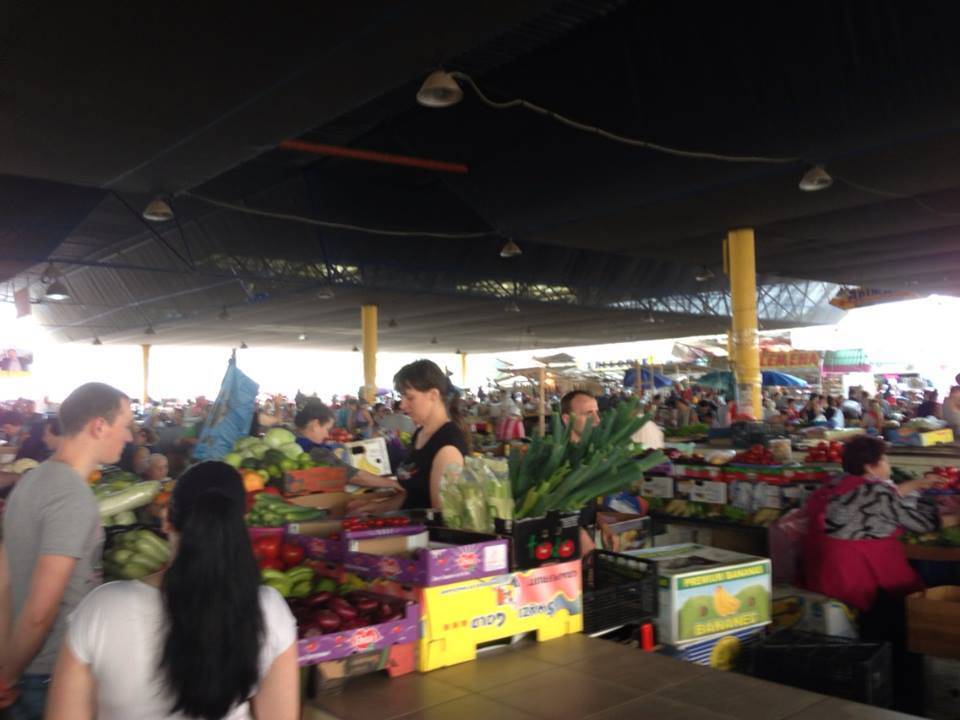
    Ukraine FarmersMarket
    Ukraine Wholesale Market

    While spending nearly two weeks in June traveling throughout Eastern Europe as part of a Black Sea Study Trip sponsored by the Iowa Farm Bureau, I noticed several differences between our cultures and farming practices.  Last week I blogged about the number of conversions we had to make when discussing acres/hectares and pounds/kilos.  This week I’d like to share some thoughts about their markets.

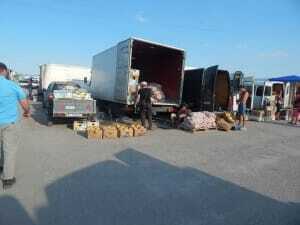
    We came upon The Mother of all Farmer’s Markets in Ukraine!  This wholesale market is open 24 hours daily, 7 days each week.  Massive amounts of fruits and vegetables are sold from any type of vehicle from large farm trucks to horse carts.  Now keep in mind it was about 100 degrees the day we visited, so much of this fresh produce was literally baking in the sun.  And it didn’t smell like apple pie either!  It smelled down right awful.  Cleanliness wasn’t a priority, and it didn’t seem like food safety was either.

    Odessa Privos Market

    Later we visited the Odessa Privos Market, a large, public market that was founded in 1827.  Tiny booths are lined up for blocks, and it seems as though you can buy anything there – as long as you could fight your way through the crowd.  Some of this market is under roof, and that’s where you can buy just about any animal part imaginable!  There also was a lot – and I do mean a lot – of fish for sale.

    Des Moines Farmers Market

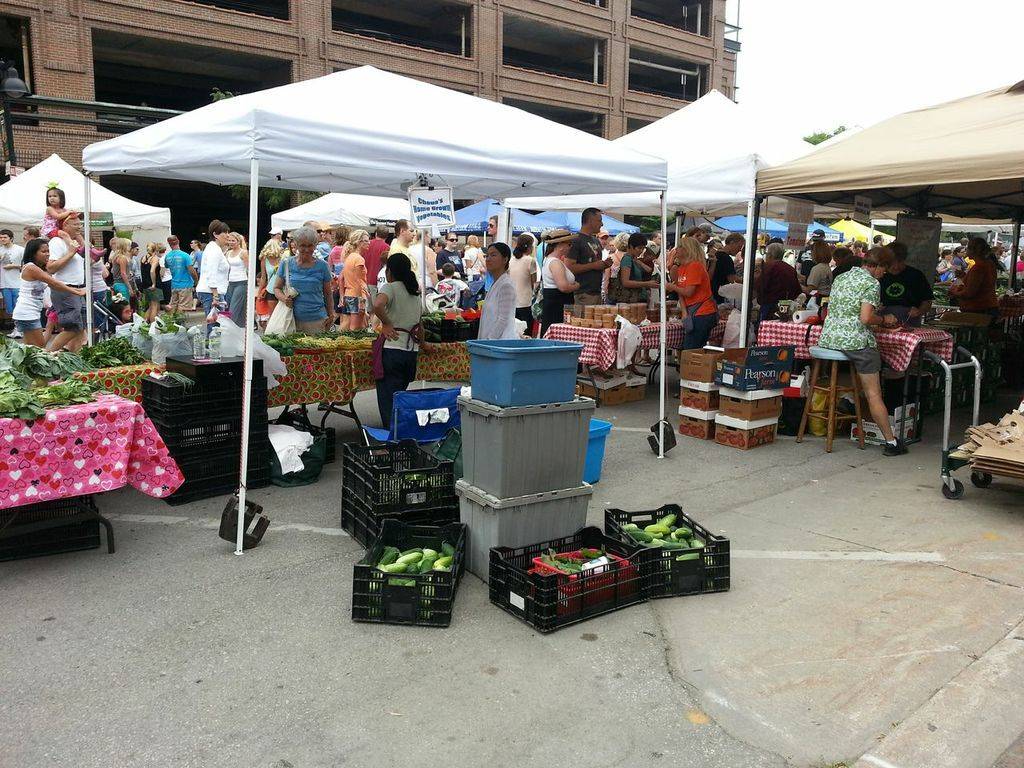
    I couldn’t help contrast these two markets with the U.S. farmer’s markets that I’ve visited.  It seems that even the smallest Iowa communities have a local market at least once a week with markets held more frequently in larger cities like Des Moines.  The streets around Court Avenue in downtown Des Moines are blocked on Saturday mornings, so people of all ages can enjoy a leisurely stroll while they choose from a variety of wonderful smelling fresh cooked foods and fresh brewed coffee.  All of the vendors display their wares so neatly, and most have tents that shade their produce from the blistering summer sun.  Farmers sell meat in Des Moines from refrigerated trucks.  Plus there are many beautiful fresh flowers, fruits and vegetables for sale.

    Interestingly enough, many Eastern Europeans don’t realize how many fresh fruits and vegetables Americans eat.  Our tour guide in Romania was under the assumption that all we eat is processed foods and sweets.  “Junk food” isn’t something they have broad access to, and there is a concern the health of their kids may decline as new technology streams into Eastern Europe.  As their standard of living improves, how will this change their culture?

    Culture definitely changes as people move up the “hierarchy of needs.”  Eastern Europeans are no longer dependent upon the government to provide them with basics like food.  When they were under the control of the Soviet Union, Ukrainians raised more food in their backyards than they did on the collective farms. The Soviets moved many village people into high-rise cement apartment buildings, trying to force them into working on the collective farms.  Since it’s hard to grow food without soil, hungry people were motivated to work on the collective farms.  Even before the Soviets gained control, small villages were under a feudal system.

    After years of oppression, Ukrainians are making great strides now.  Their biggest challenge is developing infrastructure and markets.  It’s hard to get crops to market when trucks keep getting stuck!  But, they have so many rich natural resources.  I have no doubt the Ukraine will play a key role in helping feed the growing world population.

    Larry Sailer, Musings of a Pig Farmer

    July 16, 2013
    Agriculture, General, Industry News
  • Latham Hi‑Tech Seeds

    Protect Your Family from Sun Damage

    Heat Stroke1

    Guest Blog from Farm Safety For Just Kids

    With unseasonably cool temperatures persisting throughout the spring, many farmers were hoping for heat units to aid in plant development.  The warm sun has a major impact on crop growth, but the heat of the day can make dangerous working conditions for people.

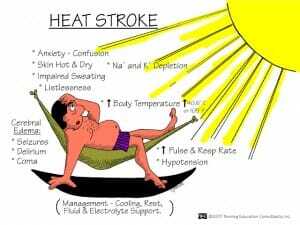
    Farm workers are especially vulnerable to heat exposure.  When the body becomes overheated, workers become weak and tire more quickly.  Too much heat can also cause workers to become less alert, which is particularly dangerous if they’re operating farm equipment.

    It’s important for farmers to be aware of the three main phases associated with heat illness:

    1. Dehydration – results when the body isn’t taking in enough liquids.  Symptoms include fatigue, thirst, dry mouth and sapped energy.  Cramping may also occur in the legs and abdomen.
    2. Heat exhaustion – occurs when the body loses too much water and salt.  Symptoms include excessive sweating, extreme fatigue, clammy skin, dizziness or confusion, nausea, as well as fast, shallow breathing.
    3. Heat stroke – occurs when internal temps rise rapidly and the body is unable to cool down.  Symptoms may include profuse sweating, chills, throbbing headache, poor coordination, slurred speech, vomiting, hallucinations, fainting or collapse.

    Repeated exposure to the sun can cause premature aging, eye damage and even cancer.  Damage takes place over time, so it’s important to encourage protection at a young age.  To limit exposure and prevent long-term damage:

    • Avoid the sun during peak hours between 10 a.m. and 4 p.m.
    • Wear hats with wide brims that cover the face, neck and ears.
    • Cover as much of your body as possible with light clothing.
    • Use sunscreen with an SPF of 15 or higher and reapply often.
    • Wear sunglasses rated to filter out UV rays.

    Research shows a link between sunburns in children and an increased risk of melanoma and skin cancer later in life.  Help protect the future of agriculture by protecting the next generation of farmers and ranchers!  Click here for more tips on how to keep your children safe in the sun.

    Gary Geske

    July 15, 2013
    Agriculture, General, Industry News
  • Latham Hi‑Tech Seeds

    How Do Eastern European Farms Measure Up?

    Bad Roads1
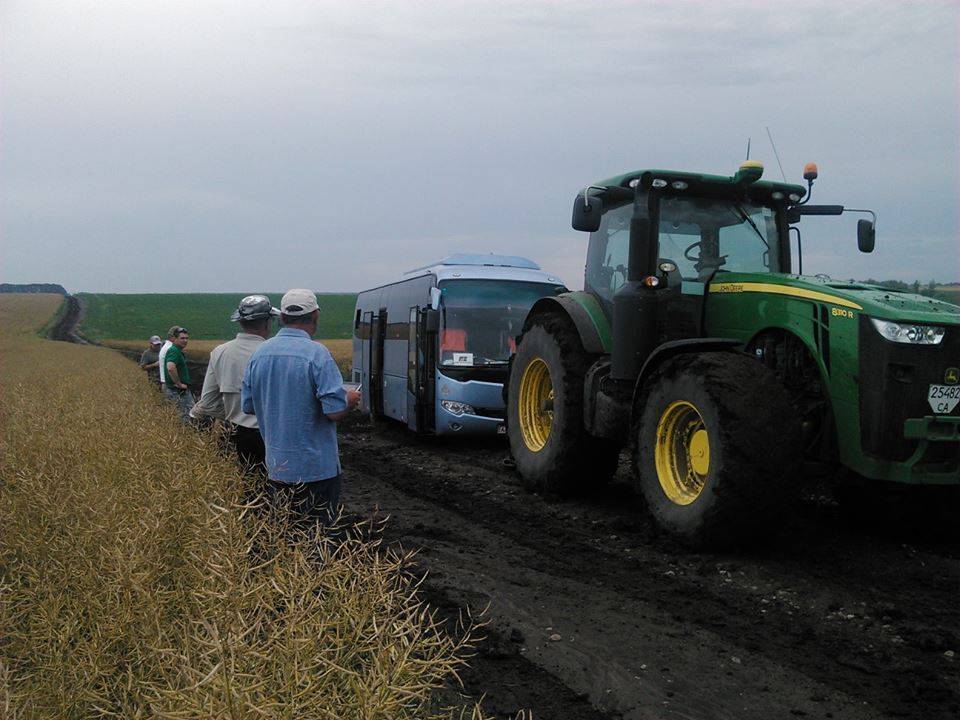
    One of the biggest challenges while traveling throughout Eastern Europe was poor road conditions. It wasn’t uncommon for our bus to get stuck.

    From June 22 through July 5, I had the opportunity to travel throughout Eastern Europe with a group of 20 Iowa Farm Bureau and staff members on a study trip.  We visited with farmers in the Ukraine’s Black Sea region, which is expected to become a top competitor for Iowa crop exports in coming years.

    One of the things I wasn’t prepared for on this trip was the need to convert measurements.  Believe it or not, the European measurements make a lot more sense!  Americans measure liquids as a cup, pint, quart and then gallon.  It can be very confusing unless you memorize the number of ounces in 1 cup (8 ounces equals 1 cup); the number of cups in a pint (2 cups equal 1 pint); the number of pints in a quart (2 pints in 1 quart); and the number of quarts in a gallon (4 quarts in 1 gallon).

    Then you calculate weight… Who in the world thought it was a good idea to make an odd number, like 16 ounces, equal a pound?  And why is “lb” the abbreviation for a pound?  Say what?!  Now a ton makes a little more sense to me since it’s the round figure of 2,000 pounds.  Although the metric ton is 2,200 pounds, it doesn’t really matter.  Europeans use kilograms to figure a ton, and this makes even their tonnage easier to calculate.

    The next measurement we had to convert while touring farms in the Ukraine was hectares.  Converting hectares into acres is a real brain teaser!  An acre is 43,560 square feet.  Somewhere in history, this was logical.  Why?  Don’t ask me!  I’m not even going to Google it.  After two weeks of doing math, I know that I’d prefer for Americans to use hectares.  Like everything else metric, a hectare can be divided by 10.

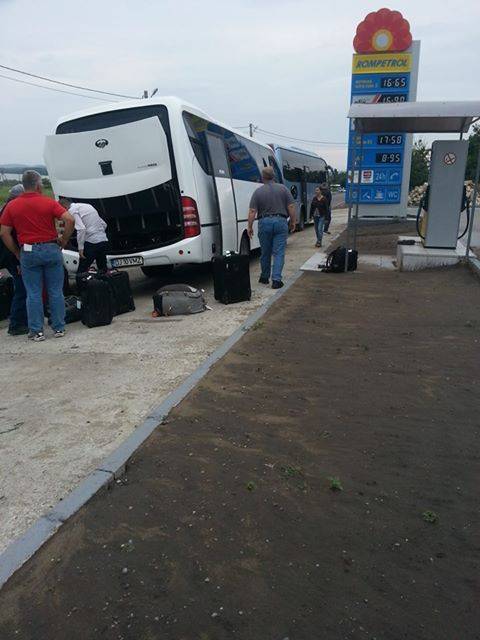
    Talk about a travel delay! It took a group of Iowa farmers four hours to travel four miles from Ukraine through Moldova into Romania.

    I’d hate to guess how many conversions we made.  A group of 20 Iowa Farm Bureau members asks a lot of questions while touring:  What’s the size of the farm?  (Convert hectares to acres.)  What’s the average yield?  (Yield really takes a bunch of conversions.)  How much herbicide do you apply (Convert from hectares to acres, and then from ounces, pints and gallons to liters per acre.)  Thank goodness there’s an app for that!

    Another huge problem we had in the Ukraine was the terrible road conditions.  Iowa’s pot holes are nothing compared to those in the Ukraine.  We soon discovered it wasn’t possible to travel these roads fast enough to keep our schedule, so we coined a phrase: “the Ukrainian 20 minutes.”  This phrase describes a situation that takes much longer than 20 minutes.  But not even “the Ukrainian 20 minutes” described the time it took us to cross through Moldova.  It took more than four hours to move less than four miles – the Moldova minute had no end!  (And, no, we weren’t stuck in mud at the time.  Click here to read Dirck Steimel’s account of that sticky situation.)

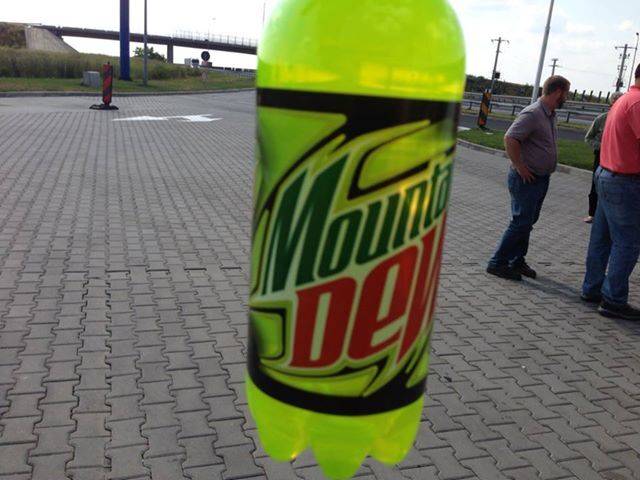
    Pepsi products became a unit of measurement for Iowa farmers traveling through the Ukraine, Moldova and Romania.

    As we traveled through Moldova, Romania and Ukraine, it became apparent that another unit of measure was in order to simply compare economies of these different areas.  Being the great economist that he is, David Miller again rose to the occasion.  He found a way to explain economies in a scale that all of us could understand…  You see, Dave was always looking for his favorite drink, Diet Mountain Dew.  Pepsi can be found almost anywhere, so it came to signify the “poorest economy” we traveled through.  If Mountain Dew could be purchased in the area, it was referred to as a “civilized economy.”  In the rare place where Dave found a Diet Dew, it was called a “sophisticated region.”  It’s good to know all of those degrees Dave earned are coming in handy! 🙂

    On a serious note, I would like to thank David Miller for leading a very successful and informative market study trip to Ukraine and Romania.  No matter the question, Dave had knowledge and understanding of what we wanted to know.  Some answers were as simple as Diet Mountain Dew, and some were as complex as the economy of Ukraine.

    Larry Sailer, Musings of a Pig Farmer

    July 9, 2013
    Agriculture, General, Industry News
  • Latham Hi‑Tech Seeds

    Learning about Ag from Half a World Away

    Ag perspectives1
    Larry Sailer is one of 20 Iowa farmers who are traveling through the Ukraine to get a new perspective on agriculture

    For two weeks, I’m joining a group of 20 Iowa Farm Bureau and staff members touring throughout the Ukraine and Romania to learn about farming practices underway since the breakup of the Soviet Union.  We left June 22 for the Black Sea region, which is expected to become a top competitor for Iowa crop exports in coming years.

    The Ukraine, known as the Breadbasket of Europe, has rich, black dirt similar to what we see in Iowa.  The biggest difference is there is three times as much soil here!  Imagine rich, Iowa farm ground that is the size of Texas.  I’m convinced there is a huge amount of ground in this region with a huge potential to raise more food than is currently being produced.  Much of this farmland has been sitting idle, waiting for the proper political climate and for the right farmers with the know-how to get ‘er done.

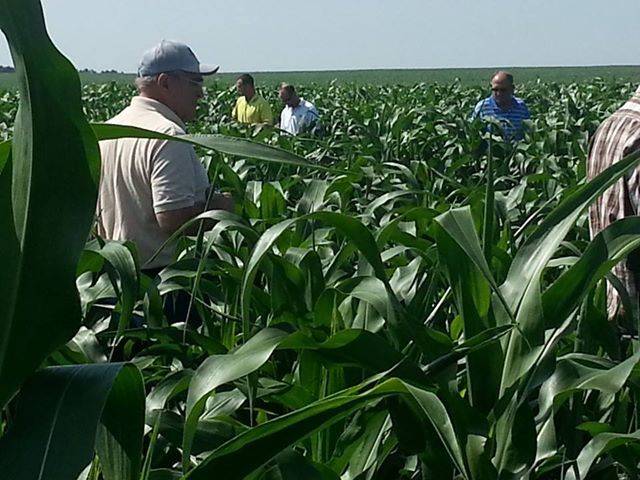
    The corn on this farm in Ukraine is looking good. It’s much taller than mine at home in Iowa!

    It needs farmers like Iowa Farm Bureau member Jeff Rechkemmer, who’s from Oelwein in Northeast Iowa but has farmed in Ukraine about a decade.  Jeff says there are many similarities between farming in Iowa and Ukraine.  Like in Iowa, his most profitable Ukrainian crops are corn and soybeans.  Most of the tractors on his Ukrainian farm are John Deere models that were made in Waterloo.

    Our Farm Bureau group came with questions about how this region can compete with Iowa for export markets.  We wondered if farmers here can produce food as inexpensively as we can.  Our questions include:  What are their yields?  What are their input costs?  Are they sustainable?  Is their infrastructure adequate?  Can they get the product out of their country at a price that competes with ours?  What is the quality of their grain?  What crops do they grow?

    So many questions!  Honestly, I’m overwhelmed by the amount of information we’ve already gathered.  It’s been a great learning experience so far, but we’re only half done.  There’s a lot more to look forward to seeing and doing here!

    We plan to return home on Friday, and then it will take a little time to organize all of my photos and information.  But it’s a job that I’m looking forward to!  In the coming weeks, I will use blog articles and presentations to share the vast amounts of information to which I’ve been exposed.  I hope you’ll turn to TheFieldPosition.com on Tuesdays for my guest blog posts.  Please also contact me if you know of a group that would be interested in hearing my presentation.

    In the meantime, you can learn more about our Ukrainian adventures by reading these “Farm Fresh” blog posts by Dirck Steimel, editor of the Iowa Farm Bureau Spokesman:

    • Weather delays are hard to fly away from
    • Learning about Ukrainian traditions from an Iowan

    Larry Sailer, Musings of a Pig Farmer

    July 2, 2013
    Agriculture, General, Industry News
  • Latham Hi‑Tech Seeds

    “New” GMO Pig Study is “Junk”

    Twitter has been a flutter with a “new” study on pigs fed feed containing GMOs.  I was curious about all that was being said, so I spent quite a bit of time reading many comments on Facebook and following the topic on Twitter.

    Seeing the same old hype, I dug further into the study.  Here’s what I discovered… the so-called GMO Pig Study contains nothing scientific whatsoever!  In fact, I agree with author Mark Lynas that it’s really “a propaganda effort by anti-biotech campaigners masquerading as proper science.”

    The GMO pigs study was funded by extreme organic folks with an agenda, who were connected to the flawed cancer in rats study.  It’s no surprise these two tests were very similar.  The research was done using a very small group of very unhealthy pigs that were fed two different diets.  Almost all of the pigs, whether feed non-GMO or GMO had the same symptoms.  Interestingly enough, 15% of pigs fed the non-GMO diet had heart abnormalities as compared to only 6% of the GM-fed pigs.  Twice as many non-GM pigs had liver problems as the GM pigs.

    These facts didn’t support the agenda of those funding the study, so they chose instead to focus on stomach inflammation.  Results of the stomach inflammation study were subjective, at best.  It’s no wonder Lynas wrote, “GMO pigs study – more junk science.“

    I’m not a scientist, just an old pig farmer, but let me tell about what I have happen in my own operation.

    The GMO corn and soybeans I grow are delivered locally to a feed mill and a soybean processing plant, and I doubt they’re kept separate.  It wouldn’t make sense to separate the grain as the vast majority of crops grown in my area use this technology.

    Technology has been rapidly adopted for its efficiency.  I’ve seen firsthand how these crops have been good for my operation, using fewer inputs to produce more feed.  Plus, today’s hogs are efficient.

    My hogs have very little disease pressure.  I can’t imagine having the 13% and 14% death losses as reported for GMO pigs study!  My pigs are healthy and grow very fast.  They consume about 5 pounds of feed per day to gain, on average, two pounds per day.  They do this all on GMO feed.

    I know my pigs are healthy, so I have no problem feeding the pork we raise to my family.  I’m very happy that the modern consumer is concerned about what they buy to eat, too.  I just hope consumers won’t get caught up in these silly, unfounded studies that try to sway consumers’ buying decisions.

    The science is clear, writes Lynas.  Consuming foods with ingredients derived from GM crops is no riskier than consuming the same foods containing ingredients from crop plants modified by conventional plant improvement techniques.

    Buy good, healthy foods and eat in moderation!

    Larry Sailer, Musings of a Pig Farmer

    June 25, 2013
    Agriculture, General, Industry News
  • Latham Hi‑Tech Seeds

    Farm Bill Debate Underway Now

    The 2012 Farm Bill is like the 2013 planting season… it just goes on and on!

    The Farm Bill is top of mind again this week as it is being debated on Capitol Hill.  The Senate passed a version of the bill with huge savings for tax payers, and the House version saves even more.  The Senate’s proposal would save $24 billion over 10 years; the House version would save $39.7 billion.

    Unfortunately, the President is threatening to veto the Farm Bill because it cuts too much funding for food stamps.  The food stamp program, now called the Supplemental Nutrition Assistance Program (SNAP), cost almost $80 billion last year – twice the amount it cost just five years ago.

    We cannot continue to throw unlimited funds towards the SNAP program!  Anyone who knows me, knows that I do NOT want one hungry person to be denied assistance if he truly needs a hand up.  The problem comes from people who are “milking the system.”  Generations of families have become dependent on public assistance, and the number of people on welfare has sky rocketed in the last six years.  When an Administration spends millions of dollars to advertise food stamps and welfare programs, it’s time for Americans to question the tactics!

    How are we going to balance a budget if people are only willing to make cuts to small budget items?  We must dig into the high priced line items:  Medicare and like programs just continue to expand.  I’m not even going to talk about The Affordable Care Act that is draining tax dollars and causing my insurance premiums to increase.  Then there’s the Food Security Bill.  Seriously, who dreams up these names?

    As a farmer, I’m concerned that SNAP funding accounts for 80% of the Farm Bill.  Discord over which programs to cut and how much to cut have prevented the Farm Bill from passing.  With the SNAP program and so many other issues wrapped up in the same bill, the Farm Bill has become too complex.

    A complex system of rules and regulations is now in place to tell farmers how to best raise their crops.  Although no one knows their business better than farmers, some so-called “experts” are being consulted to develop rules that tell farmers how to raise their animals.  Why not let farmers and ranchers adapt and change as they determine what works best in their operations?  Farmers and ranchers are always trying to be more efficient and want to keep food safe and affordable.

    Instead of creating a Farm Bill that benefits everyone, I’d settle for one that would encourage farmers – and a successful rural way of life!

    Larry Sailer, Musings of a Pig Farmer

    June 18, 2013
    Agriculture, General, Industry News
  • Latham Hi‑Tech Seeds

    Planting Decisions, Right or Wrong

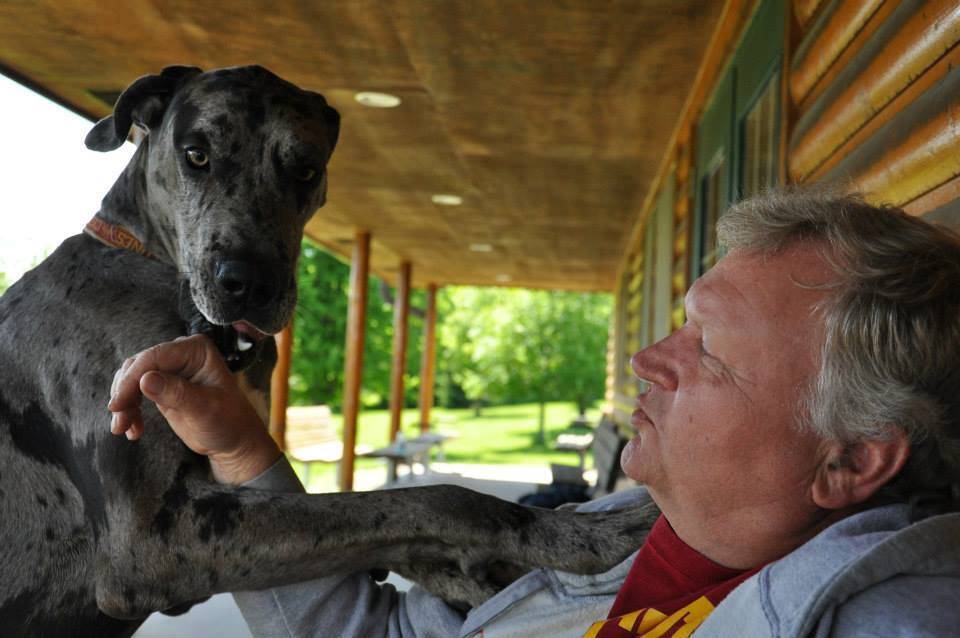
    Larry dog1

    Musings of a Pig Farmer by Larry Sailer

    This spring has been one of the most challenging in the 40 years that I have been farming!  With dry soils in March, we were optimistic that spring planting would be early.  Some of us were even concerned whether we had enough subsoil moisture to make it through until the spring rains arrived.  Then April Showers began to fall, and we experienced the wettest April on record for 141 years.  We haven’t had many days without precipitation, and the week of June 5th was the wettest on record in Iowa since July 2010.  As a result, the spring 2013 planting season (#plant13 on Twitter) is the most drawn out one that I’ve experienced.

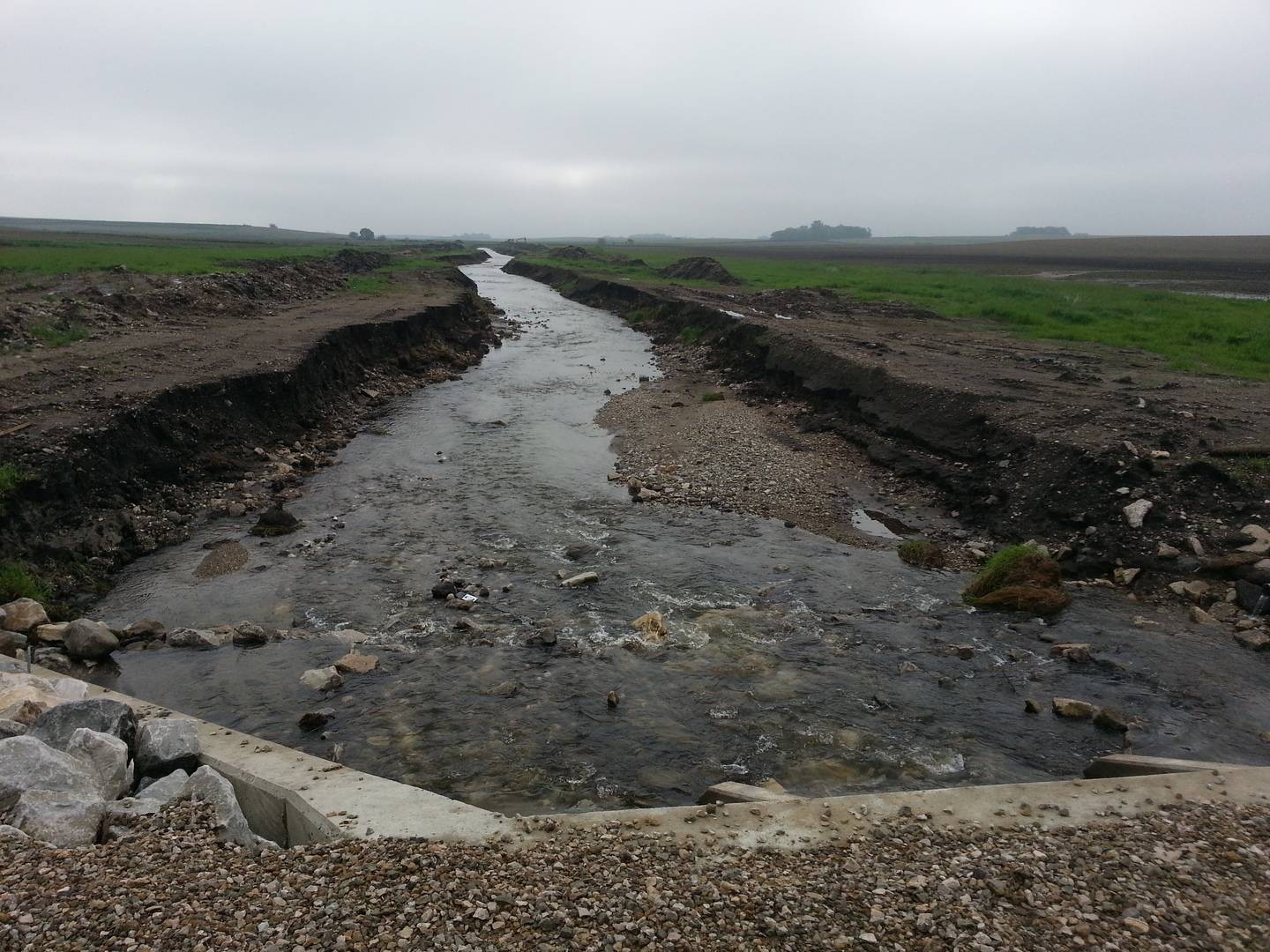
    I took this picture this morning after dropping kids off at bible school. This is the erosion that is happening due to all this rain.

    If I would’ve known then what I know now, I would’ve made different farming decisions.  (Hind sight is always 20/20, right?)  I started planning my 2013 crop last fall when my ground was extremely dry.  To conserve soil, save time and fuel, I had been farming no-till for several years.

    Years of no-till also meant that my soil was becoming compacted.  During the dry year, I could definitely see how compaction – which resulted when heavy equipment was driven across my fields to erect the wind turbines – affected plant growth and yield.  I could tell that around the turbines the plants’ roots couldn’t grow down, so those plants weren’t able to reach the moisture needed.  Deep tillage is the cure for compaction, so I chose “to make lemonade” during the dry fall.  I tilled to break up the soil and give the 2013 crop’s roots a chance to grow down into the soil for moisture and plant food.

    Other decisions that I made last fall include:

    • The number of acres to plant to corn or beans (crop rotation);
    • Fertilizer needed to feed the growing crops;
    • Weed control programs;
    • Seed selection; and
    • the list goes on and on!

    Thanks to Mother Nature, I’m now facing some of these same decisions again:

    • Do I switch relative maturity on my corn?
    • Should I switch from planting corn to beans?
    • Should I even plant at all?

    Today’s farmer must “farm the government.”  What I mean by this is a farmer must know all the rules and regulations that modify the way we farm to stay in compliance with the law.  Sometimes this is extremely difficult to do because some rules are so vague that they’re interpreted differently by the various people charged by the government to in force the rules.

    In addition to my crop concerns, thoughts of my livestock and family weight heavily on my mind:

    • What new viruses might my pigs get?
    • What fun memories can we make with our grandkids, who are here this week for their annual Bible school visit?
    • When will I find the time to move the horses?  (That reminds me, they really need vaccinations including worming medicine.)
    • When will it ever stop raining?  Soil is washing away!
    • How can I better manage my ground?
    • When is the first ISU football game, and how are Devin’s shoulders healing?
    • How is Jesse getting along the blood clots in her leg?
    • Oh no, when do I leave for Romania and the Ukraine?
    • Will I ever get the lawn mowed?!
    • When will be a good time to build that waterfall Janice has been wanting?
    • Which should I do first, finish remodeling her laundry room or building the waterfall?
    • Maybe I should go out and pick up all those rocks I pulled out with the ripper.  Wait, I can’t do that yet because the fields are just too wet.

    With all these thoughts racing through my mind, I’m beginning to feel a lot like the pig who was given a pancake!  In case you’ve never read that classic children’s storybook, If You Give a Pig a Pancake, written by Laura Numeroff, I’ll share a brief excerpt to give you an idea:

    If you give a pig a pancake, she’ll want some syrup to go with it. You’ll give her some of your favorite maple syrup, and she’ll probably get all sticky, so she’ll want to take a bath. She’ll ask you for some bubbles. When you give her the bubbles…

    Back to thinking about planting… Should I stop planting corn with only 10 acres left, or should I switch to beans?  Research shows you can get decent corn yields through mid-June, but according to the insurance programs, I should switch crops.  Right or wrong, government policy will make some of these planting decisions for me!

    Larry Sailer, Musings of a Pig Farmer

    June 11, 2013
    Agriculture, General, Industry News
  • Latham Hi‑Tech Seeds

    A Farmer’s Father’s Day

    Gadgets1
    Jeff Caldwell
     With permission from “A Farmer’s Father’s Day” by Jeff Caldwell, Multimedia Editor for Agriculture.com and Successful Farming magazine.
    © Meredith Corporation 2012
    Father’s Day is right around the corner! If you’ve got a father to shop for and he’s not the easiest person in the world in that department, let us help narrow down your search for the perfect gift, whether it’s a gadget for fun or a tool to put to work in the shop!
     A guy can’t work all the time. So, to that end, check out these fun gadgets for your farm father, from bacon-scented candles to cool grilling gadgets!
    Check out these 10 great gifts for dad.


    Is your farm father more of a tool guy than a gadget guy? Here are 10 new tools to help him make life easier in his shop or in the field.

    Spruce up your shop with these new tools.

    Team Latham

    June 10, 2013
    Agriculture, General, Industry News
  • Latham Hi‑Tech Seeds

    Finding the Silver Lining in Each Cloud

    Rewerts reunion1

    This past week has been very emotionally draining. Turning a year older at this age should be a good thing, right? Sending your daughter half way around the world to China is a good thing, right? Not having your crops planted by June 4 is… a real downer!

    It’s easy to let all of this dreary, wet and cold weather dampen one’s spirits. That’s why I’m making a conscious effort to look on the bright side of things:

    • Turning a year older is, of course, a good thing. I don’t like the idea of getting older, but it sure beats the alternative!
    • Sara’s trip to China to finish her schooling is really pretty cool! It’s a great opportunity for her to practice Mandarin and experience the culture.
    • As for the crops, I carry insurance and that should be enough to keep me farming another year. A year without crops is like going a year without a paycheck, so that’s why crop insurance is so important.
    Rewerts Family Reunion

    When I was younger, I didn’t always take time to think about the good times. The pressure of raising a family and trying to give them everything they want can be tough. Looking back, spending more time with them would have been nice. We did survive. Some scars, some great times. And we continue to get together and share the good and the bad, but I do enjoy time much more than I did!

    Over the weekend, my wife and I attended the Rewert family reunion. Good food, good times! Instead of focusing on how much we all missed my father-in-law, we reflected on all the good times we had and shared fun memories!

    There will certainly be more good times in the days and weeks ahead. I’m looking forward to attending World Pork Expo this week. Our grandkids, who are still young enough to attend Vacation Bible School, will stay next week with us. We always look forward to making good memories and enjoying family time. And, yes, I’m still hoping we’ll get seed in the ground this week.

    Hope you’re all looking on the bright side this week!

    Larry Sailer, Musings of a Pig Farmer

    June 4, 2013
    Agriculture, General, Industry News
Previous Page
1 … 48 49 50 51 52 … 85
Next Page

Latham Hi‑Tech Seeds

131 180th Street | Alexander, IA 50420

(641) 692-3258

SIGNUP FOR OUR NEWSLETTER
  • Contact
  • Legal
  • Dealer Center
  • Seedware Login
  • Latham Gear

© 2025 Latham Hi‑Tech Seeds. All rights reserved. | Iowa Web Design by Webspec | Privacy Policy

Latham® Hi-Tech Seeds is a trademark of M.S. Technologies, L.L.C., 103 Avenue D, West Point, IA 52656.