-
Latham Hi‑Tech Seeds
Day 2: Best of the Blogs: Students Have a Field Day in the Pumpkin Patch
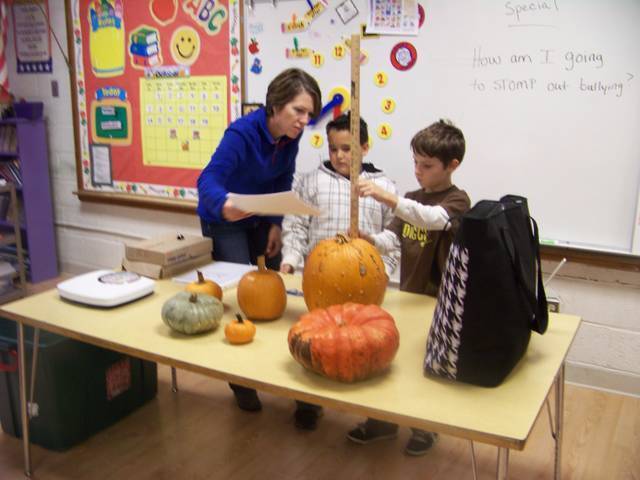
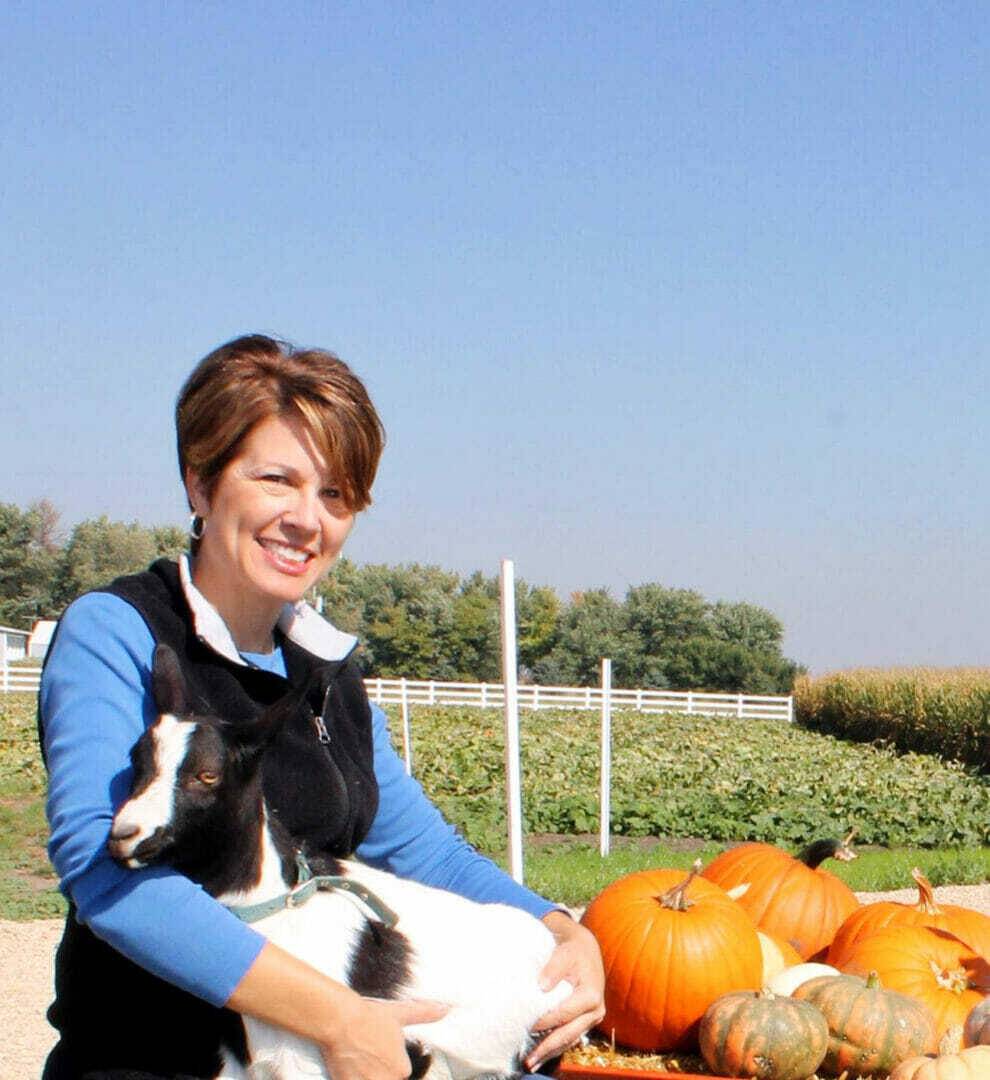
Supporting Ag-in-the-Classroom efforts is one way we #advocate. Kids need to learn where their food comes from. -
Latham Hi‑Tech Seeds
Day 1: Where Can a Website Take You?
Today is Day 1 of a 30-day blogging series initiated by Holly Spangler of Wallaces Farmer / Farm Progress magazines to help create understanding between farmers and non-farmers. Holly will be blogging about 30 Days of Five Things. For example: Five Things an Honest Farmwife Admits. Five Things You Need to Know at the Grocery Story. Five Things to Tell Your Friends about GMOs. The list just goes on…
Sounds like a blog worth reading, right? I’m looking forward to it. And I’ll admit, my own desire to create blog posts that people want to read every day is causing me a little anxiety. I tried brainstorming a list of topics. I’ve fretted about unique story ideas, but I finally decided that I’m simply going to write about 30 Days of Farming, Food & Family – because that’s what we do on TheFieldPosition.com.
Each Tuesday we’ll continue to post Larry Sailer’s “Musings of a Pig Farmer.” Now that harvest is wrapping up across Latham Country, we’ll replace our Wednesday Crop Report feature with an (Almost) Wordless Wednesday post to describe our soybean production process. Throwback Thursdays will give you a look into the Latham archives as we show how our seed company, as well as farming in general, have changed over the past 65 years. Each Friday we’ll continue to feature a farm family and a favorite recipe.
Since it’s the first Friday of November, I’m pleased to feature one of the farming community’s leading bloggers. Judi Graff, aka FARMnWIFE (@farmnwife on Twitter), describes herself as “a wife who farms in the middle of the Midwest. I love to show farmers and ag businesses how to make a website work for them. From simply telling your farm story to creating new business opportunities, it’s amazing where a website can take you.”
Oh, the places Judi has gone! She first launched a website in 2007 to show her three kids showing their cattle. Since her children are homeschooled, many visitors to her Kids Cattle website were others whom homeschool their children but aren’t familiar with farming. These “city moms” saw Judi’s posts about cattle shows and started asking questions about farming, which led Judi to start blogging in 2007.
Judi Graff Then in 2009, Judi started the “Big Green Combine” blog about the purchase of a pre-owned John Deere combine after her family had harvested for 15 years with red ones. That blog documented the harvest season, which turned out to be one of the most challenging seasons. Rains fell frequently that fall and harvest wasn’t complete until Dec. 13, after the ground had frozen, and they could reenter the fields. The “Big Green Combine” blog became a written history of the Graff family farm and will provide insight into the family’s heritage for generations to come.
A short time later, Judi started another site for her family’s farming operation. Because it became extremely challenging to keep all blogs current, she joined them together. Now all past and current posts may be viewed at Graff Land and Livestock.
“My focus for blogging is really on telling our farming story and recording events for generations to come. It’s our family’s heritage, and if we don’t record it, it will be lost,” says Judi. “If I can do some advocating along the way, even better. Blog on, baby!”
Due to her experience with most blogging platforms, other farmers began asking Judi how they could get started. That led her to create FARMnWIFE, where she helps farmers and ag business owners make their sites productive. She also gives presentations to social media and ag organizations like #140conference and AgChat. I had the pleasure of meeting Judi at one of these gatherings, and today I’m honored that she is sharing one of her family’s favorite recipes with us on TheFieldPosition.
“This recipe is always requested at family gatherings. It’s so silly how easy it is, but everyone loves it!” says Judi.
Simple and delicious… That’s my mantra in the kitchen. You can bet I’ll be whipping up this casserole for our family’s Thanksgiving potluck. Thanks again for sharing, Judi!
-
Latham Hi‑Tech Seeds
Rising to the (Blogging) Challenge!
“Two roads diverged in a wood, and I… I took the one less traveled by, and that has made all the difference.” – Robert Frost
 How true! This quote has become somewhat of a mantra since my husband, John Latham, made it part of a presentation last year as part of our company’s 65th anniversary celebration. John used the quote in reference to how our family-owned seed company takes the road less traveled by remaining independent and offering a variety of product and program options for our farmer-customers.
This particular Frost quote also is relevant to the people side of our business. Often times I meet some of the world’s nicest people while I’m visiting the smallest farming communities. I hear the most interesting stories while sitting in the buddy seat of a combine or across the table from a farm couple. These stories are what shape my blog, TheFieldPosition.com.
For the past five years, I’ve blogged in support of America’s family farmers. Often times I talk to industry experts and share their helpful agronomic tips. Other times I share recipes from meals I’ve enjoyed while visiting Midwest farmers. And when ridiculous laws or rule changes like those concerning Child Labor and School Lunches threaten our way of life, then I do what I can to give agriculture a voice.
I’ve never been known to walk away from a challenge, so that’s why I’m joining Holly Spangler’s 30-days of blogging. The objective is for agriculturists to share what they do to help promote understanding among our non-ag friends. Get ready to agvocate!
During this 30-day challenge, I will feature farm families and their favorite recipes on Fridays. I’m looking forward to “Slow Food Sundays” when I highlight recipes we’ve shared to bring families together for a healthy meal and a few hearty laughs. On Tuesdays, Larry Sailer will continue to post his “Musings of a Pig Farmer” blog. The rest of the days, I’ll address topics of interest to readers.
Walk along the road less traveled with me! As Janice Person wrote, “While I want to do this daily, I also want them to keep readers by making them good enough to be read!” The best way to assure these topics are relevant and interesting is for you to send me your story ideas.
-
Latham Hi‑Tech Seeds
Size Doesn’t Determine Worth

 “Musings of a Pig Farmer” by Larry Sailer
#Harvest13 is winding down, but there’s still combing to be done on my North Central Iowa farm. All this “windshield time” has given me so many things to think about, and so many ideas for today’s blog have come to mind. Since this evening’s #AgChat discussion will focus on family vs. corporate farms, it made me reflect upon last week’s AgChat discussion about the size of farming and ranching operations.
Ownership nor size determines a farm’s worth. Farms, big or small, can be good or bad – or simply average. Management makes the difference.
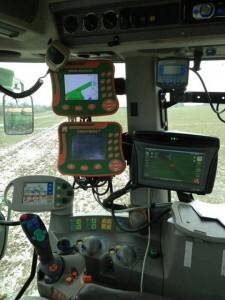
GPS guidance, weather, computer, and more technology is available in many tractor cabs today. When I was young, I grew my farming operation to about twice the average farm size in just under 10 years. Growth can lead to problems in any business, and farming is no different. Farming is extremely capital intensive. Even in the 1970s, farming wasn’t a cheap business to expand. The 1980s Farm Crisis with high interest rates took a toll on my operation. Since then, my operation has been close to what is considered an average-size Iowa farm. Herein lies another problem…
To use most of today’s farming technology, an operation must be large enough to spread out the cost. I’m not a large farmer, so I don’t have large machinery. That’s not a problem for me, but it is a problem for others in the industry who assume bigger is better.
My point is that farmers come in all sizes and operations come in all types. Each farmer must learn to adapt and do what works for him or her. They may find that new equipment is the best fit for their operation, or they may scour the combine grave yards in search of replacement parts. Perhaps a farmer may find his niche raising crops or livestock for a certain market. In the past, I’ve grown seed stock for seed companies and breeding stock for suppliers of hog genetics.
There is technology that can be used by all farmers of all sizes. At World Food Prize Tweet Up where I recently met Dr. Robb Fraley, he made a comment that has stayed with me: The technology he has helped develop is good for operations of all sizes. Seed technology is size neutral.
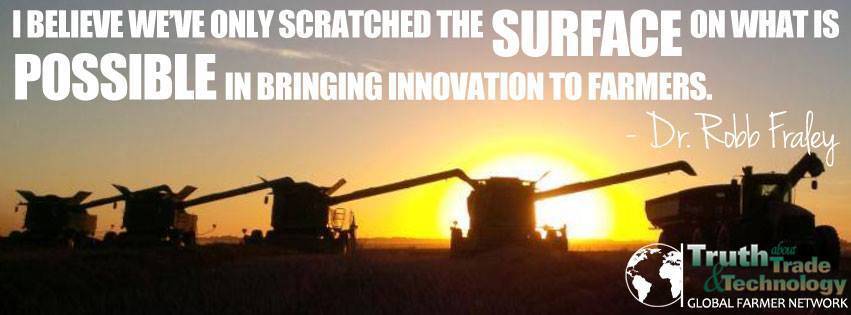
There is a place for every size of farming operation. With only 28% of the world’s land mass suitable for growing crops, we’re going to need every farmer to help feed the growing world population. I’m certainly looking to see how to make my farm better! Sometimes adjustments must be made on any farm, regardless of its size. Times change, and farming never stands still.
-
Latham Hi‑Tech Seeds
Celebrating Pork Month with Sausage & Squash Soup
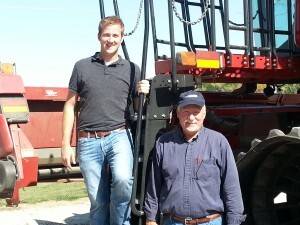
Landon Aldinger is joining his father, Mike, in the family business. Precision Farming Inc. sells Latham® seed and offers Seed-2-Soil® services. It’s pigskin season and October pork month, which is a fitting time for the Aldinger family of Iowa Falls in North Central Iowa to celebrate the homecoming of their son, Landon.
Landon’s interest in farming began as a young boy and continued as he attended Iowa State University and earned a bachelor’s degree in Ag Engineering. He then moved to Minneapolis and has served as a Senior Design Engineer at Toro Compan for the past seven years.
Landon has continued to come home and assist his father, Mike, during the planting and harvest seasons. Now he will play a more active role in the farming business, as well as partner with his father to sell Latham® seed and to place seed products.
“We’ve been planting Latham seed products on our farm for nearly 40 years,” says Mike Aldinger, who began selling Latham® brand products in 1977 while his father operated a fertilizer and chemical retail business. “Landon is very familiar with the broad offerings available to our farmer customers. Plus, he has first-hand experience with the products as he has farmed his own ground for the past three years.”
The father-son team has become increasing involved with Latham Hi‑Tech’s hallmark Seed-2-Soil® program over the past three years. They say it’s a great tool to help compile yield history, as well as to implement variable rate planting and foliar feeding.
“With Landon’s passion for engineering and new technology, he is excited to begin working in this area and is eager to introduce others to the tools available through the Seed-2-Soil program,” says Mike. “Together we hope to help our Precision Farm Inc. customers make even more informed management decisions that will increase their profit per acre!”
To learn more about the Aldingers, click here. Their family motto is “Work hard, play hard and eat well.” Mike’s wife, Donna, is known for making delicious and wholesome meals. Today this pork-producing family is sharing a recipe that’s sure to help you warm up during these cool fall temperatures. I, for one, am eager to try this recipe for Squash and Sausage Soup. In fact, it’s on the menu for lunch tomorrow!
-
Latham Hi‑Tech Seeds
Work Ethic Would Help Solve Government’s Woes
“Musings of a Pig Farmer” by Larry SailerMany people say “windshield time” gives them time to think. Imagine how much “windshield time” the average farmer has during fall harvest. I’ll tell you, it’s enough to solve the world’s problems – or at least provide some perspective on the mess our government has created!
Most Americans must balance their personal budgets, which requires reducing expenditures and increasing revenue whenever possible. That might mean someone picks up a second or third job. Others might forgo new clothes or a new car in favor of second-hand clothing or a used vehicle. But, our government doesn’t seem to take this same common sense approach to resolving its financial issues.
Two weeks ago the U.S. government “shut down.” From what I gather, about 17% of the government is staying home yet it doesn’t appear that cut is enough. Why not? Many government officials blame the lack of job creation (real job creation). I also believe jobs are key – one key.
While I’m a pig farmer and not an economist, I understand that good jobs fuel tax revenue! More jobs equal more income for the budget, but creating jobs isn’t as simple as it sounds.
My experience running a construction business during the 1980s Farm Crisis provided me with insight on the problems a business owner can have creating jobs:
- It’s a challenge to find employees competent enough to follow directions and to complete a given task independently. Education is failing our working class. (Oh… did I say I would be politically correct? I’m choosing to be truthful instead!)
- Too many employees prefer to collect a paycheck rather than earn their pay. Too many employees today believe they deserves everything (i.e. is entitled) from their employer. Not all jobs are easy. Construction, like farming, requires a lot of manual labor. It’s hard work, so many of my new hires wouldn’t return on Day 2. It wasn’t uncommon for a guy to work for a week or two and then not return once he received his first paycheck. Others would quit as soon as their child support papers arrived.
- The third problem I had was insurance. My insurance bill was staggering as I had insurance on my work trucks, plus liability insurance and unemployment insurance.
- Energy costs can really add up. We had business in 10 states involving a lot of travel.
- The fifth problem I had was government regulation! It was the biggest problem because government regs effect all the other problem plus some.
Less government and less regulation would create more jobs, leading to more tax revenue. More tax revenue equals less debt.
This concept sounds so simple, doesn’t it? Yet our illustrious leaders in D.C. can grasp it. They don’t understand that job creation alone isn’t enough to solve our federal deficit. Why? Because the more revenue generated by the U.S. government, the more money it spends! Saying we need to cut spending won’t solve a thing because talk is cheap.
In an article published October 18 by the Wall Street Journal, former chairman of the Federal Reserve Alan Greenspan says he thinks mistakes were made quite some time ago and the situation has escalated over recent years. He said his biggest revelation came about a year ago when he was reviewing gross domestic savings numbers. He found the increase in entitlements has closely corresponded to a decline in the country’s savings.
“We had this extraordinary increase in benefits, with each party trying to outbid the other,” Greenspan is quoted in the WSJ. “That practice has been eroding the country’s flow of savings that’s so critical in financing our capital investment.” The decline in savings has been partly offset by borrowing from abroad, which brings us to our current foreign debt: $5 trillion and counting.”
Greenspan says he is baffled by all the blame that has been piled on him for the current economic situation. When a man of this stature can admit he is flabbergasted, we should take note.
But what really struck me when I read the October 19th WSJ article is how fear and emotion are the driving forces that shape people’s opinions. This is very true relating back to last Tuesday’s blog. Concerns over GMOs in foods is totally about fear! Science takes a back seat and doesn’t get read, just like Alan Greenspans’ rebuttal to Professor Taylor’s statement about the housing bubble.
-
Latham Hi‑Tech Seeds
State of the 2014 Seed Supply

By Mark Grundmeier, Soybean Product Manager
#Harvest13 is underway across the Upper Midwest. Many farmers prepare to sell their crops – either now or sometime in the near future. But at family-owned Latham Hi‑Tech Seeds, the 2013 #soybean crop becomes our 2014 seed supply.
Production growers have started bringing in more bushels than we had expected, and we’ve been pleasantly surprised with the results. The size of the soybeans is larger than we had expected as dry years often produce small seed sizes. We’re also happy with the preliminary condition of the seed beans as they’re coming into our plant.
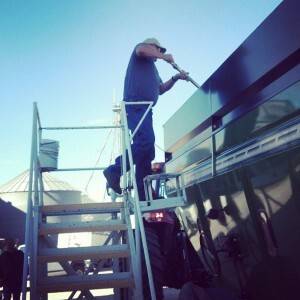
Product Manager, Mark Grundmeier hand probes a load of freshly harvested Latham Hi‑Tech Soybeans rolling into the plant. As the seed travels from our growers’ fields through our processing plant, we aim to be as gentle as possible to preserve the quality of the soybeans and to avoid cracking the seed coats. Some of our handling equipment is the same as that used by a maker of corn flakes. You know it’s gentle if it keeps a corn flake intact!
Farmers who planted Latham® Hi‑Tech Soybeans in 2012, for example, noticed a drastic difference when our soybeans had 10% higher germination than our competitors. We heard more than one customer tell us he was surprised when the actual germination was higher than the number we had placed on the tag. The reverse situation occurred on the competitor’s soybeans, and the tag on the bag actually showed the germination to be 4% better than the true germ.
From the growers who take the utmost care of our foundation seed, to the individuals who hand-test the raw product, we follow a stringent, quality-driven process. Click here for more details about our hands-on process.
-
Latham Hi‑Tech Seeds
4-H Teaches Youth Lessons Beyond the Show Ring
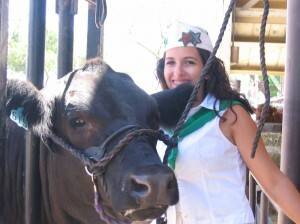
October is National 4-H Month. Thanks to Jenny Dewey Rohrich, one of America’s leading #agvocates, for sharing her story with us here on TheFieldPosition.com. It’s National 4-H Month. That’s why I, Jenny Dewey Rohrich, am celebrating!
As a loyal 4-H member, I pledge my head to clearer thinking, my heart to greater loyalty, my hands to larger service, my health to better living for my club, my community, my country, and my world.
Although I was a 4-H member many years ago now, I still remember the pledge by heart. I guess saying it for 9 years once a month does that to you. I became a 4-H member at nine years old and remained in 4-H until I graduated high school. I know animal projects tend to take the spotlight when you talk about 4-H and people outside of the program just think it’s a program to raise animals, show them, and sell them at your local fair. Let me tell you 4-H is so much more than that…

-
Latham Hi‑Tech Seeds
Recognizing People for Improving Quantity & Quality of Food in the World

“Musings of a Pig Farmer” by Larry Sailer
In my blog post last week, I pointed out that farmers can’t just shut down and questioned how civilized is a society whose government shuts down. This week I promised last week to solve our federal government’s debt problem but… that must wait a week. Today I can’t pass up the opportunity to share my thoughts about the World Food Prize and the #borlaugdialog Tweet Up I attended yesterday.
When I first received the invite to yesterday’s Tweet Up, I thought, “I can go if it rains.” But the more I thought about it, the more I realized it was something that I really want to attend. After all, I had planned to get done combining beans over the weekend and my corn wasn’t yet ready. That plan sounded reasonable until a few setbacks occurred: (1) my combine broke down and (2) I had to stop and watch my grandson Devin and his ISU teammates play football, and kickoff was scheduled for the silly time of 11 AM Saturday. Before I knew it, I was down an entire day’s worth of bean combining.

There’s nothing better than eating bacon in a coffeehouse promoting a vegan men The next problem I encountered was the location of the World Food Prize Tweet Up because this particular coffee shop advertised a vegan menu. No chance of me walking through the door of such an establishment! After pointing this out to two Tweet Up organizers, Janice Person and Deb Brown assured me BACON would be served there. Game on!
This Tweet Up gathered together a group of 140 Conference speakers in honor of World Food Prize Week. One of the three laureates this year is Robb Fraley, PhD. Dr. Fraley, is responsible for global research as Executive Vice President and Chief Technology Officer. He has worked for Monsanto for 30 years and was on the ground floor of biotechnology.
Often referred to as the Father of Biotechnology, Dr. Fraley has literally changed the world of agriculture. Yet, the one thing that struck me when he visited with us during coffee is that Robb grew up on a small farm about 100 miles south of Chicago. He’s an old farm boy like me! Robb reminisced about growing up in a small town with just 17 students were in his graduating class. He developed a strong work ethic by growing up in a farming community.
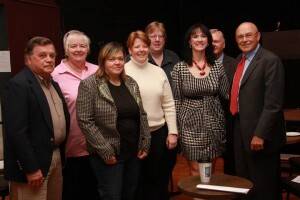
The attention of the world is focused on Iowa this week, as dignitaries around the globe gather in Des Moines for the World Food Prize, which has been called the Nobel Prize for Agriculture. Dr. Robert Fraley was named a 2013 World Food Prize Laureate. This Illinois farm boy and Ph.D. scientist has dedicated his career to advanced crop improvement techniques that are helping feed a hungry world. Pictured from left to right: Doug Getter, Former executive director of the Iowa Bio Tech Industry and current Webster City Councilman and Deb During Brown, Laura Lloyd Abarr Gaulke, Janice Person, Patrick Palmer, Darcy Maulsby, Larry Sailer and Robert Fraley. Another person attending this Tweet Up from Monsanto was Janice Person, Social Media Director for Monsanto. Anyone who has ever been around Janice knows what a sweet, sincere and genuine person she is. A third person in attendance at yesterday’s Tweet Up was Tami Craig Schilling, Technology Communications Lead for Monsanto. Tami and I have been friends for quite some time on Facebook, and I was glad to finally meet her in person. Online she often talks about being a farm wife, and I know her family is extremely important to her.
Why am I explaining so much about these Monsanto employees? Monsanto has been demonized as a huge corporation, trying to take over the world’s food supply! The truth is, this corporation is made up of people like you and me. They have families. They have social lives. And, yes, they might even have a few faults – just like you and me.
One statement that Robb said stuck with me: “GM crops are the least size-sensitive of any crop. Small farmers, as well as large farmers, can use them. They are just seeds, and any farmer knows what to do with a seed.”
Please do your own research on the topic of GM crops. Below are a links to resources:
And if you have more questions, visit directly a farmer. There are some great chat boards where you can ask questions and receive straight answers. Please do NOT just listen to some emotional jargon provided by a special interest group or someone with a bone to pick!
