Latham Hi-Tech Seeds

(641) 692-3258

  • Home
  • Products
    • Corn
    • Soybeans
    • Alfalfa
    • Corn Silage
    • Seed Guide
  • Performance
  • Find a Rep
  • Media
    • Blog
    • News
    • Videos
    • Podcasts
    • TECHTalk
  • About Us
    • Company History
    • Our Mission
    • Careers
    • Become a Rep
    • Sowing Seeds of Hope
  • Contact Us
  • Latham Hi‑Tech Seeds

    Nothing fishy about this soy success story

    Soy Fish Feed Resized

    Guest Blog by Aaron Putze, Iowa Soybean Association

    When soybean farmers say their “real” customers are pigs, they truly mean it.

    That reference to the importance of swine rations in driving demand for soy, however, is in no way a slight to other important markets.

    That includes those with fins, scales and gills.

    As developing countries strive to feed their growing populations more protein, fish is increasingly on the menu . . . and not just species harvested from streams, rivers and oceans.

    According to the Food and Agriculture Organization, global average consumption of fish and other seafood reached a record high of 20.5 kilograms per person in 2019. That amount is expected to increase as the quality and affordability of fish improves.

    Enter Iowa and U.S. soybean farmers.

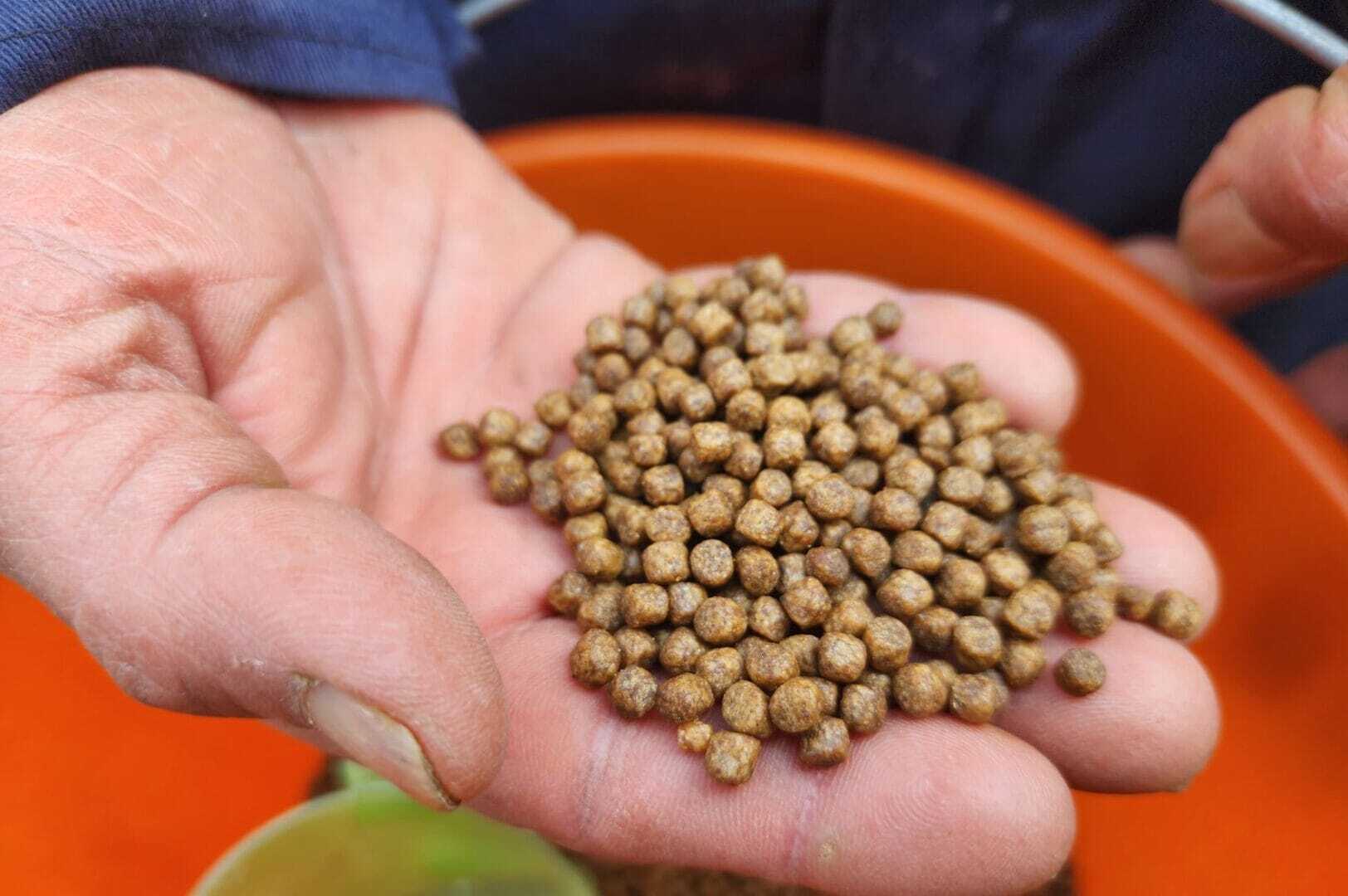
    To meet the growing demand and taste for quality, farm-raised fish, professional feed using ingredients other than fishmeal and fish oil are coming into vogue. Soy is the most-used protein source in aquafeeds worldwide. According to the Global Seafood Alliance, soybean meal, soy protein concentrates, and soybean oil are increasingly go-to feed ingredients required for many farmed species.
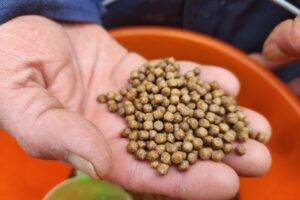
    Soy Fish Feed Resized
    Soy Fish Feed

    Research funded by soybean farmers has played a key role in developing this win-win demand driver. More appetite for sustainably produced and healthy fish is a boon to soybean demand.

    In addition to developing soy-based feeds ideally suited for hungry fish and shrimp, soybean farmers have also played a key role in developing new ways to produce farm-raised fish. They are advancing educational activities carried out by the U.S. Soybean Export Council (USSEC) to train people in developing countries on how to manufacture professional feed using soy.

    Iowa soybean farmers take great pride in the role they’ve played in developing better methods and feed for producing fish.

    But the story doesn’t end there.

    Soy Excellence Centers (SECs) were launched by USSEC in 2019. They offer professional training in a variety of curriculums including feed milling, soybean processing and refining and poultry, dairy, swine and fish production.

    More than 6,500 trainees have participated in SECs. One such center operates in Egypt – a facility I was able to see firsthand during a trade mission to the country of 110 million earlier this year. Better training, fish feed and production methods have had a profound impact. The metric tonnage of farm-raised fish production has increased from 600,000 in 2005 to nearly 1.5 million in 2019. Production is projected to surpass 2 million metric tons by 2030.

    Aaron Putze Resized
    Aaron Putze in Egypt at a Soy Excellence Center

    Farm-raised fish account for almost 80% of Egypt’s seafood market, up from 50% in 2012. Tilapia is the choice of 80% of Egyptians. Other fish species include catfish, sea bass, mullet and carp. Shrimp production is gaining in popularity as farmers seek to diversify and capture greater premiums and profits.
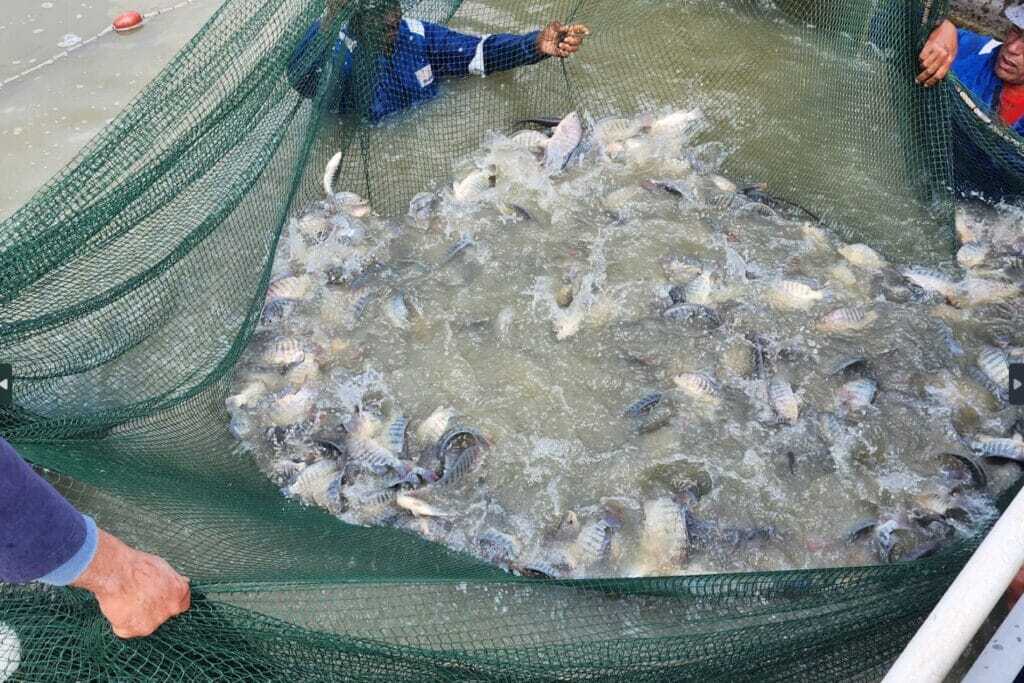
    Fish Harvesting Resized
    Harvesting Tilapia in Egypt

    Give the people of a country a fish, and they’ll eat for a day. Teach them how to produce fish (and poultry and milk), and they’ll eat for a lifetime.

    That’s the power of soy and Iowa’s soybean farmers.

    Aaron serves as Chief Officer of Strategy and Brand Management for Iowa Soybean Association. You can reach Aaron at 515-975-4168 or aputze@iasoybeans.com.

    All this talk of fish made us hungry for a yummy Friday recipe! Check out this Lemony Shrimp Scampi Linguine from The Iowa Food and Family Project.

    Webspec Admin

    November 1, 2023
    Agriculture, Crop, General, Industry News, Soybeans
  • Latham Hi‑Tech Seeds

    Empty Nesters Make Room for Hobbies

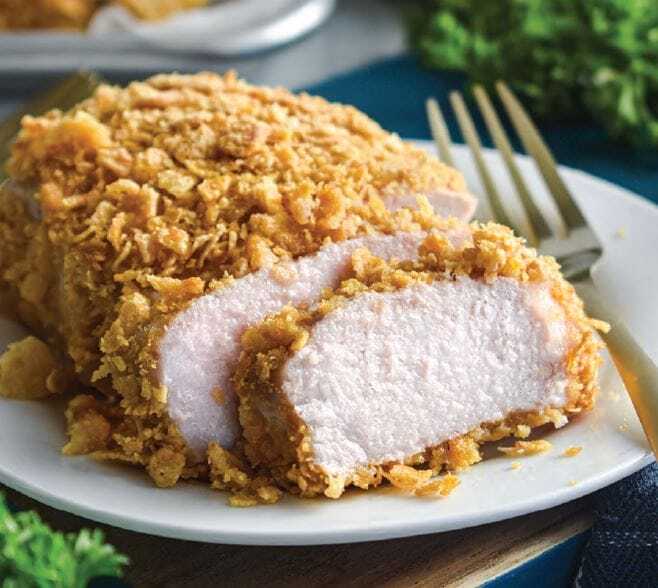
    Crunchy Pork Chops

    Steve and Jodi Roelofs live in a garden spot of Minnesota.

    The couple raised their family in a farmhouse next door, where Steve grew up and still raises hogs. That house serves as Steve’s farm office and Jodi’s workshop. The former kitchen and living room are filled with projects in various stages of re-purposing, including chalk-painted chairs to be sold at Hilltop Florist and Greenhouse in Mankato, where Jodi has worked for more than 20 years.

    Jodi studied graphic arts at South Central College in Mankato where she met Steve, who studied ag production. She says she began working part-time at flower shops when her kids were small because it allowed her to enjoy adult conversation and provided her with a creative outlet. The scale of Jodi’s gardens grew along with her children.

    The Roelofs are the proud parents of four sons: Tony, Christopher, Bryant and Matthew. Jody recalls good times serving as a 4-H leader from the time their oldest son was 10 years old until their youngest son graduated in May 2017.

    “We had so much fun at the fair with our kids,” said Jody, who grew up on a Minnesota dairy farm and belonged to 4-H.

    Family 1
    The Roelof Family

    Now these empty nesters have adjusted to a new way of life. When their oldest son went to college, the family stopped farrowing. Jodi had been working in the farrowing barns, so this change gave her the opportunity to return to work in a floral shop. Steve and his brother, who had been farming together in a family corporation, decided to split the operation. Steve raised feeders and his brother raised the finishers.

    The Roelofs in 2005 stopped farrowing and transitioned to a wean-to-finish operation. Since 2010, they have been custom finishing feeder pigs.

    “This arrangement works well for us,” Steve says. “We’re responsible for the day-to-day care of the feeder pigs but we don’t have to assume any of the risk.”

    Raising pigs, as well as selling Latham® brand seed, complement the family’s grain operation. Both enterprises allowed the Roelofs to cut expenses while increasing income to allow their son an opportunity to farm.

    “We really liked the idea of working with a family-owned seed company,” Steve says.

    The Roelofs enjoy outdoor activities all year long, from snowmobiling to water skiing. They also enjoy family dinners — especially this recipe for Crunchy Pork Chops.


    Shannon Latham

    October 27, 2023
    Food & Family, General, Pork, Recipes
  • Latham Hi‑Tech Seeds

    Like Farming, Cooking is a Multi-Generational Love

    Capture

    The Jacobsen family has been producing corn, soybeans and pork on an Iowa farm for almost as long as Iowa has been a state.

    Doug and Carolyn Jacobsen began growing seed beans for Latham Seeds in the 1970s. They were the third generation to work the family’s Iowa Century Farm. Their son, Corey, and his wife, Kim, began growing seed beans in 1986 when he rented his first farm near the century farm.

    While studying Ag Business at Iowa State University (ISU), Corey helped plant four crops and maintained his breeding-to-finish swine operation. He traveled home each weekend to do chores and made countless other trips whenever needed for breeding or farrowing. After graduating from ISU, Corey worked at Brenton Bank in Clarion and then at Dows United Bank & Trust, where he retired as bank president in 2000.

    Capture

    That’s when he started farming full time with Kim, who retired as a high school math teacher and coach at Clarion-Goldfield Dows.

    Corey and Kim credit 4-H for laying the groundwork for future farmers, as well as for their three boys: Ben, Matthew and Caleb.

    “Through 4-H, our boys learned skills they use on the farm such as welding, woodworking, small engines, along with the communication and record keeping,” Kim says. “We feel blessed that they grew up on the farm learning the value of honesty, hard work and sacrifice to accomplish goals. We couldn’t ask for anything more.”

    Family favorite recipes are often passed down through generations. The Jacobsens are doing just that with these sausage and cheese egg roll wraps.

    Shannon Latham

    October 18, 2023
    Breads/Breakfast, Food & Family, General, Pork, Recipes
  • Latham Hi‑Tech Seeds

    Multiplex Gene Editing: How It’s Transforming the Future of Farming

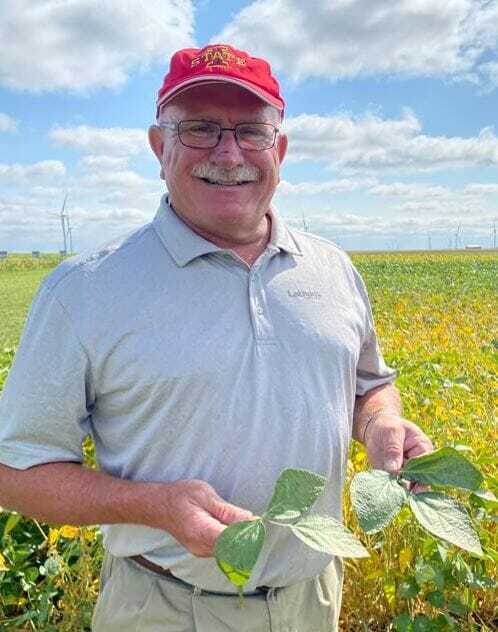
    Steve Resized #3

    Steve ResizedAt a time when the world’s population is increasing, cropland is decreasing and climates are changing, it’s more important than ever to equip farmers with new technology and tools to take the guesswork out of planting decisions. One such tool is multiplex gene editing, which quickly adjusts a plant’s DNA to improve its resiliency and to use fewer natural resources like land and water.


    Multiplex gene editing turns up the volume on regular gene editing by implementing multiple types of edits to plant genomes. For example, vegetables such as broccoli, brussels sprouts and kale all started from different parts of the same wild mustard plant — but didn’t fully develop into their own varieties until breeders chose to amplify certain traits. Today’s corn is no different, having been bred from a plant that looks nothing like corn looks to us now.

    Farmers recognize benefits from multiplex gene editing more quickly because no government agencies are involved. Additional benefits include:

    • More uniform seed size, which increases planting efficiency.
    • Increased water utilization.
    • Changing the leaf shape, which allows for better light interception and photosynthesis to improve yields.

    With a high-performing lineup designed specifically for your field, Latham Hi‑Tech Seeds is well-positioned to increase yields — year after year.

    Contact Latham’s product team or your RSM/DSM for more details on multiplex gene editing and other pioneering advancements that we’re working on for your future!

    steve-sick

    October 12, 2023
    Agronomics, Corn, Crop, General, Industry News, Seed Technology, Soybeans, Tech Tuesday
  • Latham Hi‑Tech Seeds

    A Tradition of Growing Only the Best

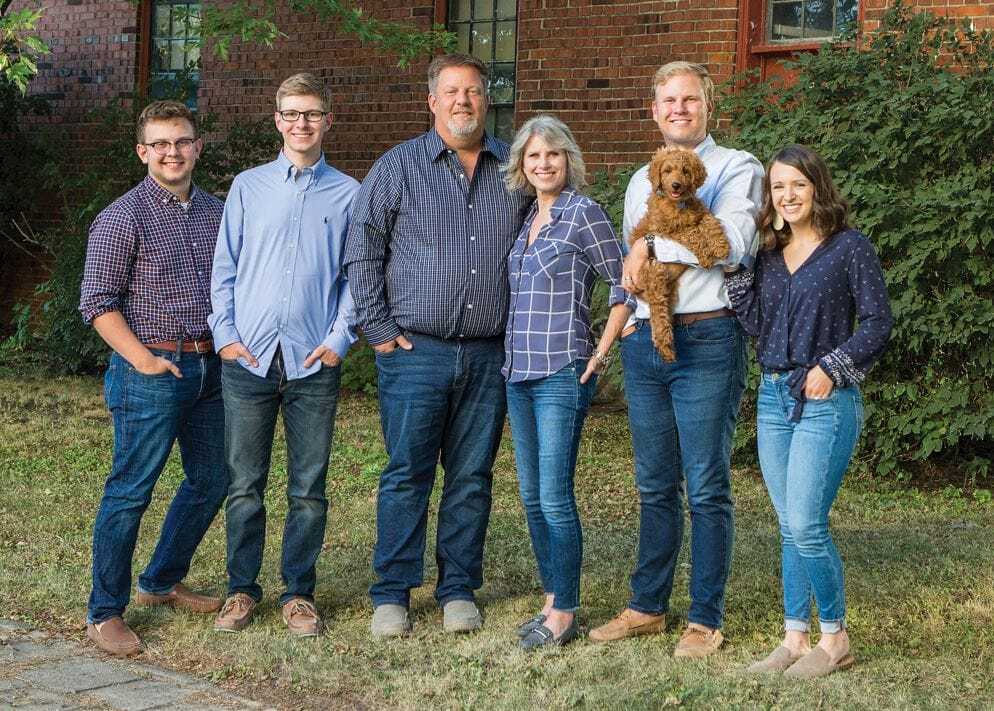
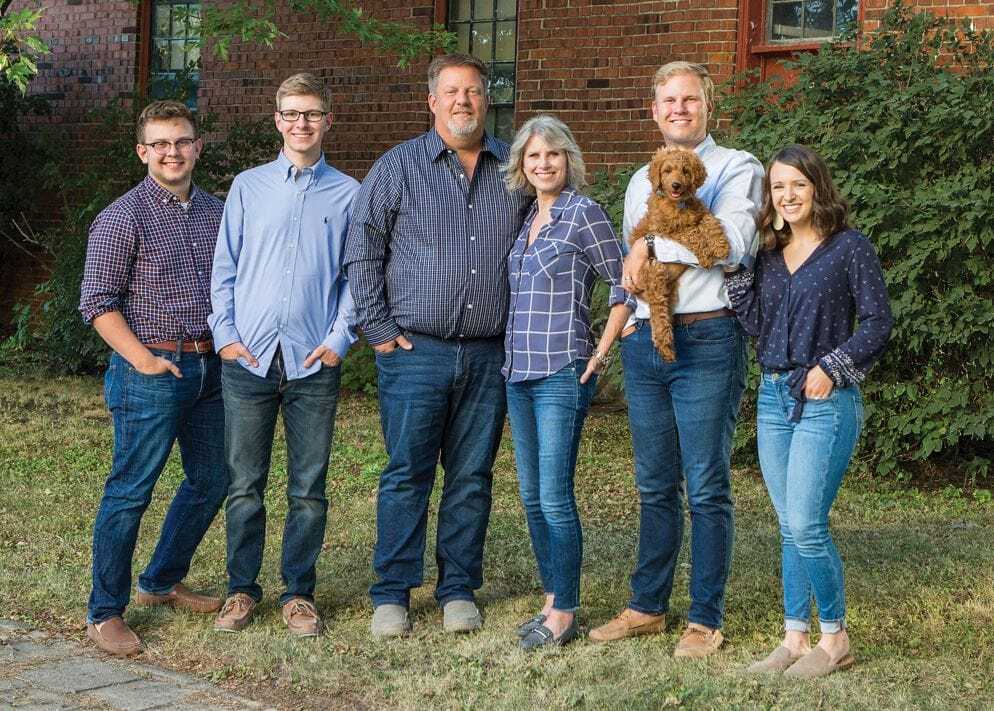
    Steve Bruns Family

    Growing Latham’s high-quality soybeans has become a legacy for many farm families, as Steve and Karen Bruns demonstrate from their North Central Iowa farm.

    “I have enjoyed working with everyone at Latham Seeds,” says Steve Bruns, who’s been a contract grower of Latham® seed beans since 1999. While he was in high school, Steve worked on weekends and during the summer for Latham grower Hugh Porterfield. Steve later custom-farmed Hugh’s ground for 20 years.

    “The people I work with at Latham are the ones I’ve known since grade school,” adds Steve, who grew up northeast of Alexander, Iowa, on a farm his grandfather purchased in 1949.

    Finding Farming Again

    Like many young people, Steve left the area for a few years before he decided to choose farming as his livelihood. Sadly, Steve’s father developed cancer around that same time.

    “I had to quickly take over the farm, right in the middle of the Farm Crisis,” says Steve, whose father, Dean, was just 44 years old when he passed. “Luckily, I didn’t have the chance to accumulate a lot of debt, which forced a lot of our farmers out of business during those turbulent years.”

    What’s Next for Pork Producers

    During the 1980s and 1990s, the pork industry changed a lot. Contracts to hog producers allowed for a steady income and took away the market swings. Steve got back into the pork industry in 2000 and operated a 4,000-head site for 20 years. As a top Iowa pork producer, his family’s photo was displayed outside the Animal Learning Center at the Iowa State Fair in 2005.

    Although he’s no longer producing pork, Steve uses hog manure for fertilizer on as many acres as he can.

    “Hog manure gives an extra yield bump if conditions are right when it’s applied,” he says. “We’ve seen a 10- to 20-bushel yield bump when manure has been applied under the right conditions.”

    The Bruns Family

    Now that he has retired from pork production, Steve hopes to have more time for golfing, fishing and hunting. Karen retired from the postal service after 21 years. She enjoys sewing, walking, gardening, traveling and spending time with family. The couple has three grown children: Eric, Jami and Lindsey.

    Steve Bruns Family
    The Bruns Family

    The Bruns family enjoys gathering at the farm for great meals like this Ground Pork Casserole, a recipe passed down by Steve’s grandmother Elsie.

    Shannon Latham

    October 5, 2023
    Food & Family, General, Pork, Recipes
  • Latham Hi‑Tech Seeds

    Deliveries With a Personal Touch Keep Him Trucking Through Latham Country

    Horizontal

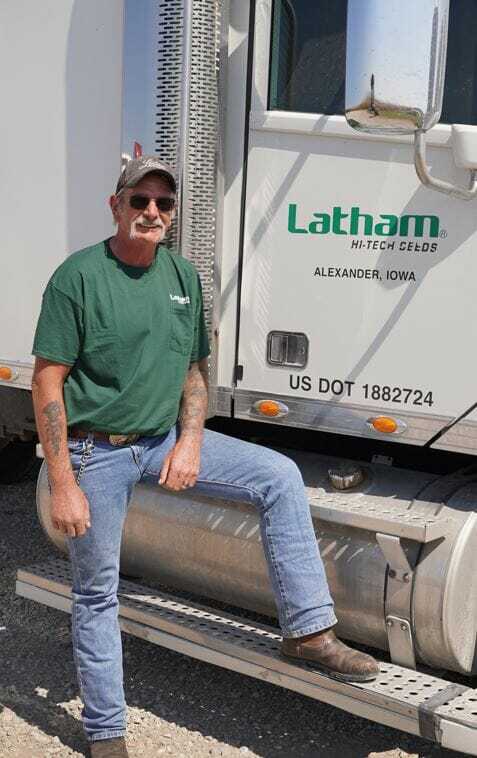
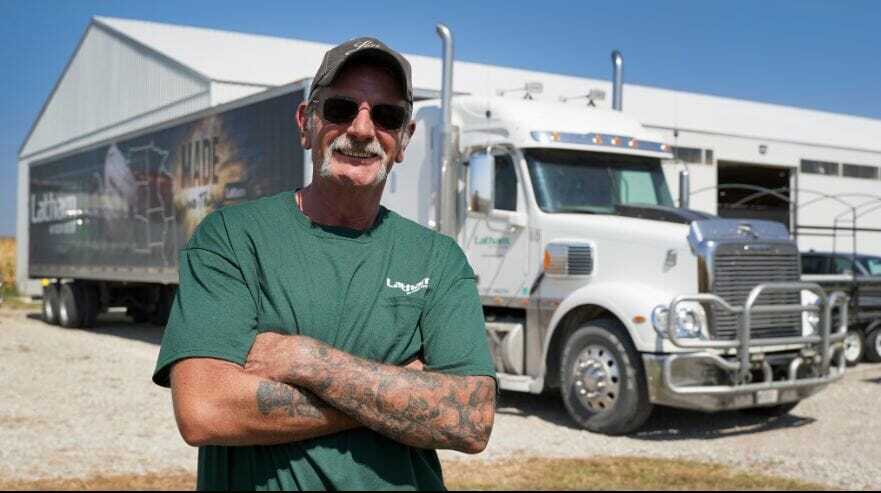
    Growing up, Steve Sweet spent every summer and school break riding along in the cab of his father’s big rig as he hauled goods or chemicals across the country. By the time Steve was in junior high school, he’d seen all 48 contiguous states — and figured out what his lifelong career would be.

    “I followed in his footsteps,” Steve says of his dad, Norman. “I’ve been driving now for over 33 years.”

    Like his father, Steve started driving dump trucks when he was 18. He went on the road at 21, traveling for months at a time throughout the United States, Canada and Mexico. He hauled mostly meat and produce at first; then propane, grain and livestock. What he really enjoyed, however, was delivering to farmers.

    “There’s just a much more personal touch,” Steve says. “I like getting to know the people rather than just dumping it off and saying, ‘See ya.’ With other hauls, the chances of seeing the same people again are slim to none.”

    That’s why, when Steve saw that Latham Hi‑Tech Seeds was looking for a truck driver in 2021, he applied for the job. He works full-time for Latham now and knows all his customers (and most of their families) by name. Roughly half of the dealers he delivers seed to are shorter runs, which allows him to visit a little more at each stop.

    Vertical Resized

    “It’s nice to be able to chit chat a little after unloading,” he says. “The people are just my favorite thing about Latham.”

    Steve grew up in Roland, Iowa. He lives just four blocks from his childhood home. He enjoys helping on his in-laws’ nearby farm, where they have 25 head of cattle and 80 acres of corn plus another 80 acres of pasture ground. He and his wife, Tasha, have five grown children and six grandchildren. Tasha is a case manager for Telligen, a national healthcare management company.

    The truck driving career that Steve decided on as a young boy continues to deliver pride and satisfaction every day. Not only does it keep him going, Steve knows it also keeps the country going.

    “Anything you eat, anything you own . . . at some point or another it’s been on a truck,” he says. “Just like dad, I’ll be doing it until I retire. And I’ll be telling all the stories of everywhere I’ve been.”

    Since Steve’s job often requires him to default to quick, pre-packaged gas station meals like pizza and burritos, he has a long list of his favorite homemade meals. One side dish that is the family’s go-to is Buttery Sweet Potato Casserole.

    Shannon Latham

    September 29, 2023
    Food & Family, General, Latham News, Recipes, Sides
  • Latham Hi‑Tech Seeds

    Farming and Football Are (Still) Mauch Family Traditions

    Mauch 2

    No Football Championship Subdivision (FCS) program has claimed more national championships than North Dakota State football. The Bison won nine FCS titles from the 2011-21 seasons.

    Those stats are treasured by fans of the NDSU Bison, but they have a much different meaning today for the Mauch family of Barney, North Dakota.

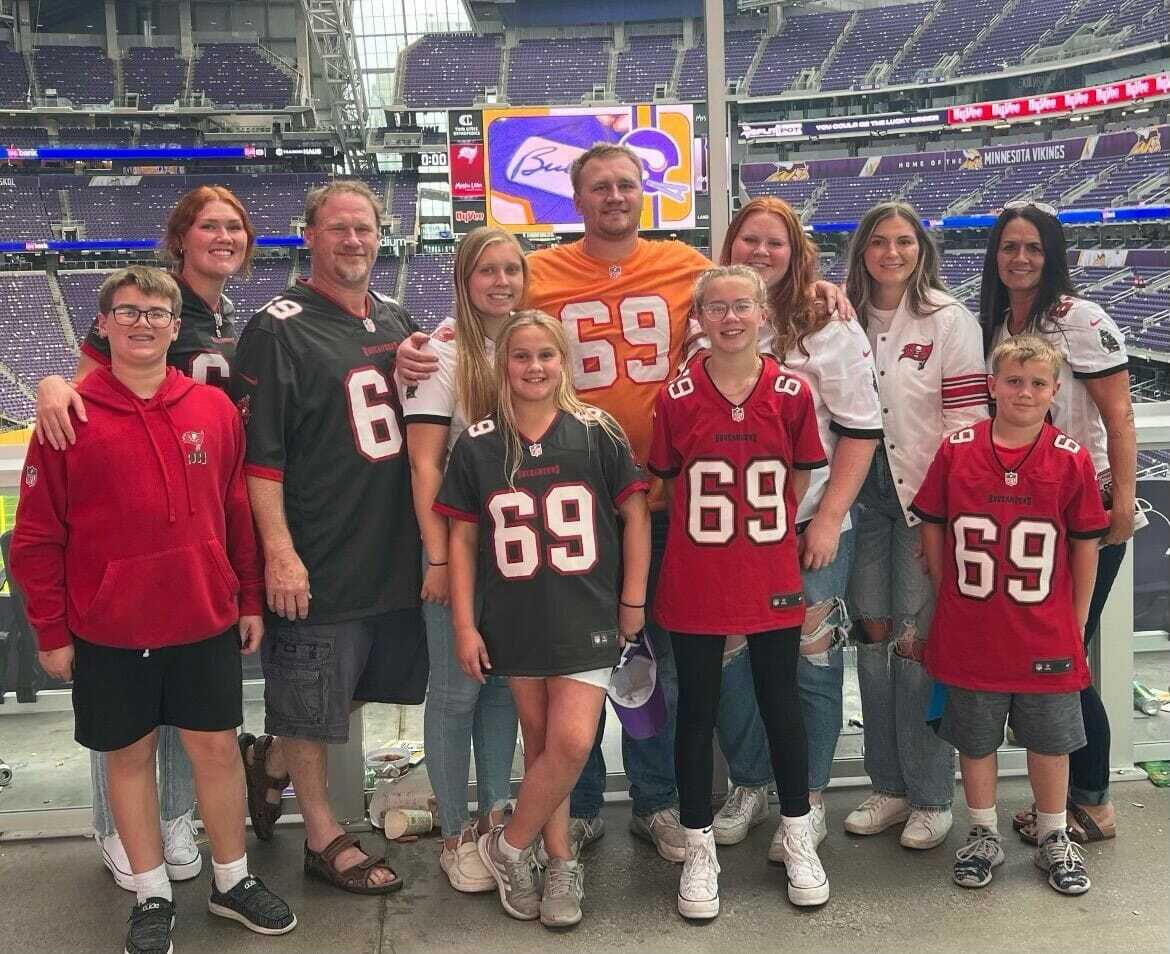
    Cody Mauch played offensive tackle for the NDSU Bison football team before being drafted by the Tampa Bay Buccaneers in the spring of 2023. He made his NFL debut with the Bucs on Sunday, Sept. 10, 2023 in a game against the Minnesota Vikings – a team he always cheered for growing up.

    Mauch 3

    His dad, Joe Mauch, recalls feeling proud watching his son play that first game, even if it felt odd to root “against” Minnesota.

    A From-the-Farm Work Ethic

    “We’ve been Vikings fans our whole lives and now we’re here cheering for the Bucs,” Joe says.

    One of eight kids who grew up on the family’s fourth-generation farm in Southeast North Dakota, Cody says his parents, Joe and Stacey Mauch, introduced him to hard work at an early age. In an interview with reporters after his second-round draft pick, Cody explained how that upbringing translated into his football career.

    “I was driving tractors at seven or eight years old. They put a lot of trust in me when I was young,” he says. “But that helped me a lot in life. My mindset is to go out there and have fun, but get the job done. I’m going to work hard and do my part.”

    The Bucs officially listed Cody as starting right guard – a position he says fits his 6’5”, 302-pound frame well. With his signature long red hair and missing front teeth, Cody says he “couldn’t be any more authentic.”

    CodyMauchNFL Headshot
    Cody Mauch, Photo Credit: NDHSSA

    Joe and his younger brother, Andrew, raise corn, soybeans and sugar beets on the family farm. They also custom bale wheat straw. The brothers recently took on a Latham® dealership to diversify their operation and to provide their seed customers with more options.

    Everyone Watched This Watch Party

    More than half their town of 900 people came out in full force to support Cody on NFL draft night, Joe says.

    “The crowd went wild when Cody’s name got called,” he says. “Cody was with us at the community center with teachers, friends and coaches. People came from rival towns. It was just so neat that a small-town kid got drafted because that doesn’t happen that often.”

    Town 1

    Joe says the families will travel to Florida after harvest to watch some games on the Bucs’ home turf.

    Mauch 2

    Cody’s favorite “taste of home” meal is his mom’s Hamburger Hot Dish.


    Shannon Latham

    September 22, 2023
    Beef, Food & Family, General, Recipes
  • Latham Hi‑Tech Seeds

    Prepare Now for Increased Production in 2024

    Corncob background

    There’s more to fall than getting the combine ready. To ensure healthy, productive soils next year, think about doing these three things now:

    1. Review your field data
    2. Correct compaction
    3. Add a cover crop

    Whether your fields produce bumper crops or have lower-than-average yields, take the time after harvest to assess soil fertility levels, replenish depleted nutrients, determine reasons for high- and low-yielding areas and evaluate overall soil health. Doing this can help give your crops a head start for next season.

    Soil samples and yield maps can predict the future

    Begin next season’s preparations by pulling post-harvest soil samples and assessing this season’s yield maps. Soil samples will identify any phosphorus or potassium deficiencies, while yield maps will show the amount of nutrients removed from the soil by this year’s crops. This information will help you determine crop nutrient amounts for next season, based on actual numbers rather than estimates.

    If post-harvest conditions allow, farmers can make partial (or base) nitrogen applications in the fall. Then test soil nitrate levels in the spring to determine the additional amount needed to meet next season’s crop performance goals. This ensures that nitrogen will be available in the soil at planting, as well as throughout the remainder of the growing season. If weather delays spring applications, this nitrogen management strategy provides you with more time to assess fertility needs based on early-season crop and soil conditions.

    Consider fall nitrogen applications with a stabilizer

    If you can make a fall nitrogen application, consider the effects of soil texture, soil moisture levels and soil temperature to avoid leaching and denitrification issues. Fall nitrogen applications should not be made until your soil cools to 50 degrees Fahrenheit or lower, when soil bacteria begin to go dormant. Fall-applied nitrogen must be used with a stabilizer to prevent it from converting into a mobile nitrate form that can move off-target and run off into nearby waterways. If manure is part of your nitrogen strategy, consider also using a stabilizer.

    Ease spring workloads with simple steps

    If your fall soil samples identify phosphorus (P) or potassium (K) deficiencies, you can apply these nutrients any time after harvest. To ease spring workloads, broadcast applications may be made in the fall and incorporated into the soil. If a spring application works better, P and K can also be applied prior to planting.

    Another important issue to assess in the fall is soil compaction. Before doing any fall tillage, check compaction depth to help you determine the proper tillage tool to use. Accurate tillage depth and the tillage speed will loosen soil and prepare it for next season.

    steve-sick

    September 21, 2023
    Agronomics, Corn, Crop, General, Soil, Soybeans, Tech Tuesday
  • Latham Hi‑Tech Seeds

    A Love for Farming Drives This Farmer

    Tony

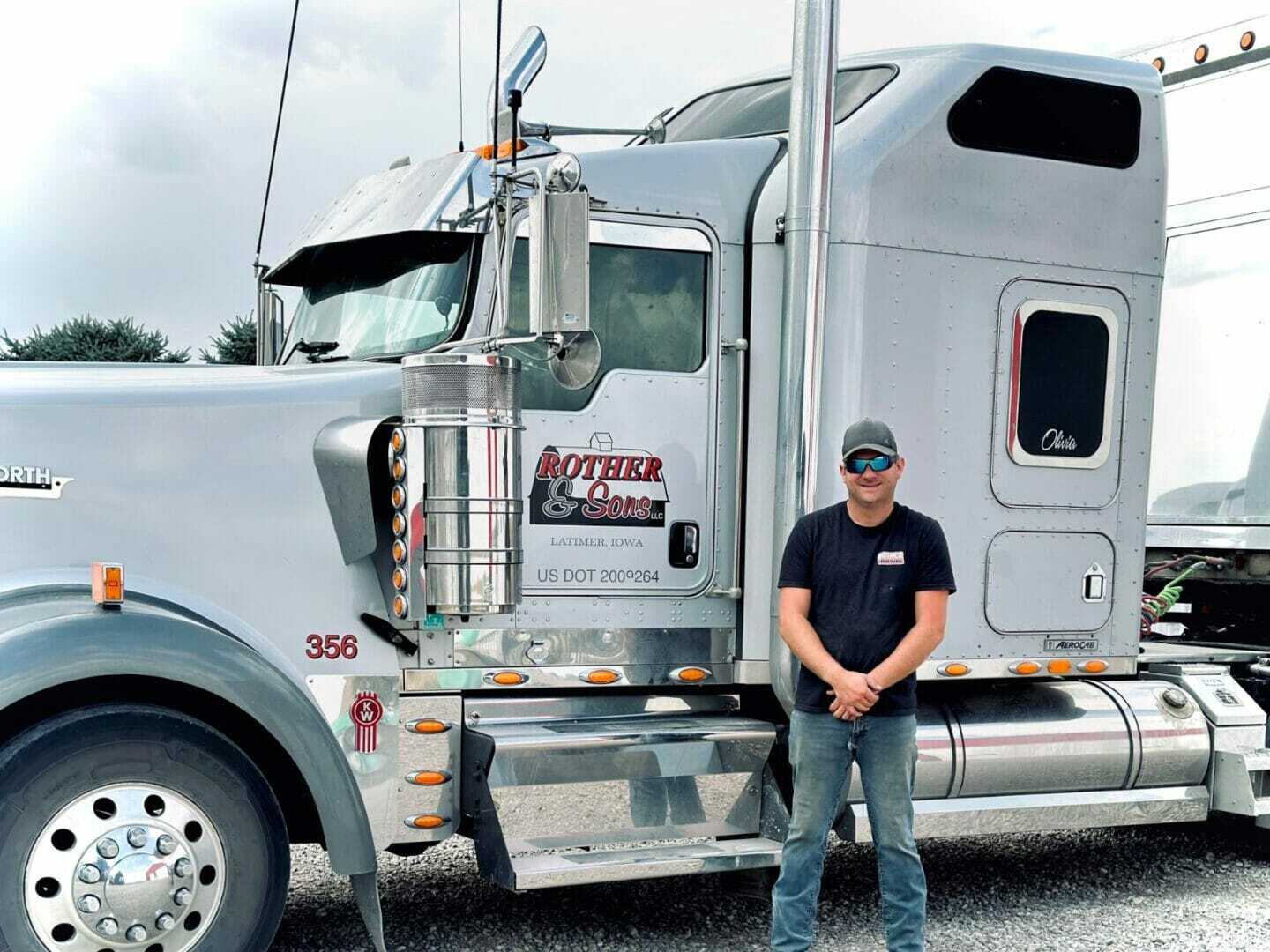
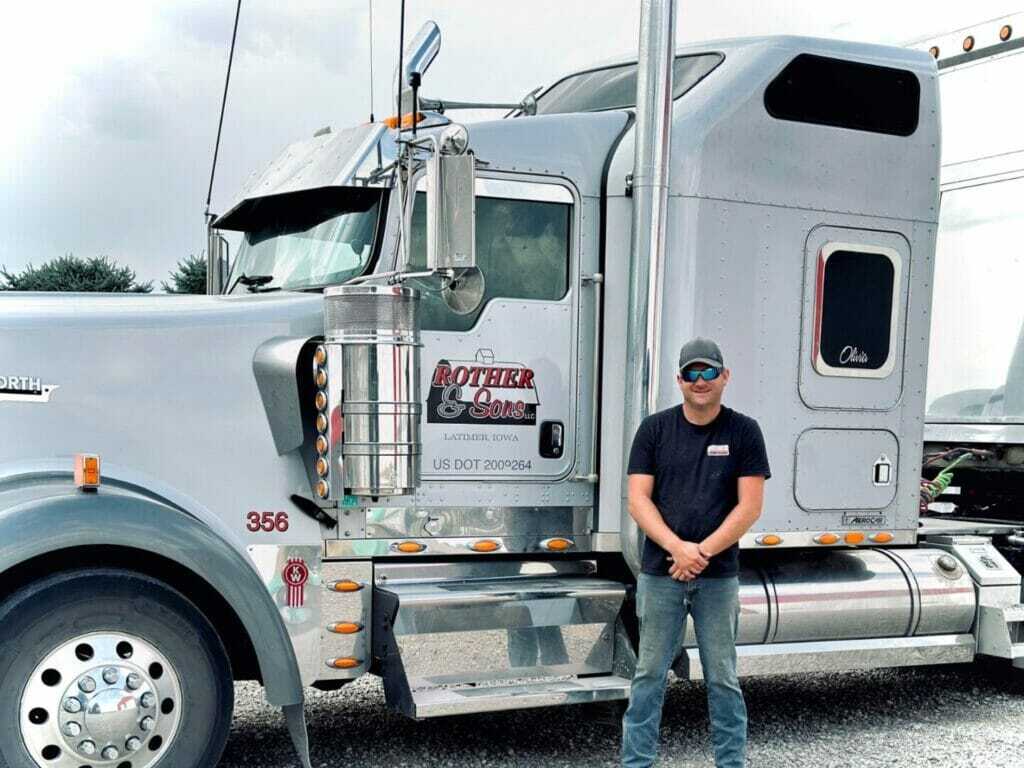
    Like many farm kids, Tony Rother never outgrew his love for equipment. He has always enjoyed farming and big trucks.

    Because he also was good with numbers, Tony considered a career in financing. He graduated from North Iowa Area Community College (NIACC) but his heart was set on farming rather than studying more numbers. His family’s farming operation wasn’t large enough to support everyone, so Tony spent two years driving trucks for Sukup Manufacturing in Sheffield, Iowa. In 2005, he reached his goal of starting his own trucking company.

    Today Tony and his wife, Jessica, live down the road from where Tony’s great grandfather began farming in 1919. His parents, Mark and Sue Rother, live on the homeplace. Father and son have been farming together for more than 20 years. Since 2010, they also have been hauling seed to Latham® dealers and customers.

    “What I enjoy most about trucking is the freedom I have,” Tony says. “I enjoy being my own boss and making my own decisions. I really enjoy working for Latham Seeds and talking with farmers across the Midwest.”

    Tony

    The ability to drive long distances comes in handy with an active family. Tony and Jessica have two children: Landon and Olivia. Both are active in traveling sports teams. Landon’s favorite sport is basketball and Olivia’s is softball. Jessica works as a social worker for Iowa Total Care, which takes her to several counties across North Iowa.

    In their free time, the Rothers are involved in their community. Tony helps coach Landon’s West Fork basketball team. Jessica serves on the West Fork Booster Club and teaches Sunday School at Zion-St. John Lutheran Church.

    One of their year-round, favorite recipes is Spinach-Stuffed Chicken Breasts — which is easier to make than it sounds! This main dish can be paired with nearly any type of side.


    Shannon Latham

    September 15, 2023
    Food & Family, General, Latham News, Poultry
  • Latham Hi‑Tech Seeds

    We’re All on the Same Team: Beat Cancer

    Scott Halverson

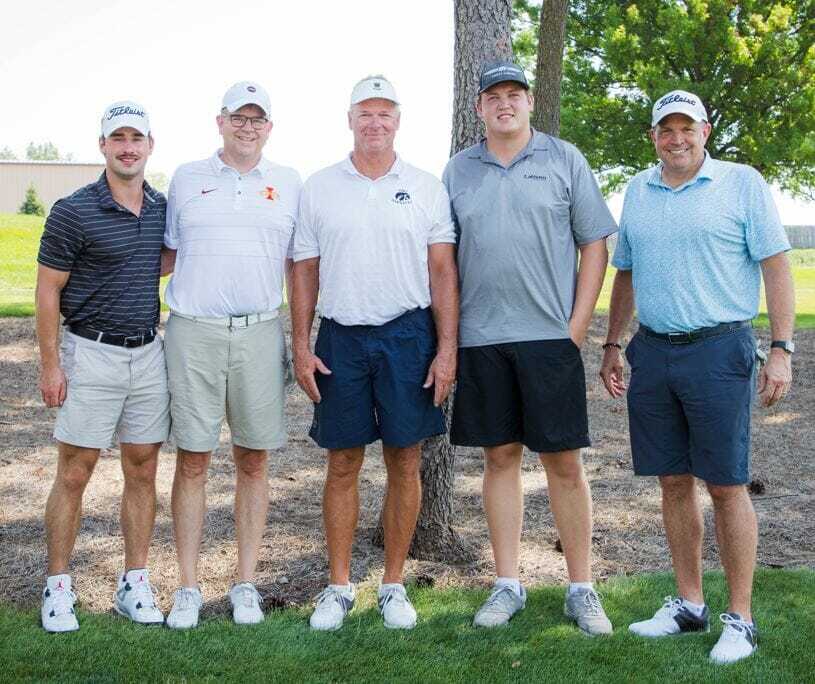
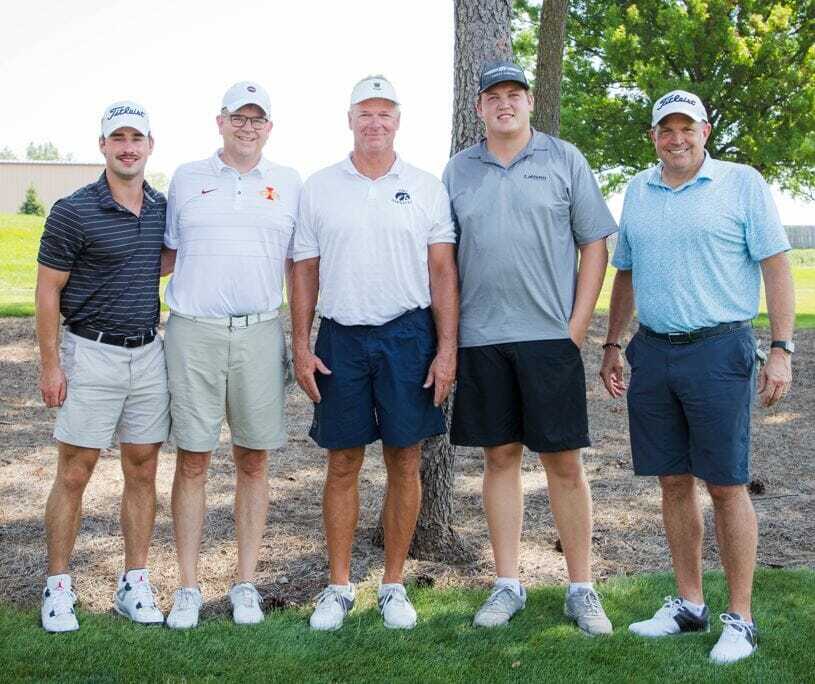
    The Latham Team placed second on August 24, 2023, in the 16th annual Coaches vs. Cancer Charity Golf Classic presented by the Iowa PGA Section.

    “We had an amazing time playing Talons of Tuscany in Ankeny,” says John Latham, president, Latham Hi‑Tech Seeds. “The fairways and greens were immaculate.”

    Team Latham included: John, Chris and Ian Latham plus Latham Seeds District Manager Noah Snedden and Scott Helverson.

    Scott Halverson
    L to R: Ian Latham, John Latham, Scott Helverson, Noah Snedden and Chris Latham

    Some Iowans will remember Helverson as a wide receiver for the Iowa Hawkeyes. For the past 16 years, he has been a referee for the National Football League.

    “We couldn’t have asked for a better teammate,” John says. “Scott is in great shape, and he was driving the ball extremely well. Plus, he is a great guy. He shared interesting experiences he has had as a NFL referee.”

    Helversen recently officiated the preseason game between the Minnesota Vikings and Tennessee Titans. He has officiated three Super Bowls, including Super Bowl XLII between the Giants and Patriots. The New York Giants upset the undefeated New England Patriots when David Tyree made an amazing fourth quarter-catch of an Eli Manning pass by pinning it against his helmet as he was pulled to the ground.

    Regardless of whom you’re cheering for, everyone wins when we play together to beat cancer.

    Employees and friends of Latham Seeds are invited to join the company owners and team members in raising funds for the American Cancer Society. It was harvest season 2009 when past Latham Seeds President Bill Latham was diagnosed with Acute Myelogenous Leukemia (AML).

    As Blood Cancer Awareness Month is underway in September, Latham Seeds announces its commitment to year two of raising funds for the American Cancer Society. Watch the video to learn more about “Sowing Seeds of Hope”.  We hope you’ll consider a $15 donation in honor of Bill Latham’s fight against AML. Learn more and donate.

    Shannon Latham

    September 13, 2023
    General, Seeds of Hope
Previous Page
1 … 6 7 8 9 10 … 159
Next Page

Latham Hi‑Tech Seeds

131 180th Street | Alexander, IA 50420

(641) 692-3258

SIGNUP FOR OUR NEWSLETTER
  • Contact
  • Legal
  • Dealer Center
  • Seedware Login
  • Latham Gear

© 2025 Latham Hi‑Tech Seeds. All rights reserved. | Iowa Web Design by Webspec | Privacy Policy

Latham® Hi-Tech Seeds is a trademark of M.S. Technologies, L.L.C., 103 Avenue D, West Point, IA 52656.