Latham Hi-Tech Seeds

(641) 692-3258

  • Home
  • Performance
  • Products
    • Corn
    • Soybeans
    • Soybean Blends
    • Alfalfa
    • Corn Silage
    • Seed Guide
  • Find a Rep
  • Media
    • Blog
    • News
    • Videos
    • Podcasts
    • TECHTalk
  • About Us
    • Company History
    • Our Mission
    • Careers
    • Become a Rep
    • Sowing Seeds of Hope
  • Contact Us
  • Latham Hi‑Tech Seeds

    Connect Farming to Food in the Classroom

    PorkFactoid
    Larry and Mrs. Hoegh
    Larry and Mrs. Hoegh

    Last week I had the pleasure of serving as a guest teacher for one day in the Hampton-Dumont High School. It’s been 44 years since I graduated from Hampton, which wasn’t part of a consolidated school system at that time. While many changes have occurred over the years, I found the students to be engaging and interested in the facts I shared with them.

    I certainly enjoyed my time “at the head of the class,” teaching two of Jane Hoegh’s Food and Nutrition classes and had three of Sara DeBour’s Vo Ag classes as part of the National Pork Board’s Operation Main Street program. I’ve given about 50 presentations to civic groups as part of this group, but last week was the first time I spoke to young students in a classroom setting. In fact, I spoke to 95 kids in just one day!

    Although we live in a rural county, many kids in that classroom had never visited a farm. I gave them a virtual tour by showing videos and explaining how we’ve improved our pig operations from the time I started farming 50 years ago. We have become much more efficient in producing pigs. We use much less ground and water per pig, and we have changed the pork we produce to be much healthier.

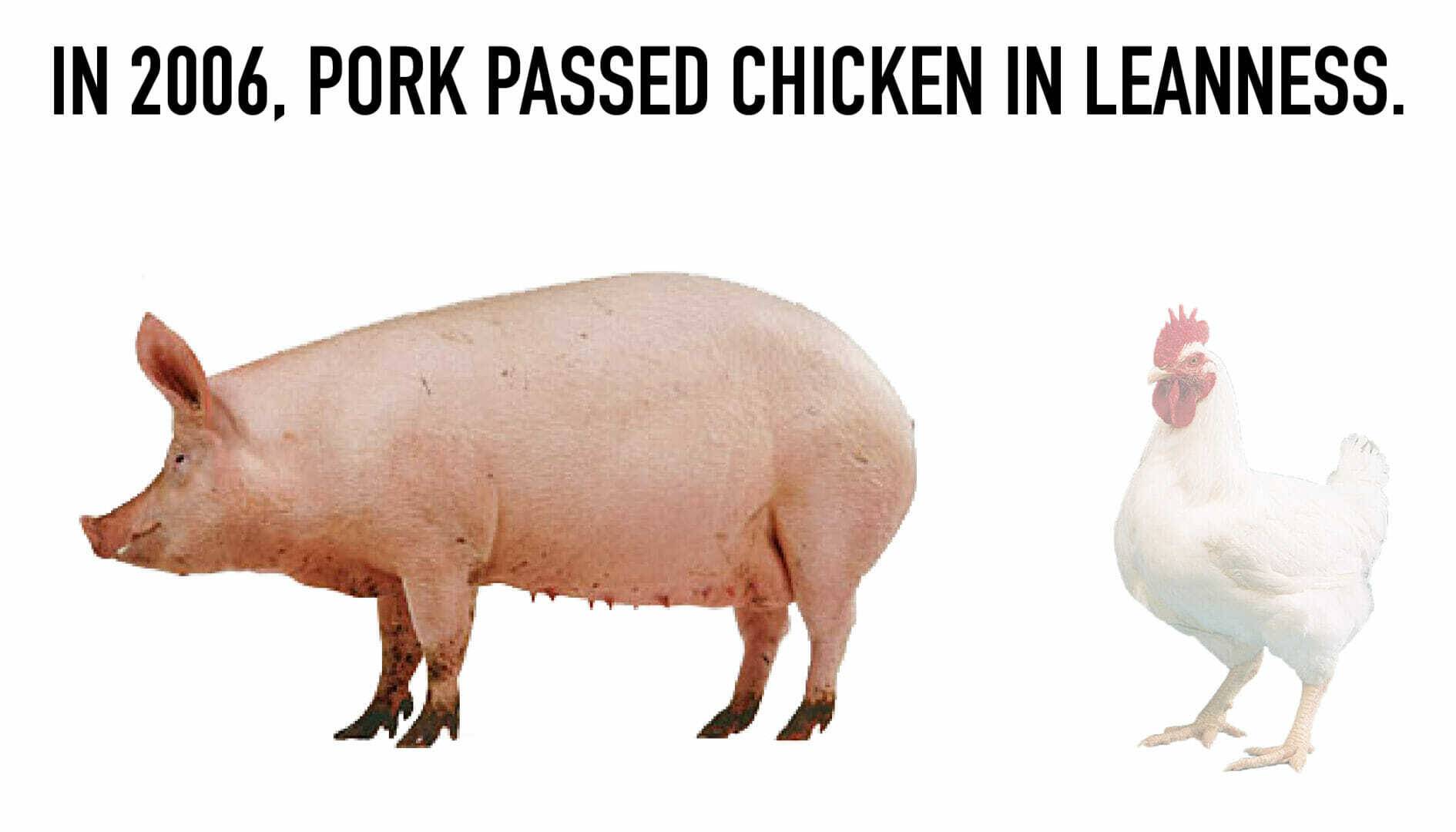
    The food classes learned how many nutrients are in pork, making it a very nutritious food. Easy to prepare and very versatile. In 2006, pork passed chicken in leanness.

    PorkFactoidIn both classes, I shared that there are 7 billion (with a “b”) people in the world today. Half of those seven billion live on less than $2 dollars per day. Then we talked about what it’s going to take to grow enough food – on the same amount of ground we have now – as the population gains another 2.3 billion people by 2050. U.S. farmers will need to grow 100% more food by 2050 because these people will want to eat better as they acquire better incomes. (Click here to watch a short video explaining this.)

    Specifically in the Vo Ag classes, I went more into detail about how the hog buildings work.  I explained the We CareTM initiative and how pig farmers work hard to do the right things for our pigs every day. We talked about how pork producers use medicines according to our veterinary recommendations, making sure all withdrawal times are met. Antibiotics leave the pigs bodies just like they do in humans, so there is no residue in the meat at the time of market.

    Mrs. Sara DeBour talks with her Vo Ag class following Larry’s presentation
    Mrs. Sara DeBour talks with her Vo Ag class following Larry’s presentation

    Antibiotics are used to keeps our pigs healthy. We have other precautions in place, such as posted warning signs, to help prevent diseases from spreading through our herds. I explained to the students that these signs aren’t posted to hide anything. Instead, signs like “STOP Authorized Personnel Only Beyond This Point” are in place to protect pigs from disease. We had a good discussion on how cleanliness is key to animal health. I explained that pigs are raised on different sites as they grow to break the disease cycle, and I shared photos of how my barns are cleaned and sanitized before a new group of pigs arrive.

    From the photos I shared of my hog barns, these students saw all of the technology involved to regulate temperatures and regulate fans. Kids understand technology since they’re growing up in the age of iPads, iPods, and things I can’t even name. Yes, today’s kids understand new ways to raise pigs!

    I had a great time being “back” in school. I’m hopeful these kids will explain to their parents what I do every day and why I do it! I also hope they’ll be able to shop the grocery store and buy food for themselves with confidence.

    Larry Sailer, Musings of a Pig Farmer

    April 8, 2014
    Agriculture, General, Industry News
  • Latham Hi‑Tech Seeds

    Look for Eggs in Unexpected Places

    Katie Doyle
    Katie Coyle

    Eggs aren’t just for breakfast any more. They’re appearing in unexpected places as restaurants nationwide are incorporating eggs into their lunch and dinner menus. Look for eggs on top of burgers, pulled pork sandwiches, pasta and pizza.

    “We’ve been seeing consumers’ interest in eggs grow over the past two years. Recent studies confirm that eggs are a healthy source of lean protein and concerns have eased about cholesterol,” says Katie Coyle, Director of Consumer Affairs for the Iowa Egg Council.

    From a consumer’s point of view, eggs are a natural choice for nutrients and vitamins. Eggs are one of the few foods that naturally contain Vitamin D plus all of the essential amino acids.

    In addition, the American Heart Association (AHA) no longer limits the number of egg yolks a person can eat. The AHA instead recommends a person limits his or her cholesterol intake to 300mg daily, regardless of where the cholesterol comes from.

    Print“Not only are eggs good for you, but they make you feel good. Eggs are a real comfort food, making ‘Breakfast for dinner’ an ongoing food trend,” says Coyle. “We’re also seeing recipe makeovers for foods like Buffalo Deviled Eggs or Breakfast Deviled Eggs and Breakfast Skillet.  Poached eggs, not just hard boiled eggs, are now being used as salad toppings.”

    Affordability and versatility are two more reasons eggs are the #1 U.S. food trend. Thousands of menus from more than 15,000 eateries were surveyed by Restaurant.com to establish food trends in 2014. Another reason eggs are trending is because farm-fresh eggs also can be locally sourced, and farm-to-fork dining is Restaurant.com’s No. 2 trend this year. In its survey of member restaurants, 62% reported that they featured locally sourced produce in 2013.

    Even small town Iowa restaurants, like The Bistro on Broad in Story City, are sourcing food locally. “A Trio of Deviled Eggs,” offered as part of the eatery’s Valentine’s Day menu, were sourced from Red Granite Farm.

    “Red Granite Farms has been growing fresh produce and eggs for seven years and selling direct to consumers through the local farmers market,” says Nicole Jonas, who manages day-to-day operations of her family’s perennial and vegetable farm. “Getting our eggs and produce into local stores and restaurants is a way we hope even more people can enjoy the food that is grown ‘right in their own backyard’ so to speak.”

    Whether you choose to buy Farm Fresh Eggs or pick up a dozen from your local grocery store, the Iowa Egg Council encourages you to surprise your family by putting a few eggs in unexpected places. Today we’re sharing a recipe from the council’s site for Egg Lasagna. Also be sure to “feed your curiosity” and check out these egg recipes shared by the Iowa Food and Family Project.

    Team Latham

    April 4, 2014
    Beef, General, Recipes
  • Latham Hi‑Tech Seeds

    5 New Ways to “Feed Your Curiosity” About Food and Farming

    JMJ Latham Seeds 18

    JMJ_Latham_Seeds-9Finding unbiased information about food and farming is, at times, a quest. Instead of leaving Iowans feeling like they’re lost on a road trip without a compass, the Iowa Food & Family Project and trusted blogger Kristin Porter (aka “Iowa Girl Eats”) are taking people on a journey to feed their curiosity.

    “Join My Journey” started last year when Kristin visited several Iowa farms, meeting the families who grow the products she features on her popular blog. This season, Kristin is bringing those experiences along with her to new locations including restaurants, grocery stores and the “kitchen table.”

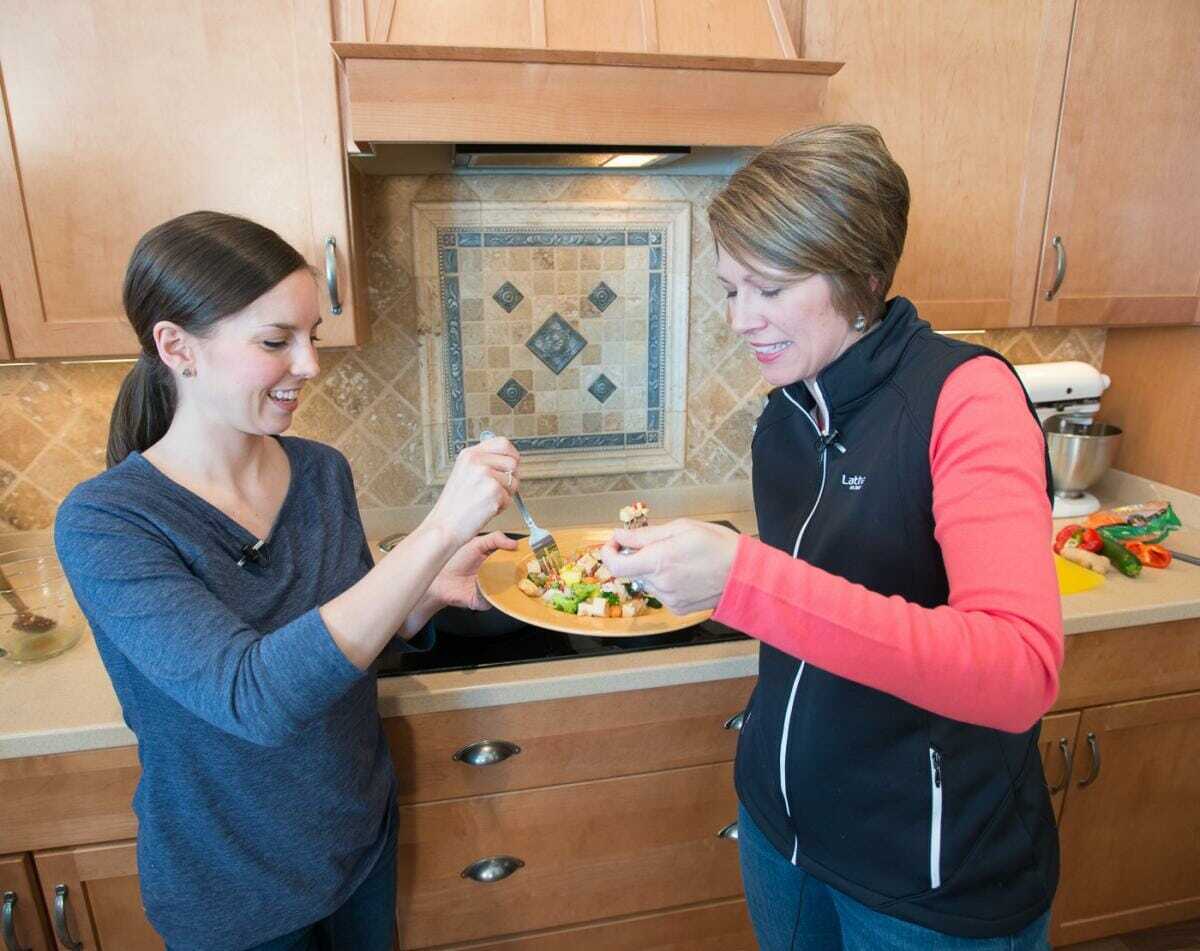
    Recently, I had the opportunity to cook up a storm with Kristin in my own kitchen where she showed me how easy it is to cook with tofu. (Confession time… I’m a meat and potatoes kind of girl, whose parents and grandparents took great pride in raising their own meat and potatoes for our dinner table. I wasn’t too keen on trying on tofu. Since I married into a family whose primary business was raising soybeans – even some food grade beans for the Japanese market – I decided it was time to give it a try.)

    JMJ_Latham_Seeds-18Kristin’s visit forced me to literally eat my words. Why? Because I often say to my kids, “It’s good to try new things.” I couldn’t expect them to eat something I wouldn’t eat myself, right? Fortunately, I was pleasantly surprised when I took my first bite of Tofu and Vegetable Stir Fry. It was like taking my taste buds on spring break after a long winter of feasting on comfort foods.

    Cooking with Kristin was more fun than a person should have on a work day! Click on this link to see how colorful and fresh the ingredients were that we used. Imagine hearing them sizzle in the wok. It all smelled so tantalizing and tasted even better. Truly, this meal was a journey for my five senses.

    Like me and Kristin, many moms and food purchasers are on a journey to gain confidence in the safety and quality of the food they provide for their family. Greater confidence comes from knowing how and why foods are grown. To help feed that curiosity, Kristin is working with farm families, food safety experts and chefs to take a closer look at actual food products, ranging from tofu to tenderloins.

    IFFFeed your curiosity! Here are the top five ways you can enjoy the journey:

    1. Follow along at iowafoodandfamily.com.  Each month Iowa Girl Eats and several guest bloggers will document their adventures with new stories, voices and info nuggets each month.
    2. Face(book) the facts. Track the trip at the IFFP’s Facebook page where friends can find facts about food, ranging from riveting data such as identifying five JELL-O flavors that flopped to discussions about GMO safety.
    3. Ready-to-go recipes. ‘Iowa Girl Eats’ is known for her no-nonsense, easy-to-prepare-and-source, healthy recipes and she’ll feature some with each visit whether it’s preparing pork at one of Iowa’s hottest new restaurants, to enjoying beef at one of Iowa’s most popular summer attractions to dishing about dairy at a grocery store.
    4. FREE STUFF! Each month, IFFP will offer fun, food-related giveaways to enhance any kitchen.
    5. Join the journey in person. Come along and experience the journey for yourself. Several stops are open to the public and feature giveaways, samplings and more. Watch online for upcoming visits.

    “Join My Journey” is an activity of the Iowa Food & Family Project, funded in part by the soybean checkoff and involving nearly 35 partners including Latham Hi‑Tech Seeds. The IFFP sponsors innovative and engaging activities providing Iowans with the real scoop on food from the people who best know it and grow it — Iowa farm families.

    Team Latham

    April 3, 2014
    Agriculture, General, Industry News
  • Latham Hi‑Tech Seeds

    Spring Sampling Can Help Lay the “Grid Work” for 2015 Crop Planning

    SoilTest

    SoilTestAs you begin planting this year’s crop, you’re literally laying the groundwork for the following year. With tighter margins and high fertilizer costs, the need for better placement and utilization of fertilizer is greater than ever. Spring grid sampling can help you get a jump on planning your fertilizer for the season and 2015 seed needs.

    Spring Grid Sampling is offered as a component of Latham’s Seed-2-Soil program This program is designed to bring added value to each farmer customer by providing field by field prescriptions using information about: soil types within the field, hybrid variety selection, tillage practices, fertility levels and more, with special consideration for the seed technology and equipment you are using.

    For those farmers utilizing variable rate technology, soil test values can help set the stage for  implementing variable rate planting, fertilizer and nitrogen; all tools available in our Seed-2-Soil Nutrient Management program.  Learning blocks are assigned throughout the field based on the management zones that were uncovered by the sample data (high, medium and low).  These zones provide the foundation for writing variable rate planting, fertilizer and nitrogen prescriptions accounting for the variability in each field.

    ROI is something we can measure. During the past five years, Seed-2-Soil Nutrient Management clients have seen great results from the specialized Nitrogen program.  Many have been able to reduce their nitrogen rates by 25 to 30 pounds per acre while maintaining, and in some cases, increasing yields.

    Taking soil samples post-planting can be an important step in your planning process. Contact a Latham representative to learn how Latham’s hallmark Seed-2-Soil® Program, can help you lay the grid work for the coming season.

    Team Latham

    April 2, 2014
    Agronomics, General, Soil
  • Latham Hi‑Tech Seeds

    What’s Your Perception of Farming?

    I like to pick a word to blog around, and this week I’ve chosen “perception.” Recently, I have been having some conversations about what people think a farm is. To my surprise, people have the perception that a farm in North Central Iowa must have crops.

    Interestingly enough, even my wife, Janice, told me in no uncertain terms that “farming is crops.” She said I wasn’t going to get her to change her mind about that either! While I love raising crops, I think of crops as more of a hobby. I’ve been raising hogs for more than 50 years, and that’s what I think of as my on-farm job. My perception of farming includes livestock. After all, I titled my blog “Musings of a Pig Farmer.”

    What is your perception of a rancher… do you think he or she must raise cows? Ranchers are farmers, too. They often raise cows, sheep, goats and chickens.

    Do you think of farmers raising fruits and vegetables? I sure do because I know some vegetable farmers! Tyson Roberts grows fresh produce including garlic, potatoes, Spanish onions, sweet corn, watermelon and pumpkins on his family’s 6th generation farm in Layton, Utah.

    Let’s think broader about perceptions. What do you suppose is the perception of a 20-something Mom shopping for her two-year-old daughter? Is her perception of food the same as mine? What is her background? It’s certainly not the same as mine. If she grew up in downtown Chicago, her perceptions were formed differently. She reads different articles than I read. She has not experienced the birth of baby farm animals like I have. She may not understand my thoughts as to what the purpose of farm animals should be. She may have watched Charlotte’s Web and Babe. Her perception of farming may be Old McDonald’s Farm!

    Now think worldwide… what are the perceptions of farming in India, China, Africa and the Ukraine? After visiting Ukraine last summer, I know their perception of a farm differs from my Iowa hog farm!

    Just as the perception of farming is diverse, so is the perception of food. There are day and night, black and white differences in what people believe about food! Instead of fighting over food, let’s celebrate those differences. Relish food choice.

    Everyone’s perception is right for him or her. This is a key point… your perception is right for you! Don’t force your perceptions on others. Buy what’s right for your family, and I’ll buy what’s right for mine!

    Larry Sailer, Musings of a Pig Farmer

    April 1, 2014
    Agriculture, General, Industry News
  • Latham Hi‑Tech Seeds

    The American Farmer, the Ultimate Entrepreneur

    LoveWhatYouDo

    ISUAgEI-2014Last Friday a group of Iowa State Ag Entrepreneurship Initiative spent the day visiting three family-owned companies in North Central Iowa: Sukup Manufacturing, Hagie Manufacturing and Latham Hi‑Tech Seeds.

    These industry tours gave student an opportunity to go “behind the scenes” and meet with owners about what it’s like to start a business and how to strike a balance between work and family life.  Students also asked us to share some best practices for aspiring entrepreneurs.

    If only I would’ve known that Harry Stine’s “7 Insights for Entrepreneurs” was going to be published March 28 by Forbes, I could have saved myself some prep time! Many of the insights that Stine shared in this article are similar to my beliefs:

    • Entrepreneurs don’t work traditional hours. Business hours may be posted as 8 AM to 5 PM, but you’re never really “off the clock.”
    • Any industry is constantly changing. You either need to adapt and change or get out of the way.
    • Always be mentally and emotionally prepared to walk away from any deal. Desperation leads to bad decisions.

    LoveWhatYouDoWhether you’re engaged in a farming operation or operating a retail outlet, chances are you exhibit these characteristics. You’re doing what you love. You’re a planner. You’re using technology to your advantage. You’re accessible. You’re getting involved. You’re part of a team. You’re making a difference. You’re persistent, and you’re also an eternal optimist.

    Sometimes entrepreneurs, including farmers, find themselves working another job in order to support their hopes for the future. If you dream of farming full-time but don’t have the opportunity to do so right now because your resources are limited or the timing isn’t yet right, the team at Latham Hi‑Tech Seeds might be able to help you plant seeds for the future!

    By operating your own Latham® seeds dealership, you could earn the equivalent of full-time employment. Some benefits of a Latham dealership include:

    • Accessing new seed traits and technology before they’re widely available.
    • Gaining first-hand knowledge of the industry’s broadest, deepest product lineup through product training and Hi‑Tech crop planning / management tools.
    • Belonging to a group of people who share your passion for farming and value honesty, integrity and family.

    To learn more about farmer-dealer opportunities available with Latham Hi‑Tech Seeds, talk with your local Latham representative or call 1-877-GO-LATHAM (1.877.465.2842).

    Team Latham

    March 31, 2014
    Agriculture, General, Industry News
  • Latham Hi‑Tech Seeds

    “Breakfast Battle” Benefits Local Food Bank

    IowaFactsFeatured
    Special thanks to our dealers and customers, who represented Team Latham in the 3rd Annual Breakfast Battle sponsored by the Franklin County Farm Bureau. From left to right are Shannon Latham, April Hemmes, Kari Subbert and Larry Sailer.
    Special thanks to our dealers and customers, who represented Team Latham in the 3rd Annual Breakfast Battle sponsored by the Franklin County Farm Bureau. From left to right are Shannon Latham, April Hemmes, Kari Subbert and Larry Sailer.

    In a race against the clock, nine local businesses and civic organizations “fought over food” on Wednesday morning during the 3rd annual Breakfast Battle sponsored by the Franklin County Farm Bureau.

    “This event helped raise understanding of finding solutions to eating healthy on a stretched budget plus raised awareness of food insecurity in Franklin County,” says Val Plagge, public relations chairman for Franklin County Farm Bureau.

    Food insecurity isn’t unique to Franklin County. One in eight Iowans – approximately 400,000 – is food insecure, meaning they lack the resources to live an active and healthy lifestyle. One out of 5 Iowa children does not know where his next meal will come from. Many of these individuals have been faced with a job loss or unforeseen expense that has brought on the burden of wondering how they will put food on their tables.

    Ten local families will have food on the table for at least three meals, thanks to groceries gathered during Wednesday’s event. These bags of groceries included perishable items like butter, milk, meat and vegetables, so families could make three well-balanced meals. Each family also was given the Healthy Homemade Cookbook published by Iowa State University Extension.

    During National Ag Week – and every day of the year – Latham Hi‑Tech Seeds is proud to help farmers throughout the Midwest feed and fuel the world!
    During National Ag Week – and every day of the year – Latham Hi‑Tech Seeds is proud to help farmers throughout the Midwest feed and fuel the world!

    Trying to buy enough groceries for three meals in less than 3 minutes is an experience to be sure! Breakfast Battle team members raced around the grocery store – in an organized frenzy – to feed breakfast, dinner and supper for a family of four between $45 and $50. Teams were timed from the moment they left the cart area until they reached the checkout lane.

    Time bonuses were given to those that answered ag trivia questions correctly before the race, and Latham Hi‑Tech Seeds received a time bonus for having the most votes on the Franklin County Farm Bureau’s Facebook “Fan Favorite” team poll.

    Time penalties were given for every dollar over or under the $45 to $50 cart total range. Coming in $18 over budget, Team Latham incurred some stiff penalties! We bought entire bags of onions and potatoes even though our shopping list only listed 1 onion or 2 potatoes. We also bought a full gallon of milk and 18 eggs plus a bag of dinner rolls.

    Although Team Latham didn’t win a plaque for winning the competition, we can feel good knowing that one family will receive additional perishable items. Following the race, grocery items were delivered to the Franklin County Food Pantry in Hampton and the Immanuel UCC Food Pantry in Latimer.

    “The Breakfast Battle is for a great cause, providing for those in need here in Franklin County and also reminding folks that our groceries came from a farm,” said Jackie Dohlman, Franklin County Extension Youth Coordinator, who was a member of the winning Breakfast Battle team. “In one way or another, the products we all buy at the grocery store came from a farm.  It’s important to remember that only 2% of our nation’s population is feeding U.S. consumers and also helping feed people all over the world.”

    In honor of this week’s Breakfast Battle – and the winning team – today we’re sharing a recipe from the Healthy Homemade Cookbook.

    Larry Sailer, Musings of a Pig Farmer

    March 28, 2014
    Agriculture, General, Industry News
  • Latham Hi‑Tech Seeds

    Avoid Rushing Into Unfit Fields

    Soiltemp march14

    soiltemp-march14It’s been a long, cold winter. With temperatures averaging 20° below normal last month and snowfall averaging 2 feet above normal across many areas in Latham Country, we’re all eager for spring. The date on the calendar shows that spring has arrived, but it’s in name only!

    March continues to be a battle between seasons with wintery in the short-term forecast. Frost ran deep, and it’s going to be a while before conditions are fit for planting. Remember to let soil temperatures and soil conditions – not the calendar – dictate your planting date. Wait until soil temperatures in a region reach at least 50° before you plant corn and somewhere between 55° to 60° before you plant soybeans.

    Soil temperature for soybean planting is more critical than for corn because soybeans can germinate in a soil environment of about 55° Fahrenheit. If the air temperature after germination hits 28 degrees Fahrenheit or less, however, the young seedling can be killed with the growing point of the plant right at emergence. Adversely for corn, the growing point stays under the surface until much later.

    Webspec Admin

    March 26, 2014
    General, Season, Spring
  • Latham Hi‑Tech Seeds

    Celebrate Ag Day in a Big Borlaug Way

    Ears of wheat on wooden background. Vector.

    guest blog post by Larry Sailer

    Today is the 100th birthday of Norman Borlaug, an Iowa farm boy who went on to father the Green Revolution. How fitting that this momentous occasion coincides with National Ag Day on March 25!

    How fitting that also today a statue of this pioneering Iowan will be dedicated in Washington, D.C., where it will inspire lawmakers and visitors alike for the next 100 years or so. The 7-foot bronze likeness of Borlaug will be one of two statues representing Iowa in the National Statuary Hall. To help put the magnitude of today’s event into perspective, note that statues of Civil War-era Statesmen Samuel Kirkwood and James Harlan have represented Iowa in the U.S. Capitol for more than 100 years. Borlaug’s statue will replace one of James Harlan, secretary of the interior under President Andrew Johnson.

    “Feeding the world” is Dr. Norman Borlaug’s legacy as he is known as the man that saved a billion people worldwide from starvation.  He spent his life’s work developing grain varieties that would help farmers in mostly lesser developed countries like India and Mexico produce more food.

    “My grandfather focused on talking to, training, and investing in the young scientists, researchers and farmers,” says Julie Borlaug, associate director of external relations at the Borlaug Institute. “His guiding philosophy was ‘take it to the farmer’ and he truly believed everything started by going to the field.”

    Dr. Borlaug realized the importance of encouraging other researchers and scientists to share their findings with farmers, who could benefit from it. That’s why the Borlaug International Scholars Fund, international field internships, and the World Food Prize Global Youth Institute help inspire and finance the next generation of people who will make great contributions to feed the world’s people.

    Ken Quinn, president of the World Food Prize Foundation, is helping carry on Dr. Borlaug’s legacy by increasing awareness of The World Food Prize. Headquartered in Des Moines, each fall the World Food Prize Foundation recognizes people for making huge contributions in the fight against hunger. Last October, I had the pleasure of meeting with the 2013 World Food Prize Laureate Dr. Robb Fraley of Monsanto. Often referred to as the Father of Biotechnology, Dr. Fraley has literally changed the world of agriculture.  Yet, he and others in the industry are constantly being asked to defend what they do.

    Ears of wheat on wooden background. Vector.When asked what her grandfather would think about all the “food fights” today, Julie Borlaug acknowledges that GMO PR falls short. She is quoted in a March 21 Des Moines Register article as saying, “He would be angry … (about) this anti-GMO, anti-big ag, anti-technology (movement). And how there seems to be so much ignorance and so much of a backslide of where people think we should be going.”

    Isn’t it ironic that well-fed people try to dictate how food is raised across the globe? People with full bellies are trying to tell farmers and ranchers how to grow food. Scare tactics and fear mongering –powerful emotions – limit biotechnology and the very technology that Dr. Borlaug proves can help save lives.

    Isn’t ironic that well-fed people in developed nations want to “say ‘no’ to starving people” who could benefit from increased yields and large foods supplies provided by seeds with built-in resistance to insects, disease, weeds and even drought? But don’t just take my word for it. Take it from a Zambia native who says, “Protesting GMOs condemns millions to poverty.”

    Growing food around the world can vary drastically. What grows on my farm, with my technology, may not grow sustainably in a neighboring state. It’s hard to understand what seed technology works on the far side of the world, but Dr. Borlaug understood this. He developed wheat that could withstand pests to feed hungry people.

    Believe it or not, many people and companies still have this goal in mind! Yes, a profit needs to be made but profit is not the root of evil. After all, no practice is sustainable if you can’t afford to keep doing it! Profit can be a huge motivator, just like eliminating hunger motivated Dr. Borlaug.

    Please join me this National Ag Week by putting behind us the silly arguments that prevent safe and proven technology from feeding the world. Buy what you think are the best products for your family, but allow the same right to all other families!

    Shannon Latham

    March 25, 2014
    Agriculture, General, Industry News
  • Latham Hi‑Tech Seeds

    GMOs: “What’s the Big Deal?”

    Nathanael 1 0
    Nathanael-1_0
    Nathanael Johnson

    Reposted with Permission
    Click Here for the Original Source

    By: Matthew Wilde

    Journalist and author Nathanael Johnson was skeptical of genetically-modified organisms (GMOs) when he began a six-month investigative series about their use in food production. He opposed what they stood for, not necessarily that they were unsafe.

    Twenty-six stories later, the food writer for Grist – an online environmental magazine based in Seattle, Grist.org – has a different view.

    “What’s the fuss all about?” Johnson now says with conviction, throwing up his hands.

    Johnson talked about his research and findings Monday during “An Evening with Nathanael Johnson,” hosted by the Iowa Food & Family Project. The event was held at the Iowa FFA Enrichment Center in Ankeny.

    “In the end I ended up figuring out that GMOs aren’t necessarily going to save the world but they aren’t a problem,” Johnson said. “It’s a useful tool.”

    Grist editors tasked Johnson with thoroughly exploring all aspects of GMOs, which continue to be a polarizing topic worldwide and in Iowa. Most of the soybeans and corn raised in the state and fed to livestock are genetically altered to kill or resist pests, withstand herbicides, better tolerate drought and for other reasons.

    Boisterous factions exist on both sides of the GMO issue. Detractors believe they are unsafe, hurt the environment and only benefit large agricultural corporations. Johnson, who was raised in California in a household that held natural, organic and local food in high regard, once opposed the technology because it was “part of an industrial complex that we dislike.”

    GMO advocates and many researchers, on the other hand, say extensive testing proves the technology is safe. It will help farmers grow more food in an environmentally friendly, sustainable way.

    About 150 people — farmers, foodies, students, agribusiness officials, etc. — attended the event, which featured Johnson talking about GMOs and his conclusions, a panel discussion with local farmers and a question and answer period.

    Iowa Food & Family Project Executive Director Aaron Putze, also director of communications and external relations for the Iowa Soybean Association, said providing Johnson an opportunity to share his expertise fulfills the organization’s mission of nurturing dialogue about timely food topics and enhancing confidence in agriculture. Johnson also toured Iowa farms and visited with producers for other projects.

    “Food purchasers are keenly interested in the subject of food and how food is grown, including improved plant genetics. Nathanael’s series of columns focusing on the subject of genetic modification provided a unique perspective from a respected author,” Putze said.

    That’s why Tara Ely of Grimes attended the 1 1/2–hour event. With Johnson’s book, “All Natural: A Skeptic’s Quest to Discover If the Natural Approach to Diet, Childbirth, Healing, and the Environment Really Keeps Us Healthier and Happier,” in hand for him to sign, Ely also wanted to get his views on GMOs.

    Like Johnson, Ely said she was leery of genetically modified food. But after listening to Johnson and local farmers, she doesn’t have a problem eating them. She especially found Greg Rinehart’s views on growing GMO sweetcorn interesting. The Boone farmer said he uses less insecticide to keep pests, like worms, from ears he sells at the Downtown Farmers’ Market in Des Moines.

    “I wanted to come because I have a passion for natural food and learning all I can about what I’m putting in my body,” Ely said.

    A cautious and questioning person by nature, Johnson said at some point society has to move on and trust science. He explored health, environmental, social, scientific, agronomic and numerous other aspects of GMOs.

    Exhaustive research, countless interviews with scientists and government officials and talking with people on both sides of the issue all led to the same conclusion.

    “If I want to be on the side of science, I had to accept (GMOs) are as safe as science can suggest. I don’t know if it’s worth the passion that gets poured into it,” Johnson said.

    Ultimately, he said a lot of fact-finding didn’t matter because much of the skepticism and fear of GMOs comes from the great disconnect between “eaters,” as Johnson likes to call consumers, and production agriculture. The vast majority of Americans, including people in the Heartland, are several generations removed from the farm.

    “(People) are fundamentally alienated from their food supply. They want their food dollar to make the world a better place, and they are not convinced (GMOs) will,” Johnson said.

    Farmers and commodity organizations need to continue to tell the story of agriculture and relay how food is grown, said ISA Board member Cliff Mulder. The soybean and corn grower from Pella said it’s a slow process, but a critical one.

    Mulder said he was impressed with Johnson. He had limited knowledge of agriculture, but was willing to take the time to understand the topic.

    “He came into it thinking GMOs were bad but was open minded enough to be convinced by science that they were not,” Mulder said. “I would hope we, as a board and producers, will continue to work to convince others that the food we grow is safe.”

    Amanda Rinehart, a communications specialist with DuPont Pioneer in Johnston, said Johnson provided insight into “real” questions consumers have about their food and how and who produces it.

    “It’s refreshing to hear from a consumer who truly wants to better understand the food and ag system and take others along on his journey,” Rinehart said. “I hope everyone in attendance walked away with motivation to tell their own food and ag story.”

    Ely said she will.

    “I will go back and talk to co-workers,” she said. “(Nathanael) provided a lot of things to think about.”

    Follow this link for another story related to Johnson’s visit to Iowa: http://www.iasoybeans.com/TheBeanBlog/?p=1033

    Team Latham

    March 24, 2014
    General, Industry News, Seed Technology
Previous Page
1 … 68 69 70 71 72 … 160
Next Page

Latham Hi‑Tech Seeds

131 180th Street | Alexander, IA 50420

(641) 692-3258

SIGNUP FOR OUR NEWSLETTER
  • Contact
  • Legal
  • Dealer Center
  • Seedware Login
  • Latham Gear

© 2025 Latham Hi‑Tech Seeds. All rights reserved. | Iowa Web Design by Webspec | Privacy Policy

Latham® Hi-Tech Seeds is a trademark of M.S. Technologies, L.L.C., 103 Avenue D, West Point, IA 52656.