Latham Hi-Tech Seeds

(641) 692-3258

  • Home
  • Products
    • Corn
    • Soybeans
    • Soybean Blends
    • Alfalfa
    • Corn Silage
    • Seed Guide
  • Performance
  • Find a Rep
  • Media
    • Blog
    • News
    • Videos
    • Podcasts
    • TECHTalk
  • About Us
    • Company History
    • Our Mission
    • Careers
    • Become a Rep
    • Sowing Seeds of Hope
  • Contact Us
  • Latham Hi‑Tech Seeds

    DOL Puts Child Labor Regs “On Hold”

    One passionate person can make a significant difference, and a group of impassioned people can change the course of the U.S. Department of Labor.  Due to an outpouring of response from family farmers and elected officials nationwide, the DOL announced Feb. 1 that enactment of its new child labor regulations are on hold.

    The U.S. Department of Labor’s new rules would have prohibited children from working with animals and from working for a L.L.C. or any top of legal family farming entity.  While some rule proponents have pointed out there is a parental exemption, many within the agricultural community believe it’s a grey area.  A new “parental exemption” rule is expected to be proposed this summer. According to the DOL, this exemption would allow children of any age who are employed by their parent, or a person standing in the place of a parent, to perform any job on a farm owned or operated by their parent or such person standing in place of a parent.

    Responding to the DOL’s announcement about rethinking the “parental exemption,” Missouri hog farmer Chris Chinn said, “It is clear to all of us in the agricultural community that merely ‘tweaking’ the rule will not fix something that we believe is fundamentally flawed.”

    Like Chinn, Congressman Tom Latham of Iowa believes the DOL needs to recognize the unique circumstances of family farm youth and multi-generational family partnerships in agricultural operations.  In December, he authored and introduced bipartisan legislation that expresses the sense of Congress that the Department of Labor.  Congressman Latham says, “ The face of modern agriculture has changed in many ways since the 1970s when these labor regulations were first enacted, and there’s no doubt that they need to be updated. But the Department of Labor must be sensitive to the needs of family farms that use alternate legal structures to stay in business.”

    Several other Iowa officials have voiced concerns over the DOL regulations, as well.  In November 2011, Gov. Branstad and Iowa Secretary of Agriculture Bill Northey sent a letter to U.S. Labor Secretary Hilda Solis asking the DOL to give Iowa farmers a fair opportunity to comment.  They also called the rule “a prime example of federal overreach” and were pleased to hear the DOL is reconsidering its burdensome regulations.

    “As I grew up on a family farm, I learned the value of a strong work ethic by working alongside my family,” said Gov. Branstad in a Wallaces Farmer article on Feb. 4.  “I firmly believe Iowa farm families are better at ensuring the safety and well-being of their children than bureaucrats in Washington.”

    Iowa Secretary of Agriculture Bill Northey, in the same Wallaces Farmer article, added, “It is important we continue to provide opportunities for young people to learn about agriculture and gain experience by working on farms in a responsible manner.  This announcement by the Department of Labor shows that they are responding to the comments they received and hearing the concerns of the farming community.”


    RELATED POSTS:

    1. Comment by Dec. 1 on how proposed changes to “child labor” regulations would impact your farm
    2. Farm cores help build character & work ethic. If you agree, please contact the Department of Labor by Dec 1
    3. FFA & 4-H projects could be affected by proposed “child labor” rules
    4. Child labor? Oh, please! Every day is “bring your child to work day” on the farm.”
    5. Teen Farm Labor is Vital in Rural Areas
    6. Gray Area” vs. “Grey Matter

     

    Team Latham

    February 6, 2012
    Agriculture, General, Industry News
  • Latham Hi‑Tech Seeds

    “Take it to the House” Sunday with Pork

    When the heat is on, you can bet this Sac County Iowa farm family will be serving pork!

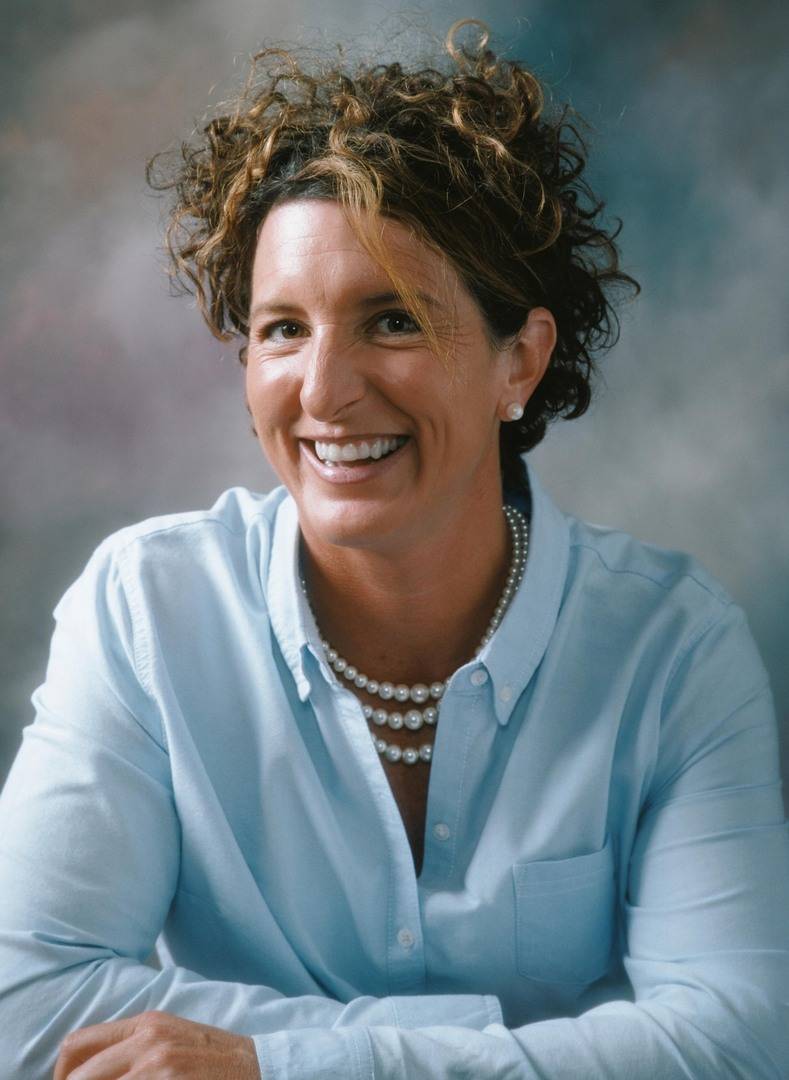
    “Pork is versatile, nutritious and simply delicious,” says Barb Campbell Determan, who has been passionately promoting pork during her lifetime.  Raised in Little York, Illinois, Barb served as Henderson County Pork Queen.  After attending the University of Illinois, she wrote for Drover’s and then started selling pharmaceuticals for the pork industry.  Barb was working a tradeshow booth at the American Pork Congress when she met her husband, a pork producer from Early, Iowa.  Since he obviously couldn’t move his farm, she relocated to Northwest Iowa.

    Today Barb serves on the Pork Safety & Quality Committee for the National Pork Board and also serves on two committees for the National Pork Producers Council.  In addition, she served as NPPC president in 2001-02.

    In addition to serving as a passionate advocate for the pork industry, Barb is also a tireless volunteer for the 4-H organization.  She became a leader for the Early Achievers 4-H Club just one month after she was married and recently earned her 30-year volunteer pin.  She is also past president of the Iowa 4-H Foundation and is serving her sixth year as a 4-H Foundation Trustee.

    This mother of three is also an active partner in the family farming operation plus is president of the Heartland Marketing Group, which she founded in 1982.  With a schedule this full, it’s no wonder that Barb has a list of favorite go-to meals!

    “We once had a hired man who said the Determans don’t eat a meal if it can’t be made in a slow cooker,” says Barb with a warm smile and a twinkle in her eye.  “And you know, that’s not far from the truth – especially during harvest.  Since I help run the combine and haul grain, I don’t have much time to spend in the kitchen.  I’ll put some pork in the crock pot, so we all can enjoy a home-cooked meal.”

    When she does have the extra time, Barb enjoys cooking for family and friends.  And when she needs a little more inspiration, she checks out the Pork® Be InspiredTM website for healthy recipes.  Her other favorite past times include cheering for the Iowa State Cyclones and the Fighting Illini, as well as crocheting prayer shawls.   She also enjoys spending time outdoors.

    “All five of us enjoy being outside, and our farming operation has allowed us to work together and develop a closeness that we might not otherwise have had,” says Barb.  Steve does the book work for their farming operation, as well as for Heartland Marketing Group.  He also writes manure management plans plus farms full time.  The Determans credit farm work, and especially livestock chores, for helping instill a strong ethic in their children.  All three children showed hogs, cattle and sheep in 4-H, which helped them learn to set goals.

    Today the Determan’s children are still working to meet their lofty goals.  Andy, 28, is a graduate of the University of Illinois and lives in Kansas City where he’s location manager and grain merchandiser for the Scouler Company.  In addition, Andy is on track to receive his MBA by May.  Dan, 26, graduated from Iowa State University with a degree in Hotel, Restaurant, and Institution Management.  He serves as Group Sales Manager  with the Denihan Hospitality Group in Chicago where he manages two of the company’s boutique hotels. He also plans to start graduate school in the fall.  Daughter Kourtney will turn 22 next week.  She’s a senior at Iowa State University, majoring in ag education with a communications option.  Kourtney plans to attend law school after earning her undergraduate degree from ISU.

    This weekend the Determans – like most Americans – will take a break from work to enjoy Super Bowl XLVI with friends.  And, yes, pork is sure to be on the menu when they gather.  Check out these pork inspired recipes for Super Bowl Sunday from ham-wrapped dill pickles to Cuban Glazed Pork Loin.

    “The Cuban Glazed Pork Loin is ridiculously easy, but it tastes like you spent hours in the kitchen,” says Barb.  “It’s an easy entrée to make ahead when company is coming, and it’s always a crowd pleaser.  Plus, the leftover loin makes the most delicious Southwestern Pork Tortilla Soup.”


    Team Latham

    February 3, 2012
    General, Pork, Recipes
  • Latham Hi‑Tech Seeds

    Ag Technology: Internet, Tablets & SmartPhones

    Farmers’ use of the Internet has been a hot topic of conversation recently from CNN to Wallaces Farmer. It was even researched as part of the most recent Iowa Farm and Rural Life Poll, which has been conducted every year since 1982 when it was established.

    “High speed Internet is as important to today’s young adults as electric lines and paved highways were for their parents and grandparents,” says Dr. Paul Lasley, Iowa State University sociologist, who co-directs the annual Farm and Rural Life poll.

    To further make his point, Dr. Lasley asks if I would move to an area if high speed Internet wasn’t available. I paused for a moment to truly consider his question. I realized that if I was going to be honest, I’d have to say “no.” As much as I like to escape reality by walking with my Lab through the woods or trying to land a trophy walleye from a remote lake, I wouldn’t ever want to be totally disconnected.

    More and more rural residents like me are relying on smart technology to keep them connected. Farmers like Larry Sailer are using their iPads to communicate with consumers on Facebook or Twitter while waiting in line at the elevator. And also like me, the majority of farmers today can’t imagine being tethered to an office due to a land line or a desktop computer.

    Contrast this to Dr. Lasley’s first day at Iowa State University in 1980. Lasley said he was issued a manual typewriter with a yellow pad of paper and was told to start writing! I don’t want to even think about writing a blog post or taking notes manually during a meeting. The invention of laptop computers, iPads, and SmartPhones has changed the way we all do business.

    It’s no wonder the Farm and Rural Life Poll asked respondents about the types of farming-related information they accessed via the Internet, as well as how often they accessed information from a number of agriculture-related agencies and organizations. The poll shows 84% of farmers who use the Internet get information on the weather. Most farmers who use the Internet also access market information (78%), general ag news (75%) and information about crop production (68%).

    Larry Sailer, Musings of a Pig Farmer

    February 1, 2012
    Agronomics, General, Precision Ag
  • Latham Hi‑Tech Seeds

    Sailer Tells His Story through Social Media

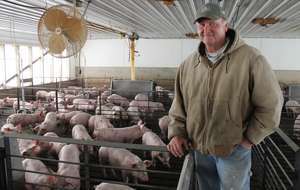
    Photo courtesy of AgriNews.com

    Educating consumers about agriculture isn’t new to farm organizations, but communication methods have changed over the years.  Just ask Larry Sailer, who raises corn and soybeans near Iowa Falls, Iowa.  Sailer (pronounced Cy-ler) has been in the hog business for 50 years.  During this time, he’s been active in farm organizations.  He currently serves on the Franklin County Farm Bureau board and volunteers with the National Pork Checkoff’s Operation Main Street Program.  He’s also involved with Farm Bureau’s Ag in the Classroom project.

    “Anything you can do to start a conversation with consumers about food and agriculture is good,” said Sailer in the Dec. 11, 2011, Agri-News article.

    With this goal in mind, Sailer is a staunch supporter of “America Needs Farmers.”   America Needs Farmers (ANF) is a collaborative effort between the Iowa Hawkeyes and the Farm Bureau Federation.  “We want to know what questions consumers have about what farmers do and why we do it,” he says.

    Another way Sailer has helped explain modern agriculture to non-farmers is through the 2011 Harvest Tour for bloggers, which was sponsored by Franklin County Farm Bureau, Latham Hi‑Tech Seeds and debworks.  Participating bloggers had so many great things to say about their experiences riding combines, touring Latham’s seed production plant and shopping Main Street that they attracted national media attention.  Franklin County’s inaugural bloggers’ tour became the “Starting Point.”

    When CNN visited Des Moines on Jan. 2 to cover the Iowa Caucus, the conversation turned to how Iowa farmers use the Internet.  That conversation made it increasing evident to Sailer why connecting with consumers – and helping dispel myths – is more important than ever.

    “CNN introduced me as ‘a real Iowa farmer’ like I was an endangered species or an apparition,” says Sailer.  “Why is so hard to believe that farmers carry Smartphones or that the Internet is available in rural America?  Farmers chat online daily.  We blog, tweet and post Facebook messages, too.”

    Thanks to his iPad, Sailer stays abreast of breaking news throughout the day and keeps in contact with farmers and ranchers across the globe.  “If I’m sitting in line at the grain elevator, for example, I’ll open my iPad.  I’ll pour over farm data or log onto Facebook or Twitter.  I use social media as a way to communicate and share ideas in a virtual coffee shop.  It’s also a great way to start a dialogue with consumer whose interest is piqued.”

    Sailer has more than 1,500 friends on Facebook.  His favorite Facebook posts are those featuring photos from farmers and ranchers out west.  He also regularly visits websites like AgChat.com and FacesofAg.com.  In addition, he reads many ag-related and local community blogs including TheFieldPosition.com, Farm Fresh Blog, Need a little advice, Common Sense Agriculture’s Blog, Darin’s Ramblings, Wag’n Tales and A Glorious Life of an Idaho Farmwife.

    Soon he’ll add one more bookmark to his list… Watch for Sailer’s weekly blog post to run every Tuesday on TheFieldPosition.com beginning Feb. 7!

    Larry Sailer, Musings of a Pig Farmer

    January 31, 2012
    Agriculture, General, Industry News
  • Latham Hi‑Tech Seeds

    Technology Redefines Agriculture

    What defines modern agriculture?

    It’s a question that I’ve been pondering ever since reading an article Jan. 19 by Terence Loose listing “agriculture” as the most useless college major.  More than anything, I believe his article illustrates how little the general public knows about production agriculture.  I dare say Loose envisions farming more like it was in the 1950s or 1960s than it is today.

    Agriculture has changed dramatically over the years, and it’s become even more technologically advanced in the past 5 to 10 years alone.  In fact, agriculture is like lot the car industry.  One used to have to custom order power windows.  Today power windows come standard on new vehicles just like most technology comes standard today on agricultural products.

    Technological advancements in the seed industry is just one example.  One hundred percent of Latham® Hi‑Tech Soybean seed is traited, and about 95% of the corn hybrids we sell contain technologies that make crops resistant to insects or certain chemicals.

    High-tech seeds means there’s a lot of science in each bag!  Think about the highly educated and skilled people it takes to research and create new technologies and genetics, develop them for commercial production, condition the seeds, and then sell them to the farmers, who produce food, clothing and fuel for the world.

    New seed technologies – have and will continue to – set new expectations for the yields farmers can achieve.  When Roundup® Ready soybeans were introduced in 1996, they set the standard for soybean yields for a decade.  Today Latham® soybeans with the Genuity® Roundup Ready® 2 Yield technology are redefining yield expectations.  Latham soybeans with the RR2 trait have been out-yielding the competition consistently for the past two harvest seasons.  Soon Vistive® Gold soybeans will produce an oil similar to the content of olive oil but much easier and cheaper to produce.

    On the corn side of our business, technology is progressing at an equally fast pace.  Innovations are making it even simpler to comply with refuge requirements.  New for 2012 Latham has introduced Genuity VT2 PRO RIB Complete, as well as Genuity® SmartStax® RIB Complete.  Other new technologies coming include a new rootworm trait from Syngenta called Agrisure® Duracade™ and crops resistant to 2-4D chemistry from Dow Agrosciences called Enlist™ just to name a couple.

    Seed traits are just one example of how technology has – and continues – to redefine production agriculture.  “Technology” obviously has many different meanings within agriculture, and the definition largely depends on what a person does from day-to-day.  A quick poll on Facebook and a few e-mails to our friends in the industry produced this list of ag technologies:

    • GPS
    • Auto-steer tractors
    • Smart Phones
    • Slow-release fertilizer
    • RFID technology for livestock

    And the list goes on!  How has technology transformed your own operation?

    John Latham, President

    January 30, 2012
    Agronomics, General, Precision Ag
  • Latham Hi‑Tech Seeds

    Step into Spring, Full of Energy and Optimism

    Fashion21
    FOR BOOKING INFORMATION CONTACT: Celeste Settrini • CSettrini@freshnetwork.com •  831-320-1527 • Follow her on Facebook & Twitter (@couturecowgirl7) • Blog (thecouturecowgirl.blogspot.com)

    guest blog by Celeste Settrini

    Just because you’re a farm girl doesn’t mean you need to sacrifice fashion!  All of us love to dress up once in awhile.  Every now and then, don’t you like to trade your Carhartt® overalls for a fun dress or some nice slacks?  At the least a new accessory or two?

    Now don’t get me wrong… I’m as farm girl as the rest of you.  But I do enjoy being a girl and playing dress up, and I am giving you all permission to find your inner girl. You can do just that with some help from me!

    Springtime is a season of new beginnings and fresh, playful fashion.  According to the Pantone Color Institute, “Consumers are looking for renewed energy, optimism and a promise of a brighter day.”  (Kinda sounds like farmers, huh? We’re always looking ahead, eager for better markets, more moisture, and higher yields! )

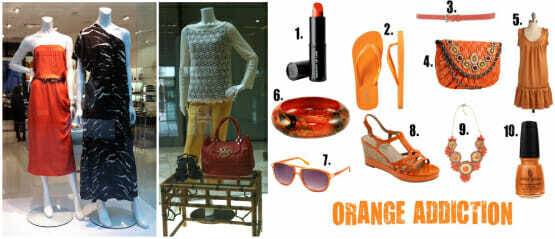
    When you think of colors that exude energy, what comes to mind?  Tangerine, of course! It’s an enticing juicy orange, vivacious and appealing.  Tangerine radiates warmth, cheer and excitement!  It’s really a fun color!!

    On a recent trip to the Big City (aka San Francisco), I found tangerine hues everywhere from dresses to handbags, nail polish, shoes, headbands, earrings.  This sunny, citrus punch of color was everywhere, so I took a few shots to share with all of you.

    Afraid to jump out of your comfort zone and purchase an orange dress or pants… then why not try some fun accessories?  Try a pair of ballet flats, a thin belt, hat, clutch, gloves, nail polish or lipstick.  A pop of orange added to any outfit of lavender, lime green or light blue is a lovely smidge of excitement!  If these items are too far-fetched, try accessorizing a nice, crisp white shirt and jeans with some fun, orange bracelets and/or a belt.  I know you can do that!

    Some of you might be thinking, “Really, Celeste?  Fashion on the Farm?”  Well, we don’t stay on the farm all of the time.  You must venture out once in awhile, am I right?

    I believe fashion is an extension of who you are.

    Fashion showcases your personality!  Some of us are over-the-top while others are a bit more conservative, but I’m thinking we all need a break from our Carhartts and need an opportunity to show a bit of personality.  If you just can’t break away from your bibs entirely, add a headband or maybe polish those nail tips – in Tangerine, of course!

    Follow me each Friday as we showcase “Fun, Fashion and Finds for Farm Girls” at www.thecouturecowgirl.blogspot.com where we talk fashion trends and fabulous finds. Why? ‘Cause we can’t talk cows all the time!!

    Celeste is a 4th generation cattle rancher on her family ranch in the foothills of the Salinas Valley on the Central Coast of California. As a young adult, she had an extensive career showing livestock. Celeste earned a B.A. in Agribusiness Marketing at California Polytechnic State University in San Luis Obispo. She works as a produce broker for Fresh Network, maintains her duties on the family cattle ranch and speaks at agricultural events nationwide.

    FOR BOOKING INFORMATION CONTACT:
    Celeste Settrini
    831-320-1527 • CSettrini@freshnetwork.com
    Follow her on Facebook & Twitter (@couturecowgirl7)
    Blog (thecouturecowgirl.blogspot.com)

    Team Latham

    January 26, 2012
    Agriculture, General, Industry News
  • Latham Hi‑Tech Seeds

    Newcomers Find Paradise in Rural America

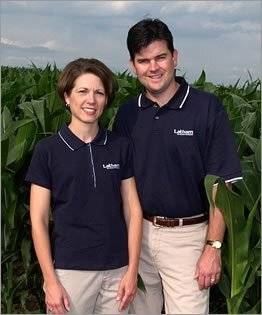
    John and Shannon Latham started Latham Hi‑Tech Hybrids in 2004

    “You don’t know what you’ve got ‘til it’s gone” is more than lyrics to a popular song that has topped the charts since 1970. It’s also become the mantra of many young professionals, who are leaving urban areas for an increased quality of life in rural communities.

    A rural renaissance has been happening since the 1970s, says Ben Winchester, a research fellow for the University of Minnesota Extension, Center for Community Vitality. One of his current projects involves documenting newcomers, or new rural residents who range in age from 30-45 years old and are either returning to their rural roots or moving to rural areas for the first time.

    Many newcomers are basing their decisions on lifestyle and quality of life, says Winchester. One of the most interesting findings of his research is that people are not basing their decisions to move to rural areas based solely on job opportunities. Many newcomers are providing a rural brain gain. They’re bring high skill sets, such as college degrees and master’s degrees, and have a career path in place with outside connections.

    In fact, many newcomers are self-employed. One in four owns a small business, and those who own businesses are heavily invested in their communities.

    “It makes me wonder what the state of our rural economy would be if these newcomers had not been coming back these past 30 years,” says Winchester in an article posted by fedgazette.

    Instead of spending so much time focusing on the brain drain of the younger residents who leave the state, Winchester is challenging rural communities to focus on attracting – and then retaining – the 30- to 45-year-olds who are migrating to rural areas.

    Like the newcomers described by Winchester, my husband and I both moved to urban areas upon college graduation and then returned to our rural roots when our children were toddlers. After living in Kansas City and then Des Moines for a decade, I personally could never find paradise surrounded by pavement. Give me my apple trees, singing birds and buzzing bees. Give me rolling acres of waving grains and a horizon filled with sunsets instead of skyscrapers. Give me Rural America!

    Team Latham

    January 25, 2012
    Agriculture, General, Industry News
  • Latham Hi‑Tech Seeds

    The battle between the GPS industry and LightSquared 4G-LTE network continues

    The battle between the GPS industry and a proposed 4G-LTE network backed by ground towers and satellites that may conflict with GPS signals continues, according to an article published recently by Agri-Pulse.

    LightSquared is dedicated to bringing fast broadband service with minimal delay in data transfer speed. To do so, it launched a satellite in November 2010 that could give all users signal regardless of cellular range.  This all sounds like an answer to a prayer, especially for rural residents, who frequently experienced dropped calls and other issues associated with a lack of towers and limited capacity.

    The conflict arises when the faster mobile 4G service essentially out-performs the satellite sending signals to GPS devices.  If the GPS signal gets interrupted and the GPS device doesn’t receive a service, it could affect data capture in the tractor.

    For example, when I shared this story with my marketing team, one of the girls had experienced this problem first-hand six years ago when she was interning with a regional cooperative in northwest Iowa.  She was given the task of mapping field boundaries on 11,000 acres within seven days.  Due to technical difficulties, it became an extremely daunting task.  Her territory was in a very rural area, and the GPS device often lost the signal.  She would have to retrace the field boundary with a four-wheeler on which the GPS device was mounted.

    While the GPS satellite system has greatly improved since that summer mapping field boundaries, this is an excellent example to help illustrate what can happen and to help explain why the GPS industry is concerned about how its customers will be impacted by the 4G satellite.  Just imagine the consequences of the GPS signal getting interrupted when fertilizer is being applied or yields are being calculated!

    On the other hand, it’s easy to understand why LightSquared executives are upset that their project is being given the red light – or at least the yellow flag – when they’re nearly ready to launch.  They’ve had permission since 2005 to build the 4G network, yet no concerns were raised until the eleventh hour.  In the meantime, they’ve invested millions of dollars and countless hours on R&D.

    No wonder the battle continues to wage.  Let’s hope they find common ground.  Figuring out how to protect the GPS signal’s viability for farmers while providing faster, more consistent mobile phone service would certainly benefit all who live in rural America!

    Team Latham

    January 24, 2012
    Agriculture, General, Industry News
  • Latham Hi‑Tech Seeds

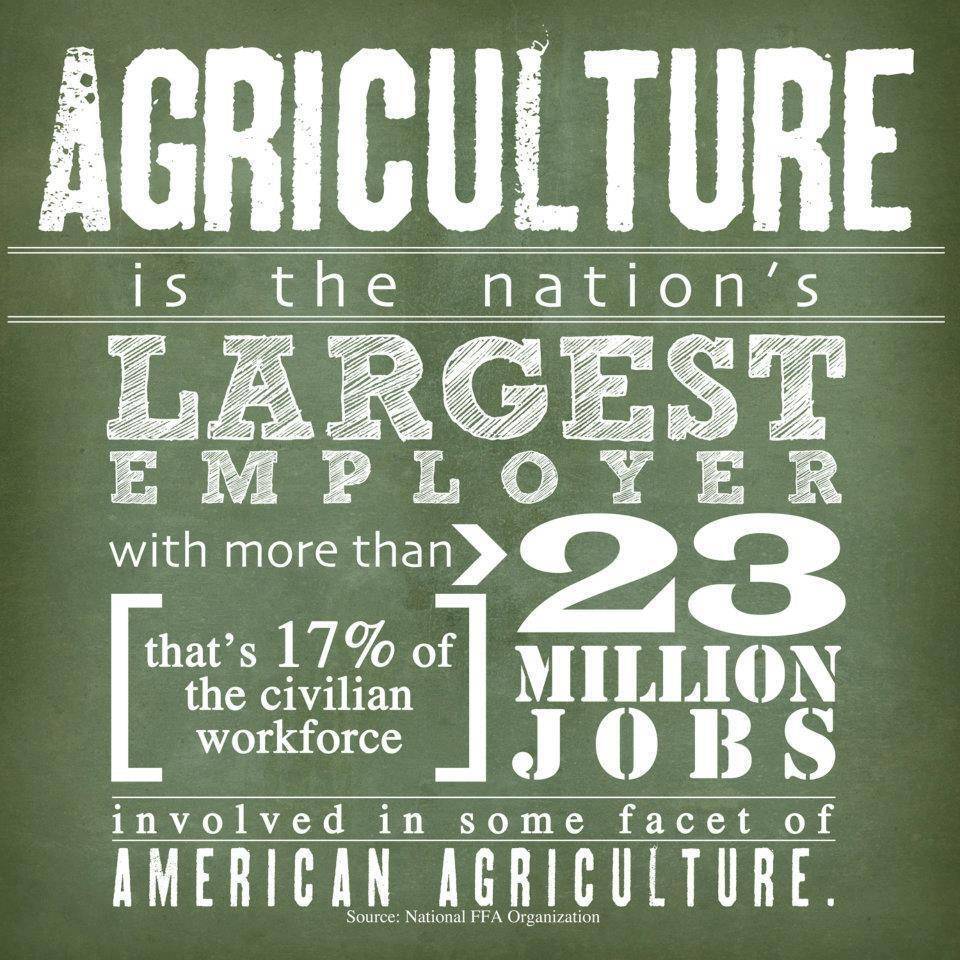
    Agriculture: One of the Most Useful College Majors

    Photo Courtesy of the National FFA Organization

    Ever since Yahoo! published an article Jan. 19 by Terence Loose listing “College Majors that are Useless,” agriculturists across the nation have been having a field day.  The ground is snow covered throughout the Corn Belt, but the agricultural community is making hay any way!

    I wouldn’t be surprised if Mr. Loose’s article does more than boost hits on the Yahoo! site… I’m betting it’s going to be one of the best PR opportunities our industry has seen.  It gives agriculturists a great chance to tell our side of the story to a captive, engaged audience.  He’s making our story relevant, timely and newsworthy!

    Take a look at how people across the country are weighing in:

    • “Without agriculture, everyone would be naked and hungry” is one of the tweets I read last week after the Yahoo story ran.  Since I couldn’t remember who deserves attribution for this quote, I did a quite Google search for “hungry naked agriculture.”  WOW.  My search revealed about 14,200,000 results with this one listed at the top:  Are You Ready to Be Hungry and Naked? | Hoosier Ag Today.  You can even buy “Naked & Hungry” T-shirts from the National FFA Organization.
    • Ag grads have posted nearly 4,000 comments over the past four days on a new website, I Studied Agriculture and I Have a Job.
    • In the Huffington Post, Allen S. Levine, Dean of the College of Food, Agricultural and Natural Resource Sciences and Director of the Minnesota Obesity Center, University of Minnesota, writes:  “While I’m hesitant to give the list (by Terence Loose) more credibility than it deserves – it’s based almost entirely on U.S. Labor Department projections and one author’s opinions – this blog post is so far off base it has to be refuted.”  Click here to read his rebuttal.

    Interestingly enough, a publication entitled Recruiting Trends 2010-2011 published by Dr. Phil Gardner at Michigan State University concludes:  “No sector appears stronger than agriculture/food processing with an increase in hires of approximately 14 percent.”

    Mike Gaul, Director of Career Services for Iowa State University’s College of Agriculture & Life Sciences,  says, “Every thing that’s happening at our college completely contradicts the Yahoo! article.  Our college has the highest placement rate on campus at 98.2%.  ISU CALS hosts the country’s largest agricultural career day.  The fall career day, on Oct. 18, 2011, was the largest on record with 175 companies exhibiting.  In addition, more nearly 1,200 interviews were conducted on-campus last fall.  Now ISU CALS is getting ready to host its 5th annual spring ag career for which record participation is expected.

    “When you invest in a college degree, you want to be marketable upon graduation.  A degree in agriculture is offering a great ROI right now,” adds Gaul.  “Agriculture is diverse and agriculture grads are in high demand.”

    Agriculture is a far different industry than it was 50, 30, or even 10 years ago, says Levine of the University of Minnesota.  He’s quoted in the Huffington Post as saying, “Who knows? The next George Washington Carver, Temple Grandin or Louis Pasteur might be thinking about a future in the agricultural sciences right now; the health of our people and our environment could depend on what he or she chooses.

    ISU’s Gaul agrees there are many more majors under the ag umbrella today including microbiology, horticulture, culinary science, and global resource systems.

    Agriculture in 2012 is certainly broader than it was in my grandparents’ and my parents’ day.  It’s even broader than it was in 1993 when I enrolled at Iowa State University with a double-major in Agricultural Journalism and Public Service Administration in Agriculture.  My degree has provided me with wonderful experiences during the past 19 years including lobbying on behalf of Iowa agribusinesses, doing public relations for agricultural leaders and now owning a business where I have the pleasure of working daily with those who help feed, clothe and fuel the world.  Truly, an ag degree is one of most useful degrees!

    Team Latham

    January 23, 2012
    Agriculture, General, Industry News
  • Latham Hi‑Tech Seeds

    What Can a Cookie Do?

    Gs 100th mark21

    It’s Girl Scout cookie time!  As Cookie Manager for our daughter’s troop, I’m having a hard time keeping certain varieties in stock.  Truly, these little boxes of sinful goodness sell out as soon as I get a new supply.

    “If only seed were as to easy to sell as Girl Scout cookies!” I’ve said to myself on more than one occasion.  “These little cookies practically sell themselves.”

    It made me wonder what we could learn from the Girl Scouts’ cookie sales program.  Here are the top five reasons I believe the Girl Scout Cookies NOW! program is so successful:

    1. Limited time offer
    2. Unique products
    3. Instant gratification
    4. Return/repeat customers
    5. A great sales pitch with practice overcoming objections

    Girl Scout cookies are only available for a limited amount of time (January 13 – March 4, 2012) and only from troop members, who either call customers on the phone or make door-to-door sales.  Each of the eight varieties is unique, and you certainly can’t whip up a batch at home.  (There’s a good reason the recipe is called “Mock Thin Mints”.)

    Speaking of Thin Mints… The only cookie that outsells Thin Mints is Oreo®, which are available 365 days a year from nearly every grocer and big box store nationwide.

    New to our area this year, cookies are delivered at the time of sale.  There’s instant gratification because you can treat yourself to a cookie as soon as the Scout walks out your front door.  Plus, customers can order early and reorder often!  You no longer need to ration your intake or freeze surplus quantities until March since there is nearly a two-month sales period this year.

    gs_100th_mark2If you dare say “no” to the friendly Scout who rings your door bell and asks you to buy cookies, be prepared. (Remember, that’s the Girl Scout motto, after all!)  These girls have been trained to overcome objections, and they’ve had plenty of practice – about 80 years’ worth.

    The first recorded Girl Scouts cookie sale was 1917, and the organization itself is celebrating its 100th anniversary in 2012.  Founded in 1912 by Juliette Gordon Low, Girl Scouts of the United States of America’s membership has grown from 18 members in Savannah, Georgia, to nearly 4 million members throughout the United States in more than 90 countries.

    In honor of the Girl Scouts’ birthplace in Savannah, today I’m featuring a recipe from another Savannah resident.  A meal at Paula Deen’s restaurant was a highlight when several members of the West Fork Girl Scouts traveled to Savannah last summer.

    Treat your family to a home-cooked chicken dinner this weekend, and open a box of Girl Scout cookies for dessert.  You can eat the whole box and still have time to reorder yet this sales season.  🙂

    What’s your favorite Girl Scout cookie?  Cast your vote on our Facebook poll today.

    Team Latham

    January 20, 2012
    General, Poultry, Recipes
Previous Page
1 … 114 115 116 117 118 … 159
Next Page

Latham Hi‑Tech Seeds

131 180th Street | Alexander, IA 50420

(641) 692-3258

SIGNUP FOR OUR NEWSLETTER
  • Contact
  • Legal
  • Dealer Center
  • Seedware Login
  • Latham Gear

© 2025 Latham Hi‑Tech Seeds. All rights reserved. | Iowa Web Design by Webspec | Privacy Policy

Latham® Hi-Tech Seeds is a trademark of M.S. Technologies, L.L.C., 103 Avenue D, West Point, IA 52656.