Latham Hi-Tech Seeds

(641) 692-3258

  • Home
  • Products
    • Corn
    • Soybeans
    • Soybean Blends
    • Alfalfa
    • Corn Silage
    • Seed Guide
  • Performance
  • Find a Rep
  • Media
    • Blog
    • News
    • Videos
    • Podcasts
    • TECHTalk
  • About Us
    • Company History
    • Our Mission
    • Careers
    • Become a Rep
    • Sowing Seeds of Hope
  • Contact Us
  • Latham Hi‑Tech Seeds

    Latham Hi‑Tech Equals High-Quality Alfalfa

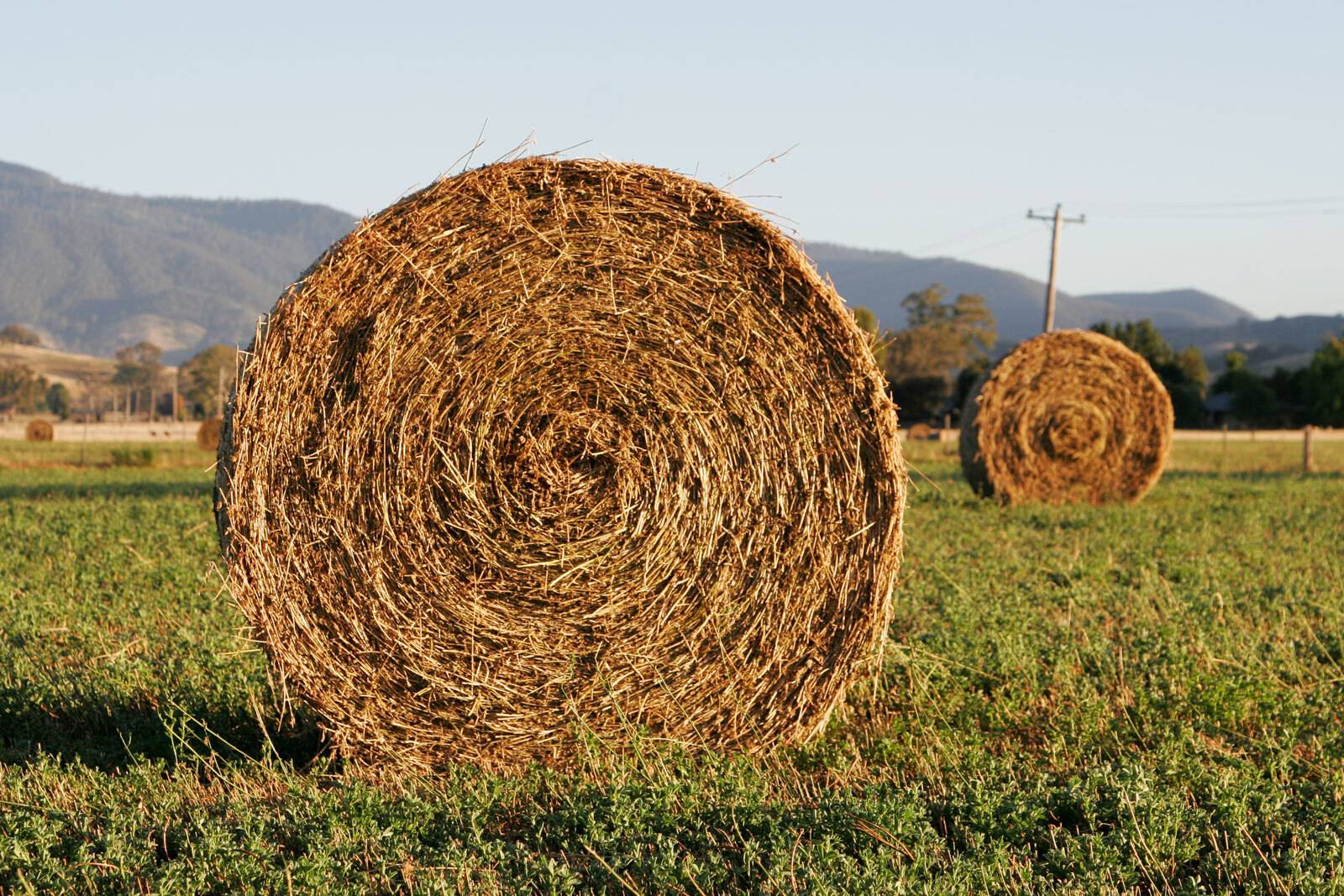
    The demand for hay is high, and the prices being offered for top-quality forage are making farmers sit up and take notice. Quite a few fields will be planted to alfalfa in the next few weeks. That’s why Latham Hi‑Tech Seeds is making three of the very best alfalfa brands available.  Following is a short summary of each.

    LH9100 Prolific II:  This alfalfa features a superior branch-root structure, which is located high in the soil zone above the water table. A high water table often severely damages or kills tap roots of traditional varieties, exposing those plants to disease or winterkill. The distribution of roots closer to the soil surface, however, increases the plant’s ability to better uptake nutrients. It also allows LH9100 to be an exceptional performer for hay producers under most soil conditions and especially in poorly drained soils. LH9100 carries an exceptional disease package. It’s highly resistant to most major pathogens, including Aphanomyces Root Rot (races 1 and 2). This new Latham® variety allows for very good alfalfa in more areas that previously were not even considered for hay production.

    LH9600HY:  This product is the next generation of branch-rooted hybrid alfalfas with the msSuntra technology. It’s characterized by aggressive re-growth, high quality and high yields. LH9600 is a fine-stemmed product with a similar disease package to LH9100 Prolific II. An added benefit is that LH9600 is also highly resistant to stem nematodes and Northern Root Knot nematodes. It also features excellent drought tolerance and a very high leaf-to-stem ratio.

    AmeriStand 405T RR:  Our first Roundup-Ready® alfalfa, this product is a high-yielding, Traffic-Tested™ brand that carries high resistance to seven major yield-robbing pests. Supplied to us by America’s Alfalfa, this is an excellent choice to maximize yield and profitability while reaping the benefits of the Genuity® Roundup-Ready weed control system. It’s ideally suited for those areas where stand establishment can be a challenge due to tough-to-control weeds. Keep in mind that once a stand is established, it’s always best to rotate your use of herbicides to help prevent weeds from building resistance to glyphosate-based products.

    For additional information on pricing and product placement, contact me or your Latham Regional Sales Manager. Have a great spring!
    Webspec Admin

    March 21, 2012
    Alfalfa, Crop, General, Industry News, Seed Technology
  • Latham Hi‑Tech Seeds

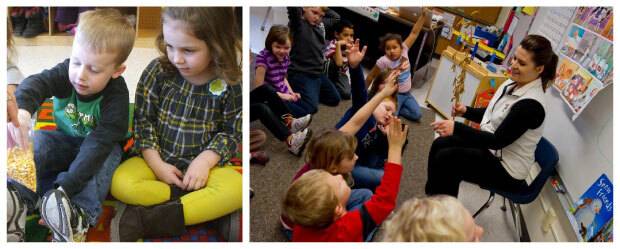
    Every Week is “Ag Week” Thanks to Ag in the Classroom

    Photo courtesy of AgriNews.com

    Musings of a Pig Farmer
    by Larry Sailer

    Are you smarter than a fifth grader?  I recently found out that I’m not as smart as a class of first graders in Ackley, Iowa.  I didn’t know the answers to some of their questions, and I have been farming for close to 50 years!

    Of course, farming has changed quite a bit since I was in first grade.  It’s definitely become more scientific, and biotechnology now plays an important role.  These first graders learned about embryology and topics that I didn’t even existed when I was a kid.  Through week-long Ag in the Classroom activities, they also learned about dairy, pork, beef, sheep, corn and soybean production.  They learn about water quality, food production and ethanol, as well.

    It was fun seeing how eager these kids were to learn about agriculture.  Plain and simple, these kids had fun learning.  Hands-on activities help them understand how agricultural products are turned into the food we eat and the clothes we wear.  Each student was given a baggie of wool and a Kool-Aid packet with directions on how to dye the wool and turn it into yarn.  Can you imagine the conversations this will help initiate at home?  I have had sheep on my farm and never knew how yarn was made!

    North Central Iowa Ag in the Classroom is a 501(c) that provides a variety of educational services at no cost to area schools in these six counties: Cerro Gordo, Franklin, Hancock, Kossuth, Winnebago and Worth Counties. Brenda Adams, Linda Anderegg and Leah Reinert do a fantastic job of working with schools and delivering programs that fit a school’s benchmarks and standards.

    Services offered by North Central AITC include:

    • Ag Education Week – one full week providing educational opportunities for several grade levels. Each day will be dedicated to a new and exciting farm-related activity and lesson appropriate for each age.
    • Teacher Resources – materials and resources for teachers wishing to present agriculture lessons on their own. In most cases the resources are provided free of charge.
    • Farm Tours – organized farm tours for teachers upon request.
    • PizzaThon – a curriculum developed by Iowa State University and Iowa State University Extension. Students in middle school Talented and Gifted classes work on a variety of projects throughout the winter months and come together in the spring to compete with teams from other schools.

    It’s great that these kids, who mostly live in town and have very little first-hand knowledge of farming, can learn to enjoy what I live every day.  This type of program exists across America with the help and support of many business sponsors such as Latham Hi‑Tech Seeds and Farm Bureau.  If you’d like to get involved, contact your county Farm Bureau office for more information.

    Larry Sailer, Musings of a Pig Farmer

    March 20, 2012
    Agriculture, General, Industry News
  • Latham Hi‑Tech Seeds

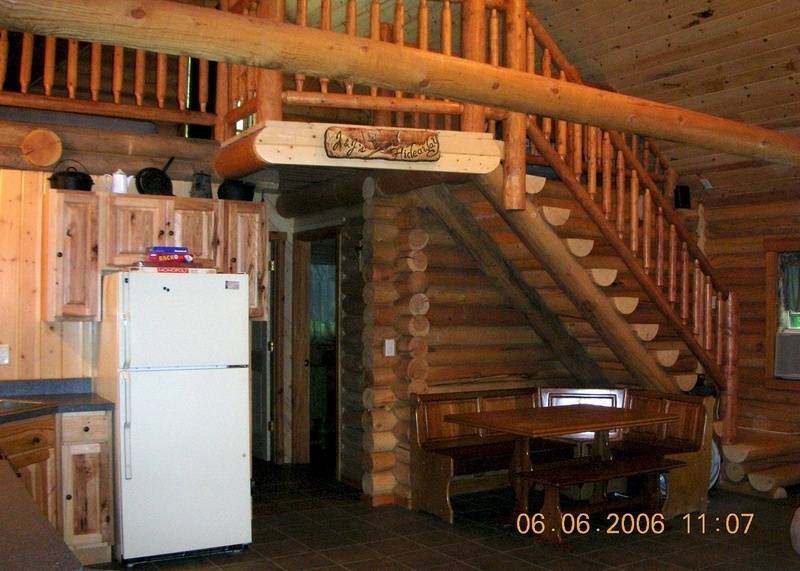
    J&J Hideway Provides Tranquil Getaway

    John & Jackie Fedeler

    Nestled in the midst of 21 acres of secluded woodland and 59 acres of grassland in scenic northeast Iowa – just 30 minutes from Volga Lake, Backbone State Park and Brush Creek Park – you’ll find J&J Hideaway.

    This fully modern, two-story cabin had been a dream for years of John and Jacquelyn Fedeler of Arlington, Iowa.  Six years ago John’s brother Mark helped him complete the quaint 1,080-square-foot cabin.  Now the Fedelers rent out their cabin, so others may enjoy nature in a comfortable, non-commercial way.  Their cabin has all of the modern conveniences including a whirlpool tub and satellite TV.


    Back of the Cabin

    J&J Hideaway has become a favorite get-away for men and women alike.  Groups of women have retreated to the cabin for weekend of scrapbooking and quilting.  Groups of men enjoy staying there during deer hunting, wild turkey and pheasant seasons.  Even John Michael Montgomery spent three days in the cabin in during late muzzleloader season in December 2009.  Photos of the famed country singer with Fedeler family members hang on the walls of their cabin.

    “Once people stay in our cabin, chances are they’ll come back again,” says John.  “There’s a group of guys from Michigan who will be making their fourth hunting trip this fall.  There’s another group of bow hunters who return each season.  Often times these guys will then make a second trip with their wives, who enjoy the peaceful setting.”

    Inside looks at the Cabin

    The Hideaway is conveniently located just five miles from trout streams that are stocked by the Iowa Department of Natural Resources. The woodlands also make the perfect backdrop for reading books any time of the day or grilling and dining on the patio.  Plus, there is a fire pit where guests can make s’mores or sit around a fire at night.

    The Fedelers have forged a trail through the woods, and they especially enjoy walking through the woods during springtime when they can find antlers shed by deer.  Their biggest find during “shed hunting” is half a rack from a 175-class buck.  There’s a state preserve next to their land, so there is plenty of natural cover for wildlife to thrive.  Bald Eagles also nest nearby, so they enjoy watching pairs return each season.

    With a love for the land and of the great outdoors, John feels fortunate that he had an opportunity to start farming 32 years ago with his father.  Click here to learn more about the Fedeler family and their farming operation.

    Team Latham

    March 19, 2012
    Agriculture, General, Industry News
  • Latham Hi‑Tech Seeds

    Large Family Leads to Loads of Tradition for This Iowa Farm Family

    Fedlers
    John & Jackie Fedeler

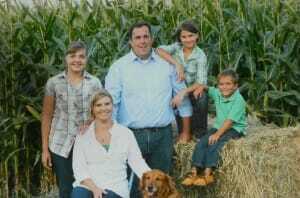
    With a love for the land and of the great outdoors, John Fedeler feels fortunate that his father provided him with an opportunity to start farming 32 years ago when he was a senior in high school.  In 1984, he moved to the farm where he and his wife of 22 years are raising their family.

    “Jackie is a great partner,” says John.  “She worked the first 10 years of our marriage at Rockwell Collins, and her off-farm job really helped us with the family living expenses.”

    As their family grew, however, Jackie was needed more at home.  Since 2001, she has worked different part-time jobs but farming and family definitely takes priority.  The family raises corn and soybeans.  They also sell small, square bales of high-quality hay.  In addition, they calve between 60 and 80 cows that they then finish to market weight.

    “Farming is a way of life for us,” says Jackie.  “By helping with chores, our kids have learned to be responsible.  They’ve learned to work hard.  They even ask their friends to pitch in and help.  When the work is done, we feed them well and John usually makes a batch of malts.”  The promise of pizza or grilled burgers plus John’s malts are key to rounding up a group of willing workers.  (NOTE TO SELF:  Remember to stop by the Fedeler farm place when black raspberries are in season.  Even if you have to help unload hay, it will be worth it for a taste of John’s homemade black raspberry or chocolate malts!)

    John and Jackie are the proud parents of six, active children:  Jacob, 20, is  a freshman at Kirkwood Community College, majoring in Ag Business.  Daughter Kristine is a high school senior, and this fall she will attend the University of Northern Iowa (UNI) for nursing.  Danielle, 15, is a freshman, who loves sports, music and drawing.  Noah, 13, loves all sports, music and video games.  Ten-year-old Alex loves farming, and as a first-year 4-H member, he’s looking forward to showing two steers at the county fair.  Youngest daughter, Jerilyn, is eight.  She’s a little socialite, who likes just about anything.

    It goes without saying that family gatherings are big for the Fedelers.  Jackie comes from a family of eight children and John from a family of nine.  John’s parents have 32 grandchildren, yet everyone makes it a priority to come home for the holidays.  John and Jackie hosted Christmas 2011 in their home for both sides of their family.  They said it’s not unusual to feed 45 or more, but they wouldn’t have it any other way.

    In addition to spending time with family, John is also a volunteer fireman and EMT.  He plays on a men’s softball league and really enjoys riding his Harley.  He enjoyed Latham’s Freedom of Independence Ride around eastern Iowa and western Wisconsin last year and is looking forward to the company’s annual ride in 2012.

    Jackie has joined a women’s golf league and is looking forward to the start of the new season.  She and the children are very involved with church activities, plus she enjoys spending time in the kitchen.  Jackie is such a good baker that she’s been winning contests since high school.

    “During my senior year, I needed a project for my Home Ec class,” says  Jackie with a smile.   “I saw this recipe for Candy Cane Coffee Cake in an old Betty Crocker cookbook, and it was voted Best of Class.  Since it was such a good recipe, a few years later, I entered a holiday baking contest sponsored by the newspaper.  I won that contest, too!  This recipe has become a family tradition ever since.  My  mom, some of my kids and I enjoy making these coffee cakes and sharing them with neighbors and others in the community during the holidays.”

    Team Latham

    March 16, 2012
    Desserts, General, Recipes
  • Latham Hi‑Tech Seeds

    Secrets to Sioux County’s Success

     Introduction

    If you want to talk about keys to revitalizing rural America, you need look no further than Sioux County, Iowa. Matt Schuiteman is a third-generation farmer who was born and raised in Sioux County, and serves as a strong advocate for growers with frequent trips to the capital. He also serves as a member of the 2012 Ag-Urban Initiative class, dedicated to connecting ag and urban populations for positive outcomes.

    Secrets to Sioux County’s Success
    by Matt Schuiteman,
    livestock and row crop farmer, Sioux County, Iowa 

    A Des Moines Register article in a three-part feature on Sioux County recently said, “If manure smells like money – and in February 2012 the commodity markets say it does – than Sioux County is the wealthiest place in the state.” In a tumultuous economy, the county I’ve spent my life in has indeed managed to not only remain status quo, but grow our population at a rate that is 63 percent higher than the rest of the state.

    There are many reasons – and people – who have positively affected that growth, but at the core is our activity and support in the agriculture industry.

    Agriculture is King

    Livestock farming is northwest Iowa’s #1 asset. Our livestock enterprises are built on consistent, annual production from fertile soils, and have required us to import corn for more than 30 years. Our community members have a strong understanding of what it means to add value to agricultural products; they understand that for every $1 our gross revenue from livestock earns, it turns over 7 times in our local community ($1 of dairy made into ice cream turns over 10 times!). Our integrated, diversified agriculture fuels the economy, and is why we were listed one of Progressive Farmer Magazine’s top 10 agriculture counties in the U.S.

    Local Ownership

    Sioux County encourages local ownership of the county’s infrastructure and resources; that’s what keeps dollars circulating on Main Street. This spirit has allowed many farmers to continue or begin farming who otherwise may not have had the opportunity. Local ownership is encouraged; all four banks in Sioux Center are locally owned, and have funded numerous entrepreneurial enterprises using local investments. In the past five years alone, Sioux County has added The Ridge Golf Course and Residential Development – 400 acres for an 18-hole golf course and residential lots, a new Orange City Area Health System hospital, a Sioux Center Community Hospital, Rock Valley, Sioux Center, Trinity Christian and MOC/FV schools have all added capacity, and a local dairy farmer built a cheese production plant in Hull. The spirit to support targeted risk with local dollars is proving successful, and has provided a strong foundation for continued growth in our community.

    I also believe, at the heart of it, Iowans are Iowans. We work hard, we believe in supporting our neighbors, we have innovative ideas and the experience to bring ideas to fruition. Sioux County isn’t a vacuum, each Iowa county has its own strengths, and with the right dedication and support from community members, has the potential to grow in challenging times.

    Team Latham

    March 15, 2012
    Agriculture, General, Industry News
  • Latham Hi‑Tech Seeds

    Extend Weed Control with New Xtend Crop System

    Water hemp, giant ragweed and marestail have become nightmares for farmers who have experienced weed resistance.  Although it’s been a bigger problem in the South, we’re also seeing signs of weed resistance right here in the Midwest.

    Fortunately, there will soon be another “tool in the toolbox” to help fight weed resistance.  Pending regulatory approvals, the Roundup Ready® Xtend Crop System is expected to be available to U.S. farmers for 2014 planting.

    The Xtend Crop System is Monsanto’s newest Genuity® soybean trait that includes tolerance to dicamba herbicide.  It will be stacked with the current Genuity® Roundup Ready 2 Soybean trait technology.  Roundup Xtend is an enhanced dicamba and glyphosate herbicide premix that will help farmers manage weeds before planting and during the season as an over-the-top option.

    Dual modes of action in Xtend will give farmers another choice for broad control of glyphosate-resistant and tough-to-control broadleaf weeds.  And as the crop system’s name implies, it will extend application and planting flexibility.  It also will extend the window for post-emergence applications.

    We’re optimistic that Xtend will also help save glyphosate and extend the life of high-yielding Genuity Roundup Ready 2 Yield Soybeans.  Diversity of tactics is key to consistent weed management and high crop yields, says ISU Extension Crop Weed Specialist Mike Owen.  In a blog article, Dr. Owen says no single tactic will protect the potential crop yield nor deter the evolution of herbicide-resistant weed populations.

    As farmers make plans for their 2012 soybean weed control programs, Seed-2-Soil® team lead Peter Bixel recommends using FULL rates of pre-emergence herbicides. Research shows that a pre-emergence herbicide applied before soybean planting reduced late-season waterhemp density by 97 percent!  Click here for more information on how you can enhance your weed management program this season.

    Team Latham

    March 14, 2012
    Agronomics, Crop, General, Herbicide Technology, Industry News, Soybeans, Weed Control
  • Latham Hi‑Tech Seeds

    Iowa: the Tall Corn & Tall Windmill State

    Larry Sailer

    Musings of a Pig Farmer
    by Larry Sailer

    During last week’s Ag Day celebration, many Iowans were touting ag facts like our great state ranks first in the production of corn and soybeans.  It’s a lesser known fact, however, that Iowa is a leading producer of wind energy.

    Seventy-five percent of Iowa is suitable for wind energy production.  However, average annual wind speeds and the amount of energy potential vary greatly across the state.  The same wind turbine at a high wind site will produce over three times the amount of electricity as a low wind site, according to the Iowa Wind Energy Center.  Even differences of a fraction of a mile per hour in wind speed can make a significant difference in the economic viability of a turbine.

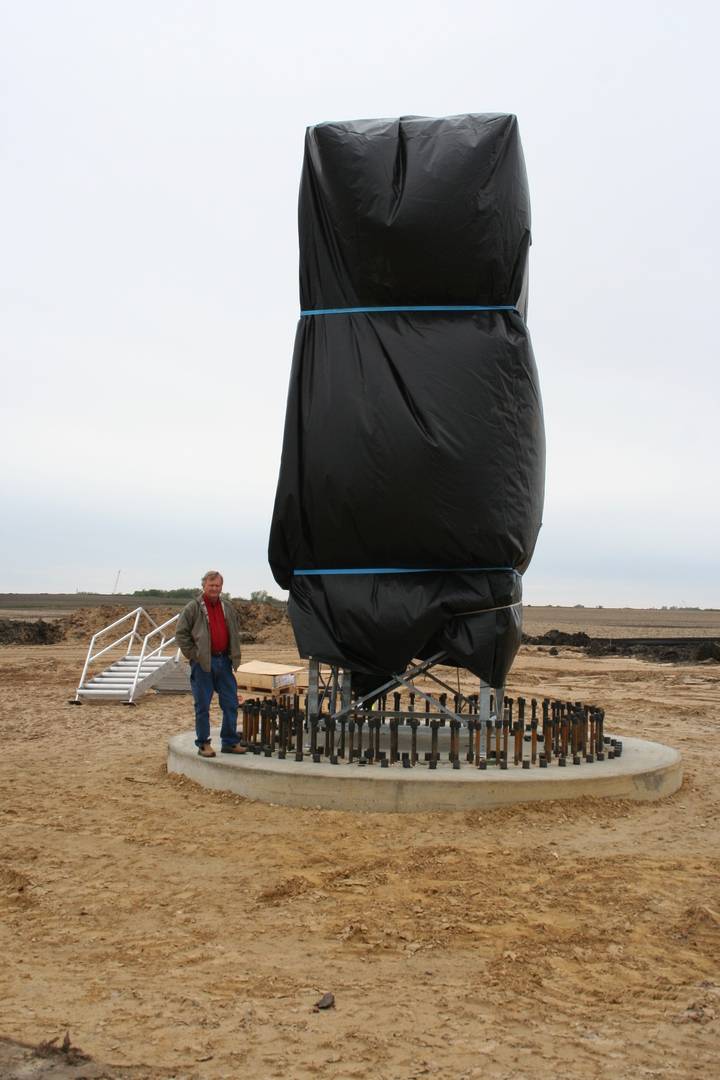
    As someone who lives in the middle of the Whispering Willow Wind Farm – East, I know the turbines here run 90 percent of the time. It’s amazing!  Each of the 121 windmills within this farm has the ability to produce 1.65 mega watts of electricity, collectively producing enough energy to power 50,000 homes. The capacity to power even more homes will soon grow as Alliant Energy plans to put up 50 more turbines here this year.

    These turbines look impressive from the road, but they’re especially imposing when you stand next to them.  From the videos and photographs that I’ve posted online, you can get an idea of their scale and the scope of this project.

    To provide even more examples of scale and scope, here are few “fun facts” that I’ve learned about windmills:

    • The total height of the windmill with a blade straight up is 397 feet, which is 92 feet taller than the Statue of Liberty!
    • Each windmill weighs 481,456 pounds – almost 241 tons! That’s about two times the size of the largest living creature, Blue Whales, which average 100 to 150 tons.
    • There are 50 truckloads of concrete, or 450 cubic yards, in each base.  Plus 35 tons of steel bars reinforce each base.
    • When the blades are turning at 14.4 turns per minute (which is actually pretty slow), the tips of the blades are moving at 138 miles per hour!
    • There are 57.2 miles of trenches with 187 miles of wire that transfer the power from Whispering Willows’ windmills to the substation.

    Not only do windmills stand tall in Iowa, but they stand to make a large impact on the total amount of energy – renewable energy – that can be produced as demands increase.  As I wrote in last week’s blog, we need to provide energy choices.  Power must be generated in many different ways to have enough to meet our growing energy needs.

    Just like we need many different ways to raise enough food for everyone in the world, we also need many ways to generate enough energy.  I wish all the best to Alliant Energy as it develops its next phase of windmills in North Central Iowa.  I also encourage more of America’s farmers to look into the viability of installing wind turbines on their farms.

    Larry Sailer, Musings of a Pig Farmer

    March 13, 2012
    Agriculture, General, Industry News
  • Latham Hi‑Tech Seeds

    Farming and 4-H are Plagge Family Traditions

    Plagge John1

    Farming is a family tradition for John Plagge of Latimer, Iowa.  This fourth-generation Franklin County farmer feels fortunate to live in his childhood home, just 2.5 miles down the road from where the land homesteaded by his great grandfather Fred Plagge.

    It comes as no surprise to those who know him best that John would find his way home to rural Iowa and to farming.  He was an active 4-H member from the time he was 9 years old and showed pigs at the county fair.  His FFA supervised agricultural experience (SAE) while in high school involved helping his neighbor, who was a fellow pork producer and grain farmer.

    After graduating from CAL (Coulter-Alexander-Latimer) Community in 1991, John earned a bachelor’s degree in Ag Business from Iowa State University.  He then accepted a full-time position in retail sales with a co-op in Thornton before transferring to FC Co-op in Latimer. Meanwhile, his wife, Anne, managed the Charlie Brown Daycare while the couple and their children lived in Clear Lake.

    In 2002, John and Anne moved their family to the home place near Latimer.  John’s dad, Marvin Plagge, retired that year, providing John will an opportunity to farm full time.  Anne had the opportunity to become director of the Hampton Christian Community Daycare, a position she held until four years ago when she started working in Mason City for a company that provides continuing education for childcare providers.

    Today John raises corn, soybeans and a little alfalfa.  “What I enjoy most about farming is seeing the fruits of your labor.  So many people never get to see their work have a direct impact on a finished product,” says John. “It’s amazing to watch the creation of plants and animals.  Being able to plant a seed, care for it, and harvest it is a wonderful accomplishment.”  He also contract feeds pigs from 12 pounds to market weight.  In addition, John raises a few head of cattle for his kids’ 4-H projects.

    The Plagge’s oldest daughter, Brooklyn, has been a 4-H member for six years.  She enjoyed showing miniature Southdown sheep for five years, but now that she’s a freshman, high school activities have preempted the show ring.  This summer her schedule will be full playing in the Midwest Association Youth Basketball league, taking a missions trip with her church’s youth group, as well as completing 4-H projects.  Brooklyn has been selected twice to present working demonstrations at the Iowa State Fair.

    “4-H helps kids develop skills that they’ll use throughout their lives,” says John.  “It’s a good experience for them to learn to talk one-on-one with judges, explaining how and why they made something.  It’s also a good experience for them to learn how to present in front of group.  Think of how many adults suffer from stage fright, but through 4-H, kids can learn to overcome their fears of public speaking.”

    Erin, the Plagge’s 10-year-old daughter, is excited to be a first year member of the Marion Monarchs 4-H Club.  She’s looking forward to showing a bucket calf at the 2012 Franklin County Fair.

    The Plagge’s six-year-old son, Gage, is a Clover Kid.  This 4-H program for kids in kindergarten through third grade allows them to attend summer programs and enter exhibits at the county fair.  Gage loves building LEGO® sets, so that most likely will be his fair project.  That is if he can come inside long enough to finish building.  Right now he’s having run riding his little Polaris four-wheeler and taking adventures with his best friend, Buzz, the family’s year-old Black Lab.

    “We like the freedom that comes with living in the country and raising our kids on our farm,” says John.  “Our kids have lots of space to run and explore.  They’ll play outside for hours with their pets.  And they definitely use their imaginations.  You never know where their imaginations will take them!”

    Every day is an adventure when you’re raising three, very active children, who are involved in a host of extracurricular activities. That’s why the Plagge family enjoys quick and easy meals like the recipe they’re sharing today for Wanda Sandwiches.

    Team Latham

    March 9, 2012
    Agriculture, Beef, General, Industry News, Pork, Poultry, Recipes
  • Latham Hi‑Tech Seeds

    Celebrating Ag Day

    Today marks Ag Day, a day to celebrate our industry and the hard-working individuals in the field and on the farm who provide us with nutrition, fuel, clothing and energy.

    When agriculture unites, it’s amazing the challenges that can be overcome. One of the greatest challenges of our time will be meeting the needs of a growing world. Experts say that by 2050 those in production agriculture will need to produce 40% more from existing acres to feed the forecasted population.

    This challenge is coming to the forefront during discussions surrounding a new Farm Bill. A farm bill proposal, including a $23 million reduction package over 10 years, was submitted by Agriculture Committee leaders last November. The bill took an unusual route through the Capital, forgoing the normal process of hearings, negotiations and amendments. The reauthorization of the farm bill will expire this September, and the usual process of field hearings and the opportunity for input should resume.

    The importance of guiding smart choices regarding the farm bill is at an all-time high, and requires the ag community unite once again to lead discussion at the Capital. In a recent SeedWorld article, John Latham, president of Latham Hi‑Tech Seeds, spoke about the reasons why he will head to Capital Hill this June to stand shoulder-to-shoulder with other seed executives across the nation at ASTA’s 129th Annual Convention and Legislative Conference.

    “Right now, times are good and the prices are high, and farmers are doing well,” he said. “My fear is a cutback as well as a pullback of prices could really leave people in bad shape,” he says. “There has to be some sort of safety net for when times are tough. The food supply is critical, not only for the United States, but for the whole world, and the United States leads that. We need to have some sort of safety net, and I hope that comes through in this farm bill.”

    In this same article, Leslie Cahill of the American Seed Trade Association says, “There’s never been a more critical time in our history as far as agriculture is concerned. We really need to lock arms and stand together because, if we don’t, there could be a lot of harm and uncertainty ahead for us.”

    Cahill recommends that farmers and industry professionals contact members of Congress and work with other agricultural association groups because the farm bill is one of the most important pieces of legislation to pass through Congress.  She says, “As we look to bolster the economy, feed a growing population and help maintain national security… we have to have some very honest discussions on exactly what agriculture brings to the table — and that’s quite a bit.”

    Please feel free to contact us if we can help you reach out and guide conversations on the Farm Bill.

    To those of you involved in and supporting agriculture – thank you for all you do each day to help feed and fuel our world!

    Team Latham

    March 8, 2012
    Agriculture, General, Industry News
  • Latham Hi‑Tech Seeds

    Wind Farms Provide Energy Choices

    Musings of a Pig Farmer by Larry Sailer

    Larry Sailer, sitting on the base of a windmill

    Three years ago, I was farming in the middle of the biggest construction zone I have ever seen.

    Construction of Whispering Willow Wind Farm-East began in December 2008, and the wind farm became operational in December 2009.  This turned into a yearlong quagmire of muddy roads, muddy trucks and even muddy mailboxes!

    All day, every day, the gravel road in front of my house was heavily traveled by gravel trucks, cement trucks and support equipment.   All this heavy truck traffic literally tore the road apart every day, and every night they would rebuild it.  They tried using various kinds of rock to make the road last. They even tried extremely large rocks; some were the size of footballs!  One week I had six flat tires from the very sharp rocks about the size of grapefruit.  Because the road conditions are hard to describe, I’ve added some video and photographs for your enjoyment.  (At least I enjoyed looking through them!)

    Now you might be thinking I’m not a very big fan of windmills by this point, but that’s not true at all. I’m actually a fan of this renewable energy source.  For example, Whispering Willow Wind Farm-East produces enough energy to power 50,000 homes.  How can I be against that?

    I consider energy to be similar to farming.  Just like we need all types of farming operations to produce enough food for the growing world population, we also need energy choices and a mix of all kinds of power.  We need wind farms, as well as generating plants run by natural gas, coal and nuclear.  America also has dams that create a huge amount of hydro power and solar panels.  Some of these options are better than others, but the point is we need a mix.  We cannot throw all of our eggs in one basket.  (Yes, that farm pun intended!)

    Although I wouldn’t want to have all of that construction in front of my house again, I do see the value of this wind farm and am glad it was built here.  I use power and know it must be generated in many different ways to have enough to meet our growing energy needs.  Just like we need many different ways to raise enough food for everyone in the world, we also need many ways to generate enough energy.  Choices are important!

    Larry Sailer, Musings of a Pig Farmer

    March 6, 2012
    Agriculture, General, Industry News
Previous Page
1 … 111 112 113 114 115 … 159
Next Page

Latham Hi‑Tech Seeds

131 180th Street | Alexander, IA 50420

(641) 692-3258

SIGNUP FOR OUR NEWSLETTER
  • Contact
  • Legal
  • Dealer Center
  • Seedware Login
  • Latham Gear

© 2025 Latham Hi‑Tech Seeds. All rights reserved. | Iowa Web Design by Webspec | Privacy Policy

Latham® Hi-Tech Seeds is a trademark of M.S. Technologies, L.L.C., 103 Avenue D, West Point, IA 52656.