-
Latham Hi‑Tech Seeds
Proof Points – Episode 15

-
Latham Hi‑Tech Seeds
Nothing fishy about this soy success story

Guest Blog by Aaron Putze, Iowa Soybean Association
When soybean farmers say their “real” customers are pigs, they truly mean it.
That reference to the importance of swine rations in driving demand for soy, however, is in no way a slight to other important markets.
That includes those with fins, scales and gills.
As developing countries strive to feed their growing populations more protein, fish is increasingly on the menu . . . and not just species harvested from streams, rivers and oceans.
According to the Food and Agriculture Organization, global average consumption of fish and other seafood reached a record high of 20.5 kilograms per person in 2019. That amount is expected to increase as the quality and affordability of fish improves.
Enter Iowa and U.S. soybean farmers.
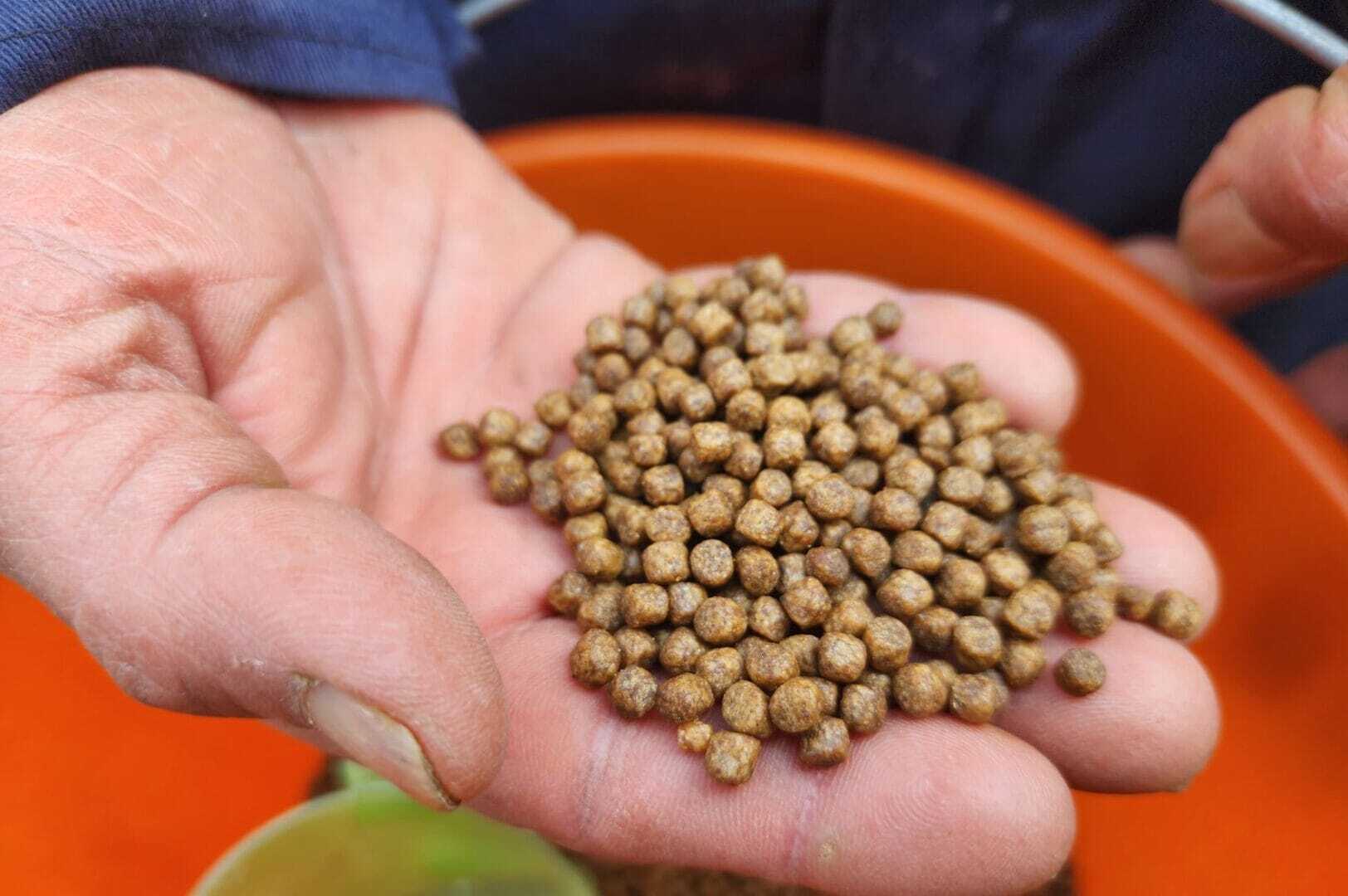
To meet the growing demand and taste for quality, farm-raised fish, professional feed using ingredients other than fishmeal and fish oil are coming into vogue. Soy is the most-used protein source in aquafeeds worldwide. According to the Global Seafood Alliance, soybean meal, soy protein concentrates, and soybean oil are increasingly go-to feed ingredients required for many farmed species.

Soy Fish Feed Research funded by soybean farmers has played a key role in developing this win-win demand driver. More appetite for sustainably produced and healthy fish is a boon to soybean demand.
In addition to developing soy-based feeds ideally suited for hungry fish and shrimp, soybean farmers have also played a key role in developing new ways to produce farm-raised fish. They are advancing educational activities carried out by the U.S. Soybean Export Council (USSEC) to train people in developing countries on how to manufacture professional feed using soy.
Iowa soybean farmers take great pride in the role they’ve played in developing better methods and feed for producing fish.
But the story doesn’t end there.
Soy Excellence Centers (SECs) were launched by USSEC in 2019. They offer professional training in a variety of curriculums including feed milling, soybean processing and refining and poultry, dairy, swine and fish production.
More than 6,500 trainees have participated in SECs. One such center operates in Egypt – a facility I was able to see firsthand during a trade mission to the country of 110 million earlier this year. Better training, fish feed and production methods have had a profound impact. The metric tonnage of farm-raised fish production has increased from 600,000 in 2005 to nearly 1.5 million in 2019. Production is projected to surpass 2 million metric tons by 2030.

Aaron Putze in Egypt at a Soy Excellence Center Farm-raised fish account for almost 80% of Egypt’s seafood market, up from 50% in 2012. Tilapia is the choice of 80% of Egyptians. Other fish species include catfish, sea bass, mullet and carp. Shrimp production is gaining in popularity as farmers seek to diversify and capture greater premiums and profits.

Harvesting Tilapia in Egypt Give the people of a country a fish, and they’ll eat for a day. Teach them how to produce fish (and poultry and milk), and they’ll eat for a lifetime.
That’s the power of soy and Iowa’s soybean farmers.
Aaron serves as Chief Officer of Strategy and Brand Management for Iowa Soybean Association. You can reach Aaron at 515-975-4168 or aputze@iasoybeans.com.
All this talk of fish made us hungry for a yummy Friday recipe! Check out this Lemony Shrimp Scampi Linguine from The Iowa Food and Family Project.
-
Latham Hi‑Tech Seeds
Making Pork a Business and Dining Tradition

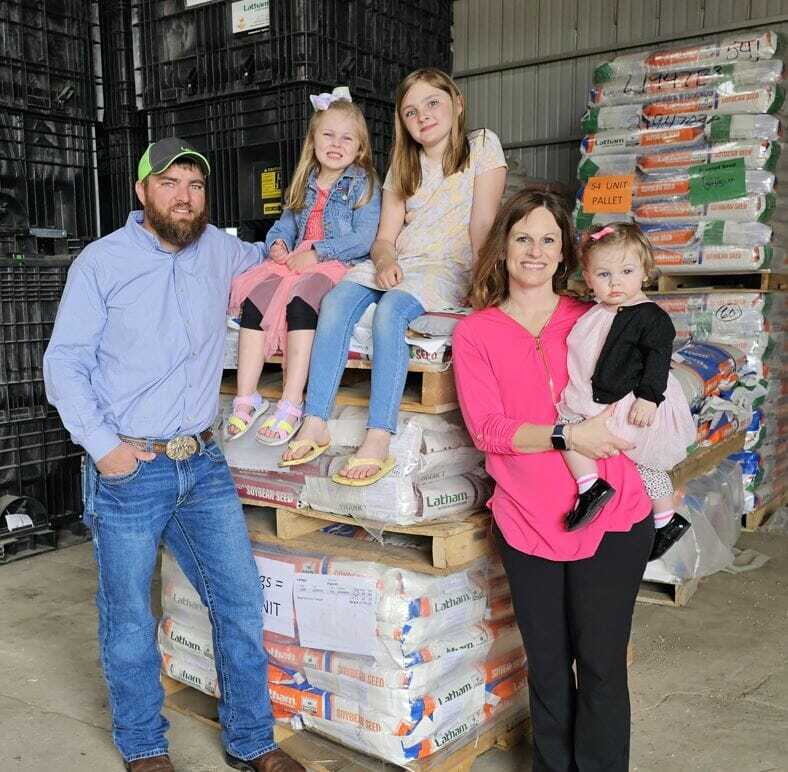
“Our family has been raising pigs practically since they got off the Mayflower,” says Andrew Perry, who farms with his father, Blaine, in Northwest Iowa. Andrew grew up also raising sheep, cattle and chickens. A Perry has been farming in Cherokee County for six generations. Blaine and his wife, Darlene, are the third generation to live on the home place near Aurelia.

The Perry Family The Perrys’ business relationship with pork goes way back, but they also enjoy the fruits of their labor. Pork is a mainstay on the Perry’s dinner table. While nutritious, lean, high-protein pork powers the humans in their operation, the Perrys also make sure to provide their pigs with the right diet.
“We feed 80 percent of the corn we raise, so we keep corn for nine months before we haul any of it to town,” explains Blaine, who runs the combine while Andrew hauls grain from the field to the bins. They practice a 50-50 crop rotation and raise seed beans on contract.
When selecting corn hybrids, test weight and quality of seed is their focus. That is why Blaine and Andrew rely on Latham® quality corn hybrids.
“We raise corn that feeds our hogs. Then we use the manure our hogs produce to fertilize our fields,” Blaine says. “When you think about it, our operation comes full circle. Hog manure is ‘organic,’ but many people just don’t realize that manure has such a high value.”
Until 2022, the Perrys were independent pork producers with one nursery that supplied them with the pigs needed for their wean-to-finish operation. Now they custom finish hogs.
Conveniently, a neighbor built a feed mill one mile away. The Perrys haul their corn to the mill, which helps with biosecurity. Blaine and Andrew are the only two who enter their buildings. They credit controlling truck traffic and people inside their facilities with keeping their hogs healthier.
Andrew lives in Alta with his wife, Liz, who is a teacher at Cherokee Community School. They have three daughters: Danika, Alexa and Becca.
When they’re not busy on the farm, the Perrys enjoy taking tractor rides together. All three of Blaine and Darlene’s children — Andrew, Adam and Brooke — enjoy riding together in Peterson’s Annual Trip on Old Tractors (PATOOT).
The Perrys know that pork can adapt to most any meal needs, even desserts, as proven by Liz’s Bacon Bourbon Apple Pie.
-
Latham Hi‑Tech Seeds
Multiplex Gene Editing: How It’s Transforming the Future of Farming

At a time when the world’s population is increasing, cropland is decreasing and climates are changing, it’s more important than ever to equip farmers with new technology and tools to take the guesswork out of planting decisions. One such tool is multiplex gene editing, which quickly adjusts a plant’s DNA to improve its resiliency and to use fewer natural resources like land and water.Multiplex gene editing turns up the volume on regular gene editing by implementing multiple types of edits to plant genomes. For example, vegetables such as broccoli, brussels sprouts and kale all started from different parts of the same wild mustard plant — but didn’t fully develop into their own varieties until breeders chose to amplify certain traits. Today’s corn is no different, having been bred from a plant that looks nothing like corn looks to us now.
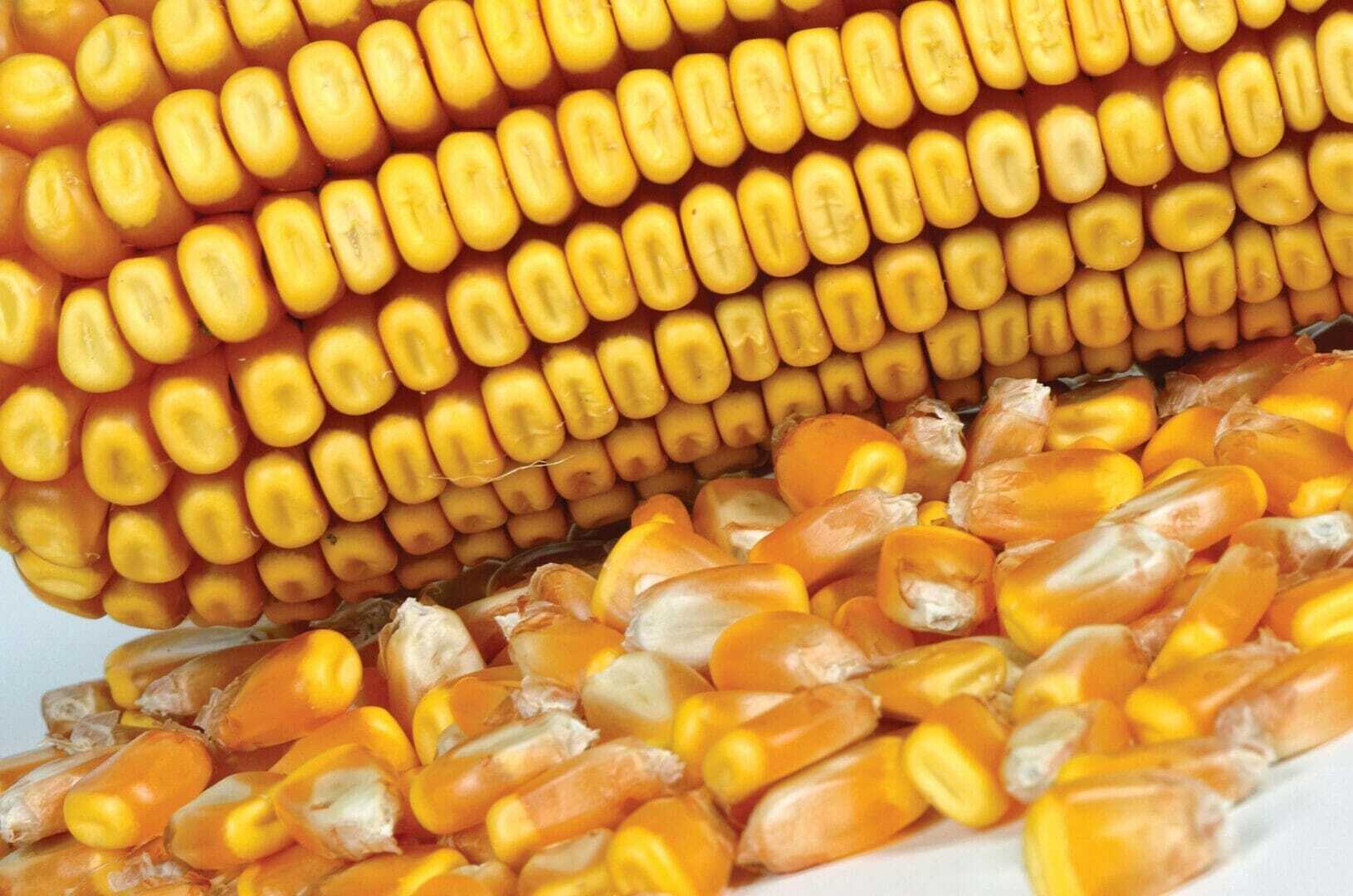
Farmers recognize benefits from multiplex gene editing more quickly because no government agencies are involved. Additional benefits include:
- More uniform seed size, which increases planting efficiency.
- Increased water utilization.
- Changing the leaf shape, which allows for better light interception and photosynthesis to improve yields.
With a high-performing lineup designed specifically for your field, Latham Hi‑Tech Seeds is well-positioned to increase yields — year after year.
Contact Latham’s product team or your RSM/DSM for more details on multiplex gene editing and other pioneering advancements that we’re working on for your future!
-
Latham Hi‑Tech Seeds
Prepare Now for Increased Production in 2024

There’s more to fall than getting the combine ready. To ensure healthy, productive soils next year, think about doing these three things now:
- Review your field data
- Correct compaction
- Add a cover crop
Whether your fields produce bumper crops or have lower-than-average yields, take the time after harvest to assess soil fertility levels, replenish depleted nutrients, determine reasons for high- and low-yielding areas and evaluate overall soil health. Doing this can help give your crops a head start for next season.
Soil samples and yield maps can predict the future
Begin next season’s preparations by pulling post-harvest soil samples and assessing this season’s yield maps. Soil samples will identify any phosphorus or potassium deficiencies, while yield maps will show the amount of nutrients removed from the soil by this year’s crops. This information will help you determine crop nutrient amounts for next season, based on actual numbers rather than estimates.
If post-harvest conditions allow, farmers can make partial (or base) nitrogen applications in the fall. Then test soil nitrate levels in the spring to determine the additional amount needed to meet next season’s crop performance goals. This ensures that nitrogen will be available in the soil at planting, as well as throughout the remainder of the growing season. If weather delays spring applications, this nitrogen management strategy provides you with more time to assess fertility needs based on early-season crop and soil conditions.
Consider fall nitrogen applications with a stabilizer
If you can make a fall nitrogen application, consider the effects of soil texture, soil moisture levels and soil temperature to avoid leaching and denitrification issues. Fall nitrogen applications should not be made until your soil cools to 50 degrees Fahrenheit or lower, when soil bacteria begin to go dormant. Fall-applied nitrogen must be used with a stabilizer to prevent it from converting into a mobile nitrate form that can move off-target and run off into nearby waterways. If manure is part of your nitrogen strategy, consider also using a stabilizer.
Ease spring workloads with simple steps
If your fall soil samples identify phosphorus (P) or potassium (K) deficiencies, you can apply these nutrients any time after harvest. To ease spring workloads, broadcast applications may be made in the fall and incorporated into the soil. If a spring application works better, P and K can also be applied prior to planting.
Another important issue to assess in the fall is soil compaction. Before doing any fall tillage, check compaction depth to help you determine the proper tillage tool to use. Accurate tillage depth and the tillage speed will loosen soil and prepare it for next season.
-
Latham Hi‑Tech Seeds
Late Summer Can Lead to Better Harvest Decisions


Steve Sick, Latham Product Manager Taking field notes on what you observe in late August and early September can provide valuable information as you move into harvest, as well as confirm or reprioritize agronomic goals for next year.
Notes I take this time of year generally answer these questions:
- What diseases are the most prevalent?
- Which areas of the field exhibit poor growth or yield potential?
- Should I conduct a pre-harvest yield estimate?
Late-Season Scouting Suggestions
Evaluate areas of poor crop growth and potential yield. There can be multiple reasons why a crop didn’t grow well in portions of a field or yield estimates are low in some spots.
To help determine if soil fertility and health is the cause, try these steps:
- Mark on a map or GPS reference the location, so you can take directed soil samples after harvest.
- Pull paired samples. Take one composite soil sample in the poor growth area and then take another composite sample in an area of good growth nearby in the same field. (Soil sample bags are available from many sources and easily available through your local university or co-op.)
- Use yield maps. These are another great data layer to compare and contrast what you observed during scouting in late August.
Think About Pest Management While Scouting
Observe the severity and distribution of diseases, insects, and weeds in a field to help make future adjustments to pest management plans.
For example, Goss’s Wilt and bacterial leaf streak are two bacterial diseases found this year in cornfields with no previous history. Tar spot is also a new disease that carries over in residue the following year. Hybrid selection for improved tolerance or resistance to these bacterial diseases maybe something to talk about with your seed dealer this fall.
Some hail and wind-damaged fields now have a late-season weed flush in portion that might warrant a more aggressive herbicide program next year.
Scouting Now Can Help Predict Yield Potential
The most compelling reason to scout fields in late summer is to estimate yield potential. There are differing techniques on estimating corn yield in terms of how to sample and the number of ears to pull. I suggest using information from satellite or drone images to direct sampling across the variability that exists in all fields.
Another word of caution is with the seed size factor used to calculate kernels/bushel with the extremely dry grain fill period we have experienced in parts of Latham Country. For dry areas, that number may need to be much larger than normal.
Scouting late in the growing season is almost always hot, itchy, sweaty, wet and uncomfortable! However, the insights gained with field observations — when paired with knowledge of the growing season — can help tweak management decisions going forward. This will ultimately lead to more productive growing seasons in the future.
Did you enjoy this article? We want to (TECH)talk with you! Sign up for our newsletter to receive agronomy videos, articles (and delicious recipes) in your inbox! We’ll TALK soon.
-
Latham Hi‑Tech Seeds
Late-Season Soybean Scouting

As we roll into late summer, it’s important to continue to scout soybean fields for signs of disease, insect pests and weed escapes. The notes you take today can have a significant impact on this year’s crop and also help you make more informed decisions in future years. Soybean aphid scouting should be well underway at this point. Aphid pressure has been relatively low throughout most of Latham Country to this point, but it’s important to remain diligent in checking your fields. The generally accepted economic threshold for this pest is an average of 250 aphids per plant with more than 80 percent of plants infested and an increasing aphid population. You’ll need multiple scouting repetitions to determine what is happening with aphid populations in your field.
Two-spotted spider mites are another insect pest in soybeans that have the ability to rapidly increase in population under the hot and dry conditions some of our geography has faced. If mites are positively identified and causing plant damage — and hot, dry conditions are expected to persist — control measures should be considered. Field border treatments may be an option as infestations of spider mites are often confined to field edges.
Late summer is also when several soybean diseases show up, including Sudden Death Syndrome, Frogeye Leaf Spot, White Mold and others. South Dakota State University has a detailed article on late-season soybean diseases.
Knowing which diseases are present in your fields can help determine which variety to plant next year. Planting varieties with disease resistance can be the most effective and the most economical method of disease control. Latham® soybeans have great resistance to the major diseases that occur in our trade territory including: Soybean Cyst Nematode (SCN), Sudden Death Syndrome (SDS), Brown Stem Rot (BSR), Iron Deficiency Chlorosis (IDC), White Mold and Phytophthora.
Soybean pests and diseases can be very serious issues. If you have any questions, feel free to contact me at 402-620-5790 or check in with your dealer.
-
Latham Hi‑Tech Seeds
#FromtheField – Week of June 19, 2023

Take a look across Latham Country! We’re coming to you every week.
Did you enjoy these videos? We want to (TECH)talk with you! Sign up for our newsletter to receive agronomy videos (and delicious recipes) in your inbox! We’ll TALK soon.
-
Latham Hi‑Tech Seeds
Early Scouting For Prevention

The first principle of crop scouting is to determine what is normal and what is not normal. Knowing what a healthy plant looks like is key to identifying seedling disease. When scouting for seedling diseases, look for yellowing, wilted, stunted, dead or missing plants.
- In corn, look for discolored or rotten mesocotyls, seminal roots and nodal roots.
- In soybeans, look for seedlings that pull easily from the soil, discolored or rotting root tissue, and lesions that form on the taproot or hypocotyl.
Before you head out to the field, there are several tools that are must-haves for early-season crop scouting:
- A tape measure to take stand counts
- A seed digger, trowel, or spade to dig up seeds or plants to evaluate planting depth, seedling diseases and below-ground feeding insects, like seed corn maggots.
Remember that certain weather and soil conditions favor specific pathogens. Cool and wet soils favor Fusarium and Pythium, warm and wet soils favor Phytophthora, and warm and moist soils favor Rhizoctonia.
It should be noted that a lab diagnosis is needed to confirm what pathogen is causing the symptoms. Knowing what disease(s) are present can help you choose hybrids and varieties that have good disease scores in the future and can guide decisions on the use of fungicide treated seed.
Did you enjoy this article? We want to (TECH)talk with you! Sign up for our newsletter to receive agronomy videos (and delicious recipes) in your inbox! We’ll TALK soon.
-
Latham Hi‑Tech Seeds
#FromtheField – Week of June 5, 2023

Take a look across Latham Country! We’re coming to you every week.
Did you enjoy these videos? We want to (TECH)talk with you! Sign up for our newsletter to receive agronomy videos (and delicious recipes) in your inbox! We’ll TALK soon.