Latham Hi-Tech Seeds

(641) 692-3258

  • Home
  • Products
    • Corn
    • Soybeans
    • Alfalfa
    • Corn Silage
    • Seed Guide
  • Performance
  • Find a Rep
  • Media
    • Blog
    • News
    • Videos
    • Podcasts
    • TECHTalk
  • About Us
    • Company History
    • Our Mission
    • Careers
    • Become a Rep
    • Sowing Seeds of Hope
  • Contact Us
  • Latham Hi‑Tech Seeds

    2020 Latham Virtual Field Tour Recap

    Virtual cover image

    Find a recap of our 2020 Latham Virtual Field Tour. Latham’s product team shares insights on a variety of key topics geared toward success this harvest and into the 2021 growing season.  If you missed the live session, no worries! Find our on-demand videos below of the field tour.


    TUESDAY, SEPTEMBER 8, 2020: KICKOFF TO LATHAM’S VIRTUAL FIELD TOUR WEEK 2020
    2
    Join us for the first session of our 2020 Virtual Field Day as John Latham shares about our 73 years of quality and innovation. What does this mean for our dealers and customers across Latham Country? Tune in to find out! #LathamSeeds
    • Watch on YouTube: https://youtu.be/38HPu0W5AG0
    • Watch on Facebook: https://www.facebook.com/watch/?v=716833985567673&extid=wucYcQA8x7m2HAf4

    Tune in above for a roundtable with Latham’s Product Team hosted by President John Latham.
    • 0:35 — Introductions
    • 2:06 — What soybean technologies can farmers be looking forward to in the future?
    • 3:50 — Has any of the extreme weather affected our corn supply?
    • 5:45 — What additional agronomy videos are coming down the pipeline?
    • 8:50 — Can the Data Forward app help with yield estimates?
    • 11:25 — How to prepare yield monitors to gather accurate yield data?
    • 16:30 — Late-season visible differences in treated and untreated seed
    • 18:00 — Update on XtendiMax renewal
    • 20:25 — 2021 corn line-up sneak peak
    • 24:00 — What makes the word INDEPENDENCE so meaningful at Latham Seeds?
    • 28:30 — Can we fix yield data after harvest?
    • 29:25 — When is the best time to soil sample?
    • 32:40 — Seed treatments: where can farmers cut some costs?
    • 35:45 — John Latham’s update from ASTA

    Watch on Facebook: https://www.facebook.com/watch/?v=2668478816588211&extid=ca2iM5vffbodkI4Y

    Watch on YouTube: https://youtu.be/O8FHM7ESu9M


    WEDNESDAY, SEPTEMBER 9, 2020: MAXIMIZING YOUR 40 CHANCES

    Join us for a 35 minute segment as farmers tell all about managing no-so-ideal harvest scenarios hosted by Bob Foley.

    • Watch on YouTube: https://youtu.be/wapZOMosW9w
    • Watch on Facebook: https://www.facebook.com/watch/?v=2769613716607152&extid=qtyQfwe76nz099nQ 

    Join us as Precision Agronomy Advisor Darin Chapman discusses on-farm research and the benefits of testing ideas for the future.

    • Watch on YouTube: https://youtu.be/dQGiV3n9SwQ
    • Watch on Facebook: https://www.facebook.com/watch/?v=230182775092324&extid=2gNkqUOjZDfEUmW4

    Join us as Corn Product Manager, Lyle Marcus, discusses how to maximize performance and reduce risk with Latham® corn hybrids in 2021.

    • Watch on YouTube: https://youtu.be/TqU1IGTj-VU
    • Watch on Facebook: https://www.facebook.com/watch/?v=313068009801743&extid=LSYK1tpv18TZXFtt

    SPECIAL FEATURE! 20 Minute Workshop hosted by Precision Agronomy Advisor Phil Long. Did you know that placement can affect yield by up to 20%? That’s a 20-50 bushel yield swing! Phil will walk through how to match management style to product characteristics for best placement and performance.

    • Watch on YouTube: https://youtu.be/3GijMR2w6nw
    • Watch on Facebook: https://www.facebook.com/watch/?v=887477738448432&extid=vfxO7xfB1W1Jr5XH

    THURSDAY, SEPTEMBER 10, 2020: MANAGING SOYBEANS ON OFFENSE AND DEFENSE

    What does it mean for a product to be Built for Battle? Mark Grundmeier shares insight into our highly offensive and defensive soybean product options.
    • Watch on YouTube: https://youtu.be/_EGw1UA4-b4
    • Watch on Facebook: https://www.facebook.com/watch/?v=1233891166969244&extid=LS56ewVr5vxXKVKA
    Join us as we discuss how to protect the yield potential of soybean genetics from day one with expert Gary Geske.
    • Watch on YouTube: https://youtu.be/mNxBtFDryHk 
    • Watch on Facebook: https://www.facebook.com/watch/?v=1945198385604293&extid=9ycIGoHLwzgBYFjq 


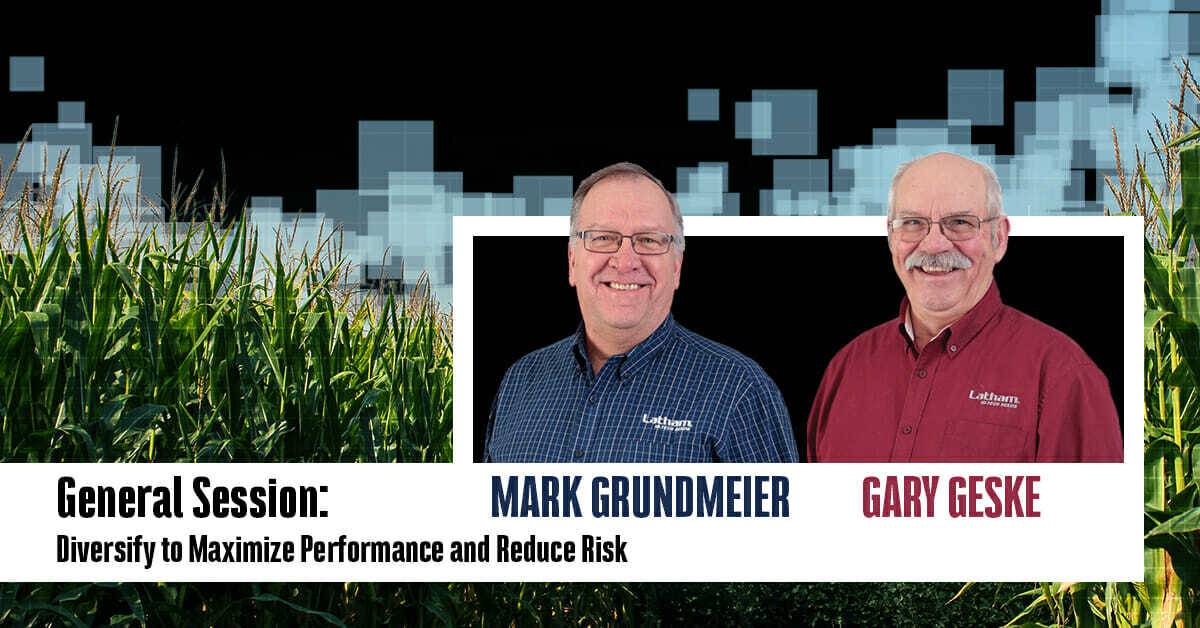
    Mark Grundmeier and Gary Geske share key insight on diversifying your soybean options to maximize performance and reduce risk.
    • Watch on YouTube: https://youtu.be/Q9I5hS-y8fU
    • Watch on Facebook: https://www.facebook.com/watch/?v=1233891166969244&extid=LS56ewVr5vxXKVKA

    Laura Cunningham

    September 10, 2020
    Agronomics, Corn, Crop, Disease, Emergence, Fertility, Fungicide, Growth Stages, Insects, Precision Ag, Seed Treatment, Soil, Soybeans, Weed Control
  • Latham Hi‑Tech Seeds

    Diversify to Maximize Performance and Reduce Risk

    Mark and Gary field day presentation slide mark diversify

    For the final segment of our 2020 Virtual Field Day, Tune in on Sept. 10 at 8:30 AM. Mark Grundmeier and Gary Geske share key insight on diversifying your soybean options to maximize performance and reduce risk.

    • Watch on YouTube: https://youtu.be/Q9I5hS-y8fU
    • Watch on Facebook: https://www.facebook.com/LathamSeeds/posts/10158763457722138

    Laura Cunningham

    September 9, 2020
    Agronomics, Crop, Soybeans
  • Latham Hi‑Tech Seeds

    Select Products Built for Battle with Mark Grundmeier

    Field day presentation slide mark products built for battle

    What does it mean for a product to be Built for Battle? Tune in on Sept 10 at 8 AM as Mark Grundmeier shares insight into our highly offensive and defensive soybean product options.

    • Watch on YouTube: https://youtu.be/_EGw1UA4-b4
    • Watch on Facebook: https://www.facebook.com/LathamSeeds/posts/10158763253662138

    Laura Cunningham

    September 9, 2020
    Agronomics, Crop, Disease, Emergence, Soybeans
  • Latham Hi‑Tech Seeds

    Ask The Agronomist: How to Manage Late-Season Soybean Troubles

    Phil feature 9.4

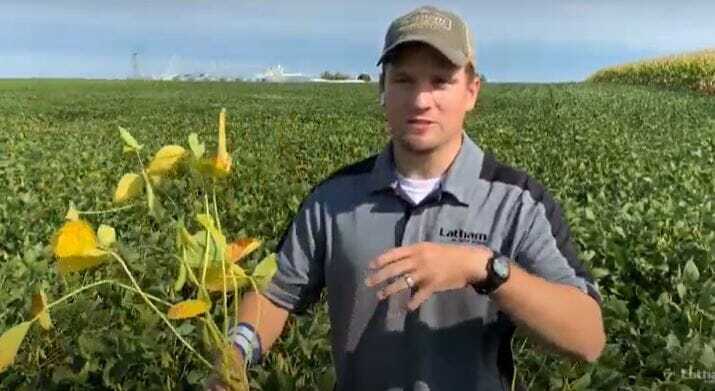
    Tune in as Phil Long discusses 3 common late-season soybean issues. With harvest around the corner it’s time to take final field notes and make a harvest plan! #LathamSeeds

    :40 — Topic introduction

    1:20 — Soybean Yield Estimates

    3:20 — Sudden Death Syndrome

    6:10 — White mold

    8:20 — SCN

    Laura Cunningham

    September 3, 2020
    Agronomics, Crop, Disease, Soybeans
  • Latham Hi‑Tech Seeds

    Ask The Agronomist: Dealing with the Derecho & Drought

    Most farmers across Latham Country have experienced some type of extreme weather this year. Phil Long discusses the impacts from the derecho and the yield impacts from drought.

    :30 – Topic introduction

    1:00 – Derecho impacts

    2:17 – Current corn field conditions

    5:45 – Stalk & ear rot

    7:20 – Drought effects on corn

    9:50 – Drought effects on soybeans

    Laura Cunningham

    August 20, 2020
    Agronomics, Corn, Crop, Drought, Hail, Soybeans, Weather
  • Latham Hi‑Tech Seeds

    #AskTheAgronomist: Late-Season Soybean Pests

    Phil ata feature
    Join us as we discuss the top 3 late season soybean pests. From identification to management and planning for the future, Phil Long shares key takeaways. #AskTheAgronomist
     
    :58 — Topic introduction
    2:05 — SDS
    5:00 — Frogeye Leaf Spot
    7:00 — Aphids
    9:45 — Soybean staging

    Laura Cunningham

    August 13, 2020
    #AskTheAgronomist, Agronomics, Crop, Disease, Insects, Soybeans
  • Latham Hi‑Tech Seeds

    Answers to Frequently Asked Soybean Questions

    IMG 3865

    IMG 3865Q: What’s the outlook for soybean seed supply in 2021?

    I’m certain this concern stems from the uncertainty about the registration of the Xtendimax®, Engenia® and FeXapan® herbicides, as well as the tough time we had this year getting production acres planted, especially in the Dakotas. I’m happy to report that planting went well enough that we expect good supplies of all trait versions. If demand for Xtend soybeans falls off, demand will likely increase for E3’s. Order your E3 soybeans early, so you don’t have to worry about supply.

    Q: Is it necessary to inoculate soybeans every year?

    Since the early 1970s, researchers have believed that inoculating soybean seed isn’t necessary unless soybeans haven’t been planted in the intended field for four or five years. Today, data shows new products, formulations and even biologicals are consistently increasing yields. This is especially true in areas – like sandy soils, fields that are consistently flooded and even those that are consistently dry – where soil bacteria have a tougher time getting established. Latham’s Northern Product Specialist, Gary Geske, recommends testing some of these newer products in your own fields.

    Q: What’s the status of Alite™ 27 herbicide?

    BASF in April was granted registration of this herbicide, which is intended to be used as a pre-plant or pre-emergent herbicide on LLGT27 or GT27 soybeans only. Originally, BASF was hoping it would also be labeled for post-emergent use, but that will have to wait until there is more information made available. Additionally, South Dakota is the ONLY state within Latham Country where farmers can use Alite 27 and then only in these counties: Aurora, Beadle, Brown, Brule, Buffalo, Clark, Codington, Hand, Harding, Jerauld and Spink. The Alite 27 label mentions Product Bulletins for Minnesota and Wisconsin, but my understanding is these are for counties in those states where soybeans are not normally grown. BASF is hopeful more counties will be added.

    Q: How do XtendFlex® soybeans differ from Xtend®?

    XtendFlex is the newest trait innovation from Bayer CropScience (formerly Monsanto). These soybeans carry tolerance to glyphosate (Roundup, Glyphos, etc.) and dicamba (Xtendimax, Engenia, etc.) herbicides just like the Xtend soybeans do. In addition, they are tolerant to gluphosinate herbicides like Liberty or Ignite. This will be another three-way stacked herbicide tolerant trait that farmers can use to fight weed resistance. Full acceptance is expected soon but is dependent on final clearance by the European Union. All other major soybean-importing countries have given their approval. As a side note: Latham Seeds has an EPA-stewarded XtendFlex plot at our research farm this year. It is similar to the plot we had in 2019 but contains about twice as many XF varieties. Stay tuned for more about this exciting new technology.

    Tune into our Facebook, Twitter and Instagram pages for more great QA sessions with Latham agronomy experts.

    Mark Grundmeier, Product Manager

    August 6, 2020
    Agronomics, Crop, Soybeans
  • Latham Hi‑Tech Seeds

    Tips for Assessing Corn Rootworm Populations

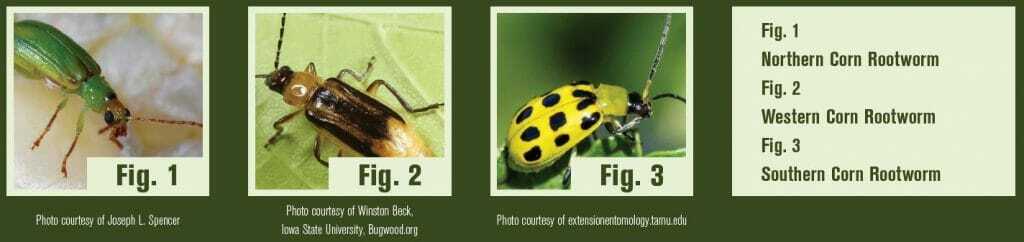
    ISU Southern Western Northern Rootworm L to R

    August is a great time to assess potential risks of corn rootworm infestations in the following spring. By looking at the population of adult beetles found in corn fields now, farmers can identify potential problem fields for the following growing season. This can be a useful tool in overall management of corn rootworm.

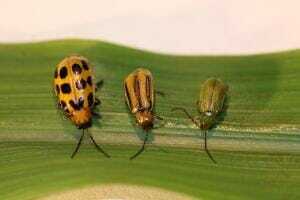
    While walking fields this summer, our product team is seeing populations of corn rootworm adults. Predominantly, we see Northern Corn Rootworm in our market area. (Adult Fig. 1) This season we have seen populations of Western Corn Rootworms, (Adult Fig. 2) as well as a few Southern Corn Rootworms (Adult Fig. 3).

    1

    Assessing Corn Fields

    Look in corn fields that may be planted to corn next spring, as well as in soybean fields for high beetle populations. If you did not place sticky traps to catch or monitor beetles beginning at pollination time, spend a little time in your fields looking for evidence of adult populations that are still present.

    The primary/desired food source for corn rootworm beetles are the fresh silks of pollinating corn plants. If we have early flowering, as we have seen this season, we may not see an abundance of feeding at that time. Beetles, however, will feed on leaf tissue of corn plants if the source of fresh green silk is no longer available. The adult phase of the corn rootworm cycle begins at the end of June and can last all the way to the first killing frost. The egg laying period can last from late July through August.

    2When assessing corn fields at pollination time, focus on beetle counts found on silks of corn plants. When assessing corn fields in August and early September, focus on beetle populations that remain on any silks and look for leaf feeding. (Fig. 4) Make note of fields with high numbers of adults and significant leaf feeding. Consider rootworm management tools in those fields that will be corn next year.

    Assessing Soybean Fields

    Rootworm beetles feed on weedy areas: field edges, weedy areas in drowned-out spots, weed escapes etc. including soybean plants, alfalfa and prairie grass fields (CRP). Western Rootworm beetles are more likely to lay eggs in soybean fields, but Northern Rootworm beetles may do the same. Sweep net catches in soybeans or evidence of leaf feeding are best ways to assess populations.

    Protocols and population threshold advice can be found on your state’s Extension Service website.

    If you identify fields that may have potential rootworm problems next spring, consider using hybrids containing rootworm protection traits. Latham Hi‑Tech Seeds has an exceptional group of hybrids, ranging in relative maturing from 96 to 115, to manage corn rootworm. We introduced six hybrids with SmartStax® technology to help our customers manage this important corn pest for the 2021 planting season. Visit with your local Latham dealer or visit www.LathamSeeds.com to check out these new hybrids.

    Latham Seeds Agronomy Team

    August 6, 2020
    Agronomics, Corn, Crop, Insects, Soybeans
  • Latham Hi‑Tech Seeds

    Ask The Agronomist: Soybean Fungicide

    ATA cover 7.30
    Are soybean fungicides worth it? Tune in while Phil Long discusses the benefits of soybeans fungicides and various pest pressures present in the field. #LathamSeeds
     
    :35 — Topic Introduction
    1:00 — Soybean staging
    2:00 — When to spray soybean fungicide
    3:10 — Current in-field disease pressure
    4:35 — Current aphid pressure
    6:10 — Bacterial issues
    7:50 — Soybean fungicide breakeven
    0:00 — Final thoughts

    Laura Cunningham

    July 30, 2020
    #AskTheAgronomist, Agronomics, Crop, Disease, Soybeans
  • Latham Hi‑Tech Seeds

    Considerations for Applying Foliar Fungicide to Soybeans

    IMG 7174 2

    The use of foliar fungicide on soybeans during any growing season is a tough decision. There are many factors that enter into the equation like growth stage of the crop, weather, presence of diseases and history of the field.

    Years ago, when fungicides were first made available for post-emergent application on soybeans, many farmers took a “shotgun approach.” Rather than scout their fields, they applied fungicide as more of an insurance against disease. We’re seeing the effects of those decisions as many diseases are becoming resistant to fungicides, especially those in the Qoi (Quinone outside inhibitor) family, commonly called the strobilurins.

    Before pulling the trigger on using any foliar-applied fungicide on soybeans, I encourage farmers to walk their fields or hire a competent scout. Here are a few ideas and suggestions for the more common soybean fungal diseases that show up in Latham Country:

    • White Mold, or Sclerotinia Stem Rot, is widespread across our territory. Infection usually occurs at or just after the R1 (flowering) stage during periods of high humidity and temperatures below 85° Fahrenheit. Look for leaves that are starting to turn yellow after R1 but well before normal senescence should happen. Once leaves turn brown and the stem starts to develop that white, cottony growth leading to dark sclerotia (like mouse droppings) along the stems and pods, it is too late to save that plant. Research from the University of Wisconsin indicates that applications of foliar fungicides registered for use against White Mold can be helpful if applied in the R1 to R3 stage. If you miss the target window for application and the disease becomes severe, harvest that field last so you don’t spread the sclerotia to your other fields.
    • Septoria Brown Spot is found in most fields in Latham Country but it’s seldom the primary source of lost yield. It can, however, contribute to overall yield loss in fields where Fusarium Root Rot is a problem and when damage from Soybean Cyst Nematode is severe. Severe infestations also can occur in the early part of the season where rainfall is over-abundant. Symptoms are small, irregular-shaped spots on leaves and typically start in the lower canopy and can show up as early as V2 stage and as late as R6. Leaves that are severely infected will turn prematurely yellow and drop from the plant. If warranted, foliar fungicides can be helpful when applied at the R3 to R5 growth stage.
    • Frogeye Leaf Spot is caused by the Cercospora sojina fungus. Symptoms appear as small, round gray spots on the upper leaf surface with dark reddish-brown borders. Infection can occur anytime throughout the season but is most common after flowering and after periods of warm, humid weather. Check the upper canopy of plants, especially in the R3 to R6 growth stage. Iowa State researchers have shown that an application of a foliar fungicide containing two or more different active ingredients at R3 is fairly effective in reducing the severity of Frogeye Leaf Spot damage. Application of a product containing only strobilurin chemistry (Qoi) was not effective at all due to resistance.

    Latham Seeds Agronomy Team

    July 22, 2020
    Agronomics, Crop, Fungicide, Soybeans
Previous Page
1 … 8 9 10 11 12 … 32
Next Page

Latham Hi‑Tech Seeds

131 180th Street | Alexander, IA 50420

(641) 692-3258

SIGNUP FOR OUR NEWSLETTER
  • Contact
  • Legal
  • Dealer Center
  • Seedware Login
  • Latham Gear

© 2025 Latham Hi‑Tech Seeds. All rights reserved. | Iowa Web Design by Webspec | Privacy Policy

Latham® Hi-Tech Seeds is a trademark of M.S. Technologies, L.L.C., 103 Avenue D, West Point, IA 52656.