Corn Rootworms have arrived in Northeast Iowa nearly three weeks prior to normal years. Farmers are urged to be diligent in scouting fields and monitoring pressures in the coming weeks. For more information, tune into Nick Benson’s most recent YouTube video:
A deep, dark, lush green isn’t always the sign of a healthy crop. Sometimes the plant appears healthy but is really suffering from nutrient imbalances. Other times we become suspicious when we see plants with light green colors, or interveinal stripes, and purpling. We begin to ask whether the discoloration is a sign of herbicide, disease or a nutrient insufficiency or imbalance. Further testing is needed to diagnose the situation.
In the human world, annual physicals help determine if we’re on the right health track. This involves blood tests to find out how we compare to the normal limits scale. Armed with the results, doctors can suggest diet changes, supplements or prescription medicines to bring our bodies into balance.
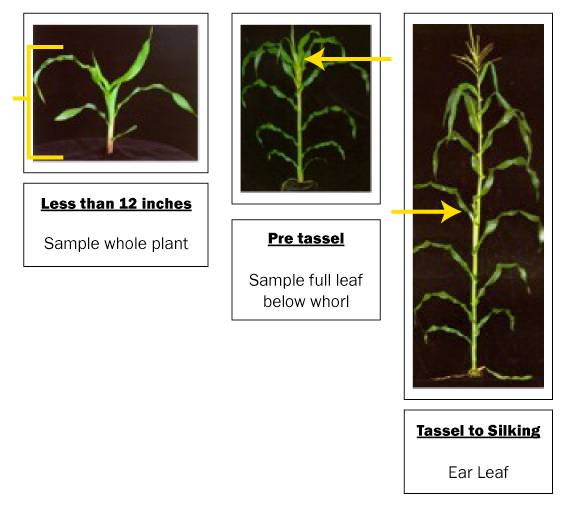
As important as blood tests are for humans, so are tissue samples for our crops. Results of the tissue sample will very accurately reflect the nutritional health of the plant and the soil in which the plant receives its food. While soil test results give a good idea of N –P – K levels, tissue samples are more reliable and trustworthy results.
Tissue samples provide us with the most accurate reflection of the soil and plant’s nutritional matrix. There are 16 essential elements responsible for plant growth and yield. Tissue samples help us know where the plant is so we know where we need to go. By starting early, we can supplement early. If you haven’t sampled in the past, try a field or two this year. Supplement where needed, and get those “WOW” type yields. Click here for tissue sampling instructions.
As a summer intern at Latham Hi‑Tech Seeds , one of my main projects is caring for the company’s Genetic Garden. This isn’t your typical vegetable garden! This garden will tell the story of how corn has evolved over time.
Planting the Genetic Garden at Latham Hi‑Tech Seeds, with Corey Catt, Forage Specialist
Forage Products Manager Corey Catt and I on May 18 planted more than 45 different types of corn. Our “living timeline” features the earliest ancestor of corn, teosinte, to the industry’s latest technology in LH 5494 3000GT.
The story of corn’s development starts with corn’s wild ancestor teosinte, but it doesn’t resemble corn as we know it.
Hand planting was required due to the small, delicate seed of teosinte
Further into the timeline, we’ve planted corn’s tropical ancestors including the Benz Tropical, Cargill Temperate Tropical and PIRICINCO composite varieties.
Ancestors of our modern day corn include:
Varieties of Flints (including Tama Flint from the Iowa Mesquaki Native American Tribe)
Reid Varieties (including Osterland Reid which originates from Iowa Falls, Iowa)
Golden Glow and Lancaster Sure Crop. Reid and Lancaster Sure Crop varieties are, which are open-pollinated varieties first developed by U.S. farmers in the late 19th and early 20th centuries.
Minnesota 13, a variety developed at the University of Minnesota in 1897. This variety was very well adapted for a short growing season and so important that it’s now grown across Minnesota.
Inbred varieties such as MO 17 and B73, which are very frequently used in many crosses.
Farther down the line of the evolution of corn are Ukrainian Dent and Ukrainian Flint Dent varieties
A 4-way cross variety
LH 74
LH 85
Two varieties of pod corn in which the seed is covered by a thin husk. We removed the husk before planting to insure better seed-to-soil contact and thus better germination of the seed.
Pod Corn and husk.
In addition to these varieties, our Genetic Garden includes some fun varieties including popcorn and Japonica Striped Maize. Japonica Striped Maize is an ornamental corn from Japan; its leaves are striped green, yellow, white and pink, providing a rainbow sort of color display.
Look for updates on the Genetic Garden on TheFieldPosition.com. We’d also like to invite you to see it for yourself! Take a walk through our “living museum of corn” on Saturday, Aug. 25, during the Latham Country Fair.
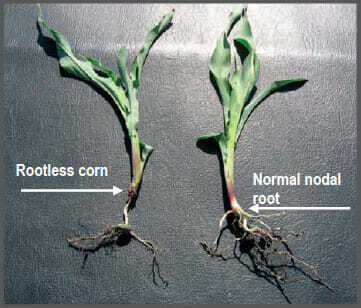
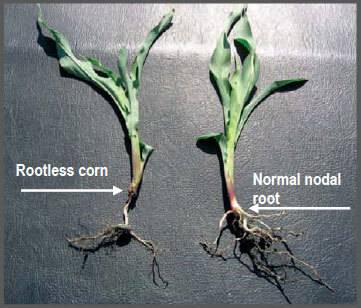
Rootless corn (left) compared to corn with normal nodal root development. Photo credited to Monsanto.
The change from excessively wet to unusually warm, dry weather has resulted in the development of a substantial crust in fields that were previously worked and planted in late April. Obviously, a thick crust can restrict the emergence of corn and cause underground leafing. The rapid drying of the upper soil layer is also conducive for the development of the “floppy corn,” or Rootless Corn Syndrome.
The aforementioned weather pattern may mirror situations across Latham Country this spring, but it’s actually an excerpt from an article that was originally written in May 1998 by an agronomy professor at Purdue University in Lafayette, Indiana. Dry surface soils, shallow planting depths, sidewall compaction and cloddy soils all contribute to Rootless Corn Syndrome. Roots will take the path of least resistance, which means they might grow out the bottom of the seed furrow.
Such corn plants are technically not root-lodged; they are simply broken over at the base of the stem near the crown area. The nodal roots will appear stubbed off but not eaten. The root tips will be dry and shriveled. For a brief description of normal corn root development, click here for R.L. (Bob) Nielsen’s “Primer on Corn Root Development.”
Nodal root growth may resume if more favorable temperatures and moisture conditions return to the fields exhibiting signs of Rootless Corn Syndrome. Cultivation can help by putting soil around the base of plants or aiding in new root development when it does rain. If the ground is hard, cultivation will help with soil aeration.
Recent strong wind events have also taken their toll on soybean seedlings. Shown below is damage post-storm. While it may appear to be bean leaf beetle feeding, it is in fact wind damage. No course of action is needed at this time, but farmers should be vigilant is scouting for potential disease invasion later on in the growing season.
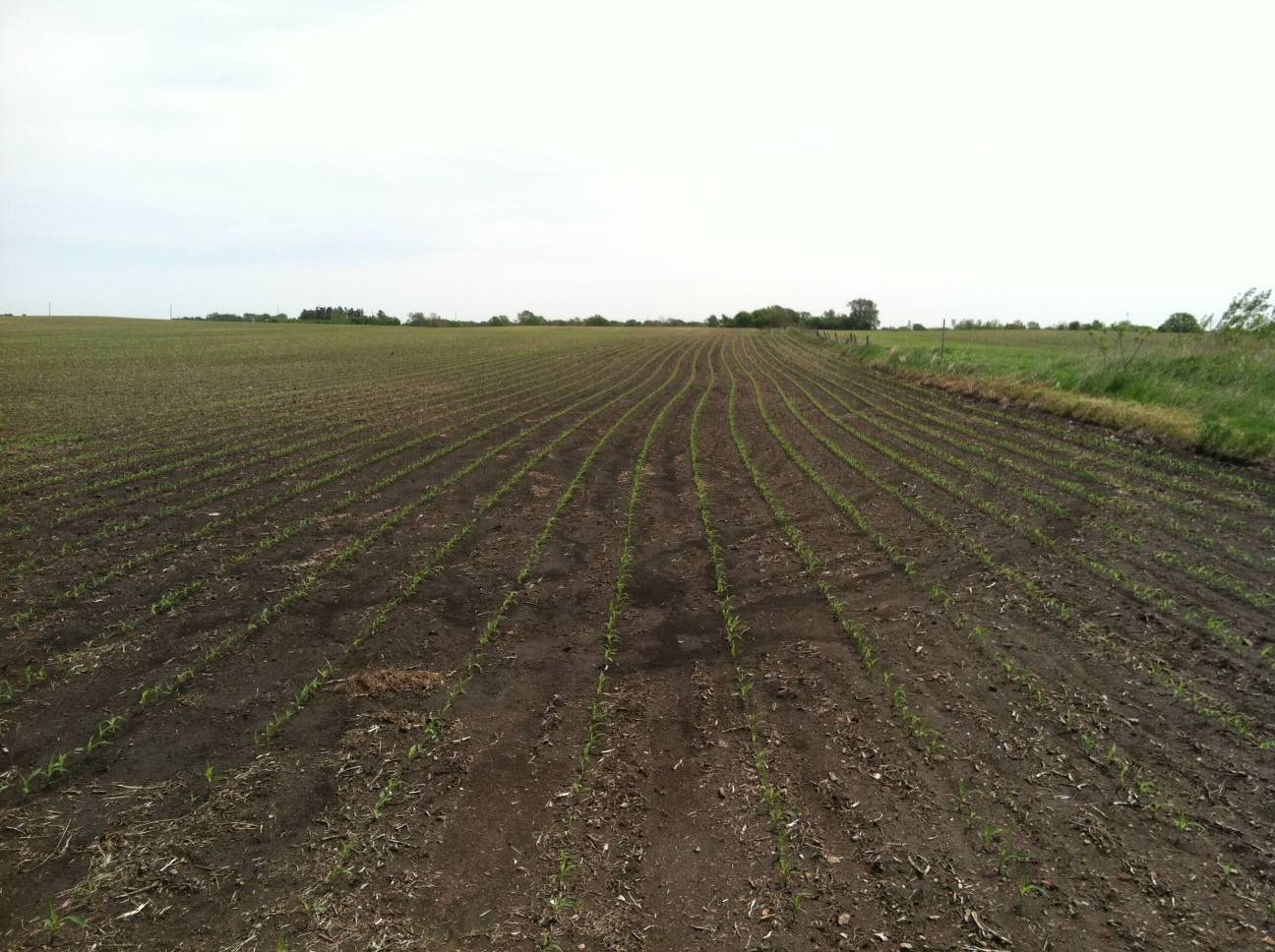
Isn’t it exciting when you can finally “row your corn”? It’s such a milestone. It provides us with a sense of accomplishment. It brings some relief as hopefully no replant will be needed. And it makes us eager to see how the crop progresses throughout the growing season.
The average corn plant needs approximately 100 heat units to emerge from the ground. Depending on weather conditions, a seed/seedling will reach 100 heat units in 7 to 10 days. Some hybrids emerge faster than others, while others are slower to emerge but may grow more rapidly. These hybrid differences really depend on genetics.
Raising a corn hybrids somewhat reminds me of horses racing like the Kentucky Derby. Remember last Saturday how Bodemeister led the field around the first turn? I’ll Have Another was in seventh place early but went on to win the race. The same can be said for corn plants. Some emerge from the ground like a rocket, while others make up for lost time as the heat rises.
How quickly do you see hybrids emerging? One of my favorite parts of the job is hearing “from the field” about what you learned during emergence time as you walk and row your fields. I always enjoy hearing things from a farmer’s perspective and hope you’ll share this type of information with me as it adds to our pool of information about Latham® hybrids.
This season Latham Hi‑Tech Seeds will be sharing more stories “From the Field.” We’re following crop development from planting through harvest in several locations across Latham Country. You’ll find our Growing Season Gallery on our Facebook page at www.facebook/LathamSeeds. We also invite you to join us by sharing your own photos “From the Field.” Simply e-mail your photos of Latham® brand corn, soybeans or alfalfa to lathamseeds.fromthefieldtour@gmail.com.
Fluctuating Spring Temps Create “Wild Ride” for Alfalfa
by Corey Catt
What our alfalfa plants have experienced this spring reminds me of my experience as a kid riding with my grandmother in a car. She drove with both feet: one the gas pedal, the other on the brake. Grandma would speed way up and then apply the brakes, continuing this pattern for the duration of the ride.
Similarly to the wild ride I had with Grandma, alfalfa is getting “jerked around” this spring:
Quick Speed Up –The abnormal early season warmth made the alfalfa want to grow, which broke winter dormancy early and began the seasonal growth cycle. Fortunately, alfalfa’s unique growing style will initiate new buds from the crown to help recover from this event.
Quick Slow Down – The freezing conditions experienced in areas last week may have caused some damage to the plants. Some growers report that not all areas of the fields were affected. Low lying areas, such as hollows and valleys, received the full effect of Mother Nature’s crispy spring chill.
Although this type of cold injury event doesn’t occur often with alfalfa, universities have responded quickly. Recent publications by the University of Wisconsin Extension and by Iowa State University Extension provide some good stand evaluators that will help growers make decisions in the days and weeks ahead.
There will likely be leaf damage in areas where overnight temperatures dipped to 27 degrees Fahrenheit or below for several hours. Well established, developing forage plants have lost their winter cold hardiness, so exposed tissue is susceptible to cold temperature injury. Alfalfa and most legume seedlings have good cold tolerance at emergence, but spring cold snaps can hurt new seedings. Slope position, soil temperature, companion crop of oats, wind, snow cover, all will influence what occurs in a particular field or part of a field.
We’ll have to take a “wait and see approach” for about a week before we can determine the extent of the damage. The severity of damage with obviously effect yield and quality. Be aware this may alter the PEAQ forage evaluation, as well, as it’s dependent on plant height.
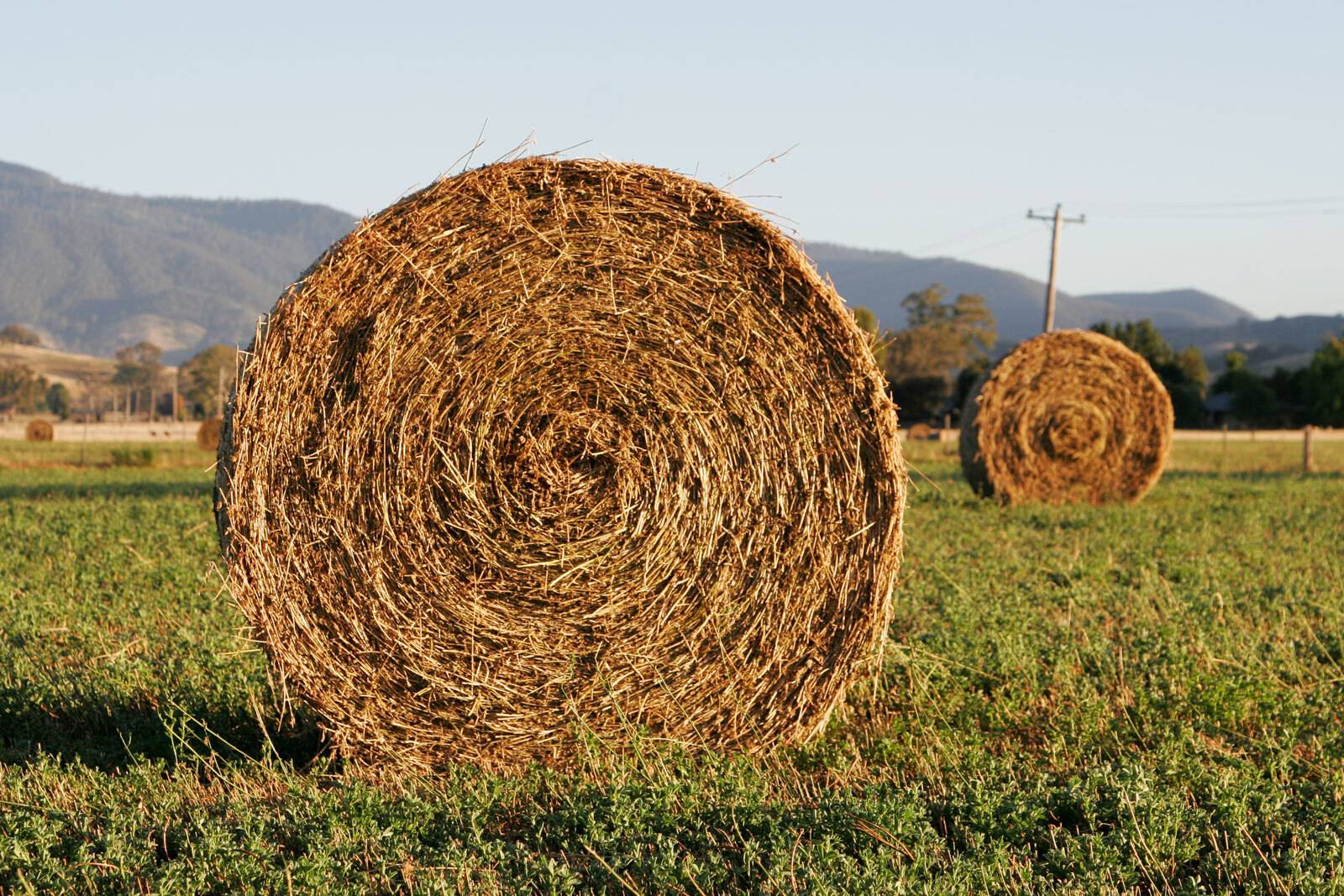
The demand for hay is high, and the prices being offered for top-quality forage are making farmers sit up and take notice. Quite a few fields will be planted to alfalfa in the next few weeks. That’s why Latham Hi‑Tech Seeds is making three of the very best alfalfa brands available. Following is a short summary of each.
LH9100 Prolific II: This alfalfa features a superior branch-root structure, which is located high in the soil zone above the water table. A high water table often severely damages or kills tap roots of traditional varieties, exposing those plants to disease or winterkill. The distribution of roots closer to the soil surface, however, increases the plant’s ability to better uptake nutrients. It also allows LH9100 to be an exceptional performer for hay producers under most soil conditions and especially in poorly drained soils. LH9100 carries an exceptional disease package. It’s highly resistant to most major pathogens, including Aphanomyces Root Rot (races 1 and 2). This new Latham® variety allows for very good alfalfa in more areas that previously were not even considered for hay production.
LH9600HY: This product is the next generation of branch-rooted hybrid alfalfas with the msSuntra technology. It’s characterized by aggressive re-growth, high quality and high yields. LH9600 is a fine-stemmed product with a similar disease package to LH9100 Prolific II. An added benefit is that LH9600 is also highly resistant to stem nematodes and Northern Root Knot nematodes. It also features excellent drought tolerance and a very high leaf-to-stem ratio.
AmeriStand 405T RR: Our first Roundup-Ready® alfalfa, this product is a high-yielding, Traffic-Tested™ brand that carries high resistance to seven major yield-robbing pests. Supplied to us by America’s Alfalfa, this is an excellent choice to maximize yield and profitability while reaping the benefits of the Genuity® Roundup-Ready weed control system. It’s ideally suited for those areas where stand establishment can be a challenge due to tough-to-control weeds. Keep in mind that once a stand is established, it’s always best to rotate your use of herbicides to help prevent weeds from building resistance to glyphosate-based products.
For additional information on pricing and product placement, contact me or your Latham Regional Sales Manager. Have a great spring!
Water hemp, giant ragweed and marestail have become nightmares for farmers who have experienced weed resistance. Although it’s been a bigger problem in the South, we’re also seeing signs of weed resistance right here in the Midwest.
Fortunately, there will soon be another “tool in the toolbox” to help fight weed resistance. Pending regulatory approvals, the Roundup Ready® Xtend Crop System is expected to be available to U.S. farmers for 2014 planting.
The Xtend Crop System is Monsanto’s newest Genuity® soybean trait that includes tolerance to dicamba herbicide. It will be stacked with the current Genuity® Roundup Ready 2 Soybean trait technology. Roundup Xtend is an enhanced dicamba and glyphosate herbicide premix that will help farmers manage weeds before planting and during the season as an over-the-top option.
Dual modes of action in Xtend will give farmers another choice for broad control of glyphosate-resistant and tough-to-control broadleaf weeds. And as the crop system’s name implies, it will extend application and planting flexibility. It also will extend the window for post-emergence applications.
We’re optimistic that Xtend will also help save glyphosate and extend the life of high-yielding Genuity Roundup Ready 2 Yield Soybeans. Diversity of tactics is key to consistent weed management and high crop yields, says ISU Extension Crop Weed Specialist Mike Owen. In a blog article, Dr. Owen says no single tactic will protect the potential crop yield nor deter the evolution of herbicide-resistant weed populations.
As farmers make plans for their 2012 soybean weed control programs, Seed-2-Soil® team lead Peter Bixel recommends using FULL rates of pre-emergence herbicides. Research shows that a pre-emergence herbicide applied before soybean planting reduced late-season waterhemp density by 97 percent! Click here for more information on how you can enhance your weed management program this season.
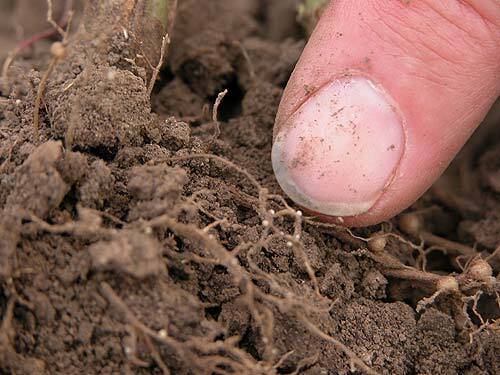
An article published on wallacesfarmer.com this week highlighted that there’s still time to test soil for the presence of soybean cyst nematode (SCN). The small, plant-parasitic roundworm feeds on roots and can cause significant yield losses, especially in dry growing seasons.
While SCN is a devastating pest, its risk is often overlooked because SCN damage isn’t readily apparent during growing seasons with excess moisture. SCN is an incredibly persistent pest, however, and adequate moisture or not, has the ability to live more than a decade in infested soils without the presence of soybeans, and produce more than three generations in just one growing season.
In a recent Iowa State University Integrated Crop Management article, Greg Tylka, with the Department of Plant Pathology and Microbiology, highlighted the need to remain offensive against SCN, this year especially.
“As we approach spring planting season, increased vigilance about SCN is warranted for the 2012 growing season because of the dry soil conditions statewide,” Greg said. SCN can cause substantial yield loss to susceptible soybean varieties under dry soil conditions, even when SCN egg population densities are low. If soybeans will be produced in 2012 in fields infested with SCN, high-yielding, SCN-resistant varieties should be grown.”

 Corn Rootworms have arrived in Northeast Iowa nearly three weeks prior to normal years. Farmers are urged to be diligent in scouting fields and monitoring pressures in the coming weeks. For more information, tune into Nick Benson’s most recent YouTube video: