John Latham shares the TOP 5 Seed Stories of 2017 with us today! Tune in to see the year is review — seed industry style!

John Latham shares the TOP 5 Seed Stories of 2017 with us today! Tune in to see the year is review — seed industry style!
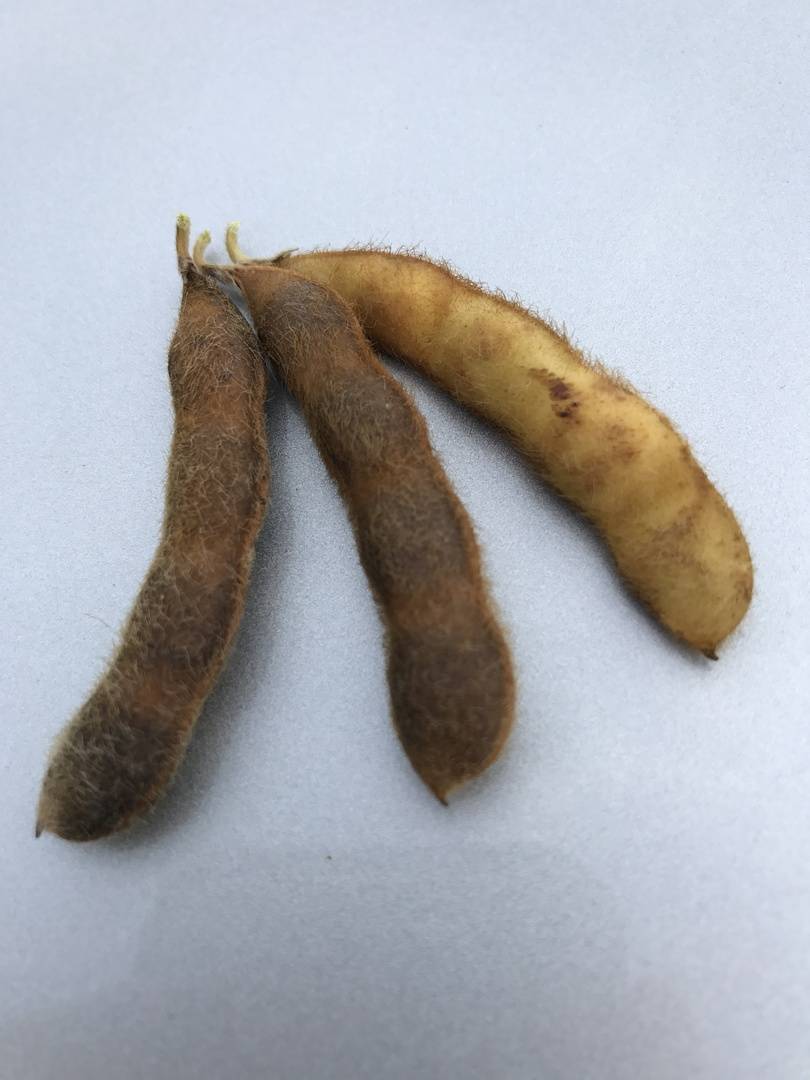
The topic of green soybean stems at harvest was discussed at several of our post-harvest meetings. What makes this disorder especially frustrating is that the soybean pods and beans within those pods are fully mature and ready to harvest.
Unfortunately, all plants have a built-in mechanism that makes them want to shed their seeds on the ground when they’ve reached full maturity. This process is called dehiscence [di-’hi-s n(t)s] in soybeans and has erroneously been referred to as “shattering” by many. Regardless of what it is called, lost yield and lost income results.
There are several theories about what causes Green Stem Syndrome (GSS) but an exact diagnosis has not been found. Some researchers blame insects, diseases, foliar fungicides, nutrient deficiencies, low pH and even compaction. The bottom line, however, is that GSS has been proven to occur in the absence of all the above conditions. To make matters worse, the symptoms of GSS are not always the same. There are cases where all that is left on the plant are green stems and pods, but there are other cases where even some leaves remain on the plant. One thing that has been noticed is that it usually happens within a given geographic area or “neighborhood.” Also, GSS has never been associated with just one soybean variety from a single company.
One of the more practical explanations for this problem is something happened during the growing season, probably after flowering, to cause pods to abort or not to fill properly. This produces an abnormal build-up of carbohydrates within the plant. Once that early-season stress has gone away, the plant wants to funnel those carbohydrates to the pods for seed-fill. However, the pods are
either not there or they can’t finish the process. Carbohydrates are then trapped within the stem of the plant for a longer-than-normal period, so the stem remains green.
There really isn’t any clear way to manage or prevent this problem. One thing I highly recommend is NOT to wait to harvest soybeans that are showing GSS, but to slow the combine down as much as necessary and get them out of the field. Waiting until the stems are dry almost always costs you in lost bushels.
It’s that time of the year when we reflect upon the decisions we made last year and make changes for 2018. Many farmers will base next year’s planting decisions based only off this year’s results, so please avoid making that huge mistake!
Base your decision on facts and results but also the odds. Odds are, the 2018 growing season isn’t going to be exactly like the 2017 growing season. We can’t control Mother Nature, so spread risk by planting packages of both corn hybrids and soybean varieties.
Resist the urge to plant that racehorse hybrid or winning soybean variety on most of your acres! The breadth of Latham’s product strength is evident from our F.I.R.S.T. Trial performance. Multiple Latham brand products placed in the Top 10 at multiple trial locations.
At printing time, we have 34 wins in soybeans and 17 wins in corn. We also have 293 Top 10 performances in soybeans and 220 in corn so far. With such great harvest results, it’s easy to order the yield trial winners. It’s important, however, that you do NOT buy based exclusively on this year’s winning results.
At Latham Hi‑Tech Seeds, we select products bred to perform in specific geographies. The Latham team also takes pride in making sure only the highest quality seeds go in the bag, which is evident with the yield results we saw again this year in the F.I.R.S.T. Trials seed tests!
Take the time to review your farm, field- by- field, and place the product for every acre! Seed selection is one of the important decisions a farmer will make. It’s well documented that the ability to reach yield potential begins with the seed. At Latham Hi‑Tech Seeds, we want to work with you to reach new yield levels in 2018!
Tune in today to discover the benefits of the Driller Daikon Radish Cover Crop! For the Facebook Live video, click here!
 Once the busy harvest season winds down, many of us reflect on those spots that stuck out in each field. Maybe it was a spot that yielded 80+ on soybeans or 250+ on corn, or maybe it sticks out for the opposite reason.
Variability on your farm influences the decisions you make throughout the rest of the year. We consider two types of variability — spatial and temporal — in precision ag.
Spatial variability refers to different patterns in an area or space. This is influenced by physical things that don’t change quickly, such as soil type, texture, structure, depth of topsoil and organic matter. These physical soil properties are directly related to the chemical properties of your soil, including water holding capacity, nutrient availability and buffer capacity. All of them impact yield potential.
Temporal variability in a field refers to the patterns between growth stages and/or seasons. One way this variability is evident is how a hybrid or variety responds to environmental stress. We all have areas within our fields that yield poorly one year and then produce top yields the following year. This is a combination of the underlying soil properties and how the hybrids/varieties respond to environmental conditions. No two seasons are alike!
We understand that no two fields are alike either. Latham’s hallmark FieldXField™ crop planning process helps you choose the right product for each field. As an agronomist, I think of G x E x M why picking products on a field-by-field basis is the #1 thing you can do to set yourself up for the best yield potential.
Temporal and spatial variability are key to understanding whether the yield variability in our field is consistent or inconsistent. Once you know how to categorize those areas, then you can put a variable rate program to work on your farm.
This year we’re piloting the Seed-2-Soil® Advanced Program, which uses several years of yield data alongside soil, imagery, your personal input, and any other available data layers to determine how to treat each of those areas. The power is in the multiple years of yield history. Even if you don’t have several years of yield data, there is still a lot of data we can use to create these areas within each field.
If you have fields that you know would benefit from variable rate management, feel free to call me and we can discuss different options. If you’re thinking about incorporating some precision services on your farm, I would be happy to have that discussion, as well.
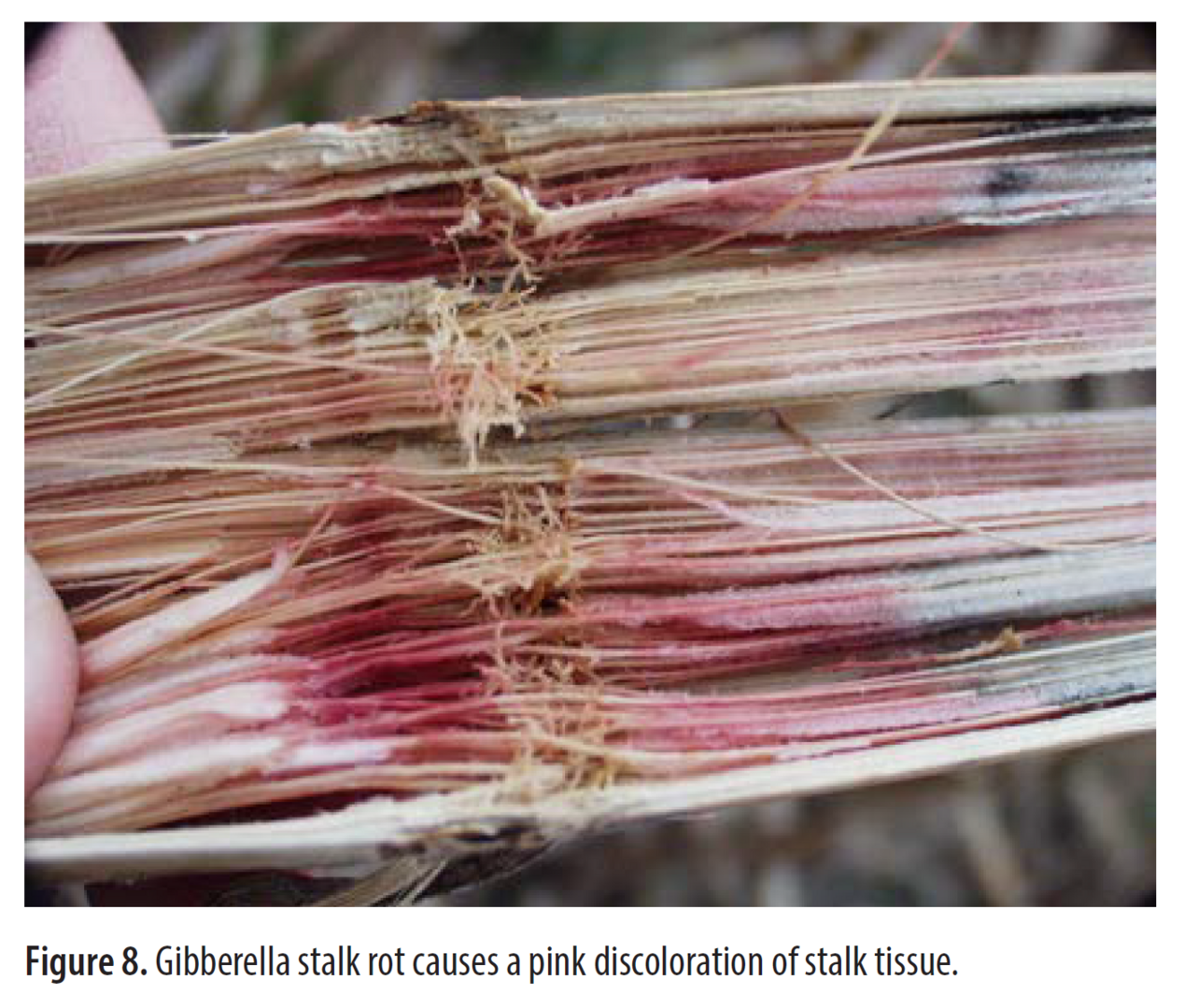
Ear rot has been present in some corn fields that were harvested this year. These diseases can reduce the quantity and quality of the corn being harvested, and they can also produce mycotoxins that might be harmful to livestock and even humans.
These diseases can continue to cause problems in stored grain unless it is closely monitored and maintained in the best possible condition.
Scouting fields prior to harvest is key to avoiding situations caused by mold. A pre-harvest field check can help farmers to determine: (1) if ear mold is present; (2) what type of mold is present; and (3) how severe the infestation is.
One method you can use when scouting fields for ear rots is to tear back the husks on 100 plants scattered randomly throughout the field. If you find 10% or more of the ears have mold on 25% or more of the ear, that field should be harvested immediately and dried to at least 15% moisture. (NOTE: If you plan to turn in a claim for that field to your crop insurance provider, do that before harvesting. The insurance adjuster may need to see proof of the ear rots in the field as opposed to just seeing it in the stored grain.)
Samples of that grain should be tested to see what mycotoxins, if any, are present. You should then consult with someone like an extension specialist or veterinarian to decide the best method of using that grain.
Corn ear rots and molds are present every year, but the severity and type of infestation is highly weather dependent and greatly depends on the region where the farm is located. Fungal pathogens that cause ear rots will remain in the soil for several years. Crop rotation and heavy tillage may help reduce spore survival. Planting hybrids with traits that provide above-ground insect protection and reduce ear damage might also be beneficial.
If you browse online for other ear mold management practices, you will see it’s suggested to plant hybrids with known tolerance to these diseases. Unfortunately, most companies do very little screening for ear mold pathogens, simply because they are so varied and the instances of severe infestations are so rare. In the case of corn ear rots, the best offense is the best defense! Make time to scout each field for ear rots before harvest.
Welcome back! It’s been a wet and cold fall for many farmers in our marketing territory. Today, our Agronomy Specialist, Phil Long, discusses different types of ear rot he has seen in the field and how to plan for the next year.
Thanks for tuning in and have a safe harvest.
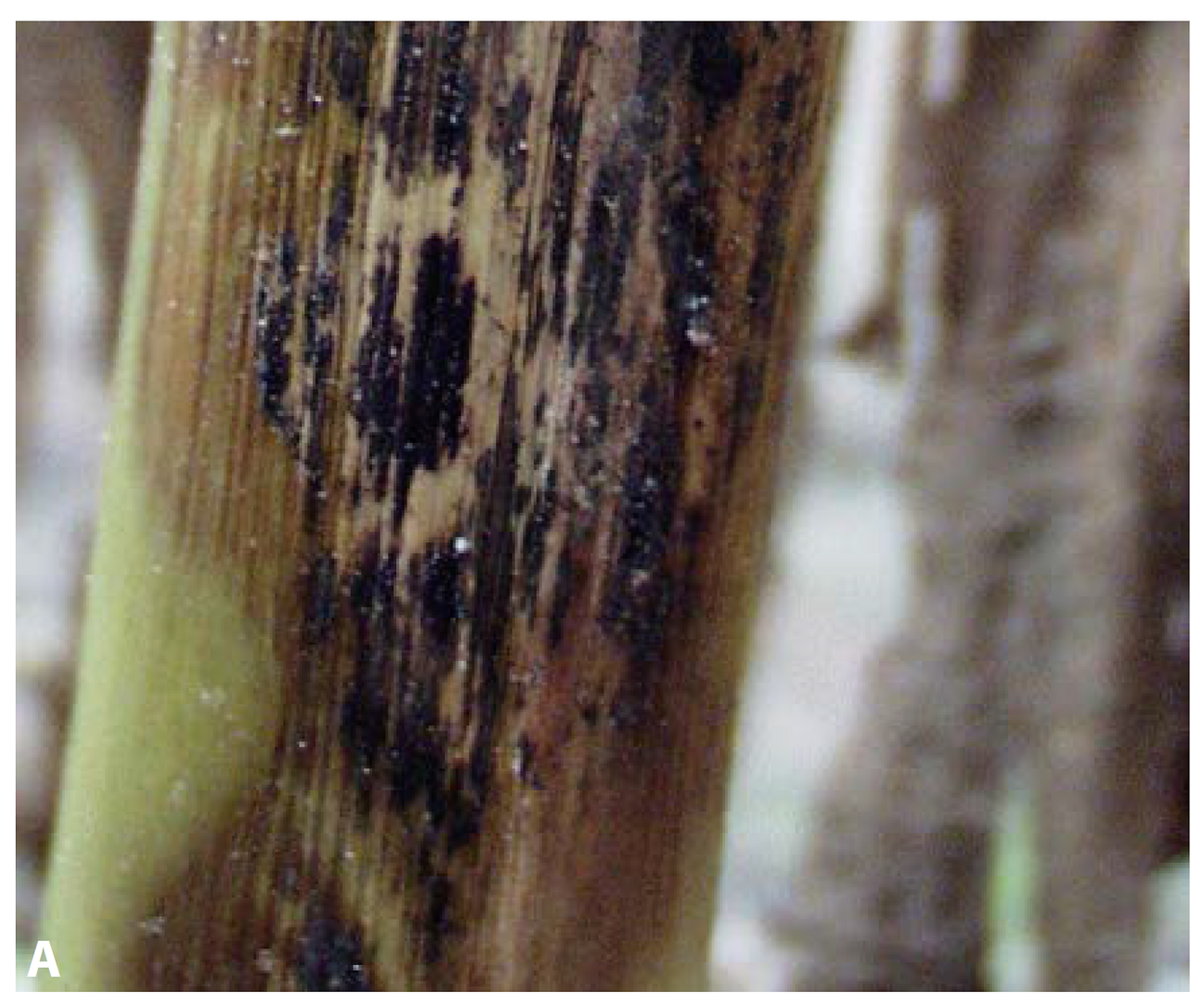
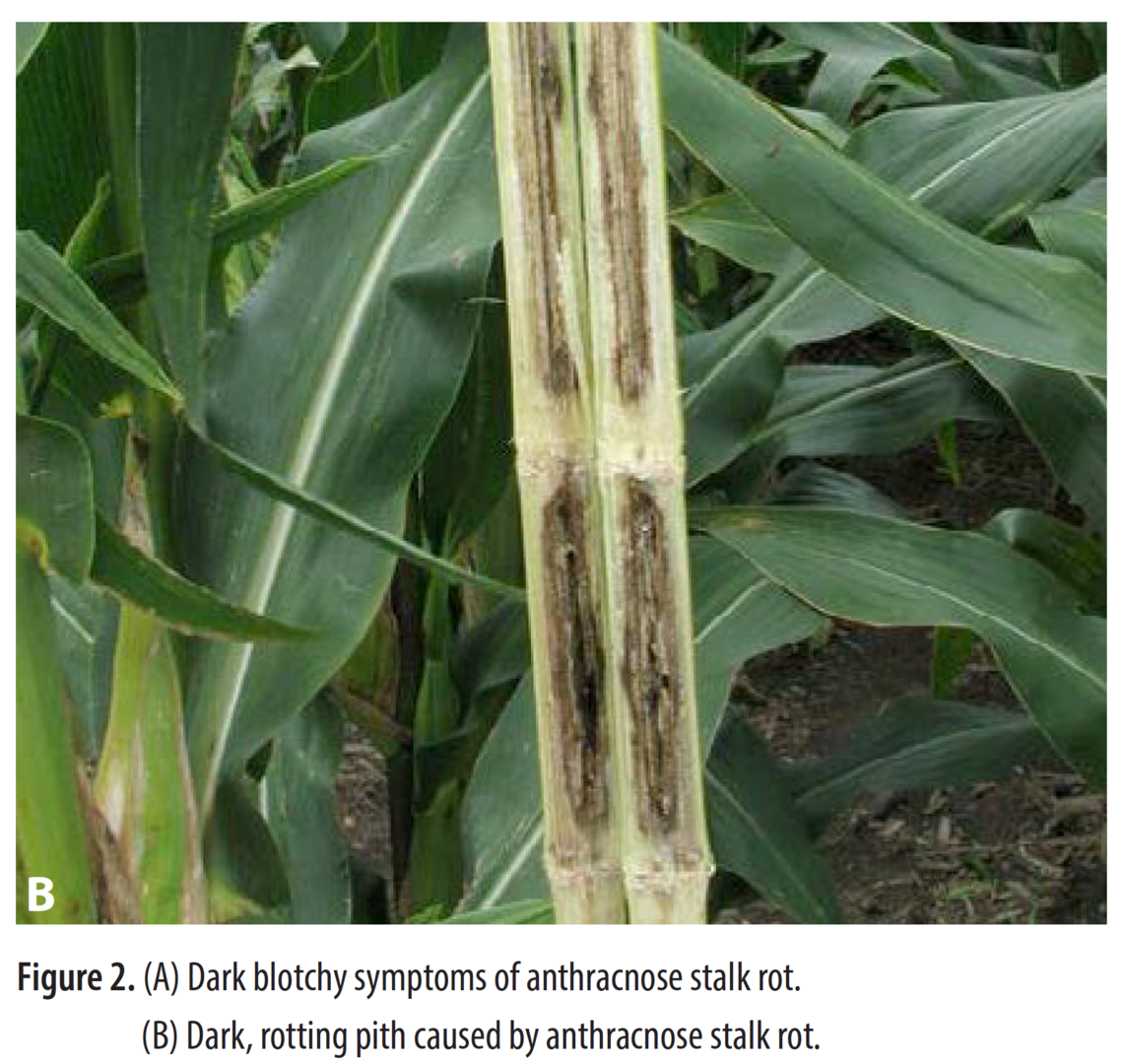
We know it’s hard to patiently wait for fields to dry up before continuing #harvest17. Phil Long, our Agronomy Specialist, gives advice and shares identifying factors to look for when prioritizing fields. Tune in to hear what he has to say! Below are images Phil refers to in the podcast.
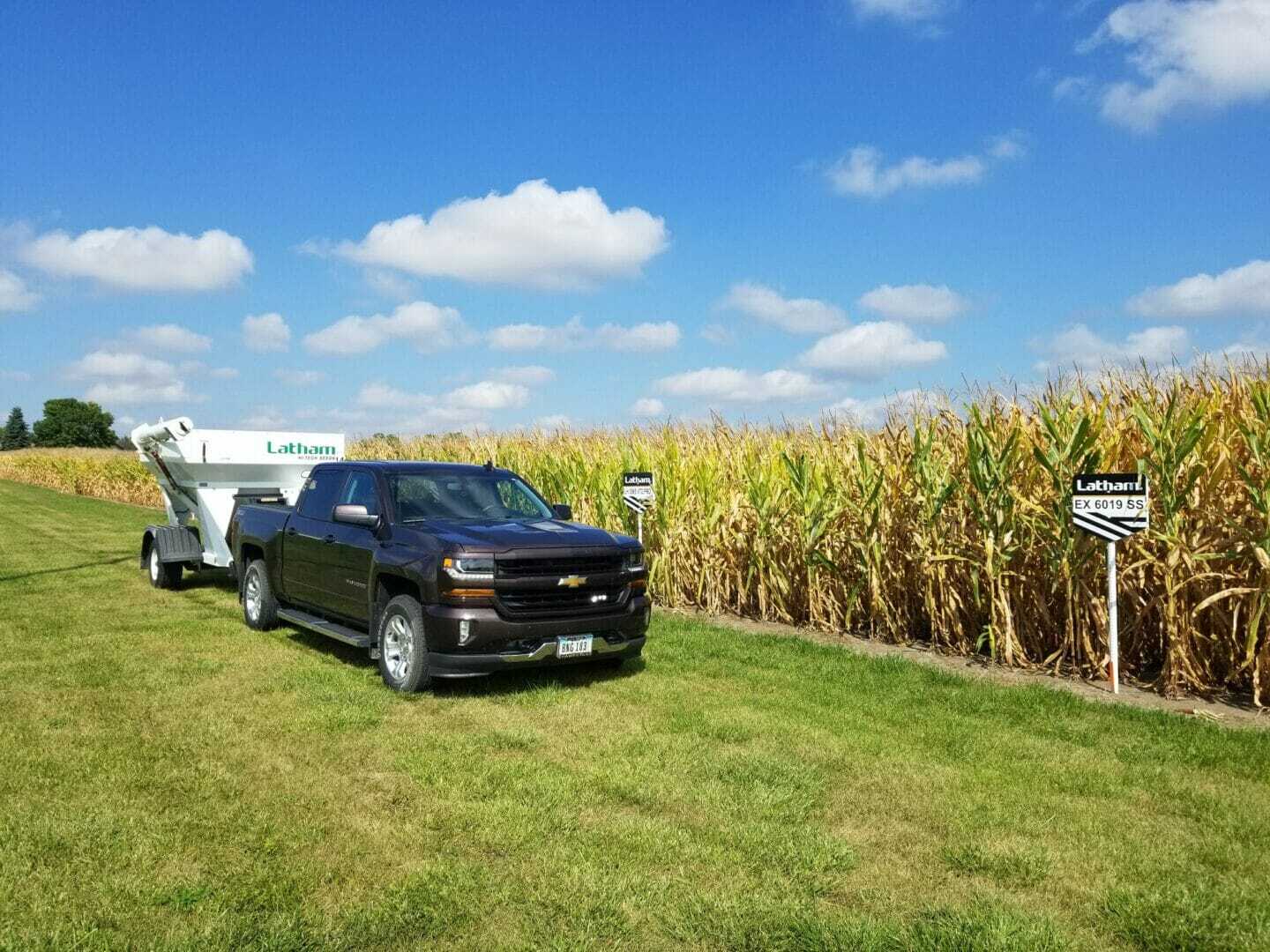
Have a safe and happy harvest!
Craig Haaland
Here are two of our Double PRO numbers from southeastern Minnesota. With nice kernels and very consistent ear placement, both LH 4727 VT2 PRO RIB and LH 4955 VT2 PRO RIB both are looking good in the field.
Soybeans are starting to drop leaves, so harvest will be underway in a couple years.
Jerry Broders
Harvest is coming on quickly! If you would like help calibrating your yield monitor for either corn or soybeans, my weigh wagon is available. This week’s featured product is L 2368 R2 FX. This super new 2.3 maturity Roundup 2 Xtend soybean has looked great in our plots. This soybean is loaded with pods and is standing great. Check with your local Latham® dealer to see if this variety fits your field.
Cory Greiman
Here’s a bird’s eye view of Latham® corn SuperStrip plot near Garner on September 17.
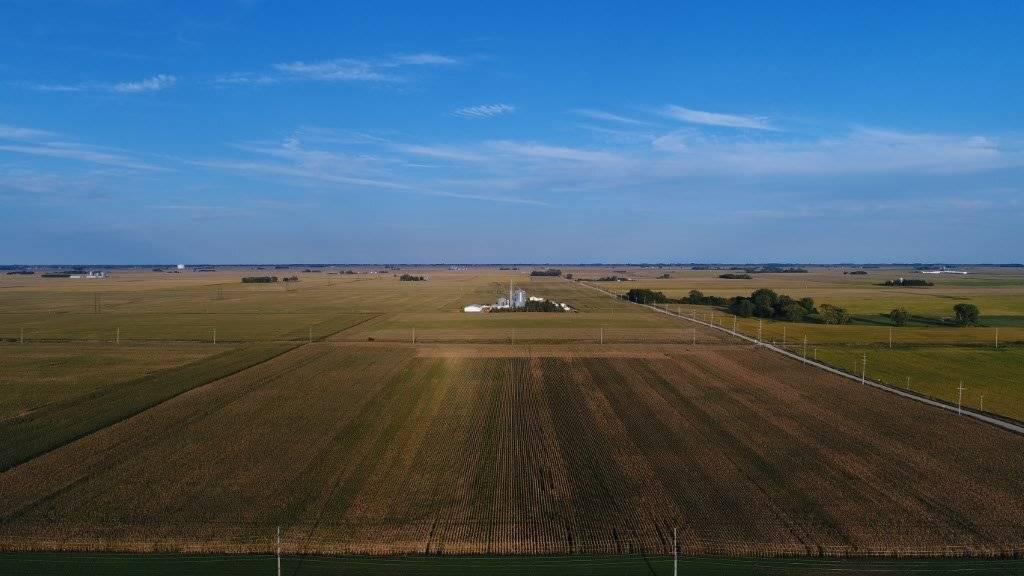
Bart Peterson
This field of LH 5215 VT2 PRO was planted May 29, 2017 at a population of 35,000 in Humboldt County.
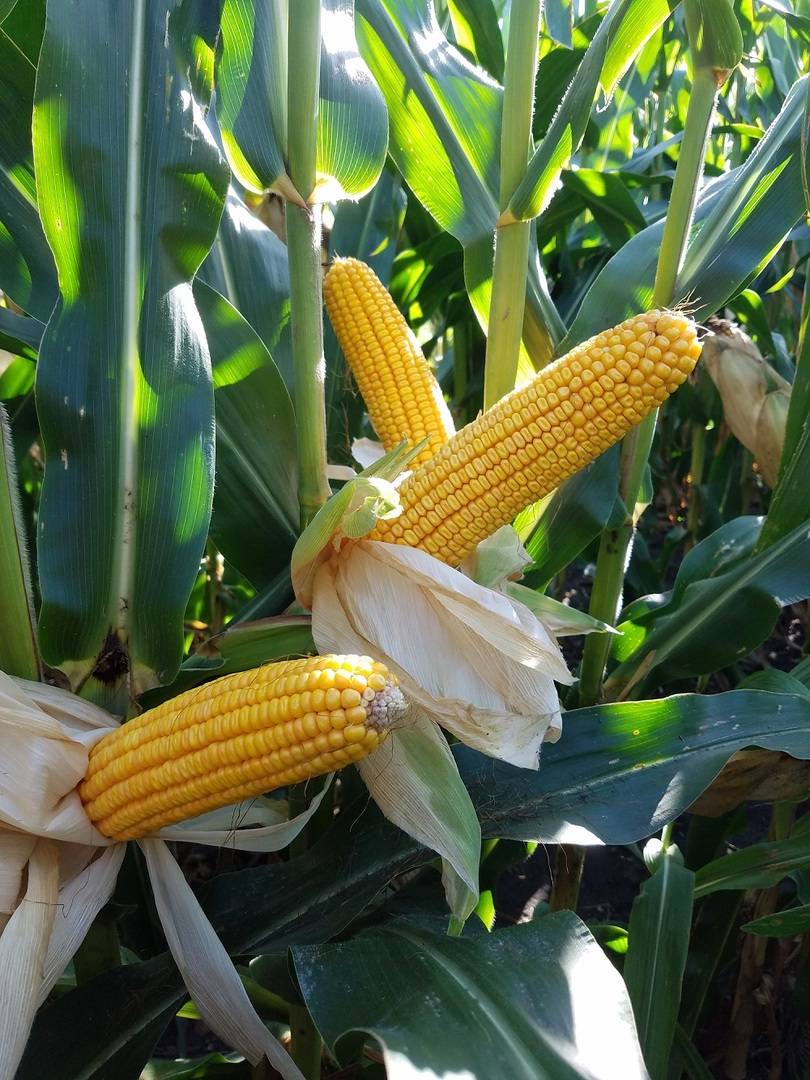
Bryan Rohe
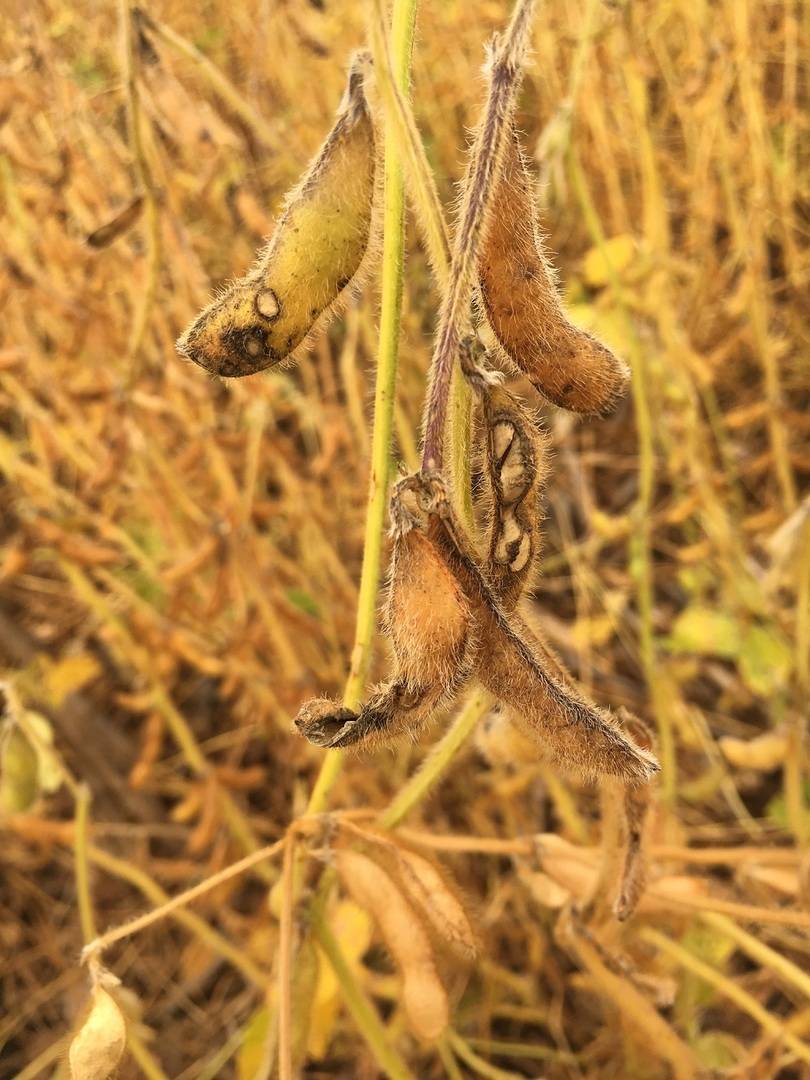
An up close view of soybeans near Boone, IA. Harvest is near for this field!
Darin Chapman
Farmers in Northwest Iowa are getting their combines ready for 2017 harvest! I can’t wait to see this LH 4727 VT2 go through the combine! Plus, Latham 2184 R2X soybeans are showing a lot of 4-bean pods.
Larry Krapfl
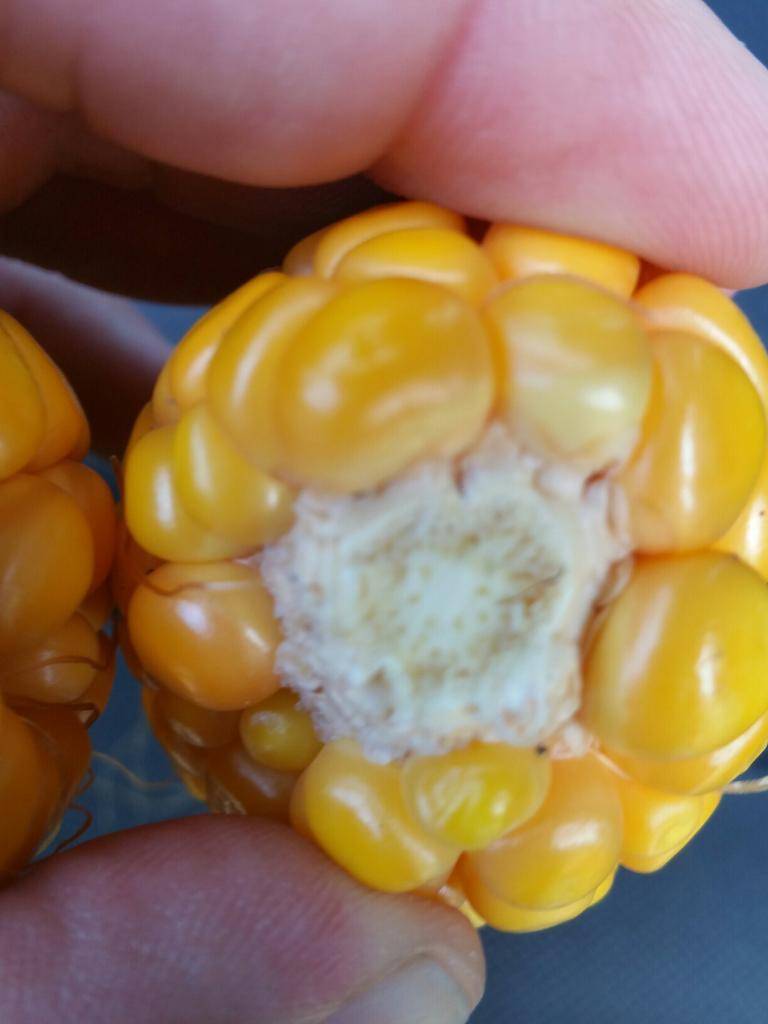
Ear pinching results from severe stress during the 7 to 10 leaf collar stages (V7-10) may result in reduced numbers of kernel rows. The more stress from the summer dry spell, the more apparent the pinching. This is not hybrid specific as it is effecting several hybrids to the degree of stress the corn was put under.
Greg Mair
Harvest is officially underway on soybeans as I received my first harvest report yesterday. Latham’s L 1438 R2 yielded 75 bu/Acre at 14% moisture. With yield reports like this, you can’t help but get excited for #harvest17!
Latham products are set to finish the year strong in Wisconsin. While walking a Latham(R) Corn SuperStrip in Utica, I couldn’t help but notice the consistently large ear size on this LH 5245 VT2PRO. I am excited to see where yields come in this fall.
Another new product I am excited about this year is L 1845 R2X. In both locations, it has excellent standability with lots of pods on lateral branches. It appears to be a great defensive Soybean against White Mold.
Brian McNamee
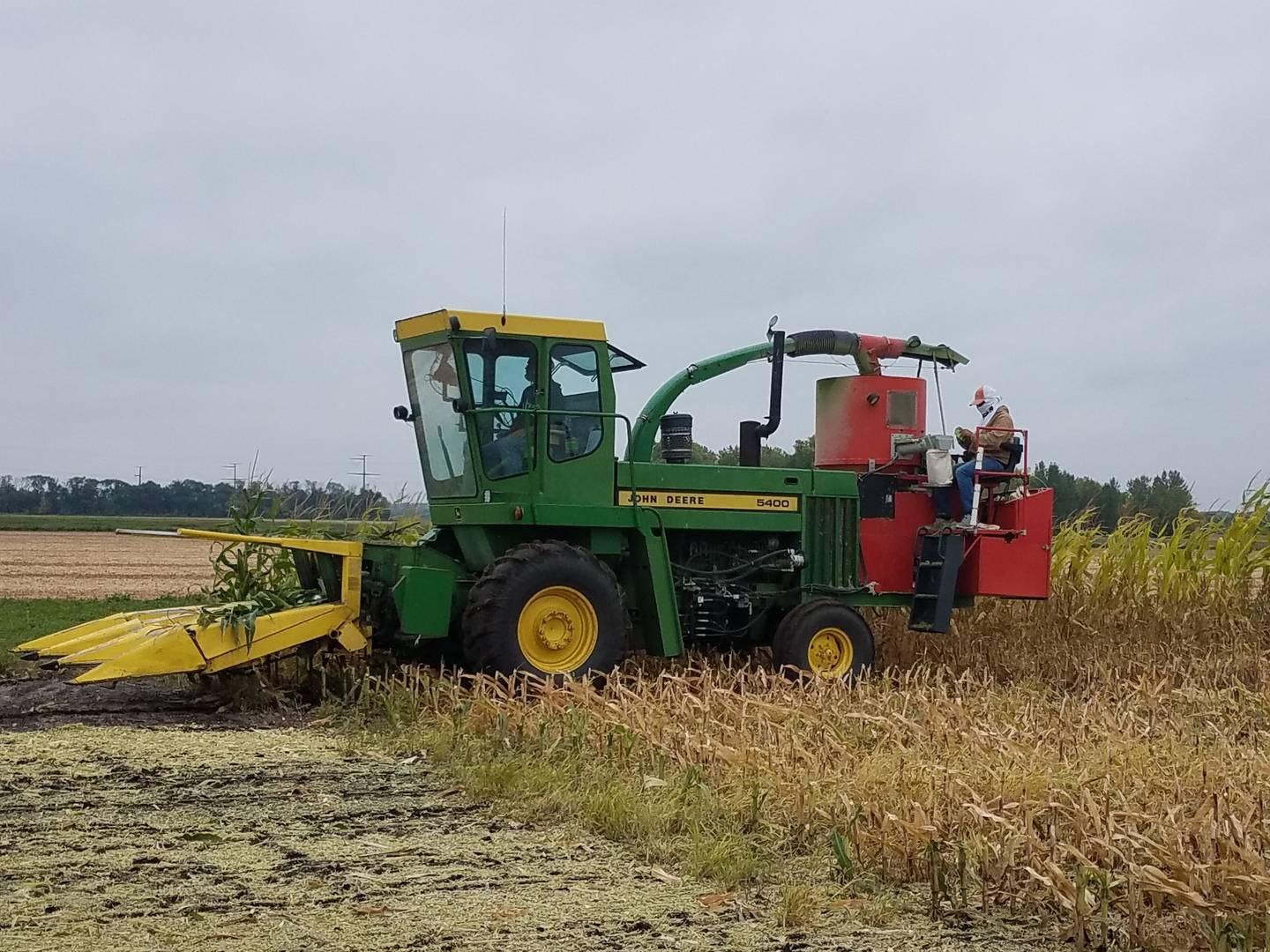
It’s silage chopping season here in North Dakota. I’m happy to report that in some areas the yields are exceeding last year’s banner year! Fields under moderate to severe drought stress are showing rapid dry down and, as expected, poorer than average yields.
One thing to note: If your farm experienced early drought followed by average to above average rainfalls, there might be as much as a 3-week delay on maturity.
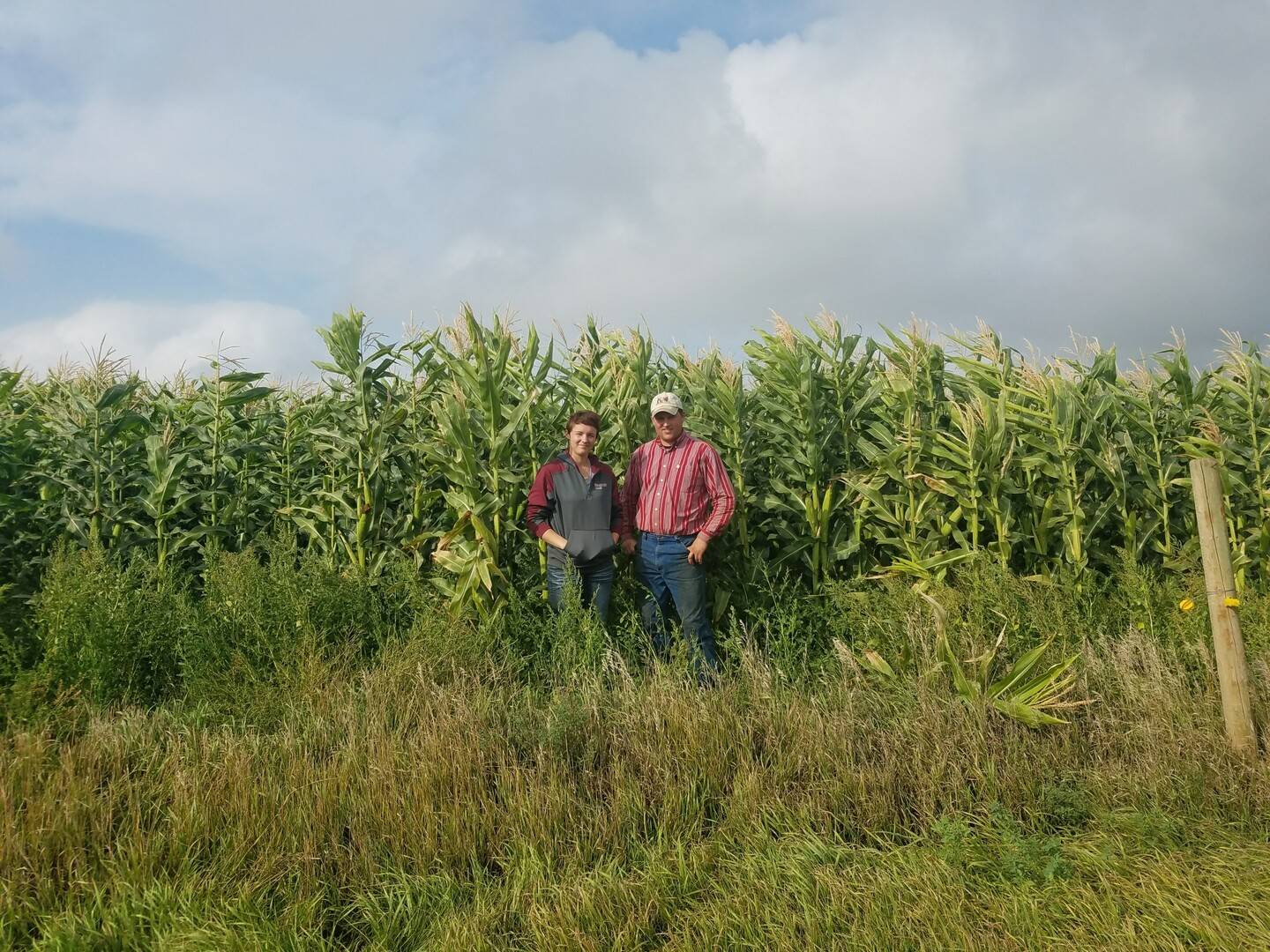
Pictured here are Latham customers in front of a field of LH 4532/RR LFY. Honestly, this picture doesn’t do justice for how good that crop really looks!
Gary Geske
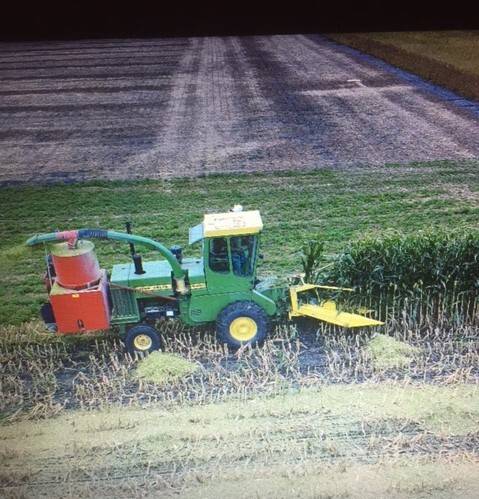
One of our Latham® dealers is harvesting silage near Emeradro, ND this week!
James Keltgen
Silage chopping is in full swing! L5062LFY running 24-30 ton/acre in South Dakota. Have been some really goo 4th cuttings of hay as well. A few soybean fields off in drier regions 18-28 bu/acre.
Ramie Coughlin
Two hybrids, two fields, miles apart, both 22 rows around. The field of LH 4242 VT2 PRO RIB was planted near Arlington, SD, and the field of LH 5339 SS RIB is near Montrose, SD.
Ken Highness
Yesterday we harvested the Latham Silage research plot near Emerado, North Dakota. Our leafy hybrids have twice as many leaves above the ear, which adds to tonnage. New genetics, with native drought and insect tolerance, allowed these plants to grow very tall and for high-yielding silage.
Brandon Wendlandt
Here’s one cluster of 4-bean pods that I found on a plant of 2184 R2X in southern Minnesota! I’m really excited to start harvest!
Craig Haaland
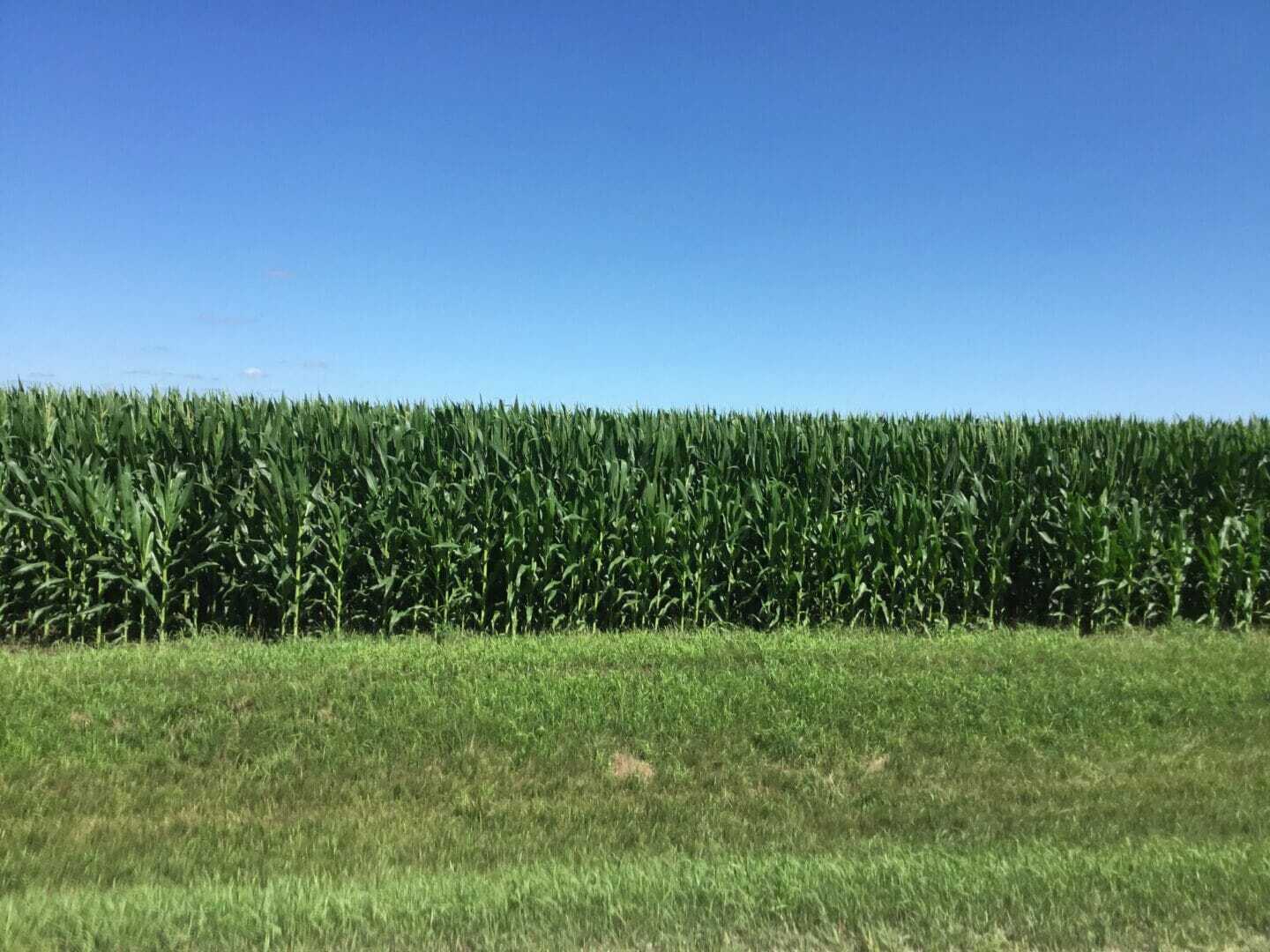
Crops are really changing, and harvest will soon be in full swing. These photos were taken in a very nice looking field of LH 5095 VT2 PRO in Floyd County, Iowa. Ears are filled out and ear placement is consistent. North Iowa has had a long streak of no rain and temperatures are going to be warm for the next 7 to 10 days.
Jerry Broders
It’s beginning to look a lot like fall! Soybeans are turning and harvest will be here before we know it.
Cory Greiman
Signs of fall are evident in this field of Latham brand L 1787 LL, which is turning in the Garner area.

Bryan Rohe
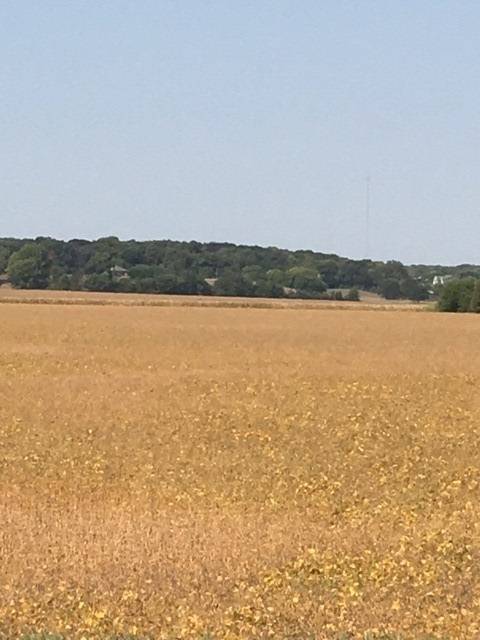
Latham’s L 2084 RR2 turned last week near Bondurant, Iowa. Harvest will likely be underway here next week.
Bart Peterson
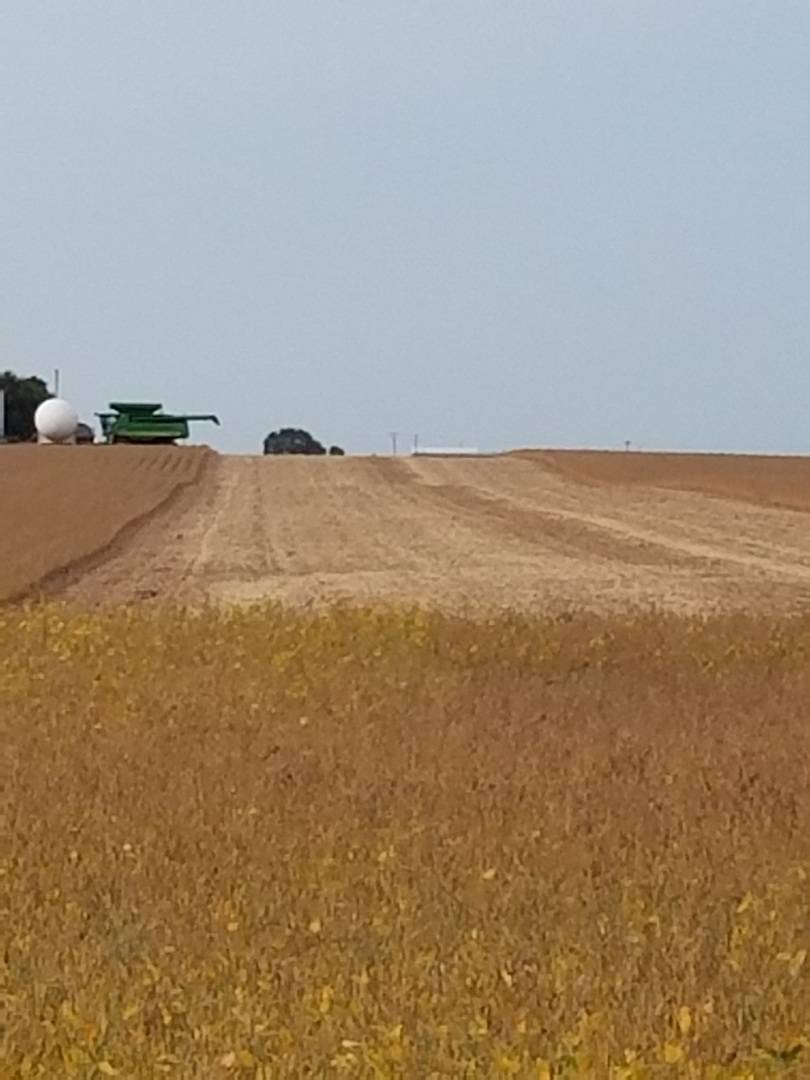
Harvest is underway near Webster City, Iowa. On Sept. 8, 2.3 acres of L 1328 L was combined, yielding 64.8 bushels/acre and running 14.4% moisture. On Sept. 11, L 1328 L went 71.8 bu/A on better ground.
Darin Chapman
We have been out walking fields looking for potential disease. These soybeans look pretty good, but in spots, it looks like cercospora leaf spot is a possibility. As the plants mature, infected leaves will turn from orange to bronze. Tillage and crop rotation effectively reduce the survival of fungi from season to season.
Larry Krapfl
Greg Mair
The weather is heating up this week in Wisconsin and choppers are hitting the fields. Moistures have been between 63-73% whole-plant moisture, which is critical to achieving the most consistent fermentation and forage quality.
Latham LH 5495 3122 EZR is a key corn silage variety for Wisconsin. It is always a good day when you get to tell a grower that his corn silage yield is estimated at over 34.5 ton/acre.

Brian McNamee
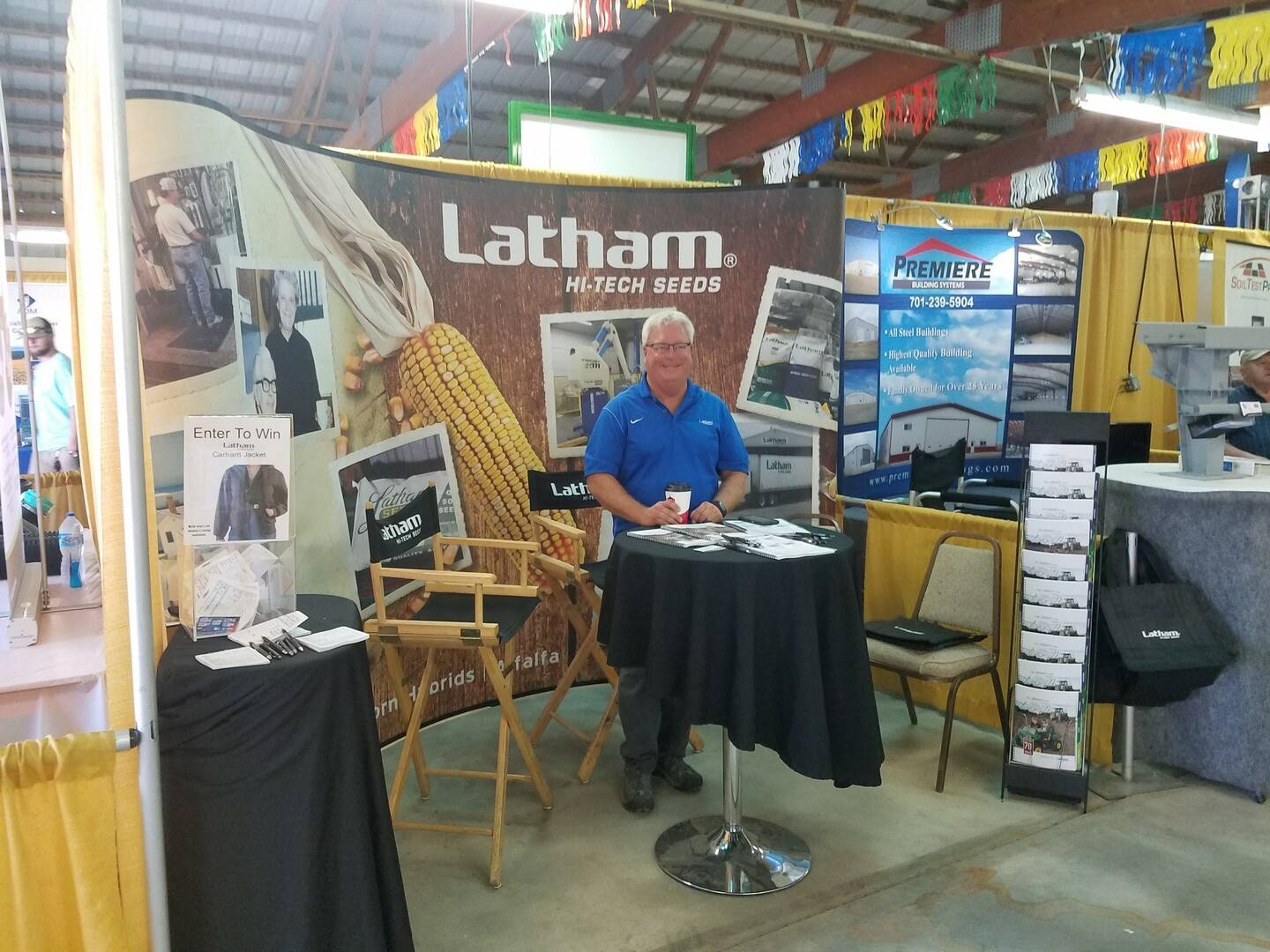
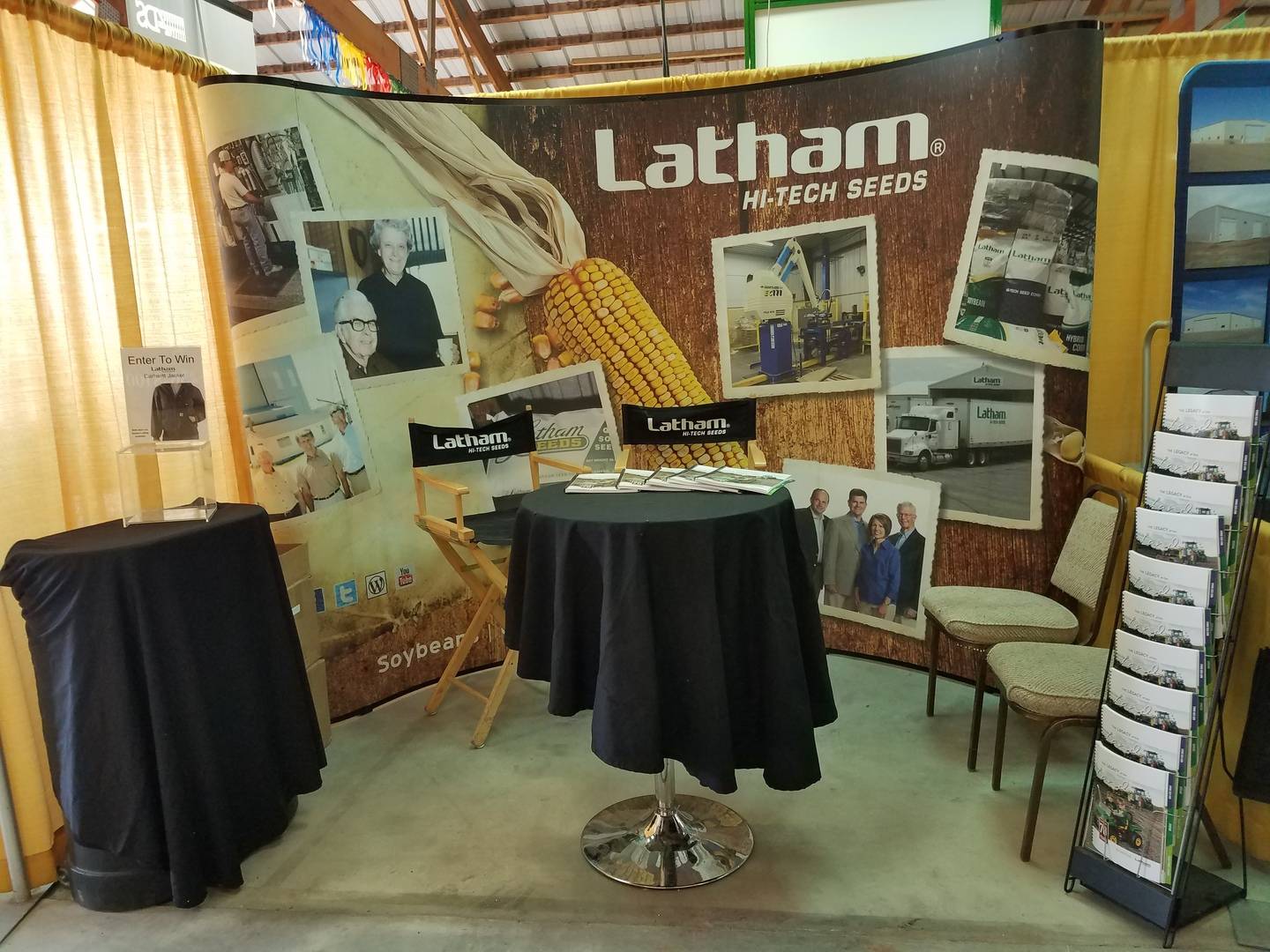
It’s Big Iron time again in West Fargo. Stop by and see us in Booth 22 at the west end of Exhibit Hall.
Silage chopping and early soybean harvest will be starting to roll this week. I look forward to seeing all my customers in the field for what looks to be a better than expected yields.
Gary Geske
Latham 5042 RR/LFY silage corn looks awesome! The chopper will make its way soon to this field east of Sheldon, ND.
James Keltgen
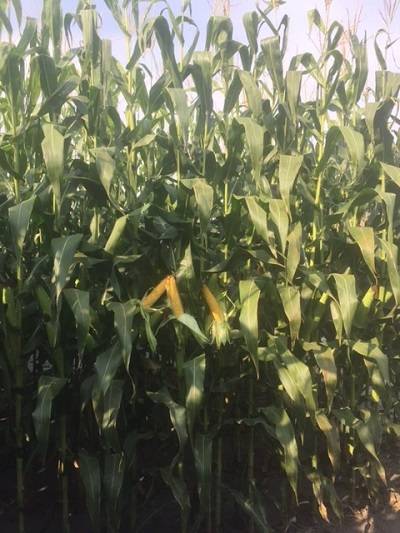
A fair amount of Goss’s Wilt showing up in corn. LH 3877 VT2 PRO is handling it well. Warmer temps are helping corn to reach black layer.
Soybeans are very close to maturity. Yellow leaves are present everywhere and growers expect to be harvesting in about 2 weeks!
Ramie Coughlin
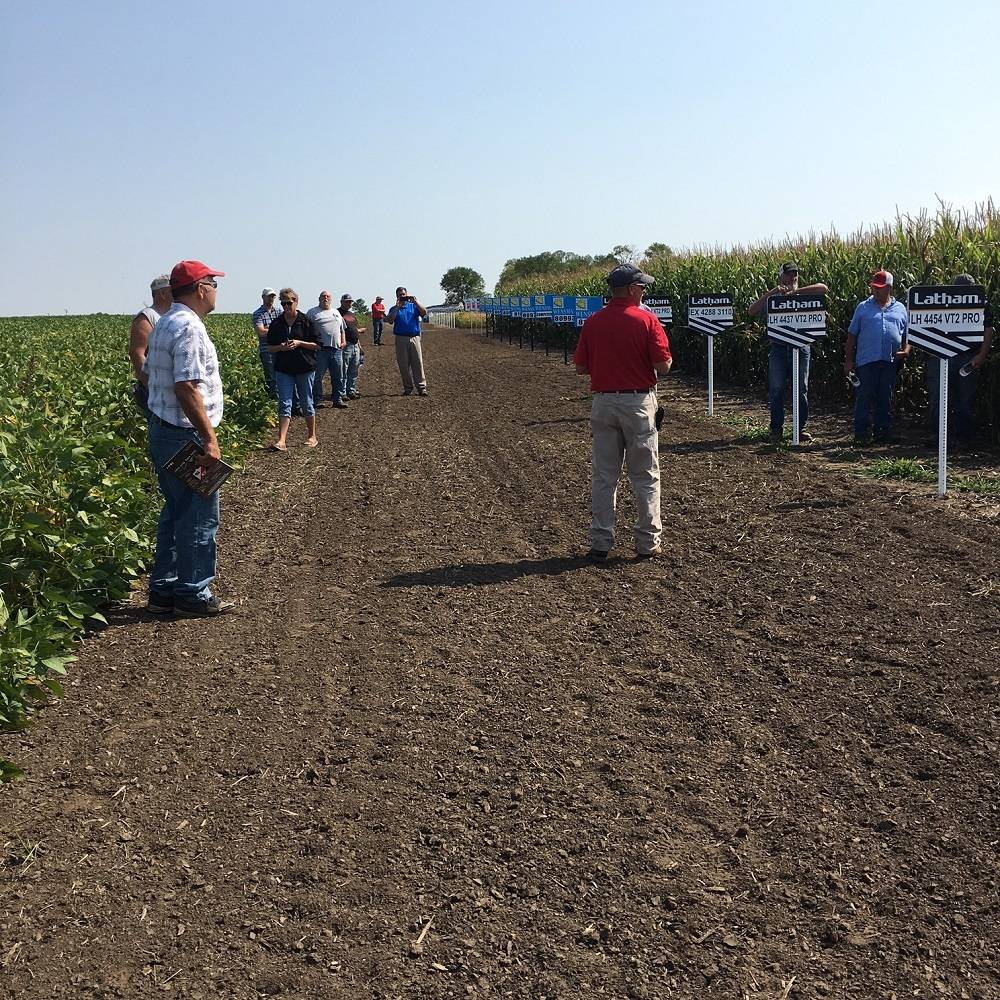
Latham(R) dealer Estelline Co-op hosted its annual fall field day on Monday. Growers got a chance to look at multiple brands and technologies side by side. Also in South Dakota, silage chopping season is underway. Timing is everything to harvest quality silage. I expect it to be in full swing next week.
Ken Highness
Come see us Sept. 13-14 in Fargo at Big Iron, the largest farm show for agribusiness in the Upper Midwest. We are located in the Exhibit Hall building Booth 22.
Brandon Wendlandt
We had a beautiful weather Monday night for a plot tour and customer appreciation event in Sanborn, Minnesota. Now is a great time walk corn and soybean plots before because soon everyone will be in the throes of harvest.