While some Midwest farmers will get the opportunity to reenter their fields this week, there won’t be much rest for the weary. With some seed already in the ground, it’s important to start scouting those fields now.
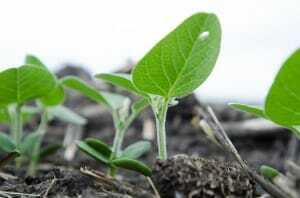
Post-planting is an ideal time to begin scouting one’s crops. Many soilborne pathogens strike as soon as the seed begins to take on water; others strike young seedlings. Because seeds can germinate quickly and emerge in 3 – 5 days, it’s not too soon to start walking your fields.
Check plant populations, evaluate stands and be on the lookout for early summer diseases. Is there a germination problem? Do you see effects of chilling or crusting?
Assessing your situation ASAP will allow you to formulate a plan while there’s still plenty of time to implement it. You could replant in parts or in all of a field now, so you can attain the yields and returns you want this fall. Information on corn replanting decisions is available from www.agronext.iastate.edu/corn. Click on the “Planting” topic, then click on the “Replant Decision Aid Calculator” tab and use that tool and related information to help make a replant decision. For a resource on soybean replanting decisions, go to www.extension.iastate.edu/publications/pm1851.pdf.
Another benefit of evaluating current stands is to help you determine what adjustments should be made before planting next year’s crop: Do you need to adjust your planter settings or your planting speed?
Once you get past the mechanical issues, look at the disease pressure. If soybeans are damping off, perhaps next season you should opt for seed-applied fungicides? Do you need to pay closer attention to a particular soybean brand or corn hybrid’s disease rating?
Better planting equipment, improved soybean genetics and technology advancements such as seed treatments and weed control systems have moved soybean planting dates earlier in recent years. Last year 34% of Iowa’s soybean crop was planted by early May; this year only 1% of Iowa’s soybean acres are planted as of May 13.
Although there is a correlation to higher yield potential with earlier planting dates, it’s important to remember that soybeans respond favorably to early-planting datesif soil conditions are ideal for planting. Conditions weren’t fit for planting soybeans in late April or early May.
One silver lining in the delayed soybean planting is that soil temperatures have warmed. We recommend planting soybeans when soil temperatures are about 60 degrees, and soil temperatures were averaging only in the low 60s around May 15.
Planting into a field that is too wet or too cold early in the season will reduce emergence and plant population, which most often leads to reduced yield. Remember, planting soybeans in warm but wet soils can also have a detrimental impact on yield. Patience will continue to be key this planting season!
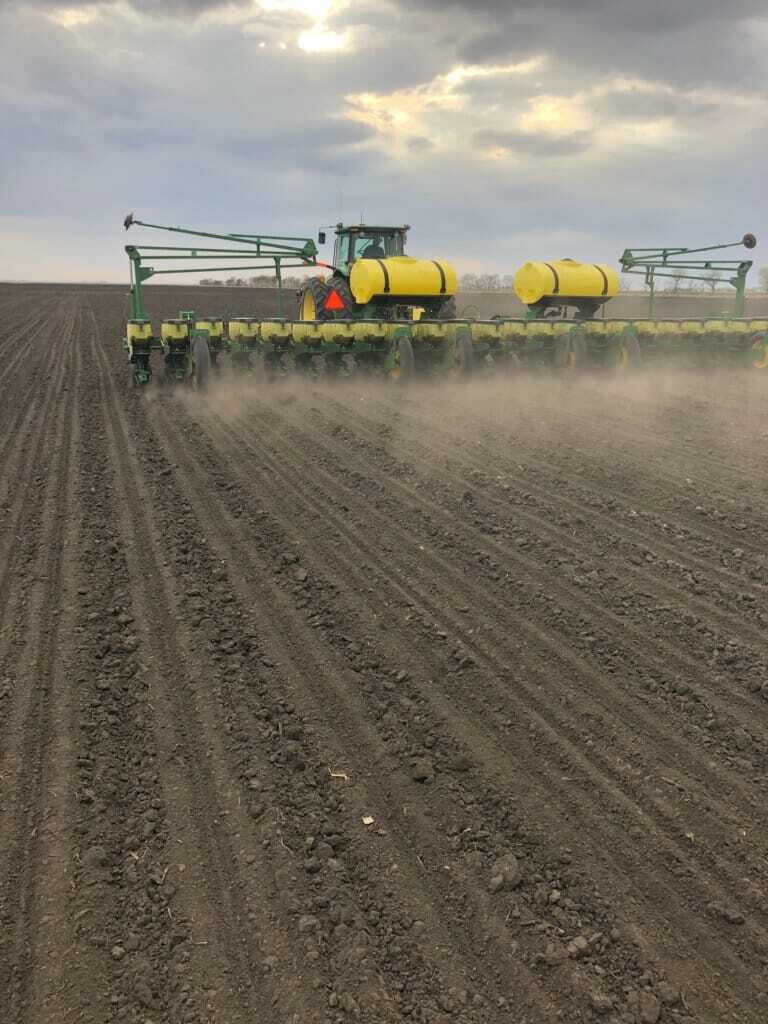
To help provide “picket fence stands,” corn growers must make proper planter adjustments. It’s also important to match the planter speed to field conditions and to avoid planting seeds in extremely poor soil conditions.
Planting in soils that are too wet can lead to sidewall compaction. The under-developed root systems resulting from the compaction are often confined in a flat plane within the furrow trench. Planting in too wet of soil, especially with coulters, allows sticky soil to build up on gauge wheels resulting in planting depth differences.
Shallow planting places seed in differing soil moisture levels and can result in differing emergence dates. Shallow planting also can lead to a shallow secondary root system. “Rootless corn” may result, or plant development may be greatly delayed compared to neighboring plants.
Failure to close the furrow is usually caused by poor soil conditions, improper closing wheels for field conditions, incorrect down pressure, or planting in sod. Worn or improperly adjusted planter parts can cause or aggravate all the previously mentioned problems.
Make sure your planter does all its jobs properly: open the seed furrow without sidewall compaction; place seeds at a uniform depth; and close the seed slot without compaction. Stop the planter frequently and physically check to ensure you’re getting uniform seed depth and good seed-to-soil contact. Although it will take a few extra minutes in the spring, you’ll be glad you did when it’s time to harvest those extra bushels come fall!
Consider Traits & Chemistries in Your Crop Rotation
A soybean-corn crop rotation allows farmers to spread out spring and summer fieldwork and provides a larger window for harvest. Plus, a soybean-corn rotation can lead to energy savings during production and when handling, drying and conditioning of stored grain, according to recent issue of “Advance” published by the ISA On-Farm Network.
“Studies show us that corn yields are higher following soybeans. The advantage of a soybean-corn rotation still centers on yield. The positive impact is probably due to several factors,” says Ed Anderson, Iowa Soybean Association senior director of supply and production systems. “Soybeans break disease, insect and weed cycles and provide a nitrogen credit for corn the following year.
However, it’s no longer enough for farmers to merely rotate crops. Farmers also must rotate between herbicide chemistries, as well as hybrid/variety traits. Rotating between various herbicide traits is important from the standpoint of reducing weed resistance. It also has been proven that it helps in overall herbicide performance.
Rotating traits, especially insect resistance traits in corn, is especially important for the same reasons – to decrease the risk of insects becoming resistant to those traits and also to improve overall trait performance. As newer traits become commercially available in soybeans, the same will be true. We will need to be good stewards of these traits and rotate them whenever possible!
One advantage of working with family-owned and independent Latham Hi‑Tech Seeds is that we can help you select the trait packages needed to change up your modes of action. Latham offers the industry’s broadest, deepest seed lineup – which makes it more convenient for farmers to get all their seed needs met.
Even though spring planting has been delayed by unseasonably wet and cold weather, there’s no need for corn farmers within the Upper Midwest to push the “panic” button. We’re still within the ideal planting window, so work your crop plan.
Research shows that hybrids adjust to planting dates.Adapted full season corn hybrids can compensate somewhat for later plantings. As planting is delayed, hybrids shorten the time between planting and silking. Full-season hybrids almost always outperform short season hybrids, so farmers really don’t need to consider switching maturities until May 25.
Let soil temperatures and soil conditions – not the calendar – dictate planting dates. At this point, fields are not yet fit for planting. Your yield potential will be more negatively affected by planting in wet soils than waiting even a couple of weeks for better conditions. On average, farmers will lose about half of a bushel/acre per day due to delayed planting. Research shows farmers will lose more yield if crop is planted into less than ideal conditions, so we encourage you to wait for soils to warm up and dry out.
Corn planted into wet soils will be prone to problems throughout the growing season such as: stunted plant growth; slow infiltration of water and/or ponding; high surface runoff under normal or light rainfall; poor root system development, or rootless corn; and even nutrient deficiency. Potassium deficiency is caused by corn roots not being able to take up potassium from compacted soils.
REMEMBER: The majority of yield is determined during planting. “Patience” is key right now. Good things come to those who wait for the right seedbed conditions!
Continued use of the same rootworm-resistant trait in corn hybrids, an increase of corn-on-corn areas, plus a lack of refuge acres, has caused rootworm resistance to become an issue in some areas. Best management practices, including rotation, are key to effectively controlling corn rootworm populations.
Northern Corn Rootworm
However, rotation isn’t as simple as it used to be. Farmers can no longer merely rotate between corn and soybeans asthe only effective management strategy. Both the Northern Corn Rootworm and the Western Corn Rootworm have developed methods to counteract the effects of rotation on their life cycles. The Northern species uses a tactic called Extended Diapause that allows its eggs to lay dormant during the time fields are in soybeans. The eggs will then hatch after the field is planted to corn, and the young worms will feed on the corn roots. Adult females of the Western species have actually learned to lay their eggs in soybean fields, thereby allowing them to hatch the following spring when the field is planted to corn. With these changes in what used to be considered the “normal” life cycles of rootworms, managing CRW today requires increased diligence.
Western Corn Rootworm Beetle
Rotating rootworm-resistance traits developed by Monsanto, Syngenta and Dow will help CRW resistance from developing if farmers actually rotate modes of action. One advantage of working with family-owned and independent Latham Hi‑Tech Seeds is that we can help you select the trait packages needed to change up your modes of action. Latham offers the industry’s broadest, deepest seed lineup – which makes it more convenient for farmers to get all their seed needs met.
Using hybrids with more than one rootworm trait like Genuity® SmartStax® may offer another line of defense against CRW. The recent approval of Agrisure Duracade from Syngenta provides another trait in the arsenal to fight CRW; hybrids with Agrisure Duracade are expected to be commercially available in 2014.
Additionally, refuge acres must be planted. Refuge-In-the-Bag (RIB) hybrids available from Latham Hi‑Tech Seeds make compliance simple. Respect the refuge® and it will greatly increase our likelihood of keeping rootworm traits viable for years to come. Rotation helps reduce the risk of resistance. However, planting refuge alone is not enough.
Corn rootworm management is a complex issue and the solution is more than just traits. There are many factors and management options that must be considered:
Farmers throughout history have raised corn yielding 300 bushels per acre (bu/A). In 1985, Illinois farmer Herman Warsaw produced corn yields of 370 bu/A. Warsaw spent years working toward his goal. He patiently built up soil nutrition and tilth for better plant health.
So what do we need to do to raise 300-bushel corn? Like Warsaw, we must commit to plan. Our plan must involve soil fertility, which takes into account nitrogen and micronutrients. Weather dictates when nitrogen (N) can be applied, its availability to the plant and its usability by the crop.
Nitrogen loss can occur immediately after application, and leaching can occur after N has been incorporated into the soil. That’s why renowned corn yield researcher Dr. Fred Below uses a stabilizer when applying his nitrogen. His fertility program also includes aggressive rates of Phosphorus (P) and Potassium (K) to push for higher yields. Potassium is very important but is often lacking, especially in a drought year like 2012.
“As growers, we need to look at agronomy first. It’s important to build a good database for each field, understand interactions of nutrients and use the tools to apply the agronomy,” said Ron Olson, who was one of the first consultants nationwide to use GPS/GIS tools to assist farmers in managing Precision Ag databases. From 1974 to 1996, Ron owned an independent agronomic consulting company based in Illinois.
Today Ron serves as Research and Development Manager – New Products for the Mosaic Company. During a recent presentation in Des Moines to Seed-2-Soil and SciMax client, Ron admitted that a lot of work must be done to consistently achieve 300-bushel corn yields. However, he says taking incremental steps will lead to higher yields overall.
Nutrient management is key to increasing yield, according to research done in cooperation with Dr. Below and the University of Illinois. This research uses “omission plots” that compare corn both with and without fertilizer, fungicide, insecticide and seed treatments. While yields increase with each of these additions, fertility has the most impact.
In addition nutrient management, other factors influence yield. Click here to see Dr. Below’s 7 Wonders of the Corn World, which are the seven factors that have the most influence on yield.
While perusing some ag chat sites this week, we came across the following questions posted by a Midwest farmer. Today Latham Product Manager Mark Grundmeier answers questions that are top-of-mind with farmers.
Q: Is treating seed corn with VOTiVO® enough to protect the crop from nematodes throughout the growing season? Extremely high numbers of nematodes have been confirmed on one of our farms. We have ordered our corn seed for 2013 treated with VOTiVO. What else should we do to eliminate nematodes, if possible? This is by far the biggest yield robbing problem I have ever seen. I thought Gray Leaf Spot was a big yield robber, but it’s nothing compared to the damage done last year by nematodes. It was deceiving because symptoms all showed signs of drought, even under full irrigation and compaction.
A: One reasonnematodes are difficult to control is because stunted, yellowing, wilting corn is often mistaken for something else, such as drought in this case. Therefore, nematodes often go undetected and the yield-robbing situation multiples – literally.
Nematodes are a growing problem across the Midwest, most likely due to trends of no-till farming. Nematodes are sensitive to soil disturbance, so they tend to thrive in no-till situations. Crop rotation isn’t an effective form of management as corn nematodes also feed on soybeans and grasses. So what is an effective way to manage corn nematodes?
A new management option is using a seed treatment that moves onto the roots to provide early season protection against nematode feeding, says Dr. Greg Tylka from Iowa State University. Poncho®/VOTiVO® seed treatment protects young plants from pests during critical early development stages, leading to healthier root development and stronger stands.
VOTiVO seed treatments act like a barrier, preventing nematodes from attaching to corn roots. Applied directly to the seed, it helps prevent damage to early-season seedlings and roots before pests can strike. Nematicides on the other hand, actually kill the nematodes on contact. Avicta® from Syngenta Seedcare is a nematicide seed treatment that moves on the surface of the root.
Immediate Protection – Systemic agent protects valuable seed from the moment it’s planted
Pest Control – Biological agent creates a living barrier of protection against a wide range of nematodes, including Soybean Cyst, Root Knot and Reniform nematodes
Yield Potential – Promotes healthier root systems and a more vigorous and uniform crop, positively impacting yield
Benefits of Avicta® Brand Seed Treatments:
Avicta Complete Corn is a combination of Avicta nematicide and CruiserMaxx® Corn 250 (Cruiser® 5FS insecticide & Maxim® Quattro fungicide). It is also available with a higher rate of thiamethoxam for enhanced insect protection (0.5 mg ai/seed and 1.25 mg ai/seed respectively).
Provide instant protection against a wide variety of damaging nematode species
Consistently protect against a broad range of early-season insects and disease pathogens
Proven to help increase plant stand, vigor and yield potential
Much of the corn plant’s yield potential is determined in the early growth stages. Avicta Complete Corn provides immediate protection from day one.
The higher the population of nematodes, the greater the chances are that nematodes will break the barrier created by VOTivO. So when extremely high populations of various species of corn nematodes are present, it may be beneficial to use both a seed treatment and a planter-applied nematicide.
Studies by Iowa State University show nematode management products may have a more pronounced beneficial effect in fields with very damaging nematode species and in fields with much greater plant-parasitic nematode population densities.
With the extremely stressful weather conditions we experienced last year, growers are starting to inquire about using soybean inoculants going into the 2013 planting season. While there is no definitive answer to this question, here are a few tips to keep in mind:
Soybean inoculant is comprised of living bacteria (Bradyrhizobia japonicum), which is necessary for the establishment of the nitrogen nodules on the roots of young soybean plants. Soybeans can require more than 300 pounds of nitrogen per acre and most of it is needed during the initial flowering through seed-set stages. Living organisms do need adequate moisture to thrive.
Inoculate the seed if soybeans haven’t been grown in your field for four or five years. If the field is sandy or in the event of severe weather problems (e.g., flood or drought), you might consider inoculating if the field has not been in soybeans for as little as three years.
Nitrogen is essential to photosynthesis. Nitrogen is usually supplied to soybean plants by a process called nitrogen fixation, which is associated with Rhizobia bacteria in the soil. It’s important to note, however, these bacteria are not always present – especially if soybeans haven’t been grown in a field for a few years. In this case, consider adding an inoculant to your soybean seed.
Scouting your fields and digging up plants to assure proper nodulation is crucial for achieving top-end yields. If you decide to use inoculants in your own fields, be sure to study whether the inoculants benefitted your production levels.
Get to know your local Latham sales representative, who can introduce you to our Seed-2-Soil program. This program helps determine the best varieties to plant in your fields, giving you the best possible chance to achieve high yield.
High heat and low moisture levels created several production challenges – for farmers and seed suppliers alike – in 2012. Dry growing conditions have affected seed germinations, seed size and seed quality nationwide.
Not all seed brands will be able to offer top quality products for 2013 planting. Be sure to read the bag tag and consider switching product numbers or adjusting plant populations accordingly.
Rest assured when you plant Latham®, you’re planting quality. Latham Hi‑Tech Seeds’ hands-on production process allows for less handling, which leads to higher germination rates.
The vast majority of our seed beans are brought to Latham’s production facility in Alexander, Iowa, immediately upon harvest. Bringing the soybeans directly to our plant allows Latham to control the seed from the production field to our customer’s shed.
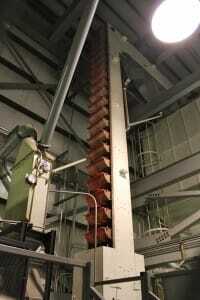
The trays we use to bring soybeans from the cleaner to the bagging system are so gentle they’re used to make corn flakes!
We also don’t bag in extremely cold conditions, which can lead to splits and cracks and further reduce the chances of having that seed germinate. Our bagging line was shut down most of this week due to cold temperatures.
We take great pride in producing soybeans that contain the industry’s top genetics with leading technologies like Genuity® Roundup Ready to Yield®and LibertyLink. We’re also proud to offer top hybrids featuring the industry’s top genetics – and one of the broadest, deepest trait lineups in the country.
Contact your Latham® representative or call 1-877-GO-LATHAM for more information about top-shelf Latham brand products on inventory that will meet your needs for spring 2013 planting.
[youtube]http://youtu.be/6IyB97uF2nI[/youtube] “The gentle handling of Latham® seed through each part of the bagging and delivery process helps preserve seed quality.”