Latham Hi-Tech Seeds

(641) 692-3258

  • Home
  • Products
    • Corn
    • Soybeans
    • Alfalfa
    • Corn Silage
    • Seed Guide
  • Performance
  • Find a Rep
  • Media
    • Blog
    • News
    • Videos
    • Podcasts
    • TECHTalk
  • About Us
    • Company History
    • Our Mission
    • Careers
    • Become a Rep
    • Sowing Seeds of Hope
  • Contact Us
  • Latham Hi‑Tech Seeds

    Days Ensiled Improves Starch Availability

    Corn Harvest

    Science has enabled us to delve deeper into the feed bunk and discover some hidden secrets of the silage fermentation process. At Latham Hi‑Tech Seeds, we evaluate hybrids to help guide the selection process for both nutritionists and farmers.

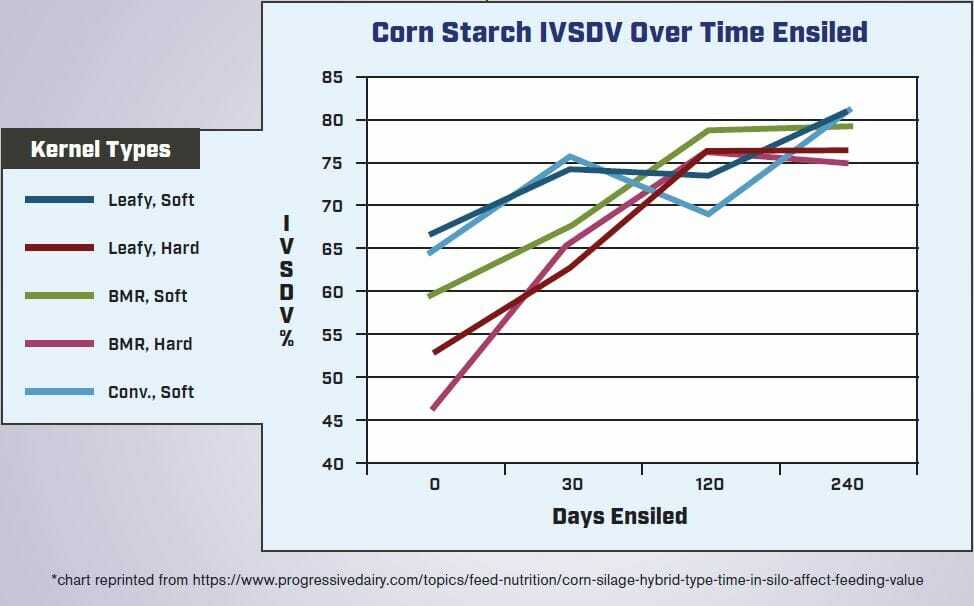
    Nutritionists are focusing on the conversion of indigestible starch to digestible starch over time. Each hybrid has its own unique starch digestibility, and research shows that it takes up to 240 days for some high prolamin zein hybrids to fully breakdown. Prolamin zein is a protein the encapsulates the starch molecule, making it unavailable to the digestion microbes for a food source.

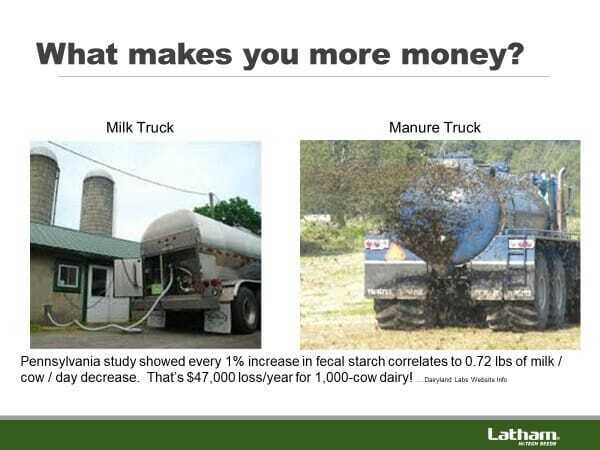
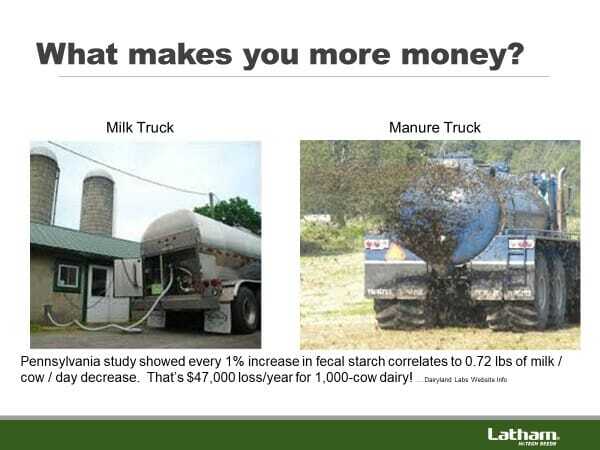
    Corn hybrids with lower levels of prolamin zein are more easily digested. Select Latham® forage products have low levels of prolamin zein and are more easily digested by cows, which is great news for our customers because undigestible feed turns into manure instead of milk.

    Corn test weight also can be an indicator of how much prolamin zein is available. While higher test weights are good thing for grain farmers, higher test weight corn tends also to be higher prolamin zein. As the chart below from Progressive Dairy indicates, prolamin protein tends to break down and more of the starch is exposed over time in an ensiled environment. The challenge is that time isn’t always on a dairy or beef producer’s side.

    When feed supplies are low, producers often start feeding corn silage right away. If feed is your end use, choose hybrids that are either lower in prolamin zein or tend to have a lighter test weight. Leafy hybrids from Latham Hi‑Tech Seeds tend to have better starch digestibility scores early. These Latham® Leafy Hybrids can improve early feed conversion: 5400, 5495, and 5742. Order now while our prices are lowest and our supplies are highest!

    11.5 Tech Tuesday

    Webspec Admin

    November 5, 2019
    Corn Silage, Crop, Tech Tuesday
  • Latham Hi‑Tech Seeds

    #AskTheAgronomist: The Love List

    2.14.19

    LIBSYN header 2 01

    On this Valentine’s Day, we are reviewing 7 things we LOVE about the Latham product lineup!

    https://www.facebook.com/LathamSeeds/videos/924337164624015?sfns=mo

    Laura Cunningham

    February 14, 2019
    #AskTheAgronomist, Alfalfa, Corn, Corn Silage, Cover Crops, Crop, Soybeans
  • Latham Hi‑Tech Seeds

    On-Farm Research Helps Find Palatable Solutions

    Corey article

    Everyone is vitally aware of how brittle the farm economy has been, yet it seems like every agriculture periodical that I read discusses all the challenges. This movie quote illustrates the current state of our industry,

    “I’m drowning and you are describing the water.”

    We don’t need ag magazines and experts to “describe the water.” We need someone to toss us a life vest, or a plausible solution! That’s why I’m concentrating on solutions to help create stability.

    Granted, these solutions don’t come easy. You must be being willing to do something that you may not have done in the past. Another quote comes to mind,

    “For things to change, you need to change. For things to get better, you need to get better.”

    This quote has some personal and professional reflective value. Th e world agriculture market is becoming more competitive and aggressive. We must get more efficient domestically, and we must find ways to differentiate our products on a global scale. We must look beyond quantity of the crop produced to qualitative components, such as amino acids, fatty acids, omega 3, 6, 9 composition and more. This resonates deeply with the consumer. Not only does increasing the quality of our corn add value, it also helps us build “marketing muscle.”

    For years, research has looked for corn silage products that are stable on the acre. Then researchers looked into delivering the very best nutritional matrix. The delicate balance is so important that early adopters are designing on-farm experiments to test their management systems. I’m excited that Phil Long is merging technology with a vision of the future with Latham’s Seed-2-Soil precision agriculture program services. Little details like better starch and fiber digestibility in grain also make big differences.

    The image below illustrates the value of feeding hybrids with softer starch. We continually provide good data to help you make better seed product selections and transform research into useful on-farm results.

    Corey article

    2018 corn silage data is available on Latham’s website. Feel free to contact me if you have any questions about setting up an on-farm research trial for forage products. In 2019, be open to exciting possibilities – and to trying something new on your farm!

    Latham Silage Hybrid Results


    Webspec Admin

    January 29, 2019
    Alfalfa, Corn, Corn Silage, Cover Crops, Crop, Soybeans, Tech Tuesday
  • Latham Hi‑Tech Seeds

    Latham Selects Forage Products Based on Hi‑Tech Measures

    Corey graphic Copy

    Super tight margins have a lot of growers putting every decision they make under a microscope, from defining yield-limiting factors and remodeling old traditions to using scientific tests to improve feed efficiency. The new and evolving information has almost out-paced our ability to quickly adapt, understand and transform new ideas into production.

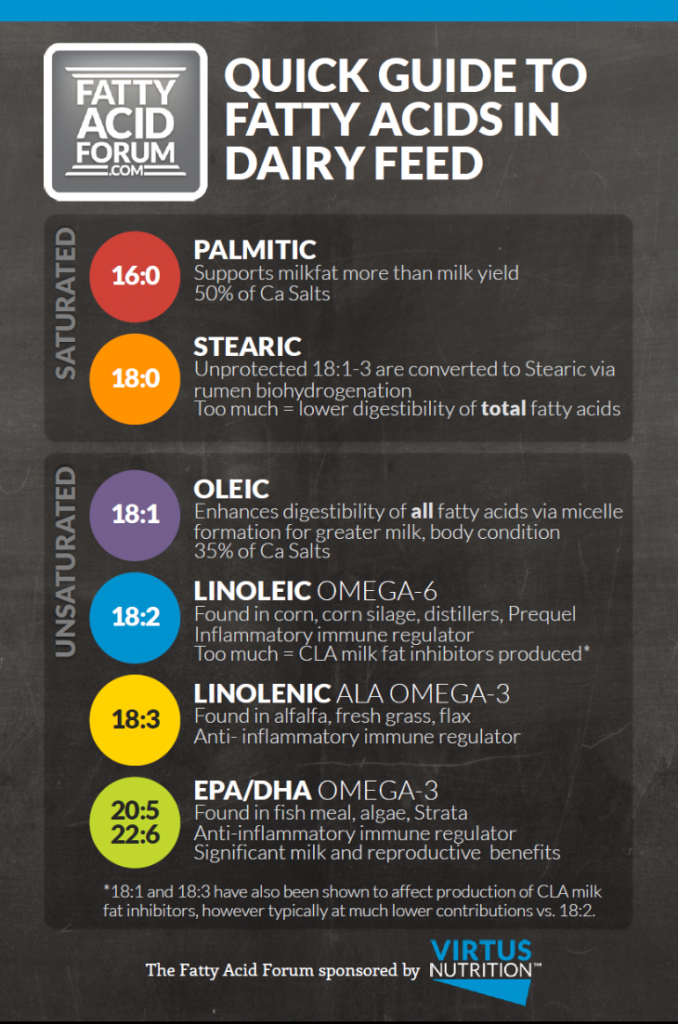
    The overall narrative about feed quality is gaining momentum. This past season, Dairyland Labs included fatty acid profiling to its corn silage forage quality reports. Fatty Acids are another tool nutrition consultants can use to build a more efficient livestock diet that can potentially improve the quality of meat, milk and eggs produced. The following graphic is a beginner’s reference of how fatty acid measures affect dairy feed rations.

    Corey graphic

    In addition to fatty acid counts, we at Latham Hi‑Tech Seeds are using a variety of measures to help select corn hybrids and corn silage hybrids for our lineup. These measures include:

    Yield. Products are selected for high yield in terms of tons of dry matter per acre.

    Fiber and Starch Digestibility. Because both fiber and starch are major sources of energy, we evaluate products for ease of digestibility for energy conversion.

    Prolamin Zein. Prolamins are proteins solely associated with starch in all cereal grains. In corn, prolamin proteins (called prolamin zein) comprise 30 to 60% of the protein in whole corn. Research shows that corn with lower levels of prolamin zein are more easily digested. Undigestible feed turns into manure instead of milk. Latham® forage products, however, have low levels of prolamin zein and are more easily digested by cows. Our products result in more floury, opaque, high-moisture corn products.

    Amino Acids. Protein, made up of amino acids such as lysine and methionine, is one of the key ingredients cows need for growth, milk component and production, overall health and immunity. An imbalance of the critical amino acids mean overall milk production and quality can suffer. Furthermore, overfeeding protein can lead to inefficiencies and high nitrogen and phosphorous levels in manure. The team at Latham Seeds selects products for our lineup based on their amino acid composition.

    Forage Quality. When developing our product lineup, we look for strong genetics that will maximize yield potential and traits that will protect that potential. Traits create a healthier plant in the field, higher quality silage product at harvest and more nutritious silage for your herd.

    Above all, product selection for livestock feed needs to be about creating a healthier plant in the field that, in turn, creates higher quality feed in the bunk. Our product lineup is heavily vetted for characteristics that produce the highest quality feed. Please contact me if I may be of assistance selecting a portfolio of products to meet your feed quality and production needs next season.

    Webspec Admin

    December 10, 2018
    Alfalfa, Corn Silage, Crop, Tech Tuesday
  • Latham Hi‑Tech Seeds

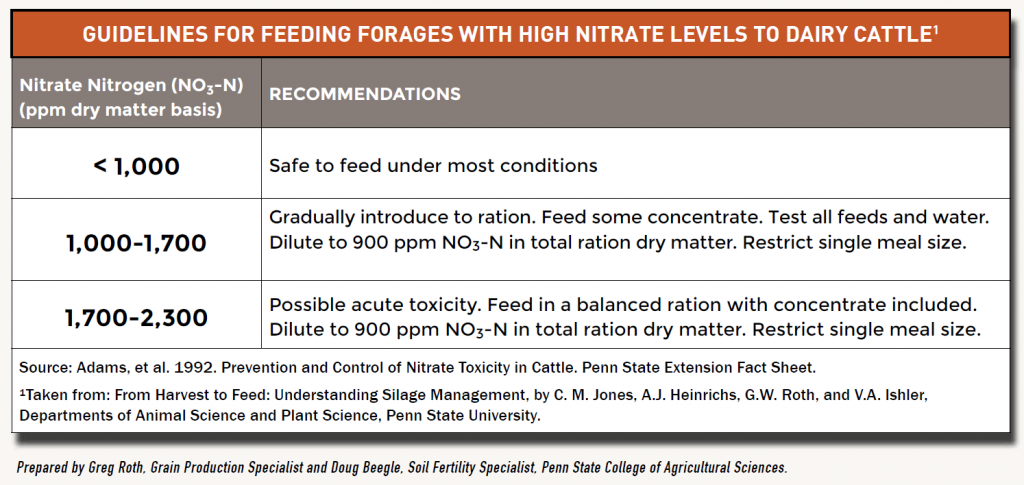
    Ways to Reduce Risk of High Nitrates in Corn Silage

    IMG 5439

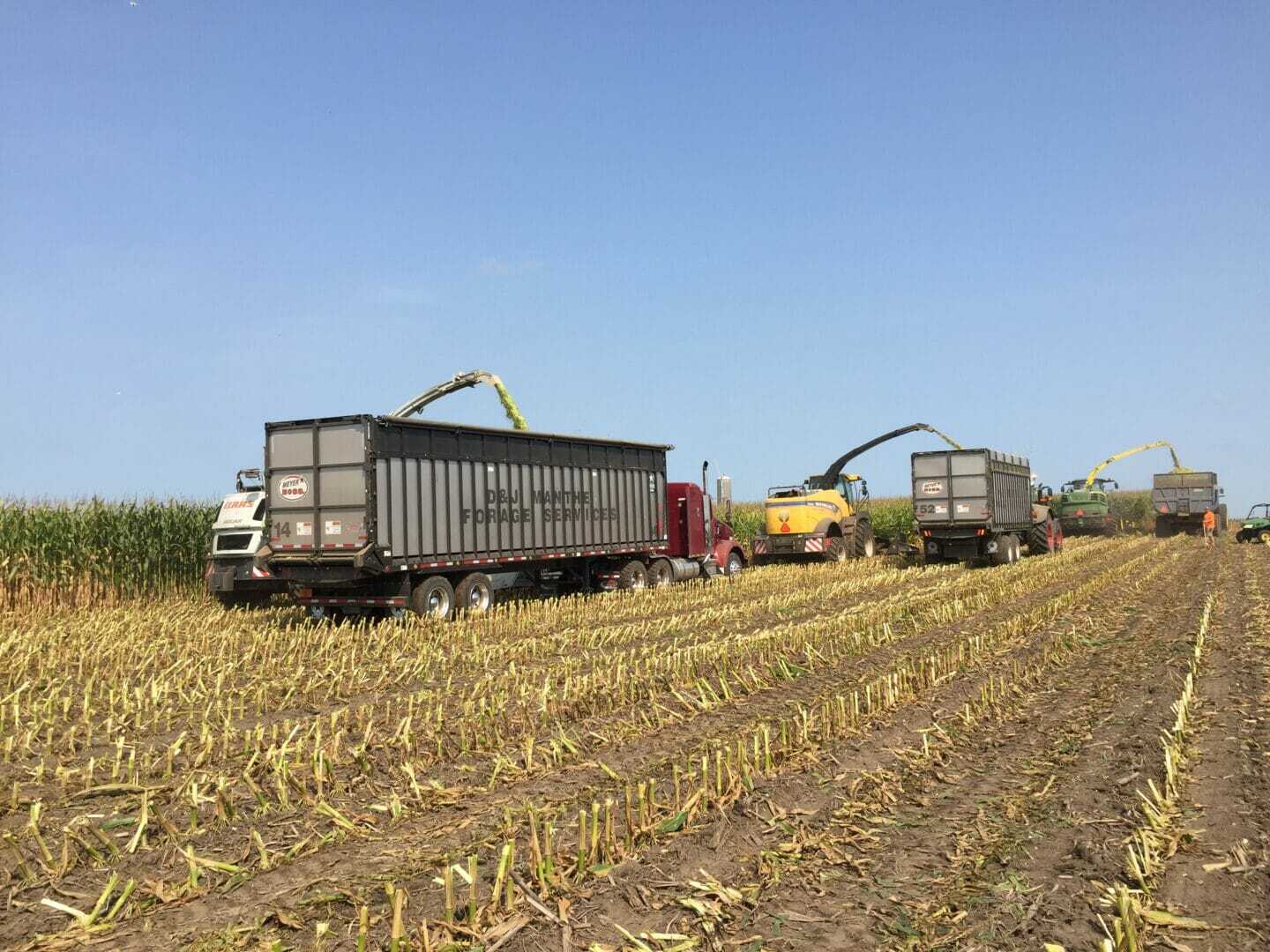
    While many fields experienced heavy rains this year, many areas experienced lower-than-normal moisture conditions, forcing an early corn silage harvest and Increasing the potential for high nitrates.

    High nitrates essentially bind with protein in an animal’s hemoglobin, which prevents the blood from carrying oxygen. As a result, cells and body tissue suffocate and die.

    Ways to reduce risk when harvesting and feeding low-moisture silage:

    • Wait 3 to 5 days after a rain before harvesting drought-stressed corn silage.
    • Increase cutting height as most nitrates form in lower portion of the stalk.
    • Allow silage to ferment at least 4 weeks as fermentation can reduce nitrate levels by 50 to 60%.
    • Always test a few samples of any suspect corn silage before you feed.
    • With matters of this sensitivity, I advise dairy producers and cattle feeders to enlist the help of a professional. Always test and consult with a nutritionist.

    NItrate chart

    Webspec Admin

    September 24, 2018
    Corn Silage, Crop, Tech Tuesday
  • Latham Hi‑Tech Seeds

    Harvest Tips to Optimize Corn Silage Quality

    Silage article Milk Line

    It can be tricky to get everything to work out just right for an optimal corn silage harvest. The weather, combined with the custom harvester’s schedule and corn silage moisture, are just a few of the details that make harvest a challenge.

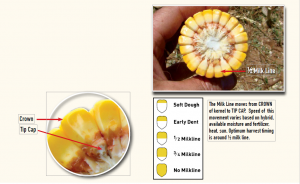
    Let’s review the basics to help increase your chances of an optimal silage harvest this year:Silage article Milk Line

    • Harvest when whole-plant moisture is between 65% and 70%.
    • Moisture can drop by as much as .5% – 1%/day.
    • To check moisture, replicate in different areas of a field. I always add 1 to 2 points to the moisture check result as there can be a lot of field variability.
    • Half milk line is the rule of thumb, but it’s best to test to verify.
    • Some growers increase chopper height to increase grain portion. This makes corn silage drier, so they can start earlier. They also do this to increase fiber digestibility. As the height increases, the neutral detergent fiber (NDF) portion is less and digestibility typically improves.
    • Whole-plant moisture of 68% to 70% is the best moisture zone for packing silage in a bunk.
    • Although it varies by silo type, whole-plant moisture of 65% is preferred to reduce seepage potential when storing silage in an upright silo.
    • As a review, corn silage dry matter (DM) is typically 50% grain to 50% stover. The portion of corn silage that has the most impact on whole-plant moisture is the starch accumulation. Starch dries the mix down. As the milk line drops and more starch accumulates, the lower the moisture.
    • Moisture changes can certainly vary based on environment. If we get a very sunny, hot, windy, low humidity day in September, whole-plant moisture can easily drop by 1%.

    Laura Cunningham

    August 21, 2018
    Corn Silage, Crop, Tech Tuesday
  • Latham Hi‑Tech Seeds

    Mid-Season: Prime Time to Conduct On-Farm Experiments

    Tech Tuesday Rebrand 02
    Tech Tuesday Rebrand 01
    ALTHOUGH WE’RE DEEP INTO THE GROWING SEASON, THERE’S STILL TIME TO MAKE CHANGES THAT LEAD TO IMPROVED FORAGE YIELD AND QUALITY. MY ADVICE IS TO EXPERIMENT, EVEN ON A SMALL SCALE, TO SEE WHAT CAN MOVE THE NEEDLE.

    Here are a few ideas for your consideration:

    • Continuous tissue testing. A foliar application of deficient nutrients could be a game changer.
    • Late-season nitrogen application. Every season is unique, so it’s beneficial to detect levels and then develop an in-season nutrient plan. Because most nitrogen uptake occurs during the reproduction phase, it’s important to ensure corn plants have sufficient levels available.
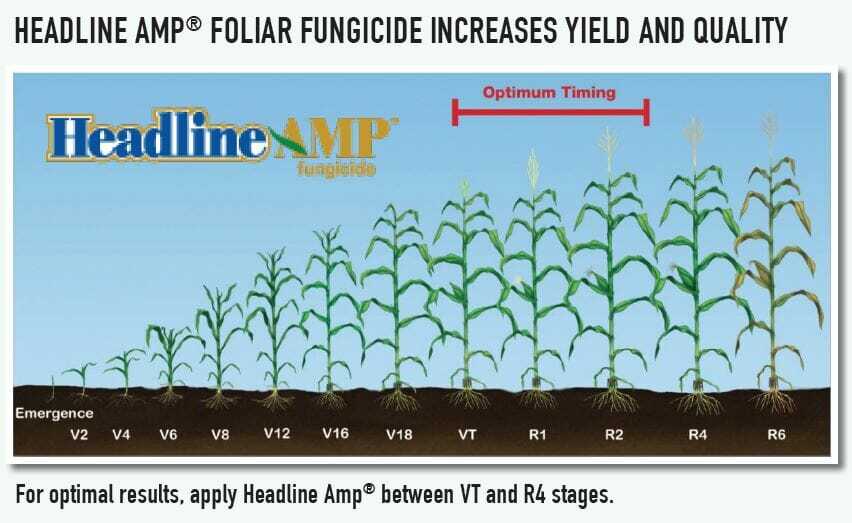
    • Foliar fungicide application. Multi-year research has shown that applying fungicide leads to 3 or more tons of corn silage. This added tonnage can potentially add another $120 value/acre!

    Every operation is different, and each operator has access to different equipment. Regardless of the hurdles, try something new. Invest in an experiment. Select s field or two to experiment, and develop a plan to lower risk, improve quality and gain tonnage. Need more ideas? I’d be happy to help! Feel free to contact me at the Latham office.

    Corey Article 8.7Corey article 2 8.7

    Webspec Admin

    August 7, 2018
    Corn Silage, Crop, Tech Tuesday
  • Latham Hi‑Tech Seeds

    Tips for Carefully Selecting Corn Silage Hybrids

    Feature Tech Tuesday 01

    Tech Tuesday Header-01

    Risk reduction is one of the most critical considerations when designing your 2018 crop plan, as I’ve written in past articles.

    While I tend to be a very early adapter to new products and technology, I also assess the risk versus the reward. Taking “calculated risk,” rather than reacting somewhat spontaneously to emotion-based marketing tactics that make us want to buy on the spot, is especially important in fragile markets.

    “I think you should buy corn hybrids for silage only from seed companies that evaluate their hybrids for silage use,” writes livestock nutritionist Everett D. Thomas in an article published November 30, 2017, by Progressive Forage magazine. “… they should have silage yield and quality data, including fiber digestibility. In some seed company catalogs, corn silage is mentioned only in passing – or not at all.” Type this into your Internet browser to read this article in its entirety: bit.ly/2mE4az8

    What a great statement! There are so many things to consider when planting a hybrid: consider the end use first; keep crop rotation in mind; and minimize risk factors.

    From a plant genetics standpoint, top risk factors are moisture stress and disease pressure. Remember that healthy plants are needed in the field to produce high quality feed and top yield. The key is to strike that best balance between all critical factors, so what’s best in the field translates to what’s best in the bunk.

    Latham’s FieldXFieldSM approach to crop selection helps put the best in each field, which is part of bringing the best in the bunk. Genetics certainly play a role in delivering quality at the bunk, but that’s only one factor of many when producing silage. You also need stress tolerance and disease management, which may include a fungicide, along with good plant nutrition, and a strong plan for timely harvest.

    As an independent company, Latham Seeds has bountiful genetic options. Latham® Leafy products are a great corn silage-specific option. Sales of our leafy corn products continue to grow because they produce amazing tonnage and quality.

    NOTE: Leafy and silage-specific products typically don’t score high in university trials, as leafy hybrids perform better at lower planting plant populations and university trials are geared for higher populations. If corn silage evaluation programs were planted at the lower populations and evaluated fairly, the results would be more reliable and comparable. Many corn silage growers like the flexibility they get with dual-purpose hybrids for their utility across varying soil types and flexibility at harvest time, and trait options. If the bunk is filled, growers can still get top grain yield and sell some grain.

    Every grower’s needs and corn silage experience are unique and different. Silage-specific products don’t fit into some grower’s crop rotation based on the trait needed to reduce risk. The great news is that Latham has a full lineup of dual-purpose hybrids for those situations.

    At Latham Hi‑Tech Seeds, we’d like to help you select the seed that’s best for your situation. We’ve collected lots of corn silage data, and multi-year data is available on www.LathamSeeds.com. And, feel free to also contact me at 1-877-GO-LATHAM or coreyc@lathamseeds.com.

    Webspec Admin

    February 27, 2018
    Corn Silage, Tech Tuesday
  • Latham Hi‑Tech Seeds

    TIPS FOR INTERPRETING CORN SILAGE DATA

    Now that most farmers have finished with harvest and fall tillage, it’s time to head inside and finalize plans for next season’s crop! Similar to corn and soybeans, YIELD IN THE FIELD IS IMPORTANT FOR CORN SILAGE. There are some additional metrics that help us compare corn silage varieties.

    Corn silage reports can get complicated, so I’ll try to simplify a few major elements:

    • Milk 2006 – an evaluation system that helps provide an energy score from a combination of Fat, Ash, Neutral Detergent Fiber (NDF), Neutral Detergent Fiber Digestibility (NDFD), Protein and Starch.
    • Milk/ Ton – The amount of milk or animal response is predicted per ton of corn silage, which directly reflects the quality of the corn silage. Higher numbers indicate better corn silage.
    • Milk / Acre – The amount of milk is predicted per acre of corn silage. It’s a combination of dry matter tons harvested and the quality of the corn silage. Higher numbers are better.

    Our goal is to provide quality information to help guide you, and your team of agronomy and nutrition professionals to help achieve best return on investment including:

    • Excellent Tonnage comes from top yields with top quality.
    • Excellent Quality is a result of hybrid selection and management. Corn Silage management practices are the most vital factor to achieving peak quality, from planting to harvest.
    • Prime harvest moisture of 65% to 70% whole-plant moisture helps ensure proper packing and fermentation, which helps reduce free oxygen and potential for mold and mycotoxin growth.

    Feel free to contact me if you need help discerning starch types or selecting the best trait package for each field. Top performance is a team effort at Latham Hi‑Tech Seeds!

    112415 Graphic copy

    Webspec Admin

    November 25, 2015
    Agronomics, Corn Silage, Crop, Tech Tuesday
  • Latham Hi‑Tech Seeds

    Tips for Selecting Corn Silage Hybrids

    CoreyC2One question frequently asked by producers – and rightfully so – is what the most important characteristics are when selecting corn hybrids for silage or grain. To pick the best hybrids for his situation a farmer should follow 3 basic steps: (1) Consider the end use first; (2) Keep crop rotation in mind; and (3) Minimize yield-limiting factors.

    Consider the end use first. Corn kernel attributes can vary greatly, and seed traits can affect the qualities of the end product. For example, the availability of kernel starch and how it is digested is important for ethanol and livestock feed. A softer starch kernel is not preferable for export. When selecting corn hybrids for snaplage, look for excellent fall plant intactness plus a large ear and flared husk to facilitate a cleaner ear snap. Some hybrids have better fiber digestibility than others, but you also have to make sure those particular hybrids work on your soils or have the desired trait package needed in a corn-on-corn situation.

    Keep crop rotation in mind. Crop rotation must also be considered when making seed selections. Planting corn on corn creates probable nutrient shortages, as well as increased insect and disease pressure. Residue management also helps prevent disease transmission between seedlings and old residue. Remember when corn is harvested for grain, organic matter is left in the field that doesn’t remain when the corn crop is harvested for silage or when corn stalks are baled. Different hybrids are needed when planting conventional verses no-till or minimum till situations.

    Minimize yield-limiting factors. Seed selection and crop rotation are just two of the factors that impact crop yield. Dr. Fred Below, Professor of Plant Physiology at the University of Illinois, has seen up to 50-bushel differences between hybrids on the same field based on the seven primary factors: Weather, Nitrogen, Hybrid, Previous Crop, Plant Population, Tillage and Growth Regulators.

    Remember, the potential for next year’s crop begins when the seed is still in the bag! At Latham Hi‑Tech Seeds, we can help you layer yield and soil data to determine which seed is best suited for certain soil types and management situations. Talk to your local Latham® seed representative about how the Seed-2-Soil® program can help you reach new yield levels!

    Webspec Admin

    January 14, 2015
    Corn Silage, Crop, General
Previous Page
1 2 3 4
Next Page

Latham Hi‑Tech Seeds

131 180th Street | Alexander, IA 50420

(641) 692-3258

SIGNUP FOR OUR NEWSLETTER
  • Contact
  • Legal
  • Dealer Center
  • Seedware Login
  • Latham Gear

© 2025 Latham Hi‑Tech Seeds. All rights reserved. | Iowa Web Design by Webspec | Privacy Policy

Latham® Hi-Tech Seeds is a trademark of M.S. Technologies, L.L.C., 103 Avenue D, West Point, IA 52656.