On this Valentine’s Day, we are reviewing 7 things we LOVE about the Latham product lineup!
https://www.facebook.com/LathamSeeds/videos/924337164624015?sfns=mo


On this Valentine’s Day, we are reviewing 7 things we LOVE about the Latham product lineup!
https://www.facebook.com/LathamSeeds/videos/924337164624015?sfns=mo

As product manager for Latham Hi‑Tech Seeds, I get the pleasure of working with our various product lines from cover crops and forages to soybeans and corn hybrids. There have been so many exciting announcements recently, such as China’s approval of Enlist E3™ soybeans for import. We will have Latham brand soybeans with the Enlist E3 technology for sale as soon as Corteva receives final approval from the Philippines. In the meantime, we’re excited to announce the addition of LH 9670 IQ with Hi-Gest® Alfalfa Technology to Latham’s current alfalfa offering.
Latham 9670 IQ helps improve quality while maintaining yield and providing resistance to multiple diseases. Improving fiber digestibility helps improve feed intake, which leads to better production. In fact, studies show cows eating LH 9670 IQ are producing up to 2.5 more pounds of milk daily. See the full tech sheet on our website at www.LathamSeeds.com.
The news gets even better for those who are looking for flexibility in the field as LH 9670 IQ is widely adapted across a broad range of geographies and soil types. LH 9670 IQ does not require special stewardship management considerations as it was produced through conventional plant breeding.
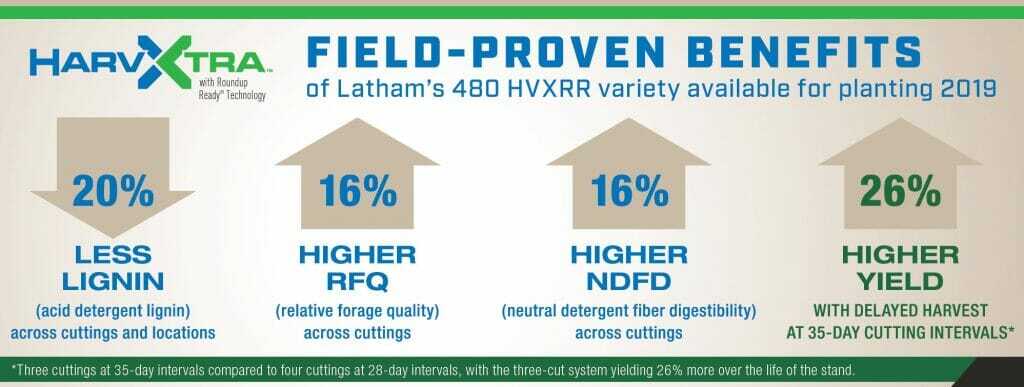
If you have an interest in high-quality alfalfa with Roundup technology, we also have a special rebate on our previously launched 480 HVXRR (HarvXtra) product. Field-proven benefits of this technology are shown in detail in the graphic below.
There are so many reasons for dairy and beef producers to plant LH 9670 IQ and 480 HVXRR this spring! Contact your Latham representative to learn more. Be sure to ask about our special programs and pricing, which are in effect until March 15!
Everyone is vitally aware of how brittle the farm economy has been, yet it seems like every agriculture periodical that I read discusses all the challenges. This movie quote illustrates the current state of our industry,
“I’m drowning and you are describing the water.”
We don’t need ag magazines and experts to “describe the water.” We need someone to toss us a life vest, or a plausible solution! That’s why I’m concentrating on solutions to help create stability.
Granted, these solutions don’t come easy. You must be being willing to do something that you may not have done in the past. Another quote comes to mind,
“For things to change, you need to change. For things to get better, you need to get better.”
This quote has some personal and professional reflective value. Th e world agriculture market is becoming more competitive and aggressive. We must get more efficient domestically, and we must find ways to differentiate our products on a global scale. We must look beyond quantity of the crop produced to qualitative components, such as amino acids, fatty acids, omega 3, 6, 9 composition and more. This resonates deeply with the consumer. Not only does increasing the quality of our corn add value, it also helps us build “marketing muscle.”
For years, research has looked for corn silage products that are stable on the acre. Then researchers looked into delivering the very best nutritional matrix. The delicate balance is so important that early adopters are designing on-farm experiments to test their management systems. I’m excited that Phil Long is merging technology with a vision of the future with Latham’s Seed-2-Soil precision agriculture program services. Little details like better starch and fiber digestibility in grain also make big differences.
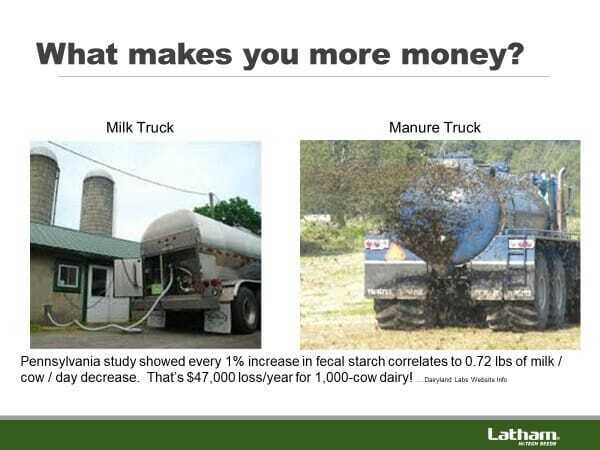
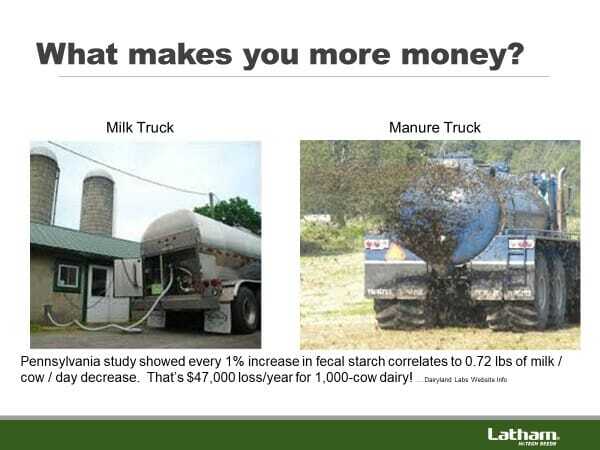
The image below illustrates the value of feeding hybrids with softer starch. We continually provide good data to help you make better seed product selections and transform research into useful on-farm results.
2018 corn silage data is available on Latham’s website. Feel free to contact me if you have any questions about setting up an on-farm research trial for forage products. In 2019, be open to exciting possibilities – and to trying something new on your farm!


Super tight margins have a lot of growers putting every decision they make under a microscope, from defining yield-limiting factors and remodeling old traditions to using scientific tests to improve feed efficiency. The new and evolving information has almost out-paced our ability to quickly adapt, understand and transform new ideas into production.
The overall narrative about feed quality is gaining momentum. This past season, Dairyland Labs included fatty acid profiling to its corn silage forage quality reports. Fatty Acids are another tool nutrition consultants can use to build a more efficient livestock diet that can potentially improve the quality of meat, milk and eggs produced. The following graphic is a beginner’s reference of how fatty acid measures affect dairy feed rations.
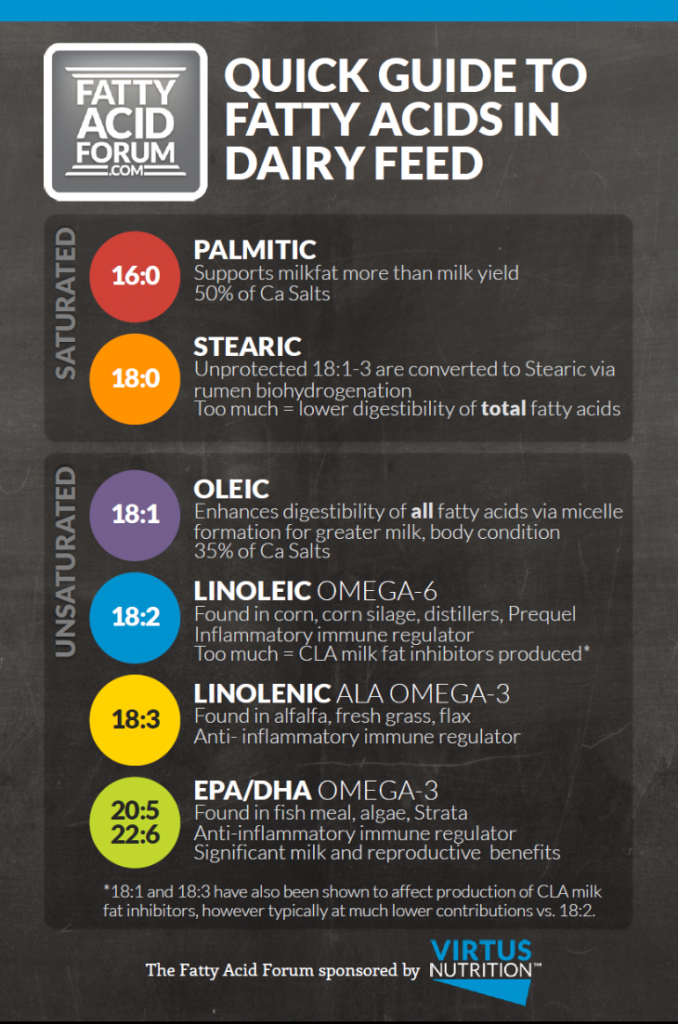
In addition to fatty acid counts, we at Latham Hi‑Tech Seeds are using a variety of measures to help select corn hybrids and corn silage hybrids for our lineup. These measures include:
Yield. Products are selected for high yield in terms of tons of dry matter per acre.
Fiber and Starch Digestibility. Because both fiber and starch are major sources of energy, we evaluate products for ease of digestibility for energy conversion.
Prolamin Zein. Prolamins are proteins solely associated with starch in all cereal grains. In corn, prolamin proteins (called prolamin zein) comprise 30 to 60% of the protein in whole corn. Research shows that corn with lower levels of prolamin zein are more easily digested. Undigestible feed turns into manure instead of milk. Latham® forage products, however, have low levels of prolamin zein and are more easily digested by cows. Our products result in more floury, opaque, high-moisture corn products.
Amino Acids. Protein, made up of amino acids such as lysine and methionine, is one of the key ingredients cows need for growth, milk component and production, overall health and immunity. An imbalance of the critical amino acids mean overall milk production and quality can suffer. Furthermore, overfeeding protein can lead to inefficiencies and high nitrogen and phosphorous levels in manure. The team at Latham Seeds selects products for our lineup based on their amino acid composition.
Forage Quality. When developing our product lineup, we look for strong genetics that will maximize yield potential and traits that will protect that potential. Traits create a healthier plant in the field, higher quality silage product at harvest and more nutritious silage for your herd.
Above all, product selection for livestock feed needs to be about creating a healthier plant in the field that, in turn, creates higher quality feed in the bunk. Our product lineup is heavily vetted for characteristics that produce the highest quality feed. Please contact me if I may be of assistance selecting a portfolio of products to meet your feed quality and production needs next season.


JOIN US! We will be #LIVEwithLATHAM on Dec. 13 at 10 a.m. on our Facebook page. Each guest will have 15 minutes, including a live interview, plus questions will be accepted throughout the broadcast. Special guests & topics include:
Do you have questions of your own? Feel free to submit in advance via PM on social media, or submit them live on Dec. 13!
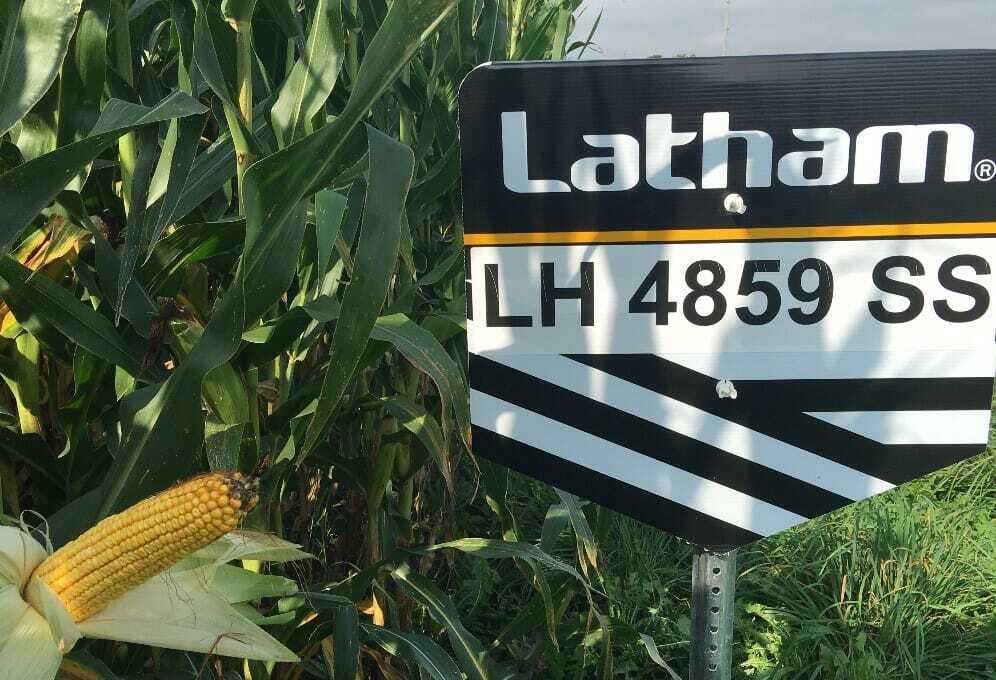
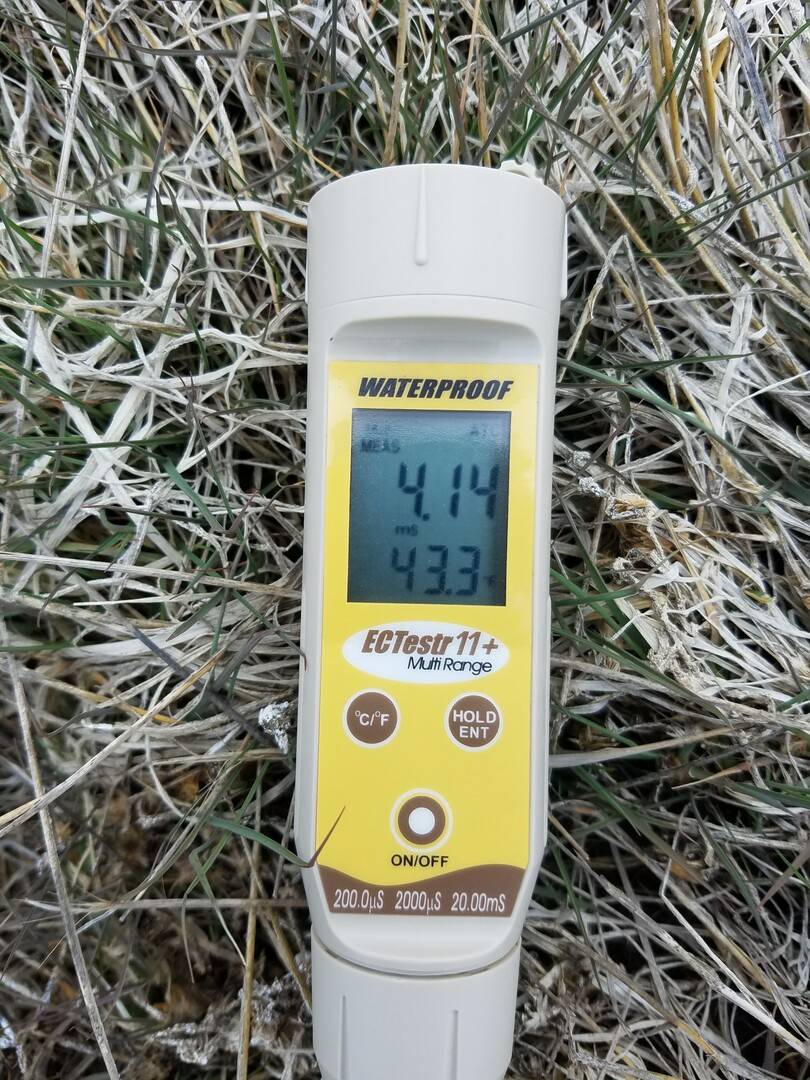
Temperatures around Enderlin, North Dakota reached 50 degrees, but a cold front moved in Saturday night. Snow fell across parts of northern Minnesota and the Dakotas, so it’s not planting weather here now. Mostly small grains have been planted. Soil temperatures need to rise and fields need to dry before corn planting gets underway.
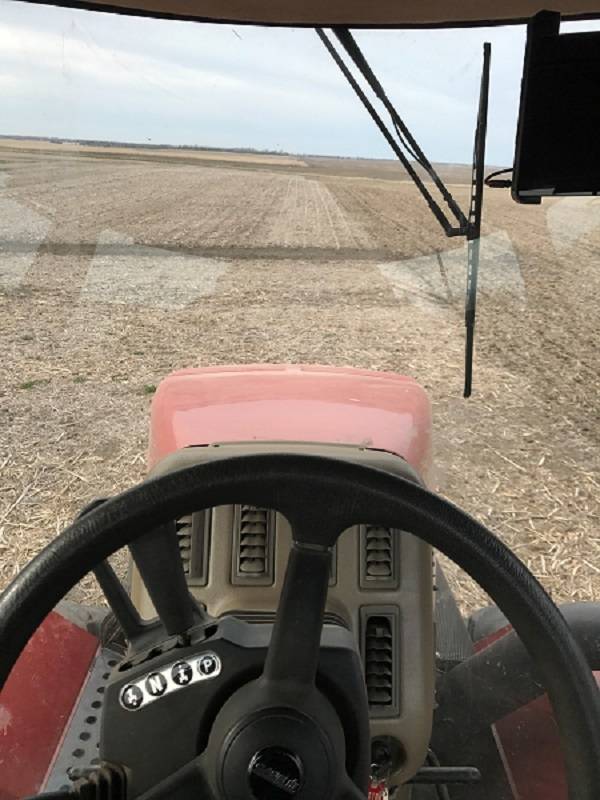
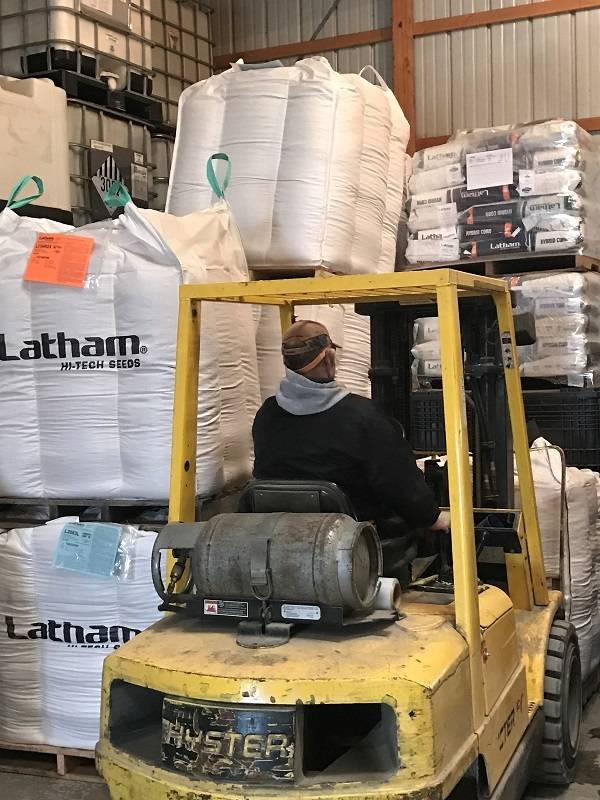
When it 37 degrees and overcast on the prairie, the seed sits safely in the shed.
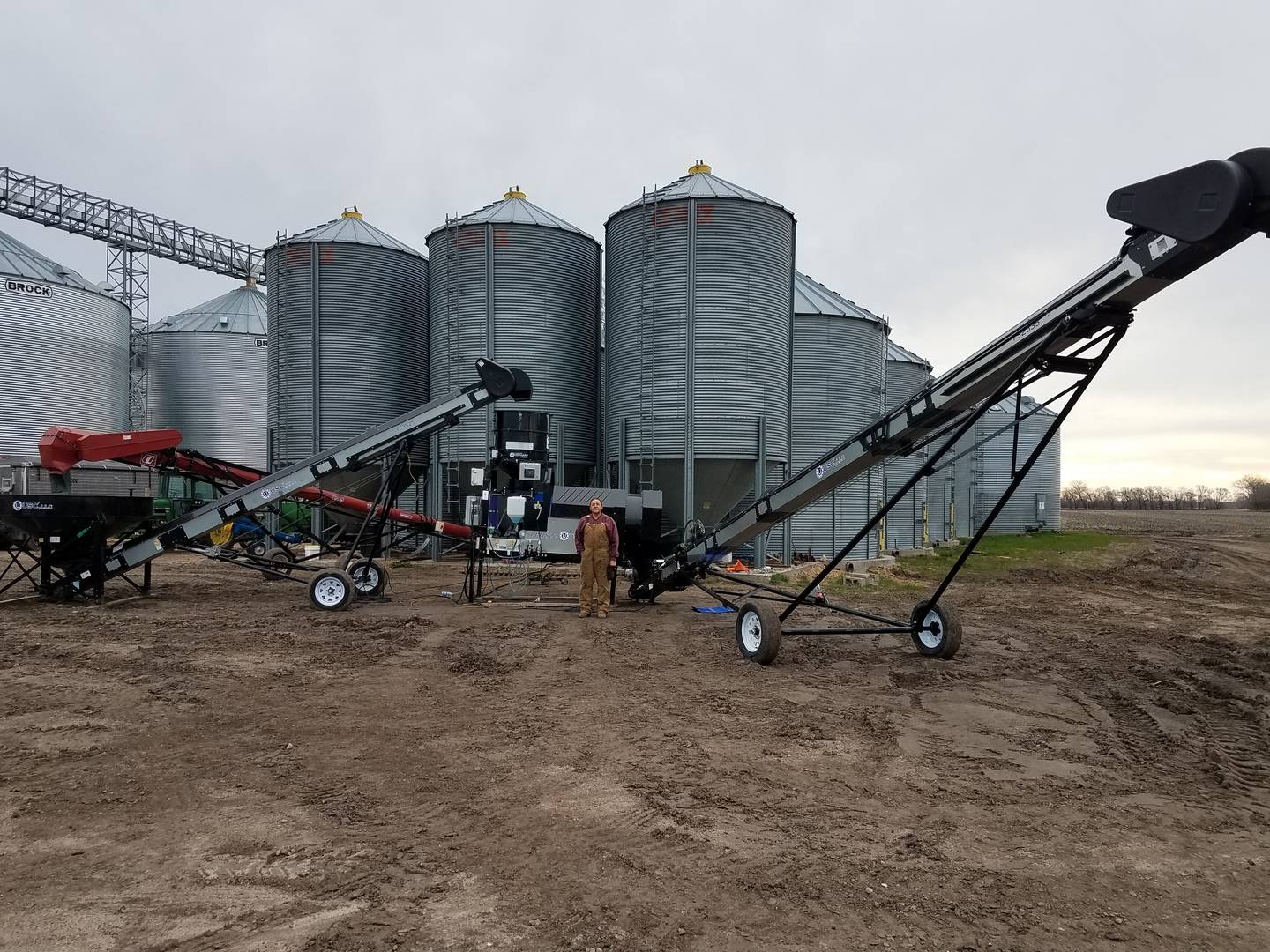

In northern Wisconsin, farmers are waiting for the cover crops to be sprayed before they begin planting. This farmer experimented with multiple ways to seed cover crops in 2016. He seeded this rye with an airplane into standing soybeans about 2-3 weeks prior to harvest. Now that the soil has dried, spring fieldwork is underway and the first Latham corn plot has been planted south of Monroe, WI!
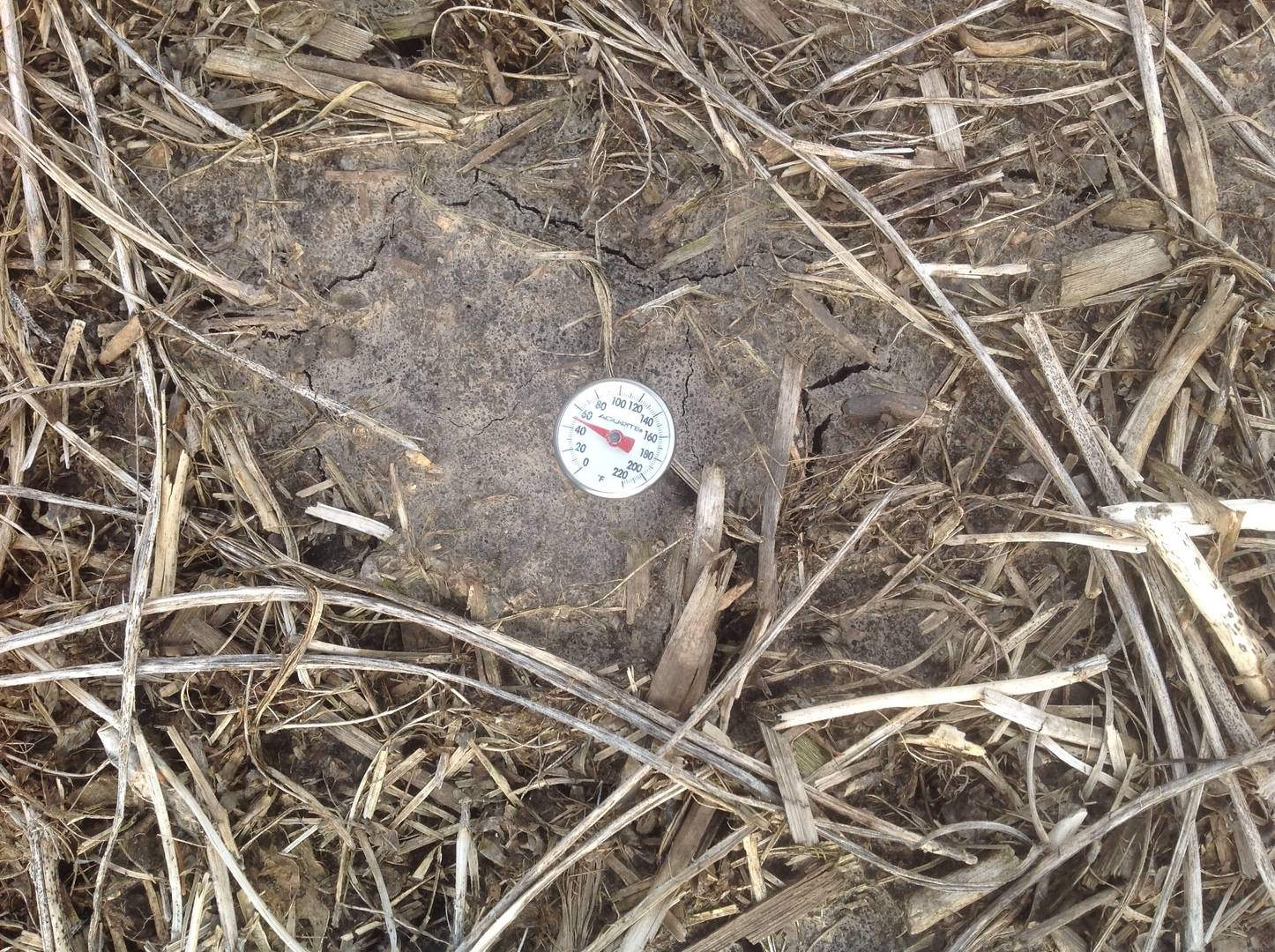
Pictures above display soil temperatures dropping at a rapid pace.
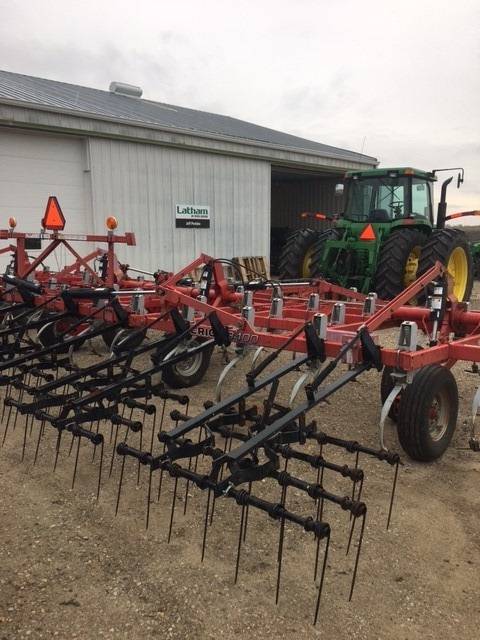
#Plant17 is taking place in Eastern Iowa! In addition to fieldwork, new this week is a 14 hybrid plot put in by Iowa City.
When the calendar pages turn toward the end of April and seed corn is sitting in the shed, many farmers feel anxious about getting seed in the ground. Yields will be better when seed is planted into warmer soil at a later planting date than they will be if soil temperatures drop and cold rains fall shortly after planting. The biggest threat of imbibitional chillingis 24 to 48 hours after planting. When seed absorbs water colder than 50 degree F, loss of seed vigor and death may result.

by Corey Catt
 What our alfalfa plants have experienced this spring reminds me of my experience as a kid riding with my grandmother in a car. She drove with both feet: one the gas pedal, the other on the brake. Grandma would speed way up and then apply the brakes, continuing this pattern for the duration of the ride.
Similarly to the wild ride I had with Grandma, alfalfa is getting “jerked around” this spring:
Although this type of cold injury event doesn’t occur often with alfalfa, universities have responded quickly. Recent publications by the University of Wisconsin Extension and by Iowa State University Extension provide some good stand evaluators that will help growers make decisions in the days and weeks ahead.
There will likely be leaf damage in areas where overnight temperatures dipped to 27 degrees Fahrenheit or below for several hours. Well established, developing forage plants have lost their winter cold hardiness, so exposed tissue is susceptible to cold temperature injury. Alfalfa and most legume seedlings have good cold tolerance at emergence, but spring cold snaps can hurt new seedings. Slope position, soil temperature, companion crop of oats, wind, snow cover, all will influence what occurs in a particular field or part of a field.
We’ll have to take a “wait and see approach” for about a week before we can determine the extent of the damage. The severity of damage with obviously effect yield and quality. Be aware this may alter the PEAQ forage evaluation, as well, as it’s dependent on plant height.
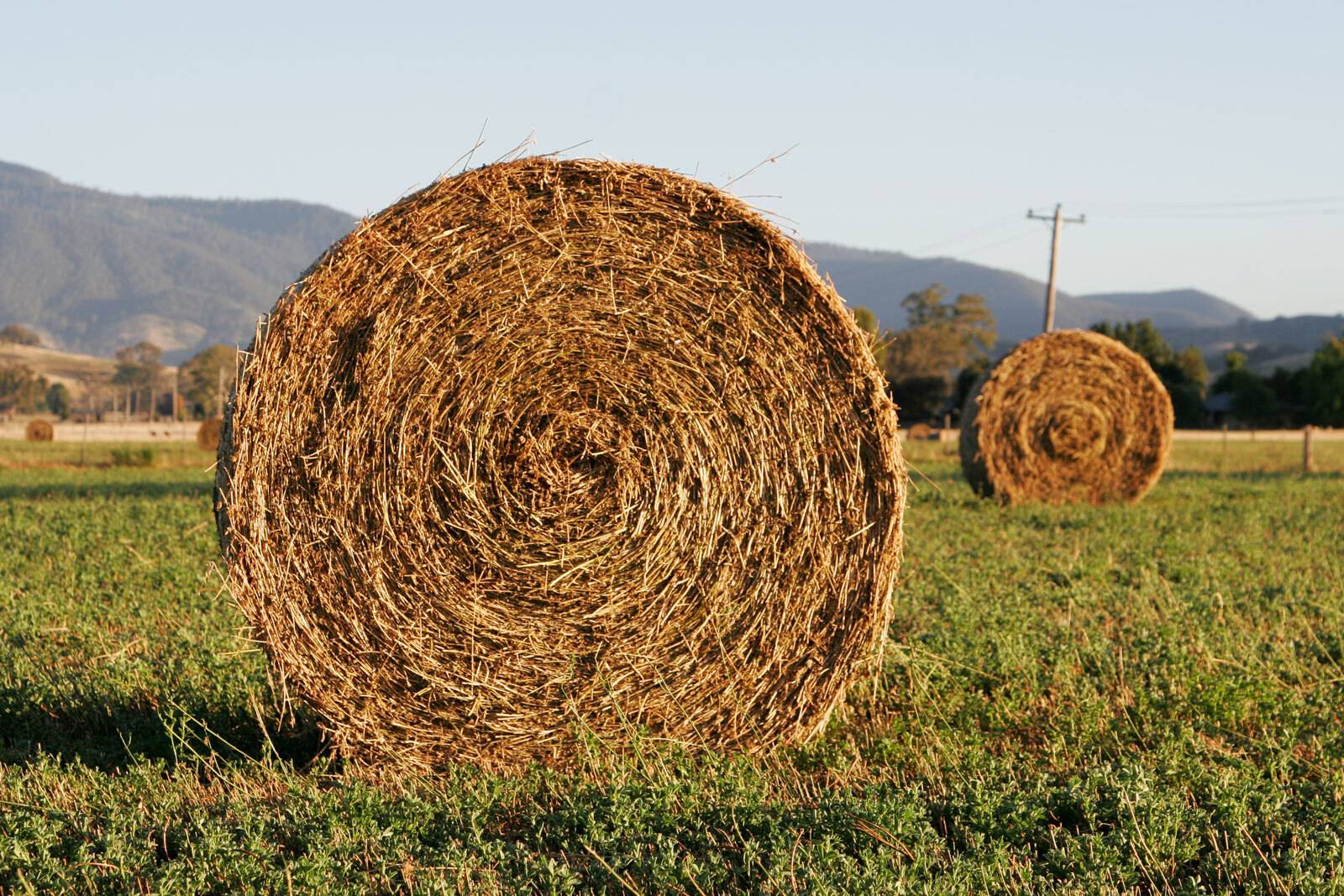 The demand for hay is high, and the prices being offered for top-quality forage are making farmers sit up and take notice. Quite a few fields will be planted to alfalfa in the next few weeks. That’s why Latham Hi‑Tech Seeds is making three of the very best alfalfa brands available. Following is a short summary of each.
LH9100 Prolific II: This alfalfa features a superior branch-root structure, which is located high in the soil zone above the water table. A high water table often severely damages or kills tap roots of traditional varieties, exposing those plants to disease or winterkill. The distribution of roots closer to the soil surface, however, increases the plant’s ability to better uptake nutrients. It also allows LH9100 to be an exceptional performer for hay producers under most soil conditions and especially in poorly drained soils. LH9100 carries an exceptional disease package. It’s highly resistant to most major pathogens, including Aphanomyces Root Rot (races 1 and 2). This new Latham® variety allows for very good alfalfa in more areas that previously were not even considered for hay production.
LH9600HY: This product is the next generation of branch-rooted hybrid alfalfas with the msSuntra technology. It’s characterized by aggressive re-growth, high quality and high yields. LH9600 is a fine-stemmed product with a similar disease package to LH9100 Prolific II. An added benefit is that LH9600 is also highly resistant to stem nematodes and Northern Root Knot nematodes. It also features excellent drought tolerance and a very high leaf-to-stem ratio.
AmeriStand 405T RR: Our first Roundup-Ready® alfalfa, this product is a high-yielding, Traffic-Tested™ brand that carries high resistance to seven major yield-robbing pests. Supplied to us by America’s Alfalfa, this is an excellent choice to maximize yield and profitability while reaping the benefits of the Genuity® Roundup-Ready weed control system. It’s ideally suited for those areas where stand establishment can be a challenge due to tough-to-control weeds. Keep in mind that once a stand is established, it’s always best to rotate your use of herbicides to help prevent weeds from building resistance to glyphosate-based products.
For additional information on pricing and product placement, contact me or your Latham Regional Sales Manager. Have a great spring!
The ag community breathed a sigh of relief last Thursday when the United States Department of Agriculture (USDA) announced the deregulation of Roundup Ready Alfalfa without conditions. As a result, Roundup Ready Alfalfa will be available for spring 2011 planting.
“This is really a win for farmers across the country as the UDSA’s handling of Roundup Ready Alfalfa could have set an unwelcome precedent for other biotechnology-derived crops,” says John Latham, president, Latham Hi‑Tech Seeds.
The USDA’s Jan. 27th decision was the final step in an extensive environmental review process that took 46 months to complete. For additional background information about this process, visit http://www.roundupreadyalfalfa.com/.
For alfalfa growers’ perspective on the benefits of Roundup Ready alfalfa, check out these two blog posts:
Today the required 30-day public review period of the United States Department of Agriculture’s (USDA) environmental impact statement (EIS) on glyphosate-tolerant (GT) alfalfa ends. The agricultural community waits with bated breath to learn the fate of Roundup® Ready alfalfa: Will it be fully deregulated or will geographic restrictions and isolation distances be required?
Three senior U.S. lawmakers last Wednesday wrote a letter stating that the USDA is straying beyond the law by suggesting it can set planting restrictions on genetically modified crops that have already been deemed safe. According to Reuters, the letter stated that this is the first time such measures would be included in a regulatory decision where the crop did not pose a plant pest or health risk.
During a House Agriculture Committee forum last Thursday, lawmakers sent a clear message to Secretary Tom Vilsack that placing onerous restrictions on GT-alfalfa production goes beyond the law. There was no support from members of either party for an option that would impose stringent conditions on biotech alfalfa, according to a Jan. 20 article by Agri-Pulse Communications.
Also last Thursday, the Independent Professional Seed Association held a panel discussion on the GT-alfalfa issue during its annual meeting in St. Louis. One panelist was Jim Tobin, Monsanto’s Director of Biotech Business Development, who said, “This is a very serious challenge to our industry and to future trait approvals.”
Thursday, January 20, 2011, was certainly a banner day for farmers, ranchers and agricultural community members who are fighting for “common sense agriculture.” Thanks to all of you who took the time to contact your congressional representatives. As a result, your voice was well represented in Washington, D.C. Special thanks to all elected officials who told the USDA that the conditional deregulation of GT-alfalfa would negatively impact all of U.S agriculture.
Now all we can do is wait…