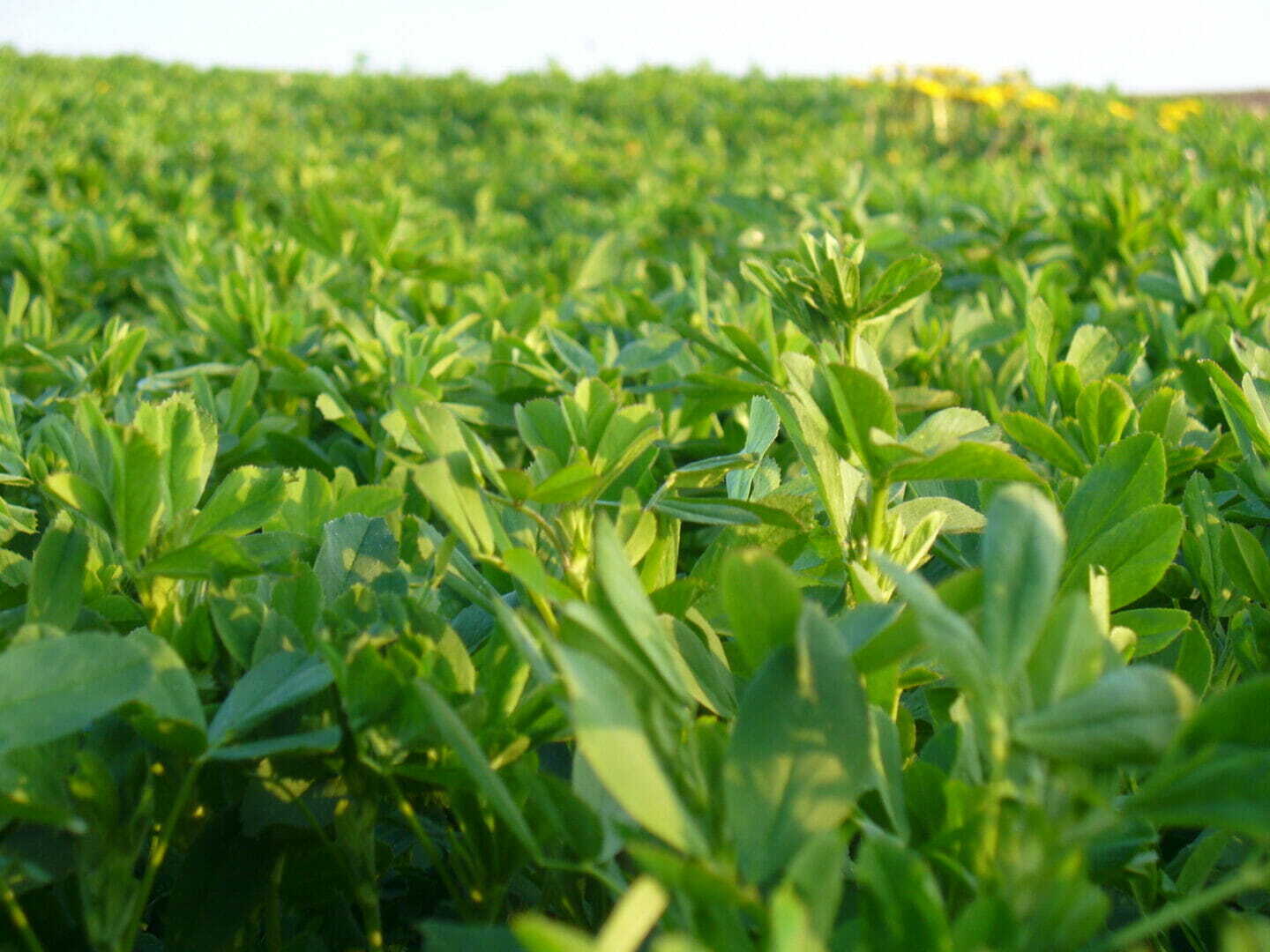
Fall seeding for alfalfa: Tips and Timelines for the Upper-Midwest
Fall can be a great time to establish a new alfalfa stand — but only if the timing and conditions are right. Planting too late in the season risks poor germination, while planting too early can expose young plants to stress before winter dormancy. With careful planning, fall-seeded alfalfa can set a strong foundation for years of productivity.
Why Plant Alfalfa in the Fall?
Fall seeding gives growers the chance to establish stands before spring workloads ramp up. When timed properly, seedlings have enough growing degree days to form strong root systems, preparing them to survive the winter and thrive in spring.
Optimal Fall Planting Windows
To maximize success, fall seeding must be timed with local frost dates in mind. Alfalfa needs about 4–6 weeks of growth before the first hard frost to germinate and establish properly.
Iowa
Southern one-third of the state: Plant by September 1. Aim to complete seeding no later than four weeks before the first expected frost, which is usually in late September.
Minnesota
Plant before the typical first frost date, which is around September 1 in many regions. Fall planting helps extend the growing season and build a strong root system, but fields should be well-drained to avoid winter injury.
Wisconsin
Southeast regions: Mid- to late-September can work, but ensure planting wraps up 4–6 weeks before frost. Always check soil conditions, fertility and moisture levels before planting to set the stand up for success.
In conclusion
While fall seeding can be a smart way to get a jump on next year, it requires attention to both timing and soil conditions. For specific product recommendations and management advice, connect with your local Latham® representative.
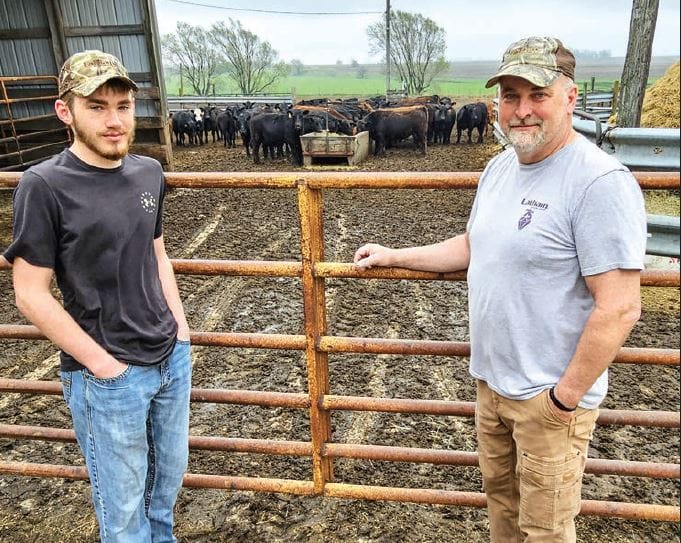
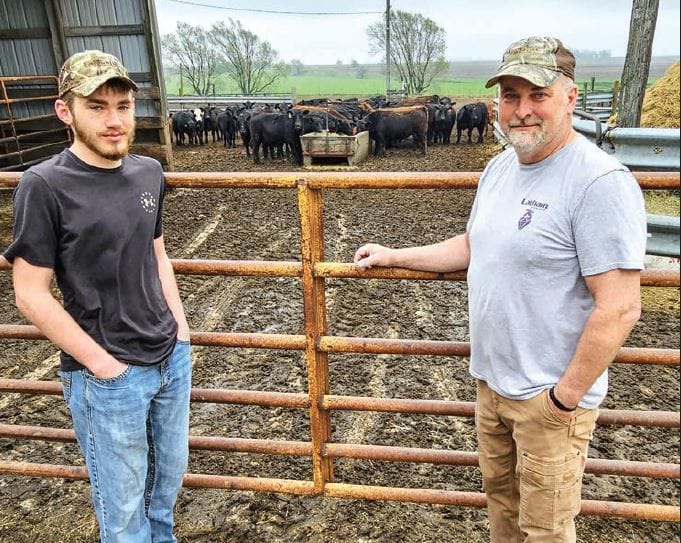
Latham® dealer Mark Hawthorne backgrounds cattle near Lohrville in West Central Iowa. His family buys 400-pound steers in January and sells them around 800 to 900 pounds sometime between Labor Day and Thanksgiving.
“I had always planned to farm if there was an opportunity to do so,” says Mark, who worked for a farmer near Story City while attending Iowa State University. He continued working there for eight more years after graduation when an opportunity in corn breeding at the Syngenta plant in Glidden became available. Glidden was close enough to home that Mark also could help his dad farm.
Mark says he’d probably still be working in Glidden if Syngenta hadn’t closed the plant. He didn’t want to uproot his family to Seward, Nebraska, so he put his Ag Business major and Agronomy minor to use for himself by taking on a Latham® dealership and assuming more of the day-to-day responsibilities on the farm.
“Our farm has changed as times have changed,” Mark says. “We used to raise hogs in open-front buildings but got out of the business instead of reinvesting in new facilities. When packers started to buy large numbers of cattle, we switched to backgrounding cattle rather than raising cow-calf pairs. It works out well because we get to take a break from doing chores for a few months each year.”
Mark farms with his father, Merrill, and son Max. Max is finishing his freshman year at Iowa State University and looks forward to working with his family on the farm this summer. Once their corn and soybean crops have been planted, the family turns their attention to making hay.
Latham’s alfalfa products have always lived up to their description,” Mark says. “We were happy with the disease package and fine stems with fast regrowth, so we were hesitant to make a switch. Then we tried HarvXtra® technology and realized it’s worth the extra! It has a lot higher feed value, so we don’t need as many acres of alfalfa. For example, I used to mix one bale of alfalfa to one bale of grass hay. Now it’s a ratio of one bale alfalfa to three of grass — and it delivers the same feed value.”
The Hawthorne family has target dates to deliver their product to market. After all, time is money. Their cattle usually ship out in late fall, so the early winter months provide time for the family to enjoy a ski vacation or to visit family members and friends. Mark and Susan’s daughter, Jessi, lives nearby with her family. Their son, Kodi, lives in Sioux Falls, SD. The couple has five grandchildren.
“Our goal is to leave our farm in a position that allows our kids to come home if they so desire,” Mark says. “We’re getting the next generation ready now, so they can take over some day.”
One sure-fire way to get all the kids together is to serve brisket, says Susan, noting that “they all come running home” when they hear Mark’s Midnight Brisket is in the smoker. Here is the Hawthorne family’s favorite beef recipe.
While we are rapidly approaching the optimal time to begin fall seeding alfalfa, there’s still time to get the crop established before a killing frost. Newly-seeded alfalfa requires five to six weeks after seeding before a killing frost or freeze.
A major key to successful forage production is a good soil testing and fertilization program. It’s best to apply needed amendments to the soil prior to seeding establishment. If the soil analysis indicates a need for liming materials, apply agricultural lime in amounts called for by the soil test. If the soil will be tilled prior to seeding, till the lime into the soil.
Applying Lime Takes Time
If the seeding must be established no-till and the test calls for large quantities of lime (four or five tons per acre or more), care must be taken to not create a very high pH zone at the surface with a low pH zone just below. In this case, it might be best to apply the lime in equal annual amounts over a period of three or four years.
Phosphorus and potassium are the two most critical fertilizer materials for establishing and maintaining alfalfa stands. An initial application may be tilled into the soil prior to planting. Fertilizer must be top-dressed in succeeding years. Band application of a starter fertilizer at seeding time may help ensure stands on soils testing low or very low in phosphorus.
Get the Foundation Right for Planting
Preparing a firm seedbed for planting is essential. This can be accomplished by firming the soil with a corrugated roller or cultipacker before seeding. After seeding, firm the soil again to cover the seed and obtain necessary seed-soil contact. Final seed placement should be no deeper than ½-inch in heavy soils and ¾-inch in light soils.
If stands established in the spring are inadequate, they may be reseeded or inter-seeded the following late summer. For alfalfa, stand counts per square foot should be +25 for a good stand, 15 to 25 for a marginal stand, and less than 15 for a poor stand in the establishment year. Poor stands should probably be reseeded or inter-seeded.
Evaluating Stand Quality
The difficult decision comes with a stand of 10-15 plants per square foot, where, if the plants remain healthy, additional seeding and fertility operations under less-than-ideal conditions may damage the stand, ultimately doing more harm than good.
Under those circumstances, producers should consider weather and soil conditions carefully. Reseeding marginal stands largely depends on the producer’s immediate need for forage and the resulting management of the stand going into fall and winter. A reseeded or inter-seeded area would not be harvested after the seeding to improve the chances for good stand survival through the winter.
Interseeding a poor stand of newly-established alfalfa plants will likely be more successful than attempting to thicken an old, established alfalfa stand. In either case, the alfalfa stand achieved will probably not be uniformly thick.
Finally, a general rule of thumb is to plant 12-15 pounds per acre of high-quality seed per acre. Products like LH 9400 and LH 9120 BR are ideal choices to plant this fall and will provide years of high-quality forage.
Did you enjoy this article? We want to (TECH)talk with you! Sign up for our newsletter to receive agronomy videos, articles (and delicious recipes) in your inbox! We’ll TALK soon.
When it’s “go time,” you want to make sure that you have the best alfalfa to fit your field and your end use. Not all alfalfa is created equally, so it pays to give special attention to quality and yield.
Perform a soil test, so you know the soil’s pH, potassium and phosphorous levels. Sulfur and boron levels also factor into forage quality and yield. Alfalfa thrives in well-drained soils with a pH between 6.2 and 7.5. Avoid seeding alfalfa into soils that contain residual herbicides from a previous crop. Seeding alfalfa into existing alfalfa fields is discouraged.
Alfalfa seeding varies widely depending on your location. Seeding in the Upper Midwest can be done from mid-April through May. Seeding in June in the northernmost regions is not uncommon. Seeding early into soils that are too cold may result in delayed emergence, which can cause seedling rot and reduced stands. Planting too late may result in dry topsoil, which can also lead to reduced stands.
Precision planting is not just for corn and soybeans. Alfalfa should be seeded about three-eighths to one-half inch below the soil surface. The ideal stand establishment is between 30 and 35 plants per square foot.
Typical seeding rates for alfalfa seeded without a cover crop are between 12 to 15 pounds per acre. Alfalfa seedlings are very cold tolerant but cannot survive prolonged exposure to freezing temperatures.
High-quality seed is the best step you can take to ensure stand establishment! Look to your local Latham® dealer for help from the start.
Did you enjoy this article? We want to (TECH)talk with you! Sign up for our newsletter to receive agronomy articles (and delicious recipes) in your inbox! We’ll talk soon.
When soils thaw in early spring, we can see how our alfalfa crop fared. You can get a pretty good indication of your alfalfa crop’s health from the road. If your field is still brown and the neighbor’s field is green, check for injury or death.
The best way to diagnose winter injury is by digging four to six inches deep and then examining the plants’ roots. Healthy roots should be firm and white in color with little evidence of root rot. Winter-killed roots will have a gray, water-soaked appearance early.
If your alfalfa stand has suffered winter injury, assess the field’s yield potential by determining the number of stems per square foot:
Yield (tons/acre) = (Stems/ft2 x 0.1) + 0.38
This calculation should only be used as a guideline as many factors determine yield. Factors that influence winter injury and yield in alfalfa stands include:
Stand age. Older stands are more likely to winterkill than younger ones.
Variety. Varieties with superior winter-hardiness ratings and a high disease resistance index are less likely to experience winter injury.
Soil pH. Stands growing on soil with a pH about 6.6 are less likely to experience winter injury.
Soil Fertility. Stands with high fertility, particularly potassium, are less likely to experience winter injury than those with low fertility.
Soil moisture. Alfalfa grown on well-drained soils is less prone to winter injury.
Fall soil moisture status. As dehydration is the primary means of tolerating freezing temperatures, stands that go into winter with low soil moisture are better able to lose moisture and are less likely to winterkill.
Cutting management. Both harvest frequency and timing of fall cutting affect alfalfa winter hardiness. The shorter the interval between cuttings, the greater the risk of winter injury. Stands where the last cutting was taken between Sept. 1 and Oct. 15 are at greater risk, as plants are unable to replenish root carbohydrate reserves before winter.
Snow cover. Snow is an excellent insulator. Four inches of snow can result in a 10°F difference in soil temperatures. Stands that were not cut after Sept. 1 or that have at least six inches of stubble retain more snow cover and are less susceptible to winter injury.
While we cannot control what Mother Nature delivers during the winter months, we can take steps to control or reduce alfalfa winter injury. Contact your local Latham® dealer or call our office at 877-GO-LATHAM (877-465-2842); we’d love to assist you with any questions you may have.
Did you enjoy this article? We want to (TECH)talk with you! Sign up for our newsletter to receive agronomy articles (and delicious recipes) in your inbox! We’ll talk soon.
More farmers will diversify in seed alfalfa in 2023 to capture high markets. You’ll also get the benefit of up to 100+ nitrogen credit plus 20% more yield on the crop that follows rotated alfalfa.
Review the features and benefits of the alfalfa products offered by Latham Seeds, so you can truly understand that not all alfalfa seed is the same.
We are very intentional about finding the best genetics and seed treatments for your acres. Many competitors sell lower-yielding genetics with very basic seed treatments, which are cleverly wrapped with an alluring price. That “alluring” price can distract farmers from looking at the value of the features and benefits of each component.
When you run a race, fly an airplane, or drive in the Indy 500, you can’t win with lower horsepower or by running half throttle. Yes, you might get to the finish line — but how will you celebrate? Your best chance of achieving top yields is running the yield race with the most horsepower, full throttle with proven seed genetics and seeding treatments.
Features
Benefits
Newest generation plant genetics
· Capture as much yield as possible each cutting
· Have best chance at strong stand for life of rotation
· Capture the soil’s full yield potential
Best disease package
· Healthier plants
· Higher yield
· Longer stand life
Quick recovery after cutting
· More yield
Industry-leading seed treatment
· Emerge fast
· Grow stronger
· Yield more
Optimize® Gold alfalfa inoculant
· Growth promoter
· Enhances quick nodulation and nitrogen fixation
· Boosts yields; improves quality
Nitragin® Gold Alfalfa
· Nitrogen-fixing inoculant
· Helps stimulate early nodulation and nitrogen fixation
· Boosts yield
Stamina® fungicide
· Newer class of fungicide
· Helps reduce broader spectrum of pathogens, especially at emergence time
· Protects against Aphanomyces races
APRON® fungicide
· Helps reduce pathogen risks like root diseases
Micronutrients
· Specific micronutrients that facilitate and promote emergence, health and vitality
Polymer
· Helps flowability for uniform distribution
Coating
· Encapsulate the blend of treatments
· Helps seed absorb moisture for quicker germination
· Best disease package, especially involving Aphanomyces and anthracnose threats
· Best forage quality potential
· Unique HarvXtra Genetics with Ultra Cut features
Did you enjoy this article? We want to (TECH)talk with you! Sign up for our newsletter to receive agronomy articles in your inbox or call 1.877.GO.LATHAM (1.877.465.2842).
With everything from groceries to gas on the rise, we understand the need to question whether expenses are necessary or justifiable. Below is information to support why fertilizing alfalfa in summer and applying fungicide to silage hybrids warrants your attention.
Fertilizing alfalfa in the summer helps fill the cellular gas tank of the plant’s crown, which helps increase its yield potential for the current growing season, as well as increases its potential for winterhardiness. All alfalfa benefits from in-season fertility, regardless of cutting schedule or strategy.
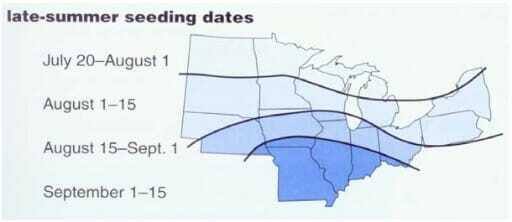
Summer seeding is fast approaching. July 20 through August 1 are key seeding dates for Latham Hi‑Tech Seeds’ northern territory, which includes North Dakota, as well as northern Minnesota and northern Wisconsin. August 1-15 is the range of recommended alfalfa seeding dates for southern Minnesota and southern Wisconsin while most alfalfa growers in Iowa typically seed in mid-August. Look at this graph.
Sourced from University of Wisconsin – Extension
Due to our late spring, many Midwest alfalfa growers have moved seeding alfalfa to this fall. The success of fall seeding depends on moisture. It’s important that alfalfa germinates quickly, develops a crown, and builds enough crown carbohydrates to overwinter.
Latham® AlfaShieldTM is a great seed treatment to help facilitate quick emergence. Think of AlfaShield as wrapping your alfalfa seed in a sponge. It helps protect the fragile germ of the seed. It also helps draw moisture to the seed, which is particularly important when seeding into moisture-stressed soils. Summers-seeded alfalfa is up against the time clock; approximately four to six weeks of significant growth needed to develop the crown before frost. The 2022 and 2023 Latham product guides include a dry matter (DM) ton advantage of AlfaShield compared to the old industry standard. AlfaShield has a bigger advantage in moisture-stressed soils.
Summer Considerations for Corn Silage
When I walk fields and test plots in the fall, I note a hybrid’s stay-green ability. I believe this observation relates to plant health. Healthy plants tend to have a lower probability of developing infection, which can create the environment for molds and mycotoxins to grow. Fungicide application promotes plant health and can boost yield and corn silage quality. Healthy, dark green, disease-free leaves are like solar panels capturing more sunlight for more photosynthesis. Healthy leaves also build more yield, as well as reduce chances for mold and mycotoxins to develop.
There are a variety of fungicides to select from, all of which inspire improved plant health. I have the most experience with BASF fungicide corn silage research relating to improved corn silage tonnage and forage quality. Several of the studies have resulted in two to three more tons of corn silage per acre plus the potential of reduced molds and mycotoxins is encouraging. With current commodity prices, that’s around an extra $140 to $210/acre in corn silage tonnage!
Investing fungicide is worth consideration for livestock producers, who raise their own forages. Molds and mycotoxins can be more challenging to quantify. When fed to livestock, however, they can severely impair animal performance. In severe instances, it can lead to mortality.
Feel free to contact your local Latham rep with any questions about summer fertilizing or fungicide application. You’re also welcome to email me at coreyc@lathamseeds.com. I’m always happy to visit with Midwest farmers who are interested in raising better meat, milk and eggs!
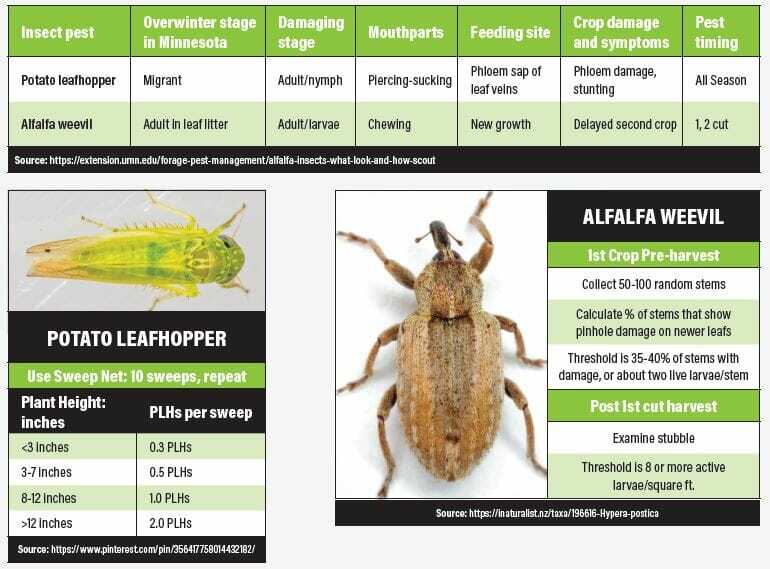
Like other crops, high-quality alfalfa is commanding a good price. Strong market prices can change the economic thresholds, making it easier to justify investing in pest control. Below are some charts to help guide you.
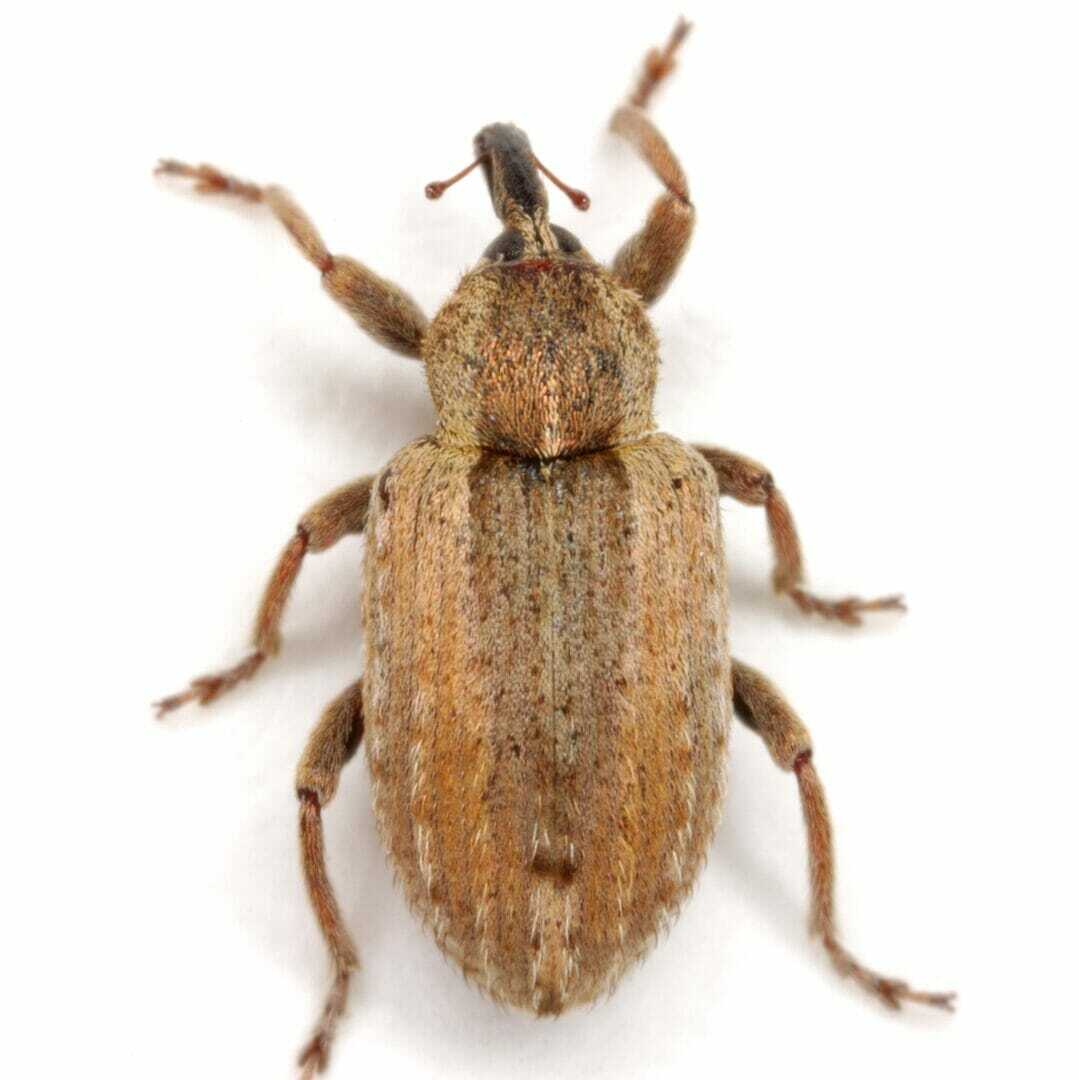
Many insects can damage alfalfa, so it’s important to build a plan that keeps alfalfa healthy. Insects can damage the plant so much that the plant can acquire a disease and die.
Each alfalfa plant is like a factory. Crop scouting, spraying and fertilizing is like providing critical maintenance to keep the factory operating efficiently, as well as to optimize yield and quality.
Controlling alfalfa insects generally involves two things: (1) spraying insecticide; and (2) cutting alfalfa early. Check out these two articles for more insight.
Every grower tends to have a different strategy of when to begin cutting alfalfa. Some cut on a certain date in May no matter what and continue the cycle every 28 days. Some growers wait until the alfalfa has reached about 10% bloom, which historically provides a good balance between the highest yield without compromising quality.
To measure quality for an area of the field, you could use the scissors technique. This is a good method, but it takes a couple of days to get results from the lab. During that time, the plant has changed.
Another method used to estimate the optimal first cutting date for alfalfa is Predictive Equations for Alfalfa Quality (PEAQ) method. Developed by the University of Wisconsin, PEAQ uses the alfalfa stand height and maturity stage (vegetative, bud or open flower) to estimate the relative feed value (RFV). In general, it is recommended to harvest alfalfa at about 150 RFV for milking dairy herds and 125 RFV for heifers, stock cattle and lactating beef cattle.
You can order an actual measuring stick or use a tape measure and follow these steps as outlined in the May 2021 issue of “Integrated Crop Management News” by Iowa State University Extension and Outreach:
Choose a representative two-square-foot area in the field.
Determine the stage of the most mature stem in the area by using the definitions at the top of Table 1.
Measure the tallest stem in the area. The tallest stem may not be the most mature stem. Measure the stem from the soil surface to the tip of the stem, not to the tip of the leaf. Straighten the stem for an accurate height measurement. Based on stem maturity and stem height, use Table 1 to estimate the RFV of standing alfalfa crop.
Repeat steps 1-3 in five representative areas across the field.
To estimate harvest quality, subtract 15-25 RFV units to account for harvest losses during the haylage or hay harvest process, respectively.
Determine optimum harvest time using the PEAQ estimate, livestock forage quality needs, considerations of upcoming weather forecasts favorable for harvest and drying, and the general assumption that RFV drops three to five points per day.
Alfalfa value is based on quality. For quick calculation, the old standard of $1/point of RFV. (NOTE: The current market is worth more than $1 per point, but we’re going to stick with this for easy math.) If your RFV is 200, one dry matter ton of this forage is worth $200 / dry matter ton. In the Midwest, four cuttings of alfalfa can yield 5 to 7 tons.
High commodity prices also have us reflecting on ways to extend our alfalfa stand. It’s best to keep your cutting equipment sharp. It’s generally recommended to cut a pure stand of alfalfa at two or 2.5 inches from the ground. If you have a mixed species with grass in the mix, cutting it at 2.5 to 3 inches helps maintain the grass stand life.
Good fertility programs, insect management programs and fungicide treatments also impact the quality of alfalfa and corn silage. We will provide information about these topics as the growing season progresses.
The rain is causing some planting delays in Latham Country, so we thought we’d take a look at our alfalfa stand! Phil Long, precision agronomy advisor, dives into how to evaluate an alfalfa stand and how to gauge growth. Subscribe to Latham Seed’s YouTube Channel today!