Latham Hi-Tech Seeds

(641) 692-3258

  • Home
  • Products
    • Corn
    • Soybeans
    • Alfalfa
    • Corn Silage
    • Seed Guide
  • Performance
  • Find a Rep
  • Media
    • Blog
    • News
    • Videos
    • Podcasts
    • TECHTalk
  • About Us
    • Company History
    • Our Mission
    • Careers
    • Become a Rep
    • Sowing Seeds of Hope
  • Contact Us
  • Latham Hi‑Tech Seeds

    Helpful Tools for Nutrient Planning

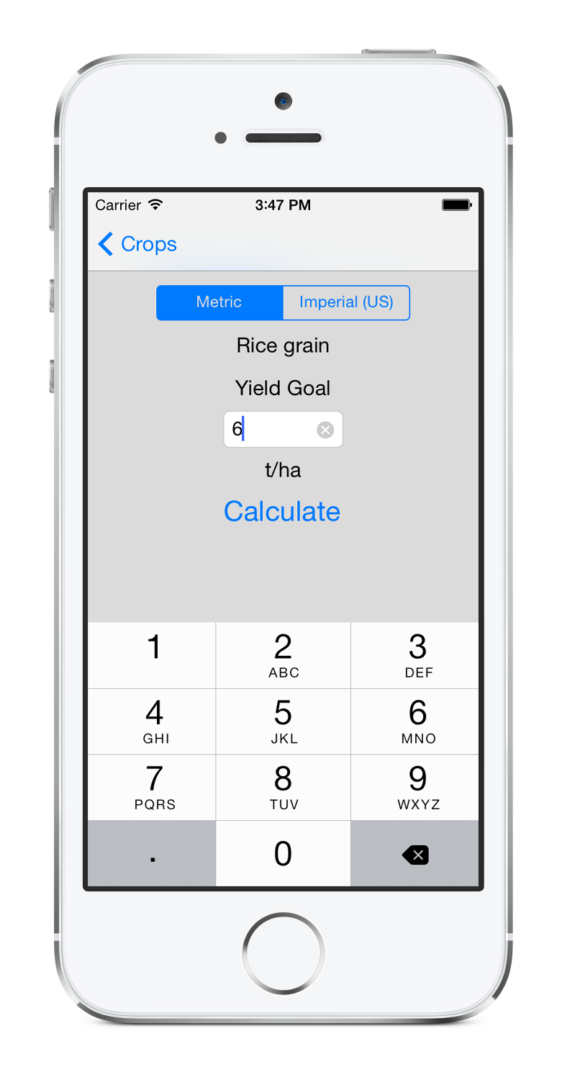
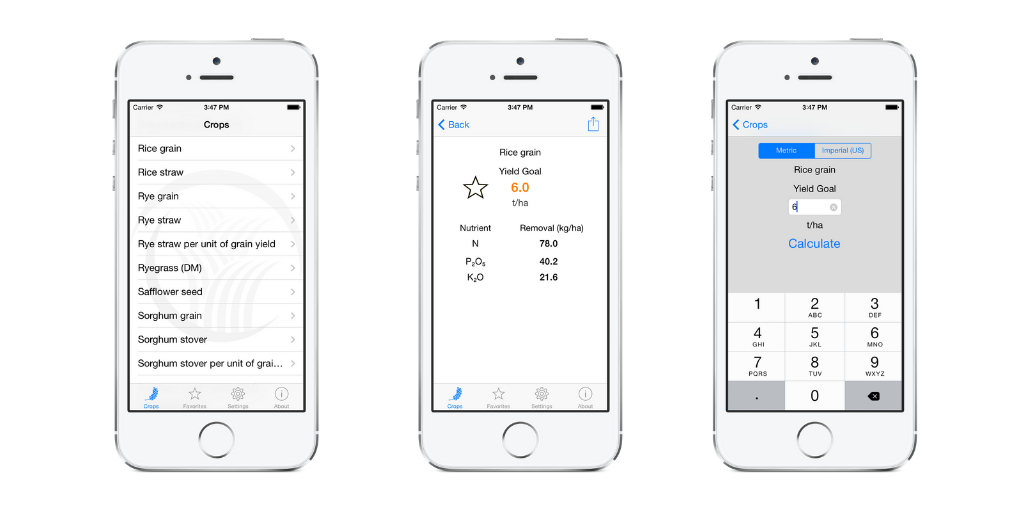
    PlantCalc 1

    There are so many apps and tools at our disposal today, and you may have some favorites that are helpful to you. One such tool I reference is a crop nutrient removal application on my phone. The info can be helpful in many ways including revealing production-limiting factors leading to better product placement and fertilization.

    The PlantCalc app displays a guideline based on crop being grown. Enter your yield goal and within seconds you have a list of the primary nutrient removal standards for that specific crop to help build your nutrient plan. We must be mindful that many nutrient removal guidelines focus only on the primary four to five nutrients. However, yield is comprised of a balance of 17 essential nutrients.
    Corey Catt Twitter (1)

    The USDA suggests daily food requirements (the food pyramid) for us as humans to keep our body in balance. Similarly, scientists have found that nutrients can impact yield as much as 60%. Yield is a complex matrix of which the delicate balance of the 17 essential plant nutrients is critical. Technology affords us the ability to look deep into the complex world of the living soil microbiome, unfolding long-held secrets about how it interacts with yield and quality. We have active research currently taking place to understand your unique soil microbiome, the interaction with nutrient management, and even more precise product placement to reduce disease and increase yield optimization. It’s very exciting research with more to come in the near future!

    It’s no secret that each crop has a unique nutrient demand and those nutrient demands are affected by soil health and the cation-exchange capacity. There are evolving plant and soil management applications to assist in furthering a deeper understanding of this complex world. Latham’s Data ForwardSM certainly has gained a lot of favor in simplifying this. The graph below shows the impact of potassium fertilization on alfalfa. Proper fertilization of potassium and phosphorus fertilization not only adds yield each season, but it also maintains peak yield over the life of the stand.
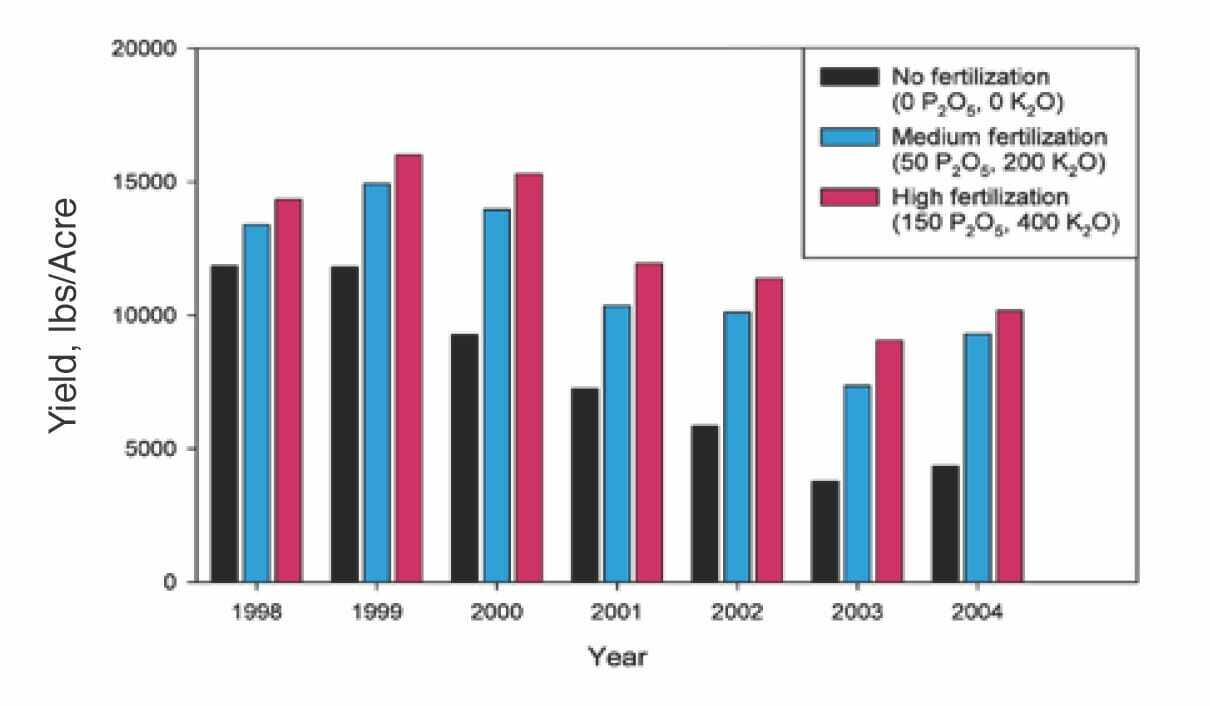
    Alfalfa Chart 2

    At the end of the day, the mission should be to strike a balance of nutrient investment while leaving no yield in the field. My hopes are that you consider helpful tools for reminding us of the needed nutrients to fuel plants and forge the best yield and quality results each season.
    Webspec Admin

    April 7, 2020
    Agronomics, Precision Ag, Tech Tuesday
  • Latham Hi‑Tech Seeds

    Looking Through Latham’s Lens

    IMG 3125 edite

    Looking Through Latham’s Lens: Today we are featuring our Data Forward™ Team! Precision Agronomy Advisors Phil Long and Darin Chapman will walk with you through the world of precision agriculture. Learn more about our program here: https://www.lathamseeds.com/2020/02/now-available-latham-seeds-data-forward-app/ 

    IMG 3125 edite

    Laura Cunningham

    February 17, 2020
    Agriculture, Agronomics, Industry News, Precision Ag
  • Latham Hi‑Tech Seeds

    #AskTheAgronomist: Data Forward App Release

    2.13.20 cropped
    Our Data Forward app is now available! Tune in to hear three highlights on this program!
     
    0:22 — Topic Introduction
    0:50 — What is Data Forward?
    1:50 — Our Latham Led Approach
    2:50 — Program Independence
    3:40 — Program Transparency
    4:50 — What are quality insights?
    6:03 — Acre by acre management

    Laura Cunningham

    February 13, 2020
    #AskTheAgronomist, Agriculture, Agronomics, Corn, Corn Silage, Crop, Industry News, Precision Ag, Soybeans
  • Latham Hi‑Tech Seeds

    Now Available: Latham Seeds Data Forward™ App

    Splash screen no logo

    Quality is a word by which we’ve measured our work − from product selection to service − for more than 70 years.

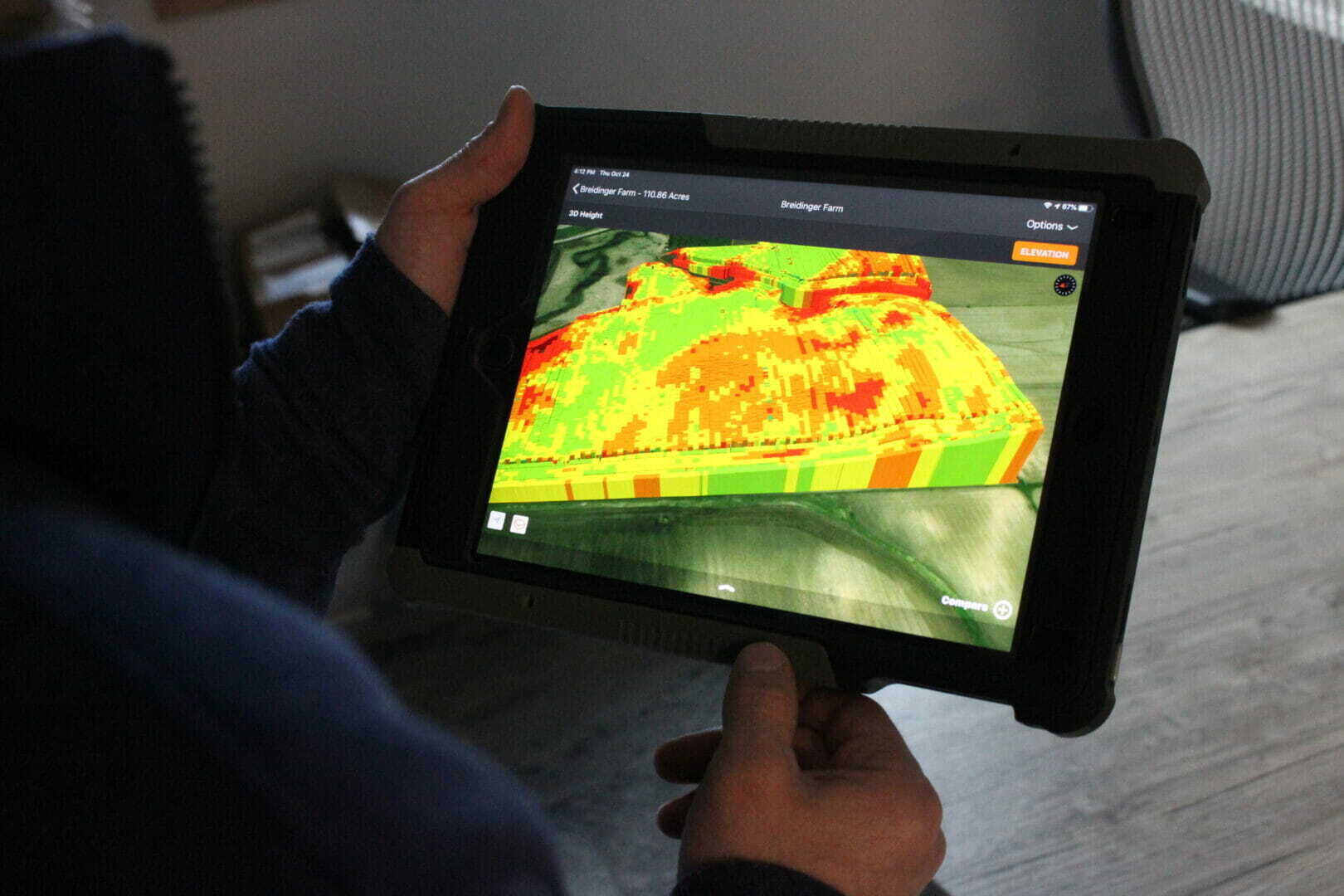
    For us, quality data means more than just collecting and reflecting on last year’s results. It’s moving your Data Forward by understanding how technology in the cab and data layers can be put to work on your farm for maximum profit per acre. We believe your data can be the foundation to drive decision making and keep your farm sustainable.


    We are excited to expand our quality offerings at Latham Seeds with our NEW Data Forward App!


    Our Latham led personal approach helps utilize your current data to see more profit. Our advisors will conduct a data quality analysis of your current data; clean and organize each layer of data; and share results and recommendations with you.

    Benefits include:

    • Data Organization. Our advisors work to collect and update your data into our user-friendly, mobile system.
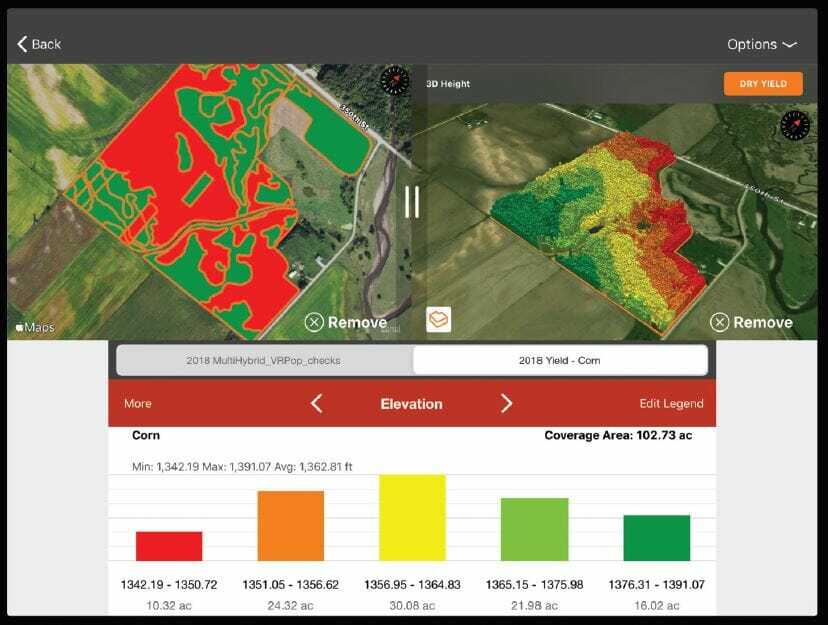
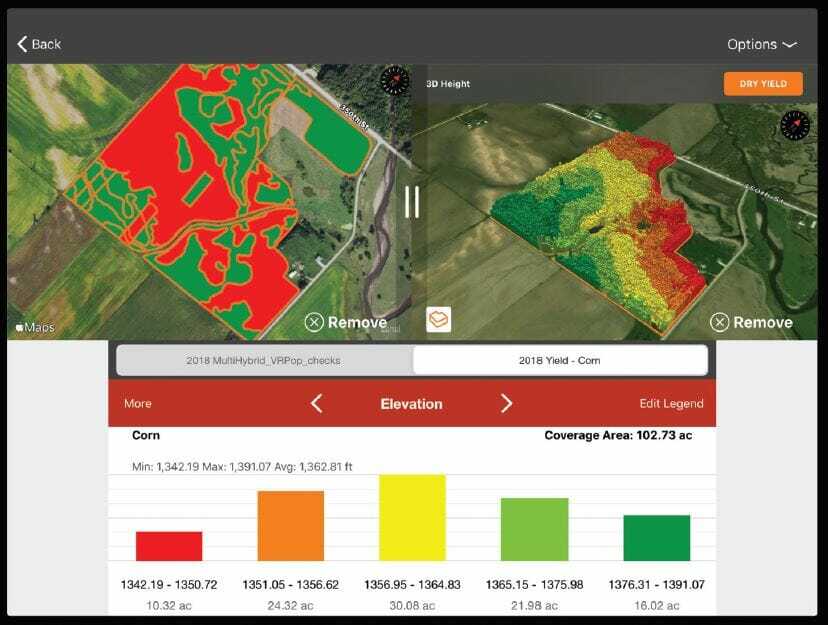
    • Yield Analysis & Insights tailored to your farm. An example of this is analyzing yield to understand optimal seeding rate for each hybrid on your fields.
    • Testing and Trials to determine what’s best for your fields. Evaluate ROI on a variety of products such as TALC and seed treatment.

    Contact your Latham Seeds Sales Representative Latham’s Precision Agronomy Advisors Phil Long or Darin Chapman at 1.877.GO.LATHAM to get started.

    Latham Seeds Precision Agronomy Advisors

    February 11, 2020
    Agriculture, Agronomics, Corn, Corn Silage, Crop, Industry News, Precision Ag, Soybeans, Tech Tuesday
  • Latham Hi‑Tech Seeds

    Split Planting is an Inexpensive Way to Test Field Variability

    1.21.19

    Soil type, drainage and organic matter usually aren’t consistent throughout a field, calling for different hybrids in different areas. Just think how great crop performance could be if we all had the capability to place the correct seed on each acre!1.21.19

    Multi-hybrid capabilities allow you to plant two hybrids in the same row and switch as environments change, but it often requires a large investment to make multi-hybrid planting a reality. Split planting can be an easy, economical option for conducting on-farm research if there isn’t excessive variability in your soils. Split planting can be an effective way to generate powerful data to confirm your seed placement decisions in fields with only a few different soil types as digital farming has made this process more efficient.

    There are many different insights we can gather by split planting. We can test different hybrids. We can test hybrids of different relative maturity to see effects on either yield or grain moisture. We also can use split planting to test different trait packages or seed treatments.

    Although split planting can be a great on-farm research practice, don’t plant too many different hybrids in one field. Planting numerous hybrids creates lots of variables, making it difficult to make informed decisions. Gathering accurate insight starts with taking the time to enter the data correctly because someday you will want to review multiple years of this data.

    We’re conducting split-planter research through Data Forward. If you want to learn more about conducting your own on-farm research, contact your Latham Precision Agronomy Advisors.

    Latham Seeds Precision Agronomy Advisors

    January 21, 2020
    Agronomics, Precision Ag, Tech Tuesday
  • Latham Hi‑Tech Seeds

    Drive Decisions with Data

    IMG 8924

    IMG 8924With today’s cutting-edge technology, there isn’t much we can’t monitor in the cab. The ability to monitor the planter, sprayer, fertilizer applicator or combine is a great record-keeping asset, plus it allows us to make more informed decisions.

    Original Equipment Manufacturers (OEM) and a few after-market companies have built technology platforms to generate important information on our farms. Most of these companies have their own proprietary cloud-based data storage, so we can access information remotely and have that data at our fingertips.

    One main advantage of machine-generated, cloud-based service is access to information anytime and anywhere, using a mobile device or PC. If you’re operating multiple pieces of machinery in the field, you can connect remotely to see where the other machine has been in the field. You also can get an average of the machine-generated data produced by all machines. For example, say you are operating two planters in the same field. Both planters have swath control, so both planters know the GPS coverage patterns for each machine. One planter can shut off swath sections and communicate that function to the other planter, which prevents overlapping coverage between machines.

    Collecting data and seeing your field maps in real-time view allows you to make management decisions as you pass through the field. Later we can upload these real-time view maps into Data Forward and take a deeper dive into what looks good and what could use improvement.

    Sharing critical information with your agronomic advisors is very important. You can save time and help your agronomic advisors make better recommendations by sharing your files through a cloud-based platform. You can share field data from your entire operation, one farm, or a single field.

    Latham Hi‑Tech Seeds is an independent company, and Data Forward is an independent precision ag platform. We work with any precision ag system and its cloud-based services. The cloud makes the process of pulling data from the cloud into Data Forward seamless. We can then work on cleaning up the raw data and create a plan. Our plan might include soil sampling, precision ag hardware investments, product placement, fertility recommendations, satellite imagery and more.

    Your Latham Precision Agronomy Advisors are here to support you with making these decisions, even if it is choosing which machine- generating platform would be the best fit for your operation.

    Latham Seeds Precision Agronomy Advisors

    December 23, 2019
    Agronomics, Precision Ag, Tech Tuesday
  • Latham Hi‑Tech Seeds

    Tips for Finding Value from Precision Ag

    Internet of things(agriculture concept),smart farming,industrial agriculture

    One of the most common questions I get asked is, “What value will this bring to my operation?”

    It’s the same question farmers ask before purchasing any piece of equipment. We must justify the cost, especially given these markets. Think of precision ag (PA) and data management as the research needed to support other farming decisions that you’re making. Farmers are always trying to improve. We start by improving the land we farm. As we make changes to be more efficient and to better care for our soil, yields improve. Yield improvement during the past 80+ years since hybrid corn was first planted is primarily from improved genetics. The other 40% of yield increase is due to management changes: higher seeding rates, better planter technology, seed treatments, tillage and other equipment improvements, fungicides, earlier planting, and many other practices implemented by individual farmers. Most of the yield gains from now on will likely come from micro-managing each farm down to the acre.

    Precision ag tools can help you evaluate equipment, hybrids/varieties and other inputs as you move toward higher yields while keeping your costs in check. Maybe you’re already using 2.5-acre grid soil samples, but you’re seeing fertility issues or poor spots show up in areas not related to soil type. Maybe you have swings of 50 bushels per acre in corn yield in your fields, so you want to track the variation in productivity; you can use variable rate seeding on a planter or even try variable hybrid planting. Maybe you just want to keep better records and track when and where you plant each hybrid or variety, so you can plant the best genetics on each field. Again, PA tools can help you track incremental yield advances while keeping costs in check.

    Start with the basics: capture quality yield data year after year; map your planting operations to track how each genetic package performs where it was placed; collect other field operations (spraying, fertilizing, soil sampling, etc.). Such data will help you build confidence as you plan for the future, whether that includes meeting with your Latham® Dealer, financial adviser, or planning for a farm transition.

    Phil article
    Understanding data on your farm is critical because the next wave of yield improvement will most likely come from on-farm data and how we choose to use it! Managing all this data provides value, but it looks different for each farmer. Because there isn’t a “cookie cutter” approach for PA, we’re here to help you build data for the future. Feel free to contact me to learn more about Latham-led DataForward™ or farmer-led FieldXField™ crop planning.

    Phil Long

    November 25, 2019
    Agronomics, Precision Ag, Tech Tuesday
  • Latham Hi‑Tech Seeds

    #AskTheAgronomist: Old Yield Data

    112119
    Is it time to clean up old yield data from your monitors? Tune in to learn why old yield data is valuable for your operation. #AskTheAgronomist

    Laura Cunningham

    November 21, 2019
    #AskTheAgronomist, Agronomics, Precision Ag
  • Latham Hi‑Tech Seeds

    Benchmarking with Data Forward

    IMG 3125 edite

    DataForward STACKEDBenchmarking is the practice of measuring the financial health and performance of your farming operation by comparing it to your performance, and to similar farms. Benchmarking can allow you to improve your financial position by identifying specific actions that can lead to increased profitability and long-term success.

    Both internal and external benchmarking require accurate and timely data. Organized data related to your income, expenditures, as well as inventories of assets and liabilities, allows you to easily make benchmark measurements. This is where precision agriculture can be a time-saving advantage for you.

    Precision agriculture tools can organize years and years of on-farm data to establish trends. Comparing your farm’s performance in 2019 to its performance in 2018 can help you understand the impact of changes in the market or changes you may have implemented internally.

    Production benchmarks through Latham Hi‑Tech Seed’s Data ForwardSM program can help you start benchmarking years of information related to crop yields, seed and fertilizer use, as well as planting dates. Together, we can study the numbers. We can note where there are efficiencies, and develop a plan to increase efficiencies in other areas.

    The next step is to compare your operation to similar farms in your area. For example, you might plant soybeans in 15-inch rows while someone else plants in 30-inch rows. By comparing your farm to others, you can gain knowledge and ideas. Group comparisons allow you to see the benchmarks of less profitable and more profitable farms, and all the information remains confidential.

    Look again at the financial aspects of your operation after you have calculated production benchmarks. Are you reaching your targets? If not, what strategies and tactics do you want to try for 2020? Perhaps you want to try variable rate fertilizer. Maybe you’d like to reduce plant population in lesser productive areas of the field and increase it in higher fertility area. Through Latham’s Data Forward program, we can help you make changes with confidence.

    While harvest results are fresh in your mind, plan for spring 2020. Now is a great time to schedule a Data Forward Needs Assessment, so we can help you achieve your goals.

    Data Forward Flow

    Webspec Admin

    November 19, 2019
    Agronomics, Precision Ag, Tech Tuesday
  • Latham Hi‑Tech Seeds

    Reap More Than Grain: Tips for Gathering Harvest Data

    IMG 5287

    Precision agriculture is all about more accurately understanding each field you farm. The yield monitor can help you increase profit by calculating ROI from different management practices.

    Calibrate. Calibrate. Calibrate! The importance of calibrating combine monitors can’t be stressed enough. For those who run a yield monitor, that screen can take your operation to the next level. Accurate yield data can be compared from year to year and across different crops to establish areas within each field that must be treated/managed differently.

    Yield maps may be used to create zones for applying fertilizer, lime, seed, nitrogen and many other inputs. It’s important to place inputs in the right spots to provide the best return per acre. Even if you’re not implementing variable rate technologies today, you might someday. That’s why it’s so important to calibrate more than once and always when switching crops.

    Our goal with DataForward® is to place the best hybrid or variety on each field based on the information available. Seed selection can add 40 bushels per acre (bu/A) on corn and 15 bu/A on soybeans! Placing the best genetics for a given environment pays.

    Evaluate those products on your farm. How are they standing? How are they coming into the combine? What is the moisture? How is late-season crop health where you sprayed fungicide? What is plant stature? Ear height? Take notes on how each hybrid physically responds to your field environment. Each field has a different overall environment from fertility and soils to disease pressures and climate conditions.

    Another advantageous feature of precision ag equipment is dropping pins and taking notes. If you’re noticing more tip back on your corn, drop a pin and make a note or drop a pin and take a picture using your phone. Perhaps the plant population was a little too high or maybe too much nitrogen was lost in that area, or maybe the problem stems from a deeper fertility issue that only a diagnostic soil sample can find. Grid sampling may be too coarse to catch a particular spot, but using precision ag tools allows you to plot what you’re seeing. Then you can go back later, when you have more time, and evaluate the data. When harvest ends, planning for the next crop begins.

    Keep diagnosing problem areas after the combine has been put away. Turn Precision Ag tools into profit! Feel free to contact me at the Latham office if I may be of assistance.

    Phil Long

    October 7, 2019
    Agronomics, Fall, Precision Ag, Season, Tech Tuesday
Previous Page
1 2 3 4 5 … 8
Next Page

Latham Hi‑Tech Seeds

131 180th Street | Alexander, IA 50420

(641) 692-3258

SIGNUP FOR OUR NEWSLETTER
  • Contact
  • Legal
  • Dealer Center
  • Seedware Login
  • Latham Gear

© 2025 Latham Hi‑Tech Seeds. All rights reserved. | Iowa Web Design by Webspec | Privacy Policy

Latham® Hi-Tech Seeds is a trademark of M.S. Technologies, L.L.C., 103 Avenue D, West Point, IA 52656.