Latham Hi-Tech Seeds

(641) 692-3258

  • Home
  • Products
    • Corn
    • Soybeans
    • Alfalfa
    • Corn Silage
    • Seed Guide
  • Performance
  • Find a Rep
  • Media
    • Blog
    • News
    • Videos
    • Podcasts
    • TECHTalk
  • About Us
    • Company History
    • Our Mission
    • Careers
    • Become a Rep
    • Sowing Seeds of Hope
  • Contact Us
  • Latham Hi‑Tech Seeds

    Soybean fields reporting cutworm damage

    A recent Wallaces Farmer article shared that in the last two weeks, soybean fields have been reporting cutworm damage – an unusual phenomenon since cutworm is commonly known as a corn insect pest.

    Cutworm damage in corn is reported almost every year in Iowa, Erin Hodgson, an ISU Extension entomologist said, but infestations are patchy and sporadic because the cutworm moths have to migrate into Iowa from the Gulf Coast or from the far southern states such as Texas every spring. The moths are attracted to fields where there are young weed seedlings and the cutworm moths lay eggs in these fields. The eggs hatch to produce the larvae (worms, see image) which chew on corn leaves and can cut off young corn plants.

    Cutworm damage in soybeans, however, is not typical. Hodgson says entomologists don’t fully understand why cutworms sometimes cause damage to soybean plants. She said there are a few field conditions that may make soybean fields attractive to female cutworm moths:

    • Fields planted under reduced or no-tillage practices
    • Fair-to-poorly drained fields
    • Fields with winter annual weeds emerged prior to soybean planting
    • More likely found in fields previous infested with cutworms

    Determining Cutworm Damage

    Hodgson recommends checking 20 consecutive plants in five different areas of your field to determine the percent of cutworm damage. Young cutworms may feed on the soybean stem or leaves, but older larvae can clip off cotyledons. Look for discolored, wilted or dead plants. Cutworms will seek shelter during the day, so dig 2-3 inches down in the soil within a row to try to find them. Consider an insecticide if larvae are less than3/4 inch long and more than 20 percent of plants are damaged or missing.

    Click here for the full article.

    Team Latham

    June 10, 2010
    Agronomics, General, Insects
  • Latham Hi‑Tech Seeds

    New Early-Season Soybean Pest Emerges

    Clipped or missing plants could be a sign there’s a new scavenger in your emerging soybean fields, according to a recent article in Wallaces Farmer.  Isopods – a.k.a. woodlice, pillbugs, sowbugs and roly-polies – are a new early-season soybean pest in the Midwest.

    No-till fields can be especially attractive to isopods as the crop residue helps provide high levels of moisture needed for their survival. Because all life stages breathe through gills, isopods must live in habitats with high humidity.

    These omnivores scavenge on dead and decaying plant or animal matter but will also eat live, young plants. Feeding is often done at night as isopods are skittish.

    Although small in size (adults are three-eights inches long), isopods can do big damage.  Some areas in Kansas and Nebraska have already experienced economically damaging levels of isopods that required replanting.

    Management is difficult as these terrestrial crustaceans are naturally protected by armor-like plates on their backs.  Seed treatments and foliar insecticides have been ineffective. To minimize overwintering populations and to reduce soil moisture in the spring, Extension crop specialists are recommending to till heavily infested areas every other year.  Click here for more information, including photos of affected seeds and seedlings.

    Team Latham

    June 8, 2010
    Agronomics, General, Insects
  • Latham Hi‑Tech Seeds

    How to Sample Strip Trials for Corn Nematodes

    Wallaces Farmer shared an article recently including points to consider when collecting samples for nematodes in strip trials. The article stated many people have asked how to properly collect nematode samples from strip trials of corn treated with new seed-treatment nematicide products – the two most common being Avicta Complete Corn and Votivo.

    Greg Tylka, an Iowa State University Extension plant pathologist and nematode expert said to consider the following when gathering samples for nematodes in strip trials.

    • The new seed-treatment nematicides provide early season, not season-long, nematode protection; duration of protection is not specified or known. Differences in nematode numbers due to the nematicides may occur early in the season (four to six weeks after planting), when the nematicides are having an effect, and not later in the growing season.
    • There are many different species of corn nematodes and they vary in their generation times. For example, the root lesion nematode can complete a generation in 30 to 50 days; dagger nematode will have only one generation in an entire growing season. The likelihood of detecting a difference in nematode numbers among treatments depends on what nematodes are present in the field and when the nematode samples are taken.
    • Soil and root samples should be collected to assess nematode numbers. Roots are needed because some plant-parasitic nematodes feed almost entirely inside corn roots during the growing season; their numbers can be deceivingly low in the soil. Whole plants can be submitted if plants are relatively small; otherwise, root balls should be submitted. Collect several plants or root balls from each sampling area or “plot” so nematodes can be extracted from root tissue.
    • It is difficult to determine where to collect samples from strips. One suggested method is to collect 20 of the 12-inch-deep soil cores and a few plants or root-balls from a four- or eight-row wide by 25- to 50-foot-long area of each strip. The sampled area will serve somewhat like a plot for each treatment.
    • Collect sets of samples from “plots” in a straight line (or transect) across the various treatments in the strips. Ideal places to locate the transects in the field include: 1) areas suspected of having damaging nematode populations, 2) areas where there is poor corn growth and 3) areas with uniform soil conditions (and hopefully uniform nematode populations).
    • Soils with higher than 70% sand content can be infested with needle and sting nematodes, and these nematodes can be difficult to recover in the middle of the growing season. If needle and sting nematode infestations are suspected, you should collect soil samples from strip trials within the first four to eight weeks of the season. With these nematodes, there is no need to collect root samples as both species exist exclusively in the soil. Collect several plants or root balls from each sampling area or “plot” so nematodes can be extracted from root tissue.

    Click here for the full article. Tylka will be providing additional information on corn and soybean nematodes at the Latham Country Fair in Alexander, Iowa, July 30. Please watch the blog for more details!

    If you have any questions about how to sample strip trials for corn nematodes, simply click “Leave a comment” and comment in the field box we’ll answer your question shortly.

    Team Latham

    June 3, 2010
    Agronomics, General, Insects
  • Latham Hi‑Tech Seeds

    Imbibitional Chilling Damage Affects Northeast Iowa

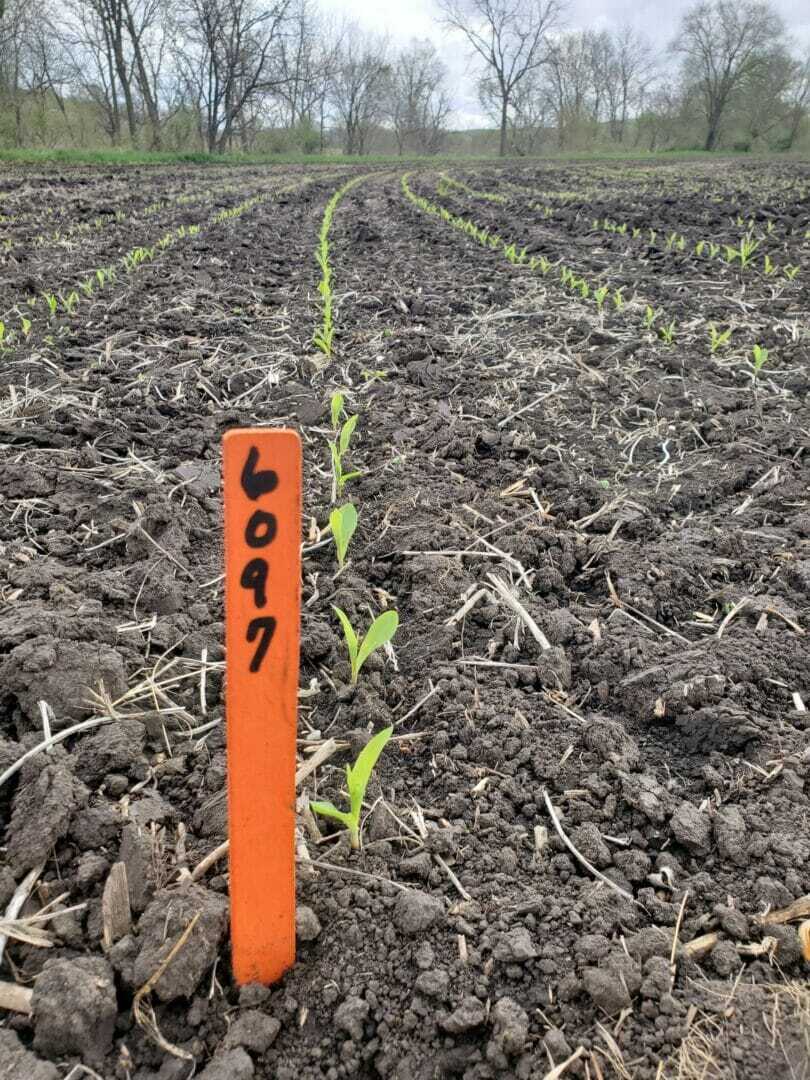
    In this week’s crop report Nick Benson, Latham’s regional sales manager in northeast Iowa, reported a 20-25% stand reduction in his area due to imbibitional chilling damage.  The damage resulted in what he called some very confused seedlings that were either emerging incorrectly or not emerging at all. We wanted to provide a little bit more information on just what imbibitional chilling is and how it affects seedlings.

    Imbibitional chilling damage is the chilling effect seeds may experience when they imbibe, or absorb, water when soil  temperatures are less than 55° F for an extended period of time. The seedlings may “corkscrew” or not emerge when exposed to these coil soil temperatures (see photo). This may happen also when there are rapid swings in air temperatures, of nearly 30° F.

    Nick said he has seen results of imbibitional chilling in corn that had been planted April 28-30. Those growers who saw the 20-25% stand reduction decided not to replant simply due to the lateness of the season – another reminder that farmers are at the liberty of the elements.

    If you have any questions about imbititional chilling damage, feel free to comment in the field below.

    Team Latham

    May 31, 2010
    Agronomics, Emergence, General
  • Latham Hi‑Tech Seeds

    Soybean Seedling Diseases

    Preventing Soybean Seedling Diseases

    The first form of prevention in soybean seedling diseases is to avoid using poor quality seed. Use only high quality seed that isn’t contaminated with fungal pathogens. This will help prevent low germination and increase seedling vigor.

    Other factors that could lead to seedling diseases include: inadequate seedbed preparation, compaction, planting too deep, nematode infestations, and high rates of some herbicides.

    Scouting, Identifying Seedling Diseases

    If scouting reveals stand reduction, it’s important to determine if the cause was a fungal pathogen. Different pathogens are present under different field conditions. The following information can help distinguish which pathogen may be present in your field: general soil temperatures, general soil moisture (saturated, wet or dry), variety resistance or tolerance to Phytophthora, and plant growth stage.

    There are three main categories of seedling diseases:

    Seed rot occurs during the VO-VE growth stages and may be caused by three pathogens; Pythium, Phytophthora, and Phomopsis. Determining which pathogen caused the seed rot can be difficult. Typical symptoms are soft decay of seed, missing seedlings in the row or poor emergence.

    Seedling Mortality (damping-off or seedling blight) occurs during the VE-V4 growth stages. Pythium, Phytophthora, and Rhizoctonia, can cause seedling mortality.

    Root or lower stem decay may take place during the seedling stage or may not be apparent until later reproductive stages (VE-Rn). Pathogens that cause root stem decay during the seedling stage are the same as those that cause seedling mortality (above).

    Finally, seedling disease symptoms may be confused with herbicide damage, effects of low pH, or other seedling disorders. To help ensure you have a seedling disease problem versus herbicide damage, consider the following: seedling diseases usually occur in irregular patterns that may correspond to changes in soil type. Herbicide damage typically follows a pattern related to the equipment and a group of adjacent plants will be affected.

    Source: Monsanto Agronomic Spotlight, photos courtesy of Iowa State University Extension and University of Minnesota extension

    Team Latham

    May 27, 2010
    Agronomics, Disease, General
  • Latham Hi‑Tech Seeds

    Scout early to identify and manage pests

    As we mentioned last week in our post on corn nematodes, this year’s early planting brought the opportunity and challenge of scouting crops early. Early scouting helps ensure you can identify and resolve any challenges before they become a bigger issue for your fields. A recent article in Wallaces Farmer included information about specific pests you should watch for this season.

    Early growth stage pests to keep an eye out for this year include armyworms, black cutworms, white grubs and wireworms. Also keep an eye out for early signs of bean leaf beetle in soybeans.

    The black cutworm is another pest that may try to visit your fields this year. The cutworm leaves small shot holes in corn leaves and when it grows to a half-inch long, can cut the plant. Stand loss or irregular stands may result. Significant flights of black cutworms have been reported in Missouri, with the very first capture taking place in mid-March, proving it will be a threat to some regions this year.

    Grub species, such as the Japanese Beetle are common pests to both corn and soybeans. While they’re common in Illinois and the eastern Corn Belt, the article said they can range into Nebraska, as well. While a common pest, they should still be taken seriously as people have reported adult beetles defoliating soybeans.

    Please let us know if you have any questions about how to identify or manage these pests.

    Click here to read the full article.

    Team Latham

    May 24, 2010
    Agronomics, General, Insects
  • Latham Hi‑Tech Seeds

    Temperature Fluctuations May Inhibit Corn Emergence

    5 Larry 1

    5 Larry 1Corn planting occurred at an all-time record this spring. In Iowa in particular, we’ve experienced one of the best planting seasons in history. Recent cool temperatures throughout the Corn Belt, however, are requiring extra close attention be paid to corn fields as those cool temperatures may have caused seedling growth problems.

    We recommend farmers pay particularly close attention to corn fields planted recently, as they would be the most likely to exhibit seedling rot or poorer emergence. For those in low-lying areas, frost may have been an issue, causing leaf necrsosis and delayed growth of sprouted seeds.

    Listed below are seedling growth problems to scout for:

    1. Imbibitional chilling damage — the chilling effect seeds may experience when they imbibe, or absorb, water when soil temperatures are less than 55° F for an extended time. Seedlings may “corkscrew” or not emerge when exposed to cool soil temperatures. This may happen also when temperatures swing rapidly by 30° F.
    2. Soil crusting — wet soil at planting or heavy rain following planting can lead to reduced plant stands. Significant stand reductions lower yield potential.
    3. “Leafing out” underground — occurring most often in crusted soils (also appears with imbibitional chilling, above).
    4. Variable plant emergence and reduced plant population. Variable emergence and growth will reduce yield.

    Any of the situations listed above could call for a need to replant, but be sure to assess stands before making this decision.

    Contact your Latham representative with any questions or click here to read more.

    Team Latham

    May 18, 2010
    Agronomics, Disease, Emergence, General, Season, Spring
  • Latham Hi‑Tech Seeds

    Soybeans at Risk for BPMV

    Soybean farmers in 16 Iowa counties may have fields at risk this summer from a soybean virus called bean pod mottle virus (BPMV), according to a model developed at Iowa State University (ISU).

    Counties identified by the ISU Pre-Plant BPMV Prediction Model to be at moderate risk are: Cedar, Clinton, Des Moines, Henry, Jefferson, Johnson, Keokuk, Lee, Linn, Louisa, Marion, Muscatine, Osceola, Scott, Wapello and Wayne. All counties but Osceola are located toward the southeast part of the state.

    “Soybean growers in those counties are cautioned to use recommended best management practices for bean leaf beetle control to minimize the impact of the disease,” says ISU Plant Pathologist Forrest Nutter.

    In counties identified as being at risk, soybean growers should conscientiously scout to detect areas where bean leaf beetle populations may be high enough to warrant mid-season foliar insecticide control measures, noting that early planted soybean fields have higher risk of BPMV incidence.

    Those growers in low-risk counties should still scout their fields routinely for bean leaf beetles, as there may have been pockets where the depth and duration of snow cover was sufficient to provide insulation for bean leaf beetles to survive.

    Click here for the full release from the Iowa Soybean Association.

    Team Latham

    May 11, 2010
    Agronomics, Disease, General, Season, Spring
  • Latham Hi‑Tech Seeds

    Be Watchful of Corn Nematodes: Early corn planting leads to earlier scouting

    We’ve just experienced one of the most amazing months for crop planting in recent memory. The National Ag Statistics Service released a report April 25 stating corn planting in the upper Midwest is significantly ahead of both the 2009 planting and the five-year average.

    One benefit of early planting is that farmers should have more time this spring to check their fields for various pests. For this article, I’d like to focus on Corn Nematodes in particular, as these microscopic roundworms have been flying under the radar of farmers and crop scouts for years.

    Like Soybean Cyst Nematodes (SCN) in soybean fields, Corn Nematodes are capable of reducing corn yields without showing any particular above-ground symptoms.  If you suspect that you are losing bushels from this pest, consider taking some soil samples to determine which nematode species is present in your field and at what level they are present.

    The best time to sample for corn nematodes is 4 to 6 weeks after planting.  Most university labs and even several private labs can run a corn nematode analysis on soil samples.  To borrow a line from the SCN awareness group, “Take the Test & Beat the Pest!”

    Team Latham

    May 10, 2010
    Agronomics, General, Insects
  • Latham Hi‑Tech Seeds

    Determining Stands

    Evaluating corn and soybean stands early is key to identifying problems – or potential problems – while there is still time to remedy them.  Three methods are commonly used to determine stand counts:

    1. 1/1,000th Acre;
    2. Wheel; and
    3. Hoop.

    (Click on any of the below charts to view the text in a larger font size).

    The 1/1,000th Method involves counting the number of plants in a length of row equal to 1/1,000th of an acre based on row width (See Table 1).  Multiply the number of plants by 1,000 to calculate the number of plants per acre.  Repeat the process in several locations in the field.

    The Wheel Method entails counting 150 plants and measuring the distance from start to finish with a measuring wheel.  To determine plant population, divide the number of feet traveled into the appropriate factor  (See Table 2).

    For the Hoop Method, toss a hoop in a field and count the number of plants inside it.  Repeat this in at least five locations throughout the field.  Multiply the average number of plants by the appropriate factor listed in Table 3 to calculate the number of plants per acre.  NOTE:  Having a hoop with a diameter of 28 ¼” allows you to simply multiply by 10,000 to determine the number of plants per acre.  You can make a hoop this size by cutting anhydrous tubing to 88 ¾ inches and joining it to form a circle.

    Source: Monsanto’s Agronomic Spotlight, 4/26/10, Illinois Agronomy Handbook. 23rd Edition. Pg. 31. Purdue Corn & Soybean Field Guide. 2007.

    Team Latham

    May 5, 2010
    Agronomics, Emergence, General
Previous Page
1 … 62 63 64 65 66 67
Next Page

Latham Hi‑Tech Seeds

131 180th Street | Alexander, IA 50420

(641) 692-3258

SIGNUP FOR OUR NEWSLETTER
  • Contact
  • Legal
  • Dealer Center
  • Seedware Login
  • Latham Gear

© 2025 Latham Hi‑Tech Seeds. All rights reserved. | Iowa Web Design by Webspec | Privacy Policy

Latham® Hi-Tech Seeds is a trademark of M.S. Technologies, L.L.C., 103 Avenue D, West Point, IA 52656.