Latham Hi-Tech Seeds

(641) 692-3258

  • Home
  • Products
    • Corn
    • Soybeans
    • Alfalfa
    • Corn Silage
    • Seed Guide
  • Performance
  • Find a Rep
  • Media
    • Blog
    • News
    • Videos
    • Podcasts
    • TECHTalk
  • About Us
    • Company History
    • Our Mission
    • Careers
    • Become a Rep
    • Sowing Seeds of Hope
  • Contact Us
  • Latham Hi‑Tech Seeds

    Extend Weed Control with New Xtend Crop System

    Water hemp, giant ragweed and marestail have become nightmares for farmers who have experienced weed resistance.  Although it’s been a bigger problem in the South, we’re also seeing signs of weed resistance right here in the Midwest.

    Fortunately, there will soon be another “tool in the toolbox” to help fight weed resistance.  Pending regulatory approvals, the Roundup Ready® Xtend Crop System is expected to be available to U.S. farmers for 2014 planting.

    The Xtend Crop System is Monsanto’s newest Genuity® soybean trait that includes tolerance to dicamba herbicide.  It will be stacked with the current Genuity® Roundup Ready 2 Soybean trait technology.  Roundup Xtend is an enhanced dicamba and glyphosate herbicide premix that will help farmers manage weeds before planting and during the season as an over-the-top option.

    Dual modes of action in Xtend will give farmers another choice for broad control of glyphosate-resistant and tough-to-control broadleaf weeds.  And as the crop system’s name implies, it will extend application and planting flexibility.  It also will extend the window for post-emergence applications.

    We’re optimistic that Xtend will also help save glyphosate and extend the life of high-yielding Genuity Roundup Ready 2 Yield Soybeans.  Diversity of tactics is key to consistent weed management and high crop yields, says ISU Extension Crop Weed Specialist Mike Owen.  In a blog article, Dr. Owen says no single tactic will protect the potential crop yield nor deter the evolution of herbicide-resistant weed populations.

    As farmers make plans for their 2012 soybean weed control programs, Seed-2-Soil® team lead Peter Bixel recommends using FULL rates of pre-emergence herbicides. Research shows that a pre-emergence herbicide applied before soybean planting reduced late-season waterhemp density by 97 percent!  Click here for more information on how you can enhance your weed management program this season.
    Team Latham

    March 14, 2012
    Agronomics, Crop, General, Herbicide Technology, Industry News, Soybeans, Weed Control
  • Latham Hi‑Tech Seeds

    Sometimes the late bird can still catch a worm

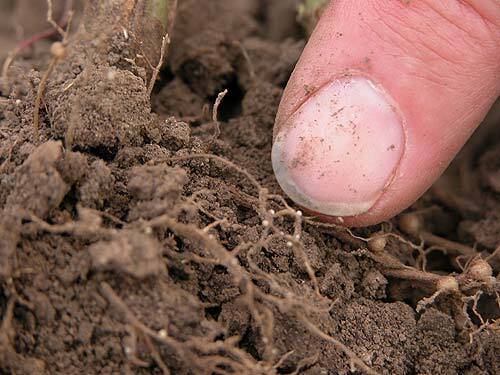
    An article published on wallacesfarmer.com this week highlighted that there’s still time to test soil for the presence of soybean cyst nematode (SCN). The small, plant-parasitic roundworm feeds on roots and can cause significant yield losses, especially in dry growing seasons.

    While SCN is a devastating pest, its risk is often overlooked because SCN damage isn’t readily apparent during growing seasons with excess moisture. SCN is an incredibly persistent pest, however, and adequate moisture or not, has the ability to live more than a decade in infested soils without the presence of soybeans, and produce more than three generations in just one growing season.

    In a recent Iowa State University Integrated Crop Management article, Greg Tylka, with the Department of Plant Pathology and Microbiology, highlighted the need to remain offensive against SCN, this year especially.

    “As we approach spring planting season, increased vigilance about SCN is warranted for the 2012 growing season because of the dry soil conditions statewide,” Greg said. SCN can cause substantial yield loss to susceptible soybean varieties under dry soil conditions, even when SCN egg population densities are low. If soybeans will be produced in 2012 in fields infested with SCN, high-yielding, SCN-resistant varieties should be grown.”

    For more information about SCN, and to find tips for collecting a soil sample to detect whether or not it’s present in your field, visit http://farmprogress.com/wallaces-farmer-story-still-time-check-fields-scn-9-57633.


    Team Latham

    March 1, 2012
    Agronomics, Crop, Disease, General, Insects, Soybeans
  • Latham Hi‑Tech Seeds

    Ag Technology: Internet, Tablets & SmartPhones

    Farmers’ use of the Internet has been a hot topic of conversation recently from CNN to Wallaces Farmer. It was even researched as part of the most recent Iowa Farm and Rural Life Poll, which has been conducted every year since 1982 when it was established.

    “High speed Internet is as important to today’s young adults as electric lines and paved highways were for their parents and grandparents,” says Dr. Paul Lasley, Iowa State University sociologist, who co-directs the annual Farm and Rural Life poll.

    To further make his point, Dr. Lasley asks if I would move to an area if high speed Internet wasn’t available. I paused for a moment to truly consider his question. I realized that if I was going to be honest, I’d have to say “no.” As much as I like to escape reality by walking with my Lab through the woods or trying to land a trophy walleye from a remote lake, I wouldn’t ever want to be totally disconnected.

    More and more rural residents like me are relying on smart technology to keep them connected. Farmers like Larry Sailer are using their iPads to communicate with consumers on Facebook or Twitter while waiting in line at the elevator. And also like me, the majority of farmers today can’t imagine being tethered to an office due to a land line or a desktop computer.

    Contrast this to Dr. Lasley’s first day at Iowa State University in 1980. Lasley said he was issued a manual typewriter with a yellow pad of paper and was told to start writing! I don’t want to even think about writing a blog post or taking notes manually during a meeting. The invention of laptop computers, iPads, and SmartPhones has changed the way we all do business.

    It’s no wonder the Farm and Rural Life Poll asked respondents about the types of farming-related information they accessed via the Internet, as well as how often they accessed information from a number of agriculture-related agencies and organizations. The poll shows 84% of farmers who use the Internet get information on the weather. Most farmers who use the Internet also access market information (78%), general ag news (75%) and information about crop production (68%).

    Larry Sailer, Musings of a Pig Farmer

    February 1, 2012
    Agronomics, General, Precision Ag
  • Latham Hi‑Tech Seeds

    Technology Redefines Agriculture

    What defines modern agriculture?

    It’s a question that I’ve been pondering ever since reading an article Jan. 19 by Terence Loose listing “agriculture” as the most useless college major.  More than anything, I believe his article illustrates how little the general public knows about production agriculture.  I dare say Loose envisions farming more like it was in the 1950s or 1960s than it is today.

    Agriculture has changed dramatically over the years, and it’s become even more technologically advanced in the past 5 to 10 years alone.  In fact, agriculture is like lot the car industry.  One used to have to custom order power windows.  Today power windows come standard on new vehicles just like most technology comes standard today on agricultural products.

    Technological advancements in the seed industry is just one example.  One hundred percent of Latham® Hi‑Tech Soybean seed is traited, and about 95% of the corn hybrids we sell contain technologies that make crops resistant to insects or certain chemicals.

    High-tech seeds means there’s a lot of science in each bag!  Think about the highly educated and skilled people it takes to research and create new technologies and genetics, develop them for commercial production, condition the seeds, and then sell them to the farmers, who produce food, clothing and fuel for the world.

    New seed technologies – have and will continue to – set new expectations for the yields farmers can achieve.  When Roundup® Ready soybeans were introduced in 1996, they set the standard for soybean yields for a decade.  Today Latham® soybeans with the Genuity® Roundup Ready® 2 Yield technology are redefining yield expectations.  Latham soybeans with the RR2 trait have been out-yielding the competition consistently for the past two harvest seasons.  Soon Vistive® Gold soybeans will produce an oil similar to the content of olive oil but much easier and cheaper to produce.

    On the corn side of our business, technology is progressing at an equally fast pace.  Innovations are making it even simpler to comply with refuge requirements.  New for 2012 Latham has introduced Genuity VT2 PRO RIB Complete, as well as Genuity® SmartStax® RIB Complete.  Other new technologies coming include a new rootworm trait from Syngenta called Agrisure® Duracade™ and crops resistant to 2-4D chemistry from Dow Agrosciences called Enlist™ just to name a couple.

    Seed traits are just one example of how technology has – and continues – to redefine production agriculture.  “Technology” obviously has many different meanings within agriculture, and the definition largely depends on what a person does from day-to-day.  A quick poll on Facebook and a few e-mails to our friends in the industry produced this list of ag technologies:

    • GPS
    • Auto-steer tractors
    • Smart Phones
    • Slow-release fertilizer
    • RFID technology for livestock

    And the list goes on!  How has technology transformed your own operation?

    John Latham, President

    January 30, 2012
    Agronomics, General, Precision Ag
  • Latham Hi‑Tech Seeds

    Corn Plants Need Well-Balanced Diets, Too

    Dr. Fred Below, plant physiologist and professor with the University of Illinois at Champagne-Urbana

    Eating healthy is always a favorite topic around the New Year when people make resolutions, but have you ever considered the importance of providing a well-balanced diet for your corn crop? After all, corn plants are living, breathing organisms! They have needs, too.

    Dr. Fred Below, plant physiologist and professor with the University of Illinois at Champagne-Urbana, says 50% of corn yield is determined by weather and nitrogen. We can all agree that weather greatly affects nitrogen usage and efficiency. While no one can control Mother Nature, Dr. Below says farmers can manage nitrogen to have as much impact on yield as weather.

    Nitrogen is a mobile nutrient, so the timing of fertilizer application is critical to meet a plant’s needs. The plant’s biggest need for fertilizer is between V12-R1. With this in mind, Dr. Below asks why so many farmers are applying nitrogen seven months before the plant needs it. Consider this analogy:

    You want to throw a party during the third week of June 2012. However, canned beverages can be purchased cheaper in early November 2011. You stock up on drinks and store them, on the edge of your field, near the road for seven months. Will those beverages still be located in the same spot on June 22, a hot, dry day when you’re especially thirsty and want to drink 7 cans?

    Instead of providing a feast or famine situation for a corn plant, Dr. Below says farmers can benefit from controlling the release of fertilizer and by managing micronutrients. During a presentation to a group of farmers and Seed-2-Soil® clients in Clear Lake last Thursday, he showed how taking a system approach that combines seed technology with fertilizer technology can significantly – and consistently – improve corn yields.

    Have you set a goal of consistently raising 250- or 300-bushel corn? Nitrogen management is key, but it’s not the only factor influencing yield. Click here to see Dr. Below’s 7 Wonders of the Corn World, which are the seven factors that have the most influence on yield.

    Team Latham

    January 16, 2012
    Agronomics, Corn, Crop, General
  • Latham Hi‑Tech Seeds

    Resolve to Fight Weed Resistance in 2012

    Seed-2-Soil powered by Sci Max Team Leader

    Much time will be spent this week reflecting on 2011 and resolving to make changes in 2012. One change farmers can make in 2012 is resolving to better manage weeds.

    Weed resistance is a growing problem (literally) in our area. One weed that continues to cause problems is waterhemp. As you make plans for your 2012 soybean weed control programs, please ask yourself the following questions:

    1. Am I seeing waterhemp escapes in my soybean fields?
    2. Am I using multiple modes of action and residual herbicides with post-emergence in my soybean herbicide program to help prevent resistance from taking place in my fields?
    3. Am I allowing weeds to compete with my crop early in the season that may be impacting yield?

    If you answered “yes” to any of these questions, the best step to take is to address the issue by using FULL rates of pre-emergence herbicides in your soybean fields. Kevin Bradley, a weed scientist from the University of Missouri, conducted trials with waterhemp in soybeans. According to Bradley’s research, a pre-emergence herbicide applied before soybean planting reduced late-season waterhemp density by 97 percent.

    Results like that – 97% reduction in waterhemp density – is worth trying! After all, resolving to change your weed management program is a lot easier than resolving to walk or run on one’s treadmill every day.

    Webspec Admin

    December 28, 2011
    Agronomics, General, Weed Control
  • Latham Hi‑Tech Seeds

    Soybean Selection: It’s an Internal Battle!

    It’s not often that a company shares its “internal battles,” but today we’re airing one!  Just as many football teams across the nation are preparing for bowl games this holiday season, the product team at Latham Hi‑Tech Seeds is trying to determine the value of both offense and defense.

    “Defense is the best offense there is!” says Latham Product Manager Mark Grundmeier.  He stands by the defensive power of L2183R2. This Genuity® Roundup Ready 2 Yield® soybean has the best defensive package in the industry. It has the industry’s best store (1.5 on a scale of 1 to 5, with 1 being the best) for Iron Chlorosis.  Place it on medium to heavy soils and Marks says it’s tough to beat.

    President John Latham, on the other hand, insists that Latham® Hi‑Tech Soybeans L2182R2 is the way to go. “Offense, offense, offense,” chants John.  He wants to raise 80-bushel beans and insists that L2182R2 is the way to do it.  While L2182R2 is a great offensive product, John says it also has a solid defense package.

    Which matters more, offense or defense?  Our Seed-2-Soil® specialist says that one of the best predictors of a soybean product’s performance is its field position.  “Just as it is on the gridiron, a good field position makes it easier for the offense to score,” says Peter Bixel, team lead for Latham’s Seed-2-Soil program.  “Teams with poor defenses provide poor field position, which allows their offense to gain more yards but probably results in fewer points scored.  Placement can help soybean products maximize yield potential.”

    Can soybean growers – and championship football teams alike – benefit from having both a strong offense and a strong defense?  Watch the video link below to see Mark and John go “head to head” on this issue.

    [youtube]http://www.youtube.com/watch?v=TtQoUEhaQjU&feature=related[/youtube]

    Team Latham

    December 21, 2011
    Agronomics, Corn, Crop, General, Soybeans
  • Latham Hi‑Tech Seeds

    MAKE SPIRITS BRIGHT WITH A DASH OF N.P.K.!

    Girl cooking41

    One week ago today I was in Chicago, attending the Top Producer Magazines Executive Women in Agriculture Conference.  More than 125 women from 25 states came together discuss everything from fertilizer efficiency and commodity marketing strategies to property insurance and succession planning, plus social media and agvocacy.

    I believe Celeste Settrini of Settrini Ranch in Salinas, Calif., stated it most eloquently when she wrote, “I walked away with a keener sense of purpose to my industry and a whole new network of extraordinary friends.  I realized that all of us came from so many different backgrounds we all shared in one common trait and that was the passion we shared for American Agriculture!”

    While talking with women from all walks of life last week, I was reminded that we all have a story to tell and need others’ help in telling it.  Too many times the uninformed and the misinformed are telling the story of agriculture, so myths and half-truths replace facts.

    “Nothing but the facts” has become the mantra of the Nutrients for Life Foundation, which informs the public of the role of nutrients in both the production of nutritious, abundant food and preservation of healthy green spaces through the development of educational resources and an outreach campaign to people across the country.

    All information developed by the Nutrients for Life Foundation is based on soil and plant science and supported by agronomists, including those at the International Plant Nutrition Institute. Its educational materials are based on a curriculum that has been reviewed by the Smithsonian Institution, and more than 4,000 requests have been fulfilled in the past five years.

    Click here to see how teachers and students are benefitting from this hands-on curriculum.  Click here to learn how to you can request the curriculum for your local school.  As a Girl Scout leader and a Cub Scout den mother, I’m eager to see how this curriculum can help my troops earn badges!

    Also included with this campaign is a series of recipe cards that help “plant a positive message” about the role nutrients play in growing the foods we all love.  Try the following recipe for Raspberry Crumb Bars (with a dash of potassium) and use it as a conversation-starter with your family this holiday season!

    Team Latham

    December 9, 2011
    Agronomics, General
  • Latham Hi‑Tech Seeds

    Diversify Your 2012 Crop Plan

    Nick Benson, Latham Corn Product Specialist

    The value in working with a financial planner comes from diversifying one’s portfolio and reducing financial risk while maximizing returns.  For the same reasons, it’s advantageous for corn growers to work with a knowledgeable seed representative to create a diversified hybrid seed corn portfolio.

    Planting a “portfolio” of corn hybrids has multiple benefits:

    1. “Hedge” risk with different genetics – Even by picking products with various trait packages, a farmer can’t be 100% sure that he or she has a diversified line-up as genetic provider don’t always match up with trait providers.
    2. Plant hybrids with varying relative maturity – Spread your risk by planting a minimum of three or four different hybrid numbers.  Different flowering dates can help reduce yield loss due to heat during pollination.  For example, in 2011, hybrids with under a 100-RM were hurt worse in my particular area, but this is dependent on geographies.  Planting later hybrids worked well this year because drydown wasn’t a problem.  Some years are the exact opposite where hybrids don’t want to dry down and the earlier products can really pay off.
    3. Balancing offensive and defensive characteristics – Each year presents its own set of challenges:  weed pressure, insect pressure, heat stress, emergence issues, disease pressure, overall yieldability in relationship to an “offensive” vs. a “defensive” year, drought tolerance and trait performance.

    No financial planner worth his weight is going to advise clients to invest solely in mutual funds or high-risk stocks.  That’s also why I’d never advise farmers to choose their seed portfolio based only on top-yielding varieties in F.I.R.S.T. Trials.  While yield trials and plot data can help influence one’s seed purchasing decisions, they should NOT be the only – or even the primary – basis for choosing seed products.  Choosing seed based on growing conditions in one location during one year is like picking your stocks based on only last year’s performance without considering factors that might cause market shifts. Additionally, a grower shouldn’t choose seed based solely on a product guide description.  That’s comparable to choosing your financial portfolio after view the stock market in the Wall Street Journal.

    A good seed representative will know how to best diversify your portfolio.  One advantage of working with a seed representative from an independent company is that you can rest assured the products will truly be genetically diverse.  Only an independent seed company can draw from multiple genetic pools to ensure diversity, and that means you can be assured your products were developed to work best in your geographic region rather than having to perform across the nation.

    We believe the stakes are simply too high to not view seed selection as a portfolio.  That’s why, at its most basic level, Latham Hi‑Tech Seeds’ hallmark Seed-2-Soil® program helps corn growers determine which hybrids will help minimize risk while maximizing returns.  Contact your local Latham representative or the Latham office to learn more about how you can balance your seed portfolio for 2012!

    Webspec Admin

    December 7, 2011
    Agronomics, General
  • Latham Hi‑Tech Seeds

    Considerations for NH3 Application

    Kurt Metzger, West Area Seed Solutions Specialist, MaxYield CooperativeGuest blog by Kurt Metzger,
    West Area Seed Solutions Specialist, MaxYield Cooperative

    Unusually dry weather this fall has corn growers asking questions about whether or not they should wait to apply Anhydrous Ammonia (NH3).

    Applying NH3 in dry soils is actually the best situation if a producer can get it to seal. The NH3 bar must be deep enough to get adequate soil separation between the point of ammonia injection and the depth where corn seed will be planted next spring, as stated by John Sawyer, Department of Agronomy, in his recent Integrated Crop Management News article entitled, “Anhydrous Ammonia Application and Dry Soils.”

    At MaxYield Cooperative, we began applying NH3 nearly two weeks ago.  It was exceptionally dry then, so we made sure the NH3 bar was in the ground 6 to 7” (4-6” is typical).  We’re recommending that producers apply nitrogen deeper to help prevent damaging seed next spring.  This same point is made in Sawyer’s newsletter article.  He writes, “Shallower injection, greater movement upward from the injection point, wider knife spacing, or higher rates can lead to ammonia being in the seeding area at rates high enough to cause damage” next spring.

    Fortunately, the newer NH3 bars have much better disk closers and will be more aggressive to move the soil in order to seal the in the soil.

    Another point is with the dryer soils, the zone that the ammonia in the soil becomes a larger radius to attach to the clay.  This means it takes more moisture next spring in order for leaching to occur.  Remember the nitrogen moves with the soil water profile and only will move with the excess moisture.  Use of N-Serve is still very much recommended.

    With that said, however, overnight rainfall will help mellow the soil and provide for better sealing upon NH3 application.  Soils are so dry that it will take many more inches of rain before it’s too much moisture is a concern.  The best analogy is that our glass is only ¼ full now, so we have a lot of room before rain fills our glass and runs it over next spring.

    Larry Sailer, Musings of a Pig Farmer

    November 3, 2011
    Agronomics, Fertility, General
Previous Page
1 … 55 56 57 58 59 … 67
Next Page

Latham Hi‑Tech Seeds

131 180th Street | Alexander, IA 50420

(641) 692-3258

SIGNUP FOR OUR NEWSLETTER
  • Contact
  • Legal
  • Dealer Center
  • Seedware Login
  • Latham Gear

© 2025 Latham Hi‑Tech Seeds. All rights reserved. | Iowa Web Design by Webspec | Privacy Policy

Latham® Hi-Tech Seeds is a trademark of M.S. Technologies, L.L.C., 103 Avenue D, West Point, IA 52656.