Today we will be covering soybean harvest! Tune in for in-field tips. #AsktheAgronomist
Video Link: https://www.facebook.com/LathamSeeds/videos/1892500697529870/

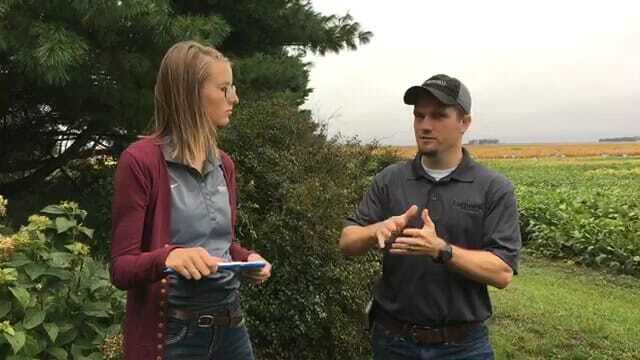
Today we will be covering soybean harvest! Tune in for in-field tips. #AsktheAgronomist
Video Link: https://www.facebook.com/LathamSeeds/videos/1892500697529870/
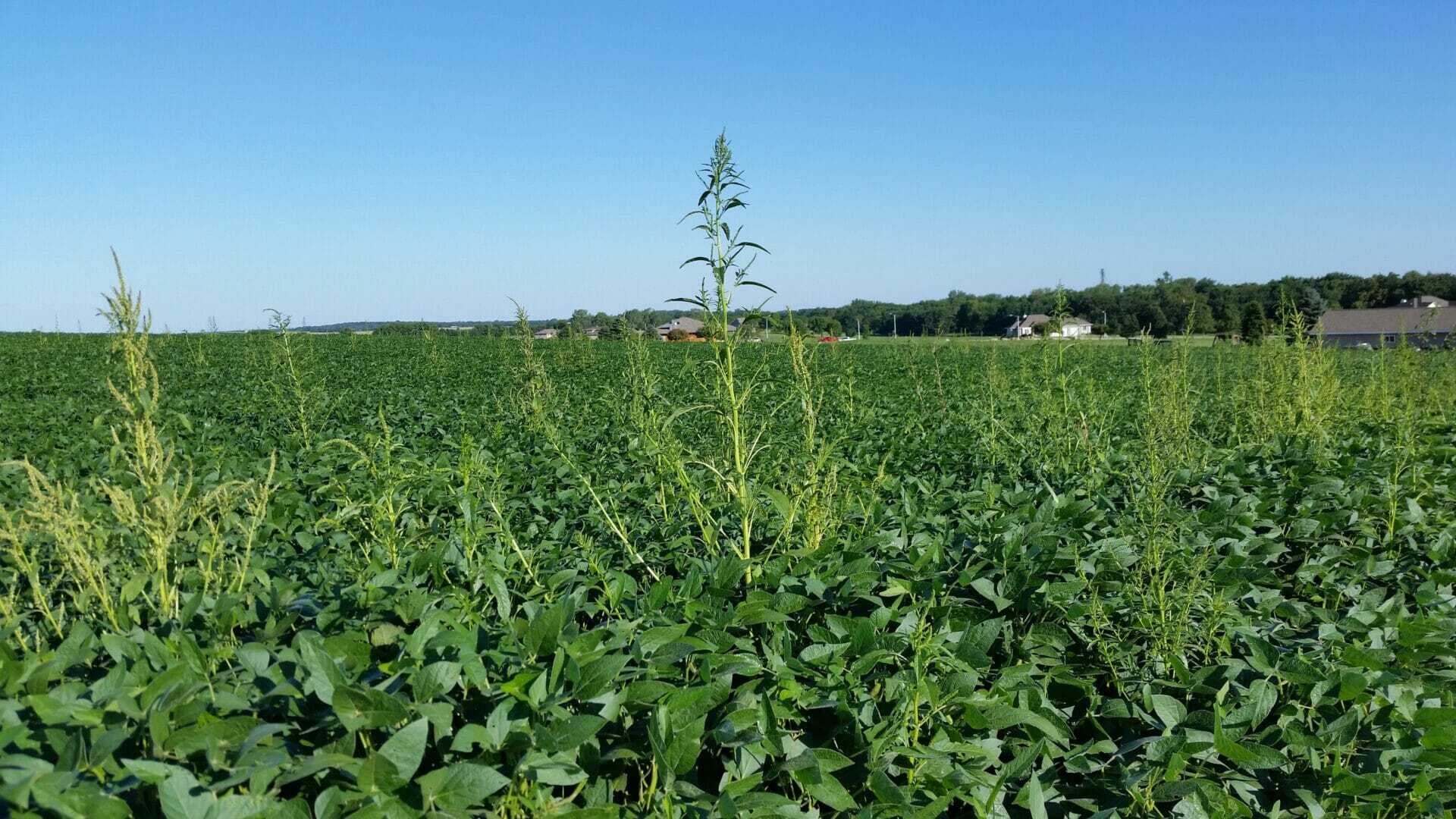
Research conducted in Illinois by Dr. Aaron Hagar and his associates revealed, not surprisingly, that management factors are most important when it comes to the occurrence and the severity of resistance.
Dr. Hager’s team also concluded that herbicide mixing, and not herbicide rotation, is the best practice for mitigating weed resistance. Using two herbicides with different sites of action each time you spray for weeds makes it 83 TIMES LESS LIKELY that weed resistance will develop!
The following steps will help you put effective weed management practices in place:
Implementing an effective weed management program is critical to protecting the effectiveness of seed options. Weeds can and will overcome all trait options given enough time. While we all recognize the value of having multiple options for herbicide-resistant traits, the end-result will eventually be the same unless we protect against weed escapes now.
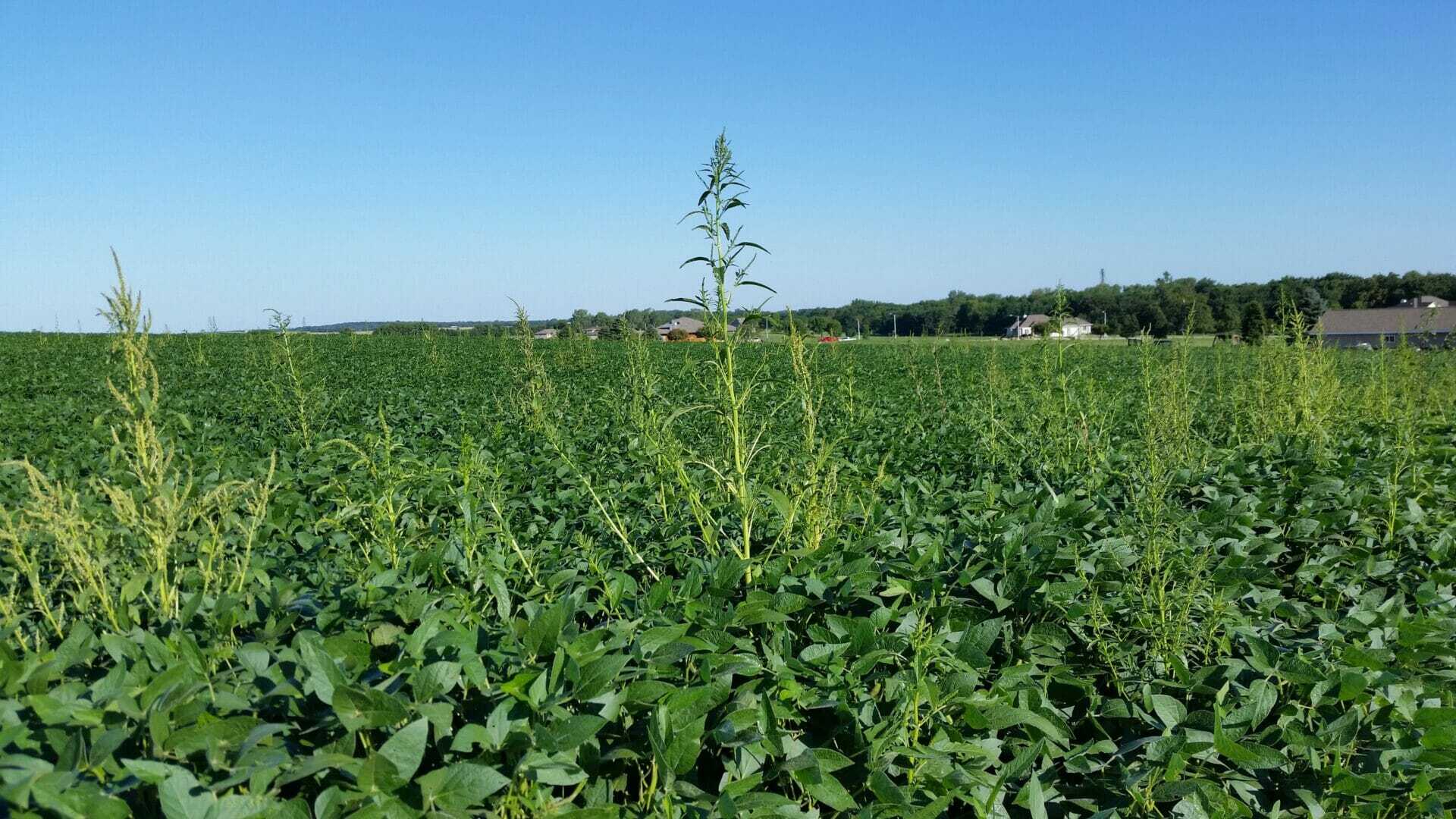
Plants that develop resistance to herbicides are simply following the age-old process of “survival of the fittest.” This process acts on phenotypes, or the plants in this case, but the unit of inheritance is the gene.
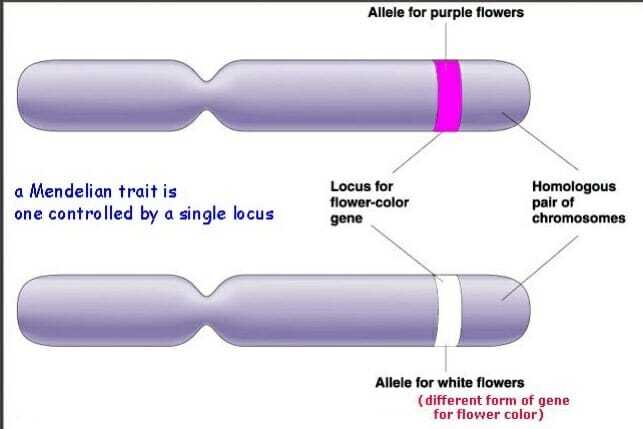
Different versions of the same gene are called alleles. Individuals usually have two different alleles for each gene. An example of this in humans is blood type, where each parent contributes a different allele to the offspring.
Therefore, herbicide resistance can be defined as “an increase in frequency of resistant alleles in a plant population after exposure to herbicide selection.” There are three main sources of these resistant alleles: new mutations, immigration and standing genetic variation.
New mutations are rare and impossible to predict, so there’s really nothing we can do about those. Immigration occurs when a population is found in new territory, such as when Palmer Amaranth invades an area. Immigration also is considered to be fairly rare unless it’s introduced through an outside source.
The most common source of resistant alleles is from standing genetic variation. We’ve all seen studies of how this can happen. Herbicide is sprayed on a field where there is a high concentration of weeds. Most of those weeds die but a few survive. If not controlled with another method or herbicide, those few surviving weeds will produce seeds that will germinate the following year. If the same herbicide is used that next year, the population can increase dramatically. After multiple years of this practice, a tremendous weed problem exists.
When waterhemp became a serious problem in Illinois, Dr. Aaron Hager and his colleagues conducted a multi-year study on what factors contributed most to the occurrence of herbicide-resistant weeds. They took into consideration a wide range of factors within four main categories: Management, Weeds Present, Soil Properties and Landscape.
Three major findings resulted from the University of Illinois study:
My college professor in Principles of Plant Physiology said it quite simply, “A weed is a plant that is out of place.” I never thought to ask him just where he felt was the proper place for Waterhemp… or Kochia… or Palmer Amaranth.
Weeds have been a problem since the dawn of mankind. After Adam sinned in the Garden of Eden, God “cursed the ground” and told him that “thorns and thistles would be produced” because of what he did. (Genesis 3: 17-19)
Not only were thorns and thistles (i.e. weeds) produced, but they multiply rapidly. Did you know that Waterhemp produces as many as 1.5 times more seeds than most other pigweed species? Waterhemp plants generally produce about 250,000 seeds per plant. Some Waterhemp plants can produce 1 million or more seeds under optimal conditions in noncompetitive environments.
Resistance to herbicides results when weeds get sprayed but live through the application. This might happen because of improper rates, improper timing or just due to natural selection. That’s why we must learn from the past to ensure success in the future.
Herbicides were introduced in the U.S. after WWII with the marketing of 2,4-D. Atrazine was first registered for use in 1959, followed by a succession
of products designed to control weeds.
Farmers in the 1970s and ‘80s didn’t worry about weeds becoming resistant to herbicides being used because all they had to do was visit their local chemical retailer where they’d get the newest and greatest product to try.
The first herbicide in the U.S. that weeds developed resistance to was Atrazine in the early 70s. The alarm, however, didn’t really get sounded until resistance to Pursuit® and Scepter® occurred. These ALS herbicides were introduced in the mid-80s and weed resistance showed up very quickly.
When Roundup® (glyphosate)-tolerant soybeans were introduced in 1996, farmers believed they finally had the ultimate answer to weed control. Not only did this new system work, but it was very simple to use.
Roundup made good weed managers out of bad. Weeds too big before the field was sprayed? No problem… just add a little more! Don’t bother with any of those old herbicides… all you need is Roundup!
Sound familiar? We were assured weeds would NEVER develop resistance to glyphosate, but it happened. To make matters worse, the “endless supply” of new herbicide products stopped. The last new herbicide group of HPPD inhibitors was discovered in 1986.
There are 29 groups of herbicides, each with its own unique site of action, according to the Weed Science Society of America (WSSA). At the latest count, weeds have developed resistance to all but three of them.
It’s been well documented that weed resistance is a growing problem. In next week’s article, I’ll talk in more detail how weeds develop resistance to herbicides. The last article in this series will cover what (if anything) can be done.
Sudden Death Syndrome or Brown Stem Rot? Tune in for identification tips the impact of these diseases.
https://www.facebook.com/LathamSeeds/videos/2077027295959408/
Tune in for discussion on a new insect hitting soybean fields in the Midwest. We will also be covering tips on late-season scouting.
https://www.facebook.com/LathamSeeds/videos/1134728796694114/
Is it time to spray for aphids? Phil Long discusses plant damage and identifiable thresholds when making the decision.
https://www.facebook.com/LathamSeeds/videos/10156604967342138/
Tune in for live discussion with Phil Long on fungicide application tips and factors to consider when planning for your 2019 crop year.
FB Live Video: https://www.facebook.com/LathamSeeds/videos/10156586918247138/

Our focus remains on providing options for our farmers when it comes to our precision ag offerings. Just like we do with the diversity of our product lineup.
For farmers who want to invest their own time into working with their data, we will use the Climate FieldView™ (CFV) Platform to help them uncover valuable resources to better their operations. For farmers who want to benefit from using their data but don’t want to spend their own time organizing and analyzing it, we will use our Data ForwardSM Platform. Both platforms provide excellent opportunities for using farmers’ data. The major difference is that one platform is “farmer led,” and the other is “Latham led.”
Data Forward is the approach we take to help customers use their data to increase profitability and to help them make the best product selections for every acre. We typically meet to discuss the soil types, weed pressure or other challenges in each field, as well as management practices used. Data Forward helps us gain insights from their yield data, which can help us understand each field’s productivity on a deeper level. It also helps us select the best genetics and trait package for each acre.
A key part of our Data Forward program is “Yield Analysis with Insights.” Using planting and yield data, we can analyze yield against many different factors to help with seed placement. One example is looking at yield based on planting date and also using harvested moisture to guide next season’s discussion on particular hybrid maturities and drydown characteristics.
Dealers can encourage their customers, who are using the Data Forward Platform, to conduct their own on-farm experiments. They might be interested in comparing results from soybeans tolerant to Iron Deficiency Chlorosis (IDC) to an in-furrow treatment for IDC, or maybe they’re interested in conducting a hybrid seeding rate study to find the sweet spot for seeding rates on their farm. These are just a couple quick examples. All farmers think about the best ways to manage their unique challenges in each field, and Data Forward provides a way for both you and them to make better placement and product decisions.
Data Forward also encompasses our commitment to the quality for which we stand. We work with farmers to collect the best data by calibrating equipment and programming monitors, so they can accurately track the history in each field. We layer all the data a farmer has available, from planting and soil sampling, to spray and harvest operations. It is one thing to use a yield map to make some changes for the next season, but it’s a much more meaningful tool to build quality data over time. By organizing years of data within each field, we can help a farmer gain insights he or she may have never considered by scouting from the truck or combine windshield.
Data Forward is our approach to helping customers use their data now and to also build that powerful resource for the future. Many farmers may be in the early stages of collecting data, so we want to help them see the benefits of using what they have now. We also want to show them how building their data for a few years can provide valuable insights. We use those data layers to create powerful Management Zones for each field, allowing a farmer to see value from technologies like variable rate seeding or fertility.
Feel free to contact me at the Latham office if you’re interested in learning more!
Japanese beetles populations are settling in across the Midwest. Tune in to learn more about insect control!
https://www.facebook.com/LathamSeeds/videos/10156551348677138/