Latham Hi-Tech Seeds

(641) 692-3258

  • Home
  • Products
    • Corn
    • Soybeans
    • Alfalfa
    • Corn Silage
    • Seed Guide
  • Performance
  • Find a Rep
  • Media
    • Blog
    • News
    • Videos
    • Podcasts
    • TECHTalk
  • About Us
    • Company History
    • Our Mission
    • Careers
    • Become a Rep
    • Sowing Seeds of Hope
  • Contact Us
  • Latham Hi‑Tech Seeds

    Managing Fall Armyworms in Alfalfa

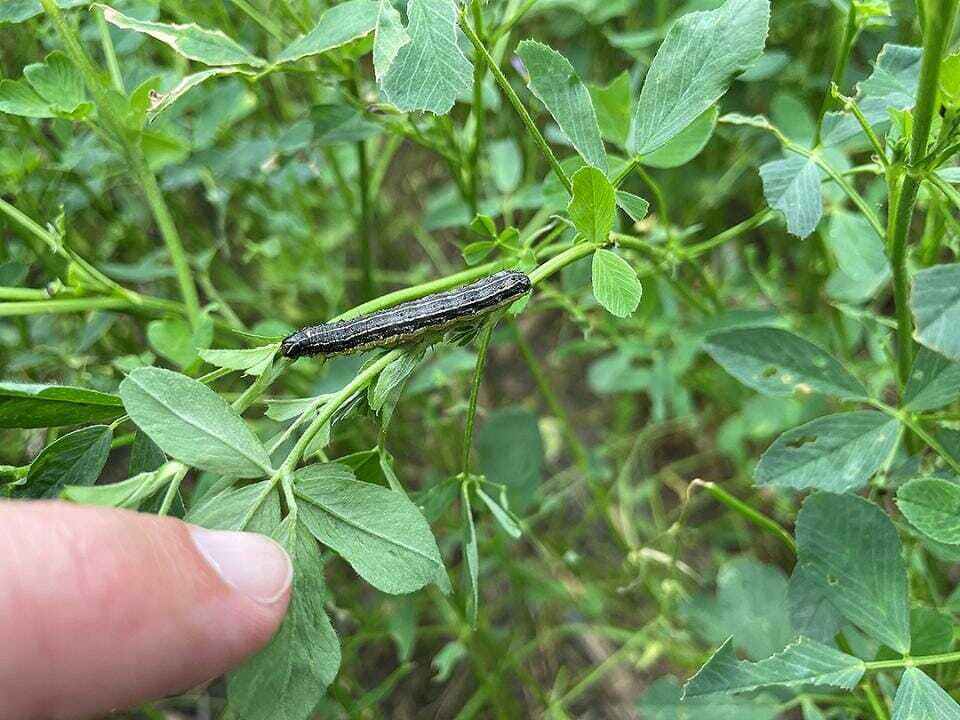
    2021 08 27 Fall armyworm

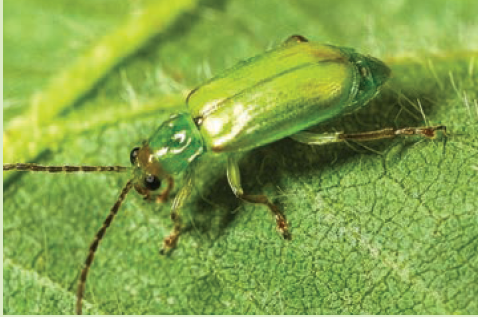
    “The alfalfa is alive with crawlers!” A remark I heard last week as I scouted an alfalfa field heavily infested with Fall Armyworms. 2021 threw some curveballs this year, but I certainly could not have predicted a widespread Fall Armyworm outbreak with much of the Midwest under drought conditions.

    Spodoptera frugiperda, are a southern species of Armyworm that do not overwinter in the Midwest. As populations build during the summer, moths fly north often reaching the Midwest later in the summer or early fall. Hence the common name “Fall Armyworm”.

    Fall Armyworms can feed on alfalfa, pastures and newly seeded cover crops and small grains. This year there have even been reports of them taking out entire lawns in search of lush plant material to feed on in dry conditions.

    Life Cycle and Feeding Patterns

    The quick lifecycle of the Fall Armyworm is what makes their feeding pattern so impactful to alfalfa stands. Eggs are laid by moths in clusters of 50-200 and hatch roughly four days later. Larvae grow quickly and move widely. Days 14-30 when larvae are growing to sixth instar are their most destructive stage as many growers notice a small, stressed patch one day with complete defoliation in as little as 48 hours.

    Scout now for fall armyworm

    Threshhold and Treatment

    One to two worms per square foot can destroy seedling alfalfa and populations of 10-15 per square foot have been observed to destroy 12 to 14-inch alfalfa. Some experts advise not treating unless the majority of larvae are less than 3/4” long since more advanced larvae are nearing the end of their lifecycle. I agree with that line of thinking, however in alfalfa this must be heavily weighed against survivability of your alfalfa or cover crop stand. The short lifespan of armyworms means eggs can be laid at different times and all stages (instars) can be present in your field. With the aggressive and destructive nature of the insect, chemical treatment may be best way to control.  It’s tricky, as we are in that time frame of “no cut” for alfalfa, a time which we need every single leaf to generate and build our root reserves for the winter months.

    Bottom line: scout early, often, and plan quickly.
    Webspec Admin

    October 1, 2021
    Agronomics, Alfalfa, Insects
  • Latham Hi‑Tech Seeds

    Notes from the Field – PreHarvest 2021

    Mark soybean article image

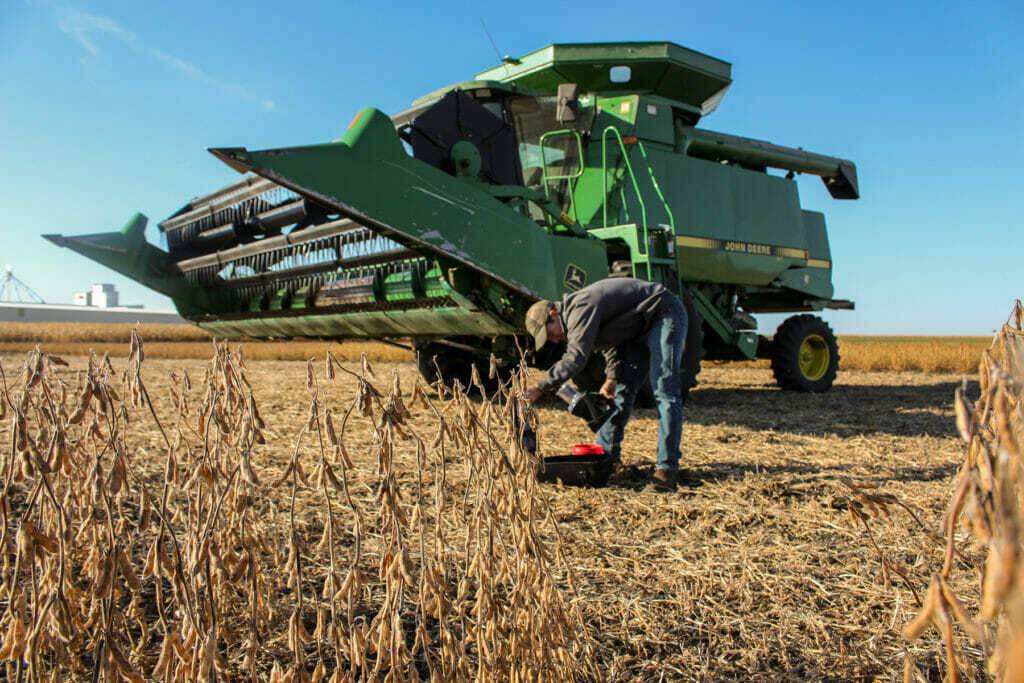
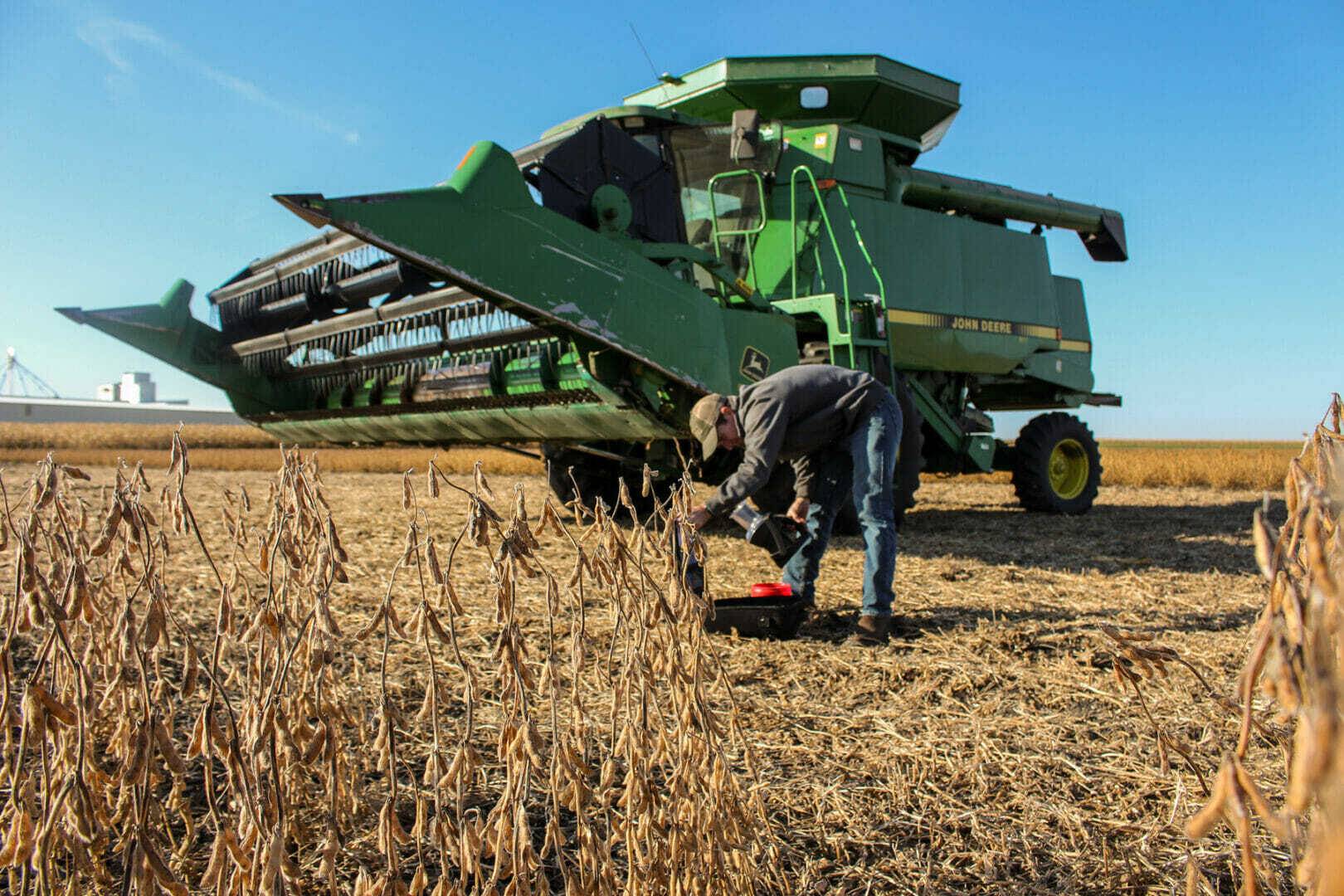
    Mark soybean article imageI’m very hopeful that – even with the dry weather – our production fields can achieve an overall average year for production with sufficient seed for soybean sales in 2022.

    Most soybean farmers’ biggest concern across Latham Country has been lack of moisture. Many have noticed aborted flowers, dropped pods, and restricted pod fill. Thankfully, our production fields in South Central Minnesota received a nice two-inch rain during the first week of August. Most of the growers in our area around Alexander, Iowa, got a nice one- or two-inch rain on August 20-21. That rain will help those fields fill out pretty well. Some of our fields in northern Minnesota also got a nice inch or more that weekend.

    Rainfall has been extremely variable throughout the summer. On August 20, the Des Moines airport reported no rain but most cities throughout the metro got about 1.5 inches! “Spotty” rains have been the norm rather than the exception this season.

    Besides the drought, infestations of two-spotted spider mites are popping up almost everywhere across Latham Country. This is common in periods of dry weather. Most growers seem to be willing to apply pesticides for control, especially when the market price for soybeans is high. Farmers in a few areas have reported Bean Leaf Beetles and Soybean Aphids at very low levels, so insecticide applications have not been necessary.  Grasshoppers also flourish in dry conditions, and I have heard of farmers spraying to control this pest.

    On the disease side, I’ve seen and heard of Sudden Death Syndrome (SDS) and White Mold this season. Dry weather usually hinders huge outbreaks of diseases, but it’s not unexpected that some areas will see things like this. Remember, SDS CANNOT be controlled with a foliar application of fungicide but there are some that can help on White Mold. I’ve also seen some Frogeye Leaf Spot (FLS) in a few fields but not enough to warrant a fungicide except in Southeast Iowa. I’m hearing about and seeing FLS in regions further north than usual, which is evidence this disease is moving farther north every year.

    Call the Latham Team if you need help to diagnose situations or to recommend solutions. Be sure to keep field notes from these problem areas because that will be useful when you select seed in the future.

    Mark Grundmeier, Product Manager

    September 24, 2021
    Agronomics, Crop, Disease, Drought, Fall, Fungicide, General, Insects, Season, Soybeans, Weather
  • Latham Hi‑Tech Seeds

    #AskTheAgronomist: How to Sample for Soybean Cyst Nematode

    Maxresdefault

    This season’s high-stress growing conditions gave light to areas across Latham Country facing high pressure from Soybean Cyst Nematode (SCN). A silent yield-robber, SCN can largely impact final yield and many universities are providing compensation for samples to help get a handle on egg counts across the Midwest. In today’s episode, Precision Agronomist Phil Long explains how to take a representative sample and evaluate pressure in your fields.

    Webspec Admin

    September 22, 2021
    #AskTheAgronomist, Agronomics, Crop, Disease, Fall, Insects, Season, Soybeans
  • Latham Hi‑Tech Seeds

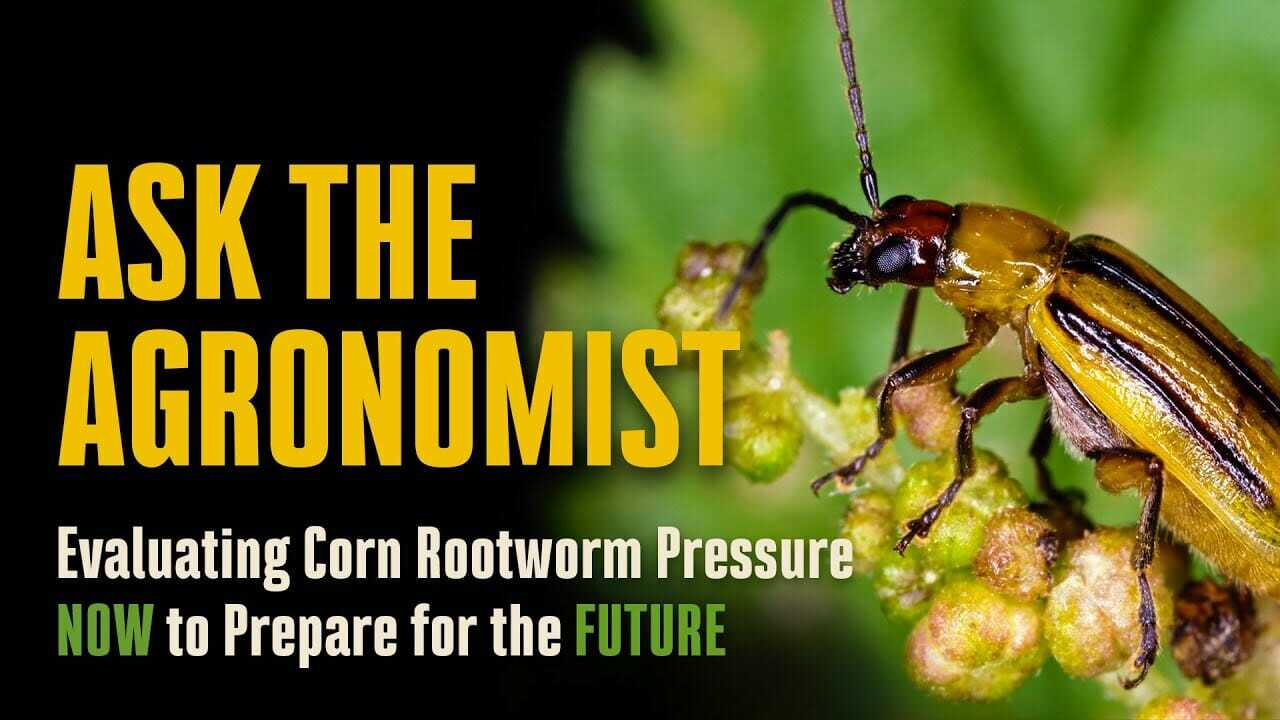
    #AskTheAgronomist: Corn Rootworm Pressure Now and Into the Future

    Maxresdefault

    Corn rootworm pressure has been steadily increasing over the past few years across the Midwest. Precision Agronomy Advisor Phil Long discusses how to identify and gauge pest pressure in your fields and plan for the future.

    Webspec Admin

    July 28, 2021
    #AskTheAgronomist, Agronomics, Corn, Crop, Insects, Season, Summer
  • Latham Hi‑Tech Seeds

    Scout Alfalfa for These Damaging Pests

    Alfalfa pest

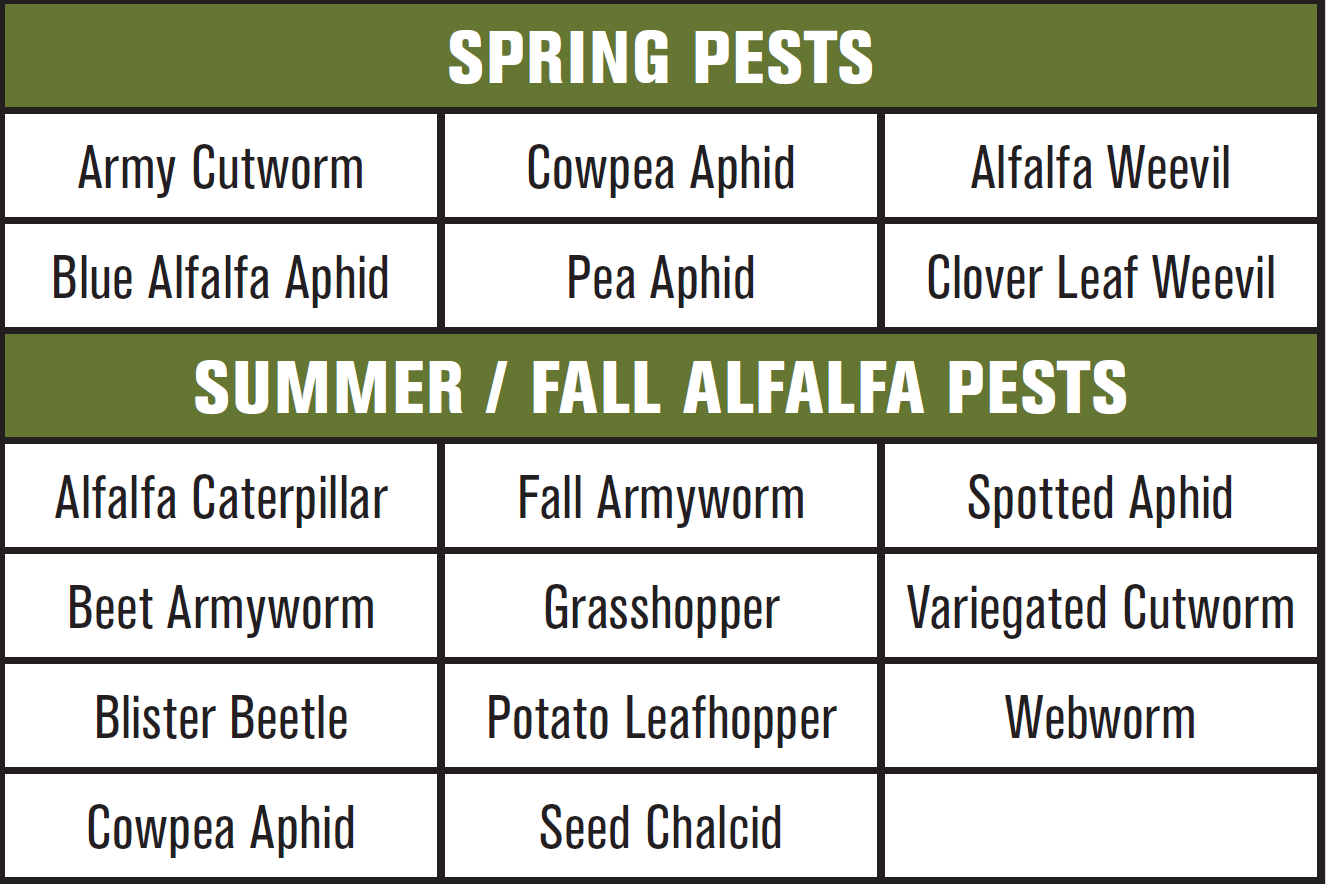
    As with all crops, scouting alfalfa acres is key to controlling pests. Each pest has a different life cycle based on different variables, such as heat and moisture. While weather plays a key role, there are still cyclical patterns in which pests are more common. Below is a chart showing the most damaging pests to scout for according to season.

    Pest calendar

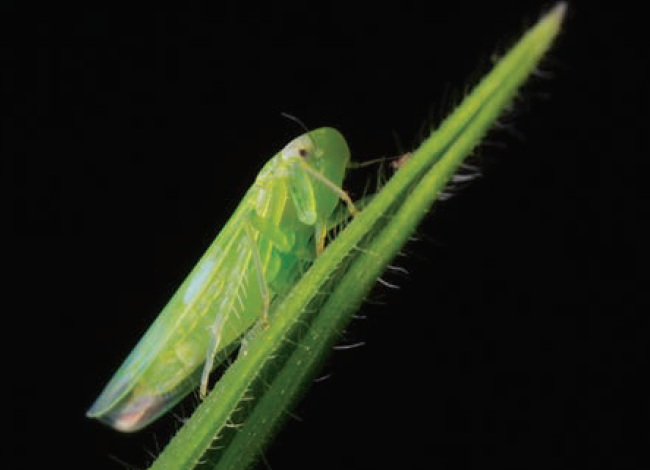
    Potato Leafhopper and Pea Aphids are the two pests that cause the most damage annually across Latham Country. Many farmers question how to judge when spraying an insecticide is a wise choice. Below are some tips to help you scout fields and arrive at a decision.

    1. WHAT TO LOOK FOR. Scouting should begin five to seven days after the first cutting is taken and should continue weekly or bi-weekly if population counts reach close to threshold on a particular day. When scouting for Potato Leafhoppers, look for stunted plants, yellowing leaves in a v-shaped pattern beginning at the leaf tip, as well as “hopperburn,” or a red edge found on the leaf. This red burn can be easily confused for Boron deficiency. Pea Aphids will cause plants to lose their green color and wilt.
    2. HOW TO TAKE SWEEP SAMPLES. The easiest way to scout for these insects is to use a small sweep net. Walk a W-shaped pattern in the field, taking samples from five randomly selected areas. Leafhopper infestations generally begin on the edges of the field, so include these areas in your checks. Tips for Taking Sweep Samples:
      •  Swing the sweep net in a 180-degree arc, so the net rim strikes the top 6 to 8 inches of growth. Each 180-degree arc is one “sweep.”
      • Take a sweep from right to left, walk a step, take another sweep from left to right, and so on.
      • After taking five sweeps, quickly close the net and count the number of each insect.
      • Divide this number by five to get the average for that area; record the average for each of the five areas in the field.
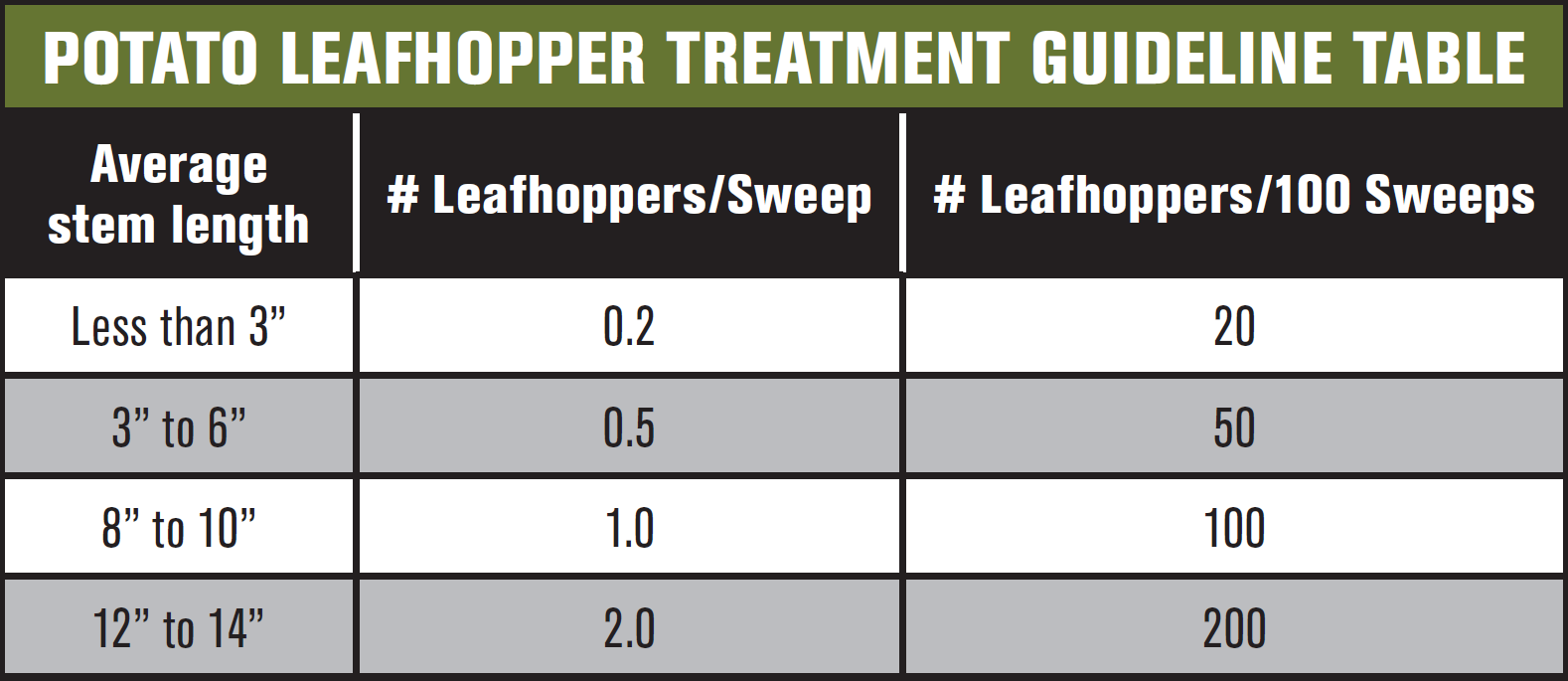
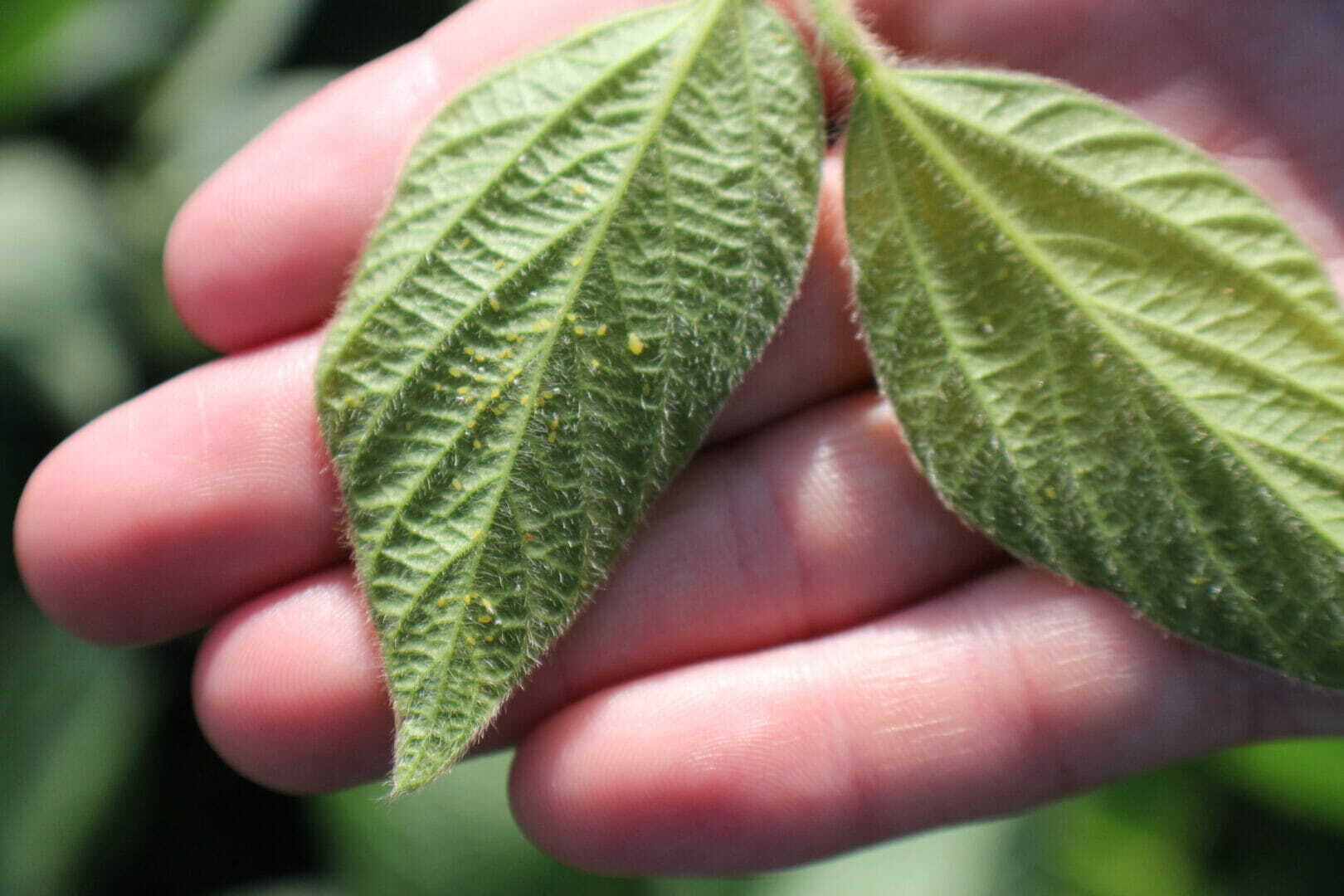
    3. THRESHOLDS AND TREATMENT. A plant’s immune system tends to handle more pressure as alfalfa matures, however, the harmful compounds that each insect species injects while feeding can reduce yields. When left unmanaged, severe cases can shorten the life cycle. Treatment for Potato Leafhoppers and Pea Aphids can follow these guidelines.Leafhopper1Leafhopper2

    Early harvests often can be used to control both leafhoppers and aphids. Insecticides are a tool to help alter the life cycle of a pest and are especially helpful if thresholds are reached when alfalfa is small. Several insecticides are labeled for alfalfa with different classes and modes of action. Most have a harvest wait period depending on class and rate used. Be sure to follow the label guidelines closely. As with herbicides, alternating modes of action reduces the risk of resistant pests.

    Webspec Admin

    July 14, 2021
    Agronomics, Alfalfa, Crop, Insects, Season, Summer, Tech Tuesday
  • Latham Hi‑Tech Seeds

    #AskTheAgronomist: Mid-Season Soybean Pests

    IMG 2926

    It’s time to start looking between rows to see what stressors, outside of dry weather, may be impacting your soybean crop. In this week’s #AskTheAgronomist, Latham Precision Agronomist Phil Long shares how to identify and address mid-season pests such as soybean aphids, soybean gall midge and spider mites.

    Webspec Admin

    June 30, 2021
    #AskTheAgronomist, Agronomics, Crop, Insects, Season, Soybeans, Summer
  • Latham Hi‑Tech Seeds

    Call in Your A-Team

    9734676 xl

    The most successful farmers are those who spend substantial time checking for disease, insects, stand uniformity and plant health. When things don’t look good, it’s time to call in your A-Team!

    The Oxford online dictionary defines A-Team as “a group of elite soldiers or top advisors or workers in an organization.” Your A-Team needs to be a group of expert advisors, who can help you diagnose problems and make recommendations to solve those issues. This group might include your Latham® Dealer or RSM, an agronomist from your chemical retailer or local co-op, a county or state Extension expert, or a private consultant that you’ve hired for this specific purpose. Do not rely only on “coffee shop talk” or advice from neighbors or friends.

    With your A-Team in mind, below are five things to watch for as we approach soybean pollination:

    1. Overall population and stand. I believe that the period between planting and first bloom is the most critical time for soybean growers. Across most of Latham Country, Spring 2021 was dry enough to plant early yet too cool to stimulate consistent growth and vigor. Stands were uneven. Seedlings had a sick, yellow appearance, which can lead to the onset of diseases and pests.

    2. Yellow soybeans. Soybeans can turn yellow (or chlorotic) for many reasons, including Iron Deficiency Chlorosis (IDC), Soybean Cyst Nematode (SCN), high soluble salts, chemical burns, insects and diseases. Your A-Team can help determine what has caused this.

    3. Soybean Aphid. I venture to say the Soybean Aphid is still the #1 insect pest across Latham Country. This insect overwinters in our region as eggs laid on the buckhorn species of trees and shrubs. Winged adults will move to soybeans in early to mid-June. Throughout the summer, most soybean aphids are females that reproduce asexually and rapidly. They can infest a whole field in a matter of days.

    4. Soybean Gall Midge. This new insect species is causing damage in areas of southeast South Dakota, southwest Minnesota, eastern Nebraska, western Iowa and more recently in Northwest Missouri. Researchers expect to see adults in early to mid-June, however, information and management for this pest are still in the discovery stage.

    5. Hail. Farmers don’t need to look for hail, but it too often finds them! Knowing what to look for and how to react is key when deciding what to do after a hailstorm. Soybean plants that are cut off below the cotyledon node have no chance of surviving. Plants that are severely bruised and easily fold over at the impact site have a very poor chance of surviving. However, plants that are only missing one cotyledon or missing both with the growing point still intact have a very good chance of survival. My best advice is to abstain from evaluating fields that received hail as soon as it is dry enough to do so. Instead, give the plants at least a week to see if new growth will occur. That way you can see what you have for a viable population.

    Mark Grundmeier, Product Manager

    June 16, 2021
    #AskTheAgronomist, Agronomics, Crop, Disease, Emergence, Insects, Season, Soybeans, Summer, Tech Tuesday
  • Latham Hi‑Tech Seeds

    Execute Your Plan for Seeding Success

    Alfalfa3

    Vince Lombardi had many attributes that built his winning record, but I suspect it started with a vision of reaching the end zone. He then built and executed a plan. He kept it simple, often using the same play many times in a row. The power sweep was successful because the focus was on executing it flawlessly.

    The same steps can be applied in your pursuit of leaving no yield in the field. Keep the vision clear. Build the plan. Master the basics, and you’ll hit the proverbial end zone of success.

    Below are six basic steps to achieve success with alfalfa this growing season:

    1. Check emergence. Alfalfa is a survival of the fittest plant. Some research suggests 60% of seeds won’t become seedlings. Depending on your seeding rate, seeding bed, and weather, you should see 50 live plants per square foot within four weeks of spring seeding. AlfaShield™ improves survival chances.
    2. Check existing stands. The crown is fully developed after one full year, so we transition to stem count. Strive for more than 55 stems per square foot. If a field is not looking good and the stand is young enough, you should be able to no-till some supplemental alfalfa seed.
    3. Control weeds. Be the boss! Mortality rates are often high due to competition from aggressive weeds. Scout early and spray when label advises. The younger the weeds, the more vulnerable they are to herbicides. New seeding can be cut after about 60 days or so, which also can help manage certain weed populations.
    4. Be vigilant against pests. New seedings are vulnerable to leafhoppers, especially when they come from established fields nearby. Temperatures of 70+ degrees Fahrenheit also increase leafhopper reproduction. Eggs hatch in seven to 10 days and become adults in about 14 days. The damage to yield potential is often irreversible, so it’s important to be vigilant.
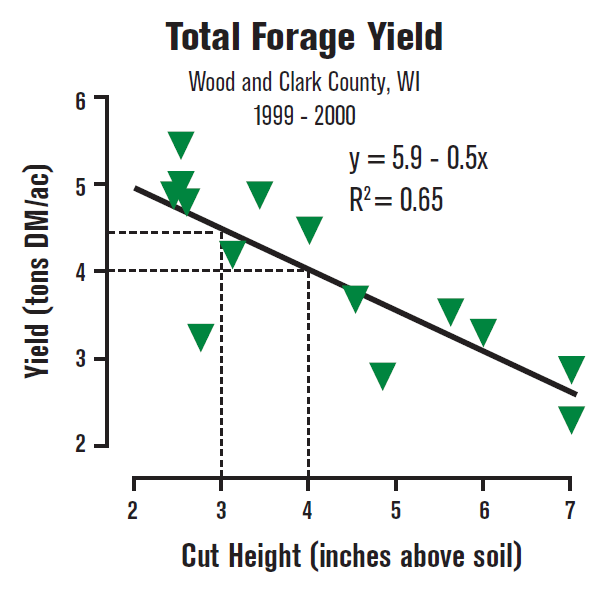
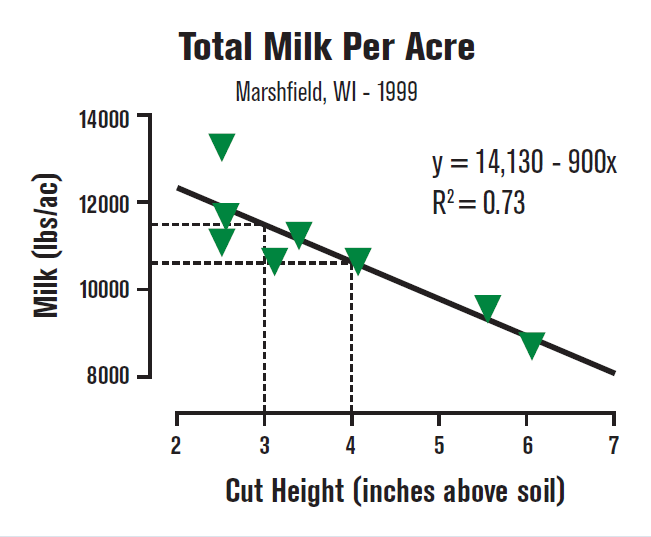
    5. Cut it short for best quality. A tremendous amount of research has shown a cutting height of two inches is the most economical and provides the best forage quality (See graphs below.) That is, as long as you don’t have rocks and gopher mounds!
    6. Feed the plants. Potash equals plant performance. Every dry matter ton of alfalfa removes about 50 to 60 pounds of potassium per acre. Consider adding sulfur, boron and zinc. Testing soil and tissue help you develop the best fertility program. Most growers apply supplemental fertilizer after first cutting and third cutting for best results.
    Total Forage Yeild
    Research on ideal cut height.
    Total Milk Yeild
    Research on ideal cut height.

    Webspec Admin

    May 12, 2021
    #AskTheAgronomist, Agronomics, Alfalfa, Crop, Emergence, Insects, Season, Spring, Summer, Weed Control
  • Latham Hi‑Tech Seeds

    Scout Early for Below-Ground Insects That Damage Corn

    Corn pest

    Numerous below-ground insects can damage your corn stand. We will focus on four pests, including where you will likely find them and what management tips could help prevent damage.

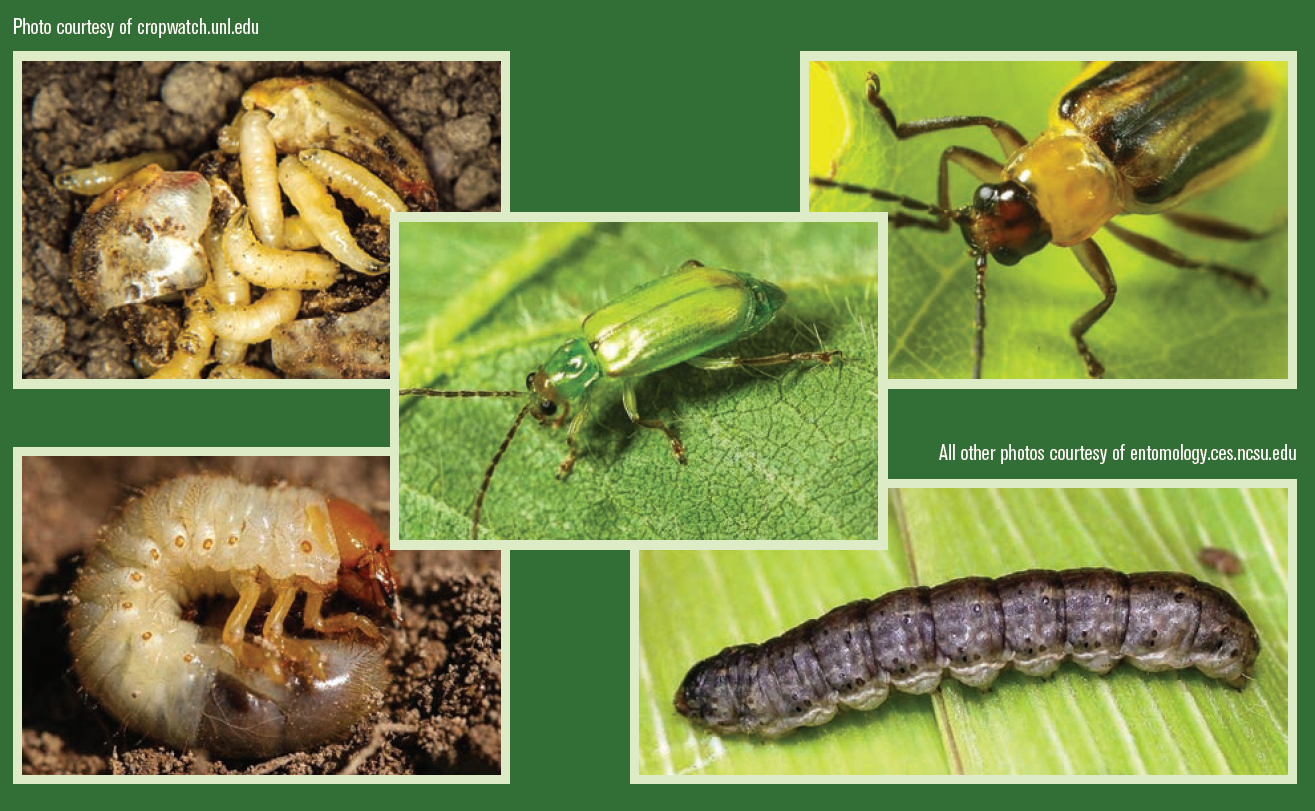
    Seedcorn Maggots destroy seeds before germination. This can occur when soils are cold and germination conditions are less than ideal. Most damage occurs in high organic regions of fields, especially areas with heavy manure applications. The best time to scout is from planting to VE. Dig up seed in areas with damage to check for insect feeding. Note problem areas, and consider additional soil-applied insecticides in those areas in the future.

    Scout for White Grubs prior to planting. High-risk fields include those that have been in pasture one or two years previously or where willow or cottonwood trees are growing adjacent to the field. Most of Latham’s seed treatments control this insect unless infestations are high enough to overwhelm the seed treatment. In areas with that potential, consider soil-applied insecticides.

    Shortly after eggs hatch in May and June, Northern Corn Rootworm and Western Corn Rootworm larvae begin feeding on root hairs and tunnel inside roots. As they develop, larvae begin feeding on larger root tips. Extensive feeding can eliminate entire nodes of roots. In fields with known beetle history, use Latham® hybrids that contain SmartStax® or Agrisure Duracade® technology. In fields with heavy pressure, use a soil-applied insecticide in addition to a traited hybrid.

    Black Cutworm most commonly occur in low or poorly drained areas of fields. Latham brand SmartStax hybrids contain the Cry1F Bt protein that can control most problems of cutworm infestations. Our new hybrids for 2022 planting with the Trecepta® and 5222 Duracade traits contain the Vip3A Bt protein that also offers great control.

    Your Latham Dealer has the tools you need to effectively control these pests. As you scout fields and find pests, note those areas. Then ask your local seed dealer to help you build a plan that incorporates the Latham hybrids that can offer you the best protection.

    Insects Corn

    Latham Seeds Precision Agronomy Advisors

    May 12, 2021
    #AskTheAgronomist, Agronomics, Corn, Insects, Spring, Summer
  • Latham Hi‑Tech Seeds

    Ask the Agronomist: Soybean Gall Midge

    Gall midge larvae credit Dr. Bruce Potter

    Tune in as Phil & Kilah discuss the movement of Soybean Gall Midge across the Midwest. Learn about the life cycle of this pest, identification and a few management practices. #AskTheAgronomist

    :45 – Topic introduction

    1:40 – Soybean gall midge spread across the Midwest

    3:00 – Life cycle of soybean gall midge

    5:00 – Gall midge identification

    12:30 – Pace of gall midge spread

    Laura Cunningham

    February 11, 2021
    Agronomics, Insects
Previous Page
1 2 3 4 … 12
Next Page

Latham Hi‑Tech Seeds

131 180th Street | Alexander, IA 50420

(641) 692-3258

SIGNUP FOR OUR NEWSLETTER
  • Contact
  • Legal
  • Dealer Center
  • Seedware Login
  • Latham Gear

© 2025 Latham Hi‑Tech Seeds. All rights reserved. | Iowa Web Design by Webspec | Privacy Policy

Latham® Hi-Tech Seeds is a trademark of M.S. Technologies, L.L.C., 103 Avenue D, West Point, IA 52656.