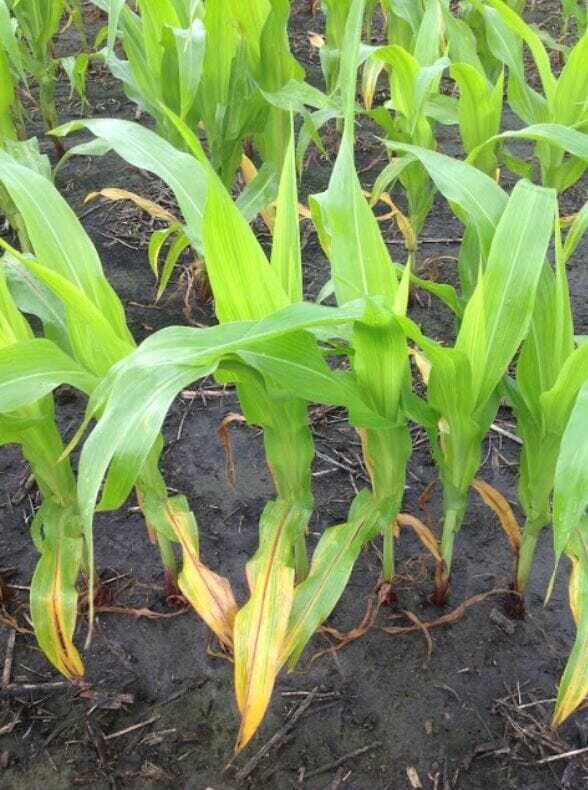
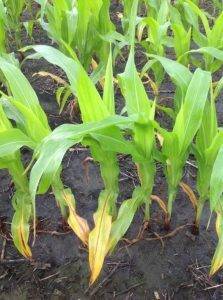
Nitrogen is an essential nutrient and its depletion can lead to severe yield loss. Nitrogen deficiency can be difficult to spot as different hybrids exhibit different symptoms. Most corn plants deficient in nitrogen will exhibit pale-yellowish leaves with a spindled appearance.
Nitrogen is a mobile nutrient and moves to the newest leaves first, leaving the oldest leaves more susceptible to deficiency. By moving from the oldest to youngest leaves, signs of yellowing will often form a “V” pattern on the plant leaf.
Causes of Nitrogen Deficiency
Cold or saturated soils are the primary causes of nitrogen deficiency in corn. Periods of heavy rainfall increase nitrogen leaching, depleting saturated soils of the vital nutrient. Aside from soil leaching, nitrogen can be lost through denitrification – where the nutrient is converted to a gas form and lost in the atmosphere.
When soil conditions are dry, sandy or poorly fertilized, early-applied nitrogen fails to be absorbed by plants. Insect diseases that injure root systems can further prevent proper absorption of nitrogen and lead to deficiency.
Other unavoidable circumstances happen later in the growing season when the increase in plant height and density can block sunlight absorption and reduce photosynthesis. This leads corn to use nutrient reserves within the plant, which will weaken stalks.
Implications
60% of the nitrogen needed to support corn growth is built-up between V4 and pollination, making this an important time to monitor for deficiency. Scouting for nitrogen deficiency should also take place after episodes of heavy rainfall.
While having negative implications on yield potential and crop quality, nitrogen deficiency can also contribute to other corn disorders including tip-dieback and kernel abortion. Plants that are nitrogen deficient will cannibalize their stalks to compensate for the nutrient loss. This makes stalks more vulnerable to lodging and pinching.
Management Options
Tissue sampling can provide insight into how severe deficiency is. When testing for nitrogen deficiency in corn, gather samples from different areas of the field to compare nitrogen levels in deficient corn with healthy plants.
Nitrogen deficient corn should be harvested early in order to prevent additional yield loss from stalk lodging. When planning for next year’s crop, avoid planting hybrids with a history of poor nitrogen uptake. Some hybrids also demand a higher level of nitrogen during grain fill than others, so it is important to consider when planning for the next crop.
Be sure to consult with your local Latham representative to determine the best plan for managing nitrogen deficiency in corn.
Nitrogen rates can be the most powerful yield influencer when it comes to corn inputs. Other management practices including fungicide, starter fertilizer and seeding rate also can significantly impact yield.
In a previous post, I discussed the results of our Climate FieldView (CFV) study. We compared a recommendation from Climate’s Nitrogen Advisor tool of 135 pounds per acre (lbs/A) total Nitrogen (N) to our typical yield goal (YG) approach of 170 lbs/A total N. We didn’t see significant yield differences between the two nitrogen programs. In this post, I’m going to focus on the other 10% of the
study.
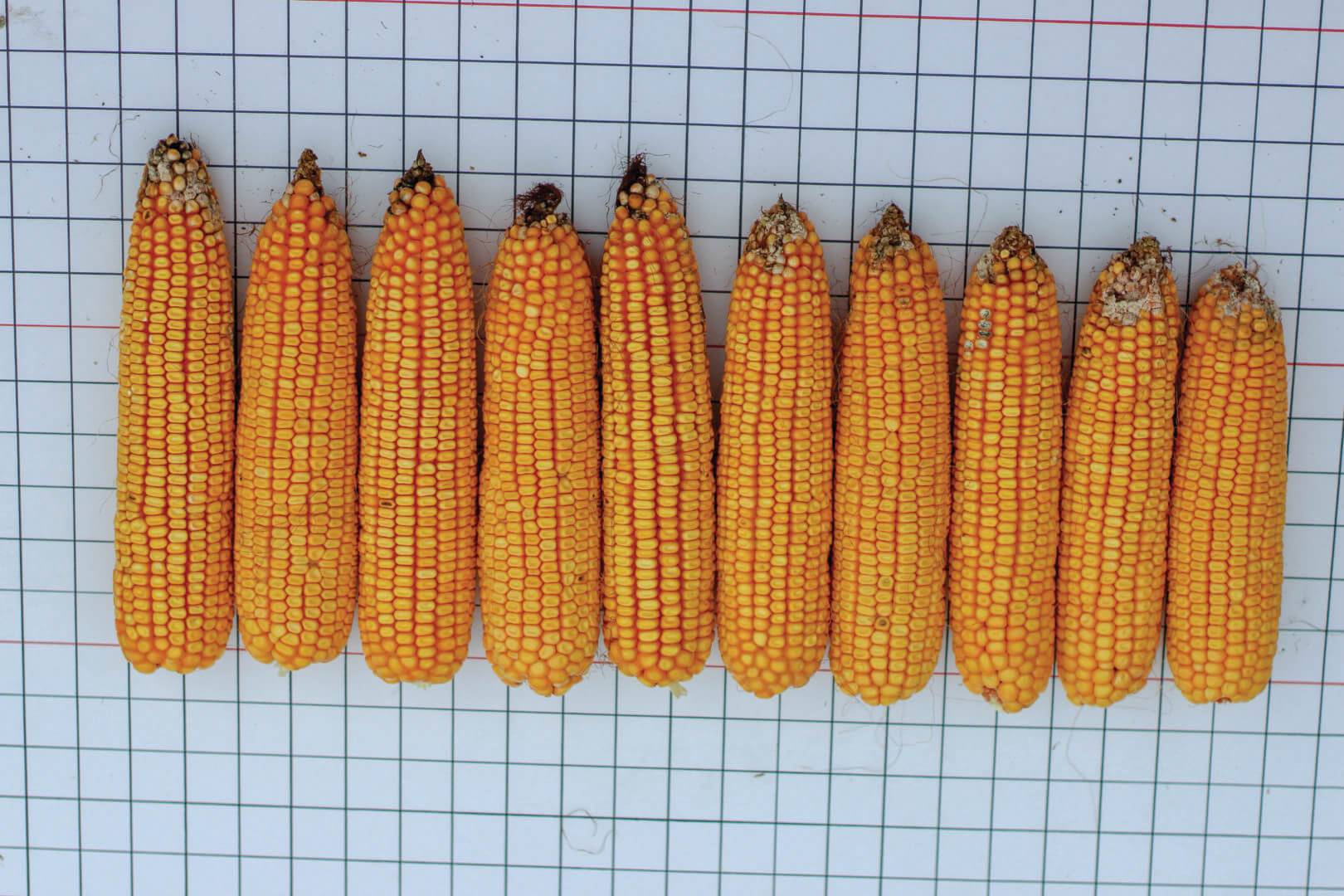
Seeding rates don’t always influence yield as expected because many of our hybrids have outstanding ear flex and the plant compensates for the additional space. Our planting rates were around 31,500 and 37,500 seeds per acre in our study, but weather greatly affected this. Several severe storms hit during the early growing season, and winds of 70+ mile-per-hour hit during the period of rapid growth for most of our corn. Corn fields throughout our area saw quite a bit of greensnap; the corn we planted 10 days later had no greensnap. Unfortunately, timing was not on our side. I took stand counts before harvest. Our final plant stands were 25,000 and 29,000 plants per acre (ppa) for the low and high seeding rates. We had approximately a 4,000-plant difference between the two seeding rates, which made a significant yield difference.
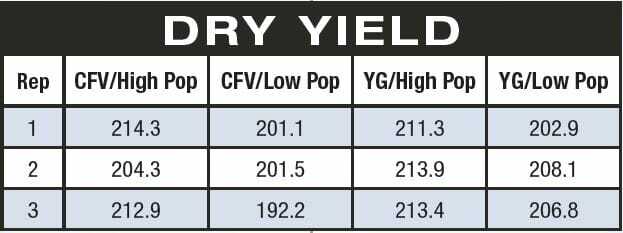
Our CFV nitrogen test had 135 total lbs/A of N yielded 198 bushels per acre (bu/A) at the low seeding rate, and 210 bu/A at the high seeding rate. Our YG approach with 170 lbs/acres total nitrogen yielded 206 bu/A at the low seeding rate and 213 bu/A at the higher seeding rate. We saw both a 12 bu/A and 7 bu/A advantage with the higher seeding rates in the CFV and YG systems. After subtracting the cost for higher seeding rates, the additional yield resulted in additional revenues of $23.48/A (CFV) and $5.80/A (YG). We used LH 5245 VT2 PRO, which has a semi-flex ear. This means that even at the low seeding rate of 25,000 ppa, that hybrid had the late-season ability to flex enough in ear length and kernel depth (weight) to make up for lost bushels. The question is, “Does it pay to plant at higher rates?” It did for us in 2018, but there’s a good chance our results will differ in 2019.
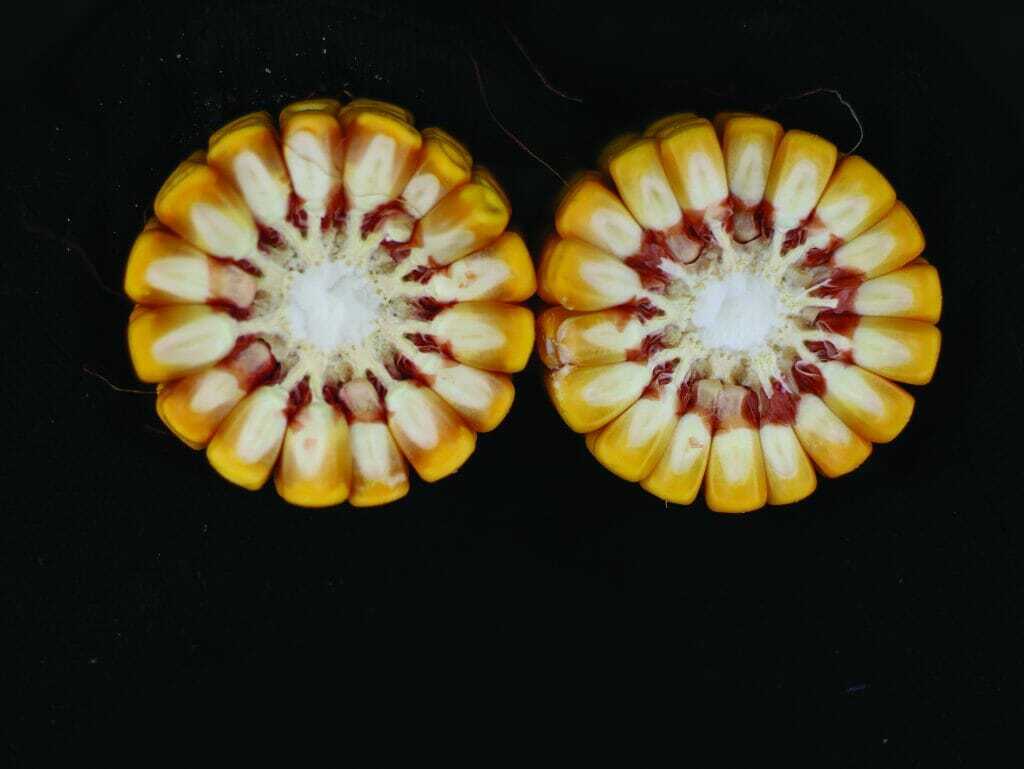
Results for LH 5245 VT2 PRO with planting populations at 15,000 ppa on the left (resulting in girth of 16 kernels and length of 38 kernels on the left-most ear) and 58,000 ppa on the right (girth 18, length 33 on the right-most ear).Cross Section split of LH 5245 VT2 PRO from Latham Hi‑Tech Seeds stress wheel research study 2018.
Our nitrogen test didn’t show a yield difference despite the 35 additional pounds in our YG approach. Given the abnormally high amount of rainfall and above-average growing degree units (GDUs) for the season, we likely saw an increased grain-fill period and some additional loss of nitrogen through leaching. Above-average temperatures and good soil moisture means we also likely had higher mineralization rates, so the soil may have saved us because this particular soil organic matter is 5.0 percent.
All things considered, our YG approach won out in terms of revenue this year, but will it hit the mark every year? Consistency is what we want to see when trying to manage such a variable nutrient in the soil. In the future we plan to expand our research on the CFV Nitrogen Advisor tool to bring meaningful information on seeding rates to our dealers and customers.
Nitrogen is the 2nd most expensive input but the #1 yield-influencing input we apply every year to our corn crop. So how can we use it more efficiently?
According to Oklahoma State’s Nitrogen Use Efficiency (NUE) website, side-dress or top-dress practices see about 50% NUE. That means that when you apply 200 pounds/acre of nitrogen to achieve a 200- to 250-bushel yield, the corn crop only uses around 100 pounds per acre of nitrogen. That’s not easy to digest in these economic times, but it provides motivation to determine the best nitrogen rate to keep yields up while ensuring the corn plants use it. This is where precision ag software comes into play.
The Climate FieldView (CFV) Nitrogen Advisor (NA) is one of several nitrogen models that factors weather into the equation. During the 2018 growing season? We tested the CFV NA in a large plot at the Latham Farm in Alexander, Iowa. The test was replicated three times, using two nitrogen rates.
Using the NA, we applied a total 135 pounds per 3 212.9 acre. Using our previous Yield Goal approach (YG), we applied a total of 170 pounds/acre. We put down 25 pounds per acre with MAP before planting then an additional 70 pounds/acre UAN with our herbicide at planting. The last application of 32% UAN was applied June 13. This study also included a high and low seeding rate of 37,500 and 31,500 seeds per acre.
We planted LH 5245 VT2 PRO on May 18 for this study. After analyzing yield across the two different nitrogen rates and two seeding rates, there was not a significant difference in yield between the Nitrogen Advisor and our Yield Goal approach. Given that 31 inches of rain fell this growing season as compared to the 10-year average of 23.4 inches, I thought we’d see more difference between the two nitrogen rates. I flew my drone periodically throughout the growing season and noticed a few NA plots showed some yellowing. The yellowing wasn’t major and it didn’t last long.
I also pulled ear leaf samples at R1 and compared them to our yield results. There was a significant impact of the lower nitrogen rate by the Nitrogen Advisor but only at the higher populations, which follows the trend many researchers have found. As the population increases, nitrogen decreases in the ear leaf. It is difficult to apply enough nitrogen to make up for the extra demand that all those extra plants put on the supply in the soil. Therefore, if you are VR seeding, then VR apply nitrogen to apply more in the heavier seeded areas or consider applying higher blanket rates if you can’t VR apply nitrogen.
The biggest take away from the R1 ear leaf samples is that all were “deficient,” meaning we aren’t applying enough nitrogen overall with our YG approach to see the full potential. We must keep in mind 50% NUE and the role that the weather, especially this year’s heavy rain events, likely played on how much nitrogen was taken up and how much was lost due to leaching.
Look for Part 2 of our research findings in next month’s article. I will discuss the surprising impact that the different seeding rates had on this study.