
Latham Hi-Tech Seeds

(641) 692-3258

  • Home
  • Products
    • Corn
    • Soybeans
    • Alfalfa
    • Corn Silage
    • Seed Guide
  • Performance
  • Find a Rep
  • Media
    • Blog
    • News
    • Videos
    • Podcasts
    • TECHTalk
  • About Us
    • Company History
    • Our Mission
    • Careers
    • Become a Rep
    • Sowing Seeds of Hope
  • Contact Us
  • Latham Hi‑Tech Seeds

    Sometimes the late bird can still catch a worm

    An article published on wallacesfarmer.com this week highlighted that there’s still time to test soil for the presence of soybean cyst nematode (SCN). The small, plant-parasitic roundworm feeds on roots and can cause significant yield losses, especially in dry growing seasons.
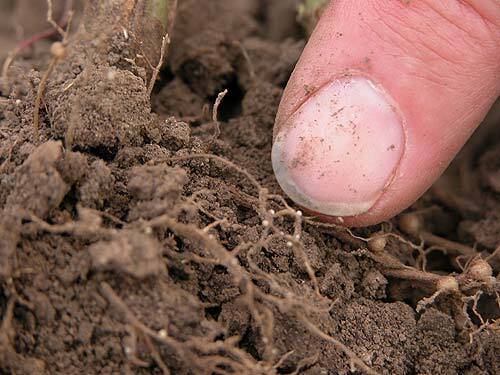
    While SCN is a devastating pest, its risk is often overlooked because SCN damage isn’t readily apparent during growing seasons with excess moisture. SCN is an incredibly persistent pest, however, and adequate moisture or not, has the ability to live more than a decade in infested soils without the presence of soybeans, and produce more than three generations in just one growing season.

    In a recent Iowa State University Integrated Crop Management article, Greg Tylka, with the Department of Plant Pathology and Microbiology, highlighted the need to remain offensive against SCN, this year especially.

    “As we approach spring planting season, increased vigilance about SCN is warranted for the 2012 growing season because of the dry soil conditions statewide,” Greg said. SCN can cause substantial yield loss to susceptible soybean varieties under dry soil conditions, even when SCN egg population densities are low. If soybeans will be produced in 2012 in fields infested with SCN, high-yielding, SCN-resistant varieties should be grown.”

    For more information about SCN, and to find tips for collecting a soil sample to detect whether or not it’s present in your field, visit http://farmprogress.com/wallaces-farmer-story-still-time-check-fields-scn-9-57633.


    Team Latham

    March 1, 2012
    Agronomics, Crop, Disease, General, Insects, Soybeans
  • Latham Hi‑Tech Seeds

    GOSS’S WILT: A good defense may be your best offense

    Once thought to be a disease that only affected western states, Goss’s Wilt outbreaks have increased significantly in Iowa, Nebraska, Wisconsin and Illinois. The increased frequency has prompted many farmers to ask what they can do to avoid Goss’s Wilt in 2012.

    Goss’ Wilt is a bacterium that can overwinter in infected residue on the soil surface and in weed hosts. Most often, the bacteria will enter the corn plant through wounds caused by hail damage, insects or even heavy winds. Since Goss’s Wilt is a bacterial disease, foliar fungicides have no effect. Therefore, in-season management options are very limited.

    To avoid Goss’s Wilt in 2012, farmers should keep recommended management practices in mind. Best practices include growing resistant corn hybrids, using crop rotation and crop residue management. Choosing corn hybrids with a strong resistance to Goss’s Wilt is your first line of defense, Latham’s own John Toft was quoted in an article posted yesterday by Wallaces Farmer. Other tips to protect fields against Goss’s Wilt are detailed in that same article. Click here to read “Got Wilt? Keep Disease Resistance in Mind.”

    Team Latham

    September 27, 2011
    Agronomics, Corn, Crop, Disease, General
  • Latham Hi‑Tech Seeds

    Ways to Avoid Goss's Wilt in 2012

    Goss’s Wilt, which has plagued Nebraska corn fields since 1969, has been spotted in Iowa this season.  Iowa farmers are searching for ways to protect yield potential yet this season, as well as avoid the problem in 2012, says ISU Plant Pathologist Alison Robertson.

    There are three products that Robertson says she’s heard Iowa corn growers are trying to treat Goss’s Wilt: Procidic, Kocide and Intercept.  Procidic is advertised as a broad spectrum fungicide and bactericide.  However, Robertson isn’t aware of any published data for the effect of Procidic against bacterial diseases or use on corn. Kocide is not labeled for use on corn to manage Goss’s Wilt, so Robertson said it should not be used.  A third product that Iowa growers are reportedly trying is Intercept.  There is very little information available on this product, but it’s reportedly been used in Florida to control citrus canker, which is also caused by a bacterium.

    Robertson is monitoring a corn field in Gilbert, Iowa, that had an application of Procidic, as well as an earlier application of Stratego YLD. She says she also will be evaluating fields where Intercept has been applied.  At the end of the growing season, ISU researchers will study the effect of both products on Goss’s Wilt disease development and general plant health of the corn.

    “Continuous corn production together with minimum tillage practices have in part contributed to the epidemic of Goss’s wilt we are witnessing in 2011,” says Robertson in a recent Wallaces Farmer article.  “Other factors include susceptible germplasm and stormy weather.”

    To avoid Goss’s Wilt in 2012, farmers should keep recommended management practices in mind.  Best practices include growing resistant corn hybrids, using crop rotation and crop residue management.

    Team Latham

    August 15, 2011
    Agronomics, Corn, Crop, Disease, General
  • Latham Hi‑Tech Seeds

    "Tipping Back" is a Sign of Heat Stress

    Farmers across the state are starting to see “tipping back,” where kernels aren’t filling all the way to the end of an ear of corn.  In this video report, Latham’s Corn Product Specialist explains why high temperatures for prolonged periods during key corn developmental stages have attributed to the amount of tipping back that’s evident this season.

    Stress can result in tipping back, agrees Iowa State University (ISU) Extension Corn Agronomist Roger Elmore.  Kernels may not have pollinated in the first place or pollinated kernels may have been aborted around milk stage or blister stage.  For more information on what causes tipping back, click here to read a related Wallaces Farmer article.  To read how tipping back affected yields in 2010, click here.

    Night-time temperatures after silking greatly impact yield.  Cool night-time temperatures after silking in 2009 resulted in the highest average statewide corn yield ever recorded in Iowa.  On the contrary, warm night-time temperatures contributed to lost yield in 2010.

    [youtube]http://www.youtube.com/watch?v=4sJ1aRzFLTU&feature=channel_video_title[/youtube]

    Team Latham

    August 9, 2011
    Agronomics, Corn, Crop, Disease, Drought, General, Weather
  • Latham Hi‑Tech Seeds

    Seeing Signs of Goss' Wilt in Latham Country

    Guest Blogged by John Toft
    CCA, Tekemah, NE

    Symptoms of Goss’ Wilt were reported earlier this growing season in Nebraska and Iowa.  With all of the storm damage in these areas, including hail and straight-line winds, it’s no wonder that we’re receiving even more reports now of Goss’ Wilt.  Stalk bruising and leaf shredding provide ways for pathogens to enter the corn plant.  High night-time temperatures, which we’ve also experienced recently, favor the spread of Goss’ Wilt.

    Goss’ Wilt causes large lesions that start on the leave’s margins and eventually encompass the entire leaf.  These lesions look very similar to Gray Leaf Spot injury.  One simple, but not fool-proof, way to diagnose the difference is that Goss’ will have a waxy appearance due to the different

    Note the waxy, shiny appearance to the lesions caused by Goss' Wilt

    pathogens that cause the disease.  Gray Leaf Spot is caused by a fungus while Goss’ is caused by a bacterium, which means Goss’ Wilt cannot be controlled by a fungicide.  Effective control measures include crop rotation, tillage and hybrids that show genetic resistance.  Latham’s 2012 lineup has a number of hybrids with excellent disease packages, so keep this in mind as you make your seed decisions in the coming months.

    The bacterium responsible for Goss’ Wilt may infect the xylem, or water-conducting tissues of the plant, which results in wilting and death.

    Seed selection is most likely going to play an even more important role as Goss’ Wilt becomes more prevalent.  Bacterial wilt was first reported in Nebraska more than 40 years ago, and the list of states affected keeps growing.  Goss’ Wilt has been identified in Kansas, Colorado, Wyoming, South Dakota and Iowa.  The disease has also been confirmed in Illinois and Wisconsin, according to a NebGuide article, “Goss’s Bacterial Wilt and Leaf Blight of Corn,” published by the University of Nebraska—Lincoln Extension.

    Gary Geske

    August 2, 2011
    Agronomics, Corn, Crop, Disease, General
  • Latham Hi‑Tech Seeds

    Scouting for SDS is Important

    Sudden Death Syndrome (SDS) typically appears during the last week of July or the first week of August in Latham Country, so farmers are being advised to keep their eyes open for this yield-robbing disease.  Cool, wet conditions at planting time can contribute to the severity of SDS.

    “Although we do not expect SDS to be as widespread or as severe as the 2010 growing season, there have been some Iowa counties that have received higher-than-normal precipitation,” said ISU Plant Pathologist Alison Robertson in a recent Wallaces Farmer article. “We expect the risk of SDS in these counties to be higher since the development of this disease is favored by wet conditions.”

    Scouting for SDS is important for several reasons:

    1. Identifying fields or parts of fields with SDS can help with future management practices. These management tactics include reducing soil compaction since the disease has been associated with compacted soil; planting fields with a history of SDS towards the end of a planting schedule when soils may be warmer and drier; and testing for the presence of soybean cyst nematodes.
    2. Cyst nematode is usually, but not always, associated with SDS. You may see more severe cases of SDS in soybean varieties that are SCN-susceptible. When selecting soybean seed, it’s best to read through the SDS score rather than judge a bean solely by SCN tolerance.
    3. Planting resistant varieties, or avoiding very susceptible varieties, is the most effective way to reduce losses from SDS. Keeping good field records from year-to-year will help determine which characteristics are most crucial when selecting soybean varieties to plant in a given field in a given year.  The following Latham® varieties carry excellent scores for SDS tolerance:
    • L1568R2
    • L1584R2
    • L1773L
    • L1783R2
    • L1800RX
    • L1884R2
    • L1936R
    • L2084R2
    • L2085R
    • L2183R2
    • L2275R2
    • L2283R2
    • L2438R2
    • L2560R
    • L2585R2
    • L2686L
    • L2767R2
    • E2784R2
    • L2875R
    • L2983R2
    • L2987L
    • L3157R
    • L3268R2
    • L3287L
    • L3385R2

    As you prepare to walk your fields, these videos shot last season by Soybean Product Manager Mark Grundmeier will explain what symptoms of SDS to look for in your fields.  You might also enjoy watching Mark’s brief, but informative, videos on SDS management and prevention.

    [youtube]http://www.youtube.com/watch?v=_Sdx4EqpNw4&feature=channel_video_title[/youtube]

    [youtube]http://www.youtube.com/watch?v=IgQYwdnU788&feature=channel_video_title[/youtube]

    [youtube]http://www.youtube.com/watch?v=_kvxo3D3SQ0&feature=channel_video_title[/youtube]

    [youtube]http://www.youtube.com/watch?v=V9_pXGl7y_Y&feature=channel_video_title[/youtube]

    Team Latham

    August 1, 2011
    Agronomics, Crop, Disease, General, Soybeans
  • Latham Hi‑Tech Seeds

    Seeing Twisted Whorls and Yellowing Corn?

    Nick Benson, Latham’s corn product specialist for the east, has been seeing Twisted Whorl Syndrome in fields.

    Corn plant with signs of Twisted Whorl Syndrome

    This syndrome is most evident in the late V5 to early V6 stages, when corn has five to six visible leaf collars and is about knee-high.  The lowermost leaves appear normal although some may exhibit some crinkled tissue near the base of the leaf blade, according to a newsletter article by Purdue University.  Beginning with the sixth or seventh leaf, the whorl is tightly wrapped and bent over at right angles to the ground.

    While the cause of Twisted Whorl Syndrome is not fully understood, there are some correlations between weather.  This phenomenon is more often

    Ribbing on lower leaf results from Twisted Whorl Syndrome.

    present when there has been a sharp transition from periods of slow corn development (typically, cool cloudy weather) to periods of rapid corn development (typically, warm sunny weather plus ample moisture).

    There is little or no effect on yield from periods of twisted growth. By the time the affected plants reach waist to chest-high, the only evidence that remains of the previous twisted whorls is the crinkled appearance of the most-affected leaves.

    Click the video link below for a short “How To” from Nick Benson on identifying Twisted Whorl Syndrome in your fields.

    [youtube]http://www.youtube.com/watch?v=rLUfOiTVCQM&feature=channel_video_title[/youtube]

    Gary Geske

    June 23, 2011
    Agronomics, Corn, Crop, Disease, General
  • Latham Hi‑Tech Seeds

    The Importance of Tissue Testing

    The application of micronutrients during early crop growth stages can result in some yield increase.  That’s why we recommend tissue testing for farmers, who are interested in pushing their yield goals.

    When combined with soil testing and yield data, tissue sampling gives us a more complete picture of what nutrients the plant is using and where deficiencies exist.  It’s a “real time” look at what nutrient levels are within a plant.  Tissue testing is a very useful tool to determine macronutrient uptake including Nitrogen (N), Phosphorus (P) and Potash (K).  It also helps determine micro-nutrient uptake including Zinc (Zn), Boron (B), Sulfur (S), Maganese (Mn), Copper (Cu) and Iron (Fe).

    Tissue sampling can be done at any stage, however, we recommend testing at these three times during the growing season:

    • Corn:  V4-V6, V14 to tassel, and R2
    • Soybeans: V3, R1, and Pod Fill

    For more information about tissue testing, contact the trusted professionals associated with Latham Hi‑Tech Seeds. Call 1.877.GO.LATHAM (1.877.465.2842) today to get yours scheduled!

    Webspec Admin

    June 2, 2011
    Agronomics, Disease, Fungicide, General
  • Latham Hi‑Tech Seeds

    Time to Begin Early Crop Scouting

    Many Midwest farmers will wrap up the 2011 planting season this week, but there won’t be much rest for the weary.  As soon as seed is in the ground, it’s a good idea to start scouting fields.

    Post-planting is an ideal time to begin scouting one’s crops.  Many soilborne pathogens strike as soon as the seed begins to take on water; others strike young seedlings.  Because seeds can germinate quickly and emerge in 3 – 5 days, it’s not too soon to start walking your fields.

    Check plant populations, evaluate stands and be on the lookout for early summer diseases.  Is there a germination problem?  Do you see effects of chilling or crusting?

    Assessing your situation ASAP will allow you to formulate a plan while there’s still plenty of time to implement it.  You could replant in parts or in all of a field now, so you can attain the yields and returns you want this fall.  Information on corn replanting decisions is available from www.agronext.iastate.edu/corn. Click on the “Planting” topic, then click on the “Replant Decision Aid Calculator” tab and use that tool and related information to help make a replant decision. For a resource on soybean replanting decisions, go to www.extension.iastate.edu/publications/pm1851.pdf.

    Another benefit of evaluating current stands is to help you determine what adjustments should be made before planting next year’s crop:  Do you need to adjust your planter settings or your planting speed?

    Once you get past the mechanical issues, look at the disease pressure.  If soybeans are damping off, perhaps next season you should opt for seed-applied fungicides? Do you need to pay closer attention to a particular soybean brand or corn hybrid’s disease rating?  Seed selection is one of the most important decisions affecting yield. Click here for tips on selecting  soybean brands and selecting corn hybrids.

    Webspec Admin

    May 12, 2011
    Agronomics, Disease, Emergence, Fertility, Fungicide, General, Growth Stages, Insects, Weed Control
  • Latham Hi‑Tech Seeds

    New Tool to ID Soybean Diseases

    A colorful, 36-page guide with information on 24 soybean diseases is now available for free – including shipping – through Iowa State University Extension’s online store at www.extension.iastate.edu/store.

    “Soybean Diseases” (CSI 0004), gives farmers a comprehensive look at soybean diseases and outlines management options once the disease is identified.

    The publication was written by Daren Mueller, Extension specialist; Alison Robertson, plant pathologist; Greg Tylka, nematologist; and Adam Sisson with the ISU Corn and Soybean Initiative. Funding was supplied by the Iowa Soybean Checkoff, Iowa Soybean Association and ISU Extension.

    Team Latham

    January 25, 2011
    Agronomics, Disease, General
Previous Page
1 … 9 10 11 12 13
Next Page

Latham Hi‑Tech Seeds

131 180th Street | Alexander, IA 50420

(641) 692-3258

SIGNUP FOR OUR NEWSLETTER
  • Contact
  • Legal
  • Dealer Center
  • Seedware Login
  • Latham Gear

© 2025 Latham Hi‑Tech Seeds. All rights reserved. | Iowa Web Design by Webspec | Privacy Policy

Latham® Hi-Tech Seeds is a trademark of M.S. Technologies, L.L.C., 103 Avenue D, West Point, IA 52656.