Latham Hi-Tech Seeds

(641) 692-3258

  • Home
  • Products
    • Corn
    • Soybeans
    • Alfalfa
    • Corn Silage
    • Seed Guide
  • Performance
  • Find a Rep
  • Media
    • Blog
    • News
    • Videos
    • Podcasts
    • TECHTalk
  • About Us
    • Company History
    • Our Mission
    • Careers
    • Become a Rep
    • Sowing Seeds of Hope
  • Contact Us
  • Latham Hi‑Tech Seeds

    A Family Farm Legacy Built to Last

    202538931 343758244040503 8229323042761996401 n
    206421059 201901201705231 6484923345517131053 n
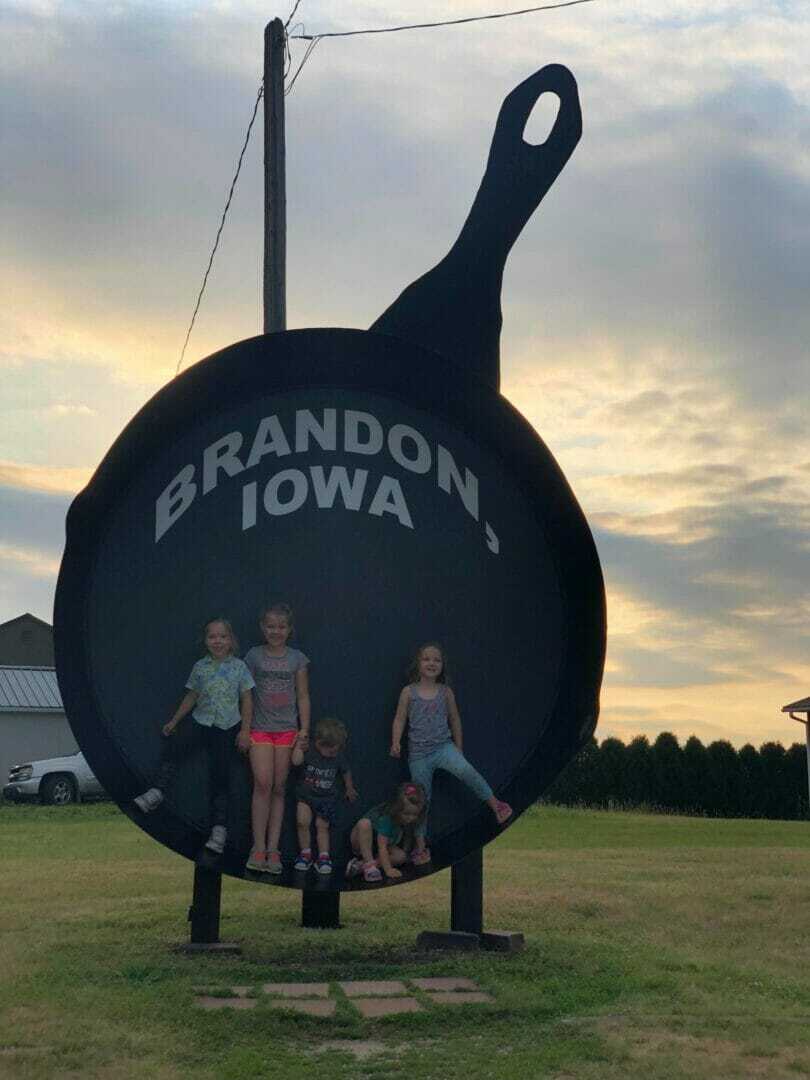
    The Erger family poses for a photo in Iowa’s largest frying pan in Brandon.

    They say in Iowa, “If you build it, they will come.”

    That’s exactly what happened in 2004. Someone commented to Dave Erger from Brandon, Iowa, that it must take a really big frying pan to feed the entire town during its annual Cowboy Breakfast Festival. So a pan was built and now hundreds of tourists annually make a roadside stop for a photo opportunity.

    “My dad, along with several other local farmers, met in Dad’s shop,” says Andy, who is the fourth generation to own and operate his family’s farm in eastern Iowa. “It was supposed to be more of a joke, but before they knew it, it had become a pretty big deal.” Iowa’s largest frying pan is an impressive nine feet wide and 14 feet long, including the handle. The skillet could fry 44 dozen eggs or 88 pounds of bacon.

    Farmers are known for rising to any challenge, whether it’s fabricating a giant frying pan or surviving a global pandemic. Unfortunately, Dave Erger faced a health challenge in 2014 that became life changing. He suffered a heart attack that resulted from Lupus, an autoimmune disease that causes one’s body to attack itself. Lupus has made farming more difficult for Dave. As a result, Andy has accepted more responsibility in recent years. That’s why in the spring of 2021 Dave and his wife, Teresa Erger, approached Andy and his wife, Jamee, about purchasing the farm.

    “Jamee and I have spent countless hours crunching numbers. We met with our bankers, FSA consultants, and tax advisors. We were relieved when we received confirmation in April that our loans had been approved,” says Andy. “Keeping my family farm running and thriving has always been a dream of mine. I get to share my dream with my wife and our children.”
    202538931 343758244040503 8229323042761996401 n
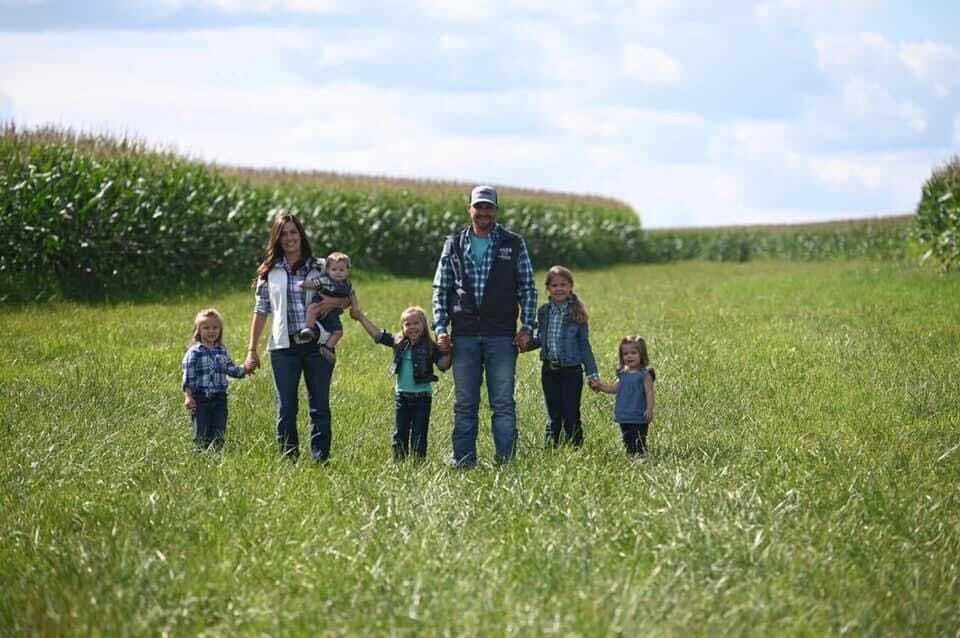
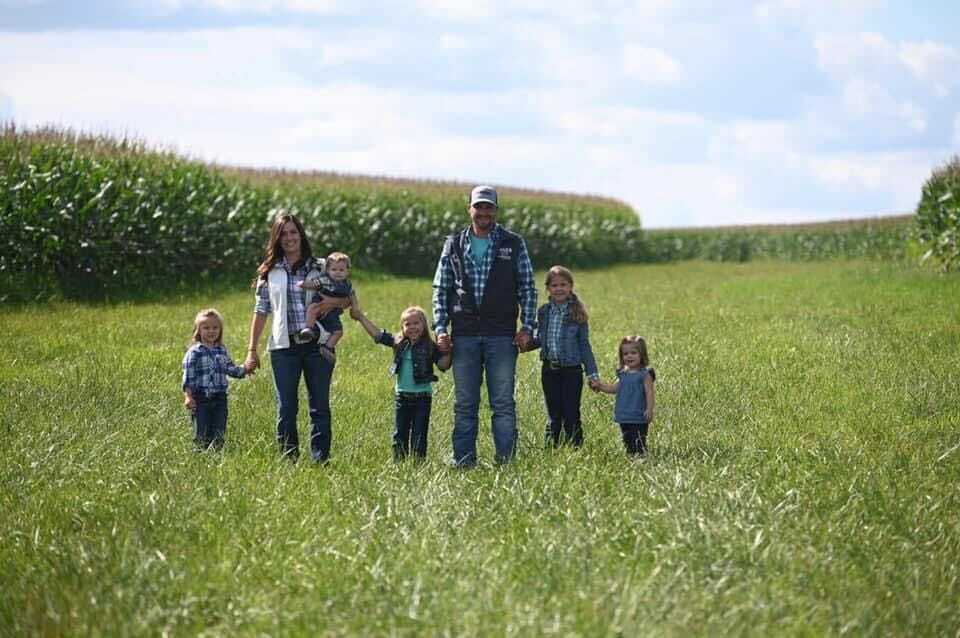
    The Erger Family

    Andy and Jamee are the proud parents of four daughters and one son: Kayleigh, Amiliah, Davennah and Rosaleigh and Gilbert (Gib), who was named after Andy’s great grandfather.

    203058457 170953181590696 3276795246024410906 n
    Jamee is learning all the ropes of becoming primarily responsible for their Latham seed dealership, Erger Seeds.

    With Andy taking on more of the farming responsibilities in addition to his custom hay baling business, Jamee is learning all the ropes of becoming primarily responsible for their Latham® seed dealership, Erger Seeds. Andy became a Latham® Seeds dealer in 2014 because he knew the extra income would help support his family.

    “Latham products have worked great on our farm, so I wanted to share it with others around me,” says Andy. “Our dealership also has provided opportunities to create new friendships.”

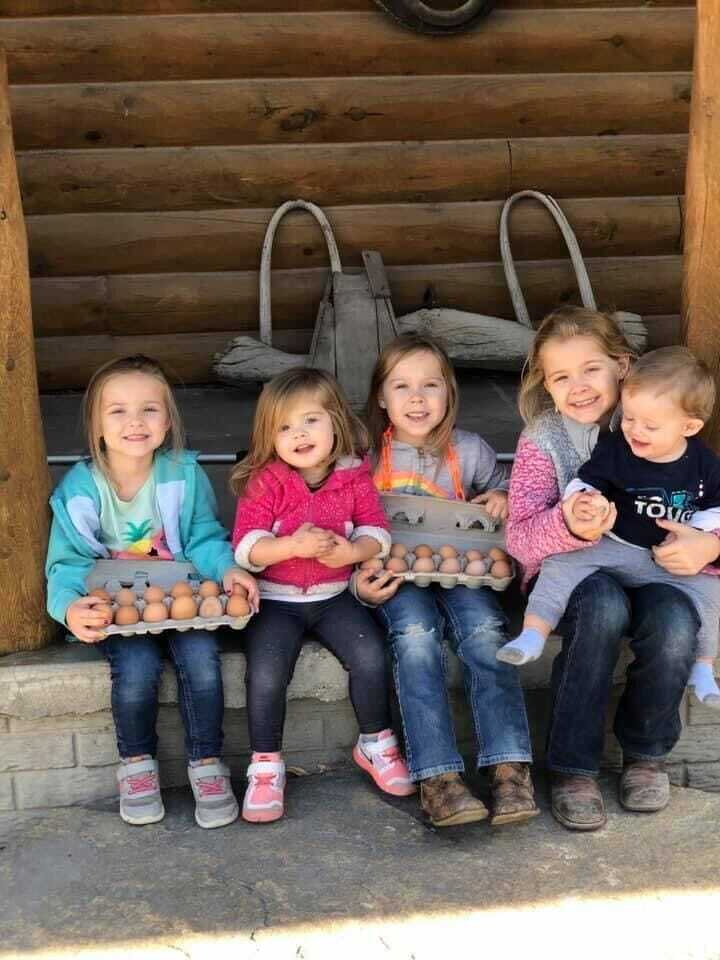
    Andy and Jamee are very much business partners. In addition to helping Andy with the farm and seed dealership, Jamee runs a Revital U business and helps their daughters with an egg business.

    “Our home-based businesses allow us to show our kids how the world works and how much work it takes to be successful in the things you care about,” says Jamee. “Having chickens has helped teach the girls responsibility by managing money and taking care of animals. They also help care for three horses, many cats and dogs.”

    The Erger family in spring 2021 started a Labrador Retriever breeding business called North of the River Family Labs. Their dogs are fully AKC registered, Orthopedic Foundation for Animals (OFA) certified, and Embark genetic tested.

    They work and play hard, too. They make time for family fun like boating, camping, horseback riding, four-wheeling, visiting parks or zoos or roasting s’mores over a bonfire. The Erger family also makes time to exercise together.
    205766882 402941547631415 2492409537306070093 n
    The Erger girls run an egg business with the help of Jamee.

    “It’s good to teach our kids about self care,” says Jamee, who like her mother-in-law, is committed to exercise and eating a balanced diet.

    “We only get one life to live, so we want to make sure we live it to its fullest,” says Andy. “We love the life of farming and we always put our full attention to anything we care about whether it’s taking care of our family, farm, pets or seed customers. We understand the blood, sweat and tears that are shed by generations of family farms, so we want to help our customers and neighbors be successful.

    Andy adds, “It’s nice to be part of a family-owned seed company that was founded in Iowa. The Lathams strive to treat their dealers like family, and in turn, we strive to treat our farmer-customers like family.”

    One way they show their customers how much they appreciate them is by delivering homemade cookies and bars during the spring planting and fall harvest seasons. Jamee also enjoys taking meals to the fields for her family during baling hay, and harvest.

    “I feed em’ and leave em’,” says Jamee. “It’s important to me to make sure that the guys get a decent meal to help keep them going.”
    203918358 214204110429727 5018155557531640855 n
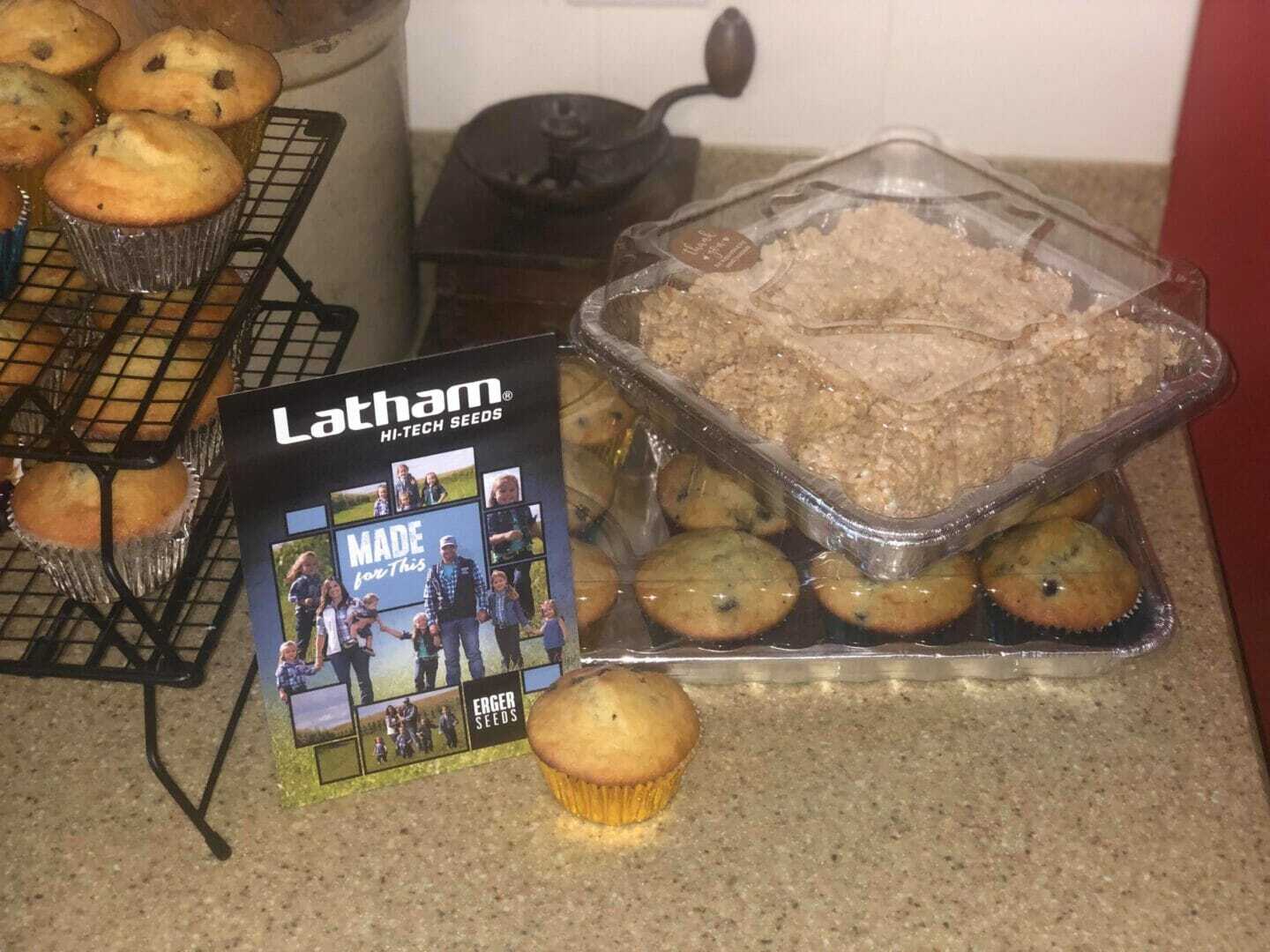
    One way Erger Seeds shows customer appreciation is by delivering homemade cookies and bars during the spring planting and fall harvest seasons.

    Today Jamee is sharing with us her favorite cookie recipe, which is a perfect complement to her homemade ice cream. Enjoy June Dairy Month and July Ice Cream Month!
    Shannon Latham

    June 25, 2021
    #RootsInBoots, Dairy, Desserts, Food & Family, Recipes, Season, Summer
  • Latham Hi‑Tech Seeds

    #AskTheAgronomist: Long-Term Heat Stress in Soybeans

    Maxresdefault

    In part two of our #AskTheAgronomist series on heat stress, Precision Agronomist Phil Long covers how hot, dry conditions affect soybean growth and decision-making moving forward.

    Webspec Admin

    June 22, 2021
    #AskTheAgronomist, Agronomics, Crop, Drought, Season, Soybeans, Summer, Weather
  • Latham Hi‑Tech Seeds

    Schminke Family “Goes the Distance” to Support Childhood Cancer

    Running Photo

    Many Midwest farmers will be harvesting crops on Oct. 10, 2021, but Kyle and Sarah Schminke of Shellsburg, Iowa, will be running in the 43rd Chicago Marathon. Their goal is to raise awareness about childhood cancer, as well as money for the University of Iowa Dance Marathon. Training is already underway for this father-daughter team, and we’re inviting you to cheer on this Eastern Iowa Latham® dealer.

    Family Photo
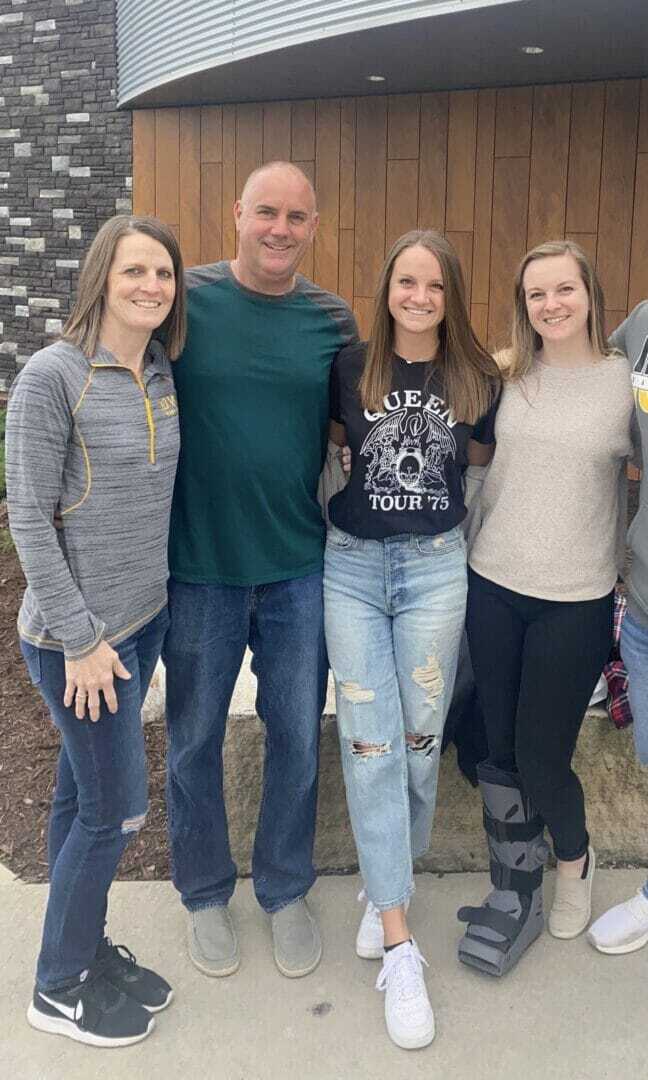
    The Schminke Family

    “I knew I wanted to get involved on campus, and I had seen some of my older friends post about the University of Iowa Dance Marathon,” says Sarah, who will begin her junior year this fall at the University of Iowa, majoring in Communications Studies with a minor in Rhetoric and Persuasion. She also is earning an event management certificate.

    While many people wouldn’t look forward to running a marathon let alone paying a $1,250 entry fee to serve as a charity runner, the Schminkes are looking forward to running this together.

    “It’s important to Sarah, so it’s important to me,” says Kyle, who farms with Sarah at his side. His wife, Kyla, works at the local family practice clinic in Shellsburg. His oldest daughter, Dawne, works for UnityPoint pediatrics as a patient service representative.

    “Older people are sometimes critical of the younger generation, but just look at the passion the students like Sarah have for Dance Marathon!” adds Kyle. “When you do selfless acts, you feel better. It motivates you. Sarah understands she has a pretty good life, and we should be thankful for what we have. I’m so impressed by the selflessness, and I’m so excited for Sarah to be doing this.”

    This father-daughter team has a goal of finishing the race and raising awareness. They’re confident they can, and they will! Kyle completed Iron Man competitions in 2015 and 2016. Sarah ran track and cross country but tore her ACL during her senior year of high school. She wears a brace when she runs, but she isn’t complaining because many people have it so much worse.

    Running Photo
    Kyle and Sarah are training for the Chicago Marathon. Their goal is to raise awareness about childhood cancer, as well as money for the University of Iowa Dance Marathon.

    “I’m not running for me. This is for those kids,” says Sarah. “I don’t care about how much pain I’m in. I’m running for the kids who can’t.”

    Kyle and Sarah will be running with a list of 26 names on their arms of children for whom they are running. These are called their “mile motivators.” Sarah knows looking down at the names on her arm will be the motivation she needs to keep running and finish strong.

    University of Iowa Dance Marathon

    Big Event Feb 2020
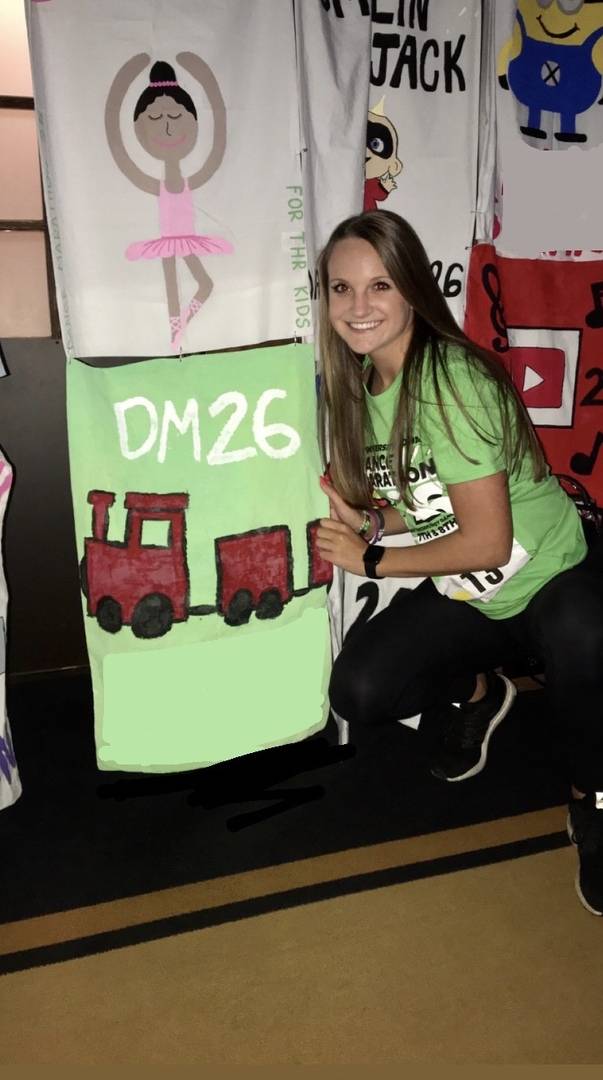
    Sarah during The Big Event in February 2020.

    The University of Iowa Dance Marathon (UIDM) is the university’s largest student-run organization and the third largest Children’s Miracle Network Dance Marathon of more than 300 such organizations across the United States. It is a year-long endeavor that includes monthly events, including events for families with children fighting childhood cancer, fundraising events and dancer events. Everything leads up to The Big Event, which is held annually in February.

    During The Big Event, students raise money by dancing for 24 straight hours. Dance Marathon families share inspiring stories about children who have battled cancer and won, explains Sarah. Kids who lost their courageous battle are remembered Dancing in Our Hearts.

    “During The Big Event my freshman year, I remember texting my mom, ‘My feet hurt so bad. Why am I doing this?’ My mom replied, ‘You only have 24 hours of pain, but those kids may have a lifetime of pain. There is a reason to everything you’re doing.’ That’s the motivation I needed to keep going that night and to remain involved in this event. I want to do what I can to help families affected by childhood cancer.”

    The 2021 Big Event, which was held virtually, raised $1.4 million for kids and families. While that is certainly a sizable amount of money, it is much lower than the amount the University of Iowa Dance Marathon has raised annually in recent years. The UIDM raised $2 million in 2015 and $3 million in 2018.

    Virtual Big Event Feb 2021
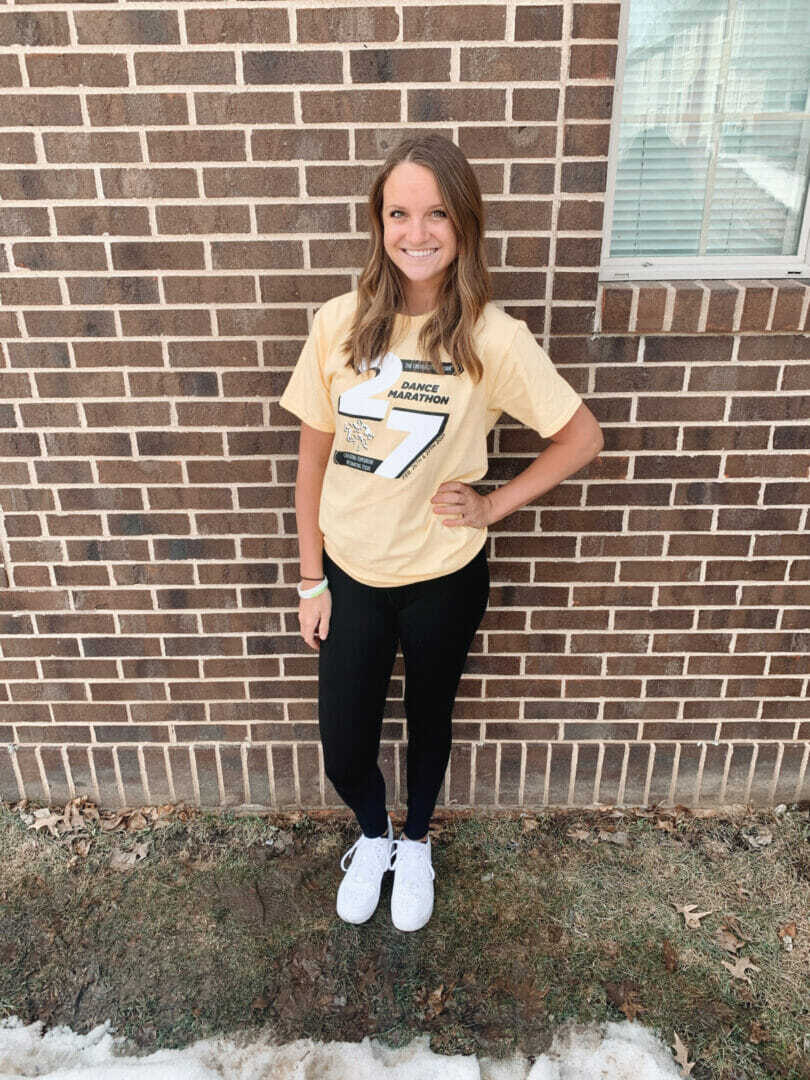
    Sarah during The Big Event in February 2021.

    The UIDM has pledged $5 million to the 11th floor of the University of Iowa Stead Family Children’s Hospital that was named the University of Iowa Dance Marathon Pediatric Cancer Center. (The 11th floor is the one that gets “the wave” during University of Iowa home football games.) This student-run organization also has pledged $2 million to establish the University of Iowa Dance Marathon Chair in Pediatric Oncology, Clinical and translational Research. In addition, UIDM gives $5,000 to each family who loses a child to cancer to help cover funeral expenses.

    “The more I learned about Dance Marathon, the more I fell in love with this organization,” says Sarah, who raised more than $500 as a dancer during her first event in 2020. She served on the Public Relations Committee for the 2021 year and raised more than $4,000. Sarah was selected to serve as Director of Public Relations for the 2022 Big Event. Her goal is to raise more than $4,000 again this year.

    We will be sharing updates from Sarah and Kyle’s marathon training journey. If you would like to help contribute to their fundraising efforts, here’s a link to Sarah’s donation page for The Big Event.

    Screen Shot 2021 06 10 at 7.44.10 AM
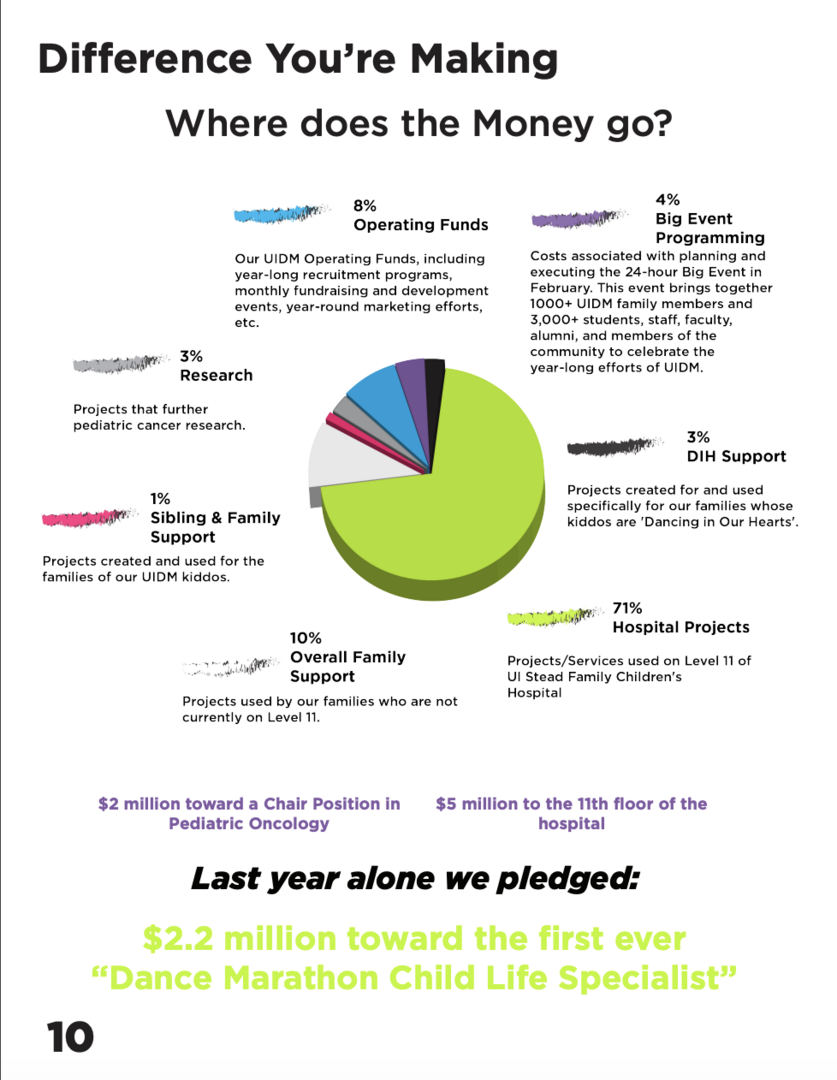
    Chart of UIDM donation distribution.

    Today Sarah is sharing with us her favorite recipe for Monster Energy Balls, which provide quick energy or help her refuel after a workout. #DYK chocolate milk is another great way to refuel after a workout? Chocolate milk has twice the carbohydrates and protein content as white milk, water and other sports drinks? Plus, high water content of chocolate milk helps prevent dehydration. Go ahead and raise a glass in salute of America’s dairy producers during June Dairy Month!

    This recipe also sounds perfect for busy farm families, as well as for kids who need some extra protein before summer activities.

    Shannon Latham

    June 18, 2021
    Dairy, Desserts, Food & Family, Recipes, Season, Sides, Summer
  • Latham Hi‑Tech Seeds

    Invest in a Tissue Test

    IMG 0484

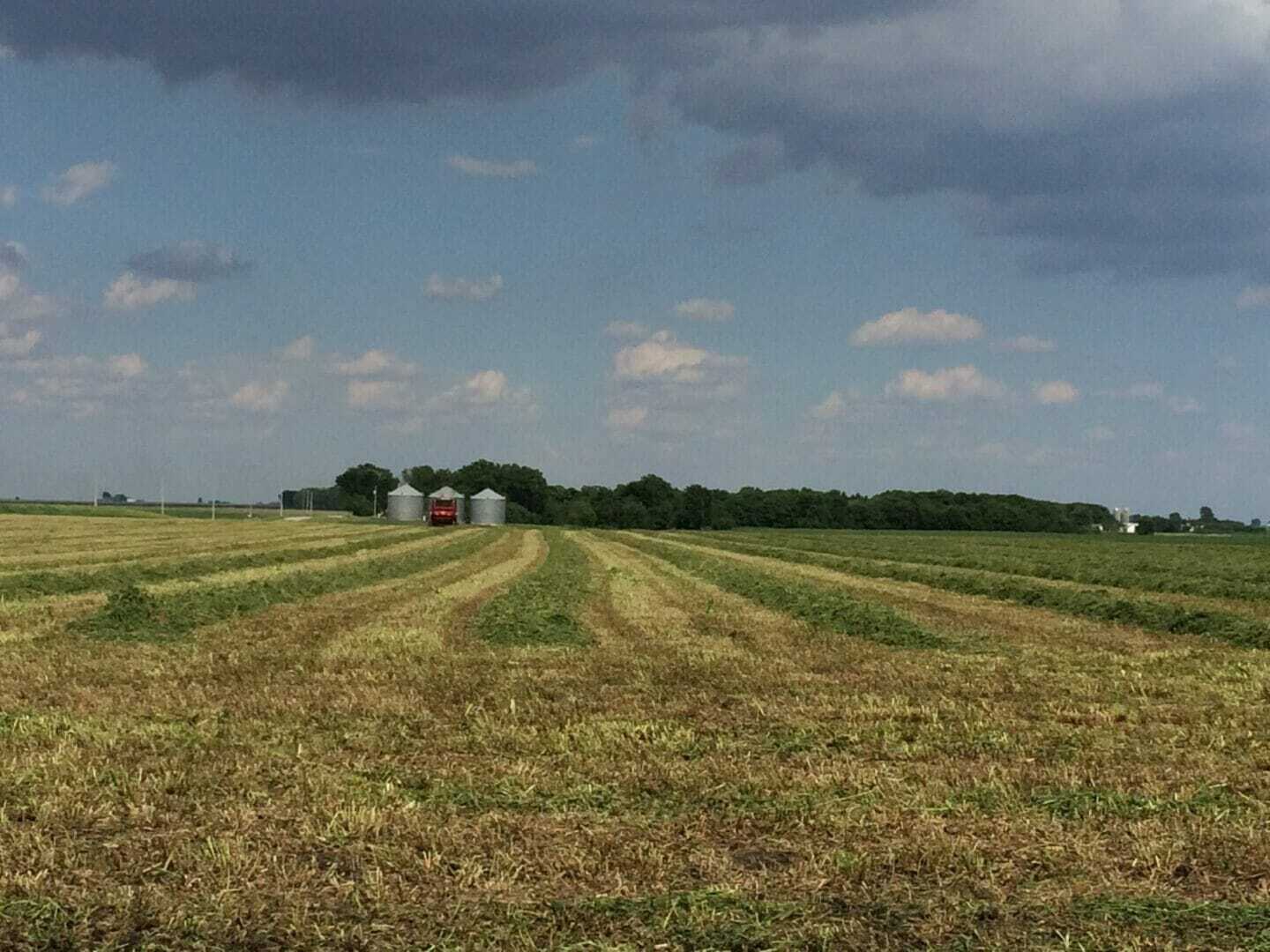
    Leaving no yield in the field is always an important goal, but it’s especially important when commodity prices are as strong as they are. It literally pays to harvest more tonnage! In-season testing will verify whether your growing plants’ nutritional needs are all met, which helps your alfalfa and corn silage crops reach their full potential.

    It’s more challenging to determine actual alfalfa and corn silage yield and correlate yield to plant nutrient removal than it is to do so for corn or soybeans. A more accurate way to determine soil and plant needs for alfalfa is in-season soil sampling combined with plant tissue sampling.

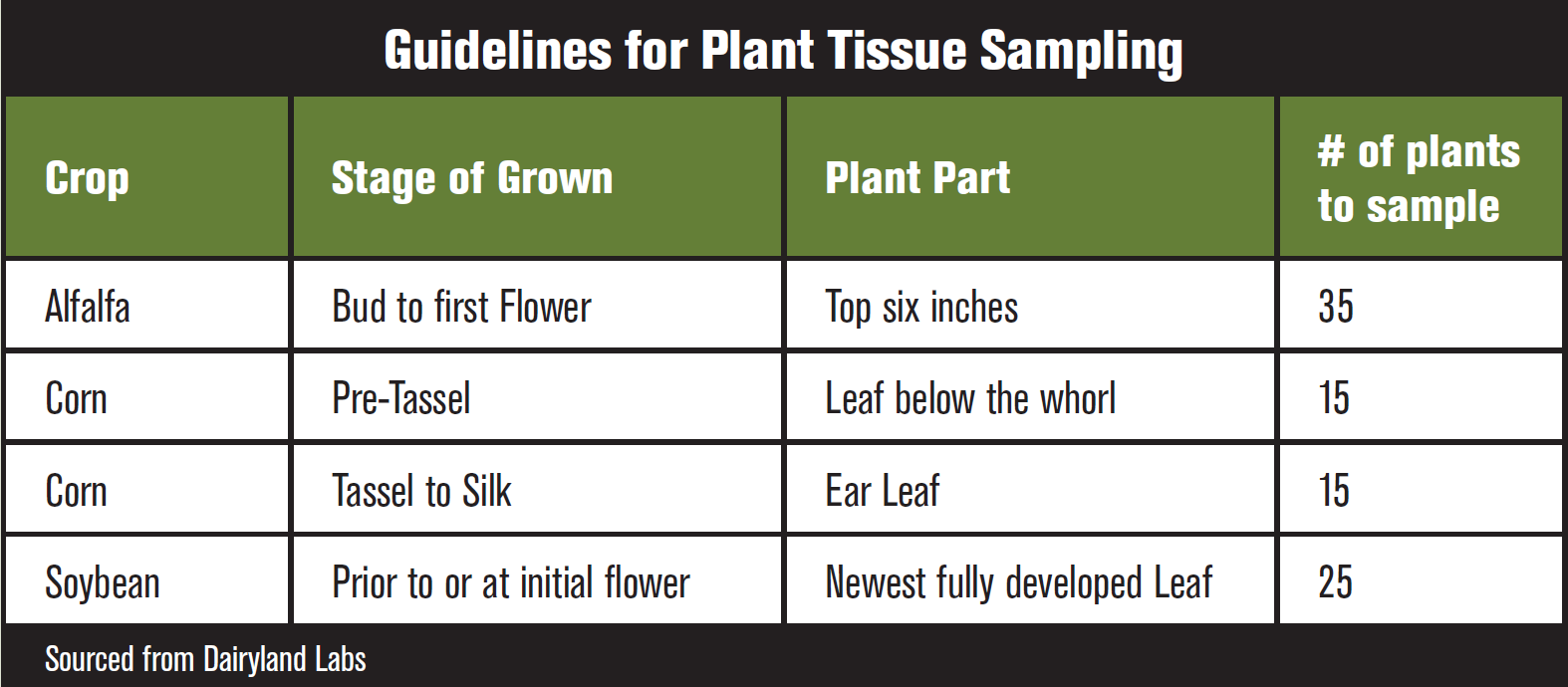
    The chart below provides examples of tissue sampling methods. You will find a link to full descriptions here: www.dairylandlabs.com/agronomy-services/plant-tissues. I like to add this layer of fidelity on at least a few acres as it gives me a sense that I have done my best. The lab results you get will indicate if a nutrient is still lacking and the amount to supplement. NOTE: It’s helpful to provide a soil sample (at least 10 cores) from area of tissue sample.

    Tissue Sampling

    For Best Results

    Modern alfalfa plant genetics have a lot of capacity to yield, but plant nutrition is key to achieving those top yields. Potash, phosphorus, boron and sulfur are key nutrients. The top yield-driving nutrient is potassium. Split-applying potassium to alfalfa tends to provide the best results.

    Alfalfa will remove 50 to 55 pounds of potassium per dry matter (DM) ton, so a total of 300 pounds may be removed per acre in one season. A split application of 150 pounds of potash per acre will help avoid any leaching potential. NOTE: Alfalfa consumes more potash than it needs, a condition called luxury consumption. If you apply more than 200 pounds of potash per acre in one application, there is a high potential for luxury consumption. The plant can only use a certain amount for yield, but an alfalfa plant will continue to consume as much potash as it can. Potash will increase plant tissue concentrations. As a result, it can cause negative animal health issues when the forage is fed.

    To maintain maximum animal health, as well as plant health, it’s important to study both data from your field and from your alfalfa plants. Mosaic® fertilizer has a great nutrient removal chart, which correlates expected yield with critical nutrient removal rates.

    Maintaining peak nutrition keeps alfalfa plants healthier, so they live longer. More live plants when you plan to rotate to corn can provide up to 100 pounds of nitrogen credit or even greater. It pays to keep alfalfa happy!

    Webspec Admin

    June 16, 2021
    #AskTheAgronomist, Agronomics, Alfalfa, Corn Silage, Crop, Season, Summer, Tech Tuesday
  • Latham Hi‑Tech Seeds

    Call in Your A-Team

    9734676 xl

    The most successful farmers are those who spend substantial time checking for disease, insects, stand uniformity and plant health. When things don’t look good, it’s time to call in your A-Team!

    The Oxford online dictionary defines A-Team as “a group of elite soldiers or top advisors or workers in an organization.” Your A-Team needs to be a group of expert advisors, who can help you diagnose problems and make recommendations to solve those issues. This group might include your Latham® Dealer or RSM, an agronomist from your chemical retailer or local co-op, a county or state Extension expert, or a private consultant that you’ve hired for this specific purpose. Do not rely only on “coffee shop talk” or advice from neighbors or friends.

    With your A-Team in mind, below are five things to watch for as we approach soybean pollination:

    1. Overall population and stand. I believe that the period between planting and first bloom is the most critical time for soybean growers. Across most of Latham Country, Spring 2021 was dry enough to plant early yet too cool to stimulate consistent growth and vigor. Stands were uneven. Seedlings had a sick, yellow appearance, which can lead to the onset of diseases and pests.

    2. Yellow soybeans. Soybeans can turn yellow (or chlorotic) for many reasons, including Iron Deficiency Chlorosis (IDC), Soybean Cyst Nematode (SCN), high soluble salts, chemical burns, insects and diseases. Your A-Team can help determine what has caused this.

    3. Soybean Aphid. I venture to say the Soybean Aphid is still the #1 insect pest across Latham Country. This insect overwinters in our region as eggs laid on the buckhorn species of trees and shrubs. Winged adults will move to soybeans in early to mid-June. Throughout the summer, most soybean aphids are females that reproduce asexually and rapidly. They can infest a whole field in a matter of days.

    4. Soybean Gall Midge. This new insect species is causing damage in areas of southeast South Dakota, southwest Minnesota, eastern Nebraska, western Iowa and more recently in Northwest Missouri. Researchers expect to see adults in early to mid-June, however, information and management for this pest are still in the discovery stage.

    5. Hail. Farmers don’t need to look for hail, but it too often finds them! Knowing what to look for and how to react is key when deciding what to do after a hailstorm. Soybean plants that are cut off below the cotyledon node have no chance of surviving. Plants that are severely bruised and easily fold over at the impact site have a very poor chance of surviving. However, plants that are only missing one cotyledon or missing both with the growing point still intact have a very good chance of survival. My best advice is to abstain from evaluating fields that received hail as soon as it is dry enough to do so. Instead, give the plants at least a week to see if new growth will occur. That way you can see what you have for a viable population.

    Mark Grundmeier, Product Manager

    June 16, 2021
    #AskTheAgronomist, Agronomics, Crop, Disease, Emergence, Insects, Season, Soybeans, Summer, Tech Tuesday
  • Latham Hi‑Tech Seeds

    Take Crop Notes to Guide Fall Decisions

    IMG 6536

    Gain some great insights on what to expect this fall with good observations this spring. These observations, when detailed for each field, also provide an excellent long-term understanding of each field’s potential.

    Keeping good records will help you repeat positive, productive activities in future years. Below are a few areas you might note when making field observations:

    Emergence and Plant Stand Uniformity. Review all your corn fields for emergence. Score them for uniformity, using a 1 to 5 scale. Latham’s Data Forward app makes it easy to track areas of the field with delayed or uneven emergence. Areas of delayed emergence may translate into delayed maturity, resulting in variable moisture content at harvest time. Pay attention to what caused the uneven emergence.

    Make notes about what you could do differently the next time you plant corn in this field. For example, did delayed emergence occur in areas with excess residue? What can you do to minimize residue accumulation in those areas? What can you do better to clear trash in your planting pass?

    Fertility Issues. Look for deficiency symptoms across your fields. You can focus on those areas that traditionally hold excess moisture, but I recommend thoroughly assessing the entire field. For example, phosphorus and potassium deficiency can translate into weak stalks come fall. Rate your fields and mark trouble spots in your Data Forward app, so you can locate troubled areas this fall and plan your harvest schedule accordingly. Long-term, fertility assessments can aid you in your annual fertilization planning. Should you take soil tests in a smaller grid pattern? Do you need to take soil tests more frequently?

    Weed Management. Scouting for escaped weeds from your herbicide applications can provide some very good insight on crop performance in those areas this fall. Weeds use a great deal of moisture and fertility, causing stress on the crop. Heavy infestation in weed escape areas will cause significant yield reductions. Note these areas and follow those areas through harvest to better understand the impact weed pressure had on yield. For future years, you can work with your weed management advisor to minimize weed escape areas.

    If you need a great tool to help you with this, Latham’s Data Forward app can aid you in managing the information and observations you make. Making good observations during the season will help you better understand your harvest data. Field observations are a great way to learn best practices for each field that you plant to corn.

    Latham Seeds Agronomy Team

    June 16, 2021
    #AskTheAgronomist, Agronomics, Corn, Crop, Season, Spring, Summer
  • Latham Hi‑Tech Seeds

    #AskTheAgronomist: Long-Term Effects of Heat Stress in Corn

    ATA Heat Stress

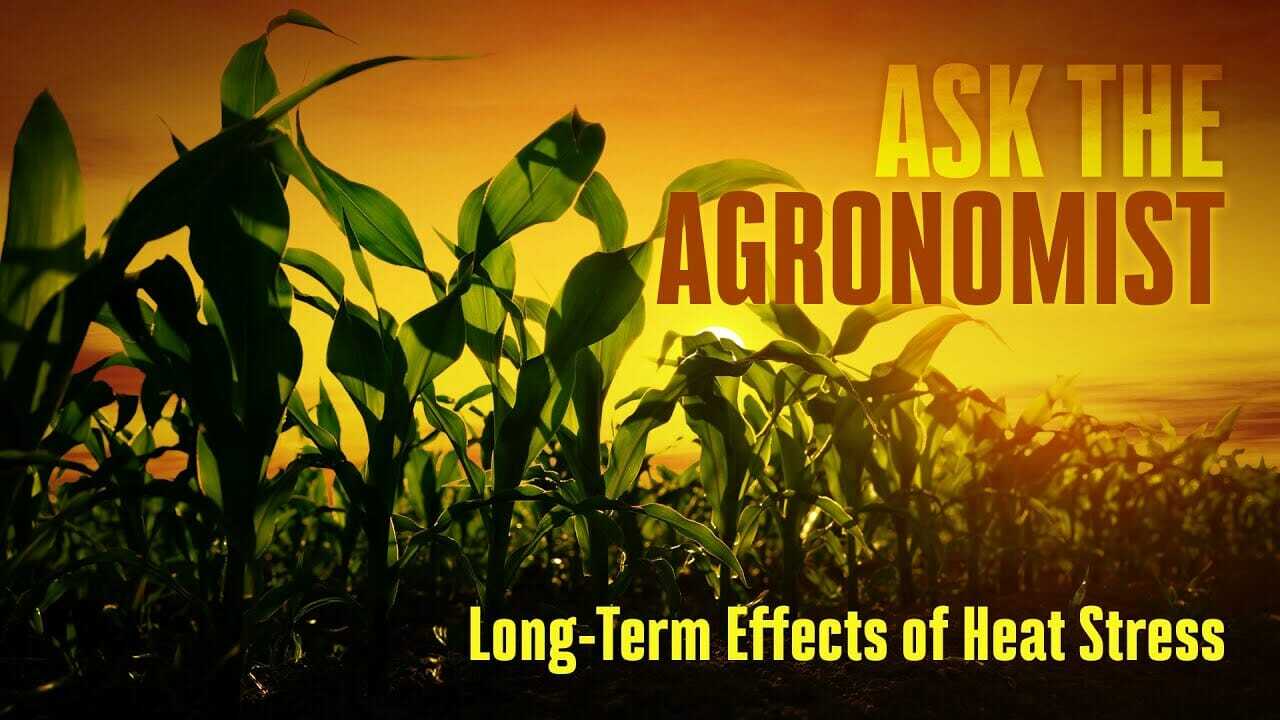
    While heat stress is common in late summer for the upper Midwest, this has been a June for the record books. Precision Agronomist Phil Long discusses the implications these patterns are having on developing corn plants and an outlook for late-season results.

    Webspec Admin

    June 16, 2021
    #AskTheAgronomist, Agronomics, Corn, Crop, Drought, Season, Summer, Weather
  • Latham Hi‑Tech Seeds

    Tips for Stressing Less and Entertaining More

    IMG 0172FE

    What do you do when company unexpectedly arrives? Scott and Cindy Rasmussen of Burt, Iowa, keep food on hand that can be fixed quickly, which makes entertaining fun and easy. Now that their three children have families of their own, their freezer and pantry are filled with treats and snacks their grandkids also will enjoy.

    “Our approach is to keep it simple. We prep food ahead of time, so we can enjoy more time with our friends and family when they arrive,” says Cindy, who works part-time off the farm for an attorney and also helps with field work during the spring and fall.

    IMG 0172FE
    The Rasmussen Family

    Scott, the other half of this husband-wife team, shares one of their entertaining secrets. Ziploc® freezer bags filled with Rye Bread Appetizers and Party Pretzels are a quick fix when company arrives. It’s a trick they used as their kids were growing up, and it’s still their secret weapon now that they have eight grandchildren.

    “All of our kids were very active in high school with sports and extracurricular activities like 4-H,” says Scott, who served as 4-H club leader for 11 years and coached their AAU basketball teams. Cindy was a Sunday School teacher and Scott served as a trustee. They both served as T-ball coaches when their kids were young.

    Adds Cindy, “It took some planning, especially during spring and fall, but we really wanted our kids to experience life outside of farming, choose their own paths, and earn a four-year degree. Now our kids help us farm during the busy seasons.”

    The Rasmussen’s oldest son, Noah, graduated from Algona High School in 2000. Upon earning a degree in Mechanical Engineering from Iowa State University (ISU), he began working for John Deere in Urbandale. He and his wife, Rachel, live with their three daughters near Cambridge. Noah helps his parents stay informed about advanced technology and has been known to pull an all-nighter to help on the farm in the fall. Rachel graduated from ISU with a master’s in public administration and works in human relations.

    The Rasmussen’s second son, Drew, graduated from high school in 2005. He earned a degree in Industrial Systems Technology (Ag Systems Technology) with a minor in safety from ISU and works for AGP as a compliance officer. Drew farms with his parents and looks forward to farming on his own someday. Drew and his wife, Sierra, built a home on the farm place where Scott was raised. Scott’s parents also live on the homeplace, so Drew and Sierra help them as needed. The couple has twins (a boy and a girl), and Sierra also works for the Farm Service Agency.

    The Rasmussen’s daughter, Chelsie, graduated from high school in 2007. She earned a degree in psychology from the University of Iowa. She and her husband, Tom, purchased an acreage that was homesteaded in 1877 by Scott’s family. Their acreage is located between Drew and Sierra’s home and Scott and Cindy’s home, so they all live within three miles of each other. Chelsie works as a physical therapist assistant in Algona, and the couple has two daughters and a son.

    “There is so much family history here, and we feel blessed that our children are committed to preserving it,” says Cindy. “It is wonderful to have everyone close by. It makes it easier for them to help on the farm as their schedules allow. Tom is not only our insurance agent, but he has taken over many tasks. Like Drew, Tom helps us work ground, pick up rocks, and runs the grain cart in the fall. Their help has allowed me to spend more time with grandchildren.”

    When their children were growing up, the Rasmussens had a farrow-to-finish operation in addition to their cropping operation. When hog prices went to $8 in 2000, Scott was determined to find a way to make up for lost income. He worked at Aluma Trailers in Bancroft around his farming schedule. After a year of working at Aluma, Scott’s dad retired from farming. Scott continued working part-time and farmed additional acres. Then in 2008, he converted the barn into a heated shop where he enjoys maintaining his line of farm equipment and woodworking especially during the winter months.

    Surround Yourself with Good People

    “I really enjoyed working at Aluma and my boss was really good to me,” says Scott. “He was one person who really helped make a difference. Cindy and I have really been blessed by the people who have helped us along the way.”

    Other people who made a difference for Scott and Cindy are the farm manager of the Stockwell Memorial Farm, who helped them start farming on their own; an elderly neighbor who chose Scott to farm his land when he decided to retire; and Bill and Linda Latham who chose Scott to farm their land near Burt, Iowa.

    “As we have gotten older, we reflect on the people who made a difference in our life. Bill and Linda Latham are two of those people. We could feel Bill’s passion for his work, his family and the seed industry. Of course, behind every good man is a great woman!” says Scott.

    “I would also like to express my total appreciation for all the little things that Latham Seeds does for its customers and dealers,” adds Scott. “Latham goes above and beyond, that is what sets this company apart from the others. I always get an answer from a real person, so I’m not caught in a telephone nightmare or waiting on hold. To all the Latham family and employees, thank you!”

    “We’ve learned to surround ourselves with good people, and that’s one of the reasons we enjoy working with Latham Seeds,” says Scott. “The company is filled with good people. I know that I can call the office and be connected to someone who has the answer to my question. I really enjoy Latham’s personal service, plus Latham® products really perform well.”

    During the growing season, the Rasmussens enjoy making time for fishing, boating and attending their grandchildren’s activities. The couple also enjoys antiquing, refinishing and repurposing furniture in their leisure. They turned a cabinet into a buffet to camouflage a dorm-sized refrigerator. They also put locking wheels on an island in their kitchen, which readily extends their kitchen counter space if they want to set up a buffet line. Both items make entertaining easy.

    Today the Rasmussens are sharing a family-favorite Taco Dip recipe to help you spend less time in the kitchen and more time socializing with friends and family. Or freeze Party Pretzels, so you can grab a bag to take in the tractor cab or the fishing boat.

    Shannon Latham

    June 2, 2021
    Appetizers, Dairy, Food & Family, Recipes, Season, Summer
  • Latham Hi‑Tech Seeds

    #AskTheAgronomist: Evaluating Frost Damage in Corn and Soybeans

    ATA Frost

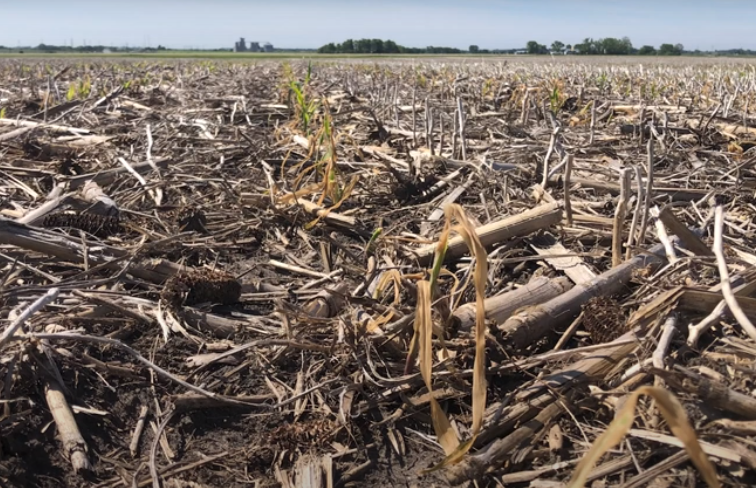
    Parts of the upper Midwest experienced below-freezing temperatures during the last few days of May. In this week’s #AskTheAgronomist, Latham Precision Agronomist Phil Long covers how to evaluate frost damage in corn and soybeans.

    Webspec Admin

    June 2, 2021
    #AskTheAgronomist, Agronomics, Corn, Crop, Frost, Season, Soybeans, Spring, Summer, Weather
  • Latham Hi‑Tech Seeds

    #AskTheAgronomist: Early Season Soybean Scouting and Stand Counts

    Maxresdefault

    Latham Precision Agronomy Advisor Phil Long discusses some tips and tricks to evaluate soybean growth and progress while scouting.

    Webspec Admin

    May 26, 2021
    #AskTheAgronomist, Agronomics, Crop, Emergence, Season, Soybeans, Spring, Summer
Previous Page
1 … 3 4 5 6 7 … 17
Next Page

Latham Hi‑Tech Seeds

131 180th Street | Alexander, IA 50420

(641) 692-3258

SIGNUP FOR OUR NEWSLETTER
  • Contact
  • Legal
  • Dealer Center
  • Seedware Login
  • Latham Gear

© 2025 Latham Hi‑Tech Seeds. All rights reserved. | Iowa Web Design by Webspec | Privacy Policy

Latham® Hi-Tech Seeds is a trademark of M.S. Technologies, L.L.C., 103 Avenue D, West Point, IA 52656.