Latham Hi-Tech Seeds

(641) 692-3258

  • Home
  • Products
    • Corn
    • Soybeans
    • Alfalfa
    • Corn Silage
    • Seed Guide
  • Performance
  • Find a Rep
  • Media
    • Blog
    • News
    • Videos
    • Podcasts
    • TECHTalk
  • About Us
    • Company History
    • Our Mission
    • Careers
    • Become a Rep
    • Sowing Seeds of Hope
  • Contact Us
  • Latham Hi‑Tech Seeds

    Brown’s Home Farm Remains Center of Operations

    RossJenFamily

    Thousands of students across America have graduated from high school and college during the past two weeks. It’s exciting to think many of them will follow career paths that don’t even exist today because technology continues to evolve. Others will leave home, stretch their wings and then realize they desire to raise their families on the farm that’s been in their families for generations.

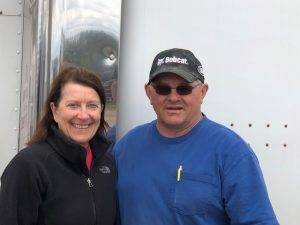
    Kevin & Renee Brown
    Kevin & Renee Brown

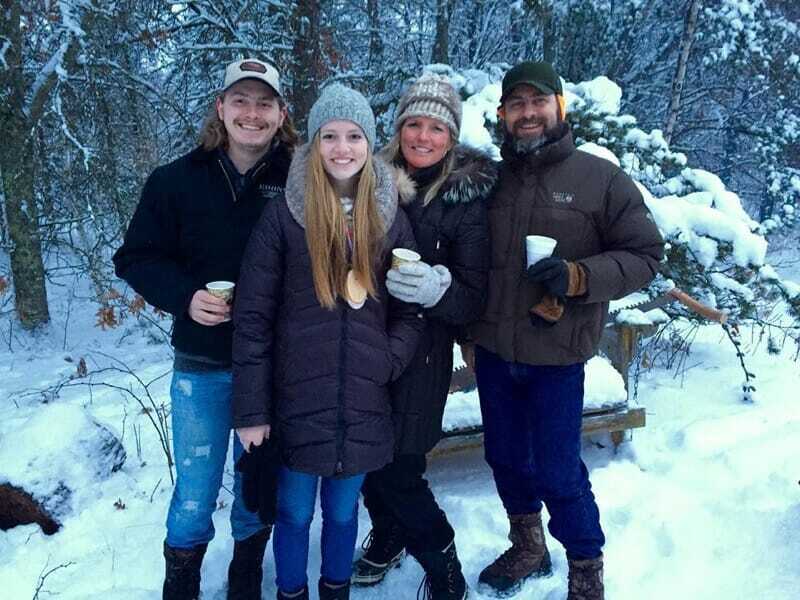
    Take, for example, brothers Ross and Levi Brown of Dell Rapids, South Dakota. Neither of them planned to farm. Their parents, Kevin and Renee, insisted that their sons earn a four-year degree. They both attended college 45 minutes from the home farm, which made it possible for them to come on weekends to help with crops or cattle.

    Ross graduated from Dell Rapids High School in 2005 and then went to basic training and Air Force technical training. In 2006, he started taking classes at South Dakota State University (SDSU) in Brookings where he majored in Aviation Management. He was deployed three times, ranging from two to four months each time.

    “Resuming studies after deployment wasn’t hard for me,” says Ross. “It might have even been beneficial. Being a little older helped me focus more on my studies.”

    Due to his deployments, Ross and Levi graduated from SDSU on the same day. After graduating from high school in 2009, Levi had intended to become an engineer. He enrolled in the School of Mines, but it only took him one semester to realize that school wasn’t the best fit for him. The following semester he transferred to SDSU where he earned a bachelor’s degree by double-majoring in Agricultural Business and Finance with a minor in Economics,

    Levi, Olivia & Cora Brown

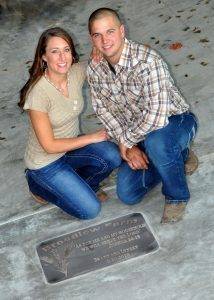
    The same day Levi moved into his Brookings apartment, he introduced himself to the beautiful coed who lived on the floor below. Her name was Olivia, and shortly thereafter, they began dating. Levi and Olivia dated from the time she was a freshman through her senior year. Meanwhile, Levi worked two years for a farmer in Mitchell while Olivia continued her studies. She is a registered nurse and earned a Bachelor of Science in Nursing (BSN) from SDSU. They were married in 2014 and moved to Dell Rapids. Levi began farming, and Olivia continued to pursue her studies. She will graduate in August 2019 with a Doctor of Nursing Practice (DNP) from SDSU.

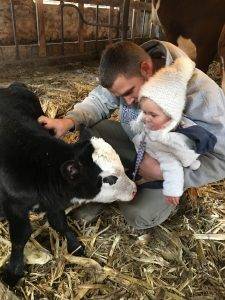
    Levi and Olivia are the proud parents of a two-year-old daughter, Cora. Their farm is 3 miles northwest of the home place, where Kevin and Renee have lived since 1985 and where Renee was raised. Although they converted the farm from a dairy to a beef operation, Renee remains tied to the dairy industry. She has sold dairy ingredients to cheese and ice cream manufacturers across the Upper Midwest for the past 30 years. The Brown’s home place remains the center of operations as Ross and his family live across the section to the north.

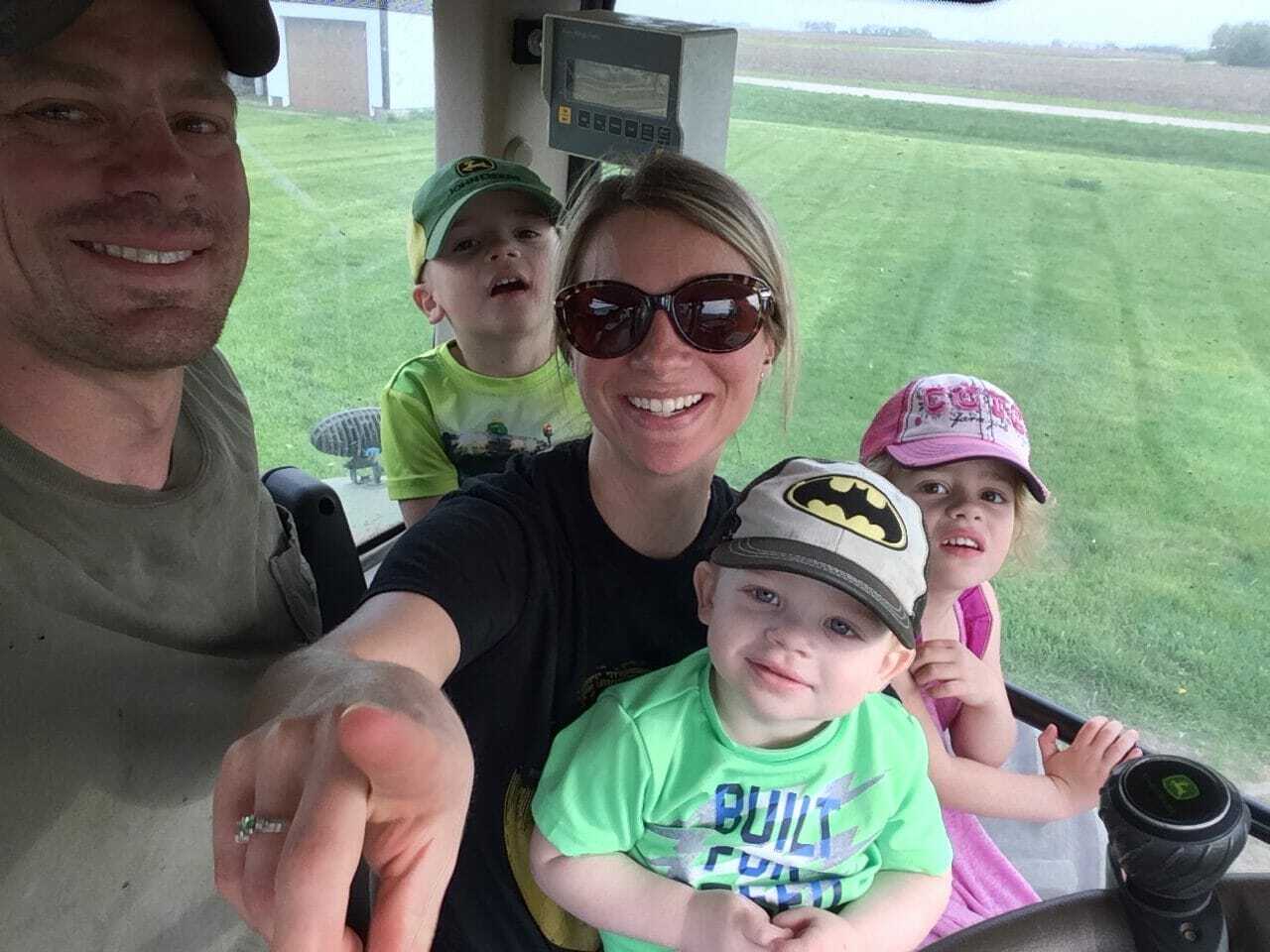
    Ross, Jen & Family

    Ross returned to the family farm in 2012 after working a couple of years at Raven Industries. He spent a great deal of time traveling for his job and realized how much time he would be sacrificing away from family if he continued in aviation. Ross and his wife, Jen, are the proud parents of six-year old Elsa, four-year-old Joe, and three-year-old Arlo. Jen teaches first grade in Sioux Falls. Ross continues to serve in the Air National Guard, and his 20th year of service will be 2025.

    Ross and Levi have put their interests and expertise to work on the family farm. They built their own strip tiller and bean planter. Levi said he’s read more articles since he’s graduated than he did as a student because it’s more meaningful now that he can apply what he learns. Kevin says his sons are always on the Internet, looking for new ideas. In fact, that’s how they learned about Latham Hi‑Tech Seeds performance in the F.I.R.S.T. Trials and about Latham’s hybrids that are the Boss on Goss.

    “Ross and Levi have really embraced technology, and that’s helped the bottom line of the farm,” says Kevin. “Technology adds another level of management, so I’m turning the reigns over to them. They order our seed, chemicals and fertilizer because they know the prescriptions for each farm.”

    Ross was quick to add, “We all bring something to the table. Everyone has ideas to share. Oftentimes, Levi and I will be working on equipment. Dad walks in and says, ‘Try this,’ and then it works.”

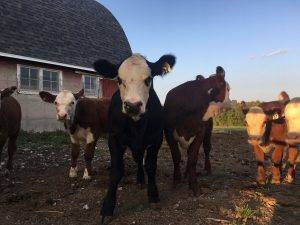
    The Browns farm separately, yet together. In addition to raising crops, Kevin finishes feeder cattle. Because there wasn’t an opportunity to buy more land, Ross also finishes feeder cattle and calves about 100 cows each spring. Levi will build cattle yards this summer and plans to bring in his first load of steers this fall.

    “It’s been rewarding to watch Ross and Levi take over the farming,” says Kevin. “Renee and I are so fortunate that our family lives nearby. We’re looking forward to slowing down and enjoying more time with our grandkids.”

    Today the Browns are sharing with us a family favorite recipe that promotes the beef they raise.

    “Memory Hot Dish a ‘go-to recipe’ for Mom when she has a lot of mouths to feed for lunch, plus it’s one of our favorites,” says Ross. “The calendar might not say ‘hot dish’ weather, but this week’s weather does! I had on a sweatshirt and flannel while doing chores earlier this week, so this recipe seems to fit the type of spring we are having.”

    Shannon Latham

    May 31, 2019
    Beef, Food & Family, Recipes
  • Latham Hi‑Tech Seeds

    Rooney Rides for the Brand Over Memorial Day

    IMG 7348
    IMG 7348
    Family photo from left to right: Jake; his sister, Brooke; his mom, Karen; and his dad, Steve.

    More rainfall isn’t what most Upper Midwest farmers wanted this month, but the delay in spring planting allowed Jake Rooney Chippewa Falls, Wisconsin, to attend commencement exercises May 11 at North Dakota State University. The new grad majored in Agricultural Economics and will plant his first crop this spring as a full-time employee of Rooney Farms.

    “One reason I decided to major in Ag Economics is because my dad felt one of his shortfalls is commodity marketing. I took a few marketing classes and a couple of commodity trading classes,” says Jake, who also worked for a farmer in Moorehead, Minnesota, while he was in college. “Having an economics background will help me manage expenses and keep the balance sheet square. One goal we have this year is to cut expenses by five percent, increase yield by 5 five percent and increase our marketing for a net return with an increase of 10 percent.”

    Once the 2019 crop gets in the ground, Jake is looking forward to studying the last three years of Profit and Loss Statements (P&Ls). He wants to compare what happened year to year and identify areas where improvements can be made.

    IMG 0011“I’m really excited to be part of the day-to-day decision making. I’m looking forward to being involved with this crop from planning and planting to harvest,” says Jake. “I moved home at the end of the fall semester and took my final three classes online this spring, so I get to be apart of this operation every day. I helped choose this seed and can’t wait to see how much corn goes in the tank this fall.”

    Rooney Farms produces corn and non-GMO food-grade soybeans, rye and alfalfa in Wisconsin. Its sister company, Rooney Angus Ranch, is working to become the premiere Black Angus seedstock provider for the commercial cattle market.

    “Our vision is to produce the ideal bull for the commercial cattleman. To achieve this, we’re selecting our seedstock based on marbling and calving ease. We recently hired a new ranch manager and an embryonic technician, who will manage the donor herd,” says Jake, who nearly earned a minor in animal science.

    5.24.19 Blog PIcCattle have been a passion of Jake’s dad, Steve, since he grew up on a Wisconsin dairy farm. Steve has always been interested in livestock, and in 2014, the opportunity arose. While skiing in Colorado, Steve purchased a ranch with 400 head of Angus cattle. He has since purchased a Texas ranch, where plans are underway to host its first bull sale in March 2020. Each Memorial Day weekend Jake, plus about 50 friends, family members and hired hands, gather at Rooney’s Colorado ranch for their annual cattle branding weekend. They work cattle on horseback, and when the work is done, they’ll enjoy homegrown beef. Jake’s favorite cut is a thick sirloin, with a little Lawry’s salt and pepper, grilled to medium rare.

    In honor of May Beef Month, we’re linking to recipes for Beef Chili Colorado and Texas-Style Barbecue. We’re also providing you a recipe for Grilled T-Bone Steaks with BBQ Rub, courtesy of the Iowa Beef Industry Council.

    Shannon Latham

    May 24, 2019
    Beef, Food & Family, Recipes
  • Latham Hi‑Tech Seeds

    County Cattle Show Leads to Lifetime Love

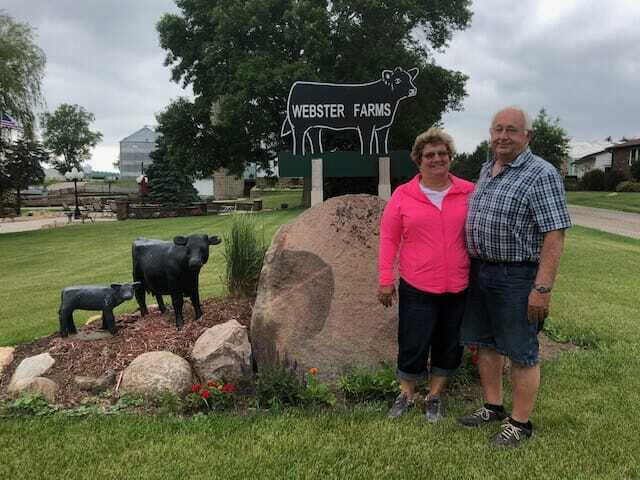
    Webster Farms Family Photo

    Webster Farms Family PhotoIf you spend your summers watching kids play baseball or traveling the show circuit, the people you sit next to in the stands become like a second family. Sometimes they even become your family.

    Wayne and Patricia Webster of Walker, Iowa, met in 1961 when they were both showing cattle at the Linn County Fair.

    “Wayne had more than one Black Angus heifer in the same class, so he asked me to show one,” says Pat, who was raised on a farm near Marion and was showing crossbred steers at the time. Pat and Wayne became closer friends after that show, but they didn’t start dating until six years later.

    It’s no wonder that Black Angus have been important to this family.

    Wayne continued to raise Black Angus upon graduating from high school in 1965. After he and Pat were married in 1972, they decided to focus on breeding registered Black Angus. They really like how docile the Angus breed is, plus this species is always in demand because it’s known for producing high quality beef.

    To help market their stock as well as to keep an eye on genetics that perform, the Websters attend several livestock shows throughout the year. They usually attend a few local shows plus watch their stock at the Iowa State Fair, Junior Angus Show, North American International Livestock Exposition and the National Western Stock Show.

    Photo 1 Bull
    Webster Farms had Grand Champion Bull at the Iowa State Fair in 2013 and again in 2017. The bull that won in 2017 also was named Grand Champion Bull at the 2018 National Western. Owners of this bull were: Wilson’s Cattle Company, Foose Cattle Company, and Webster Farms.

    Webster Farms had the grand champion female at the 2012 Iowa State Fair with a heifer named Missie, who is still a donor cow in their herd. Two of their bulls were named grand champion at the Iowa State Fair in 2013 and 2017. The bull that won in 2017 went on to become the grand champion bull at the 2018 National Western.

    “Growing up in the country and raising livestock really helped our four daughters become independent. Now we get the chance to watch our grandchildren learn and grow as they do chores and work with their cattle,” says Pat.

    All four of the Webster’s daughters live within five miles of their farm, so Pat and Wayne feel blessed they get to see their family often. They stay busy attending activities for their nine grandchildren, who range in age from three to 25. Their oldest grandson is married and has a 10-month-old daughter.

    It’s a busy time, but also a time of transition. The 2019 crop marks the first one that Wayne hasn’t planted since he entered a farming partnership with his father in 1965. Although the Websters rented their farm ground this spring, Wayne and Pat have been worrying about the spring rains as much as ever. They broke ground in April on a new wean-to-finish pig barn and have been concerned about getting the concrete poured to keep the building project on track. They plan to take delivery of their first set of weaned pigs in September.

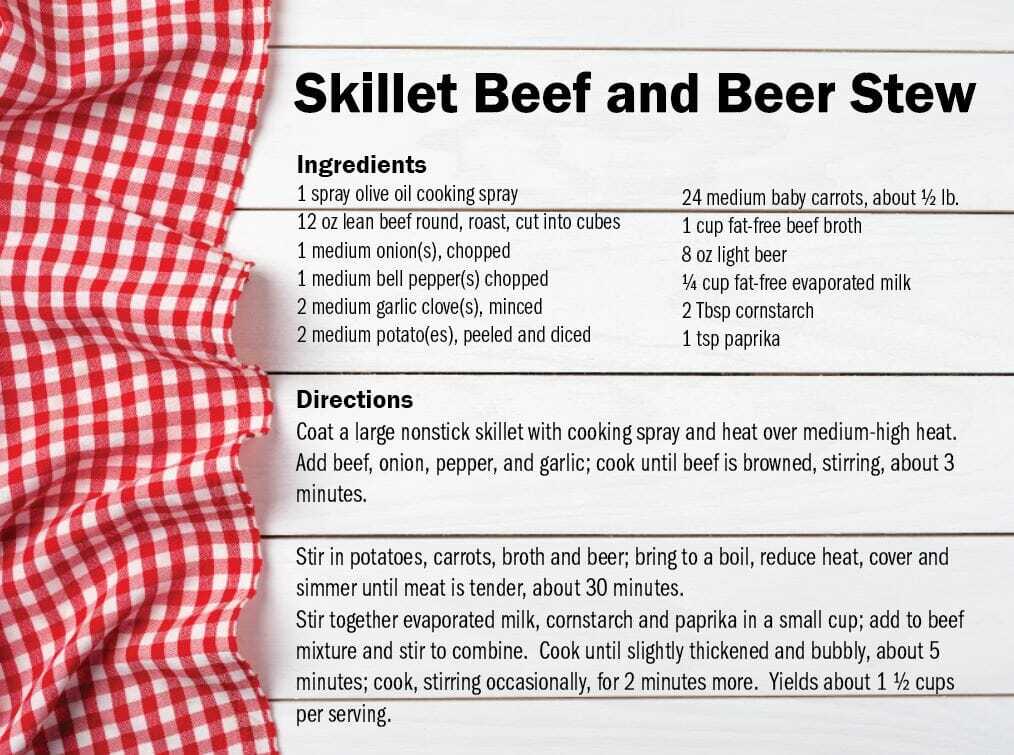
    Although they’re planning a farm sale this fall, Wayne and Pat aren’t exactly retiring from farming. They’re really focusing their efforts on raising livestock. In honor of May Beef Month and the upcoming summer show season, today Pat is sharing with us a couple of her family’s favorite recipes.

    Capture

    Shannon Latham

    May 17, 2019
    Beef, Food & Family, Recipes
  • Latham Hi‑Tech Seeds

    Beef Brisket, Baked or Smoked? Yes, Please!

    SkyView Farms Brisket Cropped

    guest blog post by Darcy Maulsby

    Ever have a sudden flash of insight that’s as compelling as a baby seeing its reflection in a mirror for the first time? You’ll never experience the world the same again.

    It happened to me a few years ago when I was taking a class in Des Moines to become a certified Kansas City Barbecue Society judge. The instructor, a tall, strapping Texan, conveyed two things I’ve never forgotten. I can still hear the contempt in his voice as he informed us, “You Iowans think milk is a spice!” I also marvel at his unbridled enthusiasm for beef brisket.

    Of all the meats we were learning to judge (including ribs, pork and chicken), I couldn’t figure out why brisket would top his list. True, I’d only had a few briskets in my life, but I hadn’t been impressed. In my experience, brisket was dry. Tough. Blah.

    But I snapped to attention when the instructor began passing a plate of smoked beef brisket. I couldn’t ignore the savory aroma. I didn’t want to look away from the rich bark (the spicy, smoky crust) enveloping those juicy brisket slices. I did want my table mates to hurry up so I could helpful myself these mesmerizing morsels of meat.

    Finally, I took that first bite. Oh my. Suddenly I knew exactly what my instructor was talking about. This brisket was unlike any other I’d ever tasted. Fork-tender. Succulent. Exquisite.

    I knew my culinary life would never be the same, now that I’d experienced this delectable revelation.

    Hungry yet?

    SkyView Farms Brisket Cropped
    Featuring SkyView Farms Brisket from Laura Cunningham

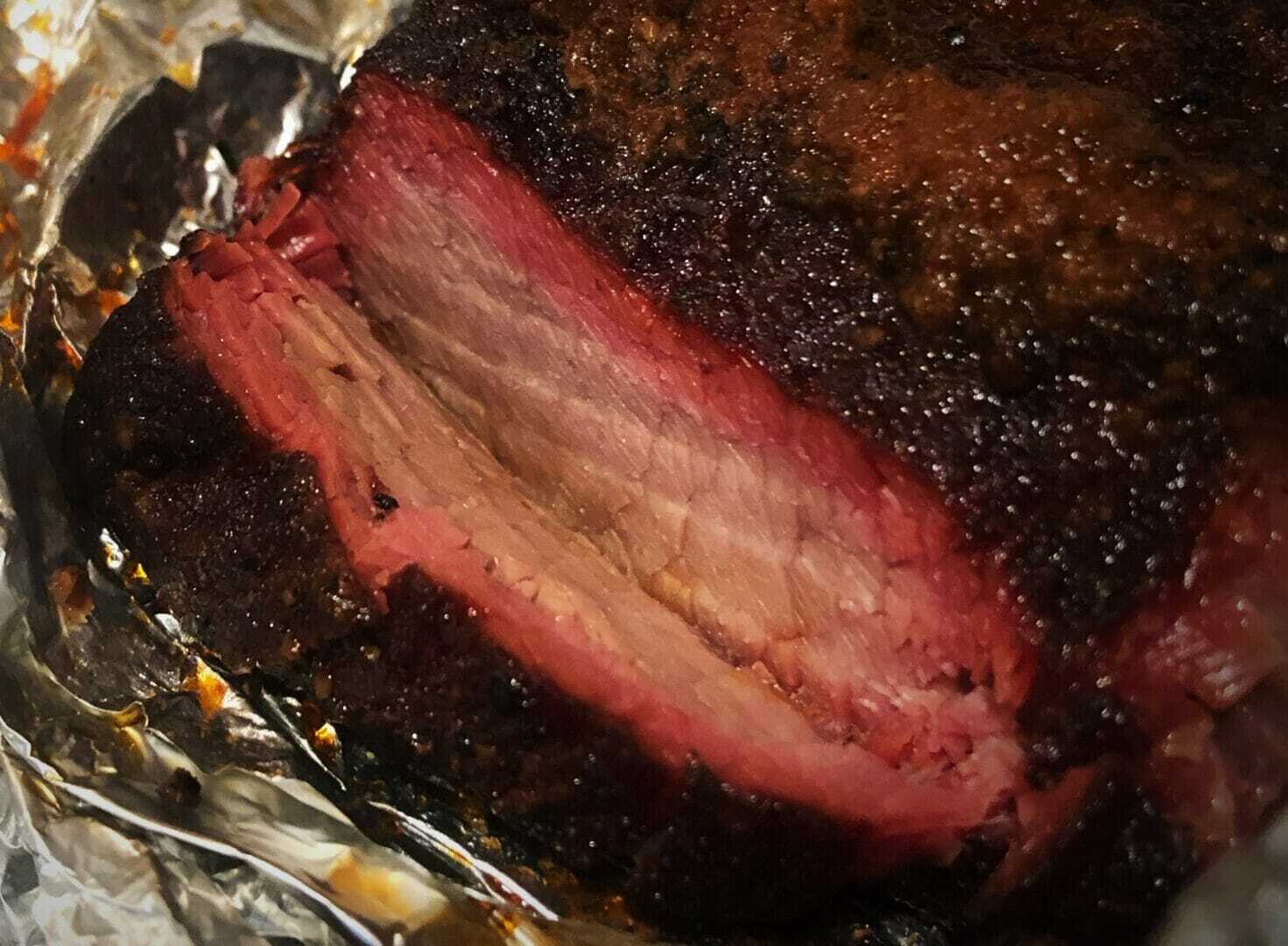
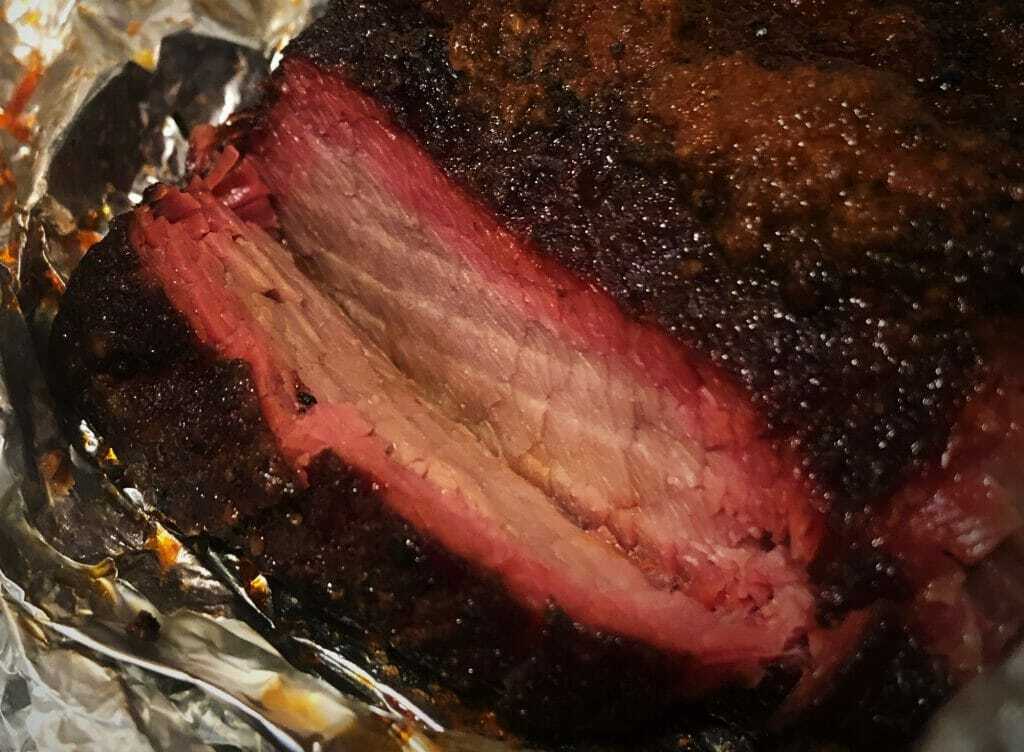
    Let’s dig into some beef brisket basics, just in time for May Beef Month, so you, too, can experience the magic and enjoy this beefy goodness in all its glory.

    Brisket — The Cut

    Since the brisket comes from the animal’s lower chest, an area that is used for movement, this primal cut of meat can be tougher than other beef cuts. This also makes the brisket an ideal cut for cooking low and slow in the smoker, the oven or in a slow cooker.

    Best Beef for Brisket 

    A great brisket starts with high-quality beef with good marbling (intra-muscular fat). As your brisket cooks for many hours, you’re rendering the fat into oh-so-good flavor.

    Seasoning a Brisket

    It’s hard to go wrong with a mix as simple as coarse pepper, kosher salt, and garlic powder. These flavors enhance the meat, allowing the robust, beefy flavor to shine.

    How to Cook Brisket

    I have a Traeger pellet grill/smoker, so that’s how I like to smoke meats. I often use fruit woods like apple for smoking meats, although it’s fun to experiment with other flavors, too, like mesquite.

    You don’t need a smoker, however, to prepare a great brisket. You can create a memorable brisket meal in your oven. Try this Texas Oven-Roasted Beef Brisket (https://www.foodnetwork.com/recipes/texas-oven-roasted-beef-brisket-recipe-1915431).

    If you do have a smoker, however, feel free to try this Smoked Brisket recipe I adapted from Traeger. Infuse your brisket with wood-fired flavor, and forget coming back for seconds. You’ll be coming back for thirds!

    Laura Cunningham

    May 10, 2019
    Beef, Food & Family, Recipes
  • Latham Hi‑Tech Seeds

    Iowa Youth Institute Puts Spotlight on World Hunger

    IMG 4546
    Ian Latham Borlaug Scholar
    Ian Latham, a junior at West Fork High School, is one of 304 students selected to attend the 2019 World Food Prize Iowa Youth Institute on April 29 in Ames.

    We’ve all heard about the need to “feed the 9,” but it’s easy to dismiss the thought. After all, global food security doesn’t impact those of us producing row crops in the Upper Midwest. Or does it?

    “For you students who are 18 years old today, when Iowa celebrates its bicentennial in 2046 and you will be celebrating your 45th birthday, the population of our planet will have just reached 9 billion people,” said Ambassador Kenneth M. Quinn, president of the World Food Prize, in an address to 304 students on April 29 at the eighth annual World Food Prize Iowa Youth Institute at Iowa State University. “Whether we can nutritiously and sustainably feed all of those people is the single greatest challenge human beings have ever faced. It will be up to you to fulfill Norman Borlaug’s legacy and meet this challenge.”

    If not you, who? Who will fulfill the challenge of nutritiously and sustainably feeding people worldwide?

    Ever since a missionary turned farmer from the Philippines visited Latham Hi‑Tech Seeds in October 2018, that country’s plight has been on our minds and in our prayers. We’re left with the question, “What could we do to help bring food security to isolated farmers in a developing country?” It’s a question our 17-year-old son, Ian, attempted to answer.

    To participate in the Youth Institute, students must identify a challenge affecting food security within a specified country and propose their own solution to address the challenge. Students then present their ideas to a roundtable of peers and experts, participate in interactive activities in labs and classrooms on the ISU campus, and connect with innovative leaders from across the state.

    Ian’s paper focused on increasing corn yields in the Philippines by creating a non-profit organization that would provide Filipino farmers with seed corn that has resistance to corn borer. He told peers and experts during a roundtable discussion that demonstration plots would be planted, so farmers could see how higher yields are gained from better seed. It’s a method that has already been successfully employed by Adriel Dave “AD” Alvarez.

    IMG 4546AD is a member of the Global Farmer Network through which he met Latham® Dealer and agvocate Larry Sailer of Iowa Falls, Iowa. Last October AD traveled to Des Moines where he participated in the Borlaug Dialogue and the Global Farmer Roundtable. As Larry’s guest, AD traveled about two hours north of Des Moines for a tour of Latham Hi‑Tech Seeds. AD explained to us how adopting modern agricultural technology could have a positive economic impact on his country, which is comprised of more than 7,000 islands.

    Modern agriculture is key to reducing poverty. It would reduce food costs and improve the overall quality of life in the Philippine. Nearly 73 percent of Camotes Islands’ land mass is in agriculture, however, farmers don’t harvest enough corn to sustain them to the next harvest. Those who live on the island must import large quantities of corn. A family member will work in Cebu; Cebu city is located within Cebu province, which is a big island. Other times family members will work overseas, and then send home money to buy additional corn. Corn, which is milled into grits, is the staple food of the Camotes Island’s approximately 103,000 inhabitants.

    “We need a comprehensive approach that can effectively address issues that limit these technological adaptations,” says AD, who has successfully demonstrated that Bt corn can increase yields tenfold.

    AD corn farmerDuring the seven years the Alvarez family has been doing agricultural community development on the Camotes Island, AD has uncovered these barriers to adopting agricultural technology: resistance to change; lack of capital support and policies; insufficient political support; limited accurate information for farmers coupled with a proliferation of misinformation; supply limitations; logistical limitations; and location challenges unique to the island.

    “In our farming journey, I have grown to understand and love farming. It is one of the most fulfilling jobs that I have ever experienced after gaining enough understanding that a lot of things depend on agriculture,” writes AD on April 29, 2019, in a Facebook note. “From being a pastor, to becoming a microfinance executive, and now a farmer, I can say that even though the latter is an arduous profession, it is the most honest, character-enhancing work.”

    AD’s farm and mission have been struggling since drought struck the island in 2016. If you feel called to help, you’re welcome to connect with AD Alvarez via Facebook or email him at parakletoshelp@gmail.com.

    To give you a taste of the Philippines, we’re going to introduce you to adobo. This unofficial national food is traditionally made with pork or chicken and served on a bed of rice. Because May is Beef Month and National Grilling Month, we’re sharing a Filipino-inspired recipe for Adobo Burgers. For more Filipino recipes, check out the blog “Asian in America.”

    Larry Sailer, Musings of a Pig Farmer

    May 3, 2019
    Beef, Food & Family, Pork, Recipes
  • Latham Hi‑Tech Seeds

    North Iowa Family Celebrates the Gift of Life during National Kidney Month

    3.8.19 2
    3.8.19 1
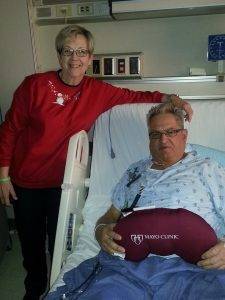
    Shirley and Jim Fesenmeyer in Mayo Clinic after Jim’s kidney transplant on Feb. 26, 2014.

    How far would you go to save someone’s life?

    My mom saved the life of someone whom she had before never met. A stranger saved my dad’s life.

    Five years ago on Feb. 26 – which also was my daughter’s milestone 13th birthday – my family and I gathered in the waiting room at Mayo Clinic in Rochester as my dad was wheeled into surgery. In an adjacent room, a selfless woman went into surgery to remove one of her kidneys for my dad.

    This day was years in the making.

    My dad, Jim Fesenmeyer of Greene, Iowa, was 28 years old when he was diagnosed with kidney disease. His situation was monitored every six months for 42 years. His health started to decline in 2000, but his local kidney doctor insisted all was well. My parents decided it was time for a second opinion.

    They traveled to a prominent Iowa hospital where a doctor told my dad that he had less than 50% kidney function. My parents were shocked and asked what could be done. The doctor then shockingly replied, “Mr. Fesenmeyer, we all have to die some time.”

    Not ones to just give up, my parents took matters into their own hands. They were determined to get an appointment at Mayo Clinic, but that’s easier said that done. At that time, Mayo was only accepting new patients if someone didn’t show up for a scheduled appointment. My parents made the two-hour drive, one way, every day from April until July 2000. Every day for three months they waited from 7 a.m. to noon in hopes of getting an appointment for a diagnosis from the Mayo Clinic.

    Finally, on July 3, 2000, my dad finally got an appointment at the Mayo Clinic. He was diagnosed with Polycystic Kidney Disease (PDK), which causes the kidney to fill with polyps. These fluid-filled cysts in the kidneys prevent them from working properly.

    A team of specialist put Dad on a specific diet that was more restrictive than the low sodium diet he had been following. He had to more closely monitor the amount of protein and carbohydrates in his diet. This was no small feat for this meat and potatoes lover!

    3.8.19 2
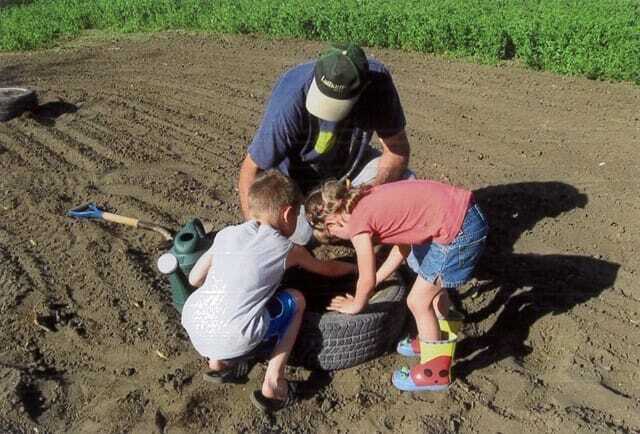
    When my kids were about age 5, my dad showed them how to plant and care for watermelons. Homegrown watermelons and tomatoes were among the foods my dad was most eager to eat after his kidney transplant.

    Protein is one of your body’s building blocks but eating too much protein can make your kidneys work harder. Carbohydrates are the easiest kind of energy for your body to use, but some carbs are high in potassium and phosphorus. Your body needs some potassium to make your muscles work, but too much potassium can be dangerous. When your kidneys aren’t functioning properly, you must limit your potassium intake. That meant my dad had to give up eating fresh tomatoes and watermelons he enjoyed growing in his garden.

    Once Dad was under the supervision of Mayo doctors, his creatinine levels improved. He was placed on a kidney transplant list, but he was told the odds weren’t good that he would receive a cadaver kidney. Another person is added to the national transplant waiting list every 10 minutes, according to the American Kidney Fund. There are nearly 100,000 people on the kidney transplant waiting list. Many people wait for five to 10 years for a kidney from a deceased donor.

    Quite frankly, my dad’s age and condition didn’t give him the luxury of waiting for a cadaver kidney. A search began in earnest for a living donor. My dad’s four sisters were tested but none of them could donate. About 20 of my parents’ friends filled out paperwork to get tested as a donor. One of my dad’s close friends was a match. Knowing he had a kidney at the ready gave my dad peace of mind. Two years later when that same friend was tested again, he no longer passed the test.

    To say that was a blow to the psyche is a severe understatement. My dad was in despair, but my tenacious mother was determined to make the transplant happen. Mom learned about the paired kidney donor program, and without telling me or my brother, she was tested to become a living donor. Mom’s donation to a stranger allowed my dad to receive a kidney from Mary Baumgart of Minnesota City, Minn. Mary’s donation allowed her friend Sue to receive the kidney she so desperately needed.

    Mary and Sue met in Bible Study. When Mary learned Sue needed a kidney, she answered the call.

    “Right then I knew in my soul that God had said to me, ‘You’re going to be the one to give the kidney to Sue,’” said Mary in an April 16, 2014, article that ran in the Greene Recorder. “Like it says in 2 Corinthians concerning the church body, ‘When one hurts, all hurt. When one is blessed, all are honored’.”

    So many lives have been blessed since the first paired kidney transplant occurred in 2000. About one-third of all kidney transplants performed in the U.S. are living-donor transplants. It takes about three to six months to coordinate a live transplant. If you’re interested in becoming a living donor, visit mayoclinic.org/livingdonor.

    The living-donor kidney transplant offers these benefits:

    • Less time spent on a waiting list, which could prevent possible complications and deterioration of health.
    • Potential avoidance of dialysis. (My dad’s kidney function started dropping rapidly. He was literally one week away from going on dialysis when his kidney match was made.)
    • Better short- and long-term survival rates.
    • A pre-scheduled transplant once your donor is approved versus an unscheduled, emergency transplant procedure with a deceased donor.
    • Living-donor kidneys almost always start working immediately after transplant compared with deceased-donor kidneys that can have delayed function

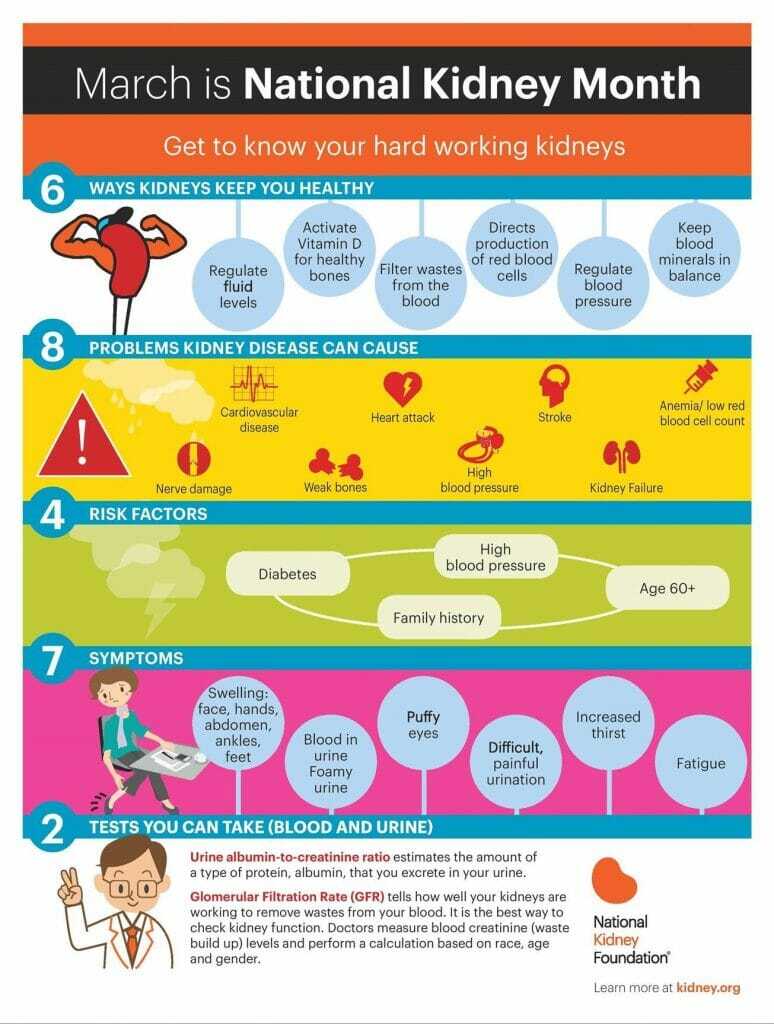
    In celebration of March National Kidney Month, we’re helping spread the word about Polycystic Kidney Disease. We’re also sharing a recipe from Hy-Vee for Fajita-Style New York Strip Steak and Veggies, which has been slightly adapted to dietician-approved and kidney-friendly.

    Get more great healthy recipe ideas from https://www.hy-vee.com/recipes-ideas. Click here for a Family Recipe Book for Kidney Patients. Below are links to two past blog articles that include more healthy tips and recipes:

    • Tips for Resolving to Eat Healthy
    • Pro Tips for Creating Heart Healthy Meals

    3.8.19 infographic

    Shannon Latham

    March 8, 2019
    Beef, Food & Family, Recipes
  • Latham Hi‑Tech Seeds

    Office Traditions + Ugly Sweaters

    48388157 10216029005935221 1449347807935725568 n

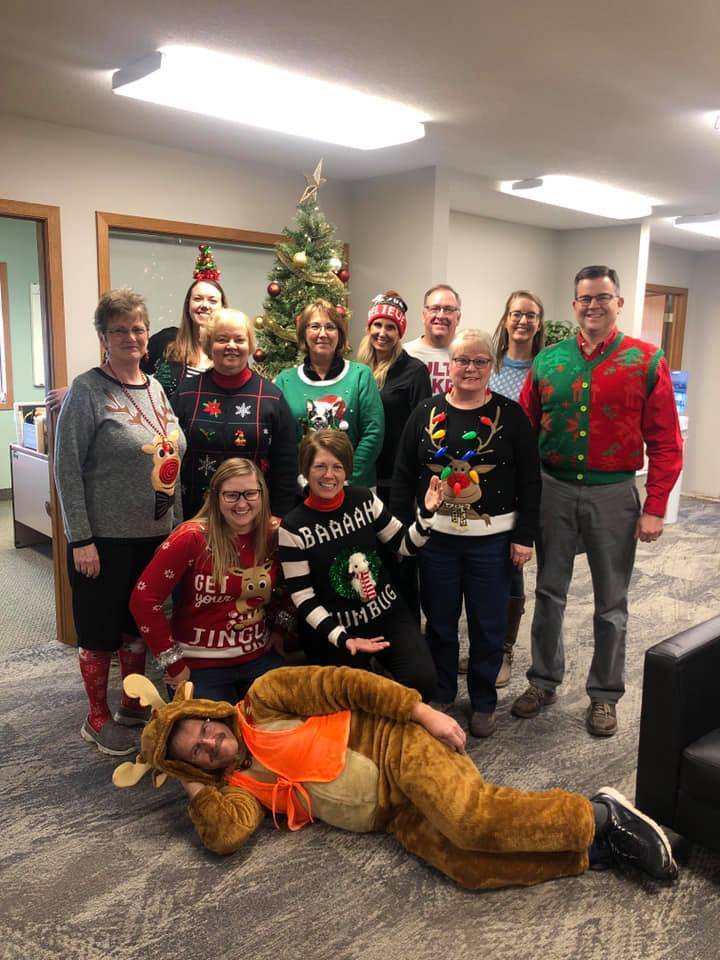
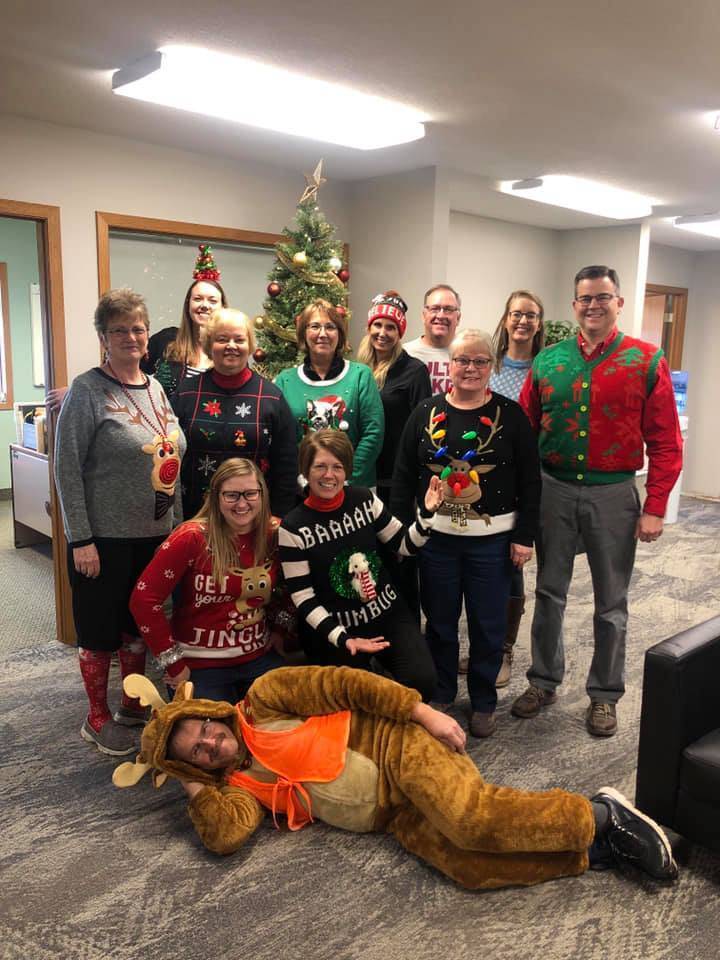
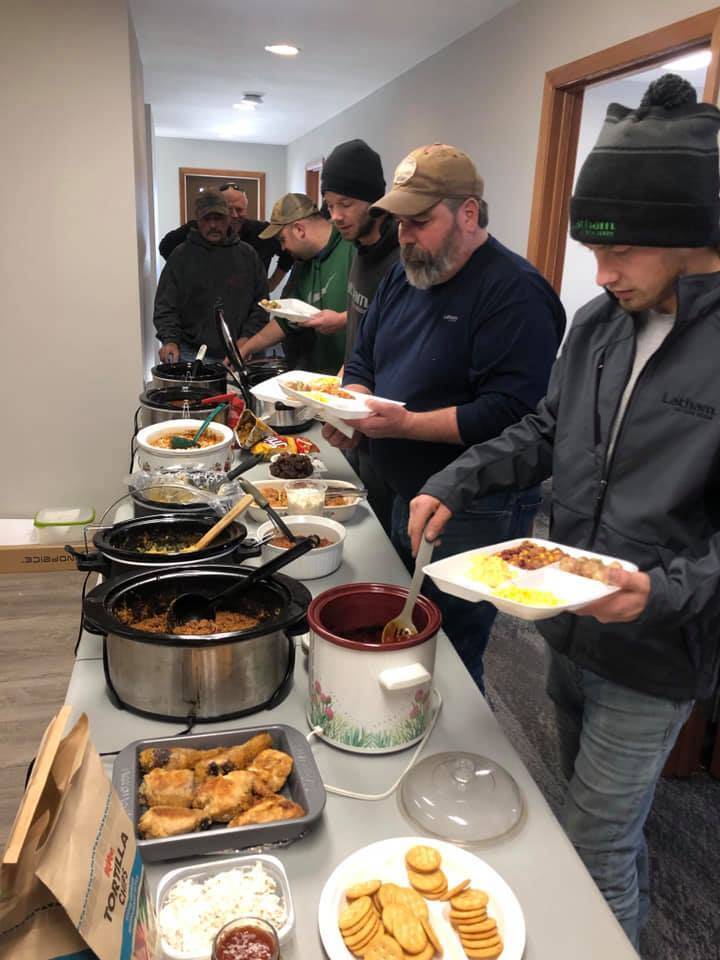
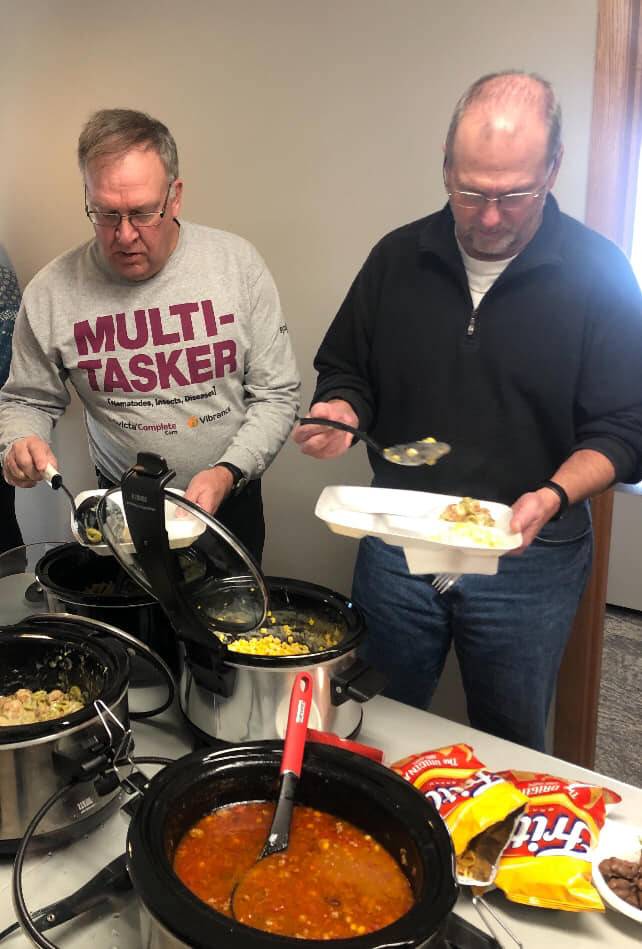
    It’s that time of year again when the Latham Seed office staff come together for our annual Employee Holiday Potluck and Ugly Sweater party. As per usual employees brought their best with a wonderful spread of good eats and lots of laughs to boot. The winner of our unofficial sweater/costume contest was Rod Fesenmeyer donning his Donner outfit.

    48388157 10216029005935221 1449347807935725568 n

    Other crowd favorite favorites were Sharon Martin’s circa 1970 poinsettia earrings, Sandie Johnson‘s light up Christmas bulb necklace, Shannon Latham‘s Baaah Humbug lamb sweater, Becky Lane’s knickers and Christmas stockings, and John Latham’s knit wool vest.

    48389782 10216029007015248 8827950473974644736 n


    I’m not sure it’s possible to pick a crowd favorite dish at this party, but if you’ve got a holiday get together coming up this recipe for Jalapeno Meatballs was a hit with our crowd. And better yet, it goes together in seconds and the slow cooker does the work.

    48275529 10216029006415233 9131164638107402240 n 48364910 10216029006135226 2311133013057994752 n 48337200 10216029007215253 819114833885528064 n

    Merry Christmas to all our Latham staff and thanks for a fun day of laughs!

    Laura Cunningham

    December 14, 2018
    Beef, Food & Family, Recipes
  • Latham Hi‑Tech Seeds

    Seeds of Kindness Grew while Farmer’s Last Crop was Harvested

    Virgil Rasmussensm

    It was an emotional morning at the Rasmussen farm Wednesday, Oct. 31. Family and friends, combines and auger wagons, poured in to help bring in a loved one’s last crop. Just five months ago, this same group of dedicated family and friends helped make sure this crop was planted.

    IMG 5701 IMG 5699

    Virgil Rasmussen, who had served for years as Latham® dealer in Emerson, Nebraska, endured a hard-fought fight against Leukemia for the past year. The height of his treatments occurred during the busy spring planting months, and the Emerson community responded in a big way. Five tractors with planters, a seed tender, transport team and a meal prep crew came together to make it happen. With the crop safely in the ground, Virgil was able to focus on getting better. In mid-October, he received the all-clear from his doctor team. He had won the battle against Leukemia!

    IMG 5703 IMG 5700

    It was a surprise to everyone when late last week they received news of Virgil’s illness and sudden passing. Loved ones, with heavy but determined hearts, once again answered the call for help. A harvest bee made up of friends and neighbors arrived to show their love and support to Virgil’s wife, Irene, and their family, as they put Virgil’s last crop safely in the bins.

    IMG 5698

    IMG 5702

    Virgil enjoyed his life’s work in agriculture. He planted and harvested 42 crops on his home farm east of Emerson. Whether it was full-scale out in the fields or a 1/16th size toy replica, Virgil will be remembered for his love of tractors and for his unique ability to customize toy tractors of various models. Virgil was a proud grandparent. He also loved fishing and providing great service to his seed customers. We at Latham Seeds are grateful for the opportunity to have known Virgil, and we extend our thoughts and prayers to the entire Rasmussen family.

    Virgil Rasmussen

    When a farming family is in need or facing crisis, friends and neighbors pull together to take care of every detail right down to the field meal. In honor of all the helping hands that worked to bring home Virgil’s crop, we share this favorite field meal for Swedish Meatballs.

    Laura Cunningham

    November 2, 2018
    Agriculture, Beef, Food & Family, Industry News, Recipes
  • Latham Hi‑Tech Seeds

    Hopes Remain High on Cerro Gordo County’s Only Dairy Farm

    IMG 6848
    IMG 6848
    From the left: Eric, Margaret & Joel Dirksen

    When Joel and Margaret Dirksen got married, there wasn’t enough farmland to support three families. Joel’s grandpa and his uncle were farming together, and the newlyweds wanted to farm nearby. Fortunately, an opportunity arose just a half-mile away from the home farm where their neighbor was looking for someone to help on his dairy.

    “Joel has always loved animals, and he grew up knowing he wanted to farm,” says Margaret. “He loves cows and his passion for dairying grew with each year.”

    That passion has become Joel’s legacy.

    Three of the Dirksen’s four adult children have been involved with the family’s dairy farm. Their youngest daughter, Amy, teaches and is a counselor at a Lutheran high school. Although she left the family farm, she didn’t stray far from her roots as she and her husband live in America’s Dairyland. The Dirksen’s oldest son, Daniel, lives just down the road. He’s a full-time Operations Specialist at Post Consumer Brands in St. Ansgar. He’s a regular Friday milker and helps out whenever he can. Their oldest daughter, Christa Ryg, had been their lead heardsman and one of their A.I. technicians for 22 years. She left the family dairy at the end of September as rising healthcare costs prompted her to take a full-time job with benefits since her husband is a grain farmer. Their youngest son, Eric, has shadowed his father from the time he was old enough to walk. After graduating in 2004 from Luther Preparitory School Watertown in Watertown, Wisconsin. Eric earned a degree in Dairy Science from Northeast Iowa Community College in Calmar. Then in 2015 he became a partner with his parents in the dairy operation.

    IMG 4315The Dirksens usually milk 120 cows, but there are just 105 in the milk line now. There are about 250 Holsteins on the farm, including young calves and young stock. It’s a closed operation, so they raise all their replacement heifers. They’ll sell bull calves or dairy beef, depending on the market.

    “Babies need lots of attention,” explains Margaret, who is responsible for calf care. She gives them milk and water, keeps their bedding dry and keeps a close eye on them for signs of lethargy or unusual behavior that might indicate a calf isn’t feeling well. “You really have to pay attention to the details,” she adds.

    The Dirksens keep calves in three different groups: young calves, weaned calves, and replacement heifers. These groups ensure the animals receive the proper feed rations needed for that stage of growth. From newborn to two months, all calves are in the calf barn. Weaned calves are moved to a free stall facility for three months. Once they have a vet check and are vaccinated, they transition to another pen where they start the silage program for about six to 10 months. Once the heifers are a year old, they move into the breeding group.

    The heifers are usually artificially inseminated around 13 months of age. A cow’s gestation period is approximately nine months, and a cow must give birth before she’s able to produce milk. The cycle of insemination, pregnancy, parturition (birth), and lactation is followed by a “dry” period. About two months before a cow is due to calve, she will be separated from the milk cows and housed with other dry cows.

    Raw milk is sold to Foremost Farms, a dairy cooperative based and headquartered in Baraboo, Wisconsin. Foremost Farms is an award-winning supplier of cheese, dairy products and ingredients. It takes high quality raw milk to produce high quality dairy products. Milk production is tracked per cow, at Dirksen Dairy. In addition to milk volume, butterfat is a key measurement. Ankle tags help indicate when the cows can be bred, and now the A.I. work is Eric’s responsibility. He also has taken over Christa’s milking responsibilities, and are always looking for reliable help.

    The morning milk shift starts at 2:30 a.m. Feed is mixed, and the actual milking begins at 3:30 a.m. It takes about 2.5 hours to milk in their double six herringbone parlor. Once the milking is done, it’s time to finish the chores: Livestock is fed. Stalls are cleaned. Depending on the season, field work is done. While Joel primarily does the crop farming, Eric and Margaret help when needed. Then the afternoon milking begins at 3 p.m.

    “It’s easy for people to walk into a grocery store without thinking about all the time, attention to detail and care that goes into producing quality products,” says Margaret. “We try to help people understand the amount of time dairy farmers puts into producing a product, so we give farm tours. We show guests what we feed our cows and let them see the milk in the bulk tank.”

    Eric says he would like people to understand that milk is tested for quality several times before it hits the grocery store shelves. Weather greatly impacts production, so they do all they can to keep their cows comfortable. Heat and humidity decrease milk production, so they use fans and sprinklers to keep cows cool during the summer months. The sides of their buildings were removed this summer due to excessive heat, and will put them back on this fall to keep the cows warmer during the winter months.

    Farming requires a lot of hard work, and markets fluctuate, but the Dirksens say there isn’t anything they’d rather do. Eric is proud to be a fourth-generation grain farmer and second-generation dairyman. This proud husband and father of three will share his love of land and livestock with his nine-year-old step-son, one-year-old daughter and two-month-old son.

    Today the Dirksen family is sharing with us one of their favorite recipes, featuring the quality dairy products they enjoy helping produce.

    Laura Cunningham

    October 19, 2018
    Beef, Food & Family, Recipes
  • Latham Hi‑Tech Seeds

    Cowboys Gather in Eastern Iowa for Annual Memorial Day Roundup

    IMG 2379

    IMG_2379“BYOH” isn’t what one expects to see on an invitation to an annual Memorial Day weekend party, but then again, this isn’t your typical party.

    Cowboys from miles around will load horses into trailers and travel to Robb and Jennifer Ewoldt’s farm in the picturesque hills of Scott County near Davenport, Iowa, for the 20th annual branding weekend. The group varies from year to year, but Jennifer says there are about 20 friends and family members who show up year after year, plus a few new hands join in the fun. This year a businessman from Germany, as well as a Wyoming native who’s now working in the Davenport area, have expressed an interest in participating.

    “We prefer to ride horses to work our cattle because it causes less stress on the cattle,” explains Robb, whose parents in 1970 bought 70 acres of a former Boy Scout camp and built a farmstead. Robb’s dad, Gary, worked off farm full-time, so Robb and his mom, Sally, were primarily responsible for tending to the crops and livestock. He grew up riding horses out to the cow pastures.

    Now Robb, Jennifer and their two sons enjoy riding their own horses across the rolling countryside. They moved onto the farm last November when Robb’s parents moved to town. It’s a family effort to take care of the 125 cow-calf pairs. Eleven-year-old Alex and 9-year-old Isaac enjoy riding out to the pasture to check on cattle and throw out salt blocks. Alex is a second-year member of the Bluegrass Junior Farmers 4-H Club and is looking forward to showing his first Bucket Calf this summer at the Mississippi Valley Fair.

    IMG_2384In addition to raising cattle, Robb’s family has a 2,400 wean-to-finish hog enterprise. Robb no-tills about 1,000 acres of corn and soybeans plus custom harvests another 1,000 acres. Jennifer works full-time off the farm as a veterinarian at Scott County Animal Hospital. Plus, every two weeks she makes time to write a column in the Quad City Times. She gives readers a “behind-the-scenes” look at what’s happening year-round on their Iowa farm.

    “One night at the supper table I was expressing my frustration to Robb about another negative article I had read about farming. I told him there are so many good stories about farming that never get told. He responded by asking me why I wasn’t telling them,” says Jennifer, who was honored as an Iowa Master Farm Homemaker in 2014. “I thought Robb made a good point, so I drafted a few sample stories and sent them to the City Editor. To my surprise, the newspaper editor was very open to my ideas. I’ve been a regular column for since 2009.”

    IMG_2385One reason Jennifer’s columns are so relatable to consumers is mostly likely due to the fact she didn’t grow up on a farm. A native of Prince Edward Island in Canada, she learned to ride at the stables and that’s also where she developed an interest in becoming a large animal vet. Jennifer graduated from veterinary school at the University of Prince Edward Island in Canada. She then did a one-year internship at Iowa State University, where she met Robb, and went on to complete a three-year surgical residency in veterinary surgery at The Ohio State University.

    Jennifer and Robb are a team in the farming operation. She drives equipment when needed and serves as the farm’s veterinarian. She tags and treats the cattle, does pregnancy checks and gives vaccinations. During each roundup she’s responsible for giving calves the shots they need and does the castrations.

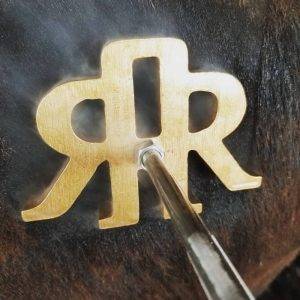
    In fact, all the wranglers have the process down. It’s a like a team roping event you might watch at the county fair where one cowboy ropes the head and another the heels. Then the crew jumps into action. One person holds the head and a front leg; another person controls the back legs. Injections are given, and an ear is tagged. Males are castrated, and each animal gets branded with the Rafter E.

    2015-05-23 17.42.47“We use freeze branding, so the iron brand is placed in liquid nitrogen. The cold changes the color pigment of the hair from black to white, so the cold brand is more visible on a black calf than a hot brand would be,” explains Robb.

    Why go through the work of branding? “It’s so much fun,” answer Robb and Jennifer in unison with smiles on their faces. As the old saying goes, many hands make short work. Once the work is done, the Ewoldts and their hands will enjoy kicking back around the campfire and telling tales while enjoying some delicious homegrown beef.

    Robb says his favorite meal is a grilled ribeye with a side of grilled onions. Robb likes to cook the onions low and slow for about an hour, so he puts those on the grill first. Simply quarter two Vidalia onions; place minced garlic and a ½ pound of butter in the center. Wrap them in foil. While the onions are grilling, Robb seasons the ¾-inch thick steaks with McCormick’s meat tenderizer and garlic salt to taste. He works them over with a hand-held meat tenderizer and then seasons the other side.

    Click here for grilling tips from the Iowa Beef Industry Council.

    Team Latham

    May 25, 2018
    Agriculture, Beef, Food & Family
Previous Page
1 … 5 6 7 8 9 … 16
Next Page

Latham Hi‑Tech Seeds

131 180th Street | Alexander, IA 50420

(641) 692-3258

SIGNUP FOR OUR NEWSLETTER
  • Contact
  • Legal
  • Dealer Center
  • Seedware Login
  • Latham Gear

© 2025 Latham Hi‑Tech Seeds. All rights reserved. | Iowa Web Design by Webspec | Privacy Policy

Latham® Hi-Tech Seeds is a trademark of M.S. Technologies, L.L.C., 103 Avenue D, West Point, IA 52656.