Skip to content
Latham Hi-Tech Seeds

(641) 692-3258

  • Home
  • Performance
  • Products
    • Corn
    • Soybeans
    • Alfalfa
    • Corn Silage
    • Seed Guide
  • Find a Rep
  • Media
    • Blog
    • News
    • Videos
    • Podcasts
    • TECHTalk
  • About Us
    • Company History
    • Our Mission
    • Careers
    • Become a Rep
    • Sowing Seeds of Hope
  • Contact Us
  • Latham Hi‑Tech Seeds

    Weathering Winter Storm Ion

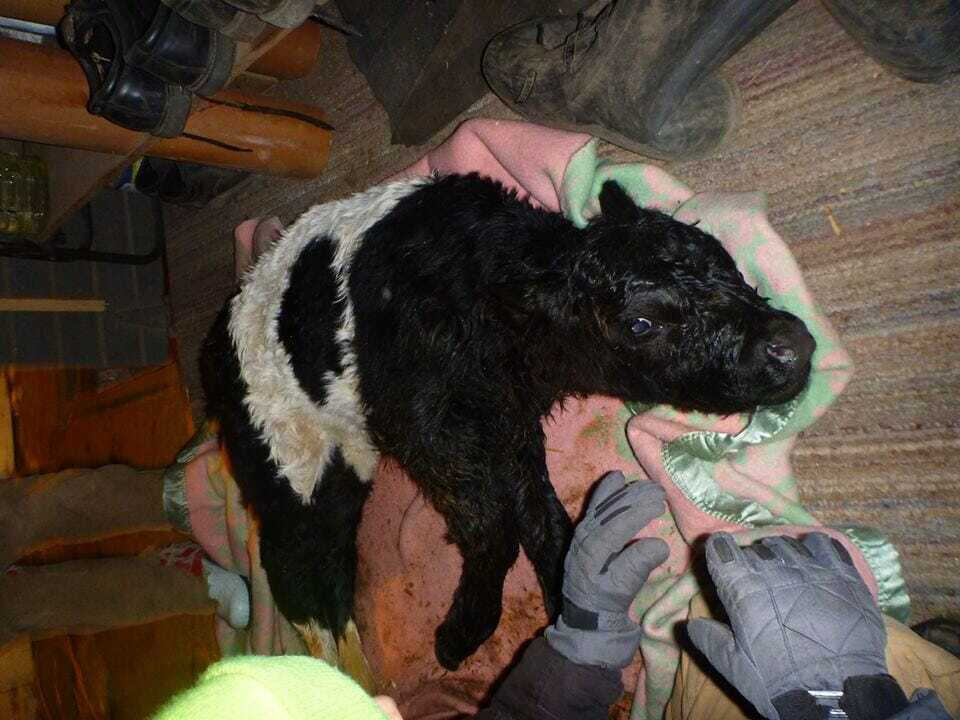
    Calf newborn
    Photo credited to Latham Dealer Andria Fritz-White of Lancaster, WI
    Photo credited to Latham Dealer Andria Fritz-White of Lancaster, WI

    “Today is what you make of it!” I often tell my kids. “There is a silver lining to every cloud,” is another one of my favorite sayings. But today even I am searching for the silver lining as temperatures dip, wind chills hit 45 to 50 below zero, and the wind gusts at 30 miles per hour. Winter Storm Ion is moving across the U.S., bringing the coldest temperatures we’ve experienced in almost two decades.

    My Facebook feed is filling up today with posts from friends, who have rescued newborn calves from the elements and moved their newborn lambs into the garage. Faucets are freezing and equipment is breaking. As one of my friends posted, “Expect things to break and breakdown.”

    This weather isn’t fit for beast nor man. While farmers are busy caring for their livestock, they must also remember to take care of themselves:

    • Dress for the weather – Wear loose-fitting layers. Cover your head. Wear mittens instead of gloves.
    • Eat and drink warm foods – Soup, hot dishes and hot chocolate will help you warm you on the inside.  (Sorry to disappoint a few folks, but the age-old practice of drinking alcoholic beverages to keep the body warm in cold weather is the exact opposite of what you should do.)
    • Clean and organize – Go vacuum a few rooms or walk up and down the stairs.  Moderate exercise will get your body warm without breaking a sweat, which would obviously cool your body.

    In appreciation for all the things farmers do, today we’re giving away this beautiful plaque by Isabel Bloom LLC. Everyone who likes Latham Hi‑Tech Seeds' Facebook page by 5 pm today will be entered in a random drawing. We certainly appreciate America’s farmers, who work 365 days a year, regardless of the weather.  We also appreciate all of service workers, who provide behind-the-scenes support including electricians, heating repairmen, truck drivers and others. In honor of all of these hardworking agriculturists, today we’re going to give away this beautiful “God Made a Farmer” plaque by Isabel Bloom. Everyone who likes Latham Hi‑Tech Seeds‘ Facebook page by 5 PM today will be entered in a random drawing.

    Team Latham

    January 6, 2014
    Agriculture, General, Industry News
  • Latham Hi‑Tech Seeds

    Day 7 of 12 Days of Christmas

    12days

    12daysGenuity VT3 PRO has been a top-selling trait for us, and with the approval of Genuity® VT Triple PRO® RIB Complete®, our VT3 PRO RIB products have become even more popular.  Latham makes meeting refuge requirements simple with its one-bag system.

    Consider the following Latham® RIB corn hybrids to your 2014 portfolio.  Remember, one of the best ways to manage risk is by planting a diversified portfolio of seed products that includes minimum of three or four different hybrid numbers in varying maturities.

    Check out these top VT3 PRO from Latham Hi‑Tech Seeds:

    • LH 5186 VT3 PRO – this hybrid showed excellent root strength and late-season intactness in 2013. The data also is great on this hybrid the VT2 PRO version called LH 5185 VT2PRO.
    • LH 5877 VT3 PRO – This is one of the most adaptable hybrids in Latham’s lineup.  It can be planted in multiple situations and is very good against Goss’s Wilt.
    • LH 5898 VT3 PRO – This is the VT3Pro version of our popular LH 5896 and topped our own plots in Alexander, Iowa.  Place this hybrid in your best soils for optimal performance, and feed it with extra nutrients.  It’s also very good against Goss’s Wilt.

    Wrap up your 2014 seed order during Latham’s 12 Days of Christmas promotion, and take advantage of great discounts through January 6!  Click on the related posts below to learn more:

    • Day 1
    • Day 5

    Team Latham

    January 2, 2014
    General, Industry News, Seed Technology
  • Latham Hi‑Tech Seeds

    Reflecting on 2013 & Hoping for a Better 2014

    It’s the last day of 2013 and I’m thinking back about all that has happened during the past years.  So many memories have been created – both good and bad.

    The 2013 farming year can easily be described as a roller coaster!  As the spring planting season got underway, we were hit with a late-season snow storm.  Then monsoon season struck, and the equivalent to a whole year’s worth of rain fell as I tried to plant my crops.  We experienced the wettest spring on record for 141 years.  I finally finished planting by mid-June, close to six weeks later than normal.  And that’s when the rain stopped.  Even with all the rain we received in the spring, a good share of Iowa is still under some type of drought rating.

    Fall harvest also was a big challenge.  With such late planting, I harvested some very corn.  It was difficult to combine and required lots of LP to dry down the moisture for safe storage.  Now commodity prices have dropped to break even or below.  Many Americans are asking for an increase in the minimum wage, but sometimes there is no wage for farmers!

    This brings to mind the “Farm Bill” that has yet to pass.  There’s been much talk, little action.  I’ve already written so much about this bill, but today I want to comment on the part that most directly affects my farming operation.  I have bought crop insurance every year as far as I can remember.  I received a settlement one year, and it looks like there may be another one this year.  The point is, I have paid far more in premiums than I will ever receive in pay outs.

    While I understand this is pretty typical of insurance, I only point this out because there is a misunderstanding that crop insurance is making farmers rich.  Even with a settlement, this will be a very unprofitable year for me.  That’s the way farming can be… Sometimes it takes two or three or even more years to make up for one bad year.  Even with crop insurance, farmers are still pretty much at the mercy of the weather.  Farmers prepare to weather the storms.

    As the year 2013 comes to a close, I don’t want to dwell on my fears.  I want to remember the year’s highlights.  While I enjoyed several highlights this year, the one that tops my list is the Black Seas Study Tour sponsored by the Iowa Farm Bureau Federation.

    I spent 10 days in Ukraine and Romania with 25 other Iowans, checking out the competition that we will encounter from Eastern Europe in the future for our exports.  Exports are an extremely important part of U.S. farmers’ marketing strategy.  We have become very efficient at production on our farms and ranches, which allows for some balancing of our country’s trade.  The USA has become increasingly hungry for products from other countries, so we need to export something to balance this hunger.

    Ukraine, with a majority of fertile soil that can grow crops in the right climate, is like an awakening bear. This country was the Bread Basket of the Soviet Union.  With the right governing climate, it can become a major competitor for the same markets that Americans have been developing.

    Regulations are putting a strangle hold on U.S. farmers, so we may lose the competitive advantage we’ve enjoyed for years.  Not only will this hurt agriculture, it will hinder the growth of all U.S. industries that supply agriculture.  Small towns and small businesses in rural America have a huge stake in a healthy farm economy!

    It’s my hope that 2014 finds us with a Farm Bill and more favorable growing conditions.  Where there is seed, there is hope!

    “Though I do not believe that a plant will spring up where no seed has been, I have great faith in a seed. Convince me that you have a seed there, and I am prepared to expect wonders.” – Henry David Thoreau

    Larry Sailer, Musings of a Pig Farmer

    December 31, 2013
    Agriculture, General, Industry News
  • Latham Hi‑Tech Seeds

    Day 5: 12 Days of Christmas

    12days

    12daysOne of the best ways to manage risk is by planting a diversified portfolio of seed products that includes minimum of three or four different hybrid numbers in varying maturities.  Different flowering dates can help reduce yield loss due to heat during pollination.

    4819LH 4819 SS, designated as one of Latham’s top Gladiator hybrids, is an excellent early product for North Iowa.  Not only does it portray a great defensive package needed for tough corn-on-corn situations, but this hybrid is high yielding with excellent test weight.  It has good stalks with excellent roots, giving this hybrid healthy late-season intactness.  Staygreen allows LH 4819 SS to move south of its comfort zone, too.

    Talk to your local Latham® representative about planting some 4819 in 2014.  If you have questions or need help finding a dealer near you, call the Latham office at 1.877.GO.LATHAM (1.877.465.2842).

    Team Latham

    December 30, 2013
    Corn, Crop, General, Industry News, Seed Technology
  • Latham Hi‑Tech Seeds

    Fighting Empty Nest Syndrome with a Full Barn

    Friday1

    While most rural residents enjoy the solitude that comes with living the country life, Eric and Laura Morine found their eastern Iowa farm a little too quiet after their two daughters graduated from high school.  The couple met when they were both majoring in Agriculture at Iowa State University.  While raising crops, livestock and a family, plus managing a seed dealership, there was always something to do or someplace to go.

    Friday2Eric’s dad became a Latham® soybean dealer in 1982 and remained one until his full retirement in 2005.  “The main reason we started planting Latham soybeans is because the company had a reputation for offering high-quality soybeans,” says Eric.  “At that time, we were interested in only public varieties.  Many farmers blamed their crop seed for weed pressure, even sunflower, but we never found foreign matter in a bag of Latham.  Thirty-four years later, we’re still planting Latham for its quality.”

    Until he retired from farming in 2001, Eric’s father helped manage the crop and livestock operation that included farrowing hogs and feeding cattle.  Laura, who earned her degree in Ag Business, held an off-farm job but also was interested in livestock.  Both of their daughters showed horses and hogs through 4-H, FFA and saddle club associations.  The horse and purebred hog production went down the road when the girls went to college, leaving only one show horse on the homeplace.

    It was unusual for the Morines to be without livestock.  Pork had been produced on the farm from the time Eric’s father moved there in 1966 until 2012.  When Eric saw Laura and their youngest daughter, Sara, eyeing llamas at the 2012 Iowa State Fair, he knew it was time to start looking for livestock.  They walked past miniature Hereford cattle, which were being prepped for exhibition, and the entire family was intrigued.  It wasn’t long before they brought home four heifers to start their own herd.

    “Miniature Herefords are the perfect fit for us,” explains Eric.  “Since they have never been crossed with modern European species, an adult female is naturally full grown at 600 pounds.  Their size is just perfect for our existing farrow-to-finish buildings.  We didn’t have to retrofit any gates or pens.  Everything was ‘move in’ ready.”

    The family’s Hereford herd continues to grow, which makes good use of the hay and grass they were already baling.  Heifer calves are kept and bred while the bull calves are sold to petting zoos, if they are small enough, or grass finished for beef consumers.

    Friday1Miniature cattle are becoming more popular since the smaller size results in a carcass that can fit into a family’s freezer; cuts are optimal portion size; and acreage owners can feed their own beef.  Miniature Herefords are a very docile breed, express a lot of character, and the calves have a “tail up” attitude when they play.

    Entering the cattle business has been a great way for the Morines to reconnect with friends in the agriculture community, as well as make new acquaintances.  “We always told our daughters that the friends they made through 4-H, FFA, and POAC would help open doors in the future, and that continues to be true.”

    While serving as camp director, she was assigned to train counselors through the Camp USA program.  She became good friends with one of those counselors, an English chap named Darren Crocker.  The two wanted to remain in contact during her senior year, so Samantha applied to the Royal Agricultural College in Cirencester, England.  After receiving her bachelor’s degree, she entered a master’s program at the University of Gloucestershire.  Samantha earned a master’s degree in International Human Relations; she and Darren were married in May 2012.  They live in Cheltenham in the South West region of England, where Darren works in marketing for the local university and Samantha helps unprivileged families with nutrition.

    Sara, 22, became interested in animal nutrition as a teenager when she bought a horse from an animal nutritionist, who became one of her mentors in the show circle.  She went on to earn a bachelor’s degree from ISU and is now working toward her master’s degree in Animal Nutrition.  She has applied to the Iowa State University College of Veterinary Medicine and also is considering working on a doctorate degree in Animal Nutrition.  Her future endeavors will depend on the opportunities available next spring or fall.

    Just as farming and 4-H have been family traditions so has Oatmeal Cake.  Laura’s mom was known to bake this homemade family favorite for special occasions like holidays and birthdays.  That’s why It seemed only fitting to include their mother’s recipe in the Benton County 4-H Cookbook, and today she’s sharing it with us on TheFieldPosition.  Bake someone happy this holiday!

    Team Latham

    December 27, 2013
    General, Industry News, Seed Technology
  • Latham Hi‑Tech Seeds

    Day 1: 12 Days of Christmas

    12days

    12daysAt Latham Hi‑Tech Seeds, we’re extending the spirit of giving for 12 more days!  Each day, from now through Jan. 5, we’ll feature some of our top performing seed products.

    Wrap up your 2014 seed order and take advantage of great discounts through January 6! Check out these “Big 3” that a great fit for eastern South Dakota, southern Minnesota and parts of northern Iowa:

    1. LH 4098 VT3 PRO RIB

      • 186.2 bu/A (2nd Overall) Casselton, ND FIRST Trials
      • 177.7 bu/A First Trials, Colfax, ND
      • 14.3 bushel Advantage over KR4189VT2P at Enderlin, ND
      • 13.7 bushel Advantage over 38N88 in 2012 3rd party replicated trials
      • 18.9 bushel Advantage over P8906HR in 2012 3rd party replicated trials
      • 17.4 bushel Advantage over P8917XR in 2012 3rd party replicated trials
    2. LH 4455 VT3 PRO RIB

      • 196.87 bu/A (1st) at Garner, IA (plot #1)
      • 200.15 bu/A (2nd) at Oshkosh, WI
      • 182.15 bu/A (3rd) at Bellingham, MN
      • 187.78 bu/A (4th) at Stewart, MN
      • 13.4 bushel Advantage over P9519HR in 2013 3rd party replicated trials
      • 23.3 bushel Advantage over 38M58 in 2013 3rd party replicated trials
      • 3.4 bushel Advantage over P9853HR in 2013 3rd party replicated trials
      • 29.4 bushel Advantage over P38A57 RRHX in 2012 3rd party replicated trials
      • 41.4 bushel Advantage over P38M58 RRHX in 2012 3rd party replicated trials
      • 19.9 bushel Advantage over N36K 3000GT in 2012 3rd party replicated trials
      • 17 bushel Advantage over N33R 3000GT in 2012 3rd party replicated trials
    3. LH 4568 VT3 PRO RIB

      • 227.09 bu/A (5th) at Sleepy Eye, MN
      • 207.88 bu/A (5th) at Osage, IA (plot #1)
      • 204.92 bu/A (5th) at Osage, IA (plot #2)
      • 187.25 bu/A (5th) at Stewart, MN
      • 172.64 bu/A (5th) at Bellingham, MN
      • 9.3 bushel Advantage over P9519HR in 2013 Latham replicated trials
      • 19.2 bushel Advantage over 38M58 in 2013 Latham replicated trials
      • 9.9 bushel Advantage over N34N-3111 in 2012 3rd party replicated trials
      • 3.9 bushel Advantage over P9630AM1 in 2012 3rd party replicated trials
      • 3.6 bushel Advantage over P9494XR in 2012 3rd party replicated trials

    Team Latham

    December 26, 2013
    Corn, Crop, General, Industry News, Seed Technology
  • Latham Hi‑Tech Seeds

    Stand Up for Farming and for Ethanol

    Roger Z Generic
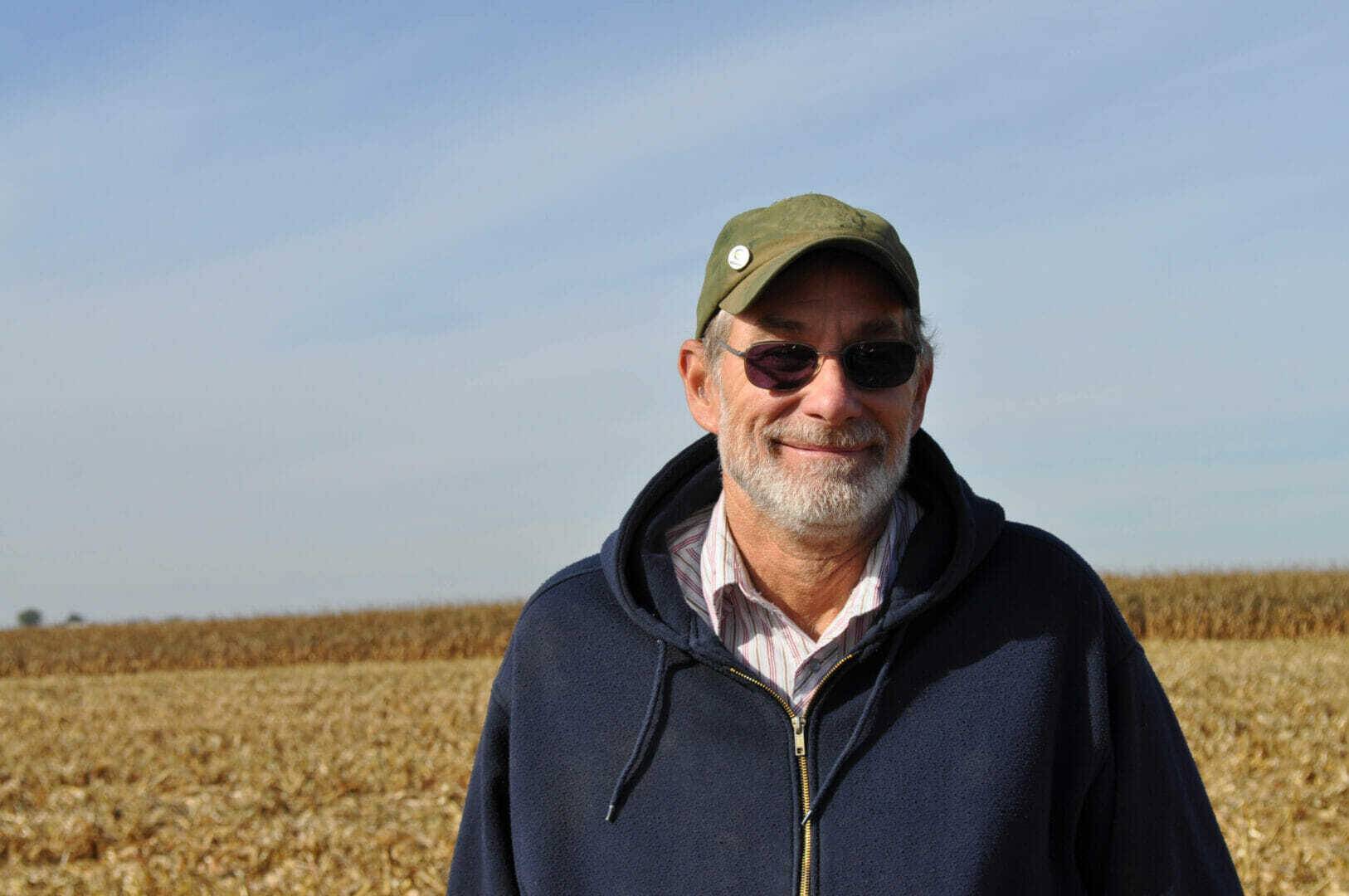
    Roger Zylstra has been farming for nearly 40 years, raising corn and soybeans and finishing hogs in Jasper County. He has used conservation tillage and no-till throughout his career and recycles manure into his nutrient management program. Zylstra is currently the president of the Iowa Corn Growers Association and is a graduate of the Iowa Corn Leadership Enhancement and Development (I-LEAD) program.  Zylstra and his wife, Carolyn, have three children: Their son, Wesley, is a partner in Zylstra Hillside Pork LLC and farms with his dad.
    Roger Zylstra has been farming for nearly 40 years, raising corn and soybeans and finishing hogs in Jasper County. He has used conservation tillage and no-till throughout his career and recycles manure into his nutrient management program. Zylstra is currently the president of the Iowa Corn Growers Association and is a graduate of the Iowa Corn Leadership Enhancement and Development (I-LEAD) program. Zylstra and his wife, Carolyn, have three children: Their son, Wesley, is a partner in Zylstra Hillside Pork LLC & farms with his dad.

    by Roger Zylstra, president of the Iowa Corn Growers Association

    On November 15, the Environmental Protection Agency (EPA) released its proposed renewable volume obligations (RVOs) under the Renewable Fuel Standard (RFS).  Despite its lack of statutory authority to do so, the EPA proposed cutting minimum ethanol use from 14.4 billion gallons to 13.01 billion gallons. If finalized, this cut of 1.39 billion gallons will have economic and environmental consequences felt nationwide.

    This is serious – as serious as anything I’ve dealt with in my 30 years of farming. As a corn farmer, I view the ethanol market as a home-grown value added opportunity. As a livestock producer, I know that all of agriculture is connected and better grain prices typically bring better livestock value. I have been to D.C. recently to present verbal comments to the EPA to convey just this message.

    In a recent Cedar Rapids Gazette article, Iowa Governor Branstad is quote as saying he believes the EPA is “making a huge mistake” to reduce the renewable fuel standard, which in turn could push the price of corn below the cost of production, drive down farm land prices and cut the demand for farm machinery.

    Governor Branstad is right; our farm futures hang in a delicate balance. Corn production is at 14 billion bushels with a 2 billion bushel carryover and corn prices are at cost of production. According to Iowa State economists, the economic impact on Iowa agriculture is projected to be near $1.4 billion.

    I see corn not sold sitting in my bins with prices at cost or below the cost of production.  When farmers are squeezed, they aren’t able to spend money. When there isn’t money circulating through local economies, town square businesses close and communities struggle to keep people in town and students in the school. We know what happens in depressed agricultural times because it happened in the 1980s farm crisis.

    ICGApolicyThe federal government estimated that farmland values plummeted nearly 60% in the Midwest in just four short years in the mid-80s. In that same time, record production and grain limits brought low prices plus exports decreased more than 20%. I don’t have a crystal ball, but research and some real life 1980s experience, tells me we aren’t nearing a proposed “blend wall” as the EPA proposes, but rather we are sending farmers crashing into a wall by reducing market growth through ethanol production.

    Iowa might be miles from Washington D.C., but those miles are covered by many hard working farmers like us who are about to be squeezed by policy limiting our ability to farm today as well as our future ability to produce a crop and make a living.  We have the corn; we have the ethanol plants; and we have the infrastructure in place to help lighten our surmounting energy needs.

    The EPA’s attempts to reduce the RVOs for 2014 are misguided.  Please contact the EPA today to tell them how this decision impacts your farm and community. Submit your views to the EPA by clicking on this link or sending your written comments via US mail to:

    Environmental Protection Agency
    Mailcode: 2822T Air and Radiation Docket ID No. EPA-HQ-OAR-2013-0479
    1200 Pennsylvania Avenue NW.
    Washington, DC 20460

    Team Latham

    December 19, 2013
    Agriculture, General, Industry News
  • Latham Hi‑Tech Seeds

    Agriculture Needs Representation… Who Will Fill the Bill?

    TomLatham SwornIn
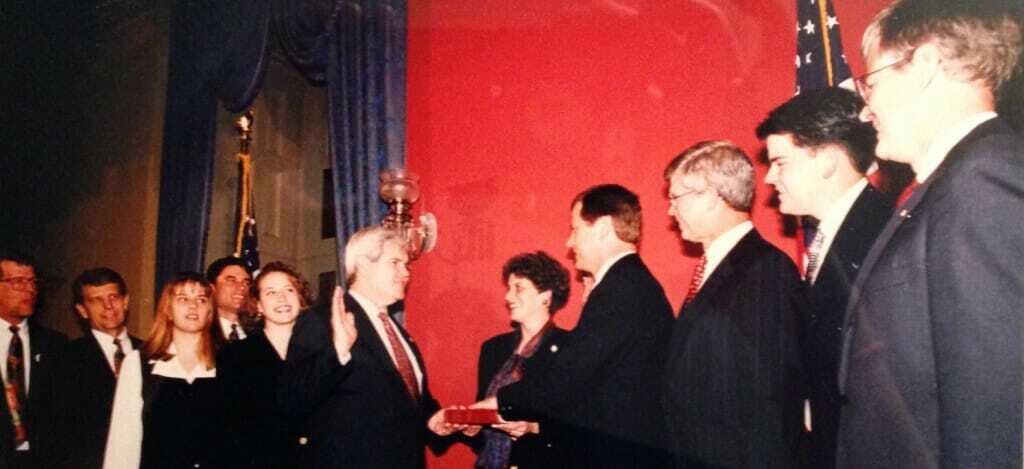
    The year 1994 is significant to John Latham because that’s the year Tom Latham was elected as a U.S. Congressman. Tom’s absence from day-to-day operations with the family’s seed business created an opportunity for John to come onboard as a salesman. (John is pictured second from the right.)
    The year 1994 is significant to John Latham because that’s the year Tom Latham was elected as a U.S. Congressman. Tom’s absence from day-to-day operations with the family’s seed business created an opportunity for John to come onboard as a salesman. (John is pictured second from the right.)

    Breaking news yesterday was a bit shocking as Congressman Tom Latham, my uncle and former sales manager for Latham Seeds, announced that he won’t seek reelection to Congress in 2014.

    “My service to Iowa has never been motivated by titles, accolades or a drive to secure a place for my name in history or on a building,” Congressman Latham wrote in an email to constituents. “I have always been motivated by a responsibility and commitment to the people of Iowa, who elected me to faithfully work for an America that provides greater freedom and more opportunity for our children and grandchildren. But responsible leaders – regardless of what level they serve – must always take time to reflect on when it is time to step away from the task that they love. This is a discussion that I have every year with my family. They are my life.”

    After 39 years of frequent travel and many long hours at the office, I can see how anyone would want to retire and enjoy “free time.”  During the first 20 years of Tom and Kathy’s marriage, Tom worked tirelessly to make a name for Latham® brand soybeans and to build a dealer network.  Since 1994, he has worked tirelessly to represent Iowans in our nation’s Capitol.

    Tom has accomplished much in Congress, including securing funds for the national facility for USDA Animal Health in Ames.  He has been one of our country’s strongest advocates for ethanol and was awarded the 2012 “Fueling Growth Award” from a group representing America’s ethanol producers, who acknowledged his work for consistent and predictable federal policy that has helped create jobs in America.  He fought to preserve the tradition of protecting family farms from their own government by introducing the Preserving America’s Family Farms Act.   And as much as he has fought to make investments in rural America, he never lost sight of the fact that budgets must balance.

    Indeed, Tom is a rarity in Congress.  There aren’t folks serving in Congress or working in Washington, D.C., today who understand farming or life in rural America.  The fact that population is shrinking in rural America means that, for first time in our country’s history, the influence of agriculture is waning.  U.S. Secretary of Agriculture Vilsack, while addressing a group of farm leaders last winter during a Farm Journal Forum, said rural America is becoming less relevant.

    Lack of passion and commitment to agriculture is a major problem for all of us who live and/or work in rural America.  Ag literacy is one of our top challenges at the federal level.  Because Tom was raised on what is now an Iowa Century Farm in Franklin County and had agribusiness experience, he was often asked questions by fellow Congressman and staffers as they considered agricultural bills and policy changes.  There are only a handful of congressmen who share Tom’s background, experience, passion and commitment to agriculture.

    As a result, things nobody would have imagined happening 40 years ago are happening now.  The EPA is cutting the ethanol mandate.  Activists are going against sound science, demanding GMO labeling and trying to force seed companies out of states like Hawaii.  It’s difficult to pass a Farm Bill of any kind these days.

    Unfortunately, we don’t have enough government leaders who understand modern U.S. agriculture and its contributions to feeding the world.  Tom Latham understands the importance of this noble mission.  He has been a beacon of light for agriculture, and his light will be missed.  So as happy as I am for Uncle Tom and his immediate family, I’m sad for agriculture.

    John Latham, President

    December 18, 2013
    Agriculture, General, Industry News
  • Latham Hi‑Tech Seeds

    Protect America’s Food System

    Warmpigs

    MusingsHeader

    What does a farmer do in winter?  In addition to doing chores and plowing snow, I’ve been making my way through the stack of newspapers and magazines that got piled up during harvest.  One article I read this weekend was “Pew Commission 5 years later” written by Tyler Harris and printed in the September 2013 issue of Wallaces Farmer.

    While I believe Harris was trying to report the facts, his article got under my skin.  I thought about titling today’s blog, “Trying to listen when steam is coming out of your ears!”  I’m getting worked up again just thinking about Harris’ article, but I’ll do my best to give you the jest.

    The Pew Commission on Industrial Farm Animal Production (PCIFAP) issued a report in 2008 entitled, “Putting Meat on the Table: Industrial Farm Animal Production in America.”  It called for changes to meat production in the name of public health, environment, animal welfare, and the economics of rural communities.  The Commission made recommendations against the use of antimicrobials fed to meat animals and proposed changes to current livestock waste management systems.

    warmpigsMany of these recommendations were opposed by the National Pork Producers Council and the Animal Agricultural Alliance.  Because these groups questioned the study’s objectivity, a follow up study was led by Robert Lawrence, director of the John Hopkins Center for a Livable Future.  Results from that study were released this fall.  Basically, this follow up study upholds the Pew recommendations from 2008, and Lawrence is quoted as saying, “… the urgency to implement them fully grows each day.”

    I’m trying very hard to keep an open mind here, but the “Devil” is in the details!  The PCIFAP consists of 15 commissioners “who bring individual expertise in diverse fields including public policy, agriculture, veterinary medicine, public health, animal welfare, the food industry, and rural society.”  Until you read through the list of commissioners and research their backgrounds, one would think this group would represent experts on all sides of the issue. Not the case!

    The makeup of this Commission is clearly one-sided.  That’s why today I’m using my own experience to refute each recommendation the Commission made:

    1. The Commission’s first recommendation addresses antibiotics use within the livestock industry. Mainly, the Commission wants to stop use of all non-therapeutic antimicrobials.  Fact is, a very small amount of antibiotics are used in this way.  Antibiotics add to feed costs, so farmers don’t use them unless they’re needed.  Plus, modern buildings are so much better for controlling disease that hogs get sick less frequently.  When my hogs were raised outside, I was always medicating due to stress and exposure to stray animals and weather.  No one has proved that resistance is coming from antibiotics used in this fashion.
    2. The Commission’s second recommendation concerns a government database and disease monitoring.  In my own operation, I know where the pigs come from and what their history is. We already have a great system in Iowa to deal with any outbreak of disease, so we don’t need additional rules.
    3. In its third recommendation, the Commission addresses industrial waste from the “inflexible and broken system” that exists. Now this is way out of line!  I agree there is not much flexibility with our current manure management plans.  But calling manure an industrial waste is simply wrong!  Manure is a valuable fertilizer, and no farmer wants to waste valuable inputs.
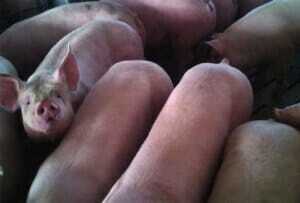
    4. Recommendation number 4 deals with animal welfare.  There is a distinct different between treating animals humanely and treating them like a human!  Farmers treat their animals humanely every day because we want the livestock’s environment as stress-free as possible.  The whole premise behind modern production techniques is to give our animals the very best care possible!  Following a recent snow storm, I stepped inside one of the modern barns and snapped a picture of a pen of pigs. The wind chill outside was at least 20 below zero, but my pigs were warm and cozy.  As much as these experts want to return to the good old days, I would never wish that for my pigs!
    5. The Commission’s fifth recommendation calls for more state and federal regulations to “level playing field for all producers.”  This is America, folks, where free enterprise and free choice are supposed to reign supreme!  Let the free market – not government regs – rule.  Leveling the playing field removes incentives from those who have figured out how to do a great job and gives advantage to those who are inefficient.  If a producer wants to remain small, he must find a niche market – and many have.  It’s not government’s job to decide the winners in business!
    6. The last point calls for increased government funding to expand and reform animal research. Last I knew, private companies were doing a pretty darn good job already!

    The point I want to make is that the Pew study is very well funded and get a lot of attention, so it puts pressure on elected officials to make more rules that end up hampering business. More regulations leads to higher production costs, which leads to fewer investments by farmers and businesses, which leads to fewer jobs and higher food costs.  We must remain diligent in protecting the great food system we already have in this country, which produces the safest cheapest food in the world!

    Larry Sailer, Musings of a Pig Farmer

    December 17, 2013
    Agriculture, General, Industry News
  • Latham Hi‑Tech Seeds

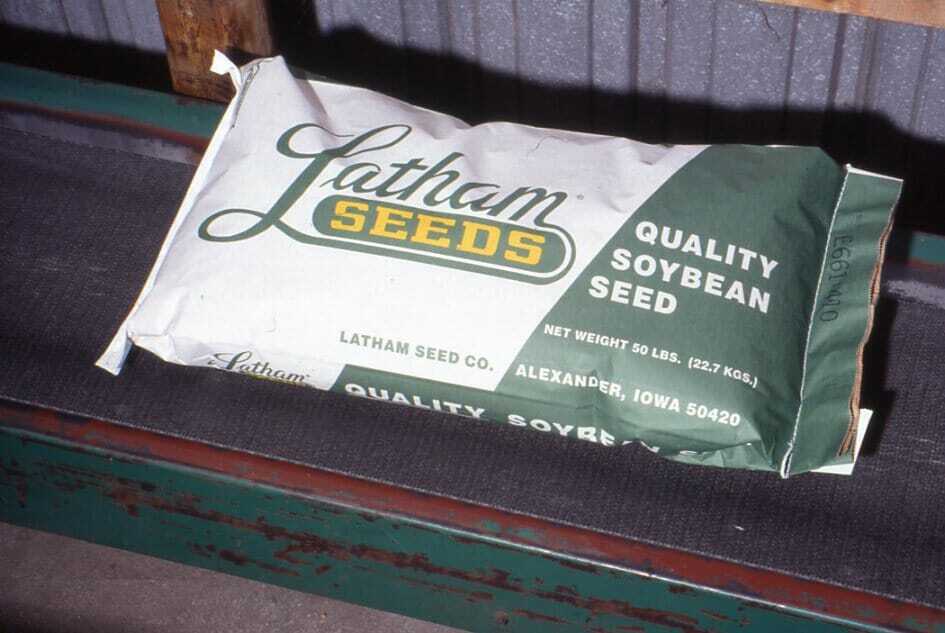
    Throwback Thursday: Soybean Seed Bag

    Old LathamSeedsBag

    Only top-grade soybeans go into a Latham® bag. Our team members take so much pride in what they produce, the word “quality” is stamped on every unit.

    Old_LathamSeedsBag

    Team Latham

    December 12, 2013
    Agriculture, General, Industry News
Previous Page
1 … 48 49 50 51 52 … 95
Next Page

Latham Hi‑Tech Seeds

131 180th Street | Alexander, IA 50420

(641) 692-3258

SIGNUP FOR OUR NEWSLETTER
  • Contact
  • Legal
  • Seedware Login
  • Latham Gear

© 2026 Latham Hi‑Tech Seeds. All rights reserved. | Privacy Policy

Latham® Hi-Tech Seeds is a trademark of M.S. Technologies, L.L.C., 103 Avenue D, West Point, IA 52656.