Latham Hi-Tech Seeds

(641) 692-3258

  • Home
  • Performance
  • Products
    • Corn
    • Soybeans
    • Soybean Blends
    • Alfalfa
    • Corn Silage
    • Seed Guide
  • Find a Rep
  • Media
    • Blog
    • News
    • Videos
    • Podcasts
    • TECHTalk
  • About Us
    • Company History
    • Our Mission
    • Careers
    • Become a Rep
    • Sowing Seeds of Hope
  • Contact Us
  • Latham Hi‑Tech Seeds

    Part I: How to Preserve Your Family History—10 Minutes at a Time

    Darcy.Maulsby.molasses.cookies.Feb .2015.2

    By Darcy Dougherty Maulsby

    With the holidays fast approaching, you have a prime opportunity to preserve your family history, 10 minutes at a time. Even better, did you know this history can help your children and grandchildren thrive?

    Preserving history doesn’t happen by accident. This became clear as I researched and wrote my new book, Calhoun County, which showcases the stories of small-town and rural Iowa life through the eyes of those who lived it.

    As I asked friends, neighbors and local museum volunteers to contribute vintage photos for my book, I heard, “I’d love to help, but we don’t have those pictures.” Some images succumbed to fires, while others were destroyed in flooded basements. Sometimes photos and documents were thrown out in a housecleaning frenzy years ago.

    Darcy.Maulsby.molasses.cookies.Feb.2015.2That’s why there’s something special about old photographs, letters and documents that survive. I’m grateful to the people who preserved stories of the February day in 1934 when the infamous gangsters Bonnie and Clyde robbed the Knierim bank. I’m also thankful to the anonymous photographers who took pictures of major events in Calhoun County, such as President Taft’s 1911 visit to Rockwell City, and the time when Babe Ruth played golf at Twin Lakes Golf Club following a batting exhibition in 1940.
    Top five tips to keep history alive

    I was able to include all this and more in Calhoun County. Along the way, I discovered five key things you can do to preserve your own family and local history in as little as 10 minutes at a time:

    1. Exchange family photos and stories rather than gifts. During the holidays, have family members bring copies of family photos they think other relatives might not have. Then enjoy sharing the photos and the memories. Include the kids and young adults in these conversations, whenever possible.
    2. Protect photos from the sun. Display copies rather than originals. Also, store photos in acid-free boxes and acid-free albums with non-PVC plastic pockets and no adhesives.
    3. Print your photos. Schedule 10-minute work sessions to select digital photos you’d like to print. Then make time to print them using high-quality inks and photo papers, not just a desktop printer and typing paper. Also, schedule 10-minute work sessions to begin scanning old photos you want to preserve. Use an external hard drive or cloud system to back up your digital files.
    4. Document the details. Whenever possible, note who is pictured in each photo. Use a soft lead pencil or photo-archiving pen to also list where the photo was taken, the date and a bit about the event depicted.
    5. Go high-tech. Download apps like StoryCorps to help collect your family history via your smartphone. Also, use your phone’s voice recorder or video tool to record your family’s stories.

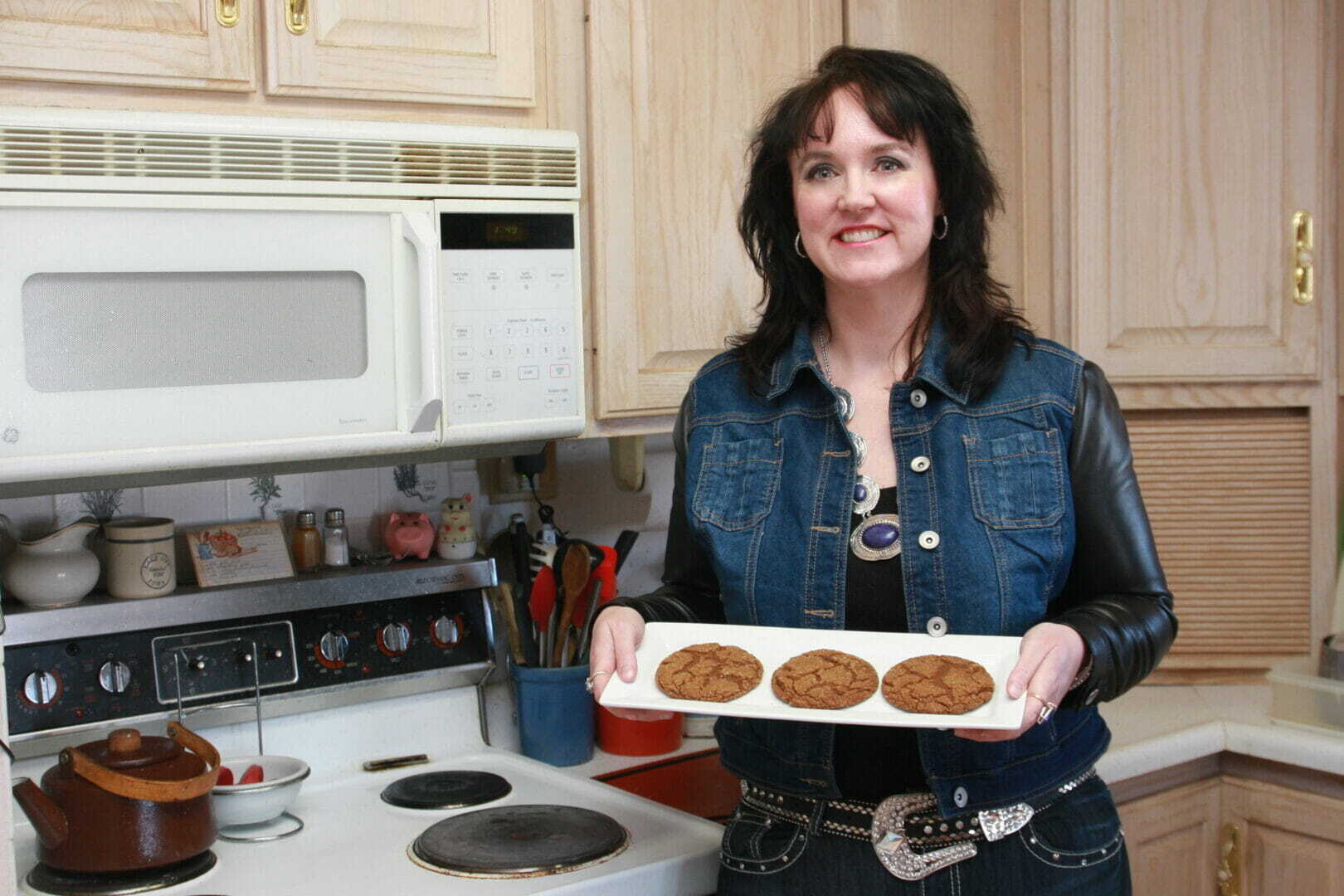
    Today Darcy is sharing with us one of her favorite Calhoun County recipes. She won a blue ribbon with these Magnificent Molasses Cookies at the 2015 Clay County Fair. They are her dad’s favorite cookie, so she especially enjoys baking them and taking them to the field at harvest.

    To be continued Monday …

    Team Latham

    November 20, 2015
    Agriculture, General, Industry News
  • Latham Hi‑Tech Seeds

    Lend a Helping Hand this Holiday

    BW helping hand

    by Kilah Hemesath, Latham Hi‑Tech Seeds Marketing Intern

    People in the Midwest are known as some of the most giving individuals. There were many situations during harvest 2015 when a farming community came together to help a neighbor in difficult times. Families and farmers in that situation understand the importance of getting the crops out of the field because that is their lifestyle, too. These same thoughts and actions can be carried out throughout the holiday season.

    Here are some ways people in #NorthIowa are giving back this season:12239726_868885586560164_8727041838813534750_n

    • Toys for Tots
    • Salvation Army Red Kettle Drive
    • YMCA’s #GivingTuesday (day after Cyber Monday) with a #Send2Kids2Camp drive
    • Conway Freight in Clear Lake is promoting #TPHawkeyeHarvestFoodBank with a goal of collecting 1,000 rolls of toilet paper to donate
    • Outwear Donations and Coat Drives
    • Northeast Iowa Community Action

    My local church hosts a giving tree every holiday season for members to help fulfill. The tree is decorated with gifts tags, which are requests from families throughout Northeast Iowa. Members of my church will purchase the gift listed on the tag, return the gift and it is then delivered to Northeast Iowa Community Action for distribution.

    Donating a gift to your local community center is a simple way of giving and can make a young girl’s or boy’s holiday. You never know how much your actions will impact an individual or family, especially during the holiday season when some need it the most. Whether you take part in the giving tree at a local church, donating toys to a shelter or help a relative prepare holiday food, you can make a difference!

    “It’s better to give than receive” is a reoccurring phrase in our family. My mom has always served as a positive role model, lending a hand to those in need. She works a full time job and also covers the duties of a FarmHer. She always has a warm meal ready during the busiest time of the year for our family and never hesitates to donate to community organizations.

    How you demonstrate giving and show caring can also make a difference in your children’s lives. Just as I looked up to my mom – and still do – your actions make an impression and create a legacy for your children. Even if you don’t have children, giving back can be a gift you gift yourself this season!

    BW helping hand

    Webspec Admin

    November 19, 2015
    Agriculture, General, Industry News
  • Latham Hi‑Tech Seeds

    Can Sustainability and Viability go Hand in Hand?

    IMG 8682

    Last weekend a friend tagged me in a post, asking if I had heard about the group mentioned in this article. “SILT plants seeds for sustainable farms in area” is the headline of this article printed Nov. 13 by the The Daily Reporter.

    Reporter Dana Larsen made many great points about how SILT can help veterans involved in farming transition back to stateside life. She also explains how the initiative for locally-raised food crops could help improve water quality and aid refugees. Many “hot buttons” were covered, including the lawsuit filed by the Des Moines Waterworks.

    Many of the problems stated in this article are totally untrue! Honestly, many of the issues raised in this article and by the SILT organization have been created – and positioned – to make it look like there is a problem.

    Because I’ve written before that we can’t take water issues at surface level, I followed my own advice and did a little more research on this organization and its approach to “sustainable farming.” I learned that SILT launched in January 2015 and boasts of having a “politically diverse” leadership: Bill Stowe, CEO of Des Moines Water Works, which is suing Buena Vista and two other area counties over river water quality; Republican leader Jeff Kaufmann; and Okoboji native and organic livestock producer Kate Mendenhall. Does this leadership structure appear balanced?

    Then I dug into the stipulations and requirements of SILT farmers. There are a lot! It left me wondering who can possibly live up to required sustainability guidelines and make a living. How can a farming operation be sustainable if isn’t financially viable?

    “In general, for rural communities in Iowa there is no evidence that [farmers] markets create any real sustainable economic activity. The problem with the traditional farmer’s market model is that, while they are a nice social event for successful communities, for the growers they are seasonal, labor intensive and, in many cases, expensive to participate in. No doubt there have been additional economic opportunities, but… participation by the producers is likely more of an important marketing tool rather than an incoming-producing opportunity. In order to build an economically sustainable business model, producers must be able to capitalize on post-farmer’s market sales opportunities,” writes Shane Tiernan in a document about the opportunities and challenges of scaleable, locally-grown food enterprises in Iowa.

    To assist local food enterprises, SILT shares resources for beginning farmers. This organization also plans to help match landowners like Mary Ellen Miller with potential producers like Kenn and Ashly Jenkins, who want to farm.

    My guiding principle is honesty,” writes Kenn, an agronomy student at Iowa State University. “From being honest to what you do on your land and on the plants you’re going to sell to people to being honest about what you can produce before committing to more, and being honest to the land about what’s sustainable because you want it to be sustainable for generations.”

    Another locally grown initiative underway is Global Greens Farm, a partnership with the City of Des Moines and Lutheran Social Services. This partnership allows refugees to supplement their income by planting a 50’ x 50’ plot of land. Advanced market farmers then move to a ¼-acre plot and receive training on crop production, business development and marketing. According to the program website,

    “Our food is locally grown and chemical-free. Our food is certified naturally grown. We teach natural and sustainable farming methods and do not use synthetic fertilizers or pesticides. All the seed we plant is non-GMO.”

    Why? “Locally produced” by definition doesn’t require a crop to be GMO-free. It doesn’t require it to be certifiably organic either. Organic doesn’t mean the crop was grown without the use of chemicals, and organic foods are not any healthier than conventionally-produced foods. If SILT truly wants farmers to be economically viable, why are they insisting on farming methods like those practiced by small holder farmers in third world countries?

    Sustainability is an ambiguous term that means different things to different people. What does sustainability mean to you? Let’s have a discussion!

    I encourage you to look into this new organization and give me your opinion. Is this really the future of agriculture in Iowa? Will “sustainable” initiatives really solve all the problems this group believes are bad with the current farms? I think you know my thoughts, but if not, you can bet I will share more about this in a future blog!

    IMG_8682

    Larry Sailer, Musings of a Pig Farmer

    November 17, 2015
    Agriculture, General, Industry News
  • Latham Hi‑Tech Seeds

    “Food for Thought” after a Week of Advocating

    20151113 092406 resized1

    Last week was a banner week for me. I spent the first three days in Kansas City, meeting with industry peers on the Communications Committee for the American Seed Trade Association (ASTA). Thursday I had the pleasure of speaking with “Musings of a Pig Farmer” author Larry Sailer to Iowa Agri-Women about using social media to influence public policy. Then last Friday I had the honor of representing Latham Hi‑Tech Seeds while serving on a panel with Cristen Clark of Food & Swine fame and Crystal Blin, aka Crystal Cattle.

    Share Your Story
    Cristen Clark, Shannon Latham and Crystal Blin served on a blogger panel last Friday at the inaugural “Grow by Future FarmHer” conference in Ankeny, Iowa. For everything from recipes to beauty tips, follow along at foodandswine.com, TheFieldPosition.com and crystalcattle.com.

    All week long I was surrounded by groundbreakers in agriculture: Greg Peterson of the Peterson Farm Bros, whose parody videos allow them to reach millions – literally millions and millions – of consumers with positive images and fun facts about agriculture; Dr. Robb Fraley, the Father of Biotechnology and 2013 World Food Prize Laureate; and Lexi Marek, an Iowa State University student and intern who pulled off the amazing feat of planning an inaugural, sold out “Grow by Future FarmHer” conference for 250 young women in agriculture.

    FarmHer was created to empower and recognize women in agriculture. “It is by no means an attack against men,” says founder Marji Guyler-Alaniz. “It’s not about taking anything away from men. [FarmHer] is about recognizing women.”

    During Friday’s closing session, Marji shared how the “God Made a Farmer” commercial that aired during the 2013 Super Bowl inspired her to make a career change. As a photographer, Marji realized that the beautiful photography featured in that popular video did little to show the important role that women play in agriculture. So she went on a mission to document the lives of women in agriculture:

    “Women play many important roles in agriculture as scientists, researchers, ranchers, care takers, and producers, just to name a few. At FarmHer shining a light on these women is our mission and we know it is important that they are celebrated for their accomplishments, are given a platform to share their stories and are able to inspire others through connection.”

    mePetersonFarmbros
    Last week Shannon had the honor of meeting the Peterson Farm Bros, who have gained worldwide attention for their parody videos that explain what they do on their family farm. Be sure to check out their new video, “Farmers Feed the World, which launches Nov. 16!

    The need for female leaders in agriculture to mentor the next generation of leaders was a consistent theme in every meeting I attended this week. A comment Dr. Robb Fraley made about women needing to have a louder voice in agriculture got me thinking about how blessed to have strong female role models in agriculture, beginning with my mom and my grandma.

    As an 8-year-old, I wanted to show lambs at the county fair. Although we raised sheep, my parents said they didn’t know the first thing about showing them. Fortunately, many kind people in my community stepped forward and taught me everything from how to pick your best stock from the lot to showing and fitting. My 4-H leader, Sandy Ruby, and her husband both spent time on our acreage. Other sheep industry leaders of the time, including Jennifer Heeren and Charles Steere, shared great advice and words of encouragement.

    None of these people made any reference to me that I was “a girl.” No wonder told me to scale back my big dreams because I was a female, and I honestly didn’t see “gender” when I was the only girl in my high school that chartered our school’s FFA chapter. When I was a senior, my FFA advisor took me on a campus visit to Iowa State and made me aware that Agricultural Journalism and Public Service & Administration in Ag were majors. Without Mr. Jorgenson’s influence, I might never have discovered my love of communicating about agriculture.

    IMG_2547
    Some of my favorite memories are with most important FarmHer role models I have, my mom and grandma!

    Fast forward about 25 years and the agricultural landscape has changed greatly! Nationwide 47% of FFA members are female, and women hold approximately 50% of state FFA leadership positions. For the first time in history, there are more females than males enrolled in the ISU College of Agriculture & Life Sciences. In November 2014, Joni Ernst became the first woman to serve in federal elected office from Iowa. She also is the first female combat veteran elected to serve in the United States Senate.

    Honestly, I’m happy for the young women who are growing up today with such great role models. My daughter, who has developed so much confidence through her 4-H horse project, has a wonderful female role model who’s a successful horse trainer and an accomplished rider. And even if she doesn’t desire to manage a seed company or operate a pumpkin patch, I hope my daughter will be inspired to “create adventures” for herself.

    In honor of the amazing farm women – like Annette Sweeney and 2011 Midwest Farm Mom of the Year and 2015 FarmHer Hall of Famer April Hemmes – who have blazed trails before us, today I’m sharing a recipe courtesy of the Iowa Beef Industry Council.

    20151113_092406_resized

    Shannon Latham

    November 16, 2015
    Agriculture, Beef, General, Industry News, Recipes
  • Latham Hi‑Tech Seeds

    Never Underestimate a Woman in Boots

    IMG 8656 4

    By Kilah Hemesath, Marketing Intern, Latham Hi‑Tech Seeds

    “Being a woman in agriculture means being a minority in an industry I am passionate about. It means proving that I am just as hardworking, dedicated and experienced as the next guy,” says Danisha Pladsen, from Shellsburg, Iowa.

    Founded in 2013 to update the image of agriculture to include women through imagery, FarmHer has become a multi-faceted source of inspiration and connection for women in all types of agriculture. FarmHer gives women in agriculture the chance to connect, inspire, communicate and gain knowledge, while becoming successful leaders in agriculture.

    Agriculture is built on the foundation of farmers around the world filled with hard work, persistence and determination. I grew up on a grain and livestock farm with four brothers. My brothers and parents served as role models while I was growing up and they continue to do so. They helped me discover my interest in agriculture and taught me to never let the “status quo” affect my goals.

    While attending Iowa State, I’ve been able to meet and become close friends with students who share my same interest. It is rewarding to meet other females who share my love for agriculture as I do. I would classify these ladies as FarmHer’s ready to achieve their goals.

    FarmHer is hosting an inaugural “Grow by Future” event on Friday, October 13, at the FFA Enrichment Center in Ankeny. The event will include a variety of topics including STEM, producer’s perspectives and international agenda. The agenda includes presentations by several Iowa women who have blazed trails in agriculture include: Dr. Wendy Wintersteen, Endowed Dean of the College of Agriculture and Life Sciences at Iowa State University: Iowa Lt. Governor Kim Reynolds; and Franklin County (Iowa) farmer April Hemmes, who has been a full-time farmer in Franklin County for more than 30 years.

    In honor of tomorrow’s #Grow15 event, I found it appropriate to share the story of two FarmHers I have met at Iowa State University. Andee Hammen, a junior at Iowa State University majoring in Agricultural Communications, shares a similar passion for agriculture. She says, “I am blessed to have the opportunity to grow up on a farm and someday I hope to transition into operating the family farm alongside my father.”

    Being a FarmHer has given Hammen the chance to find her passion and strive to turn her dream into a reality. She has been actively involved in her farming operation back home in Jolley, Iowa, ever since she was young. Involvement in 4-H and FFA helped further her interest and provided her with opportunities to reach her goals as a FarmHer.

    Pladsen has a goal of returning to her family farm, raising cattle and starting a soil sampling business. It’s easy to see Pladsen’s passion for agriculture when she talks about her new heifer.

    “Most students might want a new car or house accessory for their graduation gift,” Pladsen said. “When I received my registered shorthorn heifer, I was overwhelmed with excitement. This is my chance to start my herd and live the dream.”

    For more information on FarmHer, visit the group’s Facebook page and get involved!

    IMG_8656 4

    Webspec Admin

    November 12, 2015
    Agriculture, General, Industry News
  • Latham Hi‑Tech Seeds

    Reward for Black Labrador Reaches $10,000

    11010582 1616780395253309 4860585598226545539 n

    WANTED: ARMY OF PEOPLE TO SEARCH FOR LOST SERVICE DOG        

    Faith. Family. Farming. Friends.

    These aren’t just words on plaques that hang in the homes of many rural America residents. These are values that embody rural America. They’re the values that prompt friends and neighbors to gather and harvest the crops of a sick farmer. They’re the values that bond a community, whether community is defined as the people who live in one town or a group of people from a region who share similar interests like hunting or farming.

    That’s why today, on Veteran’s Day, I’m making a heartfelt plea that extends to everyone in the Upper Midwest. We need everyone to be on the lookout for Latham, the black Labrador Retriever that is part of the program at Retrieving Freedom Inc. (RFI) in Waverly, Iowa.

    Veteran’s Day, as you know, was established for Americans to publicly honor U.S. veterans. For the volunteers and staff at RFI, however, Veterans Day is every day. They work tirelessly to train dogs to provide veterans with a new sense of freedom. In many cases, a trained service dog makes it possible for veterans to feel safe again in public settings. Service dogs also help open doors, turn on lights and perform tasks for veterans with mobility challenges. Dogs trained by RFI also aid children with autism, as well as children and adults with diabetes.

    image2
    Bailey, pictured above, was 7 1/2 weeks old when Broders brought her home. She is still all puppy at 7 1/2 months!
    We first introduced you to the puppy named Latham last December when we posted, “Help Freedom Ring for Those Who Fought to Defend Ours.” Donated by Craig Christians, Territory Sales Manager for Latham Hi‑Tech Seeds, our namesake puppy will become part of the RFI’s breeding program. We’ve all been eagerly awaiting the day when Latham could father pups from Bailey, the Labrador pup purchased by Latham Regional Manager Jerry Broders and his wife. 
    Latham the Lab has a legacy to create. He has a mission and a purpose in life, but first he needs to come home! Latham went missing from his foster family’s farm near Parkersburg in Butler County, Iowa. Sadly, Latham went missing shortly after his foster mom, Jenna, was diagnosed with Multiple Sclerosis. 
    Because MS causes nerves in the body to deteriorate or become permanently damaged, it has been inaccurately reported that Latham would become Jenna’s personal service dog. “We’ve said that Latham acted like a service dog through the trying times of Jenna’s diagnosis,” says Scott Dewey, founder of Retrieving Freedom in Iowa. “That dog was literally at her bed side and providing her with comfort while she was in the hospital this fall, but I’d like to set the record straight. Latham was going to be a breeding dog that stayed with Jenna as her companion, not her service dog.”
    You can just imagine how concerned Jenna – and everyone associated with the RFI organization – is about this dog! An army of concerned citizens has spent countless hours over the past 10 days searching for Latham. Local media has been aiding in the search by issuing updates and reports. A Facebook page, Finding Latham, has been created to keep everyone up-to-date on the search. Generous people have anonymously donated $10,000 as a reward for Latham’s return.

    We simply need to expand our search outside of the Iowa borders. Please share this page with friends and family members. Any and all help we can get will be greatly appreciated! If anyone has a lead on an approximately 1-year-old, male Black Labrador please contact 319-493-2046. ‪#‎BringLathamHome

    Finding Latham Ad

    Team Latham

    November 11, 2015
    Agriculture, General, Industry News
  • Latham Hi‑Tech Seeds

    Ban the Box… Why not Ban Bad Behavior?

    AuthorLarrySailer lg

    In last week’s blog post, I expressed my concern that Americans are no longer encouraged to accept “personal responsibility.” I referenced an article in The Des Moines Sunday Register about a women who said she was having a hard time finding a job due to a felony conviction. Today I need to revisit this issue because there is a movement to remove the consequences of inappropriate behavior.

    President Obama is directing federal agencies to “ban the box,” prohibiting them from asking prospective government employees about their criminal histories on job applications. This week The Des Moines Register ran an editorial, stating that Iowa needs to “ban the box.” An excerpt from this editorial reads:

     
    Over the past 20 years, government authorities have made 250 million arrests. The Federal Bureau of Investigation has more than 77 million individuals in its master criminal database and adds about 10,000 names each day. 

     
    Here’s the deal… I’ve been listening to the sermons lately as I have been attending church on Sundays. Saul, a very nasty man who was totally against Christians, became Paul, the man that started our tradition of organized churches. Talk about second chances!

    I truly believe in second chances, but I believe being clear and transparent is the best way to start again. People make mistakes. If that person who made the mistake really wants to turn his life around, hiding his criminal record is not a good start!

    We can’t all have a transformation such as Paul, but we should at least try. Making excuses or hiding information doesn’t make a person responsible for his actions. Lowering our standards and expectations doesn’t empower people nor motivate them to try harder or become better. This society has been going the wrong direction for quite some time, and it’s time to take personal responsibility!

    Larry Sailer, Musings of a Pig Farmer

    November 10, 2015
    Agriculture, General, Industry News
  • Latham Hi‑Tech Seeds

    Harvest Brings Back Childhood Memories

    20151028 145304 resized

    Dan Goll of Garner feels blessed that he and his wife, Traci, are raising their three children in the house where he grew up in rural Garner.

    “I always knew that I wanted to farm, but I started farming full time even sooner than I thought,” says Dan, who graduated from high school in 1987. He attended North Iowa Area Community College20151028_145304_resized (NIACC) for two years and started farming full time in 1990 due to his father’s health issues.

    “I love putting in crops in the ground and watching them grow,” says Dan. “My favorite time of the year is when you just see the rows appear in the fields. It’s the same with livestock. I love it when calves and pigs are first born. You have to make sure that calf gets up and nurses and that the pigs get dried off and get something to eat. These times are what I love about farming.”

    Dan grew up raising cattle and hogs still enjoys feeding them. He and his children also raise crossbred show pigs and Boer goats.

    “Our kids have learned to accept responsibility at a young age,” says Dan, a proud father of three. The Goll’s oldest son, Alek, is a senior in high school. Erik is a freshman in high school, and Emma is a fifth grader. “They have to manage their time. They have school activities, extracurricular activities like sports, 4-H and FFA plus homework. They also have animals that require their time and attention, so they have to figure out how to find time to get everything done.”

    Raising livestock teaches kids a lot about life. On the day before the Golls were supposed to leave for the Iowa State Fair, Alek’s barrow died. Any loss is tough, but it’s especially tough when a kid has spent countless hours working with an animal and preparing it for the show ring. Alek was disappointed, of course, but he also knew these types of things can happen. He told his dad, “That’s part of having livestock.”

    Another advantage of being involved in 4-H and FFA is the opportunity to develop leadership skills. Alek has served as secretary and vice president of his FFA chapter. He has also served on the Junior 4-H county council and now on the Senior 4-H county council. Erik has been vice president of his 4-H group. He’s also been very active with First LEGO League, where youth in 3rd through 8th grades build and program robots out of Legos that perform multiple tasks, and with First Tech Challenge (FTC), a more advanced robotic program. Both Lego League and FTC are interests Erik developed through 4-H. Emma served as Hancock County Fair Princess in 2014. She enjoyed showing livestock for the first time at the 2015 county fair and is looking forward to her second year as a member of the Concord Challengers 4-H Club.

    “The relationships you form through 4-H and FFA are so important,” says Dan. “You get to know people. You travel to places you might not otherwise go. And you learn to think about others and to get involved in your community.”

    Giving back to his community remains important to Dan. He has served as an EMT on the volunteer ambulance crew for 22 years. He’s also very active in his church and has served as Sunday school superintendent, trustee, vice chairman, and chairman. He and his wife also led the senior youth for the past five years until a fulltime DCE (Director of Christian Ed) was hired this fall. In addition, Dan has traveled to Haiti on a mission trip where he helped build homes through the Global Compassion Network.

    “Traveling to a place like Haiti really reminds a person just how blessed we are to live where we do,” says Dan. “I loved growing up on a farm. Even though my wife grew up in town and has worked her entire career as a nurse, she says she can’t think of a better place to raise a family than on a farm. I hope our children have fond memories of the time we’ve spent working together.”

    One of the fondest memories Dan has from his youth is silage harvest with his father and cousins. They took turns eating at one another’s house, depending on where the fields they were harvesting were located. When it was her turn to provide the harvest meal, Dan’s mom always made Scalloped Eggplant. You might say it was her signature dish, so today Dan is sharing that treasured family recipe on TheFieldPosition.


    Team Latham

    November 6, 2015
    General, Recipes, Sides
  • Latham Hi‑Tech Seeds

    We care every day. Do you?

    AuthorLarrySailer lg

    I’d like to talk about personal responsibility, which can cover anything I have ever talked about in this blog! Personal responsibility relates to how I take care of pigs and how I treat the people I work with. It includes what I choose to eat, as well as my actions and behaviors.

    Let’s bring it back to what I love to do for a living and that’s taking care of pigs. Rather than doing chores daily as I have for more than 50 years, my new job has me taking care of pigs by taking care of the facilities where pigs are raised.

    “We care every day” is the theme in our livestock vote_button_largeoperation. I take pride and ownership in what I do; doing anything less wouldn’t be right. Does this mean I get everything done perfectly and on time? Of course not! I admit that I try to do too much. I see such a need to volunteer that I stretch myself much too thin. I’ve given up many jobs I am still passionate about: volunteering with hospice, speaking for the National Pork Board and grilling pork burgers in Franklin County. These volunteer opportunities were all very important, but trying to do all at a high level was taking a toll.

    Why do some people see a need to help others while others look for ways to help only themselves? I believe the American culture is changing, and personal responsibility is being taken away from us. Government entitlement programs are building a class of citizens that has no sense of responsibility.

    Some people have learned they can make a better living off the government than they can by earning a living. This is why I have a problem with the minimum wage and food stamps (SNAP). The Supplemental Nutrition Assistance Program (SNAP) cost almost $80 billion in 2012 – twice the amount it cost just five years prior!

    Making Americans dependent on social programs and using taxpayer money to advertise welfare programs won’t lead to government efficiency or to a more productive society. Socially equality reduces the will to work. I can see the point of such government programs like minimum wage for entry-level jobs, whether by a young person or by someone getting back on their feet. When a job turns in to a career, however, a person should be paid what he or she is worth to that business!

    How can we teach work ethic and empathy when today’s kids receive ribbons and awards just because they participate? Does giving them an award for “showing up” teach them to try their very best, or does America’s trophy culture teach kids that working hard doesn’t matter because everyone gets treated equally?

    Today’s kids must develop critical thinking skills. 4-H and FFA have been fantastic training grounds, and these programs are not only for kids who grow up on farms! Learning the process of setting goals, planning, executing, and finishing a project are lessons that will serve these kids all their lives.

    Government regulations have gotten to the point where everything Americans do is regulated. We have so many rules that 37 cents of every dollar we spend pays for those regulations! If Americans would accept personal responsibility to understand what foods are good and which aren’t, would we need all the extra health care regulations and added expenses? If people researched what they’re buying, would we need so much regulation? If parents held kids responsible for their actions, would we have the problems we have in schools?

    I read an article Sunday in The Des Moines Register about a lady who is having trouble getting a job due to a felony on her record. She admitted to making some bad decisions in the past that are now keeping her from getting the job she wants. Do you think employers should not hold her personally responsible? She may very well be the best person for the job, but how does the HR department know that? There was even talk that that type of question shouldn’t be on the employment form. Is that really being responsible?

    Our founding fathers developed a system of government that would give opportunity to everyone without guaranteeing everyone would be treated equally. The U.S. government was created to be a representative democracy, not a communist government in which all members of that society are treated equally.

    Life is not fair, people! Rather than taking everything so personally, Americans must take personal responsibility. Part of accepting responsibility, in my opinion, is exercising your right to vote. Today is Election Tuesday. Remember, whom we elect makes a difference!

    Larry Sailer, Musings of a Pig Farmer

    November 3, 2015
    Agriculture, General, Industry News
  • Latham Hi‑Tech Seeds

    Planning a Halloween Party with Purpose

    IMG 13171

    There aren’t many things that will prompt a farmer to leave the field early on an October evening. But many Northwest Minnesota farmers will park their equipment for the Kasin’s 4th Annual Halloween Party.

    “Mark wanted to have an appreciation party for our seed customers in the fall, and I had always wanted a Halloween Costume party,” explain Karen Kasin, who has helped teach special education for 17 years at Rossman Elementary in Detroit Lakes. Her husband, Mark, farms and has been a seed dealer since 2005. “We decided to combine the two ideas. Our first party was a great success, so we’ve continued the idea ever since.”

    The Kasin’s annual Halloween costume IMG_1317party raises funds for local charities and/or local families in need. “We have hosted five benefits for local families,” says Karen. “We ask for free-donations at our Halloween party, and all the money raised goes to a family in need in our community.”

    Each year the number of guests at the party seems to grow as word spreads throughout the area, and people who attended in the past invite other friends to join them. While the prospect of feeding hundreds of people seems daunting to many, Karen says “many hands make light work.” Many of the couple’s friends help decorate and prepare the food.

    “The decorating is the best part!” says Karen. “Our friends and neighbors spend a night, helping us decorate both the inside of our barn and the yard with lots of orange lights and decorations!”

    In addition to their annual Halloween party, each May the Kasins host the Hawley Lion Club’s Breakfast on the Farm. Similar to Wisconsin’s Dairy Days of Summer events, “Breakfast on the Farm” brings farmers and consumers together to foster greater understanding of how food gets from the farmer’s field to a family’s dinner table. Last year an estimated 4,500 attended Breakfast on the Farm!

    IMG_1316Planning for a big event begins months in advance, says Karen. She booked the band for the Halloween party months ago. Decorating and food prep begins a few days in advance, so that way everyone is able to enjoy the party.

    Today on TheFieldPosition, Karen has agreed to share her simply delicious chili recipe. Whip up a pot this weekend, and stir up some good family memories!

    If you want to get into the spirit of the upcoming holiday, you might also be interested in these past blog posts:

    • Simple Tricks for Making Halloween Treats
    • Enjoy Spook-tacular Halloween Goodies
    • Celebrating a Merry (Not Scary) Halloween

    Team Latham

    October 30, 2015
    Beef, General, Recipes
Previous Page
1 … 39 40 41 42 43 … 160
Next Page

Latham Hi‑Tech Seeds

131 180th Street | Alexander, IA 50420

(641) 692-3258

SIGNUP FOR OUR NEWSLETTER
  • Contact
  • Legal
  • Dealer Center
  • Seedware Login
  • Latham Gear

© 2025 Latham Hi‑Tech Seeds. All rights reserved. | Iowa Web Design by Webspec | Privacy Policy

Latham® Hi-Tech Seeds is a trademark of M.S. Technologies, L.L.C., 103 Avenue D, West Point, IA 52656.