Have you ever thought about wildfire smoke and how it may affect your crops? Precision Agronomy Advisor Phil Long unpacks how wildfire smoke can play a role in yield potential.
-
Latham Hi‑Tech Seeds
Does it Pay to Foliar Feed Soybeans?

In this week’s #AskTheAgronomist, Precision Agronomy Advisor Phil Long addresses common questions related to foliar feeding soybeans and what he learned from this past growing season.
:30 – Topic Introduction2:40 – Results from this year7:25 – Takeaways -
Latham Hi‑Tech Seeds
Changes to Soybean Research Program a Resounding Success!
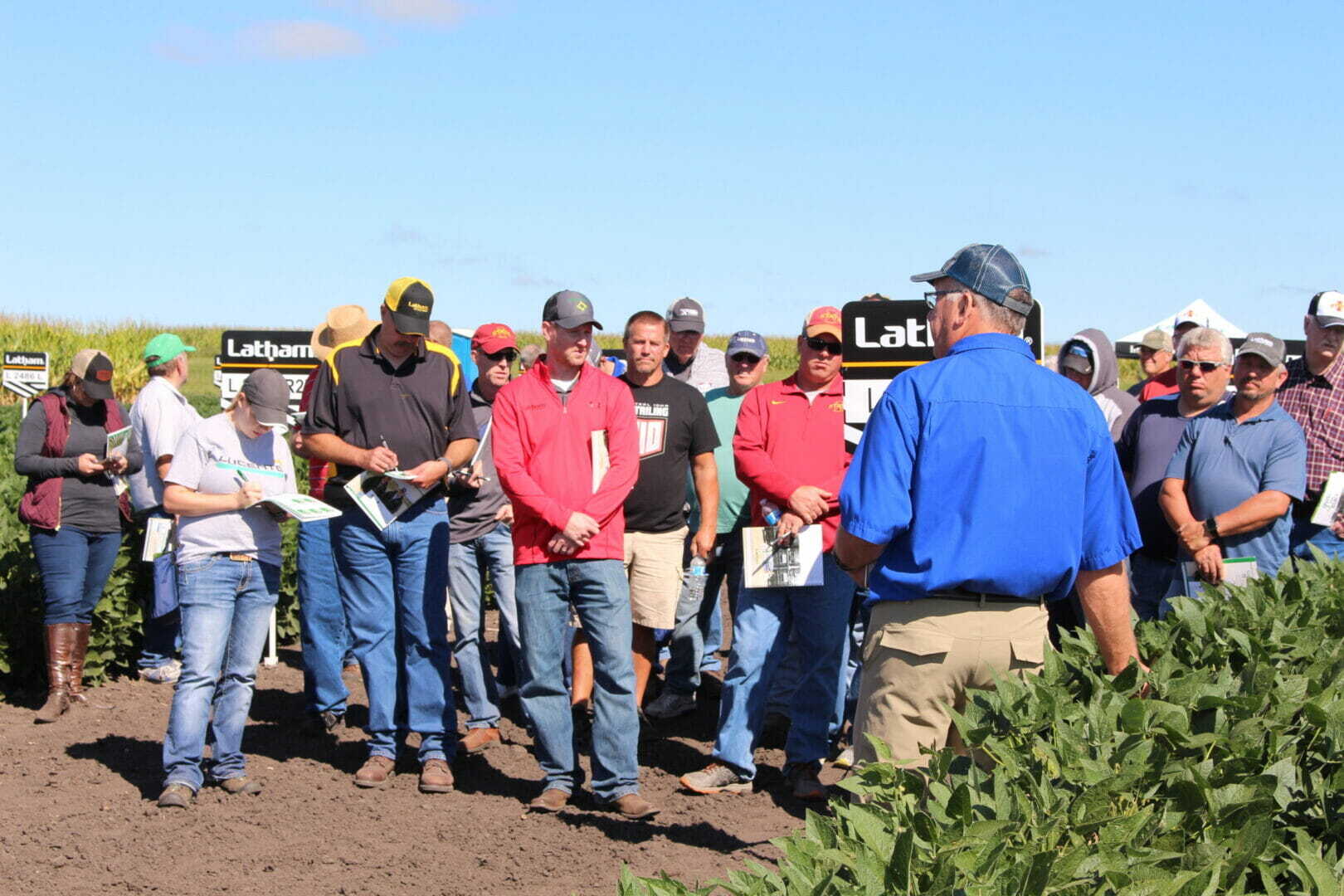
Latham Soybean Research Plot I’m pleased to inform you that the changes we made to our soybean research program were a resounding success! The decision to hire other companies to plant and harvest our Latham Elite trials allowed our Product Team members to observe and take notes at a greater number of locations and across a wider geographic area. In previous years, our own crew could only plant and harvest 11 or 12 locations in Iowa and southern Minnesota. We would then hire another company to do the same at about five or six locations in northern Minnesota and North Dakota. This year we were able to plant and harvest 33 locations in Iowa, Minnesota, Nebraska, Wisconsin, North Dakota and South Dakota!
Latham Seeds’ Product Team will evaluate the yield data and correlate notes taken to see which products are a good fit for Latham Country. During that same time, Latham’s Regional Sales Managers (RSMs) and Dealers will be surveyed to determine what products are needed based on input they receive from our customers. Then, and only then, will new products be added to our 2023 lineup.
Once we identify products from the Elite Trials that meet Latham Hi‑Tech Seeds’ standards and fulfill our customers’ needs, we release them for sale. We also place these new products in our Latham Showcase plots, as well as in the independent F.I.R.S.T. Trials program, to again showcase the performance of these new products and to provide opportunities for our customers to gain confidence in their performance.

Mark Grundmeier, Product Manager It has been my great honor and pleasure working for the Latham family for more than 25 years – first, as an agronomist, then as Soybean Product Manager and, for a dozen or so years as overall Product Manager. When Bill and Don Latham hired me in 1996, I had high hopes this would eventually lead to this being my dream job. I was looking for an opportunity to work in Research and Product Development. It certainly was everything I had hoped it would be. I can honestly say that I’ve never regretted the decision – not even once!
Along the way, I’ve met farmers, dealers, sales personnel, fellow employees and colleagues from numerous areas. I am proud to call many of you my friends. I’d like to thank the Latham family for placing their trust in me. I especially want to thank John, Shannon and Chris for allowing me to “spread my wings,” so I could be more involved in all of the products we handle. As for the future, I know that I’m leaving the company in the best of hands.
This is the final article I will write for TECHtalk as I am retiring at the end of 2021. I’m looking forward to spending more time with my family, traveling and pursuing some hobbies that I’ve put on hold for a few years. I wish you all the best as you continue to work in this great business of agriculture. May God richly bless you always!
-
Latham Hi‑Tech Seeds
#AskTheAgronomist: Selecting Soybeans to Address Disease Challenges

Soybean diseases such as soybean sudden death syndrome, white mold and soybean cyst nematode (SCN) negatively impacted yields in parts of Latham Country in 2021. In this week’s #AskTheAgronomist, Precision Agronomy Advisor Phil Long discusses how to identify and select soybean varieties that will address disease pressure in your fields.
-
Latham Hi‑Tech Seeds
#AskTheAgronomist: Corn Disease and Product Selection

With a majority of the year recorded as dry to extremely dry for much of the Upper Midwest, many farmers were surprised at the onset of disease towards the close of the 2021 growing season. Precision Agronomy Advisor Phil Long addresses how to account for and select corn products to address disease challenges in your fields into 2022 and beyond.
-
Latham Hi‑Tech Seeds
3 Ways to Maximize Soil Tests
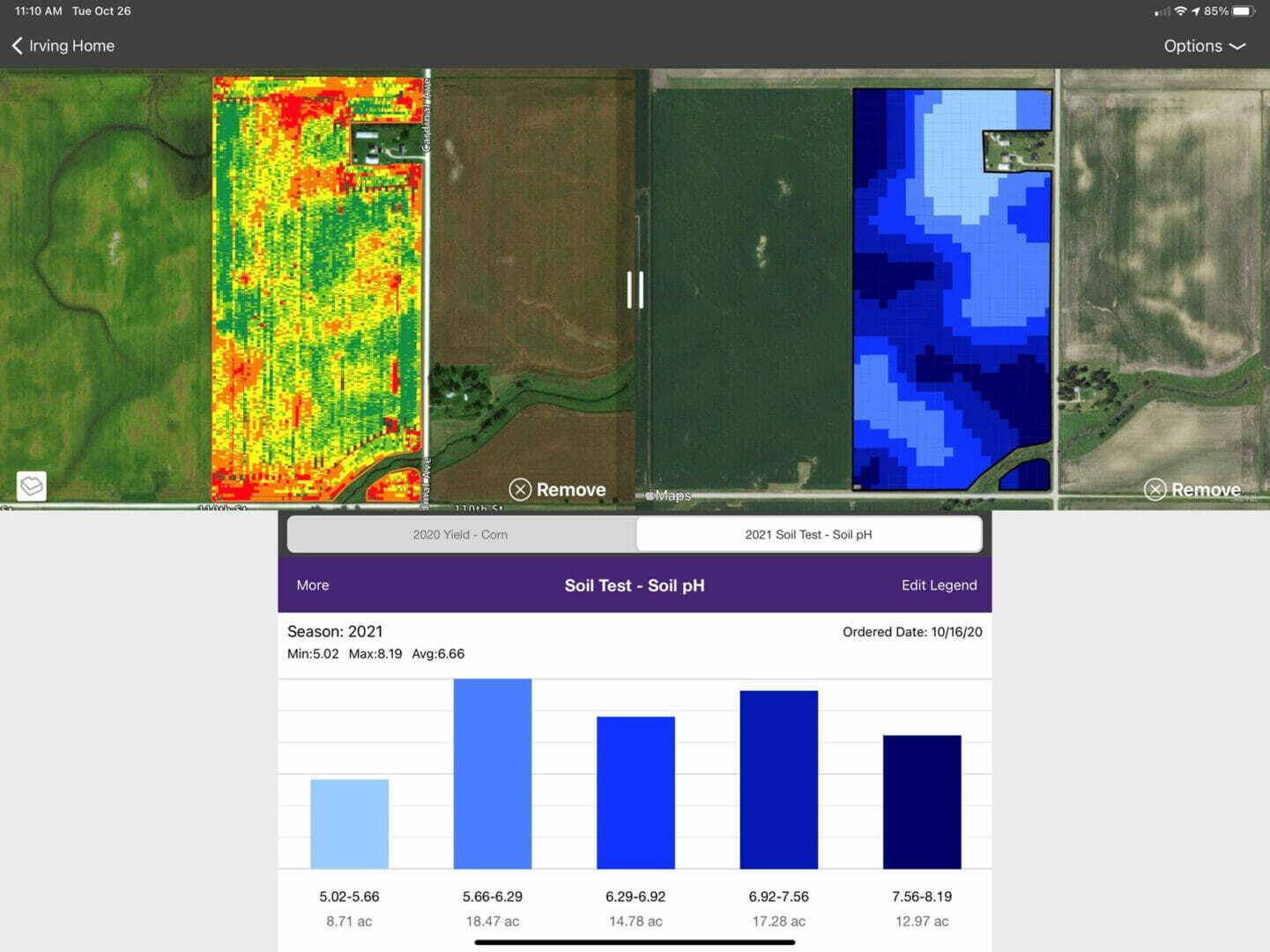
To save the most money on inputs, we must plan earlier and earlier every year. A current soil test is the best way to evaluate your fertility and ultimately your yield potential. Besides the normal evaluation of the main nutrients, a soil test pays for itself.
Let’s look at three ways to use your soil test to its full potential:
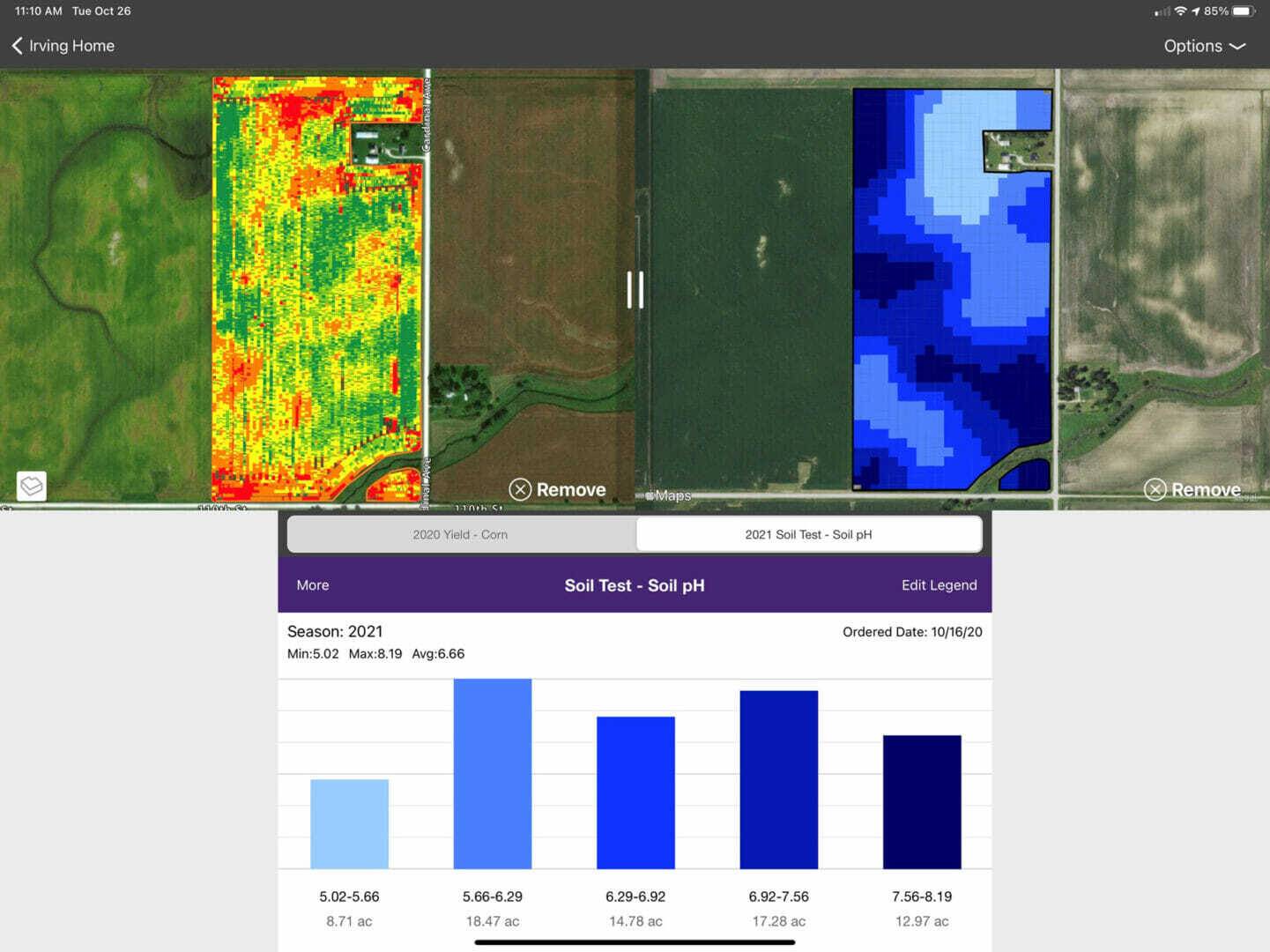
- Soil pH matters in more ways than lime. We typically look at pH maps to understand nutrient availability, but let’s think in terms of input planning. Take soybeans and a pH map, for example. By looking at this one map you will better understand the areas of high pH, so you can select a Latham® IRONCLADTM variety to stand up to challenges from Iron Deficiency Chlorosis (IDC). Another great use for this map is herbicide applications. Herbicide carryover in high pH spots can impact soybean yields. This map potentially can help make the decision to change a crop rotation or herbicide program to save yield losses.
- Organic Matter is king. Do you have organic matter (OM) readings higher than 5% and below 2% in the same field? Couple this with yield and this is a great start to help apply nitrogen more accurately. Another great combination is OM beside soil type map. Look at Latham Seeds’ product guide while you’re looking at these maps to quickly determine what percent of each field would benefit more from defensive traits or offensive traits. Really high OM soils typically hold more water and have challenges like flooding and higher disease potential. Also notice how much higher your potassium (P) and phosphorus (K) levels are in these spots.
- When phosphorus levels are high, other nutrients are lacking. Many farmers use animal manure as a source of fertilizer. This is great because it provides most of the essential nutrients our crops need, however, manure can have higher levels of some nutrients including phosphorus. If your soil potassium levels are climbing, move manure applications to another field. Also pay attention to other nutrients that suffer when potassium increase. If you notice your P levels are high, then Sulfur (S) and Zinc (Zn) could be at a disadvantage. Both S and Zn can be less available to the plant as P levels climb. This may not be visually noticeable at first, but it will show up in growth and yield if you do a side by side with S and Zn fertilizer.
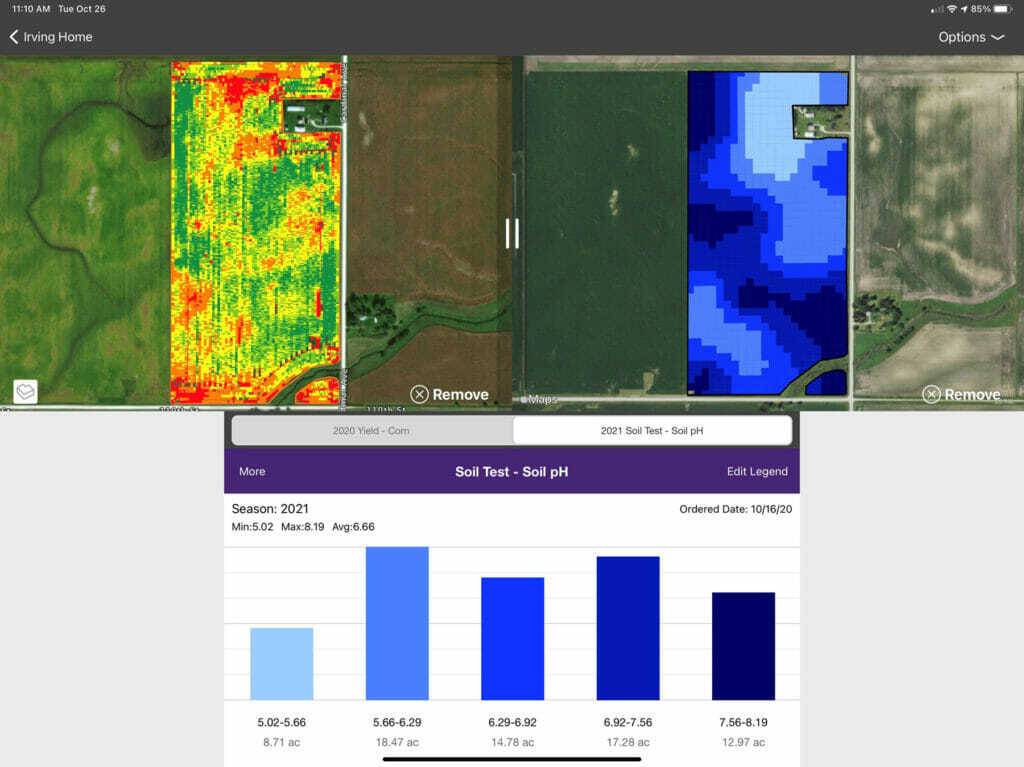 These comparisons and maps can be done in Latham’s Data ForwardTM app with a simple soil sample taken and yield map to start seeing value out of the information that you capture every year. If you’d like to learn how to start putting these things to work on your farm give me a call!
 -
Latham Hi‑Tech Seeds
#AskTheAgronomist: Fertility and pH Management in Reduced-Till Scenarios
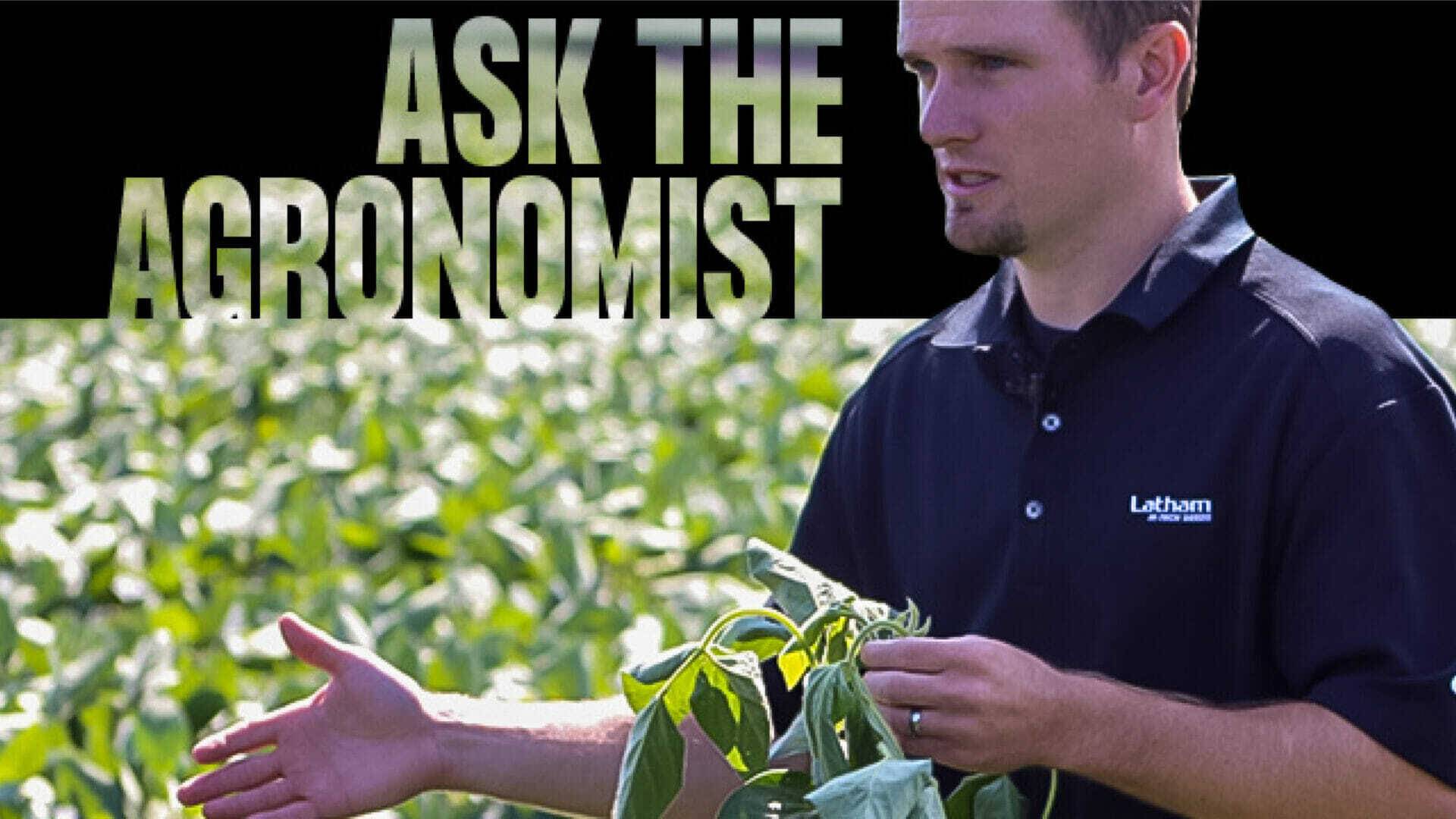
In this week’s Ask the Agronomist, Precision Agronomy Advisor Phil Long discusses fertility and pH management challenges that can present in continuous reduced-till scenarios. He also offers some tips on how to get a more accurate read from your soil sample and improve fertility decision-making for your fields.
-
Latham Hi‑Tech Seeds
Latham Hi‑Tech Alfalfa: Higher Quality. Greater Yield. Better Nutrition.
Farming is like dancing with Mother Nature, and Mother Nature always leads. We can’t control the weather, but we can manage around the risk.
Understanding a seed product’s features and benefits is powerful tool to help reduce production risks. Alfalfa from Latham Hi‑Tech Seeds provides growers with options to better place the best genetics for certain soils to enable a product to perform at its best.
With this in mind, let’s review some of Latham’s top alfalfa products:
- Features of LH 9120: branch root expression and finer stems.
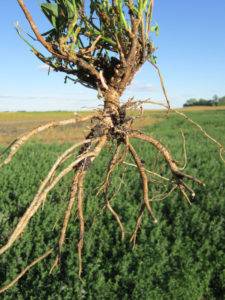
Benefits: LH 9120 can be planted on wetter soils. If conditions remain wet, the plant will respond with several branching roots instead of one major tap root. NOTE: Alfalfa usually has a singular tap root. In a water-logged situation, alfalfa with a tap root will not survive as long alfalfa with a branch root. Branch rooting give additional support by bringing several roots closer to the surface of the soil, allowing for better respiration. Additionally, 9120 has a finer stem. Finer stemmed alfalfas tend to dry quicker for baling.
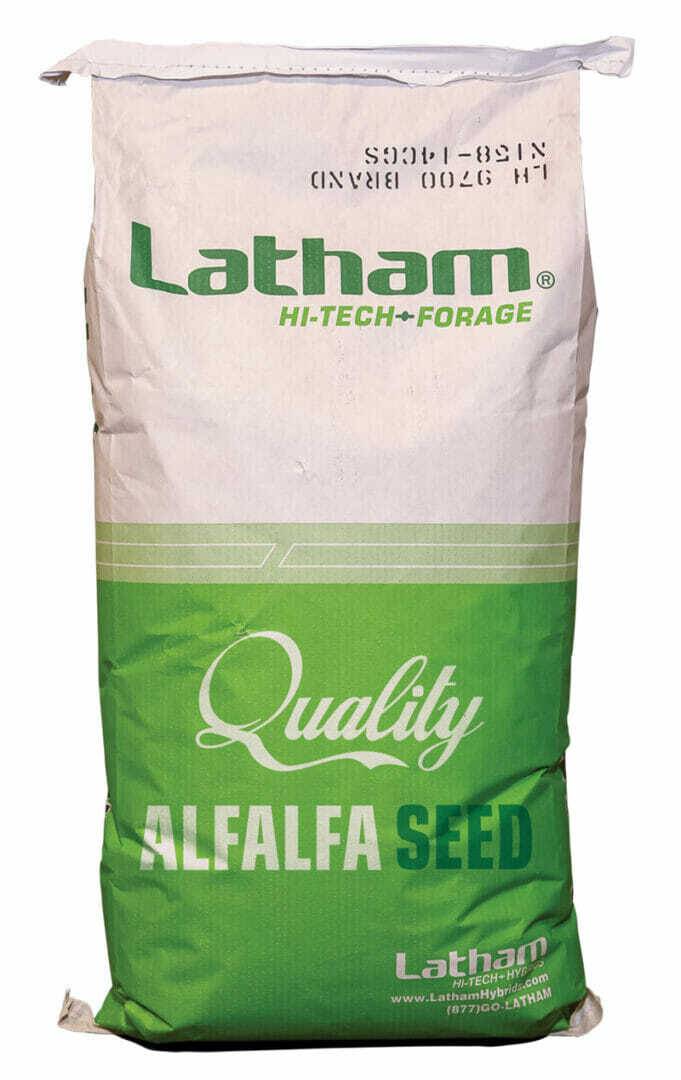
- Features of LH 9700: disease resistance, unparalleled recovery after cutting and multi-foliate expression.
Benefits: LH 9700 is a very powerful, high horsepower type of alfalfa protected with disease resistance. It protects the plant, giving it the best chance of long-term stand. Quick recovery after cutting means the crown buds produce new leaves quickly. Leaves catch the sun, build essential carbohydrates for the crown, and generate more yield and better quality. I relate each leaf to a cylinder in an engine. As we add cylinders to an engine, it adds more horsepower for better performance. It’s the same with alfalfa; more leaves equal more energy to produce top yields and superior quality.
- Features of America’s Alfalfa AA 481 RR/HarvXtra: low lignin, Roundup® resistance, and high disease resistance.
Benefits: Reduced lignin helps AA 481 RR/HarvXtra achieve better fiber digestibility. When compared to conventional alfalfa, research has shown to deliver 14 to 18 % relative forage quality (RFQ). Higher quality forage nourishes the animal, so it gains valuable feed efficiency and that leads to higher profitability. Additional benefits include harvest flexibility of seven to 10 days while maintaining excellence in quality and producing as much as 20% more yield. This is helpful to help manage around weather events. Roundup Ready benefits include keeping fields clean, improving forage quality, reducing weed competition, and extending stand life. This alfalfa product also has high resistance to anthracnose, which can damage stands. HVXRR 481 has HR rating for Race 1 and R rating for Race 5. This product is one of the newest commercial selections for HarvXtra alfalfa with top yield capacity. It also boasts extra yield and stand life, protecting benefits to reduce risks of anthracnose disease.
Latham Hi‑Tech Seeds offers a variety of products, each with special features and benefits. Remember, each seed is treated with Latham’s AlfashieldTM, which gives our seed a competitive advantage by emerging faster, growing strong, and yielding more!
- Features of LH 9120: branch root expression and finer stems.
-
Latham Hi‑Tech Seeds
Can You Cut Fertility Costs Without Cutting Yield?
You could lose more than you save if you cut costs in the wrong places.
Some farmers are thinking about cutting back on their fertility program for 2022 crops because fertilizer costs are increasing and pre-order prices aren’t guaranteed into next spring. I understand that price hikes cause uncertainty. As someone who also farms, I feel the same way. What I’ve learned is that fertility is the foundation to keeping a crop healthy all season. Top-performing hybrids need food to fuel their growth.
Below are three questions to ask yourself as you plan your 2022 fertility program:
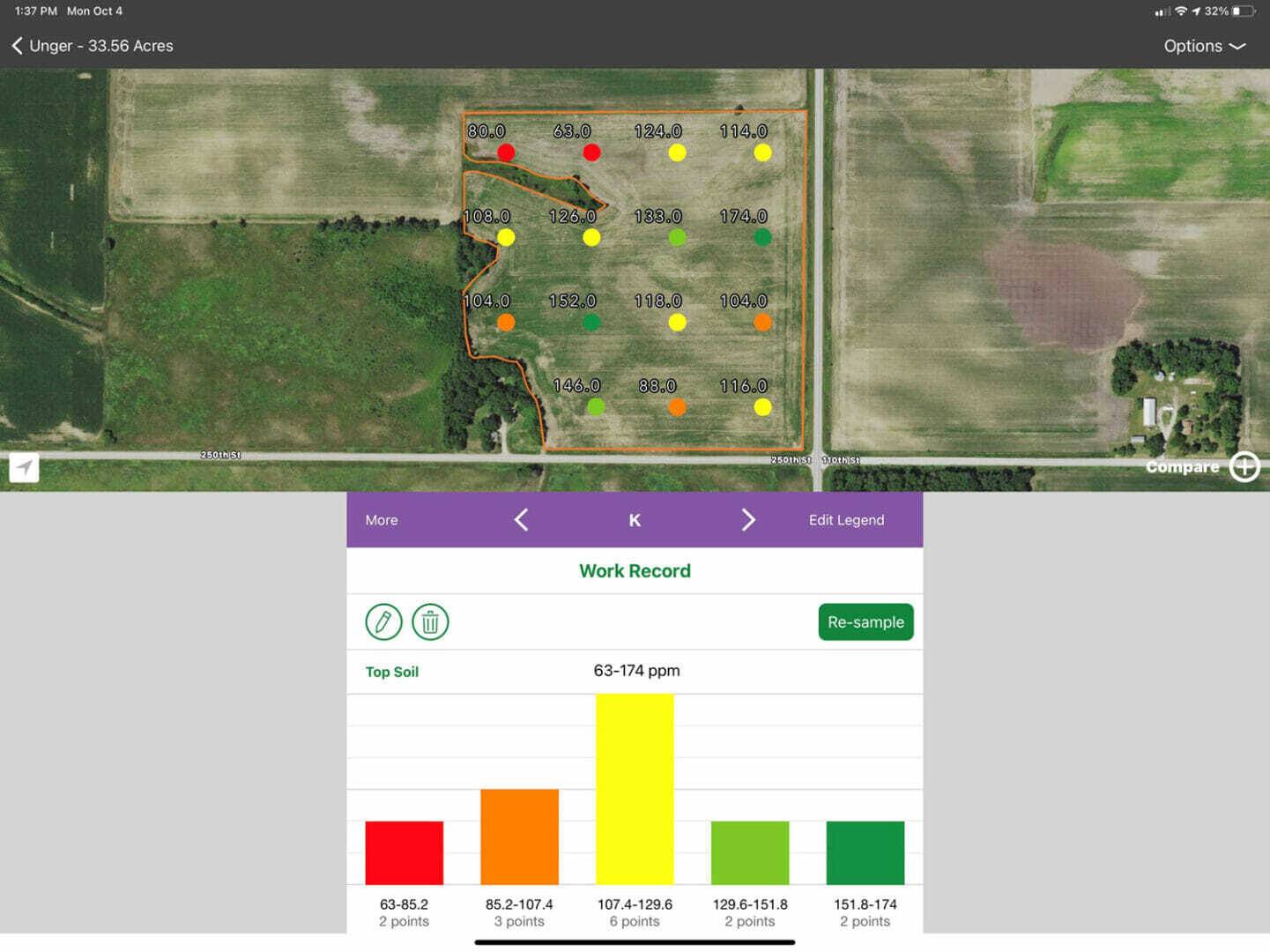
- Are you keeping potassium levels up? Potassium (K) is critical for handling drought stress and late-season stalk health. Depending on cation exchange capacity (CEC), you want to see K levels of 150 to 220 parts per million (ppm) on your soil test. North Dakota State University (NDSU) research reveals the type of clay soil (high vs. low shrink swell clay) is key to fertilization. High shrink swell clay soils must be kept at that 200-ppm threshold. When these soils dry out, they hold the K between clay layers much tighter. On soils with low shrink swell potential, the 150-ppm threshold will provide enough K throughout the season. Have you ever noticed how some soils are more forgiving after you accidently cut ruts when it’s a little wet? Note those soils because they hold K tighter, prohibiting your crop from using it.
- Thinking about cutting back on nitrogen? Nitrogen is more closely tied to yield than any other nutrient. Corn takes up approximately 150 to 300 pounds of nitrogen (N) to reach its full yield potential, but this doesn’t have to all go down as commercial fertilizer. Nitrogen needs depend on several factors including crop rotation, manure application, green manure, and residue management. Consider applying nitrogen in the spring with a nitrification inhibitor on lower CEC soils or if it’s a wet spring. The best practice in the fall is to wait until soil temps are below 50 degrees before applying nitrogen.
- How are you valuing manure? When comparing fields where manure was applied to fields that only get commercial fertilizer, you realize fertilizer is worth the additional hassle to apply. Microbes in the manure and the biology that feeds on it can build nutrient levels much faster in the soil as compared to commercial fertilizer. It’s important to have a representative manure analysis to know what you are applying.
Remember, every 100 pounds of nitrogen applied requires about 500 pounds of lime to offset the acidity created by the nitrogen conversion process. Make sure your pH is correct, so all the nutrients in your soil are available to your growing crop. Correct soil pH before you try to build your P, K or micronutrients.
Feel free to call me if you have any questions about how Data Forward can help you collect and store information that can lead to more profitable farm management decisions.
-
Latham Hi‑Tech Seeds
#AskTheAgronomist: Fall Nitrogen Considerations
As harvest comes to a close, the next item on many farmers’ minds is fertilizer. With prices nearly double previous levels, it’s important to get the timing – and the form – right for your fields, management styles and spring crop plans. Precision Agronomy Advisor Phil Long reviews the nitrogen cycle, product options and ways to make sure the fertilizer you apply now is ready for your crop in the spring.