Latham Hi-Tech Seeds

(641) 692-3258

  • Home
  • Performance
  • Products
    • Corn
    • Soybeans
    • Soybean Blends
    • Alfalfa
    • Corn Silage
    • Seed Guide
  • Find a Rep
  • Media
    • Blog
    • News
    • Videos
    • Podcasts
    • TECHTalk
  • About Us
    • Company History
    • Our Mission
    • Careers
    • Become a Rep
    • Sowing Seeds of Hope
  • Contact Us
  • Latham Hi‑Tech Seeds

    Four Ways Latham Seeds Can Help You Maximize Yield in 2017

    LATHAM 0073 JAN17 TECHtalk WEB ARCHIVE

    While fighting blowing snow and bitter wind chills, it’s a welcome relief to think about spring! I know many farmers, including myself, are getting equipment ready for tillage and planting. It’s also a good time to review your seed order.

    I expect most orders were placed with thoughtful consideration of the 2016 results, including university, F.I.R.S.T. yield trials and dealer plots. While this is all important data, keep in mind it represents information that was recorded in one location during one growing season.

    Also keep in mind that on-farm plots might be impacted by variables you would be unaware of unless you walked the plot throughout the growing season. For example, if a sprayer wheel track accidentally ran over part or all of the plants in a row, the yield of that hybrid could be affected significantly. If the wheel track happens to run over part of a row on a check hybrid, that yield reduction would affect hybrids on both sides of the check.

    Two more areas to consider when selecting seed are soil type and disease. Plants respond differently in various growing conditions. It’s also important to know field history. For example, once you’ve had white mold or Sudden Death Syndrome (SDS) in a field, it has the potential to cause yield loss every time you plant soybeans there in the future. That’s why it’s especially important to know how well different brands handle SDS and white mold.

    Be sure to check out our performance in the 2016 F.I.R.S.T. Trials. Latham won a record-setting 42 trials! Our corn program produced 17 first place winners and 199 total Top 10 finishes; our soybean program produced 25 first place finishes and 185 total Top 10 finishes. These stats show just how deep and wide our product line is.

    Latham’s sales and product teams are at your service! Call us at 1.877.GO.LATHAM (1.877.465.2842), and we’ll gladly help you choose the right seed, field-by-field!

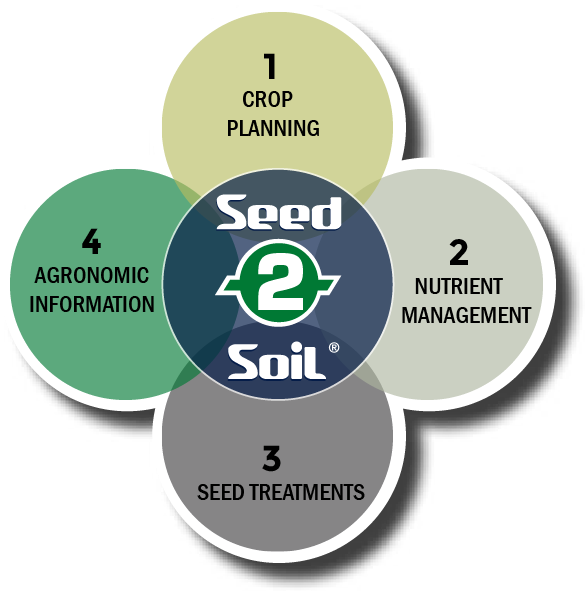
    LATHAM_0073 JAN17_TECHtalk_WEB ARCHIVELatham Hi‑Tech Seeds helps simplify the seed selection process through our Seed-2-Soil® agronomic services. We help maximize your yield potential by focusing on four key areas:

    1. FieldXField crop planning: Your farm management style, equipment and overall production goals, along with our research and performance data for each hybrid, is taken into account when we help you select the best Latham hybrid in each field. Seed placement helps reduce risk and increases your likelihood of top performance.
    2. Nutrient management: Research shows that fertility programs influence plant performance and yield by as much as 60%, so nutrient management includes the use of foliar leaf sampling to help manage micro and macro nutrients. There are 17 essential nutrients for plant development, and each one is important in various amounts. We also look at variable rate planting to help manage populations specific to field conditions and hybrid tendencies.
    3. Seed treatments: It’s important to treat seed with proper fungicides and insecticides to protect your growing crop from insects and diseases. Farmers who invested in seed treatments last year were very glad their crops had extra protection. (See Mark Grundmeier’s column in this issue for specific results.) Research shows that seed treatment is the best defense against disease. Choose a treatment like Latham’s SoyShield fungicide or SoyShield PLUS that is a fungicide-insecticide combination to help protect early-planted seed against the unexpected.
    4. Agronomic information: Latham Seeds provides agronomic tools to help choose the right hybrids. You’ll find loads of information on our blog, TheFieldPosition.com. On our website, lathamseeds.com, you’ll find product tech sheets, seed placement recommendations, and companion hybrid recommendations, as well as yield data from strip trials and unbiased independent third party trial results.

    Webspec Admin

    January 18, 2017
    Agronomics, Crop, Seed Treatment, Soil
  • Latham Hi‑Tech Seeds

    Farmers Have More Options to Fight Weeds

    RRX Crop Syste email header

    Farmers looking for new tools to fight weed resistance across Latham Country now have another option to choose from. XtendiMax is a newly approved herbicide that can be worked into a rotation to help farmers fight weed year after year.

    Just a few short months ago, we received news that Roundup Ready 2 Xtend® Soybean technology was approved for the 2017 planting season and necessary export channels. We are happy to announce that XtendiMax™ Herbicide with VaporGrip™ Technology is now approved by the EPA for in-crop use.

    XtendiMax™ Herbicide with VaporGrip™ Technology can be described as a low volatile formulation of dicamba. This new tool assists in the fight against weeds, enabling the in-crop use of approved dicamba. However, the current EPA label approves the use of this dicamba-only formulation and does not allow for tank mixes with other herbicides or adjuvants, including glyphosate.  This may change as Monsanto and other chemical manufacturers plan to submit data to the EPA for tank mixes.  Growers can go to RoundupReadyXtend.com to view the latest developments.

    The XtendiMax® label has very specific regulations. It is important to read thoroughly and take note of these practices to mitigate migration. I can’t emphasize enough the importance to follow all of these instructions to allow farmers to continue using this tool. A few of the key points include:

    • No application from aircraft
    • No application when wind speed is over 15 mph
    • Application with only approved nozzles at specified pressures
    • Implementation of buffer areas
    • No tank mixes
    • Application timing up to and including the R1 stage of development for soybean.

    While the herbicide still warrants some caution, we are more excited than ever about our line of Latham® Roundup Ready 2 Xtend® soybean brands. Latham customers have come to expect strong genetics and disease packages from our company, and the 2016 F.I.R.S.T. trial tests have confirmed that our Xtend® soybean lineup is second to none!

    This year, we had a total of nine Roundup Ready 2 Xtend® Soybean varieties in F.I.RS.T. trials, with maturities ranging from 0.7 to 3.0. We have won seven Top 1, 2, and 3’s in F.I.R.S.T. Trials, and 28 Top 10’s! Look up area specific soybean data for your area here.

    The future for breaking yield barriers and building on current progress in soybean technology is bright. Latham Hi‑Tech Seeds is positioned to remain on the cutting edge of the newest and best the industry has to offer. While it’s fun winning yield trials, and showcasing new products, it’s more important that we win on your farm. Contact your Latham representative for information on which of these Xtend products might be the best fit for your farm.

    John Latham, President

    December 7, 2016
    Agronomics, Crop, Weed Control
  • Latham Hi‑Tech Seeds

    Research Plots Show Outstanding Performance

    Research Plots 101

    As a member of the Latham Corn Product Team, it’s my job to walk research plots throughout the growing season and take notes. It’s hard to put into words just how exciting these crop tours have been this fall! The performance of Latham® corn products has been outstanding, so I’m having fun making recommendations for promising new products that could complement our current lineup.

    We not only take these plots to yield, but we also note­ disease pressure. This year we noticed more hybrids than normal with some degree of stalk rot or stalk cannibalization. When cutting damaged stalks lengthwise, I usually found the internal pith tissue was still white and not compromised by disease. They may be shrunken, cracked, or otherwise weakened, yet the stalk rot didn’t invade the plant.

    In high-yield environments, a shortage of nutrients or other weather-related stress weakened the plant by mobilizing sugars or nutrients that were stored in the stalk, and moved them to the ear to help fill kernels. Usually any factor that stresses corn allows pathogens to enter the plant: wet soils, daytime temperatures that are either too hot or too cold, nighttime temperatures that are too warm, flooding, moisture stress, hail, or leaf diseases.

    There are very few (if any) years with ideal growing conditions, so it’s important to scout and manage fields for disease before harvest every year. Stalk rots don’t show up until later in the growing season, so I start scouting for them in August at the same time I am looking for leaf diseases. Early symptoms include dying lower leaves and the plant color appears pale green to gray.

    While there is no one way to eliminate stalk rots and disease, the best management practice is to manage stress on the corn plants including proper soil drainage, proper fertility, plant selection and populations, foliar fungicide, and crop rotations. 

    Webspec Admin

    November 30, 2016
    Agronomics, Crop, Soil
  • Latham Hi‑Tech Seeds

    TIPS FOR MANAGING EAR ROT

    Ear Rot Feature Image

    screenshot-33Ear rot has been present in some corn fields that were harvested this year. These diseases can reduce the quantity and quality of the corn being harvested, and they can also produce mycotoxins that might be harmful to livestock and even humans.  Lastly, they can continue to cause problems in stored grain unless it is closely monitored and maintained in the best possible condition.

    Scouting fields prior to harvest is key to avoiding situations caused by mold. A pre-harvest field check can help farmers to determine: (1) if ear mold is present; (2) what type of mold is present; and (3) how severe the infestation is.

    One method you can use when scouting fields for ear rots is to tear back the husks on 100 plants scattered randomly throughout the field. If you find 10% or more of the ears have mold on 25% or more of the ear, then that field should be harvested immediately and dried to at least 15% moisture. (NOTE: If you plan to turn a claim in for that field to your crop insurance provider, do that before harvesting. The insurance adjuster may need to see proof of the ear rots in the field as opposed to just seeing it in the stored grain.) 

    Samples of that grain should be tested to see what mycotoxins, if any, are present. You should then consult with someone like an extension specialist or veterinarian to decide the best method of using that grain. 

    To help determine which molds might be present in your fields, check out the table below:

    screenshot-36

    Corn ear rots and molds are present every year, but the severity and type of infestation is highly weather dependent and greatly depends on the region where the farm is located. Fungal pathogens that cause ear rots will remain in the soil for several years. Crop rotation and heavy tillage may help reduce spore survival. Planting hybrids with traits that provide above-ground insect protection and reduce ear damage might also be beneficial. 

    screenshot-34If you browse online for other ear mold management practices, you will see it’s suggested to plant hybrids with known tolerance to these diseases. Unfortunately, most companies do very little screening for ear mold pathogens simply because they are so varied and the instances of severe infestations are so rare.  In the case of corn ear rots, the best offense is the best defense! Make time to scout each field for ear rots before harvest.

    Webspec Admin

    November 16, 2016
    Agronomics, Corn, Disease
  • Latham Hi‑Tech Seeds

    Flying the Fields with Kody Trampel

    Flying the Fields1

    flying-the-fields-masthead

    After wanting a drone for years, Kody Trampel recently purchased a new DGI Phantom 4.

    Billed as the “smartest flying camera,” the Phantom 4 has five cameras for improved stabilization and obstacle avoidance. This is an attractive feature for new pilots worried about crashing on their first drone flight, plus it’s advantageous when shooting tight close-up shots.

    “Since I’m a rookie pilot, I chose the Phantom 4 because it has sensors on all four propellers,” says Kody, an kody-tramplagronomy specialist with MaxYield Seed. “This drone will sense an object in its flight path, ascend and fly over it, and then return to its original route. They made it virtually dummy-proof and that’s good for new pilots like me!”

    Another advantage of the Phantom 4 is that you get 25 percent more flight time due to extended battery life.

    “I decided to bite the bullet and purchase a drone because I think this drone will give me a competitive edge,” says Kody. “I also think it will make crop scouting a lot more fun. No one really wants to walk deep into a tasseled field of corn when the thermometer reads 90 degrees. Now with the drone, we can scout a 160 acres in a matter of minutes.”

    img_6956Kody believes the drone’s eye view will enhance, not replace, physically scouting fields. He plans to take photos and then return to his office where he can study those images in detail. If he pinpoints a problem area, he can then return to a particular part of a field where he can focus his scouting efforts.

    Because his drone arrived during #harvest16, Kody’s thoughts were focused on how the Phantom 4 might help him and his farmer-customers develop harvest plans.

    “Harvestability can be an issue,” says Kody. “We can keep an eye on the fields all season long and constantly monitor standability and stalk condition. I’ll be able to help my customers prioritize fields for harvest. If I see a field that looks suspect from the air, I can then walk into it and do a pinch test. I’ll also be able to take crop notes. For example, I might notice that one particular hybrid number is prone to dying back or doesn’t have good late-season intactness. That will not only help my customers develop harvest plans but it could help them with seed selection and/or product placement in future years.”

    Technology is always evolving, so it’s important to research the available products before making a purchase. Kody purchased his drone from a local dealer, who will be available to answer follow-up questions and to provide maintenance and service. The salesman was able to talk with Kody about the pros and cons of different models.

    It’s also helpful to talk with others who have experience using drones. Here are links to other Latham® dealers and sales managers who have been featured in our 8-week “Flying the Field” series:

    • Logan Shedenhelm
    • Phil Pitzenberger
    • Ryan Skaug
    • Joe Roberts
    • Titan Immel
    • James Keltgen
    • Ethan Johnson

    Team Latham

    October 27, 2016
    Agronomics, Precision Ag
  • Latham Hi‑Tech Seeds

    Flying the Fields with Titan Immel

    Flying the Fields1

    flying-the-fields-masthead

    titan-1With nearly four years of flying under his belt, Titan Immel with Upper Edge Ag sees the importance of agricultural technology and puts it to use for his operation and his customers. Titan started selling seed when he was 17-years-old and flying a drone at age 18. 

    “There have been a few major changes since I started flying a drone,” said Titan. “Aside from them becoming a lot cheaper, they have also become more user-friendly.”

    Titan has taken drone flying one step further, optimizing its capabilities to enhance his occupation on and off of the farm. He has learned to write prescription maps from his drone, which play a key role in finding every farm’s “sweet spot.” Titan acquires satellite images and takes photos from his drone to write variable rate scripts, which helps him pin point which areas he needs to adjust inputs to get the most out of his operation and customers’ fields.

    He replicates these practices for his customers, too. Titan helps farmers see how to delegate inputs across their fields, resulting in the highest yield possible for his customers.

    titan-3“I chose to purchase a drone shortly after beginning my dealership because I wanted to be there for my customers,” said Titan. “I want to help farmers become more profitable by choosing the appropriate inputs for each unique situation.”

    Titan has stayed ahead of the curve with regards to pairing his dealership with drones. He has found his drone to be especially useful when needing to scout during all seasons, because it’s not always convenient to walk through fields. He admits a drone will never replace recommendations from an agronomist or seed advisor, but it helps the farmer focus on problem areas.

    Titan flies DJI models and is currently flies the Inspire 1. He says the customer service is great and they are fast and reliable when he needs parts. He advises not spending too much money on a drone because it’s just one tool in a farmer’s toolbox.

    For more advice on how to fly your fields, click here.

    titan-2

    Webspec Admin

    October 13, 2016
    Precision Ag
  • Latham Hi‑Tech Seeds

    Flying the Fields with Logan Shedenhelm

    IMG 1439

    flying-the-fields-masthead

    img_1439 Originally from Northeast Iowa, Logan Shedenhelm has found a new tool for his family’s farming operation that yields high results. The Shedenhelm’s could now scout their field in a timely manner, learning more than they ever have.

    “My summer internship with Latham Hi‑Tech Seeds helped me see the value of having an eye in the sky over our fields,” said Logan. “From making a sales pitch to improving our own operation, I have been able to uncover many things just from a different angle.” 

    This past summer, Logan flew the Phantom 4 and admits that this would be the model to invest in someday. Between the ease-of-use and high-quality camera image, Logan found this was a durable, all-in-one drone.

    yr-round-calander-banner“Drone technology can be beneficial to a farming operation if used properly,” Logan said. “Drones can be used to see every single acre you farm or to view livestock in the pasture in a time-effective way.”

    Logan found different uses for his drone from season to season. Starting with planting and early spring, he used the drone to look at emergence, stand and weather damage. In mid-season, he used the drone for weather damage, weed pressure and chemical injury. Coming closer to harvest, he was able to see where fields began to tassel or where disease pressure was taking over.

    Early in the season after a rain, Logan flew the drone over a field back home in Riceville, Iowa. When taking the drone up, he was able to see the wet spots in between the tile lines. He discovered dry streaks in between the wet spots were the tile lines. After taking multiple pictures and videos, they have a good representation of where their tile lines were and were they needed to add more drainage.

    Later in the season, it was easy to see compaction when flying the drone. Certain rows which look like there where from machinery, where shorter and lighter in color. These symptoms were from compaction.

    “Drones can be a great investment and pay for themselves in just one year if used properly,” Logan said. “I was able to always find a reason to check fields no matter what the season. It is a benefit to see every field from a weekly basis instead of being blindsided by something that your drone could have seen when harvesting your crops.”

    Webspec Admin

    October 6, 2016
    Agronomics, Precision Ag
  • Latham Hi‑Tech Seeds

    Flying the Fields with Ethan Johnson

    Flying the Fields1

    flying-the-fields-mastheadFor more than a year, Ethan Johnson has operated a Phantom III Professional Quad Copter for Doug Abeln Seed Co. in Groton, South Dakota. He says the aerial images help them see trouble spots in fields.

    “We like to use the drone to help us with our tiling projects,” explains Ethan. “We look for trouble areas within a field that could be fixed with tile. We also like to use the drone to look at corn planter shut-offs in late spring to see if our planter is as accurate as the monitor says it is. The drone also has also been a helpful tool with crop insurance issues like spray damage or hail.

    ethan-flying-the-field-feature
    Ethan Johnson (pictured at left) operates a Phantom III Professional Quad Copter for Doug Abeln’s (pictured at right) Seed Co. in Groton, South Dakota.

    Unfortunately, this season he discovered a new use for their drone when Goss’s Wilt was spotted across a corn field. After seeing how badly the field was affected, Ethan says the next step is to select a hybrid with a better tolerance.

    The view from a drone also allows farmers to see a different in stand between hybrids.

    “Plant health is something we like to look at from above,” says Ethan. “It really gives you a different picture, literally, than what you can see at the ground level. You can see a lot from the air, at different times of the season. It’s helpful to identify problem areas before you’re in the combine.”

    For farmers who are interested in purchasing a drone, Ethan recommends looking at the Phantom IV because it’s more up-to-date. He also advises them to consider purchasing the Sony

    “Buy your drone as a package deal with extra batteries and a carrying case to save some money,” he says. “You will need an iPad Air II because older models won’t work. Finally, always be safe always. Use common sense when flying drones, so no one gets hurt.”

    Rules require you to keep the drone in sight, and you must operate your drone at 400 feet or below. Click here for 5 things to know about the new FFA rules regarding UAVs (unmanned aerial vehicles, aka “drones”) for agricultural use.

    During the Latham Hi‑Tech Seeds’ Technology Field Day near Watertown, Ethan Johnson talked with farmers about the advantages of flying UAVs over their farm fields. This photo gives an aerial view of Latham stress wheel plot, which demonstrates optimal plant population.

    DCIM100MEDIADJI_0066.JPG

    DCIM100MEDIADJI_0073.JPG

    Team Latham

    September 29, 2016
    Agronomics, Precision Ag
  • Latham Hi‑Tech Seeds

    Flying the Fields with Joe Roberts

    Flying the Fields1

    flying-the-fields-masthead

    By Joe Roberts, Latham Hi‑Tech Seeds Sales Intern

    fullsizerenderMy dad decided to buy a drone because he believed it would help making better, more informed decisions on our farm.

    A drone can lead to better management practices in so many ways. When we have wet years and get in a hurry, sometimes we plant in conditions that aren’t ideal. Throughout the growing season, we can then fly the drone over those fields and see the impact of planting in wet conditions.

    This summer, while I was flying drones as part of my internship with Latham Hi‑Tech Seeds, I could see compaction problems throughout the fields. You can identify problems like drown-out areas or high weed pressure areas. The same year you can go out and implement applications to correct that before the next growing season.

    I believe seeing those areas through the lens of a drone during the growing season and then seeing yield differences on the monitor this fall will cause us to make changes next spring.

    Flying a drone all summer long gave us the ability to “see the big picture” of an entire field. Sometimes problems occur in areas that aren’t visible from the ground or in places that aren’t easy to reach by walking a field. We were able to fly some fields that had to be assessed quickly for replant. In a few minutes, we were able to analyze every section of the field.

    One of the coolest things I saw through the drone camera this summer was the progression of the stress wheel. Flying the drone over the crops as they developed held significance since I was able to help during planting. Flying over the Latham Seeds’ test plots and SuperStrips throughout the marketing area gave both farmers and myself an arial view of the differences in hybrids along with the progression of each one. Once you see some of the amazing pictures that a drone take, I don’t think you’ll ever look at your fields the same way!

    Drones can be used at all points throughout the growing season, which really creates a good return on your investment. Early in the season, you can make notes about emergence or compaction DCIM100MEDIADJI_0117.JPGissues. When the crops emerge, you can fly fields to identify problems with fertilizer application and weed control. There’s always a use for a drone after a storm, whether you want to look for drowned-out spots or wind damage. Flying the drone makes quick work of all of these tasks, plus it’s a lot more fun! I’m looking forward to taking cool videos from planting to harvest, and then showing the photos to friends and family.

    My advice to farmers is don’t let the fear of flying prevent you from getting a drone. The process to learn how to fly the drone can be accomplished in less than a day. It just takes some practice. There are even drones available with obstacle collision, so you don’t have to worry about crashing it anymore. Additional programs may be purchased to enhance the value of your drone. At the Farm Progress Show, I talked with a company representative that had mapping software for the drones, as well as the ability to spray fungicide over portions of your field.

    As drones keep advancing, the sky’s the limit for the potential uses of your very own drone! Buying something that can have a practical use on the farm for more than one season looked to be a good investment, too.

    Gary Geske

    September 22, 2016
    Agronomics, Precision Ag
  • Latham Hi‑Tech Seeds

    Flying the Fields with Ryan Skaug

    Flying the Fields1

    flying-the-fields-masthead

    Thanks for tuning into TheFieldPosition on Thursdays! Last week we started a new eight-week series on how Upper Midwest farmers are using drones (aka unmanned aerial vehicles or UAVs) in their farming operations. They’ll be sharing tip and tricks on everything from buying a drone to flying one. If you have specific questions you’d like answered, please send them to us via Facebook Messager, tweet them to @LathamSeeds or email shannonl@lathamseeds.com.

    Flying the Fields with Ryan Skaug

    ryan-skaugKnowledge is power. That’s why this fifth generation corn/soybean farmer in northern Minnesota and in the eastern Red River Valley believes drones are very useful to a farming operation.

    “Being a young farmer and seed dealer, I like to be on the cutting edge of new technology,” says Ryan Skaug, a Latham Hi‑Tech Seeds dealer, who started flying three years ago. He purchased the DJI Phantom II because he liked its ease of use and he could get it serviced nearby.

    “The more I fly, I more uses I discover for the drone. I use my drone to look at fields all season long.”

    In early spring, Ryan likes to see where excess water is logged within field ditches or in potholes that can be connected to larger bodies of waters or mains to increase field productivity with lesser, saturated soils. The AGPS Ditch Pro gives him more accurate in-season photos. Ryan studies the ditch and slope of the ground to create more efficient water runoff.

    Later in the season after the crop has canopied, he looks for persistent water issues. Ryan likes to use the drone to take full field photos, and overlay them maps of the fields’ soil types. After harvest, he compares the full field photos (foliage) and soil type maps with yield maps.

    “I believe overlaying the maps helps me choose seed products on a field-by-field basis,” says Ryan. “We’ve been able to increase our yields in not only productive soils, but also the less productive, and more challenging soils.”

    There isn’t much drainage tile in the Skaug’s area, but they installed grid tile on a 310-acre field with 80-foot line spacing. This particular field has multiple soil types. It also has very heavy underground water pressure because this parcel is so close to the ridge of the Red River Valley. The drain tile has allowed plants in this field to develop better roots and has increased overall crop health. In adverse years, they can see where the tile lines are by flying the drone.

    With heavier soils in the Red River Valley, compaction is an ongoing battle. Drone images show the stressors of compaction.screenshot-163

    “By flying the drone throughout the growing season, I’m able to see where some emergence may be uneven due to tillage compaction,” explains Ryan. “Compaction might results if a spring tillage pass was performed when the soil was too moist or the operator might have driven too fast or worked too deep. Some soils may allow the operator to work multiple passes before planting and not show any crop damage, while others may only allow a ‘one and done’ tactic.”

    “The more we know about our fields and crops throughout the growing season, the more successful we will be in many years to come,” adds Ryan.


    Team Latham

    September 15, 2016
    Agronomics, Precision Ag
Previous Page
1 … 42 43 44 45 46 … 67
Next Page

Latham Hi‑Tech Seeds

131 180th Street | Alexander, IA 50420

(641) 692-3258

SIGNUP FOR OUR NEWSLETTER
  • Contact
  • Legal
  • Dealer Center
  • Seedware Login
  • Latham Gear

© 2025 Latham Hi‑Tech Seeds. All rights reserved. | Iowa Web Design by Webspec | Privacy Policy

Latham® Hi-Tech Seeds is a trademark of M.S. Technologies, L.L.C., 103 Avenue D, West Point, IA 52656.