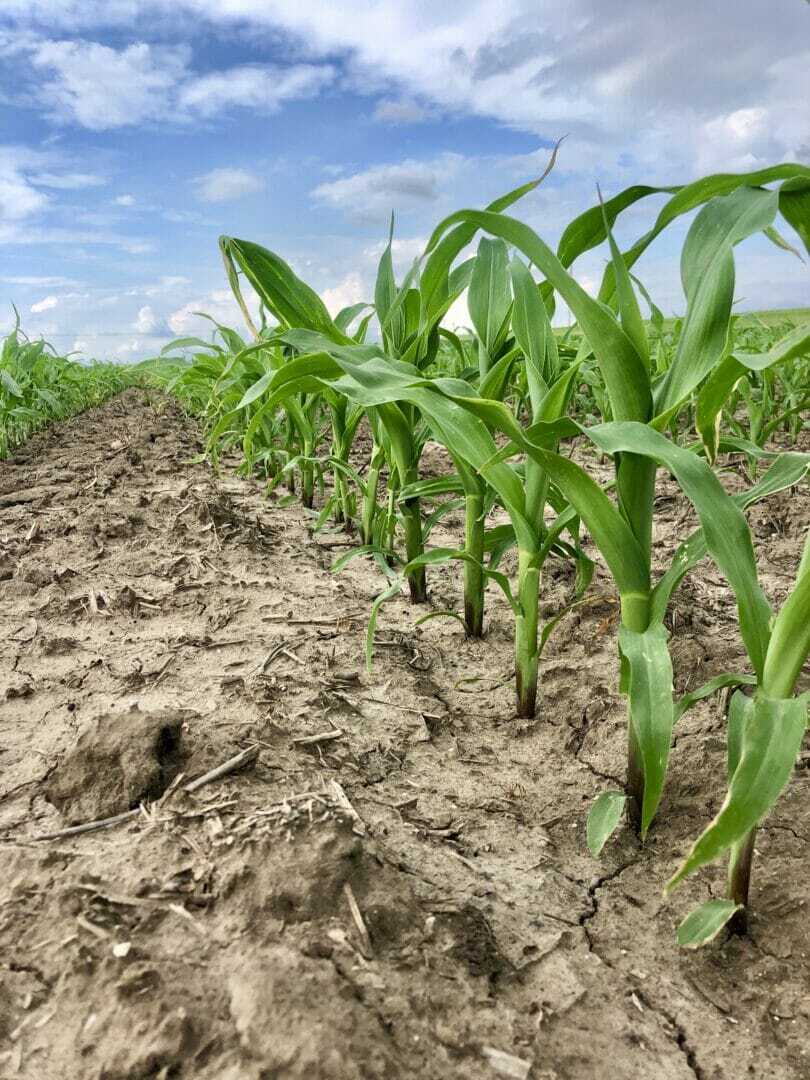
A great growing season begins with picket fence stands and even emergence. With this goal in mind we are excited to continue offering the TALC USA line of premium Talc, Graphite and Microsurge Innoculant products. Each of these products provides unique qualities to improve planter performance and enhance yield through seed-applied biologicals. Our product line catalog featured at right includes features and benefits for each product, but I’d like to highlight a few I believe farmers across Latham Country can especially benefit from:
Talc and Talc 80/20 Graphite Blend:Why use TALC USA’s talc and talc/graphite blend products? They are a high-grade premium 200 micron grind Talc for improved planter performance but also fortified with iron and manganese for increased yield & plant health.
Inceptive:Inceptive, equipped with a Harpin Protein, is designed to enhance your plant’s defense mechanism. It’s easy to use by mixing with either Talc or 80/20 Talc Graphite to suppress cyst and pest nematodes. Inceptive promotes improved root systems and germination while also increasing photosynthesis and early vigor.
MicroSurge Corn and Soybean Inoculants: Microsurge inoculants can be easily applied by mixing with Talc and 80/20 Talc Graphite as a planter box treatment and are designed to increase mycorrhizal activity for improved soil health.
Contact your Latham Representative for information on which products might get your crop off to a great start this growing season.
This fall will go down in history as one of the most anticipated harvest seasons ever. Never have we experienced such widely varied circumstances. It doesn’t seem to matter if we are discussing conditions regionally, state to state, farm to farm, or as we have seen way too much of this year, plant to plant.
Walk into almost any field in Latham Country and you’ll notice the variability in studying just one row. The huge difference in ear sizes, plant maturity, and ear-to-ear kernel maturity with a 50-foot circle of plants seems to be widening. Overall, it is apparent that the extremes of the 2019 planting season seem to be widening. There are yellowing patches that we didn’t notice in July or random bunches of plants simply folding up but surrounded by much better plants. While driving down the road and looking in through the lower canopy, suddenly we can see six rows in because the bottom canopy is disintegrating in a matter of a few days.
We might say these things goes back to the spring weather, and for the most part, we would be correct – partially. Depending on where you farm, the conditions we’re seeing now probably stretch back to last fall before most of the harvest took place. Remember when that beautiful crop was 26 to 28% and many of us held off for drier corn before harvesting? Remember the 3+ weeks of rainfall across most of Latham Country?
Much of what we faced this spring, as well as what is occurring in our fields now, started last fall during field activities. Compaction resulted when combines, carts, trucks, spreaders and tractors rolled across wet fields. This spring just added to it. We were beyond wet, so we invented ways to cut corners to plant when the window opened. How many of us know of a field where the headlands pollinated 3 weeks before most of the field?
In 2019, 51% of the U.S. corn crop was planted after May 25. Much of this acreage was planted because time was simply running out. For the most part, we experienced a gentle July and August, which probably has given many of us alarm as we see parts of this crop folding up.
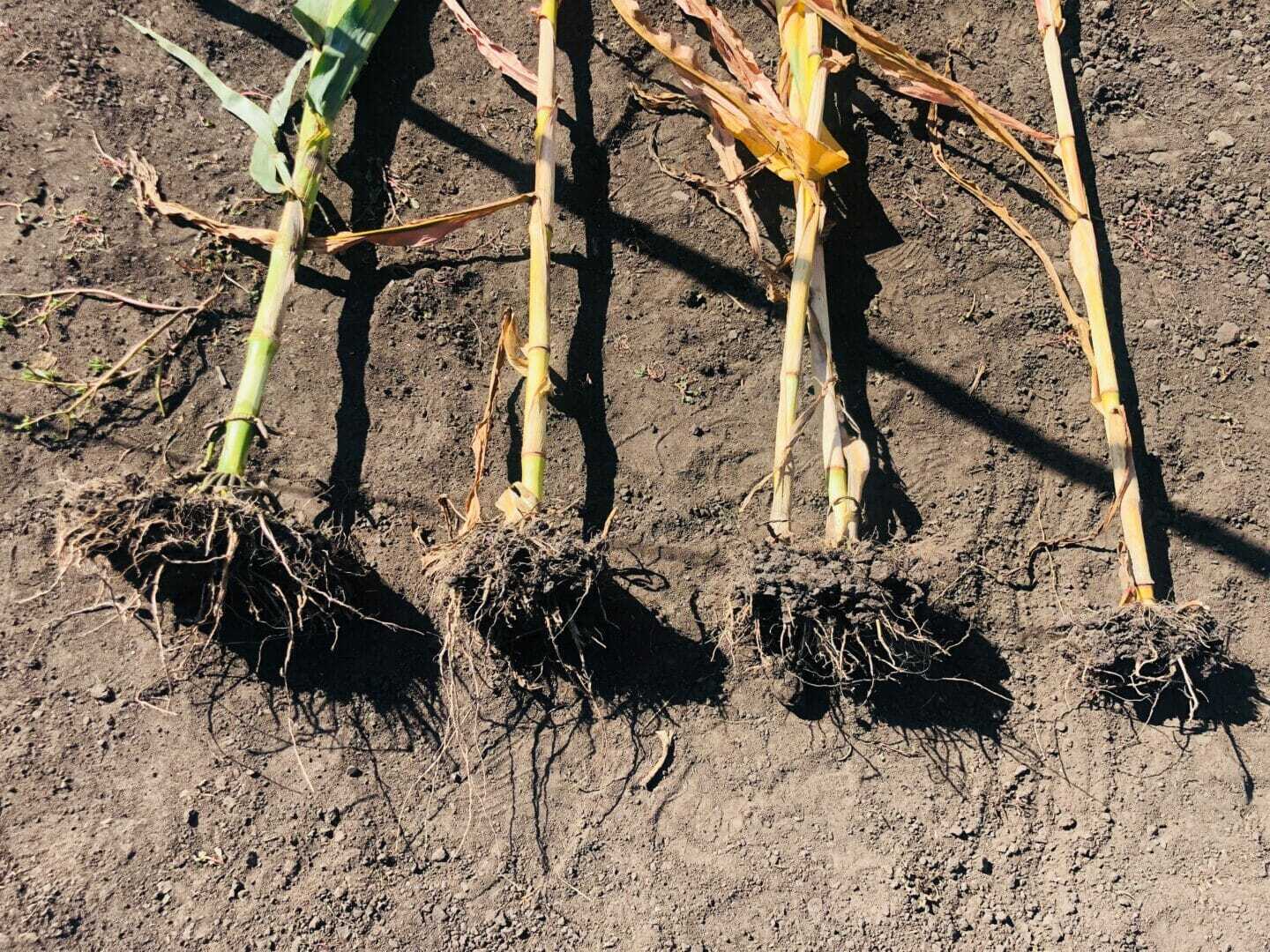
Roots don’t stay shallow because there is water available. Roots stay shallow because they’re blocked from growing deeper.
By and large, most of this variability and early death is coming from the culmination of factors that we’ve discussed at Latham field days, meetings, and in this article. Contrary to the coffee shop discussion,roots don’t stay shallow because there is water available. Roots stay shallow because they’re blocked from growing deeper. Roots don’t grow deep in some “hunt and search” mission. They grow down because of gravity. Furthermore, when plants pollinate well but have sub-par roots, the plant withers early, ears hang, field get spotty, and we notice the crop maturating in spots.
The short answer to this “my field has more weak spots than I thought” boils down to a two basics: roots and compaction. For the most part, compaction could not be avoided. Last fall and this spring simply didn’t allow for the best stewardship practices.
However, I would like to consider what we might have done or what we may be thinking of doing next year in the way of roots (besides a good field ripping). I have spoken often on the strength of later hybrids (relative maturity or RM) versus earlier hybrids. Without question, later is better in most agronomic factors. In general, later RM hybrids genetically have higher yield capabilities, are better in heat, are better in stress, provide more leaf area for sugar production, are typically healthier, have better standing in the fall, are easier to harvest, have higher test weights, etc.
And this year, I would support the idea that later hybrids generally handled some of the compaction issues better. They might have improved root growth/penetration, but I think it is more practical to assume that they just start out with a better toolbox to take the pressures of a season vs the early RM hybrid. I hear the discussion about “wetter corn” and “drying cost” and I won’t argue with each man’s economies. However…
Let’s consider the huge data set against switching to earlier hybrids in late-planting situations (later wins). The cheapest water to remove from a kernel is the 30% to 20% moisture. Here are a few things to consider:
We probably need to rip more acres due to compaction. A deep frost would be on order, as well.
Don’t jump to earlier RM products. The drier harvest will not outweigh the performance.
It’s always about the roots. Roots are the plant’s radiator and the foundation for your next successful crop.
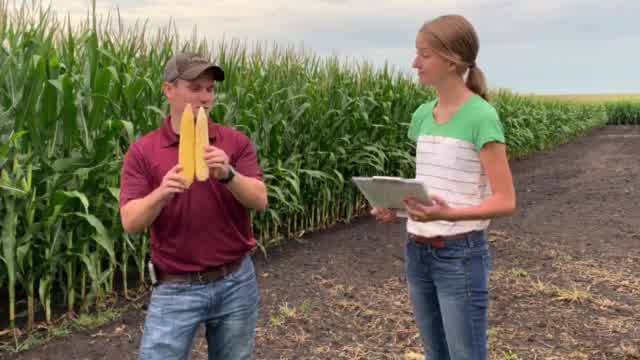
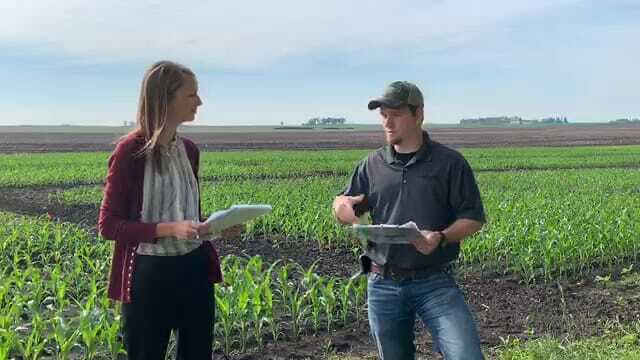
Tune in as Phil Long discusses the current state of pollination in the field.
00:20 – Topic Introduction: Pollination Failure
1:02 – How much yield is left on the table?
2:47 – Percent of yield left in the field in correlation to the stage of the corn plant
6:32 – How to protect the final 40% of yield in the field
8:07 – Prioritize fields for harvest
9:27 – Remember to plan for 2020!
10:46 – Identifying 3 types of pollination failures
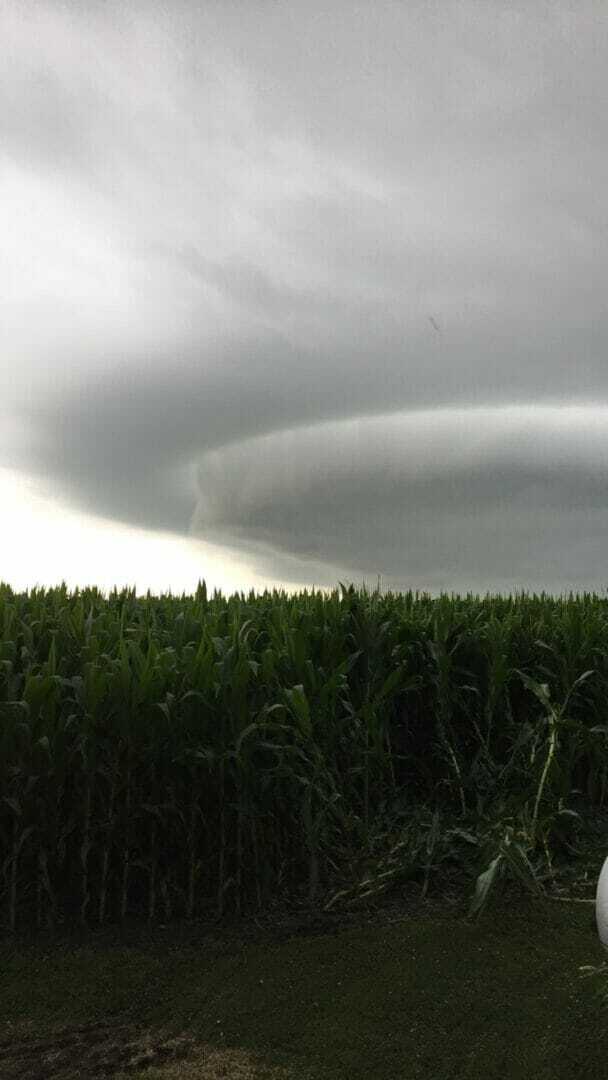
Greensnap can occur during two of the most rapid vegetative growth stages of corn from V5 to V8 and from V12 to R1. During a corn’s rapid growth stage, internodes elongate and become susceptible to breaking off. From V12 to R1, a corn plant can grow up to 4 inches per day!
When greensnap occurs, it happens at the primary ear node which is detrimental to corn yield in the fall. Aside from high winds, other factors can include planting conditions, farm management practices and genetics of the corn plant.
When corn plants are in their first stage of rapid growth from V5 to V8, post-emergence herbicide is often applied. Growth-regulator herbicides can play a negative role in the integrity of the plant structure for short time after application. This combined with rapid plant growth weakens plant structure leaving it susceptible to greensnap.
Here are three suggestions to manage for greensnap in future crop years:
Choose hybrids that have strong plant characteristics. We suggest selecting hybrids with above average root strength, stalk strength and disease resistance.
Take a second look at your herbicide management plan, specifically time of application or reduction of growth regulator herbicides.
Set your corn crop up for success from the beginning of the season by planting into a favorable seed bed at the appropriate seed depth. Give the seed a chance to establish a strong nodal root system to help withstand harsh weather through the growing season.
If you have questions on selecting the right hybrid for your field, let us know. We can connect you with one of our product specialists to ensure the right seed is placed on the right acre. This is the first step you can do to protect your corn crop from greensnap.
This year we have seen slow early growth, reduced tillage, persistent rain and heavy storms. We have also seen an increase in corn-on-corn acres and other agronomic challenges. All these problems can add up to more inoculum in the field and poor overall health leaving plants more susceptible to infection. The early season diseases we think about with corn are typically Anthracnose and seedling diseases (V2-V8); however, Gray Leaf Spot, Northern Corn Leaf Blight, Goss’s Wilt, Southern Rust and Tar Spot can all show early foliar symptoms (V8-R4). Its important to note that bacterial diseases like Goss’s can’t be controlled with a fungicide.
There is very little economic support for early season fungicide application. Depending on the individual fungicide, you may see protection against disease for anywhere from 7 to 21 days. Be sure to check the label for specifics on how long they retain efficacy on the crop. If your focus is on Anthracnose, you may stave off the leaf blight phase of the disease, but this doesn’t mean that the stalk rot phase of the disease won’t infect the plant late season.
It’s also important to remember that coverage is critical with fungicides. This not only means good coverage during your spray operation with correction nozzles, pressure and volume, but it also means that if you spray early in the season, your corn will grow a new leaf approximately every 3-5 days with average GDUs. That new tissue is not protected because fungicides are not very mobile in the plant.
When to Spray?
The best bang for your buck is still going to be around VT to R2 time period because you will be able to suppress diseases that may be present on the leaves and protect them for a few weeks of any diseases trying to get into the plant. Corn is also done putting on new leaves at this point. Typically a 5-8 bu/A yield increase will pay for the investment depending on grain price and application costs. If you are facing heavy disease pressure, be sure to select the right fungicide for the diseases you have. Fungicides with dual modes of action in the Group 3 (Triazoles) and 11 (QoI) will provide suppression and some lasting protection. Look for the active ingredients that end in “ole” (Triozoles) and “in” (QoI).
If you’re facing the fungicide decision to protect valuable yield in a tough year scout your fields for disease. If you don’t see any issues now, then skip an early application and focus on tassel. Take a look at the susceptibility of that hybrid to the disease you are seeing and then evaluate the weather outlook and if you’re in a corn-on-corn or reduced tillage situation. Lastly, monitor fields closely that had Tar Spot last season
It has been an interesting year with all the weather components we have had to face. If you have any questions, don’t hesitate to call in to the Latham Office.
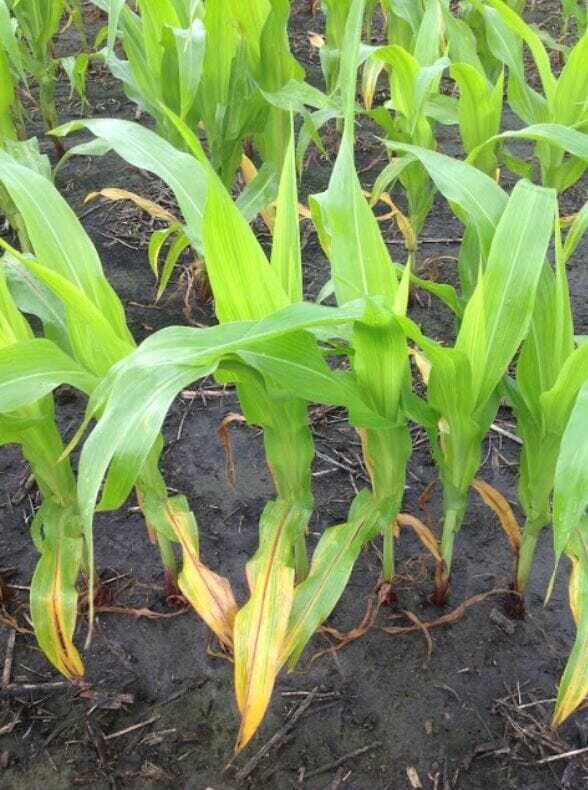
Nitrogen is an essential nutrient and its depletion can lead to severe yield loss. Nitrogen deficiency can be difficult to spot as different hybrids exhibit different symptoms. Most corn plants deficient in nitrogen will exhibit pale-yellowish leaves with a spindled appearance.
Nitrogen is a mobile nutrient and moves to the newest leaves first, leaving the oldest leaves more susceptible to deficiency. By moving from the oldest to youngest leaves, signs of yellowing will often form a “V” pattern on the plant leaf.
Causes of Nitrogen Deficiency
Cold or saturated soils are the primary causes of nitrogen deficiency in corn. Periods of heavy rainfall increase nitrogen leaching, depleting saturated soils of the vital nutrient. Aside from soil leaching, nitrogen can be lost through denitrification – where the nutrient is converted to a gas form and lost in the atmosphere.
When soil conditions are dry, sandy or poorly fertilized, early-applied nitrogen fails to be absorbed by plants. Insect diseases that injure root systems can further prevent proper absorption of nitrogen and lead to deficiency.
Other unavoidable circumstances happen later in the growing season when the increase in plant height and density can block sunlight absorption and reduce photosynthesis. This leads corn to use nutrient reserves within the plant, which will weaken stalks.
Implications
60% of the nitrogen needed to support corn growth is built-up between V4 and pollination, making this an important time to monitor for deficiency. Scouting for nitrogen deficiency should also take place after episodes of heavy rainfall.
While having negative implications on yield potential and crop quality, nitrogen deficiency can also contribute to other corn disorders including tip-dieback and kernel abortion. Plants that are nitrogen deficient will cannibalize their stalks to compensate for the nutrient loss. This makes stalks more vulnerable to lodging and pinching.
Management Options
Tissue sampling can provide insight into how severe deficiency is. When testing for nitrogen deficiency in corn, gather samples from different areas of the field to compare nitrogen levels in deficient corn with healthy plants.
Nitrogen deficient corn should be harvested early in order to prevent additional yield loss from stalk lodging. When planning for next year’s crop, avoid planting hybrids with a history of poor nitrogen uptake. Some hybrids also demand a higher level of nitrogen during grain fill than others, so it is important to consider when planning for the next crop.
Be sure to consult with your local Latham representative to determine the best plan for managing nitrogen deficiency in corn.

 A great growing season begins with picket fence stands and even emergence. With this goal in mind we are excited to continue offering the TALC USA line of premium Talc, Graphite and Microsurge Innoculant products. Each of these products provides unique qualities to improve planter performance and enhance yield through seed-applied biologicals. Our product line catalog featured at right includes features and benefits for each product, but I’d like to highlight a few I believe farmers across Latham Country can especially benefit from:
 Talc and Talc 80/20 Graphite Blend: Why use TALC USA’s talc and talc/graphite blend products? They are a high-grade premium 200 micron grind Talc for improved planter performance but also fortified with iron and manganese for increased yield & plant health.
 Inceptive: Inceptive, equipped with a Harpin Protein, is designed to enhance your plant’s defense mechanism. It’s easy to use by mixing with either Talc or 80/20 Talc Graphite to suppress cyst and pest nematodes. Inceptive promotes improved root systems and germination while also increasing photosynthesis and early vigor.
 MicroSurge Corn and Soybean Inoculants: Microsurge inoculants can be easily applied by mixing with Talc and 80/20 Talc Graphite as a planter box treatment and are designed to increase mycorrhizal activity for improved soil health.