Latham Hi-Tech Seeds

(641) 692-3258

  • Home
  • Performance
  • Products
    • Corn
    • Soybeans
    • Soybean Blends
    • Alfalfa
    • Corn Silage
    • Seed Guide
  • Find a Rep
  • Media
    • Blog
    • News
    • Videos
    • Podcasts
    • TECHTalk
  • About Us
    • Company History
    • Our Mission
    • Careers
    • Become a Rep
    • Sowing Seeds of Hope
  • Contact Us
  • Latham Hi‑Tech Seeds

    Success with Biologicals Starts with Optimizing Your Soil Fertility

    Phil Long, Precision Agronomy Specialist
    Phil Long, Precision Agronomy Specialist
    Precision Agronomy Advisor, Phil Long

    One reason Latham Hi‑Tech Seeds opened its Premier Agronomy Center on the Latham family’s Iowa Century farm was to collect data using real-world practices and to research solutions for real-world problems. More farmers are interested in biologicals to reduce fertilizer and other input costs and/or to build soil health.

    A biological product, or biofertilizer, contains living microorganisms that promote fertilizer efficiency or plant growth. Most of these products are naturally occurring in the environment but likely do not occur in high amounts in your field.

    At Latham’s Premier Agronomy Center in 2022, we used Pivot Bio PROVEN® and Azotic Envita® on corn. Both nitrogen-producing bacteria products were trialed on a large scale and applied in-furrow with LH 5245 VT2 PRO RIB. PROVEN yielded 213.1 bushels per acre (bu/A), and Envita yielded 208.1 bu/A while the untreated LH 5245 yielded 206.2 bu/A. (Also please note that I applied about 40 lbs per acre less nitrogen on all the biological products, so I saved about $20 to $30 per acre when accounting for the product cost.) We have seen similar past results with PROVEN on our farm despite the dry conditions we have had. Envita also may be sprayed over the crop in-season — a process that our team will try in 2023.

    Another biological/foliar product that I’ve used on my own farm for soybeans is BW Advance from BW Fusion. This product has foliar nutrients plus biologicals. When applied around soybean reproduction time, it can help reduce flower and pod abortion plus reduce moisture loss during drought stress. It takes about a 1.5 bu/A yield increase to pay for the product at current soybean prices. In 2022, I saw an average of 2.3 bu/A advantage. Keep in mind, 2022 was very dry and this particular field has some underlying fertility issues.

    If you are going to try biologicals, you must take care of pH and other soil fertility deficiencies. The microbes in your soil, especially bacteria and fungi, thrive based on proper pH and physical soil environment. For example, if you have a pH of 5.0 or heavily compacted soils, you’re not going to see a boost in soil life until you correct those issues.

    This year I used two foliar/soil-applied products, Midwest Bio-Tech’s Chandler Soil and TerraMax’s Ag Soft. The goal of these products is for compaction alleviation and residue management. I’m using these products on our cover crop and no-till plots. During the next few years, I will share results and show any soil structure changes. We also use seed-applied products, including Talc U.S.A.’s Microsurge inoculant and Encompass, as well as TerraMax’s Vertex and Micro MX.

    How will we know which products may benefit our farm the most? Our plan is to try them! I will share soil health tests and how they can aid us in continuing to decipher the complex world of biologicals.

    Did you enjoy this article? We want to (TECH)talk with you! Sign up for our newsletter to receive agronomy articles in your inbox! We’ll talk soon.

    Team Latham

    February 2, 2023
    Agronomics, Corn, Crop, Fertility, From the Field, General, Growth Stages, Precision Ag, Soil
  • Latham Hi‑Tech Seeds

    Match Hybrids to Your Management Style

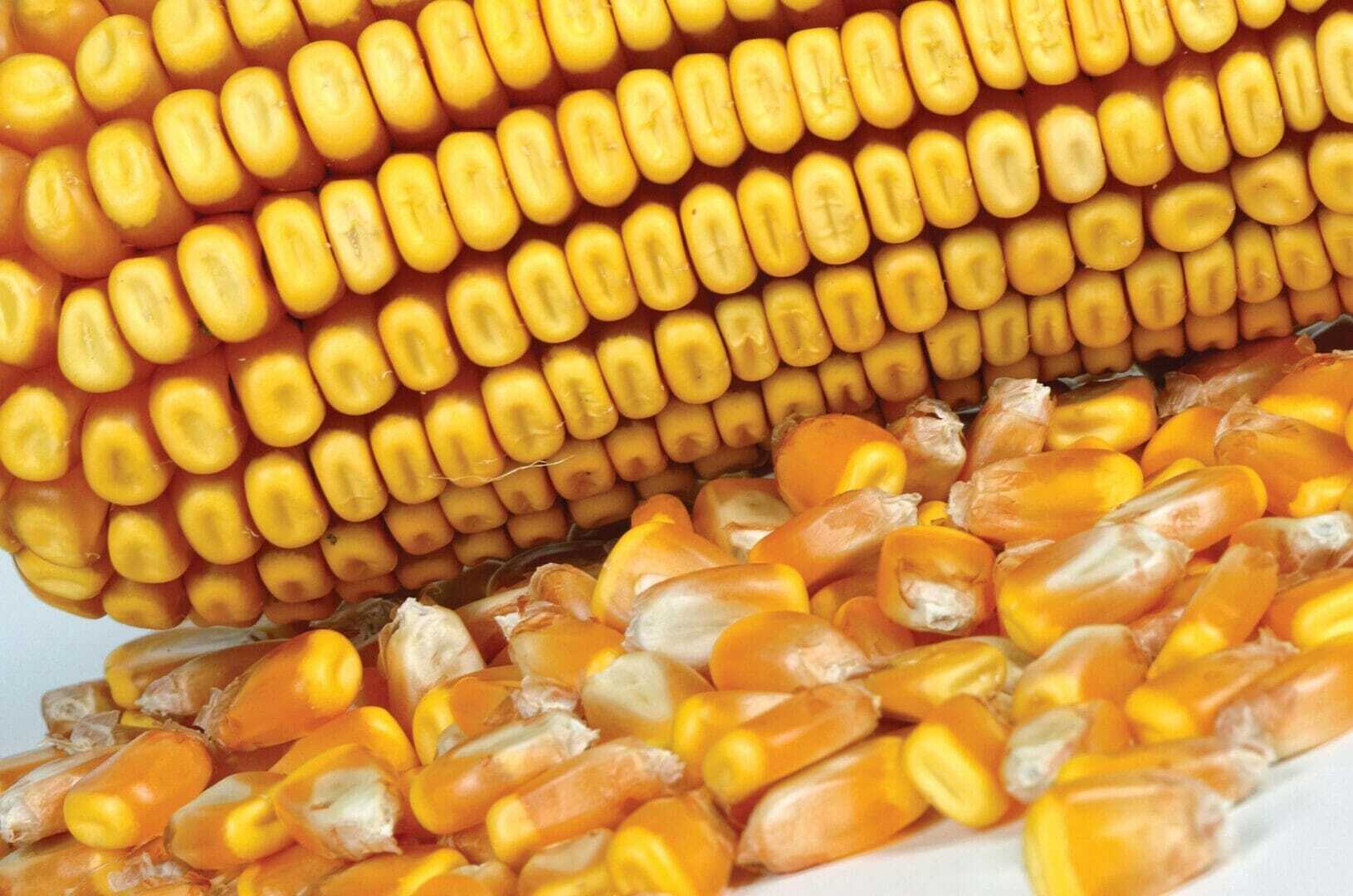
    Corncob background
    Phil Long, Precision Agronomy Specialist
    Precision Agronomy Advisor, Phil Long

    Agronomists often tout the merits of selecting hybrids to fit your soil types, but it’s also important to select hybrids that match your management style.

    Latham Hi‑Tech Seeds’ Premier Agronomy Center provides opportunities for us to learn and share how Latham® products interact with the environment and perform under different management styles. In 2022, we adapted our stress wheel study to show how different Latham brand hybrids react to population differences. We planted 20 different Latham hybrids at both 24,000 and 36,000 plants per acre (ppa) to track how each hybrid adjusts its ear flex – or yield – to high- and low-competition environments.

    Overall corn yield comes from three areas: (1) plants per acre; (2) ears per plant; and (3) weight per ear. If we look specifically at an individual corn plant, yield comes from these three areas: girth in the early season, length in mid-season and kernel depth in late season. The hybrid stress test helps us better understand how your favorite Latham hybrids adjust their yield in high- or low-stress environments, which in turn helps you better understand when to reduce stress for these hybrids.

    For example, if a hybrid gets most of its yield from flex in girth, you should reduce early-season stress. Plant these hybrids in warm soils; provide fertility at the planter, and make sure nitrogen is in an available form early in the season. All hybrids determine girth based on how healthy or stressed the plants are from emergence to V7, so anything you can do to help them at that stage retains more yield.

    The critical time for hybrids that flex in length is from V8 to R2. Making sure these hybrids are healthy in early summer is more important. Side-dress applications are beneficial to these hybrids.

    The last group is those that flex in kernel depth, which occurs from R3 to R6 when the corn is filling its kernels, so nutrients move from leaves to the ear. These hybrids can benefit greatly from fungicide because it gives them extra time in the grain fill stage to add weight to the ear.

    Although we always talk about hybrids flexing up for bigger yields, a corn plant thinks of it differently. It starts with very high expectations and then flexes down in each direction based on the stress it encounters during the season. Each hybrid’s genetics can vary by how much emphasis it puts on these three areas of yield.

    We were intrigued by what we learned from our stress test in 2022 and look forward to learning more in 2023 about how our hybrids adjust their yield. Talk with your local Latham® rep to help you match our hybrids to your management style. Each local salesperson is supported by a team of seed specialists located across our six-state territory.

    Did you enjoy this article? We want to (TECH)talk with you! Sign up for our newsletter to receive agronomy articles in your inbox! We’ll talk soon.

    Team Latham

    January 26, 2023
    Agronomics, Corn, Crop, Disease, Emergence, General, Growth Stages
  • Latham Hi‑Tech Seeds

    Three Keys to High-Yielding Soybeans

    NW IA Latham Seeds Soybeans 8 13 19

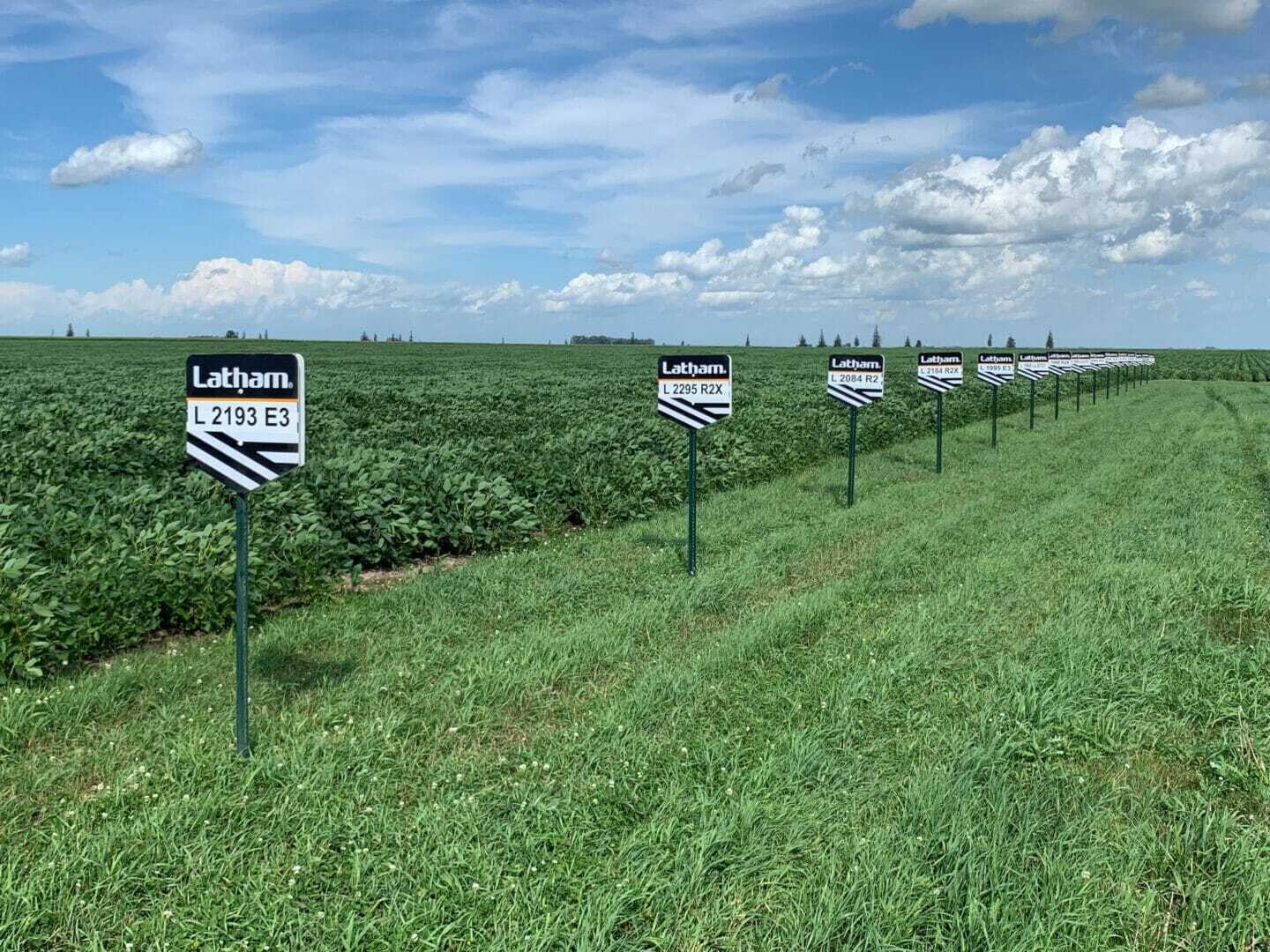
    Our focus for Latham Premier Agronomy Center in Alexander, Iowa, is to showcase a broad lineup of independent options and to demonstrate how genetics interact with the environment and management styles (G X E X M).

    LPAC Picture Resized

    In the Premier Agronomy Center this year, we tested 26 Latham® soybean varieties using 28 different management practices. My top take-home messages for our 2022 soybean plots are:

    1. August rains make soybeans. We received 11.8 inches of rain this season but 4.1 inches of it fell in August. Although we received below-normal moisture, the rain came at the right time. Our plots averaged 75 bushels per acre (bu/A) on about 12 total inches of rain!
    2. Don’t stress soybeans at early bloom. Weed control in soybeans is extremely important. I made a second pass of Liberty® in season, however, it reduced yields by 10 percent. Our showcase plots did not get the extra dose of herbicide and averaged 86 bu/A; the plots that received a second pass yielded an average of 78 bu/A.
    3. “Early” planting date is key to high yield. While earlier is better, “early” does not mean April 10 because we don’t want to risk stand loss to freezing temps. This year our first soybean plots were planted later than expected due to conditions. The plots planted May 13 averaged 5.5 bu/A better than the plots planted May 20. Seven days can make a difference in the number of nodes and pods retained, plus the canopy closes sooner.

    The key to higher yields is how all three components – genetics by environment by management – interact. Fertility tops my list, so I always make sure potassium is sufficient. Potassium is what gets soybeans (and corn) through stressful times and helps them better manage water loss on hot days.

    Latham® soybeans have outstanding yield potential. But like all living and breathing organisms, our soybeans struggle to perform when they’re stressed at the wrong time. The key to top soybean yields is management: reduce as much stress as possible during the growing season because we can’t control the weather.

    Did you enjoy this article? We want to (TECH)talk with you! Sign up for our newsletter to receive agronomy articles in your inbox! We’ll talk soon.

    Team Latham

    December 8, 2022
    Agronomics, Crop, Disease, Emergence, Fertility, Fungicide, General, Growth Stages, Insects, Seed Treatment, Soil, Soybeans, Weed Control
  • Latham Hi‑Tech Seeds

    The Importance of Corn Planting Date and Depth

    LPAC Picture Resized

    At the Latham Premier Agronomy Center, we have many demonstrations including different corn planting dates and planting depths to show how these two important factors influence yield year after year. Research shows that 50 to 75% of corn yield increases during the past 70 years came from genetic advancements, which leaves 25 to 50% of that yield increase to changes we’ve made to our farming practices.

    Planting date and planting depth are cultural practices that have led to increased corn yield. Fifty years ago, farmers were talking about planting earlier than mid-May. Today we talk about planting earlier than April 15!

    Our adapted hybrids produce the best yields when planted in the first week to 10 days of May. This is usually due to disease, stand loss or slow growth early in the corn life cycle. This is something we know well, and it’s why Latham Hi‑Tech Seeds includes emergence and early vigor scores in our product guide.

    Matching the right hybrid to the right field and planting it at the right time can lead to outstanding yields – but only if you also plant at the proper depth. Planting corn at the proper depth allows the crown to establish approximately three-fourths of an inch below the soil surface.

    Why is crown development so crucial? If the crown is pushed to the soil surface due to shallow planting, at least one set of nodal roots typically establishes above ground. We want nodal roots to develop below ground to anchor the plant and to also increase the corn plant’s drought tolerance. Corn should be planted about 2.5 inches deep, which allows it to establish the crown just below the soil surface. Shallow planting depth causes issues with germination due to dry soils.

    We look forward to harvesting our demo plots at Latham’s Premier Agronomy Center and sharing results with you throughout the summer. Have a safe spring season!

    Did you enjoy this article? We want to (TECH)talk with you! Sign up for our newsletter to receive agronomy articles (and delicious recipes) in your inbox! We’ll talk soon.

    Webspec Admin

    September 15, 2022
    Agronomics, Corn, Crop, Emergence, From the Field, General, Growth Stages
  • Latham Hi‑Tech Seeds

    Latham’s Premier Agronomy Center Opens for Tours

    LPAC Picture Resized

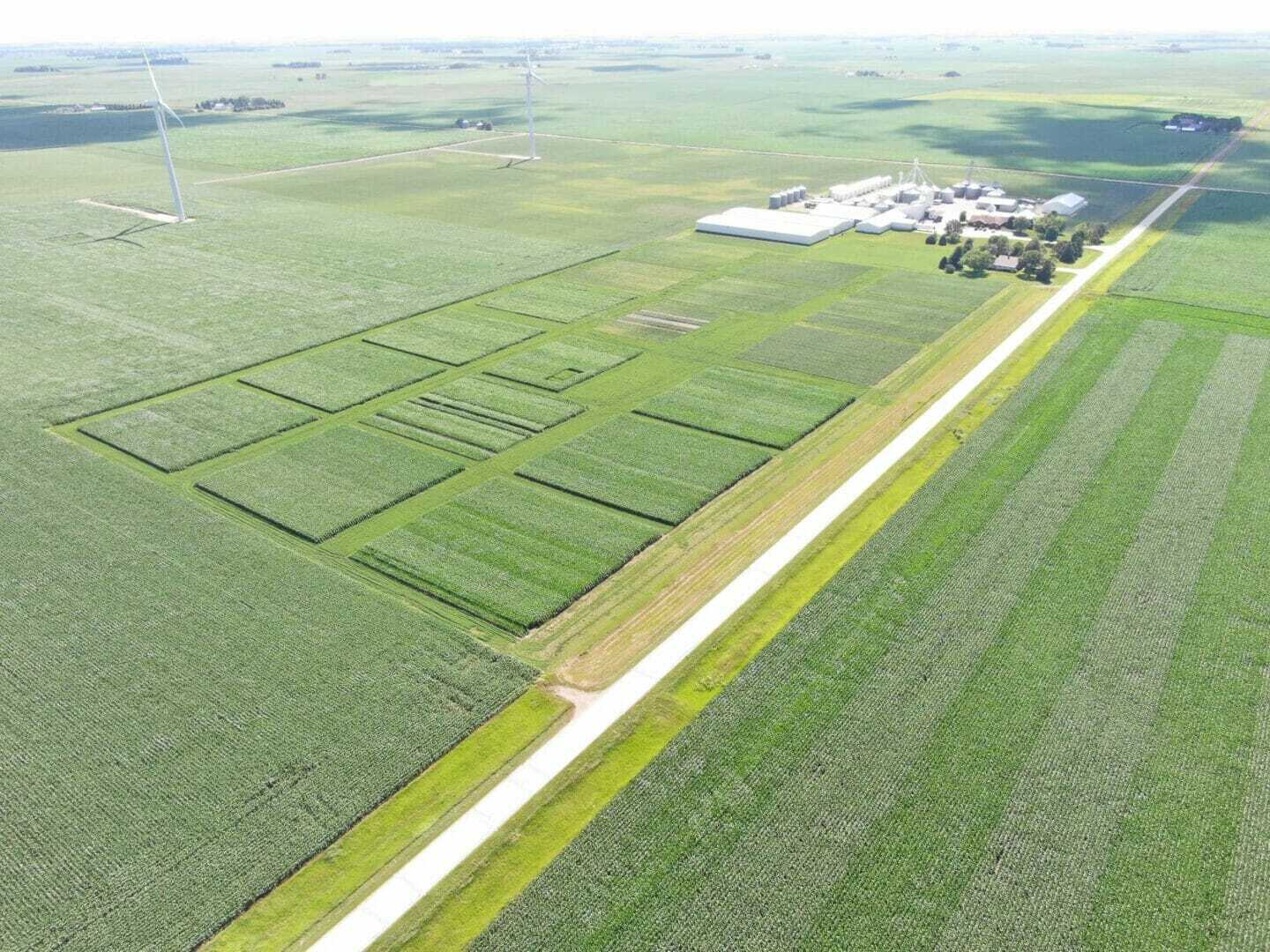
    Latham Hi‑Tech Seeds’ Premier Agronomy Center at our company headquarters in North Iowa provides us with opportunities to collect data on real-world challenges. It also provides us with an opportunity to talk about the exciting new Latham® products, as well as management practices, that help you raise more bushels. This year we have 18 different plots (10 corn and 8 soybean) to demonstrate different techniques.LPAC Picture Resized

    Interested in seeing Latham’s Premier Agronomy Center? Plan a visit! Latham Dealers are encouraged to make arrangements with their regional sales manager (RSM), so they can bring their customers throughout the growing season. We will be open for public tours on Thursday, Sept. 8, at 4 p.m.

    Here’s what you can see inside Latham’s Premier Agronomy Center… As you drive west on 180th Street in Alexander, Iowa, you will see our Latham Showcase plots featuring our top corn and soybean products. Next to that are corn and soybean seed treatment demonstration plots. I also planted my hybrid stress research up front. Twenty different Latham hybrids were planted from 22,000 to 36,000 plants per acre, so we can pinpoint when each hybrid flexes and how we can better manage them in-season.

    The second tier of plots contains high-yield plots (corn/beans) where we “throw the kitchen sink at it,” so to speak, to try to add some extra bushels. Our soybean Iron Deficiency Chlorosis (IDC) plot uses tactics like in-furrow chelated iron products with increasing population to overcome the challenges IDC can bring. We have a silage demonstration plot with a planting date demonstration. You’ll also see a sneak peak of Latham’s corn breeding program alongside some great observation plots featuring planting depth.

    The third tier of plots are “long-term plots” that include cover crops, no-till and continuous corn. These practices come with many challenges, so we have several different products/treatments including in-furrow fertilizer, biologicals, in-furrow fungicide, and biological products for providing nitrogen to corn. We also have included herbicide demonstrations, showing how cover crops can increase water infiltration during pounding rains, as well as also reduce herbicide costs and improve weed control in soybeans.

    All growing season long we’re providing opportunities to learn from our demonstrations in the Premier Agronomy Center. Follow @LathamSeeds on Facebook, Twitter, Instagram and YouTube. We share our weekly “Ask the Agronomist” videos, as well as season-specific information.

    Team Latham

    July 27, 2022
    #FromTheField Crop Reports, Agronomics, Corn, Crop, Fertility, From the Field, Fungicide, General, Growth Stages, Insects, Precision Ag, Season, Seed Treatment, Soil, Soybeans, Summer, Weed Control
  • Latham Hi‑Tech Seeds

    Tissue Test for Better Yields

    Phil Corn in late June

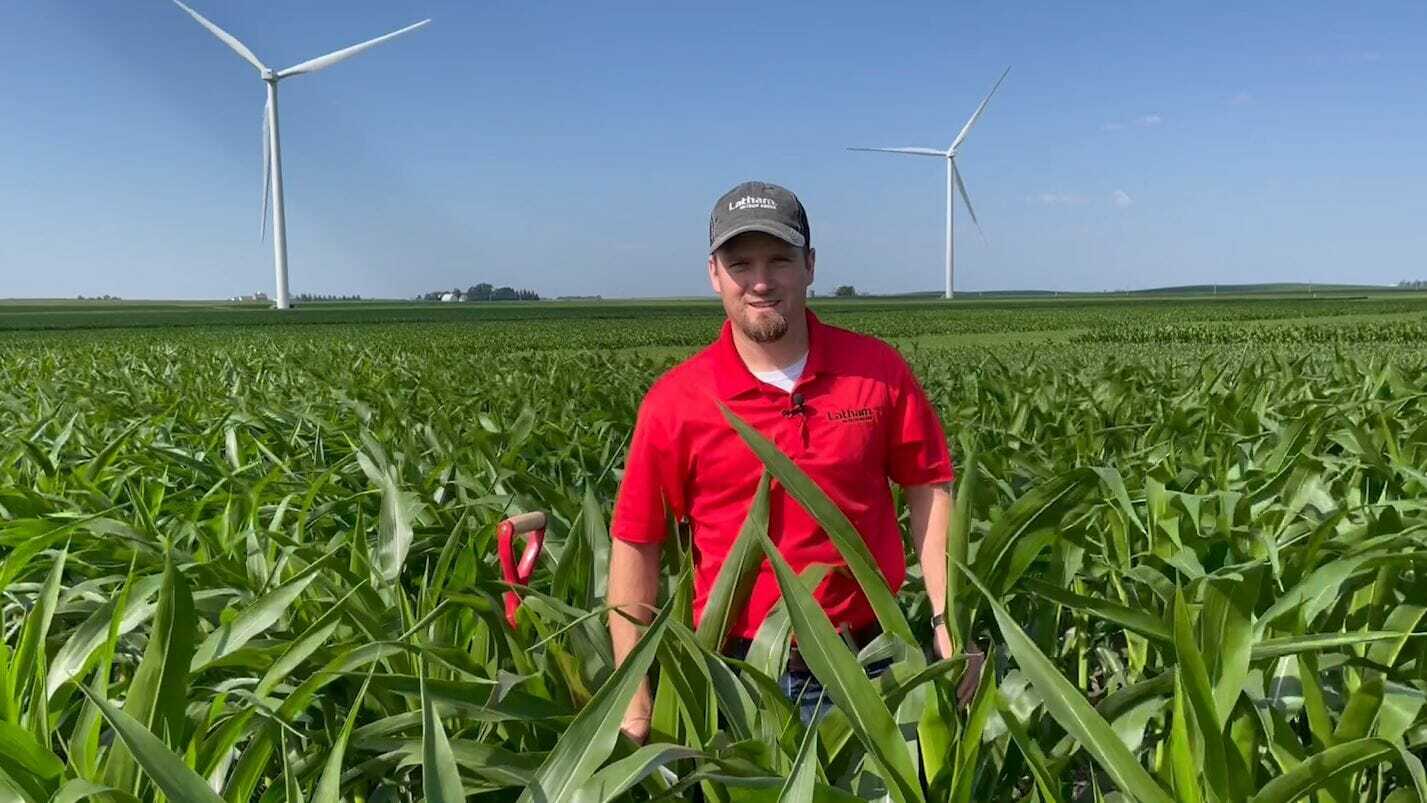
    Phil Long is in the field this week looking at the rapid growth phase of corn. He also shares what to scout for this time of year and how to send in a proper tissue test. Check out the video or read the article below to learn more.

    With current input and commodity prices, we must get the most from each crop. To help your crop reach its potential, start with fertility. Regular soil tests are great, but the next step is in-season tissue testing.

    Tissue testing supplements your soil test. You shouldn’t take a tissue test without a current soil test in hand. Once you take the tissue test, compare it to your soil test. See where the two tests match. Then make plans to address those needs either this season or next season.

    Tissue testing every two weeks shows how your crop is developing throughout the season. If you only can tissue test once or twice, I recommend pulling a sample early (V4 for corn or soybeans) and before grain fill (R1 for corn and R3 for soybeans). This will give you a good understanding of what needs are not being met during crucial development stages.

    Here are some tips on how to use tissue testing to your advantage this season:

    1. Sample whole plant (above ground) when shorter than eight inches. Once a plant gets to reproduction, use the leaf below and opposite the ear leaf for corn. For soybeans, use the most recently matured leaf (usually the 2nd or 3rd leaf from top of the plant). Take at least 15 leaves/plants per sample.
    2. Take multiple samples to compare locations in the field and to look for consistencies. If you are looking at a trouble spot, be sure to also take a sample from a good spot in the field. Send samples in a breathable bag (not a plastic Ziploc bag), or your results may not be good.
    3. Compare back to your soil test. Keep environmental conditions in mind at the time of sampling. Most labs will categorize the nutrient levels based on what growth stage the plant was in when sampled. Tissue testing is like taking your temperature; the tissue test can reveal consistencies in a field that must be addressed to break that next yield barrier.

    Check out other corn videos and articles on The Field Position.

    Team Latham

    June 29, 2022
    #AskTheAgronomist, Corn, Crop, Disease, From the Field, Growth Stages, Soil, Summer, Tech Tuesday
  • Latham Hi‑Tech Seeds

    Alfalfa Threats

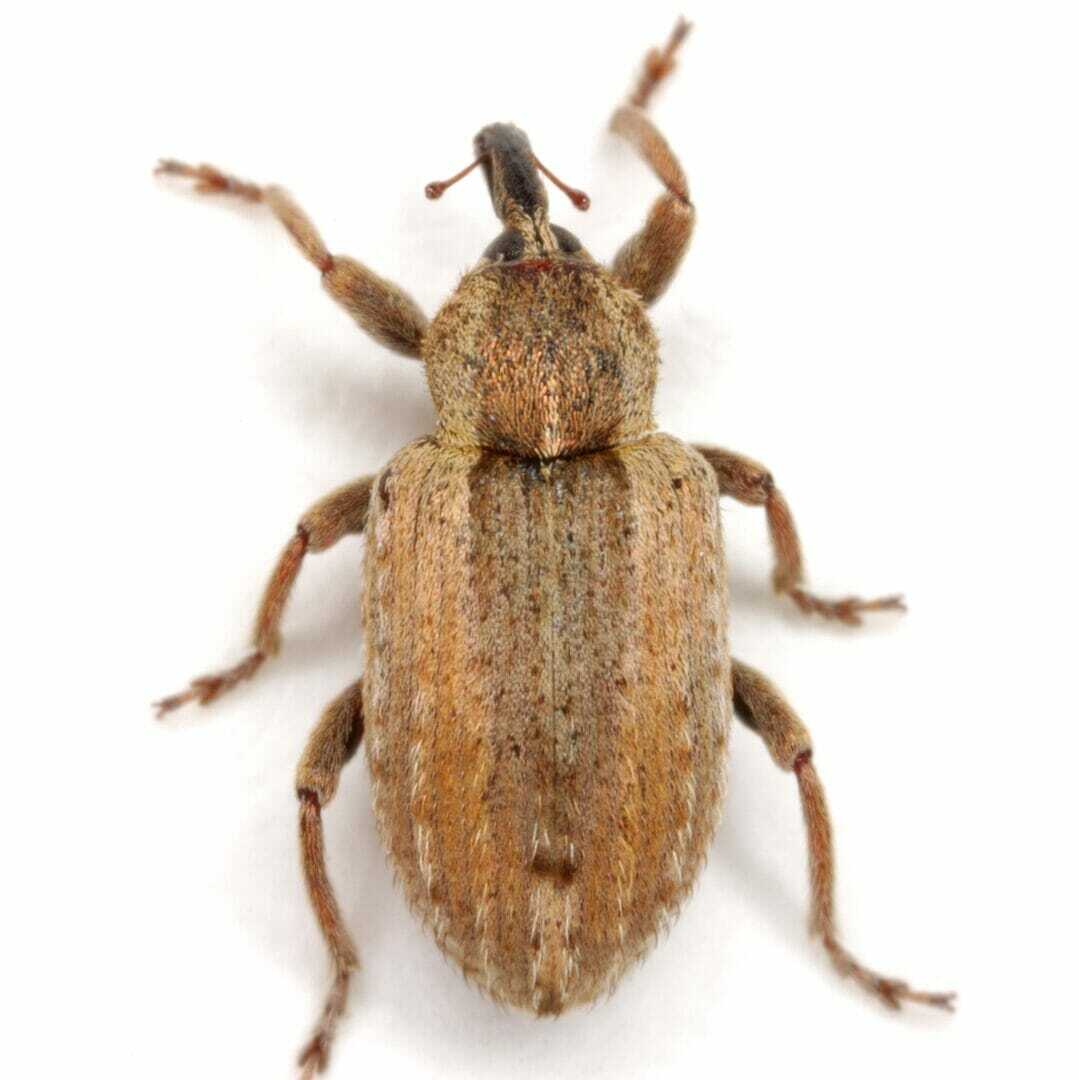
    Alfalfa weevil
    Corey Headshot PNG
    Corey Catt, Forage Product Manager

    Like other crops, high-quality alfalfa is commanding a good price. Strong market prices can change the economic thresholds, making it easier to justify investing in pest control. Below are some charts to help guide you.

    Many insects can damage alfalfa, so it’s important to build a plan that keeps alfalfa healthy. Insects can damage the plant so much that the plant can acquire a disease and die.

    Each alfalfa plant is like a factory. Crop scouting, spraying and fertilizing is like providing critical maintenance to keep the factory operating efficiently, as well as to optimize yield and quality.

    Controlling alfalfa insects generally involves two things: (1) spraying insecticide; and (2) cutting alfalfa early. Check out these two articles for more insight.

    Alfalfa insects: What to look for and how to scout

    Alfalfa Weevil

    Weevil and leafhopper


    Check out other alfalfa articles and videos from our experts.


    Webspec Admin

    June 22, 2022
    Agronomics, Alfalfa, Crop, Disease, Fungicide, General, Growth Stages, Insects, Season, Spring, Summer, Tech Tuesday
  • Latham Hi‑Tech Seeds

    #AsktheAgronomist – Tough Start

    Ask the agronomist tough starte

    It’s been a tough start to the 2022 season with delayed planting and cool weather. Phil Long, precision agronomy advisor, unpacks GDUs across Latham Country and when corn and soybean stands will really take off. Check out more agronomy videos.


    Team Latham

    June 7, 2022
    #AskTheAgronomist, Agronomics, Corn, Crop, Emergence, From the Field, Growth Stages, Soil, Soybeans
  • Latham Hi‑Tech Seeds

    #AsktheAgronomist – Stand Count

    Ask the agronomist stand count

    Team Latham

    May 26, 2022
    #AskTheAgronomist, Agronomics, Crop, Emergence, Growth Stages, Soybeans
  • Latham Hi‑Tech Seeds

    #AsktheAgronomist – Emergence

    Ask the agronomist emergence

    Precision Agronomy Advisor, Phil Long, brings us an update from the field. He shares what to keep an eye on with this late spring and how emergence may be quicker than normal.

    Team Latham

    May 19, 2022
    #AskTheAgronomist, Agronomics, Corn, Crop, Emergence, General, Growth Stages, Season, Soybeans, Spring
Previous Page
1 2 3 4 5 … 8
Next Page

Latham Hi‑Tech Seeds

131 180th Street | Alexander, IA 50420

(641) 692-3258

SIGNUP FOR OUR NEWSLETTER
  • Contact
  • Legal
  • Dealer Center
  • Seedware Login
  • Latham Gear

© 2025 Latham Hi‑Tech Seeds. All rights reserved. | Iowa Web Design by Webspec | Privacy Policy

Latham® Hi-Tech Seeds is a trademark of M.S. Technologies, L.L.C., 103 Avenue D, West Point, IA 52656.