
Did you enjoy these videos? We want to (TECH)talk with you! Sign up for our newsletter to receive agronomy videos (and delicious recipes) in your inbox! We’ll TALK soon.
-
Latham Hi‑Tech Seeds
#FromtheField – Week of June 26, 2023
-
Latham Hi‑Tech Seeds
#FromtheField – Week of June 19, 2023
Take a look across Latham Country! We’re coming to you every week.
Did you enjoy these videos? We want to (TECH)talk with you! Sign up for our newsletter to receive agronomy videos (and delicious recipes) in your inbox! We’ll TALK soon.
-
Latham Hi‑Tech Seeds
#FromtheField – Week of June 12, 2023
Take a look across Latham Country! We’re coming to you every week.
How important is planting depth? Aaron shows us first-hand from the field in Central Iowa.

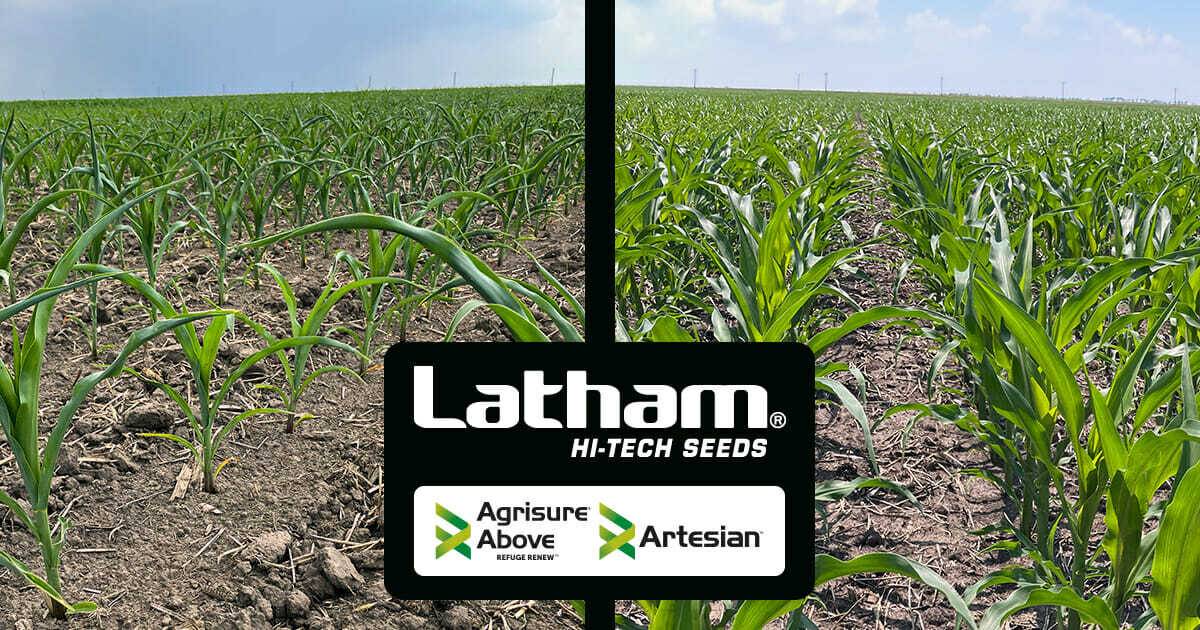
See the difference! On the left is LH 5034 AA after getting no rain for 35 days in super-hot weather. On the right shows the same hybrid after 1.2” of rain. This product has impressive heat and drought resistance in South Dakota! Learn more about our unmatched lineup: https://lathamseeds.com/products/?crop=377
Did you enjoy these videos? We want to (TECH)talk with you! Sign up for our newsletter to receive agronomy videos (and delicious recipes) in your inbox! We’ll TALK soon.
-
Latham Hi‑Tech Seeds
Early Scouting For Prevention
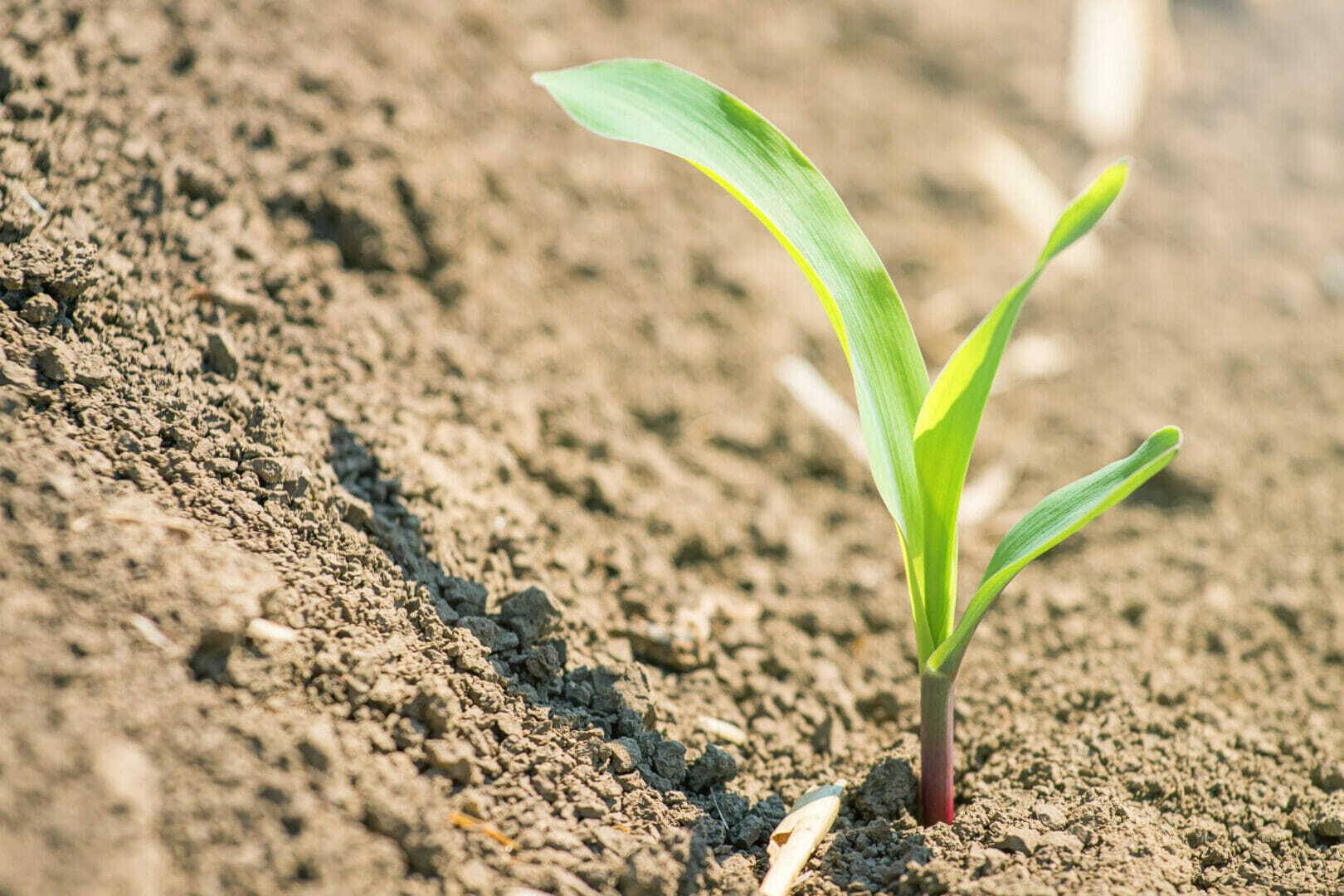
The first principle of crop scouting is to determine what is normal and what is not normal. Knowing what a healthy plant looks like is key to identifying seedling disease. When scouting for seedling diseases, look for yellowing, wilted, stunted, dead or missing plants.
- In corn, look for discolored or rotten mesocotyls, seminal roots and nodal roots.
- In soybeans, look for seedlings that pull easily from the soil, discolored or rotting root tissue, and lesions that form on the taproot or hypocotyl.
Before you head out to the field, there are several tools that are must-haves for early-season crop scouting:
- A tape measure to take stand counts
- A seed digger, trowel, or spade to dig up seeds or plants to evaluate planting depth, seedling diseases and below-ground feeding insects, like seed corn maggots.
Remember that certain weather and soil conditions favor specific pathogens. Cool and wet soils favor Fusarium and Pythium, warm and wet soils favor Phytophthora, and warm and moist soils favor Rhizoctonia.
It should be noted that a lab diagnosis is needed to confirm what pathogen is causing the symptoms. Knowing what disease(s) are present can help you choose hybrids and varieties that have good disease scores in the future and can guide decisions on the use of fungicide treated seed.
Did you enjoy this article? We want to (TECH)talk with you! Sign up for our newsletter to receive agronomy videos (and delicious recipes) in your inbox! We’ll TALK soon.
-
Latham Hi‑Tech Seeds
#FromtheField – Week of June 5, 2023
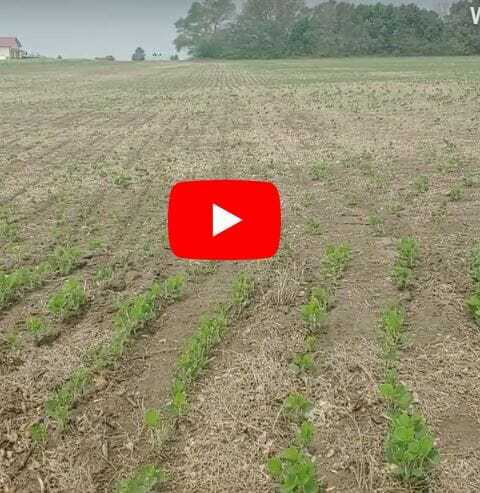
Take a look across Latham Country! We’re coming to you every week.
Did you enjoy these videos? We want to (TECH)talk with you! Sign up for our newsletter to receive agronomy videos (and delicious recipes) in your inbox! We’ll TALK soon.
-
Latham Hi‑Tech Seeds
#FromtheField – Week of May 29, 2023

Take a look across Latham Country! We’re coming to you every week.
Did you enjoy these videos? We want to (TECH)talk with you! Sign up for our newsletter to receive agronomy videos (and delicious recipes) in your inbox! We’ll TALK soon.
-
Latham Hi‑Tech Seeds
#FromtheField – Week of May 22

Take a look across Latham Country! We’re coming to you every week.
Did you enjoy these videos? We want to (TECH)talk with you! Sign up for our newsletter to receive agronomy videos (and delicious recipes) in your inbox! We’ll TALK soon.
-
Latham Hi‑Tech Seeds
Staging and Application: Make the Right Decisions
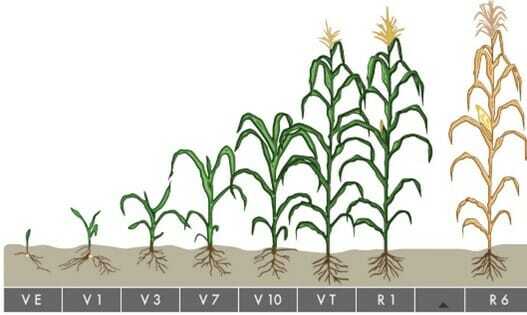
Planting across Latham Country has been progressing at a rapid pace and it will not be long before post-emergence spraying will begin. When to spray, what to spray, should I spray . . . these are some of the questions growers need to consider before heading to the field. I believe “when to spray” is one of the most critical decisions a grower will make. Damaging or injuring a young plant can have lasting affects that may not be visible to the naked eye. Understanding growth stages and relating this to the labeled requirements is a key to successful growing season. Let’s take a look at corn first.
Labels typically refer to growth stages for application timing and the chart below is a good reference.

Image: University of Illinois VE Stage – Corn emergence occurs when the coleoptiles reach and break through the soil surface. Normally, corn requires approximately 100-200 GDUs to emerge, which can be four to five days after planting. At this stage, growth is also taking place below the ground as the nodal root system begins to grow.
Emergence may occur as rapidly as four or five days after planting in warm moist soil, or may take three weeks or more in cool soils. A new leaf will appear about every three days during early growth, while later leaves developing during warmer conditions may appear in one to two days. Full season hybrids in the central Corn Belt typically can produce 21 to 22 leaves. Earlier maturing hybrids will produce fewer leaves.
Keep these numbers in mind as you plan out your season and prepare to spray your fields. Within a month after planting, a corn plant can go from the bag to V5-V7 if conditions are favorable.
Soybeans in a given field will not be in the same stage at the same time. When staging a field of soybeans, each V or R stage is defined when 50% or more of the plants in the field are in or beyond that stage. This makes it important to understand staging and development since not every plant in the field will be at the same stage when determining application timing. The chart below is a good reference for staging.

The general rule of thumb is to figure five days between growth stages in soybeans. The most important growth stage is R1 which is classified as one flower open at any node on the main stem. Soybean flowers are very sensitive and herbicide application should be avoided at this stage. R1 can begin before canopy closure and the temptation is there to make that final application before canopy closure. A good pre-plant program can help avoid the need for late season spraying and a few late escapes is not worth the consequences from spraying post-flower.
Did you enjoy this article? We want to (TECH)talk with you! Sign up for our newsletter to receive agronomy articles (and delicious recipes) in your inbox! We’ll TALK soon.
-
Latham Hi‑Tech Seeds
#FromtheField – Week of May 1, 2023

Take a look across Latham Country! We’re coming to you every week.
Latham Hi‑Tech Seed’s Corn Plot going in Northern Iowa!
-
Latham Hi‑Tech Seeds
Drive Yield with Soil Health and Customized Plant Nutrition
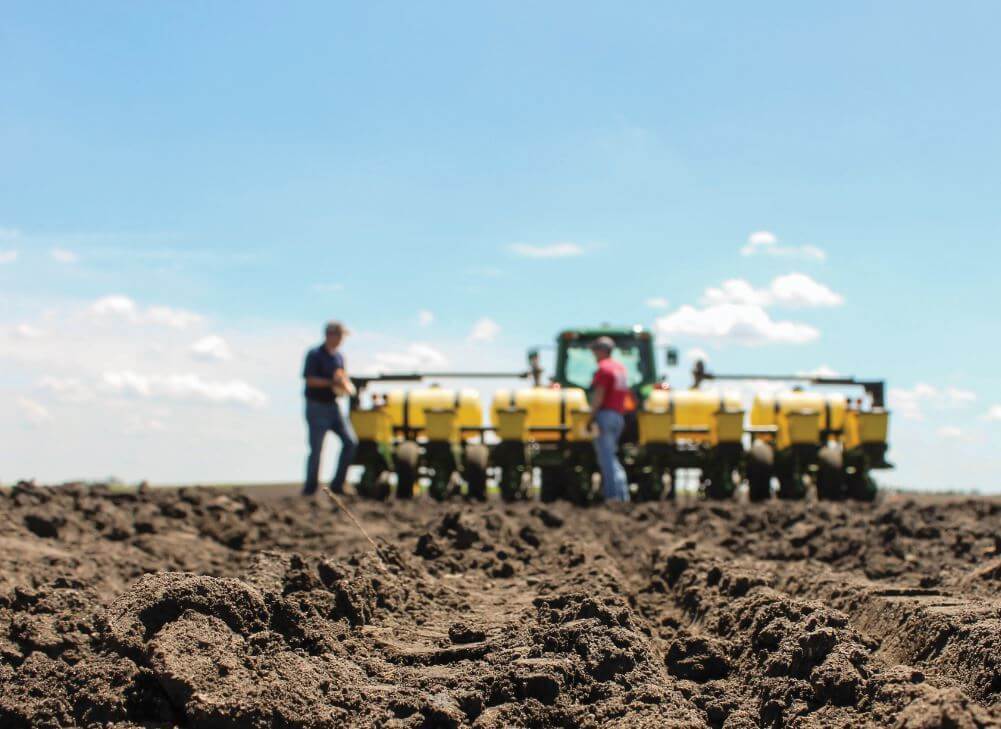
It’s no secret that optimal yields result from a combination of many factors: environment, plant nutrition and nutrients to name a few.
 Plant nutrition is key to maximizing the yield potential of today’s plant genetics. To meet the intensive nutritional demands of these plants, there must be a higher fidelity to soil condition and nutrition. Removing nutrients removes nutrition from the soil reserves.
There is a no “one-size-fits-all” nutrition program, and there are many variations of soils and environments. So customizing nutrition programs by field can help optimize yield. Today’s technology allows us to do just that!
Many years ago, we heard about a farmer who found a unique combination of cover crops that worked well for his soils and climate. He tracked everything precisely and found that soil organic matter (OM) increases by 0.1% each year. This may not seem like much, but the impacts are exponential. In 10 years, you gain 1% more OM. For every 1% OM, the soil can hold 1 acre inch of rain. That’s 27,000 gallons of water.
This farmer is improving water and nutrient-holding capacity of the soil in the root zone. During drought years, his farm’s yield was only down 10 bushels while the average yield decrease was 60 bushels. Plus, his farm produced the same yields using less nitrogen (N), phosphorus (P) and potassium (K) because leaching is reduced.
Why not experiment on your own farm? Start small and see how you can capture more yield on the same acre. Here are a couple resources to help you get started:
Did you enjoy this article? We want to (TECH)talk with you! Sign up for our newsletter to receive agronomy articles (and delicious recipes) in your inbox! We’ll talk soon.
