Drive Yield with Soil Health and Customized Plant Nutrition
It’s no secret that optimal yields result from a combination of many factors: environment, plant nutrition and nutrients to name a few.
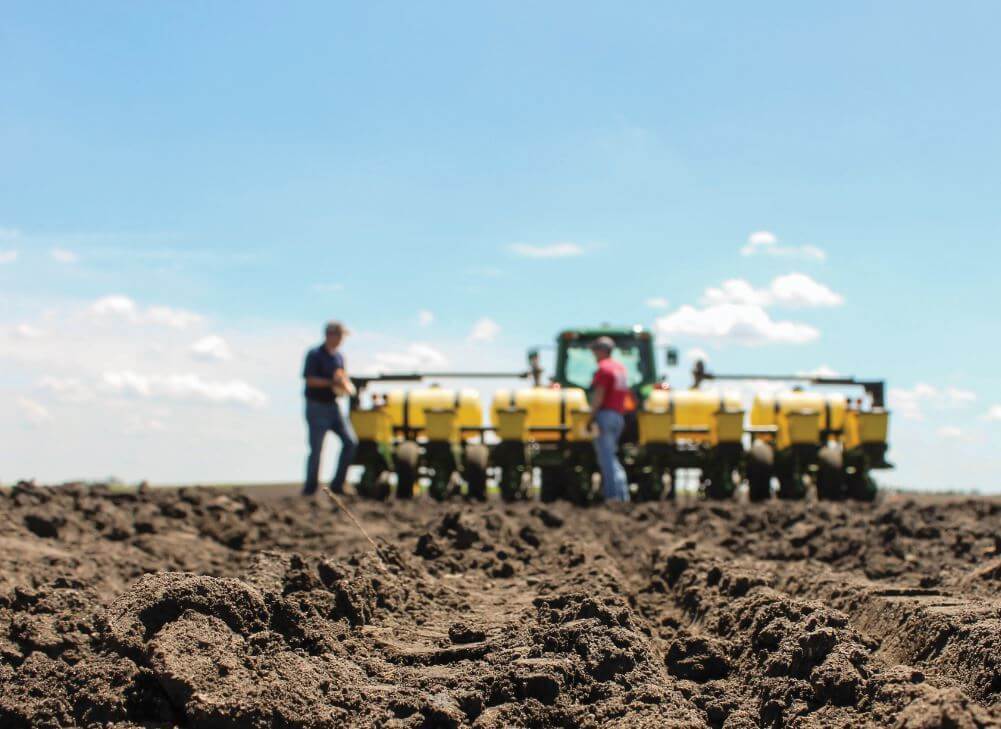
Plant nutrition is key to maximizing the yield potential of today’s plant genetics. To meet the intensive nutritional demands of these plants, there must be a higher fidelity to soil condition and nutrition. Removing nutrients removes nutrition from the soil reserves.
There is a no “one-size-fits-all” nutrition program, and there are many variations of soils and environments. So customizing nutrition programs by field can help optimize yield. Today’s technology allows us to do just that!
Many years ago, we heard about a farmer who found a unique combination of cover crops that worked well for his soils and climate. He tracked everything precisely and found that soil organic matter (OM) increases by 0.1% each year. This may not seem like much, but the impacts are exponential. In 10 years, you gain 1% more OM. For every 1% OM, the soil can hold 1 acre inch of rain. That’s 27,000 gallons of water.
This farmer is improving water and nutrient-holding capacity of the soil in the root zone. During drought years, his farm’s yield was only down 10 bushels while the average yield decrease was 60 bushels. Plus, his farm produced the same yields using less nitrogen (N), phosphorus (P) and potassium (K) because leaching is reduced.
Why not experiment on your own farm? Start small and see how you can capture more yield on the same acre. Here are a couple resources to help you get started:
Did you enjoy this article? We want to (TECH)talk with you! Sign up for our newsletter to receive agronomy articles (and delicious recipes) in your inbox! We’ll talk soon.
Agronomists often tout the merits of selecting hybrids to fit your soil types, but it’s also important to select hybrids that match your management style.
Latham Hi‑Tech Seeds’ Premier Agronomy Center provides opportunities for us to learn and share how Latham® products interact with the environment and perform under different management styles. In 2022, we adapted our stress wheel study to show how different Latham brand hybrids react to population differences. We planted 20 different Latham hybrids at both 24,000 and 36,000 plants per acre (ppa) to track how each hybrid adjusts its ear flex – or yield – to high- and low-competition environments.
Overall corn yield comes from three areas: (1) plants per acre; (2) ears per plant; and (3) weight per ear. If we look specifically at an individual corn plant, yield comes from these three areas: girth in the early season, length in mid-season and kernel depth in late season. The hybrid stress test helps us better understand how your favorite Latham hybrids adjust their yield in high- or low-stress environments, which in turn helps you better understand when to reduce stress for these hybrids.
For example, if a hybrid gets most of its yield from flex in girth, you should reduce early-season stress. Plant these hybrids in warm soils; provide fertility at the planter, and make sure nitrogen is in an available form early in the season. All hybrids determine girth based on how healthy or stressed the plants are from emergence to V7, so anything you can do to help them at that stage retains more yield.
The critical time for hybrids that flex in length is from V8 to R2. Making sure these hybrids are healthy in early summer is more important. Side-dress applications are beneficial to these hybrids.
The last group is those that flex in kernel depth, which occurs from R3 to R6 when the corn is filling its kernels, so nutrients move from leaves to the ear. These hybrids can benefit greatly from fungicide because it gives them extra time in the grain fill stage to add weight to the ear.
Although we always talk about hybrids flexing up for bigger yields, a corn plant thinks of it differently. It starts with very high expectations and then flexes down in each direction based on the stress it encounters during the season. Each hybrid’s genetics can vary by how much emphasis it puts on these three areas of yield.
We were intrigued by what we learned from our stress test in 2022 and look forward to learning more in 2023 about how our hybrids adjust their yield. Talk with your local Latham® rep to help you match our hybrids to your management style. Each local salesperson is supported by a team of seed specialists located across our six-state territory.
Did you enjoy this article? We want to (TECH)talk with you! Sign up for our newsletter to receive agronomy articles in your inbox! We’ll talk soon.
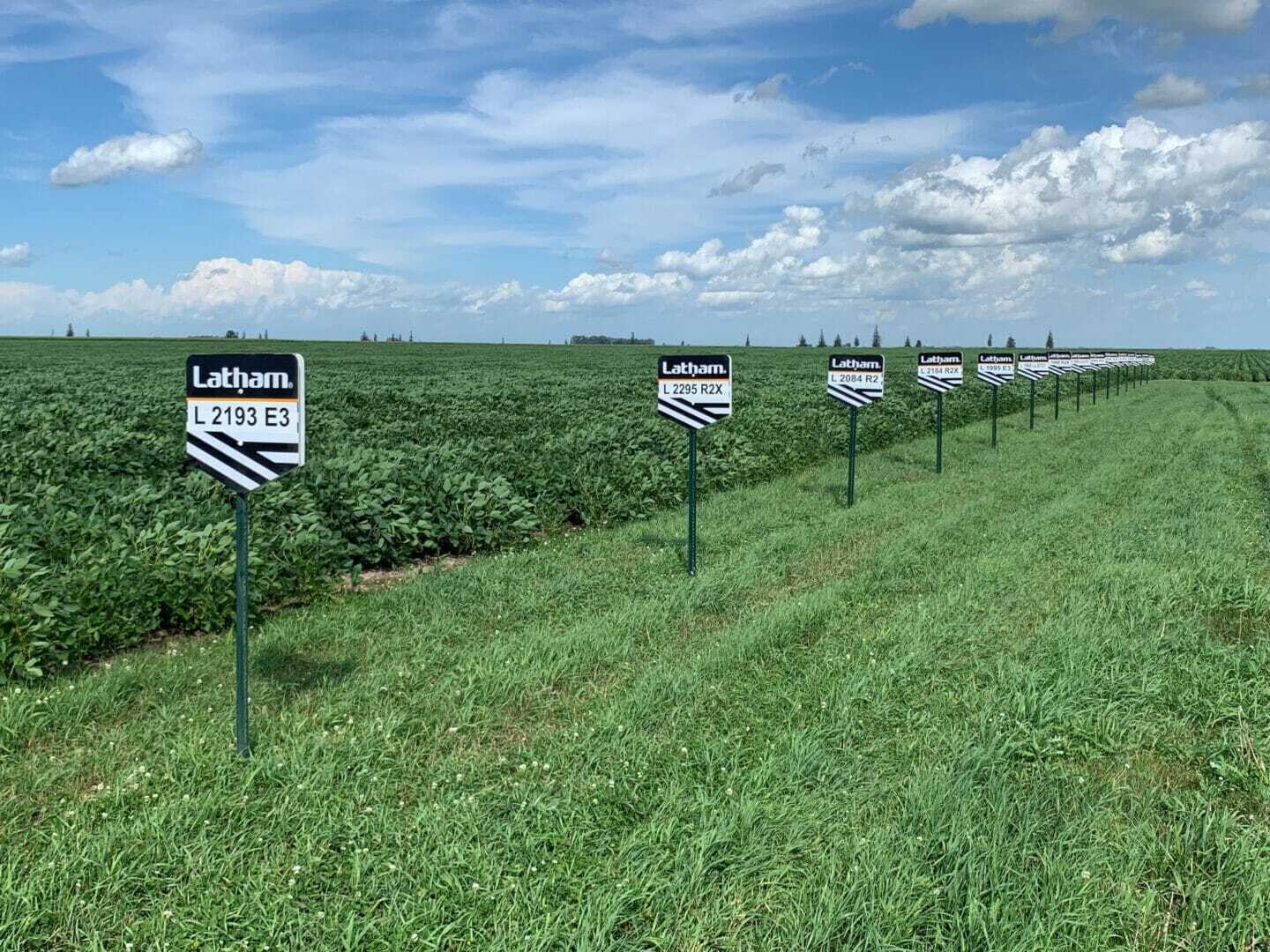
Our focus for Latham Premier Agronomy Center in Alexander, Iowa, is to showcase a broad lineup of independent options and to demonstrate how genetics interact with the environment and management styles (G X E X M).
In the Premier Agronomy Center this year, we tested 26 Latham® soybean varieties using 28 different management practices. My top take-home messages for our 2022 soybean plots are:
August rains make soybeans. We received 11.8 inches of rain this season but 4.1 inches of it fell in August. Although we received below-normal moisture, the rain came at the right time. Our plots averaged 75 bushels per acre (bu/A) on about 12 total inches of rain!
Don’t stress soybeans at early bloom. Weed control in soybeans is extremely important. I made a second pass of Liberty® in season, however, it reduced yields by 10 percent. Our showcase plots did not get the extra dose of herbicide and averaged 86 bu/A; the plots that received a second pass yielded an average of 78 bu/A.
“Early” planting date is key to high yield. While earlier is better, “early” does not mean April 10 because we don’t want to risk stand loss to freezing temps. This year our first soybean plots were planted later than expected due to conditions. The plots planted May 13 averaged 5.5 bu/A better than the plots planted May 20. Seven days can make a difference in the number of nodes and pods retained, plus the canopy closes sooner.
The key to higher yields is how all three components – genetics by environment by management – interact. Fertility tops my list, so I always make sure potassium is sufficient. Potassium is what gets soybeans (and corn) through stressful times and helps them better manage water loss on hot days.
Latham® soybeans have outstanding yield potential. But like all living and breathing organisms, our soybeans struggle to perform when they’re stressed at the wrong time. The key to top soybean yields is management: reduce as much stress as possible during the growing season because we can’t control the weather.
Did you enjoy this article? We want to (TECH)talk with you! Sign up for our newsletter to receive agronomy articles in your inbox! We’ll talk soon.
With everything from groceries to gas on the rise, we understand the need to question whether expenses are necessary or justifiable. Below is information to support why fertilizing alfalfa in summer and applying fungicide to silage hybrids warrants your attention.
Fertilizing alfalfa in the summer helps fill the cellular gas tank of the plant’s crown, which helps increase its yield potential for the current growing season, as well as increases its potential for winterhardiness. All alfalfa benefits from in-season fertility, regardless of cutting schedule or strategy.
Summer seeding is fast approaching. July 20 through August 1 are key seeding dates for Latham Hi‑Tech Seeds’ northern territory, which includes North Dakota, as well as northern Minnesota and northern Wisconsin. August 1-15 is the range of recommended alfalfa seeding dates for southern Minnesota and southern Wisconsin while most alfalfa growers in Iowa typically seed in mid-August. Look at this graph.
Sourced from University of Wisconsin – Extension
Due to our late spring, many Midwest alfalfa growers have moved seeding alfalfa to this fall. The success of fall seeding depends on moisture. It’s important that alfalfa germinates quickly, develops a crown, and builds enough crown carbohydrates to overwinter.
Latham® AlfaShieldTM is a great seed treatment to help facilitate quick emergence. Think of AlfaShield as wrapping your alfalfa seed in a sponge. It helps protect the fragile germ of the seed. It also helps draw moisture to the seed, which is particularly important when seeding into moisture-stressed soils. Summers-seeded alfalfa is up against the time clock; approximately four to six weeks of significant growth needed to develop the crown before frost. The 2022 and 2023 Latham product guides include a dry matter (DM) ton advantage of AlfaShield compared to the old industry standard. AlfaShield has a bigger advantage in moisture-stressed soils.
Summer Considerations for Corn Silage
When I walk fields and test plots in the fall, I note a hybrid’s stay-green ability. I believe this observation relates to plant health. Healthy plants tend to have a lower probability of developing infection, which can create the environment for molds and mycotoxins to grow. Fungicide application promotes plant health and can boost yield and corn silage quality. Healthy, dark green, disease-free leaves are like solar panels capturing more sunlight for more photosynthesis. Healthy leaves also build more yield, as well as reduce chances for mold and mycotoxins to develop.
There are a variety of fungicides to select from, all of which inspire improved plant health. I have the most experience with BASF fungicide corn silage research relating to improved corn silage tonnage and forage quality. Several of the studies have resulted in two to three more tons of corn silage per acre plus the potential of reduced molds and mycotoxins is encouraging. With current commodity prices, that’s around an extra $140 to $210/acre in corn silage tonnage!
Investing fungicide is worth consideration for livestock producers, who raise their own forages. Molds and mycotoxins can be more challenging to quantify. When fed to livestock, however, they can severely impair animal performance. In severe instances, it can lead to mortality.
Feel free to contact your local Latham rep with any questions about summer fertilizing or fungicide application. You’re also welcome to email me at coreyc@lathamseeds.com. I’m always happy to visit with Midwest farmers who are interested in raising better meat, milk and eggs!
Phil Long is in the field this week looking at the rapid growth phase of corn. He also shares what to scout for this time of year and how to send in a proper tissue test. Check out the video or read the article below to learn more.
With current input and commodity prices, we must get the most from each crop. To help your crop reach its potential, start with fertility. Regular soil tests are great, but the next step is in-season tissue testing.
Tissue testing supplements your soil test. You shouldn’t take a tissue test without a current soil test in hand. Once you take the tissue test, compare it to your soil test. See where the two tests match. Then make plans to address those needs either this season or next season.
Tissue testing every two weeks shows how your crop is developing throughout the season. If you only can tissue test once or twice, I recommend pulling a sample early (V4 for corn or soybeans) and before grain fill (R1 for corn and R3 for soybeans). This will give you a good understanding of what needs are not being met during crucial development stages.
Here are some tips on how to use tissue testing to your advantage this season:
Sample whole plant (above ground) when shorter than eight inches. Once a plant gets to reproduction, use the leaf below and opposite the ear leaf for corn. For soybeans, use the most recently matured leaf (usually the 2nd or 3rd leaf from top of the plant). Take at least 15 leaves/plants per sample.
Take multiple samples to compare locations in the field and to look for consistencies. If you are looking at a trouble spot, be sure to also take a sample from a good spot in the field. Send samples in a breathable bag (not a plastic Ziploc bag), or your results may not be good.
Compare back to your soil test. Keep environmental conditions in mind at the time of sampling. Most labs will categorize the nutrient levels based on what growth stage the plant was in when sampled. Tissue testing is like taking your temperature; the tissue test can reveal consistencies in a field that must be addressed to break that next yield barrier.
Like other crops, high-quality alfalfa is commanding a good price. Strong market prices can change the economic thresholds, making it easier to justify investing in pest control. Below are some charts to help guide you.
Many insects can damage alfalfa, so it’s important to build a plan that keeps alfalfa healthy. Insects can damage the plant so much that the plant can acquire a disease and die.
Each alfalfa plant is like a factory. Crop scouting, spraying and fertilizing is like providing critical maintenance to keep the factory operating efficiently, as well as to optimize yield and quality.
Controlling alfalfa insects generally involves two things: (1) spraying insecticide; and (2) cutting alfalfa early. Check out these two articles for more insight.
A common theme you will hear when listening to national corn/soybean contest winners is they always use a few acres to try something new. Latham’s Forage Products Manager, Corey Catt, has written numerous articles, encouraging growers to use a few acres to experiment on their own farms with products, seeding rates and management practices.
While third-party research plays an important role in helping us choose seed products, it’s also important to conduct your own on-farm research. Here are a few ideas to try this growing season. If you have acres that struggle with Sudden Death Syndrome, try treating a few soybean units with Latham® SoyShieldTM Plus with Saltro and run a side-by-side comparison. Another idea is to apply sulfur to soybeans and measure your results. Experiment on a few corn acres with Xyway® 3D in-furrow fungicide or try a phosphorus-enhancer, such as Encompass from TALC USA.
You could create quite a list of new products, different tillage/planting practices, in furrow fertilizers, or in-season practices that you could try to break your farm’s yield plateau. Here are some tips to make the most of your on-farm research efforts:
Use a decent farm, or part of a decent farm, to do your research. Use a farm that has soil types and drainage/topography characteristics that represent a lot of your acres. Don’t pick the less desirable ground in terms of fertility. If pH, phosphorus (P), and potassium (K), levels are wacky, you won’t learn much when trying a new in-furrow treatment, biological or fungicide. Basic needs must be taken care of before you can add more yield.
Keep it short and simple (K.I.S.S.). Weather and soil types cause enough variation in any research that you don’t need to add complexity. Try one thing at time, so you’re not adding multiple factors into the equation. For example, run a planter pass with Xyway mixed in your starter fertilizer and then shut it off the next pass. Do these two “treatments” at least three more times across your field to reduce the influence of soil types on your results.
Garbage in, garbage out. Make sure your monitors/globes/planting equipment have the latest update, so you can capture the data when it’s go time. Layout your research, so your combine can capture it. This is very important! For example, if you harvest with an 8-row head, change “treatments” on 20-foot increments.
Mapping what you do this spring will allow you to analyze it next fall. You will want to look at how that new product did in your heavy soils, lighter soils and whether it is worth expanding on more acres next year. Every year is different, so keep weather in mind as it is usually the #1 influencing factor. Start small to find out what works best on your farm. I am happy to help you figure out what new thing to try on a few acres. Give me a call and we can chat more about it at: 641-692-0370.
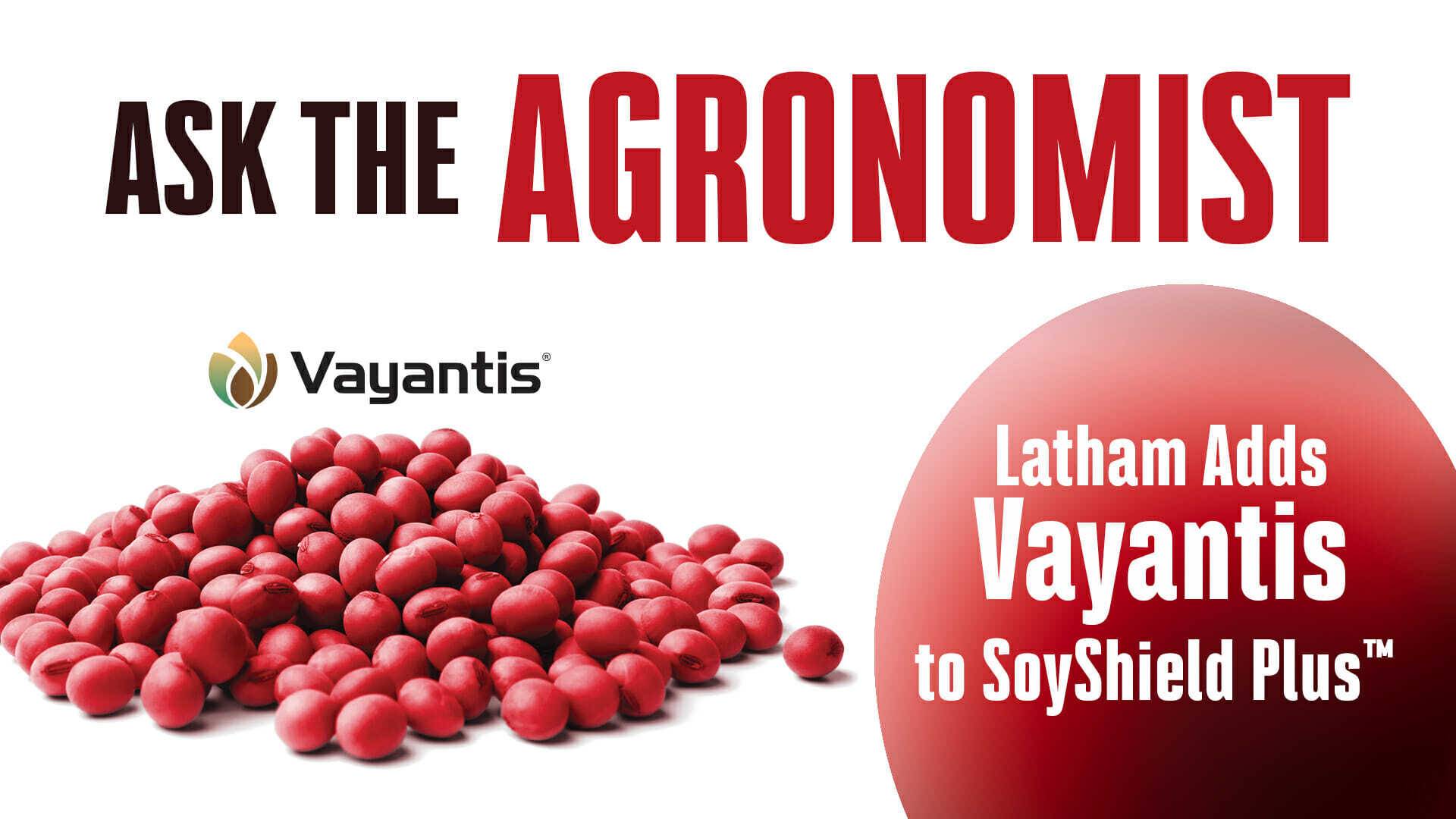
Latham Seeds adds new Vayantis® to SoyShield® Plus! On this week’s #AsktheAgronomist, Phil Long, precision agronomy advisor, and Matt Moore, soybean product manager, discuss soybean treatments and how the addition of Vayantis is really exciting going into the 2022 planting season! Learn more about Vayantis fungicide.
Advertisements and magazine headlines tout the opportunity to enhance yields through plant protection and the use of biologicals or naturals, but does it pay to use these products? Our research once again confirms that seed treatments are an investment that provides a return.
Latham Hi‑Tech Seeds expanded its 2021 research trials to include seed treatments and biologicals. We wanted to determine whether the performance of the seed products we offer could be improved by seed protection and biologicals. Soybeans treated with Latham brand SoyShield® Plus had a 2.38-bushel yield advantage over untreated seed and a 1.2-bushel advantage over other leading fungicide and insecticide (F&I) seed treatments.
Latham Seeds’ signature SoyShield Plus seed treatment is effective in protecting seedlings from early plant diseases for approximately 30 days, which is a longer window of protection than most seed treatments offered. SoyShield Plus includes an exclusive fungicide combination that provides excellent protection against seed and soil borne diseases including: Pythium, Phytophthora, Fusarium and Rhizoctonia.
The addition of Saltro to SoyShield Plus increased protection against Sudden Death Syndrome (SDS) and soybean cyst nematodes. In fact, this treatment combination produced the highest yield in research trials across seven locations in multiple states. The SoyShield Plus / Saltro treatment had a 5.25-bushel yield advantage over untreated seed and provides Best-in-Class protection across environments. Soybean cyst nematodes are one of the largest yield-robbing pests and SDS is a growing concern for more areas, so it makes sense to order the Latham SoyShield+ / Saltro combination for 2022.
Inoculants with biologicals continue to show increased yields over inoculants alone. Latham SoyShield Plus with Talc USA’s MicroSurge had a 2.83-bushel per acre advantage over untreated seed and more than one bushel per acre advantage over other premium inoculants.
Corn trials conducted at six locations in multiple states also showed significant yield increases over the base seed treatments with various applications of seed applied or planter box treatments. Talc USA’s MicroSurge dry corn inoculant is easy to apply with talc. With two strains of Azospirillum, MicroSurge produced a 4.7-bushel yield advantage over the base seed treatment.
Encompass also was tested as a planter box treatment. It contains nitrogen-fixing microbials and helps mobilize phosphorous in the soils for easier nutrient uptake into the plant. Encompass showed an 8.5-bushel increase over base treatments in our 2021 trials. Now that’s a return on investment!
Contact your local Latham rep for more information about these and other products to protect your seeds and seedlings, so you can improve yields in your fields in 2022.

 Plant nutrition is key to maximizing the yield potential of today’s plant genetics. To meet the intensive nutritional demands of these plants, there must be a higher fidelity to soil condition and nutrition. Removing nutrients removes nutrition from the soil reserves.