
Latham Hi-Tech Seeds

(641) 692-3258

  • Home
  • Products
    • Corn
    • Soybeans
    • Alfalfa
    • Corn Silage
    • Seed Guide
  • Performance
  • Find a Rep
  • Media
    • Blog
    • News
    • Videos
    • Podcasts
    • TECHTalk
  • About Us
    • Company History
    • Our Mission
    • Careers
    • Become a Rep
    • Sowing Seeds of Hope
  • Contact Us
  • Latham Hi‑Tech Seeds

    Weed Management, PART II: The Hows and Whys of Herbicide Resistance

    Feature Tech Tuesday 01

    Tech Tuesday Header-01

    This is the second article in a three-part series, focusing on how to deal with herbicide-resistant weeds. Didn’t catch the first article in the series? Click here to read Weed Management, PART I: Learn from the Past, Look to the Future.

    Plants that develop resistance to herbicides are simply following the age-old process of “survival of the fittest.” This process acts on phenotypes, or the plants in this case, but the unit of inheritance is the gene.

    Different versions of the same gene are called alleles. Individuals usually have two different alleles for each gene. An example of this in humans is blood type, where each parent contributes a different allele to the offspring.

    Therefore, herbicide resistance can be defined as “an increase in frequency of resistant alleles in a plant population after exposure to herbicide selection.” There are three main sources of these resistant alleles: new mutations, immigration and standing genetic variation.

    New mutations are rare and impossible to predict, so there’s really nothing we can do about those. Immigration occurs when a population is found in new territory, such as when Palmer Amaranth invades an area. Immigration also is considered to be fairly rare unless it’s introduced through an outside source.

    The most common source of resistant alleles is from standing genetic variation. We’ve all seen studies of how this can happen. Herbicide is sprayed on a field where there is a high concentration of weeds. Most of those weeds die but a few survive. If not controlled with another method or herbicide, those few surviving weeds will produce seeds that will germinate the following year. If the same herbicide is used that next year, the population can increase dramatically. After multiple years of this practice, a tremendous weed problem exists.

    When waterhemp became a serious problem in Illinois, Dr. Aaron Hager and his colleagues conducted a multi-year study on what factors contributed most to the occurrence of herbicide-resistant weeds. They took into consideration a wide range of factors within four main categories: Management, Weeds Present, Soil Properties and Landscape.

    Three major findings resulted from the University of Illinois study:

    • How close you are to a neighbor who has resistant weeds is not a good predictor of when or if you would have them.
    • Overall management factors have the most impact on preventing weed resistance: How many different herbicides are used; How often pre-emergence herbicides are used; Crop rotation, etc.
    • Herbicide rotation is important, but mixing herbicides with different sites of action makes weed resistance 83 times less likely to occur.

    On the first TECH Tuesday of next month, I’ll further discuss the concept of managing weed resistance by rotating herbicide traits and mixing different sites of action.




    Webspec Admin

    August 29, 2017
    Tech Tuesday, Weed Control
  • Latham Hi‑Tech Seeds

    Reduce Risk by Planting a Portfolio of Products

    Feature Tech Tuesday 01

    Tech Tuesday Header-01

    Mother Nature threw us some real challenges during the 2017 growing season. While the conditions vary by region – and even within a state — there is one thing we all have in common and that’s “risk management.” We can spread our risk by planting three different Latham® hybrids of different maturities. Planting 1/3 of our acres to an early hybrid, 1/3 to your typical relative maturity (RM) and 1/3 to a little later maturity will help us improve overall yield!

    The value in working with a financial planner comes from diversifying one’s portfolio and reducing financial risk while maximizing returns. For the same reasons, it’s advantageous for corn growers to work with a knowledgeable seed representative to create a diversified hybrid seed corn portfolio.

    No financial planner worth his weight is going to advise clients to invest solely in mutual funds or high-risk stocks. That’s also why farmers shouldn’t choose their seed portfolio based only on top-yielding varieties in F.I.R.S.T. Trials. Choosing seed based on growing conditions in one location during one year is like picking your stocks based on only last year’s performance without considering factors that might cause market shifts.

    The stakes are too high to not manage risk. Latham Seeds’ Seed-2-Soil® program helps corn growers determine which hybrids will help minimize risk while maximizing returns.

    Planting a “Portfolio” of Corn Hybrids has Multiple Benefits: 

    1. HEDGE RISK WITH DIFFERENT GENETICS.
    As an independent seed supplier, Latham provides you with more seed product choices — more genetic options — than
    companies that rely on a single supplier for their genetics.

    2. PLANT HYBRIDS WITH VARYING MATURITIES.
    Different flowering dates help reduce yield loss due to heat during pollination. Some years hybrids don’t want to dry down
    and the earlier products can really pay off while the exact opposite happens in other years.

    3. BALANCING OFFENSIVE AND DEFENSIVE CHARACTERISTICS.
    Each year presents its own set of challenges: weed pressure, insect pressure, heat stress, moisture stress, emergence issues, disease pressure, overall yield. That’s why planting both “offensive” and “defensive” products is advantageous.

    Webspec Admin

    August 22, 2017
    Corn, Crop, Tech Tuesday
  • Latham Hi‑Tech Seeds

    Weed Management, PART I: Learn from the Past, Look to the Future

    Feature Tech Tuesday 01

    Tech Tuesday Header-01

    My college professor in Principles of Plant Physiology said it quite simply, “A weed is a plant that is out of place.” I never thought to ask him just where he felt was the proper place for Waterhemp… or Kochia… or Palmer Amaranth.

    Weeds have been a problem since the dawn of mankind. After Adam sinned in the Garden of Eden, God “cursed the ground” and told him that “thorns and thistles would be produced” because of what he did. (Genesis 3: 17-19)

    Not only were thorns and thistles (i.e. weeds) produced, but they multiply rapidly. Did you know that Waterhemp produces as many as 1.5 times more seeds than most other pigweed species? Waterhemp plants generally produce about 250,000 seeds per plant. Some Waterhemp plants can produce 1 million or more seeds under optimal conditions in noncompetitive environments.

    It’s no wonder weed management is such a challenge! During my presentation at the Latham® Dealer Kickoff meeting last month in Branson, I mentioned that a 90% weed kill rate used to be acceptable. Weed scientists today, however, say we should shoot for a 100% weed kill to prevent resistance.

    Resistance to herbicides results when weeds get sprayed but live through the application. This might happen because of improper rates, improper timing or just due to natural selection. That’s why we must learn from the past to ensure success in the future.

    Herbicides were introduced in the U.S. after WWII with the marketing of 2,4-D. Atrazine was first registered for use in 1959, followed by a succession of products designed to control weeds.

    Farmers in the 1970s and ‘80s didn’t worry about weeds becoming resistant to herbicides being used because all they had to do was visit their local chemical retailer where they’d get the newest and greatest product to try.

    The first herbicide in the U.S. that weeds developed resistance to was Atrazine in the early 70s. The alarm, however, didn’t really get sounded until resistance to Pursuit® and Scepter® occurred. These ALS herbicides were introduced in the mid-80s and weed resistance showed up very quickly.

    When Roundup® (glyphosate)-tolerant soybeans were introduced in 1996, farmers believed they finally had the ultimate answer to weed control. Not only did this new system work, but it was very simple to use.

    Roundup made good weed managers out of bad. Weeds too big before the field was sprayed? No problem… just add a little more! Don’t bother with any of those old herbicides… all you need is Roundup!

    Sound familiar? We were assured weeds would NEVER develop resistance to glyphosate, but it happened. To make matters worse, the “endless supply” of new herbicide products stopped. The last new herbicide group of HPPD inhibitors was discovered in 1986.

    There are 29 groups of herbicides, each with its own unique site of action, according to the Weed Science Society of America (WSSA). At the latest count, weeds have developed resistance to all but three of them.

    It’s been well documented that weed resistance is a growing problem. In next month’s article, I’ll talk in more detail how weeds develop resistance to herbicides. The last article in this series will cover what (if anything) can be done.

    This is the first article in a three-part series, focusing on how to deal with herbicide-resistant weeds. Click here to read PART II: The Hows and Whys of Herbicide Resistance.

    Webspec Admin

    August 8, 2017
    Tech Tuesday, Weed Control
  • Latham Hi‑Tech Seeds

    August is Key Time to Take Field Notes

    Feature Tech Tuesday 01


    Tech Tuesday Header-01

    August is a great month for walking field trials and plots. In fact, I believe August is one of the two most important times to take notes about your growing crops.

    Shortly after emergence, you can see how the early growth and vigor of the young plants react under current growing conditions and by different soil types. Then in mid-August you can really start separating maturities on the hybrids. Much information can be gained by looking at hybrids now and noting stalk and root strength, plant and ear height, as well as kernel development.

    Last month we had a chance to get together with Latham dealers from six states at our annual sales meeting, and it was exciting to hearhow well their Latham® brand products have been
    performing! During that meeting, we let everyone in on a little secret… the new 2018 Seed Guide lists some limited-release products that are identified as “LR” instead of “LH.” Many of these LR products have been planted in our regional show plots, so take a look at them in a field near you!

    Regional Seed-2-Soil® Technology Tours will be held in August and September throughout Latham Hi‑Tech Seeds’ marketing footprint. There will be in-depth training on new and existing corn and soybean varieties along with agronomic information on the newest industry traits and herbicide recommendations to reduce chances of weed resistance.

    Each plot will showcase products that have been selected to perform best in that geography, which is another advantage of working with our independent and regional company. By attending one or more of these tours, you’ll gain more information about the diversity of our lineup. Latham has so many options for growers to choose, ranging from conventional corn to hybrids with SmartStax® technology and from Genuity® Roundup Ready 2 Yield® to Roundup Ready 2 Xtend® and LibertyLink® soybeans.

    For exact locations locations, directions, and other information about our field days visit the Latham Facebook Page or call 1.877.GO.LATHAM!

    Webspec Admin

    August 1, 2017
    Soil, Tech Tuesday
  • Latham Hi‑Tech Seeds

    Win-Win: Precision Ag Technology Increases Farm Efficiency and Yield

    Feature Tech Tuesday 01

    Tech Tuesday Header-01

    Written by: Phil Long

    Most U.S. farmers use some form of precision ag technology, and the majority of these farmers are looking for ways to use their data more efficiently. Organizing data and offering suggestions on how farmers can increase yield on a field-by-field basis is where Seed-2-Soil® services comes into play.

    Technology in the tractor is one part of precision ag. Data that is recorded by the combine, planter or sprayer monitor requires another level of understanding. Here at Latham Hi‑Tech Seeds, we’re working to help farmers find the intersection between crop production and precision ag.

    We believe this technology is a huge stepping stone in terms of efficiency and reaching that next level of production on your fields. Understanding the variability on each of your farms is Step One.

    Our FieldXFieldSM process focuses on placing hybrids/varieties according to yield-limiting factors combined with data from your yield monitor. We can define smaller “management or productivity zones” that will allow you to put Variable Rate (VR) technology to use on your farm.

    Combining data such as soil samples, satellite or drone imagery, disease and insect scouting reports, and planter and sprayer applications gives you a much clearer picture of each field. Armed with this additional data, you can monitor and manage that field throughout the season.

    There are many ways to incorporate precision ag technology on your farm. While not everyone will have every technology, using a few tools provides valuable information. For example, variable rate (VR) hybrid planting can provide a $20/acre benefit. We’re testing this technology on a farm in Northwest Iowa and are eager to see the results this fall.

    Although most farmers don’t yet have the capability for VR hybrid planting, many have the ability to apply VR fertilizers. Studies show a $5-8/acre benefit from decreasing overapplication and underapplication to areas within a field. If your fields have a large amount of variability, you may reap even more revenue from VR technologies.

    Variable rate seeding and applications are just one piece of the precision ag pie. We can work with you to make your data work for you and your operation. It’s our goal to work with farmers and add value regardless of where they are along the technology adoption spectrum.

    One simple, but especially important detail, is naming your fields consistently from year to year. Also make sure your monitors and GPS receivers are communicating with one other. You may see a yield number on your monitor, but that doesn’t mean the GPS location and other information is running through your combine. The data coming out is only as good as the information going in! Calibration is key to getting useful results.

    I’m looking forward to working with Latham dealers and customers to help bring more value from the combined use of seed and precision ag technologies. Feel free to contact me at 1.877.GO.LATHAM (1.877.465.2842) if you’d like to visit about how precision ag can benefit your operation!

    Webspec Admin

    July 11, 2017
    Agronomics, Precision Ag, Tech Tuesday
  • Latham Hi‑Tech Seeds

    Crop Scouting Can Lead to Seed Selection in 2018

    Feature Tech Tuesday 01

    Tech Tuesday Header-01

    While you may not get paid directly to walk your fields, I can say without a doubt that it will pay for itself. Mid-season crop scouting is important for two reasons: (1) different weed, insect and disease pressures become evident this time of year; and (2) summer months are a crucial time to decide which traits to implement when buying seed for the next crop year.

    By walking fields, you can catch any type of stress early that enhances the likelihood of opportunistic insects such as corn leaf aphids, European corn borer and armyworms. High humidity and heavy dew creates ideal conditions for diseases like we saw last season with Northern Corn Leaf Blight (NCLB).

    Black cutworm could be a larger problem this year as they’re known to cause more damage in fields where corn is planted later, and quite a few acres were replanted due to heavy spring rains and ponding. Fields of higher risk also include those that are poorly drained and low-lying; those next to areas of natural vegetation; and those that are weedy or have reduced tillage.

    The wide variance in planting dates also may cause rootworm beetles to move between fields. A late-maturing corn field may attract large numbers of beetles if neighboring corn stopped producing pollen, for example. Rootworm beetles may also move into corn and/or soybean fields that have an abundance of pollen-producing weeds, including volunteer corn, ragweed or foxtails.

    Controlling weeds will help control corn rootworm populations, as well as other insects like Two-spotted Spider Mites and aphids. Mites and aphids begin feeding along field edges, especially in weedy areas, before eventually developing into a field-wide infestation.

    Noting weed infestations can provide you with an opportunity to discuss this with your Latham Dealer and allow them give you to suggestions to mix up modes of action when selecting next year’s seed products. Latham’s Regional Field Days display the trait options available for 2018 planting. Make plans now to attend one of these regional plot days and discover more about the options Latham has to offer next year! Stay tuned for updated information about field day dates and locations in the coming editions of TECHtuesday.

    Webspec Admin

    June 13, 2017
    Corn, Insects, Tech Tuesday
  • Latham Hi‑Tech Seeds

    Plant into the Best Seedbed Possible

    Feature Tech Tuesday 01

    Tech Tuesday Header-01

    One of the things I like most about spring is you get to enjoy all four seasons in just a few days. In mid-April, we had snow flurries with an overnight low of 16 on a Sunday. A warm wind brought temperatures into the 70s by mid-week, and that weekend rain fell. That’s why I always tell people to plant by the conditions, not the date on the calendar!

    Soil conditions are far more important than planting date. Rather than mudding in your seed to say that it was planted early, you’ll have a better chance of achieving maximum yield by planting into properly tilled soil. Working soils that are too wet leads to yield loss and more problems during the growing season from soil compaction. Restricted root development, nutrient deficiency and reduced infiltration rate are among the top 10 reasons to avoid soil compaction.

    Adapted full-season corn hybrids can compensate somewhat for later plantings. As planting is delayed, hybrids shorten the time between planting and silking. Research shows that development and final yield of these hybrids will not be largely affected unless frost occurs especially early in the fall. That’s why we recommend waiting until May 15 in North Dakota and May 25 in Iowa before switching to an earlier maturing corn hybrid or switching to soybeans.

    Patience is also key when planting soybeans. Planting into a field that is too wet will reduce emergence and plant population, which most often leads to reduced yield. Another cause of reduced yield is weed pressure. Make sure the sprayer is right behind the planters. Otherwise, soybeans might poke through the ground before your pre-emerge was applied.

    We get one chance every spring to create the best seedbed possible for planting, so let’s take advantage of it! This may require a different piece of tillage equipment than originally planned, but taking the time to make the equipment switch will pay big dividends by resulting in better seed-to-soil contact that enhances germination and early growth.

    Webspec Admin

    June 6, 2017
    Corn, Crop, Soil, Soybeans, Tech Tuesday
  • Latham Hi‑Tech Seeds

    It Pays to Watch Crops Pop Up in Rows

    Feature Tech Tuesday 01

    Tech Tuesday Header-01

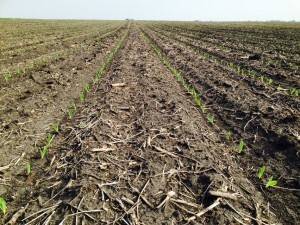
    Plant15 row your cornThere are more than 1,000 variables that can affect crop development throughout the growing season. Soil conditions, planter settings, seed spacing and seed planting depth are of utmost importance at the time the crop goes into the ground.

    Frequent rain showers delayed planting longer than farmers across the Upper Midwest would like. Some are feeling additional pressure to get the seed in the ground as fast as possible. Keep in mind that haste makes waste! Take the time to:

    • Verify correct depth and kernel spacing at planting time.
    • Check germination and early seedling growth for problems.
    • Assess early emergence scores for adequate final stand numbers if soil conditions weren’t ideal.

    Also keep in mind that spring rains might have created crusting issues in some of the earlier planted fields, especially in fields without residue. To help break up the crust and improve seedling emergence, many farmers will use a rotary hoe.

    If you decide to till the soil, wait until soils have dried to avoid exacerbating the situation with soil compaction.  Use a quick field test to check soil moisture.

    Starting with clean fields, and keeping the fields clean, is most important. A pre-plant or pre-emerge herbicide application:

    • Aids in controlling resistant or tolerant weeds.
    • Helps keep the field clean all season long.
    • Helps your crops reach their maximum yield potential as they’re not competing with weeds for water, sunlight and nutrients.

    Once plants have emerged, it’s time to:

    • Identify any early season stresses on young plants.
    • Look at plants’ visual appearance for nitrogen or other nutrient deficiencies.
    • Look for weed escapes. Make a plan for a season long weed-free field!

    Watch for additional agronomic tips and tricks to be shared each Tuesday & Thursday during the growing season on TheFieldPosition.com

    Webspec Admin

    May 23, 2017
    Crop, Soil, Tech Tuesday
  • Latham Hi‑Tech Seeds

    More Updates to XtendiMax® Herbicide Label

    Feature Tech Tuesday 01

    Tech Tuesday Header-01

    Last November the U.S. EPA approved the use of XtendiMax® with VaporGrip® technology on Roundup Ready 2 Xtend® soybeans. It didn’t take long for competitors and opponents of the Xtend technology to point out the limitations, but many of their talking points are now moot.

    The U.S. EPA, as promised, has allowed a number of significant changes to the XtendiMax herbicide label. First and foremost, Roundup PowerMAX® and WeatherMAX® formulations have been added. In addition, 34 (and counting) other herbicides are approved for tank-mixing with XtendiMax! There are now more than 110 approved adjuvants that may be added, plus the number of approved nozzles had grown to 26 as of early April.

    For farmers who intend to use XtendiMax herbicide, visit their website often to stay abreast of the latest developments.

    A section under the TANK MIX tab titled “REQUIRED DRIFT REDUCING ADJUVANTS (DRA’s)” lists products that minimize particle drift if used in combination with certain herbicides and other adjuvants.  Products needing DRA’s are clearly spelled out in the herbicide and adjuvant sections.

    Screenshot (145)

    Visit the XtendiMax website for the latest developments: http://www.xtendimaxapplicationrequirements.com

    Another very critical section of the website is “APPLICATION REQUIREMENTS.”  Here, farmers can learn what is needed to minimize drift, volatilization and off-target applications of this important herbicide technology.

    I’m excited to see so many early-adopters planning to use both Roundup Ready 2 Xtend soybeans, and the subsequent use of the XtendiMax with VaporGrip technology herbicide to help control tough-to-kill weeds in 2017.  At Latham Hi‑Tech Seeds, we believe this will be just one of the many new and exciting soybean technologies that farmers will need to combat resistant weeds in the future.

    Webspec Admin

    May 16, 2017
    Soybeans, Tech Tuesday
  • Latham Hi‑Tech Seeds

    TIPS FOR INTERPRETING CORN SILAGE DATA

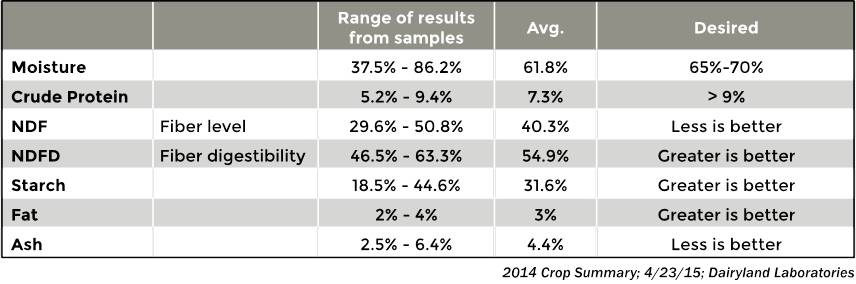
    Now that most farmers have finished with harvest and fall tillage, it’s time to head inside and finalize plans for next season’s crop! Similar to corn and soybeans, YIELD IN THE FIELD IS IMPORTANT FOR CORN SILAGE. There are some additional metrics that help us compare corn silage varieties.

    Corn silage reports can get complicated, so I’ll try to simplify a few major elements:

    • Milk 2006 – an evaluation system that helps provide an energy score from a combination of Fat, Ash, Neutral Detergent Fiber (NDF), Neutral Detergent Fiber Digestibility (NDFD), Protein and Starch.
    • Milk/ Ton – The amount of milk or animal response is predicted per ton of corn silage, which directly reflects the quality of the corn silage. Higher numbers indicate better corn silage.
    • Milk / Acre – The amount of milk is predicted per acre of corn silage. It’s a combination of dry matter tons harvested and the quality of the corn silage. Higher numbers are better.

    Our goal is to provide quality information to help guide you, and your team of agronomy and nutrition professionals to help achieve best return on investment including:

    • Excellent Tonnage comes from top yields with top quality.
    • Excellent Quality is a result of hybrid selection and management. Corn Silage management practices are the most vital factor to achieving peak quality, from planting to harvest.
    • Prime harvest moisture of 65% to 70% whole-plant moisture helps ensure proper packing and fermentation, which helps reduce free oxygen and potential for mold and mycotoxin growth.

    Feel free to contact me if you need help discerning starch types or selecting the best trait package for each field. Top performance is a team effort at Latham Hi‑Tech Seeds!

    112415 Graphic copy

    Webspec Admin

    November 25, 2015
    Agronomics, Corn Silage, Crop, Tech Tuesday
Previous Page
1 … 12 13 14 15
Next Page

Latham Hi‑Tech Seeds

131 180th Street | Alexander, IA 50420

(641) 692-3258

SIGNUP FOR OUR NEWSLETTER
  • Contact
  • Legal
  • Dealer Center
  • Seedware Login
  • Latham Gear

© 2025 Latham Hi‑Tech Seeds. All rights reserved. | Iowa Web Design by Webspec | Privacy Policy

Latham® Hi-Tech Seeds is a trademark of M.S. Technologies, L.L.C., 103 Avenue D, West Point, IA 52656.