Latham Hi-Tech Seeds

(641) 692-3258

  • Home
  • Products
    • Corn
    • Soybeans
    • Alfalfa
    • Corn Silage
    • Seed Guide
  • Performance
  • Find a Rep
  • Media
    • Blog
    • News
    • Videos
    • Podcasts
    • TECHTalk
  • About Us
    • Company History
    • Our Mission
    • Careers
    • Become a Rep
    • Sowing Seeds of Hope
  • Contact Us
  • Latham Hi‑Tech Seeds

    Latham’s Jerry Broders Retires After 46 Years in the Seed Industry

    Jerry 1 Resized

    Jerry Broders recently celebrated his 42nd wedding anniversary and his retirement on the same day. After 46 years in the seed industry, Jerry says it was time to start doing more fishing and golfing — and spending more time with family and friends.

    At his recent retirement party, he joked about how he felt to hang up his career: “The only person who can tell me what to do now is my wife,” he says with a laugh.

    Jerry grew up on a cattle, hog and grain farm 30 miles from DeWitt, Iowa. He helped his dad farm until the early 1980s, when the farm crisis forced foreclosures at unprecedented and devasting rates. He went to work for Pioneer at an animal research station, evaluating silage and hybrids, and stayed with the company nearly 20 years in various capacities. His last role was with the optimal quality grains group at a time when Dupont was buying out Pioneer. His territory was “I-35 to the Pacific Ocean,” Jerry says.

    Crisscrossing half the country every week soon got old, and after his dad passed away, Jerry decided to move back to Iowa to be closer to his mom. He took a job with Kruger Seed, where he worked until 2013. That’s when he got a call from Tom Lizer, an old friend and former Kruger colleague who was the general manager at Latham Seeds.

    Jerry says it was because of their history and the respect he had for Tom that he agreed to join Latham’s sales team. But there was one caveat.

    “I told him I’d give him 10 years and then I wanted to retire,” Jerry says. “I ended up staying 10 years and 8 months.”

    Though much of his career was spent on the corporate side of the industry, Jerry says he appreciated the change in pace at Latham. He enjoyed working for a family-owned company that isn’t beholden to one brand and is more interested in solving problems.

    Jerry 1 Resized
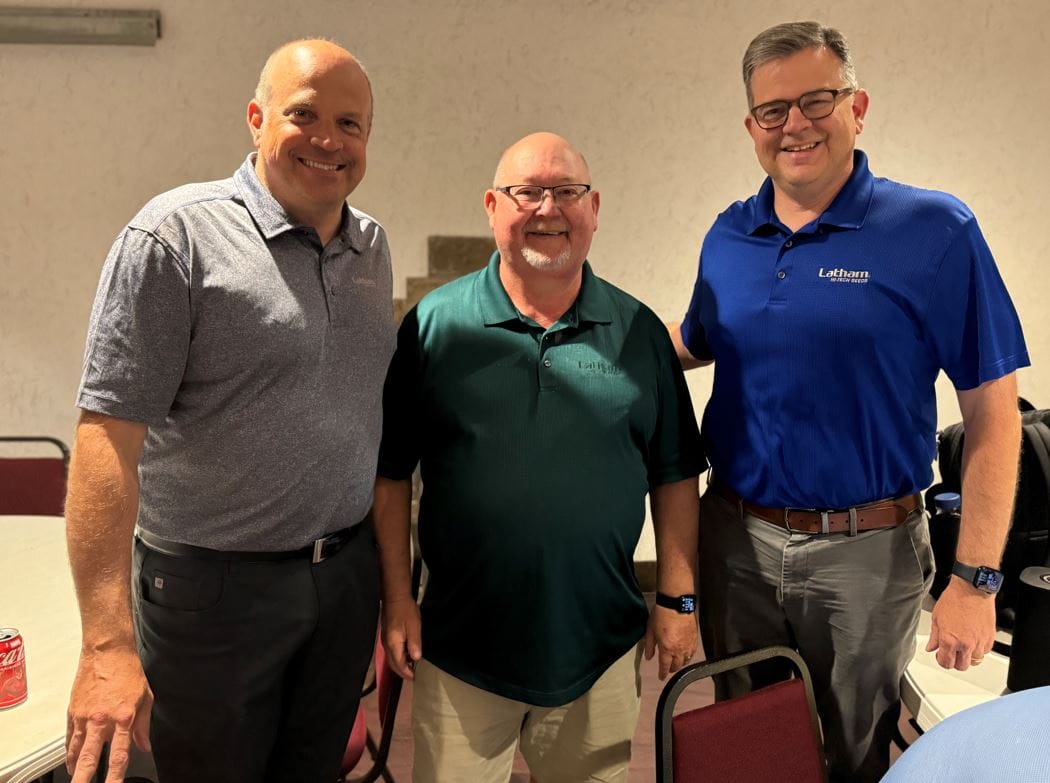
    Chris Latham, Jerry Broders and John Latham

    “I have always liked being able to provide answers and solutions,” he says. “It’s important to be able to help farmers make good decisions that are best for their own circumstances.”

    Jerry says he will most miss working with dealers and customers — some of whom have been with him for 25 years and followed him to Latham Seeds.

    Jerry 2 Resized
    Jerry Broder’s Retirement Party

    Seed Bag Resized

    “They’re like family to me, just really good people,” he says. “I’ve always treated people honestly and fairly, because when you get down to it, the only thing I can stand on is my reputation. I’m going to miss the relationships I’ve built.”

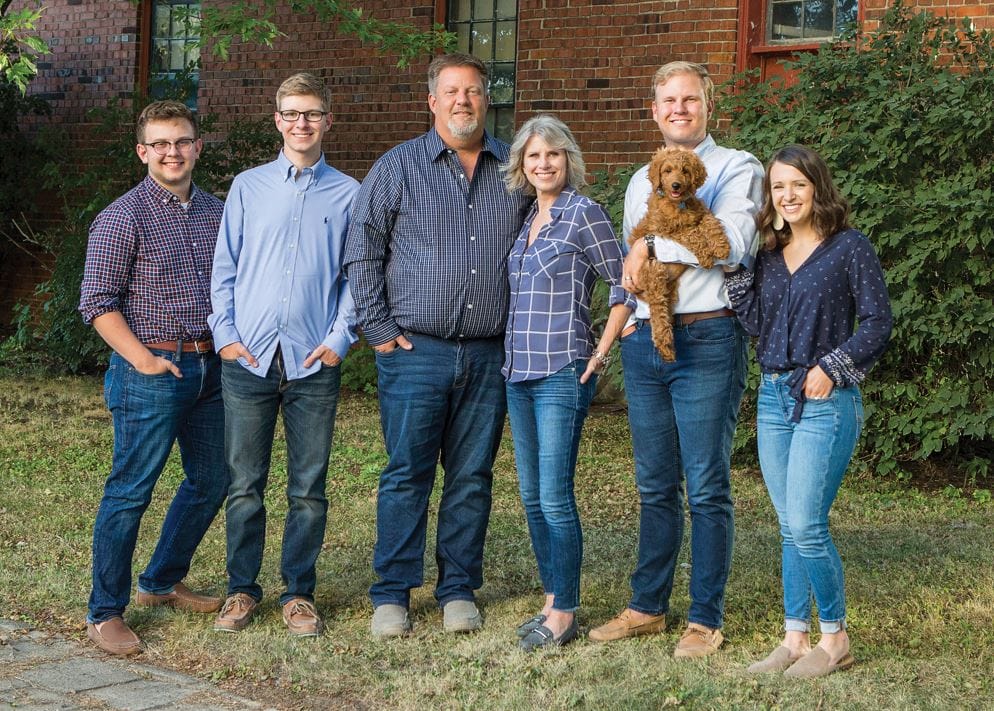
    Jerry and his wife, Kimberly, live in DeWitt. They have two grown sons, Zach and Matt. Here is one of their family’s favorite appetizers: Dried Beef Dip!

    Shannon Latham

    June 14, 2024
    Appetizers, General, Industry News, Recipes
  • Latham Hi‑Tech Seeds

    A passion for ag brought him — with new skills — back to the family dairy farm

    Dustin 2

    Dustin Ellis grew up on his family dairy farm in Waumandee, WI. After his high school graduation, he knew he’d come back to the family farm. Dustin’s experience in FFA, including receiving third place at the National FFA Convention for his John Deere 4320 restoration project, helped make the ag industry his life’s passion.

    Dustin 2

    Dustin went to Wisconsin Indianhead Technical College- New Richmond to study Ag Diesel Mechanics.

    “I chose this major because I enjoyed fixing things,” he says. “I wanted to expand my skill set and bring that back to my family farm.”

    Dustin met his wife, Ashley, in FFA during high school, where they shared a passion for agriculture. They now have two daughters, Finley and Nola. Ashley works from home, takes care of the bookkeeping and helps on the farm.

    Farming 3


    After college, Dustin returned home to his family dairy farm full-time and works with his parents and brother. They milk in a double 10 parallel parlor, and grow soybeans, alfalfa, corn and rye. They also run a custom chopping operation.

    Dustin says he wanted to work with an independent, family-owned seed company. He became interested in Latham for its strong corn and soybean lineup and was excited to test some of the new products firsthand through seed trials.

    Farming 2

    “My favorite part about working with Latham Seeds is the knowledgeable staff who are always willing to help find the best products for our farm and my customers,” Dusting says.

    Dustin is involved in the community through his county Farm Bureau, where he is on the Board of Directors and was the Young Farmer Chair. When he’s not farming, he enjoys spending time with Ashley and his daughters, wakeboarding and hunting.

    Today he shares with his his families favorite recipe Biscuits and Gravy!

    Maycee Wilkie

    June 7, 2024
    Beef, Breads/Breakfast, General, Recipes
  • Latham Hi‑Tech Seeds

    Latham Seeds Welcomes Jacob Vallery as District Sales Manager in Western Iowa

    Family Resized

    It was a “letter to his future self” for a high school writing assignment that gives Jacob Vallery a new perspective about life goals. In that letter, Jacob wrote that in 10 years, he wanted to be married, have a child (or one on the way) and be working as a sales manager for a respected seed company.

    “Nobody can ever say writing down your goals doesn’t do anything,” Jacob says with a laugh.

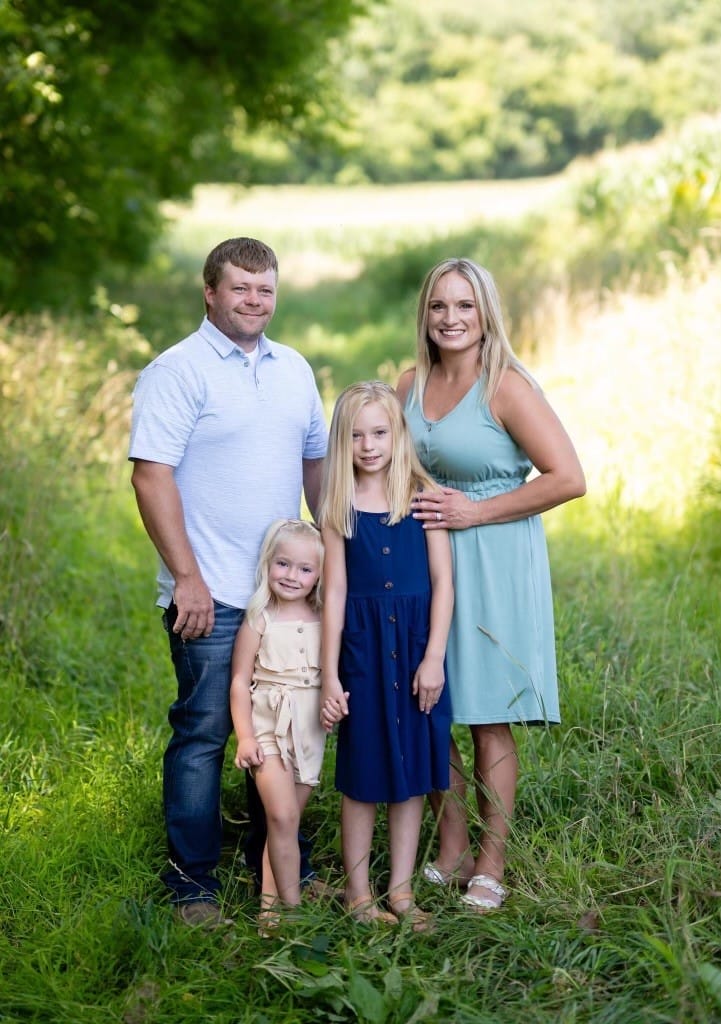
    That’s because Jacob is not only married to college sweetheart Kaylee, but they are also expecting their first child in September. And, as it turns out, Jacob is the newest District Sales Manager for Latham Seeds.

    Family 1
    Jacob and Kaylee with their dogs Kinze and Yue

    Baby Resized

    “We’re thrilled that Jacob has joined our team, especially given his family’s long history in farming,” says Latham Sales Manager Amy Rohe. “He’s already impressed us with his energy, knowledge and desire to serve our Western Iowa territory.”

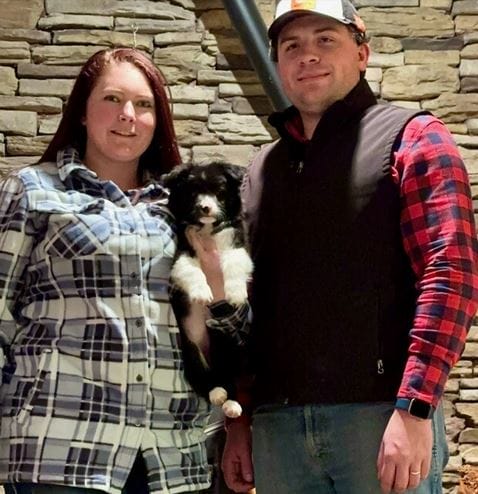
    Jacob’s territory also extends to Southeast Nebraska, where he lives in the town of Douglas. Jacob and Kaylee moved in the day after they were married in October 2022. Kaylee owns a dog grooming salon and works at the local bank just few miles from their house.

    Staying close to home was always the plan for Jacob. His parents live in the house that his great- great- great-grandfather built in 1876. That’s the farm where Jacob was raised, approximately six miles west of Plattsmouth, Nebraska.

    “We were all corn and soybeans growing up, so I had heard of Latham Seeds,” he says. “At one point, my dad and my grandfather planted some Latham soybeans.”

    While in high school, to help save for college, Jacob ran a successful Golden Harvest dealership. Later he interned with LG Seeds and job shadowed DSMs at that company. After graduating from the University of Nebraska with a degree in integrated crop management and agronomy, Jacob returned home to help his dad on the farm.

    A call about a sales job with Latham Seeds made him remember his letter to his future self.

    “I realized that I have a lot of the same values as the Latham family,” Jacob says. “I’m looking forward to building relationships with current dealers and bringing new dealers onboard. I really hope to make a difference with dealers in my territory.”

    He adds: “To work for a company where the owner is willing to take time out of his day to meet you and talk to you . . . that matters a lot. John takes time for every dealer and customer. It says a lot about how he cares about them, and I admire that very much.”

    Shannon Latham

    May 24, 2024
    Desserts, Food & Family, General, Latham News, Recipes
  • Latham Hi‑Tech Seeds

    Crops and Cattle Are This Farm Family’s Business

    Family Photo

    As a kid in 4-H, Aaron Steenhoek got hooked on beef. Through 4-H projects, he kept pens of cattle and sold quarters, halves and wholes direct to consumers. He tracked how the cattle grew and how they gained. He remembers a local locker that sent a USDA inspector to show him how beef was graded and measured.

    “It was really interesting to me,” Aaron says. “Cattle have always been in my family, but I really got interested in the meat side of things.”

    Aaron Cattle

    So much so that he and his wife, Cory, decided six years ago to grow that side of their own family business. The couple live on the Steenhoek family’s Iowa Century Farm in Pella, where Aaron and his dad run a cow-calf operation. They also grow corn and soybeans, as well as summer forage, rye and alfalfa as feed for their herd.

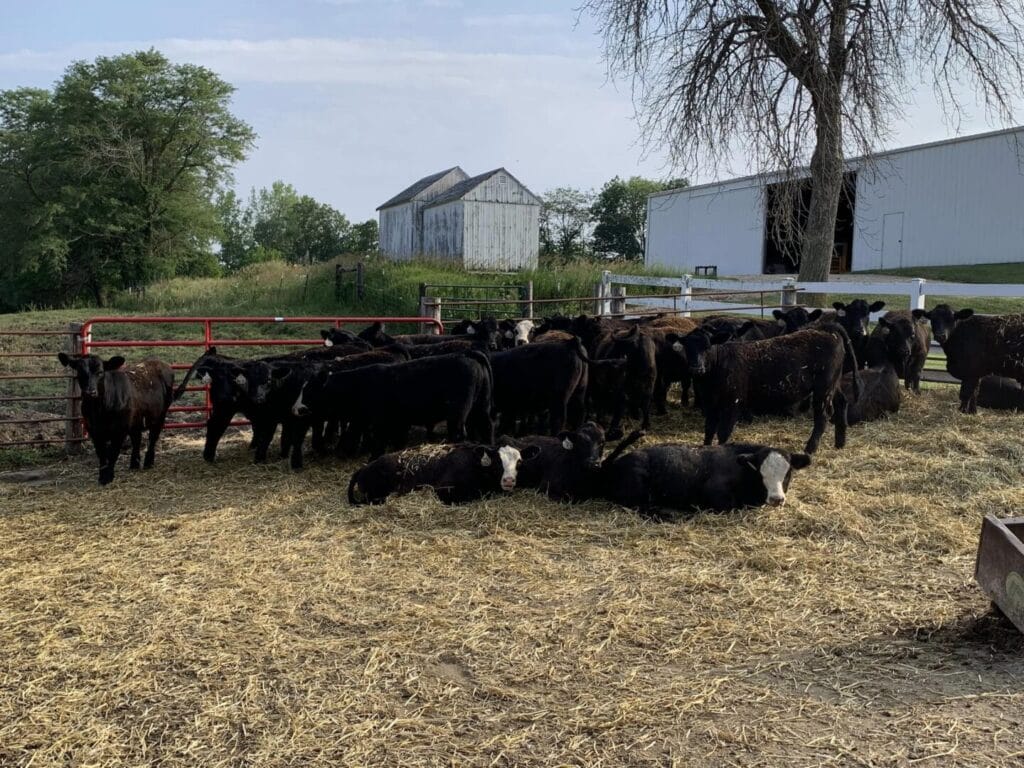
    Now, Aaron and Cory also have a feedlot at Black Oak Acres. Aaron says they buy four or five groups throughout the year – feeding roughly 150 to 160 head annually —  in order to keep a constant flow of cattle on the farm. He’s particular about only buying cattle private treaty, or directly from a small number of trusted producers.

    “They don’t go through a sale barn or auction. We go and pick them up straight from the farm,” Aaron says. “It keeps the cattle from being exposed to other cattle, which keeps them healthier.”

    Aaron, who is also a regional sales manager for Latham Seeds, says he and Cory decided a few years ago to apply for a retail license to sell their farm-raised beef direct to consumers. Until then, they had been relying on local outlets to retail it for them. Now they have an inspected space right on the farm where they can sell cuts and bundles themselves.

    Aaron says the retail business has been nice because people can fill in with particular cuts even when Black Oak Acres might be a month or two out on product. Customers can buy in smaller amounts, too.

    “But what’s really great is that people know where their beef is coming from and how it’s been treated,” he says. “We never use growth hormones or antibiotics.”

    The Steenhoeks are careful stewards of the land — both for quality nutrition for their animals and conservation practices to protect it for generations to come.

    “Stewarding the land and the livestock is important to me,” Aaron says. “We really enjoying educating people about livestock and cattle in particular. There’s a lot of misconceptions and misinformation out there, because people are more removed from the farm life in general these days.”

    P Cattle

    Piedmontese Cattle

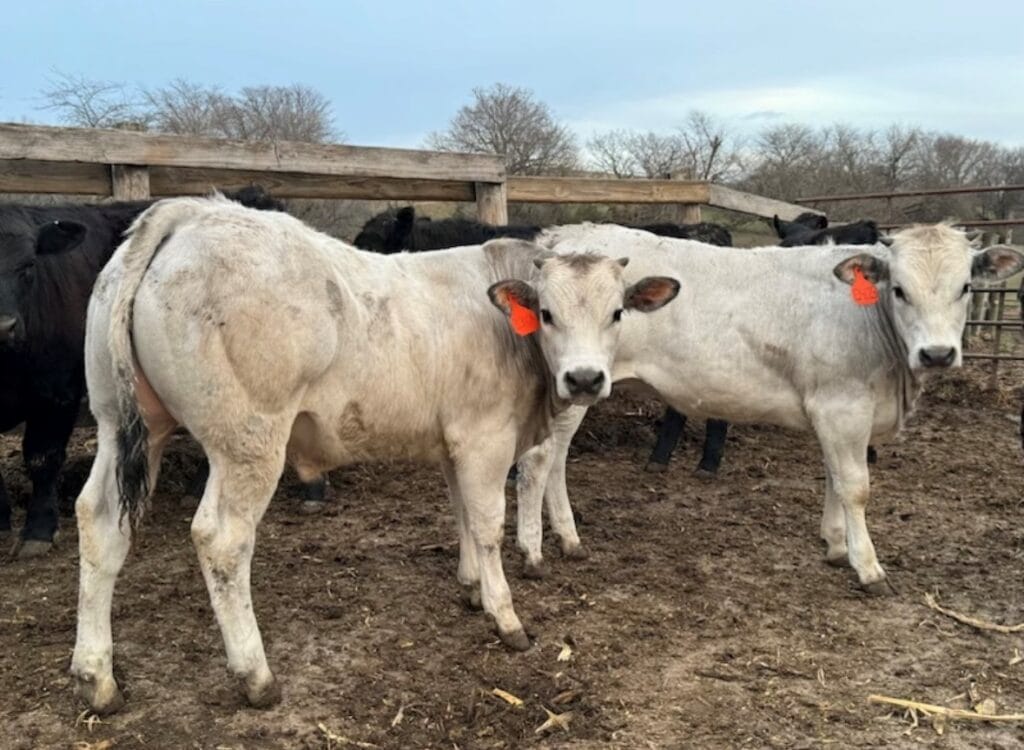
    Included in Aaron’s herd are four Piedmontese cattle, a rare breed that is known for being a leaner, premium-tasting but lower-calorie choice in beef. This is because Piedmontese are myostatin free, meaning they have a higher lean-to-fat ratio and do not develop the fatty marbling of traditional breeds. In addition, Piedmontese have lower levels of cholesterol, making it a healthier option for some people.

    Aaron says the texture of Piedmontese is different, and it needs to cook more slowly and at a lower temperature than more common cuts of beef.

    “But when it’s cooked right, you can almost cut it with a fork,” he says. “It’s that good.”

    Family Photo

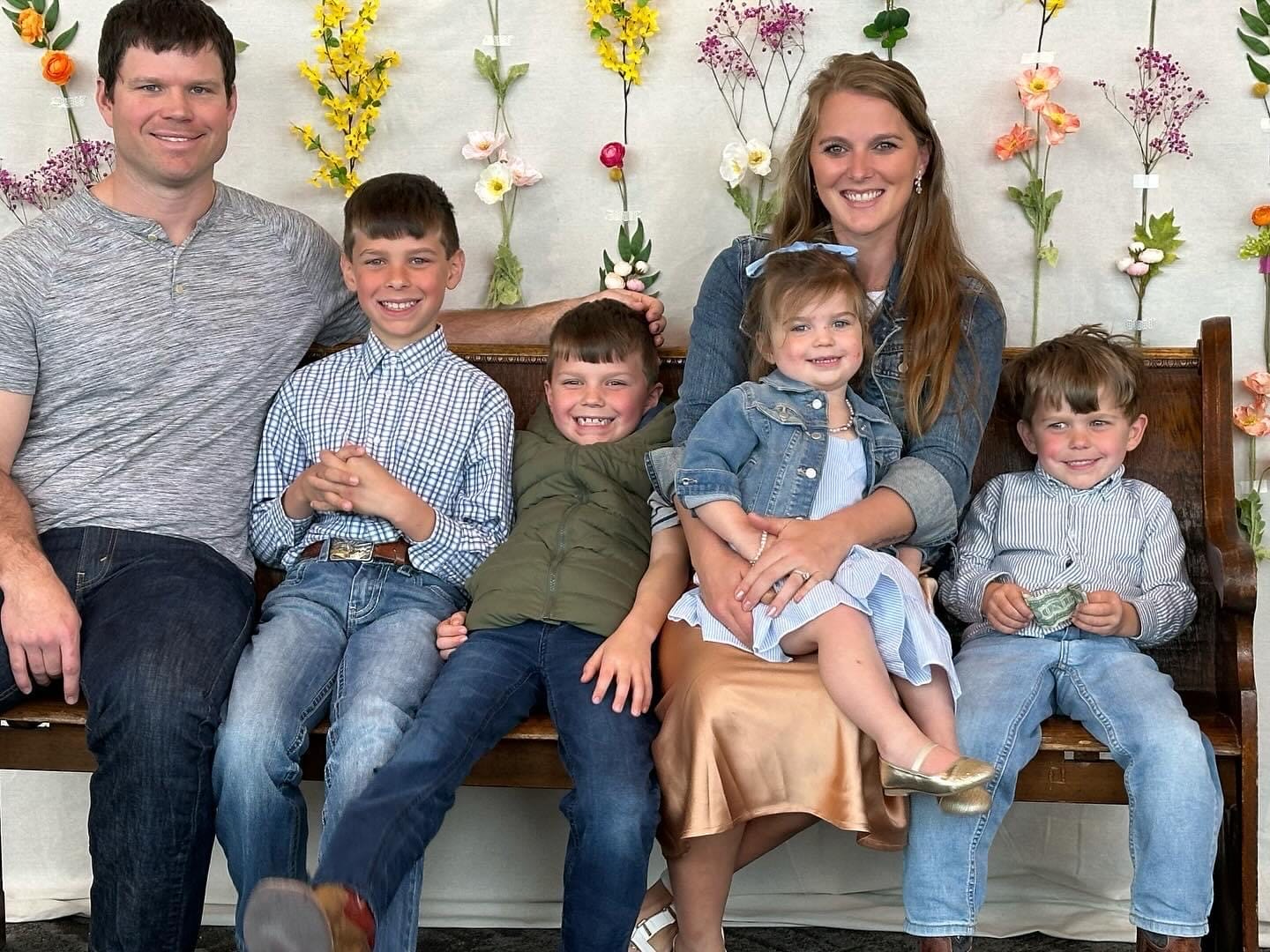
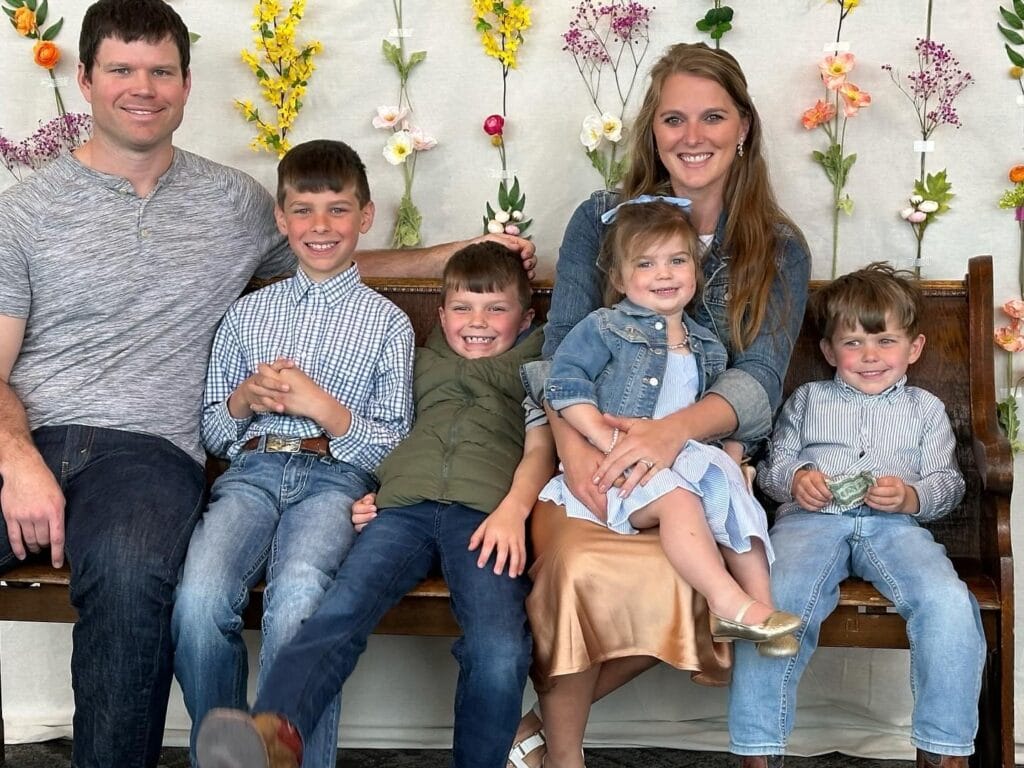
    Aaron and Cory have four children: Emmett, Rhett, Klay and Quinn. They both graduated from Central College with degrees in exercise science and health promotion. When she’s not helping out on the farm, Cory is a personal fitness trainer. Today they’re sharing a family favorite recipe for National Beef Month.

    Shannon Latham

    May 17, 2024
    Beef, Corn, Crop, Food & Family, General, Recipes
  • Latham Hi‑Tech Seeds

    Brisket Brings the Kids Home

    Photo

    Latham® dealer Mark Hawthorne backgrounds cattle near Lohrville in West Central Iowa. His family buys 400-pound steers in January and sells them around 800 to 900 pounds sometime between Labor Day and Thanksgiving.

    “I had always planned to farm if there was an opportunity to do so,” says Mark, who worked for a farmer near Story City while attending Iowa State University. He continued working there for eight more years after graduation when an opportunity in corn breeding at the Syngenta plant in Glidden became available. Glidden was close enough to home that Mark also could help his dad farm.

    Mark says he’d probably still be working in Glidden if Syngenta hadn’t closed the plant. He didn’t want to uproot his family to Seward, Nebraska, so he put his Ag Business major and Agronomy minor to use for himself by taking on a Latham® dealership and assuming more of the day-to-day responsibilities on the farm.

    “Our farm has changed as times have changed,” Mark says. “We used to raise hogs in open-front buildings but got out of the business instead of reinvesting in new facilities. When packers started to buy large numbers of cattle, we switched to backgrounding cattle rather than raising cow-calf pairs. It works out well because we get to take a break from doing chores for a few months each year.”

    Mark farms with his father, Merrill, and son Max. Max is finishing his freshman year at Iowa State University and looks forward to working with his family on the farm this summer. Once their corn and soybean crops have been planted, the family turns their attention to making hay.

    Latham’s alfalfa products have always lived up to their description,” Mark says. “We were happy with the disease package and fine stems with fast regrowth, so we were hesitant to make a switch. Then we tried HarvXtra® technology and realized it’s worth the extra! It has a lot higher feed value, so we don’t need as many acres of alfalfa. For example, I used to mix one bale of alfalfa to one bale of grass hay. Now it’s a ratio of one bale alfalfa to three of grass — and it delivers the same feed value.”

    The Hawthorne family has target dates to deliver their product to market. After all, time is money. Their cattle usually ship out in late fall, so the early winter months provide time for the family to enjoy a ski vacation or to visit family members and friends. Mark and Susan’s daughter, Jessi, lives nearby with her family. Their son, Kodi, lives in Sioux Falls, SD. The couple has five grandchildren.

    Photo

    “Our goal is to leave our farm in a position that allows our kids to come home if they so desire,” Mark says. “We’re getting the next generation ready now, so they can take over some day.”

    One sure-fire way to get all the kids together is to serve brisket, says Susan, noting that “they all come running home” when they hear Mark’s Midnight Brisket is in the smoker. Here is the Hawthorne family’s favorite beef recipe.

    Shannon Latham

    May 3, 2024
    Alfalfa, Beef, Crop, Food & Family, General, Recipes
  • Latham Hi‑Tech Seeds

    Blooming Benefits: Bringing Pollinator Plots to the Farm

    Gary Pollinator

    As we begin to plant our gardens this year, Latham Seeds’ very own Gary Geske wants us to set aside some space for the tiny creatures that play a huge role in crop reproduction, sustainability and food security. These are Mother Nature’s pollinators such as bees, butterflies, hummingbirds and beetles.

    Gary Geske 1
    Gary Geske

    Gary has first-hand experience on what avid gardeners call the “pollinator project.” April, he says, is the perfect time to think about what pollinator plots are – and how they can be incorporated into backyards and farm fields.

    “Everybody tends to have a garden that ends up getting bigger than they want it to,” says Gary, who has worked for Latham for 13 years and is our corn product specialist. “So, take an end of the garden and just plant some wildflowers. Or use flowers around the border of the garden. It will attract bees to pollinate your watermelon or other vegetables, and it will help the environment, too.”

    Farmers can also contribute to pollinator plots by planting a diverse mix of native wildflowers somewhere on their land. These flowers provide a much-needed variety of pollen and nectar sources during the growing season – and they attract an even more diverse range of pollinators.

    “Take a look at that odd, two-acre spot on your farm . . . that awkward spot in the corner where it’s hard to get equipment in,” Gary suggests. “Turn that into a safe zone for honeybees and other pollinators. Put it somewhere that’s not easy to get to, so it truly becomes a haven for them.”

    Gary, who farms in North Dakota, planted two acres of tall grass prairie along his driveway. It includes flowers that make it a true pollinator plot. He says it also feels like he “recreated the old west.” Other farmers in his area have started tilling field borders or the sides along their driveways and planting flowers there, too.

    “The terms ‘pollinator plot’ and ‘ornamental planting’ can be the very same thing,” Gary says. “Whether intentional or not, incorporating plants that give food and shelter to pollinators is a good thing for all of us.”

    Gary Pollinator
    2 acres of Tall Grass Native Prairie planted along our driveway with wildflowers in the mix for pollinators

    Because pollinator populations have been declining over the years due to habitat loss and other factors, it’s more important than ever that farmers help reverse the trend. Because in order to thrive, these invaluable ecosystems need our gardening help.

    Says Gary: “It really doesn’t take much to make a big difference.”

    Check out other related blogs on The Field Position… for yummy Hummingbird Cake!

    Shannon Latham

    April 25, 2024
    Food & Family, General, Recipes, Sides
  • Latham Hi‑Tech Seeds

    New Dishes, Family Favorites

    Browns

    When it comes to cooking, it’s always fun to explore new recipes. But usually, we’re always drawn back to familiar favorites. That’s especially true for farm kids.

    Brothers Ross and Levi Brown of Dell Rapids, South Dakota, didn’t plan to take over the family farm from their parents, Kevin and Renee. When they did, however, they brought a whole new perspective — and realized home was where they wanted to be.

    “Ross and Levi have really embraced technology, and that’s helped the bottom line of the farm,” Kevin says. “Technology adds another level of management, so I’m turning the reins over to them. They order our seed, chemicals and fertilizer because they know the prescriptions for each farm.”

    Ross graduated from Dell Rapids High School and then went to basic training and Air Force technical training. In 2006, he started taking classes at South Dakota State University (SDSU) in Brookings where he majored in Aviation Management. He was deployed three times, ranging from two to four months each time.

    After graduating from high school, Levi had intended to become an engineer. He earned a bachelor’s degree from SDSU by double-majoring in Agricultural Business and Finance with a minor in Economics. Because of Ross’s deployments, he and Levi graduated from SDSU on the same day.

    Browns 2
    Levi and Olivia Brown

    Levi met his wife, Olivia, in Brookings. She practices at Avera Health. After working for a few years for a farmer in Mitchell, Levi and Olivia moved to a farmstead three miles northwest of the home place where they established their home. They are the proud parents of Cora and Griffin.

    Ross returned to the family farm in 2012 after working a couple of years at Raven Industries. He spent a great deal of time traveling for his job and realized how much time he would be sacrificing away from family if he continued in aviation.

    Ross and his wife, Jen, are the proud parents of four: Elsa, Joe, Arlo and Rollie. Jen teaches in Sioux Falls and is dedicated to making a difference in her students’ lives. Ross continues to serve in the Air National Guard. His 20th year of service will be 2025.

    Browns
    Ross and Jen Brown

    The Browns farm separately, yet together. In addition to raising crops, Kevin and Levi each finish feeder cattle. Ross also finishes feeder cattle and calves about 120 cows each spring.

    Today the Browns are sharing a family favorite recipe of their mom’s for baked round steak that promotes the beef they raise.

    Shannon Latham

    April 8, 2024
    Beef, Food & Family, Recipes
  • Latham Hi‑Tech Seeds

    Joy’s Remarkable Journey at Latham Hi-Tech Seeds

    Joy on Phone resized

    It was a cryptic classified ad in her small-town newspaper that would connect Joy Bonin to a job — and a family — for the next 47 years.

    A new mom at the time, Joy was growing restless after staying home with her daughter, who had recently turned two years old. Hearing this, Joy’s mother pointed out an ad in the Belmond Independent. It was for a bookkeeping position, but it didn’t list a company name.

    “It just said it was for a business east of town,” Joy recalls. “We lived east of town, so in my mind I thought it had to be some place out in the country.”

    With nothing else to go on, Joy mailed her resume to a post office box in Belmond, where she had grown up and still lives today. A few days later, she got a call from Bill Latham, who asked her to come in for an interview. Because Joy’s family had farmed in the area all her life, she was familiar with the Latham name. Her dad had even done business with the Lathams’ soybean company.

    “After my interview, Bill said they’d talk it over and get back to me,” Joy says. “I wasn’t home half an hour before he called and asked me how soon I could start.”

    Latham Hi Tech Seeds team 1980s

    It was the beginning of a lifelong career for Joy, who is retiring in April of 2024. She admits life without Latham Seeds will be “somewhat of an adjustment.” Afterall, Joy has worked with all three generations of the company’s owners — and has transitioned along with the family through every step of change and growth over the years.

    Current CFO Chris Latham, who, as a young boy would come into the office after school to tinker with the company’s new computers, now credits Joy for much of Latham Seeds’ success.

    “She’s been a big part of the reason why we have grown from a soybean-only seed company that sold to local customers to a multi-crop seed business with dealers and customers in seven states,” he says. “Joy has also been a loyal friend and confidant to so many employees, growers, dealers and vendors.”

    Joy worked her way from bookkeeper — manually typing invoices and working from “the big, old general ledger book” — to much larger responsibilities, including production. Besides lining up contract growers and working with them, Joy took on human resources duties like managing payroll and employee benefits.

    But it was always working with farmers that Joy loved the most. She was extremely interested in the science behind the seeds, so she enjoyed working with the product team as they selected soybean varieties. Whenever she could, Joy would walk the field with Bill Latham.

    “He was the best teacher you could ever ask for,” she says. “He was an agronomy major, and I loved to go out in the summer to take research notes with him on all the new varieties. I learned so much from him.”

    When she had her second child, Joy introduced the concept of job sharing to her bosses (Latham brothers Bill, Tom and Don) so she could maintain some work-life balance. She came into the office three days a week for a couple of years before going back full-time. Today she works for Bill’s sons, John and Chris, and John’s wife, Shannon. They are third-generation owners of Latham Seeds.

    “I’ve always been treated like a part of the family,” says Joy, who worked with company founder Willard Latham when she was first hired. Willard was “mostly retired” but still had a presence at the main office in Alexander. “You don’t stay in a job for this long if you don’t feel valued. And I can say I have felt valued over the years.”

    Having grown up on a farm herself — Joy learned to drive a tractor when she was 11 years old — she says she’ll never forget the relationships she’s built with farmers and growers at Latham. Besides talking business whenever they came to the office, Joy says she loved to chat about farming in general.

    “It could be anything – fertilizer, grain prices and all that,” she says. “But it was always something about their family, too. We got to know each other, and I’m going to miss those conversations very much.”

    Joy and her husband, Dave, raise corn and soybeans on the farm where they’ve lived for 48 years. They also have a small cow herd managed by their son, Dave. The farm is managed by both David and Dave.
    Joy and husband resized

    Joy and her husband Dave.

    In retirement, Joy plans to spend more time with her grandchildren (she has seven) and two great-grandsons. She also wants to get more involved with church activities and volunteer in the community.

    Of course, someone with so much experience and company knowledge can hardly make a clean break from it. Joy plans to be available part-time for a couple more months to assist Latham with payroll, grower relations, hedging and other transition items.

    Joy on Phone resized

    “Joy has been a shining example of what kind of great people are in the seed industry,” Chris Latham says. “She will truly be very missed.”

    “Do what you love to do, and surround yourself with who and what makes you smile.” — Joy Bonin

    Enjoy a favorite recipe from Joy!

    Webspec Admin

    April 5, 2024
    Beef, Food & Family, General, Latham News
  • Latham Hi‑Tech Seeds

    Spreading hope on Good Friday with traditions and fellowship

    Empty Tomb Roles

    “We can’t get to the glory of Easter Sunday without first experiencing the darkness of Good Friday,” my mom taught me. It’s a lesson I hope my children have learned, and it’s a message I pray they will share with their children.

    On Good Friday, we remember how Jesus was crucified. We reverently remember His last hours on the cross. Throughout the Tenebrae service, our church gets progressively darker. We confess the sins that caused His suffering by literally nailing them to the cross. And then we exit the sanctuary in total silence. It’s a solemn service, but there is hope.

    We know Jesus will be laid in the tomb, and the Good News will be shared on Easter morning.

    He is not here: for he is risen, as he said. Come, see the place where the Lord lay. – Matthew 28:6

    Easter sunrise service symbolizes the empty tomb that greeted Mary as dawn broke that Easter morning. This sunrise service is filled with light and love. Oh, how I love this service! I love the way our sanctuary is filled with the fragrance of Easter lilies. I love the feeling of joy that is shared when we greet one another by saying, “He is risen. He is risen indeed!”

    And, I love the delicious Easter breakfast that is prepared and served by our youth and members of the Youth Committee! (Special thanks to those who arrive around 5 a.m. to crack the eggs and prepare roasters full of food.) I also enjoy getting together with my family for Easter dinner.

    Today I’m sharing a recipe for Empty Tomb Rolls in case you want to add more symbolism to your holiday meal. I’m also sharing links to several of my family’s favorite Easter recipes in the following posts. You’ll find simple, yet delicious recipes to makeover Easter leftovers.

    Which came first, the Easter bunny or Easter eggs?
    Maintaining Important Easter Traditions
    Enjoy Easter Leftovers with “Round 2 Recipe” Ideas
    “Colored Easter Eggs” Take on New Meaning 
    Easy Easter Desserts and Crafts

    Shannon Latham

    March 29, 2024
    Breads/Breakfast, General, Recipes
  • Latham Hi‑Tech Seeds

    Secretary Mike Naig: Celebrating a Champion – Iowa Agriculture

    Mike Niag Headshot

    Tis the season for March Madness and celebrating champions.

    Earlier this month at the state tournaments for Iowa high school girls and boys basketball, schools from every corner of Iowa were crowned as state champions, the culmination of a season of hard work, hours of practice, and unmatched tenacity. Now with college basketball’s tournaments taking center stage, Iowans have a lot to cheer for in the weeks ahead as Iowa State, Iowa, and Drake, as well as many of our smaller colleges, compete for bragging rights, championships and glory.

    Mike Niag Headshot
    Iowa Secretary of Agriculture Mike Naig

    In addition to celebrating our teams this month, we also celebrate Iowa agriculture during Iowa Ag Week from March 17 to 23. Iowa agriculture has long been a champion for consumers, near and far, providing high quality and reliable food, fuel, and fiber.

    National Ag Day on March 19 and Iowa Ag Week are the perfect opportunities for all of Iowa to shine a bright light on the industry that we know and love. And we certainly have a lot to celebrate.

    When it comes to agricultural production, Iowa is punching well above its weight. The recently released Census of Agriculture pegs the value of Iowa crops and livestock at nearly $44 billion annually. That ranks us second in the country, only behind California, which has nearly three times the land and more than 12 times the population. Iowa ranks first in production for several commodities including corn, eggs, pork, ethanol, and biodiesel, and ranks highly in soybeans, beef, dairy and turkey.

    Agriculture is our state’s top industry, fueling economic growth across the state and creating thousands of well-paying jobs and careers. Approximately one in five Iowans are employed directly because of agriculture, including many who live in our small towns and rural communities.

    Iowa farmers are incredibly efficient, relentlessly innovative, and always looking for ways to be more sustainable and produce more with less. We are continually adding value to the commodities we grow, whether that’s turning a bushel of corn or soybeans into livestock feed or a homegrown biofuel.

    I’m proud of Iowa farmers’ achievements in production, as well as their commitment to protecting our state’s rich natural resources, including our soil and water. In 2023, for the second year in a row, we set a record for adoption of conservation practices. And we want to keep breaking records, which is why public and private partners across Iowa are focused on accelerating the implementation of proven practices.

    And as we celebrate Iowa Ag Week, we are also giving back to our communities through community involvement and volunteer service. This week, my team at the Iowa Department of Agriculture and Land Stewardship is volunteering at the Food Bank of Iowa. I’ve also invited the Iowa ag community, including our farm groups, commodity associations, agribusinesses, conservation partners and others, to give back in their own unique way.

    Please join me this week as we celebrate Iowa agriculture and the hard-working men and women who keep our agriculture winning day in and day out. I’ve always said if you want a strong Iowa, you need a strong agriculture. Like the championship teams on the court, Iowa farmers are committed to putting in the time and effort and giving it their all to keep Iowa agriculture successful.

    Happy National Ag Day and Iowa Ag Week!

    Recipe by Iowa Secretary of Agriculture Mike Naig

    Mike Naig

    March 22, 2024
    Desserts, Food & Family, General, Recipes
Previous Page
1 … 4 5 6 7 8 … 71
Next Page

Latham Hi‑Tech Seeds

131 180th Street | Alexander, IA 50420

(641) 692-3258

SIGNUP FOR OUR NEWSLETTER
  • Contact
  • Legal
  • Dealer Center
  • Seedware Login
  • Latham Gear

© 2025 Latham Hi‑Tech Seeds. All rights reserved. | Iowa Web Design by Webspec | Privacy Policy

Latham® Hi-Tech Seeds is a trademark of M.S. Technologies, L.L.C., 103 Avenue D, West Point, IA 52656.