Skip to content
Latham Hi-Tech Seeds

(641) 692-3258

  • Home
  • Performance
  • Products
    • Corn
    • Soybeans
    • Alfalfa
    • Corn Silage
    • Seed Guide
  • Find a Rep
  • Media
    • Blog
    • News
    • Videos
    • Podcasts
    • TECHTalk
  • About Us
    • Company History
    • Our Mission
    • Careers
    • Become a Rep
    • Sowing Seeds of Hope
  • Contact Us
  • Latham Hi‑Tech Seeds

    School’s Out Now but “Life-Long Lessons” Still in Session

    Family

    Last Friday on TheFieldPosition.com, we shared how Andrew and Jennifer Holle spent their senior year of college planning to fulfill their dream of returning to his family’s dairy. As new college graduates and as newlyweds, they purchased Northern Lights Dairy in 2003. Jennifer shared how she climbed the ladder of responsibility until finding her niche as the calf manager.

    Like their mother, the four Holle children are working their way up the ladder of responsibility.

    “We are all so excited now that school’s out for the summer!” says Jennifer enthusiastically. “I LOVE having my kids home because summer is a time where we work hard as a family but we also play hard. Each morning we start in the calf barn where they help: re-bed the stalls with straw, fill up the waterers, get baby calves up and put them in the auto-feeder, feed calf crunch, clean, and whatever else is needed. Then we head to the office where I do all my computer work and they either mow the lawn, clean the office area, pick-up the yard, or other tasks. From there, it depends on the day. Sometimes we sort heifers on 4-wheelers or on horseback, run into town for parts, or take the semi-truck to get a load of feedstuffs. They really do everything we do on the farm.”

    family
    Andrew and Jennifer Holle are living their dream being able to raise their children on a family dairy near Mandan, ND.

    Northern Lights Dairy is truly a family farm. Andrew is the General Manager. Jennifer says, “My husband multi-tasks so many different aspects of the farm that it blows my mind! My father-in-law, Kenton, lot of the truck driving and feed hauling. He also travels frequently for various boards like National Dairy Board and the Mid-West Dairy Association.”

    Jennifer shares her father-in-law’s passion for promoting dairy. She serves on American Dairy Association District 3 Dairy and Promotions Board. She also is Board Director of the North Dakota Dairy Coalition.

    “I want consumers to understand that dairying is something we live and breathe, 24 hours a day, 365 days a year. This is what we were born to do,” she explains passionately. “Farmers were made to take care of God animals, the environment, the planet, and the people around us. We care about each and every animal on our farm. We care about each acre that we farm. We care about everything we touch.  We understand the level of responsibility we have. There are 1,200 animals depending on us to feed, care, and nurture them each and every day. 

    Our mission statement is, ‘Northern Lights Dairy is an efficient, innovative, and profitable family dairy business always producing the highest quality milk.’ To produce the highest quality milk, we must take the best possible care of our cows. Every decision we make is always based around the cows.

    If it’s 2 a.m. and we see a cow needs help giving birth, we go.  If it’s minus 60 degrees Fahrenheit and we’re so cold that we feel our body, we have to bed the heifers with fresh straw so they are warm. If there is a pre-mature calf struggling to breathe, we go sit with them and in any way we can.  If hay is ready to be baled but we have a prior commitment, we go make hay.  This is not just a job, this is how we live.”

    Because of her involvement in the industry and in promoting dairy products, Jennifer was named Midwest Dairy Farm Mom, 2014 Northwest Farm Mom of the Year by “America’s Farmers” and the 2014 Farm and Ranch Guide Country Woman of the Year. Also in 2014, she was name the ND State Soccer Association Recreational Girls Soccer Coach of the Year.

    Extracurricular activities continue even though the kids Holle kids a break from school in the summer. They’re active in sports, church, 4-H, scouts and rodeos. Jennifer, who played soccer in college, coaches all of her kids’ teams. She also plays on a soccer team and is an avid runner. She enjoys being a part of Team Dairy, a group of dairy enthusiasts from across Midwest Dairy Association’s 10 states who enjoy running. Jennifer’s family members also love to run, so they often meet up in various cities to complete races together. Last fall they met in Washington, D.C. for the Marine Corps Marathon. (Click here to read Jennifer’s blog about that experience.) She enjoys traveling, too.

    “God made an amazing, beautiful world and I love to see and experience it! I live life to the fullest extent. When I get up to heaven I want to be flying in at 100 mph, burning rubber, and say, ‘Wow… what a ride!” So go out there and have a great ride. Leave a legacy that you are proud of. Make a difference, for you were created to be great. Go be GREAT!”

    Make it a great summer! You can celebrate June dairy month by downloading one of the Holle family’s favorite recipes from TheFieldPosition.com. Plus, the newly published Dairy Good Cookbook also features 100+ recipes inspired by America’s dairy farmers including the Holle’s.
    bonnie-harris

    June 22, 2015
    Agriculture, General, Industry News
  • Latham Hi‑Tech Seeds

    Let’s Celebrate Pollinator Week!

    Pollinator Week 2023

    This is a special week for supporting pollinator health. Latham Seeds accepted the White House Garden Challenge back in 2015 to increase pollinator habitats in urban, suburban and rural areas.

    Pollinator Week 2023

    These 22 organizations have formed the National Pollinator Garden Network that is promoting the Million Pollinator Garden Challenge. Every American can join the cause simply by planting pollinator habitat, from window boxes to patio containers to home gardens, to city parks and roadside prairies to acres of meadows.

    Latham Hi‑Tech Seeds is pleased to be a part of a positive initiative that is seeking to increase pollinator habitat in urban, suburban and rural areas. Even though these pollinators are small, they play a valuable role in the gardens!

    Attract pollinators by planting specific flowers to draw in birds, bees and butterflies. There are two main essentials for attracting birds and keeping them in your backyard: (1) an environment that is attractive to insects, which is a main food source for birds; and (2) cover, which is a place for them to live and build nests.

    Similar actions can be taken to attract butterflies and bees. Know the 3 P’s to plant a pollinator-friendly garden: Plan, Plant & Provide. There are various phone apps and planting guides available to help narrow the search of which plants to use in your garden based upon regional needs; such as soil, amount of sunlight, preferred type of pollinators and flower color. Remember, you can always alter the type of plant you grow, but you can’t change the soil type or sunlight, so check out the guides to ensure success in your garden.

    Become a part of the buzz and start planning a pollinator friendly garden! This can be a great family activity as well as an effective way to reach out to your community. Happy National Pollinators Week!

    June 18, 2015
    Agriculture, General, Industry News
  • Latham Hi‑Tech Seeds

    Join the June #MilkDrive Challenge

    5339757734 5fe1e0cc6b b

    #MilkDrive Food Bank of Iowa

    Guest Blog Post by Kilah Hemesath
    Latham Hi‑Tech Seeds Intern

    While consuming a gallon of milk with supper is not unusual for some families in Iowa, there are many children across our state who suffer from milk insecurity. Milk is one of the most requested items by food banks, according to Feeding America, the nation’s largest domestic hunger-relief organization.

    On average the Food Bank of Iowa can only provide those in need less than one gallon of milk per year. The recommended milk consumption per person is significantly higher at 68 gallons/year.

    In accordance with June Dairy Month, Feeding America is hosting a Great American Milk Drive throughout the month of June. The Food Bank of Iowa was one in 10 food banks across the U.S. chosen to compete in the Great American Milk Drive!

    You can offer support to this organization by incorporating #MilkDrive and tag the Food Bank of Iowa into tweets and Facebook posts. The Food Bank of Iowa will share your post to spread the message about milk insecurity throughout Iowa. Each post will generate points towards the Milk Drive competition.

    The winner of the Great American Milk Drive will receive $10,000 towards milk purchases to help supply milk for children, families and seniors in Central Iowa. 95% of food banks say they don’t receive enough milk to meet their clients’ needs. Contribute to this cause by simply mentioning the Food Bank of Iowa in a post or tweet using #MilkDrive.

    June 16th is an important day for this cause. The Great American Milk Drive will MATCH DONATIONS towards this cause, and provide DOUBLE POINTS towards the national contest for posts and tweets composed by people like you!

    You can make a difference by donating directly, or sharing your message with the click of a button. Help those in need who miss out on the 9 essential nutrients provided by milk. Find The Food Bank of Iowa on Facebook and Twitter and start posting!

    Great-American-Milk-Collage-1024x700

    bonnie-harris

    June 16, 2015
    Agriculture, General, Industry News
  • Latham Hi‑Tech Seeds

    My “Beef” with Banning “Pork” in Publication to be “PC”

    File6481243652295

    Last week I wrote that “Political correctness is making everyone wimps!” Then yesterday I came across an article with this headline: “Oxford University Press Bans Word ‘Pork’ To Not Offend Muslims.”

    Let me get this straight… The world’s top book publisher is banning the word “pork.” Oxford University Press is also reviewing the classics and deleting any references to “pig” and “pork products.”

    We certainly wouldn’t want to offend someone who doesn’t eat pork! Right?

    I truly don’t understand why Muslim’s preference trumps a Christian’s. Without bringing religion into this conversation (because we know that’s wouldn’t be PC), why can’t we let people exercise their freedom to buy. If they’re offended by children’s books with pictures of pigs, for example, there are certainly several thousand other books from which to choose.

    At what point does this PC absurdity stop? Being an old white male who lives in the middle of Iowa, I know that I don’t have the “right” to be offended. My status as “majority” only affords me the ability to offend. There can be no prejudice against me… after all, prejudice and discrimination can only happen to minorities. (Oh my! I have a feeling that wasn’t a PC statement.)

    Today’s society seems to have a need to blame everyone for everything that is wrong. We nit-pick about certain laws and regulations. We’ve declared War on Lemonade Stands. Over the weekend, two Texas girls were told by police they had to shut down their lemonade stand because they lacked the proper permit. The girls, ages 7 and 8, were attempting to raise $105 for their Father’s Day gift. All they really wanted to do was earn enough money, so they could take their dad to Splash Kingdom.

    Whatever happened to letting kids be kids? Whatever happened to igniting that entrepreneurial spirit and encouraging youngsters to pursue the American dream? Whatever happened to taking pride in hard work and being rewarded for it?

    There are several “socially acceptable” situations that made headlines both across the state and our nation over the weekend. Quite frankly, I found each one of them offensive. But I’m supposed to be tolerant and accepting. Why? Why should their freedom of choice trump mine?

    I think every American should celebrate the freedom to worship. I think we should celebrate the freedom of expression, even if my thoughts are not your thoughts! Since I can’t solve the world’s problems alone or overnight, I’m just going to have some bacon and celebrate that I still enjoy the freedom of food choice!

    Larry Sailer, Musings of a Pig Farmer

    June 16, 2015
    Agriculture, General, Industry News
  • Latham Hi‑Tech Seeds

    In Government We Trust? I don’t think so!

    AuthorLarrySailer sm

    Everyone has heard how our elected officials are being stalked by lobbyists. Sometimes this is even a good thing! Our representatives in Congress need help understanding all the different issues. But lately, I’ve been disturbed to see how much “lobbying” goes the opposite way.

    We’re being bombarded by information – maybe a better term is propaganda – to influence public opinion. Unelected bureaucrats, social media campaigns, commercials, TV talk shows, and all ways imaginable are being used to convince the public of problems that bureaucrats think they can solve.

    U.S. Environmental Protection Agency (EPA) Chief Gina McCarthy, for example, says Americans must “just trust us on climate science.” She maintains the EPA’s so-called “Clean Power Plan” will signal to the world the U.S. is serious about global warming.

    Trust the EPA’s 44 years of experience dealing with environmental issues, she says. “We can speak to the science because it’s complicated…”

    This once again reminds me of the old saying, “I’m from the government. I’m here to help you!”

    Now don’t get me wrong, I believe in climate change. I always have and always will. But why trust the EPA to spend billions of tax dollars, deciding which “green” businesses will thrive and stimulate the economy? This is our government!!!

    The new WOTUS rules are even a bigger story. Ironically, the EPA’s water rule is likely to slow to adoption of conservation practices. These rules are almost certain to create new burdens by adding permitting requirements for normal farming practices like fixing or installing grassed waterways. As the Farm Bureau blog states, “Lipstick can’t dress up EPA’s troubling waters decree.”

    Speaking of troubling waters, questions are being raised about whether the EPA broke the law by soliciting positive comments during its public comment period on WOTUS. I understand EPA officials posted statements on Facebook that were favorable to their rules. EPA officials also counted the likes on Facebook as positive comments during the comment period. In fact, EPA sponsored a drive on Facebook and Twitter to promote its proposed clean water rule in conjunction with the Sierra Club. Soliciting endorsements and support is a far cry from simply educating the public.

    Such actions overstep grassroots lobbying efforts. Let’s review the making of a law… after our elected officials pass a law, it goes to a rule-making committee. The committee is usually made up of unelected official appointees, or bureaucrats. This committee makes the rules by which the law is enforced. It’s their interpretation. Then there are the agencies, like the EPA, that enforce the law. Agency officials again interpret what they think the law means. Any thought as to why a rule needs to be hundreds of pages? Then, of course, we have the “we must pass it before we can read it” Obamacare rule!

    Another big debate now is the use of antibiotics in the livestock industry, and it was certainly a top issue last week at World Pork Expo. Even though there is absolutely NO PROOF that antibiotic use on farms causes ANY resistance, our current administration is pushing forward with banishing it! There’s no proof, yet our “government” must fix it!!!

    Last week I heard that 29% of an American’s income goes to cover regulations. That means 29% of your income goes to pay a hidden expense that raises the cost of everything you buy!

    Think about all the regulations that impact our live:

    • New dietary guidelines that are wrong but the Administration is pushing them anyway!
    • New school lunch rules that all kids hate!
    • Common core standards that make kids learn just to pass test!
    • Gun control laws that have been proven to be ineffective and downright dangerous!
    • Media that just prints what the government wants it to say!
    • Political correctness that is making everyone wimps!

    Any one of these topics could be its own blog post. But, I’ll stop here for today!

    What regulations have you concerned?

    Larry Sailer, Musings of a Pig Farmer

    June 10, 2015
    Agriculture, General, Industry News
  • Latham Hi‑Tech Seeds

    If Not You, then Who?

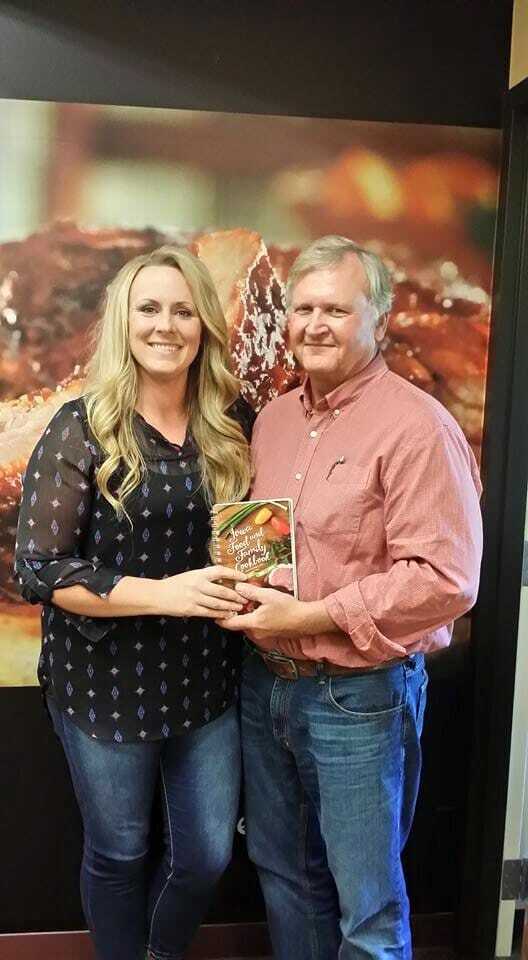
    Larry signed cookbook

    This is a great time of year to be a farmer! I love feeling the warmth of the sun on my face. I enjoy hearing the birds sing each morning as I go outside to do chores. I love how the earth smells after a rain, but fresh cut hay is the best perfume ever smelled by an old farmer!

    Farmers in North Central Iowa are getting ready to make their first cutting of hay. Most of them have their crops in the ground and have moved their attention from planting to scouting crops for weeds and disease. The wet, cool spring conditions made prime conditions made the weeds grow like, well weeds!

    LarryCristen presentIn spite of all the work there is to be done on the farm at this time of year, it’s still a busy meeting season. I’ve written before that winter is the meeting the season, but meetings seem to have branched out to year around.

    This week I’m part of a panel discussion at the National Pork Board office in Des Moines. Cristen Clark, who blogs at Food and Swine, and I have been invited to share some of our experiences with a group of new leaders, who also raise pigs. The theme of this week’s leadership training session is, “If not you, who?”

    It’s important for real pig farmers to tell their farm stories because consumers want to know about how their food is produced. I can’t blame them because food is a very personal choice. Although most of us don’t eat what we should, we all want to think we are eating as healthy as possible! If the folks who raise the food don’t share what they are doing, then someone else will tell their story. Who will tell the farm story… a computer programmer? a TV doctor? a food blogger?

    No one can tell the pork story better than a pig farmer! This group of farmers with whom Cristen and I spoke will also attend the World Pork Expo, June 3-5, on the Iowa State Fairgrounds. This three-day event brings together folks from all over the world to learn the newest and greatest ideas about everything piggy.

    This year I’m not obligated to any duties at the World Pork Expo. I’m free to watch the pig judging and the pig races. I can attend seminars to learn the latest technology. It could spend days visiting all the booths displaying everything from new knee boots and the latest computer programs to wind turbines and natural fertilizer haulers.

    Food blogger and farmer Cristen Clark presents a signed copy of a cookbook to "Musings of a Pig Farmer" blogger Larry Sailer
    Food blogger and farmer Cristen Clark presents a signed copy of a cookbook to “Musings of a Pig Farmer” blogger Larry Sailer

    As much as I enjoy all of these things, the best part of World Pork Expo is getting to see friends. I’ve made many dear friends during the 30 years I’ve been involved with pork organizations and activities like Operation Main Street.

    I’ve made many more friends through my involvement in social media. I’ve been known to travel the state – and even out of state – to deliver a free speech. Some people wonder why…

    If not me, then who? If I don’t tell my farm story, someone else will and I may not like it! If you’re a farmer, ask yourself what can you do to tell your farm story. If you’re a consumer with questions, talk to a farmer!


    Larry Sailer, Musings of a Pig Farmer

    June 2, 2015
    Agriculture, General, Industry News
  • Latham Hi‑Tech Seeds

    Follow these 3 P’s for a Pollinator-Friendly Garden

    20150502 160131 resized1

    There’s been a lot of buzz about bees recently as more people voice concerns about declining pollinator habitats.

    The interaction between farming and bees is a natural symbiosis because bees feed on pollen and nectar, and many crops need bees for pollination. Pollinators play an important role in keeping your garden healthy and blooming, too.

    Interested in promoting pollinator populations for bats, butterflies and bees? You can plant a pollinator-friendly garden by following the three P’s: Plan, Plant and Provide.

    PLAN

    The first step in planning a pollinator-friendly garden involves surveying the area where you intend to plant flowers. What is the sun and/or shade coverage? What is the soil type? Assessing these conditions helps you select flowers that will flourish. Next, decide what type of pollinators you want to attract based upon the type of flowers that will grow in your region.

    The Bee Smart ™ Pollinator Gardener’s app can help narrow the search of which plants to use in your garden based upon regional needs, such as soil, amount of sunlight, preferred type of pollinators and flower color. These planting guides are another resource organized by regions, which will help you begin answering these questions.

    When selecting your flowers, choose plants that will bloom from early spring to late fall to ensure a long season of bloom. This will result in a consistent food source for your visitors.

    Lastly, plan to choose flowers that offer a diverse set of colors, fragrances and shapes. This will make your garden more attractive for the pollinators you want to visit.

    Gardeners’ tip: You can always alter the type of plant you grow. Since you can’t change the soil type and sun coverage, choose the type of flowers the fits your geographic location.

    PLANT

    Below is a list of 15 plants that can grow in most areas of the U.S. and can help increase the number of pollinators in your area:

    JPEG Bees

    Attracting a diverse community of native bee species begins with raising an abundant and diverse garden. When planting, be sure to plant generously throughout your whole garden. Pollinators are more attracted to large groups of flowers versus single plants.

    Gardeners’ tip: Bees love blue, purple, white and yellow. Butterflies navigate toward red and purple flowers.

    PROVIDE

    Once your garden is planted, it’s critical to provide water in addition to the food source. Grassy areas and shrubbery nearby provides a healthy habitat for pollinators’ nesting and egg-laying needs. Improve the forage in your habitat to make native bee pollinators feel welcome.

    Monitor the pollinators’ actions and needs. Be knowledgeable and interactive in your garden to satisfy the needs of your pollinators and flowers.

    Gardeners’ tip: Post signs to educate the public about your new habitat and encourage others to do the same.

    Along with attracting pollinators, did you know you can attract birds and butterflies, too?! Find out how by following these two links:

    • Gardening Can Be for the Birds!
    • Add Beauty to Backyard with Butterfly Garden

    Team Latham

    June 1, 2015
    Agriculture, General, Industry News
  • Latham Hi‑Tech Seeds

    Support Our Troops through Red Shirt Friday

    While observing Memorial Day yesterday, I gave a lot of thought to Red Shirt Friday. I wear a red shirt to show support for our troops because “red” is really an acronym for “remember everyone deployed.”

    Last Friday, as on many Fridays, I wore my red shirt. This Friday, however, wearing red had a more personal meaning for me and my wife, Janice. Our daughter, Sara, was home to help celebrate my birthday and our wedding anniversary. Sara is a military veteran, and she greatly appreciated seeing her mother and me show a sign of military support.

    Apparently wearing red on Fridays is an old tradition that might even date back to a military women’s support group. Last night I spent several hours googling, trying to find that story. I didn’t find “that” story. I did, however, find some very interesting links that I’ve incorporated into this blog post and also will share below. I hope you will take a few moments to read these articles and watch the video.

    Too many Americans have forgotten there are many U.S. troops still fighting to defend our freedoms. That’s why I appreciate all my good friend and radio broadcaster Trent Loos does to raise awareness and to support our troops. In fact, I ordered my red shirt through Trent. He also is a huge supporter of the All American Beef Battalion, which thanks U.S. servicemen and women by serving ribeye steaks to them.

    It doesn’t matter whether you support the wars we are fighting or whether you support the various places our troops are serving. What matters is that we support our troops for doing a very dangerous job! These people from all walks of life like you and me, yet they make it possible for all of us in this country to express our views and enjoy our rights!

    Show your support of the troops by giving a follow to the Red Shirt Friday page. Listen to Trent’s radio show on Rural Route Radio, and wear RED on Fridays!

    Below are additional resources for Red Friday:

    • Chief’s View: Thanks for your support of red shirt Friday
    • The Story Behind Red Shirt Friday
    • A Red Wave of Support for Our Troops


    Larry Sailer, Musings of a Pig Farmer

    May 27, 2015
    Agriculture, General, Industry News
  • Latham Hi‑Tech Seeds

    Attention New Grads: Don’t Take Water Quality Issues at Surface Level

    Creek now1

    This past weekend, I attended one of my granddaughter’s high school graduation ceremony in a small town south of Des Moines. The ceremony was held on the football field, which is quite an undertaking during spring in Iowa!

    By luck, and maybe a little divine intervention, the outdoor graduation ceremony worked. We enjoyed some sunshine. Then just like you’d expect from Iowa weather, some clouds moved in, a few sprinkles fell and the winds began to gust. Papers blew off the stage, and the young ladies were hanging onto their skirts. Nonetheless, it was a beautiful ceremony!

    About 35 years ago, Larry Sailer planted trees and bushes along the creek that runs through his farm. #FarmersCoverIowa
    About 35 years ago, Larry Sailer planted trees and bushes along the creek that runs through his farm. #FarmersCoverIowa

    The keynote speaker was a retiring school teacher, who had taught most of his career at this school. I must admit that I don’t remember the speech at my graduation, however, he captured my attention by referencing farmers in his presentation! He talked about how farmers sow seeds, and teachers do likewise. What a great analogy, right?

    Later in the commencement address, the speaker told these graduating seniors how they need to fix the problems of our waters in Iowa! He shared how an all-time high number of our waters are polluted. I could feel my wife’s eyes on me. As soon as we got to our car, Janice said she was a little concerned at how I might react to the keynote. Rather than say anything at the time, I decided to address it in this week’s blog.

    It concerns me that educated people can be so misinformed! Did the teacher share untruths about Iowa’s farmers? No! Did he share all the facts? No!

    Our government agencies have the ability to control public perception simply by choosing which information to release and when. The Des Moines Waterworks (DMWW) own data shows a downward trend of nitrates in the Raccoon River, but that’s not what is making the headlines these days in Iowa. Instead we’re hearing about increasing amounts of nitrates from the DWMM.

    More Iowa waters made the “polluted list” this year, but it’s misleading because the standards by which waters are judged have changed. When you lower the level by which waters are judged, you have more water bodies on the list. Was this information shared with these new graduates? Of course it wasn’t!

    The commencement speaker used the water quality example to rally new members of our society, and as is often the case today, people take information at surface value. Many people do not dig for the facts! Emotional issues run on emotion, not facts.

    As I was pondering the commencement address, I an article from the New Yorker came to mind that reads: Scientists have discovered a powerful new strain of fact-resistant humans who are threatening the ability of Earth to sustain life. One scientist involved with the study concluded by saying that although the research is preliminary, “… It’s possible [humans] will become more receptive to facts once they are in an environment without food, water or oxygen.”

    The water running through Larry Sailer's farm is so clear you can see rocks on the bottom of the creek bed.
    The water running through Larry Sailer’s farm is so clear you can see rocks on the bottom of the creek bed.

    “Armchair farmers” believe agriculture is simple and that policies are needed to ensure farmers protect the environment. While I agree there are still improvements that we can make to further enhance water quality, let’s give credit for the improvements that have been made. Conservation practices are helping improve water quality.

    Back in the good old days, a lot of damage was done to our soils and water. The ground was tilled until there was no residue left, so soil would either blow or wash away. “Conservation tillage” was a buzz word when I started farming. No-till was just beginning. Terraces, or dirt pilled to control water flow, were being built by the miles.

    With today’s farming technology and equipment, we’ve made huge strides towards better soil conservation. I’ve planted acres of trees and bushes on my farm. By my creek, I’ve planted buffer strips for erosion control and wildlife habitat.

    I have taken pictures of my creek, showing how clean my water is leaving my farm. The water is absolutely clear, so you can see the bottom of the stream. Such clear water makes it difficult to take a picture, but I hope you “see my point.”

    Yes, we also need to control things in the water that we can’t see. That why I side-dress fertilizer, using just the right amount at the right time to feed corn plants. Lots of farmers are voluntarily spending millions of their own dollars every year to implement conservation practices.

    Today’s technology can detect smaller amounts of pollution in our waters, but it can also help us reduce that pollution. Farmers have made a huge difference, and we’ll continue to do more because we take pride in seeing results!


    Larry Sailer, Musings of a Pig Farmer

    May 20, 2015
    Agriculture, General, Industry News
  • Latham Hi‑Tech Seeds

    Feds Spend Billions of Taxpayer Dollars to Battle Mother Nature

    Darcy patriotic farm

    Can man really control the weather? Apparently the government thinks so and is willing to spend your money to do it!

    Last August I attended a conference on resilient agriculture where I heard a presentation by William Hohenstein, director of the U.S. Department of Agriculture (USDA) Climate Change Program Office. One year ago this month, he released a “new” report stating that “climate change is already happening across the United States.”

    Apparently that sensational headline didn’t spark enough attention so now the USDA announces it is building a program to respond to climate change. An article in the May 1 edition of the Illinois Farmer Today states: “This [new program] will utilize voluntary, incentive-based conservation, forestry, and energy programs to reduce greenhouse gas emissions, increase carbon sequestration and expand renewable energy production in the agricultural and forestry sectors.”

    Mr. Hohenstein’s job is to ensure every government agency considers climate change before any project is undertaken! He has been given a lot of power, and money seems to be no object. It seems every week I read about another muti-million program from my “favorite government agency,” but apparently the USDA doesn’t have to prove whether the expenditure will lead to the desired results.

    When are Americans going to start questioning whether centralized government is the best route? This week I read an article in The Daily Signal entitled, “The Death of the Green Energy Movement,” where author Stephen Moore concludes:

    We don’t know if renewables will ever play a significant role in America’s energy mix. But if it does ever happen, it will be a result of market forces, not central planning.

    When taxpayer money is thrown at green projects, there is going to be waste. Why are we continuing to throw money into a sink hole as big as “climate change”?

    Undoubtedly, weather changes. Weather cycles even repeat themselves… Remember what we learned about the Ice Ages? That climatic change occurred without man’s interference! Throughout history, weather events like meteors, volcanoes, earthquakes have occurred that affect our weather.

    Climate change is real, but government bureaucracy is also real. Our Founding Fathers believed in less government control and more free enterprise. The United States, and let me repeat STATES, was built by private business owners coming up with solutions to problems. Private business owners have skin in the game. Let’s let real, true ingenuity from our private business come up with solutions that will work!

    Larry Sailer, Musings of a Pig Farmer

    May 12, 2015
    Agriculture, General, Industry News
Previous Page
1 … 32 33 34 35 36 … 95
Next Page

Latham Hi‑Tech Seeds

131 180th Street | Alexander, IA 50420

(641) 692-3258

SIGNUP FOR OUR NEWSLETTER
  • Contact
  • Legal
  • Seedware Login
  • Latham Gear

© 2026 Latham Hi‑Tech Seeds. All rights reserved. | Privacy Policy

Latham® Hi-Tech Seeds is a trademark of M.S. Technologies, L.L.C., 103 Avenue D, West Point, IA 52656.