Latham Hi-Tech Seeds

(641) 692-3258

  • Home
  • Products
    • Corn
    • Soybeans
    • Alfalfa
    • Corn Silage
    • Seed Guide
  • Performance
  • Find a Rep
  • Media
    • Blog
    • News
    • Videos
    • Podcasts
    • TECHTalk
  • About Us
    • Company History
    • Our Mission
    • Careers
    • Become a Rep
    • Sowing Seeds of Hope
  • Contact Us
  • Latham Hi‑Tech Seeds

    Farming and 4-H are Plagge Family Traditions

    Plagge John1

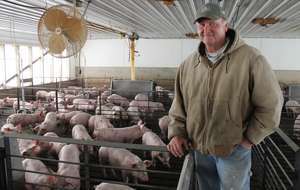
    Farming is a family tradition for John Plagge of Latimer, Iowa.  This fourth-generation Franklin County farmer feels fortunate to live in his childhood home, just 2.5 miles down the road from where the land homesteaded by his great grandfather Fred Plagge.

    It comes as no surprise to those who know him best that John would find his way home to rural Iowa and to farming.  He was an active 4-H member from the time he was 9 years old and showed pigs at the county fair.  His FFA supervised agricultural experience (SAE) while in high school involved helping his neighbor, who was a fellow pork producer and grain farmer.

    After graduating from CAL (Coulter-Alexander-Latimer) Community in 1991, John earned a bachelor’s degree in Ag Business from Iowa State University.  He then accepted a full-time position in retail sales with a co-op in Thornton before transferring to FC Co-op in Latimer. Meanwhile, his wife, Anne, managed the Charlie Brown Daycare while the couple and their children lived in Clear Lake.

    In 2002, John and Anne moved their family to the home place near Latimer.  John’s dad, Marvin Plagge, retired that year, providing John will an opportunity to farm full time.  Anne had the opportunity to become director of the Hampton Christian Community Daycare, a position she held until four years ago when she started working in Mason City for a company that provides continuing education for childcare providers.

    Today John raises corn, soybeans and a little alfalfa.  “What I enjoy most about farming is seeing the fruits of your labor.  So many people never get to see their work have a direct impact on a finished product,” says John. “It’s amazing to watch the creation of plants and animals.  Being able to plant a seed, care for it, and harvest it is a wonderful accomplishment.”  He also contract feeds pigs from 12 pounds to market weight.  In addition, John raises a few head of cattle for his kids’ 4-H projects.

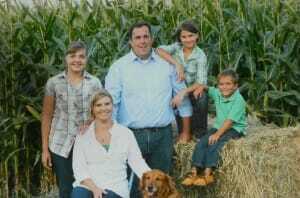
    The Plagge’s oldest daughter, Brooklyn, has been a 4-H member for six years.  She enjoyed showing miniature Southdown sheep for five years, but now that she’s a freshman, high school activities have preempted the show ring.  This summer her schedule will be full playing in the Midwest Association Youth Basketball league, taking a missions trip with her church’s youth group, as well as completing 4-H projects.  Brooklyn has been selected twice to present working demonstrations at the Iowa State Fair.

    “4-H helps kids develop skills that they’ll use throughout their lives,” says John.  “It’s a good experience for them to learn to talk one-on-one with judges, explaining how and why they made something.  It’s also a good experience for them to learn how to present in front of group.  Think of how many adults suffer from stage fright, but through 4-H, kids can learn to overcome their fears of public speaking.”

    Erin, the Plagge’s 10-year-old daughter, is excited to be a first year member of the Marion Monarchs 4-H Club.  She’s looking forward to showing a bucket calf at the 2012 Franklin County Fair.

    The Plagge’s six-year-old son, Gage, is a Clover Kid.  This 4-H program for kids in kindergarten through third grade allows them to attend summer programs and enter exhibits at the county fair.  Gage loves building LEGO® sets, so that most likely will be his fair project.  That is if he can come inside long enough to finish building.  Right now he’s having run riding his little Polaris four-wheeler and taking adventures with his best friend, Buzz, the family’s year-old Black Lab.

    “We like the freedom that comes with living in the country and raising our kids on our farm,” says John.  “Our kids have lots of space to run and explore.  They’ll play outside for hours with their pets.  And they definitely use their imaginations.  You never know where their imaginations will take them!”

    Every day is an adventure when you’re raising three, very active children, who are involved in a host of extracurricular activities. That’s why the Plagge family enjoys quick and easy meals like the recipe they’re sharing today for Wanda Sandwiches.
    Team Latham

    March 9, 2012
    Agriculture, Beef, General, Industry News, Pork, Poultry, Recipes
  • Latham Hi‑Tech Seeds

    Celebrating Ag Day

    Today marks Ag Day, a day to celebrate our industry and the hard-working individuals in the field and on the farm who provide us with nutrition, fuel, clothing and energy.

    When agriculture unites, it’s amazing the challenges that can be overcome. One of the greatest challenges of our time will be meeting the needs of a growing world. Experts say that by 2050 those in production agriculture will need to produce 40% more from existing acres to feed the forecasted population.

    This challenge is coming to the forefront during discussions surrounding a new Farm Bill. A farm bill proposal, including a $23 million reduction package over 10 years, was submitted by Agriculture Committee leaders last November. The bill took an unusual route through the Capital, forgoing the normal process of hearings, negotiations and amendments. The reauthorization of the farm bill will expire this September, and the usual process of field hearings and the opportunity for input should resume.

    The importance of guiding smart choices regarding the farm bill is at an all-time high, and requires the ag community unite once again to lead discussion at the Capital. In a recent SeedWorld article, John Latham, president of Latham Hi‑Tech Seeds, spoke about the reasons why he will head to Capital Hill this June to stand shoulder-to-shoulder with other seed executives across the nation at ASTA’s 129th Annual Convention and Legislative Conference.

    “Right now, times are good and the prices are high, and farmers are doing well,” he said. “My fear is a cutback as well as a pullback of prices could really leave people in bad shape,” he says. “There has to be some sort of safety net for when times are tough. The food supply is critical, not only for the United States, but for the whole world, and the United States leads that. We need to have some sort of safety net, and I hope that comes through in this farm bill.”

    In this same article, Leslie Cahill of the American Seed Trade Association says, “There’s never been a more critical time in our history as far as agriculture is concerned. We really need to lock arms and stand together because, if we don’t, there could be a lot of harm and uncertainty ahead for us.”

    Cahill recommends that farmers and industry professionals contact members of Congress and work with other agricultural association groups because the farm bill is one of the most important pieces of legislation to pass through Congress.  She says, “As we look to bolster the economy, feed a growing population and help maintain national security… we have to have some very honest discussions on exactly what agriculture brings to the table — and that’s quite a bit.”

    Please feel free to contact us if we can help you reach out and guide conversations on the Farm Bill.

    To those of you involved in and supporting agriculture – thank you for all you do each day to help feed and fuel our world!

    Team Latham

    March 8, 2012
    Agriculture, General, Industry News
  • Latham Hi‑Tech Seeds

    Wind Farms Provide Energy Choices

    Musings of a Pig Farmer by Larry Sailer

    Larry Sailer, sitting on the base of a windmill

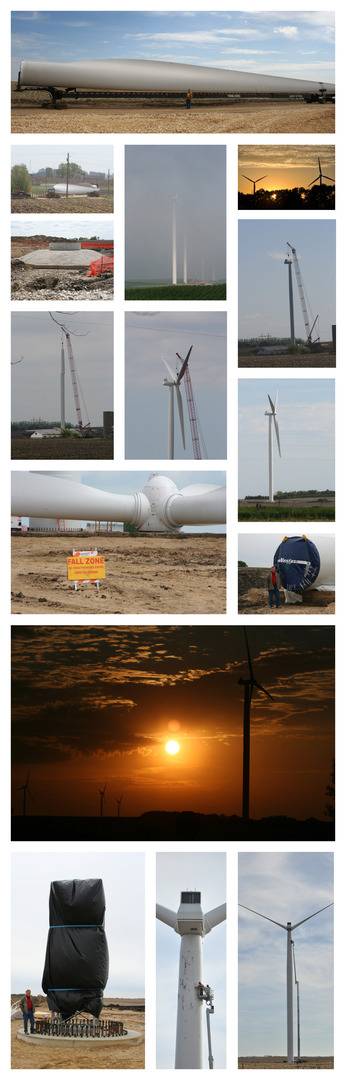
    Three years ago, I was farming in the middle of the biggest construction zone I have ever seen.

    Construction of Whispering Willow Wind Farm-East began in December 2008, and the wind farm became operational in December 2009.  This turned into a yearlong quagmire of muddy roads, muddy trucks and even muddy mailboxes!

    All day, every day, the gravel road in front of my house was heavily traveled by gravel trucks, cement trucks and support equipment.   All this heavy truck traffic literally tore the road apart every day, and every night they would rebuild it.  They tried using various kinds of rock to make the road last. They even tried extremely large rocks; some were the size of footballs!  One week I had six flat tires from the very sharp rocks about the size of grapefruit.  Because the road conditions are hard to describe, I’ve added some video and photographs for your enjoyment.  (At least I enjoyed looking through them!)

    Now you might be thinking I’m not a very big fan of windmills by this point, but that’s not true at all. I’m actually a fan of this renewable energy source.  For example, Whispering Willow Wind Farm-East produces enough energy to power 50,000 homes.  How can I be against that?

    I consider energy to be similar to farming.  Just like we need all types of farming operations to produce enough food for the growing world population, we also need energy choices and a mix of all kinds of power.  We need wind farms, as well as generating plants run by natural gas, coal and nuclear.  America also has dams that create a huge amount of hydro power and solar panels.  Some of these options are better than others, but the point is we need a mix.  We cannot throw all of our eggs in one basket.  (Yes, that farm pun intended!)

    Although I wouldn’t want to have all of that construction in front of my house again, I do see the value of this wind farm and am glad it was built here.  I use power and know it must be generated in many different ways to have enough to meet our growing energy needs.  Just like we need many different ways to raise enough food for everyone in the world, we also need many ways to generate enough energy.  Choices are important!

    Larry Sailer, Musings of a Pig Farmer

    March 6, 2012
    Agriculture, General, Industry News
  • Latham Hi‑Tech Seeds

    Video and Photos from "Wind Farms Provide Energy Choices"

    [youtube]http://www.youtube.com/playlist?list=PLB96473611C340E26[/youtube]

    Larry Sailer, Musings of a Pig Farmer

    March 6, 2012
    Agriculture, General, Industry News
  • Latham Hi‑Tech Seeds

    Kicking Off National Ag Week

    [youtube]http://www.youtube.com/watch?v=MMdXdw0ZM8U&feature=youtu.be[/youtube]

    It’s official…  National Ag Day will be celebrated Thursday, March 8!

    NOW, THEREFORE, in recognition of the preeminent role that agriculture plays in the daily life of every American, in acknowledgment of the future progress and prosperity of the Nation’s economy, and in appreciation of farmers and ranchers across the Nation, I, Thomas J. Vilsack, Secretary of the United States Department of Agriculture, do hereby proclaim March 8, 2012, as National Agriculture Day.

     Latham Hi‑Tech Seeds is kicking off its National Ag Week celebration today by sharing a recipe for Breakfast Casserole.  Why breakfast casserole?  For starters, breakfast is the most important meal of the day!  This recipe is an especially tribute to the American farmer as it contains something from nearly every major food group.  Toss in some green peppers or pair this casserole with a serving of grapefruit and you’ve got a balanced meal in a matter of minutes.  This recipe is so easy that you could even host your own Ag Day Breakfast.

    Our celebration continues on Monday when we host our first Facebook contest with ag trivia.  Facebook friends, who post responses, will be entered into a drawing for food and ethanol gift certificates.  Be sure to check out our Facebook page each day next week for your chance to win!

    Through our blog posts and Facebook updates, Latham Hi‑Tech Seeds can helps Americans understand the value of agriculture to each and every citizen.  How can you help celebrate the abundance provided by American agriculture?

    Team Latham

    March 2, 2012
    Agriculture, General, Industry News
  • Latham Hi‑Tech Seeds

    Blogs from Brazil – Part 4 by April Hemmes

    Thursday, Feb. 23

    Our bus left at 7 a.m. for a three-hour ride to an ethanol, sugar and biodiesel plant called Barracool. A group of seven cattle farmers founded this company in the 1980s, and there are currently 27 owners. The plant can run on either sugar or ethanol; it’s presently running 75% ethanol and 25% sugar.   Facts that we learned about production here:

    • 86,000 acres are harvested to provide sugar cane to this plant.
    • 38 tons of sugar cane yields 275 pounds of sugar.
    • Workers cut sugar cane by hand for 8 hours and then have 36 hours off.  (Yes, you read correctly.  Brazil has strict labor laws!)

    After visiting Barralcool, we stopped by a school where children learn English.  Then we visited a beautiful place that Barralcool helped establish for at-risk kids.  Social awareness and volunteerism are apparently alive and well within this company.

    Friday, Feb. 24

    On our last day in Brazil, we headed to the headquarters of FAMATO of Mato Grosso, which is equivalent to America’s Farm Bureau.  We met with the Under Secretary of Agriculture for the Mato Grosso state.  He was assisted by representatives from the departments of economics, livestock and the environment.

    headquarters of FAMATO of Mato Grosso

    The FAMATO presentations were so interesting because they were filled with facts about Brazil.  We learned that Mato Grosso, mainly because of its size and climate, is the main state for agriculture in Brazil.  Each truck load of grain has to travel 1,000 miles to port since there is only one main road to the ports or rail line.

    Interestingly enough, almost half of Brazil’s farms are “small” and are comprised of fewer than 2,000 acres.  We had the opportunity to visit some of the country’s largest farms, which were on a totally different scale than what we’re accustomed to in the Midwest.

    Our group spent some time reflecting on our trip and talking about the misconceptions we had before touring the country.  Most of us thought we would see the rainforest being cut down to make room for production agriculture, but that just isn’t the case.  Brazil has had a ban on clearing land in effect since the mid-2000s.  Plus, farmers are required to leave 20% of their land in its natural state; 85% of the land must be left in its natural state if it’s closer to the rainforest.

    I came home from this trip with the impression that farmers – whether they live in Brazil, Delaware or Iowa – are in the business of producing food for the world while caring for the environment.  I no longer see Brazil as our competition, but our ally in production agriculture.

    Team Latham

    February 29, 2012
    Agriculture, General, Industry News
  • Latham Hi‑Tech Seeds

    Animal Agriculture Creates “Flywheel Effect”

    Photo courtesy of AgriNews.com

    Musings of a Pig Farmer
    by Larry Sailer

    Willie Nelson, who first organized Farm Aid in 1985 to raise awareness for the farm crisis and to raise funds to keep families on their land, is still actively promoting “family farms” today.  In a recent article to The Huffington Post, Willie writes:

    “Despite all they’re up against, family farmers persevere. Each and every day they work to sustain a better alternative – an agricultural system that guarantees farmers a fair living, strengthens our communities, protects our natural resources and delivers good food for all. Nothing is more important than the food we eat and the family farmers who grow it.”

    I can agree with these statements.  In fact, I wholeheartedly agree with that paragraph penned by Mr. Nelson.  It’s just that the two of us are practically diabolically opposed to in the type of system we believe “guarantees farmers a fair living, strengthens our communities, protects our natural resources and delivers good food for all.”

    It’s my contention that America’s current agricultural system does this and more!  We don’t have to look any further than our neighbors to the north to prove my point.

    Sioux County, Iowa, is showing the rest of us what can be done with “a mix of feedlots and biotechnology, Christianity and capitalism, hard work and higher education.”  The county’s unemployment was 3.6 percent at the end of 2011, according to a recent Register article entitled, “How cows and pigs have fueled economic growth in northwest Iowa.”  Sioux County’s population grew 6.7 percent in the 2010 census, which is 63 percent faster than the rest of our great state.  Although the population is growing, cows and pigs still outnumber people there 44 to 1.

    The key to Sioux County’s success is livestock farming.  Innovative, entrepreneurial-minded farmers and businessmen turned their “geographic disadvantage” into a real advantage.  Instead of paying astronomical trucking fees to transport grain to the Mississippi River or load grain onto trains headed to the Pac Northwest, they started feeding local grain to livestock.  Sioux County farmers add value to their crops by using it as livestock feed, and as a result, their Main Streets flourish.

    Where there’s livestock, there’s economic activity.  “Cattle yards and hog confinements require loans, feed and ethanol byproducts for the animals to eat, veterinarians and nutritionists to keep them healthy, truck drivers to transport them to market, as well as contactors to build and wire buildings, repair fences and pour feedlots.  Livestock farming generates paychecks to feed mill workers, auctioneers, stock trailer builders and equipment mechanics.  You get a ‘flywheel effect’ when dollars compound and gain speed with each transaction.”  More examples of economic success and lesson learned can be gleaned from this six-page Register article, and I invite you read it in its entirety.

    You’ll see that modern agricultural practices are allowing today’s farmers to make an honest living while strengthen our communities and protecting the environment.  And in the end, I’m sure you’ll see that yesterday’s “Global Day of Action” (aka #occupyourfoodsupply) is really based on misconceptions.

    Time and effort would be better spent getting to know the American farmers who produce the world’s safest and most abundant food supplies.  But don’t just take my word for it.  Take a few minutes to read what other farmers like Wag’nTales and The Farmers Life have to say about who controls their family-owned farming operations.

    Indeed, “nothing is more important than the food we eat and the family farmers who grow it.”  I’m proud to be a fourth generation Iowa farmer.

    Larry Sailer, Musings of a Pig Farmer

    February 28, 2012
    Agriculture, General, Industry News
  • Latham Hi‑Tech Seeds

    “Breakfast Battle” Helps Fill Pantries

    Latham’s team in the Breakfast Battle consisted of John Latham, Keri Subbert and Laura Cunningham. – Photo Courtesy of Deb Brown

    “Racing through the grocery store” took on new meaning as Latham Hi‑Tech Seeds and nine other county businesses competed Friday in the first ever Breakfast Battle, sponsored by Franklin County Farm Bureau.  This event was held in honor of National Food Check-Out Week, which celebrates the abundance and safety of America’s food supply plus helps kick off March National Nutrition Month.

    Team members met at Fareway in Hampton, Iowa at 8 a.m. to see who could find everything on their shopping lists in a record amount of time.  According to contest rules, each team had to meal plan a breakfast, lunch and dinner.  Then they had to turn in their shopping lists before they were “on the clock.”  The objective was to see which could purchase all of their groceries in the least amount of time.  When they got to the checkout, the cost of the grocery items had to total between $45-50.  If the total was less, they had to add to their cart.  If it was more, they had to remove items from the cart.

    Competition was fierce as the team battled!  Fortunately, Latham Hi‑Tech Seeds’ team was voted “fan favorite” and earned 10 seconds off its final time.  Thanks to all of you who voted for us on Facebook!  It’s just too bad that it was worth 60 seconds off the total because those ladies from ABCM were fast shoppers!

    Congratulations to ABCM/Rehabilitation Center of Hampton for purchasing three meals’ worth of groceries in just 1 minute, 25 seconds! – Photo Courtesy of Deb Brown

    Although Team Latham didn’t place where we had hoped, we did help raise money for a worthy cause.  It’s nice knowing that 13 families will benefit from the groceries and donations that we helped collect.

    The inaugural Breakfast Battle was such a huge success that Franklin County Farm Bureau plans to host it again in 2013. Watch for Team Latham to perform better in the 2nd Annual Breakfast Battle.  We’ll have a team uniform.  We’ll train.  We’ll be ready to “do battle” in 2013!  And, that’s a promise.

    Team Latham

    February 27, 2012
    Agriculture, General, Industry News
  • Latham Hi‑Tech Seeds

    Blogs from Brazil – Part 3 by April Hemmes

    Guest blog by
    April Hemmes, Hampton, Iowa

    Franklin County farmer April Hemmes is traveling through Brazil with a group of Iowans. You can get a sneak peek at Brazilian culture and agriculture here. Read below for a daily account of her journey.

    Tuesday, February 21, 2012

    These are the places we have been so far. Brazil is about the same size as the U.S.

    What a trip so far! We started the day at a John Deere dealership where we saw new tractors and combines. New combines cost about $100,000 more in Brazil than in the U.S.

    Next we stopped at a chemical and seed dealership that works directly with Syngenta.  While their costs are similar to ours for chemicals, seed corn and seed beans, tech fees are different.  Brazilians have two options to pay tech fees: (1) either pre-harvest at the cost of 1% of an 88-pound bag of seed beans or (2) post-harvest at 2% of the crop that is harvested.  The tech fee on seed corn gets figured into the price of the corn.

    This facility held 3 1/2 million bu.

    Farmers here also believe their soybeans will run 2-4 bushels/acre less than normal at yield of 49 to 52 bu/A.  It’s extremely dry in southern Brazil and Argentina.  Our guide said, “Whatever you have heard about how dry it is, double it.  It’s that bad!”

    After lunch, we visited a newly formed farmer-owned, co-op that serves farmers in a 60-mile radius. Sixteen million dollars has been invested in the facilities; 80 farmers bought in for $40,000/year.  The day ended with supper in a pizza parlor where we had fun telling each other stories and doing what we do best, talking farming!

    Wednesday, February 22, 2012

    Eucalyptus in wide rows so cattle can graze

    Today we traveled about 70 miles on gravel to the Girassol do Prata farm, which is owned by a state senator. This operation is very diverse and includes beef, eucalyptus, seed soybeans and seed corn.

    Our first stop on the tour was a beef feedlot and a nice, new loading facility.  They buy feeder cattle, put them on pasture for a year, and then feed them some grain. It takes 30 months for them to get to market weight, which is around 1,200 pounds.

    That's a lot of seed!

    After lunch, we visited their seed bean plant. It was HUGE! They were bagging Roundup Ready Soybeans, so Monsanto’s Dave Tierney was happy to pose for a photo beside the state senator.  Next, we walked to the cotton gin. The gin is 20 years old and needs a lot of maintenance.

    Team Latham

    February 23, 2012
    Agriculture, General, Industry News
  • Latham Hi‑Tech Seeds

    Blogs from Brazil – Part 2 by April Hemmes

    Guest blog by
    April Hemmes, Hampton, Iowa

    Franklin County farmer April Hemmes is traveling through Brazil with a group of Iowans.  You can get a sneak peek at Brazilian culture and agriculture here.  Read below for a daily account of her journey.

    Saturday, Feb. 18

    Brasilia, the Capital of Brazil

    Today we toured Brasília, the capital of Brazil. After taking a bus tour of the city, group members chose to shop or attend carnival (carnaval) celebrations. Carnival is similar to New Orleans’ Mardis Gras with parades, costumes, dancing and lots of food.  Different regions of Brazil hold carnival annually in February or March, depending on the date of Easter.  It ends as Lent begins since historically Lent is a period during which there are no parties and people refrain from eating rich foods in honor of the 40 days Jesus spent in the wilderness.

    Sunday, Feb. 19

    Today we took a two-hour flight from Brasília, followed by a three-hour bus ride to Primavera do Leste.  Primavera do Leste is located in Mato Grasso, the agricultural region of Brazil where they raise a lot of Zebu, which is the Indian cattle breed that resembles Brahma.

    Rain storm on Hell's Kitchen

    Riccardo, our guide, farms with his brother.  The soybeans they planted in October and November is now ready to harvest.  Yields will average 53 bushel/acre this year, which is a little less than normal. Sometimes they harvest beans at 25% moisture, so they have to dry them. They do not double crop beans because of rust.  Corn planting will follow soybeans harvest, but they must plant corn before the middle of February to get a good crop.

    One interesting thing about how they do business here is that they buy things in “bags of soybeans.”  For example, if I were to buy an acre of land, it would be 400 bags. A bag of soybeans here is 2.2 bushels, so it comes to roughly $3,200/acre.  The same goes for a combine or any equipment purchase, so the price of everything fluctuates with the price of beans!

    Monday, Feb. 20

    The soybeans are looking good

    Today we visited a huge farm.  And I do mean HUGE!  Totaling 500,000 acres and 50,000 livestock, it’s one of the world’s largest farms. It has storage capacity for 5.5 million. It also has the world’s largest John Deere fleet.

    Cotton and soybeans are their principal crops with corn, rice and beans as secondary crops.  They also have a fish farm, so we got to watch their annual fish harvest.  We also got to watch combines harvest soybeans and learned the big drought southern Brazil is lowering yields to 49-51 bushels/acre. Soybeans are harvested as wet as 25%, so they dry them with Eucalyptus wood burners. It’s a sustainable energy source as they plant 20 acres of Eucalyptus; it takes eight years for a tree to reach maturity.

    What an interesting day! We could look one way and see soybeans being harvested, turn another way and see cotton growing, and then look another direction and see corn being planted in the same field.

    Team Latham

    February 22, 2012
    Agriculture, General, Industry News
Previous Page
1 … 61 62 63 64 65 … 85
Next Page

Latham Hi‑Tech Seeds

131 180th Street | Alexander, IA 50420

(641) 692-3258

SIGNUP FOR OUR NEWSLETTER
  • Contact
  • Legal
  • Dealer Center
  • Seedware Login
  • Latham Gear

© 2025 Latham Hi‑Tech Seeds. All rights reserved. | Iowa Web Design by Webspec | Privacy Policy

Latham® Hi-Tech Seeds is a trademark of M.S. Technologies, L.L.C., 103 Avenue D, West Point, IA 52656.